5
#000000
#FFFFFF
To donate by check, phone, or other method, see our More Ways to Give page.
Daily news & progressive opinion—funded by the people, not the corporations—delivered straight to your inbox.

In a triumphal move back toward democratic rule, Hungary's new leader Péter Magyar took his oath of office Saturday in a "regime-change" ceremony rich with symbolism before thousands of jubilant constituents. The sense of a hopeful new political era resonated in Magyar's tribute to a victory for "ordinary, flesh-and-blood people" - and in the gleeful moves and air guitar of unstoppable "dancing machine" and new Health Minister Zsolt Hegedűs. Lookit this guy boogie. Damn, we can't wait.
The day's celebration" marked Magya's stunning defeat last month of authoritarian Viktor Orbán after 16 years in power. A 45-year-old lawyer who founded the center-right Tisza party in 2024, Magyar won a two-thirds majority over Orbán’s nationalist Fidesz party, which will allow him to roll back many of Orbán’s policies. Tisza now controls 141 seats in the 199-seat Parliament, with over a quarter held by women; Fidesz won 52 seats, down from 135, and far-right Mi Hazánk (Our Homeland) took six. Magyar has vowed to restore democratic institutions, clamp down on corruption, repair ties with the EU, where Orbán often vetoed key decisions including support for Ukraine, and unlock about $20 billion of EU funds to help jump-start Hungary's struggling economy,
Magya was sworn in at the sprawling Parliament building as tens of thousands of Hungarians gathered outside in Kossuth Square. Marking the sea change his victory represents, the EU flag flew for the first time since Orbán’ removed it in 2014, and the Beethoven-inspired European anthem Ode to Joy, symbolizing peace and solidarity, rang out. "Today, every freedom-loving person in the world would like to be Hungarian a little," Magya told the crowd in a message aimed at healing the deep divisions of Orbán's rule. "You have taught (the) world that the most ordinary, flesh-and-blood people can defeat the most vicious tyranny...Today is the fulfillment of a long journey made together (to) once again be a common homeland for all Hungarians."
As the party went all day and into the night - when Magyar took on DJ duties - the high point of its joy and fervor may have come after Magyar's speech when Zsolt Hegedűs, unable to restrain himself, broke out into dancing as the singer Jalja began performing The Hanging Tree: "Strange things have happened here." Hungary's new 56-year-old Health Minister and an internationally recognised orthopaedic surgeon who spent 10 years working for the UK's NHS, Hegedűs had already gone viral last month when, on stage after Magyar's landslide victory, he busted out some fiery dance moves and air guitar in his excitement. This time, he said he wasn't planning a repeat performance. Then the music started...And 140 Party members joined in.
"I could see the audience had been waiting for this," he said. "I didn’t want to let down the people.” So off he went, delighting everyone (except, possibly, his kids if he has any) with his slick moves. The next day, he ascribed it all to his "emotional roller-coaster" since Magyar's victory, with his chance to repair Hungary's health care system, take down Orbán's hate-mongering propaganda, urge people to focus on their mental health. "It's not that I'm going to start dancing in Parliament, but I want (to) encourage people to adopt a healthy lifestyle...Go outside, dance, be together," he said. "The weight has begun to lift from people’s shoulders." America, weary, ravaged, hungry for peace, just imagine the miracle of it. And for now enjoy his glee.
- YouTube www.youtube.com
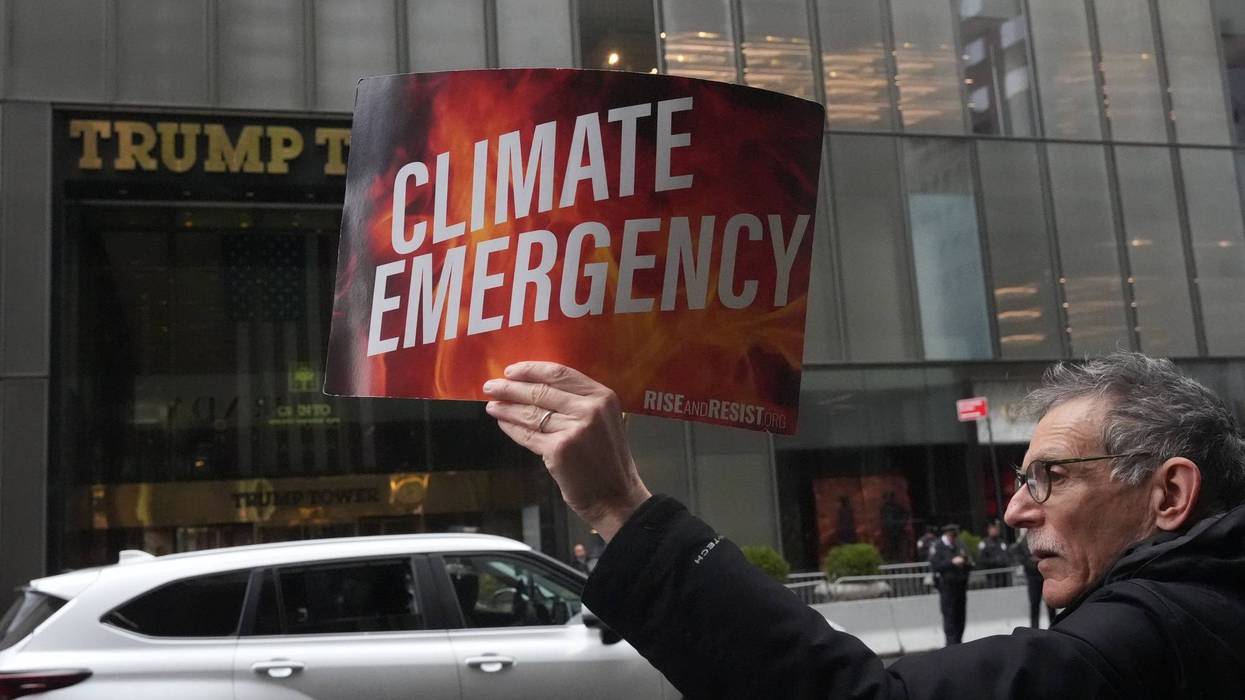
"We know that if this project goes through, our land and our water are in danger. Our future is in danger," warned Krystal Two Bulls, one of many community, conservation, and Indigenous group leaders speaking out after President Donald Trump granted a cross-border permit to what critics called "nothing more than an attempt to resurrect the unpopular Keystone XL pipeline."
Trump's permit for the Bridger Pipeline Expansion Project authorizes various "petroleum products, including gasoline, kerosene, diesel, and liquefied petroleum gas," The Associated Press reported Thursday, but Bridger spokesperson Bill Salvin said the company is currently focused on crude oil—550,000 barrels of which could flow daily from Canada, through Montana, to Guernsey, Wyoming, if the pipeline is completed.
"Water protectors are standing up again, like we have always done against all those who threaten Mother Earth," Two Bulls, an Oglala Lakota and Northern Cheyenne organizer from Lame Deer, Montana, and executive director of Honor the Earth, said Friday. "We fought against the Keystone XL pipeline proposed for these very same lands and won back in 2021. We will fight and win again against the Bridger pipeline."
Shortly after entering office in 2021, then-President Joe Biden revoked the presidential permit for Keystone XL—which Trump had signed during his first term—as part of the Democrat's efforts to combat the fossil fuel-driven climate emergency.
While Biden faced criticism from climate advocates for the oil and gas projects he did allow, Trump took a swipe at him on Thursday, telling reporters: "Slightly different from the last administration. They wouldn't sign a pipeline deal, and we have pipelines going up."
Trump—who campaigned on a pledge to "drill, baby, drill" and returned to the White House last year with financial help from Big Oil—also dismissed safety concerns about pipelines, saying: "By the way, they're way underground. They're not a problem. Nobody even knows they're there. It's so crazy. But they wouldn't approve anything having to do with a pipeline."
As the AP detailed:
Bridger Pipeline and other subsidiaries of True Company have been responsible for several major pipeline accidents including more than 50,000 gallons (240,000 liters) of crude that spilled into the Yellowstone River and fouled a Montana city's drinking water supply in 2015, a 45,000-gallon diesel spill in Wyoming in 2022 and a 2016 spill that released more than 600,000 gallons (2.7 million liters) of crude in North Dakota, contaminating the Little Missouri River and a tributary.
Subsidiaries of True agreed to pay a $12.5 million civil penalty to settle a federal lawsuit over the North Dakota and Montana spills.
Salvin said Bridger Pipeline in the years since the Yellowstone spill developed an AI-based leak detection system that allows it to be notified more quickly when there are problems. It also plans to bore 30 to 40 feet (9 to 12 meters) beneath major rivers including the Yellowstone and Missouri to reduce the chances of an accident. The 2015 accident occurred on a line that was constructed in a shallow trench at the bottom of the river.
A public comment submitted to the Trump administration by the legal group Earthjustice on behalf of Honor the Earth, Sierra Club, WildEarth Guardians, and a dozen other organizations acknowledges concerns about this pipeline's potential impacts to water, land, the climate, air quality, cultural resources, recreation, and more—and called for an intense federal review of the project.
"We know how this system works: More pipelines mean more drilling, more waste, and more spills. And when spills happen, it's communities, landowners, and tribes who are left dealing with the contamination, not the companies profiting from it," Rebecca Sobel, climate and health director at WildEarth Guardians, said Friday. "Oil and gas infrastructure fails every day in this country, and expanding that system only increases the likelihood of spills and long-term contamination."
Sierra Club Montana chapter director Caryn Miske stressed that "while the Trump administration kills affordable energy projects and jobs across the country, it is continuing to side with wealthy corporations and oil executives looking to increase profit regardless of the risks to Montana's treasured waterways and to families and businesses struggling with high energy costs. These policies aren't about fair or free markets, it's welfare for corporations and pollution for everyone else."
Earthjustice is also representing 350 Montana, Center for Biological Diversity, Families for a Livable Climate, Montana Environmental Information Center, Montana Health and Climate, Mountain Mamas, Red Medicine LLC, Western Environmental Law Center, Western Organization of Resource Councils, Western Watersheds Project, Wild Montana, and Wyoming Outdoor Council.
"The proposed Bridger tar sands pipeline is an environmental disaster waiting to happen," declared Jenny Harbine, managing attorney with Earthjustice's Northern Rockies office. "The Trump administration appears more than willing to limit public engagement to force this project through."
"Communities and tribes in the Northern Rockies have a right to know how this could impact their water sources, historic resources, and ways of life," Harbine added. "If the administration attempts to sidestep that legal obligation, we’ll see them in court."
Separately on Friday, Anthony Swift, a longtime leader in the fight against the pipeline and current senior strategist for global nature at Natural Resources Defense Council, said that "no matter what you call the project, the environmental concerns that animated the fight over Keystone XL are no less acute today. Keystone Light will threaten water supplies and exacerbate climate change. This is the moment to get off the oil roller coaster, not double down on the dirtiest oil on the planet."
"The Trump administration has been lobbing gifts to Big Oil since its first day in office. This is the latest in a long, long, long list of favors that show the oil industry is getting a great return on its billion-dollar investment in the president's campaign," Swift added. "President Trump has repeatedly said that America does not need Canada's oil, so we certainly don't need Keystone Light."

Leaders in the rural township of Andover, New Jersey are reversing course on a plan to allow for data center construction in their community after local residents angrily revolted against the project.
According to a Tuesday report from NJ.com, Andover Township Mayor Thomas Walsh Jr. has announced that the township council this week will hold votes on repealing two data center-related ordinances and on a proposed ban on the construction of data centers inside town borders.
While officials in Andover had initially been supportive of the data center project due to the revenue it would have brought into local government, furious opposition from residents convinced them to change course.
"We’ve had some discourse over a project that we were considering for the township that may have brought in quite a bit of revenue," Walsh said. "But we also agree that no project, no money is worth tearing it down at its seams."
Andover resident Ken Collins, an opponent of the data center, celebrated Walsh's decision to back down in an interview with News 10 New Jersey.
"I'm really astounded," Collins said. "I really can't believe this is happening. This community came together in a way I never would've imagined to fight this thing."
The township's reversal on data centers came days after a heated meeting in which one resident was forcibly removed by police after profanely berating local officials over their support for data center construction.
Andover police drew criticism after video showed the resident being body slammed to the ground while being removed, but Walsh said the officers' actions were completely defensible.
"[The police] showed great restraint all night, especially there,” Walsh said, according to News 12 New Jersey. “Those police officers, don’t forget, they don’t know what they’re in danger of. They think they’re in danger and they have to protect themselves."
Data centers have become political lightning rods in recent months, as residents across the country object to their massive resource consumption, which is leading to a major spike in utilities bills, as well as the noise pollution they generate.
Sen. Bernie Sanders (I-Vt.) and Rep. Alexandria Ocasio-Cortez (D-NY) earlier this year introduced a bill that would impose a nationwide moratorium on AI data center construction “until strong national safeguards are in place to protect workers, consumers, and communities, defend privacy and civil rights, and ensure these technologies do not harm our environment."
At the same time, Silicon Valley elites are planning to spend huge sums of money in this year’s midterm elections to prevent candidates who support AI regulation from winning public office.
Leading the Future—a super political action committee backed by venture capital firm Andreessen Horowitz, Palantir co-founder Joe Lonsdale, and other AI heavyweights—is spending at least $100 million to elect lawmakers who aim to pass legislation that would set a single set of AI regulations across the US, overriding any restrictions placed on the technology by state governments.

US President Donald Trump on Tuesday confessed he is not concerned about the increasing level of economic hardship tens of millions of Americans are facing due to rising costs related to the war of choice he launched against Iran over two months ago.
Despite inflation hitting a three-year high and the average price of gasoline in the US now averaging over $4.50 per gallon, Trump was asked by a reporter outside the White House about how much “Americans’ financial situations” were on his mind as he tries to negotiate an end to the war he initiated with a preemptive attack by US and Israeli forces on February 28.
“Not even a little bit,” Trump said in response. “The only thing that matters when I’m talking about Iran—they can’t have a nuclear weapon. I don’t think about Americans’ financial situation. I don’t think about anybody. I think about one thing—we cannot let Iran have a nuclear weapon. That’s all.”
Trump on Iran War:
Reporter: What extent are Americans’ financial situation motivating you to make a deal?
Trump: Not even a little bit. I don't think about Americans’ financial situation pic.twitter.com/TJ94pGpqD8
— Acyn (@Acyn) May 12, 2026
"And they still want you to believe he's fighting for you," said Rep. Summer Lee (D-Pa.) in reaction to the president's comments.
While both the US and Israel do have nuclear weapons, the Iranians contend their nuclear program is not designed for military purposes. In 2017, during his first term, Trump ripped up the Joint Comprehensive Plan of Action (JCPOA), brokered by the Obama administration, which experts agree put in strong safeguards to prevent Iran from furthering any unchecked ambitions toward nuclear weapons.
With peace talks largely stalled due to Trump's maximalist demands and refusal to admit he started the war without a plan on how to end it, frustration is growing in the United States, where a large majority of the population say they oppose the conflict, disapprove of the president's handling of it, and want it brought to a conclusion as soon as possible.
While Trump's comments were predictable to an extent, they still stirred outrage among those concerned about the economic headwinds Americans are facing due to the war in Iran.
"The sky is blue, and water is wet," said the Groundwork Collaborative of the confession. "Nice of him to say it out loud, though."
"Prices are up on gas, groceries, rent, utilities, healthcare, and just about everything else," said the AFL-CIO. "Shit’s too expensive, and workers’ wages aren’t keeping up. America’s unions worry about this 24/7. Our president of the United States should, too."
"It’s no surprise," said Sen. Peter Welch (D-Vt.), with a look of disappointment. "That should be job one for him."
"Trump says he doesn't think about Americans' financial situation at all," asserted Rep. Brendan Boyle (D-Pa.). "We can tell."
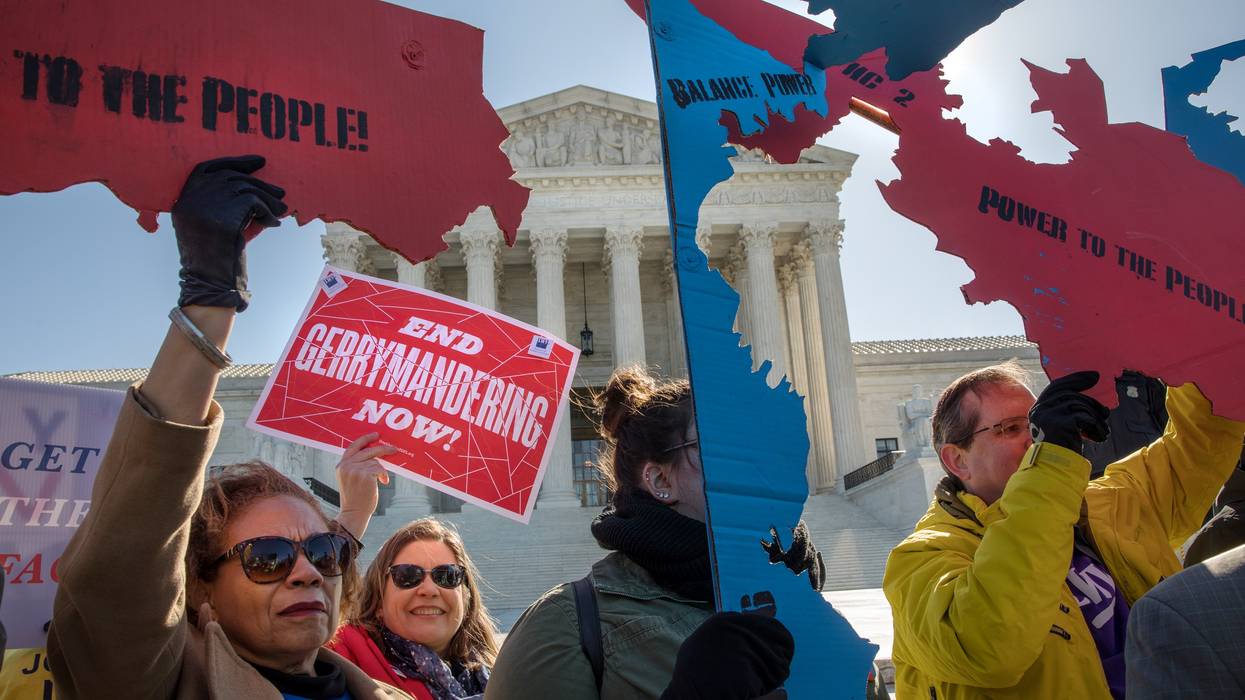
The US Supreme Court's right-wing majority Monday opened the door for Alabama to eliminate a majority-Black congressional district before this year's midterm elections in a decision that came as Tennessee voters sued to stop their state's racially rigged redistricting.
The nation's high court issued a 6-3 order with no explanation allowing Alabama officials to revert to a congressional map which, despite the state population being roughly 26% African American, has just one majority-Black district out of seven. The order came just a week before Alabama's primary election and less than three years after the same court ordered the state to create a second majority-Black district.
In that case, Allen v. Milligan, two right-wing members—Chief Justice John Roberts and Justice Brett Kavanaugh—joined their liberal colleagues who sided with Black voters in defense of the Voting Rights Act.
SCOTUS, which ordered Alabama to create a second Black opportunity district just 3 years ago, has lifted that order a week before the primary. The Purcell principle says courts shouldn't permit chaos too close to an election—it's now an open question whether there will even be a primary on schedule.
[image or embed]
— Joyce White Vance (@joycewhitevance.bsky.social) May 11, 2026 at 3:32 PM
Monday's ruling follows last month's Louisiana v. Callais decision, in which the justices ruled 6-3, also along ideological lines, that Louisiana's congressional map is “an unconstitutional racial gerrymander."
The decision ironically voided the last remaining provision of Section 2 of the Voting Rights Act, which allows voters of color to challenge racially discriminatory electoral maps in court.
Dissenting in Monday's decision, liberal Justice Sonia Sotomayor noted that the high court previously found that "Alabama violated the 14th Amendment by intentionally diluting the votes of Black voters."
"That constitutional finding of intentional discrimination is independent of, and unaffected by, any of the legal issues discussed in Callais," she added.
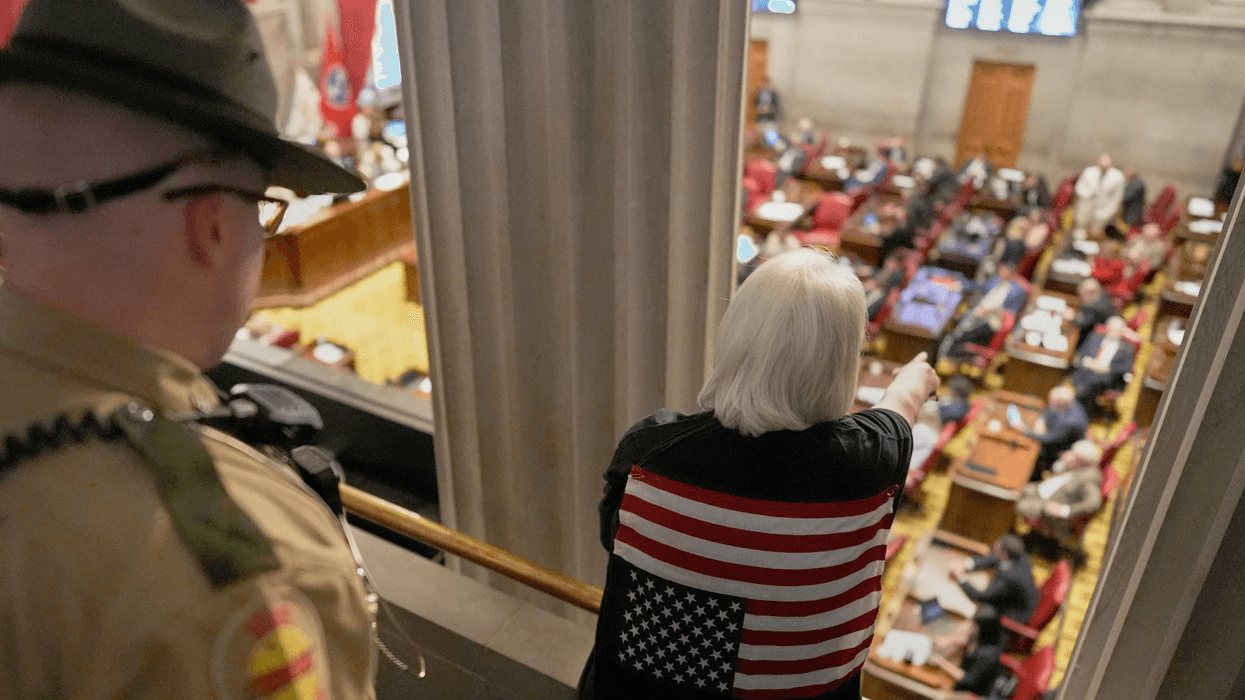
Earlier on Monday, the ACLU and ACLU of Tennessee filed a federal lawsuit on behalf of three Black voters, the Black Clergy Collaborative of Memphis, the Memphis A. Philip Randolph Institute, and the Equity Alliance seeking to block the state's racially rigged congressional map approved last week by the state Legislature and signed into law by Republican Gov. Bill Lee despite tremendous opposition from African American Tennesseans and their allies.
The lawsuit argues that the new map violates the Constitution by intentionally discriminating against Black voters in Memphis and retaliates against them for exercising their First Amendment right to political expression and association.
As the ACLU of Tennessee explained:
Tennessee has had a Memphis-based congressional district for the better part of a century. The challenged map dismantles that district, which is the state’s only majority-Black congressional district. It divides Black voters in Memphis and Shelby County across three majority-white districts that stretch from Memphis hundreds of miles into central Tennessee, diluting Black Memphians’ votes and stripping those communities of any meaningful voice in Congress...
A white-controlled supermajority of the Tennessee General Assembly enacted the new map targeting Black Memphians over mere days in a special legislative session that had been called after the candidate-qualifying deadline had already run.
"Black voters in Memphis did exactly what the Constitution empowers every American to do, which is to choose their representative,” ACLU of Tennessee executive director Miriar Nemeth said in a statement. “The Legislature’s response was an effort to ensure that those votes never carry the same weight again. The law has a name for this, and it’s not redistricting, it is textbook First Amendment retaliation. And it is, at its heart, racism.”
The Tennessee branch of the NAACP, state Democratic Party, Democratic candidates, and voters have also sued to challenge the redistricting.
The current partisan redistricting war began when President Donald Trump and congressional Republicans, who fear losing control of Congress after November's midterms, pushed Texas to enact a mid-decade redistricting. California retaliated with its own voter-approved redraw, and numerous red and blue states have followed suit or announced plans to at least consider doing so.
On Monday, Virginia's Democratic attorney general and party legislative leaders asked the US Supreme Court to block a state high court ruling against a voter-approved redistricting that favors Democrats.
Last week, Roberts dismissed the increasingly prevalent public perception that Supreme Court justices are "political actors."
Chief Justice Roberts bemoans the public's view of the Justices as political actors ...and then offers no explanation at all as the Court sprints to vacate a finding of INTENTIONAL discrimination, interfering with an impending election to let Alabama Rs sneak in a touch more partisan gerrymander.
[image or embed]
— Justin Levitt (@justinlevitt.bsky.social) May 11, 2026 at 3:21 PM
Following Monday's ruling, Loyola Law School professor Justin Levitt said sardonically on Bluesky, "Boy, it's a complete mystery why the public thinks the court is making partisan political decisions."
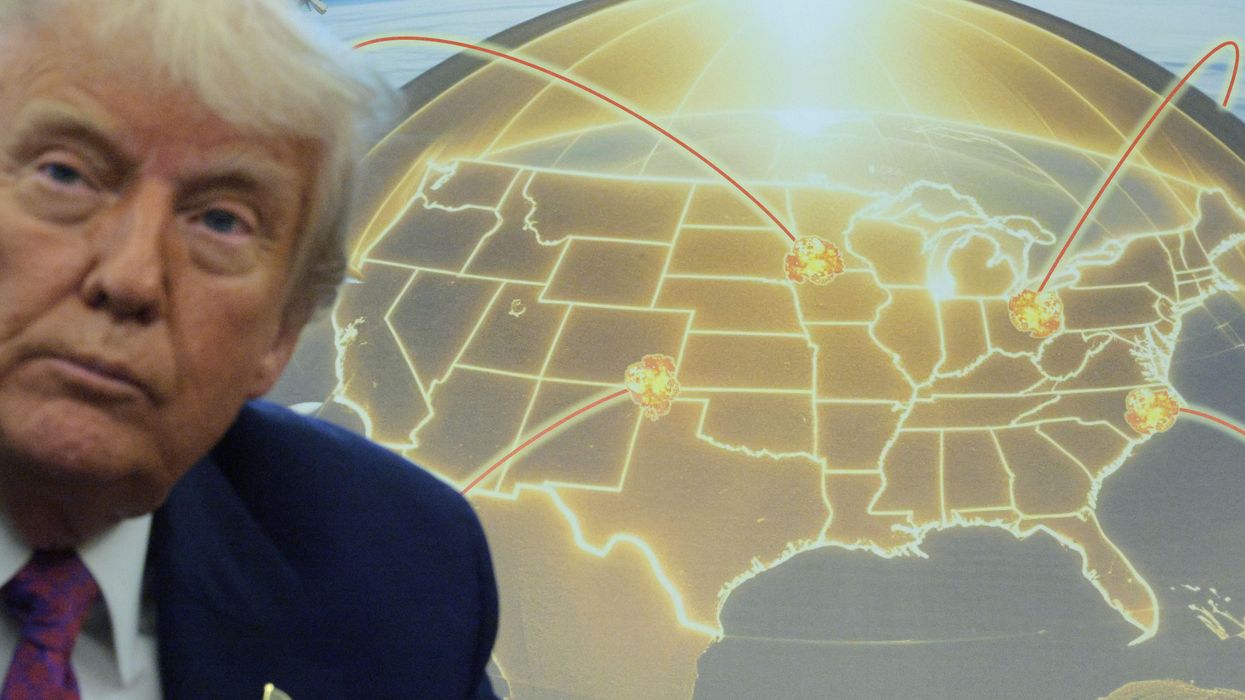
The Congressional Budget Office on Tuesday released a report estimating that President Donald Trump's proposed "Golden Dome" missile defense system would cost $1.2 trillion to create, deploy, and operate over the first 20 years of its existence.
The CBO report projects that acquisition costs for the proposed national missile defense (NMD) system would account for the vast majority of the $1.2 trillion total, including "costs for the system’s major components—namely, the interceptor layers and a space-based missile warning and tracking system."
In fact, the report says that the NMD system's space-based interceptor layer will be so expensive that it "accounts for about 70% of acquisition costs and 60% of total costs."
The CBO also questioned whether this massive investment would successfully protect the US from a foreign missile attack.
"Although the notional NMD system... would be far more capable than defenses the United States fields today," the report states, "it would not be an impenetrable shield or be able to fully counter a large attack of the sort that Russia or China might be able to launch."
"The strategic consequences of deploying an NMD system with the capacity considered here are unclear," the report continues, "because they hinge on an adversary’s perception of the defense's capability and how that adversary chose to respond."
The CBO's estimate on the missile system's cost was nearly seven times the projection Trump made last year, when he said it would cost just $175 billion.
And because the US Department of Defense still hasn't delivered key details about the proposed system, the CBO wrote, it is currently "impossible to estimate the long-term cost" of the initiative.
Sen. Jeff Merkley (D-Ore.), a longtime critic of the "Golden Dome" proposal, said the CBO report shows the Trump-backed project is "nothing more than a massive giveaway to defense contractors paid for entirely by working Americans."
"Just like the president’s symbolic renaming of the Department of Defense or deploying National Guard troops to our cities," added Merkley, who is the ranking member of the Senate Budget Committee, "this move to fund the ‘Golden Dome’ will be far more effective at squandering money than protecting American lives."
The Oregon Democrat vowed to "continue to work with my colleagues in the Senate to prevent another dime from flowing to this racket."
Sen. Ed Markey (D-Mass.), also a longtime critic of the president's proposed missile system, wrote in a social media post that "Trump’s Golden Dome is a $1.2 trillion golden sieve that won’t stop a nuclear attack, but will balloon the deficit and boost the bottom lines of billionaires."
Tommy Vietor, former National Security Council staffer under President Barack Obama and current co-host of Pod Save America, was even blunter in his criticism of the "Golden Dome" plan.
"$1.2 TRILLION for this dumb fucking Golden Dome missile defense system," he wrote in a social media post. "The initial estimate was $175 billion! Madness. No one wants this."
Daniel Larison, contributing editor at Antiwar.com and former senior editor at The American Conservative magazine, wrote that the CBO report exposed Trump's dome as a "trillion-dollar boondoggle."
Trump has said that he was inspired to develop such a missile system after being impressed by Israel’s “Iron Dome," despite the fact that Israel has a vastly smaller landmass to defend compared to the US and has historically faced far more danger from missile and rocket attacks.
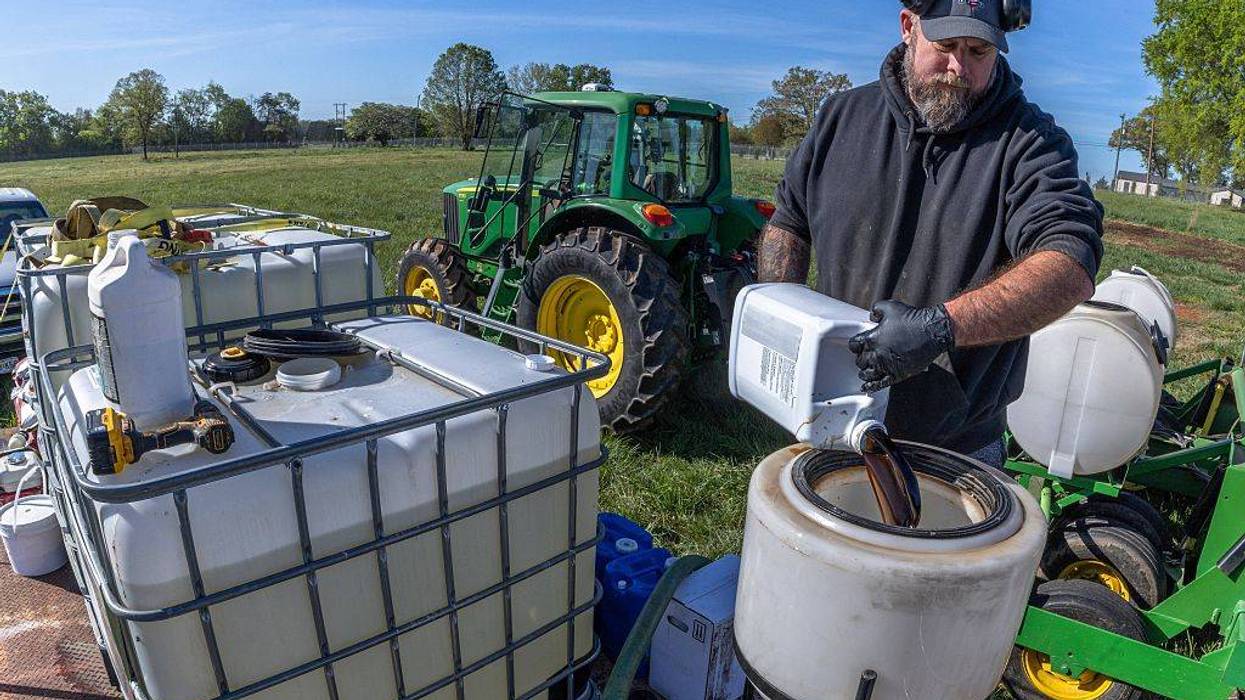
"While a few agrochemical giants shamelessly reap bumper profits, farmers are watching their livelihoods wither on the vine," said one Greenpeace campaigner.
Democratic lawmakers on Wednesday underscored how the US-Israeli war on Iran and Trump administration trade policies are hurting farmers and consumers while Big Ag profits from fast-rising fertilizer and food prices.
President Donald Trump's illegal war of choice has resulted in the closure of the Strait of Hormuz, through which around 30% of the world's fertilizer and 20% of its oil previously passed. In addition to increasing the risk of a global food crisis, the strait's closure has sent fuel and fertilizer prices soaring, with US farm diesel costing nearly 50% more than it did on the war's eve in February and nitrogen fertilizer rising by a similar percentage.
Meanwhile, Trump's erratic tariff war has further squeezed farmers and consumers. Tariffs have increased short-term prices, market volatility, and farmer costs while temporarily reducing import flows.
Vermont farmers "are footing the bill for Trump's reckless war in Iran," Rep. Becca Balint (D-Vt.) said Wednesday on social media. "Fuel and fertilizer costs are surging right amid planting season, hitting family farms that are already stretched thin. This needs to end."
Rep. Shri Thanedar (D-Mich.) said on X that "food prices are skyrocketing because 70% of farmers can't afford fertilizer, due to Trump's reckless Iran War," adding that "perhaps Trump should help them out by lending some, given that he's full of crap."
Rep. Betty McCollum (D-Minn.) noted Tuesday on Bluesky that "Minnesota’s farmers are dealing with tariffs, high fertilizer costs, expensive feed, and exorbitant fuel prices," while Trump is "planning to lay off dozens" of US Department of Agriculture workers "who help farmers protect their land and water."
The lawmakers' posts followed Tuesday's US Senate Agriculture Committee hearing on fertilizer market challenges, during which members of the Republican majority spoke vaguely of "trade disputes" and the "recent conflict in the Middle East" without naming names.
When it was her turn to speak, Ranking Member Amy Klobuchar (D-Minn.) noted the "direct link" between the soaring price of nitrogen fertilizer components and Trump's actions.
"In the months since the president started the war, with no consultation or authorization from Congress... urea has spiked more than 40%, the cost of diesel has hit near record highs in Midwest states," she said. "Now, why? Well, nearly half of the global urea goes through the Strait of Hormuz. Thirty percent of ammonia goes through the Strait of Hormuz."
Farmers are facing fertilizer prices that are through the roof because of the across-the-board tariffs, market consolidation, and uncertainties stemming from a war in Iran that was started with no consultation or authorization from Congress.
[image or embed]
— Senator Amy Klobuchar (@klobuchar.senate.gov) May 12, 2026 at 5:51 PM
"Yet, even before the war, farmers were walloped by the presence of across-the-board tariffs," Klobuchar continued. "An analysis by North Dakota State University... found that [International Emergency Economic Powers Act] tariffs added nearly $1 billion in costs to critical inputs like fertilizer, seed, machinery, and chemicals from February through October of last year."
"Acting now will ultimately help stabilize prices and give farmers the certainty they need," the senator added. "But it is going to have to be a combination of things: ending the tariffs, or reducing them, or making them much more targeted; ending this war; finding a way to resolve it, so the Strait of Hormuz is open again; and then going at this long-term systemic problem about the lack of competition in this area."
According to the advocacy group Farm Action, a handful of companies—primarily Nutrien, Mosaic, and CF Industries—dominate the North American fertilizer market, operating as an oligopoly that controls over 90% of nitrogen and potash production. Saskatchewan-based Nutrien, the world's leading potash producer, last week reported net first-quarter earnings of $139 million, up from $19 million one year ago.
"Fertilizer companies raise their prices because they can, and that's the market power that they have," Sen. Tina Smith (D-Minn.) said during Tuesday's hearing.
Noting record gains reaped amid the tumult of Russia's ongoing invasion of Ukraine, Smith said that during 2021-22, "the nine largest fertilizer companies made an estimated $84 billion in profits."
"In 2022, major fertilizer companies saw profits increase somewhere between 100 and 200%," she continued. "Their input costs did not go up by that much... How much do you think the profits of the average farmer in South Dakota [went] up during that time period?"
Pointing to new reports of robust fertilizer industry profits, South Dakota Corn Farmers president Trent Kubik replied, "during these last 75 days, a lot of money was being made, but it wasn't by farmers."
Addressing the question of "what can we do to change the behavior of companies that are in a position where they can charge such high prices and get such exorbitant profits," Smith suggested considering a "windfall profits tax" to "make the market more fair, particularly for folks that are doing the work."
The Trump administration's plan to counter high fertilizer prices includes reopening the Biden-era Fertilizer Production Expansion Program, which provides grants and financing to build or expand domestic manufacturing capacity. Some critics have slammed the program as a form of corporate welfare.
The administration is also considering further expanding a multibillion-dollar bailout program, which critics say has mainly benefited large-scale, export-oriented commodity farms.
Responding to recent reports of strong profits for nitrogen fertilizer producers, Greenpeace Aotearoa (New Zealand) Big Ag project lead Amanda Larsson said Tuesday that “the illegal US-Israeli attack on Iran has sent global fertilizer prices soaring, and while a few agrochemical giants shamelessly reap bumper profits, farmers are watching their livelihoods wither on the vine."
"This is war profiteering facilitated by a broken, fossil fuel-dependent food system—with farmers and consumers paying the price," she continued.
“Synthetic nitrogen fertilizer causes water and climate pollution, while propping up a system of industrial over-production, particularly to produce monoculture feed crops for livestock," Larsson said. "We are sacrificing our rivers, our climate, and our financial security to prop up a system that serves billionaires, not communities."
“We cannot buy food security on a volatile global chemical market," she added. "The only path to true food sovereignty and resilience is through a transition to ecological farming. By moving away from synthetic fertilizers and toward diverse, nature-based practices, we can break the cycle of chemical dependence, protect our water, and ensure that the price of food is no longer dictated by the whims of war and corporate greed.”
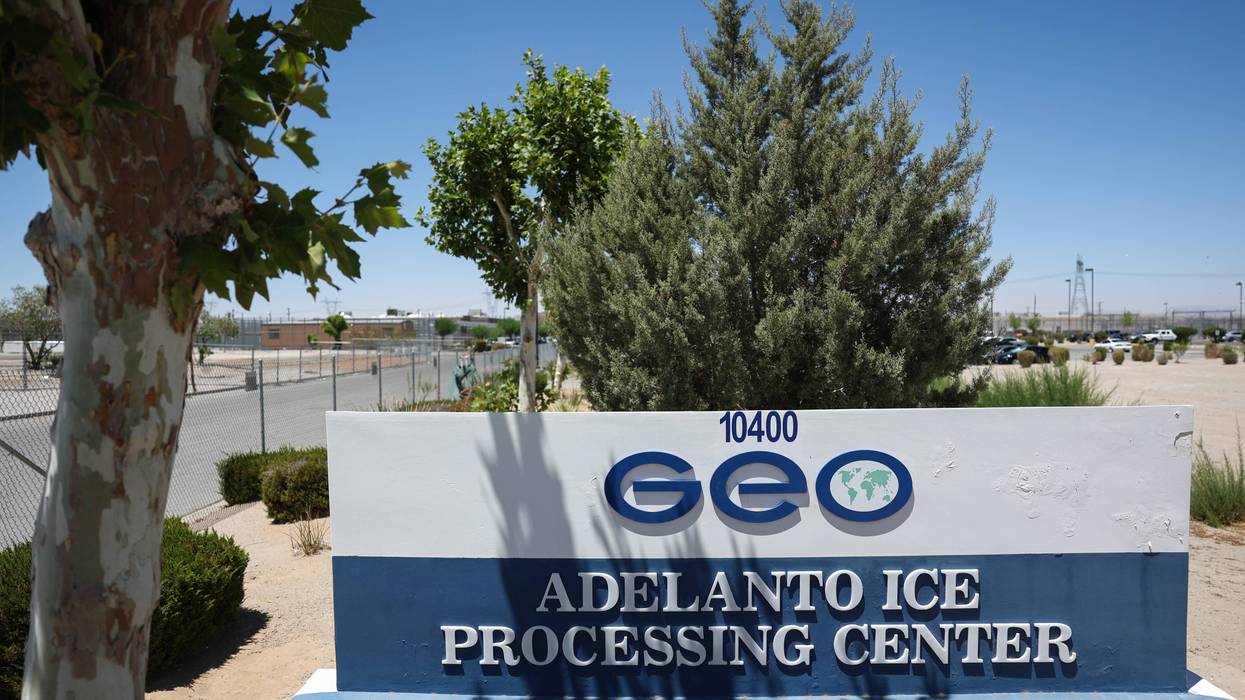
“The dichotomy between the contractors’ profits and the detainees’ pay is outrageous."
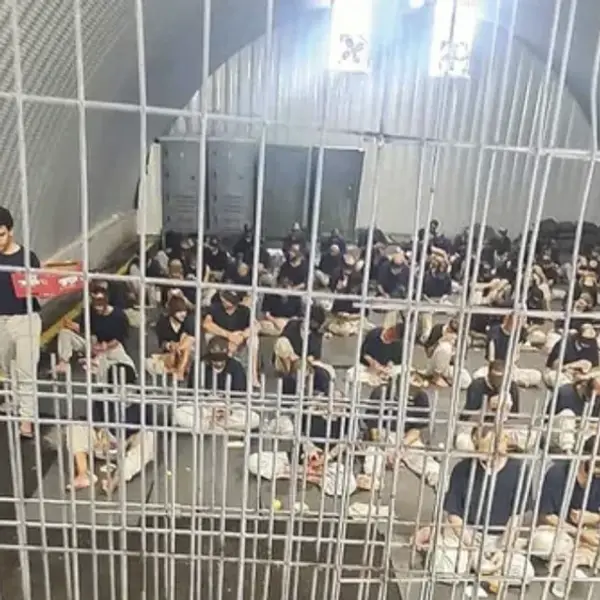
As President Donald Trump continues his mass detention and deportation agenda and expands the use of privately owned immigrant prisons, with more than 60,000 people detained across the country, the profits of private contractors like the GEO Group and CoreCivic are skyrocketing—and a new report by a government watchdog reveals one method the multibillion-dollar firms have of extracting profits from detainees.
Public Citizen researcher Douglas Pasternak wrote in a report released Wednesday that approximately 50% of immigrants who are detained for more than a few days end up in the government's so-called Voluntary Work Program (VWP), earning just $1 per day—12.5 cents per hour—while they keep the detention centers running.
At facilities like Adelanto Detention Center in Adelanto, California, run by the GEO Group, and CoreCivic's Stewart Detention Center in Lumpkin, Georgia, detainees work as many as 14 hours in a day for just $1—cooking, cleaning, performing maintenance work, and completing other labor essential to the facilities' operations—and in many cases are forced to use their meager wages only at commissaries also run by the corporations.
"This entire $1-a-day pay scheme is economically unjustifiable, fundamentally unfair, and morally reprehensible," said Pasternak in a statement.
The companies are notorious for price gouging, forcing the so-called "voluntary worker" to work full-time for 11 days to afford a tube of Sensodyne toothpaste—priced at $11.02 at Stewart Detention Center, compared to just $5.20 on Amazon.
"At these rates, it may take a detainee more than three days of work to purchase a can of tuna fish or more than two days of work to purchase a bar of soap," said Public Citizen.
The business model has saved the contractors millions of dollars and allowed them to reap massive profits.
Former CoreCivic CEO Damon Hininger made $7.2 million in compensation last year before retiring, and the company's profits grew from $68.9 million in 2024 to $116.5 million last year. Both CoreCivic and the GEO Group reported well over $2 billion in revenue in 2025.
“The private contractors running immigrant detention centers are pocketing millions of dollars in profits as tens of thousands of detainees struggle to afford to purchase a bar of soap or a tube of toothpaste."
When it was sued over its use of the VWP in Washington State, the GEO Group testified that it would have had to pay 85 full-time employees at the state's minimum wage—$17.13 per hour—if it hadn't used the labor of detainees. Hiring workers would have cost the company over $3 million per year, but instead the GEO Group spent just over $22,000 paying imprisoned immigrants $1 per hour.
“The private contractors running immigrant detention centers are pocketing millions of dollars in profits as tens of thousands of detainees struggle to afford to purchase a bar of soap or a tube of toothpaste,” said Pasternak. “The dichotomy between the contractors’ profits and the detainees’ pay is outrageous."
In the case in Washington state, a court found that the GEO Group owed $17 million in back pay to thousands of detainees and owed nearly $6 million to the state for "unjust enrichment." The company has appealed to the Supreme Court. There are at least six other federal court cases challenging private companies for paying immigrant detainees $1 per day.
The report also describes a nine-bedroom, 11-bathroom, 18,523-square-foot home owned by GEO Group co-founder George Zoley in Boca Raton, Florida—estimated to be worth more than $22.5 million.
"The disparity between Zoley’s wealth and the $1 per day pay to detained immigrants is striking," reads the report. "The tens of thousands of immigrants detained by the US government deserve better than being paid $1 per day, and the federal contractors building an extensive network of detention camps across the country should not be making excessive profits at their expense."
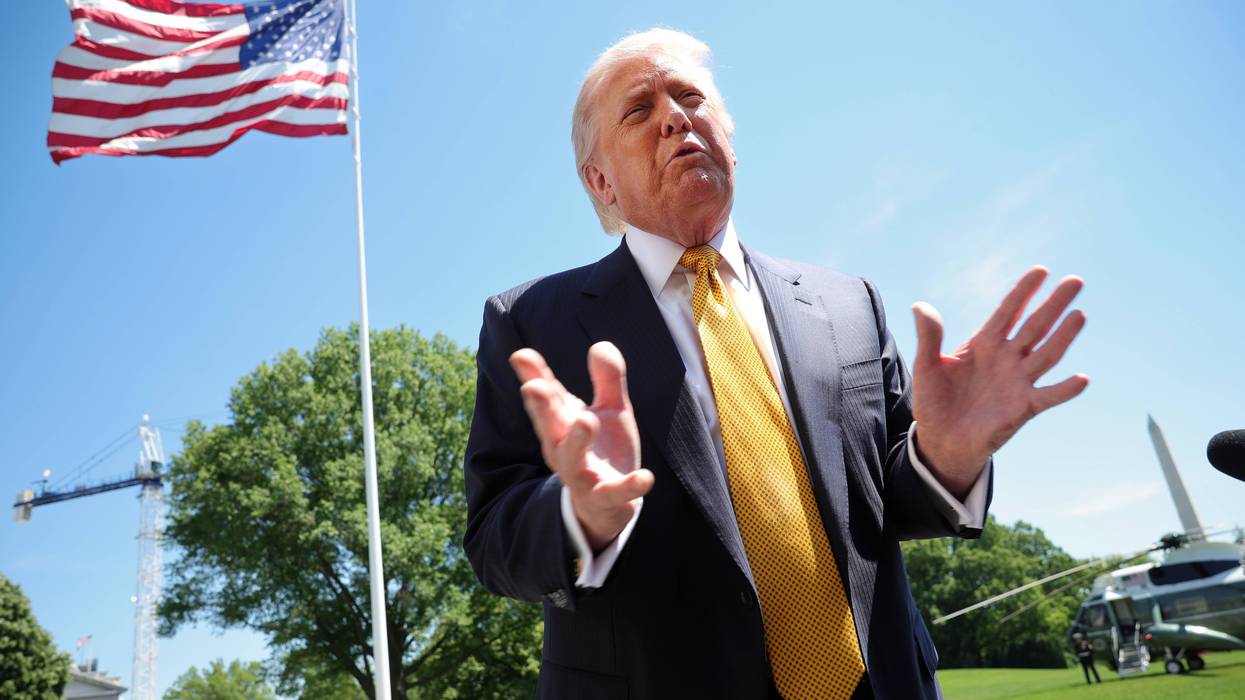
"Trump is considering stealing billions of dollars from the American people" with a $10 billion lawsuit against the IRS, said Rep. Don Beyer.
Democrats in Congress are warning that President Donald Trump is on the verge of "stealing" billions of dollars from American taxpayers in the coming days as his Department of Justice reportedly considers settling his lawsuit against the Internal Revenue Service.
The New York Times reported on Tuesday that the DOJ, headed by the Trump loyalist acting Attorney General Todd Blanche, was holding internal discussions about whether to settle the suit that was brought by Trump and his sons, as well as the family's business empire, in January.
The case centers on the IRS's leak of Trump's tax returns during his first term, which occurred after he broke decades of precedent by refusing to release them. The lawsuit alleges that the IRS failed to prevent former IRS contractor Charles Littlejohn from unlawfully disclosing tax information to media outlets, for which he pleaded guilty in 2024.
The leaks, reported by The New York Times and ProPublica, revealed that Trump had engaged in what was described as “outright fraud” and other “dubious” schemes to avoid taxation, and that he paid no federal income taxes in many of the years leading up to his presidency.
The Trumps are seeking a payout of at least $10 billion from the IRS, which is currently being headed by Trump's handpicked Social Security Administration head, Frank J. Bisignano, who reports to Treasury Secretary Scott Bessent.
This creates an extraordinary legal situation widely described as a blatant conflict of interest, since Trump is suing an IRS that he effectively controls, which is being represented by a DOJ he also effectively controls.
For a case to be valid, however, the parties must demonstrate that they are actually on opposite sides; otherwise, the case can be thrown out of court.
US District Judge Kathleen M. Williams of the Southern District of Florida, who is overseeing the case, questioned its constitutionality last month and required the parties to file briefs by May 20 demonstrating whether there is an actual conflict between them.
According to the Times, however, the DOJ is considering settling the case with Trump before that happens, and there'd be little Williams could do to stop it.
Not only could Trump walk away with a payout of several billion dollars—if not the full $10 billion he asked for—according to the Times, the White House and DOJ have also discussed a deal for the IRS to drop all audits into Trump, his family, and his businesses.
Presidents and vice presidents are required under IRS to undergo audits of their annual tax returns, and a 2024 Times report found that if Trump failed an audit, it could cost him more than $100 million.
Trump's presidency has been defined by him and his family profiting from their positions of influence. According to a live tracker from the Center for American Progress, Trump and his family have used the White House to rake in more than $2.6 billion worth of cash and gifts.
In addition to about $1.5 billion from their cryptocurrency ventures, which they've used the White House to promote, they have received direct gifts—like a $400 million luxury jet from the government of Qatar—and legal cash settlements from media and tech companies worth over $90 million. On top of the IRS lawsuit, Trump has also demanded that the DOJ pay him $230 million over past criminal investigations into him.
But if Trump received even a fraction of what he demanded in a payout from the IRS, it could make the graft from the first year and a half of his presidency look like pocket change, potentially netting him several billion more dollars and possibly even doubling his net worth.
"Trump is considering stealing billions of dollars from the American people," said Rep. Don Beyer (Va.), the ranking House Democrat on the Joint Economic Committee. "He's already the most corrupt president ever by a wide margin, but this would be fraud and theft on a scale even he has never attempted. The largest single act of grand larceny in American history."
Sen. Elizabeth Warren (D-Mass.), the ranking member on the Senate Banking, Housing, and Urban Affairs Committee, added that for the DOJ to hand Trump a settlement "before a court rules" would be a "massive, unprecedented scandal."
"Congress must stop him," the senator added, noting that she had introduced a bill last month that would bar presidents, vice presidents, and their families from collecting settlement payments from the federal government while in office. If they file administrative claims, Warren's bill would also require that the agencies be represented by independent counsels appointed by the court. However, her bill has gotten little traction in a Republican-controlled Congress.
Bharat Ramamurti, who served as the deputy director of the White House National Economic Council under former President Joe Biden, said the IRS lawsuit was a "massive scam" that was "much worse" than Trump's proposal for Congress to provide $1 billion in taxpayer money to pay for his White House ballroom project.
Of the IRS lawsuit, he said, "Democrats should raise hell over it."