

SUBSCRIBE TO OUR FREE NEWSLETTER
Daily news & progressive opinion—funded by the people, not the corporations—delivered straight to your inbox.
5
#000000
#FFFFFF
To donate by check, phone, or other method, see our More Ways to Give page.
Daily news & progressive opinion—funded by the people, not the corporations—delivered straight to your inbox.
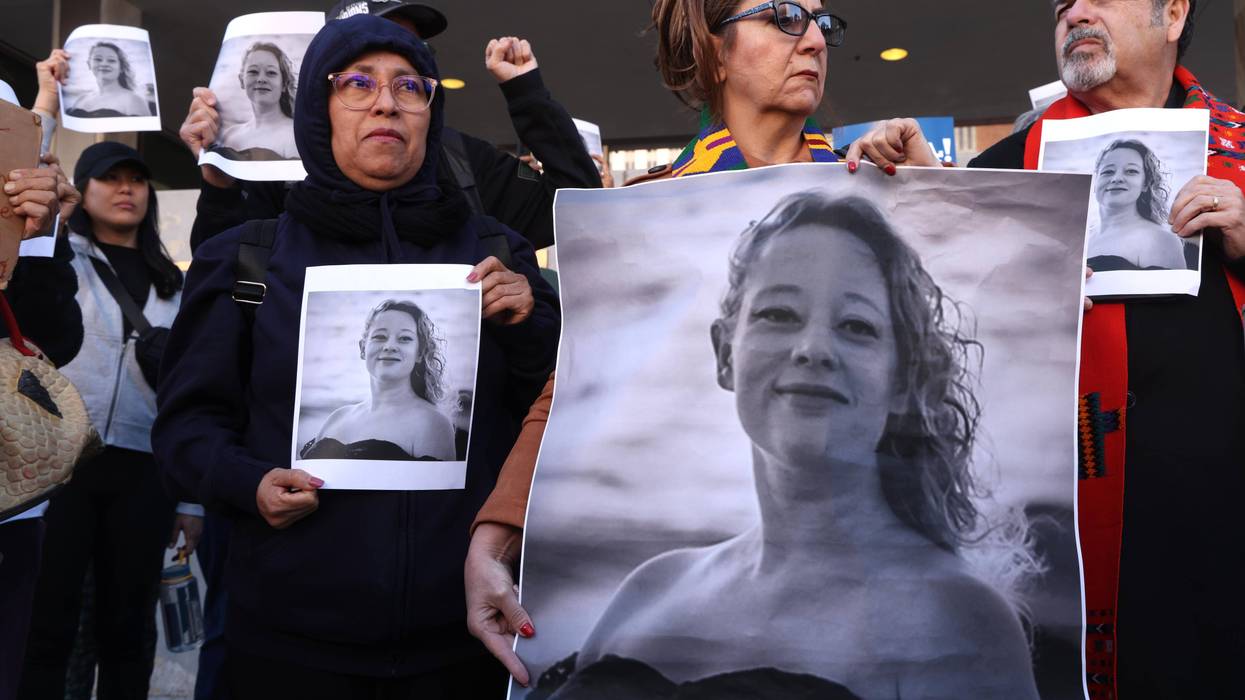
"I stand here with fierce determination to do what is right for my sister, for her children, and for our country—and that is to insist on accountability," her brother said.
Relatives of Renee Good filed a pair of lawsuits against the federal government and immigration officials on Thursday over both the US citizen's killing at the hands of an immigration agent and an alleged conspiracy to interfere with civil rights in Minnesota's Twin Cities.
US Immigration and Customs Enforcement agent Jonathan Ross fatally shot Good, a 37-year-old writer, poet, and mother of three, in Minneapolis on January 7, while ICE was deployed there as part of President Donald Trump's "Operation Metro Surge."
Filed in the US District Court for the District of Minnesota on behalf of her partner, Becca Good, and brother, Brent Ganger—the trustee for next of kin, including her children—the complaint against the United States lays out the details of the shooting and what followed, alleging wrongful death, battery, assault, false imprisonment, intentional infliction of emotional distress, and negligence.
The suit notes that Renee Good had primary custody of her 6-year-old son and provided primary care for her 12- and 15-year-olds. In addition to highlighting the "immense physical, mental, and emotional pain" she suffered in her final moments, it stresses that "Renee's children, parents, and siblings have been forever deprived of the economic support, services, advice, comfort, assistance, protection, and companionship of someone who was monumentally important to them and who cared for them deeply."
Becca Good, who was in the vehicle with her partner and their dog during the shooting, shared in a Thursday statement that "every morning, she is my first thought. I think about how the kids are growing up without their mama, and how I will grow old without the love of my life. I think about how we should have had 40 more years together. But I also think about what she would have wanted after all of this."
"As we have tried to navigate our own massive loss, I am also devastated by how many other lives have been destroyed in this darkest of times," said Good, whose partner's death was shortly followed by immigration agents' fatal shooting of Alex Pretti on January 24, also in Minneapolis. "So many other families are dealing with the loss of their loved ones; to everyone who has had to witness it—the pain of this moment extends far beyond our family."
"What happened to us should never happen to any family," she stressed. "No child should grow up without a parent because of it. No one should lose their sister or their daughter. No one should have to live without their soulmate. Accountability—real accountability—is the only way to make sure that no other family has to go through what we have."
That's where the second complaint comes in. It names not only Ross but also Trump Homeland Security Adviser Stephen Miller, former Homeland Security Secretary Kristi Noem and her adviser Corey Lewandowski, "border czar" Tom Homan, former acting ICE Director Todd Lyons, former Border Patrol Commander-at-Large Greg Bovino, and 10 other federal agents.
"These two civil complaints seek to remedy two distinct, but related wrongs. We seek accountability for the unconscionable and unconstitutional use of force by a federal agent that killed Renee on January 7th. But we also seek accountability for the discriminatory and violent operation that placed Jonathan Ross on Portland Avenue that day," explained Benjamin Berkman, senior attorney at Romanucci & Blandin, the firm representing the family.
"Those in the highest rungs of power authorized armed, masked men to terrorize Minnesotans on the basis of their perceived race or national origin," the lawyer said. "To achieve that goal, they also sought to silence community members who refused to look away. Congress passed the Ku Klux Klan Act to hold accountable those who conspire to deny the equal protection of the laws. Today's filings intend to do just that."
While Trump has sent ICE into various US communities since returning to office last year after running on a promise to pursue mass detention and deportations, the invasion of the Twin Cities followed a series of his racist statements directed at the area's Somali immigrants and their families. The filing alleges that "Operation Metro Surge was conceived, ordered, and carried out to satisfy the president's expressed animus toward people of Somali origin and Hispanic people."
In practice, the operation involved "masked agents roving public streets and targeting people of Somali descent and origin and Hispanic individuals without regard to immigration status," the complaint says. It highlights that "like many members of their community," Becca and Renee Good, two white women, "were concerned about ICE's conduct and its effect on their friends and neighbors."
As with the first filing, the second also lays out the details of the shooting and its aftermath: "Renee was driving the couple's Honda Pilot" and stopped on Portland Avenue, the document says. "Exercising her First Amendment rights, Becca exited the vehicle and began filming ICE activity while Renee remained in the car and honked her horn to warn her neighbors."
It details the confrontation with masked agents, including one who "turned away the aid offered to her as she lay dying," and attempts by the Department of Homeland Security, ICE's parent agency, to blame Renee Good for her own death—including claims, contradicted by video evidence, that she "weaponized her vehicle" in "an act of domestic terrorism."
Antonio M. Romanucci, the law firm's founding partner, emphasized that "unquestionably, unequivocally, neither Renee nor Becca was the worst of the worst. They were exactly as their name says—Good folks. No one was armed. No one was a domestic terrorist. They had their pet dog in the car."
"Indeed, Renee told masked agents she wasn't mad at them; her last words clearly reflected her state of mind. Renee had the right to speak, express herself, assemble, observe, and leave the scene unharmed and alive," he continued. "Today, these lawsuits are the beginning of the ultimate legal weapon in uncovering the truth behind this unlawful use of deadly force and the nefarious conspiracies behind the invasion of American cities by American law enforcement officers."
Renee Good's brother, Ganger, declared Thursday that "I stand here with fierce determination to do what is right for my sister, for her children, and for our country—and that is to insist on accountability."
"What happened to her on January 7th and what has happened to far too many people in the last year is not what America is about," he added. "We can and must do better, and the Constitution must be the roadmap back to decency and the rule of law."

Minnesota Attorney General Keith Ellison said it "should never have taken this long."
After being shut out of the investigations by the Trump administration, Minnesota prosecutors announced on Monday that federal investigators finally turned over reams of unseen evidence related to shootings by immigration agents that killed Renee Good and Alex Pretti and injured Julio Sosa-Celis in January.
Hennepin County Attorney Mary Moriarty announced that after "six months of relentless collective effort," state and local prosecutors had "obtained hard drives of previously withheld evidence" about the killings, which took place during the administration's aggressive surge of immigration agents in and around Minneapolis and sparked a wave of protests.
Moriarty added that prosecutors had also obtained some physical evidence that was "previously withheld" by federal investigators. This includes the SUV that Good, a 37-year-old US citizen and mother of three, had been driving when she was shot through her driver's side window by US Immigration and Customs Enforcement (ICE) agent Jonathan Ross as she appeared to be leaving the scene of an enforcement operation.
Attorney Antonio Romanucci and the legal team representing the family of Good said in a statement that turning over the vehicle and other evidence was "an important and meaningful step towards justice and accountability," and that they were "grateful for the resumption of regular investigatory protocols, which is not only important for the families impacted in these cases, but it is essential for the community and the country."
Shortly after Good was shot, Department of Homeland Security (DHS) spokesperson Tricia McLaughlin portrayed her as a “violent rioter" who had attempted to run over Ross with her car, which then-Secretary Kristi Noem claimed was an "act of domestic terrorism." But video evidence showed that her wheels were pointed away from the agent, indicating that she was attempting to leave.
Homeland Security adviser Stephen Miller similarly described Pretti, a 37-year-old intensive care nurse, another US citizen, as a "would-be assassin” while DHS said he showed up at a protest against ICE attempting to "massacre law enforcement" based on the fact that he was carrying a legal firearm when he was shot by two Customs and Border Protection (CBP) agents.
Videos showed that Pretti had intervened to stop agents from harming another protester and only held his phone during the confrontation, never reaching for his gun.
Sosa-Celis, a 24-year-old Venezuelan national, was called a "violent criminal alien" by DHS, which accused him and his two roommates of having attacked agent Christian Castro with snow shovels, leading Sosa-Celis to be shot in the leg through the door of the home.
Assault charges against him and his roommate were dropped by federal prosecutors after video and medical evidence showed that Castro had not been attacked. ICE Director Todd Lyons acknowledged that the agents had lied about the incident, and Castro has since been arrested after being charged by Moriarty's office as part of an independent investigation.
Neither Ross nor the two CBP agents who shot Pretti—Jesus Ochoa and Raymundo Gutierrez—have been charged.
Federal authorities have repeatedly rejected demands from Minnesota officials to cooperate with investigations into the three shootings and grant access to evidence and the ability to interview witnesses.
In the case of Pretti, agents blocked investigators with the Minnesota Bureau of Criminal Apprehension from entering the shooting scene after the BCA had obtained a search warrant and removed physical evidence before Minnesota investigators could document it. This included Pretti's gun, cellphone, and body camera footage, and other physical and digital evidence.
In March, Minnesota sued the Trump administration over its refusal to cooperate with the investigations, a lawsuit that was still ongoing as of Monday.
The federal government did not explain its sudden change of direction. The Associated Press described it as part of an agreement in which Minnesota agreed to share evidence it had collected in Castro's case if the federal government shared evidence it was withholding about the shootings of Good and Pretti.
Moriarty thanked the federal officials for "their willingness to consider changing course to share evidence and promote public trust."
But Minnesota Attorney General Keith Ellison emphasized that it "should never have taken this long."
"I remain deeply troubled that the federal government spent more than half a year attempting to conceal this evidence from state investigators," he said in a statement. "And I hope this is the beginning of a major course correction on the part of the federal government."
US Sen. Tina Smith (D-Minn.) agreed that "this took way too long" and said, "It's not enough."
"Minnesotans' trust has been fundamentally broken," she said. "There's a long way to go before we get true justice for ICE killing two of our neighbors."
The federal government's decision to turn over evidence to Minnesota officials came less than a week after an ICE agent shot and killed Lorenzo Salgado Araujo, a 52-year-old Mexican father in Houston, whom DHS claimed had attempted to attack officers with his car, only to once again be undermined by video and witness accounts.
DHS has acknowledged that it was not attempting to target Salgado for removal and had mistaken his van for someone else's.
Harris County District Attorney Sean Teare has said that, just like in Minnesota, the federal government was refusing to share evidence with local officials.
“The federal government has not invited us in,” Teare said. “The federal government is not collaborating with us with this investigation.”
On Monday, ICE agents killed another man in Maine, 26-year-old Colombian father Joan Sebastian Guerrero, who was reportedly shot several times after stopping his vehicle, according to video footage.
DHS Secretary Markwayne Mullin has said Guerrero “weaponized” his vehicle and attempted to ram officers. One eyewitness told Reuters they saw a federal SUV ram Guerrero's car.
According to Sen. Angus King (I-Maine), Mullin said that Guerrero, who was authorized to work in the US and had a Social Security number, was not the target of the warrant agents were executing.
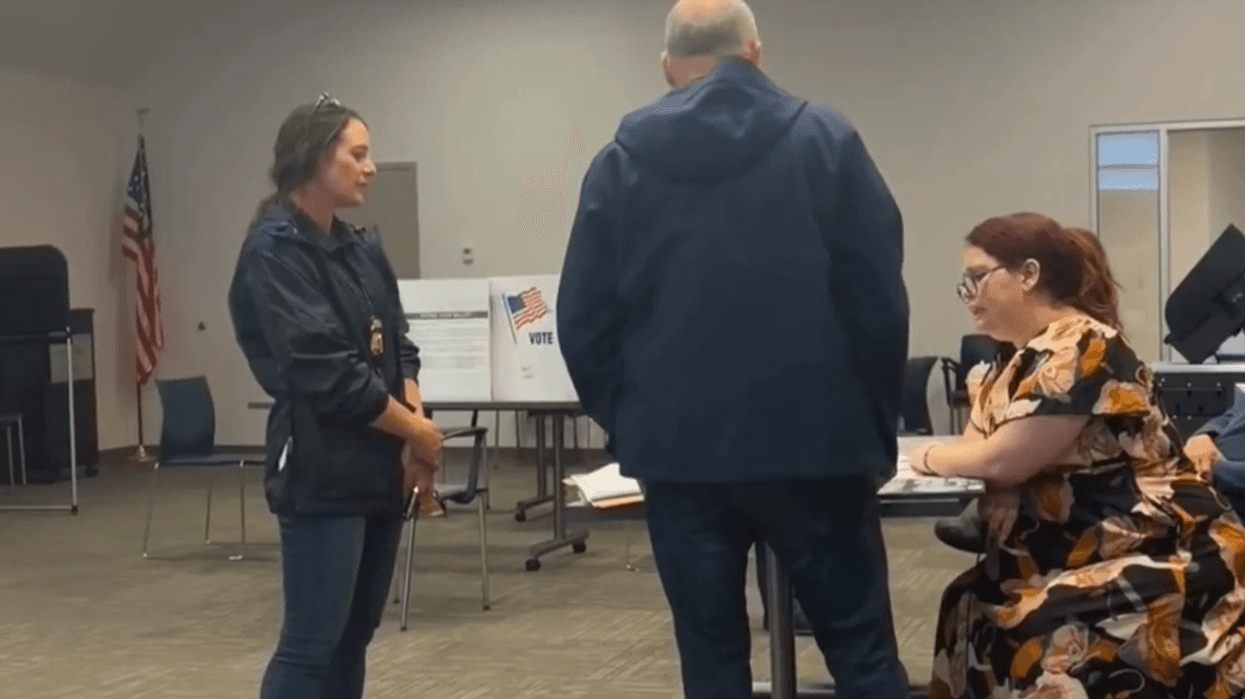
"ICE agents entered a polling place to intimidate a worker about her social media posts," said a civil liberties advocate.
A poll worker in Syracuse, New York said she was left unsettled after a pair of US Immigration and Customs Enforcement agents showed up at her polling place to tell her to delete Instagram content calling for the indictment of the agent who shot Renee Good in January.
The worker, Paigelynne Gonyea, was in the middle of her shift during Tuesday's elections in New York when she received a phone message from someone who identified himself as Dave Brody, a special agent with the Department of Homeland Security.
He said agents "were just by" her apartment and had spoken to her husband about a post in which she "doxxed an ICE agent back in January."
Gonyea said the agents were referring to a post she made on January 8, 2026, the day after an ICE agent shot and killed Good, a 37-year-old mother and US citizen, in Minneapolis. The post contained an image of the masked agent, who had at that point been identified as Jonathan Ross by the Minnesota Star Tribune.
"The ICE agent who shot and killed Renee Good in broad daylight has been identified as Jonathan Ross by the Minnesota Star Tribune," the post read. "I think today is a great day for Jonathan to be indicted!"
Gonyea said she could not leave her job working the polls to speak with the agents, so she told them to come to her polling place. "They knew I was a poll site worker and still came in," she said.
Referencing what happened to Good, she said she refused to meet with the agents outside alone.
“I’ve seen the news, especially in Minnesota,” she said. “And I didn’t want anything to happen to me at all.”
Video of the encounter, shot by another employee, shows the two agents entering the polling site at Central Library on Salina Street.
The agents handed Gonyea a form letter that read, "YOU MAY BE IN VIOLATION OF FEDERAL LAW."
The form, which Gonyea posted, said ICE's Office of Professional Responsibility (OPR) had identified a post on Gonyea's account that it believed "may constitute a violation" of federal law.
The notice informed her that "it is unlawful to threaten to assault, kidnap, and/or murder a federal official" and that "knowingly making restricted personal information about a covered person, or their immediate family member, publicly available with the intent to threaten, intimidate, or incite the commission of a crime" was also illegal. It said violating these laws could subject her to state and federal prosecution.
The letter directed her to "promptly remove and/or discontinue the aforementioned behavior." It warned her that receipt of the notice "will be taken into consideration, should you continue to be involved in any criminal activities described above."
Gonyea told Syracuse.com that the agents presented her with copies of her social media posts and her driver's license and that "they tried to scare me into signing" the document "while I was working."
She refused to sign the notice despite continued pressure from the agents.
Gonyea was emphatic that her post—which only repeated publicly reported information—did not violate the law.
“I didn’t dox his personal information, such as address, phone number,” she said, adding that she would not remove the post.
Gonyea has discussed the case with the New York Board of Elections and the attorney general’s civil rights office, and she said she has contacted US Rep. John Mannion (D-NY), Syracuse Mayor Sharon Owens, and the New York Civil Liberties Union.
She has created a GoFundMe page to pay for potential legal expenses.
“For ICE to come to me over a social media post just feels very 1984 to me,” Gonyea said. “They definitely should have known better to not go into a polling place, even if I said it was OK.”
In a post on her GoFundMe page, Gonyea described the incident as a "pretty unsettling run-in."
"It’s the kind of situation that makes you stop and think about free speech and how far government authority can go. Honestly, it shook me, and I don’t think it’s something that should just be brushed off," she said. "It just doesn’t sit right with me."
Dustin Czarny, the election commissioner for Onondaga County, emphasized that federal law only allows specific people to enter polling places during elections—including poll workers, elections inspectors, voters eligible to vote at the site, and someone a voter brought to assist them in voting
Federal law specifies that it is unlawful for anyone in federal service to send “troops or armed men” to places where elections are held.
“There’s no role for law enforcement officials to be inside a polling place unless they are responding to an emergency of some kind,” Czarny said. “There is no indication of that here.”
Despite this, Trump administration officials have indicated a desire to send ICE agents to polling places on election day during the 2026 midterms.
Then-Homeland Security Secretary Kristi Noem said in February that her department had been "proactive to make sure we have the right people voting" in elections. In March, then-Deputy Attorney General Todd Blanche asked at a conservative political conference, "Why is there objection to sending ICE officers to polling places?” adding, "Illegals can't vote. It doesn't make any sense."
Trump refused to rule out the possibility when asked about it by reporters in May, saying he'd "do anything necessary to make sure we have honest elections."
Critics of ICE have described agents' demands for Gonyea to remove political speech as a worrying new frontier for the agency's encroachments on civil liberties.
"ICE agents entered a polling place to intimidate a worker about her social media posts," said David J. Bier, the director of immigration studies at the Cato Institute. "Wouldn't you quit before you carried out an order to do this?"
"Americans refuse to be intimidated by these government criminals who hate the Constitution," he added. "Normal people want accountability, not impunity for killing Americans unnecessarily."
"But it’s not enough for ICE to disagree; they need to stamp out dissent," he said. "I know they monitor my social media. You should know that they’re monitoring yours too."
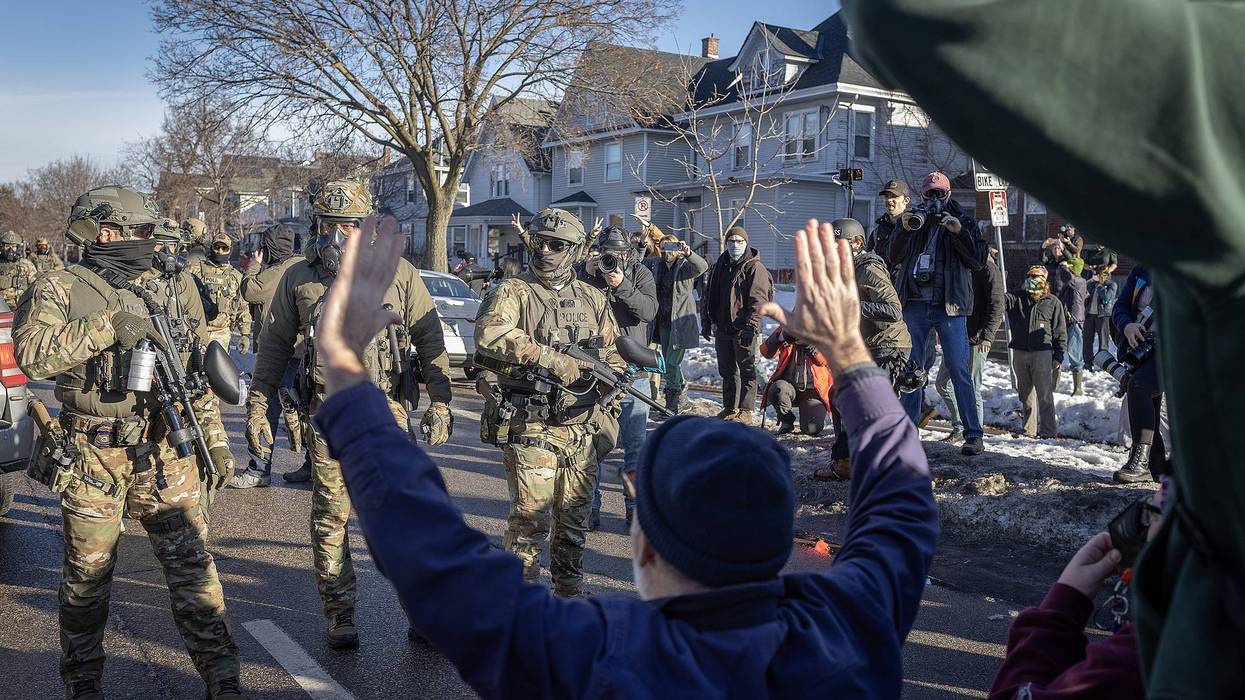
“The federal government sent hordes of masked, armed agents to grab people off the street, whisk them away in shackles, and abuse those who sought to bear witness,” Human Rights Watch said of the deadly blitz.
Human Rights Watch on Thursday published a scathing report detailing how President Donald Trump "caused a human rights crisis" in Minnesota by ordering the deadly federal invasion of the Twin Cities in service of the administration's mass deportation agenda.
HRW called Operation Metro Surge, launched by Trump last December, "an unprecedented deployment of thousands of federal immigration agents and officers to the state of Minnesota," including members of Immigration and Customs Enforcement (ICE) and Customs and Border Protection (CBP).
"The Trump administration claimed that Operation Metro Surge was designed to keep Americans safe and often stated that it was targeting noncitizens with violent criminal histories," the report states. "But the operation itself caused significant harm, and nearly two out of three immigrants arrested by ICE during Operation Metro Surge had no prior US criminal history whatsoever."
At least three people have been killed in connection with the operation. ICE agent Jonathan Ross fatally shot Renée Good, a 37-year-old US citizen, in Minneapolis on January 7. A week later, 36-year-old Nicaraguan detainee Victor Manuel Díaz, who was arrested during the operation, became the third person to die at the notorious East Montana concentration camp in Texas. On January 24, CBP officer Raymundo Gutierrez and Border Patrol agent Jesus Ochoa shot and killed nurse Alex Pretti, 37, also in Minneapolis.
"Federal agents shot a third Minneapolis resident and pulled guns on dozens more," the report continues. "Agents also violently smashed car windows without justification, physically threw people to the ground who were not resisting arrest, and deployed chemical irritants and flash-bang grenades on dozens of occasions, sometimes at close range and without warning, resulting in injuries, including to journalists."
Furthermore, federal agents "unlawfully arrested and detained hundreds; engaged in racial profiling, harassment, and surveillance; and terrorized Minnesotans, chilling their rights to freedom of expression and assembly, and impacting their rights to education and health, among others," HRW said, adding that "residents faced further abuses when they collectively acted to protest, prevent, and stop these violations of their rights."
The HRW report calls for an immediate end to abusive federal enforcement operations in Minnesota; independent investigations into alleged unlawful killings, racial profiling, arbitrary arrests, excessive force, and other rights violations; and full accountability for officials responsible.
“The federal government sent hordes of masked, armed agents to grab people off the street, whisk them away in shackles, and abuse those who sought to bear witness,” Reagan Williams, HRW's crisis and conflict researcher, said in a statement. “Minnesotans mobilized to protest, to document abuse, and to provide critical aid to one another. National-level action is needed to ensure accountability, end ongoing abuses, remedy the harm, and prevent another crisis of this scale.”
“Operation Metro Surge put the violent and abusive practices of these agencies on full display,” Williams added. “We have clear proof of how they operate when impunity prevails, and we need to urgently chart a new way forward through accountability and structural reforms that put an end to these abuses.”
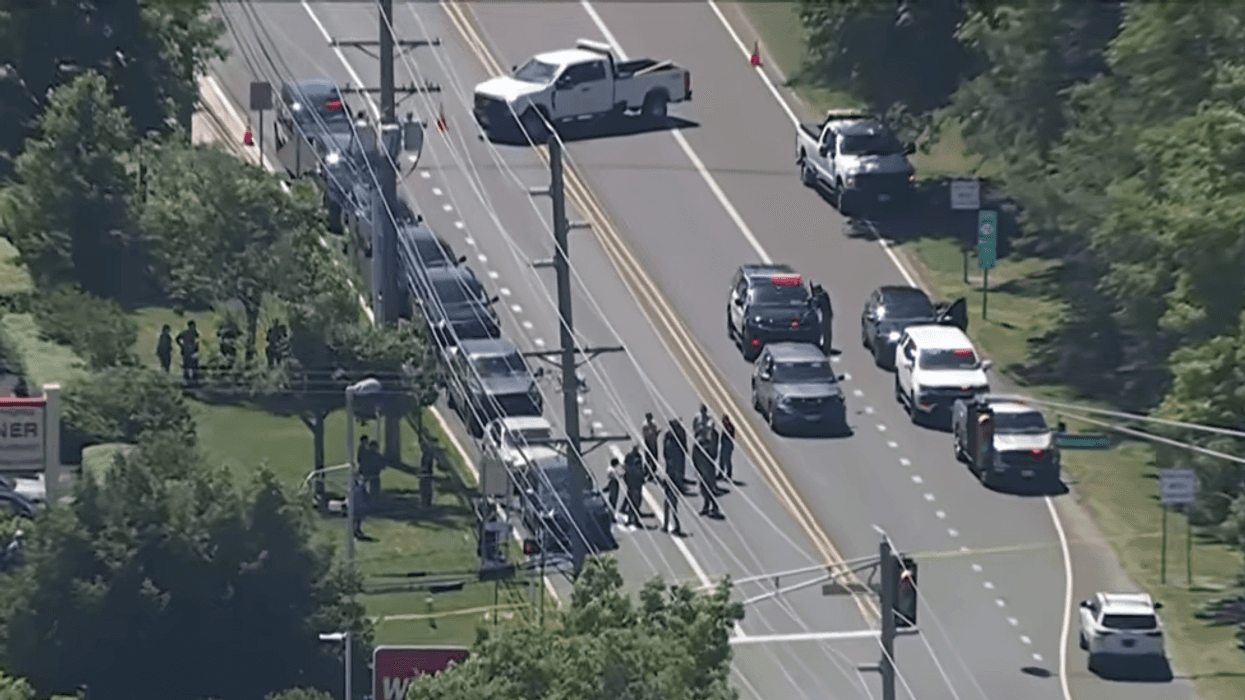
"ICE shows up, and nothing but chaos.”
This is a developing story… Please check back for updates…
Less than a week after Republicans in Congress passed $70 billion in new funding for President Donald Trump's mass deportation campaign, an immigration agent reportedly shot at a fleeing vehicle in New Jersey on Monday.
According to the police department of Stafford Township, Immigration and Customs Enforcement "was attempting to apprehend a suspect when the suspect fled from the scene in a vehicle, striking [an ICE agent]" on Monday morning around 9:30 am near a Wawa convenience store.
ICE identified the suspect as a Peruvian national, Friedrich Castillo-Ormeno, whom the agency said was given a final order of removal on January 30. Aside from describing him as an "illegal alien," ICE provided no other information about his background or any criminal history.
On June 15, 2026, ICE law enforcement officers were conducting a targeted vehicle stop in Manahawkin, New Jersey to arrest Freidrich Castillo-Ormeno, an illegal alien from Peru who was released into our country under the Biden administration. He was given a final order of removal…
— U.S. Immigration and Customs Enforcement (@ICEgov) June 15, 2026
"The agent discharged his firearm at the vehicle, reportedly striking it," the Stafford police said. "The suspect fled the scene in the vehicle and has not been located at this time." Onlookers told NBC 10 Philadelphia that bullets struck the driver's van and may have blown out the back window.
The police added that “the agent reportedly sustained unknown injuries." According to Patch, officers went to the scene and performed first aid on the agent before transporting him for further treatment. Sources told NBC 10 Philadelphia that he is expected to make a full recovery.
"It is unknown if the suspect was injured at this time," the Stafford police said, adding that although Castillo-Ormeno fled the scene, “there is no reason to believe there is any concern for the public’s safety.”
Under the Department of Homeland Security's use-of-force policy, agents are not supposed to shoot at fleeing vehicles unless the officer believes they are at imminent risk of death or serious physical injury.
ICE said Castillo-Ormeno "weaponized his vehicle and struck an officer, resulting in the officer discharging his weapon."
According to Patch, local police are not conducting an investigation into the incident, and all further updates will come from the FBI.
Under Trump, the US Department of Justice has faced criticism for locking state and local investigators out of investigations into the shootings of US citizens Renee Good and Alex Pretti in Minneapolis earlier this year and spreading false information to justify their deaths.
Minnesota became the center of a national wave of resistance to ICE that ultimately pushed federal immigration agencies to retreat on some of their most extreme tactics, though the mass deportation push against immigrants largely without criminal histories has not subsided.
New Jersey has met ICE with its own share of pushback. Last month, US Sen. Andy Kim (D-NJ) was pepper-sprayed by federal agents outside the privately run Delaney Hall detention facility in Newark. Demonstrators had shown up in solidarity with hundreds of detainees who had gone on a hunger and labor strike to protest the squalid conditions in the facility, and protests have continued for weeks.
Although Stafford Township is overwhelmingly Republican, The Daily Beast found that in the immediate aftermath of Monday's reported shooting, some residents in a local Facebook group were wary about the tumult that ICE's presence could bring.
"Immigrants have been in Stafford for decades with no problems,” one resident wrote in a local Facebook group where the incident is being discussed. “They are respectful and hardworking. ICE shows up, and nothing but chaos.”
“Who shoots at a van?" wrote another Stafford resident, who added that "[ICE] training is brutal."
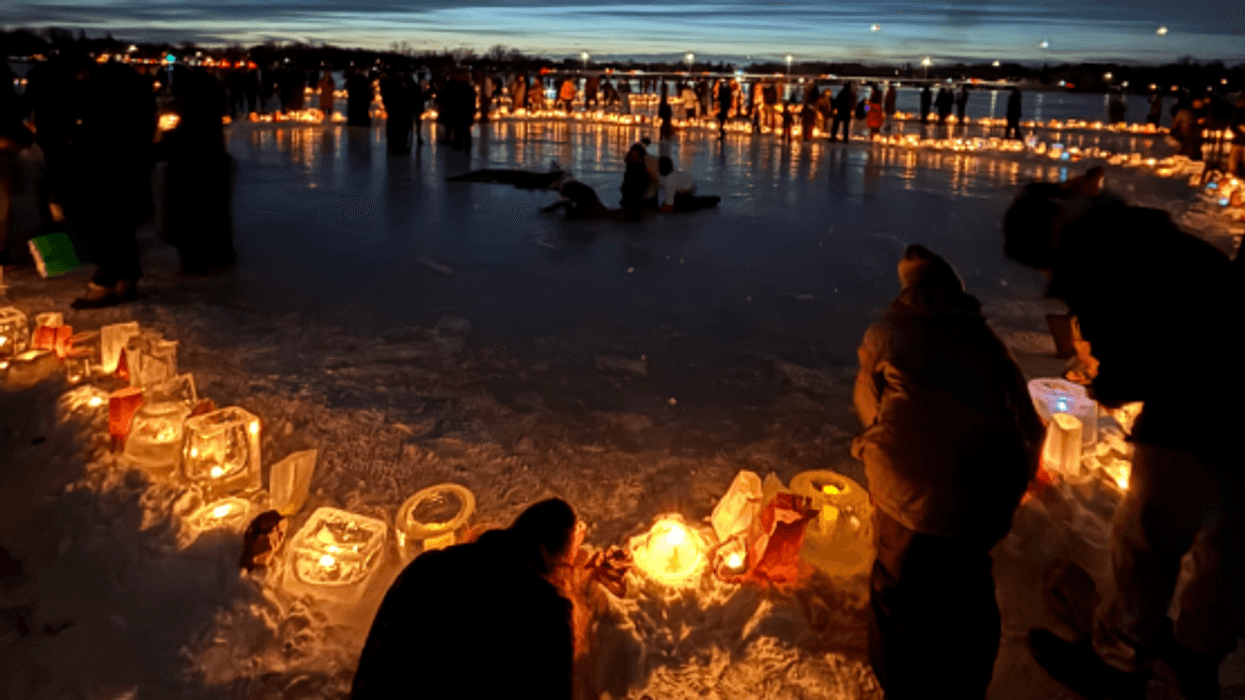
Minnesota's artists aren't that different from artists anywhere, but there are some unique parts of Minnesota's ecosystem that explain the breadth and depth of the creative response to the federal immigration enforcement surge.
Two thousand of us were standing on a frozen lake in the dark.
My mittened hand was gripping the mittened hand of a stranger; tears were freezing on my cheeks. It was not a particularly Minnesotan thing to hold hands with a stranger, especially while expressing emotion so openly. But we were not in normal times.
We were there to light ice lanterns, to spell out "ICE OUT" on the lake in the hopes that the planes flying above would see our message. After long days of school patrols, protests, grocery deliveries, and trying to figure out how to raise more money to help neighbors pay rent, we needed to be together in person. We needed to sing, we needed to move, we needed to feel. And so we did, led in a call-and-response by Brass Solidarity, a community brass band: "Hold on, change is coming!" It was powerful and beautiful and deeply connected to our culture, holding this community together. This is what a creative response looks like when artists are already woven into the fabric of a community before the crisis arrives.
This Sunday, May 31, the people of the Twin Cities will accept the John F. Kennedy Profile in Courage Award in Boston, an honor previously awarded to former Vice President Mike Pence and the September 11 first responders. The Kennedy Foundation cited the neighbors who risked their safety to protect their community from an unprecedented federal law enforcement operation: the 30,000 who trained as observers and rapid responders; the schools that organized patrols; the parent group chats, book clubs, and faith groups that became webs of mutual aid, delivering groceries, raising rent and legal funds for neighbors trapped in their homes.
It is not just what Minnesotans did in this crisis. It is what they had already built: a state that had spent decades recognizing artists not as a luxury or an afterthought, but as neighbors with something essential to contribute.
Journalists and historians have spent months trying to explain why Minnesota responded as it did. Was it the history of the cooperative movement that helped build a state where people looked out for one another? Or the recovery community and the Minnesota Model's belief that people heal together? Almost no one has asked why the artists were ready. That's what I want to share.
Minnesota's artists aren't that different from artists anywhere. But there are some unique parts of Minnesota's ecosystem that explain the breadth and depth of the creative response here.
Minnesota spends more on the arts per capita than any other state, $9.67 per person, backed by the Legacy Amendment, a 25-year constitutional commitment to the state's arts and cultural heritage, alongside other quality of life investments like clean water, parks, and trails. That's not a program. That's a value system encoded into law. A blend of public support and private philanthropy has built statewide artist fellowship programs, regional arts councils serving every county, and local governments that regularly hire artists to address community challenges. The nation's longest-running Guaranteed Income Pilot for Artists, launched in Minnesota with private funds, gives artists a monthly stipend with no strings attached. Participants have reported volunteering more, deepening their roots in their communities, and taking on creative work they never could have afforded before.
But money alone doesn't explain what happened here. Minnesota’s arts support is rooted within an ecosystem of support for organizers, activists, and community leaders, creating an arts community with a deep understanding of the skills, values, and ethics of effective community work. Artists in Minnesota view their artistry as integral to, not separate from, their identity as a neighbor and community member.
In 2013, when St. Paul installed a new light rail line, hundreds of artists were engaged alongside businesses and community groups on the construction corridor, turning disruption into connection. Those artists didn't just make murals. They staged performances, built installations, and animated storefronts. They learned who worked at City Hall. They built relationships with power structures. Because artists in Minnesota have had numerous opportunities like this to bring their creativity to critical community issues, and had spent years doing that work, they weren't strangers to this movement. They were already inside it.
Drive down any street in the Twin Cities today, and you will see house after house with signs: "ICE Out." "We Keep Us Safe." "We Love Our Immigrant Neighbors." Nearly all are artist designed, many of them handmade prints. This doesn’t only represent the beauty and creativity that artists bring to a movement, but also symbolizes a movement that has turned away from mass production and corporate extraction, and toward the handmade and the local. As Immigration and Customs Enforcement (ICE) agents photograph us and catalog our faces in AI databases built for harassment and intimidation, artists like Sean Lim, Marlena Myles, and D Guzman have worked through the night to generate human-made expressions of resistance.
This is what Minnesota's artists have been doing for months: showing up, leading, organizing, making the movement visible and felt. Thousands gathered in the cold with Singing Resistance to send a message to ICE agents that they could change their minds and join a loving community. Their tactics were rooted in Otpor, the student movement that brought down Slobodan Milosevic's authoritarian regime in 1990s Serbia by spreading one simple message: "You might not join us today, but you can join us tomorrow." Singing Resistance is now sharing training tool kits with communities across the country.
Brass Solidarity, formed at George Floyd Square in 2020, has played at hundreds of gatherings, connecting this moment to the movement for Black lives and bringing joy and resolve to these spaces. Mixed Blood Theater has trained neighbors to speak clearly and confidently about their constitutional rights. Drummers have organized mass protests. Poets have told our story, including Renee Good, who was herself a poet. Art spaces and creative businesses have become food pantries, coat donation sites, and whistle distribution points. I've lost track of the sold-out cabarets, concerts, and pottery sales to benefit the immigrant legal aid and rental assistance, often appearing in hours, without marketing campaigns. Neighbors talk to neighbors.
The art being made for our community is happening outside the competition of grants, outside formal arts institutions, outside the commodification of collectors, outside the pressure for clicks. It is urgent and rooted in our community's needs. It feels sacred.
Many of Minnesota's artists put their lives on hold for months at great cost to their economic stability and at great risk to their safety. The thing I have said most when people outside Minnesota ask how I am: It is so much more terrifying than the media can show you. Every noise sounds like a whistle. Every unknown car could be bringing horror to our doorstep. The damage to our community's sense of safety will take years to repair.
But it is so much more beautiful than the media can show you, too.
There is a reason the Kennedy Foundation recognized the people of the Twin Cities with one of the most storied honors in American civic life. It is not just what Minnesotans did in this crisis. It is what they had already built: a state that had spent decades recognizing artists not as a luxury or an afterthought, but as neighbors with something essential to contribute, as vital to a community's health as any doctor, organizer, or teacher.
When the moment came, Minnesota's artists were ready, gathering us on frozen lakes, calling on us to hold hands with strangers, and spelling out in light for all the world to see what it means to take care of one another.
An agency whose officer shot a poet through her windshield is about to receive an appropriation of historic size, through a process designed to insulate the appropriation from democratic accountability, in a bill that also funds a ballroom.
You know their names.
Renee Good was 37 years old, a poet, a mother of three, when an Immigration and Customs Enforcement officer named Jonathan Ross fired three shots into her car on a January morning in Minneapolis. The Hennepin County Medical Examiner has ruled her death a homicide. Evidence indicates she was still alive when other federal agents prevented a bystander physician from reaching her.
Alex Pretti, also 37 years old, an intensive-care nurse, was holding a smartphone—what Jon Stewart, in the kind of bitter eulogy that has lately become the medium for social media’s truth-telling, called “a 1080p, 60fps weapon of mass illumination”—when two Border Patrol agents, whose identities the federal government still refuses to release, shot him dead. Federal immigration officers have shot at least 14 people in the United States between September and February. Four are dead. No officer has been charged. Soon, the United States Congress will move to pass another $72-billion package—nearly all of it for the agencies that killed them and the immigration enforcement apparatus around them—on a procedural track designed expressly to bypass the majority of Americans who do not want this.
The track is called reconciliation. Created in 1974 for narrow fiscal adjustments, it allows the majority party to pass certain budget legislation with 51 votes instead of the 60 otherwise needed to overcome a filibuster. It has been steadily stretched into a vehicle for major policy, and this time the policy is the funding of an enforcement operation that has killed US citizens—with no Democratic input and no accountability reforms attached.
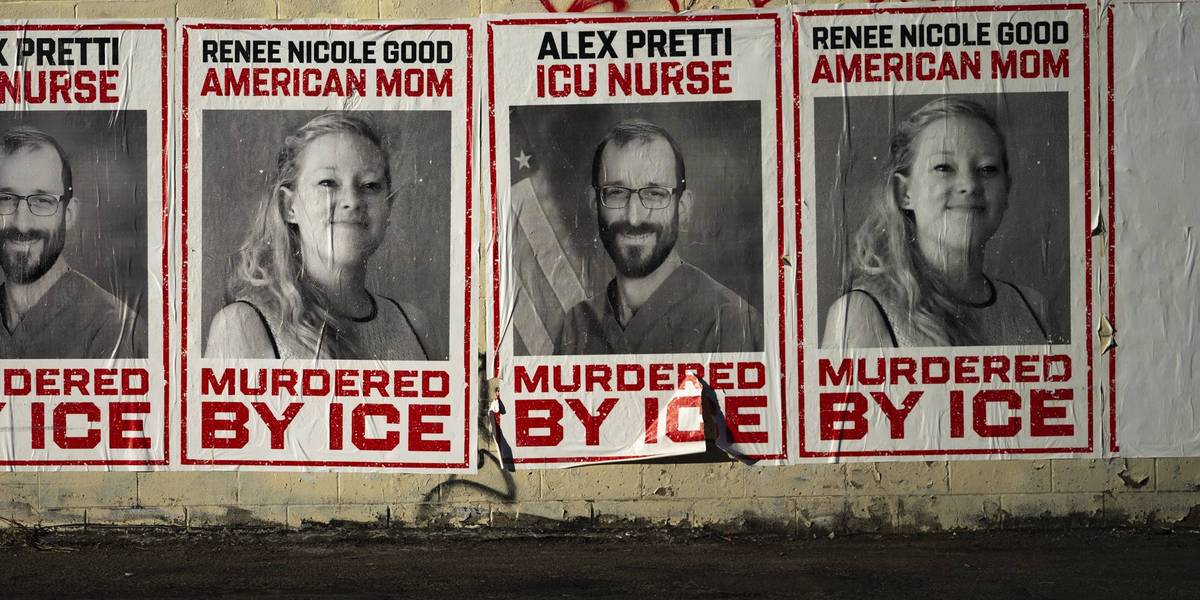 Signs memorializing Renee Good and Alex Pretti are seen pasted to the wall of a building on February 12, 2026 in Minneapolis, Minnesota. (Photo by Stephen Maturen/Getty Images)
The pending bill also tucks in $1 billion for the Secret Service to add security features to the ballroom President Donald Trump has been building at the White House. Read that again. Seventy-one billion dollars for the agencies Rep. John Mannion, a New York Democrat, has accurately called “a personal paramilitary unit of the president”—and the immigration enforcement apparatus around them. One billion to harden the walls of the room where the architects of this oppressive system will raise glasses to one another.
What can be done? The odds are against stopping the bill outright—but the procedural fight is already producing results. One lever is the Byrd Rule, a 1985 Senate procedure that bars reconciliation bills from including provisions whose policy effect outweighs their budget effect, or that fall outside the relevant committee’s jurisdiction. The pre-floor adjudication is called the Byrd Bath, and it is the minority’s most powerful tool against a reconciliation bill. Last week, Parliamentarian Elizabeth MacDonough advised that core sections of the bill—including most of the Customs and Border Protection funding and a provision that would undermine Flores Settlement protections for unaccompanied immigrant children—violate the Byrd Rule. Over the weekend, she ruled that the $1 billion in ballroom security money does too.
Beyond Byrd Rule challenges, Democrats can force costly amendment votes during the vote-a-rama (the marathon amendment voting that follows the 24-hour debate clock), refuse the unanimous consent agreements that would compress the procedure, and use every floor hour to make this vote painful for those who cast it. Democrats plan to use those amendments to tie the package to the unauthorized Iran war and the ballroom—putting Republicans on record on all three at once. Whether they will is a question worth asking—directly, by phone, in volume—of every Democratic senator before the floor vote. It is also worth asking the two Republican senators who voted against the budget resolution last month, Lisa Murkowski of Alaska and Rand Paul of Kentucky, to hold the line on the substantive vote. And it is worth asking Sen. Susan Collins of Maine—who chairs Appropriations and is in the fight of her political life for reelection this November—whether she wants the vote her constituents remember in October to be a vote for this.
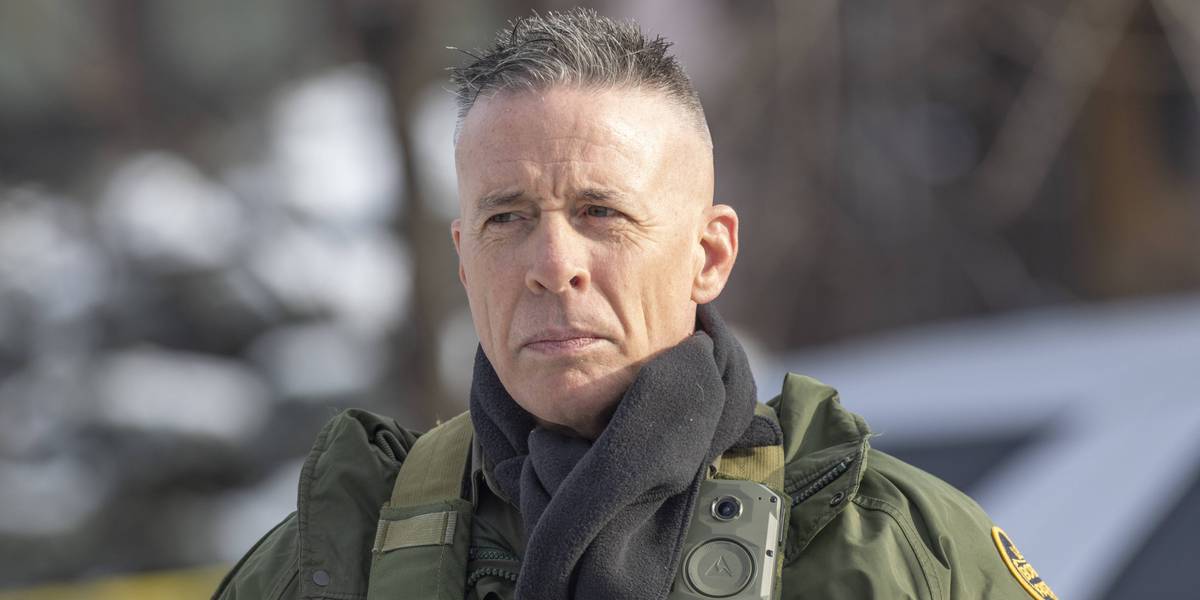 Gregory Bovino, the Commander-at-Large stands around the scene where ICE agents fatally shoot a woman earlier in the day in Minneapolis, Minnesota, United States, on January 7, 2026. (Photo by Christopher Juhn/Anadolu via Getty Images)
The House, where the bill must also pass, offers Republicans almost no margin for error. With one of the thinnest majorities in recent memory and several seats currently vacant, a small number of Republican defections—if Democrats hold together—would be enough to sink the bill.
The members worth calling are not only the obvious ones—the moderates and Latino-district Republicans whose constituents are already being targeted by the agencies this bill funds—but the Democrats whose offices need to hear, the same thing they heard from voters in January and February: that this is intolerable, that the silence of decent people in the face of it is intolerable, that the elected representative who does not, in this moment, expend every iota of political capital available to them is not in fact representing anyone whose vote they should expect to receive again.
This is what is happening: an agency whose officer shot a poet through her windshield is about to receive an appropriation of historic size, through a process designed to insulate the appropriation from democratic accountability, in a bill that also funds a ballroom. There is a way to oppose it. The way requires phone calls and every other form of direct action. They have to start now.
Call the Congressional switchboard at (202) 224-3121 and ask for your senators and your representative. Tell them to vote no, and to use every procedural tool available—e.g. Byrd Rule challenges, vote-a-rama amendments, refusal of unanimous consent—to slow, shape, and defeat this bill. Tell them this: funding the agencies that killed Renee Good and Alex Pretti, without reform, without accountability, on a track designed to escape consent, is not something you will forget at the next election.

"These shootings are just three examples of the violent actions committed by federal agents in Minnesota during the surge," the complaint notes.
Minnesota officials on Tuesday sued the Trump administration over its refusal to cooperate with state investigators probing the killings of Renee Good and Alex Pretti by federal agents earlier this year, as well as the shooting of Julio Cesar Sosa-Celis, who was wounded but survived.
Agents with the US Department of Homeland Security and its immigration agencies descended on Minnesota's Twin Cities and surrounding communities in January. Protests and national outrage over President Donald Trump's "Operation Metro Surge" mounted after a series of related shootings in Minneapolis, leading to the current funding fight in Congress that has partially shut down DHS.
Immigration and Customs Enforcement officer Jonathan Ross fatally shot Good, a 37-year-old US citizen, on January 7; an unidentified agent shot Sosa-Celis, a Venezuelan national, on January 14; and Border Patrol agent Jesus Ochoa and Customs and Border Protection officer Raymundo Gutierrez fatally shot Pretti, a 37-year-old US citizen and nurse, on January 24.
"These shootings are just three examples of the violent actions committed by federal agents in Minnesota during the surge," stresses the new lawsuit, filed in a Washington, DC federal court by Minnesota Attorney General Keith Ellison, Hennepin County Attorney Mary Moriarty, and Minnesota Bureau of Criminal Apprehension Superintendent Drew Evans.
"Federal agents also carried out illegal stops, sweeps, arrests, and dangerous raids in sensitive public spaces," the complaint notes. "The surge created widespread fear among Minnesota residents, both citizens and noncitizens. It caused hundreds of millions of dollars in economic harm. And it flooded Minnesota's federal courts with lawsuits challenging the unlawful detentions that resulted from the operation."
With the three shootings, "Minnesota authorities responded to the scene of each shooting to investigate" and "expected federal cooperation," the filing explains. "At the scene of the first two incidents—the killing of Renee Good and the shooting of Julio Sosa-Celis—federal agents initially indicated that they would work with Minnesota authorities and share relevant information. State investigators thus began their work in reliance on that understanding."
"But in both cases, federal agents quickly reneged on their pledges to cooperate. Instead of sharing information, federal authorities took exclusive possession of evidence that had been collected, and they denied Minnesota investigators access to key information," the document details. "At the scene of the third shooting—the killing of Alex Pretti—federal immigration officers physically blocked investigators of the Minnesota Bureau of Criminal Apprehension (BCA) from accessing the scene. That physical obstruction persisted even after state officials obtained a judicial warrant authorizing access to the scene."
The filing points out that when "faced with unprecedented noncooperation," the plaintiffs submitted formal requests to DHS and the US Department of Justice—which are named as defendants, as are their leaders, outgoing Secretary Kristi Noem and Attorney General Pam Bondi. Noem's replacement, Markwayne Mullin, was sworn in Tuesday afternoon.
"Defendants' responses to those requests—indeed, by and large, their refusal to respond at all—confirm that the federal government has adopted a policy and practice of refusing Minnesota authorities access to investigative materials relating to uses of force by federal immigration officers deployed to Minnesota as part of Operation Metro Surge," the complaint says.
Emphasizing Minnesota's "authority and responsibility to protect against and address violence within its borders," as well as the history of cooperation between federal and state authorities in significant criminal investigations, the plaintiffs are asking the court to rule the administration's policy of noncooperation and their resulting refusal to comply with these shooting probes unlawful.
According to The Associated Press, while the two departments haven't responded to requests for comment, Moriarty of Hennepin County told reporters that "we are prepared to fight for transparency and accountability that the federal government is desperate to avoid."
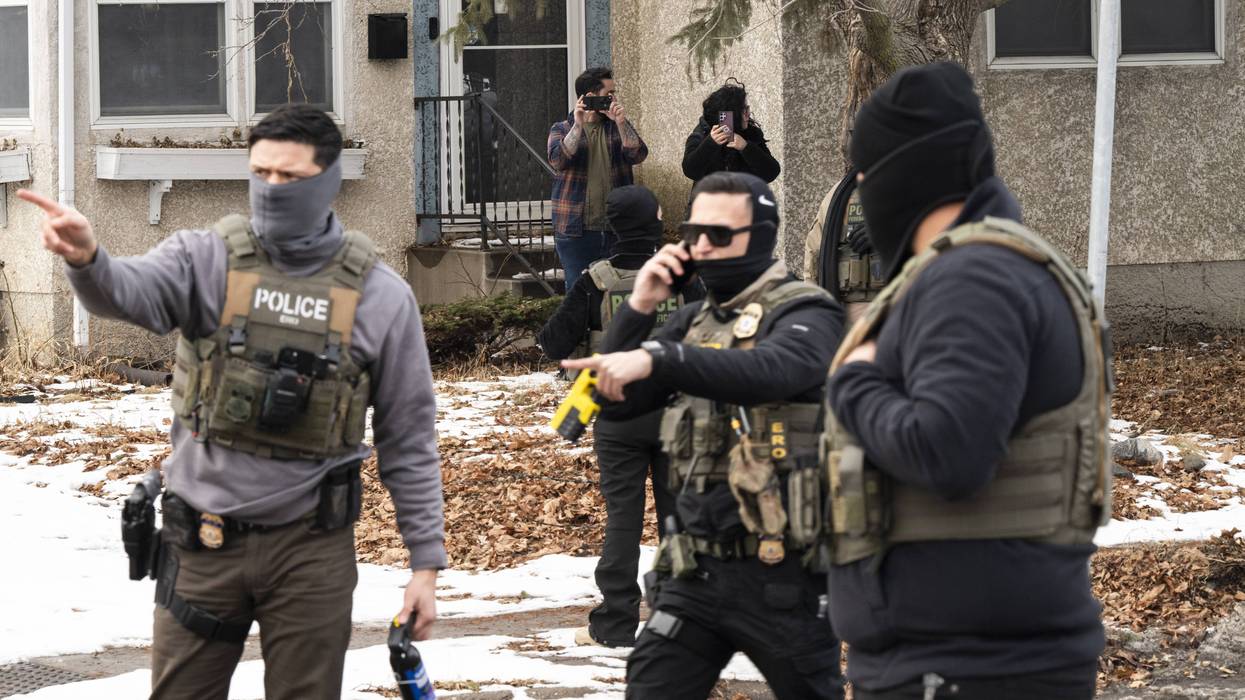
Minneapolis, ICE, and the urgency of worker power against American fascism.
On December 2, 2025, the first public reports emerged about the impending launch of “Operation Metro Surge,” a deployment of U.S. Immigration and Customs Enforcement (ICE) agents to target undocumented Somalis in Minneapolis. Five weeks later, on January 7, 2026, ICE thug Jonathan Ross fired three shots that killed American citizen Renee Good as she attempted to drive away from him.
Good’s murder marked an inflection point in the Trump regime’s iron-fisted war against immigrants across the U.S. — a war that has proven to be about much more than targeting “criminal aliens” as more activists find themselves caught in ICE’s brutal dragnet. Less than three weeks after Good was killed, federal agents gunned down Alex Pretti, another American whose murder enflamed a nation already in tumult over ICE’s tactics and its indiscriminate targeting of whole communities, citizen and non-citizen alike.
Both murders during Operation Metro Surge were followed by a similar pattern. First, Trump regime officials immediately assassinated the characters of Good and Pretti as “domestic terrorists.” When that backfired as the public learned about the victims — one, a poet and mother of three, and the other, a VA hospital nurse and registered gun owner — the regime quickly moved to cover up details of the murders, blocking Minnesota officials from the federal investigations.
But something else also took place in between the mayhem. The day before Pretti was killed, more than 50,000 Minnesotans packed the streets of Minneapolis in subzero temperatures and a biting negative 30-degree windchill to demand the withdrawal of all federal agents from the city. The march was in response to calls for a general strike by local faith and labor leaders and saw hundreds of businesses closed in support of the protests.
This was a natural response for a city already primed for mass mobilization after weeks of building networks for community organizing and resistance to ICE’s draconian crackdown. Federal agents had all but suspended civil rights as they laid siege to Minneapolis, abducting at least 3,000 people, terrorizing neighborhoods, and conducting warrantless home raids. ICE aggressively targeted residents with harassment and assault based on nothing more than their skin color and accents.
At first, the campaign of terror only escalated as the city fought back. Masked agents rammed into civilian vehicles; sprayed tear gas and pepper spray at families and children; beat protestors and threw bystanders to the ground; and, ripped people out of their vehicles. School attendance dropped by as much as 50 percent and businesses suffered. At the same time, resistance drew popular support, with residents turning out in droves to ICE observer trainings, joining Signal groups to rapidly respond to ICE activity, and supporting mutual aid for immigrant families too afraid to leave their homes.
While not a general strike in the traditional sense, the culmination of this organizing on January 23 showed a highly organized, popular movement growing in size and strength. That is significant because protests against Trump’s anti-immigrant shock-and-awe crusade have often been spontaneous outbursts of riotous fury, including last June in Los Angeles where Trump deployed thousands of National Guard troops to provide cover for ICE raids. This was followed by similar deployments and protests in Portland and Chicago.
At the same time, ICE's overreach prompted a national backlash. When agents in Minneapolis kidnapped and detained a father and his five-year-old son, Liam Conejo Ramos, heart-wrenching images of the child — his innocence evoked by the blue bunny ears hat and Spiderman backpack he wore — provoked a national outcry that ended in Liam and his father's release from ICE detention. Many other children, however, have not been as fortunate.
Whereas during the first Trump regime the images of children being separated from their families and held in camps outraged much of the world, today the regime detains children and parents together in detention centers with abhorrent conditions. At notorious facilities like the one in Dilley, Texas, children and families are subjected to verbal abuse by guards, inedible food, 24-hour fluorescent lights, and rampant medical neglect.
Now, with two-thirds of Americans opposed to ICE, it seems Trump’s manufactured anti-immigrant hysteria — drummed up by a steady stream of racist vitriol and demonizing tropes — cracks easily under the boot of ICE’s savage attacks. But how that public opposition to ICE is mobilized also matters. Rapid-response confrontations with federal agents are necessary and provide tantalizing content for social media but are generally less effective at drawing wider layers of society into the struggle.
Organized Labor Vs. ICE Fascism
Last June in Los Angeles, a large rally of union members and other activists gathered in Grand Park. Protesters demanded the immediate release of David Huerta, president of SEIU California and SEIU-United Service Workers, who was arrested during ICE worksite raids days before. Following a weekend of raids and violent clashes between federal agents and protesters, the rally in Grant Park was backed by the L.A. County Federation of Labor, AFL-CIO, and drew thousands in a defiant protest against ICE and National Guard troops.
In similar fashion, organized labor’s involvement has been integral to Minneapolis asserting itself as the latest flashpoint of resistance to the Trump regime’s authoritarian agenda.
No, January 23 did not see an economic shutdown of workers on strike across core industries. But the Minnesota AFL-CIO-endorsed “general strike” did show the capacity and appetite for such escalation in the future. Perhaps just as important, it elevated the call for a “general strike,” from the marginal domain of fringe leftist communities, further into popular consciousness.
Of course, Minneapolis is no stranger to struggle and mass strikes. Even before the city thrust the Black Lives Matter movement onto the national stage following the police lynching of George Floyd in 2020, Minneapolis was home to one of the most significant general strikes in U.S. labor history when Teamster truck drivers spurred an economy-wide work stoppage that shut down the whole city in 1934.
But in terms of power and militancy, today’s labor movement looks entirely different from what existed in 1934. Most workers are unorganized and unions are weak, paralyzed by anti-union laws and weighted down by their own institutional bloat and sclerotic leadership. With the top brass of most major labor unions more at home in their corporate-style offices while mingling with Washington DC’s professional class and Democratic Party functionaries, it’s no wonder there is an entire generation of workers in the U.S. today that lacks any literacy in working-class struggle and trade union principles.
This matters because unions have, in the past, commanded a unique juncture of society — a critical conduit for mass mobilizing among broad sectors of the population, recruiting whole communities into struggle while inoculating them against the racist and reactionary forces that sought to divide working people against each other.
Today’s war on immigrants is the opening salvo of a broader war against dissent and toward an American fascism that serves caviar for the corporate oligarchs and chains for the rest of us. Worse, we lack the collective class power to effectively fight back.
Building upon the regime’s anti-immigrant repression, Trump has expanded law enforcement power to target “anti-fascist” and “left-wing activities.” That means more government witch hunts against political dissent, like the activist in Texas currently facing federal charges and up to 40 years in prison for merely transporting “Antifa” literature.
As federal agents have withdrawn from Minneapolis in recent weeks, they leave in their wake communities that are organized but also deeply scarred. While local businesses begin to recover, the trauma lingers for many families and children who remain fearful of leaving their homes. There is also deep distrust and persistent doubts that ICE’s rampage has truly wound down.
The collective trauma in Minneapolis is by design, part of the intended pay-off of a massive surge in ICE funding to the tune of $75 billion. Alongside the funding surge, the DHS’s “Defend the Homeland” recruitment campaign — replete with xenophobic overtones and neo-Nazi iconography — has more than doubled the number of ICE agents with a fresh crop of deputized MAGA adherents now menacing communities nationwide.
“ICE is a descendent of violent systems, like slave patrols, boarding schools, Jim Crow law enforcement, and political policing,” writes Cris Batista of Mijente, a Latinx and Chicanx-led immigrant justice organization. “Immigration enforcement is deeply embedded in the racist, white supremacist foundation of the United States. Like their slave catcher ancestors, ICE and CBP disregard human rights to uphold systems that benefit the rich and the powerful.”
From this history, it follows that the propaganda of the Trump regime has been a barrage of callous and juvenile trolling to feed the far-right’s sadistic revelry in human suffering, including ASMR-style videos from deportation flights and “Alligator Alcatraz” merchandise. This posturing also makes sense given the ghoulish architect behind the regime’s anti-immigrant, culture-war agenda. While Stephen Miller has spawned so much of Trump’s policies and approach, he does not hide the larger dystopian future to which he hopes his war on immigrants will lead. It’s no secret that Miller’s obsessive homages to “Western Civilization” aspire to a nation dominated and led by whites only — a social and political order that can only be enforced by despotic repression.
Building Resistance from Within and Without Unions
In the midst of all the chaos and cruelty, something unexpected happened over the past year: more workers in the U.S. have joined the labor movement.
According to data released by the Bureau of Labor Statistics last month, union membership rose to a 16-year high in 2025. While reports frame this increase as taking place despite Trump attacks on labor, including thousands of union workers in the federal government, one can argue that the boost in union ranks is also because of the regime’s anti-worker policies. That’s particularly likely in the face of Trump’s dismissive attitude toward the affordability crisis, perhaps leading more cash-strapped workers to look for the higher wages and workplace protections secured in collective bargaining.
This growth in union membership also occurred despite the fact that most unions in the U.S., with some important exceptions, have declined to take on significant and sustained organizing efforts.
“Evidence abounds that many millions of workers would join the unions but for any opportunity to do so,” writes veteran union leader and organizer Chris Townsend. “Without unions organizing actively on any significant scale, there exist few avenues for the unorganized to connect with the unions, let alone join them. The assorted labor leadership in the unions for the most part consider new organizing to be too difficult, too expensive, too controversial, or too exhausting to seriously pursue. This justifies their inaction and profiteering from the unions, with lavish lifestyles and pursuits taking the place of the hard slogging work to reach out and mobilize the unorganized masses.”
Stronger unions are needed now more than ever to confront the oppressive machinery of Trump’s authoritarianism. But building union strength starts with a deep commitment to new worker organizing and aggressively educating existing union members, especially the 75,000-plus newly organized members who voted to unionize workplaces over the past year. These are tasks that existing union leaders have been either unable or unwilling to carry out.
For activists, there is no simple path to addressing these needs within the labor movement. It will take rank-and-file leaders agitating and building worker power inside of their unions, with militant caucuses pressuring leaders to answer the call of history to fight against the totalitarian oppression of working people and the poor. And, where union leadership is unresponsive and derelict in this struggle, the work of building organizations of workers outside of official union structures must be undertaken.
While none of that work is easy, it is existential for immigrant communities and the working class as a whole.
Yesterday’s firing of DHS Secretary Kristi Noem, like the removal of senior border patrol official Greg Bovino several weeks prior, is a profound testament to the power of Minneapolis’s fierce, union-backed resistance. Much like Bovino became the Gestapo-outfitted face behind Operation Metro Surge, Noem's tenure ends with an ugly legacy of shamelessly leading one of the most racist and violent crackdowns on immigrants and activists in U.S. history. And that's owing, in no small part, to the steadfast organizing of Minneapolis communities.
“One senior ICE official I asked about Noem’s firing attributed it in large part to the Minneapolis protests, saying the whole episode has been devastating for ICE and its morale,” journalist Ken Klippenstein reported. “The evidence for this seems overwhelming, with Congress repeatedly raising the killings of Alex Pretti and Renee Good throughout Noem’s Senate hearing yesterday.”
The lesson from Minneapolis is clear: we need movements with the capacity and courage to confront Trump’s nascent police state with mass strikes.
Because if there is an anecdote to ICE and rising fascism in the U.S., it is to be found in an organized and empowered working class.
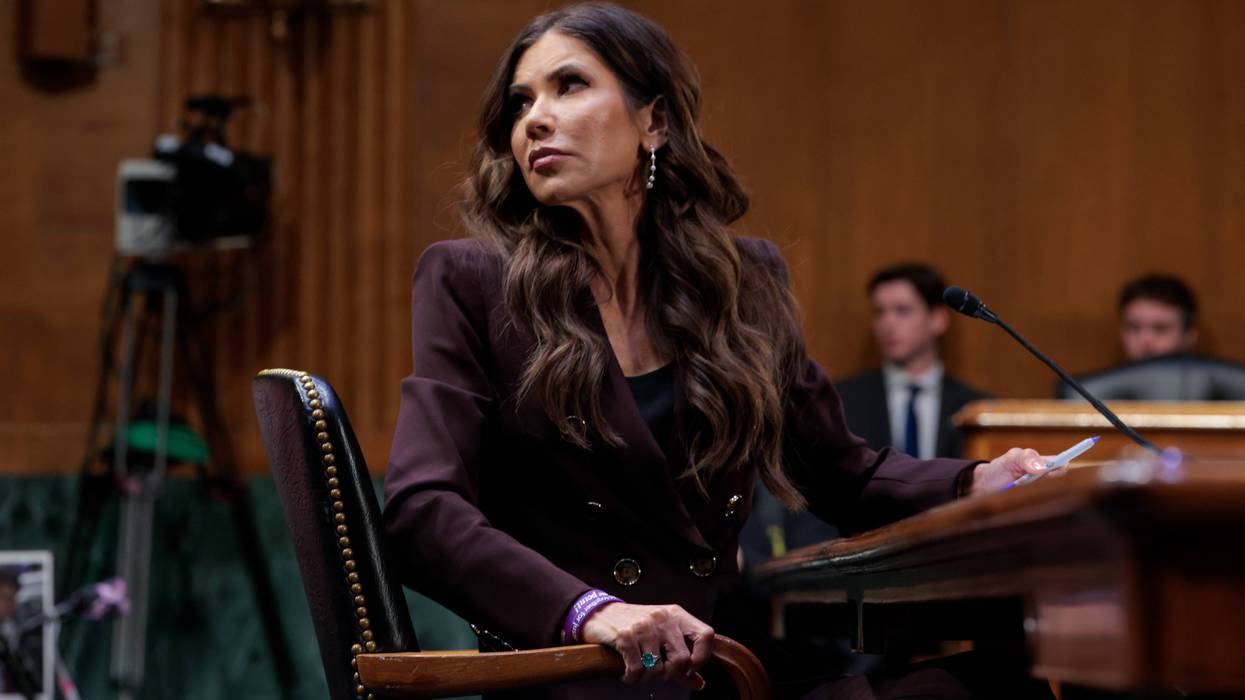
"Kristi Noem is brutally unqualified," said one journalist. "Never should have been in spitting distance as head of homeland security/ICE."
As the US Department of Homeland Security remains partially shut down, DHS chief Kristi Noem testified before the Senate Judiciary Committee on Tuesday and repeatedly refused to apologize to the family of Alex Pretti, who was recently killed by immigration agents in Minnesota.
"Two of my constituents, Renee Good and Alex Pretti, were killed," Sen. Amy Klobuchar (D-Minn.), who is running for governor, said while questioning Noem about Operation Metro Surge, for which the secretary and President Donald Trump sent thousands of immigration agents to the Twin Cities in January.
Border Patrol agent Jesus Ochoa and Customs and Border Protection officer Raymundo Gutierrez fatally shot Pretti, a Department of Veterans Affairs nurse, just weeks after Immigration and Customs Enforcement (ICE) officer Jonathan Ross similarly killed Good. Their deaths fueled the congressional funding fight that has led to the ongoing shutdown.
"They should be alive today," Klobuchar said of the two 37-year-old US citizens. "In fact, in one month, in the city of Minneapolis, when you look at the three fatalities that were results of shooting, two of three were committed by federal agents."
After highlighting the various rights that DHS agents trampled on in Minneapolis and Saint Paul, and questioning Noem about the current footprint—roughly 500 more agents than the number before the surge that the administration claims has ended—Klobuchar turned to the secretary's attempts to smear both Good and Pretti as domestic terrorists.
"When I spoke to Alex's parents, they told me that you calling him a domestic terrorist, this was directly from them, the day after he was killed, a nurse in our VA, Alex, one of the most hurtful things they could ever imagine was said by you about their son," said Klobuchar. "Do you have anything you want to say to Alex Pretti's parents?"
Noem responded, "We were relying, in the hours after that incident that was so horrific, on information we were getting from the ground, from our agents."
When Klobuchar jumped in, reiterating the question and extending it to Good's relatives, Noem claimed: "That's what I'm doing right now... I can't even imagine what they have gone through, in the loss of their son, in the loss of their family members. It's absolutely tragic."
Noem's comments about the two victims, and her broader handling of the DHS invasions of the Twin Cities and other US communities as part of Trump's mass deportation agenda, have sparked calls for her resignation, firing, or impeachment.
Before the surge in Minnesota, the administration launched Operation Midway Blitz, targeting immigrants in Chicago and its suburbs. Earlier in Tuesday's hearing, Sen Dick Durbin (D-Ill.), noted to Noem that during the invasion of his state, "one of your Border Patrol agents shot Marimar Martinez five times after ramming her car."
"You and your agency rushed to brand these victims as, quote, domestic terrorists," Durbin continued. "We have ample video evidence and eyewitness testimony proving you were wrong. Your statements cause immeasurable pain to these families. Let me give you an opportunity to do the right thing. Do you retract these statements identifying these individuals as domestic terrorists?"
The secretary responded: "When we have these situations happen, we always offer our condolences to those families, and I offer mine as well. These are tragic situations, and I can't imagine what these families go through in losing a loved one. What I will say is we always work to provide the American people with as much information as possible—that we're relying on reports from the ground and from agents that are there, and working to be transparent, and will continue to do all that we can to provide the accurate information and the facts to people as we can."
While going back and forth, Durbin also asked Noem: "Is it so hard to say you were wrong?" and "When you fail, do you admit it publicly?"
She claimed: "Absolutely. We always know that there's room for improvement."
Martinez, a 30-year-old US citizen, survived, and has since testified on Capitol Hill about what she endured. However, an ICE agent did fatally shoot Silverio Villegas González, a 38-year-old immigrant, in the suburb Franklin Park during the Illinois operation. As with the other cases, video footage of his killing contradicted the DHS narrative about it.
Sharing a clip of the DHS secretary's exchange with Durbin on social media, writer and editor Keith Murphy declared that "Kristi Noem is brutally unqualified. Never should have been in spitting distance as head of Homeland Security/ICE."
"But this is what Trump wanted," Murphy continued, also pointing to Defense Secretary Pete Hegseth, Health and Human Services Secretary Robert F. Kennedy Jr., Director of National Intelligence Tulsi Gabbard, US Attorney General Pam Bondi, and Federal Bureau of Investigation Director Kash Patel.
"The worst of the worst," Murphy concluded. "A generational clown car."