Road Maps for a Finite Planet: The Growing Degrowth Movement
Two landmark reports have been published this year on not only the "what" and "why" of the degrowth imperative, but the "how."
Wars and riots, autocracies and teetering democracies, extreme poverty and rapacious wealth, environmental collapse—that's us. But do we have to be that way?
A grassroots movement thinks not. And its core vision has reached the top levels of academia and international governance. Various proposals have been put forward on how to get there but all agree on one thing: We have to stop growing.
In fact, the idea of infinite growth on a finite planet doesn't make sense to most people. Yet that's precisely the basis of most national economies today. It has been since the modern concept of the gross domestic product (GDP) was introduced as a measure of economic and, by extension, social well-being over 90 years ago. Since then, legions of economists, politicians, and their patrons in the world's leading capitalist countries have championed constant growth to justify the continuous extraction of resource wealth from predominantly impoverished countries and transforming it, with cheap labor, into products and services that make a tiny fraction of humanity obscenely rich, while leaving nearly half in poverty.
As one participant in the assembly said, "They want to build a data center but not give us any data on it."
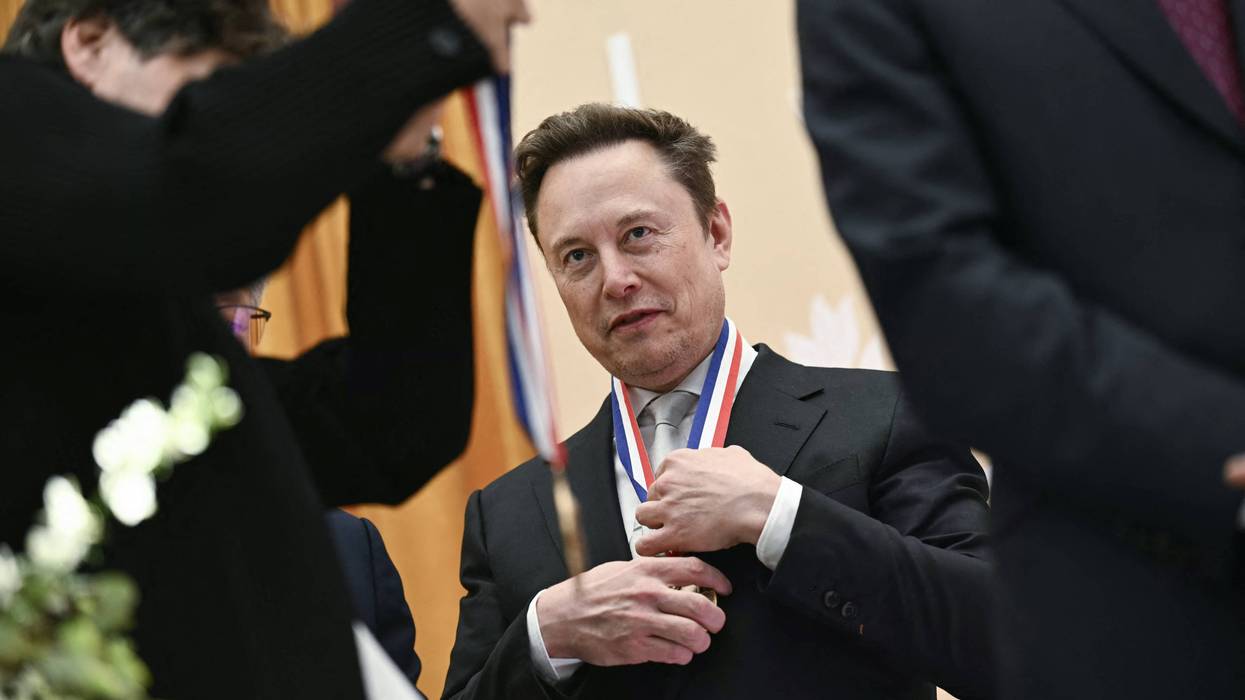
Picture kids in a cobalt mine in the Democratic Republic of Congo. Now picture Elon Musk. That's essentially it. Of course, there's also the fraction of us who live mostly in the Global North—not just the billionaires—who live in relative comfort for now: kids in school, roofs over our heads, food on the table, health insurance.
But none of us is going to escape the failed logic of infinite growth. The global resources-to-products conveyor belt also spews more and more carbon into the air, as the planet gets warmer and warmer and the future of our food and water supplies becomes less and less certain. With climate change raging down the pike at us and coastal sea levels rising, the neoliberal metaphor "a rising tide lifts all boats" has taken on new meaning.
The alternative?
Don't grow, at least not by building more things we don't really need. Grow socially, instead. With everyone in on it, from the kids in Congo to New England prep schoolers. That's what the degrowth movement is all about.
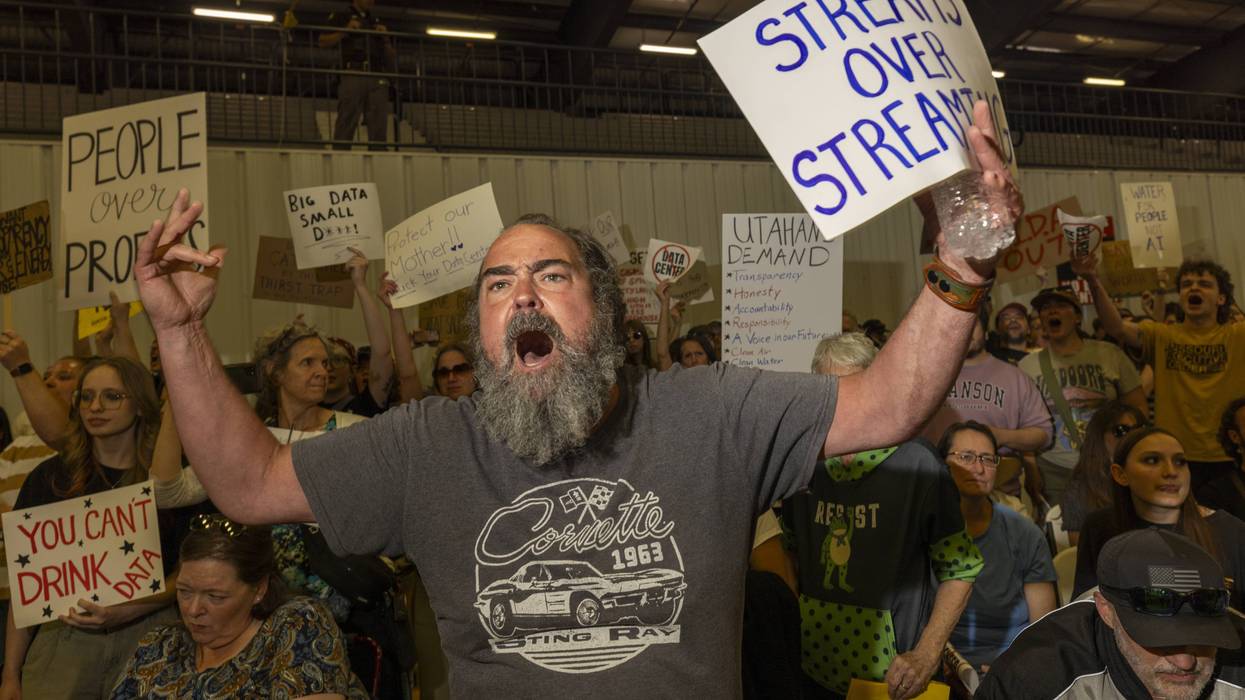
At a recent citizens' assembly on degrowth here in Gijón, an industrial town in northern Spain, a participant raised the issue of the regional government's support for building a giant data center in the community. His concerns are the same as those of most citizens in the US, according to recent polls, or in any other country in Europe: the enormous demands of such centers on local water and energy resources, the potential pollution associated with these, and the lack of public input in the decision-making.
On par with these worries was the question of the purpose for the data center itself: Who would actually benefit from it?
No one at the meeting bought the government's pitch that it will be the local workforce or economy as opposed to, overwhelmingly, transnational investors in digital commerce, social network companies, and the burgeoning AI and surveillance industries. Think Google, Amazon, and Meta. Think OpenAI and Palantir.
And think governments. Whether the democratic socialists in Spain or the plutocrats in the US, the playbook is remarkably similar: Make huge data centers seem essential to our modern lives, to our economic competitiveness—don't let the Chinese or Russians get a leg up!—and simultaneously cloak them in obscurity. Twist regulations to allow them to dodge normal public scrutiny, as is being done in at least one community in Spain and is being attempted by the Trump Environmental Protection Agency.
As one participant in the assembly said, "They want to build a data center but not give us any data on it."
The sum of these changes would effectively end neocolonialism, by allowing poor countries to obtain just compensation for their mineral riches and not be compelled to extract them for slave wages.
Since its social and intellectual rejuvenation in France earlier this century, the degrowth movement—to break the world's addiction to GDP growth, along with the environmental ruin and deepening wealth gap it engenders—has been growing, particularly in Europe. There have been fits and starts,and the debate over exactly how to pull it off has been discursive. But momentum continues to build and, to date, thousands of academic papers and several books have been published on the topic, international conferences have been held, and grassroots organizations, like the one in Gijón, have sprung up.
Drawing on two decades of these debates—along with new research on poverty, climate, and capital—two landmark reports have been published this year, based on the consensuses of hundreds of economists, political and social scientists, and environmental experts, on not only the "what" and "why" of the degrowth imperative but the "how."
The Global Justice Report was published in June by the World Inequality Lab of the Paris School of Economics with over 40 contributors, including economist Thomas Piketty, author of the seminal Capital in the 21st Century (2014). It outlines a strategy of global transformations in labor,healthcare, education, taxation, and trade and investment institutions that are aimed at promoting pro-social global growth rather than material growth for "a drastic reduction in inequality of income, wealth, and power."
The United Nation's Roadmap for Eradicating Poverty Beyond Growth, released in July, proposes similar targets, and the general strategies of the reports largely overlap. But The Roadmap, spearheaded by UN poverty expert Olivier de Shutter and hundreds of collaborators, is much more detailed on how it could be done. Their plan is to build on existing institutions and past regional successes in reducing poverty and improving labor conditions in various countries.
How would all this get paid for? At least initially, from taxes on corporations and the uber rich.
Among other measures, the reports propose substantially reduced work hours and a seismic shift away from certain manufacturing jobs to those with livable wages in education, healthcare, child and elderly care, and other social support infrastructure. Workers would be paid fairly and have a major role in company governance, on par with stockholders. Essentially, less things would be made and patterns of overconsumption—driven today by intensive marketing of intentionally short-lifetime products—would be reduced, but to the benefit of the consumer rather than stockholders.
To further address poverty, family care workers who are unpaid in today's economies would be fairly compensated. A livable allowance would be available for the unemployed, essentially eradicating poverty. Local and more sustainable agriculture would be fostered to promote food security and self-sufficiency in all countries rather than the socially and environmentally costly exportation of monocultures.
The sum of these changes would effectively end neocolonialism, by allowing poor countries to obtain just compensation for their mineral riches and not be compelled to extract them for slave wages. At the same time, they would lead to huge reductions in greenhouse gas emissions and rein in humanity from further exceeding the ecological boundaries for sustaining life on our finite planet.
How would all this get paid for? At least initially, from taxes on corporations and the uber rich. New global institutions or repurposed ones, like the existing World Bank or International Monetary Fund, would lend money for the various transition projects but with mandates for pro-social investments as opposed to pro-GDP-growth ones with austerity programs and permanent indebtedness. In the Global Justice Report plan, the new funding institutions would eventually be self-sustaining on their own bonds and investment portfolio and not require further input from wealth and income taxes.
Why would self-serving billionaires or the plutocracies they have strangleholds on get on board with this? They probably wouldn't. In fact, maybe even China, currently out-capitalizing the capitalists, wouldn't either.
The authors of the Global Justice Report anticipated this, so they modeled scenarios in which the countries that stand to benefit the most participate while others don't. It turns out that those poorer countries represent the great majority of humans on the planet, and their rich neighbors absolutely depend on their cheap natural resources and labor to be so rich. That's how neocolonialism works. So the authors predict that even if the transformations got off the ground without the rich, soon the latter would have no choice but to join the club.
Utopian? Sure. In fact, most people at the citizen's assembly here were pragmatic about their chances of moving the needle, but they were there to try. They're aware that utopias have a very practical, aspirational function if they move us in the right direction—that is, away from the precipice of dystopian alternatives.