

SUBSCRIBE TO OUR FREE NEWSLETTER
Daily news & progressive opinion—funded by the people, not the corporations—delivered straight to your inbox.
5
#000000
#FFFFFF
To donate by check, phone, or other method, see our More Ways to Give page.
Daily news & progressive opinion—funded by the people, not the corporations—delivered straight to your inbox.

"The public execution even of one who has done grave harm will only further undermine the moral fabric of our nation and be a blight on the conscience of its people," Archbishop Paul Coakley.
While US Vice President JD Vance—a Catholic convert—suggested on Friday that the administration may not actually livestream a firing squad execution at a military base in December, the church's top bishop in the country denounced the widely decried plan.
US Secretary of Defense Pete Hegseth pledged this week to make the execution of Fort Hood mass shooter Nidal Hasan "public," and officials said that would mean a livestream. As Religion News Service noted, the Pentagon chief is an evangelical Christian who has often spoken about his faith and "attends a church led by Pastor Doug Wilson, a self-described Christian nationalist."
On Friday, the vice president—who recently published a book about his religious experiences, including his conversion to Catholicism—told reporters that despite those statements about a livestream, "I don't know that that's actually gonna happen."
Vance argued that Hasan, a former Army major and doctor, committed "the worst terrorist attack on American soil outside of 9/11," but also said that "if it's ultimately livestreamed, I'm not gonna be watching it."
Meanwhile, using President Donald Trump's preferred term for the Department of Defense, Archbishop Paul Coakley, president of the US Conference of Catholic Bishops, said in a statement that "it is with shock and great sorrow that I have learned of the Department of War's decision to publicly livestream the execution of Nidal Hasan."
"Our God is the God of life. In no way can Hasan's actions be condoned, but this decision is a barbaric promotion of a culture of death and must be reconsidered. The word of God exhorts us: 'Do not repay anyone evil for evil' (Romans 12:17)," declared Coakley, a "conservative culture warrior" elected to his leadership role last year.
"The public execution even of one who has done grave harm will only further undermine the moral fabric of our nation and be a blight on the conscience of its people," he added. "I pray for the intercession of Our Lady of Good Counsel that we as a nation may always choose life even in the most trying times and circumstances."
Coakley joined a growing chorus of critics who have condemned the Pentagon plan, including the Office of the United Nations High Commissioner for Human Rights, which said Friday that "the livestreaming of an execution is tantamount to a public execution and would breach the absolute prohibition of torture."
American Immigration Council senior fellow Aaron Reichlin-Melnick, who had blasted the livestream decision on Thursday, called the archbishop's statement a "strong response from the Catholic Church."
James Martin, a Jesuit priest and editor at large of America Magazine, explained that "the Catholic Church teaches that the death penalty is 'inadmissible,' primarily because every human being has God-given dignity, even a murderer, even a mass murderer. The televising of an execution is barbarism of the worst kind, offering up death as entertainment."
"Some Catholics still reject Pope Francis' magisterial pronouncement on the death penalty, which is now included in the Catechism," he noted. "But opposition to the death penalty, grounded in the respect for all human life, is not a brand new doctrine. Rather, it is one that took time to develop, as the church came to understand more deeply the innate dignity of every human life."
Sharing Coakley's comments on social media Friday, journalist Paul Blest wrote that "this happening so soon after the botched Tennessee execution is creating the conditions for real momentum against the death penalty."
Tennessee last week botched two attempts to kill Christa Pike with injections of pentobarbital, after which she was rushed to the hospital. Pike's legal team said Thursday that she "continues to experience cognitive challenges" but is taking "limited steps" with assistance. While Republican Gov. Bill Lee has responded by halting executions and ordering a probe, the incident has fueled fresh calls for the US to outlaw the death penalty at the state and federal level.
The Vatican's secretary of state, Cardinal Pietro Parolin, also weighed in on the livestream plan, saying Friday that "it is truly incomprehensible that anyone would want to use this method in this day and age. I do not know for what purpose. It is certainly unacceptable to turn death into a spectacle. However guilty the person may be, there are other ways."
"The church's position is one of total opposition to the death penalty. It is incompatible with human dignity and does not serve as a deterrent," Parolin said, acknowledging Coakley's comments and pledging that "there will be a statement from the Holy See."
As the Catholic leaders and others from various faiths spoke out against the Defense Department plan, Robert Jeffress, a Texas-based American Southern Baptist pastor and televangelist, wrote on social media that "I support the Pentagon's decision to livestream the execution of mass murderer Nidal Hasan. Capital punishment is commanded by God in Genesis 9:6 to remind people of the sanctity of human life. The more people that can see that truth illustrated through a public execution, the better."
Christa Brown, a former lawyer, sexual abuse survivor, and author of the memoirs This Little Light and Baptistland, responded: "Livestreaming an execution is barbaric. And no amount of Bible verses will change that."

"The world’s supposedly greatest (or formerly greatest) democracy has arrived at a horrific new moral nadir," said one columnist of the plan to livestream the killing by firing squad of Nidal Hasan.
As rights advocates across the US expressed horror at the Trump administration's confirmed plans to publicly broadcast the execution of Nidal Hasan, the former military psychiatrist who was convicted of killing 13 people in a mass shooting at Fort Hood in 2009, the top United Nations human rights expert warned that the public state killing would violate international laws prohibiting torture.
“The livestreaming of an execution is tantamount to a public execution and would breach the absolute prohibition of torture,” the Office of the High Commissioner for Human Rights (OHCHR) told Agence France-Presse Friday.
As Common Dreams reported Thursday, the US Army announced that Hasan would be executed by firing squad at Fort Hood on December 3, with the Trump administration inviting the public to watch the shooting via livestream.
The UN special rapporteur on extrajudicial, summary, or arbitrary executions said in a report to the UN Human Rights Council in June that all capital punishment must be abolished worldwide, as "severe physical pain and psychological distress are an inherent part of the design and implementation" of the practice.
The OHCHR has particularly spoken out against public executions, such as those that have been carried out in Afghanistan and Iran.
Public killings by the state "constitute a form of cruel, inhuman, or degrading treatment or punishment," the office has said.
"This planned livestreamed execution says it all about what is happening in America today, opening the window ever wider on the Trump administration’s moral vacuity and its paucity of human decency."
Should the livestream go forward, Hasan's execution will be the first public state-sanctioned killing in the US in 90 years, according to Michael L. Radelet, professor emeritus at the University of Colorado Boulder, an expert on capital punishment.
Rainey Bethea, a Black man, was hanged in Kentucky in 1936 after reportedly confessing to the killing of a white woman. He was never charged with murder. Thousands of people attended his execution outside a courthouse.
As Edmarverson A. Santos wrote at the independent research platform Diplomacy & Law, the Trump administration's proposed execution livestream "raises substantial concerns under international human rights law."
"The UN Human Rights Committee expressly interprets Article 7 of the [International Covenant on Civil and Political Rights] as prohibiting public executions and considers executions conducted in violation of that provision to constitute arbitrary deprivations of life under Article 6," wrote Santos. "A government-sponsored livestream accessible to the general public could fall within that interpretation, particularly where the condemned person's death is deliberately displayed as part of the state's punitive message."
"Hasan's conviction for intentional murder and the presidential approval of his death sentence do not independently establish the legality of publicly broadcasting his execution," Santos added.
Paul Daley, a columnist for The Guardian Australia, wrote Thursday that the planned livestream—and Defense Secretary Pete Hegseth's statement that the execution will be made viewable to all to show that "there’s serious consequences for these types of things"—amounted to "state-sanctioned killing as entertainment."
"The world’s supposedly greatest (or formerly greatest) democracy has arrived at a horrific new moral nadir," wrote Daley. "This represents a significant lurch in the US from civilization towards savagery... And this planned livestreamed execution says it all about what is happening in America today, opening the window ever wider on the Trump administration’s moral vacuity and its paucity of human decency."

"The death penalty on its own is morally indefensible," said one critic. "Turning it into a public spectacle is an abomination."
The Pentagon on Thursday confirmed plans to livestream an execution by firing squad in December—a revelation that came amid fresh calls for the United States to end the death penalty after Tennessee botched two attempts to kill Christa Pike with injections of pentobarbital.
The US Army announced Wednesday that Nidal Hasan—a former military psychiatrist convicted of killing 13 people and injuring 32 more in a 2009 mass shooting at Fort Hood—will be executed at the Texas base at 1:00 pm Central Standard Time on December 3.
Secretary of Defense Pete Hegseth told the right-wing outlet Real America's Voice News that "we'll make sure that people are able to watch it, that it's public, because people need to understand that... there's serious consequences for these types of things."
Then, other outlets, including The Associated Press, reported that "officials in the Pentagon clarified Thursday that the execution would be livestreamed and that more details would follow."
The Washington Post reported that "if Hasan's execution is carried out, it would mark the first US military execution since April 13, 1961, when Army Pvt. John A. Bennett was hanged after being convicted of rape and attempted murder, according to the nonprofit Death Penalty Information Center, which monitors capital punishment. The military's last known firing squad execution was carried out by 'musketry' on November 9, 1945."
Hegseth's comments and the subsequent confirmation from the US Department of Defense were met with disgust and outrage.
"What a sick man," former National Nurses United communications director Charles Idelson said of the Pentagon chief on social media. "A. Executions have never been proven to be a deterrent to capital crimes. B. The spectacle of a public execution is morbid, it recalls the public lynchings so common during the Jim Crow era. C. If the shooter was white, I don't believe this would be public."
Hasan is a US citizen born to Palestinian immigrant parents. Just before he opened fire on soldiers who were set to deploy to Afghanistan, he shouted "Allahu akbar," an Arabic phrase commonly used by Muslims that translates to "God is great!"
While some critics called out Hesgeth, Obama administration speechwriter-turned-podcaster Jon Favreau took aim at Vice President JD Vance, who recently published a book about his faith journey, including his conversion to Catholicism. Favreau said that "I would like to hear our Catholic vice president explain why they're intentionally choosing to broadcast the death of a human being for the entire world to see, including children."
Producer and journalist Simon Thompson wrote on social media: "Just when I think this administration couldn't get any worse. Livestreaming executions by firing squad? This administration, a Christian administration apparently, is making a snuff movie and treating it like a [pay-per-view] event."
Journalist Séamus Malekafzali similarly said, "Content with having desensitized the American public by broadcasting faceless images of Iranian sailors dying and buildings full of people leveled to the soundtrack to Halo, the government is now moving to livestreaming snuff films, faces and all."
"I know people hate when people make comparisons to American adversaries, but this is literally what ISIS did, save for the live aspect," he added. "Those executions were also done on camera under the auspices of nominally government institutions, just a different kind of government."
Although Trump left office the first time after overseeing a federal execution spree, American Immigration Council senior fellow Aaron Reichlin-Melnick said Thursday, "Jesus Christ, I didn't think we'd actually get to the 'public executions' stage of Trump's project to roll back the last 100 years of societal development."
Corbin Trent, co-founder of Justice Democrats, suggested it could backfire for the Republican administration. He wrote: "I'm completely in favor of this. I think more of this would go a long way to ending the death penalty."

United Nations High Commissioner for Human Rights Volker Türk also argued that "the death penalty has no place in any society."
United Nations human rights experts on Thursday joined the growing chorus of people around the world outraged by Tennessee's two botched attempts to execute Christa Pike and called on the state to refrain from trying again to kill the 50-year-old woman.
After a last-minute legal battle, the US Supreme Court allowed Tennessee to execute Pike for the 1995 murder of Colleen Slemmer. The state tried to do so at Riverbend Maximum Security Institution in Nashville on Wednesday night—with two injections of pentobarbital, each of which was supposed to be lethal—but she survived and was transported by ambulance to a hospital.
A doctor interviewed by WSMV 4 Nashville's Steve Mehling suggested that an IV could have been placed incorrectly—and, as the journalist summarized: "Pike may suffer from a flurry of long-term effects. This includes skin necrosis, permanent scarring, functional impairment, compartment syndrome, chronic neuropathic pain, and pigmentation change at the injection site."
As of Thursday afternoon, Pike's attorneys said that she was still alive, but in critical condition, "and receiving lifesaving medical care," according to The Washington Post. Republican Gov. Bill Lee, who had previously declined to grant clemency in this case, has since halted executions in Tennessee and ordered an investigation into the state's second botched killing of an inmate this year.
Several UN special rapporteurs and members of the Working Group on Discrimination Against Women and Girls had urged US authorities to commute Pike's sentence last month, saying that her "execution would mark the culmination of a trajectory of severe physical and psychological suffering marked by childhood abuse and nearly three decades of solitary confinement on death row."
After Wednesday's botched attempts, some of the same experts weighed in again: "Christa Pike was denied clemency. One hour before her execution, a court halted it. The Supreme Court then lifted the stay. She was injected twice with lethal drugs and survived. Forcing a person to face death, have it suspended, and then face it again within hours amounts to barbaric and torturous punishment, compounded in this case by decades of psychological torture on death row."
"The state of Tennessee must immediately and irrevocably end this cruelty by commuting Christa Pike's death sentence," said Morris Tidball-Binz, special rapporteur on extrajudicial, summary, or arbitrary executions; Margaret Satterthwaite, special rapporteur on the independence of judges and lawyers; Pau Pérez-Sales, special rapporteur on torture; Mariângela Batista Galvão Simão, special rapporteur on the right to health; Reem Alsalem, special rapporteur on violence against women and girls; and working group members Claudia Flores, Ivana Krstić, Dorothy Estrada-Tanck, and Haina Lu.
United Nations High Commissioner for Human Rights Volker Türk went even further, arguing against capital punishment.
"The case of Christa Pike lays bare multiple reasons why the death penalty should be abolished," said a statement from his office. "The prolonged suffering—physical and mental—arising from multiple failed execution attempts is abhorrent, and cruel. And there are key fair trial questions still unresolved."
Türk is calling on "state authorities not to pursue any further attempt to execute Pike," his office said. "We are also troubled by the increase in the number of executions in the United States. The death penalty has no place in any society."

“This event is the worst we’ve seen and unlike any other botched execution in the modern era,” said Robin Maher, the executive director of the Death Penalty Information Center. “There is no precedent.”
The botched execution of Christa Pike in Tennessee on Wednesday night was met with disgust and outrage by death penalty opponents who have long argued that not only is murder by the state morally wrong, but the government's inability to carry out such punishments humanely has been shown time and time again to result in horrific human rights violations and barbaric scenes of cruelty inside the nation's prison walls.
Pike, sentenced to death in Tennessee over the 1995 murder of 19-year-old Colleen Slemmer, survived two otherwise lethal injections of pentobarbital on Wednesday while strapped to a gurney by prison officials at the Riverbend Maximum Security Institution in Nashville.
"Tonight the State of Tennessee once again failed to carry out a lawful execution," said Pike's attorneys—Randy Spivey and Kelly Gleason from the TN Office of the Post Conviction Defender, and Stephen Ferrell and Luke Ihnen from Federal Defender Services of Eastern Tennessee—in a statement late Wednesday.
"We take no pleasure in being right," her lawyer's continued, "but the concerns raised by Ms. Pike proved to be true: difficult vein access, blown veins, degraded pentobarbital, no emergency medical care available when things inevitably go wrong, all under a protocol that remains veiled in secrecy. Christa is being treated at a nearby hospital. We have not been informed as to her condition."
Pike's legal team said she remained alive after two rounds of the lethal injection, with witnesses reporting confusion after the first dose resulted in Pike raising her head to speak to those who administered the drug and falling into a deep sleep, but audibly snoring and still alive, after the second.
“This event is the worst we’ve seen and unlike any other botched execution in the modern era,” said Robin Maher, the executive director of the Death Penalty Information Center. “There is no precedent.”
It was the second botched execution in Tennessee this year, reports The New York Times. According to the newspaper:
The apparent failure came after dueling court rulings delayed the execution of [Pike] by about nine hours. The state had raced to go ahead with the execution before the day ended and to avoid having to reschedule.
In a pair of emergency legal filings, Ms. Pike’s lawyers said that while two syringes of pentobarbital, the lethal drug, had been administered, Ms. Pike had not lost consciousness. She still had a heartbeat, they said, and was audibly snoring.
The execution of Pike, who court records show was subject to pervasive abuse throughout her childhood and was only 18 years old when she carried out the brutal crime, had been put on hold earlier Wednesday only to be reinstated by the US Supreme Court later in the day.
Amnesty International USA condemned the treatment of Pike and called for an end to all capital punishment in the United States.
"Tennessee’s botched attempt to execute Christa Pike, as witnessed by her attorneys, demonstrates why the death penalty truly is the ultimate cruel, inhuman, and degrading punishment," the group said. "All execution methods are inhumane and unacceptable. The death penalty must be abolished, everywhere."
Republican Tennessee Gov. Bill Lee announced after the botched execution that the state’s other remaining execution for 2026 would be put on hold and ordered “a comprehensive, third-party review to determine exactly what occurred” in the attempted killing of Pike.
Pike, said human rights advocate Evad HaAm, "survived a completed lethal-injection attempt. That is not a stay. It is a botched execution."
While Pike's current medical status and chance for survival remain unknown, further attempts by the state to kill her, he argued, "would violate the Eighth Amendment prohibition on cruel and unusual punishment."
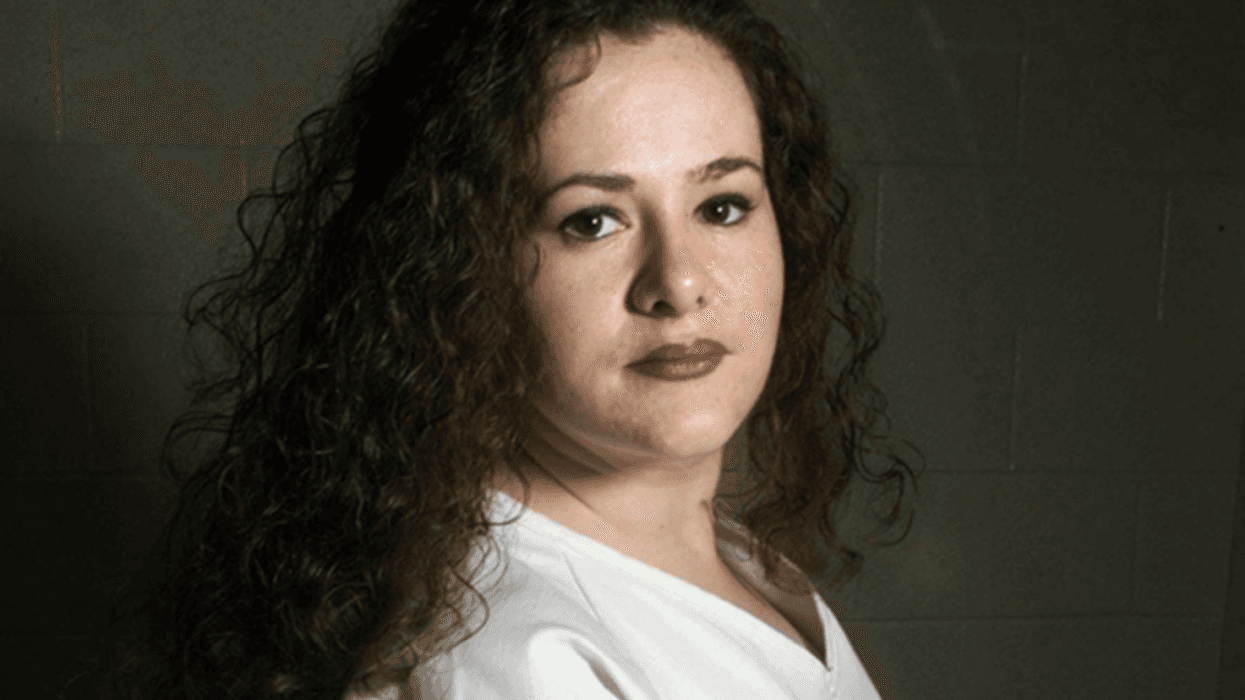
"So much of Ms. Pike's experience reflects widespread and systemic failures that surface in death penalty cases," said an Amnesty International USA researcher, urging an end to capital punishment "in Tennessee and beyond."
A federal appellate court on Wednesday morning temporarily blocked Tennessee from executing Christa Pike, as witnesses had already gathered at Riverbend Maximum Security Institution in Nashville for the state's first execution of a woman in centuries.
A panel from the US Court of Appeals for the 6th Circuit ruled 2-1 to halt the state-sanctioned killing, after Republican Gov. Bill Lee and the US Supreme Court declined to do so. The 50-year-old, found guilty of murdering Colleen Slemmer in 1995, when Pike was 18, could still be executed on Wednesday if the nation's top court allows it.
Republican state Attorney General Jonathan Skrmetti's office said: "We will continue to advocate for the lawfully imposed sentence as the courts work through this technical issue. It is common in capital cases for the defense to raise last-minute objections following decades of litigation in numerous courts. We are asking the Supreme Court of the United States to lift the stay."
Judges Jane Stranch and Karen Moore, both appointees of Democratic presidents, concluded early Wednesday that "a short stay of execution" is in order due to arguments related to the sexual abuse Pike suffered as a child—which clinical psychologist Dr. Bethany Brand described as "truly extreme," writing in 2023 that "the level of trauma she was subjected to as a preschooler through her 18th year, when she was arrested, is almost impossible to grasp because it is so severe."
As the 6th Circuit's order details, Pike points out "that the state recently reversed its litigation position that she is a liar who fabricated sexual abuse. Pike contends that the state's concession of her history of child sexual abuse and rape 'erodes the foundation' of her state court proceedings. Pike ties this erosion to defects in the federal court proceedings because... the district court was required to give strong deference to the state court's findings of facts."
"Pike also cites scholarly authority supporting her argument that the state's representations about her history of sexual abuse tainted the state court proceedings and the subsequent federal ones by introducing damaging stereotypes of survivors of sexual assault," the filing says.
Pike was "subjected to drugs and alcohol while she was still in her mother's womb" and "first sexually abused by her grandmother's boyfriend, who would orally rape her before she was in kindergarten," the Nashville Banner's Steven Hale recently reported, citing Brand's findings. "After living through periods of physical and emotional torment by extended family members and one of her mother's husbands, Pike was later raped by a known predatory neighbor."
"She was hospitalized at the age of 12 after overdosing on pills during a suicide attempt," then sexually assaulted by one of her mother's boyfriends, who had "moved into the family's home and brought with him violence and depravity," Hale continued, noting that the perpetrators who abused Pike often faced limited consequences. "When she was 17 in January 1994, Pike was sexually assaulted again, by a man who saw her walking to the store in Carrboro, North Carolina."
Hale was among the journalists at the prison in Nashville on Wednesday morning. He said on social media that "I'm told the state has until midnight to carry out the execution. Still unclear what happens next, but prison officials are bringing those of us witnessing the execution inside now to be ready."
The journalist added just after noon Central Time that "prison officials have brought us back outside now while we continue to wait for news from the Supreme Court."
Following the 6th Circuit's decision, the ACLU—whose Capital Punishment Project works to repeal the death penalty in the United States—took to social media, urging the public to "tell Gov. Lee to respect the court's decision and call off her execution NOW."
"Gov. Lee's 615-741-2001 mailbox is full—contacting him through this form is the quickest way to reach his office," the legal group explained, sharing a link to the relevant page on the state government's website.
Lee had said Monday that "after deliberate consideration of Christa Gail Pike's request for clemency, and after a thorough review of the case, I am upholding the sentence of the state of Tennessee and do not plan to intervene."
Attorneys for Pike—Stephen Ferrell, Kelly Gleason, and Randy Spivey—responded that they were "deeply saddened and heartbroken by Gov. Lee's decision to deny clemency," emphasizing that "throughout her childhood, Christa was failed by people and institutions that should have shown her care and meaningful intervention."
"The 18-year-old girl suffering from severe mental illness and near-debilitating trauma no longer exists," the lawyers said. "Christa is a 50-year-old remorseful woman who understands her actions, receives proper treatment for her mental illness, and provides for and guides fellow incarcerated women."
"With this decision, the state of Tennessee is ignoring what both science and our legal system have decided: An 18-year-old brain is not an adult brain, and 18 is too young to face execution. This decision also leaves unanswered vital questions about Tennessee’s execution protocol," they added. "We will continue to support Christa through every remaining avenue and advocate for a system that is transparent for the people of Tennessee."
Among the organizations that have pressured Lee to block the execution is Amnesty International USA, whose deputy director of research, Justin Mazzola, recently said that "so much of Ms. Pike's experience reflects widespread and systemic failures that surface in death penalty cases."
"She endured profound abuse and trauma as a child and had serious mental disabilities that were never adequately addressed nor treated," he highlighted. "Due to inadequate legal representation, these issues were not fully presented to the jury. Knowing all that, it is unthinkable that Gov. Lee would even consider moving forward with this execution."
Mazzola—whose group opposes capital punishment under all circumstances—also stressed that "this issue is about more than one person. Amnesty International members are speaking out because the use of the death penalty remains a human rights failure. As its use continues to decline globally, the United States remains an outlier. It is well past time to abolish the death penalty once and for all, in Tennessee and beyond."
The US National Domestic Violence Hotline can be reached at 1-800-799-SAFE (7233), by texting "START" to 88788, or through chat at thehotline.org. RAINN's National Sexual Assault Hotline can be reached at 1-800-656-HOPE (4673) or by texting "HOPE" to 64673. Both offer 24/7, free, and confidential support. DomesticShelters.org has a list of global and national resources.

The vice president of the European Parliament condemned what she described as "a horrific spectacle that turns the death penalty into a show."
Still drawing international censure for his genocidal call to kill dozens of Gazans daily, Israeli National Security Minister Itamar Ben-Gvir faced fresh condemnation Thursday after visiting the construction site of a gallows where Palestinians convicted of killing Israelis are set to be hanged to death, with select Israelis gathering as spectators.
Ben-Gvir, leader of the far-right Jewish Power party, posted a video to social media in which he gloats about the construction of gallows, which is being built in an undisclosed location in central Israel.
“I promised to worsen the conditions of terrorists in prisons—we kept it,” Ben-Gvir says in the video. “I promised to pass the Death Penalty for Terrorists law—we did. And now the death row and hanging facility are also starting to take shape.”
The law to which Ben-Gvir referred was passed in March by the Knesset—Israel's parliament—and took effect the following month. The legislation changes the rules governing Israeli military courts in the illegally occupied West Bank so that the death penalty effectively applies only to Palestinians who kill Israelis.
Far-right Knesset members, including Ben-Gvir, wore noose-shaped lapel pins to show their support for the legislation. Ben-Gvir also handed out sweets to Knesset colleagues after the bill passed its first reading.
Ben-Gvir said the execution site would include viewing booths where victims’ families could watch executions, describing this as something customary in various countries and specifically citing the United States as an example.
"Terrorists deserve only one thing—death by hanging," said Ben-Gvir, who in 2007 was convicted by an Israeli court of inciting racism and supporting a terrorist organization, whose leader he has openly honored.
Abdullah al-Zaghari, head of the Palestinian Prisoner Society, urged “effective international action” in response to Ben-Gvir's comments. Al-Zaghari told Anadolu that the minister's visit to the gallows site was part of the “continued determination of the Israeli occupation system” to codify incitement against Palestinians.
Leftist Israeli Knesset lawmaker Ofer Cassif excoriated Ben-Gvir's actions.
"This criminal thug—a sympathizer of murderers of Palestinians, a supporter of terror, and a pathological racist—is also hopelessly infantile," Cassif told The New Arab on Wednesday. "Soon we will oust him from the government, and next, throw him behind bars."
European Parliament Vice President Pina Picierno accused Ben-Gvir of staging "a horrific spectacle that turns the death penalty into a show."
The liberal US pro-Israel group J Street asked on X, "Are we supposed to believe, as some in the Jewish establishment would like us to, that Ben-Gvir’s words somehow tell us nothing about the country he helps govern?"
"He is Israel’s national security minister, and he is now celebrating a facility built to execute Palestinians while Jewish extremists are excluded from the law," the group added. "As the old saying goes: When someone tells you who they are, believe them. When a government gives someone this much power, we have to reckon honestly with the agenda they are pushing."
Ben-Gvir—who is under sanctions and banned from countries including Australia, Canada, New Zealand, Norway, and the United Kingdom for inciting violence against Palestinians in the West Bank—was still being denounced on Wednesday for advocating the daily mass killing of Palestinians, including civilians, in Gaza amid a nearly three-year war that United Nations experts, human rights groups, a South Africa-led case currently before the International Court of Justice, and many others call a genocide.
Stéphane Dujarric, spokesperson for United Nations Secretary-General António Guterres, said Wednesday—which was World Humanitarian Day—that Ben-Gvir's "remarks are appalling, they're outrageous, they're dehumanizing, they're dangerous, and we condemn them unequivocally."
A spokesperson for German Chancellor Friedrich Merz said Wednesday in Berlin that Merz "strongly condemns Minister Ben-Gvir's inhumane statements, which violate international law—they are unacceptable."
"As the occupying power, Israel must treat Palestinians with dignity, protect their property, and ensure public administration and humanitarian aid," the spokesperson added.
French Foreign Minister Jean-Noël Barrot called Ben-Gvir's remarks "unbearable and inhumane," adding that "further sanctions could be imposed, and all options are on the table."
In the United States, actor and activist Mark Ruffalo said Thursday on Bluesky that "Ben-Gvir is a bloodthirsty psychopath, war criminal, and one of Israel’s beloved genocidal leaders."
"America and the world should be sanctioning, divesting, and boycotting Israel in every way until this apartheid regime falls," he added.

"All the lawyers want to know is, will there be a qualified physician on staff?" said one advocate. "The state of Tennessee has refused to answer this question."
A lawyer for Anthony Darrell Hines, a man who was convicted of the 1985 murder of Catherine Jean Jackson Jenkins in Kingston Springs, Tennessee, said the state's Republican governor will force a "grotesque spectacle" to move forward on Thursday by refusing to stop Hines' planned execution despite a botched lethal injection involving another death row inmate in May.
The lawyer, Kit Thomas, noted that Hines, 66, has experienced muscular atrophy after several recent strokes, has been in a wheelchair or confined to his bed for eight months, and has stiffness in his arm that forces his hand to remain clenched in a fist—medical issues that could make it challenging for physicians and staffers to establish an IV line to administer lethal drugs.
Hines' medical condition particularly raises alarm considering the Tennessee Department of Correction's attempt to execute Tony Carruthers earlier this year in an ordeal that continued for an hour and 15 minutes before a warden intervened.
An IV team and a physician, later publicly identified as Dr. Mark Fowler, attempted to locate veins in Carruthers' arms, legs, feet, shoulder, hands, and finally his neck, causing what one witness called a "bloody mess" as the inmate remained strapped to a gurney, groaning in pain.
An attorney for Carruthers described the scene as "outright barbaric."
Thomas has asked the US Supreme Court to intervene to stop Hines' lethal injection.
Gov. Bill Lee granted a one-year reprieve to Carruthers, and Fowler was deposed by attorneys—a process during which he admitted he had not placed an IV line since 2013.
Thomas said the Department of Correction had violated its own protocol by appointing an unqualified doctor to carry out Carruthers' execution, and Hines' legal team expressed concern that the state has not disclosed whether Fowler will be involved in the inmate's planned lethal injection.
Last week, the Tennessee Supreme Court rejected Hines' request to force the state to confirm whether Fowler will be administering the drugs.
"It’s particularly horrifying to think of them lifting a partially paralyzed man from his hospital bed, which he’s lived in for the last eight months, then strapping him to a gurney, while executioners attempt to establish IV access," Thomas said.
The advocacy group Death Penalty Action delivered a petition to Lee's office last week calling on him to halt Hines' execution.
Hines' legal team has also expressed concern about the leadership of Frank Strada, who oversees executions for the Department of Correction and was previously deputy director of the Arizona Department of Corrections, Rehabilitation, and Reentry.
During his tenure in Arizona, the three executions that took place were "marked by prolonged and problematic attempts to establish IV access."
Thomas has also called on the state to confirm that officials have done quality control testing on the drugs scheduled to be used Thursday and ensured they were properly stored and handled. Nine Republican state senators, all of whom support capital punishment, wrote to Lee in June, urging an independent review of Carruthers' botched execution and "independent testing" of the lethal drugs the state plans to use before it attempts another execution.
"All the lawyers want to know is, will there be a qualified physician on staff? That's a very reasonable request for them to make," Robin Maher, executive director of the Death Penalty Information Center, told Fox 17 in Nashville. "The state of Tennessee has refused to answer this question, and the Tennessee courts have not forced them to answer. So everyone is in the dark and concerns are mounting."
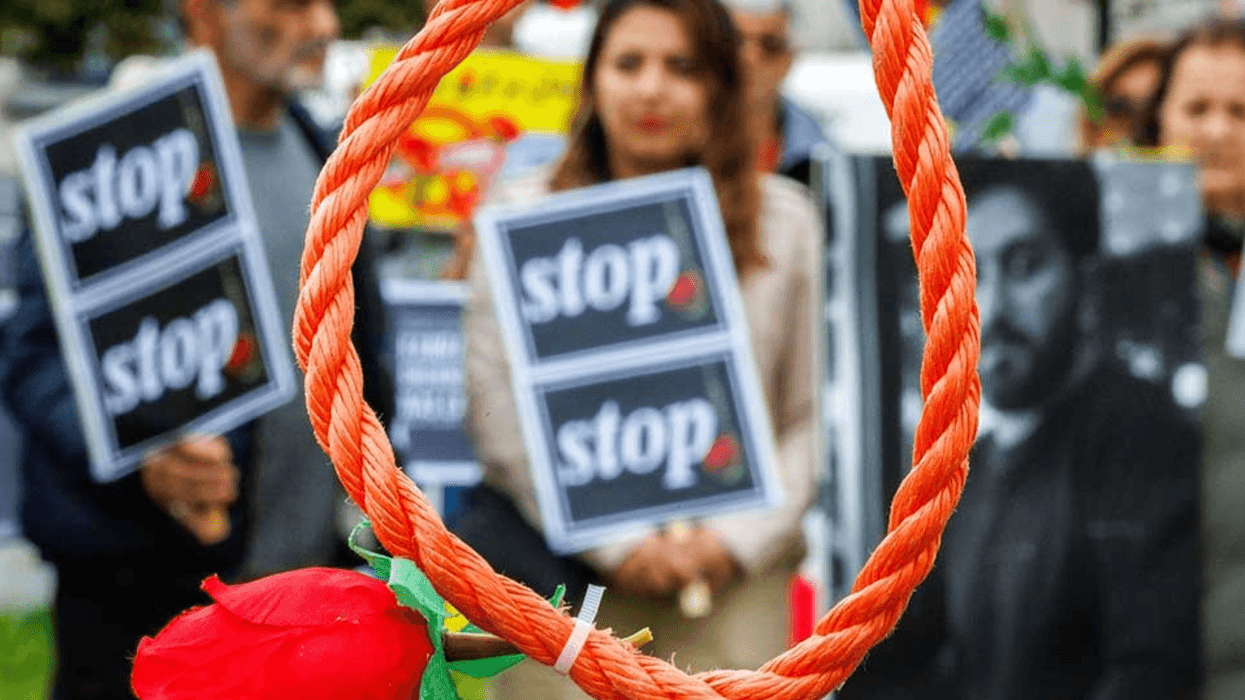
"In a country that has experienced profound loss and suffering, this decision represents a powerful commitment to the right to life," said the UN's human rights chief.
In a move cheered by human rights defenders around the world, Lebanon's Parliament on Tuesday abolished the death penalty for all crimes, making the country the first in the Arab world to do so and standing in stark contrast to neighboring and nearby nations.
Lebanon's abolition—announced on June 30 at the 9th World Congress Against the Death Penalty in Paris—was approved by parliamentary lawmakers and, once signed by President Joseph Aoun as expected, will make the country the 129th worldwide to abolish capital punishment.
Under amendments introduced by Independent MP Abdul Rahman Bizri, execution—formerly carried out by hanging or firing squad—will be replaced as the ultimate punishment by life imprisonment under hard labor for crimes committed after abolition. Those currently condemned to death will have their sentences commuted to hard labor for life.
“Lebanon is regaining its pioneering role in the region as a defender of human rights,” Lebanese Justice Minister Adel Nassar said, adding that his country “has chosen to combat murder rather than resort to capital punishment."
MP Georges Okais of the Christian, right-wing Lebanese Forces party, said that “Abolishing the death penalty is a historic achievement, and we have adopted international standards regarding human rights.”
Hezbollah's parliamentary bloc walked out in protest of abolition, which is also opposed by other lawmakers including Independent MP Jihad al-Samad, who called the move "contrary to Islamic law."
Opponents of abolition argue that it, plus a general amnesty draft law introduced in April, could result in leniency for perpetrators of bombings and other serious crimes.
However, Nassar insisted that abolition “does not mean leniency toward criminals.”
Lebanese law had designated execution as punishment for a wide range of crimes including—but not limited to—murder, aggravated rape, terrorism, treason, spying, military desertion, aggravated theft, and arson. While 84 people were sentenced to death, Lebanon has not executed anyone in 22 years.
“We can see the uncertainty that those who are condemned to death are living under," one psychologist working in Lebanese prisons told the French advocacy group Together Against the Death Penalty in a 2021 study. "We don’t apply the death penalty, but we don’t cancel it either."
"Are we going to wake them up one day and tell them that they will be executed?" the psychologist added, describing the process in Japan and Europe's last executioner, Belarus, without mentioning the countries. "It is the most horrible thing to live through. It leads to anxiety, depression, and stress that is sometimes uncontrollable. They are alive, but without living.”
Lebanon's imminent abolition stands in stark contrast with neighboring and regional countries. Iran, Saudi Arabia, and Yemen rank among the world's most prolific executioners, while Syria's recent history is marred by thousands of extrajudicial executions during the administration of President Ahmed al-Sharaa, and Israel recently legalized the hanging of "terrorists"—a law critics claim will only be applied to Palestinians.
Daniel Cullen, project manager at Oxford University's Death Penalty Research Unit, lauded Lebanon's achievement, which came at "a time of myriad domestic challenges."
"Since October 2023, Israeli forces have conducted intense bombardments in their campaign against the Hezbollah militant group, resulting in thousands of civilian deaths, including during periods of nominal ceasefire," Cullen wrote. "Together with the Israeli military occupation of large areas of the south of the country and issuing of evacuation orders, this has resulted in the displacement of around one million people."
"Even prior to this, the country had already experienced a stark economic collapse since 2019, with a near 40% reduction in GDP, in addition to recovering from the effects of the explosion at Beirut port in August 2020," he continued. "Against this background, Minister of Justice Adel Nassar specifically highlighted the importance of the abolition legislation as a demonstration of Lebanon’s ability to commit to international human rights standards."
"Lebanon’s commitment to achieving abolition during a time of national crisis demonstrates that this is entirely possible," Cullen added.
United Nations High Commissioner for Human Rights Volker Türk said on social media: "I welcome the Lebanese Parliament's decision formally to abolish the death penalty, and call on others to follow its lead. In a country that has experienced profound loss and suffering, this decision represents a powerful commitment to the right to life."
European Union High Representative for Foreign Affairs and Security Policy Kaja Kallas called Lebanon's abolition "a significant step forward for human rights in the country."
"As the first country in the region to abolish the death penalty, Lebanon is setting a powerful example for other countries in the Middle East and beyond, reinforcing the strong global trend towards abolition and the growing international support for ending the death penalty worldwide," she continued.
"The European Union calls on all countries that still apply the death penalty to abolish it and, pending abolition, to maintain or introduce a moratorium on executions as a first step," Kallas added, urging "those considering its reintroduction to refrain from such a regressive step."
The West African nation of Burkina Faso adopted a draft penal code last December that would restore the death penalty for crimes including treason, terrorism, and espionage. An effort to revive capital punishment in the Central Asian country of Kyrgyzstan was blocked by its Constitutional Court. Turkish President Recep Tayyip Erdoğan has repeatedly said he is ready to reintroduce the death penalty during his 23 years in power, while populist Filipino Sen. Ronald dela Rosa—a former police chief closely associated with former President Rodrigo Duterte's mass-murderous drug crackdown—reintroduced death penalty legislation after his reelection last year.
Human Rights Watch Lebanon researcher Ramzi Kaiss hailed Lebanon's "final break from a cruel sentence that should never be imposed.”
“Capital punishment is unique in its cruelty and finality and is plagued with arbitrariness, prejudice, and error,” Kaiss asserted.
Amnesty International called the move "a landmark victory."
“Lebanon’s decision to abolish the death penalty marks a major milestone and a victory for human rights in the country," said Heba Morayef, Amnesty's Middle East and North Africa director.
Morayef continued:
Justice must be rooted in human rights, not in an irreversible and cruel punishment. After more than two decades without executions, today’s step transforms a precarious hiatus in executions into lasting legal protection upholding the right to life and bringing Lebanon in line with the global trend towards abolition.
The passing of this law is testament to the decades of tireless advocacy by Lebanese human rights defenders and organizations, as well as the leadership of key officials who recognized the death penalty as a cruel and inhuman punishment, often imposed after unfair proceedings and the burden of which frequently falls on those at most disadvantage.
“To turn this law from paper to practice, Lebanese authorities must now ensure that all death sentences are commuted and ratify the key international treaty on abolition, while advancing broader reforms to strengthen a justice system based on dignity, fairness, and respect for human rights," Morayef added. "Authorities must accompany this law with broader legislative reform, including to ensure that any criminal justice punishments are consistent with human rights principles.”
From noose to needle to nitrogen, our constant search for a more acceptable way to administer the death penalty is a story of failure—not moral progress.
As a long-time death penalty abolitionist, I’ve often compared the death penalty in America to a train with no brakes: Once the machinery starts moving, it becomes extraordinarily difficult to stop.
But the real problem is that the train should never have been built.
Today, Alabama, Louisiana, Mississippi, Oklahoma, and Arkansas are experimenting with nitrogen gas executions, a method officials claim is more humane. But from noose to needle to nitrogen, our constant search for a more acceptable way to kill is a story of failure—not moral progress.
There’s no acceptable way to practice a form of state killing that, for Black Americans especially, has long been intertwined with terror.
History should make us skeptical whenever governments begin searching for new technologies to make killing appear more acceptable.
Take my home state of Arkansas. Within a year of becoming a state in 1836, Arkansas adopted laws establishing a racial hierarchy by which even civilian whites could dispossess or punish a Black person. These codes even designated certain offenses as capital crimes when committed by Black people but lesser crimes when committed by white people.
The message was clear: Some lives were worth less than others.
That message echoed through the decades that followed. Between 1877 and 1950, Arkansas recorded 493 documented lynchings—the highest per capita rate in the nation. In Arkansas and throughout the South, these killings were not hidden crimes. They were public spectacles—acts of terror meant to reinforce social hierarchy.
Eventually, lynching became politically unacceptable. But state killing did not disappear—it simply changed form. The spectacle moved behind prison walls, and the language became more clinical. But the act of killing remained the same.
George Hays, who served two terms as governor of Arkansas, wrote in 1927 that “if the death penalty were to be removed from our statute-books, the tendency to commit deeds of violence would be heightened owing to the Negro problem. The greater number of the race do not maintain the same ideals as the whites.”
Since the Civil War, Arkansas has executed nearly 500 people—and 68% of those executed were Black or Native American. This is not distant history. Black inmates make up about 50% or more of the state’s death row today, despite Black Arkansans comprising less than 16% of the state’s total population.
Nor is Arkansas an outlier. Nationally, over half the people on death row today are Black or Hispanic.
Modern executions are often carried out by lethal injection, presented as sterile and humane. The condemned is strapped to a gurney while witnesses sit behind glass and chemicals stop the heart. But as these chemicals become less available, Arkansas and some other states have replaced lethal injection with nitrogen gas executions.
They claim the method is painless, but it is death by suffocation. Even veterinarians are forbidden from euthanizing cats and dogs with nitrogen hypoxia because it takes too long to lose consciousness and amounts to torture.
History should make us skeptical whenever governments begin searching for new technologies to make killing appear more acceptable. During the Holocaust, Nazi Germany constructed gas chambers designed to turn mass death into a technical process. This process was bureaucratic, hidden from public view, and deemed “efficient.”
Today, the death penalty follows a disturbingly similar logic. Each generation promises that the newest method will finally make execution humane. The noose. The electric chair. The gas chamber. Lethal injection. Now nitrogen gas.
Yet the fundamental act has never changed. The state still kills. The train keeps moving. Even when jurors change their minds. Even when victims’ families plead for mercy. Stopping the train requires courage—especially from elected leaders who have the power to do it.
Our history tells us what happens when a society accepts killing as justice. The death penalty has evolved for nearly two centuries, but there is only one real measure of moral progress: not how we kill, but whether we finally choose to stop.