

SUBSCRIBE TO OUR FREE NEWSLETTER
Daily news & progressive opinion—funded by the people, not the corporations—delivered straight to your inbox.
5
#000000
#FFFFFF
To donate by check, phone, or other method, see our More Ways to Give page.
Daily news & progressive opinion—funded by the people, not the corporations—delivered straight to your inbox.
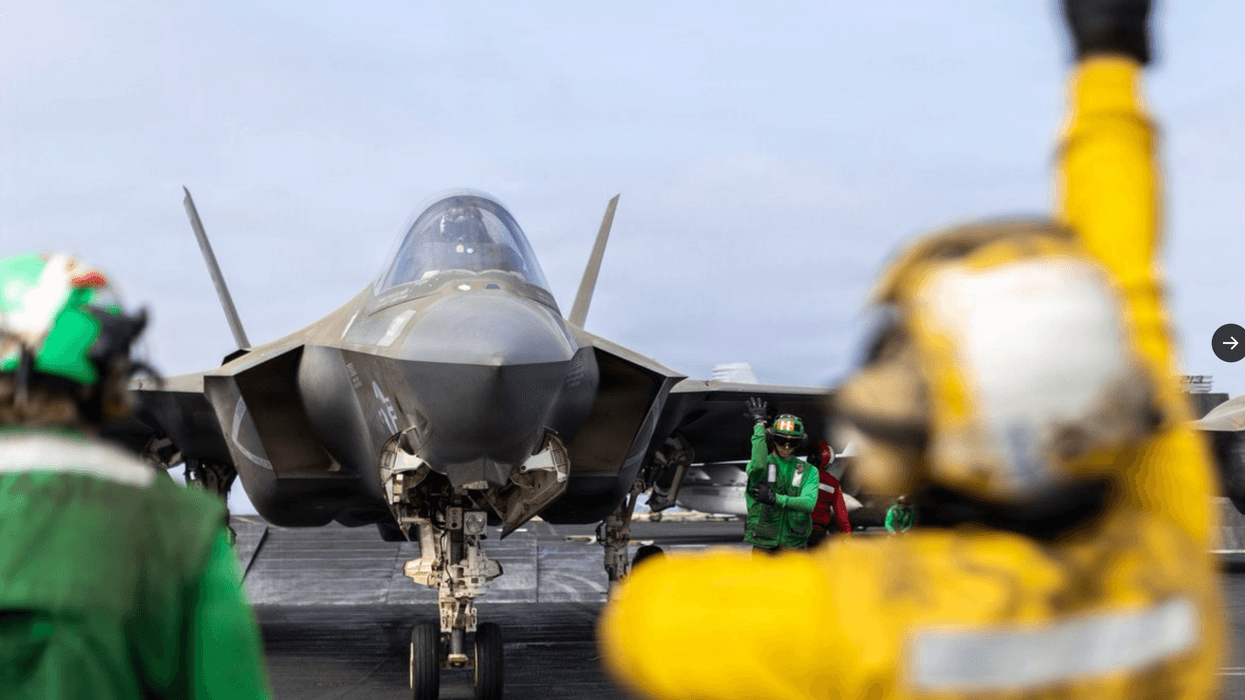
"Listen to the American people. Follow the Constitution," said Just Foreign Policy. "End these illegal and unauthorized hostilities against Iran. NOW."
Less than two weeks after declaring for the umpteenth time that the illegal US-Israeli war on Iran is over, President Donald Trump on Tuesday approved fresh military strikes on the Mideast country over attacks on three merchant ships off the coast of Oman.
"US Central Command forces have begun launching a series of powerful strikes against Iran to impose heavy costs for targeting and attacking commercial shipping crewed by innocent civilians in an international waterway," CENTCOM said on X. "The US strikes are in response to Iranian attacks on three commercial vessels that were transiting the Strait of Hormuz. Iran’s demonstrated aggression was unwarranted, dangerous, and a clear violation of the ceasefire."
Iranian officials blamed the US for the renewed hostilities, claiming efforts to reopen the Strait of Hormuz constitute a violation of the memorandum of understanding (MOU) signed last month, under which Tehran and the Omani government are in charge of managing shipping in the vital waterway controlled by Iran, through which around a fifth of the world's exported oil passed prior to the war.
“But the US has been trying somehow to open new routes," Iran's Foreign Ministry said.
The new US strikes came hours after the Trump administration canceled the 60-day license issued last month by the Treasury Department that waived sanctions on Iranian petroleum exports.
“Iran will only reap benefits if they exhibit good behavior,” an unnamed US official speaking on condition of anonymity told CNBC on Tuesday. “Iran’s actions in the strait were wholly unacceptable to the United States and will be met with consequences.”
Trump has been saying that the Iran War—which began on February 28 with airstrikes including the massacre of 156 students and staff at an elementary school in Minab—was nearly or completely over since early March.
According to Iranian officials, more than 30,000 people have been killed or wounded by US-Israeli strikes during the war. Iranian counterattacks have killed at least 13 US service members. Scores of people in Israel and US-allied Gulf states have been killed and thousands more wounded by Iranian missile and drone strikes.
On Monday, Trump vowed that the US will win the war "one way or the other."
"We're either going to make a deal, or we're going to finish the job," he said. "It won't be tough to finish the job."
The MOU signed by Trump and Iran—and rejected by Israel—had been fiercely criticized in the United States by Republicans and centrist Democrats for leaving Iran in what experts say is a stronger strategic position than before the war, despite the devastation wrought by US-Israeli airstrikes.
Some critics argued that the MOU demanded less of Iran than the Joint Comprehensive Plan of Action—also known as the Iran nuclear deal—signed during the Obama administration but unilaterally abrogated by Trump during his first term, despite verified Iranian compliance.
Talks aimed at a permanent end to the 129-day war—which followed last summer's separate US and Israeli attacks on Iran that killed or wounded more than 5,000 people—were on hold for the multiday funeral of former Iranian Supreme Leader Ali Khamenei, who was slain by US-Israeli bombing on the first day of strikes in February.
Tuesday's renewed US strikes on Iran prompted fresh calls for a lasting ceasefire in the region.
"Listen to the American people. Follow the Constitution," the nonpartisan US advocacy group Just Foreign Policy said on social media. "End these illegal and unauthorized hostilities against Iran. NOW."

"This vote is effectively a proxy vote on the Iran deal," an anti-war activist told Common Dreams. "Members who vote no are functionally prioritizing continued Israeli operations in Lebanon over the prospects of a deal."
As Israel's continued assault on Lebanon threatens to derail peace negotiations between the Trump administration and Iran, the US House of Representatives is expected to hold another vote on Tuesday on a war powers resolution that could halt American support for Israel's attacks.
H.Con.Res. 108, introduced in early June by Rep. Rashida Tlaib (D-Mich.), would direct President Donald Trump to halt US military involvement in "hostilities" connected to Israel's attacks on Lebanon, which have killed more than 4,000 people and led to the forced displacement of more than 1.2 million residents.
It is the second such resolution to be put to a vote in the House this month. H.Con.Res. 84, also introduced by Tlaib, was shot down after Democratic leadership declined to endorse it—since it did not include a carve-out allowing the US to continue coordinating actions against Hezbollah with the Lebanese military—but still received support from 91 Democrats, plus Rep. Thomas Massie (R-Ky.).
The new resolution, which has the support of House Minority Leader Hakeem Jeffries (D-NY), Whip Katherine Clark (D-Mass.), and Caucus Chair Pete Aguilar (D-Calif.), is expected to fare even better. The anti-war group Just Foreign Policy told Common Dreams that between 160 and 210 Democrats could now vote in favor of the measure.
Even in the best-case scenario, this would still require at least seven GOP defectors in addition to Massie. But Erik Sperling, Just Foreign Policy's executive director, said the fact that the vote was happening at all was still tremendously significant.
"This is only the second vote [to halt US military action in] Lebanon on the floor of Congress in history," he said. "It was already one of the most significant things imaginable that we'd even have a vote on it, much less have two in a month."
Adding to the significance is the fact that Israel's actions in Lebanon have become the primary obstacle to Trump's efforts to end the war in Iran.
The memorandum of understanding signed earlier this month calls for a halt to military operations "on all fronts," including Lebanon, and the Iranian delegation has repeatedly insisted that there is no deal without an Israeli withdrawal.
Last week, Israeli Prime Minister Benjamin Netanyahu doubled down on his defiance of the agreement, stating that Israel would not withdraw "as long as I am prime minister." Defense Minister Israel Katz added there had been "no American demand for Israel to withdraw."
This is despite Trump's public and private fuming at Israel for derailing his desperate efforts to back out of the conflict, which is deathly unpopular among the American public and which he has warned will cause "global economic catastrophe" if allowed to drag on much longer.
Israel and Lebanon agreed to another US-brokered framework on Friday that is supposed to set up a path for the Lebanese army to take over so-called "pilot zones" in southern Lebanon that are currently controlled by Israel. But in order for Israel to fully withdraw, it has demanded that Hezbollah fully disarm, which the group has said it will not do.
On the ground, there is little sign the deal is being implemented. Since Friday, Israel has conducted several strikes both inside the occupation zone and outside of it against what it said were Hezbollah militants.
While members of House Democratic leadership have said that the US is "not currently engaged in hostilities in Lebanon," supporters of Tlaib's measure have noted that even without boots on the ground, the US is intimately involved in Israel's attacks. Trump has reportedly given a "green light" to multiple operations, and Israel has extensively relied on US intelligence.
Janet Abou-Elias, a researcher at the Democratizing Foreign Policy Project at the Quincy Institute for Responsible Statecraft, told Common Dreams earlier this month that ending US coordination with Israel would significantly hamper its ability to continue its occupation of Lebanon.
With Iranian Foreign Ministry spokesperson Esmaeil Baqaei reiterating on Monday that an end to Israel's occupation of Lebanon was an “essential prerequisite” for an end to the war with the US, the anti-war coalition on Capitol Hill has said the urgency of passing Tlaib's resolution is only continuing to grow.
"This vote is effectively a proxy vote on the Iran deal," Sperling said. "Any member who genuinely wants a negotiated end to the Iran conflict should be voting yes. Members who vote no are functionally prioritizing continued Israeli operations in Lebanon over the prospects of a deal."
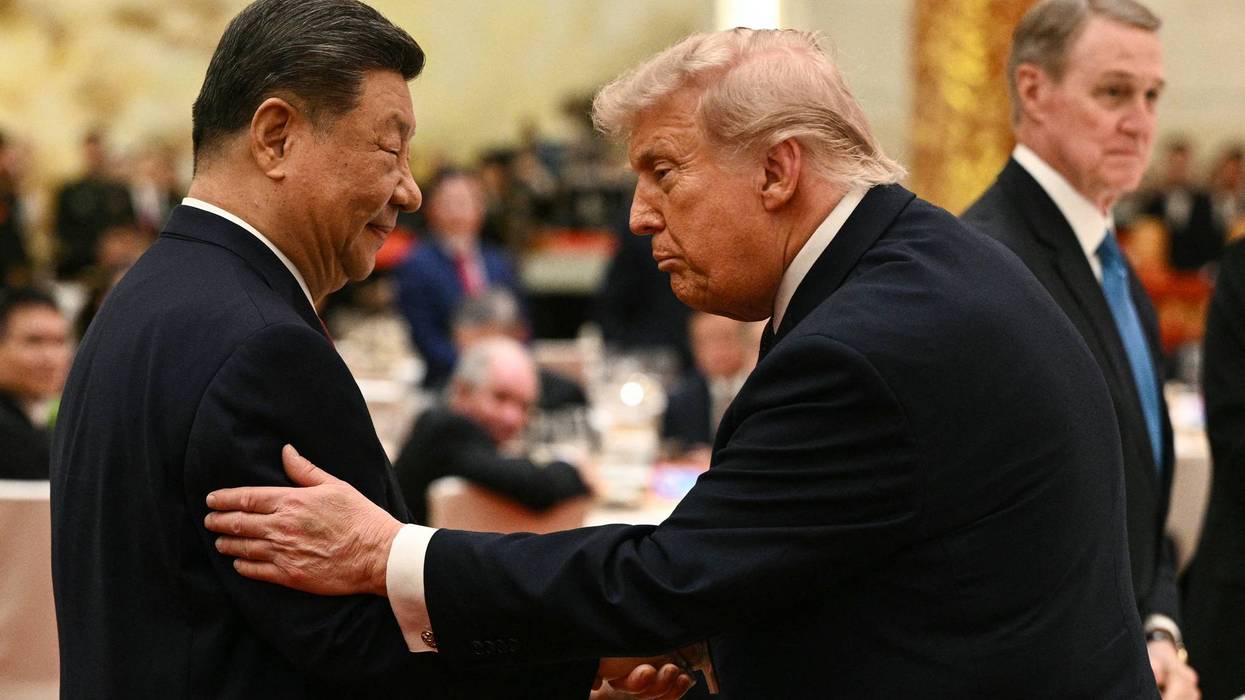
“Americans are increasingly supportive of US-China cooperation, while tensions with China do not serve American interests,” said dozens of anti-war groups as President Trump met with Chinese President Xi.
As US President Donald Trump meets with Chinese President Xi Jinping, a coalition of anti-war groups is calling on Congress to pressure the administration to "prioritize peace, cooperation, and stability" at a time when the US-China relationship is increasingly hostile.
“Americans are increasingly supportive of US-China cooperation, while tensions with China do not serve American interests,” argued the coalition, which includes Just Foreign Policy, Win Without War, the Friends Committee on National Legislation, Our Revolution, and dozens of other groups in a letter sent to members of Congress on Thursday.
They cited recent surveys showing that negative perceptions of China are consistently falling among Americans, including a Pew Research poll from January, which showed that just 28% of Americans viewed China as an "enemy" compared with 42% who saw it that way in 2024.
“At a time when so many domestic needs are going unmet, a confrontational posture toward China is costing untold billions of dollars in military build-up, trade and energy disruption, and securitization of technology—money that could and should be spent on the things Americans need at home," the coalition continued.
Trump's first visit to China in nearly a decade comes amid a global energy crisis caused by his war in Iran, a conflict where China has expressed a desire to act as a mediator.
While the coalition denounced Trump's war as "an unauthorized war of choice" that has led the world to a "deeply dangerous and uncertain place," it also said it presented an opportunity for the US and China to engage in diplomacy in hopes of putting the relationship "on a more stable footing."
Xi said that Taiwan remains the "most important issue in China-US relations” as the talks kicked off, warning that if mishandled, it could create a "very dangerous situation."
Secretary of State Marco Rubio said after a meeting on Thursday that the decadesold "One China Policy," which takes no explicit view on Taiwan's sovereignty, hasn't changed. Though he warned that it would be “a terrible mistake” for China to attempt to seize the island by force.
Friction between the US and China has only been heightened after Trump announced the sale of more than $11 billion worth of weapons to Taiwan in December, the largest ever arms sale to the island. At the time, China said the sale "gravely violates" the One China Policy.
The anti-war coalition warned that "current military and political trends in the United States, China, and Taiwan are moving us closer to a serious crisis or conflict over the island" and called on the US to "revitalize its One China Policy and press Beijing to reaffirm its focus on peaceful unification, with no timeline."
“Diplomacy with Beijing, rather than military posturing or arms racing across the Taiwan Strait,” they said, “is the only realistic path forward, especially since the American public has little interest in participating in a military conflict against China in defense of Taiwan.”
According to a survey by the Institute for Global Affairs in November, just 35% of Americans said they'd support the US sending troops to defend Taiwan if it were to be attacked by China. In a January poll commissioned by The New Republic, just 10% of Democratic voters said they wanted their party to support sending troops, and 30% wanted it to support sending weapons.
But Democratic leadership has pressured Trump to take the opposite approach and ramp up hostility toward Beijing in advance of this week's talks.
On Wednesday, Rep. Gregory Meeks (D-NY), the ranking member of the House Foreign Affairs Committee, was joined by Reps. Ro Khanna (D-Calif.), Jim Himes (D-Ct.), and Rep. Adam Smith (D-Wash.) to send a letter urging Trump to approve a delayed $14 billion arms sale to Taiwan ahead of his visit.
The Democrats on the House Foreign Affairs Committee joined in support for the sale, saying that "Trump must reaffirm in his meeting with Xi that the US will continue to uphold our longstanding One-China policy while standing firmly with Taiwan’s democracy and security. And he must make that clear by notifying Congress of the $14 billion arms sales to Taiwan. Anything else would undermine American credibility."
Just Foreign Policy (JFP) countered that the request to send more weapons just before talks were set to begin was "deeply unserious" and an "absurdly ill-timed move that would sabotage diplomacy—or worse."
Jake Werner, the director of the East Asia program at the Quincy Institute for Responsible Statecraft—another signatory to the anti-war letter—warned that while Democrats should confront Trump on the issue of China, they shouldn't goad him into an even more hawkish approach.
“If you want to attack Trump, that's great, but you should attack Trump on the basis of prudent, conflict-avoiding principles,” Werner said. “They should be criticizing him not for engaging in diplomacy, but for engaging in the wrong kind of diplomacy.”
In their letter to Congress, these and the other anti-war groups pushed for a similar diplomatic approach to other sources of tension with China, arguing that the US should take no position on the sovereignty of disputed territory in the South China Sea.
They also encouraged members of Congress to avoid creating "incentives" for other nations to adopt more confrontational stances toward China.
They singled out a first-ever test launch of an American Tomahawk missile in the Philippines last week, which had the capability to reach the Chinese mainland. Chinese military observers described it as the “worst provocation” in years by the US and suggested that Beijing should ramp up its air-defense and stealth-strike drone capabilities in response, according to the South China Morning Post.
The anti-war coalition said they "urge Congress to press the administration to avoid further escalatory signals and to instead pursue diplomacy to restore and expand non-proliferation agreements that can prevent a wasteful and dangerous arms race."
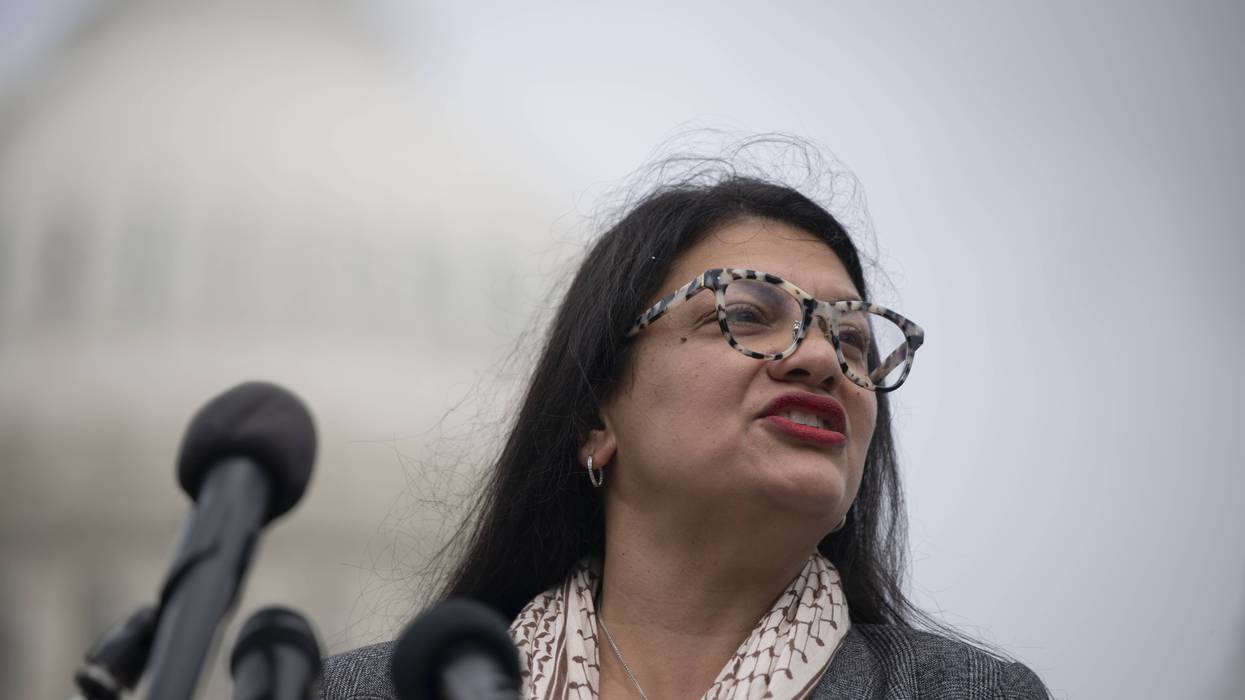
"We are witnessing the same genocidal playbook used against Palestinians in Gaza, now in Lebanon," Rep. Rashida Tlaib said.
As Israel ramps up its devastating invasion of Lebanon, Rep. Rashida Tlaib has introduced legislation in the US House of Representatives aimed at blocking US support.
Israel's latest onslaught against Lebanon, launched after the militant group Hezbollah retaliated against the joint US-Israeli attack against Iran at the end of February, has already killed more than 1,100 people, including at least 121 children, according to the Lebanese Health Ministry.
Many pieces of civilian infrastructure—including hospitals, schools, and residential buildings—have been attacked, and Israel has issued forced evacuation orders that have led more than 1 million people to be displaced from their homes.
“Thousands of families in our district with strong ties to Lebanon are living through immense pain,” said Tlaib, who represents a district that includes parts of Detroit and surrounding suburbs. “Many have lost loved ones, watched their grandparents' towns and villages be completely destroyed, and seen relatives uprooted from their homes, not knowing if they will ever be able to return.”
Tlaib (D-Mich.), the only Palestinian-American member of Congress, introduced two resolutions on Friday. The first calls on the US to use its leverage to end Israel's land and air assaults against Lebanese territory, denounce efforts at territorial expansion, and investigate alleged crimes against humanity.
The second, cosponsored by Reps. Delia Ramirez (D-Ill.) and Nydia Velázquez (D-NY), is a war powers resolution that would require President Donald Trump to remove US forces from participation in all military actions in Lebanon that have not been authorized by Congress.
In recent days, Israel has expanded its ground operation, aiming to control the entire territory south of the Litani River indefinitely. Leaders of the military campaign, such as Defense Minister Israel Katz, have suggested using the genocidal war in Gaza as a "model" for Lebanon, including the full destruction of residential areas.
"We are witnessing the same genocidal playbook used against Palestinians in Gaza, now in Lebanon," Tlaib said. "Israeli leaders are openly celebrating it. This ethnic cleansing campaign is only possible because of US support, funded by our tax dollars. We must act now to stop these crimes against humanity and illegal invasion of Lebanon.”
Nathan Thompson, a senior analyst at Just Foreign Policy, which advised Tlaib on the legislation, told Common Dreams that although the US military and Israel Defense Forces (IDF) are "deeply operationally integrated, and have only become more so since October 7, 2023," the extent of direct US involvement in Lebanon has been kept secret from the public.
"Military officials wouldn’t say whether or not they provided targeting assistance for Israel’s airstrikes on Hezbollah in 2024, and that’s exactly the type of action Congress has considered to be unauthorized ‘hostilities’ under the War Powers Act in the past," Thompson said.
However, he said, "We know that the IDF and the US military are linked at the hip—on weapons sales, missile defense, targeting assistance, everything."
Tlaib's resolutions come as another war powers resolution to limit Trump's ability to launch more attacks against Iran appears to have gained enough support to pass the House, although Democratic leadership has chosen to delay the vote until mid-April despite warnings that Trump may soon dramatically escalate the war, including with US ground troops.
That bill remains viable due to limited Republican support, including from Reps. Thomas Massie (Ky.), Warren Davidson (Ohio), and Nancy Mace (SC). While Massie has been a consistent anti-war vote, it's unclear whether other Republicans, as well as some pro-Israel Democrats, would similarly sign onto a resolution concerning Lebanon.
Thompson said the Lebanon-related legislation is an “urgently necessary tool to end US complicity” as Israeli officials are “talking about functionally annexing southern Lebanon and recreating Gaza-level destruction there.”
He said, "A war powers vote forces all of Congress to go on the record: Do you want the US to enable this genocide, or not?"
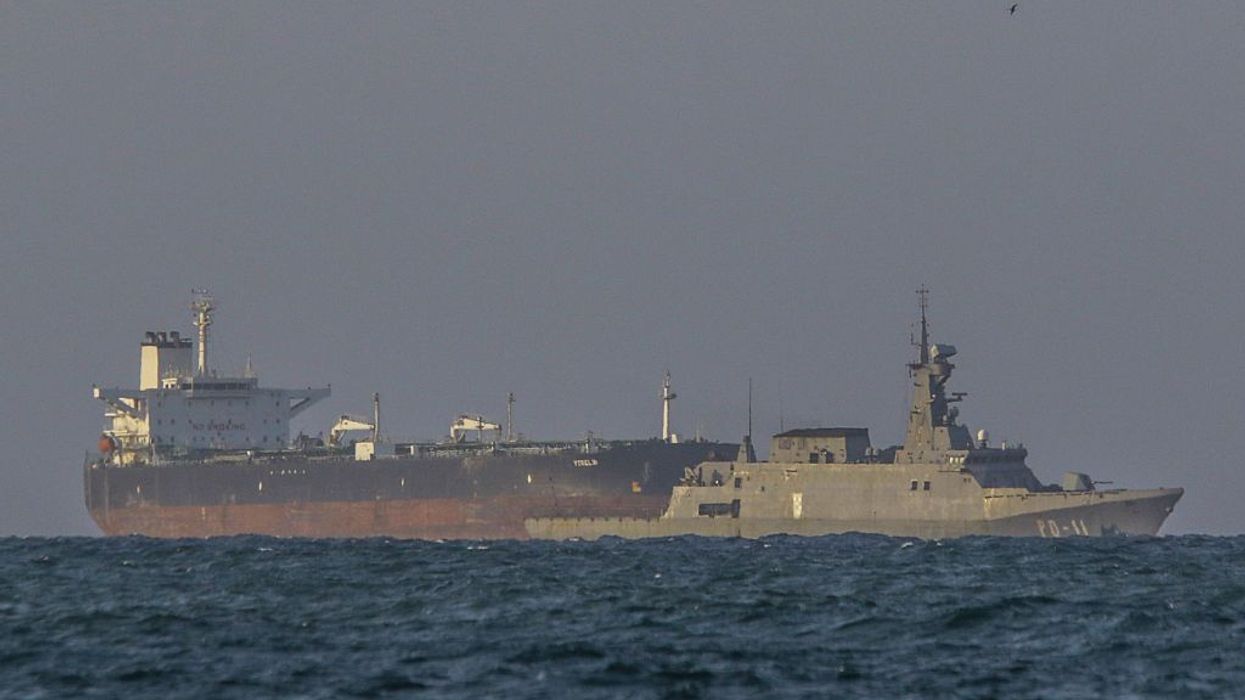
“Millions of civilians will be at risk if the economy deteriorates and tensions rise," warned one anti-war group.
The US military on Wednesday seized an oil tanker off the coast of Venezuela in the latest act of aggression against a nation that President Donald Trump has been openly threatening for several weeks.
Bloomberg, which described the move as a "serious escalation" in tensions between the US and Venezuela, reported that the seizure of the tanker by US forces "may make it much harder for Venezuela to export its oil, as other shippers are now likely to be more reluctant to load its cargoes."
The seizure was described to Bloomberg by a Trump administration official as a "judicial enforcement action on a stateless vessel" that had been docked in Venezuela.
Shortly after the seizure occurred, Trump boasted about it during a meeting with business leaders at the White House, declaring that the tanker was the "largest one ever seized."
Trump: "It's been an interesting day from the standpoint of news. As you probably know, we've just seized a tanker on the coast of Venezuela. Largest one ever seized actually. And other things are happening." pic.twitter.com/wyOYMKCJTT
— Aaron Rupar (@atrupar) December 10, 2025
Just Foreign Policy, a progressive think tank and advocacy group, condemned the seizure of the tanker, describing it as an "illegal US move to take control of Venezuela's natural resources and strangle the economy, which is already struggling under indiscriminate US sanctions," and warning that "millions of civilians will be at risk if the economy deteriorates and tensions rise."
The seizure of the oil tanker is just one of many aggressive maneuvers that the Trump administration has been making around Venezuela.
Starting in September, the administration began a series of murders of people aboard boats in the Caribbean Sea off the coast of Venezuela and in the Pacific Ocean.
The Trump administration has claimed those targeted for extrajudicial killing are drug smugglers and accused Venezuelan President Nicolás Maduro of leading an international drug trafficking organization called the Cartel de los Soles, despite many experts saying that they have seen no evidence that such an organization formally exists.
Trump late last month further escalated tensions with Venezuela when he declared that airspace over the nation was “closed in its entirety,” even though he lacks any legal authority to enforce such a decree. Trump has also hinted that strikes against purported drug traffickers on Venezuelan soil would occur in the near future.
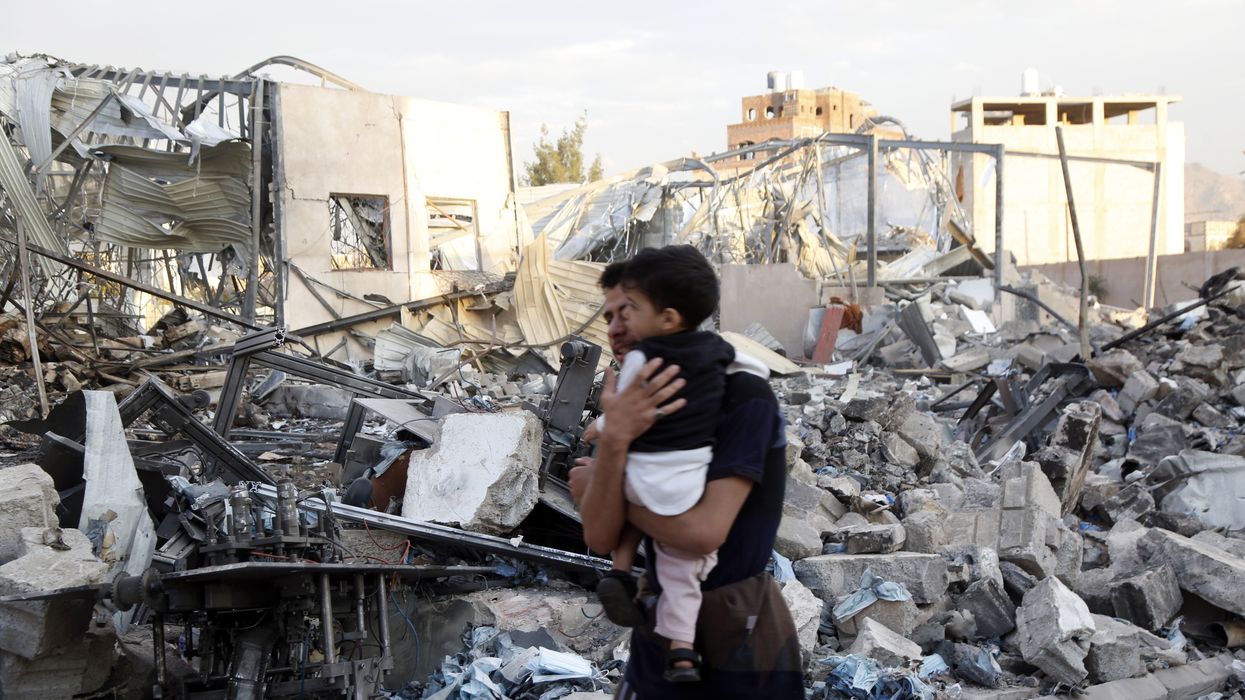
"President Trump has not only launched us into a new military escapade in the Middle East, he's done so in breach of our Constitution," said one advocate.
The leaked messages among top Trump administration officials about U.S. strikes in Yemen earlier this month, which were held via a private sector messaging app in breach of national security protocol and inadvertently included a journalist, sparked considerable discussion among political commentators and social media users—but as the initial shock regarding the Signal conversation faded, advocates and policy experts said lawmakers' attention should turn to the illegality of the attacks on Yemen.
The advocacy groups Just Foreign Policy, DAWN, and Action Corps released a joint statement Thursday calling on Congress to take action to stop U.S. military action in Yemen by upholding "its sole authority to declare war under Article I of the Constitution and the 1973 War Powers Resolution (WPR)."
The chat messages sent between officials including Vice President JD Vance, Defense Secretary Pete Hegseth, and National Security Adviser Michael Waltz stunned the public and Washington insiders this week because they had accidentally also been sent to Atlantic journalist Jeffrey Goldberg, but the three groups pointed out that they also included an admission from Vance that the strikes were not defensive—contrary to claims by President Donald Trump:
I think we are making a mistake… 3 percent of US trade runs through the suez. 40 percent of European trade does. There is a real risk that the public doesn't understand this or why it's necessary. The strongest reason to do this is, as POTUS said, to send a message…
Vance's comments bolster the three groups' position that "the strikes also violate Chapters I and VII of the United Nations Charter, which prohibit states from launching a war unless in self-defense or authorized by the U.N. Security Council."
Even before the chats were leaked, said the groups, it was clear that Trump had not sought congressional authorization for military strikes in Yemen, which have killed at least 53 people since the U.S. launched attacks on March 15.
The War Powers Resolution of 1973, which was introduced after former President Richard Nixon's secretive bombings of Cambodia, requires congressional authorization for "the introduction of the United States armed forces into hostilities, or into situations where imminent involvement in hostilities is clearly indicated by the circumstances," while Article I of the Constitution grants Congress the authority to declare war.
"Congress should demand an end to this reckless, unauthorized war that will both harm U.S. interests and continue to terrorize the Yemeni people who have already suffered years of U.S.-backed violence."
"President Trump has not only launched us into a new military escapade in the Middle East, he's done so in breach of our Constitution," said Isaac Evans-Frantz, director of Action Corps. "Congress should demand an end to this reckless, unauthorized war that will both harm U.S. interests and continue to terrorize the Yemeni people who have already suffered years of U.S.-backed violence."
The groups' comments echoed those of Michigan State University professor and Quincy Institute fellow Shireen Al-Adeimi, who is Yemeni-American.
"With all the noise about the Signal leak, is anyone in Congress or the media concerned that actually bombing Yemeni people and Yemen's infrastructure is unconstitutional?" she asked on Tuesday. "Anyone?"
The Trump administration claimed that the strikes in Yemen were made because the Houthis' blockade on Israeli ships—established in retaliation for Israel's breaking of a cease-fire in Gaza—was an attack on U.S. economic interests and economic security, but the three groups noted that "there is no evidence that Houthi forces attacked any U.S. ships or personnel from the beginning of the Gaza cease-fire in January 2025 through March 15."
The Houthis struck cargo ships they deemed to be tied to Israel starting in November 2023, in response to Israel's relentless assault on Gaza. They stopped the attacks for the duration of the cease-fire, which lasted nearly two months starting in mid-January.
"The cessation of Houthi attacks during the short-lived Gaza truce underscores their primary focus to defend Palestinians from genocide—a reality obscured by Trump's rhetoric to justify unauthorized military action and deepen U.S. aggression in a widening conflict," said Sarah Leah Whitson, executive director of DAWN. "The best way to protect global maritime navigation through the Red Sea is to ensure the Israeli government ends its genocidal violence in Gaza."
Along with Vance's apparent admission that the strikes were not in self-defense, the Signal discussion included what observers called a "confession" to alleged war crimes by Waltz, who said the residential building of the girlfriend of a Houthi leader had "collapsed" after a U.S. strike. As Common Dreams reported Wednesday, Waltz and Vance celebrated the strike.
Etan Mabourakh, a fellow at Action Corps, called on Congress to introduce a Yemen War Powers Resolution. The House and Senate both passed such a resolution in 2019 to bar the U.S. from participating in the Saudi war in Yemen.
"Congress should take the necessary step to stop these illegal, ineffective, and unauthorized airstrikes in Yemen," said Mabourakh. "Rather than debating the Trump administration's violation of security protocols in their Signal chats, they should do their job and challenge another unlawful new war in the region that is making everyone less safe."
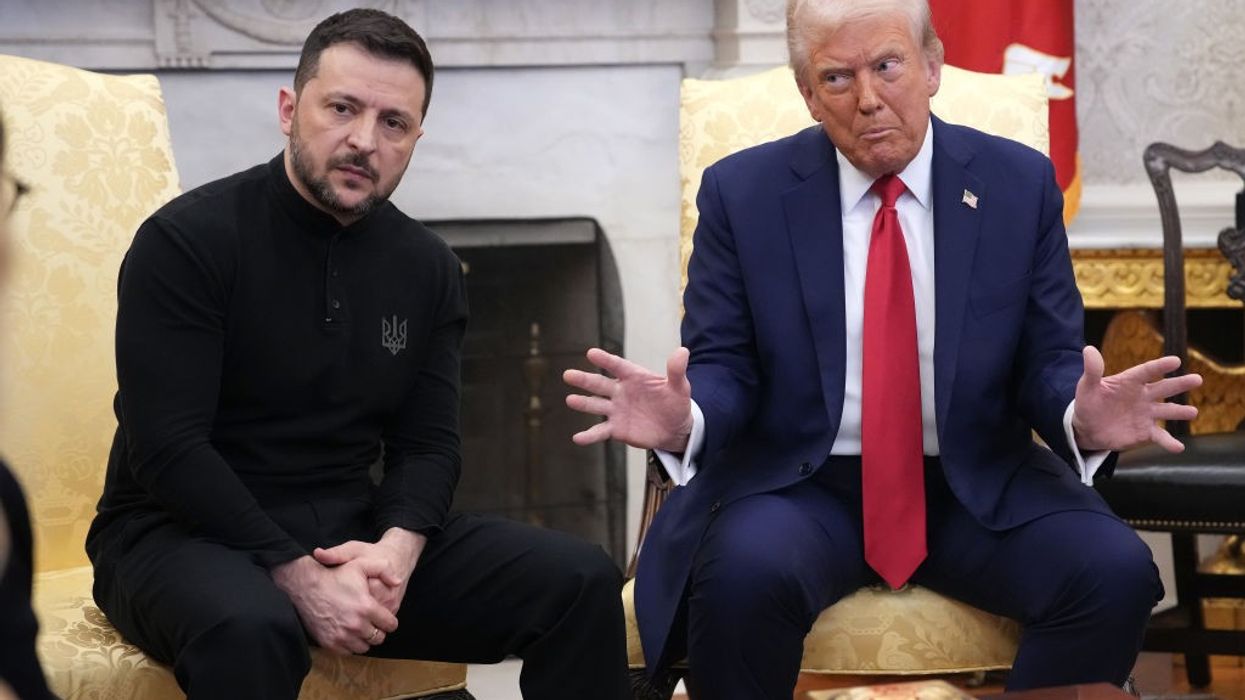
"Let's be clear—this is not about bringing peace," argued Democratic Rep. Pramila Jayapal. "Donald Trump is siding with Russia, Putin, and dictators across the world over our allies and the defense of democracy."
U.S. President Donald Trump late Monday ordered a suspension of all American military assistance to Ukraine after his conduct in a televised meeting with the war-torn country's president in the Oval Office last week sparked international dismay and outrage.
Trump's decision reportedly impacts over $1 billion worth of weaponry and ammunition that was set to be delivered to Ukraine, which has been under attack by invading Russian forces since February 2022. The U.S. has provided more than $65 billion in military aid to Ukraine during the full-scale Russian assault, according to State Department figures.
The Associated Press noted Monday that the U.S. president's move "comes some five years after Trump held up congressionally authorized assistance to Ukraine as he sought to pressure [Ukrainian President Volodymyr] Zelenskyy to launch an investigation into Joe Biden, then a Democratic presidential candidate."
"The moment led to Trump's first impeachment," the news outlet observed.
Democratic members of Congress argued that Trump's aid cutoff amounts to another instance of the U.S. president unlawfully withholding spending approved by lawmakers—and rejected the White House's claim that the move was motivated by a genuine desire for peace.
"Let's be clear—this is not about bringing peace," said Rep. Pramila Jayapal (D-Wash.), who faced backlash in late 2022 over her handling of a Congressional Progressive Caucus letter urging the Biden administration to "seriously explore all possible avenues, including direct engagement with Russia, to reduce harm and support Ukraine in achieving a peaceful settlement."
"Donald Trump is siding with Russia, Putin, and dictators across the world over our allies and the defense of democracy," Jayapal said Monday. "This is a shameful day in American history."
Rep. Gregory Meeks (D-N.Y.), the top Democrat on the House Foreign Affairs Committee, said in a statement that "if President Trump was truly concerned with securing a just and sustainable peace deal for Ukraine, he wouldn't have conceded every piece of leverage the United States, our allies, and Ukraine held before even beginning negotiations."
"He wouldn't be siding with an authoritarian responsible for war crimes," Meeks continued. "And he certainly wouldn't be forcing Ukraine into surrender, while claiming it's a deal. Instead, he would have continued U.S. support for Ukraine to put it in the best possible position to secure a peace deal for Russia's illegal and unjustified war against it."
"Ukraine is left with impossible choices: fight a losing war without U.S. support, or submit to economic vassalage under the very powers that prolonged its suffering."
Trump's decision to suspend U.S. aid to Ukraine, which the Kremlin welcomed, came after Zelenskyy said in the wake of the Oval Office meeting that "an agreement to end the war is still very, very far away."
"The peace that we foresee in the future must be just, honest, and most importantly, sustainable," added Zelenskyy, who has demanded security guarantees from the West as part of any diplomatic resolution with Russia.
Trump, who is pushing for U.S. control of Ukraine's mineral wealth, responded furiously to Zelenskyy's comment, calling it "the worst statement that could have been made."
Trump's Oval Office blow-up and subsequent aid suspension led some to lament missed opportunities for diplomacy under U.S. President Joe Biden.
"It would have been better for Ukraine—and the world—if Biden had pursued diplomacy much earlier," said Trita Parsi, executive vice president of the Quincy Institute for Responsible Statecraft. "But the Blob and the Democratic centrists shut down even any whisper of diplomacy."
Aída Chávez, communications director and policy adviser at Just Foreign Policy, argued in a recent column for The Intercept that "Trump's demand for 'payback' from Ukraine—treating the bloodiest conflict in Europe since World War II as if it's some unappreciated favor—presents U.S. foreign policy in its most naked form."
"As a result of the West's refusal to seriously consider diplomacy," Chávez added, "Ukraine is left with impossible choices: fight a losing war without U.S. support, or submit to economic vassalage under the very powers that prolonged its suffering."
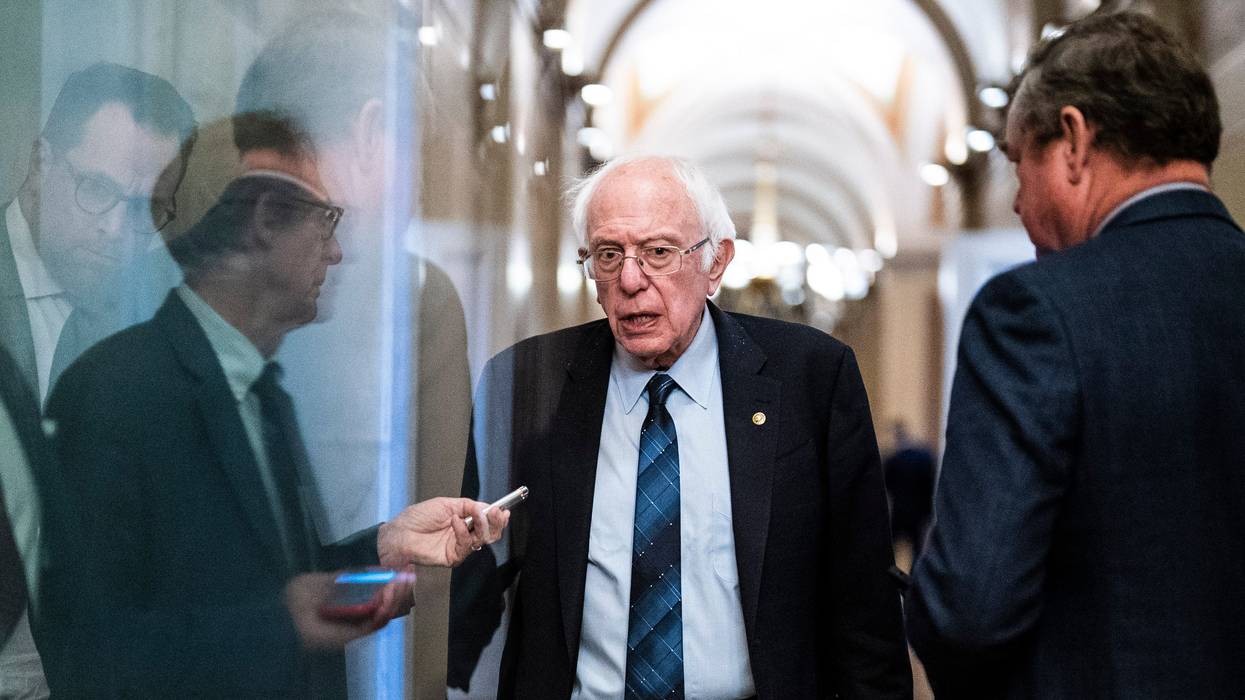
The Vermont senator instead called for conditioning U.S. military aid to Israel, an end to "indiscriminate bombing," and a humanitarian pause.
Facing
backlash from former staffers and other progressives, U.S. Sen. Bernie Sanders on Thursday declined once again to join the growing number of congressional lawmakers demanding an immediate cease-fire in the Gaza Strip, saying in a statement that he is "not quite sure how you negotiate a cease-fire with a terrorist organization that is dedicated to perpetual war."
Sanders (I-Vt.) was referencing a Hamas spokesman's recent remark to The New York Times that he hopes "the state of war with Israel will become permanent on all the borders"—an indication, according to the Vermont senator, that Hamas "wants perpetual warfare and the destruction of Israel."
Sanders supported a cease-fire during Israel's deadly assault on Gaza in 2021, when he delivered a floor speech decrying the "terrible loss of life" in the enclave and demanding an immediate end to the bloodshed.
But an unnamed former adviser to the senator told The Washington Post that he believes the October 7 Hamas-led attack on Israel forever changed Sanders' view on the possibility of a sustained cease-fire between Israel and Hamas.
Instead of a negotiated cease-fire, Sanders has called for an end to Israel's "indiscriminate bombing" and a "significant pause" to allow desperately needed humanitarian aid to enter Gaza, as well as a guarantee that displaced Gazans are able to return to their homes—many of which have been significantly damaged or destroyed by Israeli airstrikes.
In his statement Thursday, the senator also called on lawmakers to "attach conditions to any supplemental spending bill for Israel that comes before Congress," something the Biden administration has opposed.
"If we are going to have a chance at saving innocent lives, Congress must take action, the Biden administration must take action, the world must take action," said Sanders. "We must find a way to break this cycle of violence."
"Nobody thinks that a single resolution would solve the entire crisis. It's an organizing tool that has mobilized countless thousands of people. Curious what organizing tool Bernie's office would prefer?"
The senator's statement came as congressional calls for a cease-fire continued to grow amid survey data and mass protests showing overwhelming support from the U.S. public.
On Thursday, Rep. Becca Balint (D-Vt.) became the first Jewish member of Congress to endorse a cease-fire, writing in the VTDigger that "it will be the first step in the difficult and critical work needed ahead—building Israel's post-war government, determining who will govern the Gaza Strip, and negotiating long-term peace and security for both Palestinians and Israelis."
According to a tally by The Intercept's Prem Thakker, 33 members of Congress—including just one senator, Dick Durbin (D-Ill.)—have expressed support for a cease-fire, which is also backed by the head of the United Nations, Amnesty International, the editorial board of the Los Angeles Times, and many others worldwide.
A number of House Democrats have signed onto a cease-fire resolution introduced last month by Sanders allies in the House, including Reps. Cori Bush (D-Mo.), Rashida Tlaib (D-Mich.), Ilhan Omar (D-Minn.), and Alexandria Ocasio-Cortez (D-N.Y.).
But Sanders argued Thursday that "non-binding resolutions that Congress won't pass" aren't the solution to the current conflict, an apparent reference to the House cease-fire measure.
Erik Sperling, executive director of Just Foreign Policy, wrote in response that "nobody thinks that a single resolution would solve the entire crisis."
"It's an organizing tool that has mobilized countless thousands of people," he wrote. "Curious what organizing tool Bernie's office would prefer?"
Sperling added that "there are many flaws with his argument for why you cannot achieve a ceasefire with Hamas."
"But perhaps most troublingly," he wrote, "Sen. Sanders appears to be endorsing the Netanyahu regime change goal of removing Hamas from Gaza, meaning Bernie actually wants war to resume after any pauses."
The senator released his latest statement on Gaza days after more than 300 people who served as Sanders delegates to the Democratic National Convention in 2016 and 2020 signed an open letter urging him to introduce a companion to the House cease-fire resolution in the Senate, echoing a call recently issued by hundreds of former Sanders campaign staffers.
"We ask you to stand again for the principles that drew millions in our districts to your campaigns—opposition to endless wars and horrific violence, and zealous struggle for peace and justice," the former delegates wrote. "As in 2016 and 2020, you are not alone: from coast to coast, we have your back."
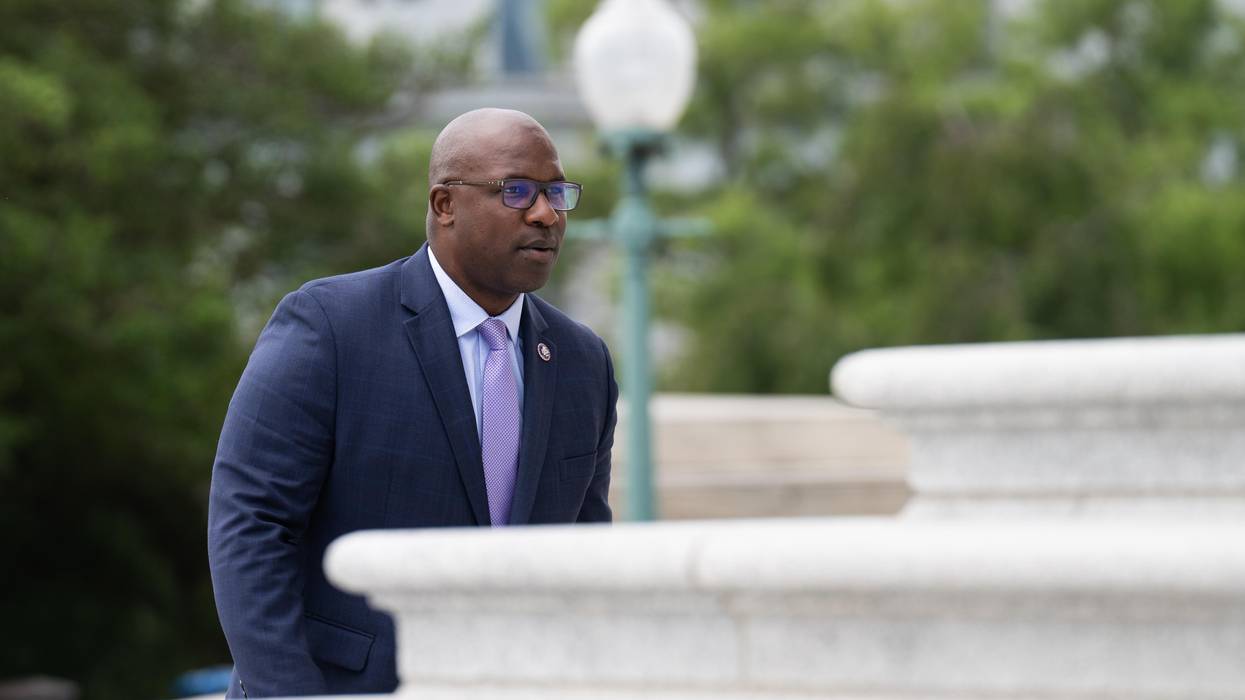
"This amendment is crucial as taxpayers and other citizens remain concerned—and inadequately informed—about the cost to U.S. taxpayers of the wide range of U.S. military activities abroad."
U.S. lawmakers remain on August recess but 20 advocacy groups on Monday wrote to top Democrats and Republicans on key congressional panels to demand passage of "commonsense, noncontroversial" legislation to provide the public with greater transparency on U.S. military spending.
When members of Congress return to Capitol Hill next month, they will continue reconciling the differences between the House and Senate versions of the National Defense Authorization Act (NDAA) for Fiscal Year (FY) 2024—a process that involves intense disagreements over right-wing policies that Republicans want to stuff into the $886 billion package.
The advocacy organizations—including Amnesty International USA, Demand Progress Action, Friends Committee on National Legislation, Just Foreign Policy, Peace Action, RootsAction.com, Veterans for Peace, and Win Without War—came together to support an amendment to the NDAA proposed by Rep. Jamaal Bowman (D-N.Y.).
Writing to Senate Armed Services Committee Chair Jack Reed (D-R.I.) and Ranking Member Roger Wicker (R-Miss.) and House Armed Services Committee Chair Mike Rogers (R-Ala.) and Ranking Member Adam Smith (D-Wash.), the groups explained how Bowman's proposal has its roots in the 2015 Cost of War Act led by former Congressman John Lewis (D-Ga.).
Last year, the late congressman's successor, Rep. Nikema Williams (D-Ga.), "carried forward this legacy by introducing new Cost of War legislation expanding the scope of John Lewis' work to include the cost to U.S. taxpayers for any overseas contingency operations," the letter notes, arguing that its inclusion in a previous NDAA "demonstrates the broad-based support for accountability and transparency around U.S. defense spending."
For the FY23 NDAA, Bowman introduced "the latest update to John Lewis' Cost of War legislation," an amendment that "requires reporting on a wider range of costs to fully encompass the U.S. military footprint abroad that is not covered by the former two pieces of legislation," the letter details. "This includes the price of training and assisting partner forces, maintaining overseas bases, paying contractors who provide goods and services in support of operations, and all overseas military operations."
Bowman's measure passed the House but was ultimately left out of the final NDAA. The groups behind the letter to panel leaders now hope it will remain included in the next one, writing that "this amendment is crucial as taxpayers and other citizens remain concerned—and inadequately informed—about the cost to U.S. taxpayers of the wide range of U.S. military activities abroad, including those that fall short of active military missions such as wars or contingency operations."
"Many Americans want great public scrutiny and debate about the balance our nation strikes between spending on our military presence abroad and spending on other domestic priorities," the groups stressed. "This includes spending on healthcare, education, and infrastructure, as well as concerns about the rate of taxation or national debt required to sustain the U.S. overseas presence."
"These debates will only become more relevant as our military budget approaches the $1 trillion mark," the organizations added, "and it is important that the American people have the necessary transparency and data about these costs to engage in our nation's democratic decision-making process around such questions."

House Minority Leader Hakeem Jeffries and Speaker Kevin McCarthy were among the no votes on the resolution led by Rep. Matt Gaetz and backed by progressives.
More than 170 House Republicans and 150 Democrats teamed up Wednesday to defeat a resolution aimed at withdrawing all remaining U.S. troops from Syria, a proposal led by right-wing Rep. Matt Gaetz and supported by members of the Congressional Progressive Caucus.
The measure, just the latest House push to bring the nation's yearslong military presence in Syria to an end, failed by a vote of 103 to 321, with Democratic House Minority Leader Hakeem Jeffries of New York and Republican Speaker Kevin McCarthy of California among the no votes.
The resolution would have required the president to remove 900-plus U.S. troops from Syria within 180 days of passage, barring congressional action to authorize their continued presence.
Opponents of the resolution who support prolonging the occupation echoed the Pentagon claim that U.S. forces are needed in Syria to prevent a resurgence of ISIS and to ensure "stability" in the region.
"Either we fight 'em in Syria, or we'll fight 'em here," said Republican Rep. Ryan Zinke of Montana.
While lamenting the proposal's defeat, peace advocates noted that it garnered more Republican support than any previous war powers resolution, with 47 GOP yes votes. Fifty-six House Democrats—including Reps. Ilhan Omar of Minnesota, Ro Khanna of California, Alexandria Ocasio-Cortez of New York, and Cori Bush of Missouri—voted for the resolution.
“There is a new generation of thinking on two central issues," Khanna told The Intercept following Wednesday's vote. "A concern about wars and entanglements over the last 20 years that have not made us safer, and a concern over the offshoring of our domestic production over bad trade deals that have left the working class and middle class poorer."
"I believe that this new generation of political leaders can help fix those two mistakes that the country has made, and that there is an emerging consensus that we should not have our troops fighting overseas without congressional authorization," Khanna added. "If the president wants to make the case for a certain presence that is required for America to protect the Kurds, then he should come to Congress and work with us to make that case."
As The Intercept's Ryan Grim and Daniel Boguslaw noted, "the legal rationale for U.S. occupation" of Syria is "dubious at best."
Opponents of the Syria war powers resolution, including Zinke, pointed to the 2001 Authorization for Use of Military Force (AUMF)—a law that U.S. presidents have cited to give legal cover for airstrikes and ground operations in Afghanistan, Iraq, Yemen, Somalia, and elsewhere.
"With ISIS suppressed," Grim and Boguslaw wrote, the Biden administration "has suggested the purpose of the occupation is to act as a bulwark against Iran."
Pointing to U.S. officials' claim that the presence of American troops prevents Iranian forces from establishing a "land bridge" to shuttle weapons to allies in Lebanon, Grim and Boguslaw observed that Iran "already has a direct 'land bridge' through eastern Syria to Lebanon; the U.S. occupation merely adds some time to the Iranian truckers' journey."
Critics of the U.S. troop presence in Syria have stressed that Congress did not specifically authorize a military operation to confront "Iran-backed militias" in Syria.