SUBSCRIBE TO OUR FREE NEWSLETTER
Daily news & progressive opinion—funded by the people, not the corporations—delivered straight to your inbox.
5
#000000
#FFFFFF
To donate by check, phone, or other method, see our More Ways to Give page.
Daily news & progressive opinion—funded by the people, not the corporations—delivered straight to your inbox.

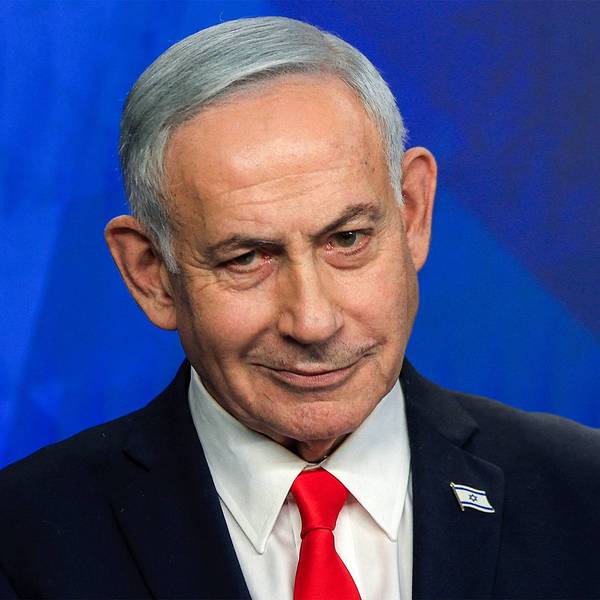
Israel's Prime Minister Benjamin Netanyahu gives a news conference in Jerusalem on June 15, 2026.
"Words are not enough to restrain the Israelis," one journalist said. "There have to be real consequences."
Israeli Prime Minister Benjamin Netanyahu stated on Wednesday that he will not end the military occupation of Lebanon even if it tanks US President Donald Trump's peace deal with Iran.
"As long as I am prime minister, we will maintain the security zone in southern Lebanon," he said, referring to Israel's occupation, which has cleared about one-fifth of the country of its inhabitants.
About 1.2 million residents have been displaced by Israeli attacks and forced evacuation orders since March as part of a military campaign that's killed about 4,200 people, according to the Lebanese Ministry of Public Health.
As Trump seeks an end to his war with Iran, the Iranian delegation has stressed that it must be peace "on all fronts," including Lebanon, which was outlined in the memorandum of understanding that has served as the basis for ongoing negotiations.
Behind the scenes, Trump has reportedly fumed that by ramping up attacks on Lebanon, Israel is trying to sabotage the deal and drag the US back into war.
But while he and Vice President JD Vance have offered some uncommonly blunt criticism of Israel over the past week, they've not yet gone beyond words. And Israel's leaders seem to believe they won't.
Echoing the prime minister, Defense Minister Israel Katz said on Wednesday that the Israel Defense Forces were "not withdrawing" from Lebanon "even if there is an American demand to do so."
But he also stated that despite a US-mediated ceasefire between Israel and Hezbollah, "as of this moment... there is no American demand for Israel to withdraw from Lebanon," which he described as "a political achievement."
That's not likely to sit well with the Iranians, who, in response to a wave of Israeli attacks this weekend, announced that they were once again closing off the Strait of Hormuz, threatening more of the economic pandemonium that Trump wants to quell by ending the war.
“For us, a ceasefire in Lebanon is as important as a ceasefire in Iran and, further, an end to the war in Lebanon is as important as an end to the war in Iran,” said Mohammad Bagher Ghalibaf, Iran's parliamentary speaker and lead negotiator, on Wednesday.
US Secretary of State Marco Rubio has attempted to thread the needle by claiming on Wednesday that "the Israelis have been clear they don't have any quarrels with the Lebanese people, nor do they have any claims on the territory of Lebanon."
But this was undercut somewhat by Katz's statement on Wednesday that the 200,000 civilians whom Israel ordered to leave southern Lebanon "will not return" to their homes because of the risk they allegedly pose to Israeli soldiers.
"Soldiers in, residents out," Katz said. "The infrastructure is destroyed, the houses are dangerous and ruined. We are not withdrawing."
Critics have pointed out that Trump does have ample amounts of leverage to coerce the Israelis to get with the program, including threatening to cut off US weapons shipments, and that his failure to do this may destroy any chance at peace with Iran.
"The Israelis are going to continue testing what they can get away with," said Rania Khalek, a journalist for BreakThrough News, on social media. "Iran was very clear that a deal with the US is dependent on a ceasefire in Lebanon."
"How embarrassing for Trump that the Israelis don’t care about his orders. They are trying to preserve their ability to kill all their neighbors," she added. "Words are not enough to restrain the Israelis. There have to be real consequences."
Dear Common Dreams reader, It’s been nearly 30 years since I co-founded Common Dreams with my late wife, Lina Newhouser. We had the radical notion that journalism should serve the public good, not corporate profits. It was clear to us from the outset what it would take to build such a project. No paid advertisements. No corporate sponsors. No millionaire publisher telling us what to think or do. Many people said we wouldn't last a year, but we proved those doubters wrong. Together with a tremendous team of journalists and dedicated staff, we built an independent media outlet free from the constraints of profits and corporate control. Our mission has always been simple: To inform. To inspire. To ignite change for the common good. Building Common Dreams was not easy. Our survival was never guaranteed. When you take on the most powerful forces—Wall Street greed, fossil fuel industry destruction, Big Tech lobbyists, and uber-rich oligarchs who have spent billions upon billions rigging the economy and democracy in their favor—the only bulwark you have is supporters who believe in your work. But here’s the urgent message from me today. It's never been this bad out there. And it's never been this hard to keep us going. At the very moment Common Dreams is most needed, the threats we face are intensifying. We need your support now more than ever. We don't accept corporate advertising and never will. We don't have a paywall because we don't think people should be blocked from critical news based on their ability to pay. Everything we do is funded by the donations of readers like you. When everyone does the little they can afford, we are strong. But if that support retreats or dries up, so do we. Will you donate now to make sure Common Dreams not only survives but thrives? —Craig Brown, Co-founder |
Israeli Prime Minister Benjamin Netanyahu stated on Wednesday that he will not end the military occupation of Lebanon even if it tanks US President Donald Trump's peace deal with Iran.
"As long as I am prime minister, we will maintain the security zone in southern Lebanon," he said, referring to Israel's occupation, which has cleared about one-fifth of the country of its inhabitants.
About 1.2 million residents have been displaced by Israeli attacks and forced evacuation orders since March as part of a military campaign that's killed about 4,200 people, according to the Lebanese Ministry of Public Health.
As Trump seeks an end to his war with Iran, the Iranian delegation has stressed that it must be peace "on all fronts," including Lebanon, which was outlined in the memorandum of understanding that has served as the basis for ongoing negotiations.
Behind the scenes, Trump has reportedly fumed that by ramping up attacks on Lebanon, Israel is trying to sabotage the deal and drag the US back into war.
But while he and Vice President JD Vance have offered some uncommonly blunt criticism of Israel over the past week, they've not yet gone beyond words. And Israel's leaders seem to believe they won't.
Echoing the prime minister, Defense Minister Israel Katz said on Wednesday that the Israel Defense Forces were "not withdrawing" from Lebanon "even if there is an American demand to do so."
But he also stated that despite a US-mediated ceasefire between Israel and Hezbollah, "as of this moment... there is no American demand for Israel to withdraw from Lebanon," which he described as "a political achievement."
That's not likely to sit well with the Iranians, who, in response to a wave of Israeli attacks this weekend, announced that they were once again closing off the Strait of Hormuz, threatening more of the economic pandemonium that Trump wants to quell by ending the war.
“For us, a ceasefire in Lebanon is as important as a ceasefire in Iran and, further, an end to the war in Lebanon is as important as an end to the war in Iran,” said Mohammad Bagher Ghalibaf, Iran's parliamentary speaker and lead negotiator, on Wednesday.
US Secretary of State Marco Rubio has attempted to thread the needle by claiming on Wednesday that "the Israelis have been clear they don't have any quarrels with the Lebanese people, nor do they have any claims on the territory of Lebanon."
But this was undercut somewhat by Katz's statement on Wednesday that the 200,000 civilians whom Israel ordered to leave southern Lebanon "will not return" to their homes because of the risk they allegedly pose to Israeli soldiers.
"Soldiers in, residents out," Katz said. "The infrastructure is destroyed, the houses are dangerous and ruined. We are not withdrawing."
Critics have pointed out that Trump does have ample amounts of leverage to coerce the Israelis to get with the program, including threatening to cut off US weapons shipments, and that his failure to do this may destroy any chance at peace with Iran.
"The Israelis are going to continue testing what they can get away with," said Rania Khalek, a journalist for BreakThrough News, on social media. "Iran was very clear that a deal with the US is dependent on a ceasefire in Lebanon."
"How embarrassing for Trump that the Israelis don’t care about his orders. They are trying to preserve their ability to kill all their neighbors," she added. "Words are not enough to restrain the Israelis. There have to be real consequences."
Israeli Prime Minister Benjamin Netanyahu stated on Wednesday that he will not end the military occupation of Lebanon even if it tanks US President Donald Trump's peace deal with Iran.
"As long as I am prime minister, we will maintain the security zone in southern Lebanon," he said, referring to Israel's occupation, which has cleared about one-fifth of the country of its inhabitants.
About 1.2 million residents have been displaced by Israeli attacks and forced evacuation orders since March as part of a military campaign that's killed about 4,200 people, according to the Lebanese Ministry of Public Health.
As Trump seeks an end to his war with Iran, the Iranian delegation has stressed that it must be peace "on all fronts," including Lebanon, which was outlined in the memorandum of understanding that has served as the basis for ongoing negotiations.
Behind the scenes, Trump has reportedly fumed that by ramping up attacks on Lebanon, Israel is trying to sabotage the deal and drag the US back into war.
But while he and Vice President JD Vance have offered some uncommonly blunt criticism of Israel over the past week, they've not yet gone beyond words. And Israel's leaders seem to believe they won't.
Echoing the prime minister, Defense Minister Israel Katz said on Wednesday that the Israel Defense Forces were "not withdrawing" from Lebanon "even if there is an American demand to do so."
But he also stated that despite a US-mediated ceasefire between Israel and Hezbollah, "as of this moment... there is no American demand for Israel to withdraw from Lebanon," which he described as "a political achievement."
That's not likely to sit well with the Iranians, who, in response to a wave of Israeli attacks this weekend, announced that they were once again closing off the Strait of Hormuz, threatening more of the economic pandemonium that Trump wants to quell by ending the war.
“For us, a ceasefire in Lebanon is as important as a ceasefire in Iran and, further, an end to the war in Lebanon is as important as an end to the war in Iran,” said Mohammad Bagher Ghalibaf, Iran's parliamentary speaker and lead negotiator, on Wednesday.
US Secretary of State Marco Rubio has attempted to thread the needle by claiming on Wednesday that "the Israelis have been clear they don't have any quarrels with the Lebanese people, nor do they have any claims on the territory of Lebanon."
But this was undercut somewhat by Katz's statement on Wednesday that the 200,000 civilians whom Israel ordered to leave southern Lebanon "will not return" to their homes because of the risk they allegedly pose to Israeli soldiers.
"Soldiers in, residents out," Katz said. "The infrastructure is destroyed, the houses are dangerous and ruined. We are not withdrawing."
Critics have pointed out that Trump does have ample amounts of leverage to coerce the Israelis to get with the program, including threatening to cut off US weapons shipments, and that his failure to do this may destroy any chance at peace with Iran.
"The Israelis are going to continue testing what they can get away with," said Rania Khalek, a journalist for BreakThrough News, on social media. "Iran was very clear that a deal with the US is dependent on a ceasefire in Lebanon."
"How embarrassing for Trump that the Israelis don’t care about his orders. They are trying to preserve their ability to kill all their neighbors," she added. "Words are not enough to restrain the Israelis. There have to be real consequences."