
SUBSCRIBE TO OUR FREE NEWSLETTER
Daily news & progressive opinion—funded by the people, not the corporations—delivered straight to your inbox.
5
#000000
#FFFFFF
To donate by check, phone, or other method, see our More Ways to Give page.


Daily news & progressive opinion—funded by the people, not the corporations—delivered straight to your inbox.
"At a time when Israel is committing genocide against Palestinians in Gaza... Congress should be cutting off military support—not integrating the US military and Israeli defense sector," said one critic.
A US congressional committee on Thursday rejected an amendment to strip a provision from next year's Pentagon funding bill aimed at deepening integration of the US and Israeli militaries under the guise of reducing aid.
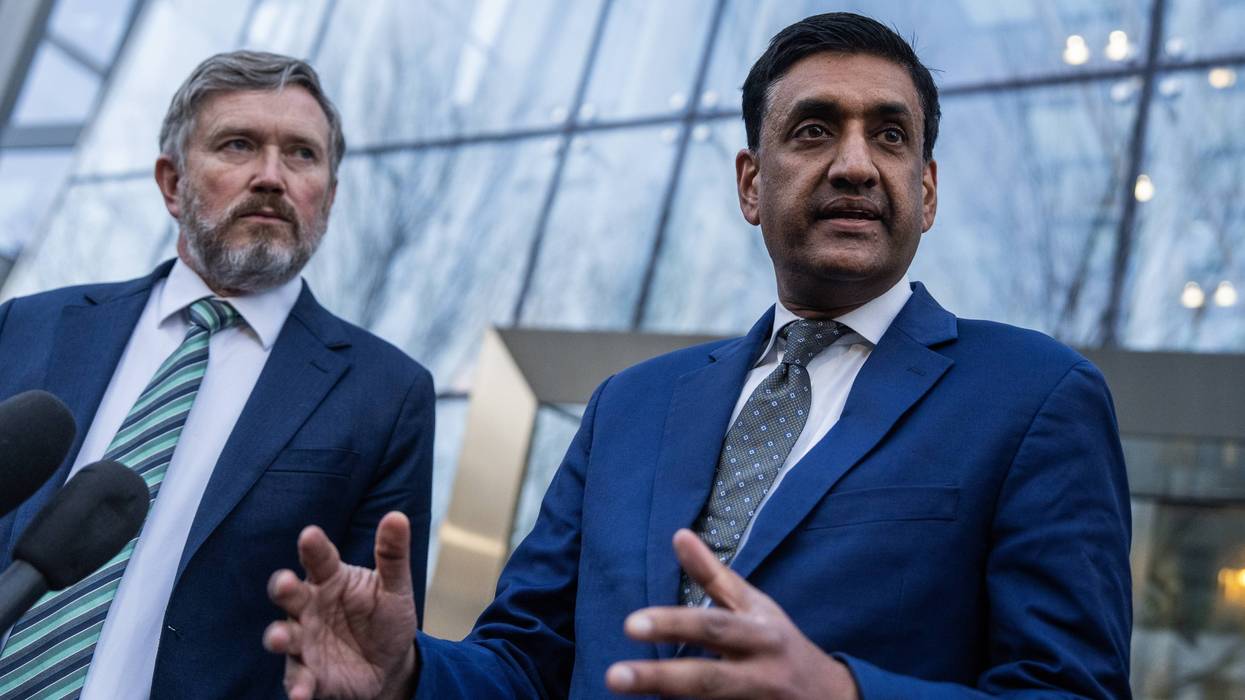
Rep. Ro Khanna (D-Calif.) introduced an amendment to strike Section 224—which would establish a formal "United States–Israel Defense Technology Cooperation Initiative"—from the 2027 National Defense Authorization Act. The proposed NDAA authorizes $1.15 trillion in baseline military spending, while the Trump administration’s full defense request seeks an unprecedented, debt-exploding $1.5 trillion in armed forces and related funding for the coming fiscal year.
Section 224 would require the US defense secretary to designate a Pentagon executive agent responsible for coordinating and expanding US-Israel defense technology cooperation.
In Thursday's voice vote, members of the House Armed Services Committee (HASC) from both parties rejected the amendment to remove Section 2024 from the NDAA, with only Khanna and Rep. Sara Jacobs (D-Calif.) backing the measure.
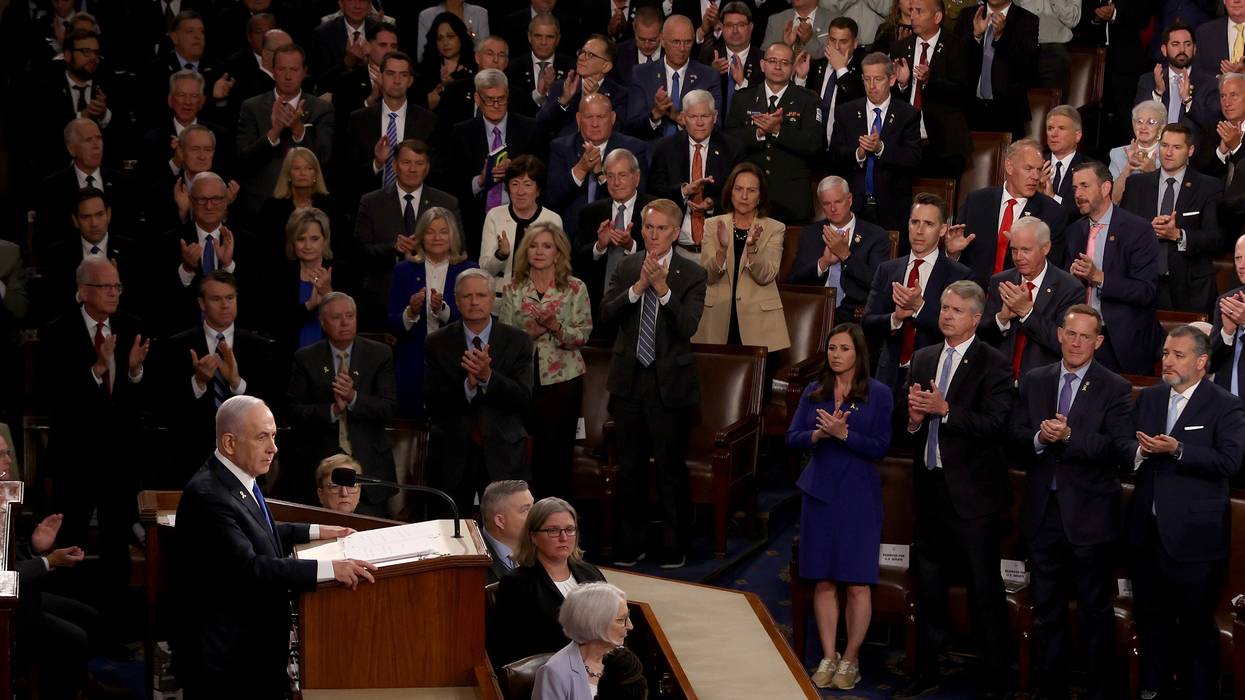
Israeli Prime Minister Benjamin Netanyahu—who is wanted by the International Criminal Court for alleged war crimes and crimes against humanity in Gaza—has called Section 224 "my plan."
While proponents of Section 224 contend that the measure would reduce US taxpayer funding for Israel, Khanna argued that the provision amounts to a blank check for a country that most Americans oppose sending more aid to.
“The American people are tired of the arrogance and insolence of Prime Minister Netanyahu telling America what we should do," the congressman said Thursday while promoting his amendment. "The entire country of Israel has a GDP that is less than a single town in my district, yet somehow Netanyahu thinks he could tell the American people what we should do."
“I am for Team America," Khanna added. "I am for the interests of this country, and I believe that's what [President] Donald Trump ran on. That includes American interests against any foreign country. We should have American sovereignty and make it clear that we strike 224. If we want to give aid to Israel, if we want to sell them weapons, that should be a vote for the entire Congress.”
In a letter to Rep. Marlin Stutzman (R-Ind.)—who is not on the HASC—Netanyahu said he is "heartened" by Section 224's plan to “develop a new Memorandum of Understanding with the United States government” that will reduce “US financial military assistance over the next decade” and replace it with “a new framework of joint defense cooperation, codevelopment, coproduction, and mutual investment."
The US has provided more than $20 billion in armed aid to Israel during the Biden and Trump administrations since Netanyahu launched the genocidal war on Gaza in retaliation for the Hamas-led attack of October 7, 2023. The current 10-year Memorandum of Understanding between the US and Israel, signed in 2016 during former President Barack Obama's tenure, provided Israel with $38 billion in US military aid and expires in 2028.
Rep. Thomas Massie (R-Ky.)—who has partnered with Khanna on introducing or supporting war powers resolutions aimed at curbing Trump's ability to wage unconstitutional wars in countries including Yemen, Venezuela, and Iran—said last month that if Section 224 made it out of committee, he would work with Khanna to "offer an amendment to strip it from the bill on the floor."
The American-Arab Anti-Discrimination Committee (ADC) is urging Americans to contact their members of Congress to tell them to reject Section 224.
"This is not 'America First.' It is Israel First," ADC argues on its website. "The resolution language attached to this proposal gives it away: it expresses support for Prime Minister Benjamin Netanyahu’s initiative to transition the US–Israel relationship toward mutual defense cooperation and joint economic investment. This language turns Congress into a vehicle for advancing Netanyahu’s agenda and asks the American people to treat it as their own national security policy."
"Section 224 would move US support for Israel away from the more transparent foreign aid framework and into a maze of Pentagon procurement, licensing, data-sharing, and backdoor deals that are harder for Congress, taxpayers, and future administrations to monitor, cap, condition, or unwind," the group continued. "Concerns of undefined 'network integration' and 'data fusion' should alarm every American who cares about sovereignty, privacy, civil liberties, and democratic oversight."
"At a time when Israel is committing genocide against Palestinians in Gaza, exporting surveillance technologies used against activists and journalists around the world, marketing military technology tested on Palestinians, and carrying out terrorist attacks as seen in the cell phone [bombings] in Lebanon, Congress should be cutting off military support—not integrating the US military and Israeli defense sector and making accountability harder than ever," ADC added.
In an opinion piece published this week by Common Dreams, Ben Freeman, director of the Democratizing Foreign Policy Program at the Quincy Institute for Responsible Statecraft, wrote that "lawmakers should reject Section 224 from the NDAA to avoid deep integration with Israel’s military at a time when a growing number of Americans oppose Israel’s actions in the region."
"This unprecedented level of US-Israeli military integration stands in stark contrast to the traditional aid model of defense cooperation, in which Israel already stood out as the top recipient of US military assistance," Freeman said.
One analyst noted that Section 224 of the National Defense Authorization Act would "provide a higher level of military-industrial integration than the US has with any other country in the world."
US Rep. Ro Khanna on Sunday said he will introduce an amendment to kill a provision tucked inside the sprawling 2027 National Defense Authorization Act that would deepen ties between the American and Israeli militaries.
Khanna (D-Calif.) wrote on social media that he would work to ensure the provision, Section 224 of the NDAA, is removed from the bill in the House Armed Services Committee, which is set to mark up the $1.15 trillion legislation on Thursday. The provision, according to legislative text unveiled last week, would "require the secretary of defense to designate an executive agent responsible for synchronizing cooperative efforts between the United States and Israel, including bilateral defense technology research, development, testing, evaluation, integration, and industrial cooperation."
Khanna's pledge to spearhead committee efforts to remove the provision came after Rep. Thomas Massie (R-Ky.)—who has partnered with the California Democrat in pushing for the full release of the Epstein files—condemned Section 224 on social media and vowed to "offer an amendment to strip it from the bill on the floor" if it survives the House Armed Services Committee.
"We are a sovereign country," Massie wrote.
And I will be offering an amendment in the committee itself to strip section 224 out, @RepThomasMassie.
Trump can't kill the Massie/Khanna partnership no matter how much he posts on Truth Social. https://t.co/4Dz4ks84XH
— Ro Khanna (@RoKhanna) May 31, 2026
Ben Freeman, director of the Democratizing Foreign Policy program at the Quincy Institute for Responsible Statecraft, noted last week that while the US and Israel "already work together heavily on missile defense," Section 224 "would greatly expand coordination to seemingly every area of defense tech, including AI, quantum, autonomous systems, directed energy, cyber, biotech, and many more."
"It also proposes 'network integration' and 'data fusion.' In other words, the US military’s data could soon be the Israeli military’s data. If fully enacted, this proposal would provide a higher level of military-industrial integration than the US has with any other country in the world," Freeman wrote. "The result could well be a US political system even more susceptible to the whims of an Israeli government that seemingly has no qualms about drawing the US into military conflicts in the Middle East."
The NDAA provision has drawn outrage from anti-war groups that are pushing American lawmakers to cut off military assistance to Israel over its genocidal assault on Gaza, which has been carried out with the help of US weaponry. Last month, the Trump administration fast-tracked the approval of a transfer of American rockets to the Israeli military, which receives around $4 billion per year in aid from the US.
"While Americans oppose more military aid to Israel, Congress is inserting something even deeper and more insidious into the US military budget (NDAA): US integration with the Israeli military!" Medea Benjamin, co-founder of the peace group CodePink, said last week. "Tell Congress: Reject Section 224 of the NDAA. No military integration. No weapons and AI partnerships."
Section 224 is crammed into legislation that, if passed, would authorize more than $1 trillion in military spending for the coming fiscal year—part of President Donald Trump's push for an unprecedented $1.5 trillion military budget for 2027.
Experts at the Center for American Progress (CAP) noted in a Monday analysis that "while the recently released chairman’s mark of the NDAA does moderate some aspects of the budget—such as introducing guardrails on the 'Trump-class' battleship program—it does not go nearly far enough."
"Congress should refuse to authorize the president’s unjustifiable increase request," CAP argued. "Instead, lawmakers should insist on a disciplined defense budget that makes sense, ensuring that funds are spent on programs critical for the well-being of American servicemembers and modern defense needs—not vanity projects with limited military utility."
A new House Bill provision would arguably do more to intertwine the US military with the Israeli military than the more than $200 billion (inflation adjusted) in military assistance Israel has received from the US since its founding in 1948.
At a time when the American public is expressing unprecedented levels of distrust in the Israeli government, Congress just proposed tying the US to the Israeli military more than ever before.
Buried in the House's version of the 2027 National Defense Authorization Act (NDAA) released on Tuesday, is section 224, entitled “United States-Israel Defense Technology Cooperation Initiative.” The provision would arguably do more to intertwine the US military with the Israeli military than the more than $200 billion (inflation adjusted) in military assistance Israel has received from the US since its founding in 1948.
Section 224 lays the groundwork for bilateral research and development, co-production of weapons, joint ventures, licensing agreements, and seemingly every manner of US-Israeli military-industrial complex cooperation. The US and Israel already work together heavily on missile defense, but this provision would greatly expand coordination to seemingly every area of defense tech, including AI, quantum, autonomous systems, directed energy, cyber, biotech, and many more. It also proposes “network integration” and “data fusion.” In other words, the US military’s data could soon be the Israeli military’s data.
If fully enacted, this proposal would provide a higher level of military-industrial integration than the US has with any other country in the world. To be sure, the US has worked closely with its NATO partners on co-production and shared supply chains, most notably via the Defence Production Action Plan. And, as the No. 1 arms dealer in the world, the US provides weapons to militaries across the globe. But that is mostly a one-way street, with the US providing weapons to foreign buyers who only occasionally make parts for those weapons themselves, as in the case of the F-35’s global supply chain.
The enormous gulf between what most Americans want and what the president is doing when it comes to Israel and what Congress is proposing here should not be ignored.
Section 224 would be a different beast entirely. It would fuse the US and Israeli defense sectors in multiple areas vital to the battlefields of the future, like autonomous systems and cyber. It would also bring extraordinary Israeli influence to the US beyond what it already has through the Israel lobby and its robust network of social media influencers. It would give the Israeli government the opportunity to greatly expand one of the most powerful levers of influence in US politics: jobs in the US. By expanding or starting new co-production facilities like it already has in Mississippi and Arkansas, the Israeli government could boast of providing jobs on US soil, thereby securing allies among members of Congress who represent the districts where those jobs lie.
The result could well be a US political system even more susceptible to the whims of an Israeli government that seemingly has no qualms about drawing the US into military conflicts in the Middle East.
This unprecedented level of US-Israeli military integration stands in stark contrast to the traditional aid model of defense cooperation, in which Israel already stood out as the top recipient of US military assistance. As laid out in a recent Quincy Institute brief, authored by Steven Simon, this shift from an aid model to a military integration model has troubling implications, namely:
The shift will strip away the political and diplomatic oversight mechanisms that make the relationship publicly accountable, moving it from a visible annual aid vote into the opaque machinery of defense acquisition, where oversight is limited and political accountability is minimal. The result would be a defense relationship that is simultaneously deeper and less transparent.
This all comes at a time when the Israeli military has repeatedly used US weapons in strikes that have violated international humanitarian laws in Gaza, and as Israel has repeatedly violated ceasefires (as has the US itself) in the Trump administration’s unnecessary war with Iran.
The enormous gulf between what most Americans want and what the president is doing when it comes to Israel and what Congress is proposing here should not be ignored. Just 30% of respondents to a New York Times-Sienna poll from mid-May believe President Donald Trump made “the right decision” to go to war with Iran, with 64% saying it was wrong. An Institute for Global Affairs poll released earlier this week dove even deeper into the American psyche when it comes to arming Israel, finding that “just 16% say the United States should keep supplying Israel with weapons without new restrictions. Thirty-eight percent want to stop supplying weapons entirely, and another 24% want weapons conditioned on how they’re used.”
Yet, mainstream leadership in both parties remains largely pro-Israel and continues to shape the base legislative text before amendments and broader congressional debate open it to the full body, as is the case with this NDAA provision.
Though slowly, tides within both parties are shifting as more and more members speak out against the growing divide between Israel’s actions and America’s interests. For example, Sen. Chris Van Hollen (D-Md.) wrote in The New York Times on Tuesday that, “the Democratic Party has provided reflexive and unconditional support to Israeli governments, even as their actions have increasingly undermined American interests and values.” On the Republican side of the aisle, Rep. Thomas Massie (R-Ky.) and former Rep. Marjorie Taylor Green (R-Ga.) have openly decried the Israel lobby’s corrosive influence—a stance that may have, at least partially, cost both of them their seats in Congress.
What can other members of Congress who are concerned about Israel’s destabilizing actions do right now? Stop the Israeli-US military-industrial merger in its tracks. Lawmakers should reject Section 224 from the NDAA to avoid deep integration with Israel's military at a time when a growing number of Americans oppose Israel's actions in the region.