The Rank Hypocrisy of the US Charging Raúl Castro With Murder
Following a decades-long history of harassment and sabotage, Cuba issued warnings for two years before firing on aircraft that violated or skirted its airspace; Washington warned no one before firing on vessels far from its own shores.
On October 19, a Miami judge signed an arrest warrant for Raúl Castro. The Florida attorney general announced the charge, conspiracy to commit first-degree murder, at the UIF. On May 20, Cuba’s Independence Day, at the “Miami Freedom Tower,” an acting prosecutor had already made public a federal indictment against Castro and five others: four counts of murder and destruction of aircraft. The prosecutor said he expected the defendant to appear in the United States “of his own free will or otherwise.” In January, the “other way” had already been put to the test in Caracas with the kidnapping of President Nicolás Maduro—an invasion that left 57 forgotten dead.
On February 24, 1996, the Cuban Air Force shot down two planes belonging to Brothers to the Rescue, killing four crew members. Since May 1994, according to the International Civil Aviation Organization (ICAO), Havana had been reporting airspace violations to Washington. On July 13, 1995, a Brothers to the Rescue plane flew over Havana, dropping leaflets. In early 1996, the group did it again: half a million leaflets, according to the pilot. Cuba warned that it would defend its airspace. Washington knew this. A Federal Aviation Administration (FAA) official warned the group’s leader, José Basulto, that if they persisted, the Cubans would shoot them down. Declassified documents show that the FAA asked Basulto to stop provoking Cuba.
The ICAO concluded that the planes were shot down approximately 10 nautical miles from Cuba’s territorial boundary. Havana insisted that they were within its jurisdiction. Three weeks later, Bill Clinton signed the Helms-Burton Act, which made the embargo against Cuba federal law.
The one with the gun is always the good guy. The terrorist is always the other guy.
The accusation against Raúl Castro should sound familiar to many in Washington. And in Miami, too. The record of what the FBI called terrorism is extensive, and I believe I explained it in 1976: The Exile of Terror. I will summarize a few cases, all of which went unpunished.
On October 6, 1976, two bombs brought down Cubana de Aviación Flight 455 in Barbados. Seventy-three people died, most of them young athletes from Cuba. An FBI report dated November 5 and addressed to Secretary of State Henry Kissinger indicated that the attack had been planned by Cuban exiles in Caracas, during meetings attended by Ricardo “El Mono” Morales, Luis Posada Carriles, and Frank Castro, “all members of CORU, an anti-Castro terrorist group.” Kissinger knew this and did nothing. Two weeks earlier, on September 21, a bomb prepared by Michael Townley and planted by Cuban exiles had killed Orlando Letelier and his 25-year-old assistant, Ronni Moffitt, just blocks from the White House. Moffitt was a US citizen murdered on US soil, later accused of being a Marxist.
CORU was founded in the Dominican Republic in 1976, with Orlando Bosch at its helm, and was responsible for more than 50 attacks that year alone, from Bogotá to Mérida. Between 1974 and 1976, Miami suffered some 200 bombings, from the airport to the FBI offices. “In this war, there are no civilians,” said Miami’s hero, Posada Carriles. “There are no civilians or innocents,” Bosch repeated. Morales echoed this sentiment: “If I had to kill 273 instead of 73, I would do it again.” Not to mention the napalm bombs dropped on Cuba in the 1960s and the introduction of hemorrhagic dengue on the island in the 1980s. Later, Washington denied Cuba access to the larvicide temephos due to the blockade. One hundred fifty-eight people died—101 of them children—not to mention the economic losses. Although Eduardo Arocena confessed before a federal jury to having participated in this act of biological terrorism, the incident was consigned to oblivion.
According to Bosch: “If we had the resources, Cuba would burn from one end to the other.” Ileana Ros-Lehtinen called him a “patriotic hero.” Miami Mayor Maurice Ferré endorsed the celebration of “Orlando Bosch Day” every March 25, while Posada Carriles escaped from a Venezuelan prison, thanks to money sent by Jorge Mas Canosa, founder of the National Cuban-American Foundation lobby. In 1997, his bombs exploded again in hotels in Havana, killing an Italian tourist. Posada said the young man had been in the wrong place at the wrong time. In 2000, he was arrested in Panama with 15 kilograms of explosives intended for Fidel Castro and an auditorium full of students. President Mireya Moscoso pardoned him, and Posada entered the United States illegally. A Texas jury acquitted him of lying to Immigration. He lived freely for many years in the land of freedom alongside other Latin American criminals who had committed crimes against humanity.
An FBI agent described Bosch as “the number one terrorist.” George H. Bush released him and granted him residency in 1990, despite objections from the Department of Justice, following a campaign led by Ileana Ros-Lehtinen and her campaign manager, Jeb Bush. When a Miami police officer reported that Bosch was raising funds for new terrorist attacks, his superior shrugged: “Jeb will call his dad, and Bosch will be back on the streets,” he said. None of them were charged in court for the 73 fatalities on Flight 455. When Cuba and Venezuela requested their extradition, US judges refused, arguing that the men might not receive a fair trial—a principle that was never applied to the hundreds of prisoners tortured at Guantánamo and declared innocent by Washington.
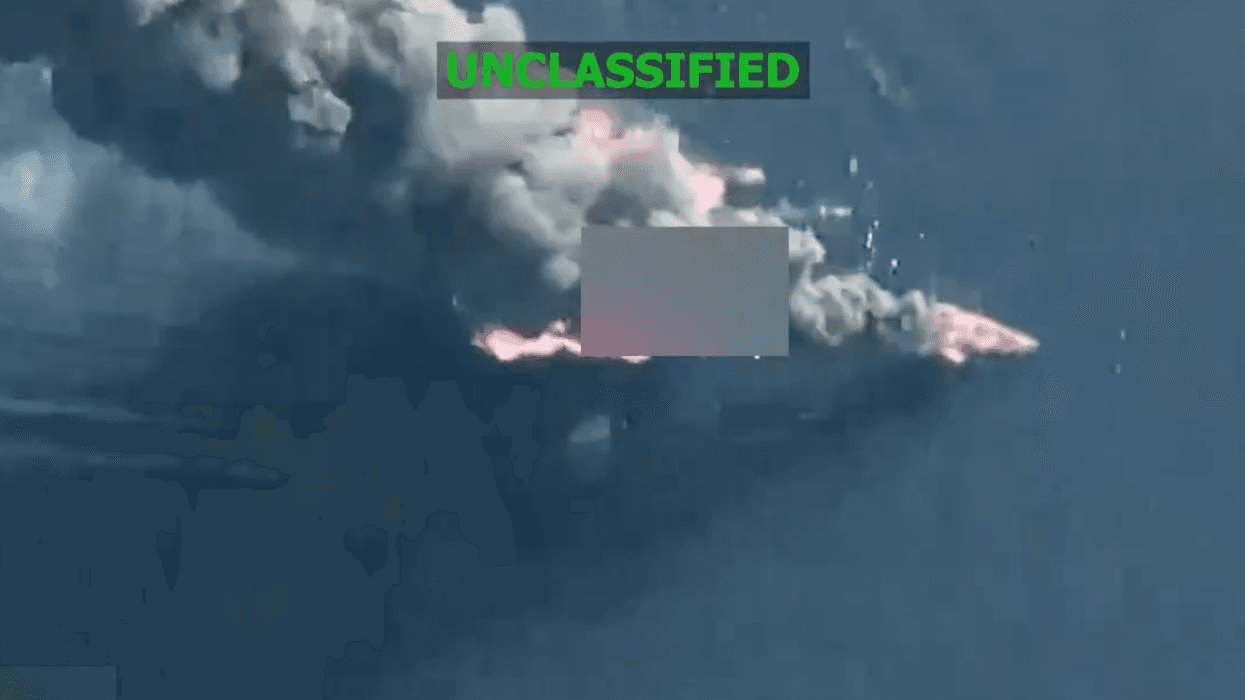
A more recent dose of hypocrisy. Since September 2, 2025, Washington has blown up more than 70 vessels and killed at least 236 people in the Caribbean, off the coasts of Venezuela, the Dominican Republic, Trinidad and Tobago, and Colombia. Many were executed in the Pacific, off the coasts of Colombia, Ecuador, and Mexico. To date, Washington has failed to identify most of its victims. Not a single one was in US waters. Not a single one was convicted following an arrest, trial, or formal indictment. Among the identified deceased are fishermen of various nationalities. In the first attack, survivors clinging to the wreckage were killed by a second missile. United Nations experts classify these incidents as extrajudicial executions.
On September 6, 2025, Secretary of State Marco Rubio explained the doctrine with admirable clarity: “Instead of intercepting them, we blow them up. We’ll do it again.” They did it again. About 70 times.
Following a decades-long history of harassment and sabotage, Cuba issued warnings for two years before firing on aircraft that violated or skirted its airspace. Washington warned no one before firing on vessels far from its own shores. If killing four civilians outside territorial waters is murder, what is executing 236 people with missiles?
No judge in Miami will sign that warrant. Rubio will not be charged, nor will Florida—not even in The Hague, a court that Washington does not recognize. The one with the gun is always the good guy. The terrorist is always the other guy.
Only the powerful can afford the luxury of hypocrisy.