SUBSCRIBE TO OUR FREE NEWSLETTER
Daily news & progressive opinion—funded by the people, not the corporations—delivered straight to your inbox.
5
#000000
#FFFFFF
To donate by check, phone, or other method, see our More Ways to Give page.

Daily news & progressive opinion—funded by the people, not the corporations—delivered straight to your inbox.
There is no doubt whatsoever that Trump is the lead and almost sole author of the inflation we are now seeing.
Donald Trump loves to put his name on things, and when it comes to the recent burst of inflation, it’s totally deserved. Trump and Republican politicians are doing their best to try to make a simple story complicated. But there is no doubt that Trump is the lead and almost sole author of the inflation we are now seeing.
Just to quickly clear away the stupid: We did have a large burst of inflation under Biden, just like the rest of the world. We were hit with a worldwide pandemic in Trump’s first term, which he apparently can’t remember. The pandemic led to a massive fall in output in 2020, while Trump was president.
When Biden took office in January of 2021, we were still down more than 10 million jobs from the pre-pandemic level. Biden’s recovery package quickly got back the lost jobs and got the unemployment rate down to 4.0 percent by the end of the year, far faster than anyone expected.
The reopening of the economy from the pandemic recession led to a burst of inflation in the United States, as it did in Germany, France, and everywhere else. Suddenly people were buying lots of things, and it took a while for businesses to ramp up production.
If Biden had cared less about getting people back to work, the recovery package could have been smaller, and the peak inflation rate might have been 1-2 percentage points lower. But the important part of the story is that inflation quickly came down.
Year-over-year inflation peaked at 9.0 percent in June of 2022. A year later, it was down to 3.1 percent. It was down to 2.6 percent by the election in November of 2024. Inflation was generally expected to continue to fall and to be at or near the Fed’s 2.0 percent target by the end of 2025.
But then Trump turned everything around. Inflation began to rise even before he took office, as households and businesses stocked up on imported goods in anticipation of Trump tariffs. Durable goods prices, which had been falling since early 2023, stopped falling and began to rise. The Consumer Price Index also stopped falling and started to rise. Year-over-year inflation hit 3.0 percent in September 2025 but then slowed to 2.7 percent by the end of the year.
It likely would have continued to slow through 2026. After all, Trump’s tariffs were primarily a one-time event. If he didn’t keep imposing new ones (a big “if”), it was reasonable to think that inflation would settle back down to its pre-tariff pace.
But we never got to test that theory. Trump decided to go to war with Iran at the end of February. As we all know, the stated rationale was crazy. Iran was not close to having nuclear weapons, and Trump himself had boasted about destroying the country’s nuclear program in a bombing strike the prior summer.
Logic doesn’t mean much to Donald Trump. He and Israel’s Prime Minister Benjamin Netanyahu wanted to attack Iran, and whatever story they came up with was secondary.
Anyhow, regardless of their motives, they apparently did not expect that the Iranian government would both survive and retaliate by blocking oil from going through the Strait of Hormuz. This sent oil prices soaring, which is the biggest element in the current burst of inflation. However, since oil is not just gas for our cars, but also diesel, which is needed for transporting just about everything, the price hikes are spreading throughout the economy. Also, since much of the world’s fertilizer production takes place in the Gulf countries, fertilizer prices are also soaring. This had some effect on crops already but will be a much bigger deal next year.
The broad impact of Trump’s war on inflation can be clearly seen in the Producer Price Index. The latest year-over-year figure was 6.3 percent for September. Since this is inflation at the wholesale level, it will be showing up at the consumer level in the next few months. To be clear, the impact is not one-to-one, so this doesn’t mean that consumer inflation will be rising to 6.3 percent, but it means that the direction of change in future months will likely be higher, not lower.
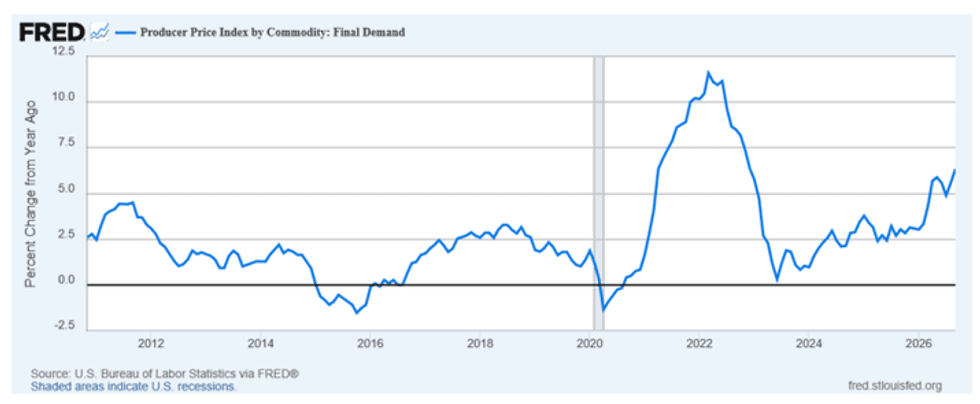
This is very far from a number consistent with the Fed’s 2 percent target. And this is all Trump’s doing. One important difference from the 1970s inflation is that, unlike the 1970s, wages are not rising in step with inflation. The pace of wage growth slowed from 4.0 percent in 2023 and 2024 to 3.0 percent in the most recent data. This means that workers are falling further behind as prices accelerate. The higher prices are going to profits, not covering higher labor costs. That might be good news for Trump’s billionaire donors, but not for the rest of us.

Managing the biodiversity crisis within political borders is impossible; we must prioritize a global approach that manages Earth’s interconnected systems.
The 17th meeting of the Conference of the Parties, or COP17, to the United Nations Convention on Biological Diversity, or CBD, is a major upcoming international summit focused on global measures to protect, restore, and sustainably manage nature.
It serves as the global review of collective progress on implementing the 2023-2030 Kunming-Montreal Global Biodiversity Framework (KMGBF), adopted at COP15, evaluating whether countries are on track to halt and reverse biodiversity loss by 2030.
This year's official theme is “Taking Action for Nature,” aiming to turn high-level commitments into concrete delivery.
This triple COP year brings together the three UN Rio Conventions for their Conferences of the Parties in quick succession to tackle the interconnected crises in climate (UN Framework Convention on Climate Change, or UNFCCC, COP31), biodiversity (CBD COP17), and land (UN Convention to Combat Desertification COP17).
The KMGBF features four 2050 long-term goals and 23 2030 global targets to halt and reverse nature loss.
The four long-term goals are:
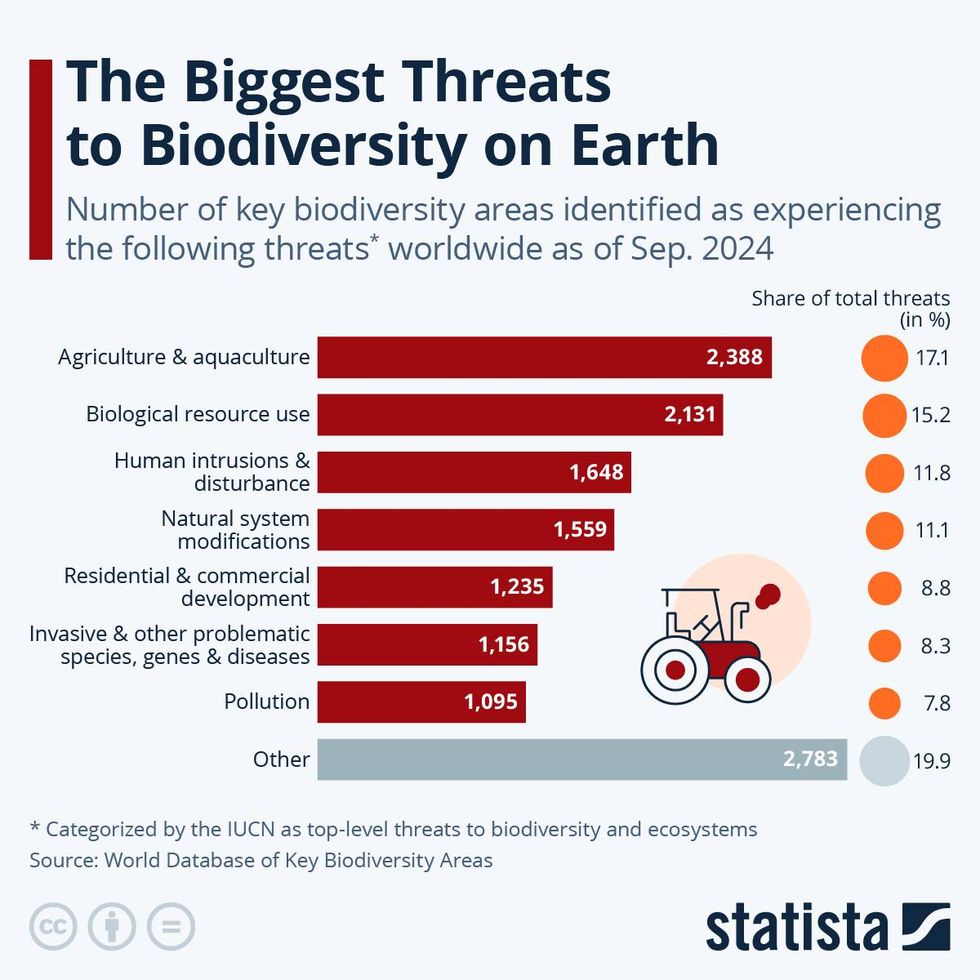
The world is off track to meet most of its 2030 targets under the Kunming-Montreal Global Biodiversity Framework.
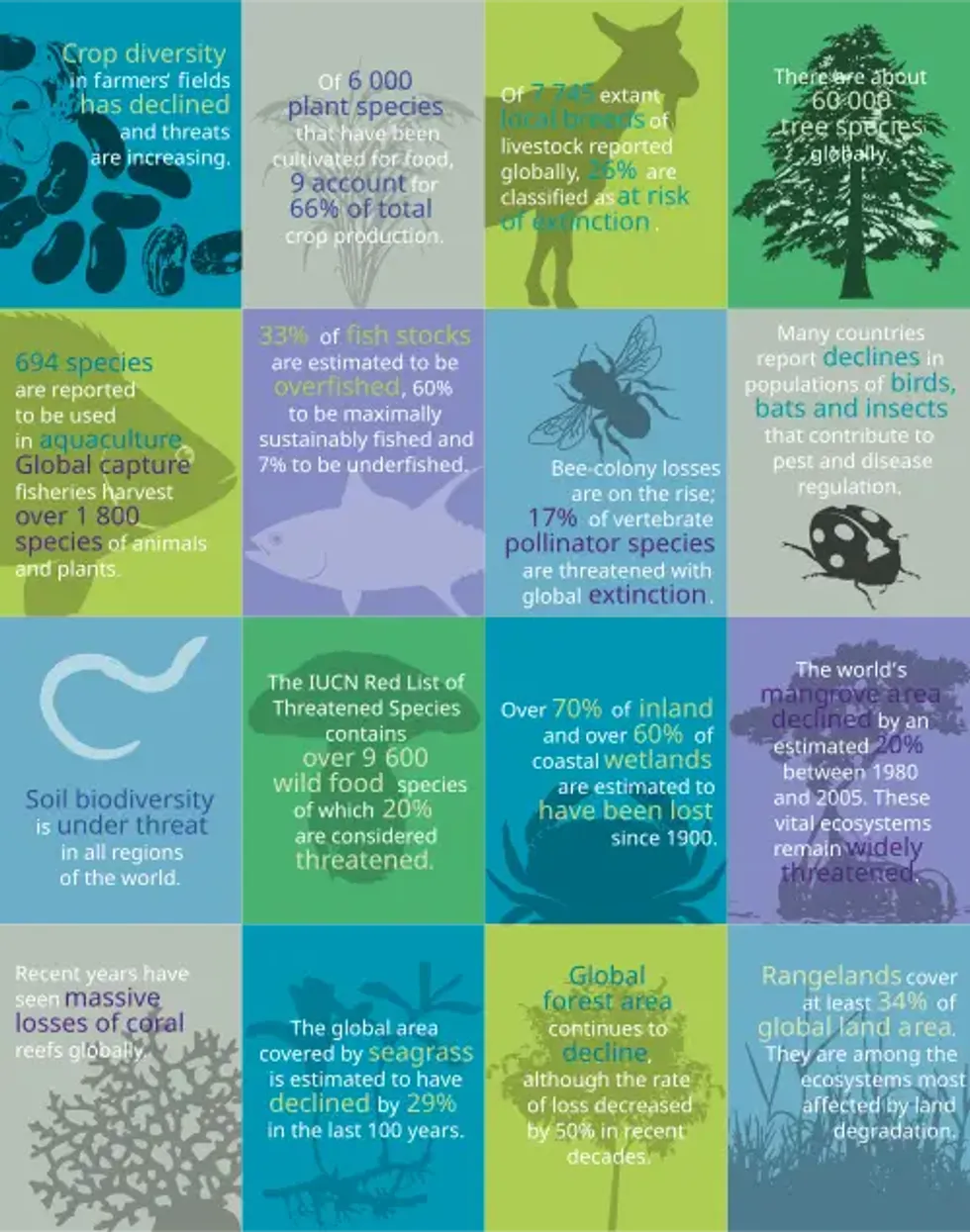
Managing the biodiversity crisis within political borders is impossible; we must prioritize a global approach that manages Earth’s interconnected systems.
The health of Earth’s living systems quite literally determines the long-term survival and stability of human civilization.
Biodiversity is the physical fabric that regulates the planet’s biogeochemical cycles (carbon, water, nitrogen). Losing biodiversity degrades the Earth system’s resilience and, with it, its capacity to absorb shocks like climate change, pollution, and extreme weather.
Climate change and biodiversity loss are twin crises driven by the same systemic roots. Healthy ecosystems act as essential carbon sinks and natural buffers, helping stabilize the climate.
We simply must safeguard our planet's natural boundaries. An important consideration is whether national commitments are scaling up fast enough to pull humanity back from irreversible tipping points (such as the destruction of the Amazon rainforest and widespread coral reef collapse).
To maintain a stable, habitable planet, humanity must not cross these thresholds. By shifting from extraction to regeneration, we can reduce humanity’s demands through industrial agriculture, mining, overfishing, and urban expansion. Days like Earth Overshoot Day remind us that humanity consumes more resources than the planet can regenerate annually.
Nature must be treated as a finite resource and respected as such. Harmful subsidies (like those backing fossil fuels or intensive industrial monocultures) must be redirected toward regenerative land and water use.

Children and young people are disproportionately affected by climate change and biodiversity loss; therefore, their voices are particularly important at major climate and biodiversity conferences.
Today's decisions have long-term consequences for their health, education, well-being, and future opportunities. Intergenerational justice looks at how present generations affect past and future people. Protecting ecosystems today is seen as a matter of securing a healthy, habitable future.
This COP17 recognizes children and young people as important stakeholders and constituencies. Official mechanisms have been established to support youth participation:
Both groups have access to official COP processes; they monitor government commitments, participate as observers in the diplomatic Blue Zones, and have the opportunity to speak during plenary sessions.
The Green Zone is a public area open to students, activists, and young researchers attending events in Yerevan, Armenia. The COP17 Green Zone will provide open spaces for workshops, cultural events, and collaborative problem-solving.
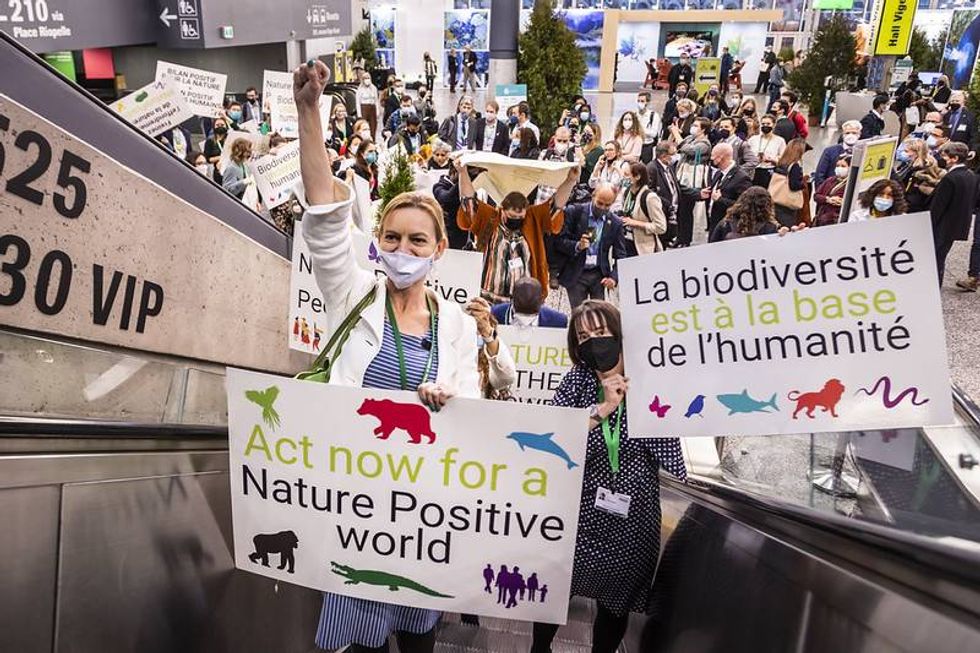
Non-governmental organisations, civil society coalitions, research bodies, and observer groups play a critical role at COP conferences. They serve as watchdogs, technical advisers, and advocates for groups that might not otherwise have a direct seat at the negotiating table.
NGOs bring local, grassroots priorities into global policy spaces, ensuring that community-level perspectives help shape international biodiversity decisions.
They provide scientific data, policy recommendations, and track national progress on targets.
Key non-state and civil society players actively shaping the discourse and engagement at COP17 include the International Institute for Environment and Development (IIED), the World Wide Fund for Nature (WWF), the International Union for Conservation of Nature (IUCN), and Conservation International.
Business for Nature is a major coalition that rallies global companies and commercial organisations to push governments for stronger nature policies, arguing that voluntary corporate action isn’t enough without systemic regulatory backing.
The Finance for Biodiversity Foundation is an accredited observer network representing financial institutions, banks, and investment funds. They focus heavily on resource mobilization, aligning financial flows with global biodiversity goals, and operationalizing funding mechanisms like the UN Cali Fund.
Indigenous Peoples’ and Local Communities’ Caucuses represent Indigenous stewards who work closely with civil society allies to ensure traditional ecological knowledge and land rights are protected in the global review process.
The CBD Women’s Caucus is an active network focused on gender-responsive biodiversity data and ensuring women, major stewards of local agriculture and ecosystems, are fairly represented in monitoring and policy systems.
After years of slow progress, these groups will push for greater accountability and real change. They will also advocate for greater biodiversity financing, ensuring it is mobilized and reaches vulnerable frontline projects where it is needed most.
The President-Designate of COP17 is Hambardzum Matevosyan, Armenia's Minister of Environment.
COP17 will be the biggest event the country has ever held. He has already acknowledged the “many challenges and gaps” identified in the draft Global Biodiversity Framework report and even said they had to nudge leaders to submit their reports by the February deadline.
Matevosyan is adamant that “we are not changing the goals,” but rather “we are making a realistic assessment of where we stand and what is needed to achieve them. It is a course correction.”
The minister is also working on introducing environmental protection into the Armenian constitution.
As for the other government delegates, they are responsible for turning international environmental goals into domestic law, national budgets, and enforceable policies.
Key priorities include:
Better World Info provide a valuable platform to help NGOs, young people, and all other participants and observers prepare for the events of COP17. Stay tuned as we follow key developments and report back on whether our hopes for real tangible progress were realized.
As a side note, all UN member states, except the US, have ratified the Convention on Biological Diversity. While this means US funding is absent and the framework may carry less weight, it also means progress is not constrained by its historical blocking of consensus.
As the first official global review of collective progress since the landmark GBF was signed four years ago, hopes are high that this COP will be a COP of implementation in preparation for the 2030 moment of truth.
As Astrid Schomaker, executive secretary of the CBD, said: “Armenia’s vision for COP17 is a beautiful one. It aims to inspire us all to see that transformation is possible, that nature is worth protecting, that implementation is happening and that we all have an important and active role to play."
I watched a man fight for his life under nitrogen gas for at least sixteen minutes. Now Trump has
approved a firing squad for a paralyzed prisoner.
Before his nitrogen execution last year, Anthony Boyd wanted to figure out a way to help people understand the horror he was about to experience. He told me to watch his legs. When he couldn't go any further, he was going to lift up his legs one final time. Once and for all, he wanted to settle that nitrogen executions were neither quick nor humane.
The State of Alabama controlled the gas, the mask, the restraints, the room. Boyd had nothing left to control but himself... his legs.
At approximately 5:57 p.m., the nitrogen began flowing. Boyd clenched his fist. He raised his head. Then he lifted his legs several inches, exactly as he had promised me. By my watch, he fought for his life for at least sixteen minutes, maybe even closer to nineteen depending on when the gas actually entered the mask. He was not pronounced dead until 6:33 p.m. Afterward, officials had the audacity to call his movements involuntary and insignificant. They all wanted to talk about the justice that was just done. I knew better. The lies and misdirections of government are always endless.
The cameras became the problem... not the killing itself. This should send chills down the spine of our country.
The primary thing that these executions produce is more horror.
As a spiritual advisor to men on death row throughout the nation, I have witnessed fourteen executions in five states, which is more than any other spiritual leader in the nation. Repeatedly, I have watched a condemned man's body tell the witnesses what the official statement would later explain away. I know what the government's descriptions and language of procedure can conceal.
I carry that knowledge into what is coming at Fort Hood. On December 3, the United States Army intends to execute Nidal Hasan by firing squad. President Donald Trump approved the death sentence in early October. It will be the first firing squad carried out under federal authority since the Army shot Private Eddie Slovik for desertion in a French courtyard in January 1945. The country went 81 years without doing this. Of course, it is Trump who is bringing it back.
Don't think for a second I am going to skip the horrors of Nidal Hasan's actions. Indeed, Hasan was convicted of killing 13 people and wounding 32 others in the 2009 Fort Hood shooting. The people he killed had families and futures. The survivors have carried 17 years of consequences. Their suffering must never become an afterthought. Opposing this execution does not require anyone to shrink the horror of what came before it. But those deaths do not make the killing of Hasan an automatic act of justice. They also do not lift the moral responsibility from the president who has authorized the shooting.
Who deserves to die and who deserves to live? The rifles at Fort Hood will not go back to the armory when it is over. They will be cleaned, racked and kept ready for whoever is next.
The Army's own announcement lays out the chain. The president alone can approve a military prisoner's death sentence. Trump exercised that authority. He does not have to pull the trigger to own what happens when the rifles are raised. Other people will fire. The directive to shoot an unarmed paralyzed man will come straight from the Oval Office.
Of course, if the horror wasn't horrific enough. Defense Secretary Pete Hegseth proposed livestreaming the execution so the world could watch America kill Hasan. Trump argued that streaming it might be a strong deterrent. On October 15, after widespread criticism from all sides of the political spectrum, Trump backed down. Hasan would be shot to death behind closed doors. He seems to glow each time he makes such a pronouncement.
So, the cameras became the problem... not the killing itself.
This should send chills down the spine of our country. The government considered turning a human death into a demonstration of national power. When the demonstration met resistance, the administration dropped the audience while keeping the shooting. The only difference between a public execution and a private one is the number of witnesses.
Consider whose hand is on the order. This is a president whose own defense secretary, Mark Esper, wrote that during the protests of 2020 Trump asked whether the people in the streets could simply be shot in the legs. This is a president who entertained broadcasting a man's death as a warning to the world. He is now being handed rifles, a chair and a legal pathway to use them against a prisoner who cannot stand.
Anyone who thinks that Trump is going to be comfortable stopping at Hasan, has not listened to those who have worked closest with him.
The only difference between a public execution and a private one is the number of witnesses.
A firing squad is a capability before it is a sentence. Once a government has built the chair, qualified the shooters, written the protocol and fired on one man, it owns that capability for good. It will not retire with Hasan. South Carolina shot three men in 2025. In one of those executions, an outside pathologist who reviewed the state's autopsy found the bullets largely missed the man's heart. Meaning, he bled out for an extended period of time. Idaho spent more than $1.2 million building a firing squad it has not used. Those who think this is an inexpensive, certain, or quick enterprise are sorely mistaken. The federal government is about to join the blunders that have always plagued the firing squad, and human executions in general for that matter. Who deserves to die and who deserves to live? The rifles at Fort Hood will not go back to the armory when it is over. They will be cleaned, racked and kept ready for whoever is next.
Hasan is where that question begins. He is not where it ends.
I do not want this president to have the power to shoot an unarmed person. Not Hasan. Not a drug dealer. Not a protester. Not anyone. Unchecked power does not know the difference between them. It only knows the hand that holds it. A man who once asked about shooting Americans in the legs is about to find out what it feels like to give the command for a volley.
Once a soldier learns to fire on a bound prisoner on command, the distance to the next bound prisoner gets shorter.
I think of the soldiers who may be ordered to take part. They entered an institution that asks them to protect human life, sometimes at terrible cost. They should not have to pretend that shooting a restrained man is another administrative duty. Once a soldier learns to fire on a bound prisoner on command, the distance to the next bound prisoner gets shorter. Once a president learns he can order it, the list of people he might order it for gets longer.
I do not want the families of the Fort Hood victims forgotten. Their loss deserves more than a government telling them that another death settles the account. One murder will never offset another murder.
Besides, isn't Donald Trump the last person on earth you would trust with a rifle?
Democracy will die if we have no good answer for funding hard-hitting and trustworthy journalism.
Journalism is experiencing one of its worst crises when it’s needed the most.
Overall, news consumption is dropping. And it’s worse among young people, who largely get their news through social media, not news outlets. People under 30, more than any other age group, trust social media sources of news.
The problem is that it’s hard to tell if your favorite social media source is a citizen journalist or a paid promoter. In a recent in-depth report, The New York Times revealed that social media platforms are rife with accounts that are paid to promote campaigns parading as personal opinion.
Study after study proves that journalism fuels and promote a strong democracy.
Rather than hire well-known influencers with huge followings, politicians and organizations are now hiring huge numbers of accounts with smaller followings. “Functioning more like birdshot than a single bullet,” the Times explained, “these high-volume social media campaigns represent the new vanguard of modern political influence, saturating the internet with a topic until it is all but unavoidable.”
A perspective that appears popular online may well be the result of this digital “astroturfing.” A decade ago, many Americans blamed the Russian government for insidious meddling in American politics using armies of paid content pushers. Now the same tactic is being deployed by campaigns and nonprofits.
This disturbing trend goes hand-in-hand with a shocking decimation of journalism. A June 2026 study found that the number of journalists per capita in the United States fell by more than 80 percent since 2002, and those jobs that remain are increasingly focused on sports and crime rather than public policy, government, or other issues.
As out-of-work journalists turn to freelancing, the situation for piecemeal work is equally grim. The National Writers Union recently found that freelance pay remains stagnant even as the cost of living has more than doubled.
Desperate to make ends meet, some independent journalists might attempt to garner large enough followings on social media to monetize their work—only to find that they have to play to algorithms designed to lift up rage bait and polarizing content.
If our views are shaped by paid content creators, and there are fewer than ever journalists to investigate issues of concern, we face a future where opinions are bought and paid for by those with the deepest pockets.
We cannot continue this way. Democracy will die if we have no good answer for funding journalism that is hard-hitting and trustworthy.
To address the crisis in journalism, California Gov. Gavin Newsom recently signed AB 2222 to strengthen local journalism. Under the law, qualifying news outlets in California will receive $20,000 per journalist, capped at five journalists, plus $15,000 for every additional journalist.
This might cover pay raises in a state where $100,000 a year is considered a “low-income” wage—and where the median salary for journalists is under $53,000. But while the bill’s intentions are laudable, this is too little too late. Thousands of journalists have already left their field.
For decades, the federal government diverted a minuscule sliver of the national budget to publicly fund broadcast media through the Corporation for Public Broadcasting. President Donald Trump took a sledgehammer to that modest and very limited source of funding, ending it in July 2025.
What then, is the answer? If New York City Mayor Mamdani can open city-run grocery stores, can localities do something similar for newsrooms, while preserving the critical editorial independence necessary for good journalism?
The answer is “yes.” Media expert Victor Pickard has touted an ambitious and innovative plan for “Public Media Centers” in local communities around the country that are “federally guaranteed but locally owned and controlled.”
Study after study proves that journalism fuels and promote a strong democracy. It’s no wonder that authoritarianism is rising at the same time that journalism is dying. If we want to save our democracy, we must save journalism.
The war is not just illegal, but massively unpopular with the US public, and Trump and his Republican enablers may take a deserved shellacking, in no small part because of the war, at the polls in November, but voting is not sufficient.
President Donald Trump has been less than coy about possibly ramping up his illegal war of aggression against Iran after the midterm elections, and now states the United States would not use a nuclear weapon, but possibly the “Mother of All Bombs,” MOAB for short—with apologies to that lovely town in Utah—officially the GBU-43-B Massive Ordnance Air Blast Bomb. The target would supposedly be Iran’s energy infrastructure and nuclear facilities, which were supposedly obliterated by US and Israeli attacks over a year ago.
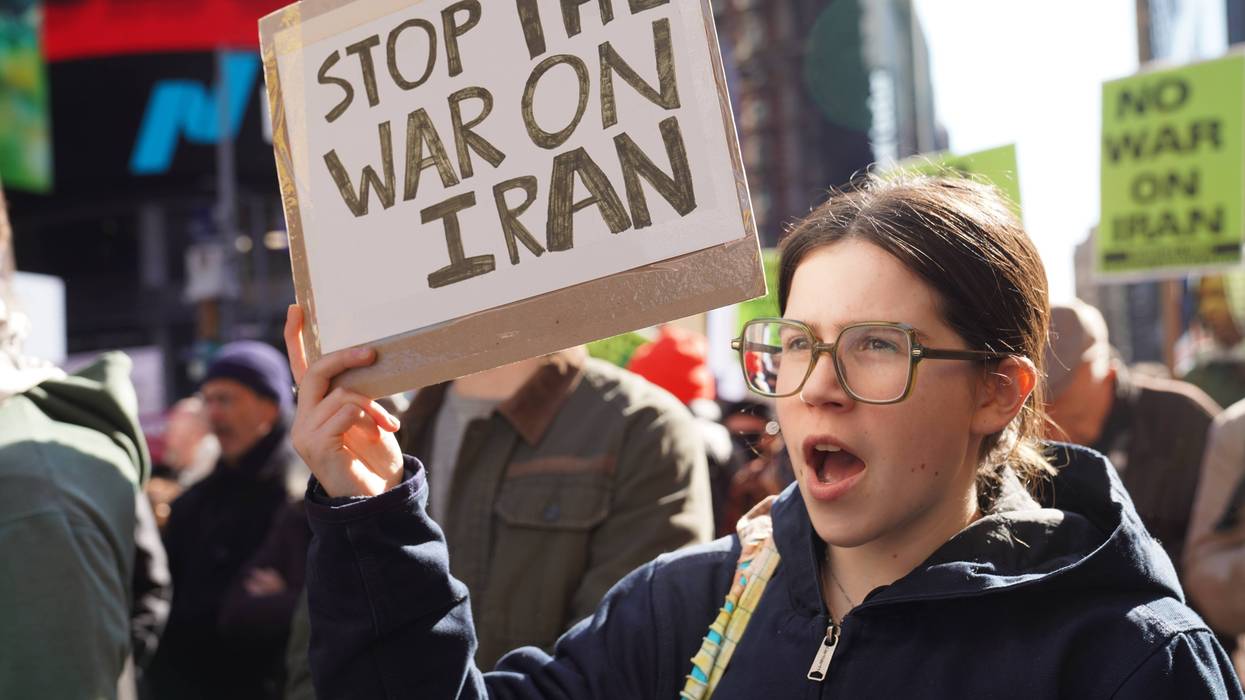
A few reminders are in order. The US-Israeli war on Iran is illegal under domestic and international law, lacking authorization from Congress and the United Nations Security Council. Combined with ongoing attacks on Palestine, Lebanon, Syria, and Yemen, the region is in flames, and putting out the fire with gasoline would be a stupendously bad move. There are indirect diplomatic talks underway, and those need to succeed, and quickly, to end this disaster harming the people of Iran, the region, and the US and global economy. Unfortunately, Trump, ever the statesmen, quipped, “I don’t know who the hell we are negotiating with.”
Iran does not have nuclear weapons, and was verifiably in compliance with its obligations under the Joint Comprehensive Plan of Action (JCPOA), foolishly abrogated by Trump in his first term (and former President Joe Biden, who as vice president was part of the Obama Administration that negotiated that agreement, inexplicably failed to renew while in the White House). Yet Iran still does not have nuclear weapons, and the US (thousands) and Israel (hundreds) do.
Moreover, the US plans to send more conventional weapons to Israel (the latest proposed shipment being 40,000 one-ton bombs) and Saudi Arabia, and to conclude a nuclear technology deal with the latter, which cannot help but put Iran and other countries in the region even more on edge.
The war is not just illegal, but massively unpopular with the US public, and Trump and his Republican enablers may take a deserved shellacking, in no small part because of the war, at the polls in November.
Voting is crucial, but not sufficient. On Tuesday, October 20, just two weeks before the midterms, peace advocates will hold dozens of rallies across the country to demand Peace with Iran NOW! A coalition of nearly 100 national and local organizations, including the National Iranian American Council; Action Corps; Peace Action; and veterans, faith-based, peace, and human rights organizations, are holding rallies at congressional offices to demand the following of Congress:
Looking longer term, a Middle East Weapons of Mass Destruction-Free Zone was first proposed by Iran and Egypt over five decades ago, and establishing such a zone was included in the UN Resolution that ended the first US war on Iraq. It remains to be established, but still could be a useful part of the solution to the current mess started by the US and Israel.
We need lasting solutions, including the following:
For now, the immediate priority is to demand Congress do its job, and we have the opportunity to say so, loud and clear, at pro-peace rallies on Tuesday, October 20.
From claims of "antisemitism" to understanding what "peace process" has really come to mean, language matters.
Nearly two years ago, Human Rights Watch and Amnesty International released in-depth reports documenting that Israel had committed genocide in Gaza. Months later, Israeli human rights groups did likewise. Support for Israel has declined steeply among Americans, but its defenders continue to maintain a siege of buzzwords against Palestinian rights.
As historian Rashid Khalidi emphasized in his book Brokers of Deceit: How the U.S. Has Undermined Peace in the Middle East, “language matters.” Standard terms and tropes “are the essential building blocks of a lofty and solid edifice of denial of an entire narrative, of the existence of an entire people, which is basic to the affirmation of a formidable counterreality.”
Prominent groups, notably the Anti-Defamation League, the American Jewish Committee, AIPAC and Christians United for Israel—along with allies in Congress, the Executive Branch and the punditocracy—rely on the same buzzwords to defame critics of Israel and deny its systematic crimes against Palestinian people. For instance:
“Antisemitic”
At the top in the rhetorical toolbox, a blunt instrument for smearing Israel’s critics no matter how true their accusations—and no matter the absence of evidence of bigotry against Jewish people.
“Blood libel”
A high-dudgeon epithet for equating valid condemnations of Israel with 900-year-old antisemitic craziness.
“Held to a higher standard”
A catchphrase to evade realities of Israel’s ongoing large-scale crimes against humanity and the fact that Israel uses enormous US military aid to impose apartheid, ethnic cleansing, and genocide as matters of policy.
“Homeland for the Jewish people”
In other words: Palestinians will not replace us.
“Indigenous”
So, even Jewish Americans who recently moved to Israel are indigenous, unlike Palestinians whose ancestors have been living in Palestine for hundreds of years.
“Jewish and democratic state”
It can’t be oxymoronic just because it’s an oxymoron.
“Peace process”
The process of Israeli expansion that has brought war and more war, with the US government functioning as “Israel’s lawyer” while arming Israel with massive quantities of weapons and continuing to make Israel (in the words of a recent Congressional Research Service report) “the largest cumulative recipient of US foreign assistance since World War II.”
“Self-defense”
A term reserved for Israelis but certainly not Palestinians.
“Terrorism”
When Palestinians kill Israeli civilians but not when Israelis kill Palestinian civilians in vastly greater numbers.
“Renounce violence”
A demand routinely made of Palestinian organizations but not of the Israeli government.
“Israel’s right to exist”
The standard gotcha question “Do you believe Israel has a right to exist?” can be answered with clear questions: “Do you think apartheid South Africa had a right to exist?” . . . “Do you think ethnic cleansing has a right to exist?” . . . “Do you think genocide has a right to exist?” . . . “Do you think the tens of thousands of Palestinian children killed by the Israeli military had a right to exist?”
In Bangkok and Seoul, “better jobs” should mean a living wage, protection when illness or injury stops someone from working, and the power to negotiate working conditions. These are rights that require enforcement.
The World Bank has high hopes for the positive impact of AI. Its flagship World Development Report this year is even titled “The Promise of Artificial Intelligence.”
From its annual meetings in Bangkok through October 18 to the following week’s Global AI and Digital Summit in Seoul, the bank is promoting AI’s potential to deliver “more and better jobs.” But what would it take to make that promise real for workers?
The experience of platform workers offers a cautionary tale. For millions of “gig workers” worldwide, algorithms, including AI systems, already act as the boss.
This rapidly expanding and precarious system requires robust regulation of how companies use technology to manage work and accountability for workers’ pay, safety, and social security.
Human Rights Watch research in the United States found that major companies use opaque and frequently changing algorithms to set pay, leaving workers unable to understand how their earnings are calculated. Customer ratings feed into systems that determine access to jobs, with little opportunity to contest unfair scores. Workers whose accounts are deactivated struggle to get clear reasons or reach anyone with the authority to reverse the decision.
The problem goes beyond opaque decisions and limited ways to challenge them. Companies also insist that workers are mere independent contractors to avoid long-established employer responsibilities, despite the control they exercise over workers.
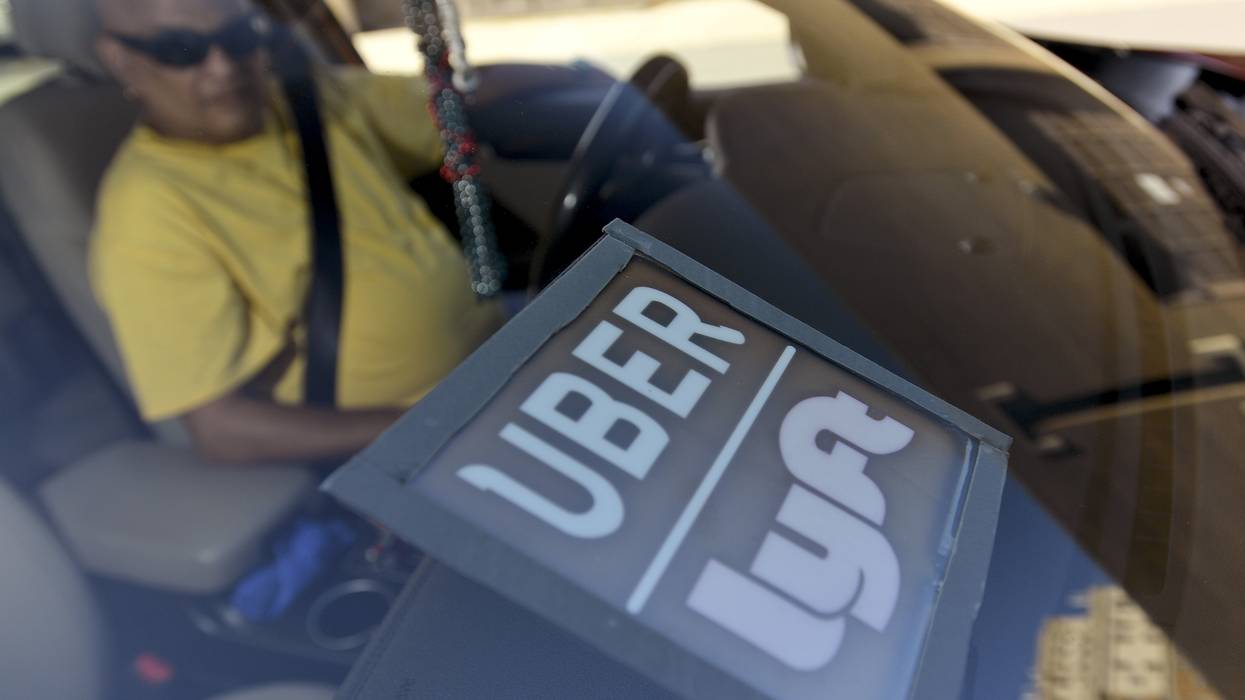
Take Uber, which now operates in over 70 countries. Uber generally treats drivers as self-employed, saying that it merely connects them with customers. Yet its systems set fares and govern access to work. Treating drivers as independent contractors rather than employees leaves them without minimum wage guarantees or employer contributions to social insurance. The company directs the work while shifting much of its cost and risk onto workers.
Our research across platforms and countries, including in Lebanon, Mexico, Pakistan, the UK, Kenya, India, as well as across the Gulf, found striking similarities in platform workers’ experiences. They showed us pay records revealing sharp daily fluctuations in earnings and detailed substantial costs for vehicles, fuel, and other work equipment. On some days, their expenses exceeded their earnings. Some workers injured on the job spent months without income, relying on family and friends or taking on debt to survive.
A delivery worker in Delhi told us he faced financial penalties for missing delivery targets. While rushing to complete an order, he braked to avoid a collision with a motorcyclist, fell, and broke his arm. He paid for treatment himself. “We don’t get anything from the company,” he said.
His experience shows how this system compounds the harm to workers. Algorithmic management pressures them to take risks and punishes them if they fail to comply, while they bear the consequences if the risks cause them to get hurt.
This rapidly expanding and precarious system requires robust regulation of how companies use technology to manage work and accountability for workers’ pay, safety, and social security. Such regulation should, at a minimum, ban algorithmic management practices that pose an unacceptable risk to workers’ rights.
A new international labor convention offers hope that these protections can become a reality. In June, governments, workers, and employers at the United Nation’s International Labour Conference adopted Convention No. 193 on Decent Work in the Platform Economy by a vote of 406 to 8. It is the first binding international labor standard to regulate algorithmic management for platform workers.
The convention requires ratifying governments to ensure that workers can request written explanations of significant automated decisions that adversely affect their work. Workers must have access to review, with appropriate human involvement, when decisions withhold pay or cut access to work. It also provides safeguards for pay, safety, social security, and the right to organize, although some protections depend on employment status.
Crucially, governments must take measures to ensure correct employment classification, guided mainly by how work is actually performed and paid rather than by the labels a company chooses to apply in a contract.
Together, these provisions address both how technology is used to manage workers and companies’ responsibilities toward them. They give the World Bank a concrete yardstick for some of the “better jobs” it hopes AI will deliver.
The stakes extend beyond ride-hailing and delivery. Research by WIEGO highlights that gig-ification has spread into domestic work, beauty services, and data work, with many of these workers also facing algorithmic control and limited ways to resolve workplace problems. The International Labour Organization and the European Commission have also documented algorithmic management in conventional workplaces, including logistics and healthcare. Workers across these sectors should also be entitled to protection from harmful uses of these systems and effective ways to challenge decisions.
Governments should ratify the new convention, implement it with workers’ participation, and address harmful uses of automated management across labor markets. The World Bank should support these efforts through its advice and financing, helping governments to enforce labor protections and to ensure that workers can challenge decisions affecting their pay or access to work.
In Bangkok and Seoul, “better jobs” should mean a living wage, protection when illness or injury stops someone from working, and the power to negotiate working conditions. These are rights that require enforcement. The institutions promoting AI have a responsibility to help make that promise real.
The administration’s radical reinterpretation of what it means to "take" an endangered species, gutting much of the framework that made the Endangered Species Act so successful.
One of the Endangered Species Act’s most fundamental protections for imperiled species is prohibiting unauthorized “take,” a term Congress defined broadly to include killing, harassing, wounding, harming, and more. But in July of this year, the Trump administration eliminated the longstanding regulatory definitions of “harm,” removing the take prohibition for wildlife killed or injured by significant habitat destruction. Exactly two months later, the administration doubled down. In identical memos dated September 14, the US Fish and Wildlife Service and National Oceanic and Atmospheric Administration Fisheries declared that take applies only to affirmative acts intentionally directed at particular animals. This radical reinterpretation substantially narrows what it means to take protected species, and therefore drastically limits how the ESA can protect them.
To understand why this matters, consider how Congress designed the ESA over 50 years ago: not only to prevent extinction, but also to ensure recovery of listed species. A key component of that design is the statute’s expansive definition of take. The Supreme Court later confirmed that take encompasses the whole spectrum of human activities that affect animals—directly and indirectly, intentionally and incidentally—from shooting or trapping them to destroying the places they live, forage, and reproduce. This does not mean that the ESA categorically prohibits development, logging, resource extraction, or other activities. In fact, its incidental take provisions have long provided a way for otherwise lawful activities to proceed, but in a way that reduces impacts on protected species.
The ESA is credited with preventing the extinction of 99% of species placed under its protection. It has conserved habitat for countless species: securing wildlife corridors and crossings for Florida panthers; protecting the mature forests red-cockaded woodpeckers need to survive; and reducing the impacts of development and off-road vehicles on desert tortoises. For more than 50 years, the law has provided a practical framework for protecting species while allowing responsible development to move forward.
We cannot protect wildlife by pretending foreseeable but unintentional take doesn't count.
The administration’s radical reinterpretation of take guts much of that framework.
Under this reinterpretation, take applies only to conduct intentionally directed at a particular animal. So if a bulldozer clearing land for a highway crushes and kills an owl in the process, that's no longer take—because no one meant to kill that owl. And if owls die because the land that was cleared included the old growth trees they need for shelter, that’s no longer take either—because again, no one meant to kill those owls. If an ATV crushes shorebird nests on a beach or a car hits a Florida panther or a boat strikes a right whale, the wildlife agencies say those deaths no longer constitute take under the ESA unless the rider, driver, or boater was aiming their vehicle at an animal, purposefully trying to hurt it.
This reinterpretation isn't a mere technicality. If an action isn’t take, key ESA provisions designed to prevent or minimize the impacts of the action on listed species won’t apply. For example, the reinterpretation threatens to make incidental take permits and incidental take statements unnecessary in many circumstances where they have historically been required—the very mechanisms that have required developers, timber companies, and infrastructure projects to reduce impacts on species while their projects move forward. Without those requirements, important safeguards that have historically minimized and mitigated foreseeable injury and death could disappear.
For example, if a harbor has become obstructed with built-up sediment that makes it difficult for ships to maneuver, the sediment is often removed with a hopper dredge that essentially vacuums the seabed. Unfortunately, if an endangered or threatened sea turtle is resting on the seabed, it can be trapped, crushed, dragged, or drowned by the hopper. The ESA doesn’t prevent the use of hopper dredges, but its incidental take provisions have helped to ensure that if hopper dredging occurs in sea turtle habitat, actions are taken to prevent or minimize the impact, like requiring the use of screens or other technology to protect turtles, or prohibiting hopper dredging during certain seasons. But under this reinterpretation, since killing or wounding sea turtles isn’t the purpose of operating a hopper dredge—clearing out sediment is—killing or wounding sea turtles with a hopper dredge isn’t take. So, the ESA’s take provisions will no longer be used to prevent or limit those injuries and deaths.
The administration’s extreme reinterpretation is a revival of an argument the Supreme Court decisively rejected more than 30 years ago. In a 1995 decision called Babbitt v. Sweet Home, by a six to three vote, the court upheld the regulatory definition of harm that the administration has now abandoned, reasoning in part that Congress' 1982 amendments—that created the incidental take permitting system—only make sense if take already covered indirect, non-purposeful harm like habitat modification. Justice Antonin Scalia dissented, arguing for the narrower reading the administration has now embraced.
The ESA’s success depends in significant part on its ability to address habitat loss and the foreseeable injury or death caused by otherwise lawful activity. The Trump administration has adopted an extremely narrow reinterpretation of take that eviscerates this longstanding framework, putting not just individual species at risk, but also the web of biodiversity and ecological systems all of us depend on. Estimates put the annual value of ecosystem services—clean water, crop pollination, pest control, flood mitigation, and more—at roughly $5 trillion. The loss of wildlife isn't an isolated event; it's the unraveling of interconnected systems that provide these benefits, often invisibly, until they're gone.
We cannot protect wildlife by pretending foreseeable but unintentional take doesn't count. The law has never required us to choose between conservation and progress. It requires us to confront the consequences of our actions before they become irreversible. Congress enacted the Endangered Species Act to prevent all extinction, not merely intentional extinction. After 50 years of progress, we should not pretend there is a meaningful difference.
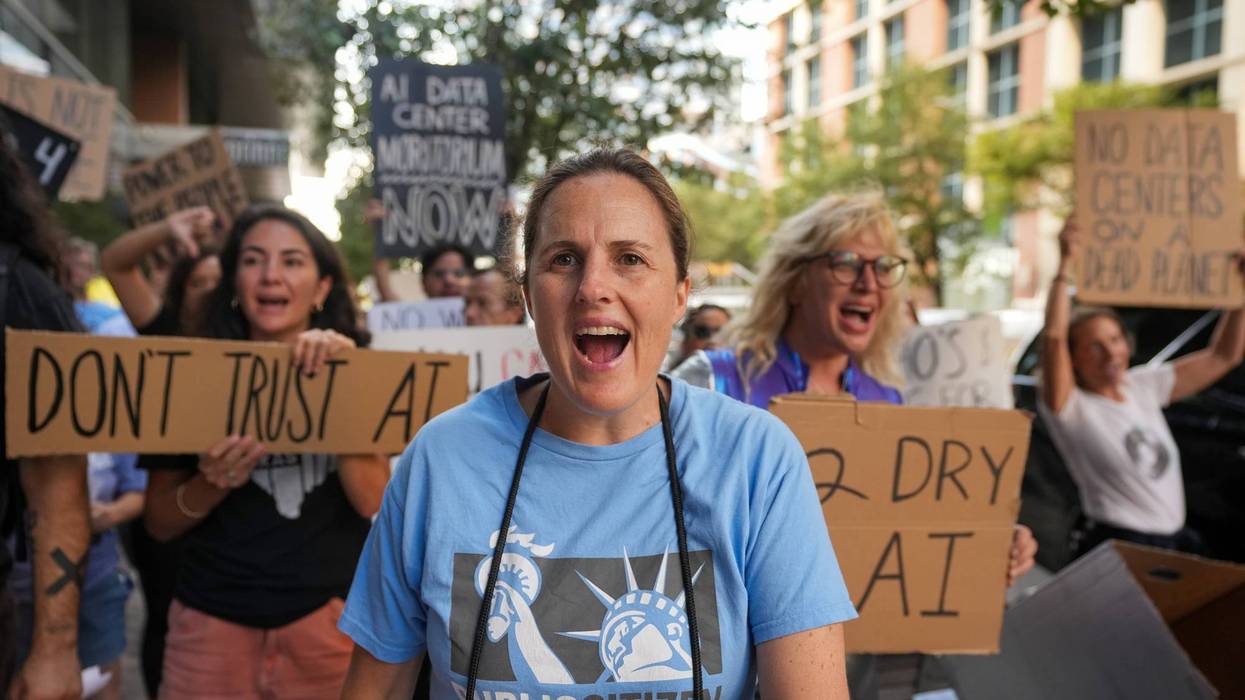
AI data centers are suddenly intruding into thousands of communities across America, sucking up people’s land, water, electricity, and democratic control. And the president is on the data centers' side.
To cope with the imminent danger posed by today’s arrogant, profiteering AI billionaires, President Donald Trump says the only thing America needs is a “STRONG AND SMART (High IQ!) PRESIDENT!”
Well, yes—let’s try to find one of those!
The president we have now is quite the opposite. Take the politically explosive issue of massive AI data centers suddenly intruding into thousands of communities across America, sucking up people’s land, water, electricity, and democratic control. Even red state MAGA conservatives are in furious rebellion against what amounts to a corporate sneak attack on millions of us.
Zeldin has also unilaterally reframed the purpose of the EPA. He’s declared making the United States “the artificial intelligence capital of the world” one of the EPA’s five central priorities. That’s not the priority of any regular person I know.
Where’s the president when we really need him? He’s plotting with the tech invaders to publicly trash those who are rebelling against the tech giants, and deploying autocrats to rig the rules to silence us opponents.
For example, Trump’s Environmental Protection Agency (EPA) Administrator Lee Zeldin is now decreeing there’s no need for local communities to be notified that a data center is moving in on them—nor should there be a public comment period on air pollution issues.
This means that residents’ first notice that a sprawling data center will be built next door will be the roar of bulldozers. Worse, Commissar Zeldin wants to let data center billionaires start building their acres of polluting facilities before permits are approved.
Also, this MAGA bureaucrat insists that such massive facilities be reclassified as “minor” air polluters, like a car repair shop or local laundromat.
Zeldin has also unilaterally reframed the purpose of the EPA. He’s declared making the United States “the artificial intelligence capital of the world” one of the EPA’s five central priorities.
That’s not the priority of any regular person I know. While real people are fighting data centers, this government is fighting the people.
It is not possible to excuse, justify, or condone this kind of rhetoric. The only question is what to do about it.
Of all of the things that President Donald Trump has said publicly since returning to the White House, his threats to annihilate Iran are arguably the worst. This is not only because the repeated statements are deeply immoral and illegal—deliberate killing of civilians is a war crime—but because they represent the kind of irresponsible rhetoric that will lead us into a global apocalypse and collapse of not just the Persian nation but human civilization as a whole. It is not possible to excuse, justify, or condone this kind of rhetoric. The only question is what to do about it.
As much as some well-meaning people might want to see nuclear weapons as instruments that ended World War II and have kept the peace ever since, the exact opposite has actually been true. Nuclear weapons brutally murdered a couple of hundred thousand civilians in Hiroshima and Nagasaki and injured and sentenced to years and decades of illness and suffering many hundreds of thousands more. As we have written before, multiple alternatives existed to end the war in 1945. In many ways, the false narrative of the atomic bombings averting an invasion and saving lives has enabled the perpetuation of nuclear weapons, bringing the risks to humanity’s survival to levels previously unimaginable. Turning a brutally violent beginning of the nuclear age into something positive has managed to complicate and obfuscate an issue that should never have been complicated. Nuclear weapons are and have always been immoral. Their possession should be illegal.
Although the end of World War II coincided with the advent of nuclear weapons, and we have technically not fought another world war since, this is merely a correlation. Other significant changes in our world, including the founding of the United Nations, technological and scientific progress, and globalized trade, took place over that same time period. In addition, one has to wonder, whose peace we are talking about. Since 1945, over 20 million people have died in armed conflicts around the world, with up to 50 million more indirect deaths stemming from those conflicts. Today, there are nearly 100 armed conflicts across the planet according to the Geneva Academy, and 25 international armed conflicts involving more than one nation state.
It is not reassuring to have the US president talking about nuclear bombs exploding over American cities.
All along, in addition to the deaths and suffering in war zones across the planet and the horrific toll exacted by poverty and inequality, humanity has been waiting almost helplessly for another nuclear weapon to explode by accident, miscalculation, or intention, likely triggering a full-blown nuclear war in which tens or even thousands of nuclear weapons are used. The past eight decades have witnessed numerous incidents in which human wisdom and decency or just plain luck interrupted a course of events that seemed inexorably leading to nuclear war. Nuclear weapons have not brought the peace. Quite the opposite—they threaten what little of it we have each and every day.
And yet, for all of his threats on Truth Social and most recently in the halls of the United Nations, Trump has also stated that nuclear weapons “could destroy the world 50 times over, 100 times over,” calling for “denuclearization.” In fact, two days after his unacceptable statement to “drive [Iran] into hell with no chance of survival and no hope of future greatness” at the UN General Assembly in September, Trump suggested to President Xi Jinping in DC that there be a nuclear summit between China, Russia, and the United States.
Trump did so knowing full well that Xi’s government’s participation in arms control negotiations is contingent upon China achieving rough parity with the nuclear arsenals of the United States and Russia. This should be pursued not by China continuing to expand its arsenal to the gargantuan size of the US and Russian arsenals, but by the US and Russia reducing theirs to the size of China’s, and adopting China’s demand for an across-the-board no-first-use policy.
Since his latest threat, delivered in the world’s premier diplomatic space unlike his earlier Truth Social rants, including the one on April 7 that “a whole civilization will die tonight, never to be brought back again,” Trump actually seemed to welcome Iranian destruction of Los Angeles and San Diego at an election rally. Even if he now unconvincingly claims that the original clips, which suggested that such destruction was a small price to pay, were taken out of context and the small price to pay was about the price of gas, it is not reassuring to have the US president talking about nuclear bombs exploding over American cities. Never mind that Iran neither has the nuclear weapons nor the ability to send missiles toward US soil. Nuclear Armageddon seems to be on Trump’s mind.
Is the real estate developer who seemed to understand that a lot of effort, capital, and human ingenuity, not to mention time, go into building modern cities gone? What happened to the businessman who in 1986 “summoned Dr. Bernard Lown of the International Physicians for Prevention of Nuclear War (IPPNW) to the Trump Tower for a meeting?” Trump sought advice from Dr. Lown on negotiating nuclear arms agreements with Mikhail Gorbachev just after IPPNW had won the Nobel Peace Prize a year earlier. Is that person no longer here or do his “denuclearization” comments offer some hope?
Among those refusing to be passive in all of this is Pope Leo XIV who has not only deplored war and called for nuclear disarmament but who recently decried leaders, presumably including Trump, who are “beginning to speak about nuclear weapons and wars that are becoming ever more destructive,” and urged leaders to “come together, sit down, engage in dialogue.” The Holy See was one of the original parties to the Treaty on the Prohibition of Nuclear Weapons and remains a strong supporter of nuclear abolition. It is time for Pope Leo XIV, speaking for the planet, to use his unique moral authority to demand an emergency summit of, at a minimum, Trump, Xi, and Vladimir Putin to get us off this path of war and potential nuclear annihilation.
In addition to insisting on such actions from others, each of us needs to think long and hard about what we can do to address the insanity of Trump’s threats and the insanity of nuclear weapons.
Michigan voters can stop utilities from funding the politicians who set their rates. The rest of the country should pay attention.
Utility companies aren't just charging you for power. They're spending to elect the people who decide what they can charge.
Michigan's residential electricity rate hit 22.99 cents per kilowatt-hour in June, the highest in the Midwest and about 25% above the national average. Protecting that rate cost something too. Utilities gave Michigan lawmakers $421,100 in 2025 alone, and $1.6 million to state candidates during the 2022 election cycle.
More than 150 elected officials and candidates, from both parties, have now pledged to stop taking that money. This November, a ballot initiative, Michiganders for Money Out of Politics (MMOP), asks Michigan voters to bar utilities from making campaign contributions to the candidates and committees that decide their rates.
Utilities won't stop treating elections as a business expense until voters make them.
This isn't just a Michigan problem. Utility companies across the country pour millions into the elections that decide who appoints or elects the commissioners meant to police them, while electric prices climbed more than double the pace of inflation last year.
Those commissioners are often beholden to the industry they're supposed to police. A study of commissioners serving between 2000 and 2021 found that fossil fuel and utility veterans fill a quarter of state commissioner seats, and roughly half of those return to the industry once their public service ends.
We don't assume Exxon or Boeing is a neutral actor when it spends millions to influence the officials who regulate it. Utility companies shouldn’t be understood any differently. They are regulated monopolies, but they are also corporations with a financial interest in the rates, investments, and rules that regulators approve. Why should any company whose profits depend on a government decision get a say in who makes it?
Florida already saw what a bribed election looks like.
In 2020, a “ghost” candidate sharing an incumbent Democrat’s last name pulled over 6,000 votes in a state Senate race decided by 32 votes. It was part of a scheme Florida Power & Light (FPL), a NextEra Energy subsidiary, was accused of orchestrating to defeat a lawmaker it wanted gone. A former state senator was convicted for bribing the “ghost” candidate to run. FPL’s then-CEO wrote that he wanted to make life “a living hell" for the incumbent.
DeSantis-appointed regulators later approved FPL's $7 billion rate hike, the largest in US history. NextEra proposed a $150 million settlement over the scandal in June 2026, one of the largest securities fraud settlements in decades, but a federal judge rejected it in August, saying the companies hadn't provided enough information to justify it.
Now NextEra is trying to acquire Dominion Energy in a $67 billion deal. If it succeeds, the combined company would become the largest regulated utility in the world, covering about 10 million customers across Florida, Virginia, North Carolina, and South Carolina.
The company accused of funding a scheme to fix one state Senate race is about to have the resources to influence elections in three more states.
It’s not just rates that utility companies are influencing. In 2018, lobbying rewrote how Michigan credits homeowners for rooftop solar, stripping transmission costs from the formula. The payback period for a typical residential system stretched from about nine years to 13, four more years of paying full price for someone who already tried to do the right thing.
Community solar, which would let renters and low-income households buy into local solar projects without installing their own panels, still has no statewide framework in Michigan, despite repeated bipartisan attempts to pass one. DTE and Consumers Energy are unequivocal in their opposition, and PACs tied to both utilities gave nearly $500,000 to the governor, legislators, and party funds in 2023, the same year a major clean energy package moved through Lansing without a community solar provision. Eighty percent of the legislature took the money.
MMOP’s ballot petition won't guarantee that bill passes differently next time, but it would take away utilities' ability to pay for the outcome.
Utilities won't stop treating elections as a business expense until voters make them.
Grantee partners including Michigan Peoples Campaign, We the People Action Fund, and Detroit Action have spent months organizing behind MMOP, the kind of work that flipped one utility board in Arizona.
Two years ago, we made a $20,000 bet: that elections for Salt River Project’s board, Arizona's largest utility, then low-turnout, could become a source of power for the families paying its bills. Grantee partner Poder Latinx knocked on 70,000 doors. This April, more than 35,000 people voted, four times the usual turnout, and a clean energy majority won control of the board for the first time.
Utilities count on nobody paying attention. This November, Michigan voters can prove them wrong.