

SUBSCRIBE TO OUR FREE NEWSLETTER
Daily news & progressive opinion—funded by the people, not the corporations—delivered straight to your inbox.
5
#000000
#FFFFFF
To donate by check, phone, or other method, see our More Ways to Give page.
Daily news & progressive opinion—funded by the people, not the corporations—delivered straight to your inbox.
C. J. Polychroniou speaks with progressive economist Gerald Epstein about why alternative banking is possible and urgently needed.
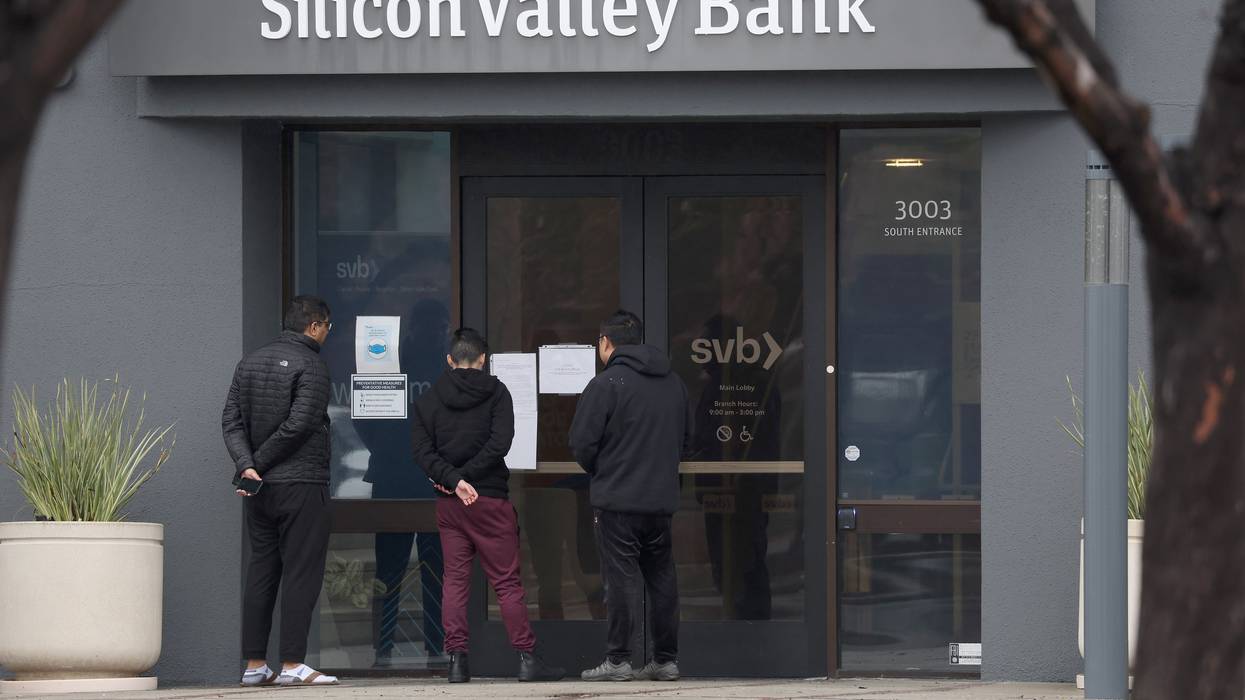
It’s been almost a year since the banking crisis kicked off last March. On Friday, March 10, 2023, Silicon Valley Bank, or SVB, a state-chartered commercial bank based in Santa Clara, California, collapsed after facing a sudden bank run and capital crisis. SVB’s collapse was the second largest bank failure in U.S. history since Washington Mutual in 2008. Two days later, New York-based Signature Bank also collapsed due to yet another bank run. But that was not the end of bank failures in 2023. On May 1, the San Francisco-based First Republic Bank, plagued by many of the same problems as those that doomed SVB and Signature Bank, also went under and was seized in turn by regulators who promptly sold all of its deposits and most assets to JP Morgan Chase. Two more banks would go on to declare insolvency later in the year, bringing the number of failed banks to a total of five.
Indeed, 2023 was the worst year for U.S. banks since 2008. But why do U.S. banks continue to fail after the reforms that were implemented in the aftermath of the 2008 global financial crisis? Why does the business model of commercial banks remain so fragile? World renowned progressive economist Gerald Epstein, author of the recently published book
Busting the Bankers’ Club: Finance for the Rest of Us, tackles these questions in the interview that follows. Epstein is professor of economics and co-director of the Political Economy Research Institute (PERI) at the University of Massachusetts Amherst.
C. J. Polychroniou: Jerry, in your new book Busting the Bankers’ Club, you describe the business model of commercial banks in the age of neoliberalism as “roaring banking” and you juxtapose it with that of “boring banking,” which prevailed from the New Deal era right through the Reagan era. Under “boring banking,” banks were prohibited from many of today’s financial engineering practices and financial shenanigans. The result was relative financial stability and economic growth. Obviously, bankers hated this business model, but what factors made possible the transition from “boring banking” to “roaring banking?” Was it simply because of the “logic” of the free-enterprise system at work, or did it happen because of actual intervention in the realm of policymaking?
Gerald Epstein: Like much historical change, the evolution from “boring banking” to “roaring banking” was the outcome of the underlying dynamics and pressures of the economic system and specific historical conjunctures, all with plenty of involvement of actual human beings and classes.
The major Wall Street bankers were never happy with the New Deal financial regulatory rules that made it harder for them to charge excessively high interest rates, make highly leveraged bets, or engineer fraudulent Ponzi or “pump and dump” frauds against customers. The numbers on Wall Street bankers’ incomes show why. As The Bankers’ Club reports, prior to 1929, bankers scarfed down incomes almost twice as high as the average wage in the economy; but after the Depression and up until the late 1970s, their incomes were about average for the whole economy. As my colleague James Crotty put it, these bankers wanted to break out of their New Deal cages to restore their superior incomes and power.
So, starting in the 1960s the major Wall Street banks organized “the Bankers’ Club,” an army of politicians, lawyers, economists, regulators, and fellow business associates to incrementally poke holes, then ditches and finally massive canals through the wall of New Deal financial regulations. According to Robert Weissman, now president of Public Citizen, these financial firms spent over $5 billion, just counting from the early 80s, on the club and its activities. This effort led, most famously, to the repeal of the Glass-Steagall Act in 1999 under the Clinton administration, which then officially ended the separation of commercial from investment banking.
The Bankers’ Club had a different idea: Tear down the New Deal model and usher in a new era in banking, the “roaring banking” system of mega financial institutions and high-risk banking strategies.
These efforts, carried out by real (mostly) men, were aided by underlying dynamic changes in the U.S. and world economies. The U.S. experienced phenomenal economic growth in the aftermath of World War II, and the world also witnessed the resurrection of the European and Asian economies. In due time, competition facing the U.S. in trade and finance intensified, leading to the demise of the Bretton Woods system of fixed exchange rates and relatively stable interest rates. Massive military spending by the U.S. government on the war in Vietnam from 1964 to 1973 combined with the effects of the geopolitics of energy driven by the formation of OPEC led in the 1970s to large increases in commodity prices and inflation, again putting upward pressure on interest rates to keep up with inflation. Then-Fed Chair Paul Volcker jacked up interest rates in an attempt to break the inflationary pressure, once again destabilizing the interest rate structure in banking. All of these forces put enormous pressure on the New Deal framework, partly because the system depended on relatively stable interest rates. The New Deal model chose to stabilize interest rates in order to try to stabilize bank profits and promote borrowing and investment in non-speculative activities.
Thus, something had to give. In principle, the government could have reformed the system. But the Bankers’ Club had a different idea: Tear down the New Deal model and usher in a new era in banking, the “roaring banking” system of mega financial institutions and high-risk banking strategies.
CJP: The neoliberal era is replete with financial crises and bank failures. In 2008, the world experienced the worst economic disaster since the Great Depression because of a financial crisis that originated in the U.S. There was a sharp decline in economic activity which led to a loss of more than $2 trillion from the global economy while millions of people lost their homes and unemployment skyrocketed. Yet, the regulations that followed in the aftermath of the 2008 global financial crisis were essentially cosmetic, as evidenced by the collapse of five major banks in 2023. What were the reasons that SVB, Signature Bank, and First Republic Bank failed, especially since the Board of Governors of the Federal Reserve System insisted at the time that the banking system was “sound and resilient”?
GE: It is good that you bring up the collapse of SVB and the failures of Signature Bank and First Republic, since we are about to reach the one-year anniversary of these important events which occurred in early March 2023.
The Dodd-Frank Act, signed into law by then-President Barack Obama in 2010, was supposed to bring about the end of the “too-big-to-fail” (TBTF) banks and government bailouts. But a year ago when these banks got into trouble, the turmoil threatened to spread panic into the broader U.S. financial markets, signaling a possible series of bank runs in It’s a Wonderful Life style throughout the system. The Dodd-Frank Act had tried to forestall these types of events by making larger banks (those with assets of at least $50 billion) be subject to more careful monitoring by the Federal Reserve, requiring them to hold more capital of their own so that they could withstand larger shocks, and have greater liquidity (cash or cash-like assets) in order to help forestall bank runs. But during the Trump administration, these “medium-sized banks” lobbied to be exempt from the tougher rules. A major player in the fight was Silicon Valley Bank.
The Fed was still acting as chairman of the Bankers’ Club rather than steward of the public interest.
But on March 10, 2023, after a major bank run hit Silicon Valley Bank, it was forced to close. The Fed did not bail out the bank’s executives, but guaranteed the deposits of its remaining depositors even when these were far above the $250,000 amount covered by Federal Deposit Insurance Corporation insurance. When contagion spread to other banks in the U.S., the Fed guaranteed all deposits, no matter how big.
In April, the Federal Reserve published a major exercise of “self-crit” in its handling of SVB, prior to and after the crisis. It’s pretty accurate assessment included the following four problems:
Though accurate as far as they go, these criticisms miss a crucial point: These are essentially the same problems that allowed bigger banks to instigate the Great Financial Crisis in 2008-2009. The Fed itself had done much to block more fundamental reforms during the Dodd-Frank negotiations and afterward as the rules were finalized. And the Fed under Jerome Powell supported the weakening of rules for the medium-sized banks.
In other words, the Fed was still acting as chairman of the Bankers’ Club rather than steward of the public interest. This, the Fed’s post-mortem would not admit.
CJP: Speaking of the Federal Reserve, in your book you do label it as the “chairman” of the Bankers’ Club. Briefly explain what you mean by that, and does the Fed actually have any input in regulatory reforms proposed by lawmakers?
GE: The Federal Reserve, the central bank of the United States, has two main functions. It is in charge of U.S. monetary policy, which includes trying to manage short-term interest rates and the overall supply of money and credit in the economy. And it also has a major role to play in regulating and supervising banks, including the mega banks or what I call the “roaring banks.” The Federal Reserve has been delegated these powers by the U.S. Congress, which, along with the president, establishes the mandates, or major goals, which the Federal Reserve is supposed to try to achieve. The question of the Fed’s mandates or goals has been a subject of long-term political fights in the United States, which explains why the Federal Reserve is a “contested terrain.” I say that the Fed is the “chairman” of the Bankers’ Club because history shows that, for most of the time, the big banks and the capitalist class at large win the contest for dominance of the Fed, both with respect to its monetary policy and regulatory policy. For example, after a long political battle, the Federal Reserve was given by Congress a dual mandate: to achieve high employment and stable prices (steady and low inflation). In addition, more recently, the Federal Reserve was given a mandate to maintain financial stability. But if one studies the Fed’s record, we find that when there is a conflict between keeping inflation very low (which finance normally prefers) and achieving full employment (which workers tend to prefer) the Fed almost always chooses low inflation. And when it comes to regulating banks tightly in order to maintain financial stability, or bailing them out after they get into trouble, the Fed has preferred to simply bail them out. More generally, the Fed offers significant favors to the banks, and in return expects the banks to protect its operations from the intrusive hands of Congress and the president.
To answer your question more directly, the Fed has a big influence on the regulations that Congress eventually passes, as one can see from the inordinate influence that Alan Greenspan had in the legislation to gut Glass-Steagall, and the inordinate role that Ben Bernanke and the Fed had in ensuring that Dodd-Frank regulations were riddled with loopholes.
CJP: The Dodd-Frank Wall Street Reform and Consumer Protection Act has been treated as one of the most significant U.S. regulatory reforms since the Great Depression. But it does remain a highly flawed regulatory framework, and even plugging all the holes in it won’t do the job, you argue in your book. What are the strategic shortcomings of the Dodd-Frank approach to financial regulation?
GE: To identify the flaws in Dodd-Frank, one can start by identifying the causes of the major financial crises we have experienced as well as the rocks and hard places the regulators found themselves between in responding to these crises. These causes are:
Dodd-Frank did not really address these problems, and the Trump administration weakened the Dodd-Frank rules even further. As such, these problems are still very much with us.
CJP: What measures do you propose for improving financial regulation, so we won’t have bank failures and severe recessions triggered by financial crises?
GE: At a minimum, we must address these “causes” of the problems that I identified above:
This last point touches on an important and more general issue. Financial regulation, at least since the New Deal, has been a negative screen: a list of things banks should NOT do. However, we have many crucial societal problems that the financial system should be taking a more proactive role to help solve. These include, for example, helping to build a green energy economy and ending our reliance on fossil fuels. Also, and this is equally important, contributing to the economic development of marginalized communities. Financial institutions that get government support—and that means ALL of them—should not only avoid crashing our economy but also contribute to our society’s important needs.
CJP: In Busting the Bankers’ Club, you advocate the establishment of banks without bankers because financial regulation alone will not be sufficient to address the plethora of problems (poverty, inequality, discrimination, climate change) facing the contemporary United States. How far can public banking go in addressing these problems, and how do we overcome the resistance of the political system to radical proposals that aim toward the making of a democratic economy?
GE: Yes. Private banks, no matter how regulated, or how incentivized to do socially useful activities, will not be sufficiently motivated to provide many of the key long-term social goods that we need: green energy, healthy communities for all, sufficient financial resources for the development of our rural areas. The reason is that these banks focus on maximizing profits in the short to medium term. Many of these other activities are socially profitable but might not be sufficiently privately profitable, at least in the short to medium term. As a result, we need more publicly oriented financial institutions, such as public banks that are dedicated to broader social goals.
There are activist groups in more than 20 states across the U.S. who are pushing for public banks of various kinds. The most successful ones so far are located in California, but New Jersey is also moving closer to establishing a public bank and there is a strong public bank campaign underway in Massachusetts.
The Federal Reserve should give the same level of support to public banking organizations as it has to private banks.
Still, there are several general obstacles to implementing an ecosystem of public banks adequate to face the problems we have. One is the intense opposition of the Bankers’ Club even though most of these public bank initiatives are structured to minimize competition with the private banks. For example, they do not take deposits; they do not lend directly to customers but rather to other banks who then lend to final customers, etc. Apparently, the Bankers’ Club simply does not want to legitimize any competitive sources of finance that could undercut their power.
Moreover, even if you add up all the public banking initiatives, they would still not be large enough or widespread enough to make a huge dent in the problems we are facing. What we need are national public banking institutions. For example, the Inflation Reduction Act (IRA) created a small Green Development Bank that, with support, could grow and thrive. A more activist and socially oriented Federal Reserve could play an important role here. The Federal Reserve should give the same level of support to public banking organizations as it has to private banks. And it should broaden its tools to promote key social goals: For example, the Fed could buy Green Bonds. It has already bought asset backed securities to bailout the banks.
How do we overcome resistance from the Bankers’ Club and right-wingers to these kinds of reforms? Two things: Join the Club Busters, those activists who are trying to block the Bankers’ Club and promote more socially useful institutions; and protect democracy by helping to get money out of the financial system (eg. repeal
Citizen’s United), expand voting rights, and fight against fascism.
In the last chapter of my book, I suggest that we all bite off what we can chew. Look around and join others who are fighting one of more of these battles. Join them and pitch in. As our forces gather, we will have impacts that build on each other. If some of our initiatives get blocked, other initiatives will move forward.
There are many Club Busters around the country, and indeed the world. In the U.S. we have public banking organizations,
Americans for Financial Reform, Better Markets, Rainforest Action Network, and many others. Support politicians who fight for these issues, including Elizabeth Warren, Sherrod Brown, Jeff Merkley, and Alexandria Ocasio-Cortez.
There are plenty of places to join others and take a stand. That’s how we fight the Bankers’ Club.
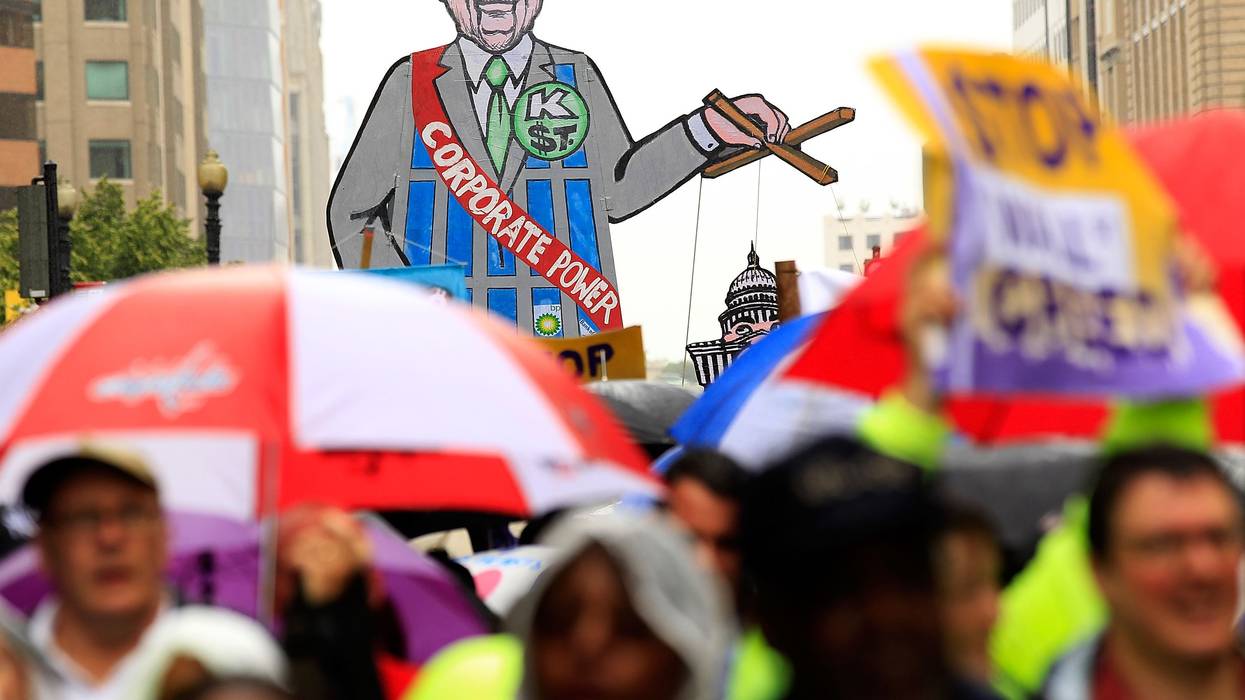
As philosophers from Socrates to Jesus to Adam Smith have told us over and over: unregulated greed always ends up enriching the few while devastating the rest of society.
The failure of the Silicon Valley Bank (SVB) shows us, once again, that unrestrained greed isn’t good. For even modest greed to have a positive effect in society, it must be regulated.
The CEO of SVB didn’t like the regulations imposed after the 2008 financial meltdown by Congress’ Dodd-Frank legislation, and spent over a half-million dollars bribing…er, influencing…legislators (legalized by 5 Republicans on the Supreme Court) to change the law and exempt his and other smaller, regional banks from what he argued was the heavy hand of government.
While SVB and other smaller banks were generally prosperous and profitable, many wanted to escape from the regulations Congress imposed to protect both depositors and the economy, so they spread some money around Washington DC. Donald Trump then enthusiastically signed the deregulation of smaller banks like SVB into law in 2018.
As Senator Bernie Sanders noted this weekend:
“Let's be clear. The failure of Silicon Valley Bank is a direct result of an absurd 2018 bank deregulation bill signed by Donald Trump that I strongly opposed. Five years ago, the Republican Director of the Congressional Budget Office released a report finding that this legislation would increase the likelihood that a large financial firm with assets of between $100 billion and $250 billion would fail.”
Five years later — predictably — the bank went into receivership and people who’d put their money in its trust were looking at substantial losses while, once again, confidence in the entire system is shaken.
At New York’s First Republic Bank, people were standing in line as the weekend began, suggesting there may be a full-blown run on that bank today. And New York’s Signature Bank was just closed by banking regulators.
The CEO of SVB had pulled millions out just two weeks before, money that Congressman Ro Khanna says should be clawed back and used to make depositors whole:
“There should be a clawback of any of that money,” Khanna told The Washington Post. “It should be going to the depositors.”
Politicians and op-ed writers tight with banksters spent the weekend, of course, demanding government action and bailouts, like in 1987 and 2008. And this morning, President Biden announced he’s going to do it by bending the rules at FDIC. Frankly, he had little choice.
The CEO’s greed didn’t work out well for average taxpayers — who ultimately must backstop the FDIC if this spreads — and bank customers.
These same banksters are the first types of people to tell student loan borrowers that if they can’t repay their debts they need “discipline,” to suck it up, reduce their standard of living, and to “learn the lesson of responsibility.”
But when their own stupid decisions — in this case, investing in largely illiquid long-term bonds — come back to haunt them, they stand before Congress with their hands out.
The era from the 1850s through the 1920s was punctuated by periodic greed-driven bank failures and a lack of federal response to them. One of the biggest of those crashes presaged — some scholars argue, triggered — the Civil War.
Before running for public office Abraham Lincoln was a lawyer in private practice working for the railroads. On August 12, 1857, he was paid $4800 in a check, which he deposited and then converted to cash on August 31. That was fortunate for Lincoln, because just over a month later, in the Great Panic of October 1857, both the bank and the railroad were “forced to suspend payment.”
Of the 66 banks in Illinois, The Central Illinois Gazette (Champagne) reported that by the following April, 27 of them had gone into liquidation. It was a depression so vast that the Chicago Democratic Press declared at its start, the week of Sept. 30, 1857, “The financial pressure now prevailing in the country has no parallel in our business history.”
Unregulated greed wasn’t good back then, either: over 600,000 people died in the Civil War that bank crash contributed to.
Fast forward sixty years.
During the 1920s, according to the Federal Deposit Insurance Corporation (FDIC), “On average, more than 600 banks failed each year between 1921 and 1929.” In the process, billions of dollars were lost to depositors, mostly farmers, working people, and small businesses who’d been locked out of the big banks and didn’t have the resources to lobby Congress.
To make matters worse, because the Republican administrations of Harding, Coolidge, and Hoover all believed bank regulation was a bad thing that interfered with the greed-driven “invisible hand of the marketplace,” each allowed the trend to continue until the entire system collapsed in the 1929-1933 era.
That was another era, almost 100 years before ours, that proved how unregulated greed could damage our nation and create widespread misery (except among the greedy).
In January and February of 1932, respectively, Congress created the Reconstruction Finance Corporation (RFC) and the Glass-Steagall Act, regulating banks to prevent their rich owners from continuing to steal depositors’ cash and then walk away from the banks they’d plundered.
President Franklin Roosevelt, who took office in March of 1933, imposed further stiff regulations on banks and Wall Street, creating the Securities and Exchange Commission (SEC) and putting Joe Kennedy in charge of it.
The late Gloria Swanson, who knew Kennedy well and intensely disliked him (he’d robbed and exploited her), told me over one of our many dinners in her New York apartment back in the 1980s that FDR told her he’d appointed Kennedy because, “It takes a crook to catch a crook.”
And FDR was going after the greedy crooks in a big way.
Between Glass-Steagal and the SEC, banking became a boring if reliably profitable business from the 1930s to the 1980s.
The nation prospered. The middle class grew. The banksters’ greed was hemmed in by FDR’s regulations, then kept there through the administrations of Truman, Eisenhower, Kennedy, Johnson, Ford, and Carter. Bank directors and executives did well, but few were buying their own private jets.
Then, President Reagan, as part of his neoliberal “greed is good” agenda, experimented with bank deregulation by lifting many rules governing the operation of Savings and Loan institutions.
They’d been created in 1932 with the Federal Home Loan Act, which heavily regulated the industry and made it functionally subordinate to commercial banks.
But in 1982, Reagan pushed through the Garn-St. Germain Depository Institutions Act, eliminating previous S&L loan-to-value ratios and interest rate caps while killing their main oversight, Regulation Q.
Soon S&Ls were gambling with junk bonds and risky commercial real estate, leading over 1000 of them (almost a third of all S&Ls in the nation) to crash and burn.
Their greedy CEOs and senior executives made off with billions, leaving depositors in the lurch and the Federal government to clean up the mess. Once again, deregulating greed ended up costing the nation hundreds of billions while making a small group of S&L hustlers richer than the pharaohs.
In 1999, Republicans and a few neoliberal Democrats took another run at deregulating banks themselves, spurred into action by a pile of campaign cash made legal by Republicans on the Supreme Court when Lewis Powell wrote the 1978 opinion in First National Bank v Bellotti, writing explicitly that corporations were “persons” entitled to use their “First Amendment-protected free speech” (money) to influence politicians.
Deregulation would both increase bank profits while keeping the banking sector safe, we were told that year, because no banker or stockbroker in his right mind would risk being “embarrassed” by taking such big chances that a misstep could wipe out large sectors of the nation’s economy.
Greed, they told us, was self-regulating. Predictably, it didn’t quite work out that way.
Republican Senator Phil Gramm made that “self-regulating” point on the floor of the Senate in 1999 when selling the end of the 1933 Glass-Steagall law that prevented checkbook banks from using their depositors’ money to gamble in the stock, bond, and real estate markets.
Bought-off legislators fattened their campaign coffers while banksters started gambling and became billionaires. And, of course, it led us straight to the Bush Crash of 2008 when the entire system seized up and you and I bailed out Wall Street with trillions of dollars, hundreds of billions of which the banksters simply pocketed for themselves and their big business buddies as loans and massive bonuses.
Greed paid off for them, although you and I are still paying for it with our taxes via the national debt.
As with so many things, a kernel of truth — in this case about greed and self-interest — has been twisted into a gamed and rigged system by the morbidly rich. They’re quick to quote from the first chapter of Adam Smith’s 1776 classic The Wealth of Nations:
“It is not from the benevolence of the butcher, the brewer, or the baker that we expect our dinner, but from their regard to their own interest. We address ourselves, not to their humanity, but to their self-love, and never talk to them of our own necessities, but of their advantages. Nobody but a beggar chooses to depend chiefly upon the benevolence of his fellow-citizens.”
While true, advocates of deregulation completely ignore its corollary, expressed in the second chapter of Smith’s Theory of Moral Sentiments, in which he argues:
“Man is considered as moral because he is regarded as an accountable being. But an accountable being, as the word expresses, is a being that must give an account of its actions to some other, and that consequently must regulate them according to the good liking of this other.”
When Senators Mike Crapo (R-Idaho) and Joe Manchin (D-WV) pushed their 2018 Economic Growth, Regulatory Relief, and Consumer Protection Act, dubbed by Elizabeth Warren and others as the Bank Lobbyist Act, many argued it would lead to more bank consolidations (it did) and let smaller banks like SVB take risks that could endanger depositors (they did).
Senator Warren noted on Twitter at the time:
“The #BankLobbyistAct takes 25 of the 40 biggest banks in the country off the watch list for more federal oversight. It weakens consumer protections on mortgages — and makes it harder to fight racial discrimination in housing,” adding that the legislation would “be paving the way for the next big crash.”
Unregulated greed, she predicted, would lead to disastrous outcomes.
And here we are. Whether the failure of the Silicon Valley Bank (SVB) will spark a wider contagion or just be a two-week story illustrating the stupidity of deregulating and trusting billionaire banksters to do the right thing is, as yet, unknown.
But the principle is known. When money, power, or political advantage are at stake, a small number of unscrupulous (sometimes called “sociopathic”) individuals will say or do any and everything they can to game the system for themselves to keep everybody else out.
It may be selling opioids that kill hundreds of thousands of Americans; or poisoning children’s metabolisms with processed, plastic-packaged, forever-chemical-laced “food” that leads to cancer, obesity, and diabetes; or pushing cigarettes or opposing wind and solar farms. There’s always somebody willing to sell their soul for the right price, and somebody else who can afford to pay that price.
We’ve all seen greed working in real time. My father was killed — knowingly — by the asbestos industry and my brother was killed with full knowledge and intention by the tobacco industry. If there’s not such a similar story in your life, you’re an outlier.
And what we all experience on a personal level is amplified a million times when a single greedy person seizes the power to help or destroy millions of lives, like the CEO of a giant employer that is fighting unionization, safety, or environmental regulation.
Often, these are the most high-functioning and well-educated/well-connected sociopaths among us…and the good ones (as in those “good” enough to make billions but only pay 3% income tax) are particularly successful at selling their own personalities: this is the compounding overlay of narcissism.
Donald Trump is its poster child.
Can we stop the sociopaths, the greed-heads, from continuing their destruction of our food supply, our housing stock, and our environment/climate?
It’s a fight, but the greed side literally can mobilize trillions, if necessary. Still, the human and intrinsic love of democracy and fairness mean the outcome is, at this moment, up in the air.
What we do know, however — as philosophers from Socrates to Jesus to Adam Smith have told us over and over — is that unregulated greed always ends up enriching the few while devastating the rest of society.
And, as we learned from the Iroquois and I write about in my next book, The Hidden History of American Democracy, working on behalf of and protecting society from greedy predators should be the first job of every government.
As an abstract principle, civil discourse is regarded as a virtue. However, one should neither mistake a facade of respectability for civility nor be prepared to sacrifice core democratic principles to achieve civility.
It is extremely dangerous, either in the name of "civility" or "bipartisanship," to yield to those who seek nothing less than the destruction of democracy.
That point was driven home by Richard Evans in The Coming of the Third Reich when he explained how the Nazi Party, which lost the 1932 election, was able to seize and consolidate unchallenged power in 1933.
"It is in the nature of democratic institutions," Evans noted, "that they presuppose at least a minimal willingness to abide by the rules of democratic principles." But it is extremely dangerous, either in the name of "civility" or "bipartisanship," to yield to those who seek nothing less than the destruction of democracy--a point Evans drove home by quoting Nazi Propaganda Minister Joseph Goebbels's harsh reference to the "stupidity" of democracy. Goebbels proclaimed: "It will always remain one of democracy's best jokes that it provided its mortal enemies with the means by which it was destroyed."
Even when offered by a renowned historian, like Christopher R. Browning, a UNC professor emeritus, there is a reflexive tendency to immediately dismiss academic comparisons between the 1932 Nazi threat to the survival of Germany's Weimar Republic and the threat Donald J. Trump and his congressional Republican enablers currently pose to democratic governance, checks and balances, and to survival the rule of law in these United States.
The error in that dismissal lies in an exclusive focus on the end-product of Nazi rule, the Holocaust. Hence, the indignant, yet erroneous criticism of Rep. Alexandria Ocasio-Cortez (D-N.Y.) for her accurate description of recently erected immigrant detention facilities as "concentration camps." People lose sight of the fact that the Nazi concentration camps, which were initially erected in 1933 to house "enemies of the state," did not become "death camps" until after the 1939 outbreak of the Second World War.
The case could be made that the "grotesque and dehumanizing" conditions inside U.S. border detention facilities--not to mention the callous and cruel decision to rip children away from their parents' arms--are as abhorrent as the concentration camp conditions that existed during the first six years of Nazi rule. But the dire warnings provided by historians, like Evans and Browning, were not directed at concentration camp conditions. Instead, Browning, who described Mitch McConnell as a "gravedigger of democracy," laid out the reasons why the disciples of extreme wealth and political inequality--Donald Trump, 21st century Republicans and what Law professor Cass Sunstein referred to as the Supreme Court's "Radicals in Robes," are, in the words of the infamous Joseph Goebbels, "mortal enemies" of democracy.
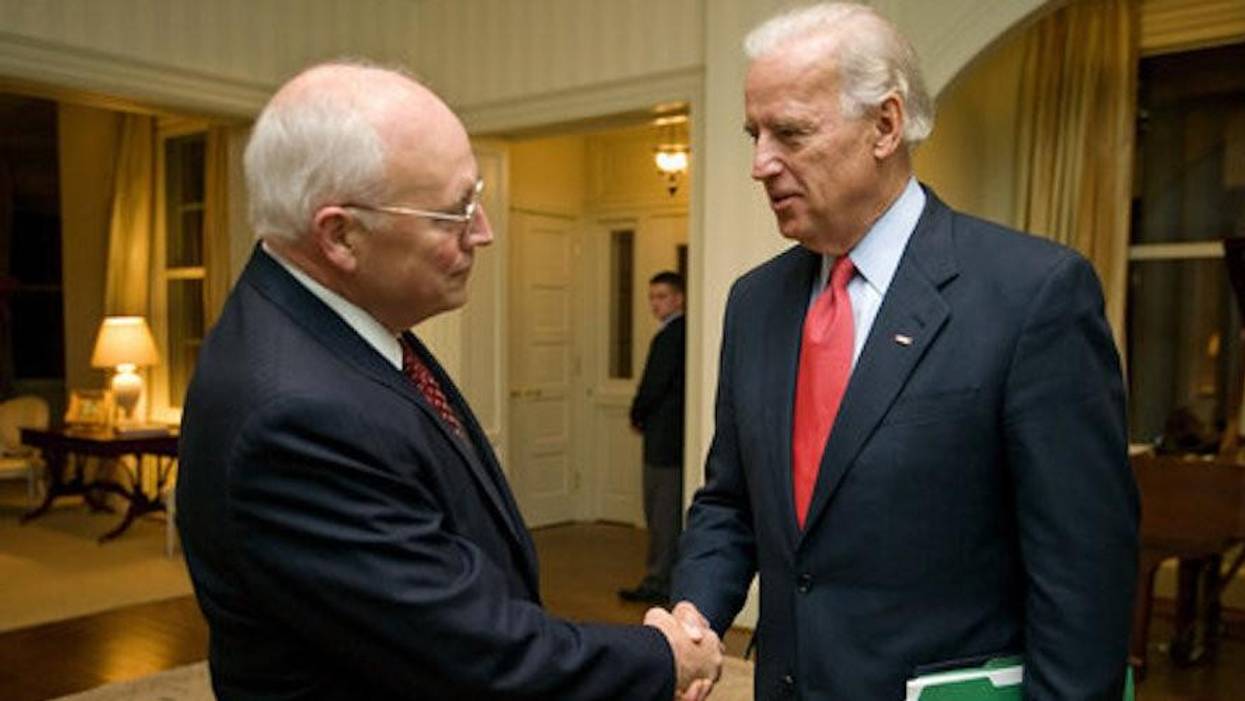
At what may be our democracy's darkest hour, it is, thus, deeply disconcerting to be confronted with Joe Biden's assertion that if he replaced Trump, democracy's "mortal enemies" would experience an "epiphany" because his "Republican friends" realize that their enabling of executive lawlessness and corruption "isn't what they're supposed to be doing."
Biden's "Republican friends," who Rep. Justin Amash (R-Mich.) recently described as "an existential threat to American principles and institutions," have worked tirelessly over the past several decades to resurrect the same system of Jim Crow at the polls that vile racist segregationists, like Sens. James O. Eastland (D-Miss.) and Herman Talmadge (D-Ga.), sought to preserve when they opposed the Civil and Voting Rights Acts in the 1960s.
Although conceding that Talmadge was "one of the meanest guys [he'd] every met," Biden proclaimed: "At least there was civility. We got things done."
One would like to believe Biden naively mistook the facade of respectability that Southern elites of that era--both Talmadge and Eastland were plantation owners--sought to cloak themselves in by joining all-White Citizens' Councils, as opposed to joining the terrorist KKK. The ugly reality, as noted by PBS, was that, under Eastland's leadership, the Mississippi White Citizen's Council "fostered a violent, reactionary climate where punishment against blacks was sanctioned."
Biden is simply hiding behind "civility" to conceal the fact that, all too often, he shared portions of the same anti-democratic agendas embraced by vile segregationists, by his "Republican friends," and by his Wall Street donors.
Examination of his "disastrous" legislative history, however, reveals Biden is simply hiding behind "civility" to conceal the fact that, all too often, he shared portions of the same anti-democratic agendas embraced by vile segregationists, by his "Republican friends," and by his Wall Street donors.
Biden claimed he took part in civil rights marches. He didn't. At the recent debate, Biden said, "I didn't oppose busing in America." In 1975, Biden described court-ordered busing as "asinine" and lamented that a constitutional amendment may be needed to end it. The former VP voted against two of President Jimmy Carter's African-American nominees, to the U.S. Department of Justice and for Solicitor General, because they supported busing to achieve school integration.
Biden cites civility as a means to get things done. It's the things he gets done that are the problem. He personally authored many of the major crime and "war on drugs" bills that led to mass incarceration, which now disparately impacts the poor and people of color.
At this moment, the gravest threat to the survival of our democracy arises from the symbiotic relationship between an ever-expanding economic and political inequality--an inequality so stark that President Carter lamented it has already given rise to "an oligarchy with unlimited political bribery."
Biden voted to strip away bankruptcy protections from the victims of the usurious credit card industry. He voted to repeal Glass-Steagall, the Depression-era law which prevented commercial banks from participating in Wall Street's oft-fraudulent speculations. That repeal played a major role in the 2008 financial meltdown. Biden then completed the coup de grace to Wall Street accountability by voting in favor of the massive Wall Street bailout.
If there had been any doubt that voting to nominate Joe Biden as the Democratic Party presidential nominee would be akin to helping dig our democracy's grave, those doubts were eliminated when, in responding to Bernie Sanders's direct challenge to extreme inequality and oligarchy, Biden assured his wealthy Wall Street donors that there would be no fundamental change to their obscenely lavish standards of living under a Biden presidency.
Let's be blunt: As a supposed friend of American workers, Joe Biden is a phony. And now that he's running for president, Biden's huge task is to hide his phoniness.
From the outset, with dim prospects from small donors, the Biden campaign is depending on big checks from the rich and corporate elites who greatly appreciate his services rendered. "He must rely heavily, at least at first, upon an old-fashioned network of money bundlers--political insiders, former ambassadors and business executives," the New York Times reported on Tuesday.
Biden has a media image that exudes down-to-earth caring and advocacy for regular folks. But his actual record is a very different story.
During the 1970s, in his first Senate term, Biden spouted white backlash rhetoric, used tropes pandering to racism and teamed up with arch segregationists against measures like busing for school integration. He went on to be a fount of racially charged appeals and "predators on our streets" oratory on the Senate floor as he led the successful effort to pass the now-notorious 1994 crime bill.
"Joe Biden has arrived as a presidential candidate to rescue the Democratic Party from Bernie Sanders."
A gavel in Biden's hand repeatedly proved to be dangerous. In 1991, as chair of the Judiciary Committee, Biden prevented key witnesses from testifying to corroborate Anita Hill's accusations of sexual harassment during the Clarence Thomas confirmation hearings for the Supreme Court. In 2002, as chair of the Foreign Relations Committee, Biden was the Senate's most crucial supporter of the Iraq invasion.
Meanwhile, for well over four decades--while corporate media preened his image as "Lunch Bucket Joe" fighting for the middle class--Biden continued his assist for strengthening oligarchy as a powerful champion of legalizing corporate plunder on a mind-boggling scale.
Now, Joe Biden has arrived as a presidential candidate to rescue the Democratic Party from Bernie Sanders.
Urgency is in the media air. Last week, the New York Times told readers that "Stop Sanders" Democrats were "agonizing over his momentum." The story was front-page news. At the Washington Post, a two-sentence headline appeared just above a nice photo of Biden: "Far-Left Policies Will Drive a 2020 Defeat, Centrist Democrats Fear. So They're Floating Alternatives."
Biden is the most reliable alternative for corporate America. He has what Sanders completely lacks--vast experience as an elected official serving the interests of credit-card companies, big banks, insurance firms and other parts of the financial services industry. His alignment with corporate interests has been comprehensive. It was a fulcrum of his entire political career when, in 1993, Sen. Biden voted yes while most Democrats in Congress voted against NAFTA.
In recent months, from his pro-corporate vantage point, Biden has been taking potshots at the progressive populism of Bernie Sanders. At a gathering in Alabama last fall, Biden said: "Guys, the wealthy are as patriotic as the poor. I know Bernie doesn't like me saying that, but they are." Later, Biden elaborated on the theme when he told an audience at the Brookings Institution, "I don't think five hundred billionaires are the reason we're in trouble. The folks at the top aren't bad guys."
Overall, in sharp contrast to the longstanding and continuing negative coverage of Sanders, mainstream media treatment of Biden often borders on reverential. The affection from so many high-profile political journalists toward Biden emerged yet again a few weeks ago during the uproar about his persistent pattern of intrusively touching women and girls. During one cable news show after another, reporters and pundits were at pains to emphasize his essential decency and fine qualities.
But lately, some independent-minded journalists have been exhuming what "Lunch Bucket Joe" is eager to keep buried. For instance:
One of Biden's illuminating actions came last year in Michigan when he gave a speech--for a fee of $200,000 including "travel allowance"--that praised the local Republican congressman, Fred Upton, just three weeks before the mid-term election. From the podium, the former vice president lauded Upton as "one of the finest guys I've ever worked with." For good measure, Biden refused to endorse Upton's Democratic opponent, who went on to lose by less than 5 percent.
"Indications of being a 'moderate' and a 'centrist' play well with the Washington press corps and corporate media, but amount to a surefire way to undermine enthusiasm and voter turnout from the base of the Democratic Party."
Biden likes to present himself as a protector of the elderly. Campaigning for Sen. Bill Nelson in Florida last autumn, Biden denounced Republicans for aiming to "cut Social Security, Medicare and Medicaid." Yet five months earlier, speaking to the Brookings Institution on May 8, Biden spoke favorably of means testing that would go a long way toward damaging political support for Social Security and Medicare and smoothing the way for such cuts.
Indications of being a "moderate" and a "centrist" play well with the Washington press corps and corporate media, but amount to a surefire way to undermine enthusiasm and voter turnout from the base of the Democratic Party. The consequences have been catastrophic, and the danger of the party's deference to corporate power looms ahead. Much touted by the same kind of insular punditry that insisted Hillary Clinton was an ideal candidate to defeat Donald Trump, the ostensible "electability" of Joe Biden has been refuted by careful analysis of data.
As a former Sanders delegate to the 2016 Democratic National Convention and a current coordinator of the relaunched independent Bernie Delegates Network for 2019, I remain convinced that the media meme about choosing between strong progressive commitments and capacity to defeat Trump is a false choice. On the contrary, Biden exemplifies a disastrous approach of jettisoning progressive principles and failing to provide a progressive populist alternative to right-wing populism. That's the history of 2016. It should not be repeated.

In the wake of reporting that the potential 2020 Democratic candidate has been "reaching out to Wall Street executives" in order to gauge their support for her possible run, Sen. Kirsten Gillibrand (D-NY) responded by saying that what's more important than the people she might be talking to is her strong voting record on behalf of progressive economic policies.
Citing a pair of senior business leaders who spoke on the condition of anonymity about the behind-the-scenes discussions, CNBC reported Friday that "Gillibrand has personally been working the phones and calling senior executives at Wall Street firms in recent weeks to see whether they would back her campaign if she jumps into the race."
Seen as a likely Democratic primary candidate--Gillibrand told CNN's Van Jones last month she was "definitely thinking about" running--the reporting by CNBC raised eyebrows among those monitoring the numerous Democrats who are believed top contenders.
In response to journalist David Sirota, who tweeted "This seems important" alongside a link to the CNBC story, Gillibrand tweeted:
As CNBC reported, even while "Gillibrand has received donations from Wall Street," it's true that she "has pushed for tightening regulations in the financial industry. She voted in support of the Dodd-Frank Wall Street Reform and Consumer Protection Act and then voted against a bill in 2018 that rolled back some bank regulations put in place in 2010. As a member of the House of Representatives, she voted against the bank bailout during the 2008 financial crisis."
A spokesperson for Gillibrand told the news outlet for its reporting that if the decision to throw her hat in the ring is made, "she will run a campaign that takes no corporate PAC money and is powered by grassroots donations, and based on her values of standing up to those in power and returning our democracy to the people where it belongs."
While some progressives argue that Gillibrand's Wall Street ties would be a major "problem" if she decides to run in 2020, she has also staked out serious and far-reaching positions on women's equality, backed the demand for Medicare for All, supported legislation to raise the federal minimum wage to $15 an hour, and signed a pledge not to take fossil fuel industry money during her campaign.
Regarding the back and forth with reporter about her record, Gillibrand was given credit for addressing the issue. As journalist Peter Sterne wrote, "Gillibrand is very good at engaging with her critics, constituents and journalists. Even when I disagree with her policies, I appreciate that she generally doesn't attack the media or criticize journalists for asking questions."
Acknowledging the importance of her votes against Wall Street, Sirota in a subsequent tweet responded to Gillbrand by saying "those are good votes to promote," but then asked the Senator why she voted with a majority of Republicans against a 2010 bill that would have broken up the largest Wall Street banks.
As of this writing, Gillibrand has not responded to the question. While voicing her opinion that Gillibrand should not run in 2020 based on her too-cozy ties to Wall Street, Splinter's Libby Watson also said that it's entirely possible for the senator from New York to come out early and pledge not to accept such backing if she runs for president.
Either way, Watson concluded, "The Democratic Party needs a clean break from corporate money and influence if it's ever going to govern well, win back the trust of voters, or truly represent the working class. It can't afford to nominate someone whose first call is to Wall Street executives for cash."

Twenty-five years ago--when I wrote a book titled "False Hope: The Politics of Illusion in the Clinton Era"--I didn't expect that the Democratic Party would still be mired in Clintonism two and a half decades later. But such approaches to politics continue to haunt the party and the country.
The last two Democratic presidencies largely involved talking progressive while serving Wall Street and the military-industrial complex. The obvious differences in personalities and behavior of Bill Clinton and Barack Obama diverted attention from their underlying political similarities. In office, both men rarely fought for progressive principles--and routinely undermined them.
Clinton, for example, brought the country NAFTA, welfare "reform" that was an assault on low-income women and families, telecommunications "reform" that turned far more airwaves over to media conglomerates, repeal of Glass-Steagall regulation of banks that led to the 2007-8 financial meltdown, and huge increases in mass incarceration.
"What scares me the most is Hillary's smug certainty of her own virtue as she has become greedy and how typical that is of so many chic liberals who seem unaware of their own greed. They don't really face the complicity of what's happened to the world, how selfish we've become and the horrible damage of screwing the workers and causing this resentment that the Republicans found a way of tapping into."
--Charles Peters, Washington MonthlyObama, for instance, bailed out big banks while letting underwater homeowners sink, oversaw the launching of more missiles and bombs than his predecessor George W. Bush, ramped up a war on whistleblowers, turned mass surveillance and the shredding of the Fourth Amendment into bipartisan precedent, and boosted corporate privatization of public education.
It wasn't only a congressional majority that Democrats quickly lost and never regained under President Obama. By the time he left the White House (immediately flying on a billionaire's jet to his private island and then within months starting to collect giant speaking fees from Wall Street), nearly 1,000 seats in state legislatures had been lost to Democrats during the Obama years.
Thanks to grassroots activism and revulsion toward President Trump, Democrats not only won back the House last month but also recaptured one-third of the state legislative seats that had been lost while Obama led the party and the nation.
During the last two years, progressive momentum has exerted major pressure against the kind of corporatist policies that Bill Clinton set into cement atop the Democratic Party. But today, the party's congressional leaders like Nancy Pelosi and Chuck Schumer are still in a mode loosely replicating Clinton's sleight-of-tongue formulas that have proved so useful--and extremely profitable--for corporate America, while economic inequality has skyrocketed.
As 2018 nears its end, the top of the Democratic Party is looking to continue Clintonism without the Clintons.
Or maybe Clintonism with the Clintons.
A real possibility is now emerging that Hillary Clinton will run for the 2020 Democratic presidential nomination. On Sunday, the New York Times printed a Maureen Dowd column that reported: "Some in Clintonworld say Hillary fully intends to be the nominee.... And Bill has given monologues to old friends about how Hillary knows how she'd have to run in 2020, that she couldn't have a big staff and would just speak her mind and not focus-group everything. (That already sounds focus-grouped.)"
Dowd provided a helpful recap: "After the White House, the money-grubbing raged on, with the Clintons making over 700 speeches in a 15-year period, blithely unconcerned with any appearance of avarice or of shady special interests and foreign countries buying influence. They stockpiled a whopping $240 million. Even leading up to her 2016 presidential run, Hillary was packing in the speeches, talking to the Institute of Scrap Recycling Industries, the American Camp Association, eBay, and there was that infamous trifecta of speeches for Goldman Sachs worth $675,000."
A cogent sum-up in the column came from former Washington Monthly editor Charles Peters: "What scares me the most is Hillary's smug certainty of her own virtue as she has become greedy and how typical that is of so many chic liberals who seem unaware of their own greed. They don't really face the complicity of what's happened to the world, how selfish we've become and the horrible damage of screwing the workers and causing this resentment that the Republicans found a way of tapping into."
That's where we are now--not only with the grim prospect that Hillary Clinton might run for president again, but more fundamentally with corporate allegiances still dominating the Democratic Party leadership.
The only way to overcome such corporatism is for social movements to fight more resolutely and effectively for progressive change, including in the Democratic Party. If you don't think that's a path to real breakthroughs, consider Alexandria Ocasio-Cortez, Ilhan Omar, Rashida Tlaib and Ayanna Pressley, winners of Democratic primaries this year who'll be sworn in as members of Congress next month. (Compare those successes to two decades of Green Party candidates running for Congress and never coming close.)
Whether or not Hillary Clinton runs for president again, Clintonism is a political blight with huge staying power. It can be overcome only if and when people at the grassroots effectively insist on moving the Democratic Party in a genuinely progressive direction.

The Democratic Party has regained control of the U.S. House of Representatives and with this shift will come a new cadre of forceful female leaders committed to narrowing the gaps that so divide us.
"In the wealthiest nation in the history of the world, our greatest scarcity is not a lack of resources but the absence of political courage and moral imagination."
--Rep. Alexandria Ocasio-Cortez (D-NY)
The six victorious candidates profiled here are remarkable in many ways. All women of color, these trailblazers often drew from their own personal stories to connect with and win over the hearts of voters. Each is heading to Washington to advance a bold social and economic justice agenda, with a strong focus on reversing inequality.
Deb Haaland, of New Mexico's 1st District, will become one of the first two native American women in Congress (along with Sharice Davids, who won a seat in the Kansas delegation). Halland is a member of the Laguna Pueblo tribe and a former head of the New Mexico Democratic Party.
On the campaign trail, Haaland didn't mince words about the economic unfairness she sees in the country: "America isn't broke, but we have been pillaged by billionaires and big corporations who get rich off our infrastructure and expect working people to foot the bill. No more."
To get those billionaires and corporations to pay their fair share, Haaland goes far beyond calling for the repeal of the Trump-Republican tax reform. She'd like to see taxes on individual income and corporate profits rise back to post-World War II levels. She also calls for the introduction of a small tax on financial market transactions and a more robust estate tax.
Haaland will also be a powerful voice in Washington against Trump's hateful immigration policies. On the government's separation of immigrant families, Haaland draws from her own family's experience. Her grandmother was forced into an "assimilation" boarding school when she was eight years old.
Ilhan Omar will become the first Somali American woman in Congress, taking the Minnesota District 5 seat vacated by Keith Ellison when he decided to run (successfully) for Minnesota Attorney General.
On the campaign trail, inequality was at the core of Omar's message: "The wealthiest of our country have accumulated their wealth through a system that keeps people in poverty," she said.
Omar's economic justice platform was one of the most ambitious and detailed in the whole congressional candidate field. To lift up the bottom of the income scale, for example, she supports a federal job guarantee program that would provide a $15 per hour, full-time job to anyone who needs one.
To address income and wealth concentration at the top, her policies range from taxing Wall Street speculation and breaking up the big banks to strengthening the estate tax and hiking income tax rates on the wealthy. Omar also endorsed Medicare for All and debt-free college.
As a former refugee, she will be a strong voice in Washington for immigrant rights and economic justice. In a rebuke to President Trump's Islamaphobia, she opened her victory speech in Minneapolis with the Arabic greeting "as-salam alaikum."
To address income and wealth concentration at the top, [Ilhan Omar's] policies range from taxing Wall Street speculation and breaking up the big banks to strengthening the estate tax and hiking income tax rates on the wealthy. Omar also endorsed Medicare for All and debt-free college.
Rashida Tlaib will join Omar as one of the first two Muslim women in Congress, filling the Michigan 13th seat long held by John Conyers. Tlaib has been a passionate supporter of workers rights as a state legislator and lawyer. Just a month before the election, she was arrested while blocking a street in front of a Detroit McDonald's during a "Fight for $15" protest for higher wages and union rights.
Like several others on this list, Tlaib's economic priorities include Medicare for All, debt-free college, and making the wealthy and corporations pay their fair share of taxes. She already has a track record of standing up to billionaires -- and winning. When Michigan officials dismissed residents' concerns about pollution from a factory owned by the Koch brothers, Tlaib trespassed on the company's property to collect samples herself. Her bold action led to the Koch brothers being forced to remove the pollutants from Detroit's riverfront.
Ayanna Pressley was uncontested in her race in the 7th district of Massachusetts, becoming the first black woman to represent the state. In the spring, she won an upset primary against Democratic incumbent Mike Capuano.
A former Boston city council member, Pressley says her priorities in Washington will be "economic inequality, the wealth and wage gap, structural racism, and gun violence."
Pressley has developed a detailed economic policy agenda, including fair taxation to pay for robust mass transit and other public infrastructure improvements. On Wall Street reform, she calls for a new Glass-Steagall Act to separate commercial banking services from investment banking, as well as tougher sentences for banking executives who engage in fraud and negligence that jeopardizes working Americans' retirement and savings.
On the campaign trail, she decried the rising inequality in her own city of Boston, pointing out that rich and poor neighborhoods that are not far apart geographically have average life expectancies that range from 92 to less than 60 years.
"These types of disparities, Pressley explains, "are not naturally occurring; they are the legacy of decades of policies that have hardened systemic racism, increased income inequality, and advantaged the affluent."
Veronica Escobar earned 68 percent of the vote in her bid to fill the Texas 16th district seat vacated by Beto O'Rourke when he ran for senate. She'll be one of the first two Latina representatives from the Lone Star state (along with Sylvia Garcia from Houston).
A former El Paso county judge, Escobar is committed to fighting for immigrant rights and economic justice in the U.S.-Mexico border community that is her hometown.
"I see the impact of income inequality everyday and will fight to fix our broken economic system, while protecting the gains made by working families and fighting for tax reforms that support the families I represent," she said.
One of the proposals Escobar touted on the campaign trail: scrapping the cap on Social Security contributions so the wealthy pay the same rate into the program as everyone else.
Alexandria-Ocasio Cortez, after her shocker defeat of a 10-term incumbent in the June primary, strolled to victory as the new member of Congress from New York's 14th district, earning 78 percent of the vote. At 29, she's the youngest woman ever to hold a seat in the House.
In the months leading up to the election, Ocasio-Cortez lent her political star power to support other candidates and to mainstream bold progressive proposals like Medicare for All, debt-free college, and raising taxes on corporations and the ultra-wealthy.
Ocasio-Cortez also calls for carbon taxes to help speed up the transition from fossil fuels to 100 percent renewables. "Right now, the economy is controlled by big corporations whose profits are dependent on the continuation of climate change," she said during the campaign. "This arrangement benefits few, but comes at the detriment of our planet and all its inhabitants."
In her acceptance speech Tuesday night, Ocasio-Cortez said, "In the wealthiest nation in the history of the world, our greatest scarcity is not a lack of resources but the absence of political courage and moral imagination."

With Saturday marking the tenth anniversary of the collapse of Lehman Brothers and the start of the worst financial meltdown since the Great Depression, Sen. Elizabeth Warren (D-Mass.) declared Thursday night that the only way to avoid another crisis is to break up the Wall Street banks that caused it and hold wealthy executives accountable for their crimes.
"If we want to avoid another financial crisis, we need to start holding Wall Street executives accountable. I introduced the Ending Too Big to Jail Act to force law-breaking bankers to trade in their pinstripe suits for orange jumpsuits."
--Sen. Elizabeth Warren"Oh, yeah. Give me a chance," Warren said when asked by Andrew Sorkin of the New York Times if she still supports breaking up big banks, many of which are far larger than they were before the 2008 crash.
"We have got to change the rules," Warren declared, highlighting her effort to implement a 21st century Glass-Steagall Act to separate commercial and investment banking. "This Congress rolling back regulations on the biggest financial institutions, rolling back regulations on Wall Street, this is absolutely the wrong direction for us to go."
Asked if the United States is prepared for another crisis--which a bipartisan deregulatory measure passed in March makes far more likely--Warren responded: "No, not even close."
In addition to pushing for stronger safeguards against big bank speculation, Warren also argued in a tweet on Thursday that "we need to start holding Wall Street executives accountable" if we are to avoid another crash.
Far from being held accountable for their actions, former Lehman Brothers executives and staffers are reportedly holding a ritzy tenth anniversary get-together on Saturday to celebrate the anniversary of their firm's collapse.
"I introduced the Ending Too Big to Jail Act to force law-breaking bankers to trade in their pinstripe suits for orange jumpsuits," Warren said, highlighting legislation she unveiled in March.
Warren's warning about the vulnerability of the American financial system and renewed call to break up the big banks were echoed by progressive commentators, lawmakers, and journalists ahead of the official tenth anniversary of the crisis--which, for most Americans, never actually ended.
As Rolling Stone's Matt Taibbi noted in a crisis retrospective on Thursday, the overwhelmingly "poor, nonwhite, and elderly" victims of the crash have been neglected by much of the corporate press in favor of heroic-sounding narratives of bankers teaming up with regulators to save the financial system from total catastrophe.
"In an effort to inflate profits for big banks, the Trump administration and Congress are setting us up for another crash."
--Morris Pearl, Patriotic Millionaires"Persistent propaganda about what happened 10 years ago not only continues to warp news coverage, but contributed to a wide array of political consequences, including the election of Donald Trump," Taibbi argued. "One of the main things the financial press missed in its countless crash post-mortems is that the subprime scam was significantly about race. In its particulars, it was really just a rehash of ancient race crimes like 'contract selling,' a predatory white-on-black home loan scam from the Jim Crow days."
These scams ultimately had a disastrous impact on black families in the U.S., which lost an astonishing 50 percent of their overall wealth when the system came crashing down.
As The Week's Ryan Cooper has argued, the meltdown was made worse by the fact that the Obama administration--which was stuffed with ex-bankers--deliberately chose to prioritize bailing out Wall Street over assisting homeowners who were devastated by the foreclosure crisis that continues in the present.
Thanks to the Obama administration's bailouts and the Trump administration's massive gifts to Wall Street in the form of tax cuts and deregulation, America's five biggest banks--JPMorgan Chase, Bank of America, Citigroup, Wells Fargo, and Goldman Sachs--have raked in more than $583 billion in combined profits since the crisis, according to a new analysis by Public Citizen published this week.
In an op-ed for USA Today on Friday, Morris Pearl--former managing director of the financial firm BlackRock Investments and now chair of the Patriotic Millionaires--argued that by allowing Wall Street firms to continue to expand and engage in risky betting, the Trump administration is actively heightening the risk of another major crisis.
"In an effort to inflate profits for big banks, the Trump administration and Congress are setting us up for another crash," Pearl concluded. "Without adequate regulation, there's no world in which bankers voluntarily refrain from taking reckless bets again and again, until we're right back where we were 10 years ago."
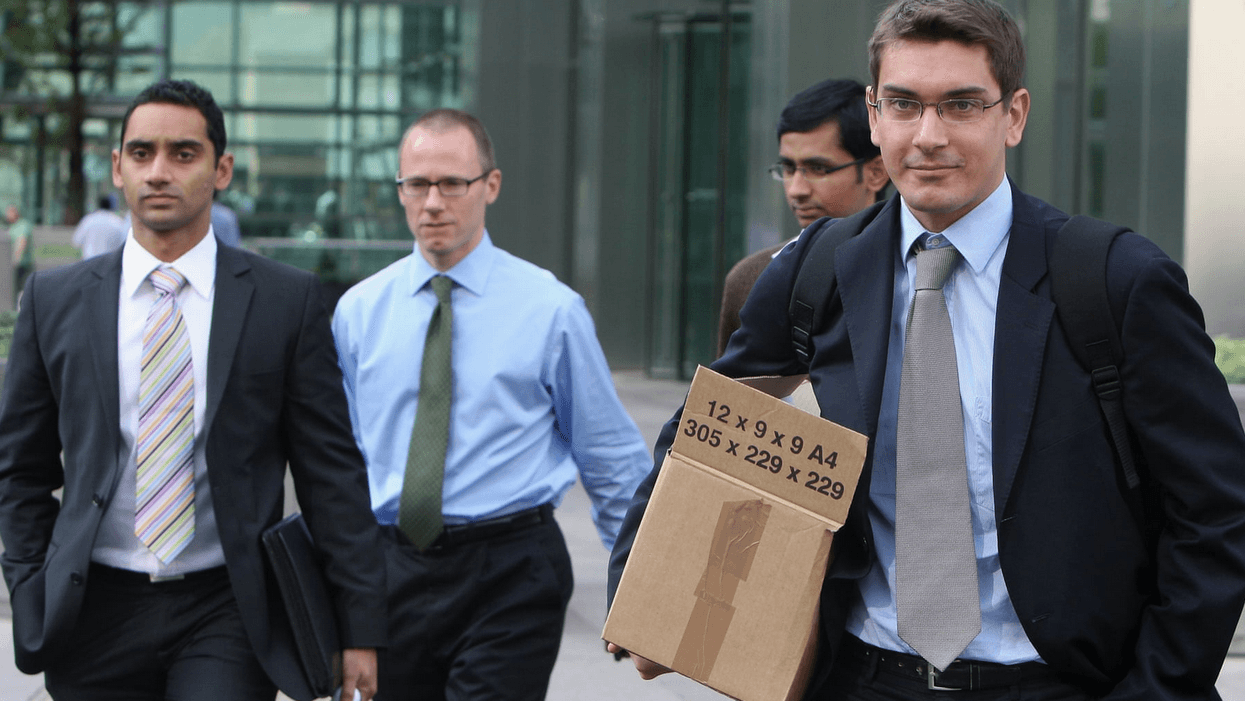
acards are being prepared. Photo-opportunities are being organised. A list of demands is being drawn up by a coalition of pressure groups, unions and NGOs. Yes, preparations are well under way for protests to mark next month's 10th anniversary of the collapse of Lehman Brothers - the pivotal moment in the global financial crisis.
Make no mistake, the fact that events will take place in all the world's financial centres is no cause for celebration. On the contrary, it is a sign of failure. The banks were never broken up. Plans for a financial transactions tax are gathering dust. Politicians toyed with the idea of a green new deal and then promptly forgot about it. There never was a huge swing of the pendulum away from the prevailing orthodoxy, just a brief nudge that was quickly reversed. The brutal fact is that the left had its chance, and it blew it.
Ten years on, international finance is as powerful as it ever was. There has been only cosmetic reform of the banking industry. Corporate power is ever more concentrated. The benefits of the weakest global recovery from recession in living memory have been captured by a tiny minority. Wages and living standards for the majority in developed countries have grown only modestly, if at all.
September 2008 was a near-death experience for global capitalism. At one point there were fears for the entire western banking system; when the recession was at its worst, industrial production was collapsing more quickly than it had in the early stages of the Great Depression. It was that bad. The moment was ripe for politicians brave enough to state the obvious: that the crisis was the result of removing all the shackles on global financial capitalism put in place for good reason in the 1930s. But social democratic parties failed miserably to come up with a progressive response to the crisis that would have involved redressing the imbalance between capital and labour. They were timid when they should have been brave, and have paid a heavy price as a result. Mainstream parties patched up the system and paid scant heed to the anger felt by those who felt ignored. The bitterness bubbled away and eventually found other ways of manifesting itself.
In the winter of 2008-09, there was a naive assumption on the left that the shock of Lehmans was so profound that change would inevitably occur. If the oil shocks of the 1970s had been the catalyst for the seizure of control by a rightwing political agenda, then the sub-prime mortgage crisis would do the same for the left. But it wasn't quite that simple, because those who had done well in the decades that followed the Thatcher-Reagan revolution used all their power, influence, financial clout and cunning to resist change. A few tactical retreats were made in order to safeguard the status quo.
The contrast between Franklin Roosevelt in the 1930s and Barack Obama is telling. Both men arrived in the White House in desperate times. Both had a mandate for change. Roosevelt thought reform was necessary to save capitalism from itself. It was this intellectual framework that resulted in the Glass-Steagall Act to separate banks' investment and retail operations; public works schemes for the unemployed; and laws to make it easier for trade unions to organise. Obama, like most of his fellow centre-left politicians 10 years ago, was a technocrat who broadly accepted the status quo and never seriously contemplated taking on finance. Wall Street detested Roosevelt. It found Obama much more amenable.
Obama deserves a bit of sympathy. Every radical period requires a philosopher king to help to provide a political framework for action. For the first generation of free-market liberals, the gurus were Adam Smith and David Ricardo. For Lenin it was Karl Marx. In the 1930s, it was John Maynard Keynes. And in the 1970s it was Milton Friedman and Friedrich Hayek. Ten years ago there was no one.
The process of challenging business-as-usual lacked a unifying analysis of what had caused the crisis. There was a green narrative, a Keynesian narrative and a Marxist narrative, all of which had merit and all of which had their adherents. The upshot, though, was that progressives all headed off in their own directions. That left the door open for a narrative that few would have expected to emerge triumphant in September 2008: that the crisis had been caused by governments spending too much.
There are plenty of lessons that need to be learned. One is that progressives have to win the battle of ideas, and that means taking back control of how economics is taught. Some steps have been taken to address this issue since the financial crisis, with George Soros bankrolling the Institute for New Economic Thinking, a forum for heterodox thinking. But even though the collapse of 2008 was the result of failed economics, those responsible for the duff theories remain well dug in on university campuses. Progress has been slow.
A second is that a progressive political agenda starts at the top, with an over-arching critique, and works its way down to specific policies. That was what worked in the 1940s, when the postwar consensus was built on a simple concept: never again. Control of the commanding heights of the economy and demand management flowed from that.
Athird is that progressives have to be clear about what they want. The left remains divided between those who think - as Bill Clinton and Tony Blair did - that the only choice was to work with the grain of global capitalism; those who think, as Roosevelt did, that a more root-and-branch approach is needed; and those who think capitalism is so rotten it is beyond saving.
A fourth is that a bit of humility is needed. There is no question that the nature of the conversation has changed since the crisis, in part due to austerity, in part due to an overly lenient approach to the banks. But there are things about modern life that people like: the ease of communication and travel; the fact that for the same outlay as 10 years ago they get a more sophisticated mobile phone or a better restaurant meal. When the radical left has actually been in power it hasn't always covered itself in glory.
David Hillman, the director of Stamp out Poverty and one of the organisers of next month's UK protests in the City, puts it this way: "There was a very short period when the powers that be were on the back foot. Progressive forces were not able to take advantage. Nothing substantial has changed and we are sleep-walking into another crisis."
That just about sums thing up. Progressives don't really deserve a second chance, but they may be presented with one all the same. The question is whether they will be better prepared to take it this time.
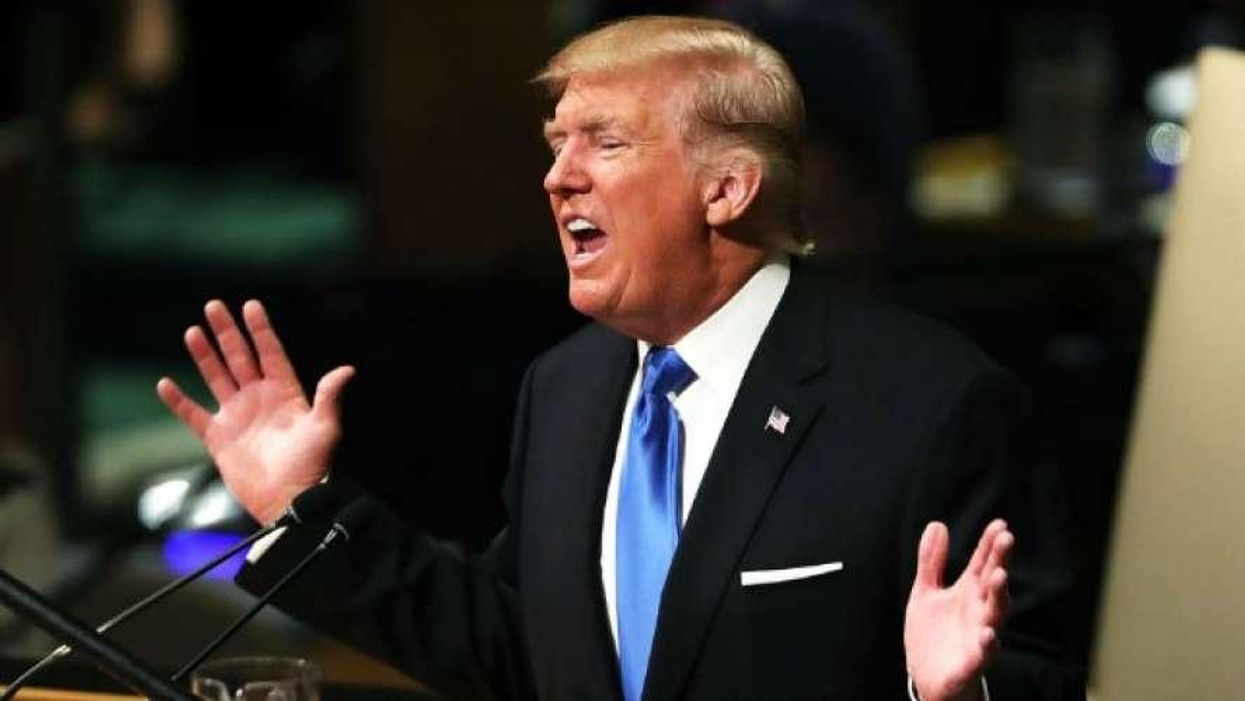
Here we are in the middle of the second year of Donald Trump's presidency and if there's one thing we know by now, it's that the leader of the free world can create an instant reality-TV show on geopolitical steroids at will. True, he's not polished in his demeanor, but he has an unerring way of instilling the most uncertainty in any situation in the least amount of time.
Whether through executive orders, tweets, cable-news interviews, or rallies, he regularly leaves diplomacy in the dust, while allegedly delivering for a faithful base of supporters who voted for him as the ultimate anti-diplomat. And while he's at it, he continues to take a wrecking ball to the countless political institutions that litter the Acela Corridor. Amid all the tweeted sound and fury, however, the rest of us are going to have to face the consequences of Donald Trump getting his hands on the economy.
According to the Merriam-Webster dictionary, entropy is "a process of degradation or running down or a trend to disorder." With that in mind, perhaps the best way to predict President Trump's next action is just to focus on the path of greatest entropy and take it from there.
Let me do just that, while exploring five key economic sallies of the Trump White House since he took office and the bleakness and chaos that may lie ahead as the damage to the economy and our financial future comes into greater focus.
When Trump ran for the presidency, he tapped into a phenomenon that was widely felt but generally misunderstood: a widespread anger at Wall Street and corporate cronyism. Upon taking office, he promptly redirected that anger exclusively at the country's borders and its global economic allies and adversaries.
His 2016 election campaign had promised not to "let Wall Street get away with murder" and to return the banking environment to one involving less financial risk to the country. His goal and that of the Republicans as a party, at least theoretically, was to separate bank commercial operations (deposits and lending) from their investment operations (securities creation, trading, and brokerage) by bringing back a modernized version of the Glass-Steagall Act of 1933.
Fast forward to May 18, 2017 when Trump's deregulatory-minded treasury secretary, "foreclosure king" Steven Mnuchin, faced a congressional panel and took a 180 on the subject. He insisted that separating people's everyday deposits from the financial-speculation operations of the big banks, something that had even made its way into the Republican platform, was a total nonstarter.
Instead, congressional Republicans, with White House backing, promptly took aim at the watered-down version of the Glass-Steagall Act passed in the Obama years, the Dodd-Frank Act of 2010. In it, the Democrats had already essentially capitulated to Wall Street by riddling the act with a series of bank-friendly loopholes. They had, however, at least ensured that banks would set aside more of their own money in the event of another Great Recession-like crisis and provide a strategy or "living will" in advance for that possibility, while creating a potent consumer-protection apparatus, the Consumer Financial Protection Bureau (CFPB). Say goodbye to all of that in the Trump era.
Dubbed "the Choice Act"--officially the Economic Growth, Regulatory Relief, and Consumer Protection Act--the new Republican bill removed the "living will" requirement for mid-sized banks, thereby allowing the big banks a gateway to do the same. When Trump signed the bill, he said that it was "the next step in America's unprecedented economic comeback. There's never been a comeback like we've made. And one day, the fake news is going to report it."
In fact, thanks to the Trump (and Republican) flip-flop, banks don't need to defend themselves anymore. The president went on to extol the untold virtues of his pick to run the CFPB, meant to keep consumers from being duped (or worse) by their own banks. Before Trump got involved, it had won $12 billion in settlements from errant banks for the citizens it championed.
However, Kathy Kraninger, a former Homeland Security official tapped by Trump to run the entity, has no experience in banking or consumer protection. His selection follows perfectly in the path of current interim head Mick Mulvaney (also the head of the Office of Management and Budget). All you need to know about him is that he once derided the organization as a "sick, sad" joke. As its director, he's tried to choke the life out of it by defunding it.
In this fashion, such still-evolving deregulatory actions reflect the way Trump's anti-establishment election campaign has turned into a full-scale program aimed at increasing the wealth and power of the financial elites, while decreasing their responsibility to us. Don't expect a financial future along such lines to look pretty. Think entropy.
Key to Trump's economic vision is giving his base a sense of camaraderie by offering them rallying cries from a bygone era of nationalism and isolationism. In the same spirit, the president has launched a supposedly base-supporting policy of imposing increasingly random and anxiety-provoking trade tariffs.
Take, for instance, the automotive sector, which such tariffs are guaranteed to negatively impact. It is ground zero for many of his working-class voters and a key focus of the president's entropic economic policies. When he was campaigning, he promised many benefits to auto workers (and former auto workers) and they proved instrumental in carrying him to victory in previously "blue" rust-belt states. In the Oval Office, he then went on to tout what he deemed personal victories in getting Ford to move a plant back to the U.S. from Mexico while pressuring Japanese companies to make more cars in Michigan.
He also began disrupting the industry with a series of on-again-off-again, imposed or sometimes merely threatened tariffs, including on steel, that went against the wishes of the entire auto sector. Recently, Jennifer Thomas of the industry's main lobbying group, the Alliance of Automobile Manufacturers, assured a Commerce Department hearing that "the opposition is widespread and deep because the consequences are alarming."
Indeed, the Center for Automotive Research has reported that a 25% tariff on autos and auto parts (something the president has threatened but not yet followed through upon against the European Union, Canada, and Mexico) could reduce the number of domestic vehicle sales by up to two million units and might wipe out more than 714,000 jobs here. Declining demand for cars, whose prices could rise between $455 and $6,875, depending on the type of tariff, in the face of a Trump vehicle tax, would hurt American and foreign manufacturers operating in the U.S. who employ significant numbers of American workers.
Though President Trump's threat to slap high tariffs on imported autos and auto parts from the European Union is now in limbo due to a recent announcement of ongoing negotiations, he retains the right if he gets annoyed by... well, anything... to do so. The German auto industry alone employs more than 118,000 people in the U.S. and, if invoked, such taxes would increase its car prices and put domestic jobs instantly at risk.
President Trump has been particularly happy about his marquee corporate tax "reform" bill, assuring his base that it will provide jobs and growth to American workers, while putting lots of money in their pockets. What it's actually done, however, is cut the corporate tax rate from 35% to 21%, providing corporations with tons of extra cash. Their predictable reaction has not been to create jobs and raise wages, but to divert that bonanza to their own coffers via share buybacks in which they purchase their own stock. That provides shareholders with bigger, more valuable pieces of a company, while boosting earnings and CEO bonuses.
Awash in tax-cut cash, American companies have announced a record $436.6 billion worth of such buybacks so far in 2018, close to double the record $242.1 billion spent in that way in all of 2017. Among other things, this ensures less tax revenue to the U.S. Treasury, which in turn means less money for social programs or simply for providing veterans with proper care.
As it is, large American companies only pay an average effective tax rate of 18% (a figure that will undoubtedly soon drop further). Last year, they only contributed 9 percent of the tax receipts of the government and that's likely to drop further to a record low this year, sending the deficit soaring. In other words, in true Trumpian spirit, corporations will be dumping the fabulous tax breaks they got directly onto the backs of other Americans, including the president's base.
Meanwhile, some of the crew who authored such tax-policies, creating a $1.5 trillion corporate tax give-away, have already moved on to bigger and better things, landing lobbying positions at the very corporations they lent such a hand to and which can now pay them even more handsomely. For the average American worker, on the other hand, wages have not increased. Indeed, between the first and second quarters of 2018 real wages dropped by 1.8 percent after the tax cuts were made into law. Trump hasn't touted that or what it implies about our entropic future.
If everyone takes their toys to another playground, the school bully has fewer kids to rough up. And that's exactly the process Trump's incipient trade wars seem to be accelerating--the hunt for new playgrounds and alliances by a range of major countries that no longer trust the U.S. government to behave in a consistent manner.
So far, the U.S. has already slapped $34 billion worth of tariffs on Chinese imports. China has retaliated in kind. Playing a dangerous global poker game, Trump promptly threatened to raise that figure to at least $200 billion. China officially ignored that threat, only inciting the president's ire further. In response, he recently announced that he was "willing to slap tariffs on every Chinese good imported to the U.S. should the need arise." Speaking to CNBC's Squawk Box host Joe Kernen on July 20th, he boasted, "I'm ready to go to 500 [billion dollars]."
That's the equivalent of nearly every import the Chinese sent into the U.S. last year. In contrast, the U.S. exports only $129.9 billion in products to China, which means the Chinese can't respond in kind, but they can target new markets, heighten the increasingly tense relations between the world's two economic superpowers, and even devalue their currency to leverage their products more effectively on global markets.
Global trade alliances were already moving away from a full-scale reliance on the U.S. even before Donald Trump began his game of tariffs. That trend has only gained traction in the wake of his economic actions, including his tariffs on a swath of Mexican, Canadian, and European imports. Recently, two major American allies turned a slow dance toward economic cooperation into a full-scale embrace. On July 17th, the European Union and Japan agreed on a mega-trade agreement that will cover one-third of the products made by the world economy.
Meanwhile, China has launched more than 100 new business projects in Brazil alone, usurping what was once a U.S. market, investing a record $54 billion in that country. It is also preparing to increase its commitments not just to Brazil, but to Russia, India, China, and South Africa (known collectively as the BRICS countries), investing $14.7 billion in South Africa ahead of an upcoming BRICS summit there. In other words, Donald Trump is lending a disruptively useful hand to the creation of an economic world in which the U.S. will no longer be as central an entity.
Ultimately, tariffs and the protectionist policies that accompany them will hurt consumers and workers alike, increasing prices and reducing demand. They could force companies to cut back on hiring, innovation, and expansion, while also hurting allies and potentially impeding economic growth globally. In other words, they represent an American version of an economic winding down, both domestically and internationally.
President Trump's belligerence has centered around his belief that the wealthiest, most powerful nation on the planet has been victimized by the rest of the world. Now, that feeling has been extended to the Federal Reserve where he recently lashed out against its chairman (and his own appointee) Jerome Powell.
The Fed had been providing trillions of dollars of stimulus to the banking system and financial markets though a bond-buying program wonkily called "quantitative easing" or "QE." Its claim: that this Wall Street subsidy is really a stimulus for Main Street.
Unlikely as that story may prove to be, presidents have normally refrained from publicly commenting on the Federal Reserve's policies, allowing it to maintain at least a veneer of independence, as mandated by the Federal Reserve Act of 1913. (In reality, the Fed has remained significantly dependent on the whims and desires of the White House, a story revealed in my new book Collusion.) However, this White House is run by a president who couldn't possibly keep his opinions to himself.
So far, the Fed has raised (or "tightened") interest rates seven times since December 2015. Under Powell, it has done so twice, with two more hikes forecast by year's end. These moves were made without Trump's blessing and he views them as contrary to his administration's economic objectives. In an interview with CNBC, he proclaimed that he was "not thrilled" with the rate hikes, a clear attempt to directly influence Fed policy. Sticking with tradition, the Fed offered no reaction, while the White House quickly issued a statement emphasizing that the president "did not mean to influence the Fed's decision-making process."
Ignoring that official White House position, the president promptly took to Twitter to express his frustrations with the Fed. ("[T]he United States should not be penalized because we are doing so well. Tightening now hurts all that we have done. The U.S. should be allowed to recapture what was lost due to illegal currency manipulation and BAD Trade Deals. Debt coming due & we are raising rates--Really?")
Fed Chairman Powell may want to highlight his independence from the White House, but as a Trump appointee, any decisions made in the framework of the president's reactions could reflect political influence in the making. The bigger problem is that such friction could incite greater economic uncertainty, which could prove detrimental to the economic strength Trump says he wants to maintain.
Trump's method works like a well-oiled machine. It keeps everyone--his cabinet, the media, global leaders, and politicians and experts of every sort--off guard. It ensures that his actions will have instant impact, no matter how negative.
Economically, the repercussions of this strategy are both highly global and extremely local. As Sen. Ben Sasse (R-Nev.) noted recently, "This trade war is cutting the legs out from under farmers and [the] White House's 'plan' is to spend $12 billion on gold crutches... This administration's tariffs and bailouts aren't going to make America great again, they're just going to make it 1929 again."
He was referring to the White House's latest plan to put up to $12 billion taxpayer dollars into those sectors of American agriculture hit hardest by Trump's tariff wars. Let that sink in for a moment and think: entropy. In order to fix the problems the president has created, allegedly to help America become great again, a deficit-ridden government will have to shell out extra taxpayer dollars.
Subsidizing farmers isn't in itself necessarily a bad thing. It is, in fact, very New Deal-ish and Franklin Delano Roosevelt-esque. But doing so to fix an unnecessary problem? Under such circumstances, where will it stop? When those $200 billion or $500 billion in tariffs on China (or other countries) inflames the situation further, who gets aid next? Auto workers? Steel workers?
What we are witnessing is the start of the entropy wars, which will, in turn, hasten the unwinding of the American global experiment. Each arbitrary bit of presidential pique, each tweet and insult, is a predecessor to yet more possible economic upheavals and displacements, ever messier and harder to clean up. Trump's America could easily morph into a worldwide catch-22. The more trust is destabilized, the greater the economic distress. The weaker the economy, the more disruptable it becomes by the Great Disrupter himself. And so the Trump spiral spins onward, circling down an economic drain of his own making.