
SUBSCRIBE TO OUR FREE NEWSLETTER
Daily news & progressive opinion—funded by the people, not the corporations—delivered straight to your inbox.
5
#000000
#FFFFFF
To donate by check, phone, or other method, see our More Ways to Give page.


Daily news & progressive opinion—funded by the people, not the corporations—delivered straight to your inbox.
"He's never given up his primary role: Donald Trump’s chief defender in court," said Senate Judiciary Committee Democrats.
President Donald Trump on Monday officially asked the Senate to confirm his former personal lawyer and "henchman," Todd Blanche, as US attorney general, despite concerns from senators in both major parties and various other critics about the man currently leading the Department of Justice on an interim basis.
Blanche has been acting attorney general since April, when Trump fired Pam Bondi after reportedly growing frustrated by her handling of the Jeffrey Epstein files and his efforts to abuse the DOJ to target political enemies. Since then, the DOJ has indicted the Southern Poverty Law Center (SPLC), former Cuban President Raúl Castro, and ex-Federal Bureau of Investigation Director James Comey (again).
The DOJ has also settled Trump's $10 billion "sham" lawsuit against the Internal Revenue Service over the leak of his tax records by creating a $1.776 billion taxpayer-funded "Anti-Weaponization Fund" to line the pockets of the president's allies—which is "dead for now" after public backlash and setbacks in court—and forever barring the IRS from pursuing any other actions against Trump and his family.
"Todd Blanche has spent months running the Justice Department like it's Trump's family law firm, and now Trump wants to give him the attorney general title."
"This is yet another example of Trump assembling a team of henchmen whose primary qualification is doing his own bidding, rather than serving the nation, to staff the government," Lisa Gilbert, co-president of Public Citizen, said Monday. "Blanche demonstrated his toady qualities throughout his 'audition' for this role, and is being awarded with the leading role as a result."
"The examples of his malfeasance are stark, from the unjust SPLC indictment, to a second indictment of Jim Comey, to the settlement shielding Trump's family from IRS audits, are all glaring demonstrations of the fact that his loyalty lies with Donald Trump, not with the American people who the DOJ is supposed to serve," she warned. "The rule of law has already taken too many hits under this authoritarian administration, and we don't need another vengeful pick that will weaponize the government against Trump's political adversaries."
Citing Blanche's recent actions, along with his service as Trump's criminal defense attorney for the cases on hush money, federal classified documents, and election interference that culminated in the president's supporters storming the US Capitol on January 6, 2021, Public Citizen and other groups behind the Not Above the Law Coalition launched a "Block Blanche" campaign last week.
"Donald Trump just made it official with his personal fixer," coalition co-chairs Gilbert, Praveen Fernandes of the Constitutional Accountability Center, Kelsey Herbert of MoveOn, and Brett Edkins of Stand Up America said Monday. "Todd Blanche has spent months running the Justice Department like it's Trump's family law firm, and now Trump wants to give him the attorney general title."
"The Senate has one job here: reject Blanche," they argued. "Blanche weaponized the DOJ against Trump's enemies, fired career prosecutors, and cut deals for his boss—including by blocking the full release of the Epstein files, crafting a $1.8 billion slush fund for Trump's political allies, and trying to arrange immunity from IRS audits for Trump and his family."
According to the co-chairs: "Every senator who lets this nomination sail through is signing off on the end of an independent Justice Department. We're not letting them do that quietly."
Gilbert, Elizabeth Wydra of the Constitutional Accountability Center, Maya Wiley of the Leadership Conference on Civil and Human Rights, and Sens. Sheldon Whitehouse (D-RI) and Richard Blumenthal (D-Conn.) plan to join a coalition call about Blanche on Wednesday afternoon.
While the Senate confirmed Blanche as deputy AG in a 52-46 party-line vote last year, the coalition highlighted in an email roundup on Monday that some "Republican lawmakers are breaking ranks" now.
The Hill noted Monday that Senate Majority Leader John Thune (R-SD) said last week that "most of our members are pretty deferential to who the president wants in some of these key positions," but "this is an environment where nothing’s a safe or sure bet these days."
As Politico's Jordain Carney detailed last week:
Sen. Thom Tillis (R-N.C.) is viewed as the critical vote for Blanche to win over on the Judiciary Committee. Tillis has vowed he won’t support Justice Department nominees who he views as sympathetic those who stormed the Capitol on Jan. 6, 2021, and previously told Politico that the Justice Department's "Anti-Weaponization Fund" would be a factor in whether or not an attorney general nominee is able to be confirmed...
“What we need to do right now is focus on the [Anti-Weaponization] Fund, or he's not going to have a very good time in Judiciary Committee," Tillis, who will retire after the end of this year, told reporters when asked about Blanche’s forthcoming nomination. "Just think about what the Democrats would do to him."
Sen. John Cornyn of Texas, another Senate Judiciary Republican, said of Blanche's chances, "I think it depends on his answers to questions that I intend to ask him at the Judiciary Committee."
"The attorney general is not the president’s private lawyer, so it's sort of by its nature, it's a really hard job to do, but I want to make sure he understands the difference and is committed to making sure that the law is enforced," Cornyn said.
Sen. John Kennedy (R-La.) is also reportedly undecided on Blanche. Republicans currently hold 53 Senate seats, and Democratic Sen. John Fetterman (D-Pa.), who sometimes votes with the GOP, said last week, "I would not vote for him."
Senate Judiciary Committee Democrats declared on social media Monday afternoon that "Todd Blanche is no neutral law enforcement officer. He's never given up his primary role: Donald Trump's chief defender in court. Putting Donald Trump and the Epstein class before YOU."
“These horrific plans are an affront to the millions of Americans who treasure Big Bend,” said one conservationist. “Politicians who’ve never set foot here are signing a death warrant for this wild and beautiful place.”
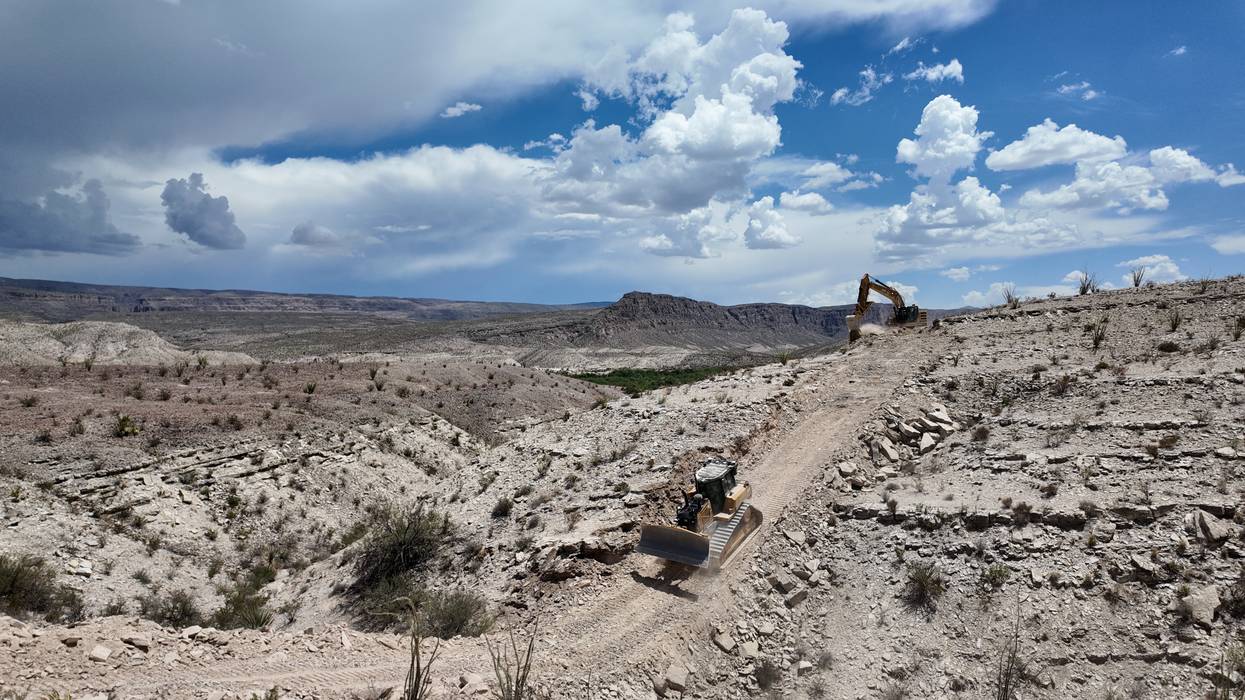
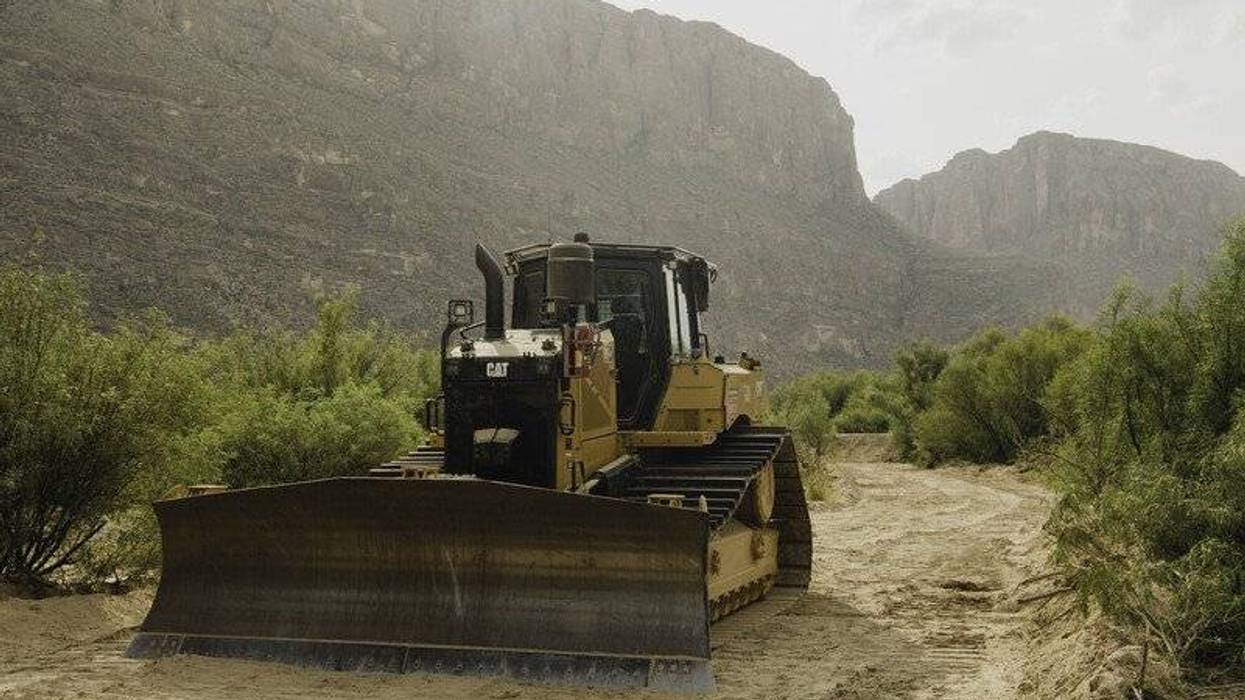
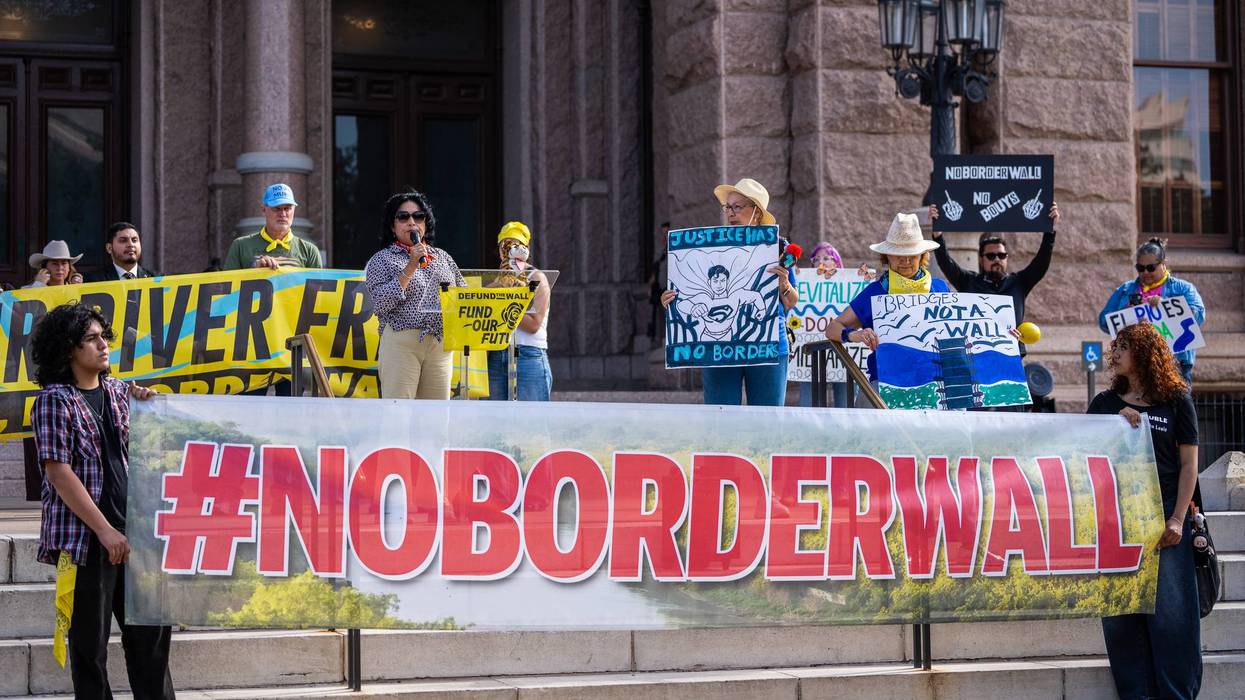
The Trump administration's revised waiver of dozens of environmental laws to expedite the construction of border roads and barriers through Big Bend National Park in southern Texas is set to take effect Tuesday, over the objection of Indigenous, migrant rights, and environmental groups.
Last month, the US Department of Homeland Security (DHS) initially published its determination that waivers from laws—including the National Park Service Organic Act, Endangered Species Act, and National Wild and Scenic Rivers Act—are needed "to ensure the expeditious construction of barriers and roads in the vicinity of the international land border in the state of Texas."
However, DHS said the project area description in its original notice of determination was "incorrect" and issued a revised notice with the correct geographical information, set to be published on Tuesday.
“The absolute disdain this administration has for our national parks is disgraceful, and now they’re targeting Texas’ most beloved national park,” Center for Biological Diversity national public lands advocate Laiken Jordahl said in a statement Monday.
“The only people benefiting from this destruction are the billionaire contractors set to pad their pockets while paving over our natural heritage and permanently locking a great American river behind hideous steel barriers," Jordahl added. "We won’t stop fighting for this crown-jewel national park and the Rio Grande.”
As CBD noted, DHS in May awarded $1.7 billion in contracts that include work on a "border wall through Big Bend.” Former Homeland Security Secretary Kristi Noem personally approved two contracts for SLSCO Ltd., a Texas-based company also under contract for the infamous Alligator Alcatraz camp for immigrants in Florida. The company is a major Republican donor and is accused in court of trafficking people and weapons across the border.
Last week, DHS awarded another $2.6 billion contract—the biggest border deal to date—for the Lower Canyons stretch of the portion of the Rio Grande that has "Wild and Scenic River" protections, and is downstream from the national park.
While running for president in 2016 and during his first term, Trump repeatedly vowed that Mexico would pay for the wall, for which US taxpayers and private donors have footed the bill. Only a small fraction of the wall has been completed.
While much of the border barrier consists of a 30-foot reinforced steel-bollard wall, the 118-mile portion of the Rio Grande running through Big Bend National Park currently has mostly natural barriers like the rivers, deep riparian canyons, mountains, other steep terrain, and the unforgiving Chihuahuan Desert.
Planning documents and maps from earlier this year suggested substantial border wall construction in the broader Big Bend region. Amid public outcry and opposition from politicians from across the political spectrum, US Customs and Border Protection (CBP) published a map showing no planned 30-foot wall inside Big Bend National Park. However, the map shows miles of planned barriers meant to stop vehicles but not people on foot, new patrol roads cut through the park, and more surveillance technology.
"The move marks the first time in American history that the federal government has cast aside a broad slate of environmental laws... in a national park," CBD said Monday.
Considerable ambiguity remains over the precise nature of the border barrier through Big Bend National Park. In April, CBD filed a lawsuit under the Freedom of Information Act "to obtain public records about construction plans in the area."
Indigenous peoples and their advocates have also opposed expanding the border barrier and have criticized DHS for waiving laws, including the Native American Graves Protection and Repatriation Act and the Archaeological and Historic Preservation Act, to enable the administration's plans.
David Keller, a noted archaeologist in the region, warned in a February interview with Big Bend Reporter that what he called “the military industrialization of one of the last, great, unspoiled places remaining in the United States of America" threatens millennia of Indigenous history stored in the soil and etched on rock faces.
The Trump administration's work on other portions of the border wall has blasted and bulldozed sacred Indigenous sites.
Late last month, seven former Big Bend National Park superintendents wrote to DHS Secretary Marywayne Mullin, urging him to reject the waiver of federal laws. CBD and over 130 advocacy groups and business2es have also called on Congress to block federal funding for any further border wall construction in the region, including Big Bend National Park and Big Bend Ranch State Park.
"If a border wall—or other unnecessary and highly destructive border infrastructure—is built inside Big Bend National Park, it would be the most egregious assault on the integrity of the entire National Park System since the construction of a dam in the Hetchy Hetchy Valley in Yosemite National Park more than a century ago," the former superintendents asserted.
Texas Public Radio reported Sunday that construction on the border wall in the Big Bend area is set to begin "within weeks."
"Shipments of what appear to be steel bollards have begun arriving in the region, and at least one 'man camp' housing facility for workers is being developed," the outlet said.
As the No Big Bend Wall Coalition notes, while CBP's Big Bend Sector represents 26.5% of the US-Mexico border, only about 1.3% of all border apprehensions happened there last year, belying Trump administration claims of "high illegal activity" in the area.
"Historically, the Big Bend Sector is the quietest part of the entire US border," the coalition said. "While federal rhetoric has described a 'national emergency' to justify waiving environmental protections and seizing private land, their own CBP data tells a different story."
“We’re going to win on Tuesday, and we’re going to win in November, and we’re going to take power back for the people in this country," said the US Senate candidate from Maine.
At Democratic US Senate candidate Graham Platner's final town hall ahead of Tuesday's primary election in Maine, the combat veteran and oyster farmer received a warm welcome from roughly 400 attendees who appeared eager to focus on the candidate's policy platform and issues affecting working Mainers rather than numerous attacks that have been launched against him in recent months.
Platner walked into a meeting room at an Elks Lodge in Portland, Maine's largest city, to a standing ovation and said, as he had at a rally on Friday with Rep. Ro Khanna (D-Calif.) in Bar Harbor, that Mainers have shown they "have my back."
“We’re going to win on Tuesday, and we’re going to win in November, and we’re going to take power back for the people in this country," he told the crowd.
After speaking for close to an hour about issues including economic inequality, his goal of being "a voice that says no to war" in the US Senate, and his push for Medicare for All, Platner opened the floor for questions that focused on repealing Citizens United, his plan to pass a billionaire wealth tax, and the lawmakers and Senate committees the political newcomer has begun building relationships with as he aims to unseat Republican Sen. Susan Collins.
He named Sen. Rand Paul (R-Ky.) as a lawmaker he has little in common with ideologically but with whom he shares a goal of ending "forever wars," and listed Sens. Chris Van Hollen (D-Md.), Bernie Sanders (I-Vt.), and Elizabeth Warren (D-Mass.) as some of the other senators he hopes to work with closely.
One woman stood up to note that some in the national corporate media have appeared certain in recent days that they "know" the voters of Maine and that they are likely to turn against Platner following news stories about his past marital struggles, former relationships, comments he made online years ago, and a tattoo he got while in the Marines.
"What do people not understand about Mainers?" the voter asked.
Platner answered that he's had conversations about economic inequality with people across the state—including at more than 80 town halls—and said that those focused on the controversies don't understand "how clear-eyed" and "how frustrated" Maine voters are with the political status quo.
“I think a lot of folks at the national level misunderstand,” he said at one point. “The reason they keep getting everything wrong is they think this is a race about me, but it isn’t. This is a race about us. This is a race about the future of politics in Maine."
One voter, Kurt Fedora of Buxton, told The Associated Press that he views the controversies that the national media has focused on in recent months as a smear campaign.
"They’re really reaching far to try to pin something on him. And it’s politics as usual,” Fedora told the outlet.
As Common Dreams noted Sunday, The New York Times' reporting last week on allegations that Platner was physically aggressive in past relationships—which he denied—has not appeared to make a dent in his campaign's fundraising. As he rallied with Khanna the day after the report came out, the campaign announced it had raised over $200,000 that day—"more money than on any day" since Gov. Janet Mills suspended her campaign in April.
Similarly, when earlier stories broke about his tattoo and Reddit posts, Platner only widened his lead over Mills in primary polls.
One attendee named Paul told Common Dreams that at the Sunday town hall, Platner had "described a system that needs to be changed," and that the same system "is out to destroy him in any way they can" by publishing stories like one that focused on Platner's text messages with women early in his marriage.
"There was no way I could care less about that," he said. "I always like to say, it's between him and his wife."
Another supporter, Claudia, added that ahead of Tuesday's primary election, she is "looking at the bigger picture."
"This country is in a really dangerous state. I mean, it's terrifying every day," she told Common Dreams. "You want more Susan Collins? I don't think so."
"I really appreciated the fact that he knows that he needs to have people with whom he has a relationship in Washington and with whom he can work," she added, turning her attention to the substance of Platner's remarks. "I feel like he's done a really good job of not only appreciating what so many of the issues are, but how he can engage with people down there [in DC]."
Platner emphasized that the Democratic Party has tried to unseat Collins numerous times since she took office in 1997, most recently with moderate state lawmaker Sara Gideon in 2020. Mills spoke affectionately about Collins last September, a month before she jumped into the race, saying she appreciates "everything she is doing" during President Donald Trump's second term.
Collins has long cast herself as a "moderate" and a defender of women's rights in particular, despite the fact that she has voted to confirm more than a dozen anti-choice judges in Trump's second administration alone.
“We are going to beat someone that the establishment of the Democratic Party has failed to unseat for 30 years,” Platner said. “We are going to beat someone who, for years, has tried to trick us all into thinking that she’s a moderate.”
While focusing their attention on Platner's policy platform, some in the crowd at the town hall suggested they were eager to rally for the candidate partially because of the recent attacks on his character. One attendee, Laurie Hudson, passed around a card she had made that read, "We are your Graham-ily and we've got your back," asking others in the audience to sign. She presented it to Platner after his opening remarks.
Platner urged attendees to get involved not only in his campaign's get-out-the-vote efforts in the final days of the primary campaign—by "going out into our communities and having hard conversations"—but in a larger movement powered by the working class, aimed at beating back Trump's agenda and the corporations and dark money groups that helped pave his way to the White House by pouring billions of dollars into elections.
"Throughout history, the only thing that's ever beaten fascism is a broad-based working-class coalition," said Platner. "This is a race about building power the old-fashioned way, from the ground up... Join a labor union, go help out at the local food pantry, go help out at a food bank, but you've got to do something. Because the moment we're in right now, it's going to require all of us.
“After the sudden and devastating pullback from US assistance in 2025, governments are now being pressured to accept agreements with contingencies that jeopardize human rights."
The Trump administration is requiring African nations to agree to a series of "troubling conditions" to restore lifesaving health aid, according to a Human Rights Watch report on Monday.
The administration's abrupt shuttering of the US Agency for International Development (USAID) last year shut off billions of dollars and caused havoc across Africa's healthcare system, resulting in what public health models project could be hundreds of thousands of preventable deaths.
But under what has been dubbed the “America First” Global Health Strategy, the administration has negotiated secretive agreements with dozens of these countries to restore some of the funding. Most of them have been kept under lock and key by the US.
Those that have been made public have come with terms that Human Rights Watch said "raise concerns that health aid is being inappropriately leveraged to extract terms beneficial to the US in negotiations around natural resources and access to sensitive health data from recipient countries."
In March, a draft memorandum of understanding with the government of Zambia was revealed to have conditioned $1 billion for HIV, tuberculosis, malaria, and other disease prevention for millions of people, on the country's acceptance of a separate bilateral treaty that would have given US companies greater access to the country's minerals.
A leaked State Department memo, prepared for Secretary Marco Rubio, put the exploitative terms plainly: “We will only secure our priorities by demonstrating willingness to publicly take support away from Zambia on a massive scale.”
After the details of that agreement were met with backlash, the text of agreements with several other countries—Ethiopia, Kenya, Mozambique, Nigeria, and Uganda—were suddenly removed from the State Department’s Freedom of Information Act Library.
A Human Rights Watch assessment of the agreements with those five countries—as well as agreements with Rwanda and Liberia that were leaked—revealed that in order to restore a portion of the more than $800 million collectively stripped from them by the US, they'd have to agree to several coercive measures that jeopardize the reproductive and privacy rights of their citizens.
“The agreements show the US intends to condition vital health assistance for millions of people on acquiescence to troubling conditions,” said Julia Bleckner, senior health researcher at Human Rights Watch. “After the sudden and devastating pullback from US assistance in 2025, governments are now being pressured to accept agreements with contingencies that jeopardize human rights.”
All seven of the agreements require the governments to provide the US with "broad access to data and information" to monitor compliance with the Helms Amendment, which forbids the use of US foreign assistance to pay for abortion care.
The agreements with Mozambique, Rwanda, and Liberia require them to provide “any data” requested by the US to ensure compliance with the amendment, while Uganda's permits the US to conduct unannounced spot checks of health facilities and clinics.
"By making a broad package of health aid contingent on broad and potentially invasive surveillance of Helms compliance, the agreement could encourage a more restrictive regulation of abortion than national law mandates and give rise to further violations of the right to healthcare,” says the report.
The agreements also give the US permission to directly audit clinics, laboratories, and health programs to ensure compliance with the conditions. Six of them require clinics to provide access to "any data" requested by the US at a sample of facilities it chooses.
Agreements with five countries also mandate that they share biological specimens taken from patients and associated information related to novel infectious diseases, which HRW described as part of an effort to undermine a global pathogen access and sharing system being created by the World Health Organization, from which Trump has removed the US.
HRW said in a news release:
The agreements raise serious concerns about use of people’s private health data, without clear limits, uniform safeguards, or meaningful protections for patient confidentiality, including in several countries with weak or absent domestic data protection laws. The agreements contain no prohibition on this data being shared with US pharmaceutical companies without patient consent.
“Governments negotiating health assistance agreements with the United States face difficult choices,” Bleckner said. “They should be wary of terms asking them to sign away their populations’ rights and push for the inclusion of civil society representatives and multilateral global health organizations like the Global Fund in deliberations.”