SUBSCRIBE TO OUR FREE NEWSLETTER
Daily news & progressive opinion—funded by the people, not the corporations—delivered straight to your inbox.
5
#000000
#FFFFFF
To donate by check, phone, or other method, see our More Ways to Give page.
Daily news & progressive opinion—funded by the people, not the corporations—delivered straight to your inbox.

The report comes as Trump considers a "wider war" including a ground invasion that could require hundreds of thousands of US troops.
After months of downplaying the number of American casualties from President Donald Trump's war in Iran, The New York Times revealed that the Pentagon once again hid dozens of US military injuries from Iranian strikes on bases in Jordan last week.
As the Times reported on Monday:
In the week leading up to the Iranian attack on Friday that killed two US soldiers and left one service member missing in Jordan, Iran carried out three other strikes against US forces in the country.
Those attacks injured dozens of US service members and damaged several helicopters, according to several US officials, who spoke on the condition of anonymity to discuss operational matters.
But the Pentagon did not disclose the earlier strikes, nor the casualties and damage they inflicted.
The Pentagon's failure to disclose full information about US casualties is not a new development.
In the early days of the war, Defense Department officials said fewer than a dozen American troops had been injured before abruptly acknowledging that more than 140 had been wounded after Reuters obtained the full figures.
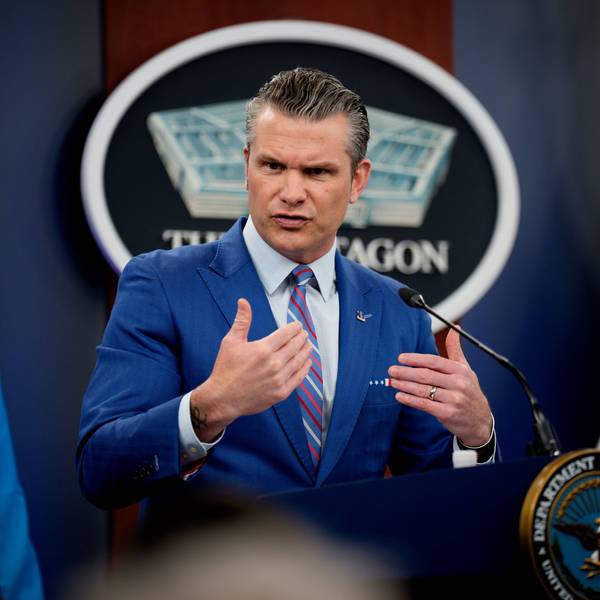
After six American soldiers were killed during the war's opening salvo, Defense Secretary Pete Hegseth derided the press's inquiries about the number of casualties, claiming they were only seeking "to make the president look bad."
The Intercept's Nick Turse found in April that US Central Command (CENTCOM) had repeatedly sent outdated and incomplete casualty figures to journalists in what one defense official referred to as a "casualty cover-up."
As of April 1, Turse reported that more than 520 US troops had been injured, including more than 200 sailors being treated for smoke inhalation, without acknowledgment from the government.
Last week—prior to the deaths of two US soldiers in Jordan—CENTCOM said that a total of 414 service members had been injured since the war began, mostly from traumatic brain injuries. In total, 17 US personnel have now been killed, according to official counts.
CENTCOM spokesperson Maj. Emma Thompson said last week that she had no update on how many troops were seriously wounded, but claimed that "almost all" of those injured had returned to duty. She also did not say how many troops had been wounded enough to be evacuated from the region.
The Times report notes that CENTCOM is not required to disclose information about injured US service members publicly. And one military official argued that doing so would provide Iran with free information that would leave the US vulnerable to further attacks.
However, it does speak to the Trump administration's ever-growing secrecy as it threatens to dramatically expand the unpopular conflict.
As the Times noted, the Pentagon has provided little information about the war in recent months, and the last major press briefing on the war took place in early May.
The administration has blown past its initial promises to end its operation against Iran in a matter of weeks and avoid a "forever war." The conflict is now into its fifth month with no end in sight.
The Washington Post and Wall Street Journal reported this weekend that in an effort to break Iran's control of the Strait of Hormuz—where it began to restrict travel in response to the US-Israeli war—Trump is planning a "wider war" that may include a possible ground invasion of Kharg Island and other Iranian territory along the strait.
Experts have estimated that efforts to capture and occupy Iran's coastline would likely require hundreds of thousands of troops.
Dear Common Dreams reader, It’s been nearly 30 years since I co-founded Common Dreams with my late wife, Lina Newhouser. We had the radical notion that journalism should serve the public good, not corporate profits. It was clear to us from the outset what it would take to build such a project. No paid advertisements. No corporate sponsors. No millionaire publisher telling us what to think or do. Many people said we wouldn't last a year, but we proved those doubters wrong. Together with a tremendous team of journalists and dedicated staff, we built an independent media outlet free from the constraints of profits and corporate control. Our mission has always been simple: To inform. To inspire. To ignite change for the common good. Building Common Dreams was not easy. Our survival was never guaranteed. When you take on the most powerful forces—Wall Street greed, fossil fuel industry destruction, Big Tech lobbyists, and uber-rich oligarchs who have spent billions upon billions rigging the economy and democracy in their favor—the only bulwark you have is supporters who believe in your work. But here’s the urgent message from me today. It's never been this bad out there. And it's never been this hard to keep us going. At the very moment Common Dreams is most needed, the threats we face are intensifying. We need your support now more than ever. We don't accept corporate advertising and never will. We don't have a paywall because we don't think people should be blocked from critical news based on their ability to pay. Everything we do is funded by the donations of readers like you. When everyone does the little they can afford, we are strong. But if that support retreats or dries up, so do we. Will you donate now to make sure Common Dreams not only survives but thrives? —Craig Brown, Co-founder |
After months of downplaying the number of American casualties from President Donald Trump's war in Iran, The New York Times revealed that the Pentagon once again hid dozens of US military injuries from Iranian strikes on bases in Jordan last week.
As the Times reported on Monday:
In the week leading up to the Iranian attack on Friday that killed two US soldiers and left one service member missing in Jordan, Iran carried out three other strikes against US forces in the country.
Those attacks injured dozens of US service members and damaged several helicopters, according to several US officials, who spoke on the condition of anonymity to discuss operational matters.
But the Pentagon did not disclose the earlier strikes, nor the casualties and damage they inflicted.
The Pentagon's failure to disclose full information about US casualties is not a new development.
In the early days of the war, Defense Department officials said fewer than a dozen American troops had been injured before abruptly acknowledging that more than 140 had been wounded after Reuters obtained the full figures.
After six American soldiers were killed during the war's opening salvo, Defense Secretary Pete Hegseth derided the press's inquiries about the number of casualties, claiming they were only seeking "to make the president look bad."
The Intercept's Nick Turse found in April that US Central Command (CENTCOM) had repeatedly sent outdated and incomplete casualty figures to journalists in what one defense official referred to as a "casualty cover-up."
As of April 1, Turse reported that more than 520 US troops had been injured, including more than 200 sailors being treated for smoke inhalation, without acknowledgment from the government.
Last week—prior to the deaths of two US soldiers in Jordan—CENTCOM said that a total of 414 service members had been injured since the war began, mostly from traumatic brain injuries. In total, 17 US personnel have now been killed, according to official counts.
CENTCOM spokesperson Maj. Emma Thompson said last week that she had no update on how many troops were seriously wounded, but claimed that "almost all" of those injured had returned to duty. She also did not say how many troops had been wounded enough to be evacuated from the region.
The Times report notes that CENTCOM is not required to disclose information about injured US service members publicly. And one military official argued that doing so would provide Iran with free information that would leave the US vulnerable to further attacks.
However, it does speak to the Trump administration's ever-growing secrecy as it threatens to dramatically expand the unpopular conflict.
As the Times noted, the Pentagon has provided little information about the war in recent months, and the last major press briefing on the war took place in early May.
The administration has blown past its initial promises to end its operation against Iran in a matter of weeks and avoid a "forever war." The conflict is now into its fifth month with no end in sight.
The Washington Post and Wall Street Journal reported this weekend that in an effort to break Iran's control of the Strait of Hormuz—where it began to restrict travel in response to the US-Israeli war—Trump is planning a "wider war" that may include a possible ground invasion of Kharg Island and other Iranian territory along the strait.
Experts have estimated that efforts to capture and occupy Iran's coastline would likely require hundreds of thousands of troops.
After months of downplaying the number of American casualties from President Donald Trump's war in Iran, The New York Times revealed that the Pentagon once again hid dozens of US military injuries from Iranian strikes on bases in Jordan last week.
As the Times reported on Monday:
In the week leading up to the Iranian attack on Friday that killed two US soldiers and left one service member missing in Jordan, Iran carried out three other strikes against US forces in the country.
Those attacks injured dozens of US service members and damaged several helicopters, according to several US officials, who spoke on the condition of anonymity to discuss operational matters.
But the Pentagon did not disclose the earlier strikes, nor the casualties and damage they inflicted.
The Pentagon's failure to disclose full information about US casualties is not a new development.
In the early days of the war, Defense Department officials said fewer than a dozen American troops had been injured before abruptly acknowledging that more than 140 had been wounded after Reuters obtained the full figures.
After six American soldiers were killed during the war's opening salvo, Defense Secretary Pete Hegseth derided the press's inquiries about the number of casualties, claiming they were only seeking "to make the president look bad."
The Intercept's Nick Turse found in April that US Central Command (CENTCOM) had repeatedly sent outdated and incomplete casualty figures to journalists in what one defense official referred to as a "casualty cover-up."
As of April 1, Turse reported that more than 520 US troops had been injured, including more than 200 sailors being treated for smoke inhalation, without acknowledgment from the government.
Last week—prior to the deaths of two US soldiers in Jordan—CENTCOM said that a total of 414 service members had been injured since the war began, mostly from traumatic brain injuries. In total, 17 US personnel have now been killed, according to official counts.
CENTCOM spokesperson Maj. Emma Thompson said last week that she had no update on how many troops were seriously wounded, but claimed that "almost all" of those injured had returned to duty. She also did not say how many troops had been wounded enough to be evacuated from the region.
The Times report notes that CENTCOM is not required to disclose information about injured US service members publicly. And one military official argued that doing so would provide Iran with free information that would leave the US vulnerable to further attacks.
However, it does speak to the Trump administration's ever-growing secrecy as it threatens to dramatically expand the unpopular conflict.
As the Times noted, the Pentagon has provided little information about the war in recent months, and the last major press briefing on the war took place in early May.
The administration has blown past its initial promises to end its operation against Iran in a matter of weeks and avoid a "forever war." The conflict is now into its fifth month with no end in sight.
The Washington Post and Wall Street Journal reported this weekend that in an effort to break Iran's control of the Strait of Hormuz—where it began to restrict travel in response to the US-Israeli war—Trump is planning a "wider war" that may include a possible ground invasion of Kharg Island and other Iranian territory along the strait.
Experts have estimated that efforts to capture and occupy Iran's coastline would likely require hundreds of thousands of troops.