

5
#000000
#FFFFFF
To donate by check, phone, or other method, see our More Ways to Give page.
Daily news & progressive opinion—funded by the people, not the corporations—delivered straight to your inbox.
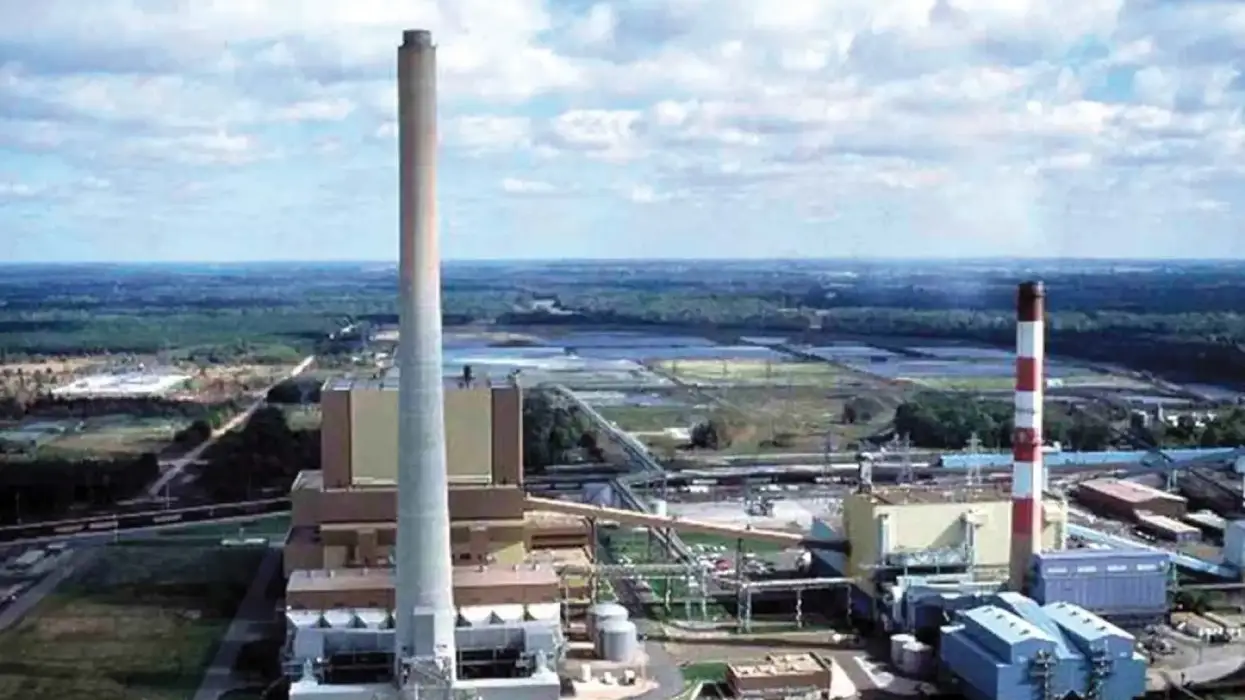
"Preventing the market-driven retirements of coal plants to advance a coal-friendly agenda is not a proper use of emergency powers," said one lawyer.
Climate defenders celebrated on Friday after a federal appellate court rejected the US Department of Energy's abuse of emergency powers to keep a Michigan coal plant open, part of President Donald Trump's broader push to boost the climate-wrecking industry.
"The court rejected the Trump administration's nationwide push forcing unreliable, aging coal plants that are bleeding money and polluting communities to stay online," said Ted Kelly, director and lead counsel for US clean energy at the Environmental Defense Fund—which was among the advocacy groups that joined Michigan, Minnesota, and Illinois in challenging the DOE's abuse of Section 202(c) of the Federal Power Act to keep the JH Campbell Generating Plant running.
"The Department of Energy's unlawful actions attempted to make families and businesses in the Midwest wastefully pay hundreds of millions of dollars for a coal plant that should have been shut down over a year ago," said Kelly. "That's why these aging coal plants are scheduled to retire in the first place—they are incredibly expensive, dangerous to our health, and break down frequently."
The Campbell plant was scheduled to retire on May 31, 2025, after over six decades of operation. As the opinion from the US Court of Appeals for the District of Columbia notes, Consumers Energy "worked for several years to develop plans and secure regulatory approval to retire the old Campbell plant and replace it with a mix of expanded and new electricity-generation sources."
While Michigan officials approved the company's retirement plan for the facility, Trump's DOE intervened, forcing not only that plant but six others across the country to remain open—collectively costing Americans over $547 million, according to a live tracker from the Sierra Club, which has challenged all of the department's coal plant orders.
The three-judge appellate panel unanimously vacated the department's order on Friday, writing that "our reading of the text, structure, and history leaves us unpersuaded by DOE's sweeping conception of its 'emergency' authority under Section 202(c)."
The Associated Press reported that while the DOE didn't respond to a request for comment, Consumers Energy spokesperson Brian Wheeler said the plant operator was reviewing the court ruling and, in the meantime, will keep the facility operating through mid-November.
In a statement to Bridge Michigan, DOE spokesperson Emily Mathews claimed the emergency orders prevented blackouts and "likely saved hundreds of lives," without offering evidence. She did not confirm plans for an appeal but did say that the department "will continue to protect and defend energy security for all Americans."
Consumers Energy spokesperson Katie Carey told the outlet that the company "is reviewing today's court ruling," and "while that happens, we are continuing to comply with the current 90-day Department of Energy order." Still, those who fought against the administration's policy welcomed their legal victory.
"By forcing its continued operation, DOE tried a never-before-used tactic to illegally prop up the aging JH Campbell coal plant that nobody asked to keep, sticking ratepayers with a bill for a facility that should have been retired more than a year ago," said Democratic Michigan Attorney General Dana Nessel in a statement.
"I am relieved that the court saw through this facade and threw out DOE's order that had zero basis in reality," she continued. "My office has been fighting this unlawful political stunt at every turn, and this ruling proves what we have been saying all along: This administration does not get to invent fake emergencies to bypass the rule of law against the best interests of Michigan residents. We remain committed to fighting these nonsensical orders and protecting our ratepayers."
Derrell Slaughter, the Natural Resources Defense Council's Michigan policy director for climate and energy, declared that "Michiganders shouldn't have been saddled with artificially high energy bills or forced to deal with toxic air pollution over a fabricated 'emergency.' The Campbell coal plant is out of date, costs more to operate than other electricity generation options, and is one of the worst polluters in the state."
While applauding the decision as "a victory for families across the Midwest who are tired of paying to keep this old, expensive, and dirty power plant online," Sierra Club chief appellate counsel Sanjay Narayan stressed that "instead of working to lower costs and clean up our air and water, the Trump administration has been pulling out all the stops to try to bolster dirty and expensive fossil fuels—at public expense."
"This reckless agenda will not succeed," the attorney pledged. "We will continue to hold the Department of Energy accountable to the law, and ensure that the JH Campbell plant finally retires as it was scheduled to, and we will continue to fight back against the other illegal extensions across the country."
Earthjustice attorney Michael Lenoff also cheered the court's rebuke of the "Trump administration's abuse of emergency powers" and vowed to "continue to challenge unlawful orders if DOE persists in issuing them."
"The DOE needs to stay in its lane and use its emergency powers only in actual emergencies," he said. "Preventing the market-driven retirements of coal plants to advance a coal-friendly agenda is not a proper use of emergency powers."
Tyson Slocum, director of Public Citizen's Energy Program, noted that two years ago, his consumer advocacy organization "predicted Trump would try to force household consumers to pay higher utility bills to prop up uneconomic coal power plants, and we proudly joined with other public interest groups in June 2025 to challenge his bogus emergency declaration for the Campbell coal power plant."
"But Americans have already been forced to shell out half a billion dollars for Trump's obscene coal bailout vanity project," he emphasized, pledging to "explore all options to force" the Federal Energy Regulatory Commission "to refund consumers for this Trump boondoggle."
The appellate court's ruling came on the heels of data released this week showing that 2026 had the warmest August and meteorological summer on record in the contiguous United States, and globally, last month was the hottest ever recorded, tied with July 2023.
Despite such records, and scientists' persistent warnings, Trump has repeatedly delivered on his campaign promises to serve the fossil fuel industry, from declaring a national energy emergency and waging a war on renewable power projects to ditching the Paris Agreement, again, and signing executive orders on coal denounced as "reckless" and "breathlessly stupid."
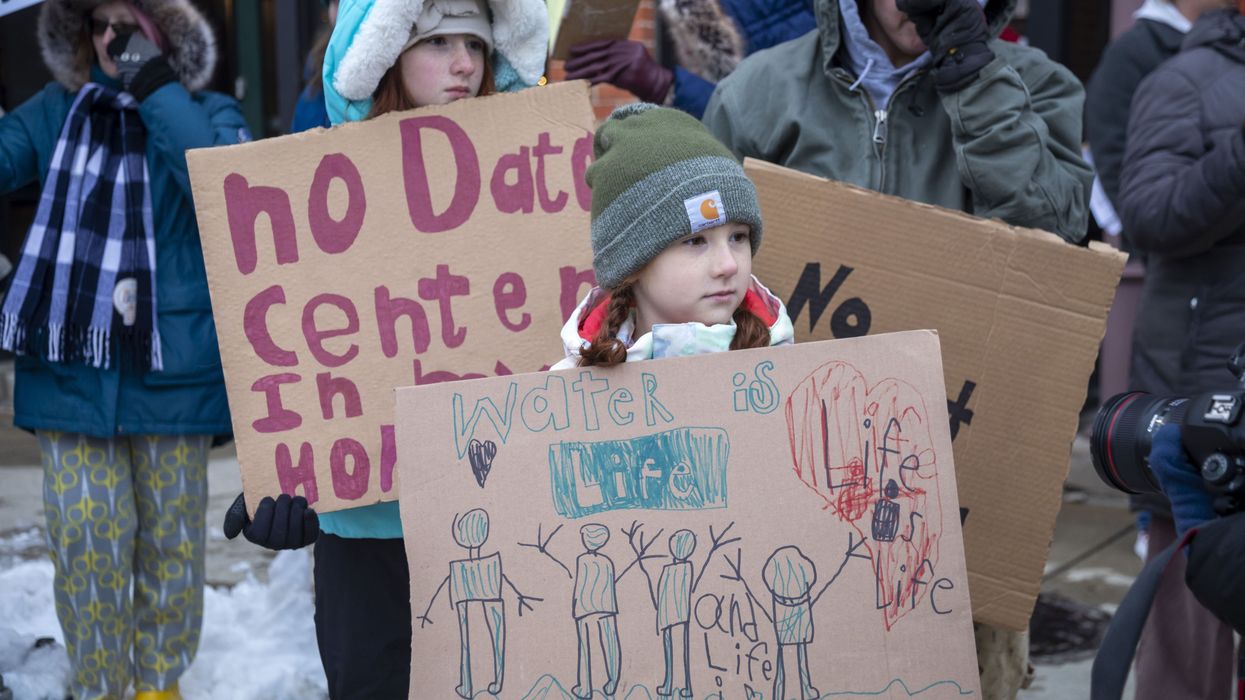
The Environmental Protection Network listed actions "that could increase pollution-related health risks, weaken protections that would otherwise reduce those risks, or shift more costs onto families and communities."
As President Donald Trump claims that US communities fighting against artificial intelligence data centers are promoting "poverty, crime, and squalor," a Thursday report details how his administration "is weakening or proposing to weaken pollution and permitting safeguards" for such facilities, to the detriment of public health.
The Environmental Protection Agency's "mission is to protect human health and the environment," notes the new report. "Yet Administrator Lee Zeldin has made turning the United States into the 'AI capital of the world' a pillar of EPA's work."
"The Hidden Health Costs of AI Data Centers"—from the Environmental Protection Network (EPN), which is made up of hundreds of former EPA staffers—documents "at least 30 federal actions since January 2025 that could increase pollution-related health risks, weaken protections that would otherwise reduce those risks, or shift more costs onto families and communities."
As the document details: "17 of the 30 explicitly cite or target AI or data centers in the action itself or in an agency statement specifically describing or justifying that action. The remaining 13 affect how data centers are powered, what pollution safeguards apply, how projects are approved, or how federal requirements are enforced."
The report points to the EPA policy that "made it easier for some long-idled facilities to restart without triggering the major air-permitting requirements," as well as its proposed elimination of federal carbon pollution standards for fossil-fueled power plants and some outstanding state clean-air requirements for areas that failed to meet ozone standards.
The publication also notes the EPA's extended deadlines for several coal-plant wastewater requirements, newly regulated coal-ash units, the 2024 oil and gas standards, and for states to submit plans to reduce visibility-impairing pollution. The agency further interpreted a policy on nonemergency backup generator use that it framed as a move supporting AI and data centers.
It's not just the EPA. The US Department of Energy "authorized grid use of backup generation at data centers and other major facilities during emergencies," the report explains, while the Army Corps of Engineers "expressly named data centers as examples of commercial development covered by" a streamlined water permit.
The race for AI data center growth shouldn’t mean weaker safeguards on pollution. Former EPA official Walter Mugdan explains why strong enforcement matters when families’ health is at risk.What’s being weakened? Read the full report at the link in the comments.
[image or embed]
— Environmental Protection Network (@enviroprotnet.bsky.social) September 10, 2026 at 4:39 PM
"No study has yet calculated the combined health effects of these actions, but the direction is clear," the report says. It cites a study from this year that estimates air pollution related to data centers "could impose roughly $11.7 billion to $20.9 billion in annual public health costs by 2028," and "contribute to roughly 600,000 asthma symptom cases and 1,300 premature deaths."
Dan Costa, who spent about 35 years at EPA studying the impact of air pollution on human health and led its national research program on air quality, climate, and energy, said that "the existing health study gives us a picture of the potential health burden under particular data-center growth and emissions scenarios."
"But it does not estimate the additional health effects of the 30 federal policy actions EPN documents," he stressed. "That is the analysis EPA should be doing now: Measuring what these sources actually emit, modeling both local and regional air-quality effects, and translating those changes into health impacts."
In addition to laying out the Trump policies and their risks, the publication highlights how his agenda on AI data centers conflicts with voters' wishes. An April poll conducted by YouGov for EPN found that:
"You would think a build-out of this magnitude would mean more vigilance from EPA: stronger safeguards to make sure companies control their pollution, more science to understand what this scale will bring, and more monitoring," said Dr. Lynn Goldman, a pediatrician and former EPA assistant administrator. "Instead, EPA and other federal agencies are doing the opposite."
The EPN report was published amid mounting calls for Congress to rein in artificial intelligence development in the wake of Jacob Coxon, a researcher at Anthropic who previously worked at OpenAI, quitting, and spotlighting fears within the industry that the rapidly advancing technology "could kill us all by the end of the decade."
Sen. Bernie Sanders (I-Vt.) and Rep. Greg Casar (D-Texas) have introduced legislation that would permanently ban the development of "superintelligent" AI until a federal body is created to regulate it—and, according to polling results published on Wednesday by Data for Progress, 68% of likely voters in the United States support that proposal.
Sanders has also partnered with Rep. Alexandria Ocasio-Cortez, (D-NY) for the Artificial Intelligence Data Center Moratorium Act, which would pause construction on the facilities "until strong national safeguards are in place to protect workers, consumers, and communities, defend privacy and civil rights, and ensure these technologies do not harm our environment."
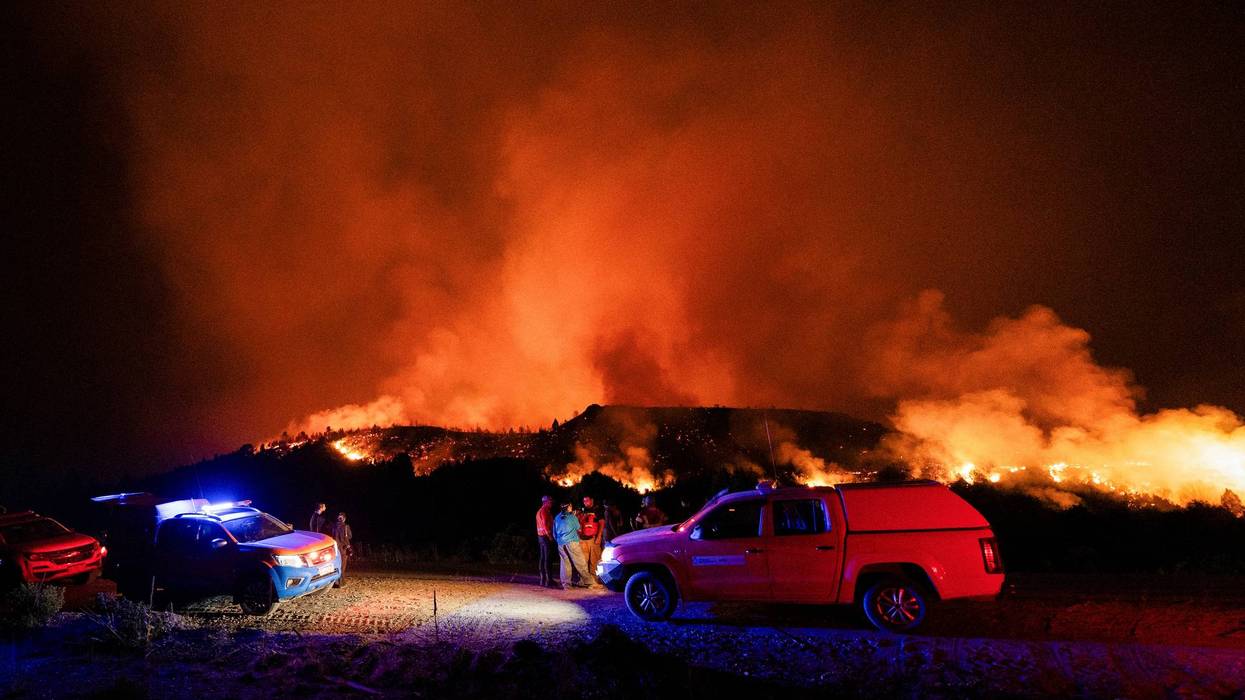
"This research makes clear that the Earth and climate system doesn't stand still while we debate policy," said a co-author of the new paper.
On the heels of the United States setting new summer heat records and United Nations scientists warning that at least a temporary overshoot of the Paris Agreement's 1.5°C target can no longer be avoided, researchers on Thursday published an alarming new study on climate feedback loops.
For years, experts have feared that humanity's continued reliance on fossil fuels that heat the Earth could lead to several "positive" feedback loops—or changes to natural systems that amplify global warming. The scientists behind the new paper in the journal Environmental Research focused on carbon dioxide and methane emissions from inland freshwaters, permafrost thaw, wetlands, and wildfires.
"Continued warming from greenhouse gases emitted from human activities threatens to feed further warming as permafrost, wetlands, and wildfires destabilize and respond by releasing carbon dioxide, methane, and nitrous oxide," said co-author Ben Poulter, warming-induced emissions program director at Spark Climate Solutions, in a statement.
"This study provides a critical look at the magnitude of the temperature response," he explained, "and a call to action to accelerate the accounting and monitoring of warming-induced emissions to support pathways that phase out fossil emissions to stabilize the planet's climate."
Lead author and Spark research scientist Sam Abernethy noted that "what surprised us was the size of the feedback."
"We found that natural systems could amplify global warming by 20-30%," he said. In other words, these natural systems could add an estimated 0.2-0.4ºC of warming this century to any temperature rise tied to human activity.
"This hidden multiplier is missing from the models guiding climate policy, so those models are likely underestimating how much warming is coming—and overestimating how much carbon we can still afford to emit," Abernethy added.
Permafrost is ground that remains fully frozen for at least two consecutive years, and the scientists who study it "have long warned that thawing soils would become a significant emissions source as the planet warms," said co-author Christina Schädel, senior research scientist at the Woodwell Climate Research Center.
"This paper shows that permafrost thaw accounts for half of the anticipated warming-induced emissions," she pointed out. "Warming-induced emissions are already in motion, and they scale with every fraction of a degree. Every little bit of warming we can avert today matters for what the climate looks like in the long term."
Co-author Robert Jackson, a Stanford University professor and chair of the Global Carbon Project, similarly stressed that "the results are a wake-up call, and it's imperative that they be included in the next generation of climate policies. Failure to do so will make meeting the world's climate goals less and less likely."
The paper's publication came just two months away from the next United Nations Climate Change Conference (COP31) in Türkiye, where firefighters are currently battling deadly blazes that have fueled calls for the country's government to fight for rapidly phasing out coal, gas, and oil on a global scale.
"This research makes clear that the Earth and climate system doesn't stand still while we debate policy," said Brian Buma, a co-author of the new study and senior climate scientist at Environmental Defense Fund.
"Emissions from permafrost, wetlands, and wildfire could meaningfully erode our remaining time to warming thresholds—and they are unaccounted for in most scenarios," Buma reiterated. "This means rapid fossil fuel emissions reductions are even more urgent than current projections suggest."
"The good news," he added, "is that it's in our hands—lower emissions now limit how severe these feedbacks become."
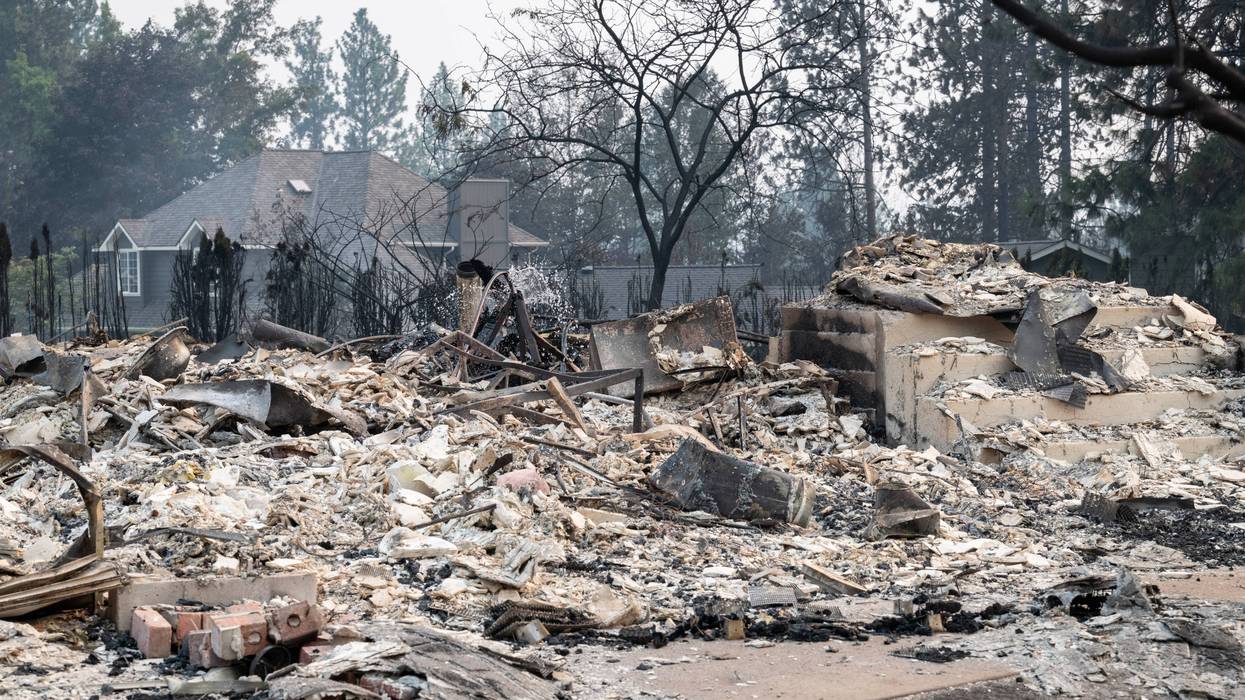
"It's unconscionable that the federal government is putting specific industry interests, including fossil fuel companies’ profits, ahead of people’s health and safety."
Under US President Donald Trump's predecessor, government scientists used the release of data about record-breaking temperatures to warn that "we are facing a climate crisis," but with the Republican climate denier back in the White House, that commentary now comes from outside experts.
The National Oceanic and Atmospheric Administration (NOAA) announced Wednesday that 2026 had the warmest August ever recorded in the contiguous United States. Following a July that broke a Dust Bowl record, August averaged 75.6°F—which was 3.5°F above the 20th-century average—with daytime maximum temperatures averaging 88.6°F.
This year also featured the hottest meteorological summer—June to August—in the 132-year record, with an average temperature of 74.4°F, or 3°F above average, according to NOAA. As CNN reported, "The Dust Bowl summer of 1936 has... long been regarded as the benchmark of hottest summers in the US, but has now been equaled or eclipsed twice in the past five years thanks to the influence of human-caused climate change," both in 2026 and 2021.
Andrew Dessler, a climate scientist at Texas A&M University, told Agence France-Presse that "it is now time to stop acting surprised that our warming planet keeps getting warmer."
"This is occurring exactly as forecast by scientists literally decades ago," he stressed. "The interesting question is not whether we will keep breaking heat records (we will), but whether we're going to do anything about it or just stand there while the climate train runs us over."
NOAA said that "record-breaking warmth was widespread across the West, Southwest, southern Rockies, and southwestern Plains, as well as the southern Florida Peninsula. California, Nevada, New Mexico, and Colorado each set records for their warmest August average temperature. California and New Mexico also recorded their warmest average daytime maximum temperatures on record, while average nighttime minimum temperatures were record warm in California, Nevada, Arizona, Utah, New Mexico, and Colorado."
Beyond the Lower 48, "Alaska's average temperature during August was 52.4°F, 2.9°F above the 1925-2000 average, ranking in the warmest third of the 102-year record. Alaska's June-August average temperature was 51.6°F, 1.1°F above average and ranking in the warmest third of the record," the agency detailed.
"Hawaii's average temperature during August was 70.8°F, 1.4°F above the 1991-2020 average, ranking as the third-warmest August in the 36-year record," the agency added. "Hawaii's June-August average temperature was 69.4°F, 0.8°F above average and ranking in the warmest third of the record. Hawaii's average temperature during August was 70.8°F, 1.4°F above the 1991-2020 average."
Marc Alessi, a climate scientist at the Union of Concerned Scientists, said in a statement that "we now live in a completely different climate than the one that existed 50 years ago. Heat records were shattered in all parts of the globe this summer, from the United States to Europe to Asia."
Alessi pointed to El Niño, the warm phase of a key pattern in the Pacific Ocean. Recent research suggests fossil fuel-driven global heating has intensified El Niños, and experts have said that the currently developing event "may be stronger than anything since our monitoring began" and make 2027 the hottest year humanity has ever endured.
"While the developing super El Niño undoubtedly impacted the summer's global temperature and heat records, we must recognize that this El Niño is occurring on top of a changed climate from the burning of fossil fuels," Alessi said. "In other words, we can expect record-breaking summers for generations to come if nations fail to sharply curtail heat-trapping emissions."
"What's equally clear is that policymakers—especially in richer, high-emitting countries like the United States—must act urgently to limit climate change impacts and hold the fossil fuel industry accountable for its role in the crisis," he continued. "Extreme heat and back-to-back heatwaves have taken a deadly toll this summer in the United States and across the world. Without action to reduce global warming emissions and invest in climate resilience measures, heat-related illnesses and deaths will continue to mount."
Despite the threats currently posed by the global crisis, and expectations that they will only get worse as the world blows past the Paris Agreement's goal of limiting temperature rise this century to 1.5°C above preindustrial levels, "the Trump administration has attacked and dismantled policies to limit heat-trapping emissions and to prepare for climate disasters," Alessi noted.
After openly courting Big Oil on the campaign trail, Trump has served fossil fuel industry interests in a range of ways since returning to the White House last year, including by declaring a national energy emergency, waging a war on renewable power projects, and ditching the Paris Agreement, again.
"Failure of the administration and Congress to act has also left workers exposed to killer heat without comprehensive, enforceable heat-health protections," Alessi said. "It's unconscionable that the federal government is putting specific industry interests, including fossil fuel companies' profits, ahead of people's health and safety."
NOAA's new data was released less than two months away from the midterm elections—which which Democrats hope to win back majorities in Congress from Trump's Republican Party—and as firefighters in Türkiye, host of the next United Nations Climate Change Conference (COP31), battled deadly blazes.
"It is not enough merely to respond to the consequences of the climate crisis. We must eliminate the causes that exacerbate it," Efe Baysal, Türkiye manager at the global advocacy group 350.org, said Wednesday, calling for a phaseout of fossil fuels. "COP31 is an opportunity for Türkiye to demonstrate true leadership in this direction."
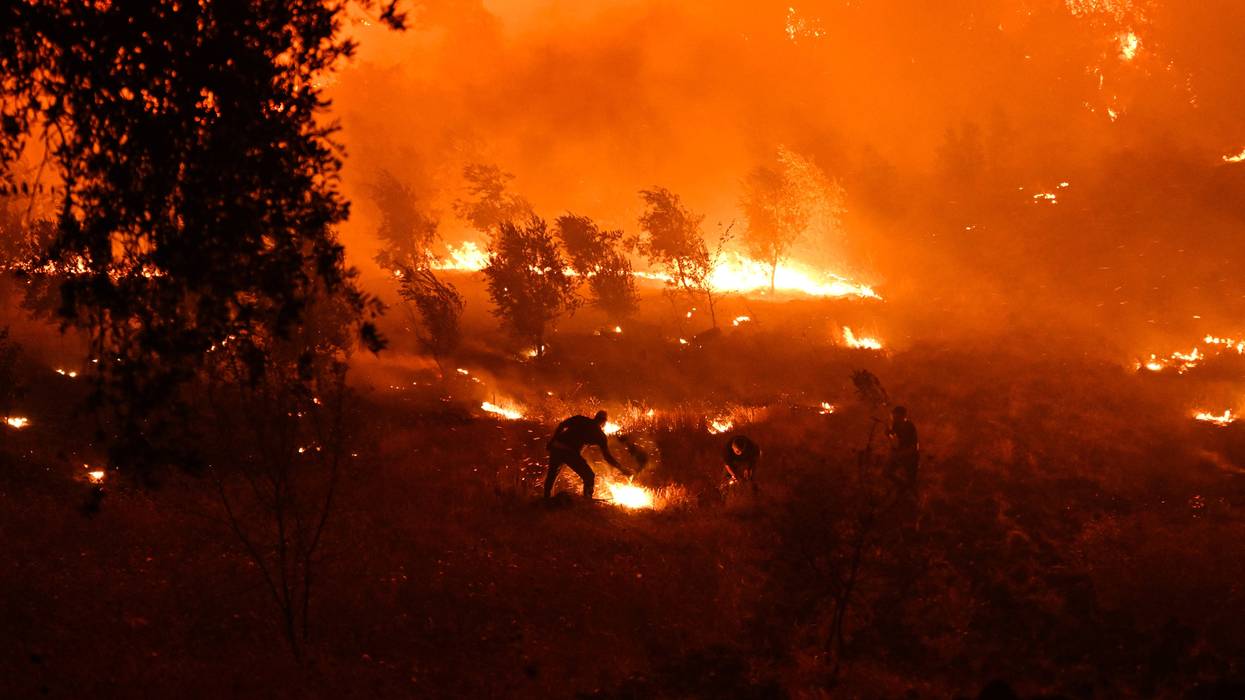
"The climate crisis is here, and the frequency and severity of extreme weather events are increasing day by day," said 350.org's Türkiye manager.
Scientists have long warned that the fossil fuel-driven climate crisis means more frequent and destructive wildfires, and blazes raging in Türkiye this week have sparked a fresh call to rapidly phase out planet-heating coal, gas, and oil.
As firefighters battled blazes in three southern Turkish provinces, Efe Baysal, Türkiye manager at the global advocacy group 350.org, pointed out that the country is set to host the next United Nations Climate Change Conference, COP31.
"In November, the world will gather in Antalya for COP31 to discuss the steps that must be taken against the climate crisis," Baysal said in a Wednesday statement. "Today, however, that same city is battling an uncontrollable wildfire that began in Aksu district of Antalya and spread throughout the region. Reports of fires are also coming in from Adana and Mersin."
"Our prayers are with those fighting the blazes on the ground to defend life," he continued. "The wildfires occurring primarily in Antalya demonstrate this truth once again: Rising temperatures create the conditions for fires to start more easily, spread faster, and become more destructive. The climate crisis is here, and the frequency and severity of extreme weather events are increasing day by day."
Baysal said that "assuming the COP31 presidency, Türkiye's responsibility is even more crucial. At COP31, Türkiye should aim to produce concrete outcomes to advance the transition away from fossil fuels. To make this leadership credible, Türkiye should announce a timeline for a phaseout of coal without delay."
"It should initiate a just transition to renewable energy that will reduce our dependence on coal, oil, and gas," he added. "It is not enough merely to respond to the consequences of the climate crisis. We must eliminate the causes that exacerbate it. COP31 is an opportunity for Türkiye to demonstrate true leadership in this direction."
Previous UN summits on the planetary crisis have ended in deep disappointment, with critics calling the "empty deal" that came out of COP30 in Brazil last year "a stark reminder that the answers to the climate crisis do not lie inside the climate talks," and, a year earlier, blasting COP29 in Azerbaijan as "a dumpster fire" and "a big F U to climate justice, to the poorest communities who are on the frontlines of climate breakdown."
Since those summits, there has been a constant stream of events that have fueled fears of a hotter world—and United Nations scientists are now warning that preventing at least a temporary temperature rise above 1.5°C, relative to preindustrial levels, is not possible, but humanity can still limit the damage by dramatically lowering emissions.
"This summer's scorching heat, raging wildfires, and deadly floods are a warning of what lies ahead," UN Secretary-General António Guterres said last week. "We must make the overshoot above 1.5 degrees as small and short as possible."
The fires in Türkiye have already proven deadly. The Aksu district mayor, Isa Yildirim, said on social media that one person died after suffering a heart attack during the fire there.
That blaze has also caused injuries. Citing the Turkish Anadolu Agency, The Associated Press reported that "two people were hospitalized with injuries to their legs while six others affected by smoke were treated on site."
As Deutsche Presse-Agentur detailed Wednesday:
Forest fires are common in Turkey in the summer months, fueled by long periods of drought and strong winds.
Cihan Erdönmez, an expert at Istanbul University, said triggers for the fires were often poorly maintained power lines running through forests.
Forestry Minister İbrahim Yumaklı said there had been more than 5,000 forest fires in Turkey in 2025 and 96% of them were directly or indirectly caused by humans.
Meanwhile, 350.org called the current blazes "a reminder that a hotter, drier climate will continue to exact its toll on ordinary people unless leaders act urgently to phase out fossil fuels."
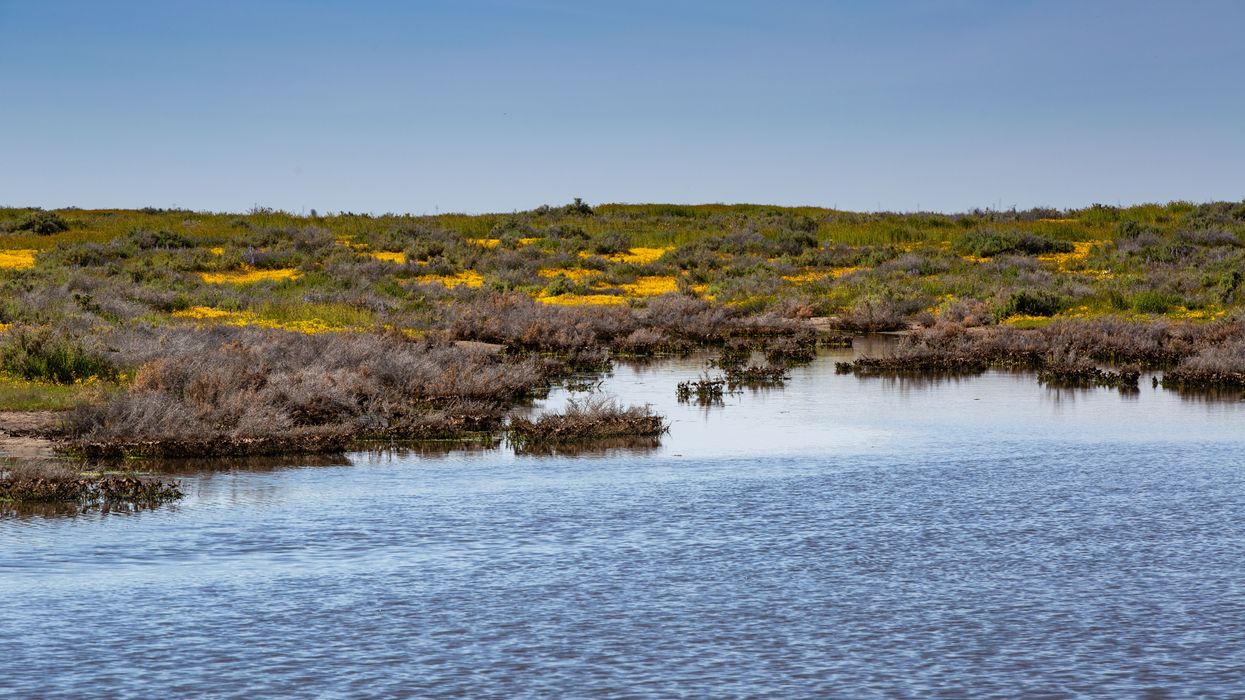
"This proposal declares open season on the nation's waterways," one critic charged.
President Donald Trump's administration sparked fresh fury on Friday when it proposed a supplemental rule to further gut Clean Water Act protections for streams and wetlands in the wake of a "catastrophic" US Supreme Court ruling three years ago.
The supplemental proposal from the Department of the Army and Environmental Protection Agency builds on their widely criticized proposed rule from November for defining "waters of the United States" (WOTUS)—both of which go further than the high court did with its 2023 decision in Sackett v. EPA.
While the American Petroleum Institute and some Republicans in Congress joined Assistant Secretary of the Army for Civil Works Adam Telle and EPA Administrator Lee Zeldin in promoting the new proposal, environmental and public health advocates sounded the alarm.
"What the Supreme Court did in its Sackett decision was an inexcusable assault on clean water," Jon Devine, director of freshwater ecosystems at the Natural Resources Defense Council, said in a Friday statement. "Communities and wildlife will pay the price until Congress fixes it. The Trump administration's answer has been to make a bad situation worse."
"This proposal declares open season on the nation's waterways. It denies federal protection to virtually all wetlands and more than three-quarters of our streams, endangering drinking water supplies and flood-prone communities—and the agencies admit it themselves," he noted. "The proposal would virtually eliminate protection for freshwater wetlands. Their own analysis says most streams would lose protection, with the West hit hardest."
Food & Water Watch legal director Tarah Heinzen declared that "Trump is taking yet another sledgehammer to our bedrock Clean Water Act, shamelessly doubling down on his initial terrible proposal to strip protections from countless streams and wetlands."
"Make no mistake: This unlawful proposal gives bad actors the green light to fill, drain, and poison sensitive waterways from coast to coast," she warned. "The result will be dirtier water for everyone. The administration must reverse course on this dangerous proposal."
Gary Belan, senior director of American Rivers' Clean Water Program, stressed that "our nation's water resources are precious and increasingly at risk. This is not the moment to be jeopardizing the nation's water security by narrowing the safeguards of the Clean Water Act."
The public comment period for the initial proposal has closed but, as Belan noted, the publication of the supplemental rule in the Federal Register kicks off a new 30-day period. He said that "while we appreciate EPA's effort to seek more public comment, the proposed changes will have consequences that will impact communities across the nation if finalized."
"The proposed definitions do not reflect the established science on how rivers function and would significantly reduce the scope of the Clean Water Act," he continued. "When headwater and intermittent streams and wetlands lose protection, downstream flooding worsens, the costs of drinking water treatment rises, and water supplies become less reliable."
Jim Murphy, the National Wildlife Federation’s associate vice president for legal advocacy, pointed out that "this is now the fifth effort to define the scope of the waters protected by the Clean Water Act in the past decade. We need Congress' help to get off this merry-go-round at a place that protects our waters, our wildlife, and our way of life."
"The administration is clearly struggling to craft a rule that will hold up in court while satisfying their donors' desire to effectively scrap these protections wherever possible," he added. "One thing is clear: If we don’t protect our streams and wetlands, the cost of dirtier drinking water and increased flooding will flow downstream to households at a time when most Americans are living paycheck to paycheck."

“We deeply regret that Sampurna could not be saved," said officials after the animal was found struggling to breath from smoke inhalation near a palm oil plantation.
Conservationists worldwide are mourning Friday following news that a rescued orangutan on the Indonesian island of Borneo has died—a singular though heartbreaking symbol of humanity's rapacious destruction of fragile ecosystems, in this case the ravages of the palm oil industry on the rainforests where the critically endangered primates once thrived but now struggle "dangerously close to the point of extinction."
The death of the orangutan named Sampurna was confirmed Thursday by the West Kalimantan Natural Resources Conservation Agency (BKSDA) in Borneo, who said the adult male primate died over the weekend after being found, struggling to stand or take in oxygen, by villagers near Ketapang, West Kalimantan earlier in the day.
"It was very weak, then I gave it water," said Jais, the local farmer who first found Sampurna in a roadside ditch and only goes by one name.
According to the Sarawak Tribune:
Sampurna was first reported by villagers at about 7am after he was found lying inside a dry drainage ditch in a community-owned oil palm plantation.
When rescuers from BKSDA and the Foundation for International Animal Rescue Indonesia (YIARI) arrived, Sampurna was unable to stand, could only move with difficulty and was suffering from severe breathing problems.
Emergency treatment, including oxygen therapy and intravenous fluids, was administered before he was transported to YIARI’s rehabilitation centre at about 11.30am for further medical care.
However, his condition continued to deteriorate.
With wildfires raging in the area in and around the palm tree plantation—a source of frustration for those who have for decades tried to curb the palm oil industry's destruction of fragile rainforest habitat across Indonesia—BKSDA said "lung abnormalities" found during a post-mortem of Sampura were thought to be caused by prolonged exposure to wildfire smoke, impairing lung function and leading to "acute hypoxia," or oxygen deprivation.
“We deeply regret that Sampurna could not be saved,” said BKSDA's natural conservation chief Murlan Dameria Pane in a statement.
 Karmele Llano Sanchez, CEO of wildlife foundation Yayasan Inisiasi Alam Rehabilitasi Indonesia, along with other veterinarians, gives treatment to an orangutan named Sampurna, during a rescue operation at a palm-oil plantation near an area affected by wildfires, in Kuala Satong village, Ketapang regency, West Kalimantan province, Indonesia, on Aug 30, 2026. (Photo: Reuters/Willy Kurniawan)
"Sampurna the orangutan has died," said Dr. Tom Montgomery, a marine biologist and conservationist, in a social media post. "He collapsed on a palm-oil plantation in West Kalimantan province, Indonesia—his lungs destroyed by the smoke of his burning forest."
As the German Press Agency reported:
Sampurna had been monitored by YIARI’s Orangutan Protection Unit on August 16 and was still moving actively at the time. About two weeks later, he was found collapsed in a plantation near areas affected by fires.
His death highlights the threat that forest fires pose to orangutans, which depend on increasingly fragmented forests across Borneo.
Fires can destroy food sources and habitats, forcing the critically endangered animals into plantations and other areas where they are exposed to smoke and potential conflict with people.
Karmele Llano Sanchez, CEO of YIARI, told Reuters that the "orangutan got hypoxia because of the very thick smoke in the area," and while it showed no outward signs of being burned by the fires it could not properly breath and was vomiting.
In a statement last month, the Borneo Orangutan Survival (BOS) Foundation warned that "for wild orangutan, one fire can mean losing everything." With climate change a constant threat to crucial habit, new warnings of a "supersized" El Nino event forming is only elevating concerns about the impact on threatened species in the coming years.
- YouTube youtu.be
"The forest they call home, the food they depend on, and their chance of survival," BOS said, is all under threat. "These forests are also home to countless other species and include some of the world’s most important tropical peatland ecosystems and carbon stores."
With the fire season on the island already raging in August, the group said danger of wildfires for orangutans and others species "is not a future threat."

"The science leaves no room for doubt: the planet is in uncharted waters, and those waters are heating up."
Officials at the United Nations are warning that governments around the world must urgently prepare for the impacts of an El Niño climate pattern that is being "supersized before our eyes."
The UN's World Meteorological Organization (WMO) on Thursday provided an update on El Niño, projecting with near certainty that it would persist at least through Februrary 2027.
El Niño is a phenomenon that produces above-average temperatures in the Pacific Ocean, which then disrupt weather patterns elsewhere in the world. In its update, WMO said that this year's El Niño projects to be historically intense.
"Forecasts indicate further strengthening of El Niño in the coming months, with the event forecast to reach very strong intensity before peaking towards the end of the year," WMO said. "A very strong El Niño increases the likelihood of significant shifts in temperature and rainfall patterns in many parts of the world."
The organization emphasized, however, that El Niño's impacts are not predictable and vary widely by region.
WMO Secretary-General Celeste Saulo said the latest projections show that El Niño "has the potential to deliver a massive blow to communities and economies across the world" in the form of droughts, floods, and other climate-related disasters made more intense by the continued extraction and burning of fossil fuels.
"This exceptional El Niño demands exceptional preparation and response," Saulo said. "Never before in the 50-year history of the World Meteorological Organization have we launched such a major mobilization with National Meteorological and Hydrological Services who are on the frontline of delivering the forecasts and services to save lives and livelihoods."
While speaking with reporters in Geneva, Switzerland on Thursday, Saulo noted that the current El Niño "may be stronger than anything since our monitoring began," making it "literally off the charts we have used for the past four decades."
UN Secretary-General António Guterres warned that "El Niño is being supersized before our eyes," and said the ramifications could be severe.
"The science leaves no room for doubt: the planet is in uncharted waters, and those waters are heating up," said Guterres. "Sea surface temperatures are rising, temperatures keep climbing, and the world is in the danger zone of extreme weather."
Daniel Swain, climate scientist at the University of California Agriculture and Natural Resources, echoed UN officials' warning about El Niño in an interview with Wired published Thursday.
“This is probably one of the larger, if not the largest, climate events... that anybody alive is potentially ever experiencing,” said Swain. "That's a very big deal. And I think there’s certainly going to be dramatic outcomes from this.”

"Data centers don't use water," laughed Howard Lutnick during an interview. In fact, across seven states, they rely on about 3.4 trillion gallons of it per year.
President Donald Trump's commerce secretary, Howard Lutnick, told a brazen lie on Wednesday while trying to defend the administration's support for rapid data center expansion amid growing public backlash from voters concerned about their extreme electricity and water use.
Asked on CNBC's "SquawkBox" about how politicians in both parties were responding to voter outrage, Lutnick laughed the concerns off.
"One of my favorite things is when people talk about data centers using water," Lutnick chuckled. "The number one product in America that uses water is cattle."
"I mean, data centers don't use water," Lutnick continued. "This is propaganda by our adversaries to try to slow us down."
Lutnick is correct that beef cattle production—which uses about 6 trillion gallons per year, according to the US Department of Agriculture—involves much greater amounts of water consumption than data centers.
But the contention that data centers "don't use water" is egregiously false. A report out Tuesday from the Pacific Institute, a nonprofit water policy research organization, found that data centers in the US directly use anywhere from 270 to 3.9 million gallons of water per day.
About 74% of that water, which is withdrawn from local sources near the data center, is consumed rather than returned to the same watershed, the report found.
The Lawrence Berkeley National Laboratory estimated that in 2023, US data centers directly consumed about 17 billion gallons of water. Since then, data center capacity in the US has more than doubled, according to the commercial real estate firm CBRE.
Water directly consumed by data centers also only represents a fraction of their overall demand. Most of the water being used is not directly pumped into the centers to cool servers, but is used for the power generation that supplies the centers.
A report out last month from the corporate sustainability organization Ceres found that across the seven US states that host about half of all US data centers—Virginia, Texas, California, Illinois, Georgia, Ohio, and Arizona—the facilities depend on 3.4 trillion gallons of freshwater for electricity generation per year.
Lutnick's comparison of national water use between data centers and cattle farming also overlooks that the effects are often concentrated heavily in the areas where data centers are located.
In Newton County, Georgia, for instance, families told The New York Times that shortly after Meta broke ground on a $750 million data center project in 2018, their taps began to run dry, and water rates soared. According to Meta's environmental data, the center withdrew about 146 megaliters, or 38.6 million gallons, of water in 2024.
In Fayette County, Georgia, residents complained of low water pressure only to find that a QTS data center had covertly used about 29 million gallons of water without paying for it, far exceeding the amount agreed upon during the planning process. The company was ultimately required to pay back nearly $150,000.
In New Carlisle, Indiana, about a dozen residents reported that their wells had gone dry during the construction of Amazon Web Services' massive data center campus. One resident told the Indy Star that she'd gone 18 months without running water and had to bathe using bottled water from the store.
Lutnick's claim doesn't just contradict the facts, but his own statements from just over a year ago on Fox News, as MeidasTouch senior digital editor Acyn Torabi noted.
Attempting to promote data centers as a vehicle for job growth, the secretary emphasized that "these AI things suck water" and that they will "need a plumber."
The Trump administration has made the rapid expansion of data centers central to its "AI Action Plan." But Trump and his team have struggled to sell the vision to voters, including in their own party.
A national survey by the Annenberg Public Policy Center last month found that 61% of voters oppose the construction of new data centers in their area. That included 69% of Democrats, but also 54% of Republicans, and 53% of independents.
Critics described Lutnick's dismissive remarks about voters' concerns as a sign of how out of touch the administration was with the public on this issue and how much their data center PR push is failing.
Rep. Seth Magaziner (D-RI) said it showed that "our government is being run by morons."
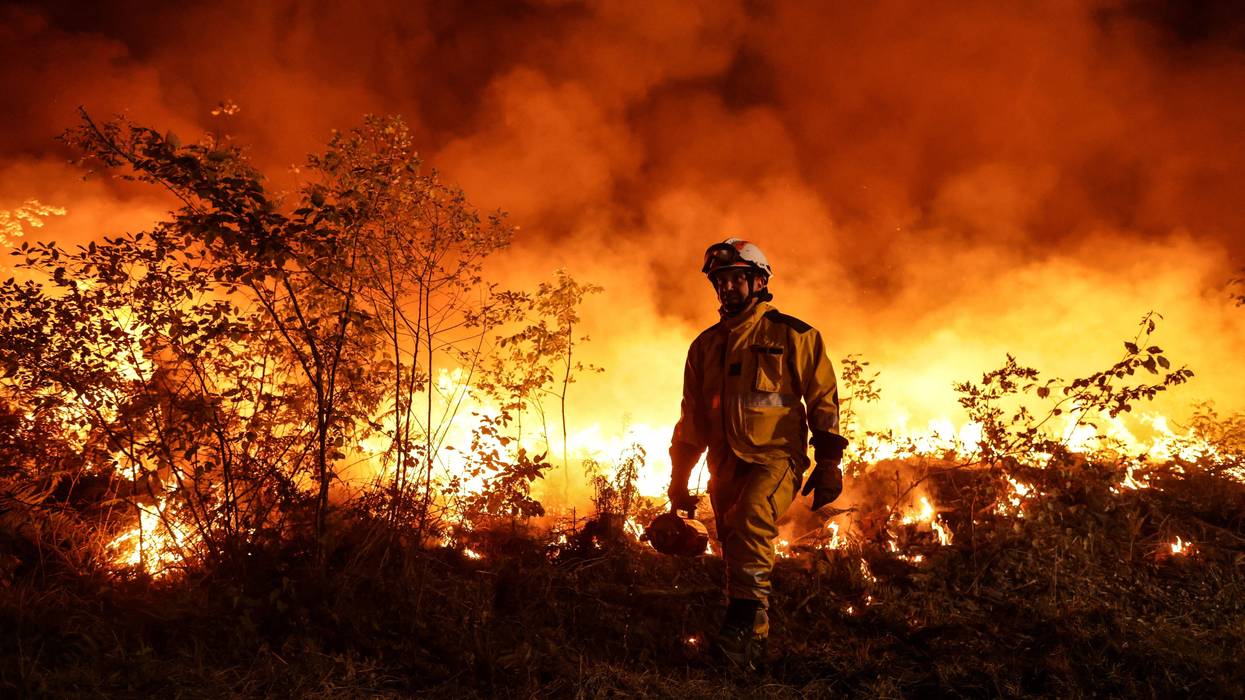
"Overshoot doesn’t have to mean surrender," said one campaigner. "The size and length of that overshoot is still being written by the decisions governments make this year."
The world has officially moved past the point where preventing a temperature rise above 1.5°C will be possible, scientists said in a United Nations report released Wednesday, which made clear that communities can expect sea levels to continue rising, heatwaves to intensify, and hurricanes, wildfires, and flooding to become more frequent and dangerous—all climate impacts that experts have long warned about as policymakers have failed to rapidly draw down greenhouse gas emissions.
But the authors of the report, published by the UN Environment Program (UNEP) and titled "Limiting Overshoot," emphasized that the inevitable temperature rise must not be viewed as a point of no return, and that steps can and must be taken to ensure the overshoot of the 1.5°C goal is only temporary.
The best-case scenario is now a peak global temperature of 1.8°C, said the report's dozens of authors, with an "overshoot, peak, and decline” pathway still possible before the end of this century if policymakers ensure that planet-heating fossil fuel emissions are drastically reduced—starting immediately.
The report is the first ever to establish the inevitability of overshooting the 1.5°C goal that countries were tasked with working toward when the Paris climate agreement was signed in 2015, and to chart a path toward ensuring the planet can ultimately make its way back down to 1.5°C—hopefully limiting the time above the threshold to a few decades.
If the world remains above 1.5°C over preindustrial temperatures long-term, said UNEP Executive Director Inger Andersen, "there are no good outcomes."
Last year, global temperatures were already about 1.3°C to 1.4°C above the preindustrial average, The Washington Post reported, and the effects on the Earth have been made clear as wildfires have engulfed parts of Canada and South America; a glacial collapse led to flooding that killed more than 1,000 people in Nepal last week; and extreme heat killed more than 1,000 people across Europe this summer.
"Across the globe, extreme heatwaves are already proving that climate impacts will strike faster, hit harder, and last longer—costing more lives and causing deeper disruption,” said Andersen. “Now is the time we must double down on climate action. We can—and must—get on the right path. By cutting greenhouse gas emissions, strengthening resilience and adaptation, and ensuring exceedance of 1.5°C is as small and short as possible.”
The scientists said planet-heating fossil fuel emissions must be slashed by 55% by 2035 and almost entirely eliminated by the middle of the century to limit the global temperature rise to 1.8°C above preindustrial levels.
Climate scientist Joeri Rogeli of Imperial College London, a lead author of the report, told the Post that swift action is crucial, as "for every five years that humanity delays reducing emissions... the peak temperature the world will ultimately face rises by at least a 10th of a degree."
The scientists emphasized that avoiding the 1.5°C limit would have been a less daunting goal than reversing the temperature rise. Policies that continue allowing oil, gas, and coal companies to extract fossil fuels will make both goals difficult to achieve.
The report was released weeks after President Donald Trump terminated offshore wind energy projects in the US—the latest of several renewable energy projects he's killed—and moved to take ownership of Venezuelan oil fields. Recent global climate summits have been attended by an outsized number of corporate lobbyists for fossil fuel industries, weakening the climate commitments that have come out of the meetings.
Fenton Lutunatabua of 350.org Pacific noted that the report was also released as Pacific countries meet at the 55th Pacific Islands Forum Leaders Meeting.
"All eyes are on one of the world’s largest fossil fuel exporters, Australia, and how they act on this urgent warning," said Lutunatabua. "The climate crisis is here and any delay in mitigation, in phasing out coal, oil, and gas, will only make our adaptation pressures harder and more expensive to bear.”
The report emphasizes that even if the world is able to reduce planetary heating once global temperatures shoot above 1.5°C, some impacts of continued fossil fuel extraction will be irreversible, including the melting of glaciers and the extinction of some species.
But UN Secretary-General António Guterres was among those who said "an overshoot of ambition" is now required to mitigate the damage as much as possible.
"This summer’s scorching heat, raging wildfires, and deadly floods are a warning of what lies ahead. We must make the overshoot above 1.5 degrees as small and short as possible," said Guterres.
Along with rapidly cutting emissions, the report calls "carefully governed carbon dioxide removal (CDR)—the process of removing carbon from the air and storing it through afforestation or other means—an essential part of the mix."
CDR methods—from planting forests to act as carbon sinks to technological fixes—come with limitations and are potentially reversible. Forests that are planted could be destroyed by wildfires, while CDR technology is largely unproven and can be energy-intensive—negating many of the benefits.
"Overall, even optimistic CDR scaling is unlikely to deliver a temperature reversal beyond a few tenths of a degree this century," reads the report. "This emphasizes the importance of focusing on reducing greenhouse gas emissions."
Richard Betts, a climate scientist at the University of Exeter and another report author, told the Post that CDR cannot be relied upon as a "get-out-of-jail-free card."
At 350.org, head of campaigns and networks Savio Carvalho said that "there is no version of ‘limiting overshoot’ that doesn’t start with ending new coal, oil, and gas expansion today.”
"This report confirms what communities on the frontlines of the climate crisis have been telling us for years: that delay is not a neutral act, it is a decision," said Carvalho. "We’ve just watched a glacier collapse bury Himalayan communities under mud and water, and we’re watching Pacific nations lose land to the sea in real time. UNEP is right that overshoot doesn’t have to mean surrender: The size and length of that overshoot is still being written by the decisions governments make this year, on fossil fuel phase-out, technology transfer, and on finance for the countries least responsible and most exposed."
Murat Kurum, Türkiye's minister of environment, urbanization, and climate change and the president-designate of the 31st UN Climate Change Conference (COP31), said the upcoming summit scheduled for November "must turn this urgency into concrete action."
“Every fraction of a degree matters, and every year spent in overshoot increases climate risks and the potential for irreversible losses," said Kurum. "The Overshoot Report makes clear that exceeding 1.5°C should not be seen as a new destination, but as a pathway we must urgently work to minimize and reverse. This requires rapid and sustained emissions reductions, alongside ambitious adaptation to protect people, communities, and ecosystems."
"We need to accelerate global electrification, reduce methane emissions from waste, strengthen the climate resilience of cities, and enhance the resilience of marine and coastal ecosystems," he added. "The choices we make today will determine how high temperatures peak, how long they remain there, and how safely we can return to 1.5°C.”
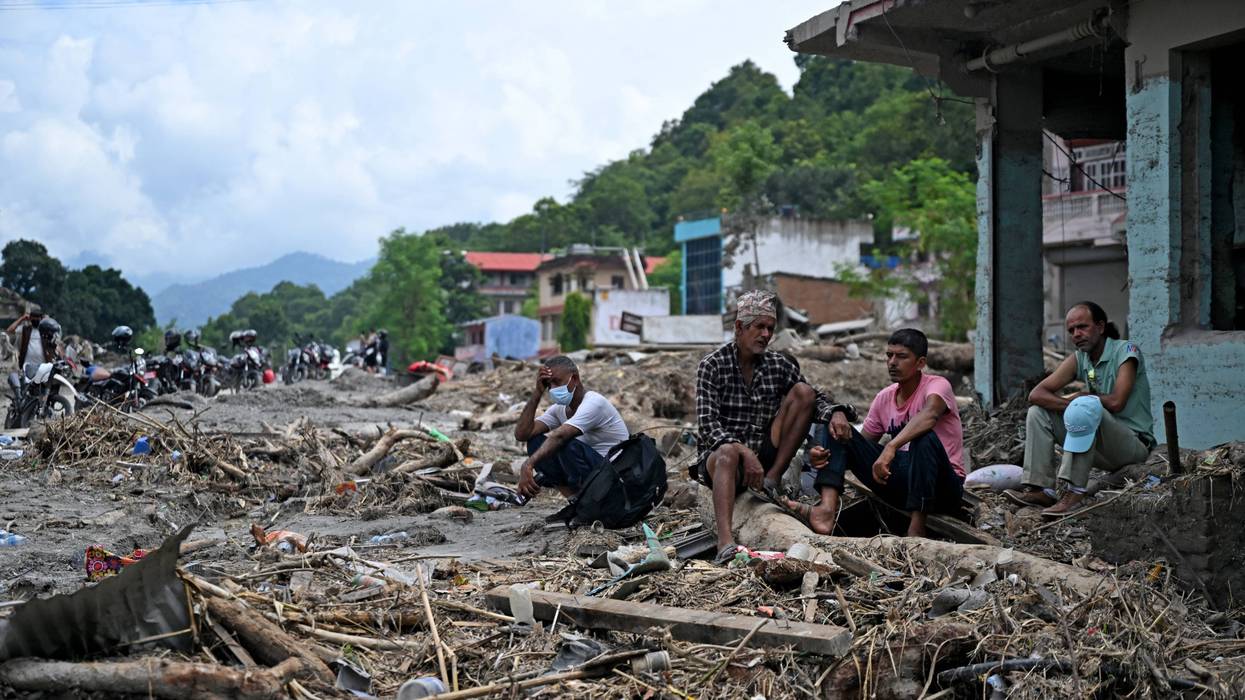
"The glacial collapse and deluge," one scientist said, "was the structural failure of a mountain itself, nature's latest commentary on the deadly consequences of human-caused planetary warming."
With more than 1,000 people dead as of Tuesday and rescue teams still searching for the thousands missing after a glacial collapse in the Himalayas that created a flooding crisis in Nepal and Tibet last week, campaigners, politicians, and scientists reiterated the need for global climate action.
China confirmed at least 16 people are dead and 546 are missing in Tibet, including 261 foreign nationals, while Nepal reported 1,003 deaths and 3,916 more unaccounted for, including 583 foreigners, according to The Associated Press. Among those missing in Nepal are about 900 workers from a dozen hydropower projects, 500 of whom are believed to be trapped in tunnels.
Thousands have been rescued since last Wednesday, and as the AP noted, "authorities in Nepal have been burying bodies in temporary graves until they can be identified. They are preserving DNA samples, photographing distinguishing facial features, and recording other identifying details. Each body is assigned a reference number to help families identify and claim the remains later."
Nepali Prime Minister Balendra Shah has emphasized in recent days that "the flood in the Bhote Koshi River in Rasuwa was not an ordinary flood," and "it is now time for us to strongly raise with the international community the issue of the disasters we are experiencing as a result of climate change."
In a Monday interview with The New York Times, Maheshwar Dhakal from Nepal's Ministry of Agriculture, Forest, and Environment also linked the disaster to human-caused climate change and said that "those who have contributed the least are suffering the most."
Dhakal estimated the recovery cost at $5 billion, and shared his government's letter to the United Nations' fund for such disasters, which says in part that "early action in Nepal would send a signal that the fund is capable of responding with humanity, speed, flexibility, and solidarity when climate-vulnerable countries face losses and damages beyond their capacity to address alone."
Declare a world-wide #climate emergency www.nytimes.com/live/2026/08... #nepal #floods #flooding
[image or embed]
— Nikolas Kozloff (@nikolaskozloff.bsky.social) August 27, 2026 at 4:29 PM
Stefan Rahmstorf, a scientist at the Potsdam Institute for Climate Impact Research in Germany, highlighted on social media Tuesday that experts have long warned about the kinds of disasters seen in the Himalayas over the past week.
"Why are climate scientists not surprised about mountains being destabilized by glacier melt and permafrost thaw?" he asked. "Because they have long predicted that as a result of global heating."
Bill McGuire, professor emeritus of geophysical and climate hazards at University College London, wrote in a Tuesday column for The Guardian that "the increasingly temperamental behavior of the Earth beneath our feet teaches us that global heating is all-pervasive. It will intrude into every aspect of our lives and livelihoods, and leave no part of the planet untouched. As the world processes the horror of the events in Nepal and Tibet, it is a lesson that we ignore at our peril."
Also writing for the British newspaper on Tuesday, Michael Mann, a renowned climate scientist at the University of Pennsylvania, similarly stressed that "the glacial collapse and deluge in Nepal and Tibet was not a freak weather event; it was the structural failure of a mountain itself, nature's latest commentary on the deadly consequences of human-caused planetary warming. And it was the exclamation point on a summer of extremes, illustrating with a sole unnatural disaster the apocalyptic future that lies in store if we fail to take dramatic climate action."
Mann pointed to the lack of such action in the United States—the world's largest historical climate polluter—where President Donald Trump openly courted Big Oil on the campaign trail and has served the climate-wrecking fossil fuel industry's interests since returning to the White House last year, from declaring a national energy emergency and ditching the Paris Agreement, again, to waging a war on renewable power projects.
"Trump and enabling congressional Republicans continue to double down on policies favoring fossil fuel extraction and dependence at the very time we need to be moving even more quickly away from fossil fuels toward clean energy," Mann wrote. "These extreme events underscore the urgency of taking action now, and—while there are many things we can do—one of the greatest opportunities Americans will have to affect climate policy is the upcoming midterm election. You can make support for urgent and dramatic climate action a litmus test issue as you go to the voting booth."
Highlighting that dozens of Americans are among those still missing in Asia, the US-based watchdog group Public Citizen argued on social media Tuesday that "this isn't just a climate change catastrophe. It's a crime. For decades, Big Oil knew fossil fuels would lead to disasters like this. Big Oil must be held accountable."
In 2024, the group published a legal memo detailing how local or state prosecutors in the United States could bring criminal charges against Big Oil for deaths from extreme heat made more likely by the fossil fuel-driven climate emergency. With rapidly advancing attribution science, the approach could also be applied to other disasters linked to the human-caused crisis.
Greenpeace International also demanded accountability for the industry on Tuesday, saying that "it makes us SICK to think of people losing their homes, their livelihoods, and the people they love to fires, floods, and storms, while fossil fuel companies make billions. A FRACTION of those obscene profits could help communities rebuild. MAKE POLLUTERS PAY."
"Make oil, coal, and gas corporations pay their fair share for the damage they cause," the advocacy group added. "Introduce new taxes or fines on them to help communities at home and around the world rebuild from climate disasters and invest in climate solutions."