SUBSCRIBE TO OUR FREE NEWSLETTER
Daily news & progressive opinion—funded by the people, not the corporations—delivered straight to your inbox.
5
#000000
#FFFFFF
To donate by check, phone, or other method, see our More Ways to Give page.
Daily news & progressive opinion—funded by the people, not the corporations—delivered straight to your inbox.
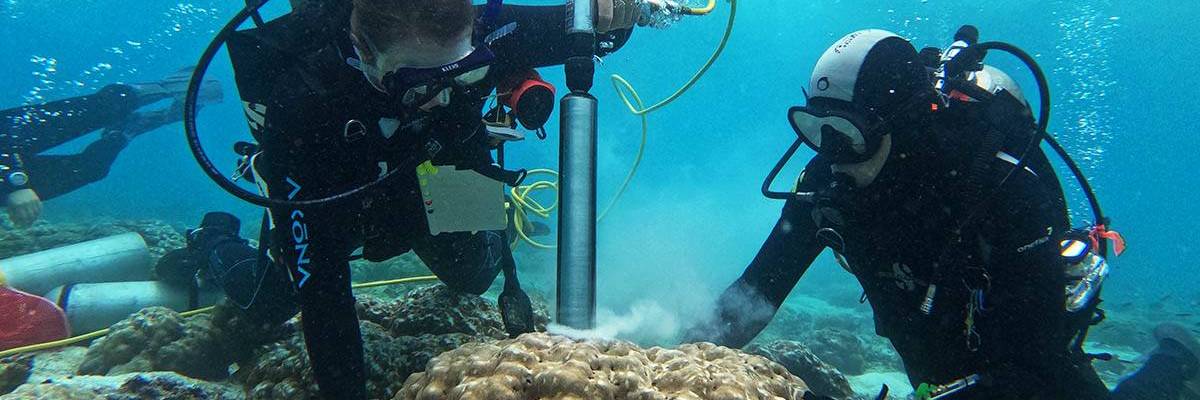
A study published August 27, 2026 in the journal Science concludes that fossil fuel-driven global warming has intensified the warm phase of the El Niño-Southern Oscillation in the Pacific Ocean.
"We are seeing a trend of stronger El Niños, and the one we have now is consistent with that trend," said the lead author. "That is bad news for climate hazards and for people."
As the flooding disaster in Tibet and Nepal demonstrates the deadly consequences of the climate emergency, experts wrote Thursday in the journal Science that fossil fuel-driven global heating has intensified the warm phase of a key pattern in the Pacific Ocean.
The El Niño-Southern Oscillation (ENSO) has a warm phase, called El Niño, as well as a neutral phase and a cold one, La Niña. In June, scientists declared the start of a warm event nicknamed "Godzilla," which helped push last month's average global ocean surface temperature to the hottest ever recorded in July.
The current event is expected to become not only a super El Niño, but the most intense one on record—and it could contribute to 2027 possibly being the hottest year humanity has ever endured.
While ENSO is a naturally occurring phenomenon, the scientists behind the new paper studied coral skeletons from the Galápagos Islands and concluded that global warming—tied to humans continuing to burn fossil fuels—has intensified El Niño phases.
"Our findings suggest El Niño can supercharge global warming, but also global warming can supercharge El Niño—that is what we are seeing," said lead author Julia Cole, who chairs the University of Michigan's Department of Earth and Environmental Sciences.
The scientist also spoke with Inside Climate News, which noted that "the first documented super El Niño in 1982-83 killed about 95% of the shallow-water corals around the Galápagos Islands, right around the time Cole began her research career."
Based on the team's analysis, "after the El Niño in 1982, we start seeing much more variability; it's a lot more extreme and looks like nothing in the previous 1,000 years," Cole told The Guardian. "What surprised me was how consistent it was. There is just such a large, distinct difference between what has been happening in the last 40 years compared to preindustrial times."
As Inside Climate News reported:
When Cole visited the islands in 1989, many of the large mapped corals that could have served as sample material were gone, wiped out by the El Niño early in the decade and then decomposed quickly by organisms in the biologically active waters. But in 2006, her team discovered fossil coral remnants, often perched as boulders near remote east-facing coastlines, tossed inland by large waves or tsunamis.
Cole said the signal of El Niños intensified by human-caused warming would have been even stronger if the study had included the most recent occurrences. All the events categorized as super El Niños have occurred since the 1980s and have triggered flooding in East Africa, led to disease outbreaks, and intensified tropical storms. This year’s El Niño is intensifying drought in Indonesia, fueling widespread fires that are sending smoke and hazardous air pollution across Southeast Asia, Cole said. Her team is currently analyzing corals to show the changes from the El Niños in 2015-16 and 2023-24, she added.
"We are seeing a trend of stronger El Niños, and the one we have now is consistent with that trend—it's not a fluke. We are seeing a shift where El Niño doesn't look like what it did prior to industrial times," Cole said. "That is bad news for climate hazards and for people, particularly those who are badly impacted and yet have done little to cause climate change."
According to the United States' National Oceanic and Atmospheric Administration, consequences of El Niño include "increased rainfall across the southern tier of the US and in Peru, which has caused destructive flooding, and drought in the West Pacific, sometimes associated with devastating brush fires in Australia."
Dalhousie University marine scientist Boris Worm wasn't involved with the new study but told The Associated Press on Thursday that "El Niño is the most violent aspect of climate variability worldwide, with effects ranging from local fisheries collapse, to widespread coral die-offs to severe droughts, and food shortages around the world."
Experts are already worried about the latest El Niño's impact on food security and prices, with the United Nations World Food Program projecting earlier this month that almost 50 million more people worldwide face the prospect of acute hunger.
Pointing to late climate scientist Wallace Broecker's warning that "the climate system is an angry beast and we are poking it with sticks," Worm said that "human emissions are the stick, and El Niño is [one] of the 'angry' outbursts that can be so threatening to our collective safety."
Dear Common Dreams reader, It’s been nearly 30 years since I co-founded Common Dreams with my late wife, Lina Newhouser. We had the radical notion that journalism should serve the public good, not corporate profits. It was clear to us from the outset what it would take to build such a project. No paid advertisements. No corporate sponsors. No millionaire publisher telling us what to think or do. Many people said we wouldn't last a year, but we proved those doubters wrong. Together with a tremendous team of journalists and dedicated staff, we built an independent media outlet free from the constraints of profits and corporate control. Our mission has always been simple: To inform. To inspire. To ignite change for the common good. Building Common Dreams was not easy. Our survival was never guaranteed. When you take on the most powerful forces—Wall Street greed, fossil fuel industry destruction, Big Tech lobbyists, and uber-rich oligarchs who have spent billions upon billions rigging the economy and democracy in their favor—the only bulwark you have is supporters who believe in your work. But here’s the urgent message from me today. It's never been this bad out there. And it's never been this hard to keep us going. At the very moment Common Dreams is most needed, the threats we face are intensifying. We need your support now more than ever. We don't accept corporate advertising and never will. We don't have a paywall because we don't think people should be blocked from critical news based on their ability to pay. Everything we do is funded by the donations of readers like you. When everyone does the little they can afford, we are strong. But if that support retreats or dries up, so do we. Will you donate now to make sure Common Dreams not only survives but thrives? —Craig Brown, Co-founder |
As the flooding disaster in Tibet and Nepal demonstrates the deadly consequences of the climate emergency, experts wrote Thursday in the journal Science that fossil fuel-driven global heating has intensified the warm phase of a key pattern in the Pacific Ocean.
The El Niño-Southern Oscillation (ENSO) has a warm phase, called El Niño, as well as a neutral phase and a cold one, La Niña. In June, scientists declared the start of a warm event nicknamed "Godzilla," which helped push last month's average global ocean surface temperature to the hottest ever recorded in July.
The current event is expected to become not only a super El Niño, but the most intense one on record—and it could contribute to 2027 possibly being the hottest year humanity has ever endured.
While ENSO is a naturally occurring phenomenon, the scientists behind the new paper studied coral skeletons from the Galápagos Islands and concluded that global warming—tied to humans continuing to burn fossil fuels—has intensified El Niño phases.
"Our findings suggest El Niño can supercharge global warming, but also global warming can supercharge El Niño—that is what we are seeing," said lead author Julia Cole, who chairs the University of Michigan's Department of Earth and Environmental Sciences.
The scientist also spoke with Inside Climate News, which noted that "the first documented super El Niño in 1982-83 killed about 95% of the shallow-water corals around the Galápagos Islands, right around the time Cole began her research career."
Based on the team's analysis, "after the El Niño in 1982, we start seeing much more variability; it's a lot more extreme and looks like nothing in the previous 1,000 years," Cole told The Guardian. "What surprised me was how consistent it was. There is just such a large, distinct difference between what has been happening in the last 40 years compared to preindustrial times."
As Inside Climate News reported:
When Cole visited the islands in 1989, many of the large mapped corals that could have served as sample material were gone, wiped out by the El Niño early in the decade and then decomposed quickly by organisms in the biologically active waters. But in 2006, her team discovered fossil coral remnants, often perched as boulders near remote east-facing coastlines, tossed inland by large waves or tsunamis.
Cole said the signal of El Niños intensified by human-caused warming would have been even stronger if the study had included the most recent occurrences. All the events categorized as super El Niños have occurred since the 1980s and have triggered flooding in East Africa, led to disease outbreaks, and intensified tropical storms. This year’s El Niño is intensifying drought in Indonesia, fueling widespread fires that are sending smoke and hazardous air pollution across Southeast Asia, Cole said. Her team is currently analyzing corals to show the changes from the El Niños in 2015-16 and 2023-24, she added.
"We are seeing a trend of stronger El Niños, and the one we have now is consistent with that trend—it's not a fluke. We are seeing a shift where El Niño doesn't look like what it did prior to industrial times," Cole said. "That is bad news for climate hazards and for people, particularly those who are badly impacted and yet have done little to cause climate change."
According to the United States' National Oceanic and Atmospheric Administration, consequences of El Niño include "increased rainfall across the southern tier of the US and in Peru, which has caused destructive flooding, and drought in the West Pacific, sometimes associated with devastating brush fires in Australia."
Dalhousie University marine scientist Boris Worm wasn't involved with the new study but told The Associated Press on Thursday that "El Niño is the most violent aspect of climate variability worldwide, with effects ranging from local fisheries collapse, to widespread coral die-offs to severe droughts, and food shortages around the world."
Experts are already worried about the latest El Niño's impact on food security and prices, with the United Nations World Food Program projecting earlier this month that almost 50 million more people worldwide face the prospect of acute hunger.
Pointing to late climate scientist Wallace Broecker's warning that "the climate system is an angry beast and we are poking it with sticks," Worm said that "human emissions are the stick, and El Niño is [one] of the 'angry' outbursts that can be so threatening to our collective safety."
As the flooding disaster in Tibet and Nepal demonstrates the deadly consequences of the climate emergency, experts wrote Thursday in the journal Science that fossil fuel-driven global heating has intensified the warm phase of a key pattern in the Pacific Ocean.
The El Niño-Southern Oscillation (ENSO) has a warm phase, called El Niño, as well as a neutral phase and a cold one, La Niña. In June, scientists declared the start of a warm event nicknamed "Godzilla," which helped push last month's average global ocean surface temperature to the hottest ever recorded in July.
The current event is expected to become not only a super El Niño, but the most intense one on record—and it could contribute to 2027 possibly being the hottest year humanity has ever endured.
While ENSO is a naturally occurring phenomenon, the scientists behind the new paper studied coral skeletons from the Galápagos Islands and concluded that global warming—tied to humans continuing to burn fossil fuels—has intensified El Niño phases.
"Our findings suggest El Niño can supercharge global warming, but also global warming can supercharge El Niño—that is what we are seeing," said lead author Julia Cole, who chairs the University of Michigan's Department of Earth and Environmental Sciences.
The scientist also spoke with Inside Climate News, which noted that "the first documented super El Niño in 1982-83 killed about 95% of the shallow-water corals around the Galápagos Islands, right around the time Cole began her research career."
Based on the team's analysis, "after the El Niño in 1982, we start seeing much more variability; it's a lot more extreme and looks like nothing in the previous 1,000 years," Cole told The Guardian. "What surprised me was how consistent it was. There is just such a large, distinct difference between what has been happening in the last 40 years compared to preindustrial times."
As Inside Climate News reported:
When Cole visited the islands in 1989, many of the large mapped corals that could have served as sample material were gone, wiped out by the El Niño early in the decade and then decomposed quickly by organisms in the biologically active waters. But in 2006, her team discovered fossil coral remnants, often perched as boulders near remote east-facing coastlines, tossed inland by large waves or tsunamis.
Cole said the signal of El Niños intensified by human-caused warming would have been even stronger if the study had included the most recent occurrences. All the events categorized as super El Niños have occurred since the 1980s and have triggered flooding in East Africa, led to disease outbreaks, and intensified tropical storms. This year’s El Niño is intensifying drought in Indonesia, fueling widespread fires that are sending smoke and hazardous air pollution across Southeast Asia, Cole said. Her team is currently analyzing corals to show the changes from the El Niños in 2015-16 and 2023-24, she added.
"We are seeing a trend of stronger El Niños, and the one we have now is consistent with that trend—it's not a fluke. We are seeing a shift where El Niño doesn't look like what it did prior to industrial times," Cole said. "That is bad news for climate hazards and for people, particularly those who are badly impacted and yet have done little to cause climate change."
According to the United States' National Oceanic and Atmospheric Administration, consequences of El Niño include "increased rainfall across the southern tier of the US and in Peru, which has caused destructive flooding, and drought in the West Pacific, sometimes associated with devastating brush fires in Australia."
Dalhousie University marine scientist Boris Worm wasn't involved with the new study but told The Associated Press on Thursday that "El Niño is the most violent aspect of climate variability worldwide, with effects ranging from local fisheries collapse, to widespread coral die-offs to severe droughts, and food shortages around the world."
Experts are already worried about the latest El Niño's impact on food security and prices, with the United Nations World Food Program projecting earlier this month that almost 50 million more people worldwide face the prospect of acute hunger.
Pointing to late climate scientist Wallace Broecker's warning that "the climate system is an angry beast and we are poking it with sticks," Worm said that "human emissions are the stick, and El Niño is [one] of the 'angry' outbursts that can be so threatening to our collective safety."