

SUBSCRIBE TO OUR FREE NEWSLETTER
Daily news & progressive opinion—funded by the people, not the corporations—delivered straight to your inbox.
5
#000000
#FFFFFF
To donate by check, phone, or other method, see our More Ways to Give page.
Daily news & progressive opinion—funded by the people, not the corporations—delivered straight to your inbox.

Calling the defeated final proposal "dangerous," one campaigner said that "the countries and communities fighting for climate justice are not backing down, and the road to COP32 in Ethiopia must be about action."
The longest United Nations Climate Change Conference on record ended in overtime on Sunday, with the governments gathered in Türkiye for COP31 unable to reach an agreement on tackling the fossil fuel-driven global emergency.
The Turkish and Australian governments hosted the conference in Antalya. According to The Guardian, Australia's minister for climate change and energy, Chris Bowen, told reporters outside the plenary room that he hadn't slept for three days.
"Unfortunately, we were unable to reach agreement on a cover decision, and that's very disappointing," Bowen said, hours after the latest draft drew a fresh wave of criticism. "Ultimately, looking back, many parties who are people of good faith had very strong red lines on a couple of key issues, and despite many, many attempts, on reflection those red lines were not able to be met."
The European Union, Panama, and small island nations were among those that rejected the proposal. Explaining the EU's position, the Irish climate and environment minister, Darragh O'Brien, said that "it is unconscionable that we would have a climate act that makes no reference to fossil fuel, no reference to transitioning away from fossil fuels."
While Big Oil-backed US President Donald Trump has ditched the Paris Agreement and declined to send a delegation to COP31, even though his country is the largest historical climate polluter, other major petroleum producers such as Saudi Arabia and Russia lobbied against mentioning fossil fuels. Panama's climate minister, Juan Carlos Navarro, told Politico that "the world is hostage to petroleum producers. That is the truth... And they will not stop."
In the lead-up to the conference, scientists warned that temporarily surpassing the Paris Agreement's 1.5°C threshold for temperature rise this century, relative to preindustrial levels, is now inevitable, and the world is barreling toward "an irrecoverable overshoot" of that target absent a rapid reduction in planet-heating emissions.
Jasper Inventor, head of the Greenpeace International delegation at COP31, said that "it's bitterly disappointing to leave without a clear outcome or a credible pathway to end fossil fuels. We stopped a bad deal that favors fossil fuels, but leaving without a deal is still a failure for communities on the climate frontlines. As always, it is the world's most vulnerable communities who bear the consequences of this failure. We've run out of time to avoid overshoot, but we can still keep 1.5°C alive."
Climate campaigners from around the world joined Inventor in expressing frustration that "COP31 has failed to deliver any meaningful outcomes on climate action," as Oxfam International climate change policy lead Nafkote Dabi put it after two weeks of talks. "Shame on rich polluting countries for once again turning their backs on communities fighting for survival in a climate crisis they did little to cause. Shame on the presidencies for prioritizing profits and ego over progress."
"And shame on all the countries that stubbornly blocked and distracted from discussions meant to deliver crucial funding to people watching their homes swallowed by floods, their crops wither in droughts, and their lives upended by deadly heat," said Dabi. "Instead of implementation, COP31 has delivered yet another victory for rich polluting countries and fossil fuel interests. The co-presidencies—who both remain heavily invested in fossil fuels and are profiting from climate destruction—attempted to broker a decision without a single mention of fossil fuels in favor of false solutions."
Nikki Reisch, a director at the Center for International Environmental Law, explained that "the proposed cover decision did not advance the provision of climate finance, said nothing about the root cause of the crisis, and made no mention of states' legal obligations to prevent and repair climate harm, as clarified by the International Court of Justice. On loss and damage, it fared no better as it offered little more than expressions of deep concern about mounting impacts. And a text that welcomed a scale-up of future fantasy fixes like carbon dioxide removal (CDR) technologies and proven-to-fail industry favorites like carbon capture and storage (CCS), without so much as a whisper about fossil fuels, would have been a massive giveaway to polluters."
Calling out the hosts, Global Climate and Health Alliance executive director Jeni Miller stressed that "the rightly rejected 'Antalya Pact' comes as climate change compounds this year's super El Niño, causing severe droughts in Fiji and Bolivia, extreme flooding in the western US, and wildfires in Southeast Asia, and putting millions of additional people at risk of hunger or famine."
Amiera Sawas, head of research and policy at the Fossil Fuel Treaty Initiative, highlighted that "while Global North countries rejected the outcome on the basis that there was no language on transitioning away from fossil fuels, these same countries have not themselves presented serious or credible phaseout plans, nor do they intend to support others in their transitions. Many wealthy countries continue expanding fossil fuel extraction despite their international legal obligations, while developing countries carrying unpayable debt can't plan an exit at all."
"The EU and some of its most powerful member states have blocked progress or, worse, reneged on past commitments," Sawas continued. "Demanding the words 'fossil fuels' in the cover text while blocking mandated agenda items and pointing fingers at developing countries is acting in bad faith. We need real commitments to a fair and financed phaseout of fossil fuels that delivers on the Paris Agreement, not collapses it. That means a just transition, where those most responsible pay their fair share and workers, communities, and Indigenous peoples have a meaningful say in what it looks like."
Mohamed Adow, director of the think tank Power Shift Africa, declared that "this has been the worst ever COP, and its collapse needs to be a wake-up call for the world. Rich nations and polluting governments cannot keep arriving empty-handed and expecting a carefully worded declaration to get them off the hook."
Romain Ioualalen, global policy lead at Oil Change International, similarly asserted that "this will go down as one of the worst COPs in history. COP hosts Australia and Türkiye have failed to steward the negotiations. This sad stalemate only benefits fossil fuel interests while people and communities will continue paying the highest price for the crisis they didn't create."
"Don't fall for the EU's attempt to portray themselves as heroes. They are the ones who are largely to blame for this result... But let's be clear: The outcome on the table was dangerous," he continued, welcoming the proposal's defeat. "Countries failed to rise to the moment, but we refuse to lower the bar. The countries and communities fighting for climate justice are not backing down, and the road to COP32 in Ethiopia must be about action."
Asad Rehman, chief executive of Friends of the Earth in England, Wales, and Northern Ireland, also emphasized how bad the final deal was: "After decades of broken pledges and hollow commitments, an agreement built on yet more empty promises would have been unforgivable and no substitute for the transformative action we urgently need. So the dramatic rejection of the presidency's final text by some, though underscoring the lack of consensus that's been reached, restores some level of faith in its recognition that a deal of this caliber is no deal at all."
"What matters now is not when governments reconvene, it's how they do so," he argued. "The world doesn't need more meetings with woolly commitments. We need global governments, including the UK, to come back to the negotiating table ready to deliver. That means cutting emissions fairly at home, transitioning our economies in a way that leaves no one behind, and providing the public climate finance so desperately needed to protect people, livelihoods, and our planet from unimaginable harm."
Savio Carvalho, head of campaigns and networks at 350.org, also looked ahead: "You'd think that in the middle of the worst fossil fuel crisis in history, after a year of devastating wildfires, floods, and collapsing glaciers, world leaders would finally rise to the moment. But they didn't. We averted a truly bad outcome because many countries stood up to the fossil fuel industry and rejected dangerous distractions. But we still left COP31 without a clear plan to exit coal, oil, and gas. There's no real money on the table to help countries survive the climate breakdown that is already at our doorstep."
"The world needs governments with the courage to stand with people and the planet, even when the fossil fuel industry pushes back," Carvalho added. "This isn't the end. We'll keep pushing until governments end the age of fossil fuels. Every meeting and every decision in the year ahead counts. The time for delay is over."

“It feels like I am living in a prison in this country," said one protester. “We can do this because the eyes of the international media are here.”
Defying an escalating government crackdown, LGBTQ+ rights defenders marched in Antalya, Türikye on Saturday, surrounded by thousands of activists in town for the United Nations Climate Change Conference.
Intersectional solidarity was on full display in the streets of Antalya as COP31 climate campaigners formed a protective cordon around the LGBTQ+ activists, shielding them from potential police suppression as they displayed rainbow flags and placards.
"Őzgür," a 20-year-old Turkish LGBTQ+ activist who marched with a rainbow flag draped over her shoulders, told The Guardian that displaying the banner "feels a bit dangerous."
“It feels like I am living in a prison in this country. I am running all the time,” she said. “We can do this because the eyes of the international media are here.”
Another activist, who identified herself only as Beren, said she was excited to wave the rainbow flag but lamented the absence of a friend who was detained because she is transgender.
“I would love my friend to be here,” she said.
Saturday's march took place amid a sweeping campaign by the government of Turkish President Recep Tayyip Erdoğan targeting LGBTQ+ organizations, activists, and public expressions of queer identity.
In September, police launched coordinated raids on LGBTQ+ organizations, HIV-support groups, bars, and nightclubs in five cities. At least 112 people were arrested, including at least 24 LGBTQ+ activists, organizational founders, and executives, according to Human Rights Watch (HRW).
The government called the crackdown “My Family Is Safe,” invoking Erdoğan's campaign to promote what his administration calls traditional family values. The president designated 2026-35 the “Decade of Family and Population."
“This crackdown is a blatant attempt to criminalize and marginalize LGBT people and silence the groups that stand up for their rights,” Benjamin Ward, HRW's deputy Europe and Central Asia director, said at the time.
In an article published last month by The Nation, Turkish human rights lawyer Levent Pişkin described the September raids as an escalation of a decadeslong campaign against queer visibility and organizing.
“What this month showed is a state that has found other ways to criminalize queer life and now presents such measures as family policy,” Pişkin wrote.
Turkish Minute reported Wednesday that prosecutors were seeking to dissolve the Istanbul-based Social Policy, Gender Identity, and Sexual Orientation Studies Association (SPoD), the third LGBTQ+ rights organization targeted for closure in less than two months.
Prosecutors cited the organization's 15 years LGBTQ+ advocacy, with four members facing potential prison sentences of one to three years, while two have been held in pretrial detention since September.
“Yes, we did all of these things," SPoD defiantly declared. "And we would do them all again!”
“Organizing is not a crime; it is a right," the group added. "Defending LGBTI+ rights, showing solidarity, and coming together are not crimes."
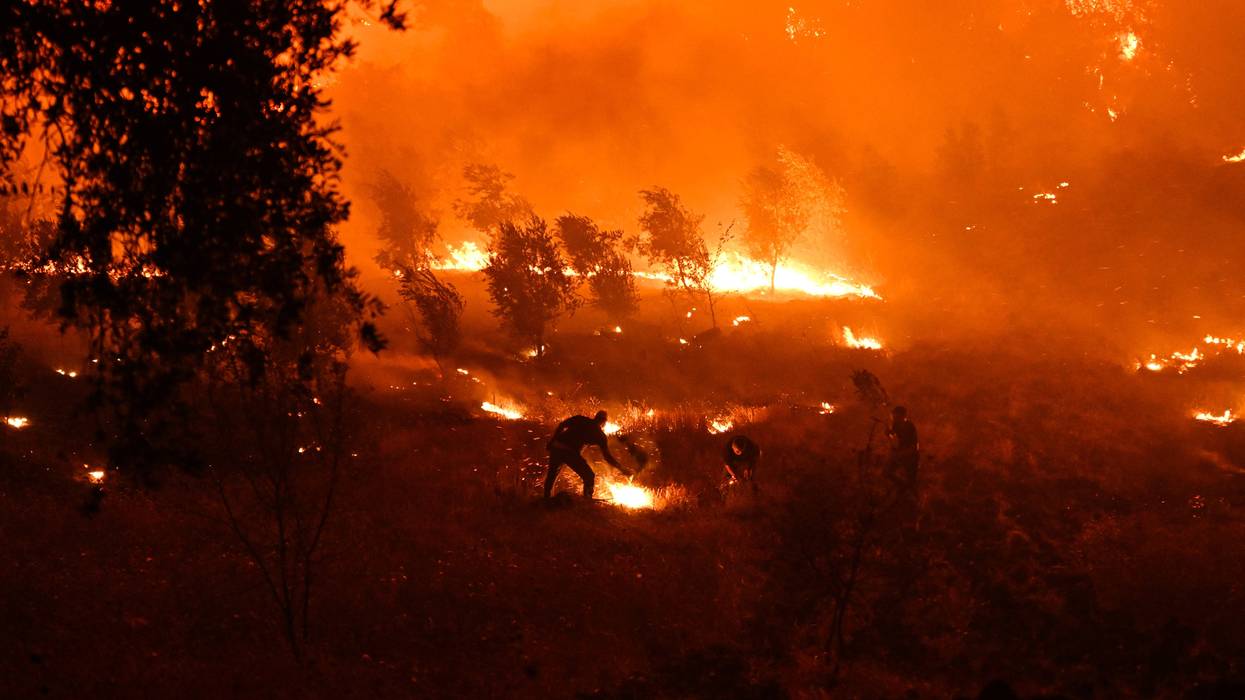
"The climate crisis is here, and the frequency and severity of extreme weather events are increasing day by day," said 350.org's Türkiye manager.
Scientists have long warned that the fossil fuel-driven climate crisis means more frequent and destructive wildfires, and blazes raging in Türkiye this week have sparked a fresh call to rapidly phase out planet-heating coal, gas, and oil.
As firefighters battled blazes in three southern Turkish provinces, Efe Baysal, Türkiye manager at the global advocacy group 350.org, pointed out that the country is set to host the next United Nations Climate Change Conference, COP31.
"In November, the world will gather in Antalya for COP31 to discuss the steps that must be taken against the climate crisis," Baysal said in a Wednesday statement. "Today, however, that same city is battling an uncontrollable wildfire that began in Aksu district of Antalya and spread throughout the region. Reports of fires are also coming in from Adana and Mersin."
"Our prayers are with those fighting the blazes on the ground to defend life," he continued. "The wildfires occurring primarily in Antalya demonstrate this truth once again: Rising temperatures create the conditions for fires to start more easily, spread faster, and become more destructive. The climate crisis is here, and the frequency and severity of extreme weather events are increasing day by day."
Baysal said that "assuming the COP31 presidency, Türkiye's responsibility is even more crucial. At COP31, Türkiye should aim to produce concrete outcomes to advance the transition away from fossil fuels. To make this leadership credible, Türkiye should announce a timeline for a phaseout of coal without delay."
"It should initiate a just transition to renewable energy that will reduce our dependence on coal, oil, and gas," he added. "It is not enough merely to respond to the consequences of the climate crisis. We must eliminate the causes that exacerbate it. COP31 is an opportunity for Türkiye to demonstrate true leadership in this direction."
Previous UN summits on the planetary crisis have ended in deep disappointment, with critics calling the "empty deal" that came out of COP30 in Brazil last year "a stark reminder that the answers to the climate crisis do not lie inside the climate talks," and, a year earlier, blasting COP29 in Azerbaijan as "a dumpster fire" and "a big F U to climate justice, to the poorest communities who are on the frontlines of climate breakdown."
Since those summits, there has been a constant stream of events that have fueled fears of a hotter world—and United Nations scientists are now warning that preventing at least a temporary temperature rise above 1.5°C, relative to preindustrial levels, is not possible, but humanity can still limit the damage by dramatically lowering emissions.
"This summer's scorching heat, raging wildfires, and deadly floods are a warning of what lies ahead," UN Secretary-General António Guterres said last week. "We must make the overshoot above 1.5 degrees as small and short as possible."
The fires in Türkiye have already proven deadly. The Aksu district mayor, Isa Yildirim, said on social media that one person died after suffering a heart attack during the fire there.
That blaze has also caused injuries. Citing the Turkish Anadolu Agency, The Associated Press reported that "two people were hospitalized with injuries to their legs while six others affected by smoke were treated on site."
As Deutsche Presse-Agentur detailed Wednesday:
Forest fires are common in Turkey in the summer months, fueled by long periods of drought and strong winds.
Cihan Erdönmez, an expert at Istanbul University, said triggers for the fires were often poorly maintained power lines running through forests.
Forestry Minister İbrahim Yumaklı said there had been more than 5,000 forest fires in Turkey in 2025 and 96% of them were directly or indirectly caused by humans.
Meanwhile, 350.org called the current blazes "a reminder that a hotter, drier climate will continue to exact its toll on ordinary people unless leaders act urgently to phase out fossil fuels."
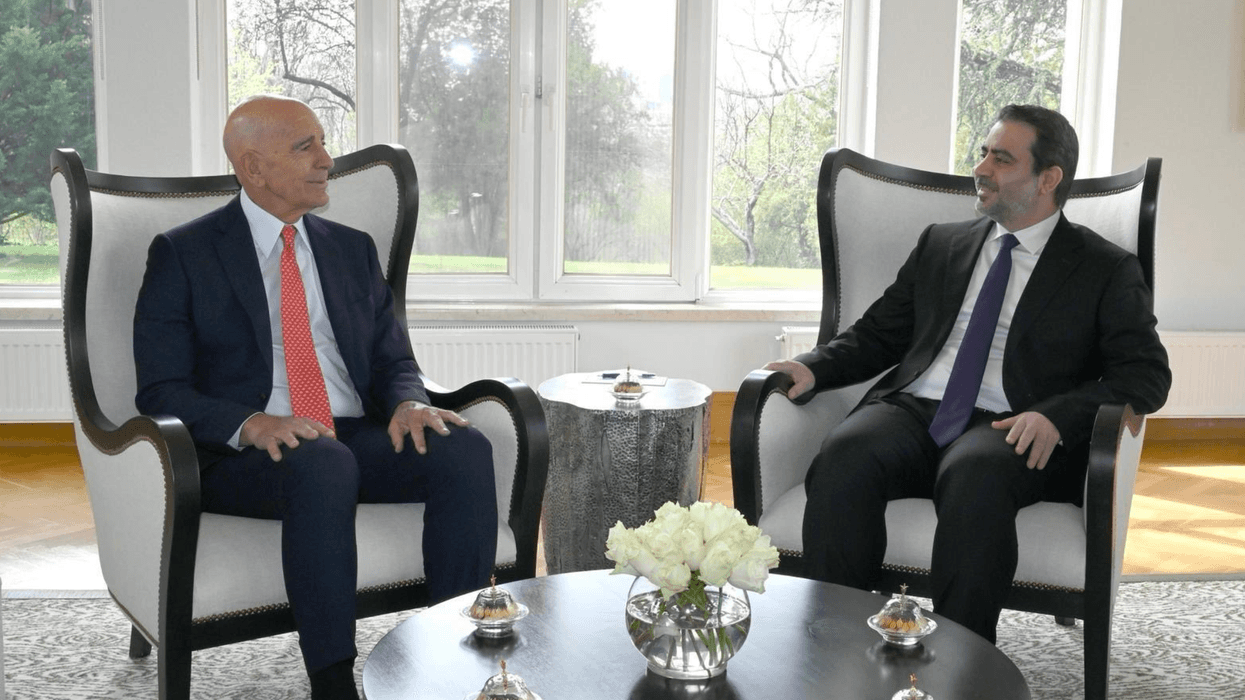
Barrack's comments—since retracted amid Republican calls for his resignation—directly contradicted the president's recognition of Israel's illegal occupation of Syrian territory conquered in 1967.
Tom Barrack, the US ambassador to Türkiye and special presidential envoy for Syria and Iraq, on Sunday retracted his acknowledgment of Israel's illegal occupation of Syria's Golan Heights amid mounting Republican calls for his resignation.
Directly contradicting Trump's formal recognition of Israel's unlawful 1981 annexation of the Golan Heights, Barrack said during a Friday interview with podcaster Mario Nawfal that Israel would face difficulties if it moved to unlawfully annex parts of southern Lebanon it invaded and currently occupies.
"In the Golan with Syria, they still occupy the Golan against the [United Nations] resolutions, against all of the international order, which has said the Golan is Syria’s," Barrack noted. He also floated the possibility that last week's Israeli strike on an air base in northwestern Syria may have been an attempt at "baiting" Türkiye.
Israel invaded and captured the strategically important Golan Heights during the Six-Day War in 1967, ethnically cleansing more than 100,000 Syrians and eventually annexing the conquered territory, a move unanimously rejected by the United Nations Security Council in Resolution 497. Since then, tens of thousands of Israeli settlers have unlawfully colonized the Syrian territory.
UN Security Council Resolution 242 demands that Israel withdraw from the Golan Heights and all occupied Palestinian territories as well.
No country recognized Israel's occupation of the Golan Heights until US President Donald Trump did so during his first term. Israeli Prime Minister Benjamin Netanyahu showed his appreciation for the move by naming one of the dozens of illegal Jewish settlements in the territory Trump Heights.
Barrack subsequently reversed himself, telling The Associated Press on Sunday that “United States policy on the Golan was set by President Trump in 2019 and is unchanged."
This, as Israeli leaders denounced Barrack's remarks and Republican politicians and pundits called for his firing or resignation.
Israeli Foreign Minister Gideon Sa'ar said the ambassador's comments were "full of inaccuracies" and “contradict the position of Trump himself regarding the Golan Heights.”
US Sen. Rick Scott (R-Fla.) said on X: "The Senate confirmed [Barrack] to enact the PRESIDENT’S AGENDA, which millions of Americans voted for. It seems the ambassador forgot that or failed to do his research, so here’s a refresher for him… President Trump has been CLEAR about Israel’s sovereignty over the Golan Heights for years!"
Far-right provocateur and Trump confidant Laura Loomer called Barrack "absolutely brain dead."
"Tom Barrack is hands down the most retarded ambassador nominated by President Trump," she contended. "He should resign for his lack of understanding of US foreign policy."
Meanwhile, some experts positively noted Barrack's short-lived acknowledgment of what the international community has long maintained.
"[Barrack] said the Golan is occupied Syrian land under UN resolutions. That is simply what the UN says. It has said it since 1967. Most of the world agrees," political analyst Michael Arizanti said on X.
"Israel's foreign minister said his remarks were full of inaccuracies," he continued. "Professional lunatic Laura Loomer demanded he resign and claimed he was compromised by Arab money, with no evidence at all! Sen. Rick Scott told him to do his research. And because Barrack had criticized Israel's strike on a Syrian air base the week before, he was accused of siding with the bad guys."
"Four attacks," Arizanti added. "Not one about the actual policy!"