

SUBSCRIBE TO OUR FREE NEWSLETTER
Daily news & progressive opinion—funded by the people, not the corporations—delivered straight to your inbox.
5
#000000
#FFFFFF
To donate by check, phone, or other method, see our More Ways to Give page.
Daily news & progressive opinion—funded by the people, not the corporations—delivered straight to your inbox.
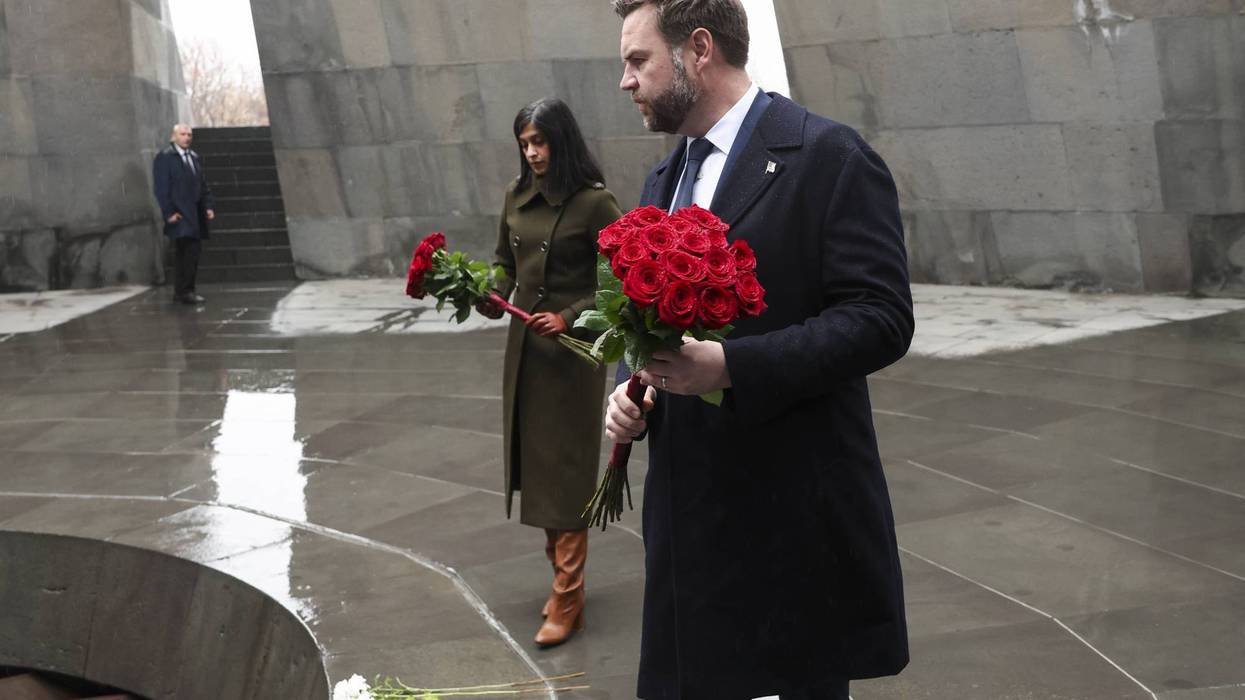
"This is brazen genocide denial," said the policy director for the Armenian National Committee of America.
The office of Vice President JD Vance made multiple posts commemorating the Armenian genocide on Tuesday, but was forced to take them down because the Trump administration doesn't formally recognize that the genocide happened.
Vance's X account posted a photo of the vice president and his wife, Usha, attending a wreath-laying ceremony at a memorial in the Armenian city of Yerevan. The post said the Vances were there "to honor the victims of the 1915 Armenian genocide."
But the post was swiftly taken down, with a Vance spokesperson blaming it on a staff member.
"This is an account managed by staff that primarily exists to share photos and videos of the vice president's activities," they said. "For the vice president's views on the substance of the question, I refer you to the comments he made earlier on the tarmac in response to the pool's question."
This was referring to Vance's comments to reporters about visiting the memorial, which were posted by an official White House account. "I'm the first vice president to ever visit Armenia. They asked us to visit the site... I wanted to go and pay my respects."
That post has since been deleted as well.
Alex Galitsky, the policy director for the Armenian National Committee of America (ANCA) reacted: "This is brazen genocide denial. An insult to the memory of the 1.5 million victims of the Armenian Genocide—and an affront to a community that fought tirelessly for decades to ensure recognition of that crime."
Historians widely agree that the Ottoman Empire's systemic killing and deportation of mostly Christian Armenians during the First World War constitutes one of the 20th century's worst genocides. According to the United States Holocaust Memorial Museum:
There were approximately 1.5 million Armenians living in the multiethnic Ottoman Empire in 1915. At least 664,000 and possibly as many as 1.2 million died during the genocide, either in massacres and individual killings, or from systematic ill treatment, exposure, and starvation.
But the government of Turkey continues to adamantly deny the genocide committed by its predecessor state to this day. And due to Turkey's status as a NATO ally, US presidents dating back more than half a century have likewise refused to describe the historic crime as a "genocide."
This began to change in 2019, when Congress passed a historic resolution finally recognizing the genocide more than a century after it began. In 2021, then-President Joe Biden became the first US president to formally acknowledge the genocide without ambiguity.
But in April 2025, after President Donald Trump returned to office, he rolled this acknowledgment back, referring to the mass killing as a "great catastrophe" and "one of the worst disasters of the 20th century" while evading the term "genocide."
Julien Zarifian, a professor of US history at the University of Poitiers in France, wrote that "Trump's reversal seemed to make genocide recognition taboo not only in the White House, but in the whole executive branch."
The return to a denialist stance put the US back into line not only with Turkey, but with Azerbaijan, with which Armenia has been locked in conflict over the disputed Nagorno‑Karabakh region for decades.
In 2023, more than 100,000 Armenians—virtually the whole population—were forced to flee the territory in what has been described as an ethnic cleansing by Azerbaijan, which occupied large parts of the area.
While the US has remained formally neutral in the conflict, it has provided hundreds of millions of dollars of security assistance to Azerbaijan under presidents of both parties, which critics say has emboldened Azerbaijan to act more aggressively. Azerbaijan notably has the steadfast backing of Turkey in the conflict, as well as key US ally Israel.
Vance's visit to Armenia was the first leg of a trip that continued to Azerbaijan, where he met with its leaders to discuss ending the conflict and to shore up an agreement that would give the US greater access to the region's natural resources.
Last August, Trump boasted of brokering a “peace deal” between the two nations, but Azerbaijan had not signed anything—only agreed to further talks.
One of the provisions of the deal pushed by the Trump administration is that Armenia would drop any legal claims against Azerbaijan over its human rights abuses, which Just Security analysts David J. Simon and Kathryn Hemmer said would be "thereby depriving Nagorno-Karabakh’s 150,000 victims of justice."
During a summit with Azerbaijani President Ilham Aliyev, Vance laid on the flattery: "Other than President Trump, the only leader in the world that has really good relations with both the Turks and the Israelis is President Aliyev," he said. "That means one, the food must be really good here, or two, he must be really charming. I can confirm that he's very charming."
Gev Iskajyan, the advocacy director of ANCA, responded: "Vance thinks Aliyev is really charming. Especially when he’s committing war crimes, rigging his own elections, or ethnically cleansing an entire people."
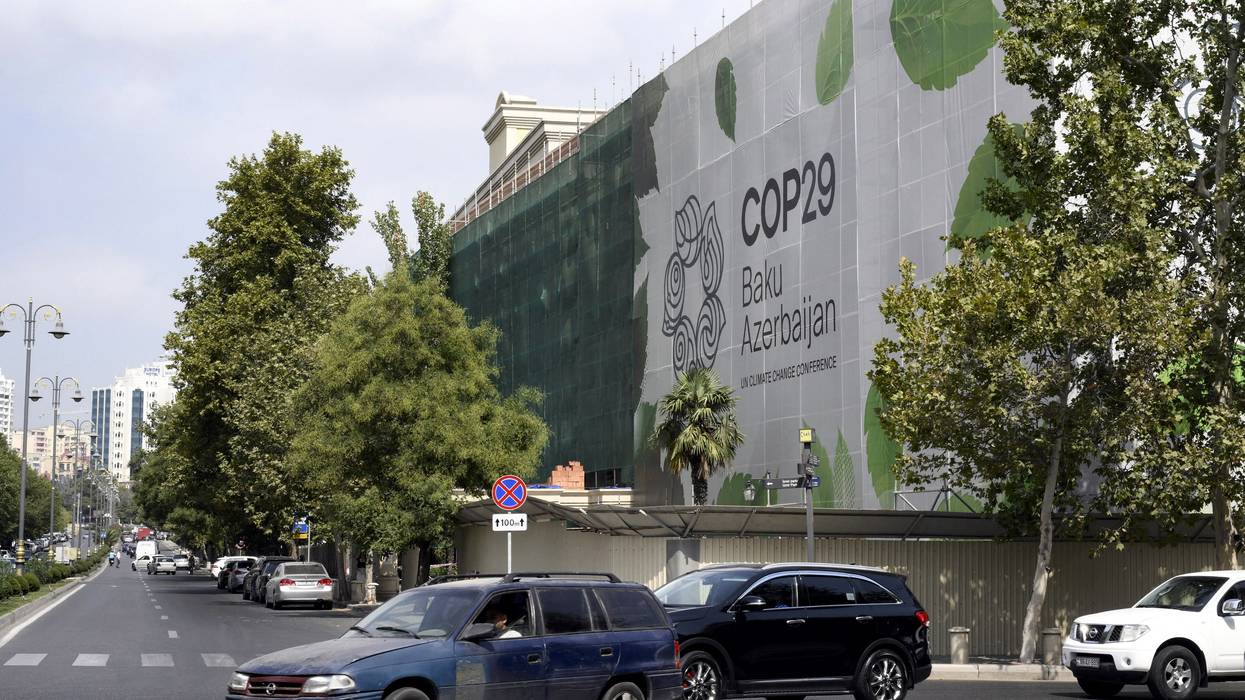
"Azerbaijan's international partners should take note and urge the authorities to end the crackdown," said a major human rights group.
Mere weeks after thousands of delegates descended on Baku, Azerbaijan for the COP29 climate summit in Baku, Azerbaijan, authorities in the country arrested multiple independent journalists on charges that one prominent human rights group called "bogus."
On December 6, police arrested six employees with the independent media organization Meydan TV: Ramin Deko (Jabrailzade), Aynur Elgunesh (Ganbarova), Aysel Umudova, Aytaj Tapdig (Ahmadova), Khayala Agayeva, and Natig Javadli on suspicion of smuggling, according to a statement from Meydan TV. Another media worker, Ulvi Tahirov, was also arrested that day. All seven have been given four months pretrial detention, according to Human Rights Watch.
In a statement released December 6, Meydan TV—which is headquartered in Berlin—said that "since the day we started our activities over a decade ago, our brave journalists have been arrested, and they and their families have been subjected to persecution. Journalists who cooperate with us have been illegally banned from leaving the country, and have been surveilled by Pegasus spyware, among other forms of pressure." Meydan TV has also called the charges "unfounded" and the detention of its journalists "illegal."
Since launching in 2013, Meydan TV has become one of the most important sources of independent news in Azerbaijan, broadcasting interviews with opposition politicians and publishing investigative reporting, according to the Eurasianet, an outlet that covers South Caucasus and Central Asia.
As part of its coverage of COP29, Meydan TV addressed the scrutiny that the Azerbaijani government has engendered for its human rights record.
Members of the Azerbaijani media were also arrested last year. Reporters with Abzas Media, Toplum TV, and Kanal 13 were arrested in 2023 and remain in pretrial custody, and like those targeted in this most recent wave of arrests they face smuggling charges, according to Human Rights Watch.
"Having created a network of laws and regulations in Azerbaijan designed to make it virtually impossible for journalists and activists carrying out legitimate work in full compliance, the government then invokes such bogus charges as politically convenient to silence critics," wrote Arzu Geybulla, a research assistant with Human Rights Watch.
Geybulla added: "Azerbaijan's international partners should take note and urge the authorities to end the crackdown, including releasing all those arbitrarily detailed, and dropping all politically motivated prosecutions."
Another rights group, Reporters Without Borders, urged the Azerbaijani government to release these journalists, as well as others that have been "arbitrarily detained."
Jeanne Cavelier, head of Reporters Without Borders' Eastern Europe and Central Asia desk, said that "barely a month after Ilham Aliyev's regime used the glitz of COP29 to polish its international image, it has resumed its relentless repression of journalists."
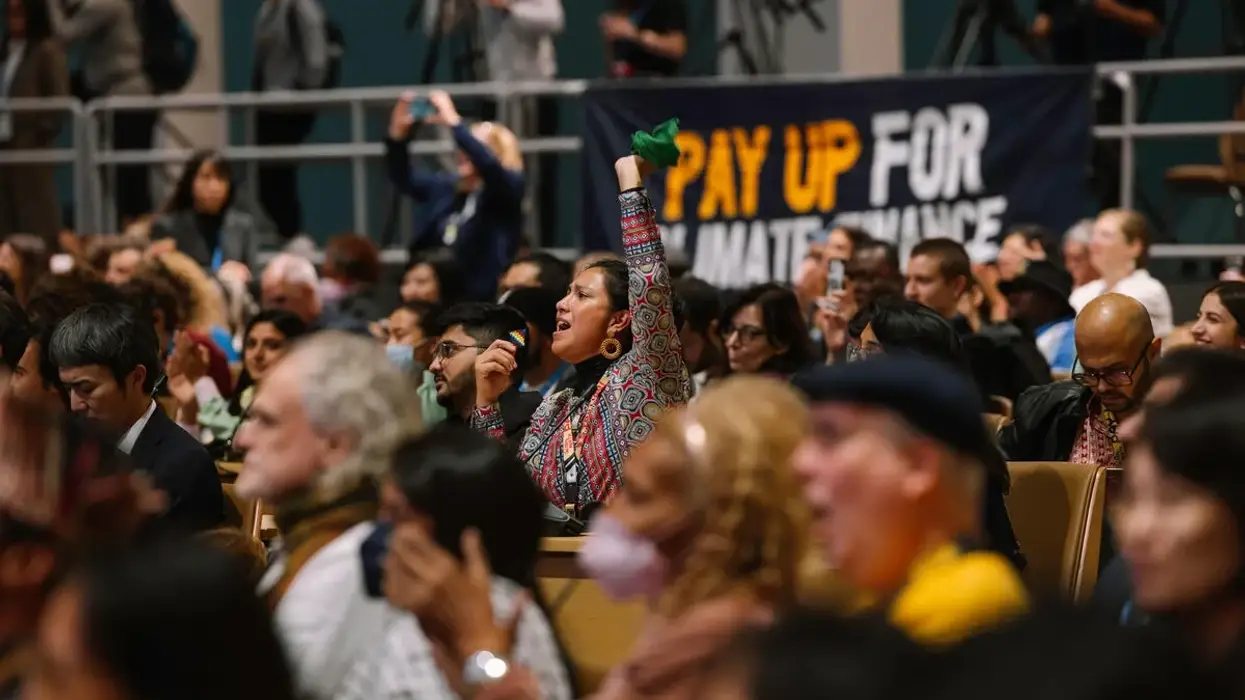
Despite what was and was not agreed in Baku, meaningful climate action will only become more urgent than ever.
After extra time of exhausting negotiations, the 29th U.N. Conference on Climate Change is over.
First, a quick refresher of what COP29 was meant to achieve: dubbed a ‘finance COP,’ countries were expected to come to Baku, Azerbaijan ready to present in good faith various finance deals to strengthen the global response to climate change.
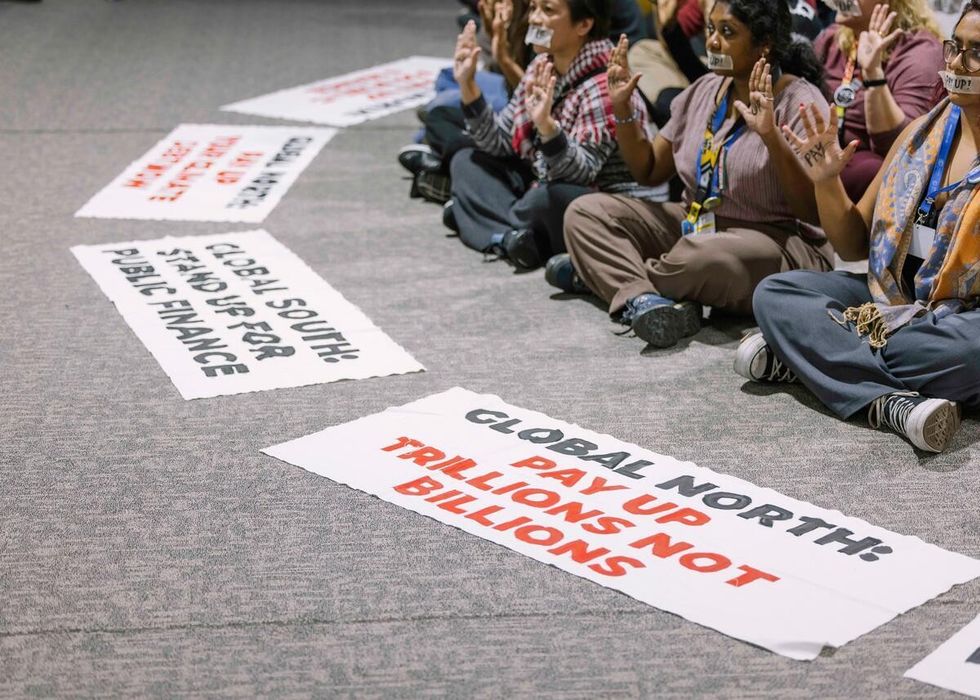 Signs call for for the Global North to "pay up" during a COP29 action in Baku, Azerbaijan. (Photo: Marie Jacquemin/Greenpeace)
The final agreement
After two slow-moving weeks of climate talks, COP29 ended with a woefully inadequate agreement on a new annual public climate finance goal of US$300 billion by 2035, a dismaying offering. The final agreement overall also included disappointing loopholes on carbon markets and little climate action, but no backsliding on the COP28 decision to transition away from fossil fuels. The final outcome in Baku removed the references to the Make Polluters Pay principle at the last hour, further disheartening civil society and countries already bearing the brunt of the climate crisis.
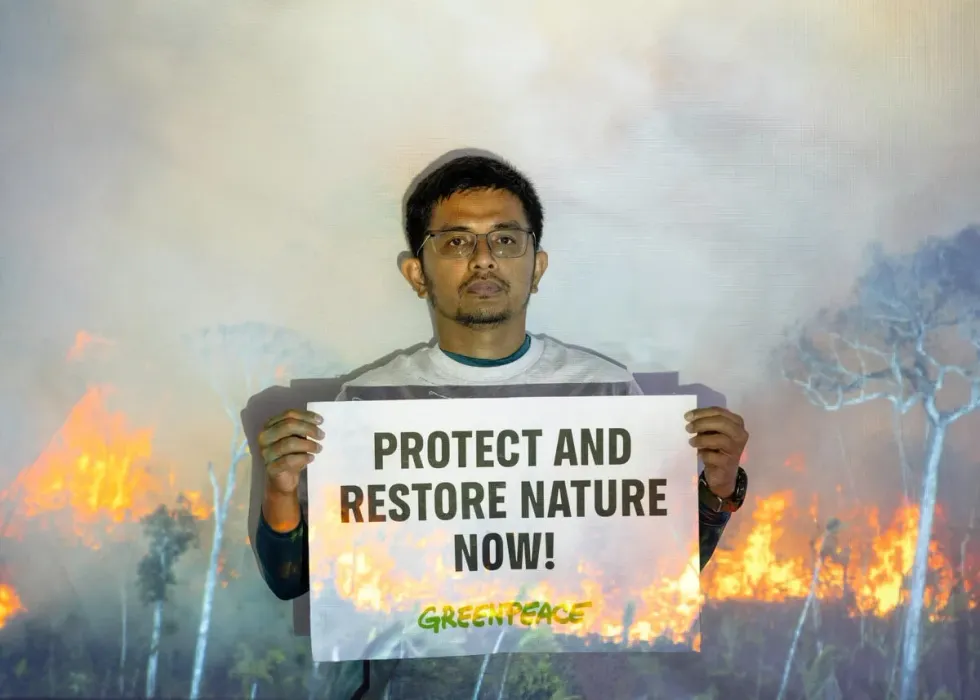 A Greenpeace projection Photo Booth in the Civil Society Hub at COP29 in Baku, Azerbaijan with portraits and images of climate impacts sends a message to country delegates that the time for action is now. (Photo: Marie Jacquemin/Greenpeace)
COP29 was an opportunity to agree on a significant climate finance goal and follow up on what was promised at COP28 and the Biodiversity COP16. But that did not exactly happen. Despite what was and was not agreed in Baku, meaningful climate action will only become more urgent than ever.
A moment of hope
Not all is lost though. The final outcome fell short of what was hoped for, and what is needed to battle the climate crisis. But the people power in Baku made its presence felt. Navigating tight guidelines and pushback on peaceful protest for a third year in a row, civil society got creative to still make its demands heard, and will return even more determined next year. The time for debate is over; decisive action is the demand of the hour.
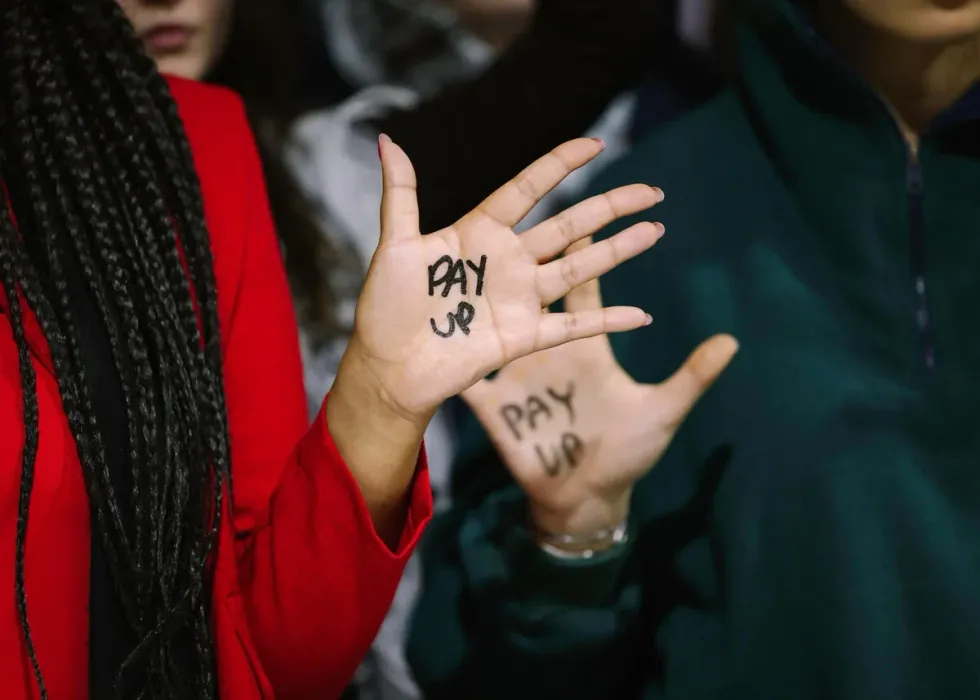 A close-up of hands with "pay up" written on them at COP29 in Baku, Azerbaijan. (Photo: Marie Jacquemin/Greenpeace)
What comes next for climate action
COP30 will return next year, in the Amazon city of Belem, Brazil, with high expectations for renewed climate action.
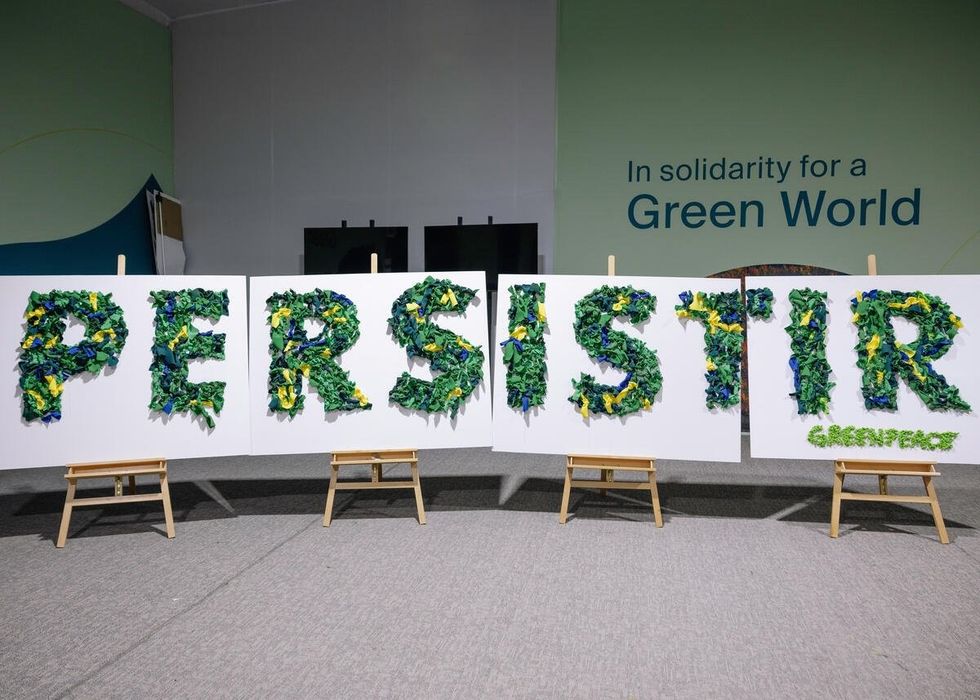 A sign of "persistir," Portuguese for "to persist," sends a signal that the work must continue onto COP30 in Brazil. (Photo: Marie Jacquemin/Greenpeace)
But climate justice will only be delivered when there is adequate, and then some, finance for climate-vulnerable communities, and not just distributed for loss and damage, but for adaptation and mitigation too. A future with climate justice means the production and consumption of oil and gas has been ended, forests protected, and polluters paying for the damage, destruction, and deaths the climate crisis is causing.
Baku might have stumbled on climate justice, but we will persist in the fight for our future.

Critics of the "COP of false solutions" said that instead of much-needed funding, developing nations got "a global Ponzi scheme that the private equity vultures and public relations people will now exploit."
It was early Sunday by the time the United Nations climate summit wrapped up in Baku, Azerbaijan after running into overtime to finalize deals on carbon markets and funding for developing countries that were sharply condemned by campaigners worldwide.
"COP29 was a dumpster fire. Except it's not trash that's burning—it's our planet," declared Nikki Reisch of the Center for International Environmental Law. "And developed countries are holding both the matches and the firehose."
Recalling last year's conference in the United Arab Emirates, Oil Change International global policy senior strategist Shady Khalil highlighted that "the world made a deal at COP28 to end the fossil fuel era. Now, at COP29, countries seem to have been struck with collective amnesia."
"With each new iteration of the texts, oil and gas producers managed to dilute the urgent commitment to phase out fossil fuels," Khalil said. "But let's be clear: Rich countries' failure to lead on fossil fuel phaseout and to put the trillions they have hoarded on the table has done more to imperil the energy transition than any obstructionist tactics from oil and gas producers."
This year's conference began November 11 and was due to conclude on Friday, but parties to the Paris agreement were still negotiating the carbon market rules, which were finalized late Saturday, and the new collective quantified goal (NCQG) on climate finance.
"The carbon markets in Article 6 of the Paris agreement were pushed through COP29 in a take-it-or leave-it outcome," said Tamra Gilbertson of Indigenous Environmental Network, decrying "a new dangerous era in climate change negotiations."
As Climate Home News reported, they establish two types of markets: "The first—known as Article 6.2—regulates bilateral carbon trading between countries, while Article 6.4 creates a global crediting mechanism for countries to sell emissions reductions."
The outlet pointed to expert warnings that "the rules for bilateral trades under 6.2 could open the door for the sale of junk carbon credits—one of the weaknesses of the previous crediting mechanism set up by the U.N. known as the Clean Development Mechanism (CDM)."
Jonathan Crook of Carbon Market Watch said in a statement that "the package does not shine enough light on an already opaque system where countries won't be required to provide information about their deals well ahead of actual trades."
"Even worse, the last opportunity to strengthen the critically weak review process was largely missed," he continued. "Countries remain free to trade carbon credits that are of low quality, or even fail to comply with Article 6.2 rules, without any real oversight."
As for Article 6.4, “much lies in the hands of the supervisory body" that's set to resume work in early 2025, said Crook's colleague, Federica Dossi. "To show that it is ready to learn from past mistakes, it will have to take tough decisions next year and ensure that Article 6.4 credits will be markedly better than the units that old CDM projects will generate."
"If they are not, they will have to compete in a low-trust, low-integrity market where prices are likely to be at rock bottom and interest will be low," Dossi added. "Such a system would be a distraction, and a waste of 10 years worth of carbon market negotiations."
Some campaigners suggested that no matter what lies ahead, the embrace of carbon markets represents a failure. Kirtana Chandrasekaran at Friends of the Earth International said that "the supposed 'COP of climate finance' has turned into the 'COP of false solutions.' The U.N. has given its stamp of approval to fraudulent and failed carbon markets."
"We have seen the impacts of these schemes: land grabs, Indigenous peoples' and human rights violations," Chandrasekaran noted. "The now-operationalized U.N. global carbon market may well be worse than existing voluntary ones and will continue to provide a get out of jail free card to Big Polluters whilst devastating communities and ecosystems."
Chandrasekaran's colleague Seán McLoughlin at Friends of the Earth Ireland was similarly critical of the conference's finance deal, asserting that "Baku is a big F U to climate justice, to the poorest communities who are on the frontlines of climate breakdown."
"COP29 has failed those who have done least to cause climate change and who are most vulnerable to climate breakdown because the process is still in thrall to fossil fuel bullies and rich countries more committed to shirking their historical responsibility than safeguarding our common future," he said. "Now it's back to citizens to demand our governments do the right thing. We must keep demanding the trillions, not billions owed in climate debt and a comprehensive, swift, and equitable fossil fuel phaseout. The struggle for climate justice is not over."
Campaigners and developing nations fought for $1.3 trillion in annual climate finance from those most responsible for the planetary crisis. Instead, the NCQG document only directs developed countries to provide the Global South with $300 billion per year by 2035, with a goal of reaching the higher figure by also seeking funds from private sources.
The deal almost didn't happen at all. As The Guardian detailed Saturday: "Developed countries including the U.K., the U.S., and E.U. members were pushed into raising their offer from an original $250 billion a year tabled on Friday, to $300 billion. Poor countries argued for more, and in the early evening two groups representing some of the world's poorest countries walked out of one key meeting, threatening to collapse the negotiations."
While Simon Stiell, executive secretary of U.N. Climate Change, celebrated the NCQG as "an insurance policy for humanity, amid worsening climate impacts hitting every country," Chiara Martinelli, director at Climate Action Network Europe, put it in the context of the $100 billion target set in 2009, which wealthy governments didn't meet.
"Rich countries own the responsibility for the failed outcome at COP29," Martinelli said. "The talk of tripling from the $100 billion goal might sound impressive, but in reality, it falls far short, barely increasing from the previous commitment when adjusted for inflation and considering the bulk of this money will come in the form of unsustainable loans. This is not solidarity. It's smoke and mirrors that betray the needs of those on the frontlines of the climate crisis."
Also stressing that "it's not even real 'money,' by and large," but rather "a motley mix of loans and privatized investment," Oxfam International's climate change policy lead, Nafkote Dabi, called the agreement "a global Ponzi scheme that the private equity vultures and public relations people will now exploit."
"The terrible verdict from the Baku climate talks shows that rich countries view the Global South as ultimately expendable, like pawns on a chessboard," Dabi charged. "The $300 billion so-called 'deal' that poorer countries have been bullied into accepting is unserious and dangerous—a soulless triumph for the rich, but a genuine disaster for our planet and communities who are being flooded, starved, and displaced today by climate breakdown."
Rachel Cleetus from the Union of Concerned Scientists, who is in Baku, took aim at not only rich governments, but also the host, saying that "the Azerbaijani COP29 Presidency's ineptitude in brokering an agreement at this consequential climate finance COP will go down in ignominy."
Cleetus' group is based in the United States, which is preparing for a January transfer of power from Democratic President Joe Biden to Republican President-elect Donald Trump, who notably ditched the Paris agreement during his first term.
"The United States—the world's largest historical contributor of heat-trapping emissions—is going to see a monumental shift in its global diplomacy posture as the incoming anti-science Trump administration will likely exit the Paris agreement and take a wrecking ball to domestic climate and clean energy policies," Cleetus warned. "While some politically and economically popular clean energy policies may prove durable and action from forward-looking states and businesses will be significant, there's no doubt that a lack of robust federal leadership will leave U.S. climate action hobbled for a time."
"Other nations—including E.U. countries and China—will need to do what they can to fill the void," she stressed. "Between now and COP30 in Brazil next year, nations have a lot of ground to make up to have any hope of limiting runaway climate change."
Ben Goloff of the U.S.-based Center for Biological Diversity called out the departing Biden administration, arguing that it "should be going out with at least a signal of its moral climate commitment, not copping out ahead of the Trump 2.0 disaster."
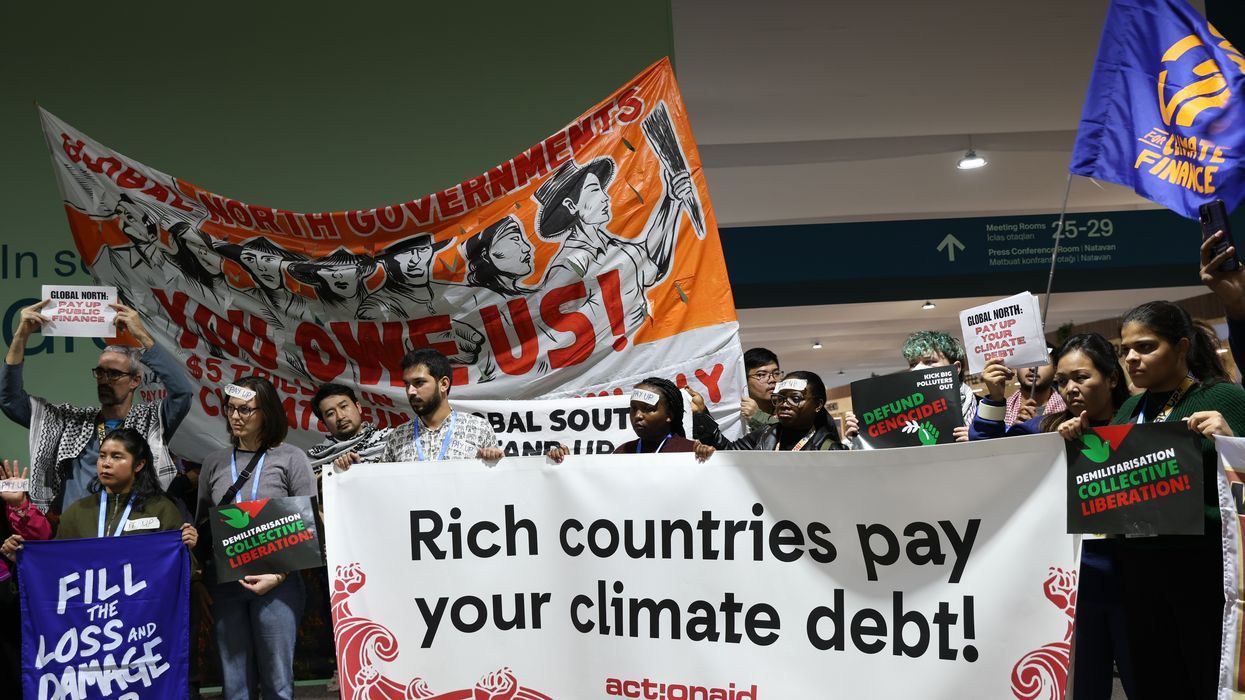
"This is a shameful failure of leadership," said one Oxfam campaigner. "There is only one option for those grappling with the harshest impacts of climate collapse: trillions, not billions, in public and grants-based finance."
With the United Nations' annual climate summit scheduled to end Friday in Baku, Azerbaijan, green groups denounced the latest draft finance deal, which would direct the Global North to provide just $250 billion per year to help developing countries with emission cuts and adaptation—far below the $1.3 trillion campaigners demanded.
Although the figure represented progress from Thursday, when there was a placeholder "X" for the new collective quantified goal (NCQG) on climate finance, Oil Change International global public finance manager Laurie van der Burg still stressed that "this text is an absolute embarrassment. It's the equivalent of governments handing the keys to the firetruck to the arsonists."
There is a broader goal to raise $1.3 trillion in annual climate finance, but that would include funding from private sources.
"The vague $1.3 trillion investment target is not to be relied on and the $250 billion goal is not debt-free. Previous suggestions to end fossil fuel handouts and make polluters pay have all been axed," Van der Burg noted. "This amounts to a cop-out for polluters and allows rich countries to dodge their responsibilities by relying on the private sector and even developing countries to cover the bill, creating a debt trap for countries most vulnerable to the climate crisis."
She was far from alone in calling out developed nations, which previously failed to deliver on a 2009 pledge of $100 billion annually for poorer countries impacted by the climate emergency by 2020.
"With a paltry climate finance offer of $250 billion annually, and a deadline to deliver as late as 2035, richer nations including E.U. countries and the United States are dangerously close to betraying the Paris agreement," Rachel Cleetus, policy director of the Union of Concerned Scientists' Climate and Energy Program, said from Baku.
Parties to the 2015 Paris agreement hope to keep global temperature rise this century "well below" 2°C, relative to preindustrial levels, with a target of 1.5°C. However, a U.N. analysis revealed last month that the world is currently on track for 2.6-3.1°C of warming by 2100.
"The central demand coming into COP29 was for a strong, science-aligned climate finance commitment, which this appalling text utterly fails to provide" Cleetus highlighted. "Wealthier nations seem content to shamefully renege on their responsibility and cave in to fossil fuel interests while unjustly foisting the costs of deadly climate extremes on countries that have contributed the least to the climate crisis."
Jess Beagley, policy lead at the Global Climate and Health Alliance, a consortium of over 200 health professional and civil society groups, warned that "if COP29 agrees on the text shown to us today, it would sign a death sentence for millions."
The alliance's executive director, Jeni Miller, pointed out that "many of the countries most impacted by climate change are already paying more to service their international loans than the combined budgets for their health systems and education, with devastating impacts on people's health and well-being."
"It is unconscionable that wealthy countries are proposing a climate finance deal that could worsen the debt burden of countries facing the brunt of a climate crisis they did not cause," Miller asserted. "As people around the world experience firsthand the devastating impacts of heat, storms, floods, and droughts, the failure of developed countries to step up to their responsibilities is completely unacceptable, not to mention profoundly shortsighted."
Oxfam International's climate justice lead, Safa' Al Jayoussi, took aim at the summit's host, saying: "This is a shameful failure of leadership. The COP29 Presidency's top-down 'take-it-or-leave-it' approach has sidelined progressive voices. All while rich countries boycott climate justice by refusing to pay up and putting only false solutions on the table."
"No deal would be better than a bad deal, but let's be clear—there is only one option for those grappling with the harshest impacts of climate collapse: trillions, not billions, in public and grants-based finance," Al Jayoussi added.
Power Shift Africa director Mohamed Adow said that "our expectations were low, but this is a slap in the face. No developing country will fall for this. What trick is the presidency trying to pull? They've already disappointed everyone, but they have now angered and offended the developing world."
"The figure of $250 billion is about 20% of what developing countries have asked for. Are we really settling for a fifth of the ambition needed to tackle the climate crisis?" he continued. "It seems that building an ambitious climate finance outcome in Baku is not the ballgame this presidency is playing."
The U.N. climate summits often run into overtime, but there are concerns that COP29 talks could collapse entirely, given that there must be unanimous support for final deals. There are also fears that rich countries may fail to deliver on any pledge—again—especially with the return of U.S. President-elect Donald Trump, who ditched the Paris agreement during his first term.
"The Global North must stop playing poker with people's lives and pay their overdue debt," declared Namrata Chowdhary, chief of public engagement at 350.org, one of the groups calling for an overhaul of the COP process. "We need real leadership—from wealthy nations and the presidency—to land this deal. If they can't deliver, they must step aside, because we will not accept a bad deal that fails to meet the moment."
"As the world watches what should be the final day of this year's climate talks, the agreement we came here for remains elusive. This new climate finance goal is three years in the making, and the global majority remains leaps and bounds ahead of the governments who are continuing to stall and let progress slip away in the name of profits," Chowdhary concluded. "But we will not be silenced. At COP29, we hold the line in our demand for more climate finance, not this bare minimum offer."
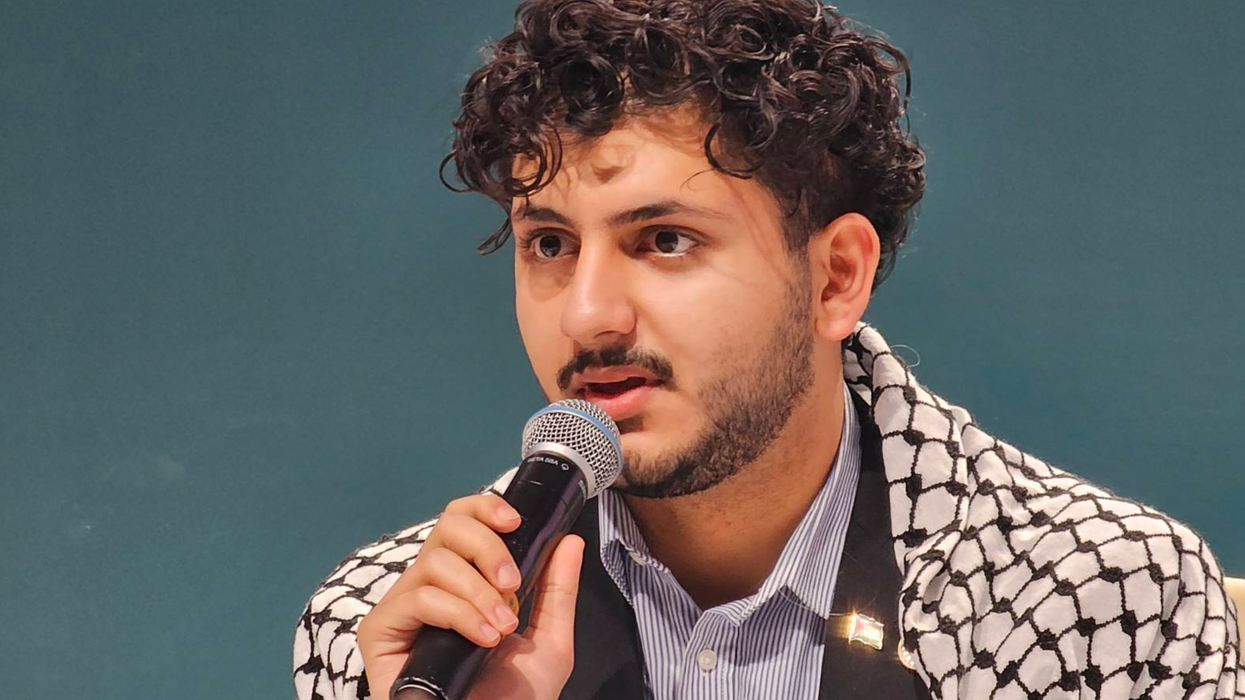
"The complicity of international corporations and governments in fueling Israel's war machine represents the latest chapter in a long history of fossil fuel companies enabling genocide and mass atrocities," said one campaigner.
On the fourth day of the United Nations Climate Change Conference, or COP29, in Azerbaijan, green groups highlighted how fossil fuel companies "enable and profit from Israel's genocide in Gaza," continuing "a long history of the industry's complicity in mass atrocities worldwide."
"The fossil fuel industry is culpable in death and destruction around the world, not only through the climate crisis they cause but through the violence they fuel," Oil Change International said in a statement Thursday.
"Every shipment of oil to Israel carries the weight of Palestinian lives."
The group—along with others including Friends of the Earth Palestine/PENGON and Tipping Point U.K.—is seizing the opportunity presented by COP29 to draw attention to an aspect of the Gaza war often overlooked amid the staggering death and destruction wrought by Israel's 13-month onslaught, which a United Nations panel on Thursday
said is consistent with the "characteristics of genocide."
"Investor-owned and private oil companies supply 66% of oil to Israel—more than a third of that from major oil companies like Chevron, Shell, and BP—despite genocide warnings from the International Court of Justice," Oil Change said. "BP is among the top corporate suppliers of oil to Israel. It operates and is the largest owner of the BTC pipeline, which transports Azeri oil that is ultimately sent to Israel."
The BTC pipeline runs from Baku—the Azeri capital and COP29 host city on the Caspian Sea—through Azerbaijan, Georgia, and Turkey and, according to Oil Change, supplies Israel with 28% of its oil, belying Thursday's claim by Turkish President Recep Tayyip Erdoğan that the country has severed all ties with Israel.
An
investigation published in September by Energy Embargo for Palestine showed how oil transported via the BTC pipeline is refined into jet fuel for Israel Defense Forces warplanes.
Oil Change continued:
BP has also been granted gas exploration licenses in occupied Palestinian waters. By providing it with fuel, BP enables the Israeli government to commit genocide in Gaza. Chevron operates and partially owns the two largest Israeli-claimed fossil gas fields, Tamar and Leviathan, making it the main international actor extracting fossil gas claimed by Israel in the Mediterranean. In 2022, 70% of Israel's power was generated from fossil gas extracted by Chevron. Through the millions of dollars it pays Israel for its gas extraction licenses, Chevron is also directly contributing to financing Israel's regime of genocide, apartheid, settler colonialism, and occupation.
"The complicity of international corporations and governments in fueling Israel's war machine represents the latest chapter in a long history of fossil fuel companies enabling genocide and mass atrocities,"
Mohammed Usrof, a member of the Palestinian Youth Climate Negotiation Team at COP29 who lost 21 relatives to Israel's onslaught, said in a statement Thursday. "Every shipment of oil to Israel carries the weight of Palestinian lives."
Tipping Point U.K. organizer Sadie DeCost said that "BP originated as a key enabler of the British empire, and continues as one of the top 10 largest carbon emitters in the world."
"It operates and is the largest owner of the BTC pipeline, which ships Azeri oil to fuel Israel's genocide in Gaza," DeCost added. "BP's historic colonial harms continue through its support of violent regimes. Its emissions are estimated to cause hundreds of billions of dollars of loss and damage. We must shut down BP to end this injustice, and demand climate reparations for impacted communities around the world."
Mahmoud Nawajaa, general coordinator of the Boycott, Divestment, and Sanctions movement for Palestinian rights, lamented that "criminal fossil fuel companies that have shamefully been invited to join COP29 are not only responsible for destroying the planet, they are also responsible for fueling genocide and other atrocity crimes around the world, from Gaza to Myanmar to the Amazon region."
"Prime among these is Chevron, [which] continues to supply Israel and its military with energy and millions of dollars in tax revenues through fossil fuel extraction activities in the Mediterranean," Nawajaa added.
Oil Change International U.S. campaign manager Allie Rosenbluth asserted Thursday that "the fossil fuel industry is not just destroying our climate—it's actively profiting from genocide."
"These companies and the governments enabling them know exactly how their supplies are being used against Palestinian civilians," she continued. "Palestinian groups and their allies around the world have called for an energy and arms embargo demanding governments and companies cease all fuel and arms shipments to Israel until it ends the genocide and its regime of apartheid against the Palestinian people."
"The fossil fuel industry is not just destroying our climate—it's actively profiting from genocide."
"Despite these strong demands, the U.S. continues to be a key supplier of JP8 jet fuel to Israel, which is crucial for its military operations," Rosenbluth added. "This isn't just business—it's complicity in mass atrocities."
Oil Change noted that while many governments have prioritized profit and national interest over human rights in Palestine, Colombia—which is led by leftist President Gustavo Petro—"has set a strong precedent and issued an embargo on coal exports to Israel" as part of a broader suspension of relations due to the Gaza onslaught.
This is more than just a symbolic move, as Israel imports more than half of its coal from Colombia.
"Others must follow suit," Oil Change stressed.

"We are hurtling toward 3° of warming; human rights can't withstand dangerous distractions," said one climate justice advocate.
The 2024 United Nations Climate Change Conference has been called the "climate finance" conference, with participants expected to establish a new annual target for providing funds for the Global South to confront the climate crisis—but campaigners on Monday expressed concern that on the first day of the summit, there are already signs leaders will push for "false solutions" that only perpetuate planetary heating.
An annual climate finance target of $100 billion was set by policymakers in 2009, but that pledge expires at the end of 2024 and advocates say it's just a fraction of what is needed to help developing countries invest in climate crisis mitigation and adaptation to planetary heating.
Tasneem Essop, executive director of Climate Action Network, which includes more than 1,900 global civil society groups, told The Guardian that "a down payment of $5 trillion" annually in climate finance is needed, noting that "the debt is much larger."
But Sébastien Duyck, senior attorney for the Center for International Environmental Law, said the Azerbaijani presidency of the 29th Conference of the Parties of the U.N. Framework Convention on Climate Change (COP29) is already looking "to speed up the endorsement of new standards on carbon markets."
"This is extremely alarming. If this moves forward, it would be a real cop-out by governmental delegations gathered in Baku," said Duyck, referring to the capital of Azerbaijan, where COP29 is being held over the next 11 days.
Duyck pointed to new standards that were passed ahead of COP29 by a supervisory body with the aim of operationalizing and expanding carbon markets—pricing mechanisms that allow governments and other entities to trade greenhouse gas emission "credits."
"Fully operationalizing carbon markets on Day 1 would set a terrible precedent for the next two weeks, starting COP29 on a disastrous note and eroding the trust needed to achieve a bold, transformative agreement on finance," said Jax Bongon, climate justice policy officer for IBON International.
Proponents say carbon markets allow wealthy countries or corporations to purchase "carbon credits" from countries in the Global South; in exchange, governments in developing countries are paid to build renewable energy infrastructure, plant trees, or take other sustainable steps.
Those steps are thought to "buy time" for the wealthy country or company to cut down on their own pollution. But the scheme has been exposed as allowing companies to continue polluting without the supposed "offsets" actually helping to mitigate the climate crisis.
Lise Masson, climate justice and energy advocacy officer at Friends of the Earth (FOE), emphasized that "carbon markets are not climate finance, and we cannot accept these neocolonial schemes to be propped up as a success of COP29."
"Decisions at COP29 threaten to open the floodgates for a global carbon market that would have devastating impacts on communities in the Global South, on Indigenous peoples, and on small peasant farmers first and foremost," said Masson.
Marta Scaaf, who directs Amnesty International's climate justice program, warned COP29 delegates may "bypass accountability norms on Day 1 and issue recommendations to govern carbon markets, which are essentially pollution permits."
Essop suggested that carbon markets are being pushed as a false solution in order to save wealthy countries from having to provide what is needed for the Global South to mitigate the climate crisis and adapt to the hurricanes, flooding, drought, and other extreme conditions that have been linked to planetary heating.
"Five trillion dollars is what we come here to demand," Essop said. "Governments out there are absolutely capable of finding the money that does wrong in the world. They found the money for military spending. They found the money for the genocide in Gaza. They find the money to subsidize and support the fossil fuel industry. To come here and say that they do not have money is absolutely untruthful and unacceptable."
Meena Raman of FOE Malaysia stressed that climate finance "isn't charity; it's reparations for a climate debt long overdue."
"Grants must replace loans, and loss and damage funding must also be scaled up tremendously to meet the needs of impacted countries in the Global South," said Raman. "Debt cancellation for the Global South is essential to break cycles of injustice. The money exists: redirecting funds from global military spending and climate justice are paths forward."
The international human rights group Global Witness drove home the point by taking over the web address that some might arrive at if they were looking for more information about COP29.
Visitors to cop29.com on Monday were met with the words "Payback Time."
"We've taken over cop29.com to unite the millions of people demanding justice," said Global Witness. "This summer broke heat records again. Wildfires, droughts, and storms are killing thousands and driving up the cost of food, energy, and insurance. Worse is coming."
"COP29 is our moment," added the group. "The loss and damage fund was created to help developing nations that are being hit hardest by climate chaos... Fossil fuel companies rake in billions. They must pay into the fund to help communities rebuild, adapt, and repair some of the damage they've caused."
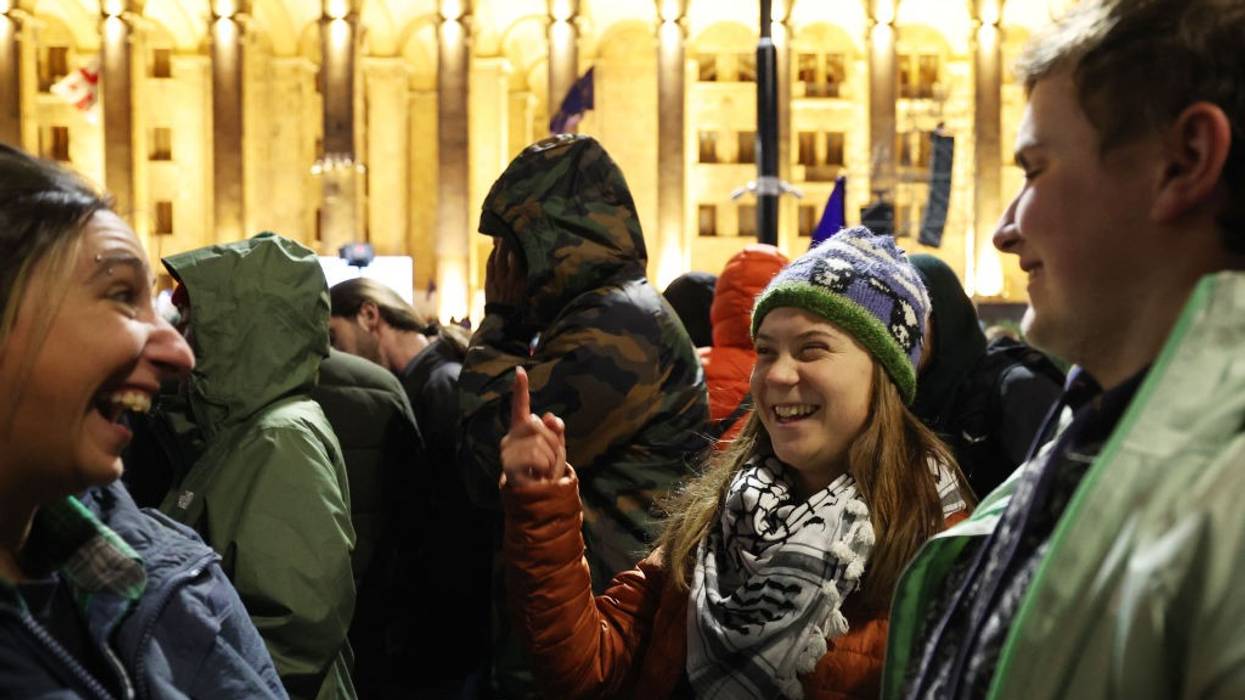
"We can't legitimize COP meetings in their current form," Thunberg said. "The last three years, they've taken place in authoritarian regimes, and holding them in such places leads nowhere."
When national delegates and civil society representatives gather in Baku, Azerbaijan next week for the United Nations Climate Change Conference, one prominent climate voice will not be among them—Greta Thunberg.
The 21-year-old Swedish activist said she would not attend COP29 due to Azerbaijan's authoritarian record and reliance on fossil fuels, and criticized the U.N. Framework Convention on Climate Change (UNFCCC) for naming it as a host.
"It is extreme hypocrisy of the UNFCCC to let yet another authoritarian petrol state host the COP," Thunberg said in a video posted on social media.
Thunberg expressed concerns about Azerbaijan's record of stifling internal dissent as well as its ethnic cleansing of Armenians. The U.N. summit comes a little over a year after Azerbaijani forces entered the disputed, ethnic Armenian-controlled territory of Nagorno-Karabakh, prompting most ethnic Armenians in the area to flee across the border to Armenia. Armenia told the International Court of Justice in April that Azerbaijan had "completed" ethnic cleansing in the territory and was "erasing all traces of ethnic Armenians' presence" there.
At the same time, Thunberg added her voice to the many environmental advocates who have called out Azerbaijan for planning to expand its fossil fuel production. Azerbaijan's selection was especially controversial because it came on the heels of the United Arab Emirates' hosting of COP28, which also prompted backlash due to the country's human rights record and reliance on oil and gas. Both COPs also came under fire for selecting presidents with close ties to state-run oil companies.
"It is a slap in the face to all the people who are suffering from the climate emergency and from the repression and oppression of the Azerbaijani regime," Thunberg said.
"Climate activism and human rights are united."
There is another reason that Thunberg cannot attend COP29: It has a closed land border, which means that people can only enter the country by plane, something Thunberg has vowed not to do for climate reasons.
"The population in Azerbaijan is trapped. They can't travel in or out of the country except through the airport. Even if I could go there, I wouldn't. I don't want to legitimize the regime," Thunberg told Blankspot.
Instead, she is traveling through Europe ahead of COP29, coming as close as possible to Azerbaijan. Currently, she is in Georgia where people are in the streets protesting a parliamentary election they say was rigged by the ruling party with help from Russia. After COP29 starts, she plans to continue on to Armenia.
During COP29, she will meet with Azerbaijani activists who are not in the country, as well as activists from Georgia and Armenia.
She told Blackspot that one purpose of her trip is to "highlight that we can't legitimize COP meetings in their current form. The last three years, they've taken place in authoritarian regimes, and holding them in such places leads nowhere."
More broadly, she also aims to foreground the relationship between the climate crisis and human rights.
"In countries like Sweden, many people are surprised when you talk about how climate activism, the LGBTQ movement, and human rights are interconnected," she said. "But in countries where people face repression and rights violations every day, activists see a clearer connection."
"Of course, we can't talk about the climate until our fundamental human rights are met," Thunberg continued. "'We can't talk about the climate if we can't go out on the street and hold a sign,' they say. Unfortunately, the climate crisis is extremely urgent, so it has to happen simultaneously. Climate activism and human rights are united."
Thunberg's remarks come as there has been an increasing crackdown on climate and other forms of nonviolent protest, including in so-called democratic countries. In its most recent report on the killing of environmental defenders, Global Witness observed that countries like the U.S., U.K., and E.U. member states had continued to criminalize climate protesters in 2023, with new laws targeting dissent and dolling out harsh penalties for common protest tactics.
"Nonviolent, nondestructive climate protest is increasingly being subjected to criminal prosecution, while punishments are being ratcheted up to levels befitting violent and far more serious crimes," author Stan Cox observed in October.
As for the outcome of COP29 itself, Thunberg does not hold high expectations.
"The only thing that will come out of it is loopholes, more negotiations, and symbolic decisions that look good on paper but are really just greenwashing," Thunberg said.
However, she maintained faith in the importance of speaking out on climate and other issues.
"Every time those in power get a chance to act, they choose not to and instead listen to industries that destroy the planet and violate human rights, rather than doing what's right," Thunberg said. " I want to spread awareness, focus on grassroots activism, and support those who are trying to make a difference."

"Looking at the state company's expansion plans, international partnerships, and geopolitical ties, as we prepare for COP29, we cannot but ask ourselves: Did we put the fox in charge of the henhouse?" one author asked.
In less than a month, Azerbaijan will host the United Nations' 29th Climate Change Conference, or COP29. But a new report on its state oil company bolsters concerns as to how well the country can guide the first round of international climate talks after world leaders pledged to transition away from fossil fuels in 2023.
The report, released by the environmental and human rights groups Urgewald and CEE Bankwatch on Wednesday, details the State Oil Company of the Azerbaijan Republic's (SOCAR) political clout, its expansionist oil and gas production plans, and its links to human rights abuses.
"Given SOCAR's pivotal role in Azerbaijan's economy and its close ties to the country's political elite, its influence will surely be felt throughout the climate negotiations in Baku this November," Urgewald energy campaigner and report lead author Regine Richter said in a statement. "Looking at the state company's expansion plans, international partnerships, and geopolitical ties, as we prepare for COP29, we cannot but ask ourselves: Did we put the fox in charge of the henhouse?"
"Critics have raised the question why the presidency of COP29 has yet again been awarded to a petrostate propped up by oil majors and one which is massively increasing its gas production."
SOCAR is deeply entwined with the Azerbaijani government. Its president and 14-member board are appointed by the country's president, and the nation's current leader, Ilham Aliyev, previously served as SOCAR's vice president. The government-selected president of the COP29 talks, Mukhtar Babayev, was a former SOCAR executive who worked at the company for 26 years.
Weeks after Azerbaijan was announced as the host of COP29, SOCAR launched a renewable energy division called SOCAR Green. Despite this, the state company seems committed to fossil fuels, both now and in the future.
"SOCAR is expanding its fossil fuel production aggressively, raising questions about Azerbaijan's climate leadership," Urgewald said.
SOCAR produced 174 million barrels of oil equivalent in 2023, nearly twice what BP produced in the region the same year. It also directed almost 97% of its capital expenditure that year into oil and gas and nearly $300 million between 2022 and 2024 toward searching for new reserves.
Moving forward, SOCAR has signed an agreement with the European Union to boost gas exports by 17% by 2026. Azerbaijan's total oil and gas production is on track to increase by one-third by 2033—from 37 billion cubic meters to 49 billion.
However, SOCAR is not acting alone. It is enabled by international fossil fuel companies and financial institutions. SOCAR has ongoing partnerships with BP, TotalEnergies, Italy's Eni, and the United Arab Emirates' Abu Dhabi National Oil Company (ADNOC) and signed new agreements in 2024 with Russia's Tatneft and Kazakhstan's KazMunayGas. Between 2021 and 2023, major banks offered it loans or backing worth over $6.8 billion, first among them JPMorgan Chase and Citigroup.
The report also details SOCAR's ties to Azerbaijan's record of human rights abuses, including unsafe working conditions, delays in payment, unlawful contract terminations, and pollution. Critics of the company such as human rights advocates and journalists have been harassed, imprisoned, and abducted.
"The Azerbaijani government shows zero tolerance toward dissent and is not interested in civic dialogue," said Manana Kochladze, strategic area leader for democratization and human Rights at CEE Bankwatch. "The state meets resistance with brutal violence and persecution, both domestically and internationally."
Kochladze continued: "The cases of Gubad Ibadoghlu, academic and fossil fuels expert, and Afgan Sadiqov, the editor-in-chief of the Azerbaijani media Azel.TV, currently in Georgia awaiting extradition, exemplify this grim pattern. Where other governments partner with civil society to tackle the monumental challenge of the climate crisis, the Aliyev regime systematically threatens, intimidates, and harasses environmental and human rights defenders. This attitude does not inspire confidence in the upcoming negotiations in Baku."
COP29 comes at an especially urgent moment in the attempt to tackle the climate crisis, as 2024 is likely to be the warmest on record—surpassing 2023—and scientists warn that emissions must be halved by 2030 to avoid ever-escalating climate impacts. Yet it is the second COP in a row to be hosted by a nation with a vested interest in maintaining the use of fossil fuels, following COP28 in the United Arab Emirates.
"Critics have raised the question why the presidency of COP29 has yet again been awarded to a petrostate propped up by oil majors and one which is massively increasing its gas production," the report authors observed. "Azerbaijan's strong dependence on oil and gas raises questions about its ambition and leadership on climate action."
They noted that the president of COP28, Sultan Ahmed Al Jaber, was similarly linked to the oil and gas industry, retaining his role as CEO of ADNOC while guiding the talks. Now, the fear is that history could be repeating when the world can least afford it.
"The Azerbaijani government's attempt to hide its cronyism and human rights record behind a global climate summit has been blasted as blatant greenwashing," the report authors said. "The COP climate summits represent the only opportunity for world leaders to come to an agreement on solutions to tackle climate change. It is crucial that those who host the negotiations are true climate leaders, not those with a vested interest in keeping the world hooked on fossil fuels."
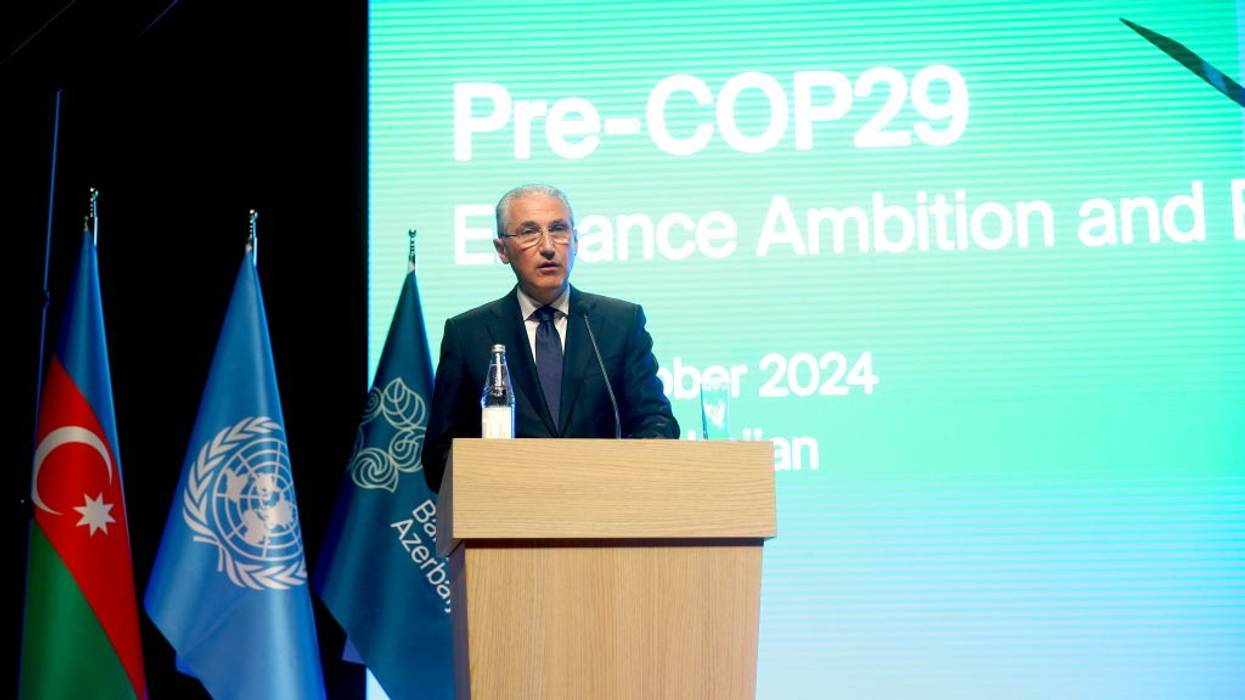
"In the months leading up to COP29, Azerbaijani authorities have arrested dozens of prominent activists and media figures on baseless, serious criminal charges," notes a new report.
Human Rights Watch on Thursday revealed the host country agreement between the United Nations and Azerbaijan for next month's climate summit, on the heels of an HRW report exposing "the government's concerted efforts to decimate civil society and silence its critics."
COP29 is scheduled for November 11-22 in Baku. Although the agreement was signed in August by U.N. Framework Convention on Climate Change (UNFCCC) Executive Secretary Simon Stiell and Mukhtar Babayev, Azerbaijan's minister of ecology and natural resources, it was not made public until the U.S.-based human rights group obtained a copy.
Myrto Tilianaki, senior advocate for HRW's environment and human rights division, said it "is disappointing but not surprising" that the 20-page document "is replete with significant shortcomings and ambiguities on the protections for participants' rights."
As Tilianaki detailed in a Thursday dispatch on the HRW website:
For instance, the agreement states that while conference participants "shall enjoy immunity for legal process in respect of words spoken or written and any act performed by them," a separate clause requires them to respect Azerbaijani laws and not interfere in its "internal affairs."
There is no clarity in the agreement about what actions could constitute "interference" with Azerbaijan's "internal affairs," and whether Azerbaijan's laws apply in the U.N.-run conference zone. Given Azerbaijan's strict limitations on freedoms of expression and assembly, which violate international human rights law, participants' actions within the zone could be subject to reprisals outside the zone.
Tilianaki cited HRW and Freedom Now's Tuesday report, 'We Try to Stay Invisible': Azerbaijan's Escalating Crackdown on Critics and Civil Society, which states that the Caucasus country "has had a poor human rights record for many years, with the government regularly targeting those who play important watchdog roles in society, including human rights defenders, journalists, and independent civic activists."
"The government's vicious crackdown on critics and dissenting voices intensified over the last two years," the report emphasizes. "Among the methods the government uses to target these individuals are arrests and prosecutions on politically motivated, bogus criminal charges, as well as the arbitrary enforcement of highly restrictive laws regulating nongovernmental organizations. This system effectively excludes independent activists and media from lawful ways of carrying out their work, thereby pushing them to the margins of the law and heightening their vulnerability to retaliatory criminal prosecution."
"Azerbaijan is rich in oil and natural gas, depends heavily on fossil fuels for its state budget, and in 2024 is also hosting COP29, the United Nations Climate Conference," the 74-page document adds. "In the months leading up to COP29, Azerbaijani authorities have arrested dozens of prominent activists and media figures on baseless, serious criminal charges. The arrests are overwhelmingly linked to highly restrictive laws on nongovernmental organizations."
COP29 continues a trend in which a country hosts a summit that is supposed to bring world leaders together to tackle the climate emergency despite being incredibly involved with fossil fuels and repressive of critics—as Alex Galitsky of the Armenian National Committee of America wrote in a Thursday opinion piece for The Hill, "letting Azerbaijan host the U.N. climate conference is a sick joke."
Civil society groups, Tilianaki noted, "have repeatedly called for host country agreements to be made public for participants to have confidence that their rights will be protected when attending climate conferences," pointing out that Amnesty International obtained a copy of the last year's agreement only months after the United Arab Emirates hosted COP28.
As Amnesty explained in July, "In 2023 conclusions of the Bonn Climate Conference, parties to the UNFCCC highlighted that host countries should reaffirm their commitment to upholding the purposes and principles of the Charter of the United Nations and international human rights law before, during and after UNFCCC sessions and mandated events, and to ensure that participants can exercise those human rights without fear of intimidation and repercussions."
Although the COP28 agreement "contains some positive elements," Amnesty said, the 2023 conclusions "were not implemented" in the document. The group detailed various "elements of concern" and published the full text. It has also documented the history of human rights abuses in Azerbaijan.
Tilianaki declared Thursday that "it is regrettable that these agreements are shrouded in secrecy, and it shouldn't fall to civil society organizations to share them publicly."
"In the interests of transparency and accessibility, the UNFCCC should publish past, current, and future agreements on its website," she said. "More urgently, it should publicly call upon the Azerbaijani government to respect its human rights obligations and facilitate a rights-respecting climate conference."