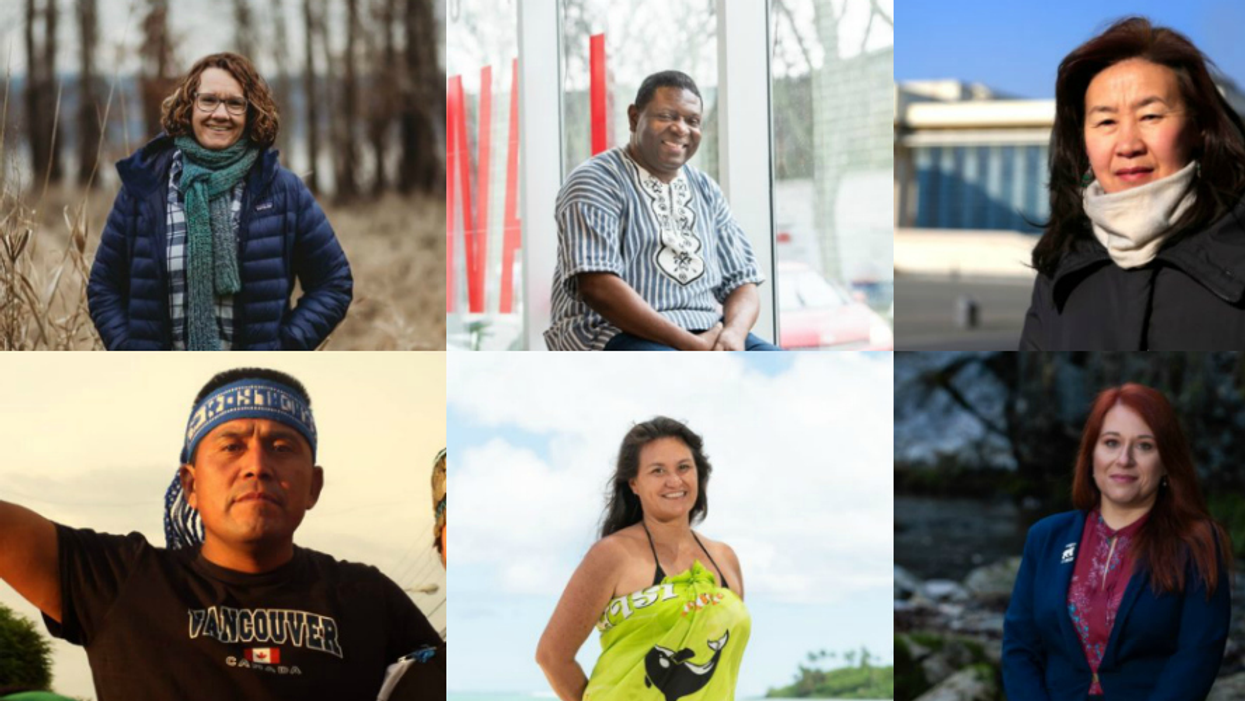
Many of us have heard some version of this statistic: the average age of farmers worldwide hovers around sixty years old. In the U.S., farmers over sixty-five outnumber farmers under thirty-five by a margin of six to one. People like Hou Xueying are going against the tide which has been tugging young people from the land for a long time, leaving older people alone on farms, with no one to take their place once they're gone (except, increasingly, robots). So truly, as this older generation of farmers retires--a generation that widely embraced large-scale industrial farming--the question grows more pressing: who will grow the food of the future and what will their farms look like?
Every person on earth needs food every day. Every day, food is tended, harvested, transported, stored, and served up on our tables. In a very real sense, food cannot be separated from life itself. And so it has been said that changing the way we grow and eat food is one of the most powerful tools we have for changing our economies and society as a whole.
So when we ask: what will the farms of the future look like? We should really be asking--what do we want the future to look like? And then answers may begin to emerge.
Though many are enamored of technological solutions, others have pointed to tech's inescapable environmental impacts, to the way it strengthens corporate monopolies, and to the already evident, and as yet unforeseen, effects that it has on society, including on human health and happiness. When I look at the young people I know, at the issues that concern them most, four points of focus rise to the surface. These can be rather broadly categorized as: climate and the environment, diversity in its myriad forms, economic inequality, and a lack of community, loneliness. Young people don't want to work the land if that means working long hours for low pay, using dangerous chemicals, while the fruits of their labor are borne away to profit corporate executives they will never meet. But that doesn't mean a future in which we don't work the land at all. In fact, it means quite the opposite.
Climate change and agriculture are inextricably intertwined. Climate change and agriculture are inextricably intertwined.
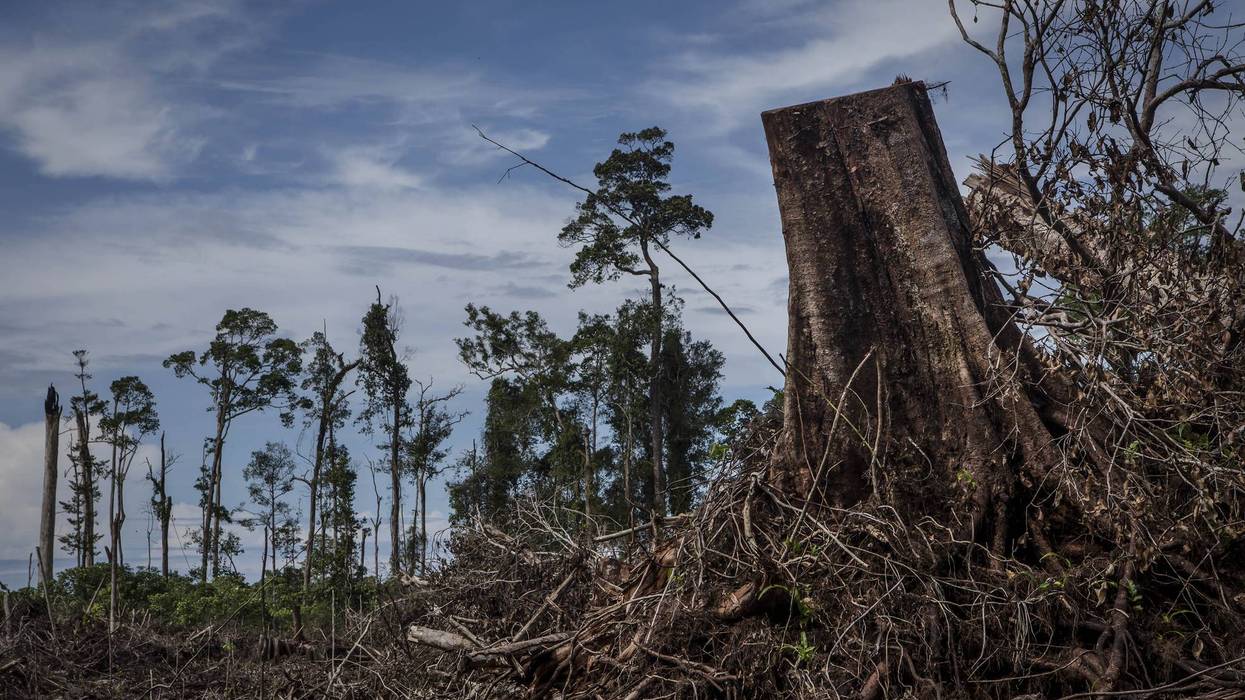
As I'm sure many of us know by now, our globalized industrial food system is a major contributor to anthropogenic climate change. The machinery and chemicals involved in industrial farming rely heavily on fossil fuels. So does packaging and refrigeration, not to mention the transport of food around the world by truck, ship, and plane. Many countries import and export nearly identical quantities of the same products. All of this creates economic activity, which adds to indicators of "progress" like GDP; not reflected in these numbers are the environmental costs of all the fossil fuels burned in the process. At the same time, more and more of the forests, grasslands, and wetlands that helped maintain the nearly perfect balance of the carbon cycle until the start of the industrial revolution are being cleared to make way for livestock or annual crops, which do not play the same role in sequestering carbon. This wreaks more havoc with the earth's natural climate-stabilizing systems.
On the other side of the coin, the changing climate is threatening agriculture as we know it. Increasingly extreme temperatures and weather events harm food crops. Studies show that the parts of the global South where people are already food insecure are being hit hardest. Many of these regions are less industrialized, less "developed" parts of the world, and so contributed little to the creation of this crisis--and yet, they are suffering the most.
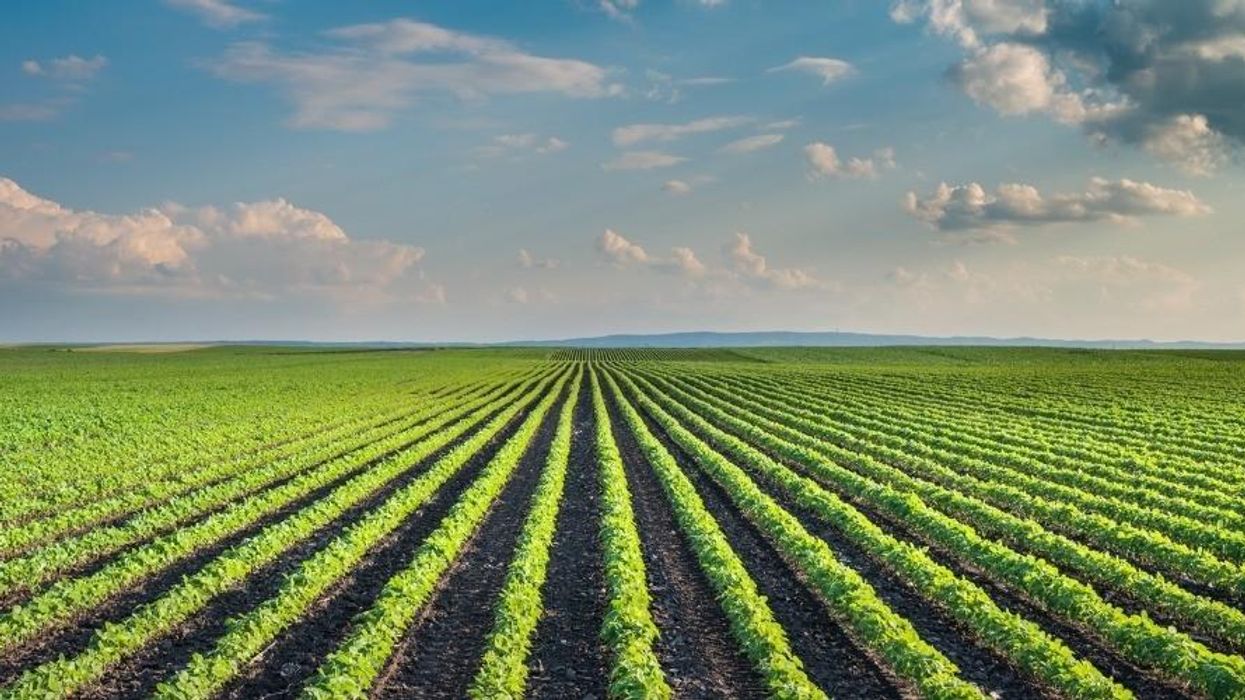
In short, industrial monocultures -- those big farms you see with acres and acres of corn or soy, not to mention those giant cattle feedlots--are systems that degenerate, they die,over time. They produce more carbon emissions than they sequester. Their pesticides kill insects, including pollinators, a trend which may soon initiate "the collapse of nature." Every year, they suck the nutrients from the soil, and replace them with toxic chemicals. They draw water from local watersheds, pollute it, and let it run off into gutters, or evaporate when hot weather comes, rather than employing management techniques that would allow it to sink back down to replenish local aquifers. Eventually, land treated this way becomes barren, eroding away to create dead zones in rivers and oceans or being lifted up by the wind to join the particulate matter in the air, poisoning the lungs of human beings (it's telling that a recent report showed that Fresno and Bakersfield, in the heart of California's industrial farm-filled Central Valley, have the worst particulate pollution in the USA). The air is truly brown in such places. The crops grown on these farms are sent off by truck or ship to factories where they're processed and packaged--using more resources--and finally delivered to our homes, often in a form that's as bad for our bodies as the dust is for our lungs.
This is what agriculture looks like in a globalized corporate economy, where, like the nutrients from the soil, the livelihood is sucked from farming communities and siphoned up into the coffers of a few giant corporations.
This is what agriculture looks like in a globalized corporate economy, where, like the nutrients from the soil, the livelihood is sucked from farming communities and siphoned up into the coffers of a few giant corporations.
But as I'm sure many of us know by now, this is not what agriculture has to look like, by any means. Farms can be regenerative, living systems, that produce a bounty but no waste. They can supply the needs of a local community--if that community is willing embrace the idea of eating a mostly seasonal, locally adapted diet--with no need for long-distance transport by trucks, ships, or planes. Farms do not have to be net carbon emitters--plants absorb CO2 when they photosynthesize, and only emit it very slowly, through respiration and decomposition; studies show that, if managed correctly, farms, orchards, and even animal grazing systems can become places that sink and sequester CO2.
Not only that, but these are the same kinds of diversified farming systems that make people most resilient in the face of climate change. If we grow one kind of bean, for example, as a cash crop, and then the summer is too hot for that variety, we lose absolutely everything--all of our profits, which we would have used to buy food throughout the year. If we grow a diverse variety of crops, however, all with slightly different climactic limitations, then not only will a heat wave fail to do us in, but we can feed ourselves, right from our own backyards, no matter what happens. In fact, there are many points in favor of small diversified farms. Even minimal diversification has been shown to increase crop yields, while intensive permaculture systems--which have only recently been recognized by science -- have the potential to completely transform our concept of productivity, and of what a "farm" is.
But that's only the beginning.
When we talk about "diversified farms," we usually mean crop diversity. But there is also wild biodiversity, human diversity, cultural diversity, language diversity, diversity in ways of thinking and being--all of which oppose the corporate consumer human monoculture which is so swiftly, insidiously spreading. Researchers have correlated biodiversity with language diversity, while others have found that certain regions function as "bio-cultural refugia," harboring "place specific social memories related to food security and stewardship of biodiversity." It's easy to see these ideas brought to life in the context of a local food culture--crop varieties, local species and geography, language, and other aspects of culture like food preparation, celebrations, ways of passing knowledge on to the next generation, are all intimately connected. Lose any one element and the whole system is threatened. Colonizers have long removed Indigenous people from their land knowing that this in turn will deprive them of their food culture, and so make them dependent on the colonizer's economy--creating widening ripples of destruction.
In the same way that a colonizing culture hopes to put the world to work for a single purpose (usually, creating wealth for a specific set of colonizing elites) vast industrial farms destroy diverse ecosystems and replace them with a single species, like corn. This has been a driving force behind the sixth mass extinction which is urgently threatening all life on earth. But human beings are animal species too, after all, who could be playing supportive roles in diverse ecosystems, rather than acting as agents of destruction. In fact, corn now has a bad reputation in many parts of the world, but the corn, and the humans who first helped it to evolve thousands of years ago, are not to blame. There are few things more beautiful than the gemlike kernels of the heirloom corn varieties which long provided the basis of a healthy, vibrant, balanced diet for people throughout what is now Mexico and the United States--and which still does so for some today. These varieties are adapted to be drought-resistant, to withstand extremes of heat or cold, and are integral to many aspects of the cultures that rely upon them for survival.
This brings us back to the idea of a changing climate, of extremes. Over all the years that people have been planting seeds, they have been participating in a process of evolutionary adaptation: they've been selecting the seeds that thrived in their particular soil, with their particular weather conditions, their particular light. Seeds banks are great--especially those that save only Indigenous, non-corporate patented varieties; but they are not enough. We need living seed banks, seeds planted every year--eased into an uncertain future--if we want a real hope for survival.
Not only that, but farmers who grow a single crop for export instead of growing for their local community are at the mercy of another force as volatile the weather: the global economy. Many of us remember The Grapes of Wrath, the image of men dousing oranges with kerosene, throwing potatoes into the river and guarding them with guns, while the children of the migrant laborers looked on, starving. Modern versions of this still happen. Millions of people are hungry, and yet the amount of food we waste every day is absolutely staggering.
As John Steinbeck wrote, back in 1939, in a passage that still captures the essence of the global food system today:
"There is a crime here that goes beyond denunciation. There is a sorrow here that weeping cannot symbolize. There is a failure here that topples all our success. The fertile earth, the straight tree rows, the sturdy trunks, and the ripe fruit. And children dying of pellagra must die because a profit cannot be taken from an orange."
Of course, the global economy in general is vastly unequal. This relates to the food system in different ways in different parts of the world. In wealthy, industrially developed countries, fresh, local, organic foods are generally thought of as being accessible only to high-income people (and to a great extent this is true), while organic farming is thought of as an occupation accessible only to people with privilege (also true, in some cases). Meanwhile, in the less "developed" world, locally grown and adapted foods, along with farming, are often stigmatized as backward, while the fat and sugar-filled processed foods that have wreaked havoc with the health of the developed world are held up as symbols of the future.
I believe that it's generally wrong to tell anyone what they should or should not be eating, but it is important to question these kinds of assumptions. At the moment, high quality, local, organic food is a symbol of privilege in developed countries. But this is due to a rigged economic system--in which tax laws, trade agreements, government subsidies, and absolutely outrageous advertising budgets for things like sugary drinks and processed foods, systematically bolster multinational corporations--and not because of any quality inherent to the food itself. Once, not so long ago, it was the less economically privileged people who grew fresh, heirloom organic produce--of a quality that many of us can only dream about today--in backyards, on farms, in empty lots. Today, we think of processed and fast foods as being the cheapest options. But this, again, is because governments are doling out subsidies to corn and soy farmers, raising insurance and loan rates on fruit and veggie farmers, and handing ever more power to big business. We think of growing one's own food as something that is only accessible to those with privilege, and to a great extent this is true as well. Land is prohibitively expensive, and time, under capitalism, is the most scarce, the most precious resource of all. The typical CEO is paid 162 times what his low-level employees make per year, and so many must work multiple jobs and eighty-hour weeks if they want to feed their families. Of course, the poor quality of affordable foods contributes to health problems that take up more time and increase financial burdens.
These are horrible structural injustices, and the structures that perpetrate them have to be dismantled. Yet, while the food system is a great place to start, we must not forget that many of the people who have been responsible for growing food over the last several hundred years have done so in the context of slavery, or of exploitative tenant or migrant farming, leaving legacies of trauma connected to land and food that cannot, and should not, be easily forgotten.
However, despite these absolutely undeniable wrongs, many are beginning to agree that without food sovereignty (defined here as,"The right of peoples to healthy and culturally appropriate food produced through ecologically sound and sustainable methods, and their right to define their own food and agriculture systems,") we cannot have meaningful control over our lives, or our futures. As Leah Penniman, of Soul Fire Farm in Albany, New York, points out, there is a lot of racism built into the food system -- food apartheid, as she describes it--and the separation of certain people from land and good food has not been an accident. She is one of many at the forefront of a movement that is reconnecting systemically marginalized people to land and to food. This can be as simple as growing fresh food in vacant lots, on rooftops, on the grounds of community buildings like libraries, schools, churches. "Crop swaps," or movements like #FoodIsFree -- ways of trading produce for low or no cost--are amazing solutions that not only equalize the local food game, but also bring people together, building real community.
Meanwhile, in the global South, some are rejecting the idea that leaving the land for polluted, overpopulated cities is a sign of progress. One's income might be higher working in an urban sweatshop than it would be in a rural village. But that increased income does not necessarily reflect an increased quality of life. In villages where people own their own land and live as they have for generations--using clean water, eating local foods, making clothes and other goods from locally sourced materials, relying on community support for things like child care--a comfortable life can cost almost nothing. (This is why corporate land grabs, for purposes like mining, logging, oil drilling and factory farming, are among the most pressing human rights issues of our time.) In confirmation of this, the Food and Agriculture Organization of the UN has declared that small family farming is the only way to feed a growing population, while the economic powers that be have confirmed it by creating a climate in which those who fight for land rights must fear for their lives.
The creation of local food economies can play a meaningful role in equalizing society as a whole.
In the end, you could say it comes down to this: if we all divest our time, energy and money from the corporations that fill megastores and supermarkets, and invest instead in ourselves, in local farmers and small local businesses, then we can keep money and precious resources circulating in our communities. When we do so, the creation of local food economies can play a meaningful role in equalizing society as a whole. And there are added benefits. When people and local governments reclaim their resources, it weakens the economic power of corporations, and strengthens democracy. Not only that, but societies that don't leave people desperate are societies where people are less likely to turn against each other. There is the potential for a decline in xenophobia and conflict, and for diverse communities to unite, instead, against the real enemies: those who profit enormously off a system of gross injustice, and inequality.
Nashira is an urban ecovillage near the Colombian city of Cali. It is run entirely by women, most from low-income families, and many of whom were left as single mothers by decades of civil conflict. Other women living at Nashira are survivors of domestic or sexual abuse. All are looking for a safe place to raise children, and a way to put food on the table.
Nashira can provide them with both--and more. It is a self-sustaining ecovillage, with a matriarchal democratic system of governance, that is built and operates on strict ecological principles. The fact that Nashira residents grow their own food as a community, as well as producing and selling sustainable food for income, has given a lot of these women and their families true safety, freedom, and stability for the first time in their lives.
Around the world, ecovillages more or less like Nashira are emerging. They are home to every kind of person, and yet they tend to share one thing in common: a focus on the importance of growing food as a community for sustainability, economic independence, health, and happiness.
There has been a lot of discussion about how best to name our time in history--the "Technological Age," perhaps?--but George Monbiot has declared that it can most accurately be described as "The Age of Loneliness." Our mental health statistics are grim--including, notably, the suicide statistics for farmers struggling in the industrial food system (here are some from the USA and India). We work long hours and are dependent on a few corporations for all of our basic needs (looking at you, Amazon), while technology is allowing for ever fewer human interactions (many people I know have their groceries delivered while they're at work, and never see the inside of a store at all). While online communities have emerged that do serve beneficial purposes, it's simply not enough. Human beings are social animals. We're evolved to rely upon each other--for everything. We're calmed by interdependent, mutually beneficial relationships, by support and sharing. We're also calmed, strengthened, and satisfied by working with living plants and animals, especially when, by doing so, we're securely able to feed our families. Around the world, growing food has proven beneficial for prisoners, school children, youth in foster care,unhoused peoples and trauma survivors.
And of course, we all know that there's nothing better than food for bringing people together. Whether it's organizing a work party to pick berries, planning produce-trading parties, preparing potlucks for celebration, or simply running into friends at a local market during daily shopping, the interactions we have in the context of a local food culture make the world a less lonely place.
Ok, so the farms of the future should be regenerative, diverse, accessible, community-oriented, places of celebration. But for many of us--in particular those who are interested in actually becoming farmers -- there are still a lot of barriers in the way of getting started.
The cost of land is the biggest. In the USA, between 1992 and 2012, three acres of farmland were lost to development every minute. Particularly near urban centers--where organic farmers find their largest markets--real estate developers are able to pay so much more than farmers can afford (banks are nervous about lending to farmers under the best of circumstances, and for young farmers starting out with student debt the prospects are even worse). At the moment, with real estate developers making bank on new developments, GDP rising when food is transported across national borders, and the fossil fuel industry still benefiting from long distances between growers and consumers--as bizarre as that sounds in our burning world--there remains little incentive for those in power to change this system. Fortunately, a number of organizations and local governments have taken on the difficult work of exploring alternative models of land ownership, setting up farmland trusts, and giving low or no interest loans to beginning farmers. Models like Community Supported Agriculture (CSA), in which community members pay for food shares at the start of a growing season, provide farmers with critical financial safety nets that help them stay afloat.
Gaining rights to water and finding land not contaminated by industry can present further obstacles. So can overcoming expectations like, "I'm entitled to eat fresh strawberries in winter no matter where I live"--when in fact, eating seasonal, locally adapted produce is likely to lead to a higher quality overall diet, especially for those willing to take it on as a creative challenge. The same goes for countering statements like "organic agriculture is less productive," or "small farms cannot feed the world." While the first may sometimes appear to be true if you're comparing organic versus conventional large scale production of the same crop, the statistics are usually cherry-picked to support corporate interests, and the whole conversation shifts if you expand your discussion to include different agricultural models--like highly diversified, integrated systems. When it comes to comparing large versus small farms, a lot of data is already in: small or medium family farms produce over 80% of the world's food, using only 12% of the agricultural land. A huge problem lies in the fact that, to a very alarming extent, big agribusiness funds agricultural research in universities.
Then there are the challenges of obtaining local farming knowledge, particularly in regions where most people left the land long ago. Finally, there is the difficulty of overcoming stigmas, as Hou Xueying had to do, against working the land--fighting the idea that a farming life is "backward" and not modern--following these ideas to their source and cutting them off at the roots. We can only hope that as new food cultures take shape, and old ones evolve the world over, this process is able to spread and grow of its own accord.
Fortunately, this growth has already begun.
People around the world are hard at work creating diverse, living versions of the farms of the future. As a way of life, it would be nice to think that it could really catch on, and one day be accessible to most of us. We'll just need to continue fighting for access, giving one another support, unearthing the solid, tangible proof that a local food future is real, and not some fantasy we'll soon abandon, a vague dream of what might have been, that we talk about in bitter tones while the robots get on with the planting.
For more local food inspiration, see Local Futures' curated collection of short films on food and farming.
Originally published by Local Futures
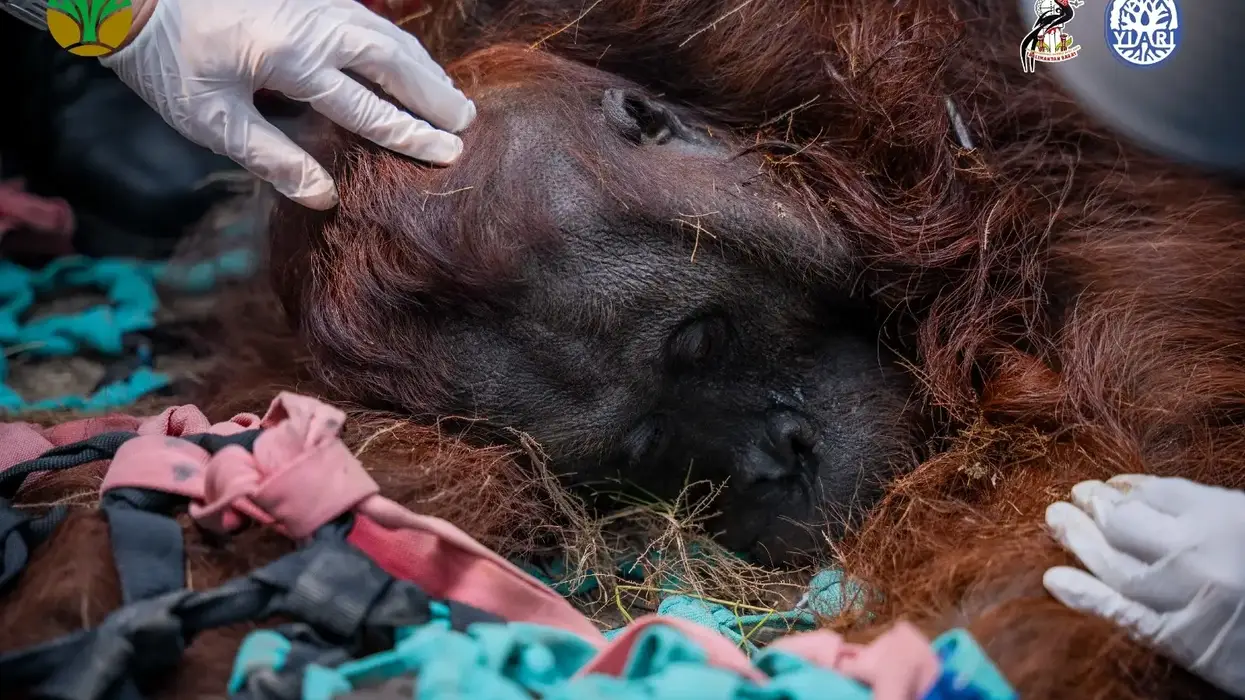
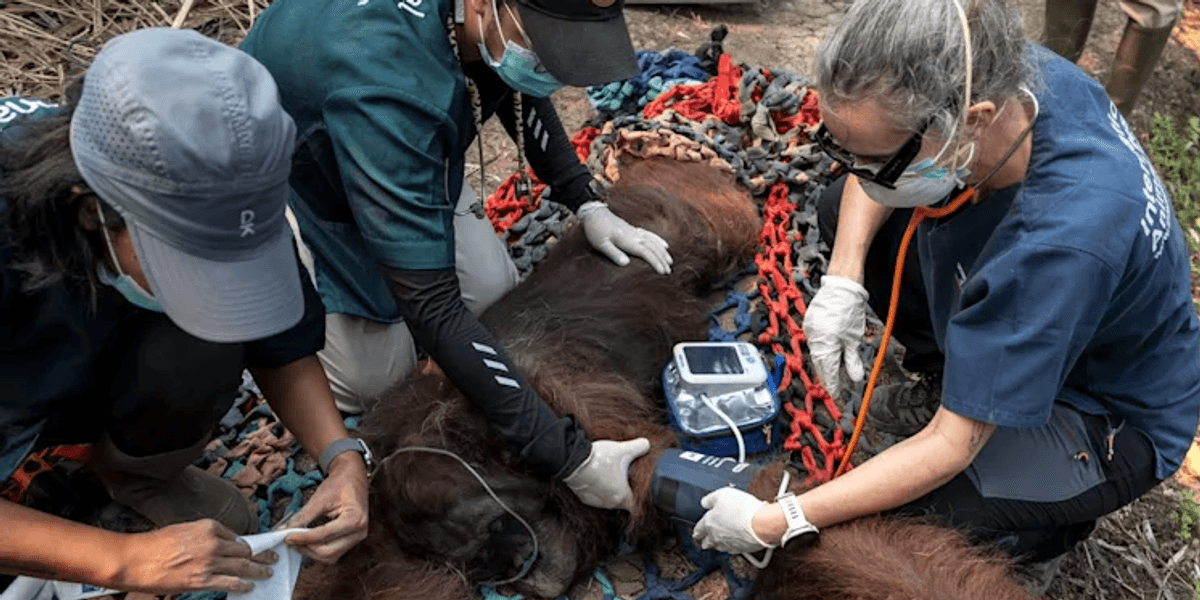 Karmele Llano Sanchez, CEO of wildlife foundation Yayasan Inisiasi Alam Rehabilitasi Indonesia, along with other veterinarians, gives treatment to an orangutan named Sampurna, during a rescue operation at a palm-oil plantation near an area affected by wildfires, in Kuala Satong village, Ketapang regency, West Kalimantan province, Indonesia, on Aug 30, 2026. (Photo: Reuters/Willy Kurniawan)