Israel's Intensified Ethnic Cleansing of West Bank Spurs Calls for 'Urgent Action'
“The world cannot stand by as Israel continues its assault on Palestinians, waiting for yet more neighborhoods to be emptied and erased before intervening,” said the Israeli rights group B'Tselem.
Human rights groups on Monday implored the international community to act in the face of Israel's accelerating ethnic cleansing of West Bank Palestinians following a resistance attack that killed two Israel Defense Forces soldiers and ahead of Tuesday's Israeli elections.
Al Jazeera reported that more than 3,000 Palestinians have been forced from their homes in Hebron in the illegally occupied West Bank, a city long beset by Israeli settlement expansion and displacement. In addition to a military lockdown, Israeli occupation forces have detained scores of Palestinians since two IDF soldiers were shot dead on Friday.
Israeli Prime Minister Benjamin Netanyahu—whose far-right coalition is trying to shore up support ahead of Tuesday's elections—and other senior officials have openly indicated plans to ramp up the ethnic cleansing of the area. Israeli Defense Minister Israel Katz and Finance Minister Bezalel Smotrich have vowed to treat the West Bank like Gaza, where more than 250,000 Palestinians have been killed or wounded and around 1.9 million others have been forcibly displaced amid a "complete siege" since the Hamas-led attack of October 2023.
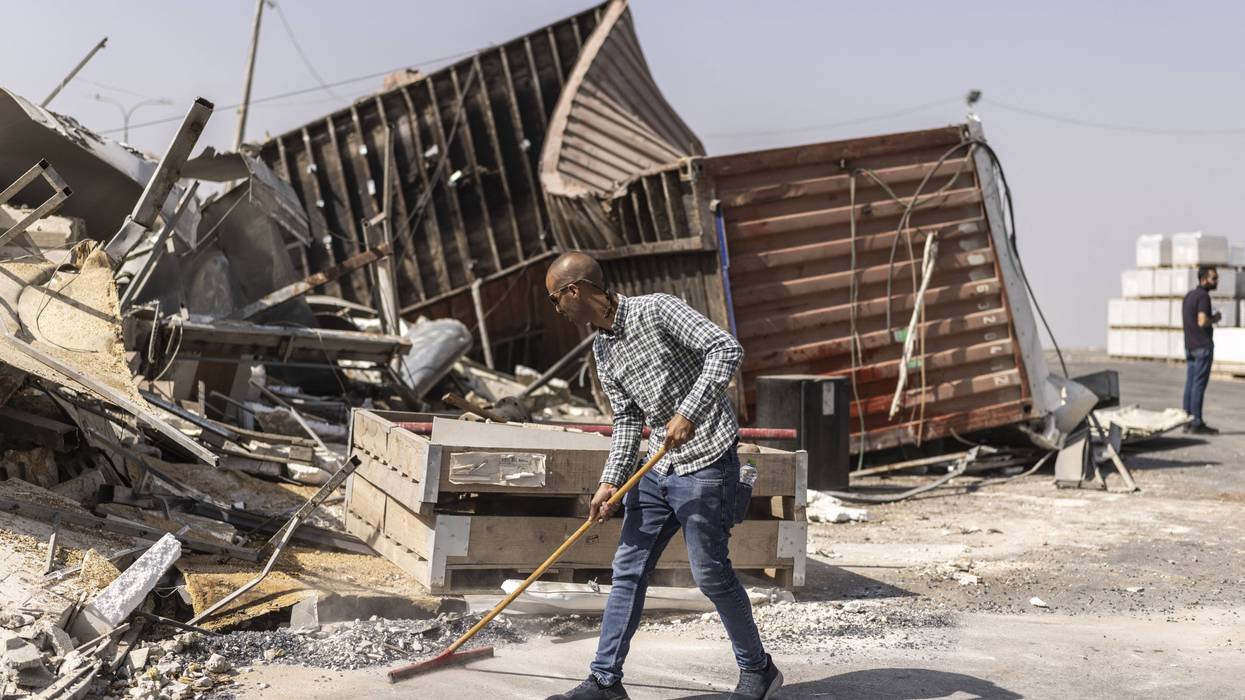
“This is not only a humanitarian crisis but a deliberate assault on the economic foundations of Palestinian life, as families lose their homes and livelihoods," Mustafa Tamaizeh, Oxfam International's West Bank response lead, said Monday. "The destruction of factories, workshops, and business premises is wiping out years of investment and hard work."
"These illegal actions amount to collective punishment and are accelerating the forced displacement of Palestinian communities across the West Bank," Tamaizeh continued. "They come during the olive harvest, one of the most important sources of income for Palestinian farming families."
“In recent days, high-ranking Israeli officials have openly acknowledged they are considering plans for the largest military operation in the West Bank since 1967, with calls for operations in the West Bank to be conducted like those in Gaza," he added. "Against this backdrop Oxfam is calling for urgent action by the international community to stop Israel’s campaign of mass forced displacement, demolitions, and state-backed settler violence, which amount to a policy of ethnic cleansing.”
The International Commission to Support Palestinian Rights (ICSPR) said Monday that it "strongly condemns the escalation of Israeli occupation crimes across the occupied Palestinian territory, including the siege, raids, home demolitions, and forced displacement of residents in Hebron and other areas of the West Bank."
"These violations coincide with raids on more than 15 towns and cities in the northern West Bank, the arrest of numerous Palestinians, escalating settler attacks, and road closures, alongside the continued mass killings and war crimes against civilians in the Gaza Strip," ICSPR continued.
"ICSPR calls on the United Nations and the states parties to the Geneva Conventions to take immediate and binding measures to halt Israeli occupation crimes and provide international protection for civilians in Gaza, the West Bank, and occupied East Jerusalem," the group added. "It calls for an end to forcible evictions, home demolitions, settler attacks, and settler terrorism."
United Nations Secretary-General António Guterres weighed in Monday, invoking the "specter of ethnic cleansing" and calling for "the realization of the legitimate rights of the Palestinian people to self-determination."
Community Peacemaker Teams (CPT), a Christian human rights group, also condemned Israel's actions, issuing a statement Monday asserting that “families should never have to live in fear of being forced out of their homes or separated from the places where they have built their lives."
CPT stressed that "every Palestinian has the right to live safely and with dignity in their own home." The group urged the international community "and diplomatic missions to act now to protect civilians in Hebron," and "people of faith and conscience to contact their elected representatives and call for action to protect Palestinian civilians."
At least one Israeli rights group also condemned the government's and IDF actions.
“The world cannot stand by," B'Tselem said, "as Israel continues its assault on Palestinians, waiting for yet more neighborhoods to be emptied and erased before intervening."

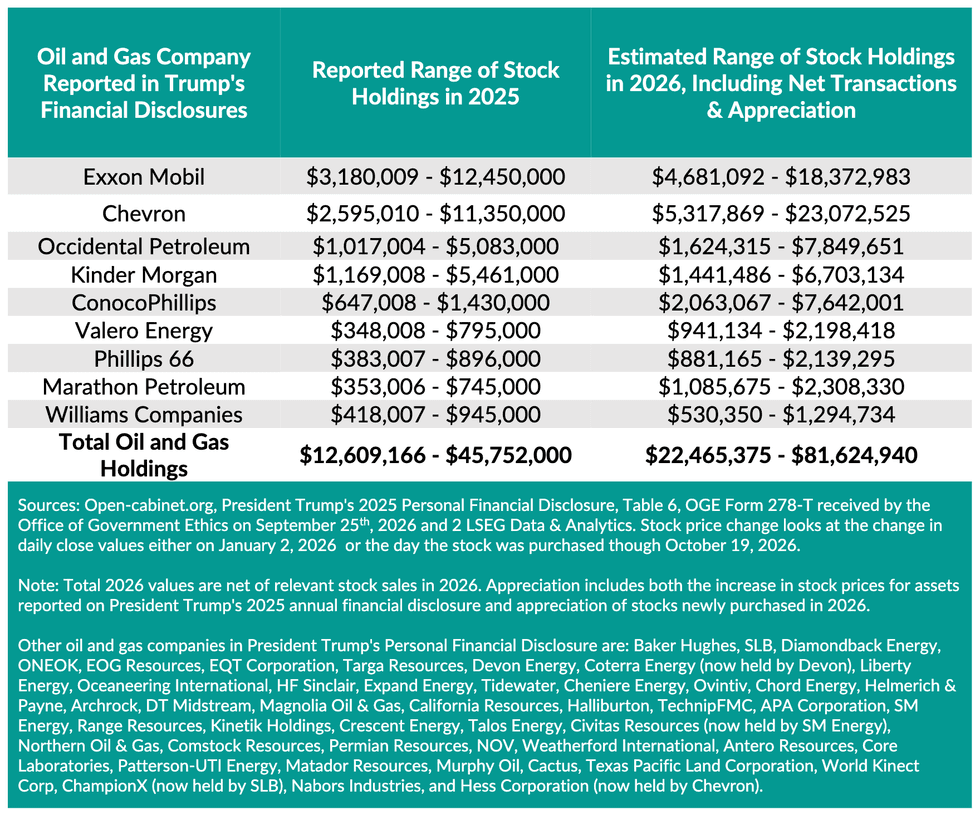 The graph published by the congressional Joint Economic Committee on October 26, 2026 shows US President Donald Trump's stock holdings in oil and gas companies.