SUBSCRIBE TO OUR FREE NEWSLETTER
Daily news & progressive opinion—funded by the people, not the corporations—delivered straight to your inbox.
5
#000000
#FFFFFF
To donate by check, phone, or other method, see our More Ways to Give page.
Daily news & progressive opinion—funded by the people, not the corporations—delivered straight to your inbox.
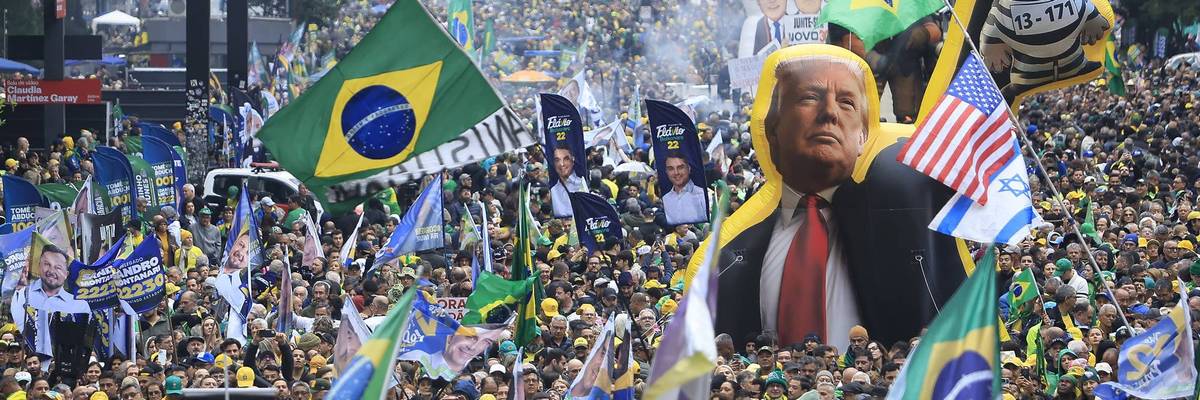
A giant balloon depicting US President Donald Trump holding Brazil's President Luiz Inacio Lula da Silva is seen as supporters of Brazilian presidential candidate Flavio Bolsonaro, of the Liberal Party (PL), take part in a rally during the Independence Day parade at Paulista Avenue in Sao Paulo, Brazil, on September 7, 2026. Brazil will hold a presidential election on October 4, 2026.
Trump’s intervention in Brazilian elections undermines a basic and generally cherished right to self-determination, as well as the right to democracy itself. It is even clearly illegal under the Charter of the Organization of American States, to which the US is a signatory.
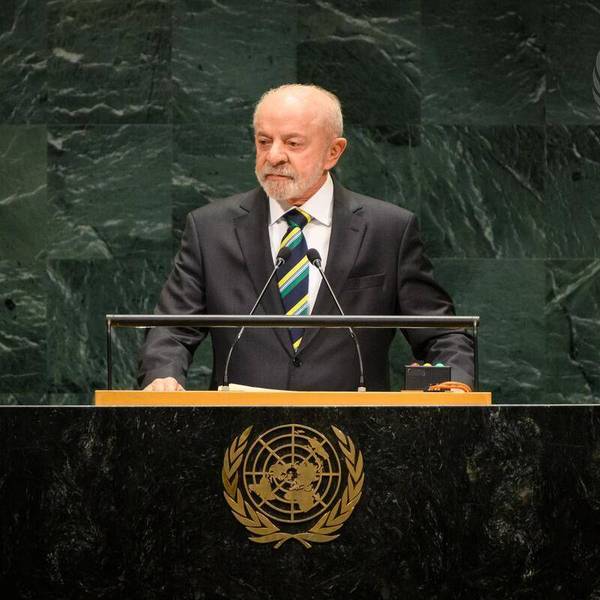
One of the most important elections in recent Latin American history will take place Sunday in Brazil. Incumbent president Luiz Inácio Lula da Silva has recently been emphasizing the issue of national sovereignty. One reason: The challenger, Flávio Bolsonaro, has the strong backing of the Trump administration—and the US has been intervening heavily on his behalf.
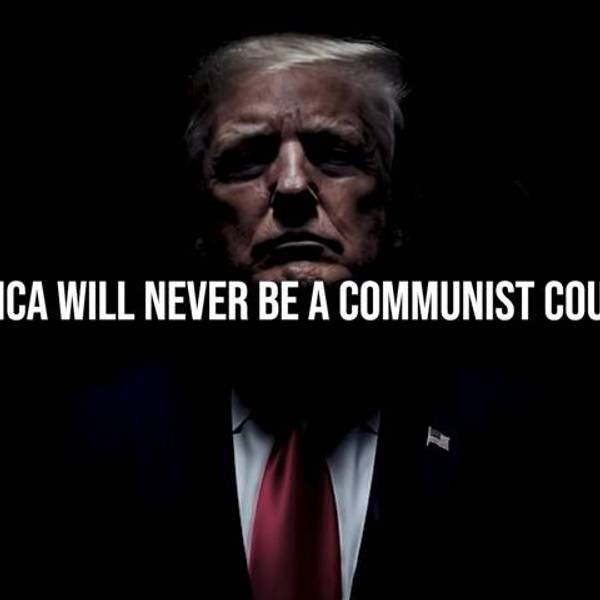
In the last few months of Brazil’s election campaign, Trump has met with Bolsonaro at the White House, imposed new tariffs on Brazilian goods and tried to send State Department officials to Brazil. (Both Brazilian and American officials said the presence of Trump administration operatives would cast doubt on the integrity of the voting there.)
A letter last week to Secretary of State Marco Rubio from 31 members of Congress documented additional hostile actions and concluded that “the United States is acting as an agent of interference and destabilization.”
The election is forecast to be very close, and the sovereignty issue could be persuasive for swing voters.
Trump’s intervention undermines a basic and generally cherished right to self-determination, as well as the right to democracy itself. It is even clearly illegal under the Charter of the Organization of American States, to which the United States is a signatory.
But Brazilians currently have reasons to attach even more urgency to preserving their sovereignty and independence. This can be seen in the recent history of Brazil and Latin America and in the economic impact of political independence on living standards.
Starting with Brazil: Lula was a metalworker and union leader who helped found, and then lead, the Workers Party. He served two consecutive terms as president of Brazil from 2003 to 2010 and left office with one of the highest approval ratings in the world—83%.
There were compelling reasons for that, which stemmed from the government’s changes in economic and social policy. These changed the lives of tens of millions of people in Brazil. GDP per person, the most basic measure of living standards, grew about four times as fast as it did in the eight years prior to Lula’s presidency. Poverty was reduced by 61% and extreme poverty by 64%. There was also a 57% increase in the real (inflation-adjusted) minimum wage. University enrollment almost doubled.
Lula was able to implement these and other life-changing reforms because he broke with the “Washington consensus” policies that had governed economic decision-making in the region as perhaps never before, from 1980 to 2000. This included economic policies that were often decided at the International Monetary Fund or sometimes other Washington-controlled institutions. The result was a disaster: Those two decades saw the worst long-term economic growth failure in Latin America for more than 100 years.
This historic economic growth collapse helped bring about the election of left-of-center governments in the majority of the region for the first time. As in Brazil, these governments were more independent than the prior regional norm and therefore pursued more progressive and effective economic policies. The turnaround was historic: From 2002 to 2013, the percentage of the population of Latin America living in poverty fell to 28.4 from 45.6 after increasing over the prior two decades.
The independence that these governments were able to establish is what Rubio and Trump appear to most want to abolish. Hence their current efforts at regime change in Brazil. This is the big prize for Rubio. It’s the largest country in Latin America, and a Lula government won’t support the Trump administration in its illegal efforts to control the region. But Lula’s opponent would almost certainly be a solid Trump ally.
That is Flávio Bolsonaro, a senator handpicked by his father Jair Bolsonaro, who was president from 2019 to 2023; he has branded himself “Bolsonaro 2.0.”
Flávio and his team are trying to link Lula to the biggest bank fraud in Brazilian history, which forced a deposit insurance payout of almost $8 billion for about 800,000 victims. But the dirt is actually on Flávio and his allies. He is up to his neck in this scandal. Nothing on Lula.
Bolsonaro 1.0 took a page from the Trump election-denial playbook when he lost the election of 2022 to Lula. He was unable to get enough military commanders to support a decree to prevent Lula from taking office. The nation’s Supreme Court subsequently convicted Bolsonaro of leading an attempted coup. The Brazilian “January 6” was on Jan. 8, 2023, when supporters of the defeated president vandalized Congress, the presidential palace and the Supreme Court and demanded that the military intervene to overturn the election result.
Last year Trump tried to stop the trial of Bolsonaro by slapping Brazil with an additional 40% tariff. Most Brazilians rejected the economic collective punishment as an assault on their national sovereignty, electoral democracy and justice system—which it clearly was. Bolsonaro was convicted and sentenced to prison.
Almost every one of the democratically elected, social democratic governments that came to power in the 21st century faced efforts from Washington to weaken, destabilize or remove it. This reached the level of US-backed coups d’état in Bolivia, Honduras and Haiti. The U.S was also involved in a 2002 coup in Venezuela that was quickly reversed, followed by years of US efforts at regime change there—and later the economic sanctions that killed more than a hundred thousand people, destroying most of the Venezuelan economy in the process. Argentina has also suffered from repeated US interventions that have caused and worsened economic downturns and crises, with serious costs.
Most recently, Trump has increased the economic violence against Cuba, which is Rubio’s foremost target. Cuba’s infant mortality rate has increased 148% since the US began tightening its sanctions, which currently include a devastating cutoff of fossil fuel and electricity.
In the most recent national elections in Colombia (June 21) and Honduras (last Nov. 30), Trump was seen as threatening economic harm (implicitly in Colombia and more explicitly in Honduras), if these citizens did not vote for his chosen candidate.
This is the recent and regional context of the fight for Brazil’s future. The Trump-Rubio interventions, with the collaboration of the Bolsonaro clan, have made the Flávio campaign into another US regime change operation. This should be defeated, for the sake of Brazil and the whole hemisphere.
Dear Common Dreams reader, It’s been nearly 30 years since I co-founded Common Dreams with my late wife, Lina Newhouser. We had the radical notion that journalism should serve the public good, not corporate profits. It was clear to us from the outset what it would take to build such a project. No paid advertisements. No corporate sponsors. No millionaire publisher telling us what to think or do. Many people said we wouldn't last a year, but we proved those doubters wrong. Together with a tremendous team of journalists and dedicated staff, we built an independent media outlet free from the constraints of profits and corporate control. Our mission has always been simple: To inform. To inspire. To ignite change for the common good. Building Common Dreams was not easy. Our survival was never guaranteed. When you take on the most powerful forces—Wall Street greed, fossil fuel industry destruction, Big Tech lobbyists, and uber-rich oligarchs who have spent billions upon billions rigging the economy and democracy in their favor—the only bulwark you have is supporters who believe in your work. But here’s the urgent message from me today. It's never been this bad out there. And it's never been this hard to keep us going. At the very moment Common Dreams is most needed, the threats we face are intensifying. We need your support now more than ever. We don't accept corporate advertising and never will. We don't have a paywall because we don't think people should be blocked from critical news based on their ability to pay. Everything we do is funded by the donations of readers like you. When everyone does the little they can afford, we are strong. But if that support retreats or dries up, so do we. Will you donate now to make sure Common Dreams not only survives but thrives? —Craig Brown, Co-founder |
One of the most important elections in recent Latin American history will take place Sunday in Brazil. Incumbent president Luiz Inácio Lula da Silva has recently been emphasizing the issue of national sovereignty. One reason: The challenger, Flávio Bolsonaro, has the strong backing of the Trump administration—and the US has been intervening heavily on his behalf.
In the last few months of Brazil’s election campaign, Trump has met with Bolsonaro at the White House, imposed new tariffs on Brazilian goods and tried to send State Department officials to Brazil. (Both Brazilian and American officials said the presence of Trump administration operatives would cast doubt on the integrity of the voting there.)
A letter last week to Secretary of State Marco Rubio from 31 members of Congress documented additional hostile actions and concluded that “the United States is acting as an agent of interference and destabilization.”
The election is forecast to be very close, and the sovereignty issue could be persuasive for swing voters.
Trump’s intervention undermines a basic and generally cherished right to self-determination, as well as the right to democracy itself. It is even clearly illegal under the Charter of the Organization of American States, to which the United States is a signatory.
But Brazilians currently have reasons to attach even more urgency to preserving their sovereignty and independence. This can be seen in the recent history of Brazil and Latin America and in the economic impact of political independence on living standards.
Starting with Brazil: Lula was a metalworker and union leader who helped found, and then lead, the Workers Party. He served two consecutive terms as president of Brazil from 2003 to 2010 and left office with one of the highest approval ratings in the world—83%.
There were compelling reasons for that, which stemmed from the government’s changes in economic and social policy. These changed the lives of tens of millions of people in Brazil. GDP per person, the most basic measure of living standards, grew about four times as fast as it did in the eight years prior to Lula’s presidency. Poverty was reduced by 61% and extreme poverty by 64%. There was also a 57% increase in the real (inflation-adjusted) minimum wage. University enrollment almost doubled.
Lula was able to implement these and other life-changing reforms because he broke with the “Washington consensus” policies that had governed economic decision-making in the region as perhaps never before, from 1980 to 2000. This included economic policies that were often decided at the International Monetary Fund or sometimes other Washington-controlled institutions. The result was a disaster: Those two decades saw the worst long-term economic growth failure in Latin America for more than 100 years.
This historic economic growth collapse helped bring about the election of left-of-center governments in the majority of the region for the first time. As in Brazil, these governments were more independent than the prior regional norm and therefore pursued more progressive and effective economic policies. The turnaround was historic: From 2002 to 2013, the percentage of the population of Latin America living in poverty fell to 28.4 from 45.6 after increasing over the prior two decades.
The independence that these governments were able to establish is what Rubio and Trump appear to most want to abolish. Hence their current efforts at regime change in Brazil. This is the big prize for Rubio. It’s the largest country in Latin America, and a Lula government won’t support the Trump administration in its illegal efforts to control the region. But Lula’s opponent would almost certainly be a solid Trump ally.
That is Flávio Bolsonaro, a senator handpicked by his father Jair Bolsonaro, who was president from 2019 to 2023; he has branded himself “Bolsonaro 2.0.”
Flávio and his team are trying to link Lula to the biggest bank fraud in Brazilian history, which forced a deposit insurance payout of almost $8 billion for about 800,000 victims. But the dirt is actually on Flávio and his allies. He is up to his neck in this scandal. Nothing on Lula.
Bolsonaro 1.0 took a page from the Trump election-denial playbook when he lost the election of 2022 to Lula. He was unable to get enough military commanders to support a decree to prevent Lula from taking office. The nation’s Supreme Court subsequently convicted Bolsonaro of leading an attempted coup. The Brazilian “January 6” was on Jan. 8, 2023, when supporters of the defeated president vandalized Congress, the presidential palace and the Supreme Court and demanded that the military intervene to overturn the election result.
Last year Trump tried to stop the trial of Bolsonaro by slapping Brazil with an additional 40% tariff. Most Brazilians rejected the economic collective punishment as an assault on their national sovereignty, electoral democracy and justice system—which it clearly was. Bolsonaro was convicted and sentenced to prison.
Almost every one of the democratically elected, social democratic governments that came to power in the 21st century faced efforts from Washington to weaken, destabilize or remove it. This reached the level of US-backed coups d’état in Bolivia, Honduras and Haiti. The U.S was also involved in a 2002 coup in Venezuela that was quickly reversed, followed by years of US efforts at regime change there—and later the economic sanctions that killed more than a hundred thousand people, destroying most of the Venezuelan economy in the process. Argentina has also suffered from repeated US interventions that have caused and worsened economic downturns and crises, with serious costs.
Most recently, Trump has increased the economic violence against Cuba, which is Rubio’s foremost target. Cuba’s infant mortality rate has increased 148% since the US began tightening its sanctions, which currently include a devastating cutoff of fossil fuel and electricity.
In the most recent national elections in Colombia (June 21) and Honduras (last Nov. 30), Trump was seen as threatening economic harm (implicitly in Colombia and more explicitly in Honduras), if these citizens did not vote for his chosen candidate.
This is the recent and regional context of the fight for Brazil’s future. The Trump-Rubio interventions, with the collaboration of the Bolsonaro clan, have made the Flávio campaign into another US regime change operation. This should be defeated, for the sake of Brazil and the whole hemisphere.
One of the most important elections in recent Latin American history will take place Sunday in Brazil. Incumbent president Luiz Inácio Lula da Silva has recently been emphasizing the issue of national sovereignty. One reason: The challenger, Flávio Bolsonaro, has the strong backing of the Trump administration—and the US has been intervening heavily on his behalf.
In the last few months of Brazil’s election campaign, Trump has met with Bolsonaro at the White House, imposed new tariffs on Brazilian goods and tried to send State Department officials to Brazil. (Both Brazilian and American officials said the presence of Trump administration operatives would cast doubt on the integrity of the voting there.)
A letter last week to Secretary of State Marco Rubio from 31 members of Congress documented additional hostile actions and concluded that “the United States is acting as an agent of interference and destabilization.”
The election is forecast to be very close, and the sovereignty issue could be persuasive for swing voters.
Trump’s intervention undermines a basic and generally cherished right to self-determination, as well as the right to democracy itself. It is even clearly illegal under the Charter of the Organization of American States, to which the United States is a signatory.
But Brazilians currently have reasons to attach even more urgency to preserving their sovereignty and independence. This can be seen in the recent history of Brazil and Latin America and in the economic impact of political independence on living standards.
Starting with Brazil: Lula was a metalworker and union leader who helped found, and then lead, the Workers Party. He served two consecutive terms as president of Brazil from 2003 to 2010 and left office with one of the highest approval ratings in the world—83%.
There were compelling reasons for that, which stemmed from the government’s changes in economic and social policy. These changed the lives of tens of millions of people in Brazil. GDP per person, the most basic measure of living standards, grew about four times as fast as it did in the eight years prior to Lula’s presidency. Poverty was reduced by 61% and extreme poverty by 64%. There was also a 57% increase in the real (inflation-adjusted) minimum wage. University enrollment almost doubled.
Lula was able to implement these and other life-changing reforms because he broke with the “Washington consensus” policies that had governed economic decision-making in the region as perhaps never before, from 1980 to 2000. This included economic policies that were often decided at the International Monetary Fund or sometimes other Washington-controlled institutions. The result was a disaster: Those two decades saw the worst long-term economic growth failure in Latin America for more than 100 years.
This historic economic growth collapse helped bring about the election of left-of-center governments in the majority of the region for the first time. As in Brazil, these governments were more independent than the prior regional norm and therefore pursued more progressive and effective economic policies. The turnaround was historic: From 2002 to 2013, the percentage of the population of Latin America living in poverty fell to 28.4 from 45.6 after increasing over the prior two decades.
The independence that these governments were able to establish is what Rubio and Trump appear to most want to abolish. Hence their current efforts at regime change in Brazil. This is the big prize for Rubio. It’s the largest country in Latin America, and a Lula government won’t support the Trump administration in its illegal efforts to control the region. But Lula’s opponent would almost certainly be a solid Trump ally.
That is Flávio Bolsonaro, a senator handpicked by his father Jair Bolsonaro, who was president from 2019 to 2023; he has branded himself “Bolsonaro 2.0.”
Flávio and his team are trying to link Lula to the biggest bank fraud in Brazilian history, which forced a deposit insurance payout of almost $8 billion for about 800,000 victims. But the dirt is actually on Flávio and his allies. He is up to his neck in this scandal. Nothing on Lula.
Bolsonaro 1.0 took a page from the Trump election-denial playbook when he lost the election of 2022 to Lula. He was unable to get enough military commanders to support a decree to prevent Lula from taking office. The nation’s Supreme Court subsequently convicted Bolsonaro of leading an attempted coup. The Brazilian “January 6” was on Jan. 8, 2023, when supporters of the defeated president vandalized Congress, the presidential palace and the Supreme Court and demanded that the military intervene to overturn the election result.
Last year Trump tried to stop the trial of Bolsonaro by slapping Brazil with an additional 40% tariff. Most Brazilians rejected the economic collective punishment as an assault on their national sovereignty, electoral democracy and justice system—which it clearly was. Bolsonaro was convicted and sentenced to prison.
Almost every one of the democratically elected, social democratic governments that came to power in the 21st century faced efforts from Washington to weaken, destabilize or remove it. This reached the level of US-backed coups d’état in Bolivia, Honduras and Haiti. The U.S was also involved in a 2002 coup in Venezuela that was quickly reversed, followed by years of US efforts at regime change there—and later the economic sanctions that killed more than a hundred thousand people, destroying most of the Venezuelan economy in the process. Argentina has also suffered from repeated US interventions that have caused and worsened economic downturns and crises, with serious costs.
Most recently, Trump has increased the economic violence against Cuba, which is Rubio’s foremost target. Cuba’s infant mortality rate has increased 148% since the US began tightening its sanctions, which currently include a devastating cutoff of fossil fuel and electricity.
In the most recent national elections in Colombia (June 21) and Honduras (last Nov. 30), Trump was seen as threatening economic harm (implicitly in Colombia and more explicitly in Honduras), if these citizens did not vote for his chosen candidate.
This is the recent and regional context of the fight for Brazil’s future. The Trump-Rubio interventions, with the collaboration of the Bolsonaro clan, have made the Flávio campaign into another US regime change operation. This should be defeated, for the sake of Brazil and the whole hemisphere.