
SUBSCRIBE TO OUR FREE NEWSLETTER
Daily news & progressive opinion—funded by the people, not the corporations—delivered straight to your inbox.
5
#000000
#FFFFFF
To donate by check, phone, or other method, see our More Ways to Give page.


Daily news & progressive opinion—funded by the people, not the corporations—delivered straight to your inbox.
People’s understandable distrust and discontent are being manipulated in service of a villainous power grab by some of the very same players that MAHA performs opposition to.
Robert F. Kennedy Jr., Kid Rock, and Mike Tyson are on the stage of American slopaganda telling us that “for the first time in our nation’s history, the federal government put REAL FOOD at the center of the American diet.” “Something” is finally being done about ultra-processed foods, harmful additives, environmental toxins, and corporate capture of the regulatory system to “Make America Healthy Again.”
I’ve spent much of my life in food justice movements that are fighting to address these very same problems. I’ve taught and written about the toxicity and corporate control of the food system (and was actually featured in a documentary alongside RFK Jr., who strangely had no connection with the grassroots Hawai‘i movement that the film was about). Of all the vile corporations and politicians I’ve studied and gone head-to-head with, the forces congealing at the top of MAHA are far and away the most spectacular threat I’ve ever seen to a healthier food system (and just about everything else).
Alongside shirtless RFK workouts, the MAHA performance opened with purported “wins” around synthetic dyes and whole foods. In reality, RFK did not ban artificial food dyes, but asked large companies to “voluntarily phase them out” (food companies have a long history of doing absolutely nothing “voluntarily”). And in reality, though whole foods are emphasized in new dietary guidelines, federal programs like school meals are having their budgets for whole foods sliced out.
Far more significantly, these exaggerated, largely symbolic gestures are masking a whole slew of far-reaching poisonous actions that are of grave danger to our health, and radically bolster the power of Big Ag, Big Chem, and all Big Capitalists (yes, including Big Pharma). It’s not just that rhetoric and actions don’t match. It’s that people’s understandable distrust and discontent are being manipulated in service of a villainous power grab by some of the very same players that MAHA performs opposition to.
The evil genius of MAHA elites has been the appropriation of elements of progressive movements that have struggled for decades to illuminate corporate control of the food system and forge a healthier and fairer food system for all. We cannot give our wicked Doppelgänger this win.
Part of the MAHA song and dance is to hyper-emphasize individual choice and responsibility for health, often in intensely patronizing, shaming, and classist ways. Telling people they can avoid chemicals and disease all via individual choices has provided a profitable opportunity for MAHA influencers to peddle their products.
But it’s a cruel illusion that consumers can avoid toxins they don’t even know are in their food (much less invisible in the wider environment), eat food that isn’t available, spend dollars they don’t have, and avoid corporate monopolies that are entirely ubiquitous in the food system. Of course individuals have some amount of agency, but the rules of the system are stacked. And it’s the very people that the rules are stacked in favor of who are working hardest to distract us from seeing those rules.
Here are just some of the food system “rules” that the Trump-MAHA-RFK regime is solidifying as they smoke and mirror us with illusions of “choice”:
The list could go on. And the full picture on the MAHA regime and health is even more sickening—unprecedented cuts to healthcare; massive increases in air, water, mercury, and PFAS pollution; dismantled gun violence prevention laws (guns are the leading cause of death for children and teens in the US); billions in handouts to big pharma; destroyed public health institutions; hastened apocalyptic climate breakdown… The aims and repercussions of the MAHA deception extend far beyond any particular policy or issue—it is a project that ultimately serves authoritarian oligarchical rule.
There’s a tendency among some progressives and leftists to simply dismiss anything that touches the MAHA matrix as innately conspiratorial, unscientific, and reactionary—at times even inadvertently positioning themselves on the side of Big Ag so as to seem in opposition to MAHA and Trump (an all around win-win for Big Ag). While the power at the top of MAHA is deeply reactionary and using conspiracy to pull ordinary people further right, the evil genius of MAHA elites has been the appropriation of elements of progressive movements that have struggled for decades to illuminate corporate control of the food system and forge a healthier and fairer food system for all. We cannot give our wicked Doppelgänger this win. Instead of abandoning everything RFK Jr. touches, we need to spin it back at them with the missing elements of truth and justice.
Truth: We have a food system designed around maximization of profit at every level, intensified by decades of bipartisan policy that has unleashed corporate power to the severe detriment of health, safety, workers, local economies, the Earth, the 99.9%. The biggest conspiracy is plain before our eyes: a system doing exactly what it is supposed to do, capitalism (which yes, the overlords of do all sorts of perverse things to preserve and extend). Justice demands getting to the roots of that system and challenging the 0.1% who are benefiting from it—many of whom happen to be puppet-mastering MAHA.
One physician and public health expert called the ruling "a much-needed victory for a sane approach to federal vaccine policy that relies on science, not misinformation and conspiracy theories."
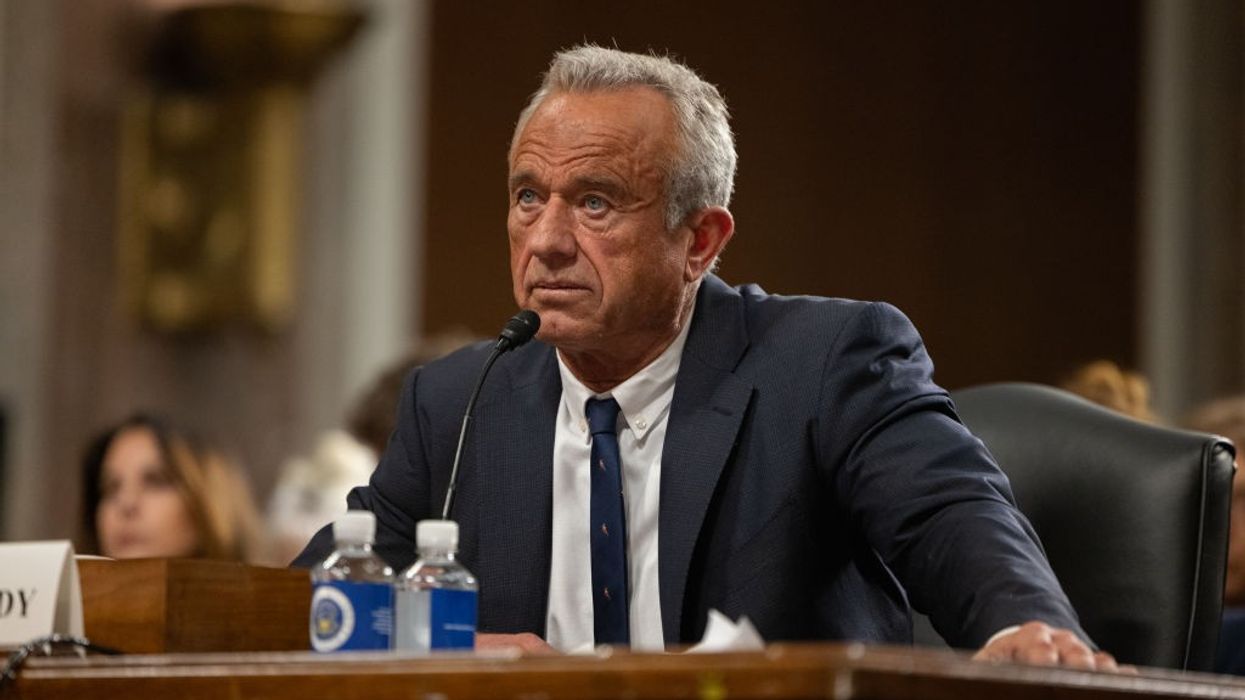
In what advocates called a major victory for public health, a federal judge on Monday temporarily blocked US Health and Human Services Secretary Robert F. Kennedy Jr. from implementing a series of moves that critics have warned would weaken childhood immunization efforts and increase the likelihood of serious disease outbreaks.
US District Judge Brian E. Murphy of Massachusetts, an appointee of former President Joe Biden, invalidated Kennedy's reorganized Advisory Committee on Immunization Practices (ACIP) panel, which was set to meet later this week.
Kennedy—who was confirmed by the Senate last year over the objections of tens of thousands experts and despite being a purveyor of vaccine misinformation—replaced ACIP members with several people with ties to the anti-vaccine movement.
Murphy also blocked the committee's unprecedented changes to US immunization recommendations, writing that the "arbitrary and capricious" move stands in stark contrast with the long established decision-making process he called "a method scientific in nature and codified into law through procedural requirements."
“Unfortunately, the government has disregarded those methods and thereby undermined the integrity of its actions," the judge said.
The Department of Health and Human Services (HHS) under Kennedy revised the Center for Disease Control and Prevention's (CDC) childhood immunization schedule so that fewer vaccines are now universally recommended for all children. The agency also reclassified vaccines that were previously endorsed for all children into categories in which vaccination depends on designated risk groups and consultations with medical professionals, among other changes.
Twenty-nine states and the District of Columbia have announced that they would not follow the new CDC immunization recommendations.
Lookie Here! As of now, 29 states + DC, have announced that they are no longer going to follow CDC's recommendations for some or all childhood vaccines.Kennedy is not restoring public trust in science as he said he would. 🧪 www.kff.org/other-health...
[image or embed]
— Princess Vimentin PhD | Cancer Biologist (@princess-vimentin.bsky.social) March 12, 2026 at 11:47 AM
Plaintiffs' attorney Richard Huges IV said in a statement that "this ruling is a momentous step toward restoring science-based vaccine policymaking."
"The judge recognized that the actions of Secretary Kennedy and the Advisory Committee on Immunization Practices are not grounded in science and that they are destructive," he added. "We are thrilled that the court has discarded the baseless vaccine schedule changes made by Secretary Kennedy and is blocking the Advisory Committee on Immunization Practices from doing further damage to vaccine policy."
Dr. Robert Steinbrook, Health Research Group director at Public Citizen, said in response to the ruling that "Judge Murphy’s decision is a much-needed victory for a sane approach to federal vaccine policy that relies on science, not misinformation and conspiracy theories."
"Kennedy’s hand-picked ACIP has been a national embarrassment, thoroughly lacking in the ability to make careful fact-based decisions," he added. "The judge’s ruling offers a responsible path forward for public health and evidence-based federal vaccine policy.”
RFK Jr. fired all of the legitimate scientific experts on the Advisory Committee on Immunization Practices and replaced them with unqualified political appointees.A judge just ruled that the new members were not appropriately appointed, so ACIP cannot meet this week to spread more misinformation.
— Elizabeth Jacobs, PhD (@elizabethjacobs.bsky.social) March 16, 2026 at 1:38 PM
Anthony Wright, executive director of the advocacy group Families USA, said in a statement: "When politics override science, our children pay the price. Today’s decision helps ensure that medical evidence—not ideology—guides how we protect kids from preventable diseases."
Wright continued:
Secretary Kennedy’s attempt to remove universal recommendations for routine vaccinations only increased confusion among medical providers and families. The routine vaccines being questioned by HHS are the product of centuries of rigorous science and medicine and are why children today don’t die from measles or suffer the lifelong consequences of diseases we long ago learned to prevent. For a country as large, diverse, and mobile as ours, universal vaccine recommendations are the safest and most effective way to stop outbreaks before they start.
Amid several recent outbreaks, public health officials warned late last year that the United States is close to following Canada in losing its measles elimination status, a deadly and preventable setback many experts attribute to HHS' vaccine-averse policies and practices under Kennedy.
"We commend the court for this ruling, but families should not have to depend on litigation to ensure their child can receive a routine vaccine," Wright said. "Evidence-based medicine keeps children alive and in school. Preventing disease should be the foundation of any healthcare system serious about confronting the next disease outbreak or finding the next cure."
The group Protect Our Care called the decision "a major step in the right direction for children’s health after many setbacks under this administration."
“Most Americans, most states, and now a federal court have rejected the [President Donald] Trump-RFK Jr. scheme to make preventable disease great again among American children while exploding health costs across the country," Protect Our Care president Brad Woodhouse said. "While this ruling is a reprieve from harmful anti-vaccine policy based on nothing but junk science and discredited conspiracies, it’s clear the Trump administration is determined to resuscitate their agenda in a higher court because they care more about their anti-science agenda than keeping kids healthy.”
Indeed, HHS spokesperson Andrew Nixon said the agency "looks forward to this judge’s decision being overturned just like his other attempts to keep the Trump administration from governing.”
Public health advocates noted the limitations of judicial rulings.
"The courts can only do so much without Congress, which must fulfill its oversight responsibility and rein in an executive branch that is taking an axe to core public health protections," Wright said. "Transparency and scientific integrity are not optional, especially when children’s lives are at stake. Families deserve vaccine policy grounded in evidence and expert guidance—not ideology or personal bias—with the goal of making sure every child in America can grow up healthy.”
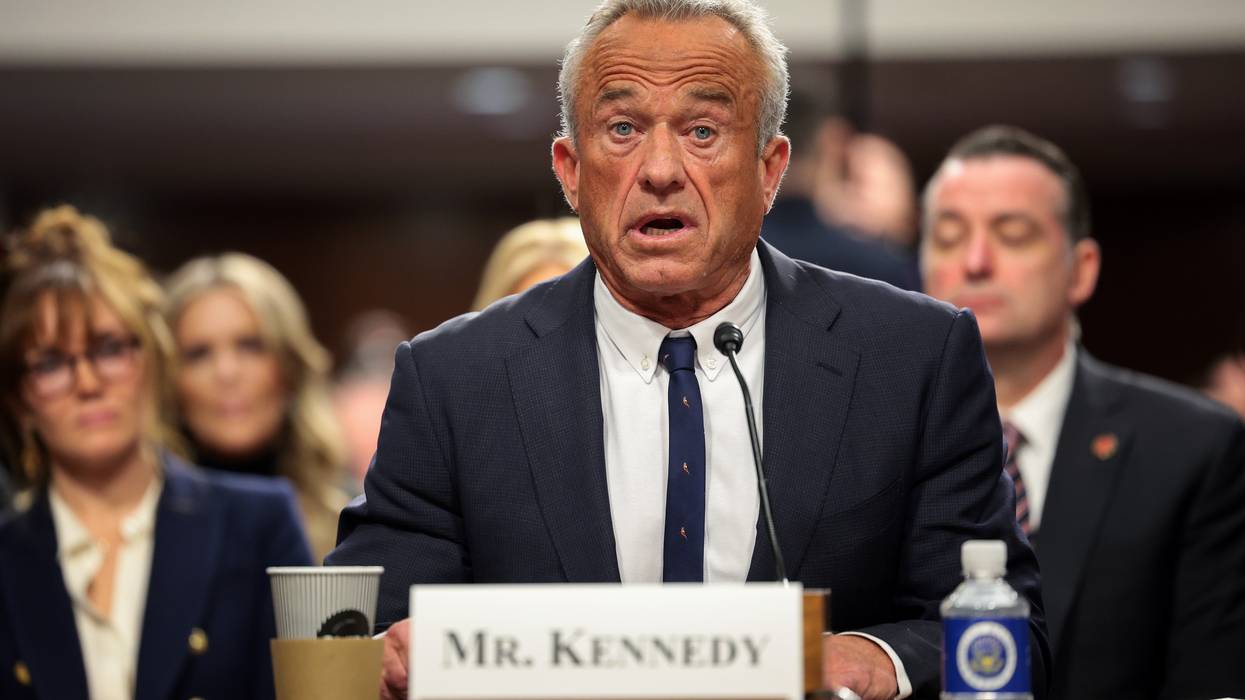
"Will you defend the law in the Inflation Reduction Act which already is negotiating prescription drug prices?" Sen. Bernie Sanders asked Kennedy during his second confirmation hearing.
Senate Democrats and Independent Sen. Bernie Sanders on Thursday pressed Robert F. Kennedy Jr., President Donald Trump's pick to lead the Health and Human Services Department, to pledge that the new administration won't give in to the pharmaceutical industry's attacks on a popular Medicare drug price negotiation program that has already yielded significant results.
Sanders raised the matter during Kennedy's confirmation hearing before the Senate Health, Education, Labor, and Pensions Committee, on which the Vermont senator serves as the ranking member.
"Will you defend the law in the Inflation Reduction Act which already is negotiating prescription drug prices?" Sanders asked, referring to the Biden-era measure that empowered Medicare to negotiate the prices of a select number of prescription drugs directly with pharmaceutical companies.
Declining to provide a yes or no answer to Sanders' question, Kennedy replied that "President Trump wants us to negotiate drug prices" and added that, if confirmed as Health and Human Services (HHS) secretary, he would "comply with the laws."
Watch:
The exchange came after the Centers for Medicare and Medicaid Services (CMS), an agency within HHS, issued a statement Wednesday declaring that "lowering the cost of prescription drugs for Americans is a top priority of President Trump and his administration" and expressing commitment to "incorporating lessons learned to date from the [Inflation Reduction Act] program and to considering opportunities to bring greater transparency in the negotiation program."
"CMS intends to provide opportunities for stakeholders to provide specific ideas to improve the negotiation program, consistent with the goals of achieving greater value for beneficiaries and taxpayers and continuing to foster innovation," the agency added.
While some advocates for lower drug prices cautiously welcomed the CMS statement, Senate Democrats warned Thursday that its choice of language "appeared to open the door to Big Pharma's requests."
"If confirmed as secretary, you will be under tremendous pressure to cave to Big Pharma and undermine Medicare drug price negotiation Republicans have worked in lock-step with Big Pharma by relentlessly attacking Medicare drug price negotiation at every turn," a group of 12 Senate Democrats and Sanders wrote in a letter to Kennedy. "Now, Republicans have unified control of the federal government. They will undoubtedly try to leverage this power to walk back the progress Democrats made to lower drug prices through this important new authority."
The letter pushes Kennedy to answer a number of questions related to the drug price negotiation program, including whether he would recommend that the Trump administration defend the program from the pharmaceutical industry's ongoing legal assault.
"On behalf of the tens of millions of Americans who count on Medicare," the new letter states, "Democrats on the Senate Finance Committee want to know whether the Trump administration will follow through on negotiating with Big Pharma to deliver the lower costs promised to the American people."
After Trump announced his intent to nominate Kennedy as HHS chief late last year, the pharmaceutical lobby made clear its plan to push the new administration to undercut the price negotiation program that is poised to deliver billions of dollars in savings by bringing down the prices of expensive and widely used medications.
Earlier this month, the CEO of pharmaceutical giant Eli Lilly said his company and other drugmakers would ask the Trump administration to pause the price-negotiation program, claiming that "they need to fix it" before proceeding to talks over the next slate of 15 drugs selected in the final days of the Biden administration.
In their letter on Thursday, the senators demanded that Kennedy "confirm in writing" that he "will follow the law and reject
Big Pharma's request to pause Medicare drug price negotiation."
When John Bolton is the most aggressive critic of the incoming administration, you know we have a problem.
Donald Trump hasn’t taken office yet, but he has wasted no time naming cabinet members and other nominations for his incoming administration. They must be confirmed by the Senate—unless Trump manages an unprecedented end run around the Senate’s power to advise and consent—which means the media play an important role in helping bring to light their records and qualifications.
Clearly Trump is trying to see how far he can push the limits of the country’s democratic institutions with these nominations, which include an anti-vaxxer to oversee the country’s public health infrastructure, and a congressmember investigated for sex trafficking to be attorney general. A look at NPR‘s coverage so far suggests that the public radio network has no interest in using the power of the so-far-still-free press to preserve those limits.
In its reporting on Trump’s picks over the seven days from November 13 through November 19, NPR‘s Morning Edition has featured eight guest sources offering commentary, in the form of either soundbites or lengthier interviews, according to a FAIR search of the Nexis news database. All but two were current or former Republican officials, including one current Trump adviser. The other two were a representative from the right-wing Center for Strategic and International Studies think tank, and a political risk consultant (who offered a perfectly neutral assessment). All of them were white men.
As a result, the most forceful denunciations of Trump’s parade of shockingly unqualified nominees that Morning Edition listeners were permitted came from one of the most right-wing members of the George W. Bush administration, John Bolton (11/14/24). And the show made sure to explicitly balance his interview by also giving one a few days later to Trump adviser Marc Lotter (11/18/24).
The dearth of nonpartisan experts and utter absence of any progressive or even mildly liberal voices also meant that only Trump’s most outrageous picks thus far—Matt Gaetz (who has since withdrawn), Pete Hegseth, Tulsi Gabbard, Robert F. Kennedy Jr.—were subject to “expert” criticism on the show. Meanwhile, most of his other picks weren’t even mentioned, let alone scrutinized.
One guest, a former George W. Bush official, made the only mention of Mike Huckabee, Elise Stefanik and Mike Waltz as picks, calling them “leaders who have to be taken seriously” (11/13/24). But in a sane democracy, the media would be taking a close look at these candidates, too, who have more polished resumes but similar levels of extremism: Huckabee, picked as ambassador to Israel, has argued repeatedly that the West Bank is Israeli territory, and that “there’s no such thing as a Palestinian.” Waltz, for national security advisor, wants Israel to bomb Iranian nuclear sites. Stefanik, tapped to be UN ambassador, led the congressional witch hunt against college presidents last spring.
It wasn’t just Morning Edition sanewashing Trump’s picks at NPR. In a piece (NPR.org, 11/15/24) about Trump’s selection of RFK Jr. to head the Department of Health and Human Services, NPR‘s headline and opening framed the anti-science conspiracy theorist as just a guy who “Wants to ‘Make America Healthy Again,'” but who “Could Face a Lot of Pushback.”
It took seven paragraphs for reporters Will Stone and Allison Aubrey to mention that scientists are “deeply worried about Kennedy’s history of questioning scientific consensus on vaccines and his antagonism to mainstream medicine more broadly.”
After quoting one public health expert who expressed strong fears about the serious damage Kennedy could do to the country’s public health system, NPR cheerfully offered the other side of things:
And yet there’s no denying there are areas of substantial overlap between the goals of MAHA and scientists who have long advocated for tackling the root causes of chronic illness.
The reporters did point out the contradictions between Kennedy’s regulatory goals, which would take on “big food and big pharma,” and the GOP/Trump war on government regulation of big corporations. But they gave the last word to Kennedy adviser Calley Means to argue, without rebuttal:
“I would tell anyone skeptical about this, to look at the positives here,” he says. “This MAHA agenda is one of the golden areas for true bipartisan reform.”
He says Kennedy’s approach will be to insist on what he terms “accurate science.”
In total, the piece gave more time to Kennedy allies with products to sell than to actual public health experts.
In a piece on Trump’s nominee for energy secretary, oil executive Chris Wright, NPR (11/16/24) offered a textbook example of sanewashing that ought to have jarred any editor:
Wright has also expressed doubts about whether climate change is driving extreme weather events.
“There is no climate crisis, and we’re not in the midst of an energy transition either,” Wright said in a video uploaded to LinkedIn.
“We have seen no increase in the frequency or intensity of hurricanes, tornadoes, droughts or floods despite endless fearmongering of the media, politicians and activists,” he also said in the video. “The only thing resembling a crisis with respect to climate change is the regressive, opportunity-squelching policies justified in the name of climate change.”
Those quotes do not illustrate “doubts about whether climate change is driving extreme weather events,” they illustrate anti-science climate denialism in the form of flat-out lies.
As we reported last month (FAIR.org, 10/24/24), NPR recently installed a “Backstop” editorial team to review all content prior to airing or publishing, after the latest round of right-wing complaints of bias. When the Corporation for Public Broadcasting announced it would be funding that team, it explained the purpose was to help NPR achieve the “highest standards of editorial integrity,” including “accuracy, fairness, balance, objectivity and transparency, and the obligation to include diverse viewpoints.”
The incredibly lopsided “balance,” lack of actually diverse viewpoints, and dubious fairness and accuracy displayed in the network’s nomination coverage reveals what the CPB was really going for with the new oversight it installed.
Not all NPR cabinet reporting has been spineless. A team of reporters led by Shannon Bond, for instance, published an in-depth piece (11/14/24) on Defense nominee Pete Hegseth that probed his strong links to extremist white Christian nationalism.
But three days later, another NPR report (11/17/24) talked about Hegseth as if the biggest problem with him is simply that senators simply “have come to expect” nominees with a different “background”:
Real trouble started brewing with Pete Hegseth, an Army vet known for his weekend commentary on Fox News, being named secretary of Defense. Although a veteran of the Iraq and Afghanistan missions, he does not have the background that senators have come to expect of someone appointed to head up the Department of Defense. Hegseth’s frequent attacks on the uniformed leadership of the armed services has included talk of firing current generals, including at the highest levels.
Similarly, on All Things Considered (11/16/24), NPR senior political editor Domenico Montanaro explained the “difference” between Trump’s 2016 picks and those this year, saying the 2016 nominations
sometimes stood in the way of things he wanted to do that broke with the normal way…that things had been done for years. This time around, he’s really surrounding himself with a team of loyalists.
What former cabinet members did was stop Trump from doing things that were unconstitutional or abuses of power. For NPR to minimize them as “the way things had been done for years” indicates that the network is currently more concerned with preserving its CPB funding than sustaining democracy.
ACTION ALERT: You can send a message to NPR public editor Kelly McBride here. Please remember that respectful communication is the most effective. Feel free to leave a copy of your message in the comments thread of this post.
"As the saying goes, when people show you who they are, believe them," said a Democratic National Committee spokesperson.
Robert F. Kennedy, Jr.'s stated platform in the 2024 presidential race centers on promoting an "honest government," a "clean, healthy environment," and the protection of civil liberties—but his New York State director last week boiled down the Independent campaign's true goal at a meeting with Republican voters: ensuring former President Donald Trump wins the election.
Speaking at a meeting last Thursday, Rita Palma first checked to make sure there were "no Biden voters in the house" before telling her audience that her "No. 1 priority" is to ultimately take electoral votes away from President Joe Biden.
"The Kennedy voter and the Trump voter," said Palma, "our mutual enemy is Biden."
States including New York, California, and "most of the Northeast" are likely to vote for the Democratic president, she continued, but if Kennedy, whom Palma referred to as Bobby, is on the ballot in New York, the campaign could help "get rid of Biden."
video shows RFK Jr’s NY director laying out a clear plan:
“The Kennedy voter & the Trump voter—our mutual enemy is Biden. … if nobody gets to 270, Congress picks the president. So who are they going to pick if it’s a R Congress? They’ll pick Trump.”pic.twitter.com/YQKDcEFUlm
— Edward-Isaac Dovere (@IsaacDovere) April 8, 2024
She urged the assembled GOP voters to give their "vote to Bobby and at least get rid of Biden and give those 28 electoral votes to Bobby rather than to Biden, thereby reducing Biden's 270 [electoral votes]."
"Two hundred seventy wins the election," added Palma, who was hired by Kennedy's campaign after she canvassed for Trump in 2016 and 2020. "If nobody gets to 270 then Congress picks the president, so who are they gonna pick if it's a Republican Congress? They'll pick Trump, so we're rid of Biden either way."
Political observers have noted in recent months that Kennedy has drawn support from right-wing billionaires, but Palma's blunt description of her plan to "block Biden from winning the presidency" left critics stunned as the video of the event circulated on social media on Monday.
"Whole thing is an epic fraud. Kennedy is spouting Russian propaganda, is now openly betraying the country," said political strategist Simon Rosenberg, referring to the candidate's recent comments about Russia's claim that it aims to "de-Nazify" Ukraine.
"RFK Jr.'s campaign is saying the quiet part out loud," Matt Corridoni, spokesperson for the Democratic National Committee, told CNN. "As the saying goes, when people show you who they are, believe them: RFK Jr.'s campaign isn't building a plan or a strategy to get 270 electoral votes, they're building one to help Trump return to the Oval Office."
"Kennedy's donors know that he'll never step foot in the White House, but that was never their goal. Their goal is to ensure that Trump does."
A video published Tuesday by More Perfect Union sheds light on the ultrawealthy Republican donors to presumptive GOP nominee and former President Donald Trump's campaign coffers who are also financing Robert F. Kennedy Jr.'s independent White House run—which many observers see as a potential spoiler for President Joe Biden's reelection bid.
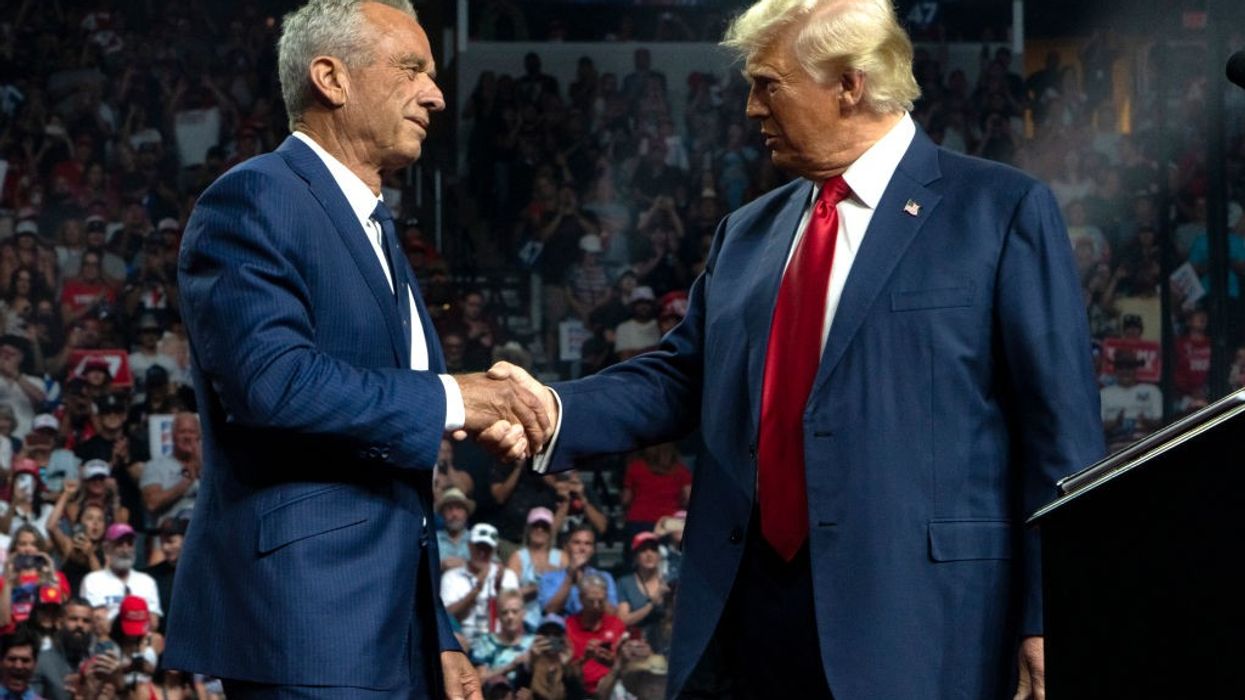
The video—which came as Kennedy announced that California lawyer and philanthropist Nicole Shanahan is his running mate—underscores that the conspiracy theorist and former Democrat's biggest campaign contributor was also Trump's top donor in 2020.
"Who exactly is bankrolling RFK Jr.'s presidential push?" asked Brian Tyler Cohen, the popular YouTuber and political commentator who narrates the seven-minute video. "It turns out the answer has a lot more to do with Trump than putting a Kennedy back in the White House."
Kennedy said that he had nothing to do with the multimillion-dollar ad supporting his campaign that aired during the Super Bowl last month.
"American Values 2024, a super political action committee (PAC) backing Kennedy, dropped a cool 7 million bucks for the spot, which about 124 million people saw," Cohen said. "And propping up American Values 2024 is a large group of big donors... a bunch of millionaires and billionaires who are driven by one goal: to get RFK Jr. on the ballot in all key states across the country."
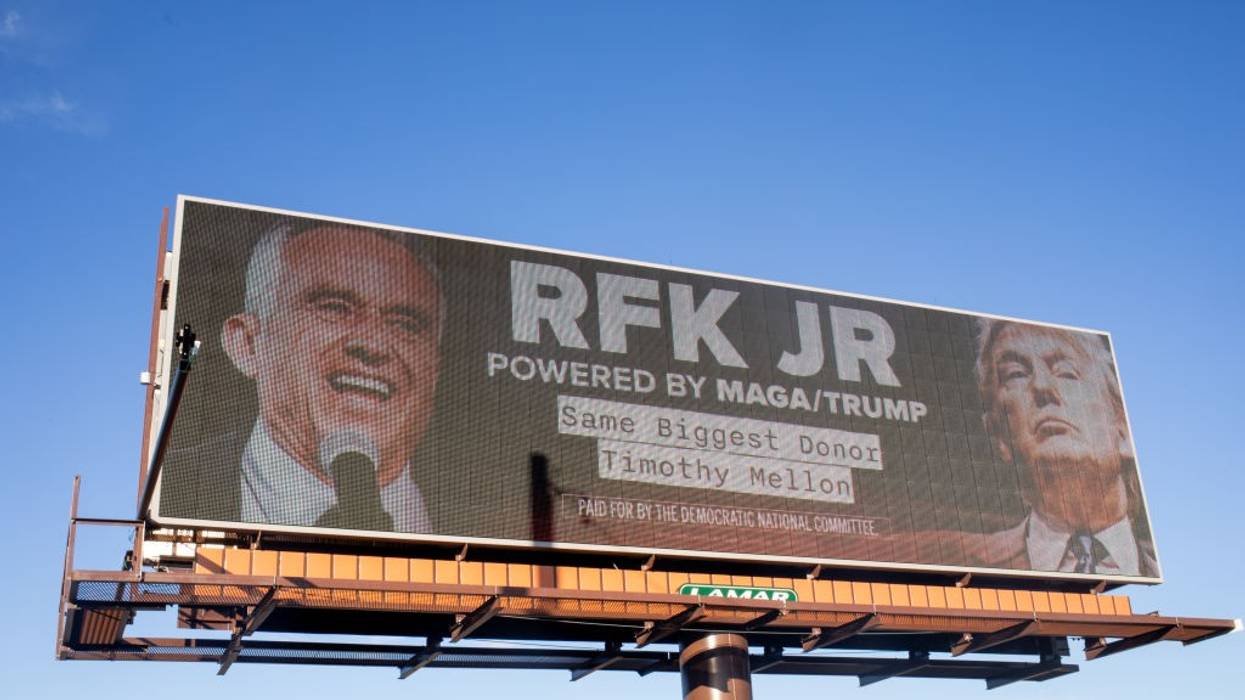
"Doing a majority of the legwork here is the super PAC's biggest donor, Timothy Mellon," the video notes. "More than half of the $38 million raised by American Values this cycle has come from Timothy Mellon alone."
The video continues:
Mellon, who hails from the 34th-richest family in America, and likened anti-poverty programs to slavery, has long been a significant Reopublican donor. He's given tens of millions to Republican congressional super PACs. He's generously funded Trump's super PAC, Make America Great Again Inc., to the tune of $16.5 million over the span of just two years. He was even Trump's top donor in 2020, and it doesn't look like he's going to stop tossing money at Trump anytime soon. His last donation of $5 million to the pro-Trump PAC came on January 30, 2024. Just 22 days prior, he sent the same amount to the pro-Kennedy PAC, making it pretty clear that Timothy Mellon doesn't want Kennedy, he knows Kennedy can spoil a Biden win, so he's keeping him afloat.
Boston Globe reporter Lissandra Villa de Petrzelka noted earlier this month that Mellon's donation record "is not linear."
"He has supported Democrats such as Sen. Joe Manchin, a centrist from West Virginia; progressive Rep. Alexandria Ocasio-Cortez of New York; and former Rep. Tulsi Gabbard of Hawaii and Sen. Kyrsten Sinema of Arizona, both Democrats before they left the party."
"But overwhelmingly, Mellon's money has funded conservative causes," she wrote. "According to The Texas Tribune, he donated millions in stock to Texas for a fundraising effort for a border wall. The Wall Street Journal reported he also donated more than a million dollars to a legal defense fund set up by Jan Brewer, then-governor of Arizona, for an immigration crackdown law that received national backlash and was partially struck down in the courts."
Mellon isn't the only GOP megadonor funding Kennedy's campaign. According to the video, billionaire security specialist and author Gavin de Becker has donated more money to Kennedy—$10 million, so far—than to any other cause he's ever supported. Kennedy's campaign has paid de Becker's security firm $1.9 million for services and travel expenses during the 2024 run.
Cohen said that "one of the more mysterious sources of funding" for American Values 2024 is Planeta Management LLC," which has given the super PAC $4 million."
Because there is no listed name for the organization's leader on its filing papers, "we have no idea who the third-biggest donor to Kennedy' bid is," the video states.
"We do know his fourth-biggest donor, though," Cohen said. Leila Centner—who has supported Trump and disgraced former New York Republican Congressman George Santos—has given $1 million to Kennedy's campaign.
The video notes that Centner is the co-founder and CEO of Centner Academy, a private school with a policy of "trying to keep teachers and staff from getting lifesaving Covid vaccinations" because she believes that "tens of thousands of women all over the world have had adverse effects including hemorrhaging and miscarriages just by being near someone who had the vaccine."
Perhaps the nation's most prominent vaccine skeptic, Kennedy
told Fox News last year that he still believes the thoroughly debunked theory that vaccines cause autism. A 2019 measles epidemic in Samoa that killed scores of people, most of them children, has been linked to a prior visit by Kennedy in which he, his wife Cheryl Hines, and anti-vaccine activists spread deadly misinformation.
RFK Jr’s followers say, he’s going to change the world if he becomes President. I agree…
A world of death & destruction‼️
2019 — a measles outbreak hit children in Samoa. It became deadly after @RobertKennedyJr spread anti-vax fears. 👀 #Spoiler4Trump pic.twitter.com/OEUPp4zGA6
— Christopher Webb (@cwebbonline) March 27, 2024
Kennedy has brushed off criticism about his donors' political agenda.
"The [Democratic National Committee] is saying that one of my PACs, which I have nothing to do with... accepted money from a traditionally Republican donor, that somehow it should disqualify me from people voting for me," he said last month. "We get money from Democrats, Republicans, and Independents; I'm proud that we're reaching across party lines, that we're trying to bridge the divide."
The DNC has a dubious history of crushing third-party and independent challengers.
The new video notes that "all of these pro-Kennedy donations have so far been bearing fruit in a big way."
"With the help of American Values 2024, Kennedy has gotten on ballots in key states like Nevada and New Hampshire," Cohen said. "Additionally, he'll appear on the ballot in Hawaii and Utah... and Georgia, Arizona, and Michigan, three critical swing states with razor-thin margins."
"Kennedy's donors know that he'll never step foot in the White House, but that was never their goal," he added. "Their goal is to ensure that Trump does."
At a time when the truth is a precious common good, RFK Junior has been spreading dangerous lies.
Robert F. Kennedy Junior has apologized to relatives after his Super Bowl ad last Sunday, which mirrored an ad broadcast by his uncle John F. Kennedy’s campaign in 1960.
The Super Bowl ad included images of RFK Jr. spliced into the original 1960 ad and a jaunty jingle that repeated the Kennedy surname 15 times in 30 seconds.
RFK Junior said the ad was the work of his SuperPAC and he had nothing to do with it.
Rubbish. Junior placed the ad at the top of his X feed, and it remained there Monday.
The ad cost $7 million. Timothy Mellon — grandson of Andrew Mellon and an heir to the Mellon banking fortune — gave RFK Junior’s SuperPAC $15 million.
Hmmm. Mellon is also a major donor to PACs supporting Trump. RFK Junior’s candidacy is backed by a PAC that also funds Marjorie Taylor Greene.
If not for his lustrous name, RFK Junior would be just another crackpot in the growing pool of bottom-feeding right-wing fringe politicians seeking to help Trump.
No one should doubt that Trump and Trump donors are behind RFK Junior’s campaign, with the goal of siphoning off enough votes from Biden to ensure a Trump victory.
How does RFK Junior intend to get on enough state ballots to hurt Biden? As he told CNN last week, he and officials from the Libertarian Party, which has ballot access, "are talking."
In a poll conducted late last year, RFK Junior was supported by 22 percent of respondents and a greater number of independent voters than either President Biden or Trump. In January, Gallup reported that 52 percent of Americans view RFK Junior favorably — a higher percentage than either Biden (41 percent) or Trump (42 percent) received.
These results reflect the popularity of the Kennedy name and dissatisfaction with the likely nominees of the major parties. In addition, RFK Junior has not received the public scrutiny that presidential candidates inevitably get.
It’s time to lift the curtain on a campaign based on false, irresponsible and self-contradictory claims.
At a time when the truth is a precious common good, RFK Junior has been spreading dangerous lies.
He claims that COVID-19 was “targeted to attack Caucasians and Black people” and that “the people who are most immune are Ashkenazi Jews and Chinese.”
And that “the Chinese are spending hundreds of millions of dollars developing ethnic bioweapons and we are developing ethnic bioweapons. They’re collecting Russian DNA. They’re collecting Chinese DNA so we can target people by race.”
RFK Junior has also promoted the baseless claim linking vaccines to autism. He’s been a leading proponent of COVID-19 vaccine misinformation, erroneously suggesting the vaccine has killed more people than it has saved.
In his 2021 book, The Real Anthony Fauci: Bill Gates, Big Pharma, and the Global War on Democracy and Public Health, he alleged, without plausible evidence, that Dr. Fauci performed “genocidal experiments, sabotaged treatments for AIDS, and conspired with Bill Gates to suppress information about COVID-19.” This is libelous nonsense.
RFK Junior’s misinformation about vaccines continues to endanger public health.
Friends, I knew Robert F. Kennedy, and Robert F. Kennedy Junior is no Robert F. Kennedy.
I worked in Robert F. Kennedy’s Senate office in 1967. It wasn’t a glamorous job. I ran the signature machine. But I did have a chance to get to see Bobby Kennedy close up.
I watched Robert F. Kennedy stand up for economic and social justice. I witnessed him bringing together people of every race and ethnicity — to demand equal rights and an end to the Vietnam War.
The Kennedy brand is political gold, and it could pull away just enough unwitting Democratic voters to tip the race to Trump.
Robert F. Kennedy would never have suggested that a deadly virus was targeted at certain races. He wouldn’t have repeated the trope, dating at least to the Middle Ages, that Jews unleashed a plague on non-Jews.
Another contrast with his father and his uncle: In 1962, President John F. Kennedy signed the Vaccination Assistance Act in order to, in the words of a CDC report, “achieve as quickly as possible the protection of the population, especially of all preschool children ... through intensive immunization activity.”
If not for his lustrous name, RFK Junior would be just another crackpot in the growing pool of bottom-feeding right-wing fringe politicians seeking to help Trump.
But the Kennedy brand is political gold, and it could pull away just enough unwitting Democratic voters to tip the race to Trump.
Democracy won by a whisker in 2020. Just 44,000 votes in Arizona, Georgia, and Wisconsin decided the outcome. If RFK Junior or any third-party candidate peels off just a fraction of the vote from Biden, while Trump’s base stays with him, they will deliver a victory to Trump.
That the good name of the Robert F. Kennedy I worked for 57 years ago is being used to increase the risk of a Trump victory is beyond shameful.
If Junior had any respect for the principles his father fought and ultimately died for, he would withdraw his candidacy immediately.
If Kennedy was serious about combating the rise of corporate homeownership—or the perception that he’s a de facto Republican candidate, for that matter—he would call out Blackstone’s nefarious influence by name.
At a time when working Americans struggle to make ends meet on multiple fronts, one cost-of-living crisis stands out as particularly dire: the national housing crisis. In our largest cities, decades of systemic underbuilding—de facto mandated by bans on multifamily housing—have made housing a nightmare for longtime residents and newcomers alike. But the housing crisis extends well past New York and San Francisco: Extreme inequality and poor monetary policy have made it difficult to rent and own homes across much of rural and suburban America. The crisis has been exacerbated by the rise of corporate home ownership, which has put housing security further out of reach for working Americans.
Since launching his quixotic presidential candidacy, Robert F. Kennedy Jr. has made the issue of corporate homeownership central to his campaign. On the campaign trail, Kennedy has notably criticized investment firms BlackRock, Vanguard, and State Street by name, arguing they will someday be able to “outbid your children.” But interestingly, Kennedy’s railing against corporate homeownership has not extended to the firm that best embodies the encroachment of finance into housing: Blackstone.
It’s unlikely Kennedy’s hands-off approach to Blackstone is a coincidence. Since originally entering the race as a reactionary candidate running in a Democratic primary, Kennedy has been accused of being a Republican plant. Given that Blackstone CEO Stephen Schwarzman is a Donald Trump-loving Republican mega-donor, it’s pretty easy to connect the dots on Kennedy’s rhetorical silence. In the 2022 cycle alone, Schwarzman gave over $35 million to congressional Republican campaigns. If Kennedy was serious about combating the rise of corporate homeownership—or the perception that he’s a de facto Republican candidate, for that matter—he would call out Blackstone’s nefarious influence by name.
With prospects for homeownership in coastal metropolitan areas increasingly unrealistic for middle-class Americans, Blackstone and other private investors’ push into the Sunbelt threatens remaining opportunities for homeownership.
It’s a shame, really, because at a time when Blackstone is pushing even deeper into the housing market, it would be useful to call attention to the company’s detrimental impact. The time of Blackstone being content with its status as a commercial real estate giant is long gone. Since the financial crisis, the company has established a strong presence in everything from predatory rent-to-own schemes to student housing. Blackstone’s seemingly insatiable quest for dominance in the rental home market has been met with criticism in and outside the United States.
Blackstone’s early push into housing occurred in the aftermath of the subprime mortgage crisis, when it profited handsomely off home foreclosures. Like other major institutional investors that have pushed into housing, Blackstone has taken advantage of strict zoning laws that constrain the development of new housing. Invitation Homes, owned by Blackstone from 2012 to 2019, even acknowledged in an SEC filing that it invests “in markets that we expect will exhibit lower new supply.”
At a time when home prices in key markets continue to skyrocket, Blackstone and similar firms have caused further pain by accelerating the corporatization of U.S. homeownership. In America’s Sun Belt, a macroregion known for relatively affordable middle- and working-class housing opportunities, private investors’ impact has been particularly dire. By one metric, over a third of homes bought in markets including Atlanta, Phoenix, and Charlotte were made by corporate investors in the first quarter of 2021.
With prospects for homeownership in coastal metropolitan areas increasingly unrealistic for middle-class Americans, Blackstone and other private investors’ push into the Sunbelt threatens remaining opportunities for homeownership. Given the evidence that corporate homeownership efforts disproportionately target housing stock in Black-majority neighborhoods, these schemes threaten to further exacerbate the racial wealth gap.
As negative headlines surrounding Blackstone’s housing push mount, it’s no surprise that the company has desperately tried to reclaim the narrative in its favor. Blackstone has aggressively touted Home Partners of America, a rent-to-own company acquired in 2021, as a service to help tenants eventually own their own properties. Given that around 85% of renters of single-family homes by one estimate wouldn’t qualify for a mortgage, it’s not hard to see the program’s appeal.
But rather than giving renters a shot at the American dream, tenants in Home Partners’ properties have faced nightmarish housing conditions, made worse by high prices and predatory contract terms. Even worse, this has often been accompanied by harm to tenants’ credit scores, putting the dream of homeownership even further out of their reach.
The harm caused by Blackstone’s efforts to dominate rental housing extends beyond tenants and prospective homebuyers. First launched in 2017, the Blackstone Real Estate Income Trust (BREIT) has come under fire by regulators for its unconventional, if shady, investment structure. Funded largely through borrowed money—BREIT “invests with roughly 50% borrowed money” with a focus on rental apartments in Sunbelt communities, per The Wall Street Journal—BREIT’s limits on redemptions amid investor discontent has caught the ire of the SEC.
It’s not hard to see why: A trust that aggressively limits withdrawals in the face of investor discontent should not be trusted to continue its expansion in one of the country’s most crucial economic sectors. In a congressional testimony earlier this year, Duke law professor Gina-Gail S. Fletcher compared BREIT’s unethical practices to that of FTX, the notorious crypto hedge fund founded by Sam Bankman-Fried.
Given that Republicans were only able to capture the House by the narrowest of margins in 2022, it’s easy to make the case that Blackstone CEO Schwarzman’s millions played a decisive role. Amid the Republican-induced chaos of the 118th Congress in the House, party lawmakers have pushed hard for policies that would make the housing crisis even worse. This includes Republicans’ push for cuts to housing assistance and efforts to sabotage the Consumer Financial Protection Bureau (CFPB), a federal agency that has fought hard for tenants. While Kennedy has cried foul about supposedly disproportionate media criticism of his campaign, his silence on Blackstone is yet another mark against taking him seriously as a candidate.
"Bobby might share the same name as our father, but he does not share the same values, vision, or judgment," said four of Robert F. Kennedy Jr.'s siblings. "We denounce his candidacy."
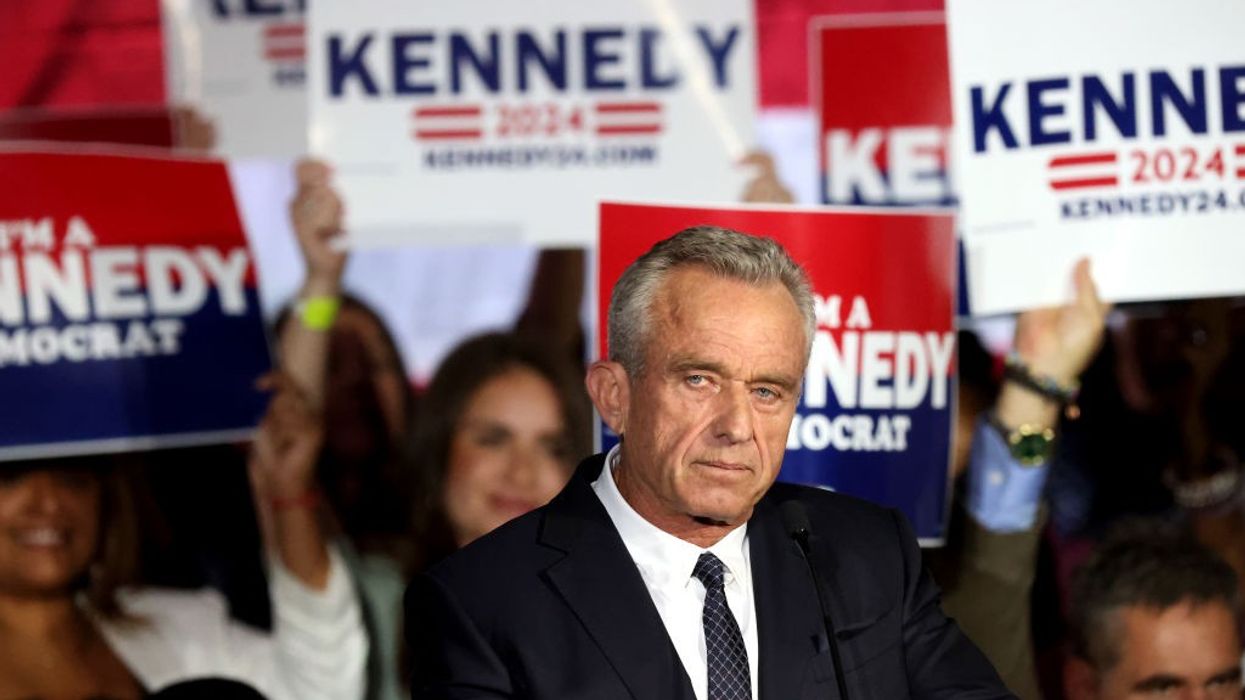
Family members of 2024 U.S. presidential candidate Robert F. Kennedy—including several of his siblings—said in no uncertain terms on Monday that they oppose his continued bid to lead the country, as the lawyer and anti-vaccine conspiracy theorist announced he would run as an independent instead of as a Democrat.
Four of Kennedy's siblings—documentary filmmaker Rory Kennedy, human rights advocate Kerry Kennedy, former Congressman Joseph Kennedy II (D-Mass.), and former Democratic Maryland Lt. Gov. Kathleen Kennedy Townsend—released a statement saying their brother's decision to run as a third party candidate is "dangerous to our country."
"Bobby might share the same name as our father, but he does not share the same values, vision, or judgment," they said. "We denounce his candidacy and believe it to be perilous for our country."
After saying repeatedly in recent weeks that the Democratic National Committee is "rigging" the 2024 election against him, Kennedy—who was previously running for the party's nomination as a challenger to President Joe Biden—said Monday that he was proposing a "new Declaration of Independence" for the country.
"I've come here today to declare our independence from the tyranny of corruption which robs us of affordable lives, our belief in the future, and our respect for each other," Kennedy said. "But to do that I must first declare my own independence. Independence from the Democratic Party and from all other political parties."
Though Kennedy is a scion of one of the most prominent Democratic families in the U.S., polling has shown Republican voters think more highly of his candidacy than Democrats.
After building a career as an environmental lawyer, Kennedy has become well-known in recent years for spreading anti-vaccine propaganda, including a claim that "there's no vaccine that is safe and effective" and the long-debunked belief that childhood vaccines cause autism.
Kerry Kennedy has spoken out about her brother's presidential aspirations at least twice before, including when he said "Ashkenazi Jews and Chinese" people have the most immunity to Covid-19 and that the pandemic was "targeted to attack Caucasians and Black people."
Kennedy's cousin and the grandson of assassinated former President John F. Kennedy, Jack Schlossberg, also expressed disgust earlier this year over Kennedy's campaign, saying in a video posted to social media that he had "no idea why anyone thinks he should be president."
"What I do know is his candidacy is an embarrassment," said Schlossberg. "Let's not be distracted again by somebody's vanity project. I am excited to vote for Joe Biden in my state's primary and again in the general election, and I hope you will too."
As author and activist Naomi Klein noted earlier this year, Kennedy's political priorities bear little resemblance to the anti-poverty, civil rights, and pro-labor work of his father, assassinated former U.S. Sen. Robert F. Kennedy (D-N.Y.).
Despite running as a so-called "populist," she wrote, Kennedy has shown little interest in advocating for policies that would center working and low-income people, such as higher taxes for the rich or Medicare for All.
"Kennedy is not actually proposing any of this," Klein wrote after a media appearance by Kennedy early in his Democratic campaign. "On Fox, he would not even come out in favor of a wealth tax; he has brushed off universal public healthcare as not 'politically realistic'; and I have heard nothing about raising the minimum wage."
Climate experts and advocates have also noted that Kennedy's background in environmental law does not make him the candidate the U.S. needs to combat the climate emergency.
As University of California, Berkeley environmental law professor Dan Farber and UCLA Emmett Institute on Climate Change and the Environment official Evan George wrote in the San Francisco Chronicle on Monday, Kennedy said in one campaign video that the climate crisis "is being used as a pretext for clamping down totalitarian controls, the same way the Covid crisis was."
Overall, as a presidential candidate Kennedy has "stayed largely silent on climate change," said Farber and George, except to call the crisis and the environment "a divisive issue" and to say he would push for policies "that make sense to skeptics and activists alike" in order to build "a broad environmental coalition."
"Make no mistake: Creating a big tent open to climate skeptics will only achieve one thing—empower business interests opposed to climate action," wrote Farber and George.
"RFK Jr. is not a Democratic challenger," said economist Robert Reich. "He is not an independent. He is a right-wing tool being used to help elect [Former Republican President Donald] Trump."
"RFK Jr. has nothing to do with his father—who stood for racial, economic, and social justice (and for whom I worked in the 1960s)," Reich added. "His candidacy saddens me. He could have done something meaningful with his life and name."
The stakes are too high and the margins are potentially too close for anyone concerned about the environment to view Kennedy as a safe vote for the climate.
Robert F. Kennedy Jr.’s impending announcement that he is running for president as an independent makes it abundantly clear: The once leading environmental lawyer is now an imminent danger to climate progress.
It’s a shocking about-face for a man who rightfully earned a reputation as an environmental crusader.
Kennedy grew up in the 1960s as the modern environmental movement took shape around the campaign against toxic pesticides, spurred like so many young activists at the time by the publication of Rachel Carson’s “Silent Spring.” Kennedy later viewed listening to Carson speak about ecology as one of the most treasured moments of his youth. After working at the Natural Resources Defense Council, he went on to become an environmental lawyer and helped found the Waterkeeper Alliance. He taught and led an environmental law clinic at Pace University in New York. Over the years, many of us in the environmental movement looked up to him for his crusade to clean up the Hudson River.
Kennedy’s accomplishments in litigation, teaching and activism for clean waterways, Indigenous rights and renewable energy should not be erased. But those bona fides cannot mitigate the reality that today, Kennedy the candidate is an anti-environment and anti-science zealot.
Those of us who care about solving the climate crisis also have a duty to speak out about his split with environmentalism or else risk conveying a message of tacit approval.
Since Kennedy launched his campaign for president in April, he has stayed largely silent on climate change. The phrase is barely mentioned on his campaign’s website.
“Climate change has made the environment a divisive issue, but there are many policies that make sense to skeptics and activists alike,” it reads. “We will emphasize those and rebuild a broad environmental coalition to clean up this country.”
Make no mistake: Creating a big tent open to climate skeptics will only achieve one thing — empower business interests opposed to climate action.
Much like how Kennedy’s anti-vaccination views — a wholly inaccurate and dangerous rhetoric in its own right — are steeped in populist conspiracy theories, his views on environmental regulation follow the same playbook. In a campaign video posted to social media focused on climate change, Kennedy says, “This crisis is being used as a pretext for clamping down totalitarian controls, the same way the COVID crisis was, and it’s the same people: it’s the intelligence agencies, it’s the world economic forum, it’s the billionaire boys’ club at Davos.” His energy approach is “free markets and not top-down control.” That must be music to the ears of Republican donors and the fossil fuel industry.
Then there’s his deep distrust of the Environmental Protection Agency, which rivals that of the Republicans who want to abolish it for other reasons: “I’ve spent 40 years litigating against the agencies, the regulatory agencies in the United States,” he said in an interview. “So I can tell you that the Environmental Protection Agency is effectively run by the oil industry, the coal industry and the pesticide industry.”
That’s nonsense.
Like many conspiracy theories, his statement starts with a kernel of truth. Federal agencies can be overly influenced by the businesses they regulate. But for a lawyer of his experience to say the EPA is run by industry betrays how he has lost touch with reality. In recent years, it’s been the fossil fuel industry and their allies among Republican state attorneys general who have sued repeatedly to try to stop EPA and other agencies from getting tough on tailpipe and power plant emissions.
Some observers think Kennedy might pull more votes away from Trump than Biden, but the election is too uncertain and too crucial for comfort.
Ultimately, Kennedy’s chances of winning the presidency are slim. But his long-shot status was never the concern. It’s his potential role as a spoiler that makes his campaign so concerning.
Till now, he had run as a Democrat, garnering a polling average of about 15% in the primary, according to RealClearPolitics. What will happen running as an independent is unknown. Some observers think Kennedy might pull more votes away from Trump than Biden, but the election is too uncertain and too crucial for comfort. A poll conducted by John Zogby Strategies for the American Values 2024 PAC, which supports Kennedy, looked at a matchup among Trump, Biden and Kennedy as the independent candidate. The result: Trump and Biden tied at 38% with Kennedy at 19%.
A victory over Biden by any of the Republican candidates would be a serious setback for the climate policies advanced by the Inflation Reduction Act, various White House initiatives and regulatory rulemaking. But a second Trump administration would create a climate catastrophe. Trump dismantled climate policies and rolled back more than 100 environmental rules governing clean air and water — without being particularly organized. In a second term, he’s pledged to radically transform the civil service, including environmental agencies. The stakes are too high and the margins are potentially too close for anyone concerned about the environment to view Kennedy as a safe vote for the climate.
Several of Kennedy’s family members have already spoken out against him. Those of us who care about solving the climate crisis also have a duty to speak out about his split with environmentalism or else risk conveying a message of tacit approval.
RFK Jr. should be disavowed, not just ignored.