

SUBSCRIBE TO OUR FREE NEWSLETTER
Daily news & progressive opinion—funded by the people, not the corporations—delivered straight to your inbox.
5
#000000
#FFFFFF
To donate by check, phone, or other method, see our More Ways to Give page.
Daily news & progressive opinion—funded by the people, not the corporations—delivered straight to your inbox.
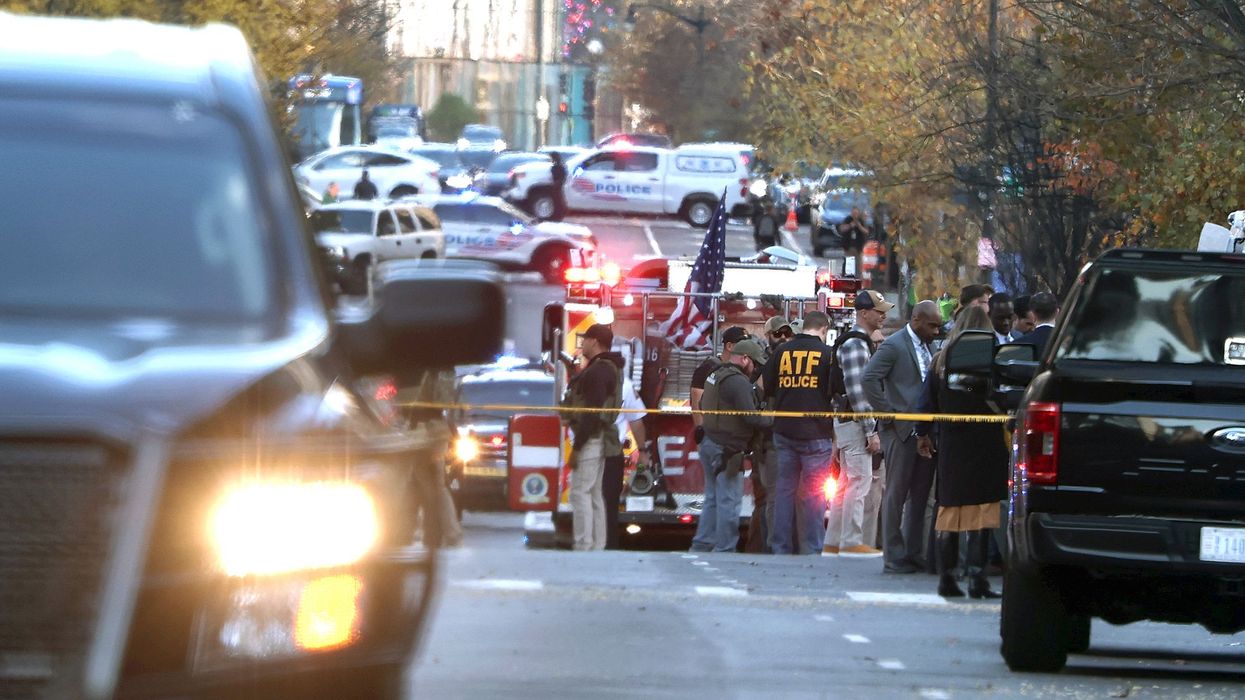
West Virginia's governor initially announced that both members of his state's National Guard "passed away from their injuries," but he then said that "we are now receiving conflicting reports" about their condition.
This is a developing story… Please check back for updates…
Two National Guard members and one suspect were shot on Wednesday afternoon near the White House in Washington, DC.
Vito Maggiolo, the public information officer for the District of Columbia Fire and Emergency Medical Service Department, confirmed that first responders transported all three people from the scene to the hospital, and unnamed law enforcement officials told multiple media outlets that the Guard members were in critical condition.
West Virginia Gov. Patrick Morrisey wrote on the social media platform X that "it is with great sorrow that we can confirm both members of the West Virginia National Guard who were shot earlier today in Washington, DC have passed away from their injuries." However, he then said that "we are now receiving conflicting reports about the condition of our two Guard members."
Multiple agencies responded to the shooting on 17th Street, between I and H Streets—which briefly grounded flights at Reagan National Airport and put the White House on lockdown. President Donald Trump is in Florida, and Vice President JD Vance is in Texas.
Trump said on his Truth Social platform that "the animal that shot the two National Guardsmen, with both being critically wounded, and now in two separate hospitals, is also severely wounded, but regardless, will pay a very steep price. God bless our Great National Guard, and all of our Military and Law Enforcement. These are truly Great People. I, as President of the United States, and everyone associated with the Office of the Presidency, am with you!"
According to the Washington Post, US Secret Service spokesperson Anthony Guglielmi said the shooting had "no known direction of interest towards the White House other than the location at this time," and agency members at the scene did not fire shots.
ABC News noted that "the National Guard was deployed to the nation's capital as part of President Trump's federal takeover of the city in August. According to the most recent update, there are 2,188 Guard personnel assigned to DC."
US District Judge Jia Cobb, an appointee of former President Joe Biden, ruled last week that the deployment in DC is illegal and must come to an end, but she gave the Trump administration until December 11 to file an appeal.
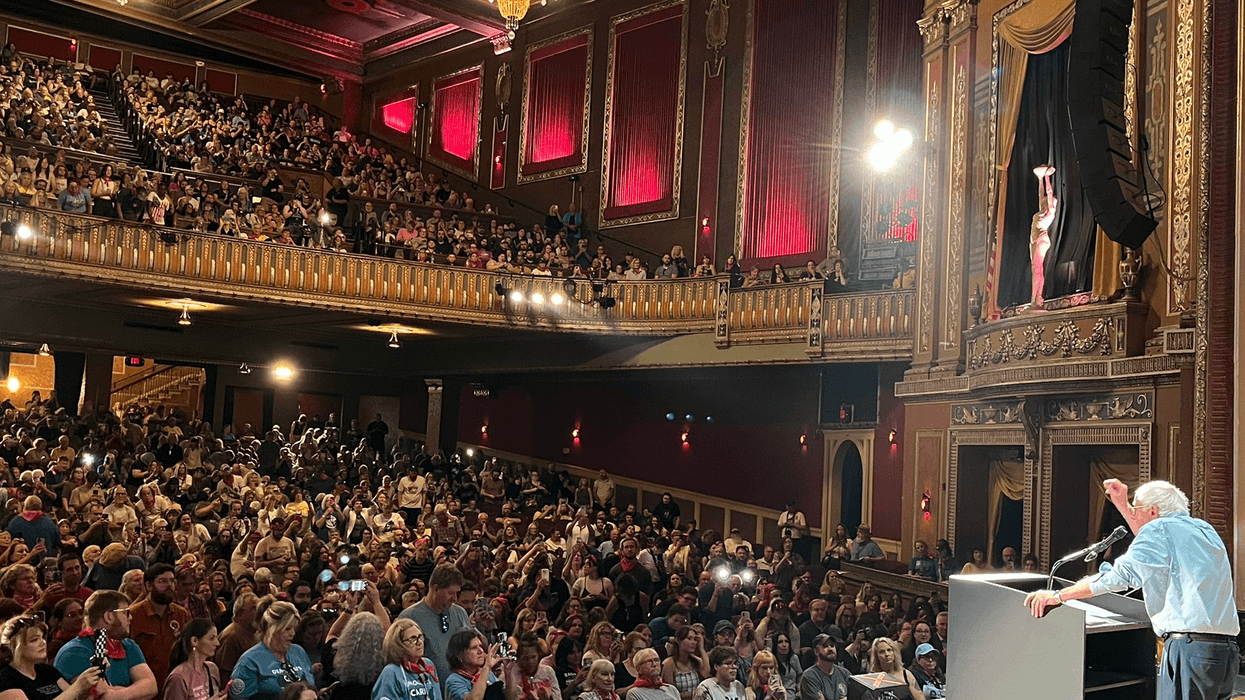
"Whoever said West Virginia was a conservative state?" Sanders asked the crowd in Wheeling. "Somebody got it wrong."
On the latest leg of his Fighting Oligarchy Tour, U.S. Sen. Bernie Sanders headed to West Virginia for rallies on Friday and Saturday where he continued to speak out against the billionaire class's control over the political system and the Republican Party's cuts to healthcare, food assistance, and other social programs for millions of Americans—and prove that his message resonates with working people even in solidly red districts.
"Whoever said West Virginia was a conservative state?" Sanders (I-Vt.) asked a roaring, standing-room-only crowd at the Capitol Theater in Wheeling. "Somebody got it wrong."
As the Pittsburgh Post-Gazette reported, some in the crowd sported red bandanas around their necks—a nod to the state's long history of labor organizing and the thousands of coal mine workers who formed a multiracial coalition in 1921 and marched wearing bandanas for the right to join a union with fair pay and safety protections.
Sanders spoke to the crowd about how President Donald Trump's One Big Beautiful Bill Act, which was supported by all five Republican lawmakers who represent the districts Sanders is visiting this weekend, could impact their families and neighbors.
"Fifteen million Americans, including 50,000 right here in West Virginia, are going to lose their healthcare," Sanders said of the Medicaid cuts that are projected to amount to more than $1 trillion over the next decade. "Cuts to nutrition—literally taking food out of the mouths of hungry kids."
Seven hospitals are expected to shut down in the state as a result of the law's Medicaid cuts, and 84,000 West Virginians will lose Supplemental Nutrition Assistance Program benefits, according to estimates.
Sanders continued his West Virginia tour with a stop in the small town of Lenore on Saturday afternoon and was scheduled to address a crowd in Charleston Saturday evening before heading to North Carolina for more rallies on Sunday.
The event in Lenore was a town hall, where the senator heard from residents of the area—which Trump won with 74% of the vote in 2024. Anna Bahr, Sanders' communications director, said more than 400 people came to hear the senator speak—equivalent to about a third of Lenore's population.
Sanders invited one young attendee on stage after she asked how Trump's domestic policy law's cuts to education are likely to affect poverty rates in West Virginia, which are some of the highest in the nation.
The One Big Beautiful Bill Act includes a federal voucher program which education advocates warn will further drain funding from public schools, and the loss of Medicaid funding for states could lead to staff cuts in K-12 schools. The law also impacts higher education, imposing new limits for federal student loans.
"Sometimes I am attacked by my opponents for being far-left, fringe, out of touch with where America is," said Sanders. "Actually, much of what I talk about is exactly where America is... You are living in the wealthiest country in the history of the world, and if we had good policy and the courage to take on the billionaire class, there is no reason that every kid in this country could not get an excellent higher education, regardless of his or her income. That is not a radical idea."
Sanders' events scheduled for Sunday in North Carolina include a rally at 2:00 pm ET at the Steven Tanger Center for the Performing Arts in Greensboro and one at 6:00 pm ET at the Harrah Cherokee Center in Asheville.
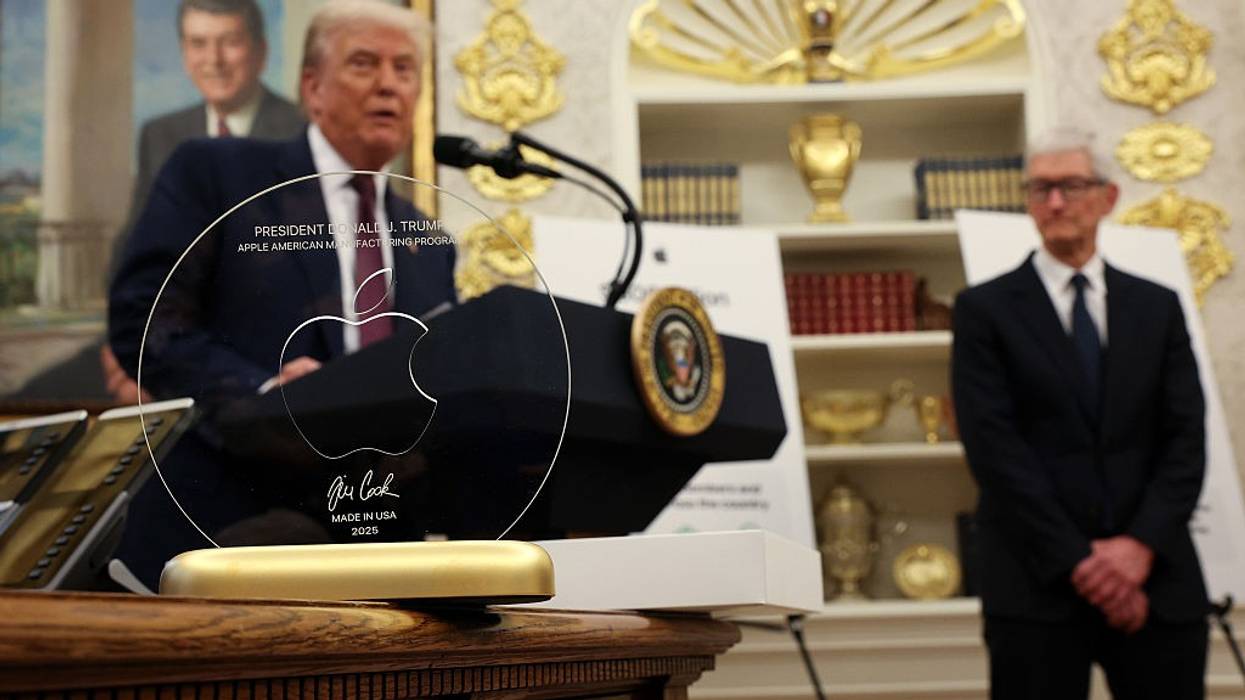
"Want a tax break or special favor from the government? No problem," Sen. Bernie Sanders quipped.
Sen. Bernie Sanders on Friday tore into Apple CEO Tim Cook for scoring a special tax break for his company while presenting U.S. President Donald Trump with a 24-karat gold statue.
As reported by The Washington Post earlier, Cook presented Trump with the gold statue during an event at the White House in which the president announced that Apple would be exempt from the hefty 100% tariffs that he announced this week on imported semiconductors.
In a post on X, Sanders (I-Vt.) linked Trump's reception of the Apple statue to his decision to accept a luxury jet from the Qatari royal family that he will take with him after he leaves office.
"Want a tax break or special favor from the government? No problem," Sanders wrote. "If, unlike Qatar, you can't afford to give Trump a $400 million plane, just walk into the White House with a modest gold statue like Apple CEO Tim Cook. That works, too. Kleptocracy in action."
Sanders' denunciation of Trump's pay-to-play governance comes as he is planning to travel to West Virginia and North Carolina this weekend as the latest stop in his "Fighting Oligarchy" tour in which he'll hammer the recently passed Republican budget package that axed $1 trillion in funding from Medicaid over the span of a decade.
This argument could prove particularly effective in West Virginia, where KFF estimates that 513,000 residents, or roughly 29% of the population, are enrolled in either Medicaid or the Children's Health Insurance Program. What's more, KFF estimates that nearly half of all births in West Virginia are financed by Medicaid.
"I believe from the bottom of my heart, that whether you are in a red state, whether you're in a blue state or a purple state, the American people do not want to see massive tax breaks for billionaires and cuts to Medicaid, education, and nutrition," Sanders said in a Facebook video announcing his trip to the state.
Sanders is scheduled to speak in the city of Wheeling on Friday night before heading to stops in the cities of Lenore and Charleston on Saturday. On Sunday, he's headed to North Carolina, for events in Greensboro and Asheville.
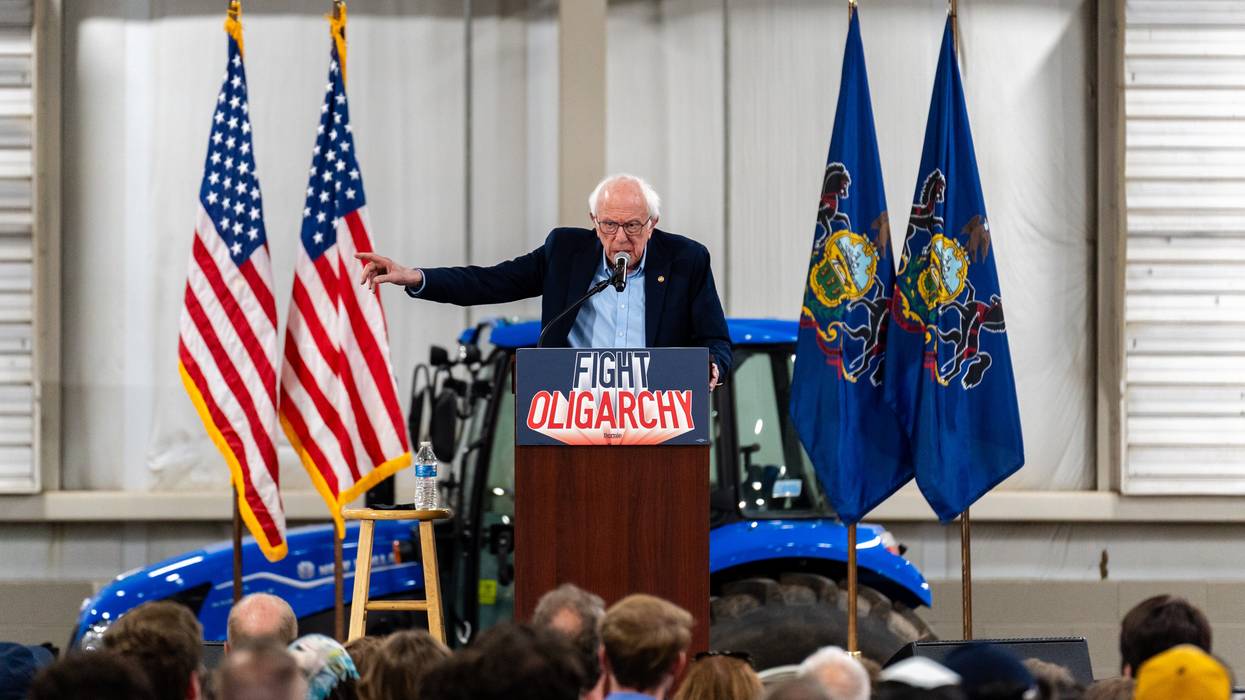
"Red state, blue state—the people of this country are opposed to an economy that works for the 1% and not for working-class Americans," said the senator.
For the first time since U.S. President Donald Trump signed his domestic policy into law, handing out tax breaks to the rich that will far outweigh those for working-class families and slashing healthcare and food assistance programs that millions depend on, Sen. Bernie Sanders will be face-to-face with voters in Republican districts next weekend for the latest leg of his Fighting Oligarchy Tour.
Sanders is headed to several towns in West Virginia Friday, August 8 and Saturday, August 9 and will make his way to Greensboro and Asheville, North Carolina on Sunday, August 10—all in deep red districts like those the Vermont independent senator has visited in states like Idaho and Texas as he talks to voters from across the political spectrum about "the takeover of the national government by billionaires and large corporations, and the country's move toward authoritarianism."
"I'll be heading to West Virginia and North Carolina to discuss the need for decent paying jobs, healthcare for all, and the end of a corrupt campaign finance system in which billionaires buy politicians," said Sanders.
So far, more than 240,000 people have attended Sanders' rallies, where he's been joined by musical guests and, at some stops, by other progressive leaders including Reps. Alexandria Ocasio-Cortez (D-N.Y.) and Greg Casar (D-Texas) and United Auto Workers president Shawn Fain.
Well-attended rallies hosted by Sanders, a longtime critic of both Democratic and Republican lawmakers who take donations from billionaires and corporate interest groups, have frequently been dismissed by the political and media establishment, but the senator has argued that the crowds of people showing up to hear his message this year demonstrate that Americans across demographic divides, throughout the country, are fed up with politicians who don't fight for the working class.
"Red state, blue state—the people of this country are opposed to an economy that works for the 1% and not for working-class Americans," Sanders said Thursday.
More than two-thirds of people who have RSVP'd to the tour have been new to Sanders' mailing list, and about a third of them have not been registered Democrats. Livestreams of Sanders' Fighting Oligarchy rallies have also been viewed more than 8 million times.
Sanders' latest stops in West Virginia and North Carolina will begin days after he and his team held an online "National Training" to organize around efforts "to defeat every member of Congress who voted for Trump's disastrous budget bill and elect progressives up and down the ballot."
"We have to organize people," said Misty Rebik, Sanders' chief of staff, on the call. "Over the past several months, we have organized thousands of people to attend rallies, canvasses, office visits, town halls in swing districts across the country. We've recruited more than 7,000 people to run for office. Over half of those are running as independents."
Americans are answering Sanders' call to help defeat oligarchy and Trump's anti-worker, anti-immigrant, and anti-democracy agenda, said Rebik, because they "do not think that billionaires should control our government and they are not sitting around. And that's why President Trump's so-called 'Big Beautiful Bill' has to be the defining issue of the 2026 campaign. And as Bernie has said, no member of Congress who has voted for this disastrous legislation should be reelected."
The five cities Sanders will visit next weekend are all represented by Republicans who voted for Trump's so-called One Big Beautiful Bill Act and are up for reelection in 2026.
Republican Rep. Chuck Edwards, whose Western North Carolina district includes Asheville, got thousands of calls from constituents urging him to vote against the bill, with nearly 300,000 of his constituents facing the possibility of losing healthcare and food assistance as a result of its passage.
This article has been corrected to reflect the fact that Sen. Sanders' tour in West Virginia and North Carolina is taking place August 8-10, 2025. A previous version misstated that the tour was taking place August 1-3.
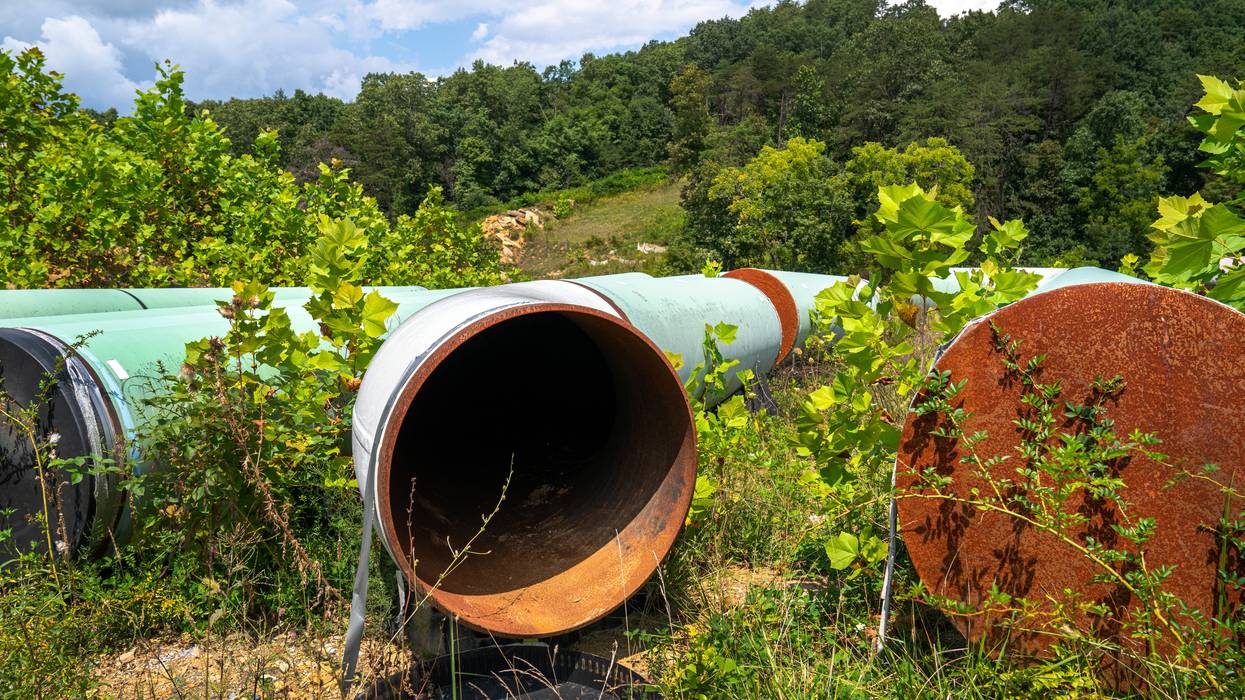
If the allegations contained in a lawsuit are true, it demonstrates a willful endangerment of citizens and a gross violation of federal laws and policies.
In late 2014 people across West Virginia and southwest Virginia were informed that a collaboration of energy companies had created a limited liability company called Mountain Valley Pipeline LLC. The company was created to develop the Mountain Valley Pipeline, a 303-mile methane-gas pipeline traveling through West Virginia and Virginia mountains, farms, streams, and communities. It is most commonly called the “MVP.” It crossed my organic farm and many places where I travel, work, and play.
From the beginning there were questions about the necessity and the viability of this project. What transpired is a years-long battle to stop the pipeline. By 2022 it was apparent that the MVP was a doomed project, having gone from a price tag of $3.5 billion to over $8 billion and not being able to legally obtain critical permits. It is now projected to eventually cost nearly $10 billion.
The pipeline was rescued in 2023 by then-West Virginia Sen. Joe Manchin when he held the debt ceiling legislation hostage until he got his “Dirty Deal,” inserted into the final Fiscal Responsibility Act of 2023. This then created a situation where degraded and corroded pipe, which had sat in the sun for years beyond the manufacturer’s recommendations, was going to be buried by MVP developers. Despite warnings from citizens, environmental, and safety experts, MVP was allowed to use much of this expired pipe.
Congress, PHMSA, and the Federal Energy Regulatory Commission (FERC) each must conduct investigations to determine if public safety has been compromised and if officials with MVP broke federal law.
In October of 2023 citizens did get the Pipeline and Hazardous Materials Safety Administration (PHMSA) to issue additional safety procedures for any of the pipe remaining to be installed across West Virginia and Virginia. Meanwhile MVP was barreling full steam ahead, installing the pipe in some of the most difficult and environmentally sensitive areas of the route. They worked around the clock in sometimes brutal conditions from early June 2023 through June of 2024, despite the fact that Sen. Manchin and others said it could be completed in as little as four months. More lies and deception from those advocating for the pipeline.
Throughout this time, citizens monitoring the construction would hear rumors of shortcuts and pipeline failures like the one that happened in Bent Mountain, Virginia in May of 2024 just days before the pipeline was given the green light to enter service.
In my community of West Virginia, I heard rumors of pipeline being buried that was not properly approved by inspectors, but I heard nothing more about this after January of 2024 when MVP left my farm. That was until June 4 when I read a story by Mike Tony of the Charleston-Gazette-Mail. The story revealed that a wrongful termination lawsuit had been filed in Monroe County, where I live, in April of 2025. It was recently moved to the federal Court in nearby Bluefield, West Virginia. Subsequent stories by Laurence Hammack of The Roanoke Times and by Carlos Anchondo of E&E News have raised dire concerns among those of us who live in the blast zone of the MVP pipeline in West Virginia and Virginia.
The lawsuit alleged that a pipeline inspector was fired by MVP after refusing to sign off on pipe and/or welds he felt were unsafe. In fact, according to the filing in the Monroe County Court, he was told that if he wanted to keep his job, he was to bury the pipe. He refused, and, according to the complaint, he was transferred and later fired. In my eyes, this man is a public hero. He did his job and was fired for it. I wonder how prevalent this kind of excessive pressure is on those doing this job across the pipeline industry.
If the allegations contained in the lawsuit are true, it demonstrates a willful endangerment of citizens and a gross violation of federal laws and policies. It is imperative that this does not get swept under the rug by Mountain Valley Pipeline with some sort of out of court settlement and a nondisclosure agreement. Congress, PHMSA, and the Federal Energy Regulatory Commission (FERC) each must conduct investigations to determine if public safety has been compromised and if officials with MVP broke federal law.
This is particularly troubling for me as I suspect that some of the pipe and welds in question are near my home or in other places where I frequent often. I also suspect this is not a situation that is isolated to just Monroe County, West Virginia. This week I will be in Washington D.C. seeking answers from FERC, PHMSA, and our elected officials.

"Sen. Jim Justice says people 'might get upset' about SNAP cuts," said a government watchdog that's fought against the bill. "No kidding."
Anti-poverty campaigners and rights advocates have warned for months that the Republican Party's proposed cuts to federal nutrition assistance that tens of millions of Americans rely on would harm families as well as hundreds of thousands of jobs and the economies of cities and states across the nation—and on Wednesday one GOP senator appeared to have finally gotten the message.
Sen. Jim Justice (R-W.Va.) told Politico that if the Senate approves—or tries to "one-up"—the House's $300 billion in cuts to the Supplemental Nutrition Assistance Program (SNAP), which President Donald Trump has endorsed, it could cost the party its congressional majority.
"If we don't watch out, people are going to get hurt, people are going to be upset. It's going to be the No. 1 thing on the nightly news all over the place," Justice, who served as West Virginia's governor for eight years before winning his Senate seat last year, told Politico.
The government watchdog Accountable.US rejected Justice's attempt to "dodge the blame" for a proposal his party has been aggressively pushing since Trump took office.
Justice is now one of several Republican governors-turned-senators who have warned against the SNAP provision in the party’s budget reconciliation bill, which would require states to pay 75% of the program's administrative costs and 5-25% of the program's total food aid costs, with states that have higher payment error rates forced to pay more.
Justice's constituents are likely to be disproportionately impacted by the SNAP cuts, with 16% of West Virginians relying on SNAP in 2024. The national average is 12%, according to the Center for Budget and Policy Priorities.
The nonpartisan Congressional Budget Office has estimated that 3.2 million adults, including 800,000 who have school-aged children, could lose their SNAP benefits as a result of what Democratic senators have slammed as the "Big, Beautiful Betrayal."
The sweeping bill also threatens the health coverage of an estimated 13.7 million Americans with cuts to Medicaid and the end of Affordable Care Act tax credits, while the richest households and corporations would benefit from an extension of the GOP's 2017 tax cuts.
Republican lawmakers including Sens. Josh Hawley (R-Mo.) and Lisa Murkowski (R-Alaska) have said they will not vote for a package with cuts to Medicaid.
"Sen. Justice is the latest of many congressional Republicans to voice concern over extreme, draconian cuts to critical programs like SNAP and Medicaid," said Tony Carrk, executive director of the government watchdog Accountable.US. "And there's no question that the budget scam is concerning. Between slashing SNAP benefits for more than 3 million Americans and gutting healthcare for nearly 16 million Americans, this bill will make millions of people poorer, hungrier, and sicker while driving up our national debt."
The Senate Agriculture Committee was examining how to scale back the SNAP cost-sharing proposal on Wednesday, with committee Chair John Boozman (R-Ark.) planning to have bill text finalized by the end of the week.

John Russell urged Democrats to serve working Americans "looking for a political home, after years of both parties putting profit above people."
The Democratic National Convention on Thursday featured a video and speech from More Perfect Union reporter John Russell, who stressed to the Chicago crowd that the party has an opportunity to win over working-class people.
"Thank you to the workers that make this convention happen," Russell began. "Let's never forget how essential all of our labor is."
"I come from Appalachia," he explained. "We kept the lights on in this country for generations. But the wealth made by our broken backs and our black lungs never did trickle down. And Washington listened to rich men demanding that we stick with dirty energy at any cost."
"Across the country, working-class people are looking for a political home, after years of both parties putting profit above people," he said before taking aim at the Republican nominee, former President Donald Trump—who has chosen Sen. JD Vance (R-Ohio), author of Hillbilly Elegy, as his running mate.
"Now Trump, a billionaire, says that he'll take on the elites, but then he promises handouts to Big Oil and he punches down at anyone with the guts to be different," Russell noted. "Populism that insists we are too different to get along is just divide and conquer by a different name."
More Perfect Union reporter @heyjohnrussell just spoke directly to the DNC crowd:
"It is our choice to build on this progress and to create a political home for the mass of working Americans fighting for control over their government, their workplaces, and their planet." pic.twitter.com/lbZaCpJKgw
— More Perfect Union (@MorePerfectUS) August 23, 2024
"There's another sort of populism, with roots in this party, that we—in West Virginia—know well," said Russell, a resident of the state. He pointed to a century ago, when the term "rednecks" was used to deride organized coal miners who "wore red bandanas around their necks as they fought and died for respect and a living wage."
"Their fight yesterday is our fight right now," Russell declared to a roaring crowd. "It is our choice to build on this progress and to create a political home for the mass of working Americans fighting for control over their government, their workplaces, and their planet. And it is our moment to live up to. Let's get after it."
The Nation president and Jacobin founding editor Bhaskar Sunkara said on social media: "I'm pretty sure that John Russell just made the most radical speech in the history of the DNC. A call for class solidarity and a world where working people control their workplaces and their futures."
Antonia Juhasz, a senior researcher on fossil fuels at Human Rights Watch, also responded with praise. Sharing the video, she said, "A great speech on climate action: Climate Action is action for workers, for justice, and for health from John Russell."
In addition to Russell's address, the DNC audience saw a two-minute More Perfect Union video in which he spoke to workers across the United States and highlighted positive impacts of the Inflation Reduction Act, which congressional Democrats passed and President Joe Biden signed two years ago.
Our team has traveled America documenting the impact of historic investments in clean energy, manufacturing, and infrastructure.
From Las Vegas to Tennessee, working people’s lives are changing.
Watch the video we aired at the DNC on why we need an agenda that centers workers: pic.twitter.com/cXio7CbzPm
— More Perfect Union (@MorePerfectUS) August 23, 2024
One of multiple "influencers" or content creators to take the stage this week, Russell has a significant social media following and a newsletter called The Holler. Before West Virginia, he lived in Ohio, where he ran for state House in 2016 and Congress two years later.
Russell told Justice Hudson of the Wheeling Free Press that "we need a populism that doesn't divide us, but unites us."
"That's the way forward, especially as we are fighting against right-wing politicians who are offering us a fake version of populism—and we know it's fake because they want us to point fingers at each other rather than at the wealthy," he continued.
Russell also acknowledged that "we have not heard Palestinian voices on the stage, even as this party claims to be working to stop the carnage unfolding in the Middle East," and urged Democrats to stop "silencing or burying their heads in the sand at protestors outside making the very simple ask of five minutes of speaking time so that Palestinians are represented."
Other champions of the working class who have addressed the DNC this week included United Auto Workers president Shawn Fain, U.S. Rep. Alexandria Ocasio-Cortez (D-N.Y.), and Sen. Bernie Sanders (I-Vt.)—who also spoke Monday at a Progressive Democrats of America event, where he celebrated people across the country who are organizing "on a class basis" and "prepared to take on big money interests."
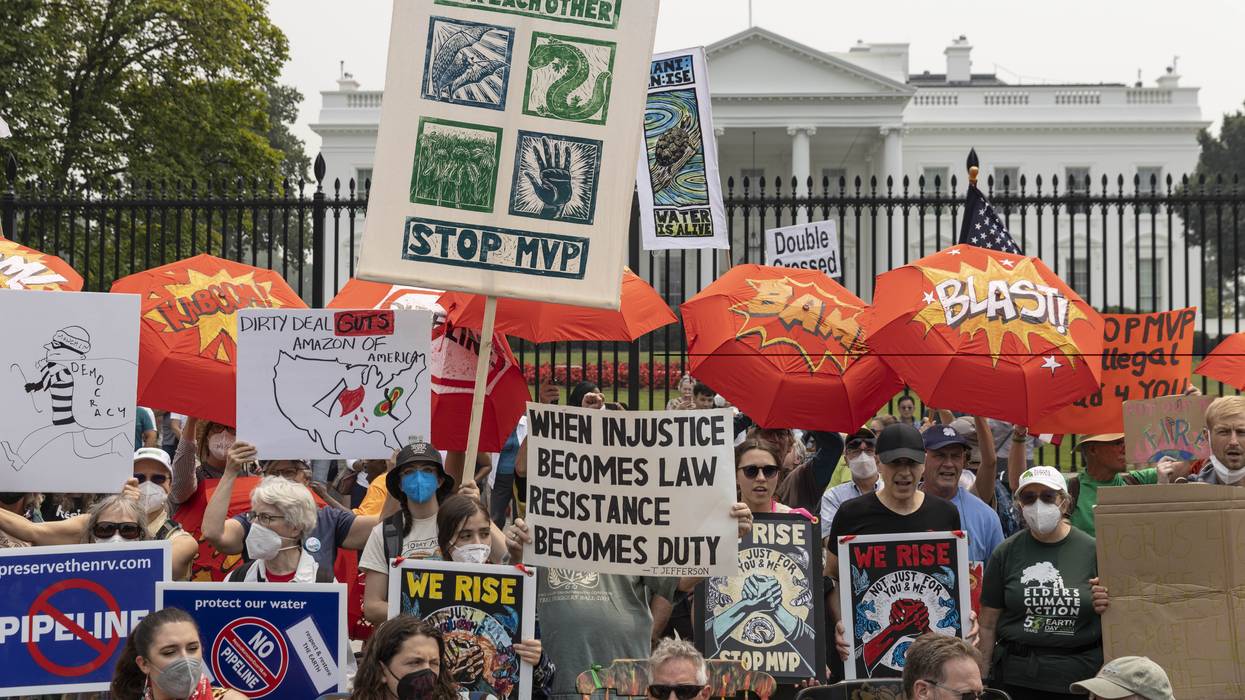
"Allowing this 303-mile disaster to move forward is a slap in the face to the communities who have fought tirelessly over the last decade to protect their land and water."
The Federal Energy Regulatory Commission on Tuesday gave the primary owner of the 303-mile Mountain Valley Pipeline a green light to begin operating the project after years of litigation and local opposition to the costly and destructive fracked gas infrastructure, a top priority of lawmakers bankrolled by the fossil fuel industry.
In a letter to the deputy general counsel of Equitrans, the director of FERC's Office of Energy Projects wrote that the federal agency has concluded that the Mountain Valley Pipeline (MVP) "has adequately stabilized the areas disturbed by construction and that restoration and stabilization of the construction work area is proceeding satisfactorily."
The letter came in response to the pipeline operators' request to allow gas to flow through the system, which runs from northwestern West Virginia to southern Virginia. An Equitrans spokesperson said Tuesday that the company is "pleased" with FERC's decision and that "final preparations are underway to begin commercial operations."
FERC's move drew immediate outrage from environmental groups that have been warning against the pipeline's approval for years, pointing to its projected emissions impact—the equivalent of dozens of new coal-fired power plants—and threat to water supplies and local communities.
"Since developers first proposed the ruinous Mountain Valley Pipeline, their disregard for community and environmental safety has been clear," said Jessica Sims, Virginia field coordinator of Appalachian Voices. "Community members and environmental watchdogs have pointed out the flaws in this project for years, and these fundamental problems with the pipeline remain. By allowing MVP to advance despite all these serious hazards, the system meant to protect our communities, land, and water has failed."
"When a fracked gas pipeline fails testing, literally explodes, fails to meet the safety standards its developers agreed to, what are communities on the ground left with?"
Sierra Club noted in a statement that "it has long been clear that the pipeline is unable to comply with basic environmental protections, with hundreds of water quality-related violations throughout the course of construction." Virginia's Department of Environmental Quality fined MVP's operators earlier this year for 29 separate violations along the pipeline's route through the state.
Last month, a segment of the pipeline in Virginia
ruptured during testing, amplifying opponents' concerns about future gas leaks.
"Allowing this 303-mile disaster to move forward is a slap in the face to the communities who have fought tirelessly over the last decade to protect their land and water," Patrick Grenter, Sierra Club's deputy chief energy officer, said Tuesday. "This pipeline has already marred private property and damaged countless water resources, and the gas it will transport will worsen the climate crisis. We will continue to fight back against the reckless expansion of dangerous, unnecessary fracked gas pipelines."
The decision by FERC—an agency increasingly beloved by Republican lawmakers and the fossil fuel industry—came a year after President Joe Biden signed into law a debt ceiling-related bill that included provisions requiring federal agencies to approve all permits necessary for the completion of the Mountain Valley Pipeline and preempting judicial review of the project.
The MVP-related provisions were inserted by retiring West Virginia Sen. Joe Manchin—who recently switched his party registration to Independent—and other allies of the oil and gas industry.
Dr. Crystal Cavalier-Keck, co-founder and director of 7 Directions of Service, said Tuesday that "this shameful and deadly decision by our establishment leaders and regulatory agencies to put MVP into service only reinforces what we've known all along: They do not care about our safety."
"When a fracked gas pipeline fails testing, literally explodes, fails to meet the safety standards its developers agreed to, what are communities on the ground left with?" Cavalier-Keck asked. "We will continue to demand safety and accountability, while ramping up our efforts to bring down such horrific corruption and instill ethical laws and policies, like the Rights of Nature, to prevent more loss of life and the climate crises from spiraling out of control."
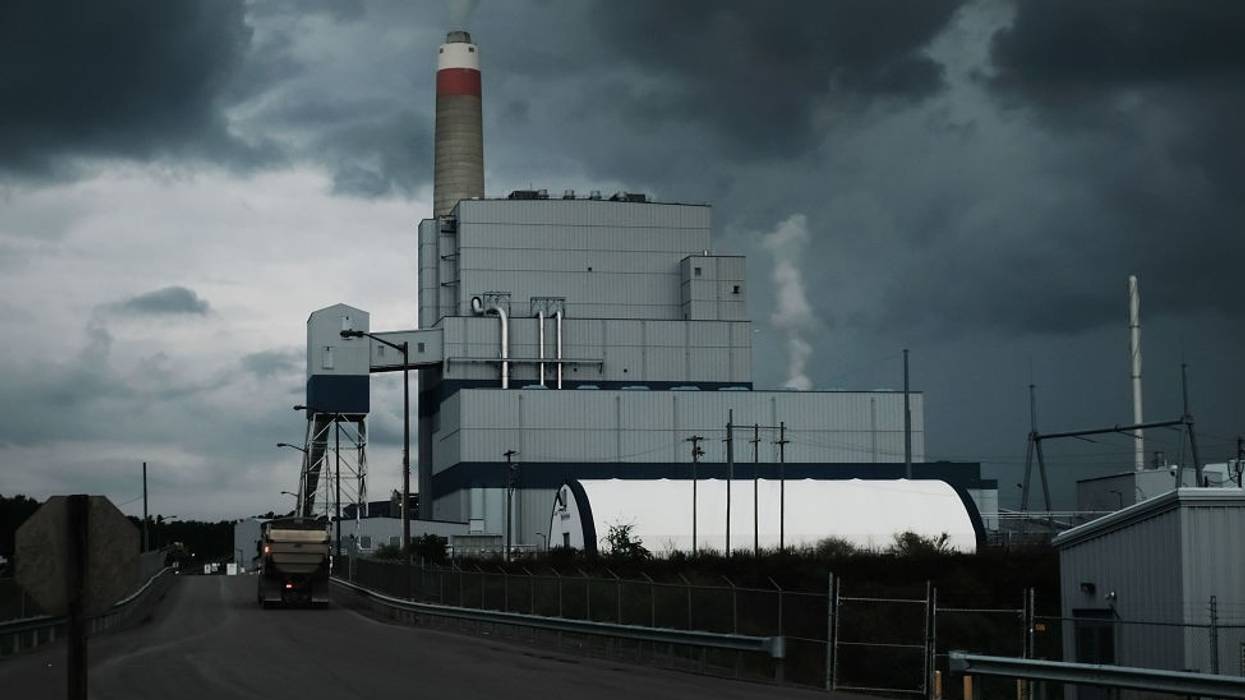
"This is a monumental step forward in our ongoing fight to protect West Virginia's precious wildlife and natural resources," said one campaigner.
The Sierra Club announced on Friday that it had reached an agreement with the U.S. Environmental Protection Agency to address pollution in West Virginia streams that originates from coal mining in the state.
The agreement specifically focuses on what's called ionic toxicity pollution, which is created in the mining process. The pollution that enters the freshwater streams increases their salinity, which kills the aquatic life in them. The Sierra Club is joined by the West Virginia Rivers Coalition and the West Virginia Highlands Conservancy in the agreement.
The EPA will now be creating limits—called total maximum daily loads (TMDLs)—for how much of this pollution can enter "11 high-priority West Virginia streams."
"This is a monumental step forward in our ongoing fight to protect West Virginia's precious wildlife and natural resources," said Sierra Club West Virginia chapter director Honey May. "By holding the coal industry accountable and ensuring the development of TMDLs, we are safeguarding the habitat of countless aquatic species and preserving the ecological integrity of our streams."
❗Today, Sierra Club, @OurWVRivers, and @WVHC secured a historic settlement to restore West Virginia streams harmed by coal mining pollution.
Read our statement on this important win for clean water and healthy communities ⬇️https://t.co/1uzMieP8eT pic.twitter.com/d0ERJ9sgGV
— Sierra Club (@SierraClub) March 29, 2024
The Sierra Club says this deal—which has been years in the making—will help restore important West Virginia streams and means the EPA will finally be fulfilling its obligations under the Clean Water Act.
West Virginia is one of the top coal producing states in the country, and it has faced serious problems with pollution from the state's many coal mines for decades. The coal mining industry has also long been able to avoid having to pay to clean up the pollution it causes.
"For far too long, West Virginia has failed to meet its obligations to protect our waters from coal mining pollution, willfully allowing the health of thousands of stream miles to continue to decline," said West Virginia Rivers Coalition interim executive director Autumn Crowe. "We are encouraged that this agreement will finally begin to get our damaged streams the help they deserve."

It turns out that what’s the matter with Kansas or West Virginia is the wrong question. What’s the matter with the Democrats is what we should be asking.
“The trick never ages, the illusion never wears off. Vote to stop abortion; receive a rollback in capital gains taxes. Vote to make our country strong again; receive deindustrialization. Vote to screw those politically correct professors; receive electricity deregulation. Vote to get government off our backs; receive conglomeration and monopoly everywhere from media to meatpacking. Vote to stand tall against terrorists; receive Social Security privatization. Vote to strike a blow against elitism; receive a social order in which wealth is more concentrated than ever before in our lifetimes, in which workers have been stripped of power and CEOs are rewarded in a manner beyond imagining.” —Thomas Frank, from What’s the Matter with Kansas (2004)
Our conventional wisdom, shaped by Frank’s book, is that working-class people vote against their economic interests by supporting Republicans who promote cultural issues.
Or as a good friend put it: “The Republicans hold up a shiny object with one hand and say “look at this!” – while with the other hand they pick their supporters’ pockets.”
Today, political pundit Ronald Brownstein calls this “the class inversion,” which he describes as “the growing tendency of voters to divide the parties based on cultural attitudes, rather than class interests.”
Put less politely, Brownstein and Frank imply that working-class people have been so attracted by Republican racial dog whistles, anti-immigrant demagoguing, and anti-gay rhetoric that they will vote for the very right-wingers who, once elected, will screw them by giving handouts to the rich while cutting programs needed by the working class.
The evidence is irrefutable, they claim. Republicans hold a strong majority of congressional districts that have older voters on Medicare, lower-income voters, and voters without health insurance. The class interests of these voters should be solidly Democrat because Republicans want to gut those programs.
But does any of this explain what happened to Mingo County, West Virginia, which had a poverty rate of 28.3% in 2021?
Up through the 1990s, this county was solidly Democratic, reflecting the party’s support for unions. In Mingo’s case the United Mineworkers. In 1996, Bill Clinton, a notorious draft-dodger, received a whopping 69.7% of the vote in Mingo. In 2020, Al Gore, a noted environmentalist, crushed George W. Bush, winning 60.2% of the vote. Even John Kerry, who was the poster-boy for liberal elitism with his windsurfing and refined language, garnered a strong 56.2% majority in 2004.
Those results reflect a slide, however, a slide that became more evident when Barack Obama received only 42.1% of the Mingo vote in 2008, and then a measly 27.5% in 2012. By the time Joe Biden came around in 2020, it was nearly impossible to find a Democratic voter in Mingo County. Biden received a microscopic 13.9% of the county’s votes.
If the Democrats had taken a real interest in the plight of coal country, it would have been relatively easy to work out a New Deal-like plan for redevelopment.
What caused this utter collapse of the Democratic vote? Did Mingo County residents, 97.1% of whom are white, somehow resist falling for right-wing cultural issues until Barack Obama took office? Was a Black president finally their excuse to express their repressed racism, sexism, homophobia, and xenophobia by voting for Republicans? Not likely, given that Obama still received three times as many votes as Biden.
A more credible explanation is that Mingo voters really did vote for their class interests. With a population of 23,821, Mingo County saw the number of local coal jobs fall from 3,257 in 1995, to only 322 in 2020. And those are just the direct coal jobs and don’t count the jobs lost in related and supportive businesses.
During 16 years of Democratic presidential administrations, sandwiched around eight years of George W. Bush, what exactly was done to provide a “just transition” away from a coal economy for these workers, their families, and their neighbors as the country weened itself from the dirtiest of fossil fuels?
Here are the available governmental programs according to Mingo County Health Department:
Medicaid, WVCHIP, Medicaid for Long-Term-Care, Medicare Premium Assistance Programs, Non-Emergency Medical Transportation (NEMT), Supplemental Nutrition Assistance Program (SNAP), Emergency Assistance, Indigent Burial Program, Refugee Resettlement, Tel-Assistance, SNAP E&T, Low Income Energy Assistance Program (LIEAP), 20% Discount Utility program, Temporary Assistance for Needy Families (TANF), School Clothing Allowance (SCA) and Other Needs Assistance Disaster Programs
What’s missing? There are no federally funded jobs programs. No government investments in new energy sources to help alleviate climate change. And no long-term wage-placement programs for the battered and displaced workers.
Instead, Democrats (and Republicans too) left this county to the mercy of a free market version of “just transition.” And that was a sight to behold. The free-market turned Mingo County into a massive opioid zone as it became the pill mill capital of the mid-Atlantic states. People poured into the county to obtain opioid prescriptions and have them filled. As an expose in The Guardian revealed, there was no shortage of entrepreneurial zeal in Mingo County:
Each day, hundreds of people lined up outside an old animal feed store where a group of doctors were set up by a former pimp, just out of federal prison for running a gay prostitution ring in Washington, DC, to churn out opioid prescriptions faster than West Virginia’s major hospitals.
In the true spirit of free-market capitalism, other entrepreneurs entered this lucrative market. A rival pharmacy owner recruited a doctor an hour away to lend his name to prescriptions already written by a local nurse. As a result, this rival operation filled one opioid prescription per minute, making this tiny drug store the 22nd most prolific in the entire nation for hydrocodone purchases.
When Mingo County turned to the Republicans, there was no “class inversion.” There was aversion to the Democratic Party by the victims of what the Republicans called the “War on Coal.” To the 3,000 miners who lost their jobs, and to the dead and those dying of opioid overdoses, it was a major conflagration, not a cultural talking point. As I write in my upcoming book, Wall Street’s War on Workers:
“Not surprisingly, abandoning West Virginia to the pharmaceutical drug pushers gave the state the hideous distinction of leading the nation in overdose death rates—81.4 per 100,000 in 2020. The next highest state, Kentucky (at 58.1), has also hemorrhaged coal jobs. The 2020 national average was 29.6 overdose deaths per 100,000. Coal mining always was a dangerous industry, but not as dangerous as the opioid epidemic unleashed by unmitigated laissez-faire economics.”
If the Democrats had taken a real interest in the plight of coal country, it would have been relatively easy to work out a New Deal-like plan for redevelopment. The region needs improved physical infrastructure, stronger schools, and better healthcare facilities. The area could truly benefit from an increase in environmental reclamation jobs funded by the federal government. West Virginians care about the rivers, streams, and forests in which they hunt, fish, and hike. The reclamation of the local environment should have created strong connections between the local population and national Democratic environmentalists. But it didn’t happen. Instead, the Democrats wrote off the state. Good riddance.
As the Republicans continue to press cultural issues, as Tom Frank described, they leave the door open for Democratic solutions that could stop mass layoffs and create sustainable jobs from the millions who have been left behind. The Biden Administration’s bipartisan infrastructure program and green-energy Inflation Reduction Act, as currently conceived, won’t put the people of Mingo County back to work. Furthermore, these voters remember that Frank’s list of anti-working-class economic policies—deregulation, cuts in capital gains taxes, monopolization, and runaway inequality—all had the strong backing of the Democratic Party leadership.
It turns out that what’s the matter with Kansas or West Virginia is the wrong question. What’s the matter with the Democrats is what we should be asking.
Zach Shrewsbury in West Virginia and Dan Osborne in Nebraska are answering that question as they run for the U.S. Senate as unabashed working-class candidates. (See Steve Early’s excellent reporting.)
Osborne, a former local union president who led a successful strike against the WK Kellogg Company in 2021, actually is leading in the polls against three-term Republican Senator Deb Fischer. For the first time in decades, the voters in these two states are hearing a progressive populist message from senatorial candidates, and it is ringing true.
The Democratic Party should listen carefully to what Shrewsbury says West Virginia needs.
“We need leaders that are cut from the working-class cloth," he says. "We need representation that will go toe to toe with corporate parasites and their bought politicians. We need a leader who will not waver in the face of these powers that keep the boot on our neck.”