

SUBSCRIBE TO OUR FREE NEWSLETTER
Daily news & progressive opinion—funded by the people, not the corporations—delivered straight to your inbox.
5
#000000
#FFFFFF
To donate by check, phone, or other method, see our More Ways to Give page.
Daily news & progressive opinion—funded by the people, not the corporations—delivered straight to your inbox.
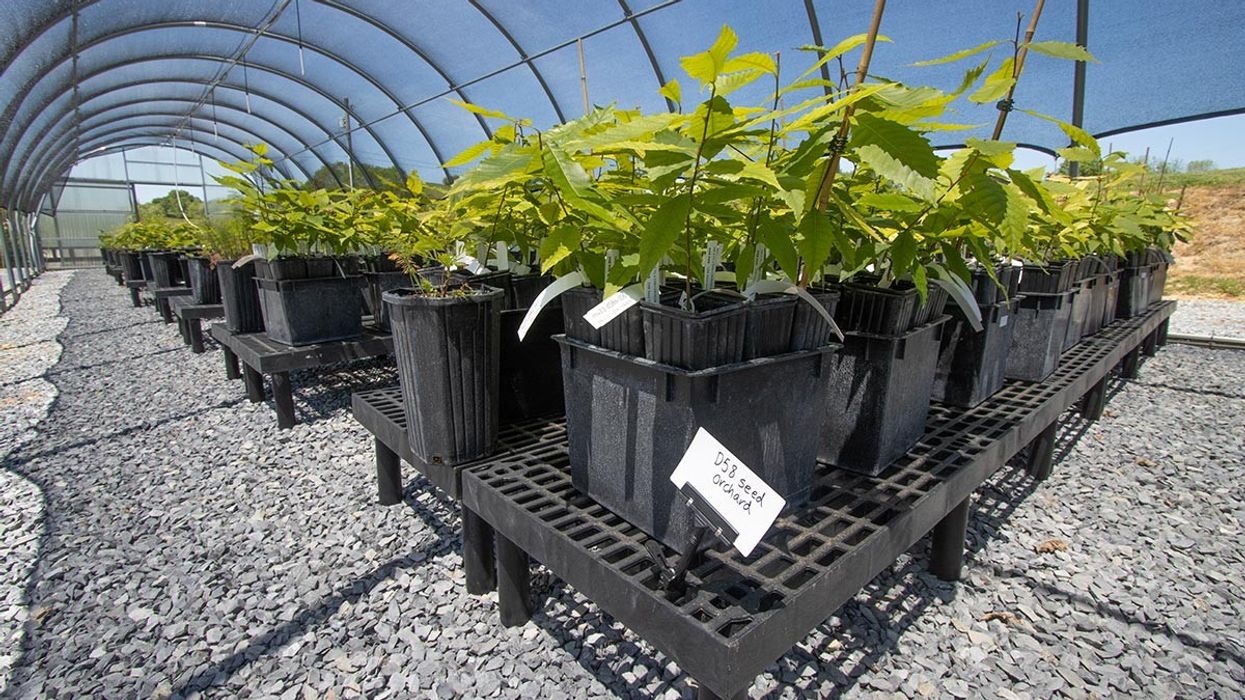
The transgenic Darling 58 chestnut tree as a sign of our collapsing regulatory ecosystem.
On December 8th, the American Chestnut Foundation (TACF) announced it was withdrawing support "for several pending regulatory petitions that would authorize distribution of transgenic Darling 58 trees outside permitted research plots". The announcement was shocking, one that should have huge implications for the idea of releasing GMOs into the wild.
TACF, in league with the State University of New York Environmental School of Forestry (SUNY-ESF) has been publicly stating that it can restore the dominance of the American chestnut, which was decimated by logging and blight, with a genetically engineered version called Darling 58 (D58). They claimed D58 was engineered with a wheat gene inserted into its genome to enable it to resist the blight. It was a high-profile venture intended (the petition is still pending) to deregulate, for the first time, a GE plant for release into the wild to contaminate its wild relatives, something Dr. Donald Davis, an expert on the history of the American Chestnut, called “a massive and irreversible experiment.”
More recent statements by TACF have revealed that it was not merely because of “significant performance limitations” of the Darling progeny that TACF has withdrawn its support but also because they have been working with the wrong GE Tree. The TACF press release explained that “a significant identity error in the propagation materials supplied to TACF” had occurred, and that “independent confirmation now shows all pollen and trees used for this research was derived not from Darling 58.” Throughout the regulatory process, no one noticed that they were working with the wrong tree.
As the promise of the Darling 58 withers on the proverbial vine, it should be a cautionary tale of publicity-driven science as well as a wakeup call to our collapsing regulatory environment
Not since Cold Fusion has so much scientific hype been generated around a fundamental error. Frankly, it strains credulity that the Federal government was so close to making such a monumental, precedent-setting regulatory decision based upon misinformation. This should call into question any and all claims by SUNY-ESF about their GE tree research and disqualify this and future petitions by them.
The Campaign to STOP GE Trees has, for years, argued that the Darling 58 is a Trojan Horse—an iconic tree used to reduce public opposition to GE trees, and to support approval for other more commercial applications of the technology. Despite the shocking admission by TACF that their Darling 58 is not what they claimed, this regulatory threat still exists, and the Campaign to STOP GE Trees will remain vigilant until the USDA pulls the plug on this ill-conceived experiment.
Benefiting from the public relations efforts of SUNY-ESF, TACF and other pro-GMO organizations, headlines in small newspapers to giants such as the New York Times considered the project as a fait accompli giving scientific concerns raised by organizations such as ours tertiary acknowledgement.
So ubiquitous was the praise for the D58 that a recent headline stated, “ESF scientist who brought back American chestnut tree from the brink of extinction has died”. The story was a well-meaning memorial to the scientist who headed the D58 project, yet it exemplifies how the press overstated the success of the D58. With TACF officially withdrawing its support for the D58, it is now the responsibility of those outlets to let the public know that the unparalleled support for the GE tree was misplaced and that the silvicultural messiah was less than all that.
We will continue to echo the warnings of scientists who urge caution, such as TACF’s former staff geneticist, Dr. Paul Sisko who said that there needs to be 50 years of testing prior to release given that the trees are long-lived organisms. Sisko also expressed concern that since only young trees were tested that they do not know whether these genes will have unintended side effects on the trees, or the organisms that interact with the trees as they mature.
In fact, one of the reasons TACF stated for withdrawing its support was poor performance as the trees matured. This underscores the impossible task of understanding the impacts of introducing long-lived organisms into the wild- not to mention researching the wrong variant.
As the promise of the Darling 58 withers on the proverbial vine, it should be a cautionary tale of publicity-driven science as well as a wakeup call to our collapsing regulatory environment and our agencies’ inherent inability to regulate proposals to release genetically engineered long-lived organisms into the wild.
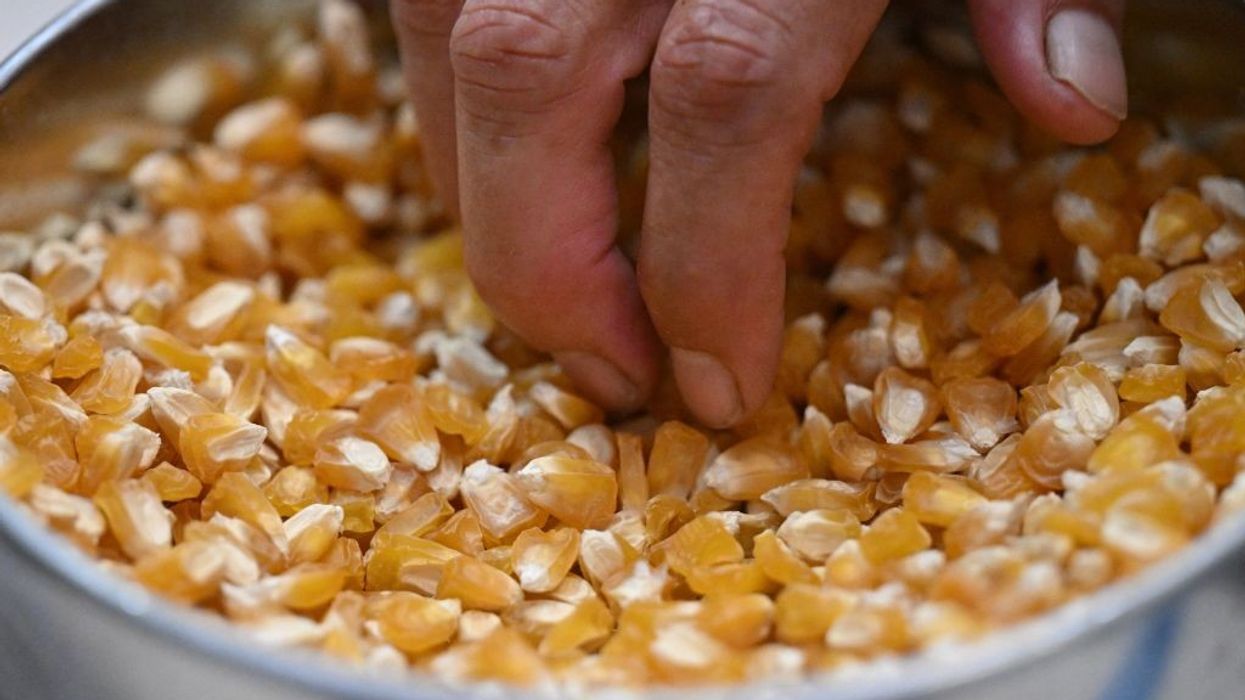
Glyphosate’s association with cancer grows like a weed.
So-called “Free trade” promises lower prices and more supply, but it derails food security. Mexico has been fighting this since the United States began a dispute over genetically modified (GMO) corn. In November, a trade panel made initial filings public. They reveal that the U.S. plays for agribusiness, which includes chemical and biotech companies. Meanwhile, by banning GMO corn, Mexico secures supplies of an important daily staple and limits cancer risks from glyphosate. American positions appear oblivious to this.
This involves Mexico’s Decree, announced in February. It bans GMO corn for human consumption, limited to corn in tortillas or masa (dough). In August, the U.S. invoked a panel under NAFTA 2.0, formally called the United States-Mexico-Canada Agreement (USMCA). Showing its hand, the U.S. is out to lunch on various fronts.
First regards what the ban does. The U.S. argues that Mexico requires substitutes for GMOs in animal feed. Nonsense. The Decree does not touch animal feed. It does envision eventual GMO alternatives, but no timeline is given for this. No measures are announced. Addressing these fears, the Decree explains that authorizations for GMOs will still be granted, so long as they are not used for corn in tortillas or masa.
Other American positions note that Mexico is the “second largest export market for corn” and corn is its “largest agricultural import.” These observations may be true, but they seriously conflate separate commercial realities. American farms overwhelmingly grow corn that is GMO and yellow. Exports to Mexico are mostly yellow corn, for “non-human consumption,” and for animal feed or industry. A lobby group, the Corn Refiners Association explained this last year.
The Decree impacts a different type of corn, which is white corn. Mexican cuisine prefers white corn as the kernels are softer and easier to grind than yellow corn.
Economic figures show the confusion. Only about 3% of corn grown in the U.S. is for human consumption and less than one percent of that is white corn, as reported by the Agricultural Marketing Resource Center at Iowa State University last year. US Department of Agriculture studies on exports confirm these amounts.
After the ban, American farmers will continue exporting GMO yellow corn and corn for animal feed or industrial use. Mexico will import these. American fog in this dispute is real.
Why twist the trade numbers? Because of a third problem: cancer risks. American stances hype lower prices and higher yields to distract from worries intrinsic to glyphosate. GMO farms need this herbicide. This may be the US’s “tilt,” a poker term meaning frustration leading to bad aggressive choices.
Glyphosate’s association with cancer grows like a weed. A few weeks ago, a Missouri jury ordered its maker, Bayer Monsanto, to pay $1.56 billion finding the chemical caused lymphoma cancer. This dealt the agribusiness giant its fourth straight loss.
Its run started to change in 2015 when a World Health Organization (WHO) agency found glyphosate was a likely cause of cancer. U.S. courts started agreeing with this finding three years later. There have been many lawsuit losses for glyphosate since then. For these health-based reasons, Mexico is preparing to discontinue glyphosate with Decrees from 2020 and this year.
The U.S. effectively ignores these risks. Its filing mentions the toxin only when it must because of the titles of Mexico’s Decrees and press releases. The American game is to bring up old stories on GMO safety. These include “prescient” claims of “new biotechnology breakthroughs” from a Nobel Laureate in 2000. They cite a National Academy of Sciences report finding that GMOs were “environmentally sound”—but it's from two decades ago. They also reference the WHO in 2014 confirming there was “no evidence of ill effects” from consuming GMO crops. But these are all outdated studies. That's the “tell,” providing clues on its strategy on the trade fight over corn.
Mexico can stick to the current science on glyphosate dangers, including pediatric medicine and public health studies from 2021 and 2023. Conducted in Mexico, they find worrying levels of glyphosate in children who lacked any direct contact with herbicides and in neonate infants whose exposure is via “maternal routes.” This is alarming since children and infants lack developed organs and immune systems. These risks are expected to come from GMO corn consumption, by children or their mothers, respectively.
Where do we go from here? The USMCA, Chapter 9, preserves food safety measures to protect human life and health. A limited ban on GMO corn is not too much to ask. Will it convince trade panelists? Hopefully.
But what is clear, after the first hand was played, American stances ignore the Decree's objectives, its impacts, and the cancer risks at hand. Ideally, Mexico’s food safety efforts are protected by the trade rules American officials tout.
Otherwise, NAFTA 2.0 just gets another update, forcing GMOs, with a trade panel determining the justifications. Observers describe this as prioritizing corporate profits and “nothing short of 21st-century imperialism.” Stay tuned. It’s a long game, but Mexico’s plan for corn is part of larger global efforts to make international trade more fair and sustainable.
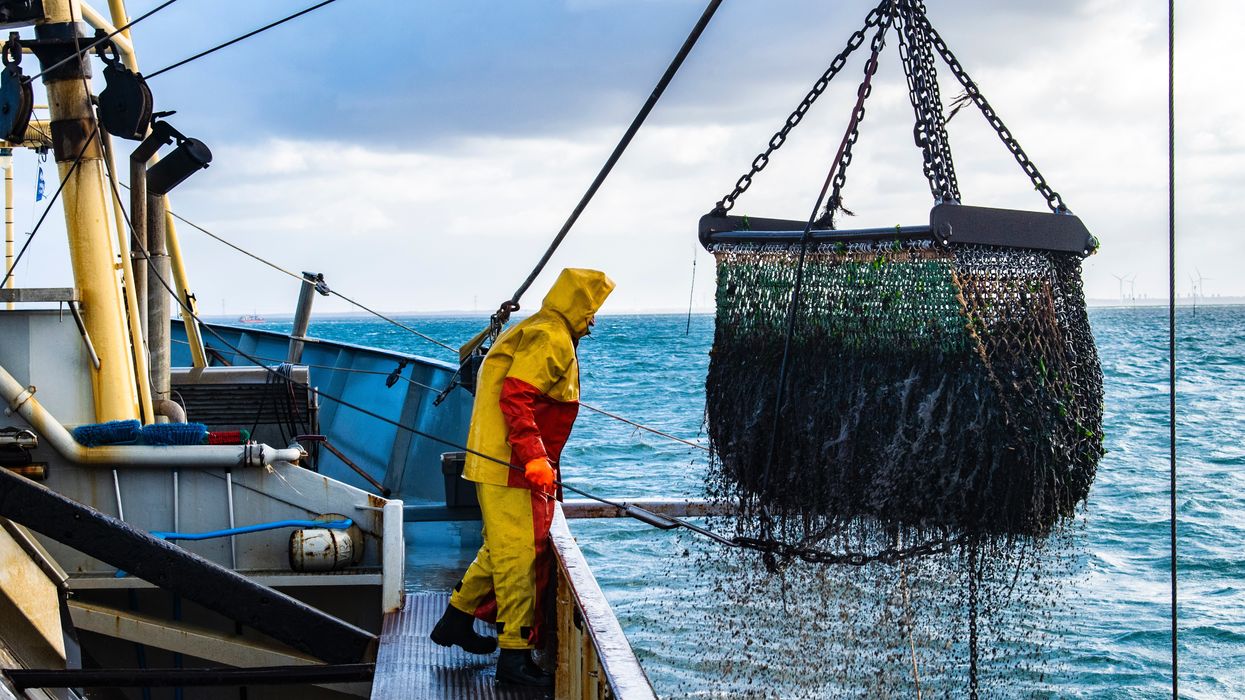
By using commodity grains produced on factory land farms to feed fish in factory ocean farms, Big Ag has brought small-scale farmers and fishermen like us together.
Farmers neither milk cows with nets, nor harvest vegetables with rods. And fishermen neither scatter seeds in the oceans, nor catch fish with sickles.
Despite our differences, something we do share is a common threat from the expansion of industrial fish farming and big agribusiness.
More specifically, the expansion of industrial fish farming provides an increasingly profitable outlet for large-scale agriculture corporations to market surplus grains like soy and corn as “fish feed.” Such developments threaten both fishing and farming communities, as the model promotes industrial production of genetically modified monocrops for concentrated animal feeding operations on land and at sea.
According to the Food and Agriculture Organization (FAO), marine and inland aquaculture production has significantly increased around the world from 1990 to 2022, with the former growing from 12.6 to 44.7 million live weight tons, and the latter moving from 9.2 to 26.8 million live weight tons.
Factory fish farms have emerged to line the pockets of big corporations by producing monocultures of fish at mass volume, under the guise of satisfying seafood demand. This "demand" is artificially created by the fact that we currently export 75-80% of U.S. wild-caught seafood. US wild-capture fishermen landed more fish domestically than Americans consumed in 2020, according to the National Ocean and Atmospheric Administration.
The influx of nutritionally inferior farmed fish devalues sustainable and diverse wild-caught fisheries, forcing fishermen to accept pennies on the pound for hard-earned fish. Furthermore, wild forage fish, which make up the base of healthy marine ecosystems, are being harvested for incorporation into aquaculture fish feeds, along with soy and corn. These fish, specifically Menhaden and herring, are the main source of protein for every species of finfish.
Densely packed fish farms also degrade ocean ecosystems. They amount to floating feedlots that pollute waters with antibiotics and fish waste; endanger marine mammals that interact with the cages; and compromise local coastal economies that depend on fishing and tourism. From coast to coast, lobbyist-backed efforts are underway to expand this industry in the United States.
Certain large-scale agribusiness firms have jumped on the bandwagon and made offshore industrial fish farming an area of focus. In a nutshell – or perhaps a soybean – the firms together referred to as “ABCD” (Archer Daniels Midland, Bunge, Cargill, and the Louis Dreyfus Company) are developing what is known as “aquafeed.”
According to Cargill, aquafeed includes “co-products” that are “not of marine origin.” Those “co-products” include all kinds of things, including large amounts of soymeal and corn - most of which is genetically modified.
Should fish eat corn or soy? Common sense says no.
As you can imagine, fish have trouble digesting grains. On top of that, placing thousands of fish in confinement generates other issues, including disease and illness.
In response, Cargill has acquired firms, such as Diamond V, which specialize in producing feed additives to improve fish health and digestion. They are also working on new “co-products,” such as insects and algae to supplement the soy and corn that fish are forced to eat.
Notice the circle: agribusiness firms create solutions for problems they created in the first place. In fact, we wouldn’t have to worry about fish diets if they were not sick from being crammed into unnatural habitats, eating manufactured food — basically, if there were no factory fish farms.
Meanwhile, our current industrial agricultural system rests upon bailing out farmers just enough through schemes like crop insurance, so that they continue to grow excess corn and soy, regardless of demand. In fact, crop insurance has become the second largest section of the Farm Bill, the mammoth piece of federal legislation that covers programs ranging from rural development to food access to beginning farmer training. In comparison, federal agencies spend a pittance on policies that could promote diverse operations and climate solutions.
The truth is that mega-scale agribusinesses' grain merchants wouldn’t be looking to force-feed soybeans and corn to fish if we had a decent agriculture policy that supported farmer incomes and local, diversified operations, rather than crops that feed into the commodities market. Instead, soy and corn are being overproduced in the U.S. and the Global South, often on land seized from Indigenous peoples for mono-crop expansion that relies on deforestation and pesticide use.
This plays out as a perfect scenario for agribusiness giants to pad their pockets. But not so for small-scale farmers and fishermen, who don’t see any benefits for themselves or their communities.
Still, there’s hope. New proposed legislation for the currently debated Farm Bill may yield positive results, instead of more commodities in our global industrial food system.
Senator Lisa Murkowski (R-AK) recently introduced the Improving Agriculture, Research, Cultivation, Timber, and Indigenous Commodities (ARCTIC) Act, much of which is aimed at including seafood in the Farm Bill. The legislation bans offshore fish farms in federal waters, while increasing portside processing facilities for small-scale fishermen. It also calls for country of origin labeling for cooked crab that may come from outside of the US into our markets, as well as a ‘Wild USA Seafood’ label for fish that is landed in US waters.
Preventing the development of offshore factory fish farms is a win for fishing communities. But it’s also a potential win for farmers and the environment. It could deter farmers from continuing on the commodity grain treadmill, allowing them to instead diversify in search of market alternatives and better profits.
By using commodity grains produced on factory land farms to feed fish in factory ocean farms, Big Ag has brought small-scale farmers and fishermen like us together. The Farm Bill, up for reauthorization, seems like an apt opportunity for cross pollination. Why not use this important legislation to address farmers’ and fishermen’s issues together?
We hope more food producers from land and sea join in on our shared fights. After all, our farming and food systems don’t end at the water’s edge.
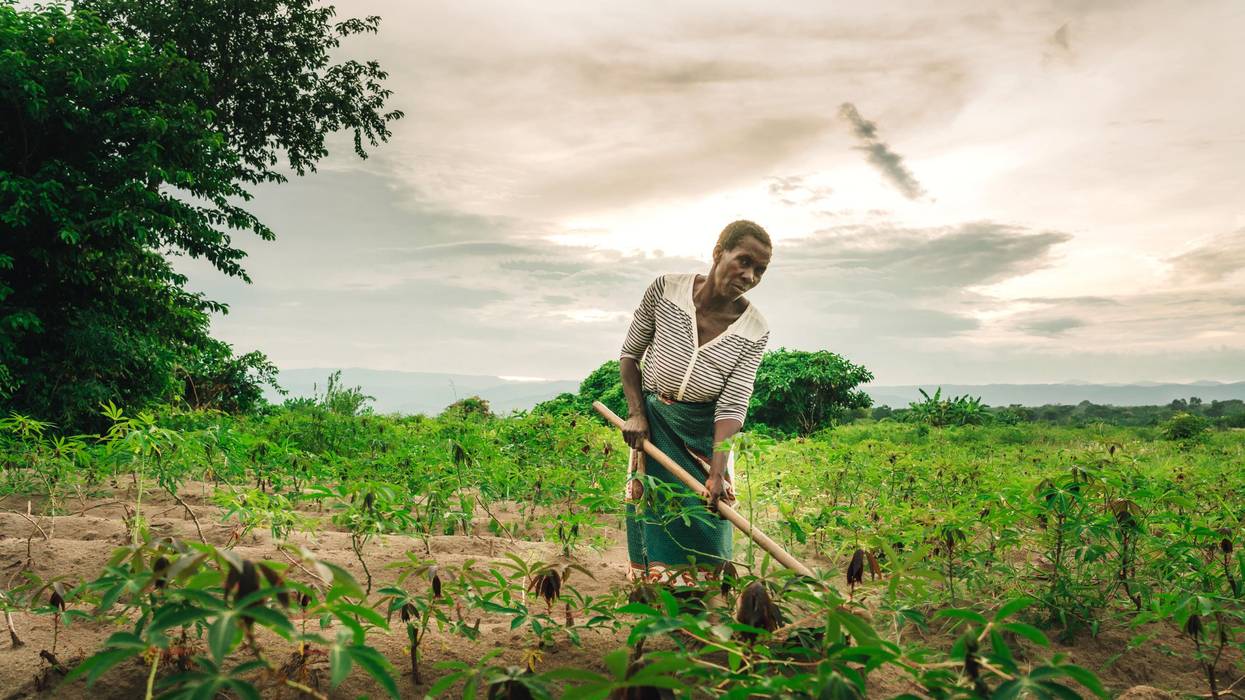
In March, the Southern African Faith Communities' Environment Institute (SAFCEI) sent letters to the U.S. Agency for International Development (USAID) and other donors calling on them to stop funding the Alliance for a Green Revolution in Africa (AGRA). Evidence from a donor-commissioned evaluation, released in February, confirmed the findings of an independent academic assessment that the billion-dollar program was failing to significantly improve yields, incomes or food security for Africa's small-scale farming households.
The seed and fertilizer companies are the true beneficiaries, turning public subsidies and support into private profits for major seed and fertilizer companies.
Unfortunately, USAID was quick to dismiss the evaluation's findings, and its support for funding AGRA continued. That is why one of us was among the African civil society leaders who, in March, briefed members of the House Foreign Affairs Committee and asked them to stop the appropriation of any further funds for the alliance when Congress reauthorizes the Global Food Security Act later this year.
Reps. Ilhan Omar (D-Minn.,) Sara Jacobs (D-Calif.,) and Tom Malinowski (D-N.J.) have sent a "dear colleague" letter to the co-chairs of the House Appropriations Committee asking them to reexamine the funding for the Alliance for a Green Revolution in Africa. We thank those members for taking our concerns to heart.
As a multi-faith environmental NGO, SAFCEI works regionally with faith leaders concerned about environmental and climate issues. Those faith leaders represent their communities across Africa and they see what is happening on the ground.
For years, African smallholder farmers have been the supposed beneficiaries of top-down initiatives such as AGRA, which promote the use of commercial seeds and fertilizers and changes in government policies that recent studies show are harming poor farmers and the environment. Farmers lose control over their seeds and become dependent on expensive inputs. The diversity of their crops, and their families' diets, decline with the promotion of monocultural cropping and subsidized commercial seeds. Their soils become depleted.
Meanwhile, the seed and fertilizer companies are the true beneficiaries, turning public subsidies and support into private profits for major seed and fertilizer companies.
We wrote recently to AGRA donors about this issue, following an open letter sent last May to the Bill and Melinda Gates Foundation, AGRA's largest funder. Signed by more than 500 African faith leaders and organizations, the letter cites the growing evidence that this model of agriculture is not serving the people of Africa nor creating a climate-resilient future for small-scale farmers. We received no acknowledgment or reply from the Gates Foundation nor most of the other donors to date.
A recent evaluation confirmed poor outcomes for farmers who are recipients of AGRA's approach, concluding that "AGRA did not meet its headline goal of increased incomes and food security for 9 million smallholders." In fact, an assessment by a Tufts University researcher who works with us at the Institute for Agriculture and Trade Policy to raise awareness about this issue found that the number of undernourished people in AGRA's focus countries increased 30 percent since the initiative began in 2006.
In Africa, women farmers form the backbone of farming, often creating and providing nutritional diversity for their families and communities from smallholdings or backyard farming. However, as the donor evaluation pointed out, "Farmers who adopted improved inputs and experienced yield increases were typically younger, male, and relatively wealthier.... [P]roductivity and income gains were also concentrated among these relatively high-resource farmers."
This finding directly contradicts the stated goals of USAID and other AGRA donors to ensure that their assistance programs benefit smallscale farmers and empower women.
That is why we were dismayed to read that a USAID spokesperson quickly responded to the critical evaluation and pledged continued support for AGRA, stating, "We appreciate AGRA's response to the report conclusions and concur with their proposed next steps to improve performance outcomes."
Faith leaders ask USAID to pause, listen to farmers, reconsider that position and stop funding AGRA and other green revolution approaches. We ask that, instead, USAID shift its support to locally-defined, holistic approaches that enable agroecological transitions to sustainable food systems in Africa. Such farming methods work with, rather than against biodiversity, and promote the equitable production and local marketing of nutritious food.
As people of faith, we believe in working to support those most vulnerable to food insecurity and climate change. We welcome support that is appropriate and provides resources that will make hunger and poverty issues of the past.
We also hope that members of Congress will, when it comes time to reauthorize funding for AGRA later this year, consider our view and that of the many communities that faith leaders represent.

Even before the war in Ukraine, the sanctions on Russia, and the shipping blockade of the Black Sea, farmers across the US were getting ready for higher prices on seed, fertilizer, and crop chemicals. All winter, major farm media was warning farmers to book supplies early as prices would be high and supplies would be short. The war in Ukraine has only amped up the concern among farmers, input suppliers, and those who erroneously proclaim that we, the US, must feed the world.
Here in the US, farmers are told they can and must feed the world by growing more corn, more soy, and more livestock in confinement, even if that is not what the world wants or can afford to eat.
The farm media offers suggestions as to how farmers, despite relatively higher crop prices, might deal with the even steeper increase in input costs. Use less, get your old tillage equipment out or, heaven forbid, consider manually pulling weeds like farmers used to do--of course, years ago, farmers didn't run thousands of acres.
While oil companies used the sanctions on Russian oil to steeply ramp up their prices, even though Russian oil continues to flow almost without interruption, corporate agribusiness also has a convenient smokescreen to ramp up input prices even further--nothing short of blatant corporate profiteering.
Despite the war, Ukrainian farmers continue to plant and shift their production to feed Ukrainians locally. But, like Ukraine, farmers all over the world cannot farm if they are under fire, so, acreage planted and tons harvested in 2022 will be down significantly from years past. With grain and fertilizer tied up by Russian blockades of Black sea terminals, severe drought and flooding, and aftereffects of the COVID pandemic, food prices will continue to climb as the consolidated global agricultural system is faced with problems they are unable to deal with.
Ignoring its obvious faults and clear failures, the industrial food system is touted as the only way forward. Our consolidated food system is immensely profitable for the multinationals that supply the inputs and for those that buy, process and distribute the crops and livestock into the global supply chain. For the farmers, not so much. They buy at retail, sell at wholesale, all while competing against each other in a rigged marketplace. Here in the US, farmers are told they can and must feed the world by growing more corn, more soy, and more livestock in confinement, even if that is not what the world wants or can afford to eat.
Industrial agriculture requires ever larger and more expensive equipment, larger farms, more fragile land put into production and it will continue the trend of depopulating rural America as small farms, rural communities, and local food systems are destroyed by corporate big ag.
And what of farmers in the rest of the world? In the Global South the situation is ever more dire and more unfair. Farmers are pressured by governments, the World Bank, and philanthropists like Bill Gates to follow the industrial model of the US, nevermind its failures, nevermind its cost.
Efforts like the Alliance for a Green Revolution (AGRA), despite billions of dollars spent and promises to double food production and increase farmer income, have proven to be a failure. Africa does not have better access to food, the farmers are poorer and are being driven off their land, victims of technology, the cost of inputs they cannot afford, and land grabs by foreign governments and corporations. Perhaps if African countries were not at the mercy of international lending institutions and their farmers the victims of climate change and agri-colonialism, they might feed themselves?
There will always be food for those with money, energy for those with money, needed vaccines for those with money-- the multi-national corporations will see to that, even as they continue to extract profit from countries least able to afford it. UN Secretary-General Antonio Guterres likened the ongoing and increasing crisis to "a Sword of Damocles now hanging over the global economy--especially the developing world".
The failures of the system in the US are easily seen--fragility of the supply chain, the emergence of herbicide-resistant "super weeds," failure of the "promise" of Genetically Modified crops, loss of farms, unrestrained water use and pollution, staggering farm debt, and climate change, driven in part by the agricultural system itself.
We don't know who really said "insanity is doing the same thing over and over again and expecting different results" but they had a point. We have a high-tech industrial food system that is in crisis and has over and over shown its flaws and failures, yet we carry on in denial. We throw good money after bad, trying to push the same failing systems on Africa and countries across the Global South. We ignore the fact that efforts, like AGRA, have failed and we refuse to support and fund Agroecological solutions that will work.
Crisis should drive efforts for change. Why do we insist on more of the same?

After years of public scrutiny for undemocratic decision-making, the Seattle-based Gates Foundation--one of the wealthiest and most powerful private philanthropies in the world--made headlines earlier this year when it expanded its board of trustees. In spite of an emphasis on diversity, all the new trustees have close financial ties with the Foundation and share a belief that technology will solve the world's problems. Because of our own work on food and agricultural issues (as a US researcher and Zimbabwean farmer, respectively), we are particularly concerned about what the appointment of Strive Masiyiwa means for the Foundation's future agricultural development work in Africa and around the world.
This narrow, tech-focused perspective positions agriculture as only a business.
Masiyiwa played a central role in the Gates Foundation-funded Alliance for a Green Revolution in Africa (AGRA), which promotes a destructive model of US-style industrial agriculture and is opposed by many civil society organizations and farmers' associations in Africa. Masiyiwa chaired AGRA from 2013 to 2019, in spite of having, in his own words, "no background in agriculture." After stepping down, he was appointed co-chair of Grow Africa, a platform for private sector investments that are made as part of the New Alliance for Food Security and Nutrition. Although both AGRA and Grow Africa claim to benefit small-scale farmers, they actually help corporations like Nestle, Unilever, and the fertilizer company Yara gain access to new markets, consumers, and profits in Africa.
Masiyiwa, like Bill Gates himself, is fundamentally a tech opportunist. A Zimbabwean billionaire who made his money through telecommunications, he invented an Uber-like app for farmers to rent tractors using mobile money and has advocated for drone use in farming. As is clear in his work and writing, he views African agriculture as a vast and as-yet largely untapped frontier for tech investment and profit. This mirrors how the Gates Foundation itself already thinks about African agriculture, and will do little to diversify the Foundation's agricultural activities or increase alignment with international recommendations.
This narrow, tech-focused perspective positions agriculture as only a business. This threatens and invalidates local and Indigenous understandings of agriculture as simultaneously an economic activity, a cultural practice, and a form of environmental stewardship. As such, programs guided by a singular focus on making agriculture function like a business cause immense violence to the individual small-scale farmers who are forced to keep up with the costs and competition involved in industrial (and increasingly digital) farming.
Contrary to the IT-influenced "solutions" proposed by Masiyiwa and Gates, the small-scale farmers that both of us have worked with in our respective careers tend to demand more grounded and practical interventions: more resources and support for agroecology (a science-based method of agriculture modeled after ecosystem processes); infrastructural support from national governments; assistance with desalinating soils; and the creation of locally-run processing or preservation facilities and networks to get value-added products to viable markets.
This is not to deny that some digital innovations can be beneficial. For example, extension services are increasingly using text messages to communicate rainfall data and planting advice, with demonstrated positive effects for certain farmers. But we should be mindful about both the motivations and effects of tech-based interventions: do they serve small-scale farmers' needs and enhance their work and lives, or do they help companies and start-ups sell ill-suited products and services while increasing debt and inequality among farmers? Masiyiwa's actual and proposed interventions seem more likely to do the latter.
Masiyiwa might represent African entrepreneurs, but he doesn't represent or serve the hundreds of millions of small-scale farmers who produce most of the continent's food, whom he paternalistically claims to be "freeing from the drudgery of the hoe." The board of the Gates Foundation makes decisions that impact African farmers' futures and lives--why don't those farmers have a seat at the table?
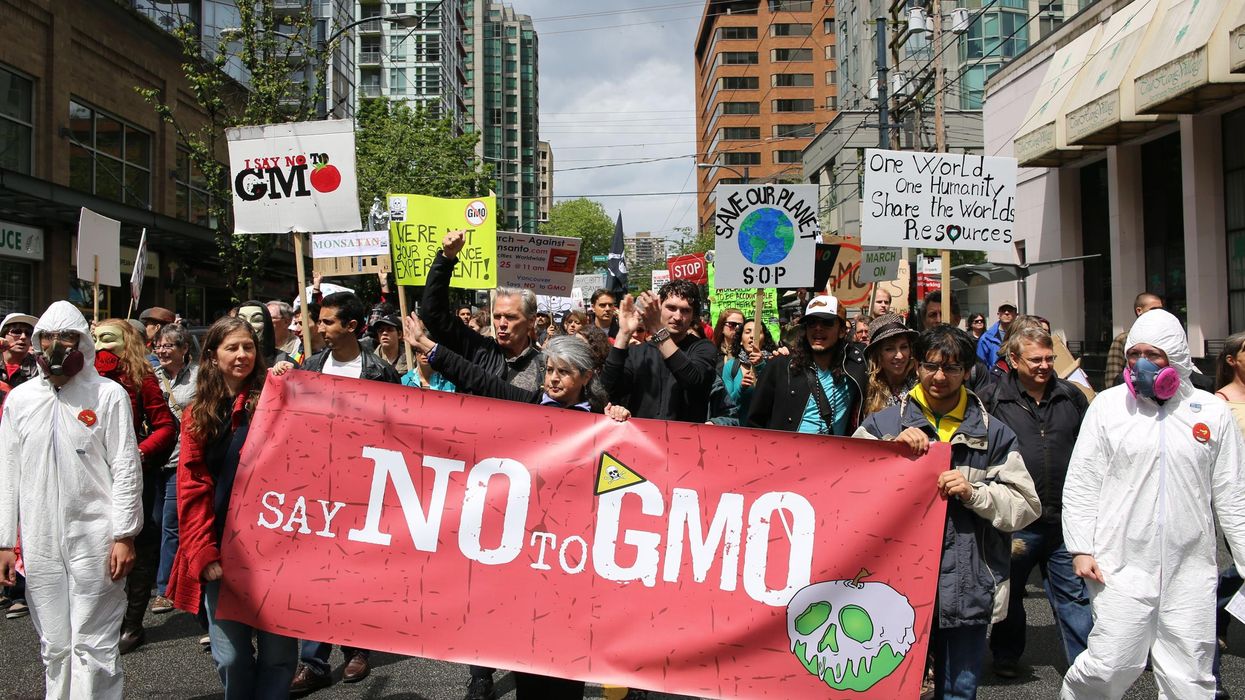
Amid an ongoing lawsuit challenging what critics call deceptive Trump-era U.S. Department of Agriculture regulations for labeling genetically engineered foods, a leading advocacy group on Wednesday announced the launch of a consumer action campaign ahead of the new rules taking effect on January 1.
"These regulations are not about informing the public but rather designed to allow corporations to hide their use of genetically engineered ingredients from their customers."
"Consumers have fought for decades for their right to know what's in their food and how it's produced," Meredith Stevenson, an attorney for the Center for Food Safety (CFS), said in a statement. "But instead of providing meaningful labeling, USDA's final rules will only create more uncertainty for consumers, retailers, and manufacturers."
CFS is set to launch a nationwide consumer campaign using "citizen investigators" to identify corporations using QR codes instead of on-package text or symbol labeling to conceal their use of GMOs. Those companies will then be pressured to adopt on-package text or symbol labeling in addition to QR codes.
The use of QR codes has been called discriminatory against millions of poor, elderly, and rural people who don't own smartphones, or who live in areas where grocery stores lack internet connections.
In December 2018, the USDA released the new labeling rules two years after the Republican-controlled Congress passed the National Bioengineered Food Disclosure Law. Sonny Perdue, Trump's industry-friendly agriculture secretary, claimed the new standards for genetically engineerd (GE or GMO) foods would increase "the transparency of our nation's food system" and provide "clear information and labeling consistency for consumers."
Critics, however, said the regulations are an insidious attempt to conceal Big Ag's increasing use of genetically engineered ingredients in food products, and that the new rules leave most GMO-derived foods unlabeled.
"These regulations are not about informing the public but rather designed to allow corporations to hide their use of genetically engineered ingredients from their customers," Andrew Kimbrell, CFS executive director said in a statement.
"It is a regulatory scam which we are seeking to rescind in federal court," he added. "In addition, we are urging our million CFS members and others to become citizen investigators and find and expose the companies that are using QR codes instead of on-package text or symbol labeling, thereby trying to keep us in the dark about what they have put in our food."
In July 2020, CFS filed a lawsuit in a San Francisco federal court on behalf of a coalition of advocacy groups and retailers--including Natural Grocers, which has 157 stores in 20 states, and Puget Consumers Co-op, the largest U.S. community-owned food market--challenging the USDA rules.
"A disclosure law that exempts 70% of the foods it is supposed to disclose is not a meaningful disclosure law," Tara Cook Littman of Citizens for GMO Labeling, a plaintiff in the case, said at the time of its filing. The new rules are a "fraud," she said, that allow "producers to keep their GMO ingredients secret."

While U.S. agribusiness groups are trying to pressure Mexico into abandoning their announced bans on glyphosate herbicide and imports of genetically modified corn by 2024, U.S. suppliers of non-GMO seed and grain see an opportunity to supply Mexico with non-GMO corn.
"Could we supply Mexico? Absolutely," says Bill Niebur, president of High Fidelity Genetics, an Iowa-based non-GMO corn seed company. "In terms of acres, it's not a problem. Instead of criticizing Mexico, let's provide it to them."
Ken Dallmier, CEO of Clarkson Grain, an Illinois-based supplier of organic and non-GMO grains, agrees. "Given time and focus, I think it's completely feasible," he says. "Mexico is a key trading partner, and all the logistics of Mexican grain import come through the U.S. It's matter of planning and market."
"An unbelievable proposal?"
There have been statements of impending doom in the U.S. agriculture sector since the government of Mexico's President Andres Manuel Lopez Obrador issued a decree last December calling for the replacement of controversial glyphosate herbicide and imports of GMO corn in the country by January 31, 2024.
The U.S. reaction may have been best expressed by Rich Nelson, chief strategist with Allendale Inc. "I almost refuse to even look at it because I think it's an unbelievable proposal. I just don't know what to say. I don't," he said in an interview with Western Producer.
At stake are 16.5 million metric tons of corn exports--virtually all GMO--to Mexico each year, which are worth $3 billion. Mexico is the U.S.'s second largest corn buyer after China.
A series of emails obtained using the Freedom of Information Act by the Center for Biological Diversity describe how pesticide industry lobby group, CropLife America, and pesticide and GMO seed producer, Bayer, are working with the Office of the U.S. Trade Representative (USTR) to pressure Mexico into abandoning the bans on glyphosate and GMO corn. The USTR warned Mexico's Economy Secretary, Graciela Marquez Colin, that Mexico's actions threatened the "strength of our bilateral relationship."
According to Vice Minister of Agriculture Victor Suarez, Mexico wants to phase out glyphosate and GMO corn imports because the Mexican government is "committed to a fair, healthy, sustainable, and competitive agri-food system" and to "intensively promote agroecological and sustainable practices and reduce the use of agrochemicals."
Suarez says the main reasons for Mexico's bans are growing concerns about the safety of glyphosate and GMO contamination threats to Mexico's staple and sacred crop--corn.
He cites a growing number of published studies showing negative impacts of glyphosate. "There is rigorous scientific evidence about the toxicity of this herbicide, which demonstrates the impacts on human health and the environment," he says.
Suarez says imported GMO corn poses several risks. "The risk is that imported (GMO) maize will be used as seed and can therefore contaminate the corn of neighboring farms. There is also a risk--and it is something that actually happens--that the imported transgenic yellow maize is used within the commercial and industrial businesses that should work with white (non-GMO) maize for human consumption."
He also cites a study showing that 90.4% of corn tortillas consumed in Mexico contain GMO corn sequences, as did 82% of corn flours, cereals and snacks. He calls the presence of GMO genes in these staple Mexican foods "unacceptable."
"Expectation is to induce imports of non-GMO yellow maize"
Suarez says that Mexico plans to increase production of domestic non-GMO corn to make up for the lost U.S imports with the aim to achieve "food self-sufficiency." The country now produces about 27 million tons of corn each year, most of which are white corn and about 3 million tons of yellow corn. White corn is used to make tortillas and other staple foods, while yellow corn is used primarily for animal feed.
Mexico would need to increase its corn production by about 30% to replace the lost imports.
Suarez says Mexico will rely on its farmers to increase production of non-GMO corn. "These efforts are particularly geared towards small- and medium-scale producers who show significant growth potential in their yields per hectare," he says.
Those farmers account for 90% of all the farmers in Mexico.
But Suarez also says Mexico would be interested in importing non-GMO corn from the U.S. "Imports of yellow maize will prevail for now, and the expectation is to induce imports of non-GMO yellow maize," he says.
U.S. non-GMO corn producers can supply Mexico with non-GMO yellow corn, according to Greg Lickteig, a long-time grain industry veteran and consultant with Omaha Grain. "No question, the U.S. could meet Mexico's demand should they seek only non-GMO corn," he says
Mexico's need for 16.5 MMT or 650 million bushels of corn is less than 5% of the U.S.'s annual corn production, according to Lickteig.
Chris Wiegert, chief supply chain officer at Healthy Food Ingredients, a supplier of identity preserved, organic, and non-GMO specialty ingredients, says meeting Mexico's need for non-GMO corn is "not that big of an issue. We're growing large amounts of non-GMO corn already," he says. In 2020, U.S. farmers planted 7.49 million acres of non-GMO corn.
Dallmier is confident the U.S. can supply Mexico with both yellow and white non-GMO corn. To meet Mexico's demand for non-GMO white corn, the U.S. would have to increase white corn production by 23% from its current one million acres to 1.23 million acres, which is not a big task, according to Dallmier. "Given proper market incentives, the U.S. could easily supply the increased Mexico demand for non-GMO corn," Dallmier says.
Proper market incentives include premiums for farmers to grow non-GMO corn, which requires more management than GMO corn.
"Farmers need competitive seed varieties, stable logistics such as rail, truck, container, and water transportation, risk management tools, and revenue premiums to incentivize them to participate in a different marketplace," Dallmier says.
Farmers may need to be paid a premium to grow non-GMO corn, particularly now that commodity corn prices are now higher.
Iowa farmer George Naylor, who has grown non-GMO corn for many years, says the costs for growing non-GMO corn are comparable to that of GMO. "I'm pretty sure that anybody can raise non-GMO corn for about the same cost of production as GMO. GMO seed corn is going to cost more per acre," he says.
According to estimates by Spectrum Non-GMO seed company, the cost for non-GMO corn seed is about one-half as much as GMO corn seed.
"Excellent non-GMO seed genetics exist"
According to Dallmier, the key to supplying Mexico's non-GMO demand is producing enough non-GMO corn seed. "The primary need will be to work with the seed suppliers, such as Pioneer/Corteva and others to meet this new demand with supply of commercial non-GMO seed," he says.
A large seed company will be required for a project of this scope, according to Wiegert. "You switch a supply chain like this, you have to get a big seed company behind you," he says.
Yields of non-GMO corn seeds are competitive to those of GMO seed, according to field trials conducted by several non-GMO seed companies.
"We are testing non-GMO and GMO hybrids, and our non-GMO products are doing really well.," says Niebur, who is former global vice president of research and development at Pioneer Hi-Bred.
Lickteig is also confident that non-GMO seed companies can deliver. "Excellent non-GMO seed genetics exist, and the seed industry is very capable of creating top-yielding hybrids," he says.
To meet Mexico's 2024 deadline, non-GMO seed production would have to start this year. Dallmier says three years may appear to be a long period of time to ramp up seed production but it's not.
"The seed for 2023 (non-GMO corn crop) will need to be grown in 2022, and this year is when seed companies will need to make parent seed (the seed corn that makes the seed corn) or they will be out of position," he says.
Obstacle vs. opportunity
A big question remains about whether Mexico's GMO corn import ban also applies to corn for animal feed. U.S. Agriculture Secretary Tom Vilsack has been quoted as saying that the ban only applies to corn for food and not feed. But Suarez says Mexico wants to "induce" imports of non-GMO yellow corn, which is used primarily for feed. He also says the interpretation of the decree regarding GMO feed is up to several Mexican government ministries. "The decree refers to the use of genetically modified corn grain in the diet of Mexican women and men, it is not expressly stated that it is directly," he says.
Regardless of whether Mexico needs non-GMO corn for food or food and feed, U.S. suppliers say they can meet the demand.
Niebur says the U.S. should view Mexico's bans on glyphosate and GMO corn not as an obstacle but an opportunity to enhance its trade relationship with Mexico.
"We need to let them know we're very serious and respectful about their needs and challenges and to better understand what they trying to accomplish and work together to see how we can do that," he says.
Since the Mexican government published its much-awaited presidential decree on New Year's Eve to restrict the use of the herbicide glyphosate and genetically modified corn, IATP has actively worked to defend the government against threats from U.S. agribusiness using the revised North American Free Trade Agreement, the U.S.-Mexico-Canada Agreement (USMCA).
I covered the decree and the looming threats in a February article. Now agribusiness interests have filed for an injunction in Mexican courts to stop the government phaseout of glyphosate.
On April 16, IATP joined the National Family Farm Coalition and the Rural Coalition on a letter to U.S. Trade Representative Katherine Tai and U.S. Department of Agriculture Secretary Tom Vilsack calling for respect for Mexico's right to regulate in the public interest.
"We read with concern the March 22, 2021 letter to you from food and agricultural trade associations raising objections to health, consumer and farmer protections and agricultural policies of the government of Mexico and seeking your intervention," states the letter. "We urge both USTR and USDA to respect Mexico's domestic policy choices and refrain from any action to interfere with policies that support healthy food and diets and that advance sustainable and environmentally sound agroecological practices. Mexico is well within its rights to adopt these provisions, as the U.S. would be if it implemented similar policies."
IATP signed on to a similar letter drafted by Pesticide Action Network, along with 80 other organizations and nearly 7,000 citizens. The IATP and PAN letters support a letter signed by hundreds of Mexican organizations objecting to the agribusiness lobbying effort and calling on the U.S. government to respect Mexico's sovereignty.
The pressure by agribusiness interests continues. Bayer/Monsanto and Mexico's National Agribusiness Council (CNA) filed for an injunction in Mexico courts to stop the glyphosate regulations. The coalition Sin Maiz No Hay Pais (Without Corn There is No Country) is collecting signatures on a petition opposing the injunction. Please sign on.
IATP will continue to work with its Mexican partners to ensure the U.S. government does not invoke trade agreements to undermine Mexico's right to legislate and regulate in the public interest. As Mexico's Undersecretary of Agriculture Victor Suarez told us, "We are a sovereign nation with a democratic government, which came to power with the support of the majority of citizens, one that places compliance with our constitution and respect for human rights above all private interests."

Environmentalists and Florida residents voiced concern and outrage Monday as state government officials and the biotechnology giant Oxitec announced plans to move ahead this week with a pilot project that involves releasing up to a billion genetically engineered mosquitoes in Monroe County over a two-year period.
"EPA has set the lowest possible bar for approving genetically engineered insects and has opened Pandora's Box for future experiments that will slide through with little investigation."
--Barry Wray, Florida Keys Environmental Coalition
Presented by local authorities as an effort to control the population of Aedes aegypti--a mosquito species that can carry both the dengue and yellow fever virus--critics warn that the effort's supposed benefits and its potential negative consequences have not been sufficiently studied.
Responding to news that the first boxes of genetically modified mosquitos are set to be placed in six locations in Monroe County this week, Friends of the Earth noted in a press release that "scientists have raised concerns that GE mosquitoes could create hybrid wild mosquitoes which could worsen the spread of mosquito-borne diseases and could be more resistant to insecticides than the original wild mosquitoes."
Dana Perls, food and technology program manager at Friends of the Earth, called on the Environmental Protection Agency (EPA)--which approved the project last May--to "halt this live experiment immediately."
"This is a dark moment in history," said Perls. "The release of genetically engineered mosquitoes puts Floridians, the environment, and endangered species at risk in the midst of a pandemic. This release is about maximizing Oxitec's profits, not about the pressing need to address mosquito-borne diseases."
The Florida Keys Mosquito Control District and Oxitec said late last week that "less than 12,000 mosquitoes are expected to emerge each week" in Monroe Country over a duration of around three months, the initial phase of the experiment.
The stated goal of the project is for Oxitec's genetically altered, non-biting male mosquitos to mate with the local biting female population, producing female offspring that die in the larval stage before they can spread disease.
As the Miami Herald explained earlier this year: "A 'death mechanism' designed into mosquitoes is meant to ensure no viable female offspring will result from the mating, according to Oxitec. The male offspring will pass on the 'self-limiting gene' to half of their offspring, said company spokesman Ross Bethell."
While Oxitec's CEO claims "strong public support" from Florida Keys communities, the project has sparked protests and pushback from local residents since the proposal was first floated.
"My family's bodies, blood, and private property are being used in this trial without human safety studies or my consent," Mara Daly, a resident and local business owner in Key Largo, Florida, said in a statement Monday.
Barry Wray, executive director of the Florida Keys Environmental Coalition, added that the "EPA has set the lowest possible bar for approving genetically engineered insects and has opened Pandora's Box for future experiments that will slide through with little investigation."
"Everyone should be writing the White House to stop this release until there are regulations and standards that truly protect us," Wray said.