EMAIL SIGN UP!
Most Popular This Week
- One American Who Isn't For Sale
- Edward Snowden: Saving Us from the United Stasi of America
- Major Loss to Organic Farmers as Court Rules in Favor of Monsanto
- The Judicial Lynching of Bradley Manning
- Remembering Satyajit Ray’s Hirok Rajar Deshe: On Edward Snowden, Resistance and Inverted Totalitarianism
Popular content
Today's Top News
How the Farm Lobby Distorts U.S. Foreign Policy
Thanks to the hard work of the U.S. Farm Lobby, America’s love of cheap food has stretched more than an engorged waistline. It now stretches the limits of American foreign policy.
Over the past century, the Farm Lobby’s influence on the U.S. government has increased alongside the consolidation and growth of U.S. agribusinesses, the principle recipients of federal farm subsidies. The redistribution of taxpayer dollars to American agribusinesses not only creates artificially cheap global prices, it also continues to undermine the development of agrarian-oriented economies throughout the world.
Now it appears the Farm Lobby’s efforts are hamstringing American national security, as well. The New York Times has just discovered that the Farm Lobby has been circumventing U.S. economic sanctions against the world’s leading rogue states.
Bypassing Sanctions
In other words, at the same time that war hawks in government denounce economic sanctions as ineffective, their American Farm Lobby allies, among other groups, have been quietly bypassing the regulations. After filing a Freedom of Information lawsuit and overcoming strong resistance from the Treasury Department, The New York Times has revealed that, for the past decade, the Farm Lobby has ignored economic sanctions by using a Treasury Department legal loophole—a loophole the Farm Lobby helped craft—in order to trade with Iran and other countries listed as state sponsors of terror.
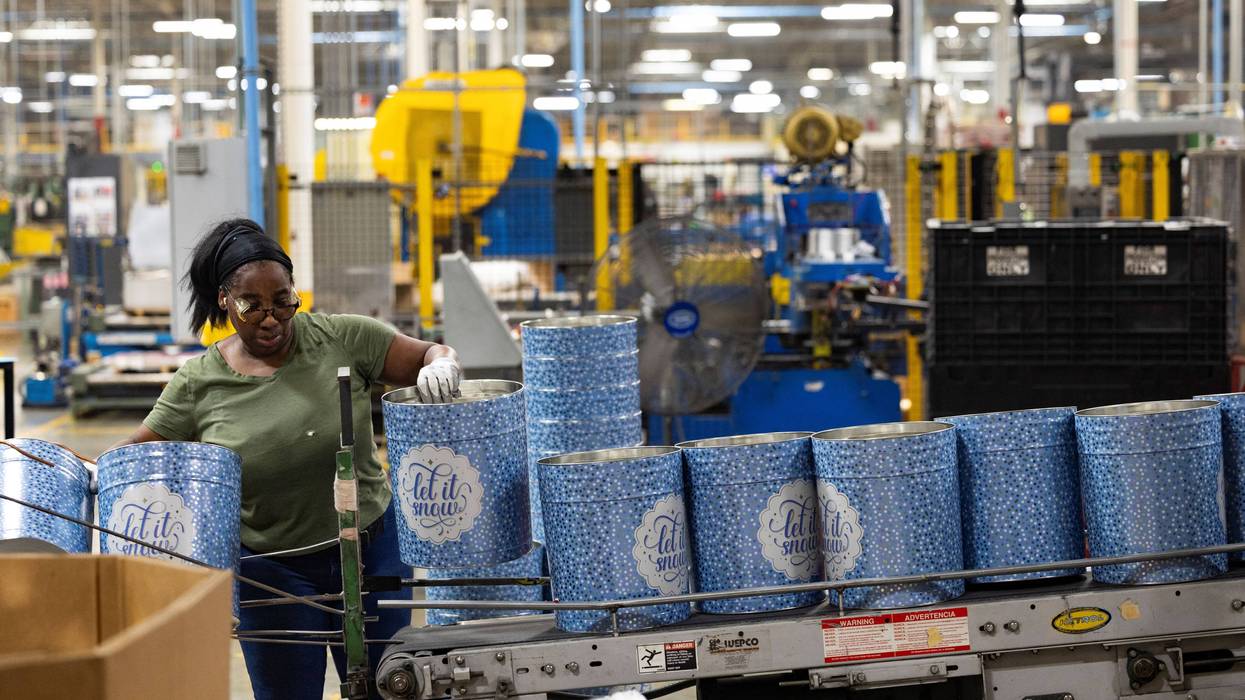
The Treasury Department law, drawn up in 2000, included the loophole principally to help American farmers export their devalued surplus goods. Falling under the vague label of “humanitarian aid,” nearly 4,000 U.S. businesses have since done billions of dollars in trade with blacklisted countries. So-called humanitarian products even include cigarettes and hot sauce. A spokesperson for the American Pop Corn Company, for instance, defended his product as humanitarian, noting that “popcorn has fibers which are helpful to the digestive system.” The law was defined so broadly that “humanitarian aid” included any item on the Department of Agriculture’s list, from seeds to soda, and grains to gum. U.S. exports to Iran, for instance, have skyrocketed from almost nothing to about $1.7 billion, and those to Cuba have reached about $3 billion since passage of the law.
It's not just gum and soda. "In one instance," reports the Times, "an American company was permitted to bid on a pipeline job that would have helped Iran sell natural gas to Europe, even though the United States opposes such projects. Several other American businesses were permitted to deal with foreign companies believed to be involved in terrorism or weapons proliferation."
Damaging Loopholes
The Obama administration has since dismissed the report as minor. But the foreign policy community can't ignore the creation of loopholes “that you can drive a Mack truck through,” says Stuart Eizenstat, who was in charge of sanctions policy in the Clinton administration. “You are giving countries something for nothing, and they just laugh in their teeth. I think there have been abuses.” Eizenstat told the BBC in a related interview that U.S. sanctions policy was “riddled with exceptions that are neither humanitarian nor related to democracy promotion,” and could undermine support for international sanctions. As the Times also points out, “some diplomats and foreign affairs experts worry that by allowing the sale of even small-ticket items with no military application, the United States muddies its moral and diplomatic authority,” especially in countries like Iran where “it is increasingly difficult to separate exceptions that help the people from those that enrich the state.”
The heavily redacted files obtained by the Times “offer a snapshot—albeit a piecemeal one—of a system that at times appears out of sync with its own licensing policies and America’s goals abroad. In some cases, licensing rules failed to keep pace with changing diplomatic circumstances,” as evinced, for example, by the continuation of outdated and loose trade restrictions with North Korea and Cuba. Specialists of U.S.-Cuban relations are already expressing their outrage, and Jewish groups are indignant over revelations concerning Iran. American sales of marinades, cake sprinkles, and salt substitutes have ended up in Iranian stores whose investors include blacklisted banks and high-ranking officials from the Islamic Revolutionary Guards Corps.But selling luxury food products to stores owned by IRGC officials and banks on the American blacklist is just scratching the surface of the Farm Lobby’s insidious influence upon American foreign policy. And it all leads back to the Farm Lobby and federal subsidies of American agriculture.
Inordinate Influence
The U.S. Farm Lobby maintains an inordinate amount of governmental influence, and it pays—literally. Despite promises to the contrary, taxpayer money keeps on feeding the Farm Lobby coffers; agricultural subsidies now average between $10 and $35 billion year. With such overt federal support and at least tacit federal approval, the Times’s most recent revelation is only the newest in an ongoing list of the Farm Lobby’s injurious impact on U.S. foreign relations.
For many years now, poor nations throughout the globe have complained that U.S. agricultural subsidies encourage enormous crop overproduction, which in turn drives massive exportation, thereby glutting the global market and depressing prices worldwide. U.S. farmers, completing the vicious self-perpetuating protectionist cycle, turn to the U.S. government for subsidies in order to supplement these lower global prices their overproduction created.
Corn subsidies, which received $41.9 billion from 1995 to 2004 alone, are particularly detrimental to the world economy and ecology, and this December’s compromise tax deal unsurprisingly included further taxpayer subsidies to corn ethanol production. Since NAFTA was enacted in 1994, for instance, subsidized U.S. corn has been overflowing Mexican markets, destroying Mexican corn-growing, and thereby displacing Mexican farmers. USAID, meanwhile, has consistently threatened to cut off food aid to various African countries that are unwilling to accept genetically modified crops, particularly corn. Other studies show how U.S. corn subsidies are even tied to the destruction of the Amazon. Furthermore, over the past decade the World Trade Organization has castigated the United States for its ongoing and massive program of agricultural subsidization. In recent years, the European Union, Australia, Brazil, Argentina and Canada embarrassingly took America’s illegal corn subsidization to task, and Brazil also recently won a similar World Trade Organization victory over American cotton subsidies.
Reining in the Lobby
The next time a politician or pundit begins banging the drum for war—to “bomb, bomb, bomb, bomb, bomb Iran” as John McCain so melodically put it—remember why it is that economic sanctions never seem to work effectively. The powerful American Farm Lobby deserves its fair share of the blame, as does the U.S. Congress, which continues to massively subsidize American agriculture and thus, indirectly at least, the Farm Lobby itself. Many of the less-than-humanitarian products being traded to Iran, for instance, gained their exemption through the efforts of various U.S. congressmen.
The Farm Lobby’s injurious influence is beginning to take heavy fire from both the Left and the Right. The time is ripe for ending this ruinous agricultural protectionism, especially amid the country’s ongoing obsession with cutting the deficit, eliminating wasteful government spending, and tightening sanctions policies.
Taxpayer dollars have fed agribusiness’s high-fructose-fattened belly for too long, and to the detriment of American foreign policy. The Farm Lobby’s belt needs serious tightening, for the sake of both national and international interests.
Comments
Note: Disqus 2012 is best viewed on an up to date browser. Click here for information. Instructions for how to sign up to comment can be viewed here. Our Comment Policy can be viewed here. Please follow the guidelines. Note to Readers: Spam Filter May Capture Legitimate Comments...


45 Comments so far
Show AllWe have a growing problem here of unsafe, un-inspected, and unregulated imported food. Calling for an "end to protectionism" will only lead to that situation worsening.
Corn subsidies need to be overhauled and updated. However, extrapolating that problem into a smear campaign against all US farming is not constructive and is highly misleading and prejudicial.
"Farm Lobby" implies that US farmers are the culprits, and that is not the case. "Food Industry Lobby" would be more accurate.
The logic in this article is that sanctions against countries the US is trying to cripple do not work because the US continues to ship food to those countries (are we calling for starving them out here?) and this then leads to war is simply nonsense. US farmers are causing war? Ridiculous and slanderous.
It is assumed that most US farmers work for Big Agri what with the systematic decimation of small/family farmers for the last 50+ years.
Yes, but it is not true. Farmers work for the corporations in the same way that all of us do - we are forced into what is best for corporations, since the corporations control all of the money. There is no way around that. Even the non-profit do-gooder agencies are ultimately dependent upon corporate money and can not get too far out of line or threaten corporations in any way if they want to stay in business.
Is WalMart the "farm lobby?" They are the ones who have power over all of us small fruit growers. A handful of giant corporations have control of the food supply, not the farmers. They do the lobbying. They will often claim to be "representing farmers." Hah. That is a laugh. The stupid activists believe them, though, and then think that attacking farmers is hurting the corporations.
The decimation of small/family farmers has meant, for example, that 300 growers in this area are farming 300-500 acres, instead of 3,000 families farming 50-100 acres each. There is also a trend toward focusing on fewer crops. That makes a farm more cost-effective to manage, and also means you stick with the crops that do best in your area. That is because the margins are so thin and the risks so great. In the western states, and with row crops (grains, soy) and with meat production, this effect is more pronounced.
Vertical integration is a problem, but it is understandable that growers try to go that direction in order to survive. In our farming sector, the big corporations dictate to the packers who dictate to the growers. Naturally enough, to escape that domination we daydream - what if we bought the packing equipment? what if we bought the processing equipment? what if we distributed our produce ourselves?
I don't think the author of this article is creating a smear campaign against US Farming at all. I think that it is both implied and assumed that were talking about Big Agribusiness here (Monsanto, Dole, Perdue, etc.), and we very much DO need a smear campaign against them. I am all in support of the worldwide movement of people returning to agrarian societies (both urban and rural). A movement that is consistently stifled by Big Agri, in an attempt to keep their profit margin up. I really don't think "stupid activists" are attacking farmers at all. In fact I think, "stupid activists" would like to see all of those subsidies go to people like you, so that you can buy the packing and processing equipment and distribute the food yourself. After all, I personally would rather have you drop some fruit off at my door, then go to Walmart and buy some GMO apples that never turn brown!
The article here, and articles like it, repeatedly use the words farm lobby, farmers and farming when talking about the abuses by the corporate food industry. I think my comment about this fostering an anti-farmer bias are understated, if anything.
GMO apples are an absurdity - they are so genetically diverse naturally. The only reason they are making GMO fruit is for control, not improvement. If you can "make" an apple variety in the lab, you "own" it and can control it. "Intellectual property rights" - an absurd and illogical concept - run amok. We are going the opposite direction - just ordered 700 trees of ancient varieties. We have been moving back to older sports and varieties for over a decade. Mostly what we lose is bright colors, perfect regular shapes and shiny exteriors - all of which command premiums with the corporate food buyers. But we gain in higher flavor (and higher nutrition) and are slowly building a following of people who appreciate that.
Smear campaigns against corporation don't work, since corporations can endlessly morph and shift and re-brand themselves, and the capital moves into new areas. Attacks on the system that allows them to do that are another thing.
TA, I understand what you are saying and I must thank you for reminding us that if Walmart were to go, another corporation would take its place. I assume that most of us here are well aware of that and are calling for long term changes in policies. I appreciate your perspectives and awareness on the need to focus on targeting the problem and not the symptom. However, I also think that protesting Walmart and Monsanto will send waves of fear against any other corporation that dare copy their ruthless ways.
Yes, the term "farm lobby" is misleading. They ought to rename it to Big Agri lobby or Factory "Farm" Lobby.
My uncle thinks that more people should garden before we can understand farming. I would agree with him except that more people are living in apartments, condos, and townhouses so gardening is seriously limited at best.
WalMart and Monsanto are not rogue companies. They are typical of corporations. Whole Foods is in many ways much worse than WalMart, for example. It is the nature of the "free market" Wall Street beast, and not a matter of "bad" corporations" or "evil" people. People make WalMart and Monsanto the bad guys to distract people away from the real problems, to keep people from looking deeper and to promote the idea that the beast can be tamed or reformed without radical analysis and action. If it were merely a matter of a few bad corporate actors, then we could shun them or boycott them or something, and then the problems would disappear. That is a naive and dangerous idea.
Libertarian think tanks are actively engaged in suckering liberal and organic activists into supporting extreme right wing privatization and deregulation schemes. I sat in on a meeting once where they were openly discussing how to do this. They said that they had found that if they sprinkled their propaganda pieces with the word "Monsanto" that they could get liberals and food activists to distribute their tracts. This has expressed itself over the last couple of years in organic activist organizations opposing any attempts at re-regulating the food industry, and opposing increased inspection and research funding. The pieces claimed that "Monsanto is behind this farm bill!" and "they are trying to outlaw your organic tomatoes in your garden!!" and other absurd claims made up out of thin air. All lies. But when the audience is completely ignorant on the subject, they are very easy to fool and steer.
I just read an article about corn farmers starting to move back to the older varieties and away from the GMO varieties, as the promises made are failing to be true. The GMO industry is interested in owning crop varieties - that is what it is about. Many GMO varieties are actually conventionally bred, and then the bio-tech company merely inserts a "marker" - not anything that improves the crop, but rather it is a way for them to claim "intellectual property rights" and control the variety.
Agreed, I do not see this as saying "farmers" but the "Farm Lobby" - i.e. the lobby that is overpowering in the creation of the "Farm Bill" that, as I am sure you would know as a small farmer, is pretty heavily tilted toward agrobusiness, not farming.
duplicate
Not really. Nowhere near as bad as everywhere else in this country. Abuse of the grain crop subsidies is the biggest problem. The injection of the FDA and Homeland Security and ICE into farm issues is a concern and a threat.
Yes, the pro-corporate and right wing pressure on farming is horrendous. But no more so, and in many areas much less so, than in every other aspect of our lives.
It is the Corporate Lobby that is the problem, not the "Farm Lobby" and that is true in all things. Nothing to do with farming.
Looking at the article and taking into account the fact that corn is the crop that guzzles the most amount of water and requires burning more fossil fuels for processing, the resource wars for oil will only intensify.
Not to mention it has very little nutritional value...
Corn subsidies date back to a time when the people here were protein starved. This has led to massive overuse of HFCS as a food additive, the ethanol insanity (the most important reason we need fuel is to get food to the eaters - burning crops as fuel is suicidal), CAFOs, all of the health issues from too much meat in the diet (inconceivable to people in the 30's) etc.
There is nothing intrinsically wrong with corn, though. It has been cultivated for a long time in the New World and was the dietary backbone for many cultures.
The idea that food production is a threat to the environment or energy resources, or that food production is inherently dependent upon fossil fuel is a distorted view. The use of fossil fuels and other modern production methods allowed the population to move off the farm, and that is the social, political and economic movement that supported - the suburbanization of the country. It is suburbia that is the threat to the environment (and the culture and the society) and it is suburbia that is "addicted to oil," that is suburbia that is the source of pollution and waste - not farming. Only from the point of view of a person who sees suburbia as the "norm," who is two or three generations removed from the farm and ignorant about the realities of food production can farming be seen as the problem.
It is important to keep in mind that never before in the existence of human beings have we see a population as alienated from their food supply as modern American suburbanites are now. It is unprecedented, and as result people are alienated and have a seriously skewed view of reality - they are not grounded or rooted and have no sense of the natural rhythms. This of course makes people easier to steer by marketers and demagogues.
I will give you an example that illustrate this alienation and skewed sense of reality caused by suburbanization.
A couple of years a go there was an author on a radio show promoting all of the latest trendy notions about farming (actually promoting his book.) At one point he said "before tractors, a farmer could fed 11 people. Since tractors, the same farmer can feed 1100 people." His conclusion was that "farmers are addicted to oil" and that without oil, 1088 people would starve. Therefore, farming was all wrong, needed to be forced to change, was the cause of all of our problems. I called in and got on the air and denied his conclusions. Without oil, 1088 people would not starve. They would need to move back to the farm, they would need to give up whatever it was they were doing down in suburbia - like jetting around the country promoting their book about what farmers are doing wrong.
He was looking at things from a suburban viewpoint without even realizing he was, and talking (hustling and selling) to a largely upscale suburban demographic.
TA, I apologize on being unclear about corn. I did mean the good corn. My outrage was that corn is being overused for everything. Processing it takes more fossil fuels than any other crop from what I read. If you know any crop that consumes the most amount of water, I would be interested in knowing.
Thank you for storming in on that radio show and making it clear. I always believed that plenty enough small farms could do the job of feeding well enough. Besides, feeding people better quality food makes them less hungry for more so fast. Yes, that would crush the profit-motives but that is what we want. :)
Understood. Can't blame the farmers though for the corn problems. GregR for example, like all farmers, is growing that which does well in his area and that someone wants to buy. Farmers can't control the market.
Correction on my earlier reply. I meant to say "I didn't mean the good corn."
As for Greg, he annoys us with his pro-GMO talk not to mention his shameless apologizing for Obama and the Democrats.
That is because the anti-GMO arguments are poorly formulated and off-base.
Whenever you get annoyed by right wing talking points, it is a tip-off that there is something weak in our argument. In that way they are useful to us - if we see it that way.
GMO is not what the anti-GMO activists think it is, and while they decry the symptoms and effects they do not attack the root cause, and their arguments are therefore weak and easily knocked down.
GMO is not about improving crops, it is not about farming methods or approaches or philosophies. It is about control. Crops are genetically modified, often in small inconsequential ways, so that private interests can "own" them.
This is a chronic problem with all liberal and progressive activism, and it is why it fails, and it is why so many of us are frustrated and not successful in the debates we get into.
Cheap food, huh?
From the link:
"Some 15 percent of US households, 17.4 million families or about 50 million people, were too poor to buy adequate food last year, according to a new report from the US Department of Agriculture (USDA). More than a third of these households, with as many as one million children, were missing meals on a regular basis, the study found."
http://www.wsws.org/articles/2010/nov2010/pers-n17.shtml
Not cheap enough to feed the serfs though.
Once we move from talking about the purpose of food - to feed people so that they can survive - to considerations of food as a commodity we begin to lose sight of our own humanity.
Food is comparatively inexpensive in the US. The problem that we as working class people have is a lack of adequate income, not high food prices.
Excellent statement -
"Once we move from talking about the purpose of food - to feed people so that they can survive - to considerations of food as a commodity we begin to lose sight of our own humanity."
"... the Farm Lobby has ignored economic sanctions by using a Treasury Department legal loophole—a loophole the Farm Lobby helped craft—in order to trade with Iran..."
And the problem with that is ??????
----Post-Constitutional America
Umm how about everything.?. There's a reason the world's #1 state sponsor of terrorism is blacklisted...
So we should starve the population?
The USA has been blacklisted? by whom?
The world's #1 state sponsor of terrorism is the good ol' USA.
I have several issues with this article. First off, the quote concerning "the United States muddies its moral and diplomatic authority" is simply laughable. It goes on with "Jewish groups are indignant..." I know I don't give a crap about that and I wish more politicians would be less subservient to Israel. With today's higher food commodity prices, of course it's silly to subsidize farmers, but the article disingenuously uses 1995-2004 corn subsidy numbers which have been roughly cut in half, and that "subsidized corn" is no longer hurting prices for corn farmers in Mexico. $5 or $6 corn is great for Mexican farmers. But then, perhaps crappy articles like this will help to eventually end ag subsidies (including ethanol), and that would be good.
While consumers are paying more for food, farmers are getting less.
Farmers have very little, if any control over the food distribution system. They are controlled by it just as much as consumers are.
Ending public agricultural programs will simply mean that all of our food will be imported. That helps the corporations.
From my point of view, I quite disagree. Farmers (like myself) in my area have a difficult time not making good money. For the last few years, more often than not, our crop prices have been very good. Most of our ag program money goes to farmers growing corn, wheat, etc. and we are highly unlikely to import much of these foods. I do also get $500/yr for 3 acres of buffer strips along my creek. I would like to see additional targeted conservation measures like this, even if they are mandated without payment. The government usually comes through with some cash for farmers hit by bad drought, etc. Programs like that seem much better than simply paying a farmer because he has grown corn or beans, etc. in the past. This payment because of crop history is where most farmers get their government money today. It's just silly.
Well, let's think about that, "For the last few years". The last few years saw riots for bread in Egypt to name just one. The U. S. Attorney General's office is currently looking into big agri-business; I sent in a personal comment on the matter. Even on CD, there have been articles which pre-suppose an even greater rate increase on food worldwide; we're being set up to undermine the humanitarian benefits of these results for a purist ideology which will put even greater power into the hands of corporate interests. To boil it down further, we're being lead to starvation, which will lead us to desperate acts just as we did in the aftermath of 9/11.
This article makes a point which I made in the comment regarding the article on Death-By-Pesticide though I said it differently. The gist of this article is that poor nations have complained about how U.S. subsidies encourage crop overproduction that prompts massive exportation which in turn gluts the global market depressing prices worldwide. The particular blog (death-by-pesticide) went from discussing India's farming situation to overpopulation. My point was that overpopulation of India was not ACTUALLY the issue, but overproduction by corporate interests which have driven the American corporate dominance under the flag of democracy, heavy on the PR. That whole article as well as the one from the Indian lady regarding international finance, on which I posted similar comments, seem to have disappeared. I've gone looking a few times, though I admit that I could miss something. Did someone nix both of them?
None the less, this article uses one aspect of the issue to obscure another one with a possible disastrous effect. We must untangle this before we make decisions. Just because we are unaffected in the short-term it does not mean that someone else's life is unimportant, nor that the situation won't clobber us later, directly and personally.
Sorry, but I truly don't understand what you're trying to say. You say we're being "led to starvation," but complain that American farmers are growing too much food. I don't get that connection. As you say, we had food riots and we will have more. Food prices are high. Farmers are making money like never before and are going all out to produce more. Believe me 'overproduction' is way better than shortages. The world has only seen relatively minor starvation-type shortages in recent decades, generally limited to a few nations and a few million people at most. One of these years we will start out with shortages and have major crop failures. That will not be pretty.
I agree it won't be pretty, but speculation on the available food supply is the mold taking hold. We here in Washington State produce and export most of our wheat. There is now a push to incorporate fake rice into the rice supply to supplement. What I see developing is food in storage, rotting there because costs are too high.
Farmers have gotten much better at storing grains. I've built a lot of steel grain bins over the years and have learned quite a bit about keeping quality high, as have many other farmers.
You completely missed my point, but it could be that it was intentional. If speculation raises the prices so high that people are left with a choice of starvation or work-to-death-and-starve, it's not much of a choice. You are comfortable, for now. So the silos will be full and the people on the street get thinner while the people in Wall Street get fat. As long as the rug isn't pulled out from under your feet, it's cool. The tide does turn. Things do change, even incrementally. We are all in this together. Maybe you'll notice in time.
According to Derrick Jensen, (I think - doing this from memory) India could easily produce enough food to feed it's population, even at current population levels. The main problem is that 1/2 the arable land is used to grow flowers for the European market.
Let me restate that:
India can't feed it's own, because it's land owners find it more important to grow flowers for Europe. Capitalism at it's finest.
herdpoisoning, I'm not sure if Derrick Jensen would have made that statement because even as an anecdote, it is patently wrong - that is, the part about 1/2 the arable land being used to grow flowers for export.
That said, there have been research reports that point out the direct relationship between increased consumption of meat and dairy in recent years by Indians and the growing malnutrition among their poor - because they cannot afford to buy enough food. Food prices are high because of the diversion of farmland and precious water for the growing of animal feed. India does not have ranches and Indians do not eat as much beef like in western countries, or like in Korea and Japan. Chicken and lamb meat are more common. But they do consume dairy, and I hear that beef consumption is on the increase in recent years in certain states such as Kerala - where cattle from neighboring states are shipped in. They obviously have to do something with the cows after they stop giving milk and the male calves - so increased dairy consumption has to be accompanied by increased beef consumption.
And there are some crazy things going on due to globalization: both India and China also export certain food items that are not necessarily in surplus in their countries.
Hi Greg. Thanks for the comments. I will respond later this evening when I have more time.
OK. You say "farmers have a difficult time not making good money."
Sorry Greg, the statistics contradict what you are saying here, and there is no other segment of society so thoroughly surveyed and documented.
Maybe you have a big spread in the Midwest, maybe you are growing subsidized row crops, maybe you are benefiting from the inflated corn prices, maybe you aggressively work the federal subsidy system. If so, you are hardly representative of most farmers, however you are representative of most of the problems originating from farming.
Glad you are doing well. Don't give people the impression that all farmers are like you.
You are correct. I should have said commodity crop farmers. Other than our gardens, I just grow corn and beans. I downsized a great deal in 2007, now farming only 230 acres. I can still make a fair bit of dough with a minimal amount of time. We have but a very few apple trees. Beacon and Haralson are our favorites. Zestar is good too. The Beacon makes beautiful applesauce.
University of Minnesota bred cold hardy varieties there (public land grant college breeding program varieties.) We have Zestar here, and Honeycrisp of course - U of M's big winner.
You should look up the difference between principle and principal.
"Many of the less-than-humanitarian products being traded to Iran, for instance, gained their exemption through the efforts of various U.S. congressmen."
Honestly, I don't have any idea what to make of this article.
All I know, is Iranians are more dangerous if they get to eat American potato chips.
So, there bloody well better not be potato chips on that export list to Iran damnit.
Under the circus tent is big oil, big agro-business, hedge fund managers, and our steroid-pumped military. The ringmasters could be the politicians, circus clowns are the lobbyists, and the audience are the tax payers. Someday the circus tent will all come crashing down.
This is just a pro-imperialist propaganda article posing as "progressive." Anti-imperialists oppose economic sanctions on countries independent from US imperialism. We see nothing wrong with US farmers doing business with these countries.
A few comments on reading the comments...
In Vancouver, BC there is a "grocery store" i think it's spud.ca that is delivery only, (thus no overhead for retail locations) and as of a few years ago when I last looked into it much, sources all of it's food within an average 500 mile total travel radius (including any processing) (compared to 1500 for most similar things) and was working on moving all its vehicles to biodiesel. And it's prices (for organic relatively local food) including delivery are typically lower than a typical discount grocer.
I also remember a 2 page spread in an adbusters years ago that had one one side, a picture of a Denny's meal, on the other a picture of a meal from a chain of restaurants somewhere in the NE USA. The chain's founder opened up 4 restaurants on all sides of town. He opened up a processing/prep plant in the middle of town. By the time it hit the table of restaurant goers, and with the exception of the coffee and orange juice and any sugar or pepper, no food on their plate had traveled over 100 miles. I seem to remember they were working with a local farmer to start growing sugar beets to cover the sugar at the time.
I mention these as food for thought for the posters who apparently farm talking about the problem being a distribution chain. I would agree with you, but there are some models out there to look at.
To the poster who decried the humanity of those who would view food as a commodity. As long as society requires some people to spend their time and efforts (and often take substantial economic risk) to produce the food that other people require to survive, it should, to some extent, be viewed as a commodity, though perhaps not just one like any other, at least until plenty of food grows on trees and bushes and on the ground anywhere within walking distance anywhere a human resides.
Truth is, we need a whole new food paradigm in this country.
I grew up on a farm w/the typical corn/soybeans/wheat midwest pattern.I'm lucky enough to now own & rent this land to the best farmers one could ask for. I also want to praise the great conservation oriented programs that are really helpful to educate "traditional" farmers of the benefits of preserving woodlands & wetlands.Everyone has to realize that it is very hard to find non-GM seeds.Monsanto and, maybe, 2 or 3 companies account for, at least, 95% of all seeds available. The same is true for other farm supplies.Therefore,the prices keep increasing."My" farmers are interested in sustainability,but, as with most farmers,they face huge propaganda w/countless free magazines,dvds,postcards & more from seed companies, etc.I recently got 1 ag "magazine" that was complaining about the clean air and water laws. Of course,these publications mock the idea of sustainable food production.Please remember the uphill battle of promoting sustainablity to farmers w/the propaganda of big-ag.
Indiana, you and other like minded farmers, and even landlord farmers, need to get in touch with urban people and set up distribution systems that cut out the big guys. That is not feasible in the short run obviously, you have bills to pay. but we seriously need a 'left' worker and farmer network immediately. And not via hippy crap feel good venues, but a real connection that is anti- big capitalist. I know there are progressive farming networks already...but it doesn't seem to me , there is a militant connection with workers and farmers. It seems to me more 'boutique'...as in a few sustainable farms somehow change things.
we in the cities need to help the farmers, fight big ag, and the farmers need to link up with us.