

SUBSCRIBE TO OUR FREE NEWSLETTER
Daily news & progressive opinion—funded by the people, not the corporations—delivered straight to your inbox.
5
#000000
#FFFFFF
To donate by check, phone, or other method, see our More Ways to Give page.
Daily news & progressive opinion—funded by the people, not the corporations—delivered straight to your inbox.

“If my 5% wealth tax on billionaires was enacted, you’d owe $135 million more in taxes, and a family of four making $150,000 or less would receive a $12,000 payment. Oh, and you’d still be worth more than $2.5 billion."
As billionaires nationwide rally to stop tax increases on the wealthy, US Sen. Bernie Sanders stepped in to "clear things up" for one of Wall Street's top power brokers after he railed against the proposal.
Following in the footsteps of California, where a popular ballot initiative to impose a one-time 5% tax on the state's 200 billionaires has gained steam, Sanders (I-Vt.) and Rep. Ro Khanna (D-Calif.) introduced their own federal proposal earlier this month to tax those with net worths of more than $1 billion 5% of their annual household wealth.
The proposal is projected to raise $4.4 trillion over the next decade to provide direct payments to lower-income Americans, reverse Republicans' cuts to Medicaid and Affordable Care Act spending, expand Medicare, and build millions of affordable housing units, among many other expenditures.
Jamie Dimon, the CEO of JPMorgan Chase, who is worth about $2.8 billion according to Forbes, appeared on Fox News on Tuesday and was asked by anchor Brian Kilmeade about Sanders' frequent accusations that billionaires "don't pay their fair share" in taxes.
"I don't know what he means by fair share," Dimon said. "I've listened to that my whole life, and I don't know what he means."
The two did not address the facts that may have led Sanders to draw such a conclusion. For instance, the senator often notes that fewer than 1,000 billionaires own more wealth than the bottom half of the US, around 175 million people.
Those billionaires also manage to pay a lower effective tax rate than the average American by wielding loopholes that allow them to exempt large chunks of their fortunes.
Sanders took to social media to respond to Dimon's incredulity about his idea of "fairness."
"Ok, Jamie: Let me clear things up for you," the senator wrote. "If my 5% wealth tax on billionaires was enacted, you’d owe $135 million more in taxes, and a family of four making $150,000 or less would receive a $12,000 payment."
"Oh, and you’d still be worth more than $2.5 billion," Sanders added. "Seems pretty fair to me."
Dimon's remarks came as billionaires are in a full-blown panic over the proposal for a one-time 5% tax in California, which is projected to raise about $100 billion, mostly to cover the Medicaid funding shortfall caused by the massive cuts in last year's GOP budget law.
A poll earlier this month showed that the measure, which will be put to voters in November, has about 2-1 approval, despite a more than $80 million effort by the state's elite—most notably Google co-founders Sergey Brin and Larry Page—to stop it in its tracks.
Dimon himself is not known to have contributed to the effort. But during his Tuesday appearance on Fox, he echoed one of the movement's oft-used talking points: that raising taxes on the rich leads to an "exodus" of wealth from financial hubs like New York and California.
As Forbes senior contributor Teresa Ghilarducci explained late last year, "Decades of economic research show that billionaire 'flight' is rare, exaggerated, and often confused with tax avoidance through accounting maneuvers rather than physical relocation."
Christopher Marquis and Nick Romeo similarly said last month in a piece for TIME that “despite multiple debunkings, the ‘millionaire exodus’ panic remains a popular narrative,” even though it is “frequently based on biased or sloppy arguments where anecdote replaces systematic evidence, correlation poses as causation, and every modest redistributive proposal is framed as an existential threat to prosperity.”

Billionaire JPMorgan Chase CEO Jamie Dimon will reportedly attend the White House dinner, held as nutrition assistance for millions of Americans remains in chaos.
US President Donald Trump is set to dine with finance industry titans at the White House on Wednesday as his administration continues to withhold nutrition assistance from millions of Americans, forcing them to rely on overwhelmed food banks and the generosity of their communities to stave off hunger.
Reuters reported that the private dinner is expected to include "several top business executives, including the chief executives of Nasdaq and JPMorgan Chase." BlackRock's Larry Fink and Goldman Sachs chief executive David Solomon were among those invited.
"The gathering underscores Trump's effort to deepen ties with corporate leaders as his administration rolls out new initiatives aimed at strengthening US capital markets and rebuilding critical domestic supply chains seen as vital to national security," Reuters reported.
News of the dinner came as the US Supreme Court on Tuesday extended an order allowing the Trump administration to continue withholding billions of dollars in Supplemental Nutrition Assistance Program (SNAP) benefits as a legal fight plays out in a lower court and the government remains shut down.
Throughout the shutdown, which is expected to end this week after a group of Senate Democrats capitulated to the GOP, the administration has fought tooth and nail to avoid fully paying out SNAP funds, resulting in the first benefit lapse in the program's history. Over the weekend, Trump's Agriculture Department threatened to penalize any states that did not "undo" full November SNAP payments amid the court fight, prompting sharp pushback from Democratic governors.
"The president should not be directing states to take food out of the mouths of the hungry," said Maine Gov. Janet Mills. "His actions are hurting our most vulnerable people, while the president hosts lavish parties in Florida and builds a $350 million ball room at the White House."
Late last week, as HuffPost reported, Trump hosted a party at his Mar-a-Lago resort where guests dined on "filet, scallops, and a dessert on the same day that the Supreme Court ruled the SNAP food program that 1 in 8 Americans rely on would not be fully funded amid the shutdown."
"Just hours before millions of Americans lost federal food aid earlier this month, Trump hosted a lavish “Great Gatsby” themed party at his Mar-a-Lago resort," the outlet noted. "The theme of the night was 'A Little Party Never Killed Anyone.'"
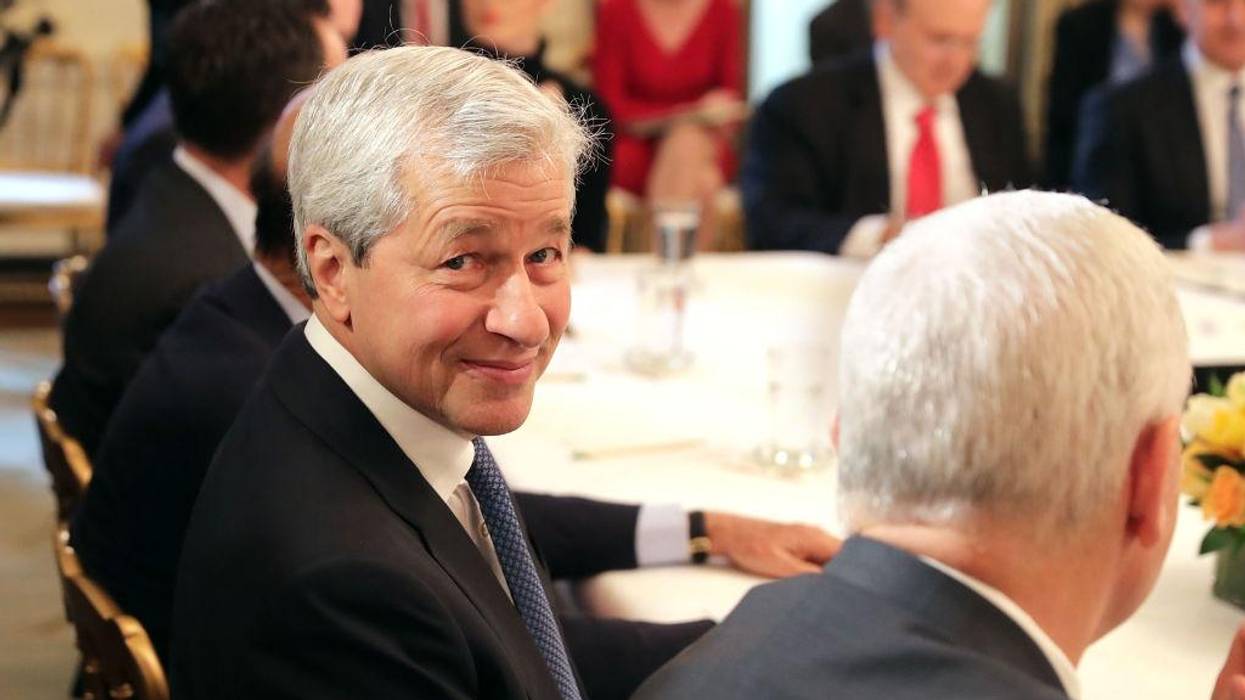
At a time in American history when the most influential leaders of the U.S. need to stand up loudly and clearly for the rule of law, democracy, and decency, they are leading the charge in the opposite direction.
Anyone recall the time in the late summer of 2017 when prominent CEOs resigned from U.S. President Donald Trump’s business councils in protest at his defense of white nationalists who marched in Charlottesville, after Trump called them “very fine people”?
At the time, I thought America’s CEOs might become a bulwark against Trump’s extremism. But I was wrong. Within months, the CEOs were seeking to get back into Trump’s good graces.
After the insurrection unleashed by Trump against the U.S. Capitol on January 6, 2021, many CEOs announced they wouldn’t be financing the campaigns of election deniers. CEOs of prominent social media banned Trump from appearing.
Tump is getting nothing but fawning encouragement to do anything he wants to do. That makes him even more dangerous.
I hoped their actions would limit Trump’s fanaticism and Trump’s growing MAGA movement. I was wrong again. Within two years, the CEOs were financing the campaigns of election deniers. Within three years, prominent social media were allowing Trump to return to their platforms and retell his lies.
I confess to having had a moment’s thought during the last eight months that Trump’s conviction on 34 criminal counts in Manhattan, his civil conviction for defamation in connection with what a judge termed “rape,” and his disgraceful nativism—describing poorer nations as “shit holes,” using terms redolent of Nazism to describe foreigners as “poisoning the blood” of Americans, and baselessly accusing Haitian immigrants of “eating our pets”—might force CEOs to rethink their willingness to give Trump a pass.
No such luck.
Amazon’s founder and chief, Jeff Bezos, who owns The Washington Post, had a rocky relationship with Trump in the first Trump administration. Angry with Bezos over unfavorable reporting in the Post, Trump questioned whether Amazon got a sweetheart deal with the U.S. Postal Service. Amazon, in turn, accused Trump of improperly pressuring the Pentagon to deny the company a major cloud computing contract.
Bezos apparently learned his lesson. After Trump was shot at a campaign event, Bezos called him, and on social media praised Trump’s “grace and courage under literal fire.”
Bezos didn’t allow the Post’s editorial board to endorse Vice President Kamala Harris for president.
Now, Bezos says he’s “very optimistic” about the incoming Trump administration, and that Trump “seems to have a lot of energy around reducing regulation. And my point of view is, if I can help him do that, I’m going to help him, because we do have too much regulation in this country.”
Amazon is donating $1 million to Trump’s inaugural fund, and said it will livestream the inauguration next month.
Not to be outdone in the groveling department, Meta’s (Facebook’s) CEO Mark Zuckerberg got a dinner invitation at Mar-a-Lago.
Meta is also putting $1 million into Trump’s inaugural fund.
“It’s an important time for the future of American innovation,” Meta said in a statement. “Mark was grateful for the invitation to join President Trump for dinner [Zuckerberg sought it] and the opportunity to meet with members of his team about the incoming administration.”
Stephen Miller, Trump’s incoming deputy chief of staff for policy, told Fox News that Zuckerberg “has been very clear about his desire to be a supporter of, and a participant in, this change we’re seeing all around America and the world, with this reform movement that Donald Trump is leading.”
In his first administration, Trump accused Facebook of filtering out views favorable to him. He even called for Zuckerberg to be jailed in retaliation for “plotting against” him during the 2020 election.
Now, like Bezos, Zuckerberg has turned to fawning. During the campaign, he had several private phone calls with Trump. After the assassination attempt, Zuckerberg told Trump he was “praying” for him, and told an interviewer Trump looked like a “badass” after pumping his fist to the crowd.
The suck-up list goes on and on. OpenAI’s CEO Sam Altman also plans to donate $1 million to Trump’s inaugural fund. “President Trump will lead our country into the age of AI, and I am eager to support his efforts to ensure America stays ahead,” Altman says.
Elon Musk and half of Silicon Valley is kissing Trump’s derrier.
Last January, speaking from the World Economic Forum’s confab in Davos, Jamie Dimon—chair and CEO of JPMorgan Chase, the largest and most profitable bank in the United States, and one of the most influential CEOs in the world—heaped praise on Trump’s policies while president the first time.
“Take a step back, be honest,” Dimon said. Trump “was kind of right about NATO, kind of right on immigration. He grew the economy quite well. Tax reform worked.”
Kind of right about NATO? Trump wanted the U.S. to withdraw from the pact—and may get his way after January 20. This would open Europe further to Russian President Vladimir Putin’s aggression.
Kind of right on immigration? Even the conservative Cato Institute found that Trump reduced legal immigration but not illegal immigration. Trump refused to grant legal status to children of immigrants born in the United States or who grew up here, and tried to ban Muslims from the U.S.
Grew the economy quite well? In fact, under Trump the economy lost 2.9 million jobs. Even before the pandemic, job growth was slower than it’s been under Biden. The unemployment rate increased by 1.6 percentage points to 6.3%. The international trade deficit that Trump promised to reduce increased. The number of Americans lacking health insurance rose by 3 million.
Tax reform worked? Trump’s tax cut conferred most of its benefits on big corporations and the rich, while exploding the federal debt from $14.4 trillion to $21.6 trillion.
Why did Dimon—the most influential CEO in America—spout these lies in favor of Trump? Because he thought Trump had a good chance of becoming president, and Dimon wanted to be in his good graces.
Also, Dimon’s support for Nikki Haley had irked Trump. In a post on Truth Social in late November, Trump said “Highly overrated Globalist Jamie Dimon, the CEO of JPMORGAN, is quietly pushing another non-MAGA person, Nikki Haley, for president,” and “I’ve never been a big Jamie Dimon fan, but had to live with this guy when he came begging to the White House. I guess I don’t have to live with him anymore, and that’s a really good thing.”
Dimon felt it necessary to lick Trump’s backside. When Dimon did this, it was a signal to other CEOs to abase themselves, too.
The CEOs are all sucking up to Trump.
At a time in American history when the most influential leaders of the U.S. need to stand up loudly and clearly for the rule of law, democracy, and decency, they are leading the charge in the opposite direction—fawning over the most dangerous authoritarian America has ever had in the Oval Office.
Tump is getting nothing but fawning encouragement to do anything he wants to do. That makes him even more dangerous.
Other tech executives, like Elon Musk, who has stumped for the conservative movement and gave hundreds of millions of dollars to the Trump campaign, have forged a closer relationship with Mr. Trump. (Mr. Musk and Mr. Zuckerberg have developed such a tense relationship that the two spent 2023 challenging one another to a physical fight.) But executives at Meta hope that Mr. Zuckerberg can launch a new relationship with Mr. Trump by taking a softer touch with the incoming administration.
Gifts to inaugural committees, which do not have contribution limits, are popular among businesses and individuals eager to curry favor with an incoming administration. Mr. Trump’s inaugural committee is offering top-tier benefits to donors who contribute $1 million.
Amazon gave $57,746 to Mr. Trump’s 2017 inaugural committee, according to OpenSecrets, which tracks political donations. The company said the Biden campaign did not accept donations from tech companies in 2020.
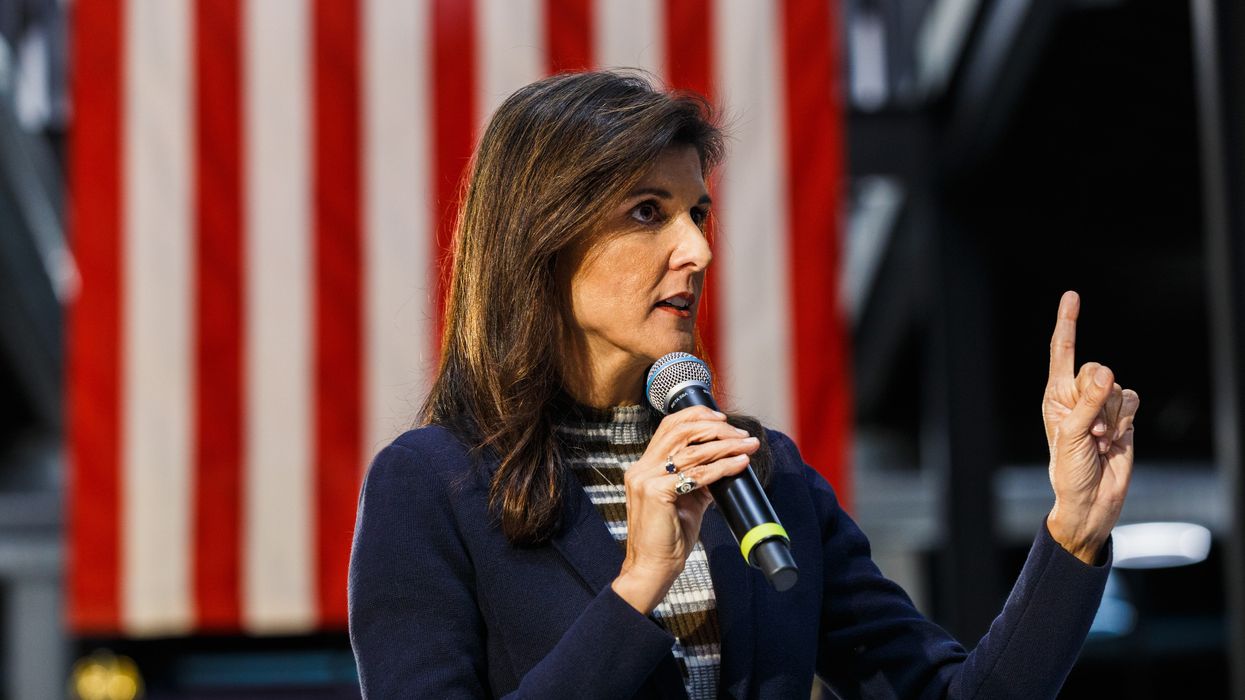
Fewer than 10% of anybody polled in the last four decades agreed with Nikki Haley that we spend too much on Social Security.
Nikki Haley wants to be president, which remains hypothetically possible… I guess. Donald Trump might, for example, be struck by a falling piano while walking down the sidewalk. Or his legal problems could intervene. But the wheels of justice don’t seem to be turning quickly enough to save Haley from a crushing primary defeat. She trails the former president by a
two-to-one margin in her home state and more than four to one among Republicans nationwide.
Among her many flaws, Haley wants to cut Social Security. Just last August, she said that a retirement age of 65 is “way too low” and should be raised “according to life expectancy.” That’s misdirection; the current retirement age for Social Security is 67, not 65, and United States life expectancy is falling, not rising.
Raising Social Security’s statutory retirement age by even a year is mathematically indistinguishable from a 6% to 7% across-the-board benefit cut. Because of the way Social Security’s benefits are calculated, that’s true regardless of when one claims benefits: at 62, 67, 70, or any other time. Raising the retirement age to 70 would worsen inequality and substantially cut benefits, especially for lower-income workers, as David Rosnick and Dean Baker found in 2010.
There’s a clean way to increase Social Security spending without “bankrupting” anything or overhauling our economic theories: by raising taxes on Dimon and the people who filled that November conference room. But you won’t hear Nikki Haley mention that.
Governor Haley, don’t lose this number: 64.3. That’s the average retirement age for countries that belong to the Organization for Economic Cooperation and Development (OECD).
In 2010, Social Security’s full retirement age was 66 years. If it had been linked to life expectancy then, it would have been reduced—to roughly the OECD average.
But fearmongering and facts don’t mix, and Haley’s gone into full-on fear mode over Social Security. She draws heavily on all the phony talking points and pie charts cooked up by billionaire-funded “think tanks” and astroturf groups.
Despite decades of propagandizing, voters aren’t buying it. A review of long-term polling on the subject found that most Democrats, Republicans, and Independents have consistently viewed Social Security “very favorably” for nearly 40 years. This positive opinion was essentially the same for younger and older people, and for both white and Hispanic voters. (Black voters were even more favorable.)
But then, Haley wasn’t speaking to voters—not yet. She was making her pitch to mega-donors like JPMorgan Chase CEO Jamie Dimon, who last November told a room filled with CEOs and Wall Street executives to get out their checkbooks for her. Other conference attendees were “just folks” types like Elon Musk, billionaire hedge funder Bill Ackman, and Disney head Bob Iger.
“Get a choice on the Republican side that might be better than Trump,” Dimon told the elite gathering—meaning, presumably, better for business. (That remark is likely to reappear in Trump’s campaign materials, as the huckster ex-president seeks to burnish his faux-populist credentials.)
Dimon’s remark was well-timed. As he praised the former governor, a group of CEOs was announcing a new pro-Haley Super PAC.
Who is Jamie Dimon? Members of the House Financial Services Committee cited his bank’s practice of “pinklining” (discriminatory lending toward women) and its role (at least, as of 2019) as “the number one funder of fossil fuels in the world.” Dimon’s bank looked the other way as Bernie Madoff bilked widows, orphans, and charities and earned some well-deserved notoriety for its extensive business ties to Jeffrey Epstein (a JPM exec visited Epstein in prison).
For at least two decades, JPMorgan Chasesystematically engaged in enough criminal activity to qualify it as the largest organized-crime syndicate in North America. It’s far worse than Enron, with crimes and violations that include foreclosure fraud, investor fraud, cheating customers, and market manipulation.
Before Dimon made his pitch for her, an “unnamed banking source” told Axios that Dimon and Haley had been having regular talks about the economy.
Like the saying goes: Game recognize game.
Haley’s billionaire-backed agenda, including her call for Social Security cuts, added to her New Hampshire loss. Political scientist Thomas Ferguson and his team found that Trump performed even better in parts of the state that had lower incomes and negative growth, concluding:
The... results testify how little many of the also ran’s favorite economic themes—the perils of the deficit, cutting Social Security, or crypto—moved Trump’s core constituency. Large numbers of Trump voters count on Social Security to get by...
Even if the improbable happens and Trump implodes, Haley would still have to face voters eventually. Here’s another number she shouldn’t lose: 10%. The historical polling data found that, for nearly four decades, “at no time did more than 10% (of those polled) state that too much was spent” on Social Security.
Fewer than 10% of Republicans thought it. Fewer than 10% of self-described conservatives thought it. Fewer than 10% of anybody, in fact, agreed with Nikki Haley that we spend too much on Social Security. Except for a brief period in the 1990s, an outright majority of Americans has said we spend too little.
They’re right. There’s a clean way to increase that spending without “bankrupting” anything or overhauling our economic theories: by raising taxes on Dimon and the people who filled that November conference room. But you won’t hear Nikki Haley mention that.
Here’s a number the rest of us shouldn’t lose: $8 million. That’s what Haley reportedly made cashing in on her government career—as a director for Boeing (of plane crash and exploding door fame); giving speeches to banks like Barclays and groups like the Center for Israel and Jewish Affairs, which “provided more money in a day than Haley had previously earned in a year”; and other sources.
She’ll be fine in retirement. It’s the rest of us who should worry—about Nikki Haley and her friends.

At a time in American history when the most influential leaders of America need to stand up loudly and clearly for the rule of law, for democracy, for decency, and against Donald Trump, Dimon is leading the charge in the opposite direction.
On Wednesday, speaking from the World Economic Forum’s confab in Davos, Switzerland, Jamie Dimon — chair and CEO of the largest and most profitable bank in the United States and one of the most influential CEOs in the world — heaped praise on Donald Trump’s policies while president.
“Take a step back, be honest. He was kind of right about NATO, kind of right on immigration. He grew the economy quite well. Tax reform worked. He was right about some of China. He wasn’t wrong about some of these critical issues,” said Dimon.What?
Mr. Dimon, take a step back, be honest.
Kind of right about NATO? Trump wanted the U.S. to withdraw from NATO — and may get his way if he becomes president again. This would open Europe further to Putin’s aggression.
Kind of right on immigration? Even the conservative CATO Institute found that Trump reduced legal immigration but not illegal immigration. Trump refused to grant legal status to children of immigrants born in the United States or who grew up in the U.S. He banned Muslims from America, and when the Muslim ban was found to be unconstitutional, banned people from Muslim countries. He fueled the flames of nativism by describing poorer nations as “shit holes” and has used Nazi terms to describe foreigners as “poisoning the blood” of Americans.
Grew the economy quite well? In fact, under Trump the economy lost 2.9 million jobs. Even before the pandemic, job growth was slower than it has been under Biden. The unemployment rate increased by 1.6 percentage points to 6.3%. The international trade deficit Trump promised to reduce went up. The U.S. trade deficit in goods and services in 2020 was the highest since 2008 and increased 40.5% from 2016. The number of Americans lacking health insurance rose by 3 million. The federal debt held by the public went up, from $14.4 trillion to $21.6 trillion.
Tax reform worked? Trump’s tax cut conferred most of its benefits on big corporations and the rich, while enlarging the budget deficit. Giant banks and financial services companies got huge gains based on the new, lower corporate rate (21%), as well as the more preferable tax treatment of pass-through companies.
If not for the Trump cuts — along with the Bush tax cuts and their extensions —federal revenues would keep pace with federal spending indefinitely, and the ratio of the debt to the national economy would be declining. Instead, these tax cuts have added $10 trillion to the debt since their enactment and are responsible for 57% of the increase in the debt ratio since 2001, and more than 90% of the increase in the debt ratio if the one-time costs of bills responding to COVID-19 and the Great Recession are excluded. Eventually, the tax cuts are projected to grow to more than 100% of the increase.
Right about China? As the Brookings Institution found, Trump’s China policy only made China less restrained in pursuit of its ambitions. Confrontation has intensified, areas of cooperation have vanished, and the capacity of both countries to solve problems or manage competing interests has atrophied.
Oh, and then there are the pesky matters of Trump’s seeking to overturn the results of the 2020 election, facing 91 criminal indictments, causing America to be more divided than at any time since the Civil War, lying every time he opens his mouth, and planning to use the Justice Department for “vengeance” against his political enemies if elected again.
Why is Jamie Dimon — the most influential CEO in America — spouting these lies in favor of Trump?
Because he thinks Trump has a good chance of becoming president, and Dimon wants to be in his good graces.
Asked which candidate would be better for his business, Dimon said, “I have to be prepared for both. I will be prepared for both. We will deal with both.”
Dimon knows that his support for Nikki Haley irked Trump.
“Highly overrated Globalist Jamie Dimon, the CEO of JPMORGAN, is quietly pushing another non-MAGA person, Nikki Haley, for President,” Trump said in a post on Truth Social in late November. “I’ve never been a big Jamie Dimon fan, but had to live with this guy when he came begging to the White House. I guess I don’t have to live with him anymore, and that’s a really good thing.”
So now, Dimon — like Republican lawmakers across America, like other leaders of American institutions — feels it necessary to cave into the integrity-crushing intimidation of a Trump administration, and lick Trump’s backside.
And when Dimon does this, you can bet many other CEOs and financial leaders will now follow his example.
At a time in American history when the most influential leaders of America need to stand up loudly and clearly for the rule of law, for democracy, for decency, and against Donald Trump, Dimon is leading the charge in the opposite direction.
This is how fascism takes root and spreads, friends.

Depositors in small and medium-sized banks are now fleeing to the safety of JPMorgan and other giant banks that have been deemed "too big to fail" because the government bailed them out in 2008.
Former Silicon Valley Bank CEO Greg Becker sold $3.6 million worth of shares on February 27, just days before the bank disclosed a large loss that triggered its stock slide and collapse. Over the previous two years, Becker sold nearly $30 million of stock.
But Becker won't rake in the most from this mess. Jamie Dimon, chair and CEO of JPMorgan Chase, the biggest Wall Street bank, will likely make much more.
That's because depositors in small and medium-sized banks are now fleeing to the safety of JPMorgan and other giant banks that have been deemed "too big to fail" because the government bailed them out in 2008.
Last Friday afternoon, the deputy Treasury secretary, Wally Adeyemo, met with Dimon at his office in New York. He asked Dimon whether the failure of Silicon Valley Bank could spread to other banks. "There's a potential," Dimon responded. Presumably, Dimon knew such contagion would mean vastly more business for JPMorgan. In a note to clients on Monday, bank analyst Mike Mayo wrote that JPMorgan in particular is "battle-tested" in volatile markets and "epitomizes" how the largest U.S. banks have shed risk since the 2008 financial crisis. "Recent industry developments should further its ability to gather core funding and act as a source of strength."
Recall that the 2008 financial crisis generated a gigantic shift of assets to the biggest Wall Street banks, with the result that JPMorgan and the other giants became far bigger. In the early 1990s, the five largest banks had accounted for only 12% of U.S. bank deposits. After the crisis, they accounted for nearly half.
After this week, they'll be even bigger.
Their giant size has already given them a huge but hidden federal subsidy estimated to be $83 billion annually—a premium that investors and depositors willingly pay to these enormous banks in the form of higher fees and lower returns, because they're too big to fail. Some of this hidden federal subsidy goes into the pockets of bank executives. Last year alone, Dimon earned $34.5 million. (Greg Becker is a piker by comparison.)
The 2008 financial crisis generated a gigantic shift of assets to the biggest Wall Street banks, with the result that JPMorgan and the other giants became far bigger. After this week, they'll be even bigger.
Jamie Dimon was at the helm in 2008 when JPMorgan received $25 billion from the federal government to help stem the financial crisis brought on largely by the careless and fraudulent lending practices of JPMorgan and other big banks. Dimon earned $20 million that year.
In March 2009, President Obama summoned Dimon and other top bank executives to the White House and warned them that "my administration is the only thing between you and the pitchforks." But Obama never publicly rebuked Dimon or the other big bankers. When asked about the generous pay Dimon and other Wall Street CEOs continued to rake in, Obama defended them as "very savvy businessmen" and said he didn't "begrudge peoples' success or wealth. That's part of the free market system."
What free market system? Taxpayers had just bailed out the banks, and the bank CEOs were still raking in fat paychecks. Yet 8.7 million Americans lost their jobs, causing the unemployment rate to soar to 10%. Total U.S. household net worth dropped by $11.1 trillion. Housing prices dropped by a third nationwide from their 2006 peak, causing some 10 million people to lose their homes.
Rather than defend those CEO paychecks, Obama might have demanded, as a condition of getting bailed out, that the banks help underwater homeowners on Main Street.
Another sensible proposal would have been to let bankruptcy judges restructure shaky home mortgages so that borrowers didn't owe as much and could remain in their homes. Yet the big banks, led by Dimon, opposed this. They thought they'd do better by squeezing as much as possible out of distressed homeowners, and then collecting as much as they could on foreclosed homes. In April 2008, Dimon and the banks succeeded: The Senate formally voted down a bill that would have allowed bankruptcy judges to modify mortgages to help financially distressed homeowners.
In the run-up to the 2020 election, Dimon warned against policies that Bernie Sanders and AOC were then advocating, including Medicare for All, paid sick leave, and free public higher education. Dimon said they amounted to "socialism." "Socialism," he wrote, "inevitably produces stagnation, corruption, and often worse—such as authoritarian government officials who often have an increasing ability to interfere with both the economy and individual lives—which they frequently do to maintain power," adding that socialism would be "a disaster for our country."
Dimon also warned against "over-regulation" of banking, cautioning that in the next financial crisis, big institutions like JPMorgan wouldn't be able to provide the lending they did during the last crisis. "When the next real downturn begins, banks will be constrained—both psychologically and by new regulations—from lending freely into the marketplace, as many of us did in 2008 and 2009. New regulations mean that banks will have to maintain more liquidity going into a downturn, be prepared for the impacts of even tougher stress tests, and hold more capital," he wrote.
But as was demonstrated again this past week, American capitalism needs strict guardrails. Otherwise, it is subject to periodic crises that summon bailouts. The result is socialism for the rich while everyone else is subject to harsh penalties: Bankers get bailed out, and the biggest banks and bankers do even better. Yet average people who cannot pay their mortgages lose their homes. Meanwhile, almost 30 million Americans still lack health insurance, most workers who lose their job aren't eligible for unemployment insurance, most have no paid sick leave, child labor is on the rise, and nearly 51 million households can't afford basic monthly expenses such as housing, food, child care, and transportation.
Is it any wonder that so many Americans see the system as rigged against them? Is it surprising that some of them become susceptible to dangerous snake-oil peddled by demagogues?

I am starting a contest and asking for nominations for a list of THE 10 MOST DANGEROUS PEOPLE IN AMERICA.
I was thinking of using the phrase "worst people," but that doesn't quite convey the point. There are many people who are despicable human beings, some of them in positions of some influence (i.e., Cong. Margorie Taylor Greene, Cong. Matt Gaetz, Senator Josh Hawley, Alex Jones, Roger Stone) but who don't have the kind of institutional power that elevates them into the top-tier of people who pose an existential threat to democracy, fairness, human rights, and the climate. It is a high bar, to be sure.
I considered putting hedge fund billionaire and right-wing funder Peter Thiel, NRA leader and demagogue Wayne La Pierre, major ultra-conservative funders Robert Mercer and his daughter Rebekah (the money behind Breitbart News and many reactionary politicians), Walmart heirs Jim and Alice Walton (each worth $66 billion, much of which they donated to right-wing causes and politicians), Senator Ron Johnson of Wisconsin, and Florida Gov. Rick DeSantis on the list, but I only had 10 spots and they didn't make it.
Of course, there are many people in corporate America, the media, politics, philanthropy, the military, and other sectors who, on a daily basis, threaten our society, but the people listed here (in no particular order) are my top ten. I welcome other nominations.
DONALD TRUMP--The former and would-be president has led the Republican Party into the abyss of fascism and white supremacy. The charismatic sociopath has a long track record as a business grifter, sexual harasser, and pathological liar, but his gig may soon be up and he may find himself in federal prison.
STEVE BANNON--A graduate of Harvard Business School and a one-time Goldman Sachs financier, he found his niche as the head of Breitbart News, a cesspool of big lies and faux populism. He then catapulted himself as mastermind of Trump's 2016 victory and as part of Trump's inner circle, even after he was booted out of the White House. A practicing fascist agitator and Trump's key strategist and henchman, he makes no secret of his desire to turn the United States into an authoritarian plutocracy.
HOWARD SCHULTZ--The CEO of Starbucks, with a personal wealth of $4.2 billion, is famous for seducing America into craving overpriced coffee. He is now America's #1 union-buster, using heavy-handed and illegal tactics to thwart baristas from gaining better pay, hours, and a voice at work.
JEFF BEZOS--The founder of Amazon is America's richest person, worth $167 billion. He's gotten even richer during the pandemic. His personal wealth grew by around $70 billion. Even if he gave every Amazon employee in America a one-time $100,000 bonus, he'd still be nearly as wealthy as he was before the COVID crisis. He nevertheless spent a small fortune trying to undermine the union organizing drive at Amazon warehouses in Alabama and New York.
JAMIE DIMON--Barely a billionaire (he's worth $1.5 billion), Dimon is the CEO of JPMorgan Chase, the nation's largest bank). His annual compensation increased from $31.7 million in 2020 to $84.4 million in 2021 in the midst of large lay-offs and suffering during the pandemic. He has miraculously escaped punishment for his bank's predatory practices, but he found his match in Congressperson Katie Porter, who grilled the embarrassed Dimon about the huge gap between his pay and that of the bank's everyday employees https://www.youtube.com/watch?v=2WLuuCM6Ej0)
MITCH McCONNELL--The Senate Republican leader from Kentucky has been determined to kill any progressive bills or reject any liberal federal judges proposed by Obama, Biden, and Democrats in Congress. He almost single-handedly gave us the current reactionary Supreme Court that just outlawed abortion and would like to also outlaw same-sex marriage, environmental regulations, and labor unions. If the Republicans take back the Senate, McConnell, as majority leader, will be a take-no-prisoners bully.
CLARENCE THOMAS - The leading reactionary on the Supreme Court, Thomas wants to roll back the human rights clock to 1950. Once viewed as a right-wing extremist, he is now the court's most influential member, whose equally repugnant wife was a major cheerleader for the January 6 insurrection.
CHARLES KOCH--Once he had inherited a fortune from his John Birch Society-loving father, Koch (and his brother David, who died in 2019) used his wealth (estimated at $58 billion) from the family business--Koch Industries, a fossil fuel conglomerate--to fund right-wing Republicans, reactionary lobby groups, and think tanks that produce "research" denying the reality of climate change.
RUPERT MURDOCH--As CEO of News Corporation, he owns hundreds of news outlets, including the Wall Street Journal, the New York Post, and Fox News, the leading propaganda arm of American fascism. The media mogul is personally worth $20 billion, and his news operations have steadfastly embraced Republican and right-wing candidates and cause, while Murdoch served on the board of the libertarian Cato Institute.
TUCKER CARLSON--The most popular public face of Murdoch's Fox News, Carlson attracts about three million viewers a night, far more than the competition on MSNBC and CNN. Underneath his snarky, preppy persona is a white supremacist, sexist, and immigrant-bashing sicko and a wannabe dictator like his hero, Hungary's Viktor Orban.

As workers across the U.S. attempt to unionize and walk off the job over brutal conditions and starvation wages, an analysis released Sunday found that the median pay package of top U.S. CEOs jumped to $14.7 million in 2021--the sixth consecutive record-breaking year for executive compensation.
According to the Wall Street Journal's review of data from more than 400 U.S. corporations, total CEO compensation "rose by at least 12% for most of the executives, and most companies recorded annual shareholder returns of nearly 30%." Nine CEOs made $50 million or more in total compensation in 2021, up from just one in 2016 and seven in 2020.
"Much of the pay consisted of equity awards that could ultimately prove to be worth more or less than initially reported," the Journal noted. "In 2020, the median pay package was $13.4 million for the same companies, with median cash compensation of $3.1 million."
The Journal's analysis showed that Expedia CEO Peter Kern brought in the highest total compensation--$294.57 million--among top CEOs last year. Other CEOs on the list include Warner Bros. Discovery CEO David Zaslav ($216.06 million), ServiceNow CEO Bill McDermott ($162.23 million), Apple CEO Tim Cook ($82.35 million), and JPMorgan Chase CEO Jamie Dimon ($77.62 million).
Rising CEO pay stands in stark contrast to the grim economic realities that ordinary workers are facing nationwide as inflation--driven in large part by corporate profits--erodes modest wage gains and expiring pandemic aid leaves vulnerable families without a safety net.
"While most of America struggles to put gas in the tank and pay the grocery bills, price-gouging, excessive-profit-taking CEOs used their captive boards to award themselves record pay," Jennifer Taub, a professor at Western New England University School of Law and an expert on corporate governance, tweeted in response to the Journal's findings.
As CEOs rake in huge compensation packages, workers at prominent U.S. companies with ultra-wealthy chief executives--including Amazon, Starbucks, and Apple--are trying to unionize in the face of relentless opposition from management.
In recent months, employees at more than 60 Starbucks locations in the U.S. have voted to form a union, winning a remarkable 90% of elections held thus far.
Additionally, as labor journalist Michael Sainato reported for The Guardian on Monday, "workers in America's fast-food and retail sectors who worked on the frontlines through the dangers of the Covid-19 pandemic are continuing a trend of strikes and protests over low wages, safety concerns, and sexual harassment issues on the job."
"My weekly paycheck is no more than $200, $260 at the max," Ashley Sierra, a Dollar General employee who makes $11 an hour, told The Guardian. "I have three children, I cannot survive on $260 a week, it's just not working. It needs to get upped to at least $15 an hour, the bottom is $15, because we work so hard for so little."
Todd Vasos, Dollar General's CEO, made $16.45 million in total compensation last year.
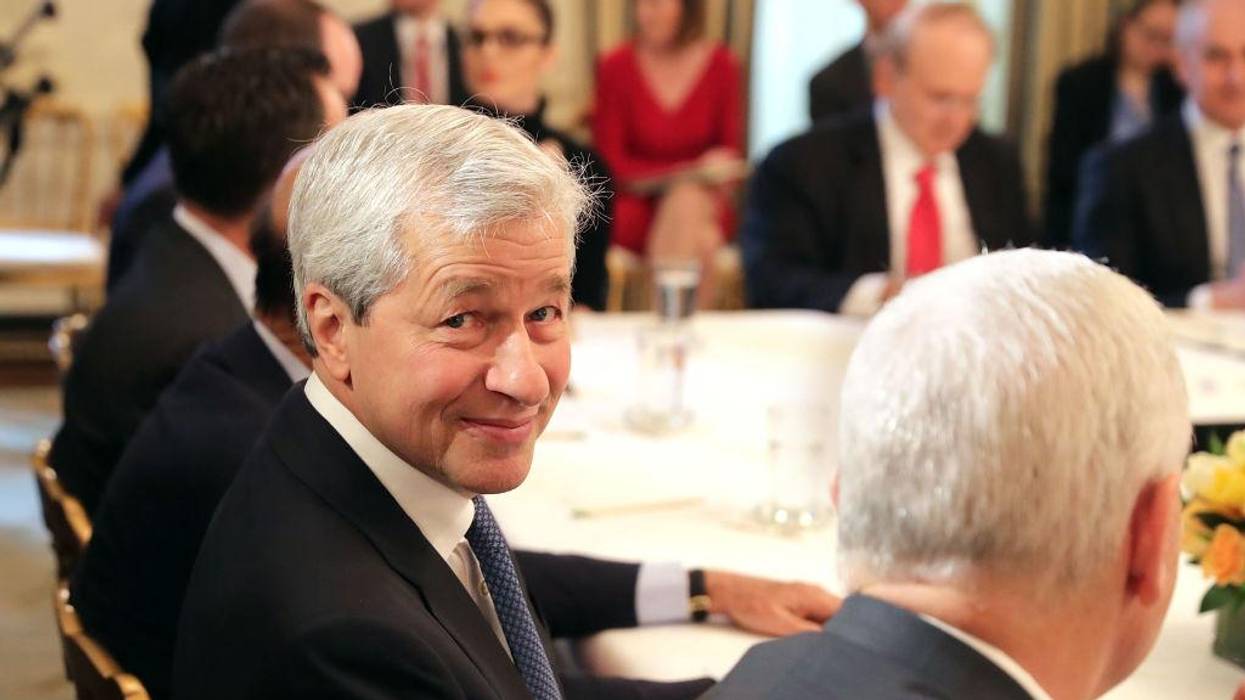
In a year when many U.S corporations enjoyed record-breaking profits, some of the wealthiest companies in the nation paid little-to-no taxes according to a new analysis--or even accepted tax refunds--while working Americans continued paying their normal tax rates and faced rising prices for essentials.
"These are some of the largest companies in the world, pulling in billions of profits; yet none will owe a cent in federal income taxes."
That's according to a Center for American Progress (CAP) analysis released Tuesday that found 19 Fortune 100 companies paid effective tax rates in the single digits, if they paid anything at all.
The highest-earning Fortune 100 company, JPMorgan Chase, reported pre-tax earnings of $48.2 billion in 2021, but paid less than 6% in federal taxes despite an official corporate tax rate of 21%.
Amazon.com, which earned $35.1 billion in the U.S. in 2021, paid only 6.1% in federal taxes--all while its growth in profits over the past two years outpaced the wages the company paid its 1.1 million U.S. workers and while the company spent more than $4 million on union-busting to fend off organizing efforts at its warehouses.
"Corporations are looting America," said former Labor Secretary Robert Reich in response to CAP's report.
As Reich noted, CAP's analysis showed that four Fortune 100 companies--AT&T, Charter Communications, American International Group (AIG), and Dow--will receive an income tax benefit, or refund, instead of paying taxes for 2021.
After earning $29.6 billion in 2021, AT&T reported a tax refund of $1.2 billion. Charter Communications reported a refund of $12 million after earning $6 billion, AIG will receive $216 million from the federal government despite $9.8 billion in earnings, and Dow will receive $46 million after earning $1.5 billion.
"These are some of the largest companies in the world, pulling in billions of profits; yet none will owe a cent in federal income taxes," wrote Ryan Koronowski, Jessica Vela, Zahir Rasheed, and Seth Hanlon at CAP. "As their investor filings show, many corporations pay a much lower actual--or 'effective'--rate on their profits because of the many ways they can reduce their taxable income under the current tax system. The low tax rates for these companies worsen an already unjust increase in inequality."
Of the Fortune 100 companies that actually paid taxes in CAP's analysis, UPS paid the highest tax rate at just 9.9%--still well below the tax rate established by President Donald Trump's so-called Tax Cuts and Jobs Act of 2017 (TCJA). General Motors paid the lowest tax rate, paying 0.2% in federal taxes on $9.4 billion in earnings.
"Policymakers must act now to ensure that large, profitable corporations pay their fair share."
Large companies outside the Fortune 100 also managed to avoid paying taxes despite earning billions in 2021, according to the report. Software company Salesforce earned $2.7 billion but effectively paid $0 in federal income taxes, Duke Energy paid effectively no taxes on $3.7 billion in U.S. earnings, and Netflix paid an effective tax rate of just 1.1% on 5.3 billion in earnings.
"Is anyone else tired of paying more in taxes than corporations making billions of dollars?" asked political advocacy group Progress Iowa.
CAP cited two other reports showing how the wealthiest U.S. companies are avoiding taxes despite soaring profits. The financial data company FactSet collected data showing that S&P 500 corporations' four most profitable quarters happened in 2021, while the Institute for Taxation and Economic Policy (ITEP) conducted an analysis "concluding that former President Donald Trump's TCJA allowed many companies to pay $0 in taxes."
The group noted that with control of the White House and both chambers of Congress, the Democratic Party could change the status quo and ensure wealthy corporations pay their fair share in taxes, as President Joe Biden tried to last year by proposing a 15% minimum corporate tax and measures to stop corporate tax dodging as part of the Build Back Better Act.
"Polls show that raising taxes on corporations is among the most popular elements of President Biden's economic agenda," said CAP. "Policymakers must act now to ensure that large, profitable corporations pay their fair share."

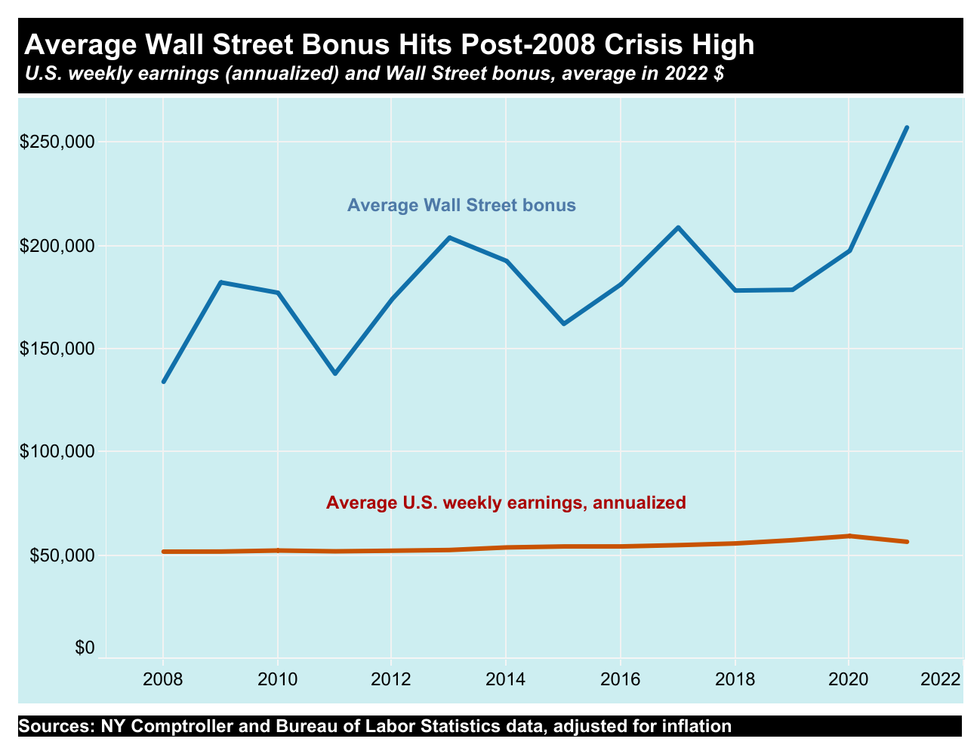
A new analysis out Wednesday estimates that if the federal minimum wage had grown at the same rate as Wall Street bonuses over the past three and a half decades, it would currently be $61.75 an hour instead of $7.25.
"Millions of essential workers continue to earn poverty wages, while the reckless bonus culture is alive and well on Wall Street."
According to fresh data from the New York State Comptroller, the average bonus dished out to Wall Street employees jumped 20% to a record $257,500 in 2021 as big banks reported huge profits despite widespread havoc caused by the coronavirus pandemic. Last year's average Wall Street bonus was the highest since 2006, prior to the Great Recession.
The comptroller's office points out that while the securities industry comprises just 5% of private-sector employment in New York City, it makes up one-fifth of total private-sector wages.
Taking the new figures into account, Sarah Anderson of the Institute for Policy Studies notes in a report that the average Wall Street bonus has soared by 1,743% since 1985.
"By contrast, typical American workers lost earnings power in 2021," Anderson writes, noting that high inflation has eroded the modest wage gains seen by ordinary people. "Average weekly earnings for all U.S. private-sector employees rose by only 2% between January 2021 and January 2022, according to the Bureau of Labor Statistics."
"These jaw-dropping numbers are just the latest evidence of unequal sacrifice under the pandemic," Anderson adds. "While ordinary workers are struggling with rising costs for basic essentials, Wall Street bankers have seen their bonuses rise further into the stratosphere."
Anderson argues that Wall Street bonuses have been soaring in recent years partly because Section 956 of the Dodd-Frank Act--a financial reform measure enacted in the wake of the 2008 crash--has never been implemented.
"Powerful Wall Street lobbyists have succeeded in blocking Section 956... which prohibits large financial institutions from awarding pay packages that encourage 'inappropriate risks,'" Anderson writes. "Regulators were supposed to implement this new rule within nine months of the law's passage but have dragged their feet--despite widespread recognition that these bonuses encouraged the high-risk behaviors that led to the 2008 financial crisis, costing millions of Americans their homes and livelihoods."
"In contrast to the Wall Street lobbyists, advocates for the working poor have seen their efforts to raise the federal minimum wage and secure other important worker benefits stalled in Congress," she continues. "Due to Washington inaction, millions of essential workers continue to earn poverty wages, while the reckless bonus culture is alive and well on Wall Street."