

SUBSCRIBE TO OUR FREE NEWSLETTER
Daily news & progressive opinion—funded by the people, not the corporations—delivered straight to your inbox.
5
#000000
#FFFFFF
To donate by check, phone, or other method, see our More Ways to Give page.
Daily news & progressive opinion—funded by the people, not the corporations—delivered straight to your inbox.
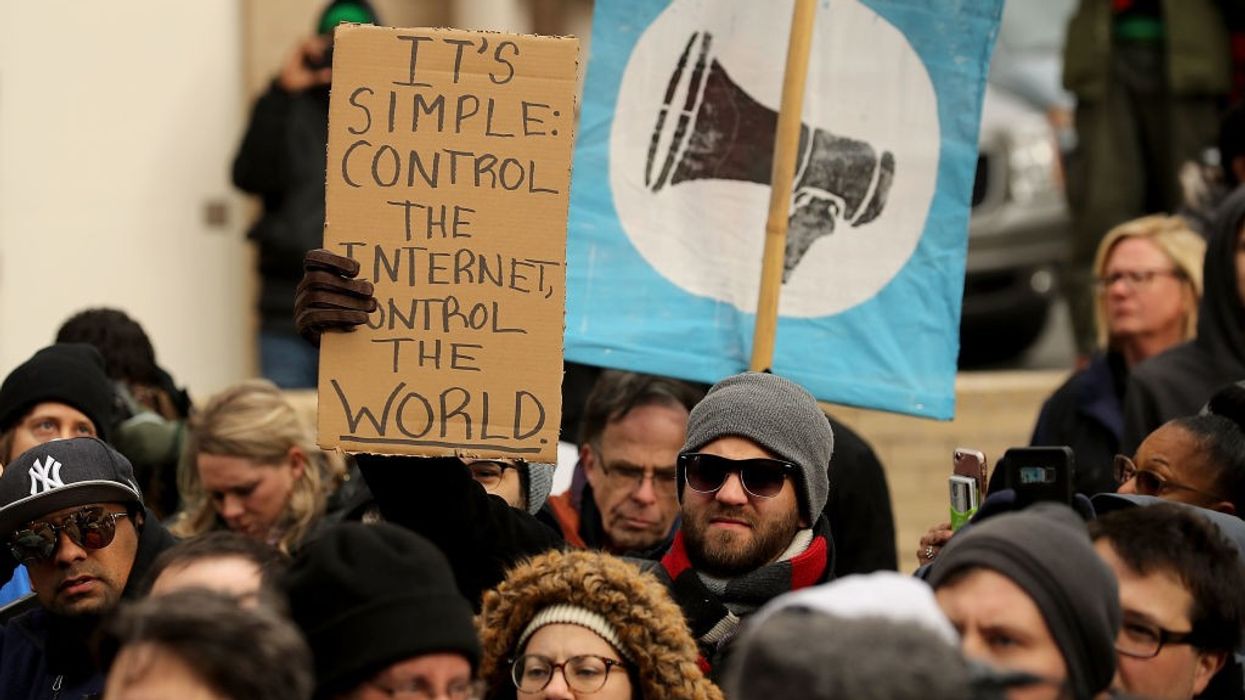
The powerful telecom industry did what they always do when the FCC does anything good or important on behalf of consumer: They sued to overturn the rules.
Happy New Year to everyone but the U.S. Court of Appeals for the 6th Circuit.
On Thursday, this federal court in Cincinnati threw out the Federal Communication Commission’s Net Neutrality rules, rejecting the agency’s authority to protect broadband consumers and handing phone and cable companies a major victory just weeks before the Trump administration returns to power.
The ruling against the FCC by three Republican judges isn’t shocking, but their reasoning is shoddy, a mish-mash of tired industry claims paired with a willful misrepresentation of how the internet actually works.
As Matt Wood, an experienced telecommunications attorney and my colleague at Free Press, explains: “Beyond being a disappointing outcome, the 6th Circuit’s opinion is just plainly wrong at every level of analysis. The decision missed the point on everything from its granular textual analysis and understanding of the broader statutory context, to the court’s view of the legislative and agency history, all the way to its conception of Congress’s overarching policy concerns.”
Our job now is to channel the growing outrage over this appalling decision into the long-term changes we need to keep the internet safe, reliable, accessible, affordable and free from unlawful discrimination.
Under the leadership of Chairwoman Jessica Rosenworcel, the FCC moved in April 2024 to restore Net Neutrality and the essential consumer protections that rest under Title II of the Communications Act, which had been gutted under the first Trump administration. This was an all-too-rare example in Washington of a government agency doing what it’s supposed to do: Listening to the public and taking their side against the powerful companies that for far too long have captured and called the shots in D.C.
And the phone and cable industry did what they always do when the FCC does anything good or important: They sued to overturn the rules.
This time, however, the lawyers for the biggest phone and cable companies had two things working in their favor. First, they got lucky: They won the forum-shopping lottery and got their case moved outside of Washington, D.C., where previous rounds of the Net Neutrality fight had been decided.
Second, the Supreme Court handed down a ruling in June in the Loper Bright Enterprises vs. Raimondo case that overturned the so-called Chevron doctrine that gave deference to expert agencies in complex matters like environmental and telecommunications regulations.
Unfortunately, the lawyers representing massive companies like AT&T, Comcast and Verizon found an eager audience in Cincinnati for their debunked arguments.
Despite extensive legal and economic analysis provided by Free Press and our allies in the case and at oral arguments in October, the court ruled against the FCC and deemed internet access to be an “information service” largely free from FCC oversight.
In a post-Chevron world where courts no longer have to defer to expert agencies, we’ve replaced years of evidence and argument with revelations like this from Judge Griffin: “The existence of a fact or thought in one’s mind is not ‘information’ like 0s and 1s used by computers.”
In the short term, this decision will let the incoming Trump FCC abdicate its responsibility to protect internet users so it can focus on its new priority of threatening TV broadcasters and social-media sites to carry more pro-Trump views.
I’ll spare you the rest. This court’s warped decision scraps the common-sense rules the FCC restored in April. The result is that throughout most of the country, the most essential communications service of this century will be operating without any real government oversight, with no one to step in when companies rip you off or slow down your service.
This ruling is far out of step with the views of the American public, who overwhelmingly support real Net Neutrality and despise the cable companies. They’re tired of paying too much, and they hate being spied on when they surf (or talk, thanks Siri). Now they’ll have even less recourse to deal with unscrupulous and abusive business practices.
Incoming FCC Chair Brendan Carr and his old boss Ajit Pai, who’s part of the Trump transition team, are crowing everywhere about the decision and cheering this strike against “regulatory overreach.” Of course, Carr and his ilk have never been interested in protecting the public interest, only private profits.
In the short term, this decision will let the incoming Trump FCC abdicate its responsibility to protect internet users so it can focus on its new priority of threatening TV broadcasters and social-media sites to carry more pro-Trump views. The hypocrisy of crushing light-touch regulations while aggressively pursuing government censorship is something to behold.
In the weeks ahead, the FCC, as well as Free Press and the other parties who intervened in the case, will consider our legal options and decide whether to appeal the case to the Supreme Court. In Congress, we’ll start laying the groundwork for a future bill that restores Net Neutrality and FCC authority. Meanwhile, we’ll look to the states to hold the line, with laws like California’s strong Net Neutrality regulations thankfully still on the books.
Our job now is to channel the growing outrage over this appalling decision into the long-term changes we need to keep the internet safe, reliable, accessible, affordable and free from unlawful discrimination.
It may have gotten harder, but the fight for the free and open internet is far from over.
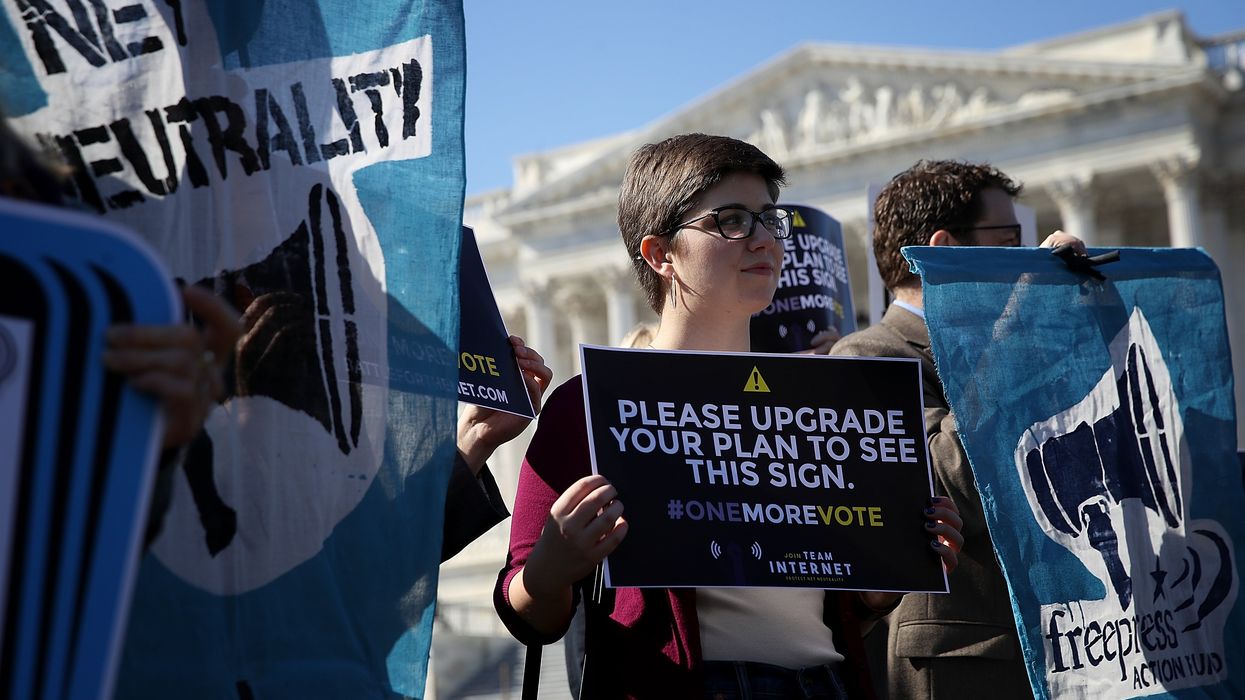
The ruling creates a "dangerous regulatory gap that leaves consumers vulnerable and gives broadband providers unchecked power over Americans’ internet access," said one advocate.
Citing last year's U.S. Supreme Court decision that stripped federal agencies of their regulatory powers, an all-Republican panel on the U.S. Court of Appeals for the 6th Circuit on Thursday ruled that the Federal Communications Commission lacks the authority to reinstate net neutrality rules.
The panel ruled that broadband is an "information service" instead of a "telecommunications service," which is more heavily regulated under the Communications Act, and said the FCC did not have the authority to prohibit telecommunications companies from blocking or throttling internet content and creating "fast lanes" for certain web companies that pay a fee.
Last April the FCC voted to reinstate net neutrality rules, which were first introduced under the Obama administration but were repealed by former Republican FCC Chair Ajit Pai, who was appointed by President-elect Donald Trump.
The ruling cited by the 6th Circuit panel was Loper Bright Enterprises v. Raimondo, which overturned the so-called Chevron doctrine last year. Under the decades-old legal precedent, judges have typically deferred to federal agencies' reasonable interpretation of a law if Congress has not specifically addressed an issue.
"Applying Loper Bright means we can end the FCC's vacillations" between imposing and repealing net neutrality rules, said the judges on Thursday.
The ruling serves as "a reminder that agencies are going to be neutered across any and all industries," said one observer.
John Bergmayer, legal director for the free expression and digital rights group Public Knowledge, said that by "rejecting the FCC's authority to classify broadband as a telecommunications service, the court has ignored decades of precedent and fundamentally misunderstood both the technical realities of how broadband works and Congress' clear intent in the Communications Act."
The ruling creates a "dangerous regulatory gap that leaves consumers vulnerable and gives broadband providers unchecked power over Americans’ internet access," added Bergmayer. The decision could harm the FCC's ability to protect against everything from broadband privacy violations to threats to universal service programs for low-income and rural households.
Matt Wood, vice president of policy and general counsel for another media justice group, Free Press, said the ruling was "just plainly wrong at every level of analysis."
"In April, the FCC issued an order that properly restored the agency's congressionally granted oversight authority to protect people from any [internet service provider] discrimination and manipulation. That commonsense FCC order tried to ensure that the companies providing America with the essential communications service of this century don't get to operate free from any real oversight," said Wood.
Companies and industry groups that sued over the regulations, including the Ohio Telecom Association, "baselessly claim that any regulation will hurt their bottom line," Wood added. "Treating broadband like a common-carrier service does nothing to dampen or dissuade private investment in this crucial infrastructure. And the question for any court interpreting the Communications Act must be what is in the public's best interest, not just one industry sector's financial interests."
The groups, along with FCC Chair Jessica Rosenworcel, called on Congress to take legislative action to protect internet users and small web businesses from discrimination.
"Consumers across the country have told us again and again that they want an internet that is fast, open, and fair. With this decision it is clear that Congress now needs to heed their call, take up the charge for net neutrality, and put open internet principles in federal law," Rosenworcel said.
Congress must "clarify the FCC's authority—and responsibility—to protect the Open Internet and broadband users," said Bergmayer.
Bergmayer also noted that the ruling leaves states' ability to enforce their own net neutrality laws in place, and said the group "will continue to look to states and local governments to help lead on broadband policy."
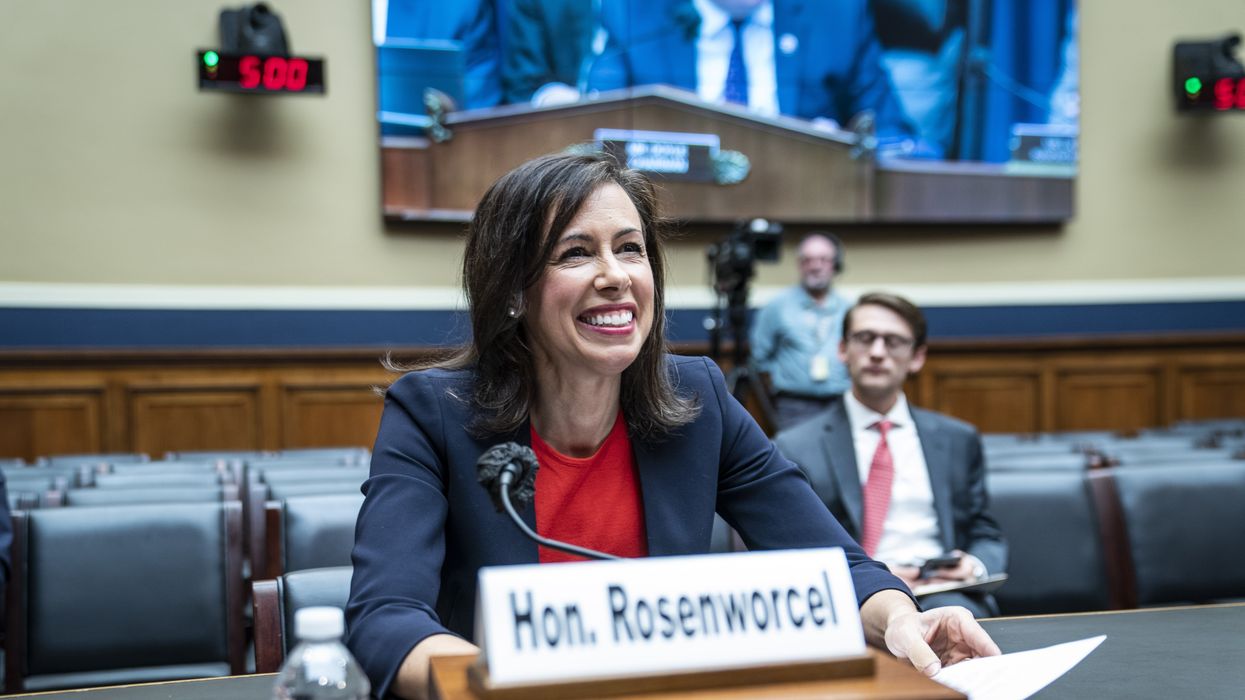
A majority of commissioners is set to return to the agency the authority it needs to act as a strong advocate for a user-powered internet.
Later this week, the Federal Communications Commission is expected to reverse a Trump-era decision that stripped away essential open-internet protections. In a Thursday vote, a majority of commissioners will return to the agency the authority it needs to act as a strong advocate for a user-powered internet.
They will do this by reclassifying broadband-access services as telecom services subject to Title II of the Communications Act. Title II authority allows the FCC to safeguard Net Neutrality and hold companies like AT&T, Comcast and Verizon accountable to internet users across the United States.
Title II authority gives the FCC the tools to make the internet work better for everyone, ensuring that internet service providers can’t block, throttle, or otherwise discriminate against the content everyone accesses online. But it also gives the FCC the regulatory means to ensure that broadband prices and practices are “just and reasonable.” The agency will be able to step in to stop price gouging, safeguard user privacy, protect public safety, eliminate junk fees, and stop other abusive behavior from providers.
During a Capitol Hill press conference last week, FCC Chairwoman Jessica Rosenworcel said, “There are a lot of things in this country that divide us, but Net Neutrality is not one of them.” Rosenworcel cited poll after poll that show that people across the political spectrum overwhelmingly support the 2015 Title II Net Neutrality safeguards that the Obama FCC put in place. The same polls show majorities opposed the Trump FCC’s 2017 repeal of these protections.
“Bringing back the FCC’s authority over broadband and putting back net neutrality rules is popular, and it has been court-tested and court-approved,” she added. “[W]e have an opportunity to get this right. Because in a modern digital economy, it is time to have broadband oversight, national Net Neutrality rules, and policies that ensure the internet is fast, open, and fair.”
The rules up for a vote on April 25 are identical to the 2015 rules. The FCC will enforce them in the same way. And the draft order text that the agency will finalize and adopt already makes this clear — in some cases, going further than the 2015 order did — with a chance before the vote occurs for the FCC to make this language even stronger.
Losing Title II hurt people, which is why millions protested the Trump FCC’s action. Not only did its 2017 repeal gut the Net Neutrality rules, it also surrendered the agency’s power to protect communities from unjust or unreasonable practices by these internet-access goliaths.
This had troubling consequences during the early months of the Covid-19 pandemic, when Trump FCC Chairman Ajit Pai asked broadband providers to sign a
voluntary pledge to preserve people’s vital internet access (he couldn’t force providers to do this since he’d abdicated the agency’s authority to compel these companies to keep users connected). Despite Pai’s claim that the pledge was a success, reporting by Daily Dot found that many of these same companies still cut users’ connections during a national emergency, when everything from work to health care had shifted online.
A 2019 study by Northeastern University and UMass Amherst found that ISP throttling of network services happens “all the time.” Researchers analyzed data from hundreds of thousands of smartphones to determine whether wireless providers were slowing, or throttling, data speeds for specific mobile services. They found that “just about every wireless carrier is guilty of throttling video platforms and streaming services unevenly.”
In everyday terms, this means that companies like AT&T are picking winners and losers online. Allowing such throttling to continue opens the door to more content-based discrimination. This isn’t just about economic favoritism — for example, an ISP slowing down a competitor’s online app so people would use their product instead — but, potentially, the blocking of political messages that gigantic communications companies don’t like.
This isn’t a hypothetical. In 2005, the internet service provider Telus blocked access to a server that hosted a website supporting a labor strike against the company. And in 2011, the Electronic Frontier Foundation found that several ISPs were intercepting user search queries on Bing and Yahoo and directing them to “results” pages that they or their partners controlled.
Lobbyists working for these large internet-access companies like to say that Title II authority offers “a solution in search of a problem” that doesn’t exist. And you can bet they’ll repeat
a lot of these lies in the aftermath of this week’s vote.
Throughout the 20 years of debate around Title II and Net Neutrality, the powerful phone and cable lobby has demonstrated a willingness to say anything and everything to avoid being held accountable. They’ll say that Title II’s open-internet standard is a heavy-handed regulation that will undermine investment in new broadband deployment; in reality, executives from these companies have said publicly that their capital expenditures
aren’t impacted in any way by Title II rules. The lobbyists will say that Net Neutrality is a hyper-partisan, politicized issue — ignoring public polling (see above) that shows internet users on the political left, right, and center overwhelmingly support the sorts of baseline protections offered under Title II.
The fight for this week’s victory predates the Trump FCC repeal of strong Title II rules in 2017. By restoring safeguards that millions fought so hard to make a reality, the FCC is recognizing the broad-based grassroots movement that coalesced in 2005 around the then-obscure principle of Net Neutrality and built a movement focused on retaining the people-powered, democratic spirit that was baked into the internet at its inception.
Without baseline open-internet protections, internet users are subject to privacy invasions, hidden junk fees, data caps, and billing rip-offs from their ISPs. In addition, without Title II oversight the FCC is severely limited in its ability to promote broadband competition and deployment, bringing this essential infrastructure within reach of people in the United States who lack access.
The FCC will change all of that later this week. It will respond to overwhelming public opinion and stand up for internet users against a handful of monopoly-minded companies that for too long have dictated media policy in Washington.
Come Thursday, I and many of the amazing advocates who’ve been fighting this fight for the past 20 years will be on hand at the FCC to witness the final vote. It will be a moment to appreciate our hard work and thank the agency for restoring to Americans their all-important online rights. Join us in celebrating!
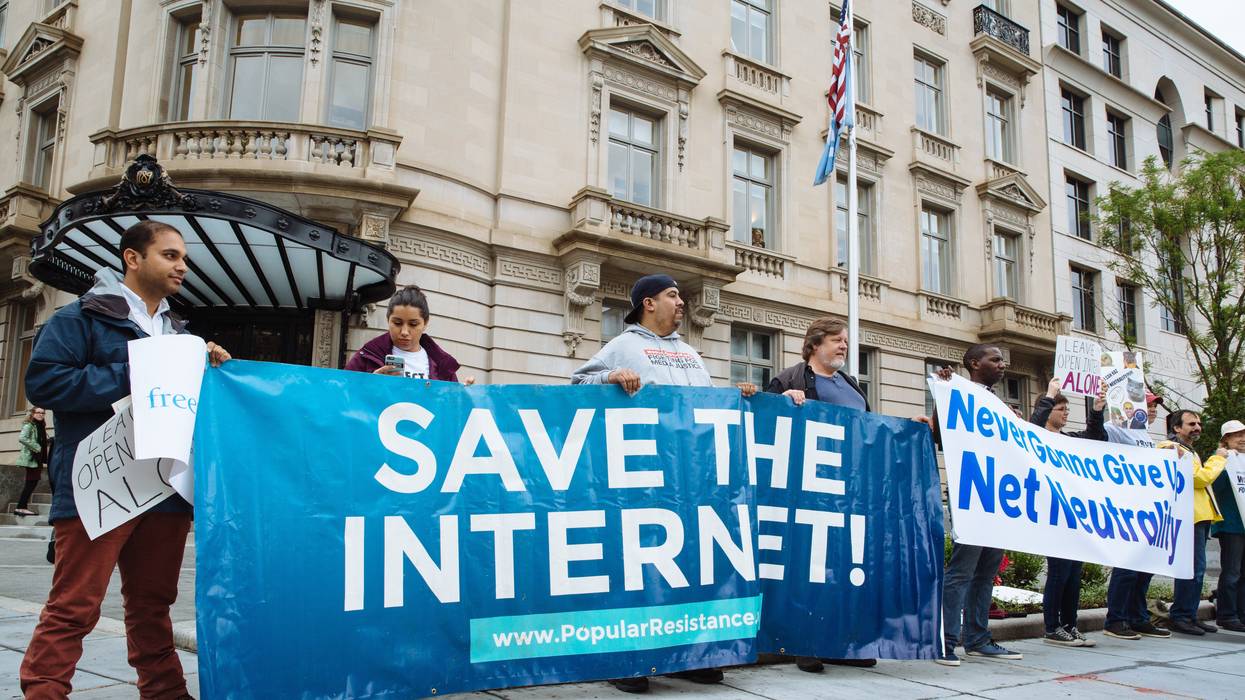
"We know that Big Cable is going to pull out all the stops in an attempt to water down or even block the rules," said one campaigner. "That's why we're mobilizing the grassroots."
Following the Federal Communications Commission's vote last week to start restoring FCC oversight of broadband and net neutrality rules rolled back under former President Donald Trump, more than 30 groups relaunched the Battle for the Net campaign.
"We are proud to relaunch Battle for the Net along with over 30 organizations representing millions of Americans," said Demand Progress communications director Maria Langholz in a statement. "It is absolutely critical for the FCC to succeed in this process to restore net neutrality and Title II protections."
Despite intense opposition from internet providers, broadband was previously treated as a public service under Title II of the Communications Act. However, in 2017, then-FCC Chair Ajit Pai—a former telecom industry lawyer appointed by Trump—led an unpopular rollback of the policy.
After the U.S. Senate last month finally confirmed Commissioner Anna Gomez to a long-vacant FCC seat, Chair Jessica Rosenworcel announced her plan to try to revive the policy—which prevents providers from blocking legal content, throttling speeds, and creating fast lanes. Commissioner Geoffrey Starks joined the two women in supporting the restoration effort.
"We applaud the FCC for moving forward this proposal, and especially commend Chair Rosenworcel's leadership on this issue," Langholz said Tuesday. "In addition to the commission, we impel members of Congress to stand with their constituents by supporting Title II reclassification."
The campaign website, BattleForTheNet.com, identifies "next steps" as FCC reinstatement of net neutrality and pressuring Congress to enshrine the policy into law.
"As the commission moves forward with this rulemaking, we know that Big Cable is going to pull out all the stops in an attempt to water down or even block the rules," Langholz explained. "That's why we're mobilizing the grassroots, making use of the years of organizing we and our partner organizations have done, to push this proposal through the finish line."
The campaign site currently features a form allowing U.S. voters to let members of the commission and Congress know that "I strongly support the FCC's current effort to reinstate net neutrality and Title II authority, which is critical for an open internet, expanding broadband access, privacy protections, and public safety."
The pre-written comment, which users are able to personalize before submitting, adds that "the agency must move forward a strong rule that rejects zero-rating, ensures interconnection, and allows for state preemption."
Caitlin Seeley George, campaigns and managing director at Fight for the Future, highlighted that "net neutrality has so much support across the political spectrum. And we've seen this support in action as millions of people have taken action over the years at the Battle for the Net hub in support of these commonsense protections against Big Telecom's abusive power."
"Now that the hurdles blocking the FCC from reinstating net neutrality have finally been cleared, they must listen to all of these supporters and swiftly move forward," she stressed. "Internet providers will do all they can to block the agency, spending obscene amounts of money to retain their power. But the FCC must listen to experts and the general public, and move forward with a strong rule to restore net neutrality and Title II protections."
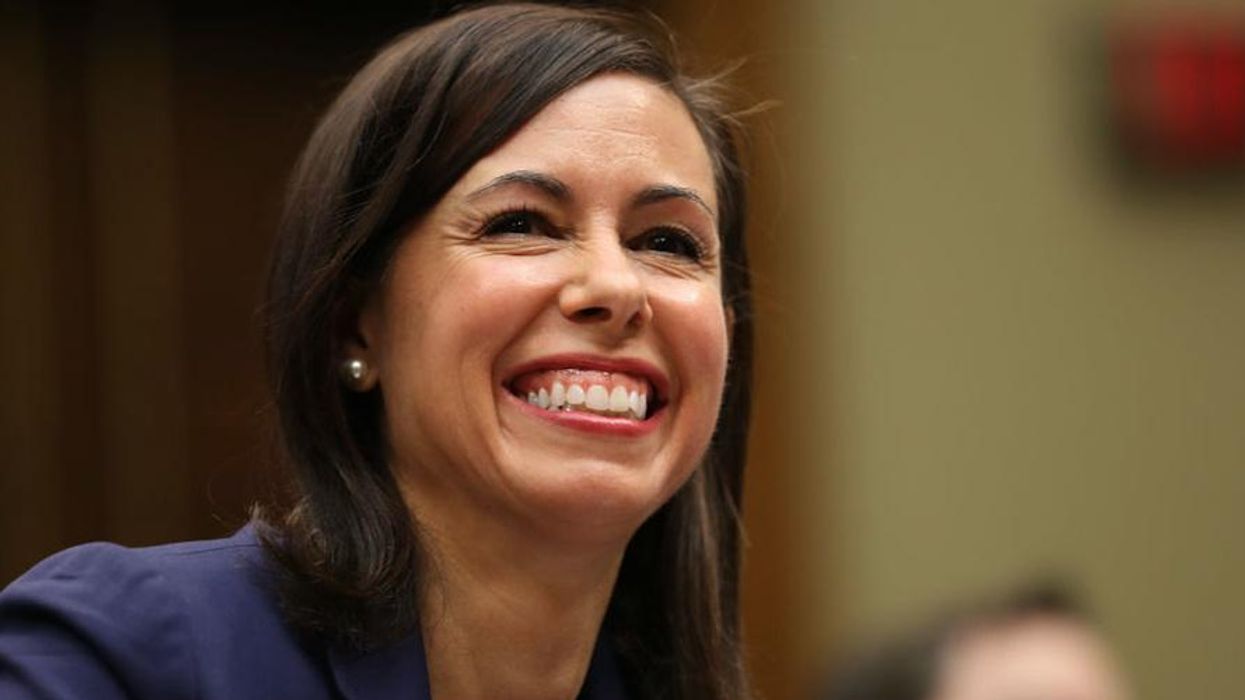
Open internet advocates applauded on Thursday as Democrats on the Federal Communications Commission voted to begin reestablishing FCC oversight of broadband and reviving net neutrality rules rolled back under former President Donald Trump.
"Today's vote is an important start to restoring internet freedom and openness," said Public Knowledge president and CEO Chris Lewis. "Over the next few months, the FCC and the public at large will have an opportunity to look carefully at the benefits of having broadband included in the communications networks that fall under FCC authority."
FCC Chair Jessica Rosenworcel announced her plan to ensure broadband is treated as a public utility last month. Commissioners Anna Gomez and Geoffrey Starks on Thursday joined her in voting for the related notice of proposed rulemaking, which was opposed by Commissioners Brendan Carr and Nathan Simington.
"The notice of proposed rulemaking adopted today seeks comment on classifying fixed and mobile broadband internet service as an essential 'telecommunications' service under Title II of the Communications Act," the FCC explained. "The proposal also seeks to restore clear, nationwide open internet rules that would prevent internet service providers [ISPs] from blocking legal content, throttling speeds, and creating fast lanes that favor those who can pay for access."
Lewis asserted that "this commonsense classification is a no-brainer to the millions of Americans who want the FCC to work to ensure that all of us are connected to quality, affordable, open, and secure broadband networks."
The FCC previously voted in favor of net neutrality rules in 2015, under former President Barack Obama. Those regulations were rolled back in 2017, when the FCC was led by Ajit Pai—a former telecom industry lawyer and an appointee of Trump, the GOP's 2024 presidential front-runner.
In 2021, President Joe Biden signed an executive order encouraging the FCC to restore net neutrality rules. However, such efforts were stalled by a divided commission—until the U.S. Senate finally confirmed Gomez to a long-vacant seat early last month.
"When Trump's FCC Chair Ajit Pai led the repeal of net neutrality and rolled back Title II classification for broadband access, it was a huge win for the telecom industry and its executives," Demand Progress communications director Maria Langholz said Thursday. "We applaud the FCC for not giving up this fight in the face of the seemingly endless effort by corporate giants and their lobbyists to block commonsense and broadly popular open internet protections."
"By restoring Title II oversight, the FCC can prevent net neutrality violations at the hands of powerful ISPs, as well as expand affordable broadband access and stop dangerous privacy abuses," she continued. "Given the widespread public support for these reforms, it's vital the FCC continue to move decisively toward reinstating strong Title II protections, and that members of Congress stand with their constituents by publicly supporting this effort."
Free Press co-CEO Jessica J. González similarly stressed that "Pai ignored the overwhelming public consensus" with the rollback and "people across the country are demanding these open internet safeguards, which will allow the FCC to ensure that everyone in the United States—no matter their location, political persuasion, race or income—has affordable, reliable, and safe internet connections free from discrimination, blocking, or other ISP manipulation."
"In a last-ditch attempt to win over public opinion, these companies are bankrolling a disinformation campaign designed to paint the agency's popular Obama-era rules as bad for business and the American way," she noted. "But no amount of lies from the broadband industry and their congressional allies will change the fact that we need a watchdog protecting internet users' interests and defending their right to an open and affordable internet."
"Broadband providers and their spin doctors are deeply out of touch with people across the country who are fed up with high prices and poor customer service," González argued. "We need a referee on the field to call fouls and issue penalties when broadband companies are being unfair."
Lewis emphasized that "now is the time for the public to take action," and pledged that Public Knowledge will be "filing detailed comments in the record on behalf of the public interest in the coming months."
"Many commenters have focused only on net neutrality protections, however, there are many important protections that Title II authority brings on behalf of the public, from network reliability, outage, and public safety standards, to looking at the important values of universal service, privacy, and competition and fair pricing," he said. "We are already creating resources for those who are unfamiliar with the many benefits of placing broadband under FCC authority."
"We encourage all members of the public to make their voice heard at the FCC and in Congress where legislators are watching closely," he added. "Your senators and representatives need to know that you support FCC authority over broadband to protect open, secure, and affordable broadband access."
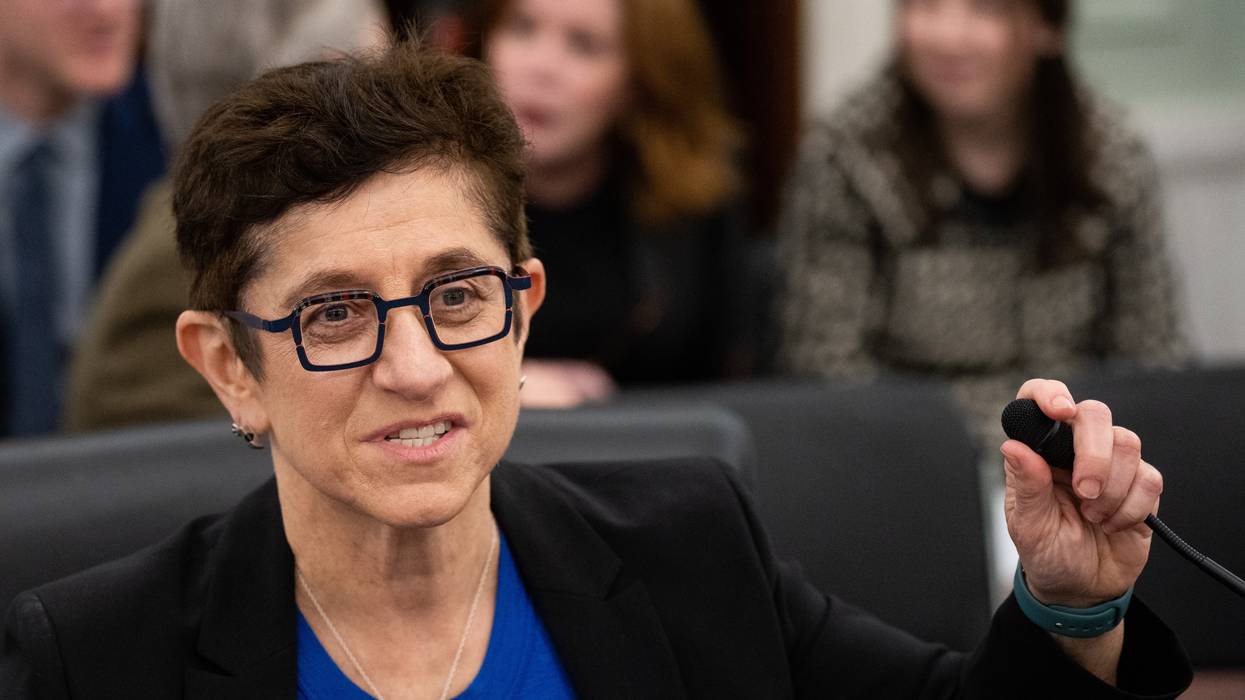
"The Commerce Committee and then the full Senate should advance this nomination without further delays, which only benefit those big companies orchestrating this impasse," declared one advocate.
The U.S. Senate's refusal to confirm Gigi Sohn in the nearly 500 days since President Joe Biden first nominated her to the Federal Communications Commission stands in stark contrast to the chamber's treatment of other candidates, including Ajit Pai.
Sohn on Tuesday attended her third U.S. Senate Committee on Commerce, Science, and Transportation hearing—during which Sen. Ted Cruz (R-Texas), the panel's ranking member, took aim at not only the candidate but also digital rights group Fight for the Future.
Meanwhile, advocacy groups supporting Sohn in the face of a telecommunications industry smear campaign and homophobic attacks yet again blasted the Senate's delay—which has not deterred Biden, who renominated Sohn last month.
Caitlin Seeley George, Fight for the Future's campaigns and managing director, compared the stalled votes for Sohn to the Senate's confirmation of GOP commissioners Ajit Pai and Nathan Simington under former President Donald Trump.
"It is absolutely absurd that Gigi Sohn, a dedicated advocate for the public interest, has gone through three hearings in front of the Senate Commerce Committee," she argued, "when controversial nominees with massive conflicts of interest like Ajit Pai and Nathan Simington sailed through Senate approval (almost as absurd as Sen. Cruz calling out Fight for the Future because we hold lawmakers from both sides of the aisle accountable!)."
Sohn, an attorney who co-founded the advocacy group Public Knowledge, previously served as counselor to former FCC Chair Tom Wheeler, who was appointed in 2013 by then-President Barack Obama.
Pai—an ex-Verizon attorney who destroyed net neutrality rules—was initially nominated to the FCC in 2011 by Obama and unanimously confirmed by the Senate the next year. After Trump took office in January 2017, he picked Pai as FCC chair, then renominated him to the leadership role that March, which the Senate confirmed that October.
The month after Trump lost to Biden in 2020, the Senate confirmed the outgoing president's nomination of Nathan Simington to the FCC, despite critics' warnings. Fight for the Future's Evan Greer said at the time that he was "even worse than Ajit Pai." Simington remains at the FCC, along with Republican Brendan Carr and Democrats Geoffrey Starks and Jessica Rosenworcel, the current chair. Sohn addressed the impact of the vacancy for the fifth commissioner post in her testimony Tuesday.
"The FCC has been without a majority for the entirety of the Biden administration—over two years—at a time when closing the digital divide is front and center," she said. "There are too many important issues in front of the commission to lack a full complement of members, including improving the broadband maps, fixing the Universal Service Fund, closing the homework gap, ensuring fair access to broadband, and protecting consumers' privacy. Americans deserve a full FCC where I could play a critical role in addressing every one of these, but time is of the essence."
Sohn also said that "I believe deeply that regulated entities should not choose their regulator. Unfortunately, that is the exact intent of the past 15 months of false and misleading attacks on my record and my character. My industry opponents have hidden behind dark money groups and surrogates because they fear a pragmatic, pro-competition, pro-consumer policymaker who will support policies that will bring more, faster, and lower-priced broadband and new voices to your constituents."
Rights groups echoed Sohn's criticism of industry attacks on her and agreed that the Senate needs to act urgently. As Seeley George put it: "There is no question that Gigi Sohn is qualified to sit on the FCC. The only reason we are going through yet another hearing is because telecom companies, and the lawmakers shilling for them, know that when she is appointed she will put what's best for the American people over industry profits."
"The opposition to Sohn has been unprecedented, and has included personal, blatantly homophobic attacks (something we're disappointed Democratic lawmakers did not condemn during the hearing). But, as Sohn said today, regulated entities should not get to pick their regulator," she continued. "Over the past year and a half the FCC could have been getting to work to restore net neutrality, ensure universal access to affordable broadband, address unregulated use of cellphone location data and the risk it poses to abortion rights, and protect the public from the abuses of telecom monopolies."
Free Press Action general counsel and vice president of policy Matt Wood similarly asserted that "confirming Gigi Sohn to serve at the FCC is the best thing the Senate can do to ensure media, tech, and broadband policy actually serves the public. No other nominee in the FCC's history has had to wait so long for a confirmation vote. She is obviously and supremely qualified to serve as a watchdog for ordinary people across the country."
He continued:
As commissioner, Sohn will fight on behalf of working families trying to pay their high monthly phone and internet bills. She will work to ensure that the benefits of broadband reach everyone, and to curb the runaway media consolidation that has decimated local journalism and harmed Black and Brown communities in particular. Without Sohn's crucial fifth vote at the agency, the FCC cannot fully accomplish its mission.
Sohn's impeccable credentials are the very things that have compelled the telecom and broadcast industry to hold her nomination in limbo. We've had to wait for far too long—with endless delays and bigoted attacks that have prevented the deadlocked agency from adopting some crucial policies that would help people connect and communicate.
After calling out Cruz for "aiding and abetting the smear campaign designed to benefit the massive communications firms subject to FCC oversight," Wood declared that "the Commerce Committee and then the full Senate should advance this nomination without further delays, which only benefit those big companies orchestrating this impasse."
According to Wood, "If the Senate genuinely wants to improve the lives of internet users, cellphone customers, TV watchers, and radio listeners—aka, everyone—it can start by confirming this excellent public servant to the FCC immediately."
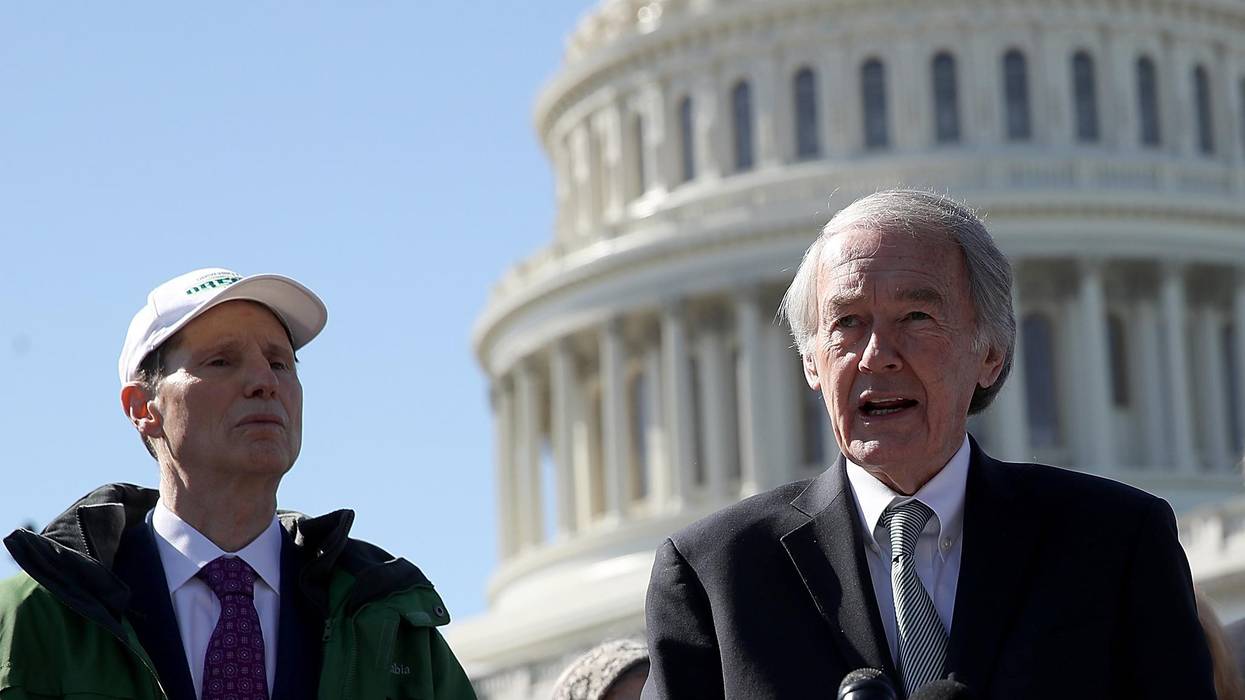
Open internet advocates on Monday celebrated news of soon-to-be-unveiled legislation that "would reclassify broadband as a telecommunications service," exposing industry giants to stricter federal oversight.
"Broadband internet is a necessity, not a luxury."
"This bill is incredibly important right now," said Evan Greer, director of the advocacy group Fight for the Future, in a statement that noted the proposal comes as the Senate has stalled its confirmation of net neutrality defender Gigi Sohn, President Joe Biden's Federal Communications Commission (FCC) nominee.
The Washington Post reported Monday that Sens. Ed Markey (D-Mass.) and Ron Wyden (D-Ore.) are spearheading the fight for the forthcoming Net Neutrality and Broadband Justice Act, and Rep. Doris Matsui (D-Calif.) intends to introduce the House version.
According to the newspaper:
While the two-page bill is seemingly simple in scope, it would have massive implications in addition to reinstating net neutrality, the rules that bar internet service providers from blocking or throttling content. It would shift how aggressively the FCC can regulate issues like internet pricing, consumer privacy, and competition in the broadband market.
Lawmakers plan to introduce the bill in coming weeks, likely before the August recess, according to two people familiar with the negotiations, who spoke on the condition of anonymity to discuss private talks.
Representatives for the sponsors declined to comment on the bill, but Markey spokesperson Rosemary Boeglin told the Post that it is "more clear than ever that broadband internet is an essential utility" and he firmly believes the FCC's authority "should reflect that, so it can fulfill its obligations to the public by reinstating net neutrality rules, protecting consumers, and taking other critical steps to create a just digital future."
Wyden spokesperson Keith Chu took aim at Ajit Pai--the FCC commissioner under former President Donald Trump--stating that the ex-agency leader's 2017 "rollback of net neutrality was a huge loss for competition and privacy" and the senator "still believes that net neutrality is the foundation of an open internet that works for everyone--not just Big Cable and big incumbents."
Greer on Monday also highlighted the "disastrous repeal" under Pai and welcomed that the senators' bill would give the FCC "the authority it needs to restore net neutrality and address the digital divide."
"The Covid-19 pandemic has made it more clear than ever that broadband internet is a necessity, not a luxury," she said. "The FCC is supposed to ensure everyone has affordable access to broadband and prevent telecom companies from abusing their monopoly power or charging unfair fees."
Free Press Action vice president of policy and general counsel Matt Wood similarly said that "the pandemic has shown how absolutely crucial internet access is, and this bill gives Congress the opportunity to catch up with that reality."
"High-speed internet access should be open and affordable to everyone in the nation, just as the Communications Act commands for all basic communications services," he argued. "It's just commonsense for lawmakers to confirm the legal treatment of broadband as something that should be available to all--especially people in communities of color, rural regions, and other underserved and overcharged areas--on just, reasonable and nondiscriminatory terms."
Wood pointed out that "while broadband industry lobbyists and Beltway pundits tell lawmakers to think otherwise, this is not a partisan issue. Anyone who tells you internet users are better off when there's no oversight of cable and phone companies is just reciting AT&T's tired talking points and ignoring the overwhelming support for these policies among Democratic, Independent, and Republican voters."
"Congress should pass the Net Neutrality and Broadband Justice Act and confirm Gigi Sohn to the FCC without further delay," he concluded. "We've gone 544 days into the Biden administration without a fully functional agency. It's time for Senate leadership to end this senseless delay and get the agency back to full capacity."
Greer also called out the Senate for failing to advance Biden's nominee amid what critics have called a "rabid" telecom industry smear campaign against her, declaring that "we have no time to waste confirming Gigi Sohn."
Noting that "telecom giants and their friends in Congress are eager to take advantage of the situation and push for weak legislation that offers net neutrality in name only, while gutting the ability of the FCC to provide meaningful oversight," Greer added that "it's great to know that a true broadband justice champion like Sen. Markey will be introducing a bill so that it will be clear what's real net neutrality and what's an industry-backed fake."
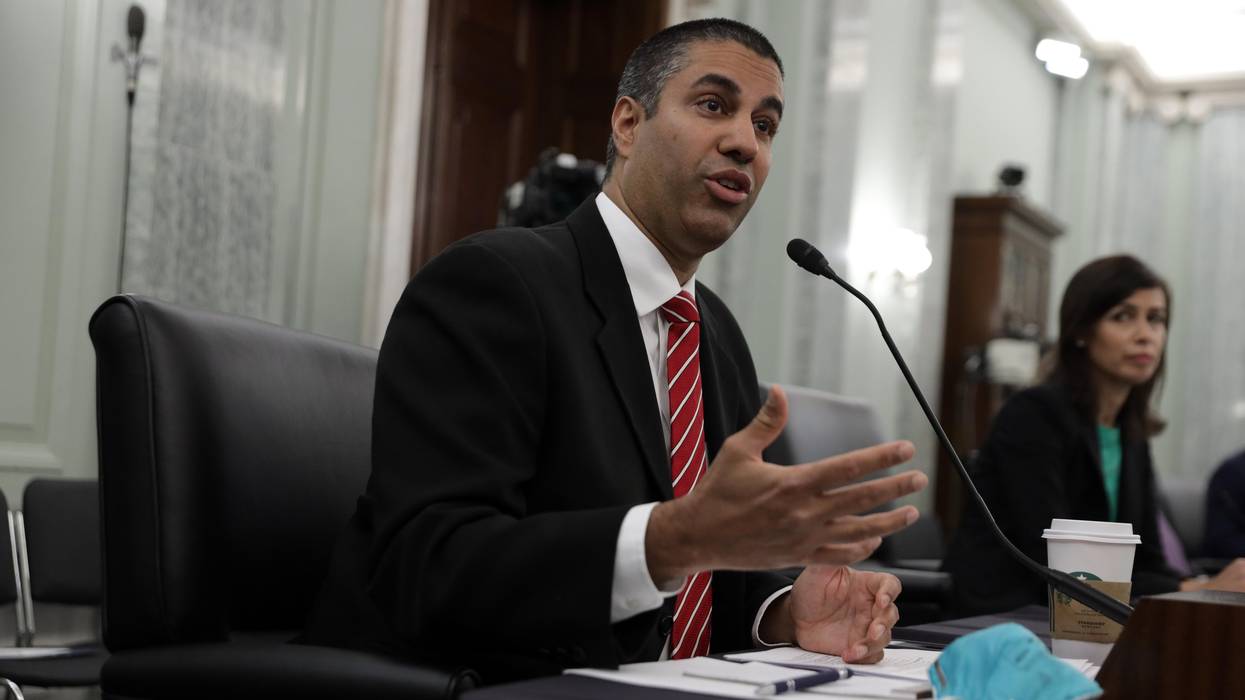
The Federal Communications Commission announced Monday a round of funding for new broadband deployments and its intention to "clean up issues" stemming from former chairman Ajit Pai's mismanagement of a program meant to bring connectivity to rural areas.
At issue is the Rural Digital Opportunity Fund. Adopted in 2020, the "program can do great things, but it requires thoughtful oversight," FCC Acting Chairwoman Jessica Rosenworcel, whom President Joe Biden tapped to lead the agency, said (pdf) in a press statement.
Under the leadership of Pai, who was appointed by former President Donald Trump, the FCC awarded 180 bidders contracts to expand broadband to underserved areas. Pai, in a December statement, touted (pdf) the auction as an "incredible success" and declared the program "the single largest step ever taken to bridge the digital divide."
Digital rights advocacy group Free Press dug in to those claims and the bids outlined by companies to help purportedly unconnected areas. The group found Pai's program was on track to be "one of the most wasteful projects in FCC history" in light of bids to cover "empty parking lots" and urban areas already well connected.
The FCC's Monday statement appears to reference the those findings and directs those who won grants to withdraw their requests if they don't meet the program's mandate:
In light of complaints that the program was poised to fund broadband to parking lots and well-served urban areas, the FCC sent letters to 197 winning bidders. The letters offer providers an opportunity to withdraw their funding requests from those places already with service or where significant questions of waste have been raised. Next, the FCC made clear that it will not tolerate any provider participating in the program that is not serious about providing broadband service or has not made appropriate efforts to secure state approvals. To this end, the FCC rejected requests from AB Indiana in Florida and LTD Broadband in California, Oklahoma, and Kansas to waive program deadlines, in light of their failure to act in a timely way to seek state certification.
Free Press noted Monday that Starlink--Elon Musk's satellite internet company--was among those receiving the new FCC letters.
"Concerns have... been raised that certain areas included in the Rural Digital Opportunity Fund auction are already served by one or more service providers that offer 25/3 Mbps broadband service or otherwise raise significant concerns about wasteful spending, such as parking lots and international airports," Starlink was told.
S. Derek Turner, Free Press's research director, welcomed the FCC's announcement as a sign of much-needed change at the agency and "close attention to the issues we originally raised at the tail end of the Pai FCC."
"While we have yet to fully review the series of recommendations and actions" the FCC announced Monday, Turner said that "it's encouraging that Acting Chairwoman Rosenworcel wants to get this right."
"In a rush to take credit for this program before his departure, Ajit Pai ignored early criticism and rapidly awarded money to the likes of Elon Musk for building broadband bridges to nobody," he added. Turner further accused Pai of wanting "to put a pretty bow on a bad process."
By contrast, Turner said that "under Rosenworcel, the FCC seems determined to do the due diligence that Pai skipped to ensure that federal money actually connects real people--as opposed to traffic medians--to affordable services."
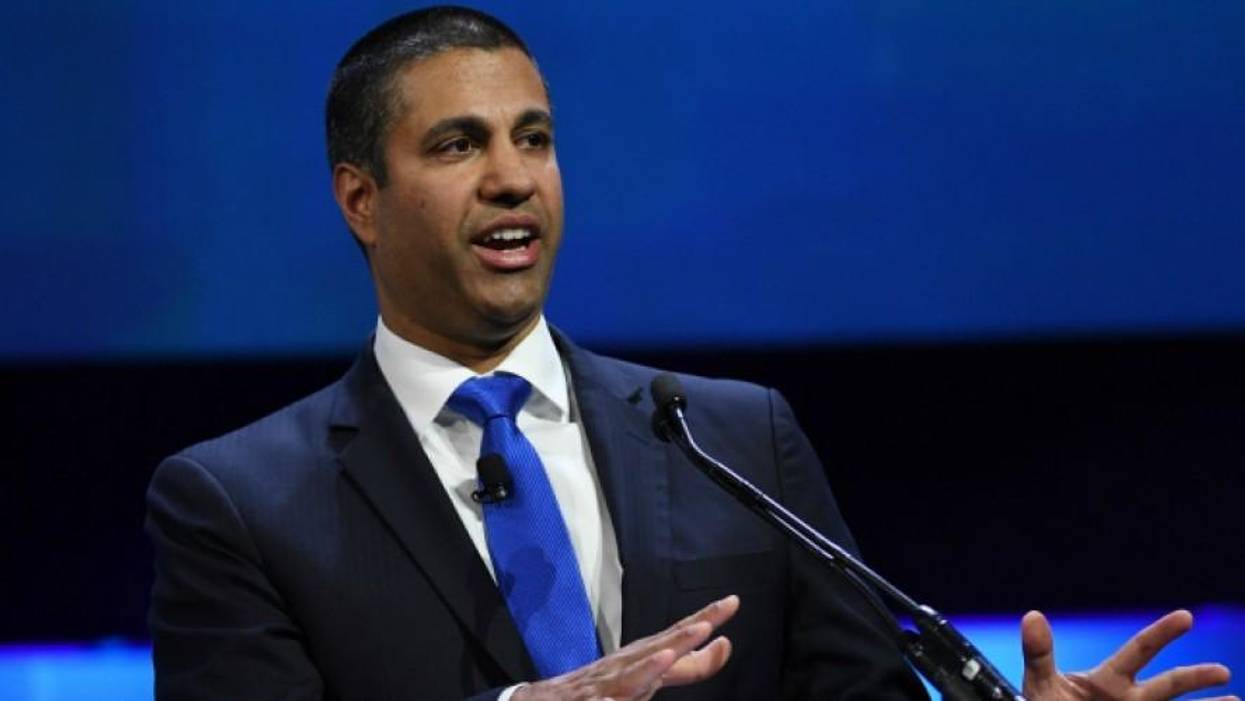
A coalition of nearly two dozen progressive advocacy groups launched a new campaign Thursday calling on President Joe Biden to fill the one remaining vacancy at the Federal Communications Commission with an official who is--at minimum--completely unconnected to the powerful telecom industry and fully dedicated to restoring net neutrality protections.
"The Biden administration has a historic opportunity to close the digital divide for millions, ensure net neutrality, and protect consumers against ISP abuses."
--Mark Stanley, Demand Progress
"The Biden administration has said getting people online during the pandemic is a top priority, and if that's the case we need a real champ appointed to the FCC, ASAP--someone who isn't beholden to big telecom companies because they used to work for them. The last thing we need is some Democratic version of Ajit Pai," said Caitlin Seeley George of Fight for the Future, referring to the former Verizon attorney who served as Trump's FCC chair.
Currently headed by acting chair and net neutrality champion Jessica Rosenworcel, the FCC is deadlocked with two Republicans and two Democrats thanks to the Senate GOP's rushed confirmation of Trump loyalist Nathan Simington during the lame-duck session in December. Journalist Karl Bode warned at the time that the GOP and Big Telecom were deliberately "trying to sabotage the Biden FCC" by ramming Simington through in the final days of the Trump presidency.
Mark Stanley, director of operations for Demand Progress, said Thursday that in order to reverse the severe damage the Trump-era FCC inflicted on the open internet by repealing net neutrality and paving the way for more corporate consolidation, Biden must ensure "a return to an FCC that is an empowered advocate for the public, not the telecom industry."
"The Biden administration has a historic opportunity to close the digital divide for millions, ensure net neutrality, and protect consumers against ISP abuses," said Stanley. "It is no longer a question of whether broadband internet access is an essential service. It is, and it is critical that Biden's nominee is someone who embraces this reality and supports Title II classification for broadband."
Progressives cheered Biden's decision in January to elevate Rosenworcel to the acting chair position, but the open internet coalition voiced concerns over some of the possible FCC candidates who have been floated in recent media reports.
The groups point to a January S&P Global story that mentions telecom attorney Edward Smith as a potential nominee for an FCC slot, a role that requires Senate confirmation.
"We desperately need a functional FCC now," the coalition says on its website. "Millions of people are without reliable Internet access in the midst of a pandemic, kids are sitting outside Taco Bell to do homework, and people need to access information about how to get a vaccine."
"The Biden administration," the groups add, "needs to nominate a fifth commissioner who doesn't have ties to the telecom industry and will stand up to the ISPs, who supports reinstating net neutrality, and who will expand broadband and ensure everyone--especially low-income neighborhoods and communities of color who have experienced the greatest harm by the digital divide--has affordable access to the internet."
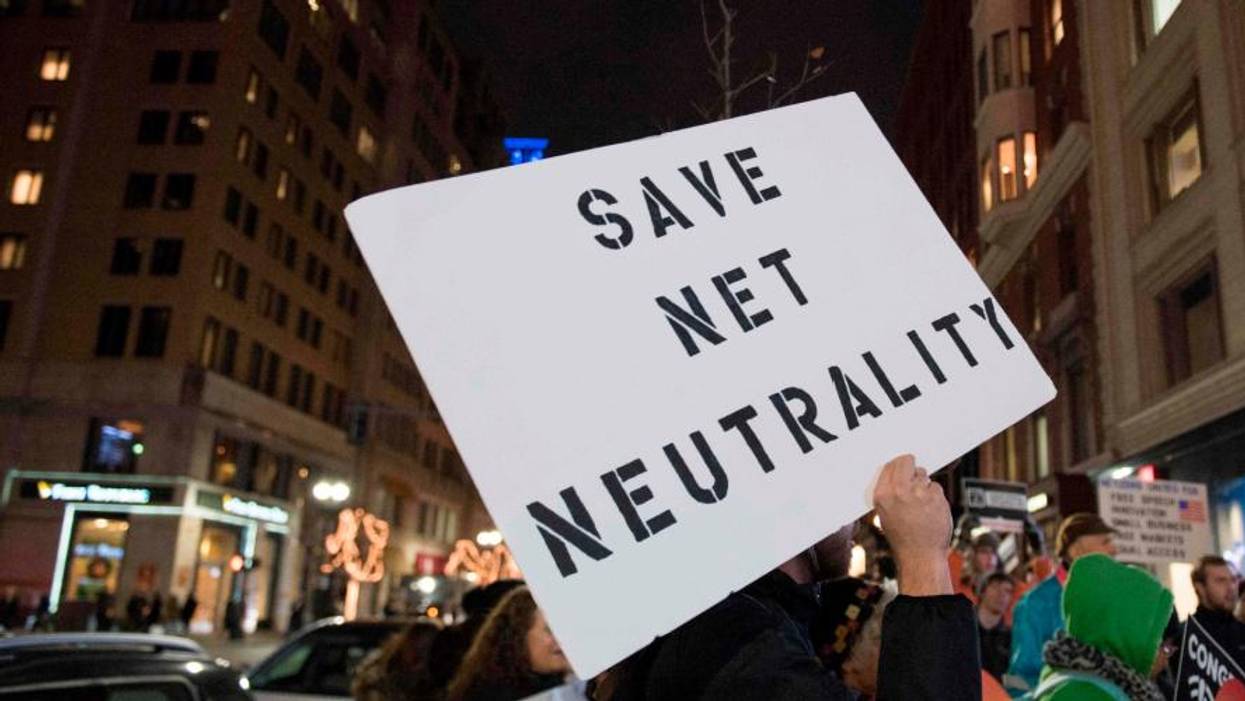
Defenders of the open internet celebrated a major victory late Tuesday after a federal judge ruled that a California law establishing strong net neutrality protections can take effect, a severe blow to the telecom giants that spent big money trying to kill the measure through aggressive lobbying and litigation.
The California state legislature approved the protections in 2018 after former President Donald Trump's Federal Communications Commission (FCC)--then headed by ex-Verizon lawyer Ajit Pai--voted to repeal national net neutrality rules in late 2017, opening the door to throttling and other telecom manipulation and degradation of internet service.
"They spent millions on lobbying. They drove misleading robo-calls to senior citizens. They propped up fake astroturf organizations, paid off an academic, and lied through their teeth. And they still lost."
--Evan Greer, Fight for the Future
In his ruling on Tuesday, Judge John Mendez of the U.S. District Court for the Eastern District of California rejected a telecom industry motion for a preliminary injunction against the Golden State's attempt to preserve and strengthen open internet protections in the wake of the FCC's rollback of federal standards.
"We applaud the court for affirming that California has the power to protect access to the internet, and that net neutrality is vital for healthcare, education, public safety, and economic growth," California Attorney General Xavier Becerra said in a statement. "This is an important victory for all Californians and for our democracy."
Brought in 2018 by four groups representing such telecom behemoths as Verizon, AT&T, and Comcast, the industry-led legal effort came on top of a lawsuit filed that same year by the Trump Justice Department. Earlier this month, the Biden administration withdrew the DOJ challenge, a move that Acting FCC Chair Jessica Rosenworcel celebrated as a key step toward restoring net neutrality nationwide.
America's Communications Association, CTIA, the NCTA, and USTelecom said they plan to review Mendez's ruling before "deciding on next steps," including a possible appeal.
Evan Greer, deputy director of Fight for the Future, said in a statement Tuesday that "telecom lobbyists used every dirty trick in the book to try to kill off California's gold standard net neutrality law" and voiced confidence that any appeal will fall flat.
"They spent millions on lobbying. They drove misleading robo-calls to senior citizens. They propped up fake astroturf organizations, paid off an academic, and lied through their teeth. And they still lost," said Greer. "That's because net neutrality is one of the most popular policies of the last century."
"People from across the political spectrum can agree that we don't want our cable and phone companies controlling what we can see and do on the internet, or killing off startups to solidify the monopoly power of Big Tech giants," Greer continued. "We've been saying it for years and we'll say it again: all you telecom lobbyists are bound to lose. Now we're one step closer to net neutrality being the law of the land."
California state Sen. Scott Wiener, the Democratic author of the net neutrality measure, celebrated the judge's ruling on Twitter.
"SB 822 is the strongest net neutrality law in the nation," Wiener wrote. "We worked incredibly hard to pass this law, overcoming massive corporate opposition. California can now fully protect an open internet."
Since Democrats took full control of the federal government last month, activists have been pressuring the Biden administration and congressional Democrats to restore net neutrality protections at the national level. Following Tuesday's ruling, Greer said Congress should use California's efforts as a roadmap and "ensure that any future legislative protections are at least as good as California's law--rock solid, with no loopholes for devious ISPs to abuse."
California is one of several states--including Washington and Oregon--that moved to institute their own net neutrality protections following the FCC's vote to repeal the federal rules in 2017.
As the Washington Post's Tony Romm reported last month, "Reinstating those protections [nationwide] may prove difficult for Rosenworcel and her Democratic peers, at least at first. The FCC, with two Democrats and two Republicans, is politically deadlocked, lacking a fifth member."
"The process of naming that fifth member of the FCC, either a new Democratic chair or commissioner, is likely to span months--preventing Rosenworcel from forging ahead as interim leader for the time being," Romm noted. "In the meantime, advocates said they plan to dial up the pressure, aiming to ensure Biden makes a pick who supports their cause and Senate Democrats act quickly to return the commission to its full strength."
In a statement last month after Democrats won control of the Senate, Greer argued that the party has "no excuse" not to "get to work right away protecting people's basic rights in the digital age."
"This means quickly confirming a new chair of the Federal Communications Commission who will restore net neutrality and ensure everyone has affordable internet access in the midst of a pandemic," said Greer.