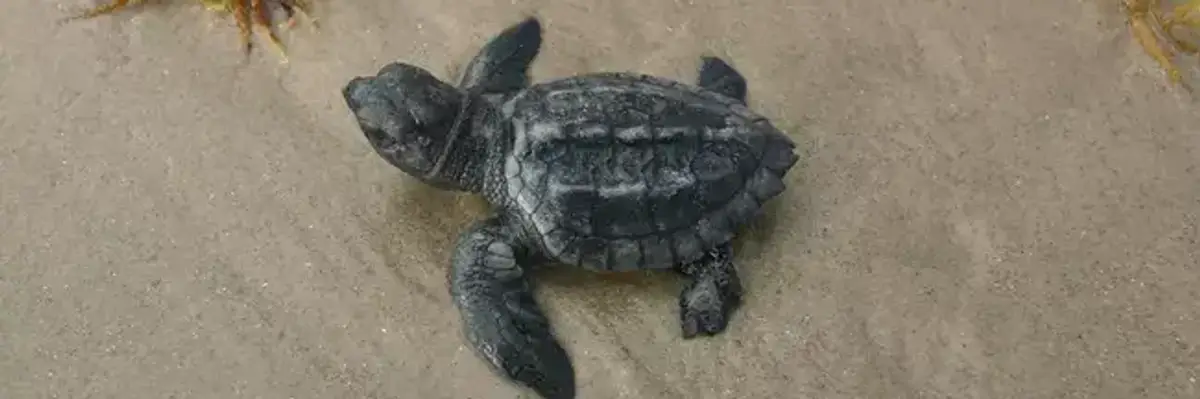
A Kemp's ridley sea turtle is seen after hatching.
Texas Made Me A Conservationist; the Trump Administration Is Undoing That Work
It's time for policymakers across the Gulf to oppose the Trump administration’s attempts to circumvent the protections of the Endangered Species Act.
In South Padre Island, sea turtle experts deemed this summer a record-breaking hatchling season with nearly 150 nests. I left Texas in 2015, but each year, the annual sea turtle hatchling releases call to my Texan heart and draw me back to my roots.
Those roots are disappearing.
Last month, the Trump administration formally cut back protections for endangered species. For 50 years, it has been illegal under the Endangered Species Act (ESA) to degrade or destroy the habitat of an endangered species. Now, a new rule removes protection for habitat that these species need to breed, feed, or shelter.
We are faced with national leaders stripping away the most basic protections for these fragile creatures that traverse the Gulf of Mexico.
The motive is clear: The Trump administration recently held its third oil and gas lease sale in the Gulf of Mexico, opening up deeper and riskier Gulf waters to habitat destruction and degradation from offshore drilling.
The administration is choosing profit over the planet.
This spring, federal officials convened a special panel and granted an extremely rare exemption allowing industry to ignore longstanding rules that protect sea turtles, the endangered Rice’s whale, manatees, and other marine life in the Gulf. The administration asserted that protecting our species is less important than feeding the wallets of the oil and gas executives. Meanwhile, while the administration blames our precious wildlife for jeopardizing national security, using defunct logic and irrational argument, it continues its war of choice in Iran. The hypocrisy is intentional, and even more importantly, fatal.
My family gathered on South Padre Island when I was a child, and the highlight of our visits was learning how local conservationists helped the sea turtle hatchlings. The turtles would come ashore to lay nests, and experts would monitor the nests and move them off the beach to keep them secure. Sometimes, if the babies hadn’t hatched yet, we would stay an extra day just to watch.
Those are the kinds of experiences that make a kid a lifelong conservationist, someone dedicated to caring for our planet. And that couldn’t be more important these days. Sea turtles and other endangered species in the Gulf can be easily killed by oil and gas exploration and other fossil fuel industry activity. And even when not deadly, vessel strikes can cause a condition in sea turtles that makes it hard for them to swim. That’s why the Endangered Species Act was created to ensure that industry would take reasonable measures to mitigate harm, including using quieter technologies, lower vessel speeds, and more.
The National Oceanic and Atmospheric Administration (NOAA) estimates that in the next four or more decades, the oil and gas industry will kill more than 38,000 endangered and threatened sea turtles in the Gulf. And that doesn’t even account for harm from expanding offshore leasing—something the administration signed into law and has continued to push for in its proposed offshore leasing plan.
We are faced with diminishing populations of some of our ocean’s most important species, but in the last few years, some of these species have been spotted in unexpected places, giving us hope for growth. In the last few years alone, Rice’s whales have been spotted on the Texas side of the Gulf, and manatees showed up in Houston. This would normally be cause to redouble conservation efforts and take pride in the work Texas is doing to save wildlife and protect our ocean.
Instead, we are faced with national leaders stripping away the most basic protections for these fragile creatures that traverse the Gulf of Mexico. A bipartisan group of former administration officials recently called for the Trump administration to repeal these harmful actions and restore habitat protections for endangered species.
Now more than ever, it is time for other policymakers across the Gulf to join this chorus and oppose the Trump administration’s attempts to circumvent the protections of the Endangered Species Act. The reward for our actions will be nothing insignificant—a healthy ocean and thriving species for generations to come, in Texas and across the globe.
We are at a crossroads
This country and this world are at a monumental crossroads. In a few short weeks, US voters will have an opportunity to beat back the forces of fascism and confront the billionaires who are rigging the economy, our media system, and our democracy, making it increasingly impossible for ordinary people to get by. We’re not just talking about the election. We’re talking about what must be done once these fascist elements are vanquished from power. We need a bolder set of solutions than what either major party has so far been willing to offer and a working-class movement ready to fight like hell for it. Trump didn't emerge from nowhere. The conditions that fueled MAGA authoritarianism were created by decades of radical neoliberal economic policies and a corrupt political system dominated by corporate interests. They slashed taxes on the super-rich, promising that the benefits would trickle down. They said giveaways to the corporate titans would make life more affordable for the rest of us. It was all bullshit. And when a bitter, betrayed populace searches for someone to blame, right-wing demagogues have little trouble finding scapegoats. People know when they're being lied to, but you won't hear any of this from the corporate media. Only independent journalism—powered and funded by people who believe in building a better world—can deliver truly trustworthy daily news. Our Fall Campaign is underway, and we need your help. To power our newsroom through the rest of the year, we need to raise $125,000 by midnight on October 31. So if you share our vision, please contribute whatever you can to sustain our work. |
In South Padre Island, sea turtle experts deemed this summer a record-breaking hatchling season with nearly 150 nests. I left Texas in 2015, but each year, the annual sea turtle hatchling releases call to my Texan heart and draw me back to my roots.
Those roots are disappearing.
Last month, the Trump administration formally cut back protections for endangered species. For 50 years, it has been illegal under the Endangered Species Act (ESA) to degrade or destroy the habitat of an endangered species. Now, a new rule removes protection for habitat that these species need to breed, feed, or shelter.
We are faced with national leaders stripping away the most basic protections for these fragile creatures that traverse the Gulf of Mexico.
The motive is clear: The Trump administration recently held its third oil and gas lease sale in the Gulf of Mexico, opening up deeper and riskier Gulf waters to habitat destruction and degradation from offshore drilling.
The administration is choosing profit over the planet.
This spring, federal officials convened a special panel and granted an extremely rare exemption allowing industry to ignore longstanding rules that protect sea turtles, the endangered Rice’s whale, manatees, and other marine life in the Gulf. The administration asserted that protecting our species is less important than feeding the wallets of the oil and gas executives. Meanwhile, while the administration blames our precious wildlife for jeopardizing national security, using defunct logic and irrational argument, it continues its war of choice in Iran. The hypocrisy is intentional, and even more importantly, fatal.
My family gathered on South Padre Island when I was a child, and the highlight of our visits was learning how local conservationists helped the sea turtle hatchlings. The turtles would come ashore to lay nests, and experts would monitor the nests and move them off the beach to keep them secure. Sometimes, if the babies hadn’t hatched yet, we would stay an extra day just to watch.
Those are the kinds of experiences that make a kid a lifelong conservationist, someone dedicated to caring for our planet. And that couldn’t be more important these days. Sea turtles and other endangered species in the Gulf can be easily killed by oil and gas exploration and other fossil fuel industry activity. And even when not deadly, vessel strikes can cause a condition in sea turtles that makes it hard for them to swim. That’s why the Endangered Species Act was created to ensure that industry would take reasonable measures to mitigate harm, including using quieter technologies, lower vessel speeds, and more.
The National Oceanic and Atmospheric Administration (NOAA) estimates that in the next four or more decades, the oil and gas industry will kill more than 38,000 endangered and threatened sea turtles in the Gulf. And that doesn’t even account for harm from expanding offshore leasing—something the administration signed into law and has continued to push for in its proposed offshore leasing plan.
We are faced with diminishing populations of some of our ocean’s most important species, but in the last few years, some of these species have been spotted in unexpected places, giving us hope for growth. In the last few years alone, Rice’s whales have been spotted on the Texas side of the Gulf, and manatees showed up in Houston. This would normally be cause to redouble conservation efforts and take pride in the work Texas is doing to save wildlife and protect our ocean.
Instead, we are faced with national leaders stripping away the most basic protections for these fragile creatures that traverse the Gulf of Mexico. A bipartisan group of former administration officials recently called for the Trump administration to repeal these harmful actions and restore habitat protections for endangered species.
Now more than ever, it is time for other policymakers across the Gulf to join this chorus and oppose the Trump administration’s attempts to circumvent the protections of the Endangered Species Act. The reward for our actions will be nothing insignificant—a healthy ocean and thriving species for generations to come, in Texas and across the globe.
- Trump Threatens 50 Years of Wildlife Protection With One Memo ›
- Conservation Groups Sue Over Trump Killing Habitat Protections for Endangered Species ›
- Lawsuit Launched to Protect 10 Species Left in Regulatory Purgatory by Trump Administration ›
- Outrage as Trump Blows Up Endangered Species Act Protection by Redefining One Word ›
- 'Historic Victory': Judge Blocks Trump's Big Bend Border Construction—For Now ›
- 'One-Way Ticket to Extinction': Trump Admin Again Guts Endangered Species Act ›