Then on Tuesday morning, Christiane Amanpour announced that after reporting for CNN for 43 years she’s leaving the network. While she didn’t mention nepo-baby David Ellison who now owns the network, she didn’t have to: back in May at a journalism summit in London she said she was “concerned” about Ellison ownership and how it might bring about the same kind of “ideological realignment” that he’d already imposed on CBS News.
What we’re seeing here with these two companies in microcosm is that the men who own the social media digital square where a near-majority of people get their news, and the people who own the TV networks and papers like The Washington Post, are the same handful of billionaires with political and financial axes to grind that fit nicely with Trump’s vision of a strongman state run by a ruling elite.
Whether it turns out that Meta did something for politics or it was just an error doesn’t change the fact that one company run by one man can switch off a national movement’s megaphone and doesn’t legally owe anybody an explanation.
(The good folks at Indivisible have a shocking list of egregious political insertions and manipulations by Facebook over the years that you can read here.)
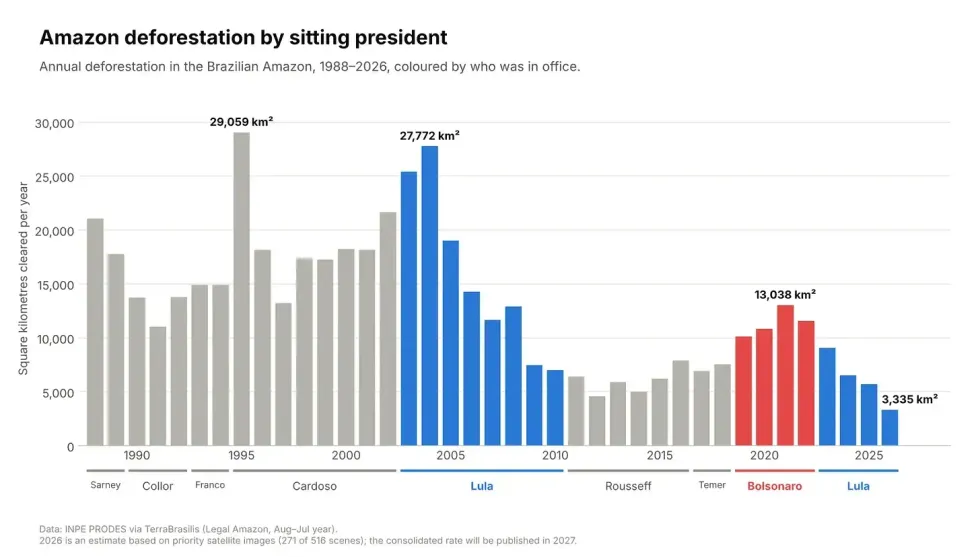
Down in Brazil, Facebook deactivated one of lefty Lula’s Facebook pages just before the election, leading a top judge in that country to rule that Meta can’t throttle political content, restrict searches, or remove posts in ways that create a political imbalance. Meta denies bias, but the AP notes they never explained why Lula’s channels were getting beat down on Facebook’s algorithm.
Here at home, after Trump worked out a TikTok deal with an investor group led by Larry Ellison, Gov. Gavin Newsom’s office said it had “independently confirmed instances” of suppressed content there critical of Trump.
TikTok says it’s a glitch, but a study published in Nature in May found TikTok’s algorithm had systematically favored Republican content in three swing states during 2024 when the Chinese—who Trump is courting—still largely owned the platform. Another Nature study this year found X’s feed measurably pushes users to the right so quickly that it just takes a few weeks of exposure to happen.
And this is nothing new. Back in 2017, Google rolled out a change to the news and opinion websites they were pointing people to that caused AlterNet, then one of the biggest progressive sites in the country, to lose 40 percent of its search traffic almost overnight, about 1.2 million readers a month, along with progressive sites Common Dreams, Truthout, and a dozen others.
No announcement, no hearing, no appeal.
After throttling comes self-censorship, which I watched Sunday night on CNN as a host gave a warm, friendly interview to a Republican congressman who told several easily debunked naked lies and she never called him on a single one. No memo from Ellison was necessary; Timothy Snyder calls it “anticipatory obedience.”
I’ve lived through this movie before. In late 2006, as Mitt Romney was leaving the Massachusetts governorship to run for president, his company, Bain Capital co-led a $26.7 billion leveraged buyout of Clear Channel, the radio network that carried Air America programming to around 90% of American households.
I helped start the network, wrote its first business plan, and was on its air, regularly beating Limbaugh in the ratings, and we helped get Obama into the White House. But when Bain took it over they started dropping us off their stations until, in 2010, we couldn’t sell enough advertising to stay in business. I can’t prove this was a sneaky trick by Romney or Bain, but that’s the point; we have virtually no rules or regulations to require disclosure to protect our public square.
Why are billionaires so interested in owning our social, on-air, and online media? Because regulating the conversation Americans can see and hear protects everything else they own.
Lewis Powell laid it out for the Chamber of Commerce in his 1971 memo, telling corporate America that television “plays such a predominant role in shaping the thinking, attitudes and emotions of our people” that business had better take it over.
It took them fifty years, Project 2025, and the internet to finish the job, but here we are.
— Zuckerberg paid Trump $25 million for having suspended his account after the January 6th attempt to end our democracy. Then when Trump came into office again Zuck scrapped fact-checking, and has been a regular visitor to the White House ever since. Common Dreams reports the Justice Department, just by coincidence of course, has since halted a federal probe of Zuck’s company.
— ABC paid Trump $15 million, Paramount paid $16 million over a 60 Minutes edit, and in June Trump approved the Ellisons’ $110 billion merger without demanding a single change. Even Gavin Newsom caved on that one, presumably for fear of offending the billionaires.
— Meanwhile Trump’s FCC chairman, Brendan Carr, has openly threatened broadcasters’ licenses over coverage of Trump scandals that he calls “news distortions.”
This is not only wrong, it’s ahistoric. From the founding of America, we’ve treated information systems as a public trust. George Washington’s administration, via the Postal Service Act of 1792, subsidized American newspapers with a special one-cent charge to deliver anywhere in the country while a letter could cost a quarter.
Washington and Madison understood that a republic can’t survive an ignorant or misinformed citizenry.
The result of that act was that between 1783 and 1820 we went from 73 newspapers in America to over 620.
Telegraph lines, also privately owned, were made “common carriers” by legislation that required them to carry everybody’s messages at the same rate.
Radio and television broadcasters got their licenses in exchange for serving what the Fairness Doctrine called “the public interest, convenience and necessity” which was generally enforced as requiring honest news reporting hourly on radio and during primetime on TV. Reagan killed that in 1987 and fast-tracked Rupert Murdoch’s citizenship, paving the way for Fox “News.”
But then the neoliberals got into their deregulation act. Bill Clinton signed the 1996 Telecommunications Act, which erased the national cap of 40 radio stations per company.
Clear Channel exploded from 40 stations to nearly 1,200. In 2017 Trump’s first FCC chairman, Ajit Pai, repealed the rule that kept one company from owning the newspaper and the TV station in the same town, by coincidence the same year Google buried AlterNet.
And Section 230 of that law made it so that while newspaper publishers can still be held responsible for the content of their publications, owners of social media can’t be. At the time, Nigel Peacock and I were making a good living moderating content for CompuServe; all that went away when they no longer needed to care if there were drug sales or human trafficking on their sites.
What’s truly astonishing is that the internet itself was built by our government (DARPA and the National Science Foundation) with our tax dollars; these oligarchs who lord over our content today didn’t build this public square, they simply appropriated it and now insist it’s their private property.
The internet, in fact, is the first vehicle for the widespread dissemination of information since George Washington’s day that hasn’t been subject to any meaningful form of regulation or blocking of monopolies.
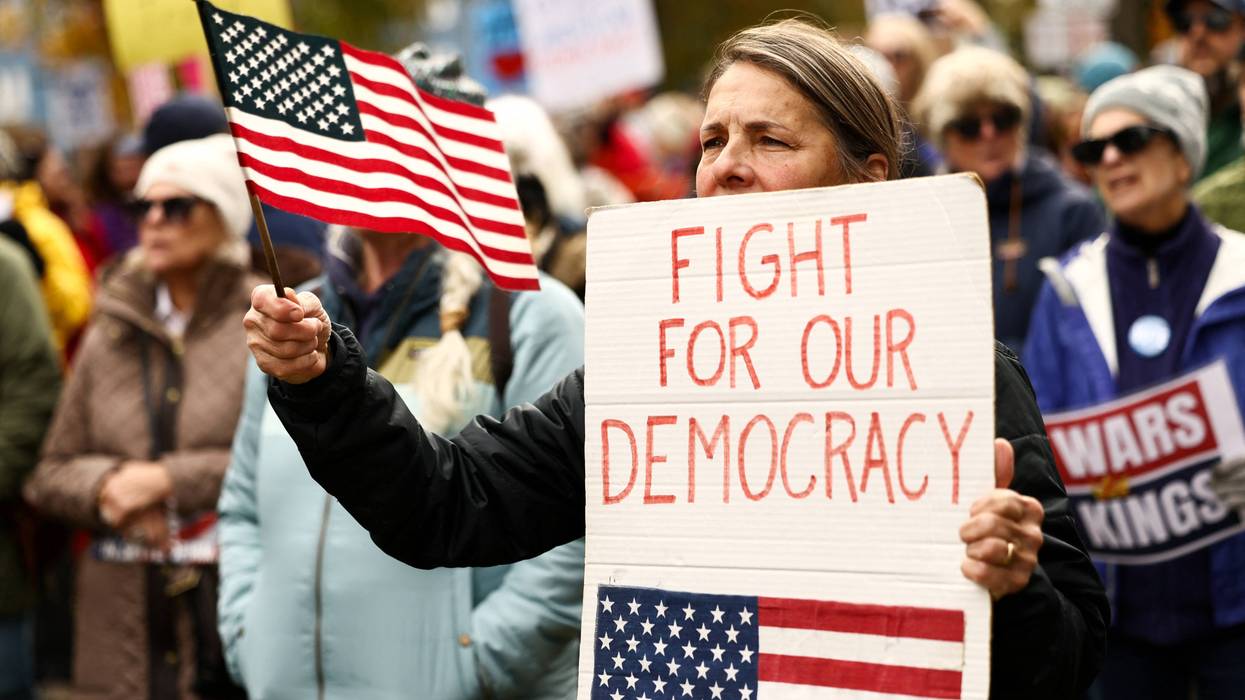
John Sherman, when he wrote the antitrust law that bears his name in 1890, put it in words that could have been found on a No Kings sign this past weekend:
“If we will not endure a king as a political power, we should not endure a king over the production, transportation, and sale of any of the necessaries of life.”
As I laid out in The Hidden History of Monopolies: How Big Business Destroyed the American Dream, Robert Bork and the Reagan Justice Department rewrote that law into meaninglessness.
While pre-Reagan we had enormous diversity in media ownership and every downtown and mall was filled with small local businesses, forty-five years later there’s not a single significant industry in America that’s not dominated by a small handful of companies that typically behave like cartels, our media is in a half-dozen hands, and our downtowns and malls are nothing but big national chains.
Sherman’s law being gutted by Reagan and subsequent neoliberals is the only reason the Ellisons, Zuck, Musk, and Alphabet can own so much of our nation’s information system and exercise such extraordinary power over public opinion and elections.
There are some quick and easy solutions:
- Break up the empires with reinvigorated anti-trust laws.
- End Section 230 so social media owners have responsibility for what’s on their platforms.
- Restore the statutory cap on how many news outlets a single company or family can own.
- Require algorithms that manipulate our feeds to be publicly disclosed, and that people can get a non-algorithmically modified feed if they want.
And then there are some truly transformational bigger solutions that America could consider:
- Create a 21st century Digital Postal Services Act that establishes a publicly-owned, publicly financed, independently governed national social network, with no advertising, no billionaire owners, no political manipulation of feeds, and no selling personal information. Call it the United States Digital Postal Social Service, with constitutional protections against government censorship and surveillance.
- Establish a “right to digital exit” where you own all the information about you that the social media sites have collected (followers, contacts, photographs, posts, and social connections), with the power to edit, remove, or take them to a different site. You can change phone companies and still call your friends; why not the same with social media?
- Prohibit advertising based on sensitive personal information and cross-site behavioral surveillance, while still allowing contextual advertising and subscriptions. This could restrict political microtargeting and secret tailoring of messages to different voters.
- Codify a democratic right to reach your own followers, so your messages (other than spam, fraud, threats, harassment, and illegal material) aren’t limited, shadow-banned, or otherwise manipulated by the social media site’s ownership.
- Outlaw government contractors from owning social media sites that they can use to promote their own interests that are, essentially, being funded by our tax dollars.
We don’t let Elon Musk own the Interstate Highway System, or Mark Zuckerberg own the Postal Service, or Larry Ellison own the streets and sidewalks where Americans gather to protest.
Why, then, do we let them have such extraordinary control over the “digital streets and sidewalks” where Americans increasingly gather, organize, debate, and learn about the world?