EMAIL SIGN UP!
Most Popular This Week
Popular content
Today's Top News
To Curb Climate Change, We Need to Protect Water
An International Rescue Plan for Fresh Water
It is widely acknowledged that greenhouse gas emission-fueled climate change is having a profound and negative impact on fresh water systems around the world. Warmer weather causes more rapid evaporation of lakes and rivers, reduced snow and ice cover on open water systems, and melting glaciers.
What is less understood is that our collective abuse and displacement of fresh water is also a serious cause of climate change and global warming. If we are to successfully address climate change, it is time to include an analysis of how our abuse of water is an additional factor in the creation of global warming as well as solutions that protect water and watersheds.
There are two major factors. The first is the actual displacement of water from where it is sustaining a healthy ecosystem as well as healthy hydrologic cycles. Because humanity has polluted so much surface water on the planet, we are now mining the groundwater far faster than it can be replaced by nature. New Scientist reports of a "little-heralded crisis" all over Asia as a result of the exponential drilling of groundwater. Water is moved from where nature has put it in watershed and aquifers (where we can access it) to other place where it is used for flood irrigation and food production - where much of it lost to evaporation - or to supply the voracious thirst of mega cities, where it is usually dumped as waste into the ocean.
Water is also lost to ecosystems through global trade - water used in the in the production of crops or manufactured goods that are then exported (known as virtual trade in water). Over 20% of daily water used for human purpose is exported out of watersheds in this way. Water is also piped across long distances for industry leaving behind parched landscapes.
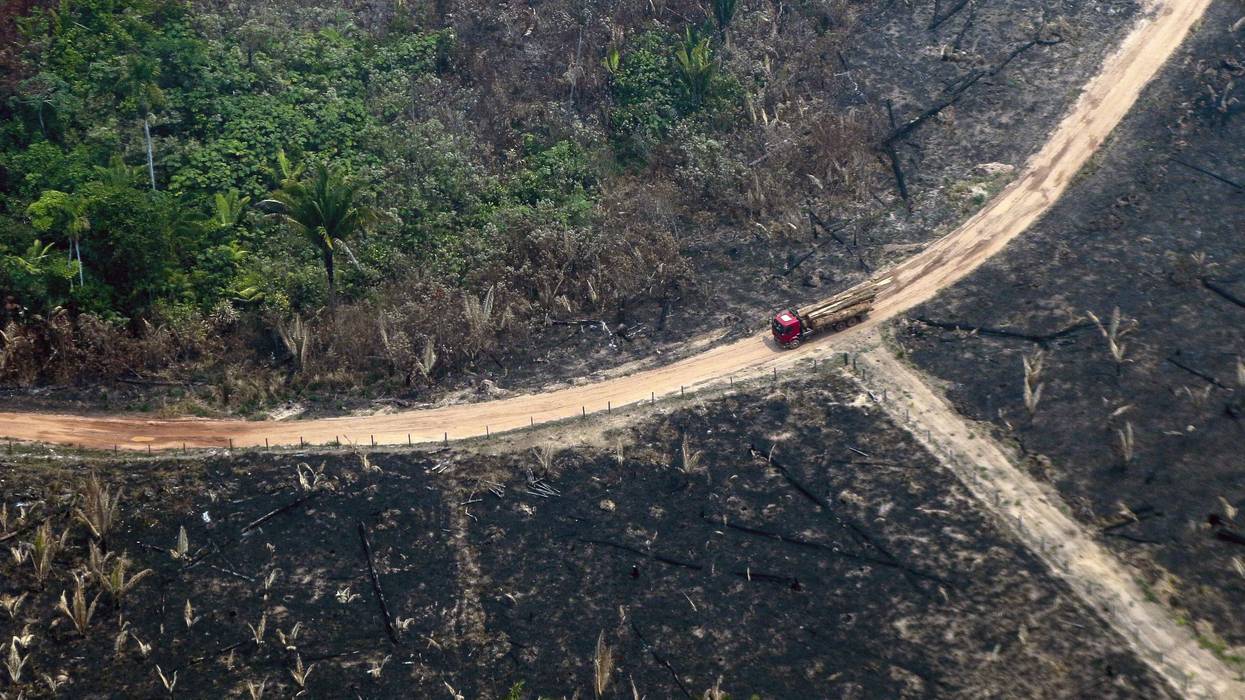
The second factor is the removal of the vegetation needed for a healthy hydrologic cycle. Urbanization, deforestation and wetland destruction greatly destroy water-retentive landscapes and lead to the loss of precipitation over the affected area.
Slovakian scientist Michal Kravcik and his colleagues explain that the living world influences the climate mainly by regulating the water cycle and the huge energy flows linked to it. Transpiring plants, especially forests, work as a kind of biotic pump, causing humid air to be sucked out of the ocean and transferred to dry land. If the vegetation is removed from the land, this natural system of biosphere regulation is interrupted. Soil erodes, reducing the content of organic material in the ground, thus reducing its ability to hold water. Dry soil from lost vegetation traps solar heat, sharply increasing the local temperature and causing a reduction in precipitation over the affected area. This process also destroys the natural sequestration of carbon in the soil, leading to carbon loss.
Of course, these two factors are deeply related. Just as removing vegetation from an ecosystem will dry up the soil, so too will removing water from an ecosystem mean reduced or non-existent vegetation.
Taken together, these two factors are hastening the desertification of the planet, and intensifying global warming. Even if we successfully address and reverse greenhouse gas emissions and our dependence on fossil fuels, Kravcik says, we will not be able to stop climate change if we do not deal with the impact of our abuse of water on the planet.
Unless we collectively address the crisis of fresh water and our cavalier treatment of the world's water systems, we will not restore the climate to health.
Restoration of Watersheds
The solution to the water half of this crisis is the massive restoration of watersheds. Bring water back into parched landscapes. Return water that has disappeared by retaining as much rainwater as possible within the ecosystem so that water can permeate the soil, replenish groundwater systems, and return to the atmosphere to regulate temperatures and renew the hydrologic cycle. All human, industrial and agricultural activity must become part of this project, which could employ millions and alleviate poverty in the global South. Our cities must be ringed with green conservation zones and we must restore forests and wetlands - the lungs and kidneys of fresh water. For this to be successful, three basic laws of nature must be addressed.
1) It is necessary to create the conditions that allow rainwater to remain in local watersheds. This means restoring the natural spaces where rainwater can fall and where water can flow. Water retention can be carried out at all levels: roof gardens in family homes and office buildings; urban planning that allows rain and storm water to be captured and returned to the earth; water harvesting in food production; capturing daily water discharge and returning it clean to the land, not to the rising oceans.
2) We cannot continue to mine groundwater supplies at a rate greater than natural recharge. If we do, there will not be enough water for the next generation. Governments everywhere must undertake intensive research into their groundwater supplies and regulate groundwater takings before these underground reservoirs are gone. This may mean a shift in policy from export to domestic and local production.
3) We must stop polluting our surface and groundwater sources - and we must back up this intention with strict legislation. Water abuse in oil and methane gas production and in mining must stop. We must wean ourselves of industrial and chemical-based agricultural practices and listen to the many voices sounding the alarm about the rush toward water-guzzling bio fuel farming. We need to promote "subsidiarity," whereby national policies and international trade rules support local food production in order to protect the environment and promote local sustainable agriculture. Such policies also discourage the virtual trade in water. Countries should also limit or ban the mass movement of water by pipeline. Government investment in water and wastewater infrastructure would save huge volumes of water lost every day. Local laws could enforce water-harvesting practices at every level.
Toward a Water Secure World
Clearly, for this rescue plan to be successful, governments around the world must acknowledge the water crisis and the part the role water abuse plays in the warming (and drying) of the planet. This in turn means that a nation's water resources must be considered in every government policy at all levels. Nations must undertake intensive studies to ascertain the health of watersheds and groundwater reserves. All activities that will impact water must conform to a new ethic - backed by law - that protects water sources from pollution and over-pumping. This will likely mean a strong challenge to government policies that favour unlimited global economic growth.
Nearly two billion people live in water-stressed regions of the earth. Until now, the UN has addressed this terrible reality with a program to give them access to groundwater sources. But current levels of groundwater takings are unsustainable. To truly realize the universal right to water, and to protect water for nature's own uses, means a revolution in the way we treat the world's finite water resources. There is no time to lose.
- Posted in
Comments
Note: Disqus 2012 is best viewed on an up to date browser. Click here for information. Instructions for how to sign up to comment can be viewed here. Our Comment Policy can be viewed here. Please follow the guidelines. Note to Readers: Spam Filter May Capture Legitimate Comments...


32 Comments so far
Show AllMichal Kravcik seems to verify a theme in Jared Diamond's Collapse. It is precisely for the reasons outlined here that the practice of mountaintopping in WV is so insideous. The valley fills of overburden (often toxic to biosystems) are most often in the upper reaches of the dendritic drainage system, those areas where much of the most important work of producing "fresh" water occurs.
Add to this the desertification under way by the mines themselves. Make no mistake, Old King Coal has no intention of reclaiming those operations to any degree of sustainability for the previously indigenous species. Also, as the author notes these large open sores can consolidate an effect that eventually alters regional climate and hydrological cycles.
Having grown up amid the large area mining of Eastern Ohio I know that even though this region is still blessed by consistent plentiful rainfall and nature does revegetate what we have so shamelessly disregarded, it does so in the toxic or sterile medium of rock that was safely buried under the thin skin of thousands year old soil. What grows is opportunistic, invasive, much reduced in diversity, and for the most part commercially useless.
". . . a nation's water resources must be considered in every government policy at all levels. Nations must undertake intensive studies to ascertain the health of watersheds and groundwater reserves. All activities that will impact water must conform to a new ethic - backed by law - that protects water sources from pollution and over-pumping. This will likely mean a strong challenge to government policies that favour unlimited global economic growth."
Is any government anywhere on earth doing anything but lip service and political posturing on this issue? The "unlimited global economic growth" backers still run things and will continue to do so until there is a water-driven humanitarian crisis, which they seem to believe won't affect them personally.
Let's see now. Hemp saves water while corn guzzles water. Ah, but it's that War on Drugs that's getting in the way. Sorry Ms. Barlow but we Americans are dingbats to snap out of corn for fuel and get rid of the ban on hemp.
To prove that hemp saves water, let me be the first to say that I packed us a couple of hemp protein packs and we didn't get thirsty in India even when the temperature was in the 90s.
FOOD CHAIN
Man, the top, the pinnacle, the key link in the chain of life of this planet that has a closed system, there is no where else.
Should not this give us pause and reason to be as caretakers and guardians because nothing is limitless?
When we take all the oil and gas out of the earth, which are our cushions, shock absorbers and we get changes what will give us a chance when all is so unmoving and rigid ?
Wood is useful, nice to look at but it does not produce oxygen to breath but trees do, will we over cut trees and cut our own throat to please our selves.?
This includes trees from all over the world , can we really believe that when we rape any part of the world, in this enclosed system , that we can escape the consequences?
Deserts , are they an ecological balance or are they what is left when we at the “ top of the food chain “ use the mantra of we will subdue ?
What ties all this together?Water
This is just part of the situation as it stands today . There is more .
Tony
Tony I would have responded sooner but went to find the address pasted here. A fairly long article detailing the efforts of those that battled against the mining industry in Ohio beginning in the 40's in the name of stewardship, beauty, and community. They addressed all those issues perinent to today's argument. The article I believe is a chapter in a book by Chad Moncriff about Appalachian Coal History.
http://publications.ohiohistory.org/ohstemplate.cfm?action=detail&Page=011144.html&StartPage=44&EndPage=&volume=111¬es=&newtitle=Volume%20111%20Page%2044
>>>Water is also lost to ecosystems through global trade - water used in the in the production of crops or manufactured goods that are then exported (known as virtual trade in water). Over 20% of daily water used for human purpose is exported out of watersheds in this way.
Export of virtual water - through crops and manufactured goods is especially a sinister and insidious way of exploiting poorer countries that are already facing a critical shortage of fresh water. It is insidious in more ways than one - but particularly due to the undemocratic manner in which globalized trade works. Exports from poorer countries are handled by the elite within their own countries, and any benefit from exports will FIRST go to these people, and only a small fraction may trickle down to those who actually work the farms. Diversion of farmland and water for export-oriented production invariably raises food prices. In a country like India, it adds to the inequalities. India has even started exporting dairy products - in the form of dried milk powder - to the European Union, of all places! I have seen fruits and vegetables exported from China to North America. I don't see the logic of countries with such huge populations, where there is a shortage of fresh water, exporting food to countries that are somewhat overabundant when it comes to water and food availability - all for what? For foreign exchange, which is then used to buy anything from petroleum to cars and electronics - again benefiting the elite first. Just as western countries exploit third world countries, the elite there exploit others within their own countries. The link between virtual water export and exploitation of the poor must be talked about - because it's a hidden form of injustice.
I take it that you live in India. My wife and I had a chance to visit India. The roads are definitely horrible and are in need of major repair before dumping in more cars. That aside, I have something to say about powdered milk and exporting it. I do agree that exporting it for the benefits of the elites on both sides of the trade is despicable but you must understand that the USA is a nation of dingbats when it comes to agriculture and factory farming. If you are familiar with AMUL, you probably know that unlike the diary industries in the USA, AMUL actually does its diary business differently in that it collects grass fed diary products from the village on up. Even their ghee and dried milk powder are healthy in sharp contrast to butter and milk powder in the US which comes from cows tortured with corn and antibiotics.
Now let's see, grass compared to corn takes up far less water so in essence India's diary products are much healthier. This may be a sin and totally unAmerican of me but when I get back to the USA, I will remember to buy more AMUL diary products where possible. I can hardly wait to make my next pizza with AMUL cheese.
To solve the trade problem, India must reduce dependence on petroleum by switching to hemp and algae. Neither of them are illegal there unlike the USA where hemp (Hemp protein powder kept me from getting thirsty in India) is illegal to grow and cultivate and algae development is being stifled. That should be a strong start towards reining in those elites on both sides. Good luck.
maxpayne, no I don't live in India, but I am quite familiar with Amul - I have even visited one of their dairy plants in Anand, Gujarat, several years ago as part of a project on energy efficiency. I have to completely disagree with you on the issue of dairy export from India, and I don't use the word 'insidious' loosely. Please hear me out:
Amul (which actually stands for Anand Milk Union Limited) was part of, and the icon of the so-called "white revolution", which closely followed India's "green revolution" in the 1960's. These "revolutions" not only came with mixed blessings, but are proving to be completely unsustainable, and it's time to rethink the whole strategy. Amul was clearly a great example of a great co-operative system, which has since been replicated for other products in many parts of India. I have long admired the man behind this movement, Dr Verghese Kurien. However, I must caution anyone against drawing simplistic conclusions based on one-sided information.
First of all, milk production in India today is NOT based on the traditional model - where cows and bulls enjoyed a synergistic relationship with the farmer and agriculture in general. Cows gave milk, yogurt and ghee, and the bulls were used as draught animals for plowng and pulling carts. Surplus milk sold to the towns and cities gave an extra income for the farmer. This model was fine only so long as milk production was a secondary economic activity. I use the past-tense here because, in its rush to modernization and its compulsion to meet its food requirements, India made certain choices - all of which CANNOT be justified today, knowing what we know today. One of the choices was to import cattle from Europe and Australia (and possibly North America - but I don't know) that were clearly bred for maximizing milk production. These breeds of cattle CANNOT be used as draught animals - they lack the hump, for one thing, and they don't survive in the heat, doing all that work, like the indigenous breeds. Cows from indigenous breeds are routinely inseminated with semen from these imported breeds, and I know this for a fact. When the cow yields a male calf, it is not of much use to the farmer - unless he wants to retain one or two for insemination purposes, and you don't need too many of them. Besides, government veterinary clinics do a decent job of maintaining these bulls and farmers can take their cows there for insemination - I have seen this done in the southern state of Tamilnadu. The rest of the male calves are sold within the first year or so, invariably for beef or for leather. (As an aside, when Hindus from India say they don't eat beef, that's only technically true - because their consumption of dairy directly results in the slaughter of a large number of male cattle, and I don't see any of them volunteering to pay for care of the bulls or even the cows after they stop yielding milk; when cattle population was not so huge like today, there was the option of sending such 'non-productive' cattle to live out their lives in temple lands - but such lands are nowhere near enough to take in millions of cattle; so once they stop providing revenue, they need to be slaughtered - though the Hindus may not eat them).
Grass-fed or not, tortured or not, cows need water. The state of Gujarat has a large dairy industry, but it is also extremely short of fresh water. However, using their political clout, politicians in Gujarat and the nearby state of Madhya Pradesh have rammed through the construction of dams and canals to tap the water of the river Narmada - against tremendous opposition by the villagers and tribals whose homes and traditional farmlands were submerged, and the people displaced. This is a classic case of arrogance and class domination by those who can (supported by the state) against those that are vulnerable. The height of this arrogance is the sale of the "surplus" water from the Narmada river by the Baroda Milk Dairy (also in Gujarat) by bottling it. Since you may or may not be familiar with the geography of that region, it's somewhat like Israel deciding to sell the "surplus" water from the Jordan river - I don't know if Israel already does that, but one place it WILL find support if it chooses to do so, is in the state of Gujarat. By the way, Gujarat is also the birthplace of a man called Mohandas Gandhi - who has been so completely dumped by the elite in various parts of India, but especially in his home state.
I said, grass-fed or not, cows need water - as much as 1000-liters of water to produce one liter of milk. And one liter of milk can produce about 200-grams of milk powder - so one kilogram of milk powder needs about 5,000 liters of water. To produce one kilogram of cheese, about 10,000 liters of water is needed. There is simply NO WAY to get around these basic requirements of fresh water - even though the exact quantity of water would depend on the process conditions, but close to these numbers.
"White Revolution" seemed like a good idea at one time, before its implications on water use became apparent. Right now, the use of water in India is completely undemocratic - those who have the muscle power and money power (readily translated into political power) can grab this common resource, leaving others to face the scarcity.
(continued below)
(continued from above):
Here's an important thing to remember about the so-called "grass-fed" cows: if your objective is milk production (for income) and/or beef production, "grass-fed" alone is NOT going to cut it. Any farmer in India can tell you that there is simply not enough grass to go around. Cows will HAVE TO BE supplemented with cattle-feed, particularly protein-rich feed - in the form of oil cakes (what's left from oil seeds after extracting oil), cotton seeds, etc. - traditionally, and additionally, soybean-based feed today. This means that land and water have to be used for the purpose of producing cattle feed. India is not a settler country like much of North & South America, Australia and New Zealand. There are NO *vast* pastures and ranches that are available for cattle grazing alone. The only sustainable model was the traditional model - where milk production was a secondary activity, and not a primary activity. And exporting it is completely unsustainable results in greater inequality within the country. And we are not even talking about climate change here. I don't know the figures for import of livestock feed by China and India - or where they come from, and whether that is causing deforestation - but it will be interesting to find out. And this whole problem arises from the highly questionable premise that dairy consumption is good for health.
Ok, so there may not be enough grass to grow but it sure beats torturing cows with corn feed and antibiotics. Someone once mentioned on this site that grass fed diary is more nutritious and won't have you coming back for more compared to the conventional corn based diary. But why not grow plenty of hemp and allow the cows to feed off that? Hemp is a great source of protein too and in some ways superior to grass. Hemp and lentils are the best saviors for vegans who need sufficient protein. A spoonful of hemp protein powder to add to a plastic bag of milk kept me standing tall and strong in the midst of the heat and I'm told to wait until March to see the bigger heat pouring in.
Do a google search on hemp. It already boggles me that despite hemp being used in the past throughout Asia, today's younger people in India and Japan give me a bewildered look when I mention it. I'll be visiting China soon to see where they're at on hemp.
P.S.: I forgot to mention one thing about petroleum. Those whitening facial cremes annoy me and it's terrible to see people of color throughout the continent of Asia trying to whiten themselves like this when all these cremes will do is seriously poison their skin more than anything. I was equally disgusted with the way they portray lighter skinned people in shows and commercials over people of color. If you think racism in the USA is bad enough, check it out in the Far East. And this is what they trade their labor for? Very sad !
maxpayne, I'll try to read up on hemp - thanks for the tip :) Yes, I know that lentils (there are various kinds available), beans, etc., used in the traditional diet in many countries are sufficient to supply the protein requirements of ANY human being. I also know from experience that people will insist that they have tried being a vegan and it did't work for them. I don't argue if someone says a vegan diet didn't work for them *personally*, but I can always argue if they say vegan diet has limitations in general :)
Since you mention your travel through India, I have to say - dietary habits are fast changing in India - especially in urban areas, and I can't say it's for the better. Oh yes, about the fascination with lighter skin - it's unfortunate, but not my area of specialty though ;) But I did notice that Koreans take great care on their appearance, and possibly spend a bit of money, too, on cosmetics. The USA is called "mi-guk" in the Korean language, meaning, "beautiful country".
Speaking of Koreans, not only do people there poison themselves with these fraudulent skin "lighteners" but racism is much worse in the Koreas than you would find in the USA. Someone wrote this about South Korea 2-3 months ago.
http://www.asian-nation.org
/headlines/2009/11
/racial-attitudes-discrimination-south-korea/
And here's another disturbing one:
http://www.nytimes.com/2009
/11/02/world/asia/02race.html?_r=1
Other than that, I am positive that I will find a great deal of pluses in the Koreas to offset this.
Wow...that's unfortunate, but hopefully it's far from any violent expression. I was reading a small book (actually booklet?) based on interviews with Noam Chomsky where he talks about racism. He says that it basically has to do with conquest and oppression, and then people find something that is different about the 'other' people to justify their action. Your first link above mentions a Korean marrying a German guy and how the relatives thought it was a good thing. I actually know a couple like that - a Korean woman and a German guy. I wonder if it's the same couple :) Anyway, we've digressed enough - so catch you on some other thread :)
"Al" 'n' "Max"...
A tip 'o the hat to the both of you for allowing us to witness an event too often lacking in non-CD comments sections: a civil, reasoned exchange.
Ray
Thanks Ray, but I assure you, any civility you may have noticed was unintentional :D
Alcyon I followed the discussion you had with Maxpayne below. As someone who is knowlegable about India I wonder if you could answer something for me. Many years ago I read a book called An Agricultural Testament that my parents acquired eons ago from Rodale Press. That book detailed efforts to compost and reuse human waste in India. The author (my library is boxed up during this renovation and I don't recall his name) wrote his thesis from efforts that occured in the early 1900's. Is there any vestige or evolution of those early efforts there?
Justaman, I'm not so familiar with any specific program on composting human waste, but I have heard about producing biogas from human waste through anaerobic digestion (not much different from biomethanation of cow dung, which is quite common throughout India. Biogas from cow dung is actually called "gobar gas", and there are at least two design variations - 'fixed dome' and 'floating dome' that I have seen.) I also imagine that the solid residue from these biogas plants is used as fertilizer. Personally, I think this approach is better - that is, to first recover useful energy in the form of methane gas for use as fuel, through anaerobic digestion, and then use the solid residue as fertilizer, instead of direct composting.
Direct composting does take place throughout India - although without thinking of it as such, since there are parts of India where rural households lack toilets - people just 'go' in the woods - not in their farms, but in areas adjoining their farms and houses. But the climate being generally hot, the stuff dries pretty quickly, and insects (not bacteria, but insects) break it down further, so there's almost no trace of it within a day or so. Some state governments have subsidies for construction of toilets. Rural areas are that poor, and governments have not invested in sewage lines or other such infrastructure in rural areas. There really are two India's - one in the cities and one in the villages, largely invisible, but proud, nevertheless. So proud, that farmers who cannot repay loans of $2,000 commit suicide. Sorry to digress, but this is the other side of globalization where old inequalities get solidified and institutionalized.
Indians in general do not like to use toilet paper - they prefer to use water, instead. This may be true for Asia in general. I have seen and used automatic water jet systems in Japan and Korea - cleaning is hands-free :) I thought that was pretty neat, and one such unit was advertised for under $400 in Korea! Since most cities and towns are fairly crowded in India, I think composting may be impractical. In rural areas where there are no sewage lines, people build septic tanks, and septic tank cleaning trucks are just a phone call away in many places. Another aspect that's not talked about in India is the use of manual labor to clean and cart away human waste in parts of India, and the people who do this job are invariably from the so-called lower caste. There is much more awareness of this practice, and much has improved in recent decades, mainly through the efforts of one man, Dr. Bindeshwar Pathak, whose Ph.D. topic was "Liberation of Scavengers Through Low-Cost Sanitation". The organization he founded is called "Sulabh International", and according to Wikipedia, "is an Indian based social service organization which works to promote human rights, environmental sanitation, non-conventional sources of energy, waste management and social reforms through education."
Thanks for your reply. " An Agricultural Testiment" spurred me to take the road I did. Much to collate and cross-refernce in what you said. Watched the PBS extended documentary on India as I believe that Indian women could possibly save humanity. Many heroines of simple common sense and undaunted courage. Listened intently to the untouchable who cleaned the sewers of Mambai (?) While the documentary was being aired the terrorist attack was unfolding and a fellow female engineer - an Indian immigrant- was so distressed that she couldn't even discuss what was happening.
What lessons are to be learned by decimated Indian farmers committing suicide and American farmers petitioning their government for redress of grievances?
I'm sorry for the ill-formed tone of this reply. It is late, good night, and we will no doubt be discussing real world difficulties in future threads.
What never made sense to me is that we take billions of gallons of clean water and flush it down our toilets, when safe waterless sanitation systems are available, or systems that even can reclaim and purify urine and restore it to the watersheds.
and also for residential compounds supply some methane for heating and cooking. This is an area of my interest, as I have an aged septic and leach system and the state has updated the septic rules. This spurred me to try to find all the alternatives. I've found the main resistance to implementation of alternatives is because most alternatives require more maintenance and interaction by those it serves. This is a possible source of contamination and illness not only to the operator but possibly to his neighbors and the local water.
New septic regulations here in Ohio and many other states is a fiercely debated topic, and the regulators- in a genuine effort to protect public health- sometimes become nannies and will allow nothing that is not fail-safe.
I would like to process our septic in a methane digestor but if it fails the test of saleability (selling a house) then it will never be recognized as a permitable septic system. Our water supply is a cistern and so we have learned to live quite more frugally than those with municipal water, and consequently our wastewater discharge is a fraction of the daily design loads set by administrative code. They require a system capable of processing 1200g/day and by long habitation here we average between 100g and 200g per day. Local enforcement is unanble and unwilling to be flexible and so unless there is a change I'll have to renew the existing system to a cost twice that of what is only actually needed.
The regulators argument is that just because I/we can occupy that home with limited water consumption and wastewater production, that is a function of habit and there is no guarantee that a future owner occupant will exhibit the same behaviour. The state says we have to design to the 1200g/day behaviour.
My only idea of a remedy would be a legally binding stipulation inserted into the deed of sale of the property, requiring the purchaser of the property to occupy the property in a manner that does not exceed the design capacity of _____ gallons per day. Most new state regulations require periodic inspection of new or upgraded systems by the local Boards of Health so this would not be adding more load to already overburdened state and local governments.
But that isn't what you really asked. Municipal sewage systems came about as a result of the overloading of local soils with septic discharge from growing suburbia. I'm rural where I'm at now and have no municipal sewage. When I was a teenager I helped my father lay out the sewage lines through many parts of this area. The collector lines by gravity run in the hollows and I had to wade in these streams (the streams here in many other places would be called rivers) of gray water which carried a very high load of toilet paper, condoms, tampons, and turds. Many of those streams today run clear and the ordinary aquatic inhabitants live there.
The water flushed down the toilet of a municipal wasteshed is processed and then released back to the surface waters. Municipal sewage sludge- what was removed plus any processing materials- contains the load that was previously carried in the surface waters. Any reuse of urine is now complicated by our overmedicated society and poses a new problem not conceived of by the pioneers of human waste recycling.
Wow. I appreciate your thoughtful and knowledgeable comments and your efforts to live sustainably. I don't think that most people realize how closely the issue of water is linked to that of sanitation. Certainly our government officials do not. I share your frustration with their rigid rules that have not been adapted for our climate emergency. I live in an area of permanent drought, and we are not permitted to use gray water for landscaping! Many people do, on sly, but face sanctions if they are caught. Currently I am looking at composting toilets. There seem to be some great ones out there now - hygenic, low maintenance, and no odor. Especially in my area where we have year round sun, why not let the sun do what we are using our precious drinking water to do now?
Are they permitted by your state as acceptable? I know those systems were making more permitting progress than other alternatives.
I hate making long posts but I could have said more. I was deeply involved in the development of a medium-sized municipal sludge composting facility and acted as the site compliance officer for all the federal and state regulations regarding sewage sludge and municipal (solid) waste at our combined facility. The project failed due to hubrus, greed, and the resistance of local citizens affected by the odors that we never successfully controlled there, and finally through perserverence elected a judge not in the pocket of the waste operator.
California has recently legalized greywater (not black water) systems, though few of us have them and I am only in early research.
Composting toilets are not illegal here, but it is almost impossible to get permits for them because of an incredibly convoluted bureaucratic process. We are going to propose them for our building and then try to get the inspectors to tell us why we can't use them. Regarding greywater, technically it is legal, but the restrictions placed upon it make it illegal for all practical purposes. For instance, if you turn on your greywater system during the day you have to have a person standing there watching to make sure that none of it falls on a person.
get outa town! I guess I'm not surprised. These are very hot button issues.
Mike Reynolds, creator of Earthships, describes a model that uses a solar oven to incinerate feces. Apparently it passed code inspection in New Mexico its first time out.
Yes, these actually have been installed by the government in wilderness areas in California.
This thread is incredibly informative. Many thanks to all posters for a really tremendous loop on the questions.
There are toilets in Japan that have a sink on the top of the toilet tank. You can wash your hands there and that used water then goes to fill the tank for flushing. That's seems like a good idea to me and ought to be an option for how toilets are made in other places.
I live in Asia and it gets very humid here at times. For a long time I hated throwing out the water that the dehumidifier collected. Now I fill up a bucket with the water from the dehumidifier and use it to flush the toilet.
When I take a shower, I turn the water off when I am soaping up or shampooing. Then I turn it back on to rinse. I don't use a dishwasher and I started using a dishpan to wash the dishes in instead of the sink. When I am finished, I pour that water into the bucket too. It is a bit of a pain at first but soon it gets quite easy and then if you forget and waste some water you really notice it and feel guilty and stop.
My last few bills from the water department showed a zero amount to pay. I was so freaked out I called them and they said that there is a minimum charge before they bill you and I was below it for the last six months. I guess the minimums will someday get to the point where I have to pay but, I think I'm on the right track.
The area where I live was, 20 years ago, just beginning to be developed by a large developer with a lot of political clout. He envisioned large industrial parks on what had been flat productive farm land. He got his way. But some other far-thinking individual hit on an idea that turned out to be cost-saving for the tax payers and environmentally beneficial at the same time. The idea was that industrial parks (and other commercial developments) cover a lot of area with rooftops and blacktop, neither of which soaks up water. If the run-off is not regulated, the tax payers have to pay for expensive channeling systems to avoid flooding and erosion. So the zoning requirement was written that stipulated that every development had to be able to retain on its own property all possible run-off from a five inch rainfall. What resulted was a series of nicely landscaped ponds (some as large as several acres) that add beauty to what would have become ugly. From the air the area now resembles a mini-Minnesota. The only noticeable problem has been the thousands of Canada geese that now reside year round, aided in the spring and summer months with mallard ducks in coating the roofs and black top with a slimy goo. The wildfowl, do however earn their keep by policing the areas around fast food outlets for anything edible in litter. I have no doubt that property owners continue to apply chemical fertilizer and weed killer to the turf, which runs into the ponds feeding algal bloom (they probably kill the algae with other poison). But still the net effect is to keep a good level of ground water, increased wildlife, reduced insects, and lots of aesthetic value.
Very cool. Where do you live?
I agree with old goat---an incredibly informative thread based on a very important article from an obviously informed source.
So I'll add a couple of points to this "hot-button issue."
I live in a very small town in Indiana that dumps its waste into a small creek. On average, I use less than 500 gallons of water a month, but I am billed for a "minimum" of 2,000 gallons of sewerage. That is what the "consultant" created as part of the fee structure while designing a recent $3 million treatment plant upgrade ordered by Indiana (a near-total boondoggle; GOP Governor Mitch Daniels loves pork construction projects...).
The discussions of methane digestors and septic systems above I found illuminating. Back around 1980 I was very involved in legislation concerning a major sewer system upgrade for a city of some 30,000. I became convinced that our country's approach to the "disposal" of our excrement is to remove it from the "natural cycle," which of course means aiding biological entropy by removing potential nutrients from the cycle. By this process we remove ourselves from the "natural cycle," as we do when we bury our dead in sealed caskets and remove them from the carbon cycle.
Meanwhile, as noted earlier by a threader, our urine is contaminated by pharmaceuticals and who knows what other crimes. There was a time when I thought that sludge from our sewer treatment plants could be used as agricultural fertilizer. Today, no thank you, for a variety of additional reasons.
This issue of how we deal with our excrement is obviously as much psychological as it is anything else. Meanwhile, our avoidance of it (pun intended) has sure made a lot of people a lot of money.
One other comparative anthropology point...
When I left my midwestern home to find my fortune, one of the first places I rented was a rent-controlled apartment on Manhattan's Lower East Side. The "water closet" was a shared toilet down the hallway (regularly used by a junkie to cook and shoot up!). The legged BATHTUB was IN the KITCHEN and had a porcelain cover that served as a working surface for preparing food. You can see how that might have discouraged baths and overuse of water. Oh, and the tenement was still using Direct Current from the old Edison days, so my record player couldn't work. That was in the 1960s. In Manhattan!
I loved your exegeses on the Far East and their practices. Makes me wonder if we have an actual Diplomate among us! Meanwhile, I was told decades ago that the Japanese were composting their waste.
You are wonderful people. This is far better than television! For an understanding of the water cycle, Frank Herbert's "Dune" could help.
-30-