A Framework for Peace in Ukraine
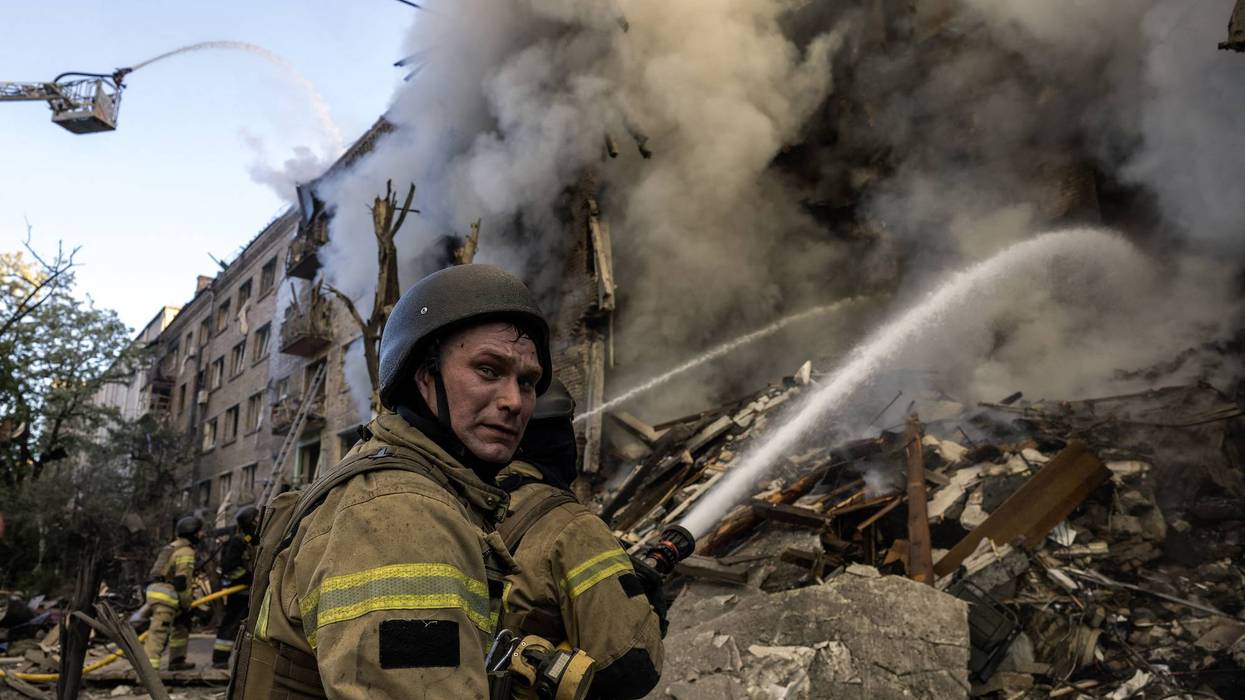
This proposed settlement—designed to help end a conflict that has cost hundreds of thousands of lives and carries a continuing risk of confrontation—addresses the causes of the war rather than only its symptoms.
The war in Ukraine can be ended permanently on terms that protect Ukraine's statehood, meet Russia's security concerns, and lay the foundation for a durable European security order. As another round of negotiations gears up in Norway, I propose a settlement concluded as a single package, signed by Ukraine and Russia, adopted by a vote of the United Nations Security Council under Chapter VII of the Charter, and guaranteed jointly by the five permanent members of the Council together with other states that choose to join. The proposal rests on the principle of indivisible security set out in the Helsinki Final Act and the Charter of Paris.
The package would have four core commitments.
The first is Ukraine's permanent neutrality, adopted in a constitutional law on the model of Austria's law of 1955, which would return Ukraine to the founding choice of its Declaration of State Sovereignty of 1990. Ukraine would join no military alliance and host no foreign bases or forces, whether of NATO, the European Union, their member states, or Russia. Neutrality would not mean disarmament, and Ukraine would retain armed forces for its own defense.
The second is that Ukraine would pursue its candidacy for membership in the European Union as a permanently neutral state, with a neutrality protocol in its accession treaty on the model of Ireland's, and Russia would affirm that Ukraine's membership in the EU is consistent with Russia's security.
The third is an armistice line drawn along the line of contact on the date of signature. Each side would exercise de facto jurisdiction on its side of the line, neither would recognize the other's territorial claims, and both would renounce force in any future adjustment. This formula is compatible with both countries' constitutions, which bar or severely restrict the cession of territory.
The fourth is the end of NATO enlargement eastward. At signature the North Atlantic Council would declare that NATO will not admit Ukraine or other new members in Eastern Europe or the South Caucasus, withdrawing the Bucharest pledge of 2008.
The settlement would take effect as a permanent end of hostilities on signature, not as a temporary ceasefire, and its provisions would be implemented in stages under international verification. No element would be negotiated in isolation, and no party would be asked to make a concession in advance of signature.
The territorial arrangements are designed to address the concerns and claims of both sides. Ukrainian forces would withdraw from the part of Donetsk region that Ukraine now controls, which would become a demilitarized special zone. Russian forces would not enter it, the existing local civil administration would continue to function, and its final status would be left to negotiation. Russia would withdraw from the areas it holds in Dnipropetrovsk region and from the Kinburn Spit. A Northern Security Zone would be demilitarized on both sides of the Russian-Ukrainian border, and Russian forces would leave the areas they hold in Kharkiv and Sumy regions as Ukrainian forces withdraw from their side. The Zaporizhzhia Nuclear Power Plant would remain under Russian control with IAEA safety oversight and would sell an agreed share of its electricity to Ukraine at cost.
A demilitarized belt would run along both sides of the armistice line, with heavy weapons and long-range strike systems withdrawn to agreed distances, and mutual ceilings on forces would apply in the border regions on both sides. In the Black Sea and the Sea of Azov, commercial navigation would be free for all Ukrainian and Russian ports, and attacks on shipping and ports would be prohibited.
The settlement in Ukraine should also begin the repair of European security as a whole. NATO and Russia would agree on a moratorium on ground-launched intermediate-range missiles in Europe, refrain from deploying nuclear weapons in any additional state, and restore the NATO-Russia Council. Normal diplomatic relations would be restored on both sides. The parties would convene the first summit of the Organization for Security and Co-operation in Europe since 2010 to entrust the OSCE with monitoring the settlement, verifying arms limits, and overseeing the provisions on rights.
Questions of language, education, culture, and religion would be resolved according to European standards, with the Russian language treated on the same basis as Ukraine's other minority languages, and Russia would accept the same obligations toward Ukrainian speakers and religious communities on its side of the line. All obligations concerning extremism and incitement would be mutual and monitored by the OSCE. Prisoners of war would be exchanged on an all-for-all basis, detained civilians released, and separated children reunited with their families.
Sanctions would be lifted during 2027. Russia's immobilized sovereign assets would also be released, and private property seized or immobilized on both sides would be restored. An international reconstruction fund administered by the European Investment Bank would finance reconstruction on both sides of the line, with contributions from all parties, Russia included, in a common effort rather than as reparations. Gas transit through Ukraine could resume wherever there are willing buyers, without any commitment by the European Union to purchase Russian gas.
A report of serious violation by an OSCE monitoring mission of unarmed observers from states outside NATO would trigger consultations among the guarantors and referral to the Security Council. Ukraine would lift martial law and hold elections under OSCE observation, and the newly elected Verkhovna Rada would ratify the settlement and adopt the constitutional law on neutrality, while the Russian Federal Assembly would ratify it at the same stage.
This proposed settlement addresses the causes of the war rather than only its symptoms. Europe has been largely absent from the design of the peace. By putting forward such a framework, European governments can take the lead in building Europe’s indivisible security and help end a war that has cost hundreds of thousands of lives and carries a continuing risk of confrontation between nuclear powers.


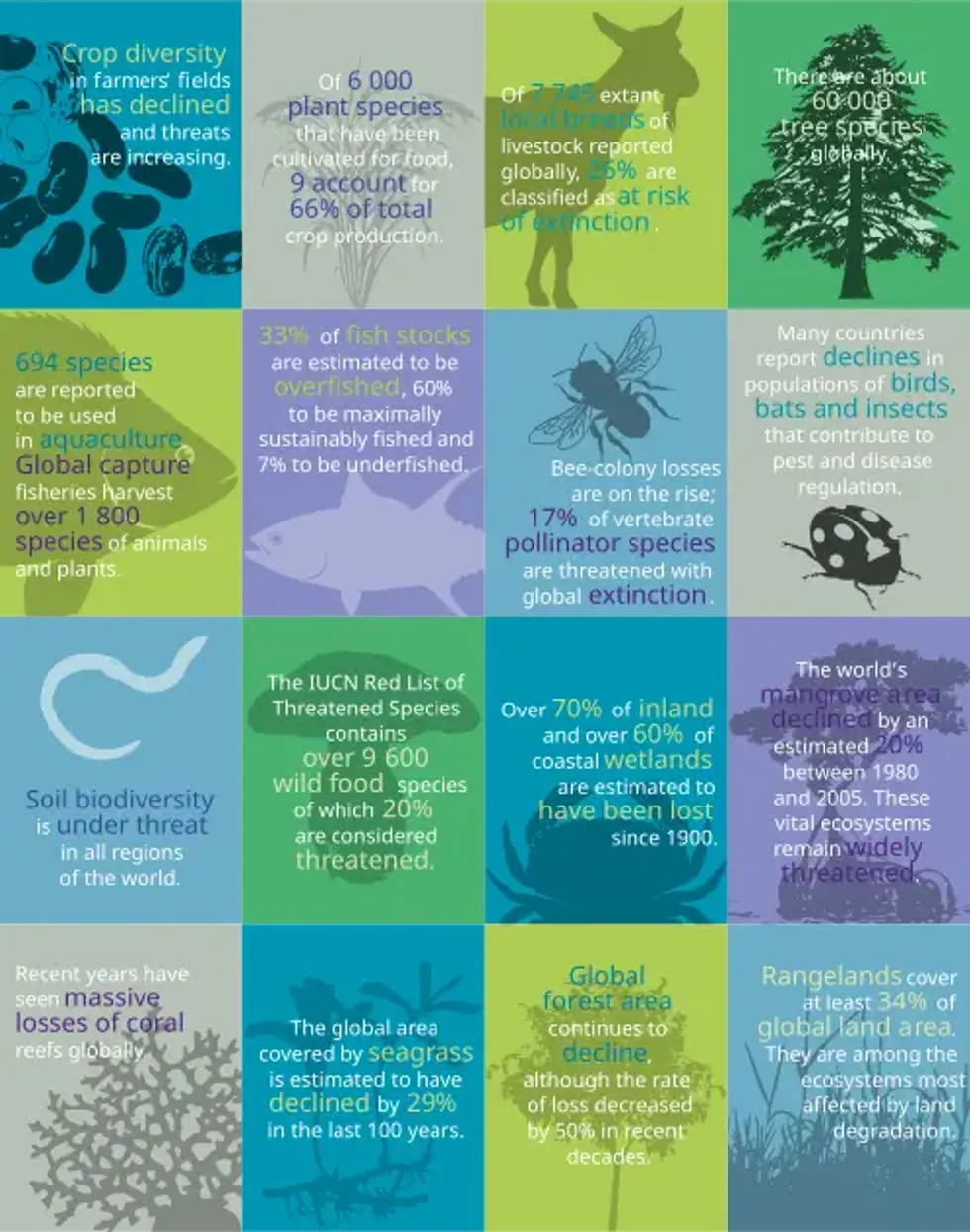 (Image by FAO | CC BY-SA 3.0)
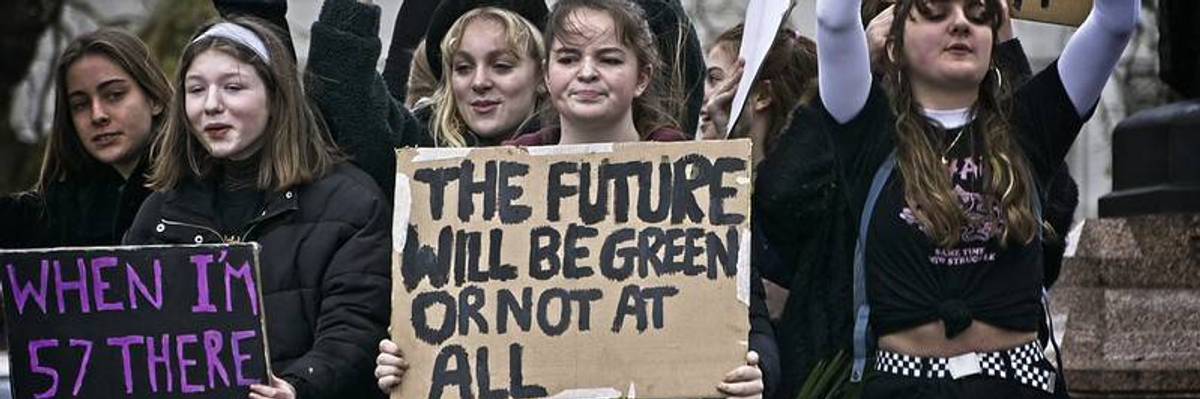 Young people participate in the Global Climate Strike in London on March 15, 2019. (Photo by Garry Knight)
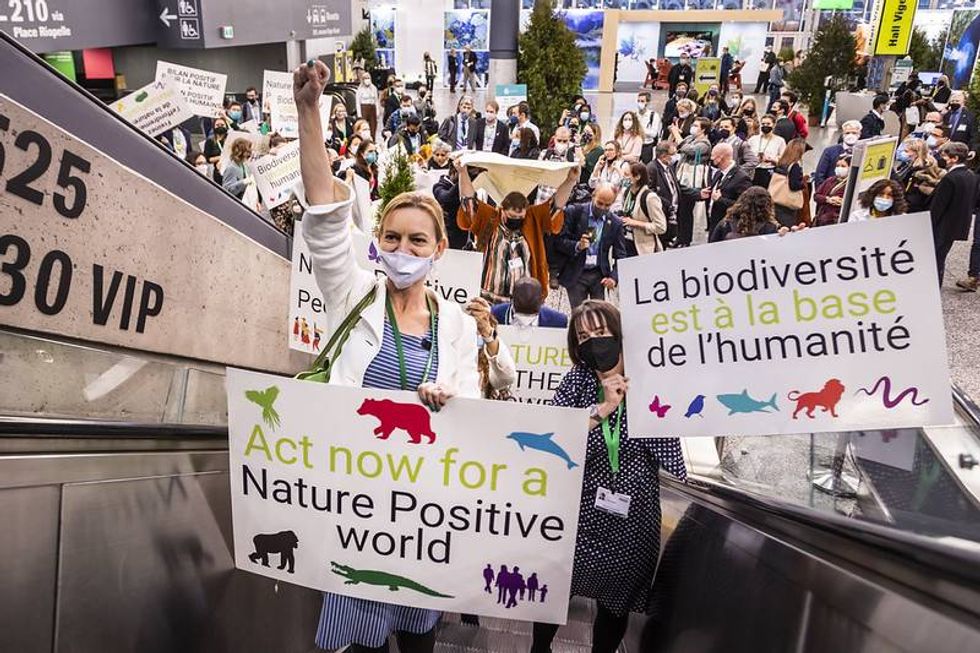 People demonstrate at COP15 in Montreal, Canada on December 7, 2022. (Photo by UN Biodiversity | CC BY 2.0)