SUBSCRIBE TO OUR FREE NEWSLETTER
Daily news & progressive opinion—funded by the people, not the corporations—delivered straight to your inbox.
5
#000000
#FFFFFF
To donate by check, phone, or other method, see our More Ways to Give page.
It’s far too early to prophesy the effects of the American attack on Venezuela, though recent history provides plenty of ugly warnings.
And it’s a thankless task to list all the reasons for the attack, from Epstein distraction to a sphere-of-influence carve up of the planet (watch out Taiwan) to the basic idea that President Donald Trump opposes any and all restraint on his power. (The United Nations charter: “All Members shall refrain in their international relations from the threat or use of force against the territorial integrity or political independence of any State, or in any other manner inconsistent with the Purposes of the United Nations.” The US constitution: "The Congress shall have the power…To declare War, grant Letters of Marque and Reprisal, and make Rules concerning Captures on Land and Water.”) Also, so much fun playing Army: Here’s the president of the US Saturday morning: “I watched it literally l like I was watching a television show. If you would've seen the speed, the violence—it was an amazing thing."
(I think we can take it for granted that the stated charges from the attorney general are not the reasons, since pretty much everyone agrees that that Venezuela is not a big drug exporter to the US and the president just pardoned the president ofHonduras who actually was a serious pusher. Oh, and “Possession of Machineguns and Destructive Devices, and Conspiracy to Possess Machineguns” is something we now encourage for Americans.)
But the following chart is certainly suggestive.
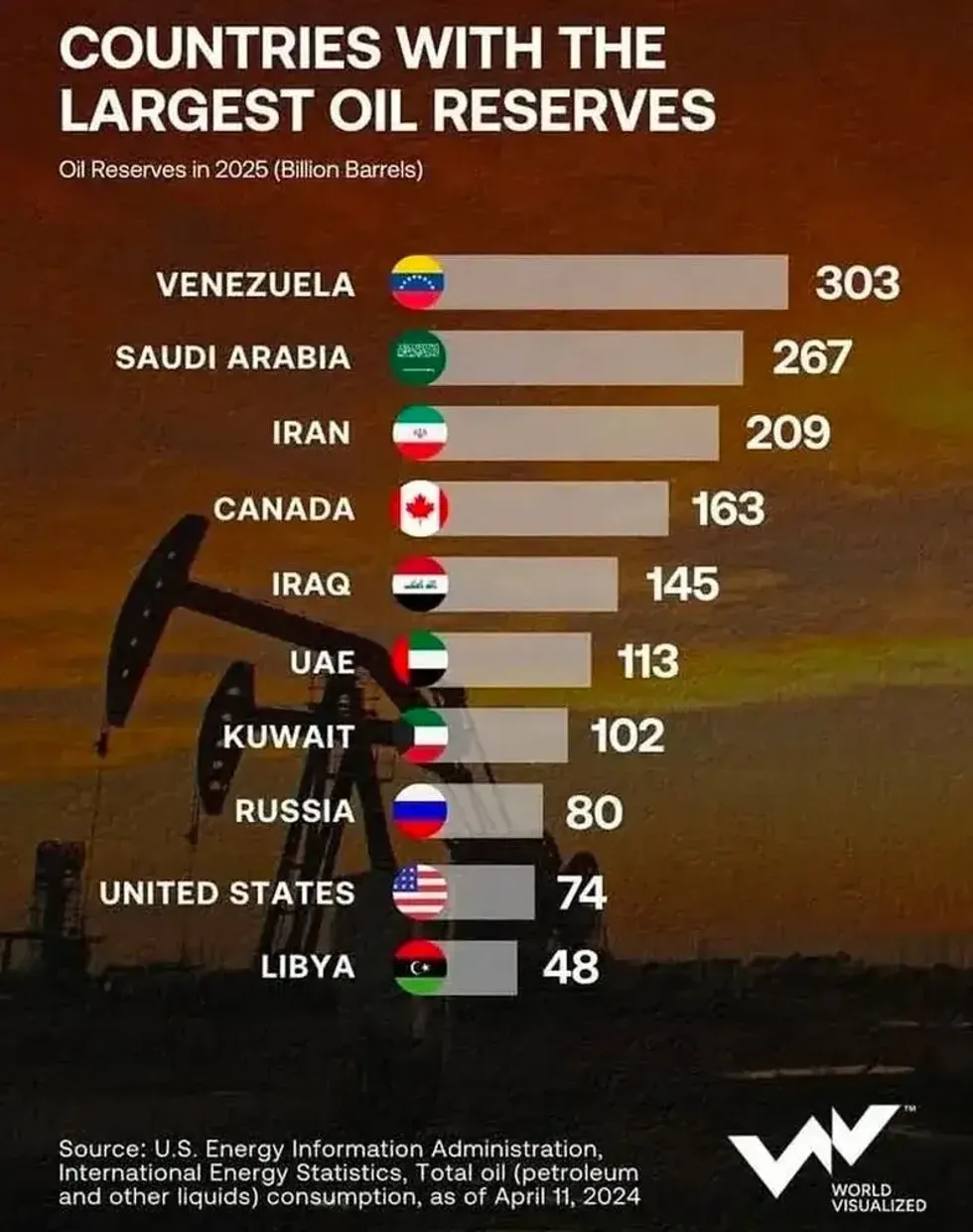
Those are the countries on Earth with the biggest oil reserves, and they are almost without exception the same places we’ve been involved in endless fighting or, in the case of Canada, endless threatening. (Greenland, by the way, also has significant oil reserves; it put them off limits in 2021, banning oil exploration on climate change grounds). We probably don’t care much about human rights violations in Venezuela, because human rights are not currently on the top (or the bottom) of our State Department’s concerns (except for white South Africans). But we almost certainly care deeply about that oil. In fact, it’s not exactly hidden—here’s what Trump said in mid-December.
"They took our oil rights—we had a lot of oil there. As you know they threw our companies out, and we want it back."
And as he said Saturday morning on Fox News, regarding the Venezuelan oil industry:
“We’re going to be very strongly involved in it.”
I do not, in the short run, know of a way to rein in this kind of imperialism. Congress as currently constituted will not stand up to Trump, and we don’t get a chance to start reconstituting Congress till November; even if the Democrats controlled the House and Senate and even if they grew some serious spine, it’s not clear how they’d prevent this kind of overreach. Without the two-thirds of the Senate needed for impeachment, it’s become increasingly clear that the Constitution is a nominal document.
But I do know how to dramatically reduce the motivation for this kind of grab, and that’s to convert the planet off oil as fast as possible. Oil is unique in being extremely valuable, extremely dense, and hence relatively easy to hoard and control, and extremely concentrated in a few places around the world. It is a curse to those places—look again at the list above, and with the exception of Canada ask yourself how well they’ve been governed. (And Canada’s oil wealth may yet be its undoing, as Alberta threatens over and over to disrupt the nation unless it gets its oily way). And it is a curse to the planet—because of the climate crisis, obviously, but also because anything worth this much money will inevitably destabilize international relations. As the late Richard Cheney, then the head of oilfield-services giant Halliburton, remarked in a 1998 speech:
The good Lord didn’t see fit to put oil and gas only where there are democratically elected regimes friendly to the United States. Occasionally we have to operate in places where, all things considered, one would not normally choose to go. But, we go where the business is.
But what it it the business wasn’t there any more? What if we could, simply by supporting an environmentally and economically sound transition to clean energy, remove the reason for the fighting? I don’t know how to stop the bully from beating people up for their lunch money—but what if lunch was free, and no one was carrying lunch money? Not for the first time, and not for the last, I’m going to make the observation that it’s going to be hard to figure out how to fight wars over sunshine.
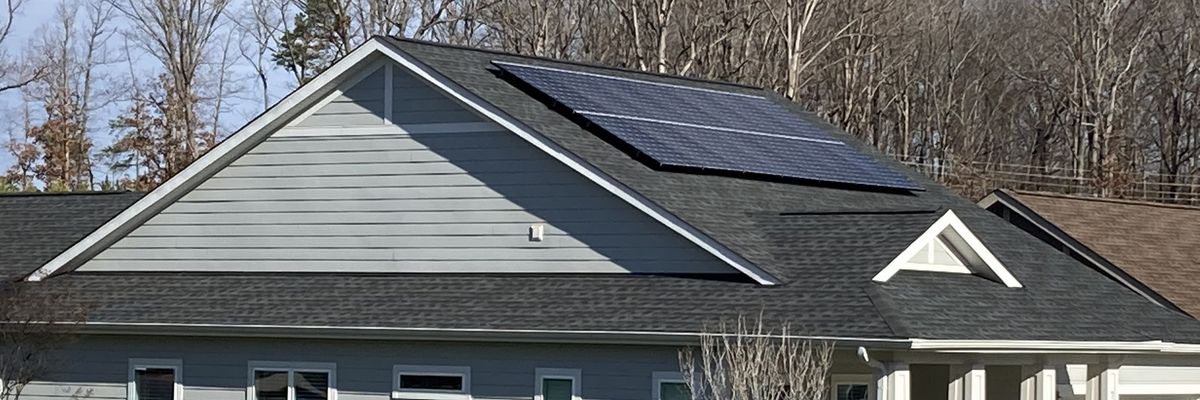
What I’m trying to say is, if you’re for peace and democracy, then a solar panel is a valuable tool (and a valuable symbol, a peace sign for our age). Every one that goes up incrementally reduces the attractiveness of the oil that underlies so much conflict and tyranny. Right at the moment treaties and charters and constitutions offer limited protection at best; we should work to restore the national and global consensus that makes them valuable, but we should also work to push out the kind of energy that can’t be hoarded or controlled.
Why does Trump hate solar and wind energy so passionately? It’s because they’re somewhat outside his or anyone else’s control. A nation that builds its prosperity on oil makes itself a target; a nation that depends on imported oil to survive makes itself a vassal. A nation (say, China) that rapidly builds out its own supply of energy from the sun—energy that can’t be embargoed or effectively attacked, energy that is by its nature decentralized, energy so spread out that no particular bit of it is all that valuable—is a nation that can go its own way.
America is, by any definition, a rogue nation as of Saturday morning. It does what it wants, without effective constraint by anyone. It, in the image of its leader, is a bizarrely destructive and absurdly oversized toddler, unable to reason beyond its own wants and impulses. We should try to teach it some manners, but we should also childproof the planet.
It’s far too early to prophesy the effects of the American attack on Venezuela, though recent history provides plenty of ugly warnings.
And it’s a thankless task to list all the reasons for the attack, from Epstein distraction to a sphere-of-influence carve up of the planet (watch out Taiwan) to the basic idea that President Donald Trump opposes any and all restraint on his power. (The United Nations charter: “All Members shall refrain in their international relations from the threat or use of force against the territorial integrity or political independence of any State, or in any other manner inconsistent with the Purposes of the United Nations.” The US constitution: "The Congress shall have the power…To declare War, grant Letters of Marque and Reprisal, and make Rules concerning Captures on Land and Water.”) Also, so much fun playing Army: Here’s the president of the US Saturday morning: “I watched it literally l like I was watching a television show. If you would've seen the speed, the violence—it was an amazing thing."
(I think we can take it for granted that the stated charges from the attorney general are not the reasons, since pretty much everyone agrees that that Venezuela is not a big drug exporter to the US and the president just pardoned the president ofHonduras who actually was a serious pusher. Oh, and “Possession of Machineguns and Destructive Devices, and Conspiracy to Possess Machineguns” is something we now encourage for Americans.)
But the following chart is certainly suggestive.
Those are the countries on Earth with the biggest oil reserves, and they are almost without exception the same places we’ve been involved in endless fighting or, in the case of Canada, endless threatening. (Greenland, by the way, also has significant oil reserves; it put them off limits in 2021, banning oil exploration on climate change grounds). We probably don’t care much about human rights violations in Venezuela, because human rights are not currently on the top (or the bottom) of our State Department’s concerns (except for white South Africans). But we almost certainly care deeply about that oil. In fact, it’s not exactly hidden—here’s what Trump said in mid-December.
"They took our oil rights—we had a lot of oil there. As you know they threw our companies out, and we want it back."
And as he said Saturday morning on Fox News, regarding the Venezuelan oil industry:
“We’re going to be very strongly involved in it.”
I do not, in the short run, know of a way to rein in this kind of imperialism. Congress as currently constituted will not stand up to Trump, and we don’t get a chance to start reconstituting Congress till November; even if the Democrats controlled the House and Senate and even if they grew some serious spine, it’s not clear how they’d prevent this kind of overreach. Without the two-thirds of the Senate needed for impeachment, it’s become increasingly clear that the Constitution is a nominal document.
But I do know how to dramatically reduce the motivation for this kind of grab, and that’s to convert the planet off oil as fast as possible. Oil is unique in being extremely valuable, extremely dense, and hence relatively easy to hoard and control, and extremely concentrated in a few places around the world. It is a curse to those places—look again at the list above, and with the exception of Canada ask yourself how well they’ve been governed. (And Canada’s oil wealth may yet be its undoing, as Alberta threatens over and over to disrupt the nation unless it gets its oily way). And it is a curse to the planet—because of the climate crisis, obviously, but also because anything worth this much money will inevitably destabilize international relations. As the late Richard Cheney, then the head of oilfield-services giant Halliburton, remarked in a 1998 speech:
The good Lord didn’t see fit to put oil and gas only where there are democratically elected regimes friendly to the United States. Occasionally we have to operate in places where, all things considered, one would not normally choose to go. But, we go where the business is.
But what it it the business wasn’t there any more? What if we could, simply by supporting an environmentally and economically sound transition to clean energy, remove the reason for the fighting? I don’t know how to stop the bully from beating people up for their lunch money—but what if lunch was free, and no one was carrying lunch money? Not for the first time, and not for the last, I’m going to make the observation that it’s going to be hard to figure out how to fight wars over sunshine.
What I’m trying to say is, if you’re for peace and democracy, then a solar panel is a valuable tool (and a valuable symbol, a peace sign for our age). Every one that goes up incrementally reduces the attractiveness of the oil that underlies so much conflict and tyranny. Right at the moment treaties and charters and constitutions offer limited protection at best; we should work to restore the national and global consensus that makes them valuable, but we should also work to push out the kind of energy that can’t be hoarded or controlled.
Why does Trump hate solar and wind energy so passionately? It’s because they’re somewhat outside his or anyone else’s control. A nation that builds its prosperity on oil makes itself a target; a nation that depends on imported oil to survive makes itself a vassal. A nation (say, China) that rapidly builds out its own supply of energy from the sun—energy that can’t be embargoed or effectively attacked, energy that is by its nature decentralized, energy so spread out that no particular bit of it is all that valuable—is a nation that can go its own way.
America is, by any definition, a rogue nation as of Saturday morning. It does what it wants, without effective constraint by anyone. It, in the image of its leader, is a bizarrely destructive and absurdly oversized toddler, unable to reason beyond its own wants and impulses. We should try to teach it some manners, but we should also childproof the planet.
It’s far too early to prophesy the effects of the American attack on Venezuela, though recent history provides plenty of ugly warnings.
And it’s a thankless task to list all the reasons for the attack, from Epstein distraction to a sphere-of-influence carve up of the planet (watch out Taiwan) to the basic idea that President Donald Trump opposes any and all restraint on his power. (The United Nations charter: “All Members shall refrain in their international relations from the threat or use of force against the territorial integrity or political independence of any State, or in any other manner inconsistent with the Purposes of the United Nations.” The US constitution: "The Congress shall have the power…To declare War, grant Letters of Marque and Reprisal, and make Rules concerning Captures on Land and Water.”) Also, so much fun playing Army: Here’s the president of the US Saturday morning: “I watched it literally l like I was watching a television show. If you would've seen the speed, the violence—it was an amazing thing."
(I think we can take it for granted that the stated charges from the attorney general are not the reasons, since pretty much everyone agrees that that Venezuela is not a big drug exporter to the US and the president just pardoned the president ofHonduras who actually was a serious pusher. Oh, and “Possession of Machineguns and Destructive Devices, and Conspiracy to Possess Machineguns” is something we now encourage for Americans.)
But the following chart is certainly suggestive.
Those are the countries on Earth with the biggest oil reserves, and they are almost without exception the same places we’ve been involved in endless fighting or, in the case of Canada, endless threatening. (Greenland, by the way, also has significant oil reserves; it put them off limits in 2021, banning oil exploration on climate change grounds). We probably don’t care much about human rights violations in Venezuela, because human rights are not currently on the top (or the bottom) of our State Department’s concerns (except for white South Africans). But we almost certainly care deeply about that oil. In fact, it’s not exactly hidden—here’s what Trump said in mid-December.
"They took our oil rights—we had a lot of oil there. As you know they threw our companies out, and we want it back."
And as he said Saturday morning on Fox News, regarding the Venezuelan oil industry:
“We’re going to be very strongly involved in it.”
I do not, in the short run, know of a way to rein in this kind of imperialism. Congress as currently constituted will not stand up to Trump, and we don’t get a chance to start reconstituting Congress till November; even if the Democrats controlled the House and Senate and even if they grew some serious spine, it’s not clear how they’d prevent this kind of overreach. Without the two-thirds of the Senate needed for impeachment, it’s become increasingly clear that the Constitution is a nominal document.
But I do know how to dramatically reduce the motivation for this kind of grab, and that’s to convert the planet off oil as fast as possible. Oil is unique in being extremely valuable, extremely dense, and hence relatively easy to hoard and control, and extremely concentrated in a few places around the world. It is a curse to those places—look again at the list above, and with the exception of Canada ask yourself how well they’ve been governed. (And Canada’s oil wealth may yet be its undoing, as Alberta threatens over and over to disrupt the nation unless it gets its oily way). And it is a curse to the planet—because of the climate crisis, obviously, but also because anything worth this much money will inevitably destabilize international relations. As the late Richard Cheney, then the head of oilfield-services giant Halliburton, remarked in a 1998 speech:
The good Lord didn’t see fit to put oil and gas only where there are democratically elected regimes friendly to the United States. Occasionally we have to operate in places where, all things considered, one would not normally choose to go. But, we go where the business is.
But what it it the business wasn’t there any more? What if we could, simply by supporting an environmentally and economically sound transition to clean energy, remove the reason for the fighting? I don’t know how to stop the bully from beating people up for their lunch money—but what if lunch was free, and no one was carrying lunch money? Not for the first time, and not for the last, I’m going to make the observation that it’s going to be hard to figure out how to fight wars over sunshine.
What I’m trying to say is, if you’re for peace and democracy, then a solar panel is a valuable tool (and a valuable symbol, a peace sign for our age). Every one that goes up incrementally reduces the attractiveness of the oil that underlies so much conflict and tyranny. Right at the moment treaties and charters and constitutions offer limited protection at best; we should work to restore the national and global consensus that makes them valuable, but we should also work to push out the kind of energy that can’t be hoarded or controlled.
Why does Trump hate solar and wind energy so passionately? It’s because they’re somewhat outside his or anyone else’s control. A nation that builds its prosperity on oil makes itself a target; a nation that depends on imported oil to survive makes itself a vassal. A nation (say, China) that rapidly builds out its own supply of energy from the sun—energy that can’t be embargoed or effectively attacked, energy that is by its nature decentralized, energy so spread out that no particular bit of it is all that valuable—is a nation that can go its own way.
America is, by any definition, a rogue nation as of Saturday morning. It does what it wants, without effective constraint by anyone. It, in the image of its leader, is a bizarrely destructive and absurdly oversized toddler, unable to reason beyond its own wants and impulses. We should try to teach it some manners, but we should also childproof the planet.