SUBSCRIBE TO OUR FREE NEWSLETTER
Daily news & progressive opinion—funded by the people, not the corporations—delivered straight to your inbox.
5
#000000
#FFFFFF
To donate by check, phone, or other method, see our More Ways to Give page.


Daily news & progressive opinion—funded by the people, not the corporations—delivered straight to your inbox.
Those who push for and profit from war have learned over many years that neither Republicans or Democrats will hold them accountable. A new Congress post November has a real opportunity to change that.
Now that an initial diplomatic deal between the US and Iran has been signed and intensive negotiations are under way to fully end the war, Congress should do everything possible to ensure this agreement is fully implemented. While the agreement is likely to have imperfections—thanks in large part to President Donald Trump harming US leverage and interests with a disastrous war—it would be a massive mistake to attack the deal simply because it comes from this president. The key question to consider is what steps Congress can take to ensure it becomes a durable peace—rather than merely a pause before the next round of war.
With all the human loss, destruction, and global stakes, we must stop this war, but also ensure that the conditions of peace don’t lay the groundwork for a return to conflict—or inspire its repetition elsewhere. The political and financial cost of ending this war must fall on those who aided and profited from it. The question is whether we build the safeguards to make it last.
In June 2025, it was already clear that accepting President Trump’s false narrative of absolute victory (claiming to have fully obliterated Iran’s nuclear sites) would not end US-Iran tensions. Any peace will remain fragile if the conditions that produced the war persist: the might-makes-right mindset that proved hollow against Iran’s strategic resilience; the preference for militarism over diplomacy, from Trump’s Joint-Comprehensive Plan-of-Action withdrawal to Biden’s failure to pursue a serious alternative to “maximum pressure” sanctions; the unconditional support for Israel even when it runs counter to US interests.
It is highly possible that during the initial 60 days of negotiations contemplated in the MOU, Israel will continue military action against Iran or in Lebanon to provoke a reaction and restart the cycle. The US cannot fully control what Israel would do. But it can stop aiding and abetting the war, which would make it far more difficult for Israel to sustain a campaign to spoil diplomacy.
The problem is not a single president or party. It is the power structures that ensure those who profit from war never pay its cost, regardless of who holds office.
Military action against Iran failed at producing any of its intended objectives, while it incurred costs that are in some cases irreversible and in others generational. The lives lost will not come back. The destruction of civilian infrastructure will shape Iranian society for decades. And the war has granted perverse legitimacy to a brutal regime, recasting the government of the Islamic Republic not as the oppressor it is, but as David against Goliath, the underdog resistor against foreign aggression. Diplomacy produced better results at far lower cost on every measure that matters.
This war confirmed what few wanted to acknowledge: that US military bases across the Gulf, sold as a projection of strength, are also a profound vulnerability. Each base became a potential target, each host government a hostage to escalation. For many Gulf governments, American military backing is a useful substitute for political legitimacy at home. Yet the war exposed the limits of that bargain: The same shield that promised security also turned them into targets.
Turning the Strait of Hormuz into a battlefield made this dynamic undeniable. Its closure hit energy markets and created rare pressure for de-escalation from Gulf elites who felt the costs directly. But while some elites were squeezed, others made billions. The system is designed so the profiteers are never the ones paying the ultimate price. That is exactly why temporary market pressure is not a substitute for structural accountability to prevent future conflicts.
Those who profit from war have learned over many years that neither Republicans or Democrats will hold them accountable. A new Congress post November has a real opportunity to change that—to serve US interests, meaning the American people, not a select elite. With $72 billion spent on the Iran war, a $1.5 trillion military budget, and war contractors more powerful and unaccountable than ever, Congress needs to investigate all war profiteers, from arms contractors to companies like the drone firm backed by the Trump sons that sought to sell interceptors to the very Gulf states being attacked, a direct conflict of interest.
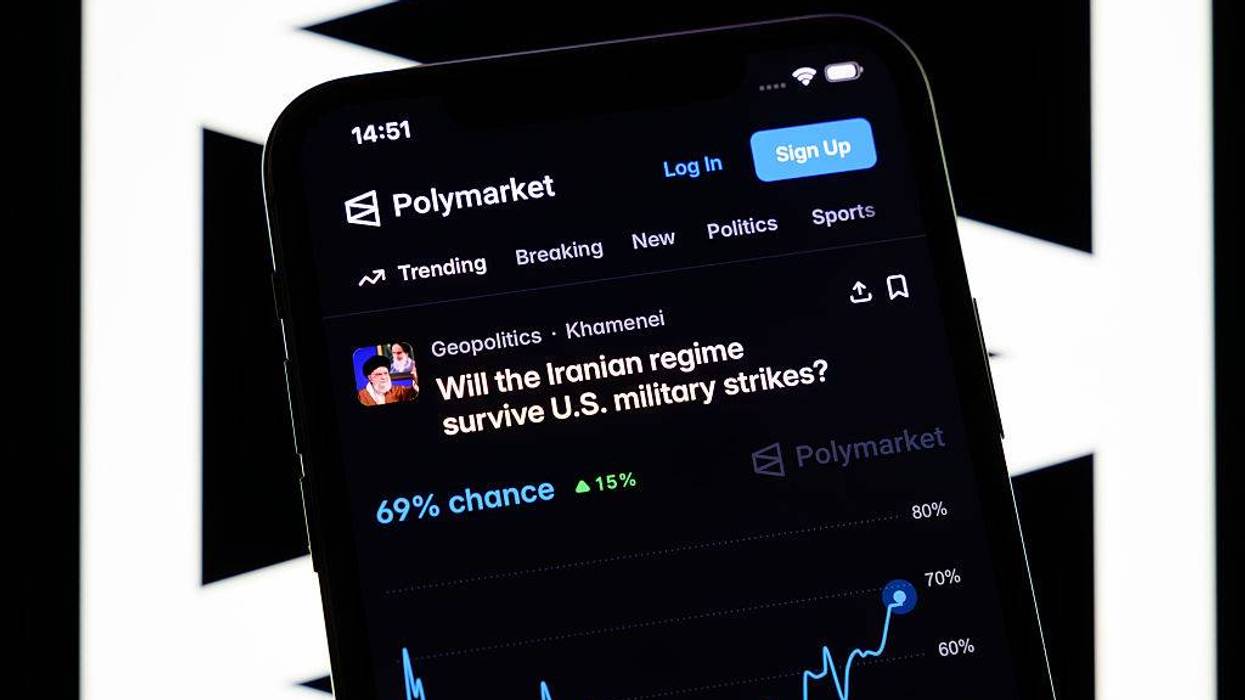
In a relatively new dystopian innovation in war capitalism during the war, prediction markets like Polymarket saw millions in bets on everything from the timing of strikes to casualty estimates. Suspected insider accounts netted $2.4 million on Iran War bets with a 98% win rate. This kind of betting on war outcomes by those with proximity to power blurs the line between forecasting and profiteering. It must also be addressed.
We do not even have to wait for elections in November to start this process. The growing support for War Powers resolutions with majority house support just this month, and the 40 senators backing the Joint Resolution of Disapproval to withhold certain arms from Israel, show what may be possible when Congress does its job. Congress should condition support, block escalation, and hold hearings on the legality of what has been done.
Such measures would serve a deeper purpose: signaling that a new Congress, and eventually a new administration, can offer something more than a return to the previous status quo: a set of concrete actions that change how war is authorized, how money is spent, and who benefits.
The problem is not a single president or party. It is the power structures that ensure those who profit from war never pay its cost, regardless of who holds office.
Corruption and war profiteering are not merely governance issues. They are theft from the American people, through unaccountable war spending, the unaffordable prices it produces, and an elite class that never pays for the policies it pushes. A Congress that treats corruption and war profiteering as harm against the public and responds accordingly would demonstrate what a functioning democracy actually looks like.
Asking for an investigation, Rep. Robert Garcia noted that the Department of Defense “repeatedly awarded lucrative DOD contracts to companies after they became affiliated with the president’s sons.”
The top Democrat on the House Oversight Committee is urging the watchdog overseeing the Pentagon to investigate "shady" defense contracts that may have benefited the family of President Donald Trump.
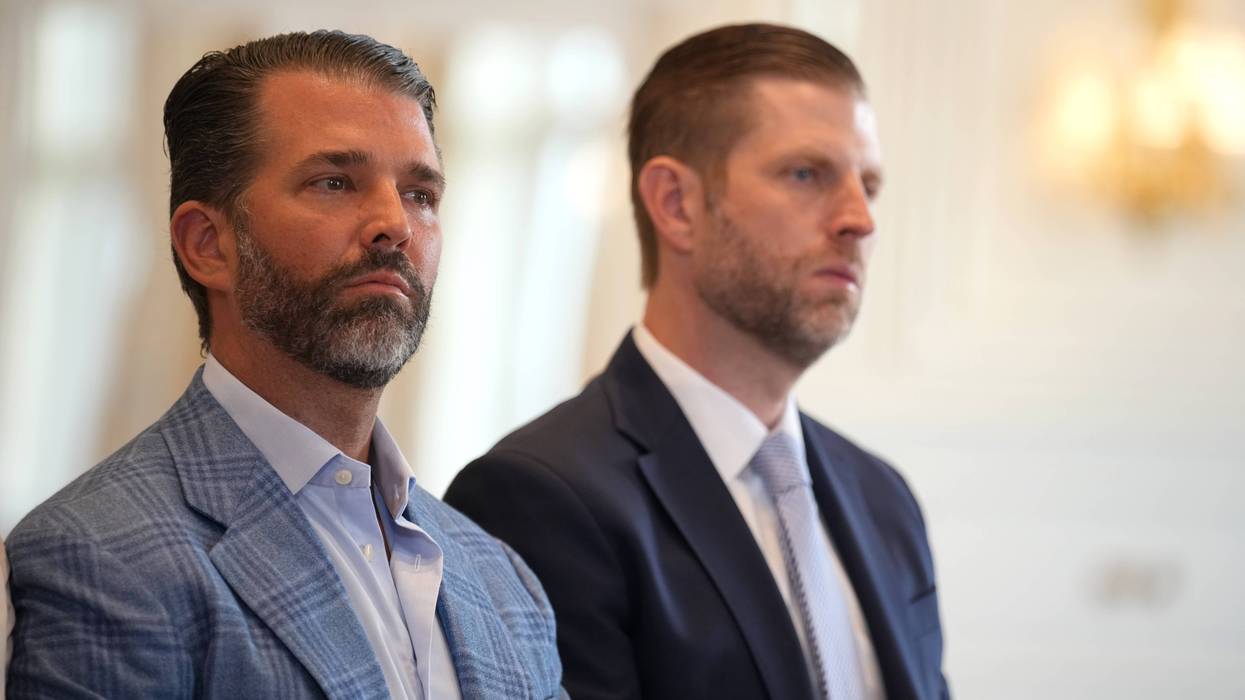
Rep. Robert Garcia (D-Calif.), the ranking member of the Oversight Committee, sent a letter on Friday to the Department of Defense inspector general, Platte B. Moring III, calling for an investigation after the administration "repeatedly awarded lucrative DOD contracts to companies after they became affiliated with the president’s sons," Eric and Donald Trump Jr.
"While Trump’s illegal war in Iran is driving up gas and grocery bills for working families, his sons are cashing in on defense contracts funded by hardworking taxpayers," Garcia said.
He pointed to a contract awarded last week for the Air Force to buy an undisclosed number of interceptor drones from the West Palm Beach-based company Powerus, drones that Bloomberg reported have never been used in combat. The company has not disclosed the terms of the deal or the size of the contract.
But the deal instantly raised eyebrows, given that just a month before, the Trump sons were brought on board as Powerus investors after a golf course company they backed, Aureus Greenway Holdings, announced plans to merge with the drone manufacturer.
The Guardian reported that the company had pushed hard for its technology to be sold to Persian Gulf countries facing attacks from Iran in retaliation for the war that the elder Trump started. “These countries are under enormous pressure to buy from the sons of the president so he will do what they want,” Richard Painter, a former chief White House ethics lawyer under President George W. Bush, told the paper.
Garcia also pointed to a $24 million contract awarded last month to Foundation Future Industries, a company that produces humanoid robots designed to participate in warfare. Similarly, just a month before the lucrative contract was announced, Eric Trump became chief strategy adviser for Foundation Future after previously investing in the company.
"Since the start of President Trump’s second term, his adult children have started conspicuously involving themselves in a variety of defense-related contracting firms with specialties including rockets, robots, martial arts, and drones," Garcia wrote. "These new engagements come despite little history of the Trump family working in those sectors prior to January 2025. Many of these firms have then received grants, loans, and contracts following the Trump family involvement, raising questions about the ability of these firms to fulfill their obligations."
"Eric Trump and Donald Trump Jr.’s purchases, consultancies, and advisory roles create an unprecedented intertwining of President Trump’s personal financial interests with US policy and national security," Garcia continued. "Each new venture opens new opportunities to direct DOD funds to the first family’s pockets, and the Trump Administration appears to be taking advantage of those opportunities."
The weapons contracts are part of a much larger pattern of the Trump children being put in positions to profit from administration contracts.
The Financial Times reported in December that during the first year of Trump's presidency, his administration awarded more than $735 million in contracts to companies in the portfolio of 1789 Capital, a fund created by pro-Trump donors that Donald Trump Jr. joined in 2024.
Trump Jr. said last year that he and the 1789 firm "understand what the administration wants to do, because we helped craft some of that messaging," which Garcia described in Friday's letter as an admission "that the Trump family is using insider information for its own business interests."
Democrats in Congress have repeatedly demanded answers from the Defense Department about its processes for preventing self-dealing by Trump's sons and others with ties to the president.
In response to a letter sent in January by Sens. Elizabeth Warren (D-Mass.) and Richard Blumenthal (D-Conn.), the Defense Department said in March that its primary method of mitigating conflicts of interest is "through the diligent collection and review of financial disclosure forms for employees."
Garcia said that "this does not prevent Trump administration officials from directing taxpayer dollars with the purpose of enriching the Trump family, nor does it prevent the Trump family from profiting from insider knowledge of future Pentagon plans."
Noting the nearly $2.5 billion it has raked in through cryptocurrency and other digital investments, according to an estimate by Democrats on the House Oversight Committee, Garcia said that "given this pattern of using the presidency for personal grift, the Trump family’s ventures into defense contracting are all the more alarming."
Garcia requested that the department open an investigation into what safeguards exist to prevent self-dealing by the Trump family and to disclose what contracts it currently has with companies tied to them and how they were evaluated for potential conflicts of interest.
He said, "The American people deserve to know that DOD awards contracts of taxpayer dollars ethically and prioritizes the best solutions for our national security—not who can pay the Trump family more."
"The war enriches shareholders as it impoverishes citizens," said a campaigner with 350.org.
France-based TotalEnergies on Wednesday became the latest fossil fuel giant to report massive profits juiced by the US-Israeli war on Iran, which has sent global oil prices surging and jacked up costs for consumers.
TotalEnergies announced in its first-quarter earnings report that it would increase returns to shareholders through a higher dividend and stock buybacks after seeing $5.8 billion in profits and $8.6 billion in cash flow during the first three months of 2026. The company attributed its profit growth to its "ability to capture price upside," corporate-speak for cashing in as consumers face rising energy costs.
“While families watch their bills skyrocket, TotalEnergies posts some of its best financial results without even paying its fair share of taxes," said Fanny Petitbon, France country manager at the environmental group 350.org. "We are witnessing an obscene transfer of wealth: The war enriches shareholders as it impoverishes citizens."
"We demand that France stop yielding to oil lobbyists and introduce, without delay, a permanent and ambitious tax on fossil fuel profits," Petitbon added. "Every day of inaction is a deliberate political choice in favor of shareholders and against citizens.”
TotalEnergies' report came a day after the British oil giant BP reported that its profits more than doubled compared to the first quarter of last year.
In an analysis released over the weekend, Oxfam projected that six of the world's largest fossil fuel companies—including BP and TotalEnergies—will rake in $2,967 in profits per second this year, an increase of roughly $37 million per day compared to last year.
"Families around the world continue to be pushed into energy poverty as geopolitical instability, the impacts of escalating violence in the Middle East that has already taken many lives, and the sharp increase in the wealth of the super-rich in contrast to everyone else are leaving ordinary people struggling to make ends meet," said Oxfam.
350.org warned earlier this week that energy market disruptions caused by the US-Israeli war on Iran could hit households, businesses, and governments around the world with more than $1 trillion in extra costs.
“It is a staggering injustice that fossil fuel corporations are once again posting record-breaking profits while families struggle to keep the lights on," said Rukiya Khamis, 350.org's East Africa country manager. "Right now, power is concentrated in the hands of those who thrive on crisis and scarcity."
"It’s time to end our forced dependence on fossil fuels, tax the profiteers who benefit from our hardship, and redirect that wealth into building a fair, clean energy system," Khamis said. "We aren’t just asking for a lower bill; we are demanding a system that values human dignity over corporate greed."
Democratic lawmakers said if reports of Hegseth attempting to buy defense stock weeks before the war are true, it "would be a profound conflict of interest" and a "betrayal of the nation paying the price for this war."
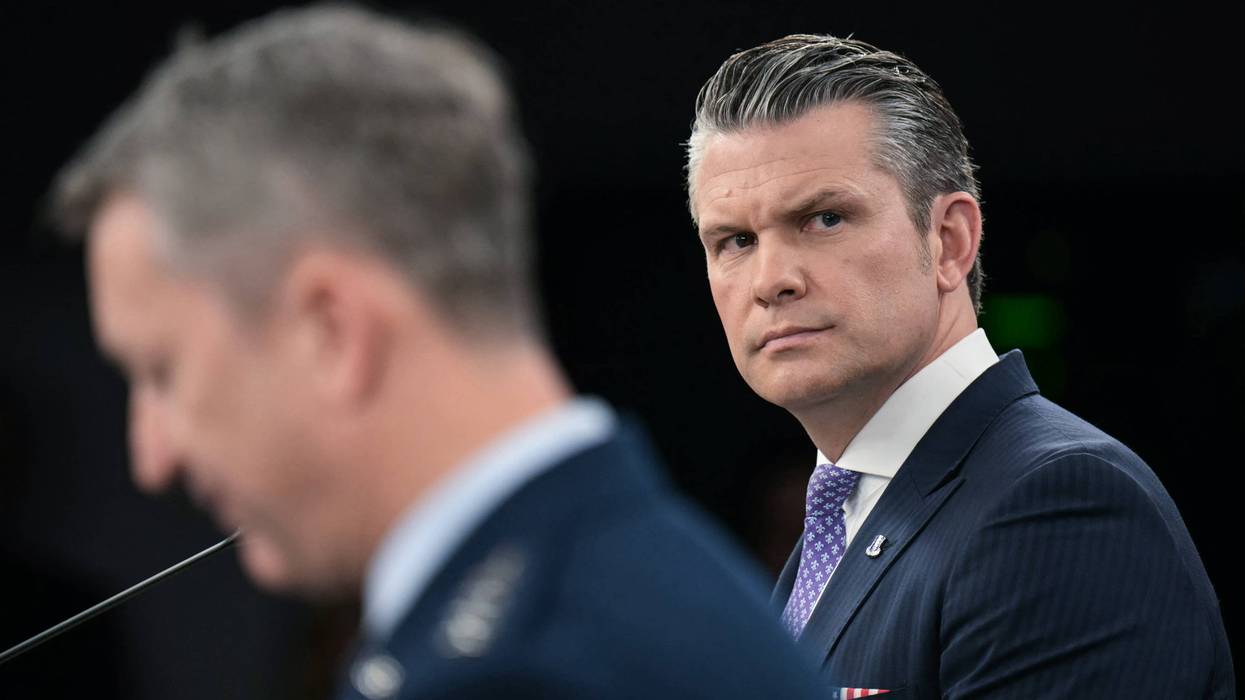
Senate Democrats are pushing for an investigation into US Defense Secretary Pete Hegseth following a report that he attempted to make a “big investment” in weapons stock just weeks before President Donald Trump launched an aggressive war against Iran.
Three Democrats on the Senate Armed Services Committee—Sens. Elizabeth Warren (D-Mass.), Tammy Duckworth (D-Ill.), and Richard Blumenthal (D-Conn.) were joined by Sens. Gary Peters (D-Mich.) and Jeff Merkley to send Hegseth a letter on Wednesday.
They told the secretary that his reported attempt to broker the deal "would be a profound conflict of interest and a potential violation of your federal ethics agreement—and betrayal of the nation paying the price for this war and the troops you are sending into harm’s way."
The Financial Times reported earlier this week that Hegseth's "broker at Morgan Stanley contacted BlackRock in February about making a multimillion-dollar investment in the asset manager’s Defense Industrials Active ETF... shortly before the US launched military action against Tehran.”
However, the purchase was reportedly never made because the massive bundle of stocks was not available to Morgan Stanley clients at the time.
A Pentagon spokesperson has also denied the story, calling it "entirely false and fabricated" and claiming that neither Hegseth nor any of his representatives ever approached BlackRock.
But, as the lawmakers noted, FT reported that the inquiry was significant enough for BlackRock to flag it internally.
Hegseth and other Pentagon officials confirmed by the Senate are prohibited by law from owning or purchasing publicly traded stock in the 10 companies that have received the largest Defense Department contracts over the past five years.
But the fund held stocks in several of these companies, including Lockheed Martin, Northrop Grumman, General Dynamics, Huntington Ingalls, Boeing, RTX Corporation, and L3Harris Technologies.
Reports of the proposed deal by Hegseth's broker come as the Trump administration has faced other accusations of trading on insider information about the president’s next moves to win big on prediction market services. Platforms like Polymarket have seen bettors take home monster winnings by placing wagers predicting major military actions in Venezuela and Iran just hours before Trump launched them.
The lawmakers noted that while the war is costing American taxpayers more than $1 billion per day and has saddled Americans with soaring gas prices, it has proven highly lucrative for major defense contractors, whose stocks jumped significantly in the days after the war was launched, even as the rest of the market took a tumble.
The Trump administration is currently demanding another $200 billion to prosecute the war on top of a $1.5 trillion budget request to fund the Defense Department, which the lawmakers said would likely result in these companies’ profits and stock prices continuing to climb.
The US-Israeli war against Iran, launched on February 28, has been condemned as illegal by many international law experts and human rights groups, who have accused the US of violating the UN Charter and committing war crimes.
According to a report on Wednesday from the Human Rights Activists News Agency (HRANA), a US-based human rights monitor for Iran, more than 1,600 civilians have been killed since the war began, including 244 children. At least 13 US troops have also been killed since the conflict broke out.
The lawmakers told Hegseth regarding his reported investment attempt: “If this report is accurate, it would appear to represent an appalling effort to profit off of your knowledge of the president’s plans for war.”
"We're going to blow the hell out of these people," declared the Republican senator.
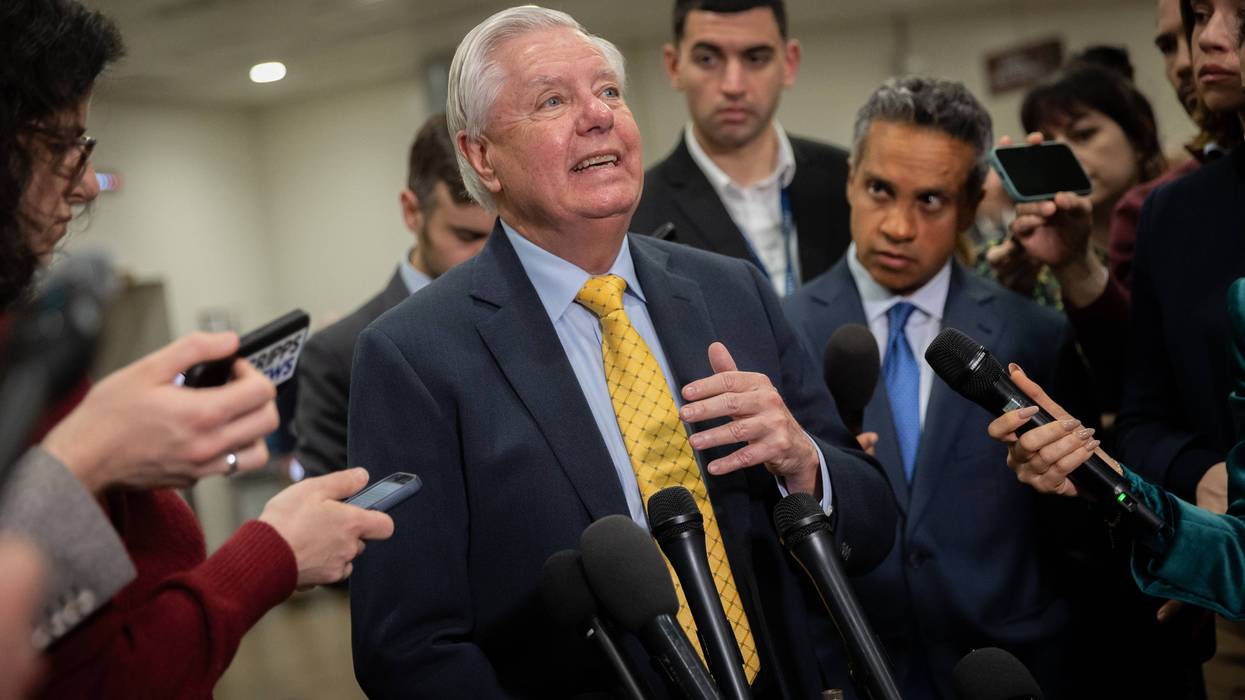
US Sen. Lindsey Graham, one of the most fanatical cheerleaders of the Iran war in Congress, on Sunday hailed the profit potential of the ongoing military assault, which has plunged the region and entire global economy into chaos.
"When this regime goes down, we're gonna have a new Mideast," Graham (R-SC) said in a Fox News appearance. "We're gonna make a ton of money. Nobody will threaten the Straits of Hormuz again."
Graham went on to respond dismissively to estimates of the massive financial costs of the war so far—roughly $1 billion per day, according to a preliminary Pentagon assessment—and warn of even more devastation in the weeks ahead. More than 1,200 Iranians have been killed by the US-Israeli onslaught so far.
"You just wait to see what comes in the next two weeks," said Graham, who has characterized the assault on Iran as a "religious war" that "will determine the course of the Middle East for a thousand years."
"We're going to blow the hell out of these people," the Republican senator said on Sunday.
The illegal US-Israeli war on Iran, which is now in its 10th day with no end in sight, has been a boon for American weapons contractors and liquefied natural gas giants, which stand to make tens of billions in windfall profits if the conflict and its reverberating impacts on global energy markets continue.
The Trump White House has repeatedly declined to provide a clear objective or timeline for the war. On Sunday, Press Secretary Karoline Leavitt said the president has not ruled out a ground invasion of Iran.
A classified report assembled by the US National Intelligence Council found that "even a large-scale assault on Iran launched by the United States would be unlikely to oust" the country's "entrenched military and clerical establishment," the Washington Post reported.
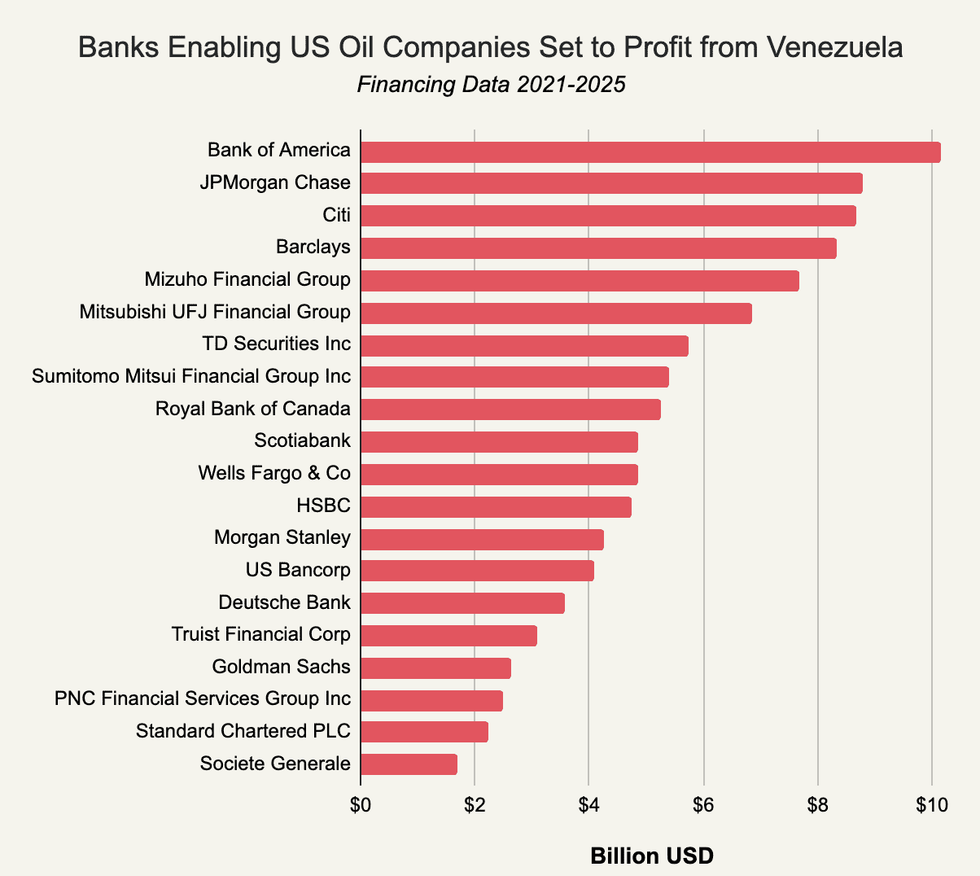
Since 2021, top Wall Street banks have committed more than $124 billion in investments to the nine companies set to profit most from the toppling of Venezuela's government.
As oil industry giants are being set up to profit from President Donald Trump's invasion of Venezuela, a new analysis shows the ample backing those companies have received from Wall Street's top financial institutions.
Last week, Bloomberg reported that stock traders and tycoons were "pouncing" after Trump's kidnapping of President Nicolás Maduro earlier this month, after having pressured the Trump administration to "create a more favorable business environment in Venezuela."
A dataset compiled by the international environmental advocacy group Stand.earth shows the extent to which these interests are intertwined.
Stand.earth found that since 2021, banks—including JPMorgan Chase, HSBC, TD, RBC, Citigroup, Wells Fargo, and Bank of America—have committed more than $124 billion in investments to the nine companies set to profit most from the toppling of Venezuela's government.
More than a third of that financing, $42 billion, came in 2025 alone, when Trump launched his aggressive campaign against Venezuela.

Among the companies expected to profit most immediately are refiners like Valero, PBF Energy, Citgo, and Phillips 66, which have large operations on the Gulf Coast that can process the heavy crude Venezuela is known to produce. These four companies have received $41 billion from major banks over the past five years.
Chevron, which also operates many heavy-crude facilities, benefits from being the only US company that operated in Venezuela under the Maduro regime, where it exported more than 140,000 barrels of oil per day last quarter.
At a White House gathering with top oil executives on Friday, the company's vice chair, Mark Nelson, told Trump the company could double its exports "effective immediately."
According to Jason Gabelman, an analyst at TD Cowen, the company could increase its annual cash flow by $400 million to $700 million as a result of Trump's takeover of Venezuelan oil resources.
Chevron was also by far the number-one recipient of investments in 2025, with more than $11 billion in total coming from the banks listed in the report—including $1.78 billion from Barclays, another $1.78 billion from Bank of America, and $1.32 billion from Citigroup.
According to Bloomberg, just weeks before Maduro's removal, analysts at Citigroup predicted 60% gains on the nation's more than $60 billion in bonds if he were replaced.
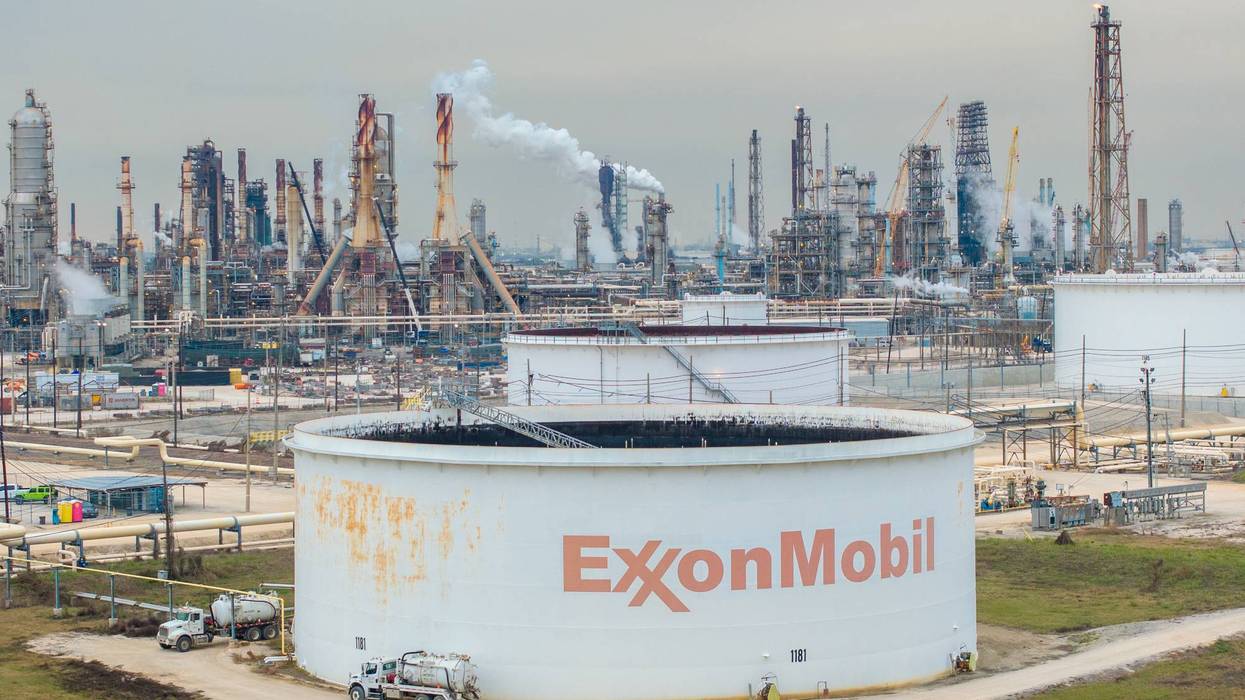
Even ExxonMobil, whose CEO Darren Woods dumped cold water on Trump's calls to set up operations in Venezuela on Friday, calling the nation "uninvestable," potentially has something major to gain from Maduro's overthrow.
Exxon and ConocoPhillips each have outstanding arbitration cases against Venezuela over the government's 2007 nationalization of oil assets, which could award them $20 billion and $12 billion, respectively.
The report found that in 2025, ExxonMobil and ConocoPhillips received a combined total of more than $12.8 billion in investment from major financial institutions, which vastly exceeded that from previous years.
Data on these staggering investments comes as oil companies face increased scrutiny surrounding possible foreknowledge of Trump's attack on Venezuela.
Last week, US Senate Democrats launched a formal investigation into “communications between major US oil and oilfield services companies and the Trump administration surrounding last week’s military action in Venezuela and efforts to exploit Venezuelan oil resources.”
Richard Brooks, Stand.earth's climate finance director, said the role of the financial institutions underwriting those oil companies should not be overlooked either.
"Without financial support from big banks and investors, the likes of Chevron, Exxon, ConocoPhillips, and Valero would not have the power that they do to start wars, overthrow governments, or slow the pace of climate action," he said. "Banks and investors need to choose if they are on the side of peace, or of warmongering oil companies.”
The sudden emergence of candidates for every single local office, who are eager to remove L3Harris from the city, reframes our weekly protests and actions at L3Harris from a futile gesture to a burgeoning movement.
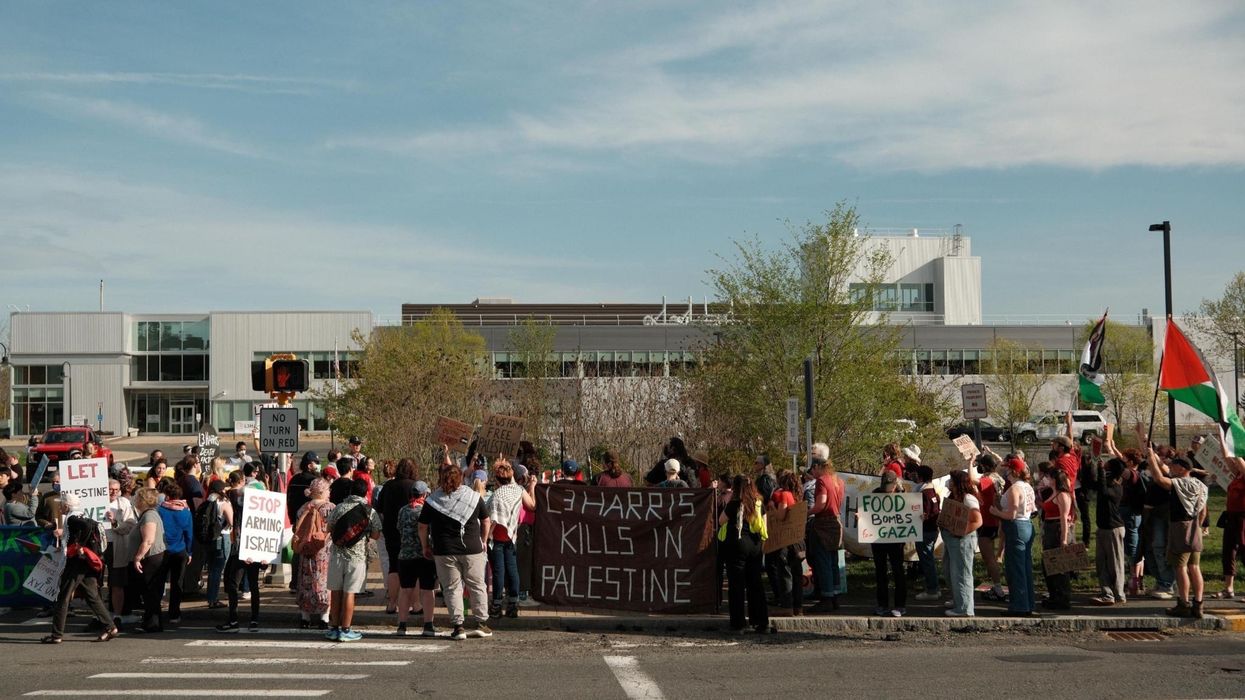
On Wednesday, August, 20, I go to protest—as I do every Wednesday at 6:30 am Eastern Time—at local arms profiteer, L3Harris. I know something might be up, because one of my companions at last week's L3 demonstration warned me that people plan to block the company driveway. The police will make arrests. Protest leaps deftly over a small barrier to become civil disobedience.
I have attended countless demonstrations across my accumulating decades, but had never distinguished myself sufficiently to be chosen for arrest. As a lifelong resident of a country known across the globe for crimes against humanity, how is it possible for me to have tiptoed so gently that no cop anywhere, ever, tackled or cuffed me for a ride downtown? My spotless record indicates that I have paused at the threshold of moral opportunity and timidly shrunken myself into something tiny, almost invisible—a green aphid on a tomato leaf, a wisp of smoke from an extinguished match head, a name forgotten in the presence of a long ago face. Our weekly demonstrations at L3Harris have been too small to elicit even a single police cruiser, and even now, none have yet arrived. We live in the new US era of arbitrary arrests. Pristine criminal records have become a luxury of bygone days.
Last week we had seven protesters, and now we shatter that record-breaking turnout with an array of colorful people who number at least four times that many (maybe more)—some wear grim reaper getups, and others are masked, hooded, cloaked, or simply covered over with rain gear and warm coats on a rare, cold, rainy day momentarily punctuating a month of drought and oppressive heat. But these people (organized by Demilitarize Western Mass with a number of individual participants from Jewish Voice for Peace)—however many we have—now block the entrance with their bodies. They have stretched a yellow ribbon labeled, "crime scene" across the road. The crime itself, represented explicitly with a line of faux bloodstained body bags, each the size of an infant, might ordinarily be lost—crimes against humanity depend on the oblivious indifference of participants who work within the lower layers of homicidal supply chains. We stir the faint embers of conscience, the hypothetical internal torment of L3 workers, but we perform primarily to arouse the sleeping giant of Northampton, a city whose moral resolve has been largely illusory.
The L3Harris website might easily be seen as a parody of so-called "woke" culture. One page solicits job applications with a picture of a Black man with a child on his back. Workers at L3Harris have access to "employee resource groups" organized around diverse ethnic, religious, and racial identities. The human imagination would seemingly explode with flabbergasted disbelief at how far absurdity can be stretched—corporations have created cultures with such limitless credulity that George Orwell himself would now scream into the void. At L3Harris you can join "MENA"—a company association for people with Middle Eastern or North African descent who build sensors to guide bombs to the chosen Gazan addresses (schools, hospitals and apartments). I don't see any employees who appear to be Middle Eastern or North African at our Northampton outpost of the death industry. L3 also has an employee resource group called "PRIDE" for its LGBTQ workers. I suspect that we witness a time lag between the old jargon that characterized former US President Joe Biden's style, and the new language of current President Donald Trump's white supremacy. Both Biden and Trump align around L3Harris and massive bombing of civilians. Even the worst crimes against humanity require the balm of cultural trends. Who but god itself could conceivably imagine the roiling thoughts of L3 workers whose cars have been stymied by the accusing souls of dead babies suddenly lined up on the pavement of their employee parking lot entrance.
Ralph Nader sets the Gazan death toll at 400,000 currently—we futilely attempt to replicate the scope of suffering with theatrical props. A stretch of white cloth streaked with more red paint lies across the entire L3Harris driveway entrance, and beside that, puddles of somewhat pinkish liquid glisten in the light mist that falls.
One woman with a bullhorn leads chants: "Hey, ho! L3Harris has got to go! From Palestine to Mexico, L3Harris has got to go!" I team up with a woman in a black raincoat holding my end of a sign that reads, "L3 your boss Chris Kubacik makes $19.8 million a year supplying weapons to Israel." Another companion placard has a photograph of CEO Kubacik blandly smiling to reveal a couple of vampire teeth with a drop of blood oozing at each point. This is all wonderful—any spark of life, whimsy, or celebration these days has an aura of abrupt surprise, as if a spaceship has descended from the void of interstellar darkness and unloaded a cargo of atrophied torsos and oversized heads.
Is L3Harris, the epicenter of Northampton, the only part of Northampton that truly matters, the dusky shadow of ourselves that we paper over with slogans? Our civil disobedience acts out a theatrical production with a skeleton cast. Only the protesters, the police, a reporter for the local progressive newspaper (The Shoestring), the L3 employees, and a few passing cars are here to play their parts. The two most important roles—the 30,000 Northampton residents and the Northampton elected city officials—are not here. The guidance systems that align bombs with anatomies take shape behind the ordinary walls of a local workplace in a town that thinks of itself as a beacon of universal tolerance. An ocean of blood resolves into a moral trickle. From time to time, activists have assembled at the entrance of L3Harris, but not yet with sustained resolve. We have barely imagined an endgame for resistance, but clearly, we need to release Northampton from the bondage of neoliberal somnolence.
History will possibly link Northampton and L3Harris in the manner that we link Los Alamos, New Mexico and the atomic bombs that destroyed Hiroshima and Nagasaki. People live quietly in Los Alamos too—people who drink coffee and catch their breath, people who look at basketball scores, work as grocery baggers or nuclear physicists, but we forget the normal things that go on at Los Alamos as we may one day forget about Smith College, The Iron Horse Music Hall, or The David Ruggles Center that commemorates the role that Northampton played as a stop on the Underground Railroad.
My comparison between Northampton and Los Alamos might raise eyebrows, as I hope it will. Los Alamos, as a township, had no historical existence at all and rather coalesced around the top secret Manhattan Project begun in 1943. The township officially emerged only after Hiroshima and Nagasaki were blown to smithereens—the fruits of Los Alamos. Northampton, on the other hand, has a rich history as one of the birthplaces of the US mental health industry, and as the home of such morally uncompromising religious zealots as Jonathan Edwards and Sylvester Graham. In 1805, 15,000 Northampton residents gathered to celebrate the hanging of two Irish immigrants condemned by a kangaroo court that required no evidence. A few decades later our town became a major stop on the Underground Railroad. Northampton continues to flutter mysteriously in the political breezes. L3Harris did not build Northampton from scratch, but arrived quietly as an afterthought. Most of us don't even know that it is there, manufacturing death and selling lethal components around the globe.
The Manhattan Project was kept secret by design and centered in Los Alamos because of its remote proximity to nowhere. In our times the military-industrial complex no longer needs to conceal its intent. Our secrets are not secrets at all, but, rather, we share a repressed understanding that—whatever tiny measure of agency the masses might possess—war is none of our business. The balance of control has made ordinary people into particles of sediment carried passively downstream by the momentum of corporate aspirations and the Orwellian gifts of politicians and media. But Northampton likes to sometimes think of itself as a world apart.
Can we really do the impossible and evict a major component of the US military-industrial complex with the tools of civil disobedience and local elections?
There might be 30-35 of us here, and now the cops have arrived looking uncertain, but peeved. A line of L3 employees' vehicles wait to turn into the blocked driveway. The biggest, most muscular cop recognizes me with a smile—we both workout at Planet Fitness and I wave to my fitness comrade. Some L3 employees have parked at the mental health facility across the street and cross our picket line like so many strike breakers. A young man in his early 20s wears a particularly fierce scowl. Most armaments employees self-consciously avoid eye contact with us. The moral fault lines of the US seldom become as explicit as they now are.
The civil disobedience ends with a whimper. A couple of particularly nasty, loud-voiced cops intimidate us, and we take down the yellow tape, remove the bloody babies in body bags, and move aside while fire hoses wash away the blood of Gaza. As a piece of counter-theater, the cops grab two women from Jewish Voice for Peace and shove them roughly into cruisers. My imagination runs wild. The police are an appendage of the city, its mayor, and city council members. This protest is the tip of the iceberg—what would an event like this look like if the police were constrained by a socialist mayor—our version of Zohran Mamdani? Can Northampton—the so-called most progressive city in America—live up to the 3.5% rule. The 3.5% rule generally refers to the needed percentage of people nationally willing to engage in sustained civil disobedience in order to bring about the collapse of an oppressive regime, or a drastic shift in policy. The 3.5% rule may not be entirely applicable to town politics, but still, I wonder what would happen if Northampton elected a Zohran Mamdani sort of mayor and mobilized civil disobedience with a thousand protesters blocking the entrance to L3Harris' parking lot?
Speaking of Planet Fitness, I note that L3Harris and "The Planet" pay the town similar property taxes despite the enormously unequal revenues recorded by each business. Bomb guiding systems and periscopes for nuclear subs bring in some 40 times the national revenue generated by free weights and treadmills. Northampton politicians gave L3Harris over a decade of tax breaks—these town authorities justified this because L3Harris provided local jobs. But the act of pandering to corporate giants has not solved Northampton's financial struggles. The schools wrestle with financial shortfalls every year, and this has led to cuts and layoffs. Rents have become impossible for working people; the streets, rutted and pock marked with neglect, swallow tires and bust axels. Last winter a snow storm and brutal freeze made streets almost impassable for two weeks, but, more than any other issue, the underfunded schools have inspired an unprecedented political movement featuring younger candidates vying to unseat the centrist town council incumbents that have been faithful to Mayor Gina-Louise Sciarra. Some identify as democratic socialists, including 24-year-old Will O'Dwyer, whose campaign website lists a number of laudable policy intentions including:
Oppose further tax breaks and subsidies for L3Harris and support the removal of the company and its operations from Northampton.
Niko Letendre-Cahillane is another young democratic socialist running for a councilor seat in my ward one district. His campaign website lists the following proposal:
Recognize that Northampton is part of a wider global community, and will push for divestment from weapons manufacturers and harmful and extractive businesses, while supporting the Boycott, Divestment, and Sanctions movement to end apartheid in Palestine.
Letendre-Cahillane specifically named the removal of L3Harris from Northampton as a critical campaign goal in a recent public debate.
Luke Rotello, running for a council seat in Northampton ward five, states on his website that he "will seek ways to remove war profiteers from our city." He also specifically named L3Harris as the target for removal in public debates.
The incumbent from ward three, Quaverly Rothenberg, has hosted several activists in her office for months now who wish to brainstorm strategies to remove L3 from Northampton.
I have been told by more experienced observers of local politics that it is possible to have councilors from all seven of Northampton's wards, and two at-large councilors who will all work to remove L3Harris from Northampton.
Current Northampton Mayor Gina-Louise Sciarra stated in a debate on August, 26—I am paraphrasing—that she is not happy with L3Harris being in Northampton, but there isn't anything the town can do about it. This is rather par for the course for this mayor who has failed to prevent the loss of critical school staff, and who has blatantly soft-pedaled her pitch to get the local Smith College (with their multibillion-dollar endowment) to increase the college's piddling PILOT (payments in lieu of taxes) to make up for the shortfall. Sciarra calls herself an "unapologetic progressive." In Northampton every politician to the left of Donald Trump claims to be progressive. Phrases like "social justice," "human rights," and "standing up for working families" fly out of their mouths like spittle pouring from the mouth of a rabid dog.
Sciarra's strongest opponent in the upcoming mayoral election preliminaries, Dan Breindel, calls Sciarra a Republican. Nobody paying attention would mistake Sciarra for a "progressive" given her stingy refusal to apply ample resources to the critically underfunded schools and her penchant for austerity combined with gaudy, gentrifying downtown projects. The population who send their children to public schools is much poorer than the overall voting public. Northampton has the most unequal distribution of wealth in Western Massachusetts. Politicians like Mayor Sciarra can piss all over the rights of poor constituents and appeal to a substantial base of retirees and moneyed residents who can afford to send their kids to nearby Williston—a private school. And Sciarra is a dead weight upon the aspiration to force L3Harris to leave town. Mayoral candidate, Dan Breindel, on the other hand, wrote this in an email to me:
On a personal level, I am extremely anti-war, so please rest assured my aim is to rid the world of the military-industrial complex, starting with this town. 100%. Not only are they (L3Harris) here in our backyard making money off murder, when they considered leaving a few years back the city effectively gave them one of our most beautiful plots of land, which they in turn restrict all public access to. So there's nothing good about having them here and it's frankly baffling they've been here as long as they have seemingly without any real government opposition.
The sudden emergence of candidates for every single local office, who are eager to remove L3Harris from the city, reframes our weekly protests and actions at L3Harris from a futile gesture to a burgeoning movement. I had previously been discouraged by our lack of numbers, but even small protests have meaning. Some of my fellow anti-war protesters are barely aware that their struggle to evict L3Harris now has a resounding echo in the effort to overthrow the neoliberal, corporate-friendly mayor and city council. What role will a truly progressive mayor and council have in growing and energizing our protests? I fantasize about taking on the role of liaison between young socialist candidates and mostly older anti-L3Harris protesters. I also think about being arrested. My time has come to cross that threshold.
Can we really do the impossible and evict a major component of the US military-industrial complex with the tools of civil disobedience and local elections? Our efforts have escalated on many fronts—notably, Mathew Hoey, who once collaborated with Noam Chomsky to bring attention to the US nuclear expansion into South Korea, has written a superb op-ed for the local Hampshire Gazette. Hoey details how L3Harris' proximity endangers the local community which may become a "counterforce" nuclear target. It simply astonishes me that local people in our fascist times have the energy and imagination to undertake a seemingly impossible quest. It now seems less impossible than it did mere months ago.
From our position in the imperial core, with war profiteers as our neighbors, it is our duty to do everything in our power to end the genocide and occupation.
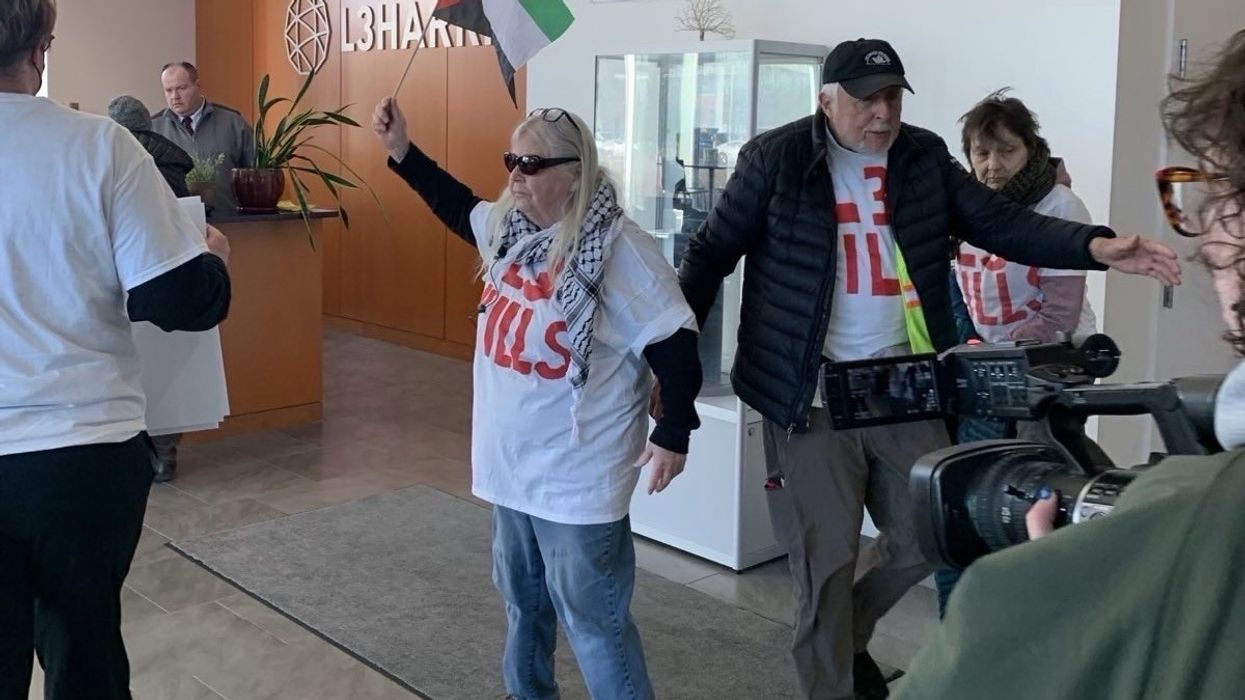
On March 19, 2025, five members of Demilitarize Western Massachusetts were arrested for occupying the public lobby of the L3Harris plant in Northampton, Massachusetts, and serving a “people’s warrant” against CEO Chris Kubasik for perpetrating, and profiting from, the genocide in Gaza. As they read a statement noting that L3Harris weapons shipments violate the U.S. Leahy Law and related laws, they threw fake money splotched with red paint on the floor of the L3 lobby.
Their--and our--demand is simple: L3Harris, convert to peace work or shut down!
Like all weapons manufacturers, L3Harris profits from militarism, genocide, and occupation. Incongruously nestled in the luscious green ecology of the Connecticut River Valley, the L3Harris Northampton plant makes submarine periscopes and optical targeting sights for naval vessels. The plant is merely one node in L3Harris’ global weapons empire reaping $19.4 billion in profits in 2023 alone, making it the world’s 12th largest weapons manufacturer.
By allowing L3Harris to operate in our communities, we are all complicit in genocide, occupation, and militarism.
For decades, L3Harris has supplied weapons systems and components used by the Israeli Occupying Forces (IOF, commonly known as the IDF) in Palestine. For example, L3 Combat Propulsion Systems, L3Harris’ former subsidiary, manufactured the engine of the Merkava IV, used by the IOF in its 2006 invasion of Lebanon and the 2012, 2014, and 2021 assaults on Gaza. L3Harris also manufactures components for multiple weapons systems used by the IOF in Gaza, including Boeing’s JDAM (guided bomb) kits, Lockheed Martin’s F-35 warplane, Northrop Grumman’s Sa’ar 5 warships, and ThyssenKrupp’s Sa’ar 6 warships. L3Harris’ webs of violence extend worldwide. In addition to supplying surveillance technology used at the Qalandia, Bethlehem, and Sha’ar Efraim checkpoints in the occupied West Bank, L3Harris manufactures surveillance equipment used by Immigration and Customs Enforcement and the Department of Homeland Security against immigrants in occupied Turtle Island.
The Demilitarize Western Massachusetts action on March 19, 2025 came 17 months into the Zionist entity’s genocidal assault on Gaza, 75 years after the mass dispossession of Palestinians known as the Nakba, and after nearly a century of the settler-colonial occupation of Palestine. The action came two days after the Zionist entity’s resumption of airstrikes on March 17, which killed over 400 Gazans in a single night, two weeks after the Zionist entity cut off all humanitarian aid to Gaza, and during the largest forced displacement of Palestinians in the West Bank since 1967.
The occupation’s relentless pursuit of annihilation, trauma and maiming, ecocide and scholasticide is unquantifiable. The numbers we recite to tally this genocide--186,000 direct and indirect deaths, 110,000 injured, 1.9 million displaced, 217 journalists and over 1,000 doctors murdered, 85% of schools bombed, healthcare infrastructure obliterated, and over 85,000 tons of bombs dropped—fail to adequately describe the existential and ongoing horrors of occupation and settler-colonial violence in Gaza. As Palestinian poet and organizer Mohammed El-Kurd writes, “Not a corner of our geography is spared, not a generation.”
Yet, occupation and violence have been immensely profitable for L3Harris, revealing capitalism’s grotesque and parasitic capacity to reap value from death and destruction. Like other weapons manufacturers, L3Harris has been the target of an ongoing global campaign for demilitarization and an end to war profiteering. In the past year and a half, Demilitarize Western Mass blockaded the entrance to L3 in October, 2023 and again in June, 2024, demanding that L3 stop arming the genocide. In Brighton, England, Stop L3Harris successfully organized to prevent the weapons manufacturer from expanding; The struggle to permanently shutter the factory is ongoing. Over the past two years, L3Harris factories across Canada have been repeatedly blockaded. These and similar actions follow the 2023 call from Workers in Palestine to “intervene and disrupt the flow of arms that sustain genocide.”
For more than a decade, members of Demilitarize Western Mass have held weekly vigils and street protests and blockades of the Northampton plant’s entrances, imploring L3Harris to convert to life-affirming, rather than life-destroying, work.
By allowing L3Harris to operate in our communities, we are all complicit in genocide, occupation, and militarism. From our position in the imperial core, with war profiteers as our neighbors, it is our duty to do everything in our power to end the genocide and occupation. We hope that this direct action at L3Harris inspires others. As the Secretariat of Student Frameworks in Gaza urged in their March 21 statement, “This must not be a moment of resignation—it must be one of escalation!”
Not only should the FCPA be vigorously enforced to stop bribery of foreign officials by U.S. companies, but the law must also be strengthened to combat the flip side of the corruption coin—foreign bribes accepted by American officials.
On February 10, U.S. President Donald Trump issued an executive order that directed Attorney General Pam Bondi to pause the enforcement of the Foreign Corrupt Practices Act. The FCPA was the first law in modern history to ban a country’s own citizens and companies from bribing foreign officials.
Citing the law as one of the “excessive barriers to American commerce abroad,” President Trump has instructed the attorney general to—at her discretion—“cease the initiation of any new FCPA investigations or enforcement actions.” The executive order further requires the DOJ to provide remedial measures for those who have faced "inappropriate" penalties as a result of past FCPA investigations and guilty verdicts.
This move by the Trump administration to pause enforcement of the foreign bribery law now and allow it to be put on the shelf later risks a revival of the pre-1970s period, when bribery was a routine practice among major U.S. arms contractors.
If President Trump is serious about his campaign pledge to “stop the war profiteering and to always put America first,” it is the worst possible time to shelve the FCPA, given that bribery by U.S. companies is alive and well.
In the post-Watergate reform period in Congress, in late 1975 and early 1976, Idaho Sen. Frank Church’s Subcommittee on the Conduct of Multinational Corporations of the Senate Foreign Relations Committee exposed widespread foreign bribery on the part of U.S. oil and aerospace firms, with the starring role played by Lockheed Martin, which bribed officials in Japan, Germany, Italy, the Netherlands, Saudi Arabia, Nigeria, Indonesia, Mexico, and Colombia in pursuit of contracts for its civilian and military aircraft.
The revelations caused political turmoil in the recipient countries, led to the resignation of Lockheed’s two top executives, and prompted Congress to pass the Foreign Corrupt Practices Act of 1977.
The repercussions were most severe in Japan, where Prime Minister Kakuei Tanaka was arrested and convicted of receiving bribes in the scandal—the first time a sitting Japanese prime minister had been arrested, in what one analyst called “Japan’s biggest scandal of the postwar era.”
Sen. Church made it clear that in his mind, the problem went far beyond the question of corruption: “It is no longer sufficient to simply sigh and say that is the way business is done. It is time to treat the issue for what it is: a serious foreign policy problem.”
Among the issues he cited were potential destabilization of democratic allies and closer ties with reckless, dictatorial regimes driven by financial motivations rather than careful consideration of U.S. security interests.
As noted above, President Trump’s primary reason for freezing enforcement of the anti-bribery law is that he believes it has been used unfairly, to the detriment of U.S. companies and U.S. security. This argument does not hold up to scrutiny.
First of all, there is no evidence that outlawing bribery has hurt the U.S. arms industry. The United States has been the world’s largest arms supplier by a large margin for 25 of the past 26 years, and major U.S. arms offers reached near record levels of $145 billion last year.
The real issue is how to stop dangerous, counterproductive arms transfers, not how to make it easier to cash in on sales that too often undermine U.S. interests.
A 2022 Quincy Institute study found that U.S.-supplied weapons were present in two-thirds of the world’s active conflicts, and that at least 31 clients of the U.S. arms industry were undemocratic regimes. Fueling conflicts and supporting reckless authoritarian regimes are destabilizing to regions of importance to U.S. security. They also risk drawing the United States into a direct, boots-on-the-ground conflict.
If President Trump is serious about his campaign pledge to “stop the war profiteering and to always put America first,” it is the worst possible time to shelve the FCPA, given that bribery by U.S. companies is alive and well. Just last October, RTX (formerly known as Raytheon) was forced to pay over $950 million in fines after it was found to have engaged in multiple schemes to defraud the Department of Defense and violate the FCPA and the Arms Export Control Act by paying bribes to Qatari officials in pursuit of major military contracts with that nation.
Not only should the FCPA be vigorously enforced to stop bribery of foreign officials by U.S. companies, but the law must also be strengthened to combat the flip side of the corruption coin—foreign bribes accepted by American officials. The recent sentencing of former Sen. Bob Menendez (D-N.J.) to 11 years in prison after being found guilty of bribery, extortion, obstruction of justice, and acting as an unregistered foreign agent for Egypt and Qatar underscores the need for stronger enforcement mechanisms.
Menendez’s guilty verdict as well as Rep. Henry Cuellar’s (D-Texas) indictment on charges that included unlawful foreign influence and bribery reveal how those who wield influence over American foreign policy can be paid off in exchange for exerting unwarranted influence on behalf of a foreign government.
The debate over bribery may be obscuring a larger truth: U.S. arms sales policy is in desperate need of an overhaul. The governing legislation—the Arms Export Control Act—was passed in 1976, when the world was a very different place than it is today.
The law gives Congress the authority to block a major arms sale by passing a joint resolution of disapproval in both houses. But given that they would be opposing a sale already approved by the Executive Branch, they would likely need a veto-proof majority. This standard is too hard to meet. For example, when Congress voted against a sale of precision-guided munitions to Saudi Arabia in the midst of that nation’s brutal intervention in Yemen, the measure was vetoed by President Trump
A major change that could have a significant impact on U.S. arms sales decisions is legislation that would “flip the script” by requiring an affirmative vote of Congress before major sales to key countries are allowed to go forward. This would strengthen Congress’ hand and make it easier to stop reckless sales that might fuel conflict or enable human rights abuses.
Instead of lifting restrictions on bribery to grease the wheels for additional foreign arms sales by U.S. weapons makers, Congress and the Trump administration should be crafting a policy designed to make sure overseas arms sales are governed by U.S. national interests, not special interests that profit from selling ever more weaponry to any and all customers.
Our tribunal, seeking to hold the war profiteers to account, represents the yearning of millions of people who mean to stop the depravity of invasion, occupation, killing and repression so that we can properly get about the work of human survival and the restoration of our planet.
On January 15, 2025, five days before the inauguration of a U.S. president who threatens to rain down hell on the Palestinian people, and more war to the world, the Merchants of Death War Crimes Tribunal will release its final report on how Lockheed Martin, Boeing, RTX/Raytheon and drone-maker General Atomics have delivered hell to millions across the globe since 9/11.
The Tribunal’s 35 evidentiary episodes explain how these four defendant corporations have been essential enablers of the U.S. colonial campaign of murder, extortion and thievery since 9/11, epitomized in the horrific crescendo of violence that is already being rained down on the Palestinian people. This grossly illegal war campaign—without equal in U.S. history in its geographic scope and length—is largely dependent on the products of the tribunal’s four defendant corporations.
The tribunal episodes explain how the U.S. campaign since 9/11 flows directly from the post-World War II decisions by U.S. Presidents Harry Truman and Dwight Eisenhower, U.S. businessmen and their congressional allies to try to pick up the reins of colonial control around the world that were being dropped by war-ruined European nations.
The U.S. leaders were, of course, acting from their racist cultural and business roots, extending back deep into slavery and the genocide against the first inhabitants of the continent, atrocities on which the U.S. was founded. They set us on the bloody path on which we find ourselves today.
For these industrialists and their political enablers, siding with liberation movements anywhere in the world meant less profits for U.S. corporations. Thus, colonial liberation must be officially described as a “communist” threat to be dealt with through direct and proxy killing, repression, torture, and terror.
We hope that we are effective representatives of those calling for justice and repair from the hideous war work of the Merchants of Death and the United States government since 9/11.
A permanent military industry was needed to enable this mafia-style scheme of international exploitation. Tribunal video episodes describe ways in which the U.S. public has been manipulated to support this military industrial system, to their great economic, spiritual and intellectual disadvantage as the U.S. economy and the wealth of its oligarchs, like Elon Musk, has become more and more dependent on war and intimidation.
After World War I, even the Senate and Congress condemned gross war profiteering. Challenges to weapon manufacturers profiteering continued during World War II, though greatly diminished by war propaganda. Congressional support for weapons makers surged in the post-World War II years, so much so that “defense” stocks have become sacred elements of college and university endowment funds, pension funds and private portfolios.
The immensity of this dependency on war stocks breached the surface of public awareness in the spring of 2024 as students in support of Palestinian life and liberation demanded that their schools disclose and divest their stock in weapons makers.
Students at Smith College occupied the school’s administration building for 14 days, calling on an institution that had divested from apartheid South Africa-connected stock to drop its holdings in L3 Harris and other war stock. The school’s board of trustees refused, calling the school’s holdings ”negligible”. Then in the fall, Smith administrators, and their colleagues nationwide moved, deplorably, to suppress students’ free speech.
Wealth-driven weapons makers who must be protected by the so-called educators, and are revered in the business world, are the successors to those weapons makers in early 20th Century war-grieving America, who were often depicted as overconsumptive, sleezy, money-grubbing vultures, feeding on the corpses and misery of the war dead and afflicted.
Now, we have reached a point in which James Taiclet, the president, chair and CEO of Lockheed Martin Corporation, the largest weapons maker in the world, whose F-35s, F-16s and Hellfire missiles have been slaughtering Palestinians wholesale, can be a valued member of the board of directors of MassGeneral Brigham, the largest hospital system in Massachusetts, serving 2.6 million patients a year.
Intervening in this surging, greed-driven, incredibly lethal mess, the Tribunal rapporteurs and an international panel of 10 jurors, offer 13 recommendations for action by the public and by government officials to pull the profit out from under war and to provide reparations for the vast harm visited on millions of people by the Merchants of Death and the U.S. government since 9/11.
More specifically, we tribunal coordinators want to work with prosecutors around the world to bring the CEOs of the defendant corporations to justice for having enabled, since the October 2001 invasion of Afghanistan, war crimes, crimes against humanity and genocide.
We want to work with student and other movements to end private and public investment in weapons production.
We must note that in our investigation, we repeatedly called on the defendant corporations to respond, in one instance getting arrested in the process. The four defendant corporations ignored us. We repeatedly asked members of Congress to answer our questions about their involvement with weapons makers. They ignored us.
The work of the Tribunal was made possible by the volunteer and the extremely low paid work of more than 40 people—students, filmmakers, artists, journalists, and others who joined us at various times over nearly three years to complete our video evidentiary episodes and report.
Those involved represent millions of people who mean to stop the depravity of invasion, occupation, killing and repression, everywhere, so that we can properly get about the work of human survival and the restoration of our planet.
In this, we hope that the Tribunal recommendations will be among the guide stars that will help us chart our course, shining above the hurricane of greed and viciousness now ravaging the U.S and the world.
We hope that we are effective representatives of those calling for justice and repair from the hideous war work of the Merchants of Death and the United States government since 9/11, of those calling to the world from their graves, from their hospital beds, from their poverty and dislocation and their relentless battles against racism in their places of refuge.
Note: You may register here for the January 15, 2025, (9 a.m. Eastern time), tribunal report release press conference. The 35 evidentiary video episodes appear on the Rumble platform and can be easily accessed at MerchantsofDeath.org, as can our Tribunal Study Guide and our podcast – Merchants of Death Radio.