

SUBSCRIBE TO OUR FREE NEWSLETTER
Daily news & progressive opinion—funded by the people, not the corporations—delivered straight to your inbox.
5
#000000
#FFFFFF
To donate by check, phone, or other method, see our More Ways to Give page.
Daily news & progressive opinion—funded by the people, not the corporations—delivered straight to your inbox.

"This is the level of funding where all the possibilities for American politics that have been described as hyperbolic over the past decades—the comparisons to Nazi Germany and other nightmares of the 20th century—become logistically possible and politically likely," wrote one observer.
Critics are sounding the alarm as congressional Republicans edge closer to passing a sweeping tax and spending bill desired by U.S. President Donald Trump that would inject tens of billions of dollars of funding into U.S. Immigration and Customs Enforcement, the agency at the forefront of the president's immigration crackdown.
"Republicans' Big, Bad Betrayal Bill shovels BILLIONS OF DOLLARS more into ICE's budget. Yes, the same ICE that has arrested U.S. citizens, carried out illegal deportations, and denied members of Congress access to detention facilities. HELL NO," wrote Rep. Pramila Jayapal (D-Wash.) on X on Sunday.
On Monday, the Senate kicked off a vote-a-rama process where senators can demand an unlimited number of votes on amendments to the reconciliation package.
While negotiations on the legislation are still ongoing, the version of the reconciliation bill that was narrowly advanced in the Senate on Saturday includes $29.85 billion for ICE to "remain available through September 30, 2029" for personnel recruitment, technology for "enforcement and removal operations," and other priorities. It also includes $45 billion "for single adult alien detention capacity and family residential center capacity," also available through the same period.
The bill text also includes $46.5 billion for U.S. Customs and Border Protection to spend on border infrastructure, to remain available through September 30, 2029.
Journalist Nicolae Viorel Butler, who reports on immigration for the outlet Migrant Insider, reported on Sunday that all told the measure proposes in excess of $175 billion in "direct immigration-related funding for fiscal year 2025."
This, Butler wrote, reflects "a historic expansion of immigration enforcement operations under a Republican-controlled Congress and the Trump administration."
This money would be a big addition on top of what these agencies already receive. For example, a National Immigration Forum explainer focused on the House version of the reconciliation package noted that $45 billion for ICE detention capacity constitutes an 800% increase in detention funding compared to fiscal year 2024.
"This is the level of funding where all the possibilities for American politics that have been described as hyperbolic over the past decades—the comparisons to Nazi Germany and other nightmares of the 20th century—become logistically possible and politically likely," wrote the philosopher Olúfẹ́mi O. Táíwò on Bluesky, commenting on the infusion of funding.
In every state, immigration arrests carried out by ICE have sharply increased. Also the number of those arrested and detained by ICE who have no criminal record is up more than 1,400% compared to a year ago, according to The Washington Post.
Increased funding for ICE and immigration enforcement is not the only part of the bill drawing scrutiny.
In May, nonpartisan budget scorekeepers said that the U.S. House of Representatives-passed version of the legislation would, if passed, cut household resources for the bottom 10% of Americans while delivering gains to the wealthiest in the form of tax breaks. Bobby Kogan, senior director of federal budget policy at the Center for American Progress, called the House version of the legislation the "the largest transfer of wealth from the poor to the rich in a single law in U.S. history."
"If the Republican budget passes, a lot of Americans will indeed suffer. But so too will millions of noncitizens who came to the U.S. seeking better lives for themselves and their families," wrote Post columnist Philip Bump of the increase in funding for ICE.
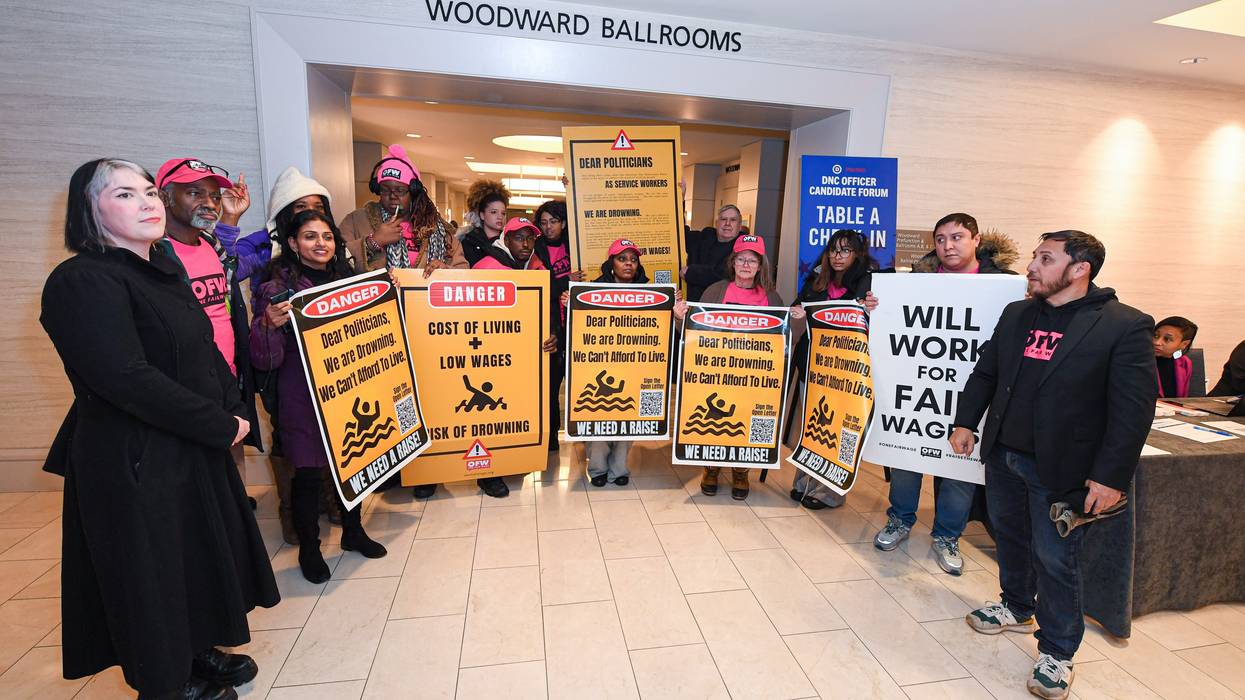
"We cannot tax-break our way out of an economy that continues to pay people less than it costs to live," said the group One Fair Wage.
After the U.S. Senate on Wednesday unexpectedly passed a bill that would exempt some tips from federal income tax, one labor group that campaigns for raising wages warned that while the bill would offer moderate relief to some Americans, it does not address the poverty wages facing many in the service sector—a message the group has hit on in the past.
"For all the bipartisan celebration, this bill is a distraction from the real fight," said Saru Jayaraman, president of One Fair Wage, in a statement on Wednesday. "If Democrats want to offer a true alternative, they need to say it loud and clear: it's time to raise the minimum wage and end the subminimum wage once and for all."
The bill passed by the Senate on Wednesday, the No Tax on Tips Act, would establish a new federal tax deduction of up to $25,000 for cash tips reported to employers by employees for the purposes of withholding payroll taxes. Qualified cash tips include "any cash tip received by an individual in the course of such individual's employment in an occupation which traditionally and customarily received tips on or before December 31, 2023," according to the bill text. Employees who made more than $160,000 in the prior tax year are not able to claim the deduction.
Currently, for tax purposes, tips are treated the same as regular wages. The bill was cosponsored by a bipartisan group of lawmakers and was passed by unanimous vote. It will now go to the House.
The idea of getting rid of federal taxes on tipped wages was touted by U.S. President Trump on the campaign trail and then-presidential candidate Vice President Kamala Harris also embraced the idea.
An analysis published last year by Yale's Budget Lab found that a "meaningful share" of tipped workers already pay nothing in federal income tax and that tipped work is a very small slice of the labor market.
Less than 4% of workers in the bottom half of hourly wage jobs, people making below $25 an hour in 2023, are in tipped jobs. Thirty seven percent of tipped workers in 2022 made so little that they paid zero in federal income tax before factoring in credits, according to Yale's analysis, and for non-tipped occupations, the equivalent share was much smaller—only 16%.
A report from One Fair Wage released last summer found that the annual income of tipped restaurant workers was so low that 46% of them do not earn enough to pay income taxes based on their individual income.
According to analysis from the Economic Policy Institute (EPI), in addition to helping relatively few workers, exempting taxes on tips could potentially undercut pay for many more workers, would encourage tax avoidance, and would reduce pressure on employers to increase base pay, among other concerns.
According to One Fair Wage, the true relief from the country's affordability crisis will come through raising wages, not through "tax gimmicks."
"We cannot tax-break our way out of an economy that continues to pay people less than it costs to live," the group added.
EPI also calls ending taxation on tips "a distraction from proven methods for supporting low-wage workers, like raising the minimum wage and eliminating the subminimum wage for tipped workers."
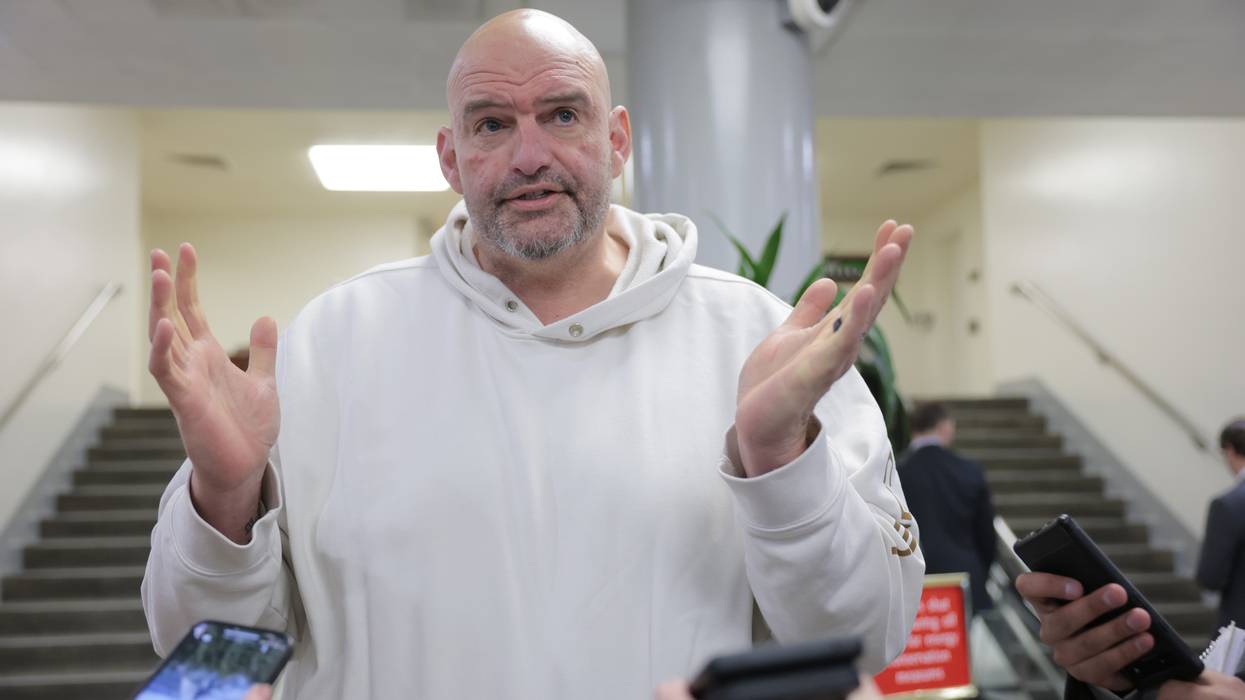
"We can agree or disagree on Fetterman's politics," wrote one journalist, "but I don't see how anyone can look at what's happening on a human level... and not think that the best thing for him would be to resign."
Following reporting about the behavior of U.S. Sen. John Fetterman—including concerns voiced by current and former staff have concerns about the mental wellbeing of the Democratic lawmaker from Pennsylvania—a growing number of political observers are openly questioning his ability to serve in public office.
A story in New York Magazine last week featuring the concern by staff was followed by new Associated Press reporting Thursday, which recounted a recent meeting between Fetterman and representatives from a teachers union that went awry when Fetterman began shouting and asking why "everybody is mad at me."
"Why does everyone hate me, what did I ever do," Fetterman reportedly said, according to someone who was briefed on what had taken place, the AP reported. A staff member ended the meeting and ushered the visitors out, and then broke down crying in the hallway.
Fetterman bested Mehmet Oz, the current head of the Centers for Medicare & Medicaid Services, in a race for the U.S. Senate in 2022, despite suffering a stroke while on the campaign trail. In 2023, after being sworn into the Senate, Fetterman checked himself into the hospital to seek treatment for clinical depression, and drew praise for being open about his diagnosis and seeking care.
His standing among progressive supporters has also soured over the past year and a half in part due to his unwavering support for Israel during the country's deadly military campaign in Gaza.
Fetterman was also the only senate Democrat to fly down to Mar-a-Lago and meet with U.S. President Donald Trump following Trump's victory in 2024.
Jeet Heer, the national affairs correspondent for The Nation, reacted to the AP's reporting with expressions of concern and suggested it may be time for the Democrat to step aside.
"We can agree or disagree on Fetterman's politics (I'm not a fan of his shift)," wrote Heer, "but I don't see how anyone can look at what's happening on a human level, to this man and his family, and not think that the best thing for him would be to resign so he can look after himself better."
According to New York Magazine, 14 months after Fetterman's discharge from the hospital, his former chief of staff Adam Jentleson, sent a long email to the medical director who had overseen Fetterman's care, writing that he thought Fetterman was on a "bad trajectory" and sharing concerns that if nothing changed, Fetterman "won't be with us for much longer."
In the email, Jentleson said he was concerned that Fetterman appeared not to be taking his meds, that he was displaying megalomania and conspiratorial thinking, "lying in ways that are painfully, awkwardly obvious to everyone in the room," and engaging in "repetitive and self centered monologues."
To the medical director, Jentleson also detailed that Fetterman had purchased a gun, engaged in a pattern of self isolation, and that he drove his car recklessly to the point that staff would not ride in the car with him.
"Former and current staffers paint a picture of an erratic senator who has become almost impossible to work for and whose mental-health situation is more serious and complicated than previously reported," the magazine reported.
"Jesus," wrote Aaron Regunberg, a progressive policy advocate wrote on social media in response to the reporting," John Fetterman should not be a U.S. Senator."
Jonathan Cohn, another progressive activist, commented on his personal X account that Fetterman was "creating an unsafe environment for his staff and constituents, and that makes him unfit for office."
On Tuesday, speaking to CNN, Fetterman called the article in New York Magazine a "one-source hit piece, and it involved maybe two or three and anonymous disgruntled staffers saying just absolute false things."
Few Democrats have come to Fetterman's aid in the wake of the reporting. There's been increased private talks about primary challenges to Fetterman, per Politico, and according to the outlet "some Pennsylvania Democrats have begun to quietly review the rules about what would happen if he stepped down and whispered about potential replacements."
Their dismissals raise "significant concerns about maintaining the integrity and continuity of oversight," according to civil society groups.
Nine civil society groups are demanding that the Senate take action "to reaffirm its oversight role" in response to U.S. President Donald Trump's removal of at least 17 inspectors general at various federal agencies last month—a move that critics have called illegal.
Inspectors general are independent government watchdogs who are tasked with detecting and preventing waste, fraud, and abuse at federal agencies. They were installed as part of post-Watergate reforms.
The work of inspectors general is "especially important during times of presidential transition to ensure that agencies continue to operate effectively and serve the public," wrote the authors of the letter, which was addressed to the members of the U.S. Senate and dated Tuesday.
"The removal of multiple [inspectors general] at once raises significant concerns about maintaining the integrity and continuity of oversight. These abrupt dismissals undermine the ability of [inspectors general] to conduct thorough and impartial investigations, potentially deterring accountability at a critical time," they added.
The letter is signed by nine groups: American Oversight; Citizens for Responsibility and Ethics in Washington; Hispanic Leadership Fund; National Taxpayers Union; Project on Government Oversight; Public Citizen; R Street Institute; Taxpayers for Common Sense; and Taxpayers Protection Alliance.
"The Senate must demand answers," according to the groups, because federal law mandates that the president must give Congress 30 days advance notice of intent to remove an inspector general, along with the reason for the removal.
Hannibal Ware, chairperson of the Council of the Inspectors General on Integrity and Efficiency, cast doubt on the legality of the firings in a January 24 letter sent to Sergio Gor, director of the Presidential Personnel Office, in response to the removals.
"I recommend that you reach out to White House counsel to discuss your intended course of action. At this point, we do not believe the actions taken are legally sufficient to dismiss presidentially appointed, Senate-confirmed inspectors general," Ware wrote in the letter.
One of the inspectors general at the time described the removals as a "widespread massacre."
Viewed with hindsight, the firings of the inspectors general can be seen as an opening salvo in a string of high-profile, legally dubious removals that Trump has carried out over the past few weeks.
Trump recently dismissed a Democratic member of the National Labor Relations Board and "purportedly" removed the special counsel at the Office of Special Counsel, in both cases prompting lawsuits, among other removals.
Some senators, for their part, have already condemned Trump's removal of the inspectors general. Last week, over three dozen senators signed a letter to Trump saying that his actions violated removal protections and that they should be reinstated.

The House bills are highly partisan and deviate sharply from the levels set in the bipartisan agreement to raise the federal debt limit in May.
The fiscal year 2024 appropriations bills approved by the House Appropriations Committee make major cuts in a wide range of domestic priorities. Among those hardest hit are programs crucial to the well-being of families with low incomes and their children, to public health, to job training and protection of workers’ rights, to a clean environment, and to fair administration of tax laws. The House bills are highly partisan and deviate sharply from the levels set in the bipartisan agreement to raise the federal debt limit in May.
In contrast, the Senate-passed appropriations bills are lean but include substantially fewer cuts and rescissions (which take back already enacted funding), are largely consistent with agreed-on levels, and have strong bipartisan support. They offer a better path toward funding that meets national needs, although there are some programmatic areas where the Senate levels are too low to meet those needs, such as with WIC (the Special Supplemental Nutrition Program for Women, Infants, and Children) and housing assistance.
As part of the debt limit deal, the House, Senate, and Biden administration agreed on defense and non-defense appropriations totals for 2024, calling for regular 2024 non-defense appropriations to be held to the same dollar total as in 2023. Reaching the 2023 non-defense level in 2024 requires not only setting appropriations at the cap established in the debt limit legislation but also adhering to the agreements negotiators had signed off on that provide offsets to accommodate additional funding. Such a freeze at last year’s level is fairly austere. It requires any increases that are necessary to meet rising costs, increasing needs, or new situations to be offset by cuts in other areas.
This report describes some of the serious cuts and shortfalls in the House appropriations bills.
While the Senate’s 2024 appropriations bills generally adhere to that approach (with small deviations agreed to on a bipartisan basis), the House’s Republican majority began writing non-defense appropriations bills with severe cuts to vital programs, at a total that is roughly $153 billion lower than had been agreed on. In the bills drafted by the House Appropriations Committee, the House Republicans achieve those cuts in two basic ways: by reducing many 2024 appropriations by about $59 billion (7%) below the 2023 levels, and by rescinding $94 billion of already enacted funding, almost all from the 2022 Inflation Reduction Act.
This report describes some of the serious cuts and shortfalls in the House appropriations bills, affecting areas such as education, child care, housing, job training, public health, medical research, nutrition assistance, environmental protection, renewable energy, enforcement of civil rights and worker protection laws, and operation of the Social Security system. It also describes the proposed rescissions of previously enacted funding, which include amounts that had been provided to fairly enforce tax laws and make sure that wealthy individuals and corporations pay their share, and to combat climate change, promote clean energy, and assist farmers.
The House bills shortchange the needs of pregnant people and families with young children who need help affording healthy food, of school children in low-income communities, of families needing help with child care costs or an affordable place to live, and of college students seeking financial aid.
The House bills would:
Take away food assistance from hundreds of thousands of new parents and young children by underfunding WIC. This Agriculture Department program supports millions of people in low-income families in important life stages—during and after pregnancy, and from birth until a child’s fifth birthday—by providing nutritious foods, nutrition education, referrals to healthcare, and other services. The House Agriculture bill’s WIC funding is well below the level needed to serve all eligible families who wish to participate, and would result in an estimated 600,000 new parents, toddlers, and preschoolers being turned away. The House bill would also cut WIC’s science-based fruit and vegetable benefit by between 58% and 71% (depending on the recipient’s age) for 4.7 million of the remaining participants.
Cut more than $15.6 billion in funding that schools use to help students in low-income communities learn and to help students whose first language is not English. The bills:
Make it harder for students to afford college by eliminating some forms of help, including federal work-study funding, and by freezing Pell Grants, which provide tuition assistance. The bills withdraw more than $2 billion in college assistance, straining families’ budgets and making it harder for many students to go to college. The bills:
Make it harder for families to afford child care, reduce the number of children who can participate in Head Start, and cut funding that supports state efforts to improve preschool offerings. Compared to the Senate bills, the House bills provide some $2.0 billion less for three main early learning programs—child care, Head Start, and Preschool Development Grants—on top of cuts to Title I (described above), which also funds early learning. These cuts undercut support for the early learning and child care that families and children need, at a time when Covid-related funding has expired, which is also threatening the stability of many providers. The bills would:
Cut the number of households that receive rental assistance and make it harder for households struggling with the rising cost of rent. The bills would:
The House bills cut back federal support for public health workers who detect disease outbreaks, vaccinate people against dangerous diseases, and promote disease prevention. They also cut back funding for medical research into better treatment and cures for diseases, as well as support for family planning clinics and care for people with HIV, among other healthcare needs.
The House bills would:
Reduce the nation’s preparedness for disease outbreaks and cut disease prevention efforts through an 18% ($1.6 billion) cut to the Centers for Disease Control and Prevention. CDC tracks and responds to disease outbreaks, fosters disease prevention, and supports the work of state and local public health agencies. Examples of cuts to CDC’s budget include a 16% reduction in funding for prevention of HIV, viral hepatitis, sexually transmitted infections, and tuberculosis; a 21% cut in chronic disease prevention programs; and a 17% cut in public health preparedness.
Reduce the nation’s commitment to groundbreaking medical research by cutting funding for the National Institutes of Health (NIH) by 8% ($3.8 billion). NIH is a major source of support for medical research, both conducting its own in-house research and funding the work of medical researchers throughout the country. The biggest dollar cut within this part of the legislation is a $1.5 billion (23%) reduction to the NIH institute that studies infectious diseases—this following a major pandemic with severe impacts on people’s health and the nation’s economy. The legislation also includes a two-thirds cut, from $1.5 billion to $500 million, to ARPA-H (Advanced Research Projects Agency for Health). ARPA-H’s purpose is to undertake long-shot but potentially high-reward projects not readily accomplished through traditional federal biomedical research, including participation in the Cancer Moonshot initiative seeking a cure for that disease.
Make it harder for people to access family planning services by eliminating funding for Title X grants to public and private nonprofit agencies that support family planning services for people with modest incomes. In 2021, this program provided contraceptive, infertility, and other family planning services to more than 1.6 million clients at more than 3,200 sites nationwide. Established 53 years ago, Title X received appropriations totaling $286 million in 2023. Fees are charged on a sliding scale based on clients’ ability to pay.
Cut care to people with HIV by reducing the Ryan White HIV/AIDS program by 9% ($239 million). This HHS program provides funding to state and local governments and local clinics and organizations to deliver care, treatment, and support to low-income people with HIV.
The House bills sharply scale back funding for job training for people seeking to learn new skills and boost their employment prospects. They also make big cuts to agencies that protect workers’ rights, including rights to minimum wages and overtime pay, to safe workplaces, and to engage in union activity.
The House bills would:
Eliminate federal job training funding for adults and youth provided through the Workforce Innovation and Opportunity Act, a major source of job training funding. These programs received $1.8 billion in 2023, which is expected to support training for more than 420,000 adults and youth.
Leave workers less protected against illegal employer behavior by cutting efforts to enforce the right to unionize and basic health and safety standards. The bills would:
The House bills make big cuts to environmental protection, including enforcement of environmental laws, programs to clean up pollution, and investments in safe drinking water, wastewater treatment, and other infrastructure. The House bills also make big cuts and rescissions to programs that promote clean energy and otherwise address climate change.
The House bills would:
Leave communities and people more vulnerable to water and air pollution, unsafe drinking water, toxic wastes, hazardous chemicals, and other threats to human health by cutting funding for the Environmental Protection Agency (EPA) by 39% ($4.0 billion). This cut would bring EPA funding to the lowest level since 1991, before adjusting for inflation. Cuts include 26% in Environmental Programs and Management (which funds activities such as development and enforcement of environmental protection rules and standards), 30% in Science and Technology (which performs scientific research and laboratory analysis to inform EPA’s work), and 42% in State and Tribal Assistance Grants (which include funding for wastewater treatment and drinking water facilities, water pollution control, and other environmental grant programs).
Take less care of our national parks with a 13% ($436 million) cut to the National Park Service budget. This includes a 9% cut in funds for operating the national parks and a 52% cut in the national parks construction budget.
Reduce efforts to facilitate our transition to clean energy by cutting funding for the Energy Department’s Energy Efficiency and Renewable Energy programs by 42% ($1.5 billion). This appropriations account supports research, development, demonstration, and deployment of technologies to enable transition to a net-zero greenhouse gas emissions economy. It gives special attention to the needs of workers and communities impacted by the energy transition and to those historically overburdened by pollution, who are disproportionately people of color due to policies like redlining that promoted exposure to industrial areas.
Shred multi-year efforts to promote clean energy and combat climate change by rescinding more than $29 billion in multi-year funding that had been provided in the 2022 Inflation Reduction Act to further those goals. The House bills would cut:
Scale back assistance to farmers and rural communities by rescinding approximately $5.8 billion in multi-year funding that had been provided in the 2022 Inflation Reduction Act for those purposes. Included in the House bills’ cuts:
The House bills make several cuts to transportation infrastructure, including funding for mass transit improvement projects, support for Amtrak, and grants to improve freight rail safety and reliability.
The House bills would:
Let bus, subway, and passenger rail service deteriorate by slashing federal support:
Do less to upgrade transportation infrastructure, including railroad safety:
The House bills worsen the underfunding of agencies that directly serve the public in critical ways, including the IRS and the Social Security Administration (SSA), leading to longer waits to get questions answered or for decisions about benefits. This will also continue to leave the IRS short of the staffing and expertise it needs to audit complex tax returns and make sure that corporations and wealthy people are paying their fair share—reversing an agency rebuilding process that is already seeing improvements in customer service and in revenue collected in the face of tax avoidance by some wealthy taxpayers.
The House bills would:
Gut efforts to improve customer service at the IRS and ensure that high-income households and corporations pay the taxes they legally owe by rescinding the vast majority of the multi-year funding provided for the long-term rebuilding of IRS capacity to enforce tax laws and serve taxpayers, while also cutting regular annual IRS funding by 9% ($1.1 billion). The Inflation Reduction Act of 2022 provided multi-year funding to counteract long-term underfunding that left the IRS with greatly diminished capacity to reduce tax cheating by properly auditing complex tax returns of wealthy taxpayers, or to respond to ordinary taxpayers’ questions. But of the $80 billion in ten-year funding that law provided, the House bills rescind $67 billion, devastating the rebuilding effort. The House bills compound this problem by cutting the regular annual IRS appropriation by $1.1 billion (or 9%), thus further reducing IRS capacity instead of rebuilding it.
Further erode customer service at the SSA by cutting the agency’s customer service budget by 2% ($250 million), when funding increases are needed to boost staffing and invest in IT as the number of beneficiaries grows. The House bills’ cuts would come on top of more than a decade of cuts that have forced the agency to face serving millions more beneficiaries at its lowest staffing level in over 25 years. Between 2010 and 2023, customer service funding at the SSA fell by 17% (adjusted for inflation), and the number of staff fell by 16%, while the number of beneficiaries rose by 22%. Wait times for disability decisions are at a record high, and hold times on the phone are now around 40 minutes. Flat funding under the current continuing resolution has led to a hiring freeze and suspension of IT investments.
Undermine enforcement of civil rights laws that ensure people can access public services without facing unlawful discrimination. The House bills cut funding for agency Offices of Civil Rights, which enforce civil rights requirements related to their agency’s mission and programs. Cuts include 39% at the Agriculture Department, 25% at the Education Department, and 20% at HHS.
The bills produced by the House majority are also replete with partisan legislative provisions or “riders,” mostly pursuing what have become common targets of Republican culture wars.
Examples of such riders include provisions in multiple bills that would stymie racial equity initiatives, such as prohibiting the use of funds to carry out the president’s executive orders on diversity, equity, and inclusion or for agency offices dedicated to furthering those goals, and prohibiting the use of funds to promote or advance critical race theory.
Other riders include anti-LGBTQ policies that would prohibit the use of funds for surgical procedures or hormone therapy for purposes of gender-affirming care, prohibit implementation of an executive order on combatting discrimination based on gender identity or sexual orientation, and prohibit flying LGBTQ pride flags at federal facilities.
The Republican bills also seek to further restrict abortion rights, including by overturning a decision by the Food and Drug Administration that facilitates access to the medication abortion drug mifepristone; blocking a Defense Department policy to cover travel costs of service members and members of their families to obtain abortions if they are stationed in states restricting abortion services; prohibiting clinics affiliated with Planned Parenthood from receiving funds appropriated in the Labor-HHS-Education bill unless they stop performing legally permissible abortions; and blocking the use of funds in the bills to implement two executive orders related to access to reproductive healthcare services.
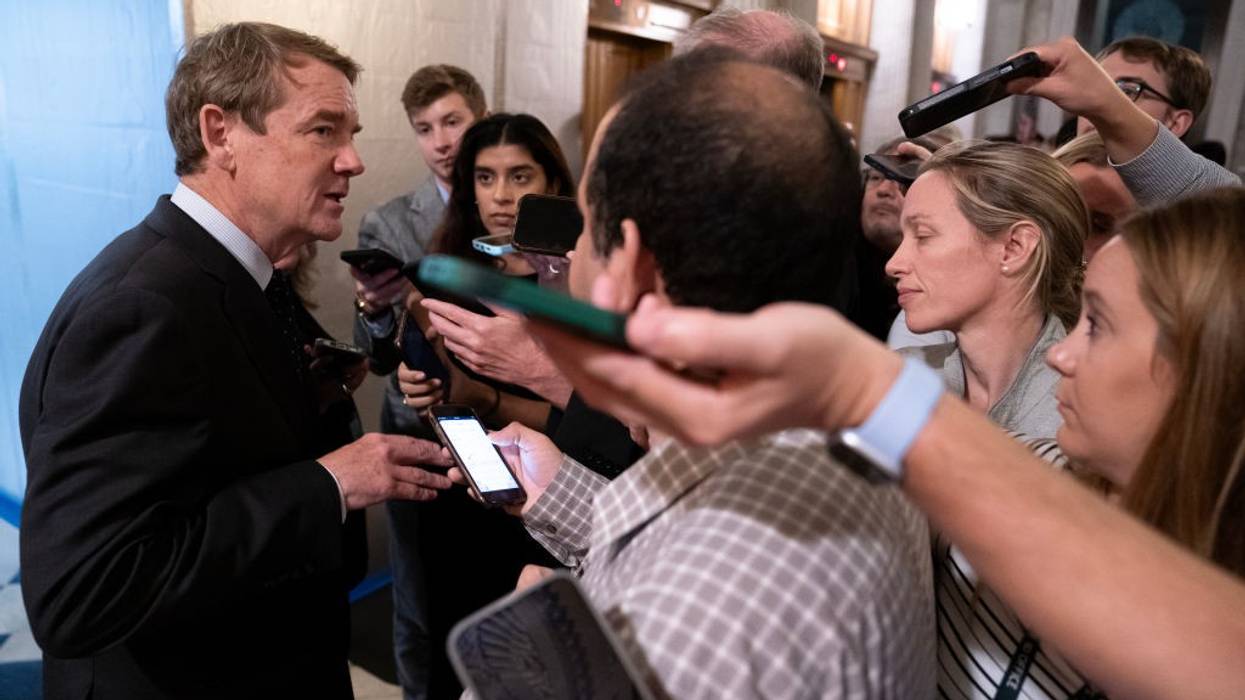
Despite Saturday's reprieve, Sen. John Fetterman warned that "pushing the snooze button solves nothing, because these same losers will try to pull the same shit in 45 days."
A government shutdown was averted Saturday night after the Senate voted 89 to 9 to approve a stopgap spending measure passed by the House of Representatives that afternoon.
The agreement funds the government for 45 days and includes an additional $16 billion in disaster funding as New York City mops up from flash flooding following an extreme rain storm. It does not include aid for Ukraine.
"It has been a day full of twists and turns, but the American people can breathe a sigh of relief," Senate Majority Leader Chuck Schumer (D-N.Y.) said on the Senate floor. "There will be no government shutdown."
"This is not entertainment, it’s governance. We must not allow the Freedom Caucus to turn our government into The Steve Wilkos Show."
The bill now heads to President Joe Biden for his signature.
"This is good news for the American people," Biden said in a statement. "But I want to be clear: We never should have been in this position in the first place."
Biden criticized far-right Republicans in the House for demanding cuts beyond what the president had negotiated with House Speaker Kevin McCarthy (R-Calif.) in a deal that progressives had already criticized for slashing programs for needy Americans and pushing through the controversial Mountain Valley Pipeline.
"They failed," Biden said of the far-right bloc.
MoveOn executive director Rahna Epting pointed out on social media that "this entire crisis was a GOP manufactured one."
"The Republican controlled House of Reps couldn’t get their act together, and their endless infighting only transpired into bare minimum alignment at the 11th hour," Epting said.
Sen. Bernie Sanders (I-Vt.) celebrated the fact that the far-right bid to enshrine even steeper cuts to the social safety net did not succeed.
"I’m delighted that Congress was able to avoid a painful and unnecessary shutdown," he tweeted. "I'm also pleased that programs working families need were not cut and that there was a good increase in funds for disaster relief which will help Vermonters rebuild from July’s terrible flooding."
Sen John Fetterman (D-Pa.), however, pointed out that the Republicans could force a similar crisis again on November 17 when the stopgap agreement expires.
"I voted at 8:30 pm on a Saturday night, that’s my job. But the American people should never have to worry about their government shutting down," Fetterman posted on social media. "Pushing the snooze button solves nothing, because these same losers will try to pull the same shit in 45 days."
"I voted yes tonight to keep the government open, but I’m done normalizing this dysfunction," he continued. "This is not entertainment, it’s governance. We must not allow the Freedom Caucus to turn our government into The Steve Wilkos Show."
Epting also expressed concern about what would happen when the deal expired.
"We do this all over again in 45 days, and Republicans will shut the government down then," Epting said. "This likely leads to more instability and extremism in the House as the far right will try to remove McCarthy over this. If we elect clowns, we get a circus."
Before the larger budget fight, Congress is now poised to take up the question of additional funding for Ukraine, something Biden, Schumer, and Sanders all flagged as a priority.
House Democratic leadership also said they expected a House vote on Ukraine funding soon in a statement reported by Jake Sherman of Punchbowl News.

"We can't talk about holding Thomas and Alito accountable for selling out our freedoms for luxury vacations and private jet flights if we fail to hold a senator accountable for selling out his chairmanship," she said.
Pennsylvania Rep. Summer Lee has become the latest prominent Democrat to call on New Jersey Sen. Bob Menendez to resign following his indictment on bribery charges Friday.
Menendez was accused along with his wife Nadine and three businessmen over a "corrupt relationship" that saw Menendez exchange political favors—including aiding the Egyptian government—for kickbacks such as cash, gold, and help with a mortgage payment.
"Senator Menendez must resign," Lee said in a statement released Monday. "Corruption is corruption. Bribery is bribery. We can't talk about holding Thomas and Alito accountable for selling out our freedoms for luxury vacations and private jet flights if we fail to hold a senator accountable for selling out his chairmanship to a dictator gifting gold bars and cash to keep military aid flowing to Egypt as its government violates human rights."
Lee has been outspoken in calling out corruption in the Supreme Court. Her statement Monday comes the day after she spoke on MSNBC about a ProPublica article, also released Friday, revealing that Supreme Court Justice Clarence Thomas had attended at least two political fundraisers organized by the Koch network.
During Sunday night's interview, host Mehdi Hasan also asked Lee about the fact that only one other senator—John Fetterman of Pennsylvania—had called on Menendez to resign.
At the time, Lee stopped short of calling for his resignation herself, saying that the people who knew him in the Senate needed to speak out. However, she also said it was important that public servants hold themselves to higher standards, especially as the Republican Party continues the descent into extremism that escalated on January 6, 2021.
"We need to be clear about the types of people who should represent us, about the standards by which we should hold them, about what they are allowed to do, their conduct. We need a code of conduct for the Supreme Court, and we also need to adhere to our own conduct, whether we're in the Senate, or the House, or anywhere else," she said.
As of Monday, Lee adds her name to a small but growing list calling for Menendez's resignation including Fetterman and Reps. Alexandria Ocasio-Cortez (D-N.Y.), Jeff Jackson (D-N.C.), Dean Phillips (D-Minn.), Josh Gottheimer (D-N.J.), Tom Malinowski (D-N.J.), Frank Pallone (D-N.J.), Mikie Sherill (D-N.J.), Bill Pascrell (D-N.J.), and Andy Kim (D-N.J.)
Menendez, meanwhile, said Monday that he thought the calls for his resignation were a mistake, as The Hill reported.
"The allegations leveled against me are just that: allegations," Menendez said while speaking to supporters and reporters in Union City, New Jersey. "I recognized that this will be the biggest fight yet. But as I have stated through this whole process, I firmly believe that when all of the facts are presented, not only will I be exonerated, but I will still be New Jersey's senior senator."
However, while Lee acknowledged that Menendez had not yet been found guilty, more was at stake than his career.
"Menendez is of course owed due process, but the American people are owed trust in our institutions," she said. "Our fight against right-wing fascism depends on that trust."

If you bump into your Senators and Representatives on their handshaking tours and fund-raisers in August, ask them why they don’t work full-time in Congress in the interest of the people.
Last week, several colleagues and I sent an open letter to all 535 members of Congress about reducing their five-week vacation and remaining in Congress to address crucial long-delayed tasks:
July 27, 2023
Open Letter to Members of Congress: Crises Demand More Work Time Shorter Vacation
The Congress is about to embark on the longest of its annual numerous “recesses”—some would call these five weeks until after Labor Day in September a vacation from your Washington, D.C. workplace. Does it seem reckless not to be in session, holding hearings, floor deliberations, personally communicating with one another, and legislating at a time of national and international convulsions?
Deadly climate eruptions—floods, droughts, uncontrollable wildfires, hurricanes (typhoons), and extreme heat are reaching record levels in recorded history. U.S. war policies and practices, constitutionally under congressional directive, are out of control by an escalating rampage of executive power. You have a budget deadline by September 30 and numerous appropriation bills, including the audit-resistant (in violation of the 1990 federal law) runaway military budget, still on the table. Post-pandemic privations for tens of millions of Americans in poverty, including inexcusable plights of millions of children, no longer receiving the child’s tax credit, are mounting. And more.
Come to your institutional senses. Convene three out of the five weeks to work inside our legislature and focus our many unproductive committees and subcommittees on these calamities facing our country. That still leaves you with two weeks before Labor Day to rest, stretch, and reflect on your full constitutional duties before the nation and the people who sent you there. The same people who want you to work full weeks to address their necessities which they have entrusted to your care—all 535 of you in the House of Representatives and the Senate.
We look forward to your individual and collective responses.
Sincerely,
Ralph Nader, Esq.
Bruce Fein, Esq.
Louis Fisher
Rocky Anderson, Esq.
Two-term elected Mayor pf Salt Lake City
Robert Weissman, Esq.
President of Public Citizen
CC: The American People
For members of Congress, Friday was “Whee, we’re outta here” till after Labor Day. The summer recess is the longest of their numerous recesses. Your Senators and Representatives spend about 35 weeks a year on Capitol Hill, and on average they are only in session three days each week. Even then the lawmakers scurry out of their Congressional offices to nearby campaign offices to dial for campaign dollars. (See, “Welcome to The Congress on Capitol Hill! An exclusive country club in Washington, D.C.” by Steve Skrovan and James Wirt, July/August 2023 issue of the Capitol Hill Citizen).
What do they leave behind as they take their long summer break? Unpassed, much-delayed appropriations bill for government departments and agencies plus the overall budget bill due on September 30.
What else do they need to do? Here is a sample of some important matters that deserve public hearings:
During the first three weeks of August, those underworked congressional committees and subcommittees you pay for could hold dramatic public hearings. There are many expert witnesses eager on short notice to disclose their findings and reforms.
Granted, such hearings are much more likely to be held in the Democratically-controlled Senate. (The current GOP crop in the House is crazed.). But it is not widely known that the minority Democratic Party—in the House—can hold unofficial hearings on their own using the otherwise empty Committee rooms.
Congressional hearings generate press and inform the people and the legislators, to whom they have delegated their sovereign power, about serious matters including public necessities. Hearings set the stage for legislation to abolish dire poverty, protect our children, wage peace, address environmental disasters, and achieve a just legal system holding corporate power to account.
If you bump into your Senators and Representatives on their handshaking tours and fund-raisers in August, ask them why they don’t work full-time in Congress in the interest of the people. Better yet, invite them to your own town meetings. (See, “Members of Congress are home for August” by Ralph Nader, July/August 2023 issue of the Capitol Hill Citizen).
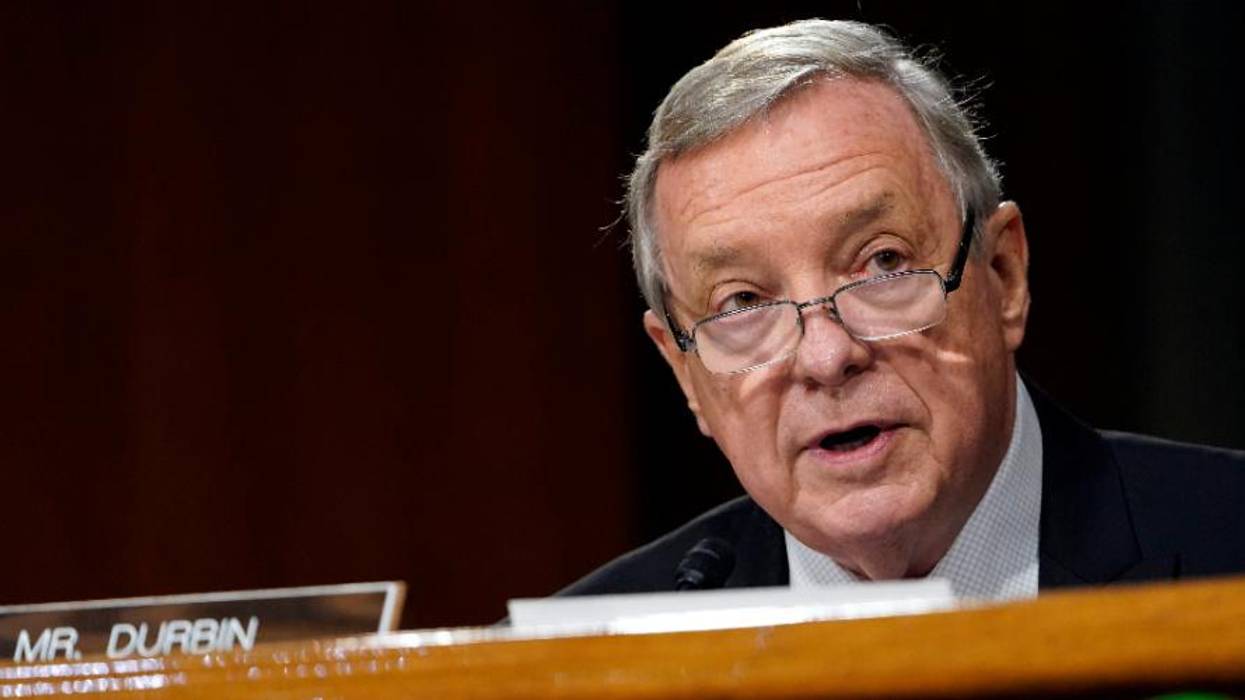
"Senate Democrats should eliminate every barrier possible" to confirm President Joe Biden's judicial nominees, said Indivisible.
With Democrats hoping to confirm dozens more federal judges following President Joe Biden's milestone of appointing 100 new members of the judiciary, progressives on Friday said the party has no choice but to eliminate a tradition they say has been exploited by Republicans to block the president's nominees.
Advocacy group Alliance for Justice said Democratic leaders, particularly Senate Judiciary Committee Chair Dick Durbin (D-Ill.) must make a choice: They can "transform our federal courts by confirming so many more judges with a respect for the rights of all of us," or they can allow Republicans to continue the tradition of using so-called "blue slips" to reject nominees.
The Senate "can't do both," said the group.
Under the blue slip practice, which is not an official Senate rule, senators can unilaterally block federal district court judge nominees from being considered by the committee if the nominee is from their home state. Only if they submit a "blue slip" for the judge can the nomination proceed.
Prior to last year's midterm elections, Durbin said the party has "made it work" and would continue to abide by the blue slip tradition, but earlier this month he said he will no longer honor the withholding of a blue slip if he believes it "discriminates because of race, gender, or sexual discrimination."
Republicans including Sens. Lindsey Graham (R-S.C.) and Marsha Blackburn (R-Tenn.) have protested, with the latter claiming the practice is "essential to the Senate's constitutional obligation to provide advice and consent."
But as NBC News reported this week, Durbin noted Republicans have made clear that they're intentionally using the tradition to block Biden's nominees, submitting only 12 blue slips since Biden took office, compared to the 120 Democrats submitted under the Trump administration.
Also under former President Donald Trump, Republicans in control of the Judiciary Committee at the time did away with the use of blue slips for circuit nominees and as a result rapidly confirmed 54 judges to the circuit court.
Demand Justice noted that under the Obama administration, Republicans blocked 17 judicial nominees using the practice.
"When Republicans had the advantage, they just didn't hesitate to eliminate blue slips for the courts of appeals, which are an even higher court," he said.
Senate Majority Leader Chuck Schumer (D-N.Y.) has said he wants his party to top the 234 federal judges the Republicans confirmed in four years. There are currently 72 district court vacancies and nine open seats on appeals courts.
To secure judicial seats, said Meagan Hatcher-Mays, director of democracy policy for Indivisible, Democrats must "be for real" and recognize that the question of whether to continue to allow blue slips is "existential."
"Republicans have used [blue slips] to successfully keep seats open on the federal bench in their states, not because they have an objection to Biden's nominees on the merits, but because they want to hold seats open in the hopes that a future MAGA president will install even more anti-abortion, anti-democracy federal judges instead," said Hatcher-Mays.
"President Biden’s judicial nominees have been exceptional and among his signature achievements throughout his presidency," she added. "Senate Democrats should eliminate every barrier possible to continue to confirm his nominees at a historic pace, including getting rid of blue slips."

"I'll fight to protect our environment, to restore the nationwide right to an abortion, and to finally hold corporate special interests accountable to lowering costs for families," the California Democrat promised.
Democratic Congresswoman Katie Porter on Tuesday announced her 2024 campaign for U.S. Senate, just two months after winning a tight race to represent California's 47th Congressional District.
The 49-year-old "whiteboard-wielding lawmaker and progressive star" has set her sights on the seat now held by 89-year-old Sen. Dianne Feinstein (D-Calif.), who is widely expected to not seek another term, especially given recent concerns about her fitness to serve in office.
"California deserves a senator that'll fight as hard as she will for working people."
"I'm running for the U.S. Senate because Californians deserve a warrior fighting for them in Washington," Porter said in an email Tuesday. "In the House, I've stood up to leaders of both parties—as both the only Democrat to oppose earmarks and as one of just a dozen members of Congress to reject lobbyist and corporate PAC money."
"I'm not a career politician. I'm a single mom of three school-aged kids in Orange County and I drive a minivan," added the lawmaker, known for her "OVRSITE" license plate. "Plenty of people know me as the 'woman with the whiteboard.' I've used it to break down the math behind important issues, like how corporate greed is driving inflation and how pharmaceutical companies are ripping off patients."
As a member of the House Natural Resources and Oversight and Reform committees, Porter has garnered national attention for using props—from her famous whiteboard to candy in clear jars—to grill pharmaceutical and fossil fuel industry executives during congressional hearings. She is deputy chair of the Congressional Progressive Caucus.
Before her 2018 House election, Porter attended Yale University and Harvard Law School, where she studied under Sen. Elizabeth Warren (D-Mass.), a renowned bankruptcy professor. Porter went on to work as a consumer protection attorney and teach at multiple universities. In 2012, she was appointed by then-California Attorney General Kamala Harris—now the vice president—to monitor the nation's five big banks following multibillion-dollar mortgage servicing settlement.
"Our work helped tens of thousands of Californians move forward with their lives," Porter recalled of her efforts to serve homeowners. "But for so many families across the country, the harm had already been done. Politicians in Washington bailed out the banks in a matter of days, but middle-class families waited years for help from Washington—help that never came."
"Over a decade after the crash, California families still find themselves stuck," she wrote. "Profits are surging for major corporations, but middle-class wages are stagnant. And the cost of things that matter most for families—affording childcare, sending your kid to college, paying for your prescription—are skyrocketing, while the high cost of housing is pushing families to the brink."
"California needs a warrior in the Senate to stand up to Mitch McConnell, big corporations, and the special interests that try to rig the rules against our families," she said, referring to the Kentucky Republican serving as Senate minority leader. "I'll fight to protect our environment, to restore the nationwide right to an abortion, and to finally hold corporate special interests accountable to lowering costs for families."
"California needs a warrior in the Senate to stand up to Mitch McConnell, big corporations, and the special interests that try to rig the rules against our families."
Porter on Tuesday was swiftly endorsed by the Progressive Change Campaign Committee (PCCC).
"On a gut level, Katie knows how to challenge power on behalf of families," said PCCC co-founder Adam Green. "We've been fighting alongside Katie from the very beginning as she's taken on predatory banks, corporate executives, and big-money special interests. Now voters are ready to send her—and her whiteboard—to the U.S. Senate."
Calling Porter "one of the most fearless critics" of corporate and Wall Street power, progressive political commentator Krystal Ball said she "would love to see her in the Senate."
Max Berger—who has worked with various progressive groups and leaders including Warren—tweeted Tuesday that "it would be cool if Katie Porter was in the Senate. California deserves a senator that'll fight as hard as she will for working people."
Berger added that "Dianne Feinstein needs to retire four years ago."
While Porter is the first to announce her bid for Feinstein's seat, at least two other California Democrats are expected to potentially enter the contest. The New York Times reported Tuesday that Rep. Adam Schiff "has already hired staff members in preparation for a statewide campaign" and Rep. Barbara Lee "has told donors of her plans to run."
Another potential contender is Rep. Ro Khanna (D-Calif.), who told the San Francisco Chronicle on Tuesday that "right now, California is facing severe storms and floods, and my district is facing historic weather conditions. My focus is on that. In the next few months, I will make a decision."
Feinstein told the Los Angeles Times in December that she plans to finish the remaining two years of her current term and will announce whether she will run again "probably by spring."
"Everyone is of course welcome to throw their hat in the ring, and I will make an announcement concerning my plans for 2024 at the appropriate time," Feinstein said in a statement Tuesday. "Right now I'm focused on ensuring California has all the resources it needs to cope with the devastating storms slamming the state and leaving more than a dozen dead."