

SUBSCRIBE TO OUR FREE NEWSLETTER
Daily news & progressive opinion—funded by the people, not the corporations—delivered straight to your inbox.
5
#000000
#FFFFFF
To donate by check, phone, or other method, see our More Ways to Give page.
Daily news & progressive opinion—funded by the people, not the corporations—delivered straight to your inbox.
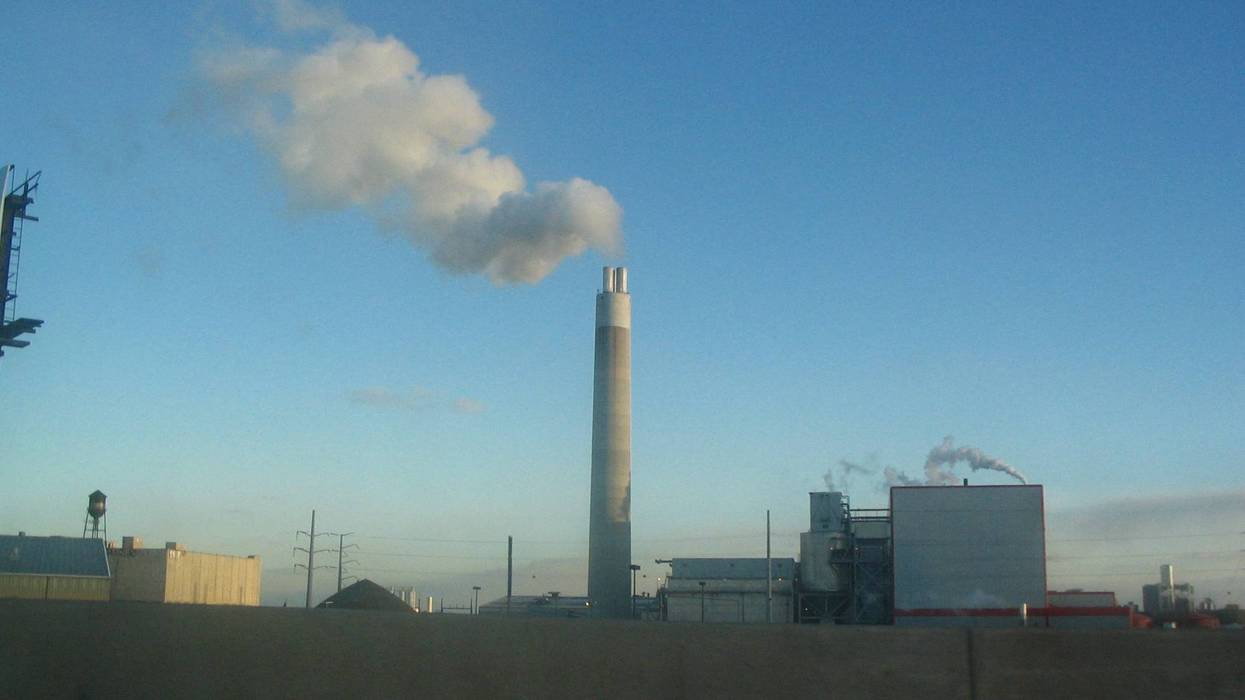
As the zero waste movement continues to grow, it must center environmental justice and the communities who have had to bear the greatest burden of pollution.
Zero waste is often framed as an idealistic goal: a world without trash, pollution, or environmental harm. But like aiming for zero traffic fatalities or zero preventable diseases, zero waste isn’t about perfection; it’s about striving for measurable improvement. At its core, zero waste asks us to rethink how we produce, consume, and conserve our resources as well as how we dispose of our waste. Because right now, that waste does end up somewhere, and too often that somewhere is in Black, Indigenous, and brown communities.
Zero waste is about generating little to no waste through strategies such as waste reduction, composting, recycling, and industrial redesign, among others. Not only do these strategies support the reduction of waste, but they also lead to more resilient cities and communities, social equity, and healthier environments.
Although the zero waste movement has grown substantially in recent decades, it continues to be challenged (rightfully so) by those who see it developing into the next “organics” movement—a movement that once prioritized providing healthier food options only to those who can afford them at a premium. Thus, leaving many communities (mostly Indigenous, Black, and brown) without options for fresh food produced with increased standards and no added synthetic substances.
But similar to the organics movement, zero waste concepts have been around for generations and are deeply rooted in various cultures around the world. The irony is that these same communities being left out are the ones that have the greatest ancestral knowledge associated with producing organic food through their generational fights against colonialism, white supremacy, and capitalism.
The communities most impacted by the waste crisis are also leading the way toward solutions.
Historically, Black, brown, and Indigenous peoples have acted as stewards of our natural environment, but have been the most impacted by pollution. Policies like redlining have further concentrated polluting facilities, including waste facilities, in Black, brown, and Indigenous communities. In the United States specifically, the environmental justice (EJ) movement was birthed through various industrial fights against the siting of landfills and incinerators in mostly Black and brown communities.
Since 1982, the small community of Afton, located in Warren County, North Carolina, has often been referred to as one of the birthplaces of the environmental justice movement, as the local community fought against a new hazardous waste landfill. This low-income, rural, and majority Black community became responsible for the first arrests in US history over the siting of a landfill. Unfortunately, the people of Warren County lost the battle, but many considered this to be the first major milestone in the national movement for environmental justice.
It wasn’t just the community of Afton fighting against the siting of waste infrastructure. Indigenous, Black, and brown communities across the country were being inundated with industrial and toxic waste zoning, and the federal government knew this. In fact, this pattern was confirmed by a 1983 analysis by the US General Accounting Office, which concluded that most commercial waste treatment plants or waste dumps were more likely to be found near Black communities than near white communities.
These industries know these communities lack the resources and capacity to fight back to protect themselves. They even developed whole reports on this topic. The 1984 “Cerrell Report” was a document commissioned by the California Waste Management Board, which advised that waste incinerators be sited in low-income, rural, and Black and brown communities solely because these areas were deemed to have the least political resistance and capacity to oppose industrial projects. These communities are most impacted by waste policies and are often targeted by the waste industry for further development. The end result of this is decades of underinvestment, coupled with extreme health disparities and negative social impacts.
The communities most impacted by the waste crisis are also leading the way toward solutions. Across the country, communities are composting, reusing, and practicing zero waste as acts of resistance against systems that profit from landfills, incinerators, and other polluting facilities.
After more than a 30-year fight, community activists in Detroit finally shut down the city's incinerator in 2019. The facility was referred to as a “bad neighbor” due to it being a major source of air pollution, emitting pollutants like sulfur dioxide, carbon monoxide, lead, mercury, and cadmium throughout the surrounding communities. Recognizing local legislators believed the incinerator was the best way to handle the city’s waste, local activists took it upon themselves to develop a backyard community composting program to show not only that zero waste was possible in Detroit, but that community members wanted it and had bought into this idea.
Seven years later, the City of Detroit’s Office of Sustainability launched its first-ever Community Compost Pilot Program with a goal of diverting over 80,000 pounds annually of food waste from landfills and incinerators. If it weren’t for the initial efforts from community members, the City of Detroit would likely still be burning its trash to this day.
And, it's not just Detroit. Activists in California closed down the last two incinerators in the state in favor of developing new zero waste policies. Specifically, they targeted the vast amount of public tax subsidies that were being used to prop up the incinerator industry, as incinerators are incredibly inefficient and expensive to operate. Instead, that money is now being directed toward real zero waste solutions such as waste reduction, composting, recycling, and industrial redesign, among others.
In addition to closing the facilities of the past, EJ communities have now begun influencing the facilities of the future through the development of new statewide landfill methane regulations. The states of California and Colorado have both recently updated their landfill methane regulations to include stronger protections for vulnerable communities and higher accountability for the waste sector. Many of these recommendations came directly from EJ communities suffering the most from the impacts of landfills.
This is only a small snapshot of the hundreds of communities across the country working to demonstrate that community-led zero waste strategies can reduce emissions, reduce waste, and reduce harm. From Louisiana to Oregon, from Maine all the way to California… Practical solutions to our waste and climate crisis already exist, and as the zero waste movement continues to grow, it must center environmental justice and the communities who have had to bear the greatest burden of pollution, too often for generations.
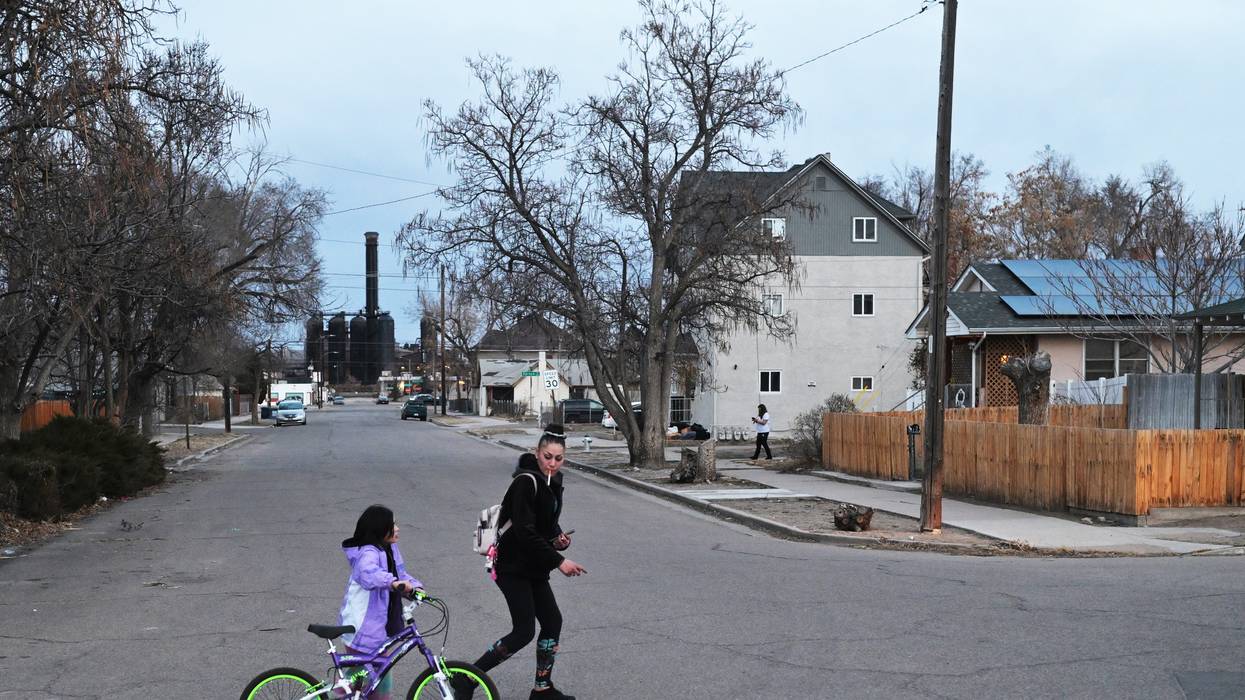
Local and state cumulative impacts laws can provide needed protections for communities where the federal government is failing, and make fertile ground for future federal progress.
One year ago, the Trump administration launched an agenda putting polluting corporations over our health, lives, and future. This week marks the anniversary of the first-ever environmental justice executive order, and yet we are left in the wake of dozens of harmful orders from Trump rescinding that very order and more targeting environmental justice. Along with unprecedented health and environmental rollbacks, this administration is forcing our communities to bear the greatest costs. Now, local leadership is essential. Groundbreaking state and local laws are filling gaps, showing what is possible, and building momentum for what’s next.
While the federal government unlawfully claws back lifesaving investments such as billions of dollars of grants to clean up water, remove lead, and create clean energy jobs in disadvantaged communities, they’ve also attacked over 30 environmental protections, including undoing stronger soot pollution regulations, and gutted bedrock laws. These actions will cause environmental justice neighborhoods (communities of color and low income) to suffer major consequences, with even more toxic pollution and growing impacts of climate change—threatening jobs, families, and lives.
Seventy-eight million people of color live with dangerous air pollution, and, in 97% of US counties, Black people have the highest death rates from soot pollution. In 2025, 75% of the US population—255 million people—were exposed to “dangerous, life-threatening” heat. In NYC, Black people represent 50% of heat-related deaths, despite being only 25% of the population.
These outsize health harms are no accident. A history of redlining was followed by a disproportionate amount of pollution being dumped in communities of color's backyards. Cumulative impacts are the result. Put simply, cumulative impacts are the combination of many sources of pollution and pressures in an area creating a multiplying effect. Visit any community of color or low income overloaded with highways, industrial, or chemical facilities—like the South Bronx, Newark, or “Cancer Alley” in Louisiana—and you will experience the soot, smog, heat, toxic fumes, and smells that show what cumulative impacts really are. Cumulative impacts laws can be a solution by checking the amount of polluting facilities in an area before allowing more to be built, ending old loopholes for existing facilities, limiting new pollution, and more.
The time for reimagining and recommitting to our ambition to achieve environmental justice is now.
State laws can inform and complement the creation of federal laws like the Environmental Justice for All Act, introduced by the late Reps. Donald McEachin (D-Va.) and Raúl Grijalva (D-Ariz.) in 2020. This act embodies input from communities from across the US, and has the promise of being reintroduced by a new generation of congressional champions, inspired by state progress.
We also need these laws to be backed by strong implementation. It is a key moment in New York as the Department of Environmental Conservation is developing rules to carry out the cumulative impacts law. In New Jersey, their Department of Environmental Protection is issuing its first permit decisions based on the cumulative impacts law. These decisions need to set a precedent to break with business as usual, while implementing the strongest conditions in accordance with the environmental justice law. In both cases, the process to put these laws into action must offer real protections and meaningfully include communities.
The time for reimagining and recommitting to our ambition to achieve environmental justice is now. State and local governments must step up in the face of federal attacks and maintain the momentum that environmental justice communities demand and deserve. In this moment, we need more state and local cumulative impact laws that hold the promise of a long-overdue vision of safe and healthy places to live, work, play, and pray.
Warren says new whistleblower reports "show the extent of the Trump administration's attack on civil rights and show how the administration appears to be ignoring the law."
US Sen. Elizabeth Warren is calling for an investigation into the Department of Housing and Urban Development after several whistleblowers reported that Trump appointees have gutted enforcement of the decades-old law banning housing discrimination.
A New York Times report published Monday, quotes "half a dozen current and former employees of HUD’s fair housing office" who "said that the Trump political appointees had made it nearly impossible for them to do their jobs" enforcing the 1968 Fair Housing Act "which involve investigating and prosecuting landlords, real estate agents, lenders and others who discriminate based on race, religion, gender, family status or disability."
In a video posted to social media, Warren (D-Mass.) explained that “if you’re a mom protecting her kids from living with an abusive father or if you’re getting denied a mortgage because of the color of your skin, you have civil rights protection under US law. But the Trump administration has been systematically destroying these federal protections for renters and homeowners.”
According to the Times, when President Donald Trump's Department of Government Efficiency, formerly led by billionaire Elon Musk, launched its crusade to dismantle large parts of the federal government at the start of Trump's second term earlier this year, the Office of Fair Housing (OFH) had its staff cut by 65% through layoffs and reassignments, with the number of employees dropping from 31 to 11. Just six of the remaining staff now work on fair housing cases.
The number of discrimination charges pursued by the office has plummeted since Trump took office. In most years, it has 35. During Trump's second term, the office has pursued just four. Meanwhile, it's obtained just $200,000 total in legal settlements after previously obtaining anywhere from $4 million to $8 million per year.
Emails and memos obtained by the Times show a pattern of Trump appointees obstructing investigations:
In one email, a Trump appointee... described decades of housing discrimination cases as “artificial, arbitrary, and unnecessary.”
In another, a career supervisor in the department’s [OFH] objected to lawyers being reassigned to other offices; the supervisor was fired six days later for insubordination.
In a third, the office’s director of enforcement warned that Trump appointees were using gag orders and intimidation to block discrimination cases from moving forward. The urgent message was sent to a US senator, who is referring it to the department’s acting inspector general for investigation.
Several lawyers said they have been restricted from using past cases in enforcement and communicating with certain clients without approval from Trump's appointees.
A memo also reportedly went out to employees informing them that documents “contrary to administration policy” would be thrown out, and that “tenuous theories of discrimination” would no longer be pursued.
Among those supposedly "tenuous" cases have been ones involving appraisal bias—the practice of undervaluing homes owned by Black families—zoning restrictions blocking housing for Black and Latino families, and cases related to discrimination against people over gender or gender expression.
The administration has also abandoned cases related to the racist practice of "redlining"—the decades-old practice of denying mortgages to minorities and others in minority neighborhoods—with memos from Trump appointees calling the concept "legally unsound."
The changes follow a sweeping set of executive orders from Trump during his first week in office, targeting "diversity equity, and inclusion" (DEI) programs. Employees at the Office of Fair Housing told the Times that Trump appointees had begun to describe much of the department's work as "an offshoot of DEI."
A HUD spokesperson, Kasey Lovett, told the Times that it was "patently false" to suggest that the administration was trying to weaken the Fair Housing Act. She pointed out that HUD was still handling approximately 4,100 cases this year, on par with the previous year. As the Times notes, "Lovett did not address, however, how many of the cases had been investigated or had resulted in legal action."
According to the Times:
Hundreds of pending fair housing cases were frozen, and some settlements revoked, even when accusations of discrimination had been substantiated, according to the interviews and the internal communications.
In one instance, a large homeowner’s association in Texas was found to have banned the use of housing vouchers by Black residents. That case had been referred to the Justice Department, but the referral was abruptly withdrawn by the new Trump appointees.
Four current staff members have provided the trove of documents to Warren, who announced Monday that she'd sent a request to Brian Harrison, HUD’s acting inspector general, to open an investigation into its handling of discrimination cases.
Warren said that the documents "show the extent of the Trump administration's attack on civil rights and show how the administration appears to be ignoring the law."
In a press release from the Democrats on the Senate Committee on Banking, Housing, and Urban Affairs, Warren, the ranking member, highlighted the particularly devastating impact staffing cuts have had on the enforcement of complaints under the Violence Against Women Act, which the Times says only two of the six lawyers remaining at HUD have experience with.
According to Warren, whistleblowers said the cuts were "placing survivors in greater danger of suffering additional trauma, physical violence, and even death."
Warren said that as a result of the hundreds of dropped cases, "Now people are asking, 'well, why would I file a case at all if nothing's going to happen?'"
Calling for an independent investigation, Warren said, "We wrote these laws to make this a fairer America, and now it's time to enforce those laws."
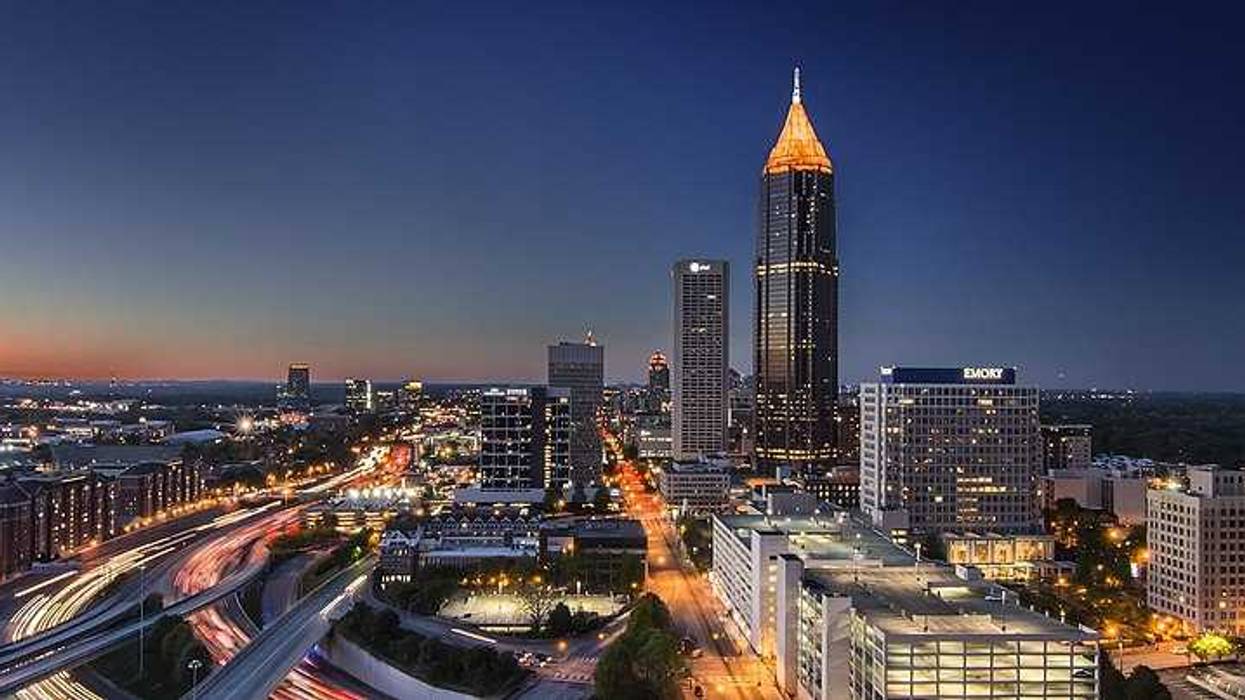
Unless residents are meaningfully included from the start, we’ll continue to pay the price for decisions that will be made without us.
On some streets in Atlanta’s Westside neighborhoods, you can smell the flood before you see it. Gray wastewater rises into the roads, seeps into homes and cars, and lingers long after the storm has passed. Residents step onto their porches, hands over their faces, taking in the now-familiar scene. All it takes is a strong rainstorm to overwhelm a system that was never built to support the people who live here.
In one area, flooding became more severe after new construction added housing density without adequate upgrades to drainage infrastructure. A developer installed a retention pond across from a residential block as part of the deal, but it hasn’t been enough. This pattern is not unique to Atlanta. Many cities with legacies of redlining, highway expansion, and racially unequal investment are now experiencing the cumulative toll of decades of neglect and the rising cost of excluding communities from the decisions that shape their neighborhoods.
The flooding that plagues Atlanta’s Westside isn’t just a weather issue. It’s the result of decades of disinvestment, shortsighted planning, and infrastructure that was never designed to serve the communities that live here. And while other cities long ago updated their water systems to separate drinking water from wastewater, Atlanta still runs both through the same outdated pipes. When a heavy rain hits, the system overflows, and neighborhoods are submerged in sewage.
Many of Atlanta’s historic Black neighborhoods are situated at the base of hills, downhill from the wealthier, whiter parts of the city. That’s not a coincidence. It reflects a long history of redlining, highway construction through Black communities, and the repeated exclusion of Westside residents from decisions that shape our lives. We live in the lowlands, and we’ve been treated like an afterthought for generations.
Atlanta often celebrates its civil rights legacy, and as someone who calls the Westside home and works to support communities across the region, I understand the weight of that history. But legacy alone won’t stop the floods.
Now, as the city rushes to accommodate new developments, from Mercedes-Benz Stadium to the Gulch, we are told that flooding will finally be addressed, but only because it now threatens new investment. Downtown Atlanta sits atop massive concrete structures built 50 feet above what was once an industrial rail hub. These platforms were funded with public money, including half a billion dollars to support a luxury development in The Gulch.
Developers were handed city resources and made a promise to include affordable housing and community benefits. As part of a nearly $1.9 billion incentive package, developers agreed to make 20% of the new housing in Centennial Yards affordable. Instead, builders opted to pay an $8 million in-lieu fee, thereby avoiding any affordable housing options altogether. It’s a legal way to sidestep the promises used to gain public support in the first place. And without strong accountability, that money rarely flows back into the communities that were supposed to benefit.
Existing Westside neighborhoods are absorbing the infrastructure demands created by new development. One of many examples is Georgia Power's proposal to build a new electrical substation just two blocks from an elementary school to power nearby luxury developments. These decisions are made without our input, yet our neighborhoods are left to manage the fallout at once: an overwhelmed watershed system, expanding energy needs, and the strain on roads and public services that were never built to support this kind of growth.
This kind of development process is reactive and extractive. It’s a pattern I have seen over and over again. A developer shows up. A problem is discovered, and the community raises concerns. At that point, the city scrambles to hold a few meetings or patch together a short-term fix. But the damage has already been done.
This isn’t just inconvenient. It’s disruptive to our lives and our stability. It undermines property values, displaces long-time residents, and increases the financial burden on families already stretched thin. I have seen neighbors leave not because they wanted to, but because living here became unsustainable.
Living through the consequences and working inside the systems that produced them, I know change is possible, but only if we change how decisions are made. My journey, shaped by life in Atlanta’s Westside neighborhoods and a career focused on building community power, brought me to lead the national Just Communities initiative. The Westside is where so much of Atlanta’s civil rights legacy was born. That history of resistance and resilience is not just part of the past. It’s what drives me, and many others, to continue fighting for justice.
Just Communities is grounded in the belief that equity is a forethought. It shapes the process, not just the outcomes. The Just Communities Protocol offers a practical road map for doing exactly that. At its heart is the Declaration of Collaboration, a tool designed to formalize shared governance among community members, city officials, and developers. It’s not about public input after the fact. It’s about building structures where residents shape decisions from the beginning: what gets built, where, and how.
Right now, the City of Atlanta is updating its comprehensive plan, zoning ordinances, and watershed infrastructure. These are opportunities to finally do things differently. However, unless residents are meaningfully included from the start, we’ll continue to pay the price for decisions that will be made without us.
Atlanta often celebrates its civil rights legacy, and as someone who calls the Westside home and works to support communities across the region, I understand the weight of that history. But legacy alone won’t stop the floods. Honoring it requires more than symbolism; we need a new process, one rooted in justice and shared power. If we want different outcomes, we must change how decisions are made. Until that happens, communities like mine will continue to pay the price.
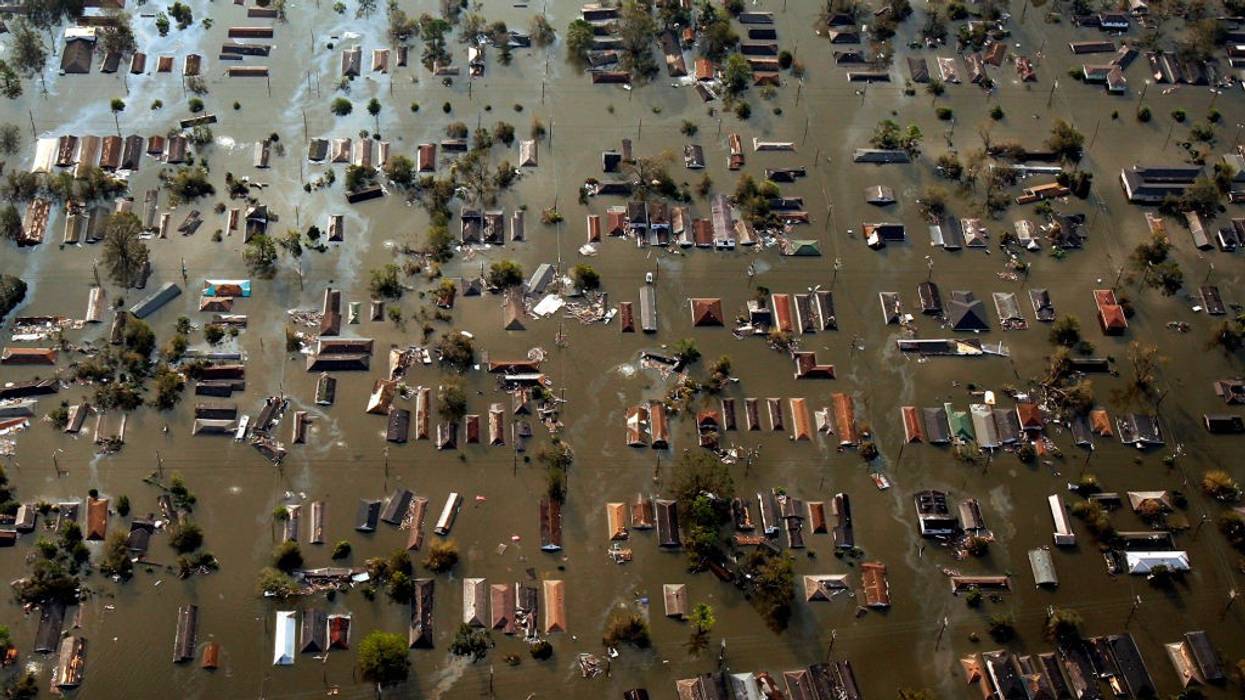
Hurricane Katrina not only exposed the vulnerability of communities to extreme weather events exacerbated by climate change, but also systemic injustices and a deeply flawed US insurance system.
It’s been 20 years since Hurricane Katrina struck the Gulf Coast of the United States, wreaking havoc in Louisiana, Mississippi, and Alabama. An estimated 1,833 people died in the hurricane and the flooding that ensued. The storm destroyed or damaged more than a million housing units and more than 200,000 homes, causing one of the largest relocations of people in US history.
In the months and years that followed, entrenched inequalities, questionable policy choices, and predatory practices by private insurers decided who could return home and rebuild. For instance, countless residents impacted by the hurricane learned too late that their standard homeowners’ insurance offered no protection against flood damage, leaving them to shoulder devastating repair costs themselves. In cities such as New Orleans, these dynamics further marginalized Black residents, who were more likely to live in flood-prone neighborhoods. The result was widespread and often permanent displacement, with longtime communities effectively erased from the map.
Hurricane Katrina not only exposed the vulnerability of communities to extreme weather events exacerbated by climate change, but also systemic injustices and a deeply flawed US insurance system. Private insurers pour billions of dollars into the fossil fuel industry, which is the main contributor to climate change. Thus, insurers help fuel the very crisis that is driving more frequent and severe climate disasters like Hurricane Katrina. Meanwhile, they are passing the financial risk of the escalating impact of climate change onto policyholders and forcing them to bear the costs of the crisis the industry itself helps perpetuate.
As climate-driven storms grow more frequent and increasingly destructive, the same insurance failures, housing crises, and inequitable recovery that followed Katrina now threaten communities nationwide. Two decades later, Katrina’s hard lessons cannot be ignored. Everyone deserves to live in safety and the opportunity to stay in the place they call home. Corporate greed and government negligence cannot continue to undermine these rights.
On August 29, 2005, Hurricane Katrina made landfall with winds that reached 140 miles per hour. These high-velocity winds drove a storm surge that raised sea levels 25 to 28 feet above normal along parts of the Mississippi coast, and 10 to 20 feet along the southeastern Louisiana coast. The surge breached protective levees, causing catastrophic flooding. Two days after the hurricane struck, 80% of the city of New Orleans was underwater. Other coastal towns and cities in Louisiana, Mississippi, Alabama, and along the western Florida panhandle also experienced significant storm surges and destructive winds, which caused widespread flooding and damage to homes.
Approximately 1.5 million people aged 16 years and older had to leave their residences in Louisiana, Mississippi, and Alabama because of Hurricane Katrina. In New Orleans, where the mayor issued a mandatory evacuation order, a population of around 500,000 was reduced to a few thousand people within a week of the storm.
As water was pumped out of the flooded areas and basic services and infrastructure were restored, New Orleanians were allowed to return. But tens of thousands were not able to do so. One year after Katrina, approximately 197,000 residents had not come back to the city; many relocated to the relatively close cities of Houston and Baton Rouge, but others as far away as Alaska and Massachusetts. Still today, many of those who evacuated the city, hoping to return, remain displaced. New Orleans’s metropolitan area population remains 20% below pre-Katrina levels.
The development of New Orleans has been fraught with injustices. Racial segregation, redlining, and chronic underinvestment in Black communities pushed residents and renters into areas with crumbling infrastructure, poorer-quality homes, and greater exposure to environmental hazards and contaminants.
When Katrina hit, Black residents were concentrated in the most vulnerable parts of New Orleans, located well below sea level and poorly protected by inadequate levees. Accordingly, neighborhoods with the highest percentages of Black residents saw greater housing destruction from the storm.
Did You Know?
The disparate impact of climate disasters on property and infrastructure in US minority communities is the result of nearly a century of discriminatory home lending and insurance policies.
In the 1930s, the US federal government used a rating system in its low-cost home loan program to assess lending risk. Assessors created maps ranking the perceived risk of lending in certain neighborhoods, with race often used as the determining factor in assessing a community’s risk level. Black and immigrant neighborhoods were typically rated as “hazardous” and outlined in red, warning lenders that the area was a perilous place to lend money. Known as redlining, these and other discriminatory practices led to a lack of investment in minority communities.
This lack of financial access resulted in shoddy construction and poor infrastructure that have made minority neighborhoods less resilient to climate disasters and more prone to other financial risks. For instance, insurers are more likely to increase premiums if they determine that properties are less resilient to climate damage. This new financial practice is known as bluelining, and it occurs when insurers raise their prices or pull out of areas that they perceive to be at greater environmental risk.
For Lousina’s Black residents, Katrina’s damage was compounded by discriminatory recovery policies that deepened inequalities. After the storm, the federally funded Road Home program was launched to help residents repair or rebuild damaged homes. It offered grants of up to $150,000 per homeowner, but payments were based on whichever was lower—the home’s pre-storm value or the cost to rebuild.
Because property values in Black neighborhoods were often far lower than in white neighborhoods, this meant many Black homeowners would receive only a fraction of what they needed to rebuild. In one case, a woman had rebuilding costs of over $150,000, but because the estimated value of her home pre-storm was much lower, she would’ve received an essentially useless grant of $1,400. As a result, the program was alleged to discriminate against Black homeowners, and a federal class action suit was filed on November 12, 2008, on behalf of 20,000 homeowners. The litigation settled with Louisiana agreeing to reward approximately 1,300 homeowners with $62 million in additional compensation.
Renters fared no better. Hurricane Katrina damaged or destroyed 82,000 rental units in Louisiana, 20% of which were affordable to extremely low-income households. The impact on public and federally subsidized rentals was especially severe. In New Orleans, public-housing residents were displaced at a rate of nearly 90%. And reconstruction policies only exacerbated the disparities these residents faced.
Consider this.
Before the storm hit and floodwaters rose, the Housing Authority of New Orleans evacuated all residents living in its 7,379 public housing units. After the waters receded, residents were allowed to return to approximately 1,600 units. Most other units were sealed off with steel doors and barbed wire—officially due to storm damage—before being slated for demolition. Yet, the redevelopment that followed included far fewer mixed-income apartments. By 2010, five years after the hurricane, less than half of the original 7,379 units were open in any form. The dramatic decrease in public housing contributed to the permanent displacement of many of New Orleans’ longtime residents.
After Katrina, renters faced a range of economic pressures. Many landlords delayed repairs or rebuilding, especially in low-income areas, which are seen as less profitable. Some used the disaster as an opportunity to renovate and target higher-paying tenants, further shrinking the supply of affordable rentals. Within five years of the Hurricane, the stock of mid-priced housing units in New Orleans had declined by more than two-thirds, pushing the median rent from $689 in 2004 to $876 in 2009. These rising costs hit Black residents hardest, forcing many to leave and permanently altering the city’s character.
Even those who could afford to return to New Orleans and buy a new home after Katrina faced soaring prices—up 14% in the first year alone—as demand outpaced the reduced housing supply. In addition, homeowners’ insurance premiums jumped 22% in Louisiana between 2005 and 2007, adding yet another barrier to homeownership.
Then, as now, and to the surprise of many victims of the Hurricane, standard home insurance policies in the US did not protect homeowners from floodwater damage. This means residents must buy additional flood insurance to be protected in the event of a disaster like Katrina.
New Orleans residents had among the highest participation rates in the country in the National Flood Insurance Program (NFIP), a federal government program that provides flood insurance to homeowners, renters, and businesses. However, the majority of residents in areas affected by Katrina had not purchased flood insurance. Uninsured property losses due to flooding were economically devastating, exceeding an estimated $41.1 billion (USD 100 billion in 2024 prices). In addition, the NFIP incurred some $16.1 billion in losses and a deficit exceeding $18 billion as a direct result of the flooding caused by Katrina.
Even for New Orleanians with flood insurance, coverage likely fell short. Policies typically covered about $152,000—the city’s median house price at the time. But this was rarely enough to replace the damaged household contents or to pay residents for temporary housing while their home was uninhabitable.
More and more, whether people hit by climate-driven storms get anything from their insurers depends not on the fact that their homes were damaged, but on how they were damaged.
While the standard home insurance policy does not cover water damage from a hurricane, it does cover wind damage. This gap left residents and insurers arguing about whether Katrina’s destruction to their homes was caused by its high-velocity winds or the flooding that followed, with multiple lawsuits challenging the validity of flood exclusions in insurance policies. Even before the flooding receded and residents of Louisiana and Mississippi could start to rebuild their lives, courts were inundated with litigation, with about 6,600 insurance-related lawsuits being instigated in the US District Court. Yet, Katrina’s destructive flooding was driven by a storm surge powered by the hurricane’s high winds—the very peril homeowners’ policies are supposed to cover.
On September 15, 2005, Mississippi’s Attorney General Jim Hood filed a case against five of the largest homeowners’ insurers in the state. Attorney General Hood sought a court declaration that the flood exclusion provision in standard home insurance policies was “void and unenforceable” and in violation “of the public policy of the State of Mississippi.” However, in that case and others, courts ruled that the flood exclusions were spelled out clearly in homeowners’ insurance policies and did not violate public policy.
The exclusion of water damage from insurance coverage remains a present issue for existing homeowners. According to the Federal Emergency Management Agency, since 1996, 99% of US counties have been impacted by flooding, but only 4% of homeowners have flood insurance. And, more importantly, over half (56%) of American homeowners don’t know that their home insurance policy excludes flood damage. As hurricane season intensifies, many homeowners will be shocked to learn that their insurance does not cover flood loss.
After Katrina, some insurers exploited the false dichotomy between wind and water damage, classifying losses as water damage to shift liability onto homeowners or the NFIP.
In 2013, a federal jury in Mississippi found that State Farm Fire and Casualty Co. defrauded the NFIP after avoiding covering a policyholder’s wind losses from Katrina by blaming the damage on storm surge, which is covered by federal flood insurance. Almost 10 years later, in August 2022, State Farm settled the case, agreeing to pay $100 million to the federal government.
State Farm was not the only insurer engaged in nefarious behavior, attributing Hurricane Katrina damage to flooding instead of wind. In oral argument before the Mississippi Supreme Court in 2009, insurance company USAA publicly admitted that it shifted its own costs to the NFIP and thus taxpayers.
The false dichotomy between the wind and water damage resulting from a hurricane remains nebulous. The damage caused by Hurricane Ian in Florida, North Carolina, and South Carolina in 2022, with its record-high wind speeds, generated $63 billion in private insurance claims. In contrast, 2018’s Hurricane Florence primarily caused water—not wind—damage in North and South Carolina, leaving uninsured flood losses estimated at nearly $20 billion and letting private insurers largely escape liability. More and more, whether people hit by climate-driven storms get anything from their insurers depends not on the fact that their homes were damaged, but on how they were damaged.
Hurricane Katrina exposed widespread gaps in home insurance coverage that persist today. In the 20 years since Katrina, unmitigated climate change has fueled rising temperatures and made extreme weather events such as hurricanes both more frequent and more severe. As storms grow costlier and more destructive, insurers have raised home insurance premiums and declined to renew many policies, leaving households with fewer options for protection. This escalating cycle has produced today’s insurance crisis.
Federal and state lawmakers must respond. The federal government must reform the NFIP to improve federal flood insurance and ensure it provides affordable coverage for more hazards. At the same time, the NFIP should do more to support community-based mitigation. States, meanwhile, must use their regulatory authority over insurance markets to address skyrocketing insurance costs and growing coverage gaps resulting from mounting climate change impacts.
Regulators should adopt legislation, like New York’s Insure Our Future bill, to prohibit insurers from underwriting new fossil fuel projects, require them to phase out support for existing projects, and force insurers to divest from fossil fuel companies.
The insurance industry cannot ignore its role in fueling the very crisis it now faces. Climate change-induced disasters are indisputably driven by fossil fuel emissions. And insurance companies facilitate climate change by investing in fossil fuel companies and underwriting fossil fuel projects. US insurance companies have investments of more than $500 billion in fossil fuel-related assets, including coal, oil, and gas. In 2022 alone, insurers worldwide collected $21 billion in premiums for underwriting fossil fuel projects—directly enabling their expansion.
Regulators should adopt legislation, like New York’s Insure Our Future bill, to prohibit insurers from underwriting new fossil fuel projects, require them to phase out support for existing projects, and force insurers to divest from fossil fuel companies. Without bold action, insurers will continue to profit from climate destruction while leaving families and communities to bear the costs.

Areas previously affected by redlining are now also those prone to flooding and higher temperatures, a problem compounded by poor infrastructure that fails to mitigate these risks.
In an era of climate disasters, Americans in vulnerable regions will need to rely more than ever on their home insurance. But as floods, wildfires, and severe storms become more common, a troubling practice known as “bluelining” threatens to leave many communities unable to afford insurance—or obtain it at any price.
Bluelining is an insidious practice with similarities to redlining—the notorious government-sanctioned practice of financial institutions denying mortgages and credit to Black and brown communities, which were often marked by red lines on map.
These days, financial institutions are now drawing “blue lines” around many of these same communities, restricting services like insurance based on environmental risks. Even worse, many of those same institutions are bankrolling those risks by funding and insuring the fossil fuel industry.
This situation will demand a radical rethink of how we approach investing in our communities based on climate risks.
Originally, bluelining referred to blue-water flood risks, but it now includes other climate-related disasters like wildfires, hurricanes, and severe thunderstorms, all of which are driving private-sector decisions. (Severe thunderstorms, in fact, were responsible for about 61% of insured natural catastrophe losses in 2023.)
In the case of property insurance, we’re already seeing insurers pull out of entire states like California and Florida. The financial impacts of these decisions are considerable for everyone they affect—and often fall hardest on those in low-income and historically disadvantaged communities.
A Redfin study from 2021 illustrated that areas previously affected by redlining are now also those prone to flooding and higher temperatures, a problem compounded by poor infrastructure that fails to mitigate these risks. This overlap is not a coincidence but a further consequence of systemic discrimination and disinvestment.
This financial problem exists no matter where you live. In 2024, the national average home insurance cost rose about 23% above the cost of similar coverage last year. Homeowners across more and more states are left grappling with soaring premiums or no insurance options at all. And the lack of federal oversight means there is little uniformity or coordination in addressing these retreats.
This situation will demand a radical rethink of how we approach investing in our communities based on climate risks. For one thing, financial institutions must pivot from funding fossil fuel expansion to investing in renewable energy, natural climate solutions, and climate resilience, including infrastructure upgrades.
What about communities in especially vulnerable areas?
One strategy is community-driven relocation and managed retreat. By relocating communities to low-risk areas, we not only safeguard them against immediate physical dangers but also against ensuing financial hardships. Additionally, preventing development in known high-risk areas can significantly decrease financial instability and economic losses from future disasters.
As part of this strategic shift, financial policies must be realigned. We need regulations that compel financial institutions to manage and mitigate financial risk to the system and to consumers. We also need them to invest in affordable housing development that is energy-efficient, climate-resilient, and located in areas less susceptible to climate change in the mid- to long-term.
Meanwhile, green infrastructure and stricter energy efficiency and other resilience-related building codes can serve as bulwarks against extreme temperatures and weather events.
The challenge of bluelining offers us an opportunity to forge a path towards a more resilient and equitable society. We owe it to the future generations to do more than just adapt to climate change. We also need to confront and overhaul the systems that harm our climate. The communities most exposed to climate change deserve no less.
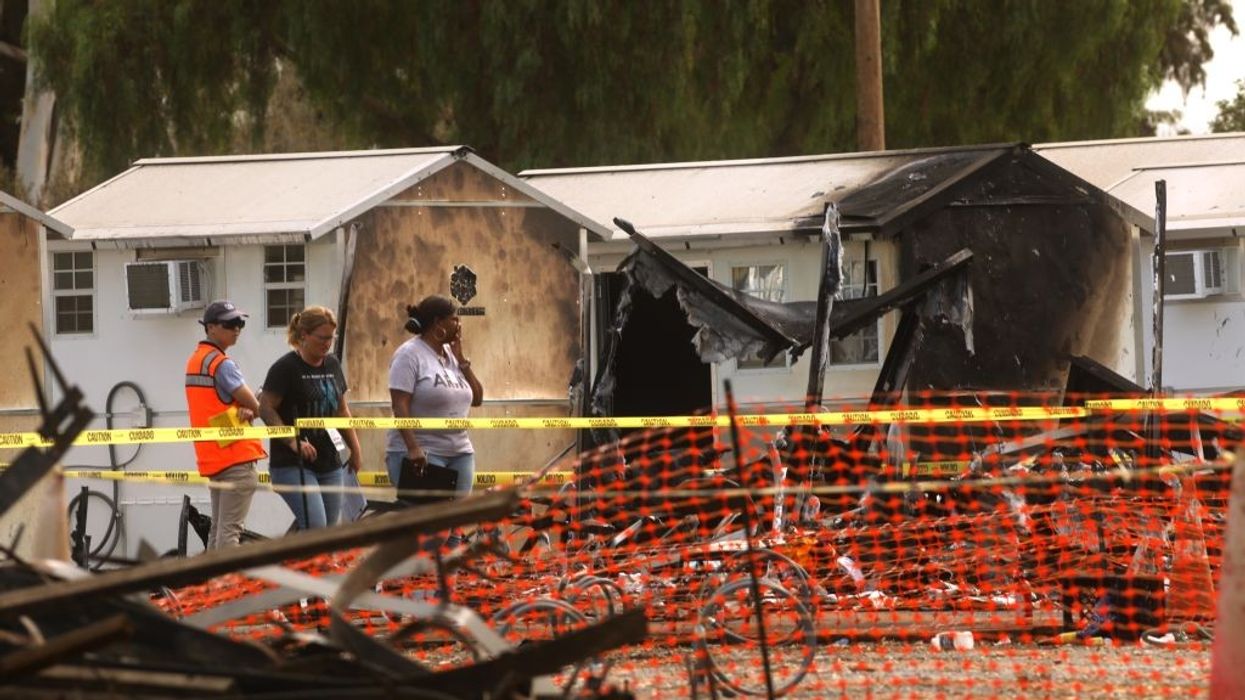
There is no developed country in the world besides the United States where the very ill, mothers who have just given birth, elderly people who worked all their lives, and veterans who fought for their country are unhoused.
Yesterday, I read a story about a family of four—granted two were very young—so excited about all the money they were saving living in a tiny house. Today, the story was about a young man who had no cash, so he has tricked out a semitruck interior. Last week it was a renovated shipping container from Lowe's, the week before, it was a fully fixed-up ancient school bus. Some of these projects look like they might be OK places to live, especially if you live in a climate where you can be outdoors much of the time—a very quickly shrinking portion of the world.
What is going on? This is the wealthiest country in the history of the world, as Noam Chomsky reminds us. I am 69 years old. The people in my generation, and even more the generation older than I, were able to purchase homes at prices that haven't been seen for decades, at sweet mortgage interest rates that made it possible in many cases for one parent to work and the family to prosper. This mostly applies to white Americans, as the GI Bill (for the WWII generation) mainly helped almost all returning white GI's become homeowners.
When I was starting to look for my own housing, amazing deals on land and fixer-uppers, as well as reasonably priced starter homes, existed and in fact were still abundant in some cities and states. Even for Black home buyers, who had been blocked by redlining (policies created by banks to keep the suburbs white), 40 years ago homes were more affordable and many Black families took advantage of relatively low prices to purchase homes.
What appears to be happening is that, like so many other long term failures, the housing crisis can be laid at the dead, unmourned feet of Ronald Reagan.
Today, there are no housing bargains. In fact, in many states and cities, there is no housing at all for anyone except the most affluent. With no real incentives from the government to build workforce housing, developers build to make the largest profit possible—and the large profits are in luxury housing. In my state, Vermont, not only is the great housing deal a thing of the past, but there are also no rentals available. Some friends recently applied for a rental in my small town, Brattleboro, and when the landlord told them he would rent to them, he informed them that he had received 119 applications, and the place was on the market for about a week, if that.
What appears to be happening is that, like so many other long term failures, the housing crisis can be laid at the dead, unmourned feet of Ronald Reagan. Before 1980, the federal government actually used to build housing. During Reagan's transformational eight years as president, he essentially disposed of the idea that building housing is an obligation of the government. Reagan sponsored a completely inadequate supposed substitute for building the housing desperately needed by a fast growing country. The population has grown by a full third from 1980 until today—the federal government has not built any housing for the 105 MILLION more people who now populate the country.
The Reagan plan, which has been an abject failure, was to give tax breaks to developers to build a small number of market-rate apartments in their upscale projects. Reagan said in 1981 that every church and synagogue should take in 10 homeless families and voila! no more homeless. He also turned his back on a scandal in which U.S. Department of Housing and Urban Development money was given to Republican consultants to confer on how to stop building housing altogether instead of the intended use: building and repairing low-income housing. It seems to some that the housing crisis has happened quickly, but I would argue that it has been four decades in the making.
In every other developed country, there is social housing for those in need. In Vienna, Austria, the social housing is so desirable that 78% are renters, many by choice. The rentals are mixed income, and are a major social network in the city. How social housing is viewed in Europe varies by country, but there is nothing like the problems poor people face in the United States. There is no developed country in the world besides the United States where the very ill, mothers who have just given birth, elderly people who worked all their lives, and veterans who fought for their country are unhoused.
We will continue to see the youth, and the not so young, of America creatively housing themselves—whether it is the shed set up in Mom and Dad's back yard, the ubiquitous garage and basement apartments for the more fortunate, old, used RVs, or possibly a regrowth of house shares, communes, and other methods of keeping a roof over one's head. What is highly unlikely is that we will see a time in the near future where the current younger generation is heading to the local savings and loan for a mortgage.
The U.S. Justice Department announced Wednesday that a mortgage company owned by billionaire businessman Warren Buffett engaged in an illegal "pattern or practice of lending discrimination" by "redlining" in the Philadelphia area, and will pay $20 million in a settlement agreement.
"The complaint also alleges that Trident's employees exchanged emails where they referred to neighborhoods of color as 'ghettos' and made racist jokes."
The DOJ, which launched a Combatting Redling Initiative last October, is calling the deal the first it has ever reached with a nonbank lender and the second-largest settlement in the agency's history involving the illegal practice of denying mortgage loans to potential homebuyers of color.
The U.S. Consumer Financial Protection Bureau alleged in a complaint filed Wednesday that from at least 2015 until 2019, Trident Mortgage Company--which is owned by Buffett's Berkshire Hathaway Inc.--violated the Fair Housing Act and the Equal Credit Opportunity Act by avoiding "providing home loans and other home mortgage services in majority-minority neighborhoods" in metropolitan Philadelphia, including in New Jersey and Delaware. The lender also "discouraged those living in, or seeking credit to purchase properties in, these neighborhoods from seeking or applying for credit from Trident."
Under the terms of the agreement, Trident will invest over $20 million in boosting credit opportunities in neighborhoods of color in the Philadelphia metropolitan area.
"This settlement is a stark reminder that redlining is not a problem from a bygone era. Trident's unlawful redlining activity denied communities of color equal access to residential mortgages, stripped them of the opportunity to build wealth, and devalued properties in their neighborhoods," said Kristen Clarke, assistant attorney general of the U.S. Justice Department's Civil Rights Division, announcing the deal.
"Along with our federal and state law enforcement partners, we are sending a powerful message to lenders that they will be held accountable when they run afoul of our fair lending laws," she added.
Speaking at a Wednesday press conference announcing the settlement, Clarke said that "Trident's office locations were concentrated in majority-white neighborhoods, and that Trident's loan officers were directed to not to serve--and did not serve--the credit needs of neighborhoods of color."
"The complaint also alleges that Trident's employees exchanged emails where they referred to neighborhoods of color as 'ghettos' and made racist jokes," she added. "There's even a photo of a senior Trident manager posing in front of a Confederate flag."
Jacqueline Romero, the U.S. attorney for the Eastern District of Pennsylvania, asserted that "for far too many years Philadelphia's Black, Latino, and other communities of color have lacked equal access to lending and legal deed ownership. These historically redlined areas of Philadelphia continue to experience disproportionate amounts of poverty, poor health outcomes, limited educational attainment, unemployment, and violent crime."
Pennsylvania Attorney General Josh Shapiro, a Democrat, said that "this was systemic racism--pure and simple. This is about real people. People who were ignored and who were harmed and left behind."
Although redlining officially ended following the passage of the Fair Housing Act in 1968, studies have shown the policy persists in practice in scores of metropolitan areas across the nation. Additionally, communities that were redlined remain predominantly minority and low-income today. A 2015 study by the National Community Reinvestment Coalition found that in Baltimore, race--and not economic status--was the most important factor in mortgage lending. Formerly redlined communities also face greater climate-related risks.

More than half a century after the official end of discriminatory redlining, 45 million people across the United States--overwhelmingly in communities of color--are exposed to elevated levels of illness-inducing air pollution, a study published Wednesday affirmed.
"This groundbreaking study builds on the solid empirical evidence that systemic racism is killing and making people of color sick."
A study conducted by researchers at the University of California, Berkeley and the University of Washington and published in the journal Environmental Science and Technology Letters found that Black and Latino people living in formerly redlined zones breathe more polluted air than whites who live in nonredlined areas. Breathing smog and particulate matter emitted by motor vehicles, coal plants, and industrial facilities causes wide-ranging health problems from strokes and heart damage to respiratory illnesses including asthma.
"The consistency we found shows us how many of the pollution problems we have today are tied to patterns that were present in cities more than 80 years ago," Haley Lane, a graduate student at the Department of Civil and Environmental Engineering at U.C. Berkeley and the study's lead author, told The Washington Post.
Julian Marshall, a U.W. professor of civil and environmental engineering and study co-author, said that "racism from the 1930s, and racist actions by people who are no longer alive, are still influencing inequality in air pollution exposure today."
"Redlining" describes the federally sanctioned discriminatory mortgage evaluation practice in which the Home Owners' Loan Corporation (HOLC) drew maps of neighborhoods in U.S. cities that ranked their desirability for mortgage lending. Loans were denied to people--predominantly people of color and immigrants--residing in neighborhoods deemed "hazardous" for investment. As a result, most Black and Brown Americans were effectively barred from federal mortgages; between 1945 and 1959, less than 2% of federally insured home loans were issued to Black families.
Although redlining officially ended following passage of the Fair Housing Act in 1968, studies have shown the policy persists in practice in scores of metropolitan areas across the nation. Additionally, communities that were redlined remain predominantly minority and low-income today. A 2015 study by the National Community Reinvestment Coalition found that in Baltimore, race-and not economic status--was the most important factor in mortgage lending. Formerly redlined communities also face greater climate-related risks.
As the new study's researchers have shown, environmental pollution and attendant health problems are some of the most persistent harms of redlining. In neighborhoods the HOLC deemed the most unworthy of mortgages--areas with "infiltration of foreign-born, Negro, or lower grade population"--nitrogen dioxide levels were higher than the citywide average in 80% of the 202 cities analyzed. In contrast, NO2 levels were lower than average in 84% of the cities in the study. Nitrogen dioxide forms smog and other toxic particulate matter that can damage the human respiratory system.
"We've known about redlining and its other unequal impacts, but air pollution is one of the most important environmental health issues in the U.S.," Joshua Apte, an assistant professor at U.C. Berkeley's School of Public Health and a co-author of the study, told the Post. "If you just look at the number of people that get killed by air pollution, it's arguably the most important environmental health issue in the country."
"We've known about redlining and its other unequal impacts, but air pollution is one of the most important environmental health issues in the U.S."
Study co-author and U.C. Berkeley professor of public health and environmental science Rachel Morello-Frosch said the new research goes "a long way toward highlighting the lasting consequences of structural racism on community health."
"These results can point the way toward targeted approaches for regulating emission sources and reducing exposures, as well as longer-term strategies to address discriminatory land-use decision-making that adversely impacts communities of color," she added.
Commenting on the new research, author, professor, and White House Environmental Justice Advisory Council member Robert D. Bullard told the Post that it "makes clear the elevated air pollution disparities we see today between Black Americans and white Americans have their roots in systemic racism endorsed, practiced, and legitimated by the federal Home Owners' Loan Corporation some eight decades ago."
"This groundbreaking study builds on the solid empirical evidence that systemic racism is killing and making people of color sick," he added, "it's just that simple."

Hunger is not evenly spread across the U.S., nor within its cities.
Even in the the richest parts of urban America there are pockets of deep food insecurity, and more often than not it is Black and Latino communities that are hit hardest.
As an urban planning academic who teaches a course on food justice, I'm aware that this disparity is in large part through design. For over a century, urban planning has been used as a toolkit for maintaining white supremacy that has divided U.S. cities along racial lines. And this has contributed to the development of so-called "food deserts"--areas of limited access to reasonably priced, healthy, culturally relevant foods--and "food swamps"--places with a preponderance of stores selling "fast" and "junk" food.
Both terms are controversial and have been contested on the grounds that they ignore both the historical roots and deeply racialized nature of food access, whereby white communities are more likely to have sufficient availability of healthy, reasonably priced produce.
Instead, food justice scholar Ashante M. Reese suggests the term "food apartheid." According to Reese, food apartheid is "intimately tied to policies and practices, current and historical, that come from a place of anti-Blackness."
Regardless of what they are called, these areas of inequitable food access and limited options exist. The U.S. Department of Agriculture estimates that 54.4 million Americans live in low-income areas with poor access to healthy food. For city residents, this means they are more than half a mile from the nearest supermarket.
The development of these areas of limited healthy food options has a long history tied to urban planning and housing policies. Practices such as redlining and yellowlining--in which the private sector and government conspired to restrict mortgage lending to Black and other minority homebuyers--and racial covenants that limited rental and sale property to white people only meant that areas of poverty were concentrated along racial lines.
In addition, homeowner associations that denied access to Black people in particular and federal housing subsidies that have largely gone to white, richer Americans have made it harder for people living in lower-income areas to move out or accrue wealth. It also leads to urban blight.
This matters when looking at food access because retailers are less willing to go into poorer areas. A process of "supermarket redlining" has seen larger grocery stores either refuse to move in to lower-income areas, shut existing outlets or relocate to wealthier suburbs. The thinking behind this process is that as pockets in a city become poorer, they are less profitable and more prone to crime.
There is also, scholars suggest, a cultural bias among large retailers against putting outlets in minority-populated areas. Speaking about why supermarkets were fleeing the New York borough of Queens in the 1990s, the city's then-Consumer Affairs Commissioner Mark Green put it this way: "First they may fear that they do not understand the minority market. But second is their knee-jerk premise that Blacks are poor, and poor people are a poor market."
In the absence of larger grocery stores, less healthy food options--often at a higher price - have taken over in low-income areas. Research among food providers in New Haven, Connecticut in 2008 found "significantly worse average produce quality" in lower-income neighborhoods. Meanwhile a study of New Orleans in 2001 found fast-food density was higher in poorer areas, and that predominantly Black neighborhoods had 2.5 fast-food outlets for every square mile, compared to 1.5 in white areas.
Geographer Nathan McClintock conducted a detailed study in 2009 of the causes of Oakland's food deserts. Although restricted to one Californian city, I believe what he found holds true for most U.S. cities.
McClintock details how the development of racially segregated areas in the inter-war period and redlining policies afterward led to concentrated areas of poverty in Oakland. Meanwhile, decisions in the late 1950s by the then all-white Oakland City Council to build major freeways cutting through the city effectively isolated predominantly Black West Oakland from downtown Oakland.
The net effect was an outward flow of capital and white flight to the wealthy Oakland Hills neighborhoods. Black and Latino neighborhoods were drained of wealth.
This, together with the advent of surburban Oakland supermarkets accessible by car in the 1980s and 1990s, led to a dearth of fresh food outlets in predominantly Black districts such as West Oakland and Central East Oakland. What was left, McClintock concludes, is a "crude mosaic of parks and pollution, privilege and poverty, Whole Foods and whole food deserts."
Food disparities in U.S. cities have a cumulative effect on people's health. Research has linked them to the disproportionately poor nutrition of Black and Latino Americans, even after adjustment for socioeconomic status.
As much as urban planning has been part of the problem, it could now be part of the solution. Some cities have begun using planning tools to increase food equity.
Minneapolis, for example, has as part of its 2040 plan an aim to "establish equitable distribution of food sources and food markets to provide all Minneapolis residents with reliable access to healthy, affordable, safe and culturally appropriate food." To achieve this, the city is reviewing urban plans, including exploring and implementing regulatory changes to allow and promote mobile food markets and mobile food pantries.
My hometown of Boston is engaged in a similar process. In 2010, the city began the process of establishing an urban agriculture overlay district in the predominantly Black and Latino neighborhood of Dorchester, by changing zoning to allow commercial urban agriculture. This change has provided employment for local people and food for local cooperatives, such as the Dorchester Food Coop, as well as area restaurants.
And this could be just the start. My students and I contributed to Boston mayoral candidate Michelle Wu's Food Justice Agenda. It includes provisions such as a formal process in which private developers would have to work with the community to ensure there is space for diverse food retailers and commercial kitchens, and licensing restrictions to discourage the proliferation of fast-food outlets in poorer neighborhoods. If Wu is elected and the plan implemented, it would, I believe, provide more equitable access to nutritious and culturally appropriate foods, good jobs and economically vibrant neighborhoods.
As Wu's Food Justice Agenda notes: "Food justice means racial justice, demanding a clear-eyed understanding of how white supremacy has shaped our food systems" and that "nutritious, affordable, and culturally relevant food is a universal human right."