

SUBSCRIBE TO OUR FREE NEWSLETTER
Daily news & progressive opinion—funded by the people, not the corporations—delivered straight to your inbox.
5
#000000
#FFFFFF
To donate by check, phone, or other method, see our More Ways to Give page.
Daily news & progressive opinion—funded by the people, not the corporations—delivered straight to your inbox.
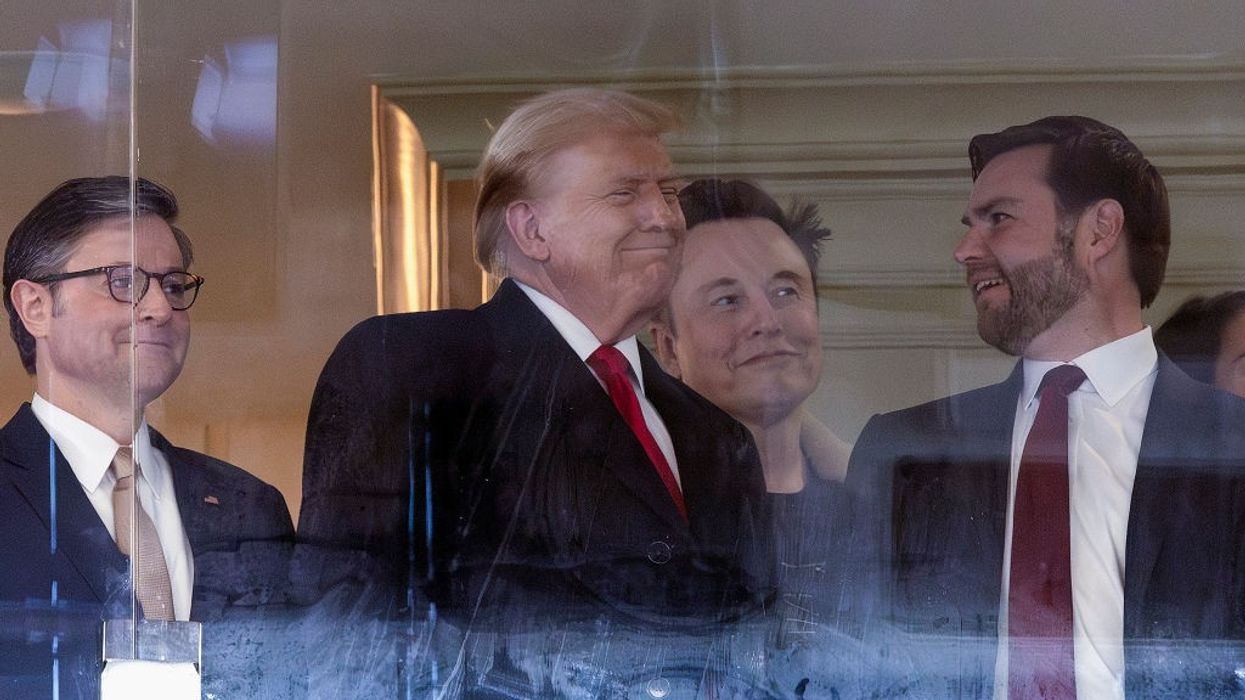
"Nothing like a couple billionaires wreaking havoc on working families right before the holidays," said Rep. Mark Pocan.
U.S. President Trump and his allies, including billionaires Elon Musk and Vivek Ramaswamy, are blowing up bipartisan efforts to prevent a government shutdown that could begin this weekend with statements opposing a proposed stopgap measure.
"Currently reading the 1,547-page bill to fund the government through mid-March. Expecting every U.S. congressman and senator to do the same," Ramaswamy posted on Musk's social media platform X late Tuesday. Trump has asked the two billionaires to co-lead the forthcoming Department of Government Efficiency (DOGE), which they have said will pursue massive cuts to federal regulations and spending.
Musk responded to Ramaswamy early Wednesday, asserting that "this bill should not pass," a sentiment he repeated in several posts throughout the day, as the clock ticked closer to the Friday night deadline set by September legislation.
Ramaswamy also came out against the continuing resolution (CR) Wednesday morning, declaring that a "debt-fueled spending sprees may 'feel good' today, but it's like showering cocaine on an addict." He blasted various provisions, including $100 billion in disaster relief needed after hurricanes as well as funding to renew the Farm Bill for a year, replace the Francis Scott Key Bridge, and raise federal lawmakers' pay.
Donald Trump Jr. then weighed in, taking issue with a provision about subpoenas for U.S. House of Representatives data.
Appearing on "Fox & Friends" Wednesday, House Speaker Mike Johnson (R-La.) said that he was on a text message thread with Ramaswamy and Musk, claimed that "they understand the situation," and suggested he convinced them that the CR must pass.
However, later Wednesday, the president-elect and Vice President-elect JD Vance—who still represents Ohio in the Senate—released a lengthy statement opposing the CR and calling out specific policies, including the subpoena provision and the pay hike for lawmakers.
Trump and Vance—who are set to take over for Democratic President Joe Biden and Vice President Kamala Harris next month—also argued that "the most foolish and inept thing ever done by congressional Republicans was allowing our country to hit the debt ceiling in 2025. It was a mistake and is now something that must be addressed."
"Increasing the debt ceiling is not great but we'd rather do it on Biden's watch," the incoming Republican leaders said. "If Democrats won't cooperate on the debt ceiling now, what makes anyone think they would do it in June during our administration?"
"Republicans want to support our farmers, pay for disaster relief, and set our country up for success in 2025," they claimed. "The only way to do that is with a temporary funding bill WITHOUT DEMOCRAT GIVEAWAYS combined with an increase in the debt ceiling. Anything else is a betrayal of our country."
Trump echoed that point in a series of posts on his platform Truth Social, saying that "if Republicans try to pass a clean Continuing Resolution without all of the Democrat 'bells and whistles' that will be so destructive to our Country, all it will do, after January 20th, is bring the mess of the Debt Limit into the Trump Administration, rather than allowing it to take place in the Biden Administration."
"Any Republican that would be so stupid as to do this should, and will, be Primaried," Trump added. "Everything should be done, and fully negotiated, prior to my taking Office on January 20th, 2025."
Citing unnamed sources familiar with Johnson's thinking, outlets including The Hill and Politico reported Wednesday that the House speaker is now considering trying to pass a "clean" CR that would cut provisions such as disaster aid and economic assistance for farmers.
According to Politico, "As GOP members streamed into Johnson's office to pick up gifts and stop by an ironically timed Christmas party, they didn't voice enthusiasm for Trump's demands."
White House Press Secretary Karine Jean-Pierre said in a Wednesday statement that "Republicans need to stop playing politics with this bipartisan agreement or they will hurt hardworking Americans and create instability across the country."
"President-elect Trump and Vice President-elect Vance ordered Republicans to shut down the government and they are threatening to do just that—while undermining communities recovering from disasters, farmers and ranchers, and community health centers," she continued. "Triggering a damaging government shutdown would hurt families who are gathering to meet with their loved ones and endanger the basic services Americans from veterans to Social Security recipients rely on. A deal is a deal. Republicans should keep their word."
Progressive leaders in Congress suggested that Trump's eleventh-hour statements on the CR were guided by his billionaire allies.
"Democrats and Republicans spent months negotiating a bipartisan agreement to fund our government," noted Sen. Bernie Sanders (I-Vt.). "The richest man on Earth, President Elon Musk, doesn't like it. Will Republicans kiss the ring? Billionaires must not be allowed to run our government."
Also taking aim at Musk, Rep. Maxwell Alejandro Frost (D-Fla.) said that "an unelected billionaire was crowned co-president by the Republican Party. They've given him the influence to make a damn post that throws a spending bill into limbo cause House Republicans are scared of him. No greater example of oligarchy. Where the ultrawealthy run the show."
Outgoing Congressional Progressive Caucus Chair Pramila Jayapal (D-Wash.) accused House Republicans of "bowing to Elon Musk and pushing us toward a shutdown," which would force active duty service members to work without pay, pause rent and food assistance, and cancel and delay flights right before major holidays.
Rep. Mark Pocan (D-Wis.) quipped: "'President-elect' Elon Musk and former President Donald Trump want to shut down the government. Nothing like a couple billionaires wreaking havoc on working families right before the holidays."
Lisa Gilbert, co-president of the watchdog Public Citizen, similarly said that "an unelected billionaire should not be allowed to shut down the government. Musk's temper tantrum this afternoon—and the speed at which Trump fell in line after being cornered—is a terrifying preview of what a Trump-Musk co-presidency will look like."
House Minority Leader Hakeem Jeffries (D-N.Y.) was also critical, saying: "House Republicans have been ordered to shut down the government. And hurt the working-class Americans they claim to support. You break the bipartisan agreement, you own the consequences that follow."
Sen. Chris Murphy (D-Conn.) tied the anti-CR push to Republicans' ambitions to pass another round of tax cuts for the superrich.
"Remember what this is all about: Trump wants Democrats to agree to raise the debt ceiling so he can pass his massive corporate and billionaire tax cut without a problem," he said. "Shorter version: tax cut for billionaires or the government shuts down for Christmas."
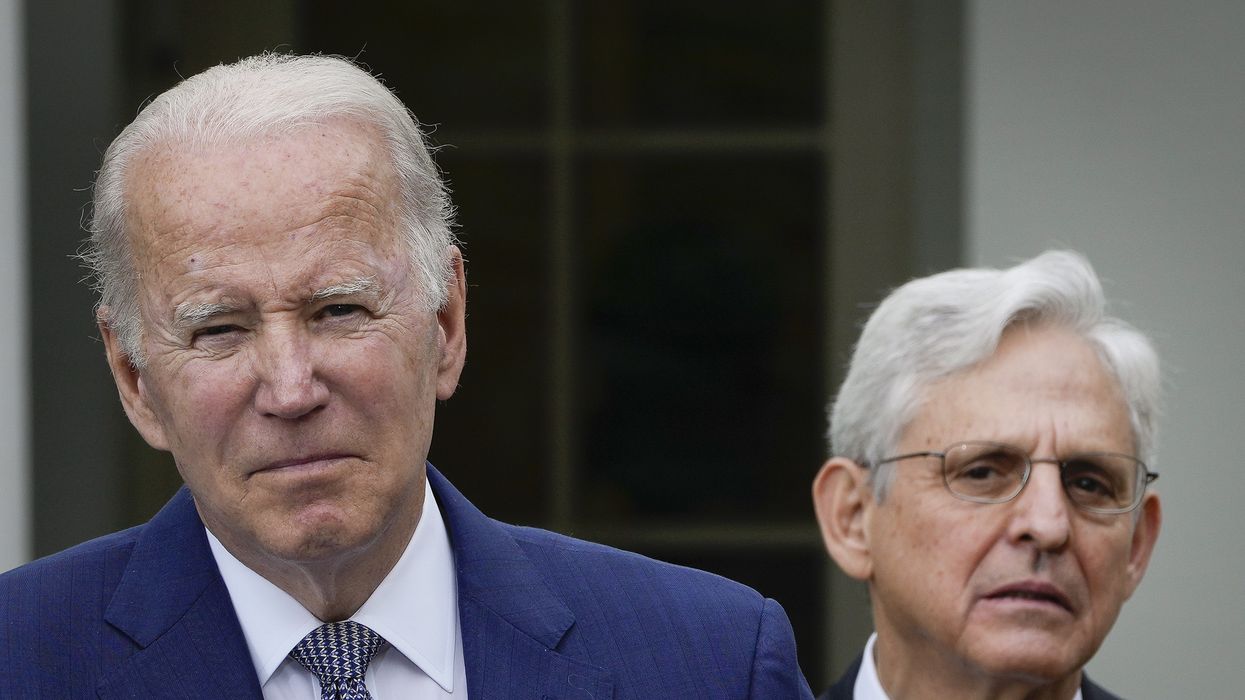
"Why is the Biden administration trying to rob itself of a clear opportunity to protect American workers and the economy from being roiled by MAGA saboteurs?" asked the head of the Revolving Door Project.
A government watchdog on Thursday called out the Biden administration for attempting to kill a lawsuit filed in May by a union representing about 75,000 workers across U.S. agencies that challenges the federal debt ceiling law.
"Why is the Biden administration trying to rob itself of a clear opportunity to protect American workers and the economy from being roiled by MAGA saboteurs?" asked Jeff Hauser, executive director of the Revolving Door Project.
A federal judge canceled plans to hear arguments for the National Association of Government Employees (NAGE) case when President Joe Biden and congressional Republicans who were holding the economy hostage announced a negotiated deal to suspend the nation's borrowing limit until 2025—signed into law in early June as the Fiscal Responsibility Act (FRA).
Biden then ordered his aides to create a working group intended to prevent similar crises in the future. As the White House said last month, "Now that the latest debt ceiling crisis is behind us, it is necessary to explore all legal and policy options to prevent Congress from ever again holding hostage the full faith and credit of the United States."
Now, as Government Executive reported earlier this week, even though "federal employees are still facing the prospect of delayed paychecks when the debt ceiling is reinstated in 2025," the U.S. Department of Justice "asked Judge Richard Stearns of the U.S. District Court for the District of Massachusetts to dismiss the case, suggesting the FRA has made the case moot and NAGE members lack standing because their claims are 'wholly speculative.'"
"After calling for just such a case to be brought, the Biden administration now fights it, demonstrating a truly remarkable willingness to shoot itself in the foot."
Hauser said that "the Justice Department's notion that the federal employees' claims of injury are 'wholly speculative, as they depend on a future chain of events that may never occur,' is absurd: The crisis is scheduled to recur precisely on January 1, 2025, as it has recurred repeatedly this century."
"In the meantime, uncertainty continues to trouble hundreds of thousands of federal workers, who have no guarantee of how their jobs, salaries, and pensions will be affected," he noted. "Indeed, the stance that [Attorney General] Merrick Garland's Justice Department is advancing creates an unfortunately sound case against workers considering taking a job in what has become an unstable federal government."
During the drawn-out fight earlier this year, as Republicans in Congress signaled their willingness to force the first-ever U.S. default despite warnings of a resulting economic catastrophe, Biden even suggested that while he wasn't planning to invoke the 14th Amendment—which states that the validity of the nation's public debt "shall not be questioned"—to end the current crisis, he would be open to challenging the debt ceiling law in the future.
"Rather than use the existing case as a means to that end, however, the administration is seeking to have it dismissed. The Justice Department declined to weigh in further on the merits of the case, reducing its argument only to the union's lack of standing," Government Executive explained, noting that a hearing on the motion to dismiss the case is set for August 29.
Hauser said that "after calling for just such a case to be brought, the Biden administration now fights it, demonstrating a truly remarkable willingness to shoot itself in the foot."
"The administration has every authority to take a different tack in this lawsuit and make space for the constitutionality of the debt limit to be worked out in the famously slow-moving U.S. legal system before the clock runs out on preventing the next crisis," he stressed.
The NAGE complaint names as defendants Biden and Treasury Secretary Janet Yellen in their official capacities.
Biden is seeking reelection next year and is expected to face the Republican nominee; former President Donald Trump is currently leading a crowded field of GOP candidates in spite of his legal issues, including the recent indictment related to his efforts to overturn his 2020 loss, which led to the January 6, 2021 attack on the U.S. Capitol.
Even if Biden wins in 2024 and Democrats keep control of the Senate and regain a majority in the House of Representatives, they may lack the votes needed to extend the suspension or raise the debt ceiling in early 2025. Democratic lawmakers notably declined to take action on the borrowing limit after the last midterm elections, despite warnings that Republicans would use their House takeover this year to hold the economy hostage to extract concessions.
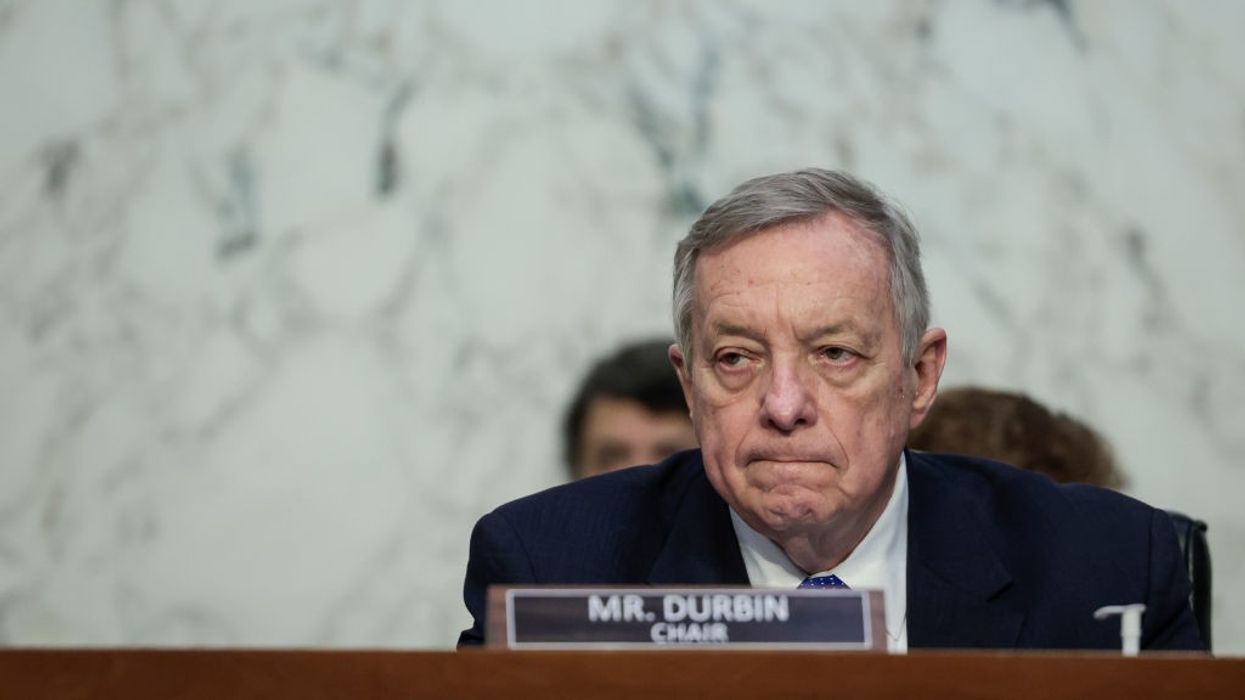
"After a near-catastrophic default thanks to political games by our Republican colleagues, it's time to put the debt ceiling in the hands of the Treasury secretary," said Sen. Dick Durbin.
In the wake of President Joe Biden and Congress just barely averting an economically catastrophic U.S. default, a pair of Democratic leaders on Friday introduced a bill intended to stop Republican lawmakers from holding the economy hostage again.
Contending that the recent crisis proves the current process "is broken and unsustainable," House Budget Committee Ranking Member Brendan Boyle (D-Pa.) and Senate Majority Whip Dick Durbin (D-Ill.) introduced the Debt Ceiling Reform Act.
Boyle and Durbin's move comes after Biden on Saturday signed the so-called Fiscal Responsibility Act—the debt ceiling compromise he negotiated with House Speaker Kevin McCarthy (R-Calif.)—just two days before the default deadline. The deal suspends the borrowing limit until 2025, after the next election cycle, but includes devstating concessions to the GOP.
"A definition of insanity is doing the same thing over and over while expecting a different result. If we do not significantly change the debt ceiling process, Republicans will keep taking our economy hostage and provoking default," Boyle warned. "The Debt Ceiling Reform Act will end Republicans' perennial weaponization of the debt ceiling once and for all by making it harder for extremists to take the debt ceiling hostage."
"This legislation is a sensible response to Republicans' repeated hostage-taking, manufactured default crises, and toxic brinkmanship," he said. "I am proud to join Sen. Durbin in introducing this much-needed legislation to permanently take default off the table and provide the economic stability the American people deserve from their government."
Although the proposal would not fully abolish the arbitrary and arguably unconstitutional debt limit—as some economists, legislators, scholars, and others have called for in response to recent GOP conduct—Boyle and Durbin's legislation would authorize the U.S. Treasury Department to continue paying the nation's bills unless, within 30 days, both chambers pass a veto-proof resolution of disapproval.
The sponsors highlighted that it is similar to what Senate Minority Leader Mitch McConnell (R-Ky.) proposed in 2011, when the Obama administration—for which Biden was vice president—was working with a divided Congress to prevent a historic default.
According to The Wall Street Journal, which exclusively reported on the bill's introduction:
Boyle concedes that the bill's prospects in the Republican-led House are dim, but he said he is hopeful that some GOP lawmakers might be convinced that debt ceiling fights are more trouble than they are worth, particularly after a rebellion from some conservative lawmakers over the latest debt ceiling deal paralyzed the House this week.
"I am hoping that there will be Republican members who are interested in this specific reform," he said.
A similar bill introduced by Boyle and Durbin last Congress had 22 House co-sponsors, all of them Democrats. The new bill has at least 48 House co-sponsors, including former Speaker Nancy Pelosi (D-Calif.). Durbin is the sole Senate sponsor.
"After a near-catastrophic default thanks to political games by our Republican colleagues, it's time to put the debt ceiling in the hands of the Treasury secretary," Durbin declared Friday. "For the sake of the American people and for the good of our economy, we need legislation to reform the way we address the debt ceiling."
"The Debt Ceiling Reform Act is responsible, commonsense legislation that will give the Treasury the authority to raise the debt ceiling," he continued. "If Republicans are truly concerned about the economic well-being of America, they will work with us on this sensible solution."
Meanwhile, calls for Democratic leadership to work toward abolishing the debt limit—whether through the courts or legislation—continue to mount, especially given concerns about a fight over the next hike.
"This round of negotiations was fought to a draw, but the White House backed itself into a corner before the next one even started. The White House may have won a reprieve from fiscal policy fights, but there's a fiscal policy hurricane brewing," Dylan Gyauch-Lewis, a researcher at the Revolving Door Project, wrote Friday for The American Prospect.
If Biden wins reelection next year but the GOP secures a majority in one or both chambers of Congress, Gyauch-Lewis warned, "Republicans will likely be able to again hold the entire global economy hostage. The ransom this time around may well be even more drastic. The GOP, emboldened by their victory, could try to win extensions of spending and tax cuts along with kneecapping the Democratic agenda."
"Arguably, Biden would still find himself embroiled in these negotiations even if Democrats flip the House and hold the Senate; it's entirely plausible that he could need to court moderate votes," he added. "Or Biden may not be able to get everything into a package that can make it through the Senate's reconciliation process, in which case he would need 60 votes, something Democrats almost certainly won't have on their own."
In an OtherWords column this week, Karen Dolan, who directs the Criminalization of Race and Poverty Project at the Institute for Policy Studies, stressed that while this time around, "Biden was able to hold off the worst harm, this deal still causes significant harm to ordinary people and sets a terrible precedent for more hostage-taking."
"Congress should abolish the debt ceiling," she said. "If Congress won't act, the president should intervene with his considerable executive power and invoke Section 4 of the 14th Amendment, which says that the validity of the public debt of the United States 'shall not be questioned.' He could even mint enough money to ensure there would be no default and no harm to families."
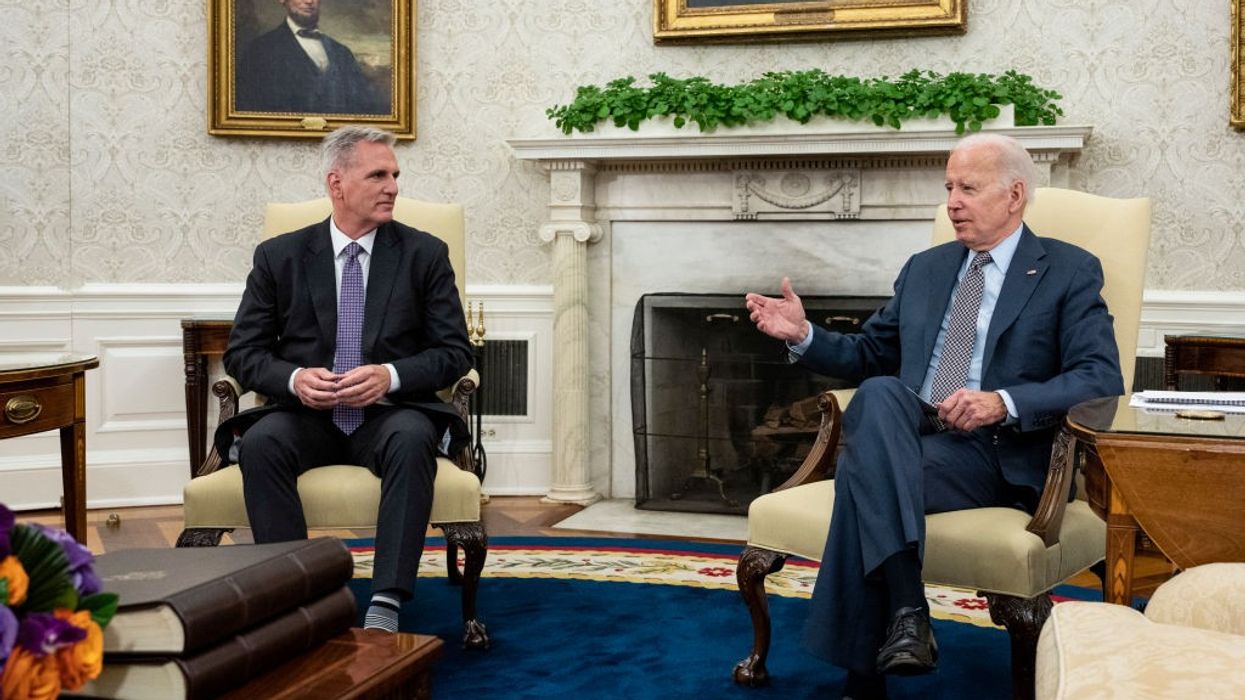
Treating the Republican gambit as anything other than economic hostage-taking gave it the legitimacy the party needed to stick with it without fear of massive political blowback.
When Congress passed the debt ceiling deal hammered out by President Joe Biden and House Majority Leader Kevin McCarthy, centrist media celebrated.
If we had anything like a responsible White House press corps, we never would have gotten to this point. Treating the Republican gambit—demanding deeply unpopular policy measures in exchange for allowing the government to pay off debts Congress had already authorized—as anything other than economic hostage-taking gave it the legitimacy the party needed to stick with it without fear of massive political blowback (CounterSpin, 5/5/23).
Instead, the press corps we have gave three cheers for bipartisanship.
NPR‘s Domenico Montanaro (6/1/23) hailed the compromise in a piece headlined, “Don’t Believe the Hype: Low-Key Lawmakers Helped Avert a Debt Ceiling Crisis.” A paean to “pragmatists,” the article argued that
it will be those who eschewed the wings of their parties—which have some of the most vocal, attention-getting members—who averted a potentially calamitous, first-ever US debt default.
Call them perhaps the Silent Middle Majority.
Montanaro offered a both-sides framing of the deal:
There were plenty of well-founded complaints on either side—on the left, worries about increased work requirements that could hurt people in poverty, nervousness about the environmental impact of sped-up energy permits; on the right, continued head-shaking about what they see as out-of-control spending and debt, now topping $30 trillion.
But in the end, two-thirds of House Republicans and more than three-quarters of Democrats voted for the bill for a total tally of 314–117.
It’s an analysis that simply assumes the validity of the premise that some sort of deal needed to be worked out to begin with: If a hostage-taker complains that their demands have only partially been met, how well-founded is that complaint?
And on top of the false premise, Montanaro has to stretch to make both sides’ “complaints” seem at all comparable, matching the left’s “worries” and “nervousness”—about harming people and the environment—to the right’s “what they see as” problems. But there’s solid research behind the “worry” that work requirements exacerbate hardship (CBPP, 3/15/23), and speeding up energy permits is intended to increase fossil fuel production (American Prospect, 6/2/23), which is precisely what must be halted to stave off the worst of climate change outcomes.
And however much right-wing politicians shake their heads about the debt, it’s journalists’ duty to point out the disingenuousness of a party that runs up debt via tax cuts, and then pretends to favor fiscal responsibility when it comes time to pay the bills (FAIR.org, 1/25/21).
‘Far-right and hard-left…in revolt’
The New York Times also luxuriated in the outpouring of bipartisanship, with chief White House correspondent Peter Baker (5/28/23) reporting that Republicans’ success in holding the economy hostage “bolsters President Biden’s argument that he is the one figure who can still do bipartisanship in a profoundly partisan era.” He added, though, that the deal “comes at the cost of rankling many in his own party who have little appetite for meeting Republicans in the middle.”
Another piece, by congressional reporter Catie Edmondson (5/31/23), presented the deal as “a broad bipartisan coalition” in support of “a critical vote to pull the nation back from the brink of economic catastrophe”:
With both far-right and hard-left lawmakers in revolt over the deal, it fell to a bipartisan coalition powered by Democrats to push the bill over the finish line, throwing their support behind the compromise in an effort to break the fiscal stalemate that had gripped Washington for weeks.
When the Times reports that the “far right” and “hard left” both oppose something, that’s a sure sign that the paper thinks it’s a good thing. Another front-page piece in the paper, by Jim Tankersley (5/29/23), went out of its way to argue that not only was it good that the White House made a deal, but that, all in all, it was a good deal:
Economists say the agreement is unlikely to inflict the sort of lasting damage to the recovery that was caused by the 2011 debt ceiling deal—and, paradoxically, the newfound spending restraint might even help it.
“The economy could actually use a mild dose of fiscal austerity right now,” Tankersley reported economists were saying; the cuts will throw people out of work, so the Federal Reserve won’t have to. In the 23rd of 25 paragraphs, after presenting the Republican argument that the deal “will help the economy by reducing the accumulation of debt,” the reporter acknowledged that the cuts “will affect nondefense discretionary programs, like Head Start preschool, and…new work requirements could choke off food and other assistance to vulnerable Americans.”
The Washington Post (5/30/23) seemed practically giddy at the deal: “A Washington Surprise: Centrists Push Back Against Fringes in Debt Deal.”
In the piece, White House bureau chief Toluse Olorunnipa found a way to equate Republicans willing to blow up the economy if they weren’t given policy concessions—ones they didn’t think they could achieve through legislation—with Democrats who insisted that government debts simply had to be paid:
For weeks, conservative Republicans warned House Speaker Kevin McCarthy not to back down from sweeping spending cuts, saying anything else would be an unforgivable betrayal. Liberals implored President Biden to abandon the debt ceiling talks altogether, insisting the Constitution enabled him to simply ignore Republican demands.
But in the end, the two leaders opted for a middle-of-the-road settlement, aiming to coalesce center-right and center-left lawmakers around the idea that an imperfect deal was preferable to a historic default that could devastate the economy. It was the first significant test for the Biden/McCarthy era of divided government, and if a theme emerged, it was the unmistakable reassertion of the political center.
“Both sides were initially sounding very ardent about an inflexible position,” said presidential historian Douglas Brinkley. “Yet both sides ultimately blinked—and that is what American politics is all about.”
In all of the coverage, one consistent theme was the compulsion to declare winners and losers. Some outlets picked one side or the other: “House Passes Debt Ceiling Bill in Big Win for McCarthy,” judged the Hill (5/31/23), and USA Today (6/2/23) similarly had “McCarthy Gets Win Passing Debt Deal.” “Apostle of Bipartisanship: Why US Debt Ceiling Deal Was a Victory for Joe Biden,” explained the British Guardian (6/1/23), while the Washington Post (6/1/23) had a more confusing “Biden Won on the Debt Ceiling. Why Doesn’t He Want It to Look That Way?”
Others declared both dealmakers victorious. Politico‘s popular Playbook newsletter (6/1/23) ran with “How McCarthy and Biden Both Won the Debt Deal.” The Washington Post (6/1/23) simply offered the two sides’ own declarations: “Sidestepping Crisis, Biden and McCarthy Claim Victory in Debt Deal.” Another USA Today piece (6/1/23) made the bold claim, “Debt Ceiling Plan Passes Senate. Who Wins? Everyone, and Here’s Why.”
In a different twist, CNN (5/30/23) offered its perspective on which companies were “winners” in the deal—leading off with Equitrans Midstream, the lead developer of the Mountain Valley Pipeline project that Sen. Joe Manchin forced into the agreement.
It also included lending company SoFi, which would profit from an end to the student loan repayment freeze included in the deal, and H&R Block and TurboTax, which are expected to benefit from the deal’s cuts to the IRS. This curtailment will likely stymie the agency’s plan to develop a free electronic tax filing system, which would have rendered those tax preparers’ offerings much less profitable.
CNN‘s “winners” begin to suggest who some of the “losers” are in this deal. It preserves tax cuts for the wealthy and funding for the Pentagon, while cutting the rest of discretionary funding, forcing more work requirements on recipients of public assistance, fast-tracking fossil fuel projects and weakening environmental protections—all great for corporations and wealthy political donors, and terrible for most people. But both major parties agreed to inflict this damage—and that in itself makes it good news for establishment media.
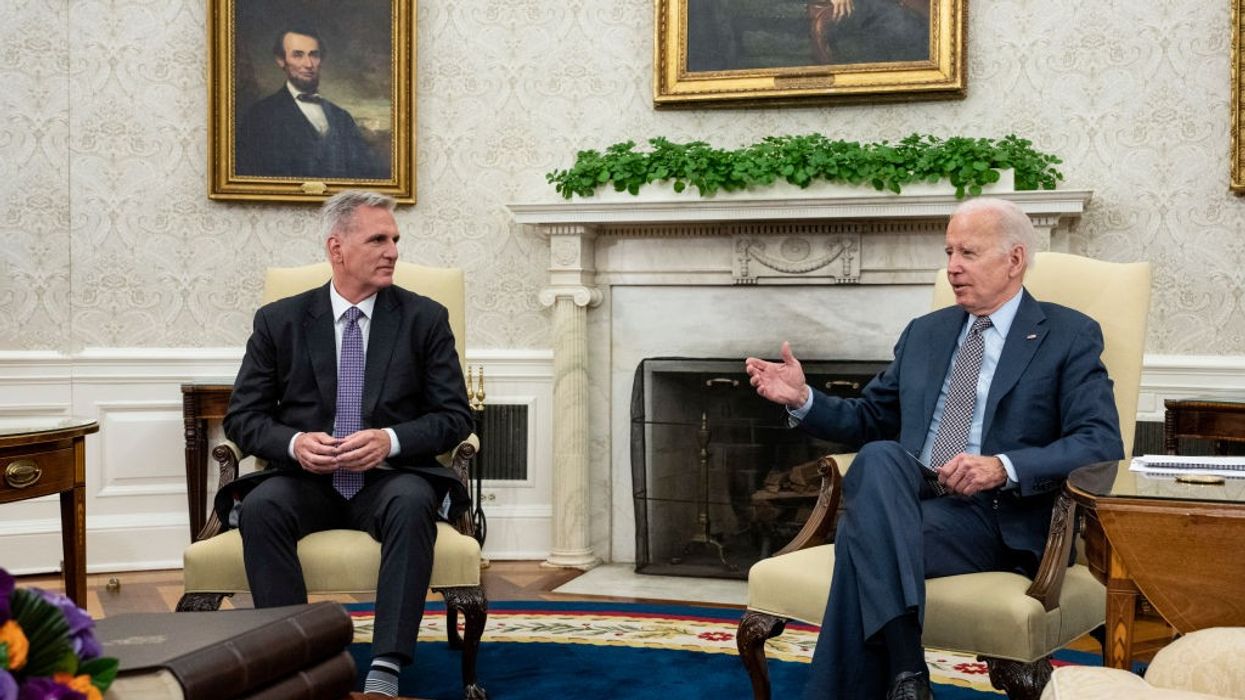
As long as we have a debt limit, we will continue to risk forcing unpopular, harmful cuts to federal investment at the expense of the economic well-being of low- and middle-income people.
The debt limit deal that Congress passed and President Biden will sign tonight may avert the economic crisis that would be caused by the U.S. government defaulting on its payments. But it’s worth reiterating that we shouldn’t be in this deal-making situation to begin with.
“Debt limit deals” are a way to force policy change through a backdoor by holding the U.S. (and global) economy hostage. Accepting that “debt limit deals” are just business as usual every time we approach the ceiling basically means that one political party can gain access to an inordinately powerful “hack” around the normal democratic process so long as some arbitrary conditions prevail.
Republicans have a majority in just one chamber of Congress, and face a president of the opposing party. Normally, this would mean they would have to argue their case for policy changes on the floor of the House, and compromise more often than not. However, just because we were about to cross over the utterly arbitrary debt limit, Republicans magically gained enormous amounts of leverage to dictate policy—including a lot of policy divorced from the specific conversation of addressing the debt and deficits. This is not a sensible way to govern.
This deal looks significantly less harmful than the original McCarthy proposal that passed the House last month, but it still contains several worrying provisions. Notably, it still includes a concession to expand and tighten work reporting requirements for some of the most vulnerable Americans to access the Supplemental Nutrition Assistance Program (SNAP) and Temporary Assistance for Needy Families (TANF). These should never have been part of a debt ceiling discussion.
While the deal includes new exemptions that could actually extend access to SNAP to people in certain categories (like veterans), it would needlessly still put a large number of older adults ages 49–54 at risk of losing their food stamps if they can’t meet the new burdensome requirements to report on work activities. (This is despite the fact that we know workers over 50 already face difficult working conditions and a tougher labor market than younger workers.)
It’s ridiculous that Republicans claim to care about fiscal responsibility in this debate, but also completely took tax increases off the table in negotiations.
Paperwork and reporting for these programs are already excessively burdensome and deny aid to those in need. The fact that the deal’s new exemptions for certain groups might actually expand receipt of food stamps just highlights the damage being done by current work requirements. They increase red tape and increase the risk of getting kicked out of much-needed safety net support—they do not boost job opportunities or employment for individuals in need. The inclusion of this provision from conservatives has nothing to do with reducing federal spending or encouraging work, and everything to do with punishing poor people.
While less severe than the original Republican proposal, the deal will also place a cap on non-defense discretionary spending at current levels for the next two years, meaning that federal spending will not keep up with inflation. This is effectively a spending cut to nearly every spending area outside of the military, from housing and child care assistance to environmental protection.
It’s ridiculous that Republicans claim to care about fiscal responsibility in this debate, but also completely took tax increases off the table in negotiations. This is despite the fact that tax cuts passed in recent years are prime contributors to the deficit, offering little to no economic benefit to the rest of us in return.
In fact, the Republicans did not just take tax increases off the table; they demanded constraints on the Internal Revenue Service’s (IRS) ability to enforce tax laws by taking away the budgetary resources needed to modernize their systems and to audit wealthy tax cheats. While Republicans didn’t get everything they wanted, the final deal will claw back some of the boost to IRS resources provided by the Inflation Reduction Act. This is essentially an attempt to return to the era of “do-it-yourself tax cuts”—something we’ve allowed for the richest Americans since the last harmful debt limit deal in 2011 decimated IRS funding.
Ultimately, we need to abolish the debt ceiling, and, at minimum, we should have had a clean debt limit increase. The administration should never have been in a position of negotiating the ability for the government to meet its basic existing obligations. As long as we have a debt limit, we will continue to risk forcing unpopular, harmful cuts to federal investment at the expense of the economic well-being of low- and middle-income people.
Short of getting votes for abolishing the debt limit altogether, we can at least have the Treasury Department start experimenting with measures that would allow workarounds in the future. For example, Treasury could issue and auction a small amount of consols or premium bonds. If Treasury begins doing so early, they could ensure that a market for these premium bonds exists before they need to be used, when the debt limit threatens to bind us again in 2025. This would make issuing them much more credible in the next debt ceiling crisis, and could shift leverage away from those attempting to weaponize the debt limit in future.
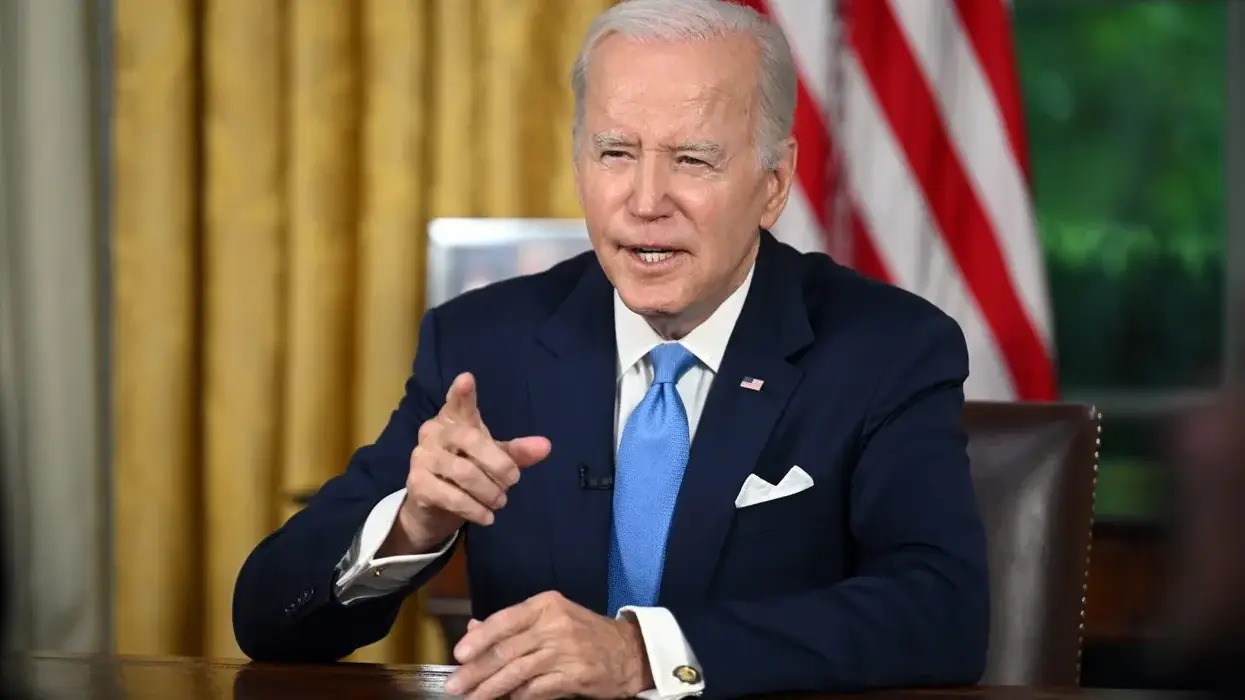
"Here's the news media's takeaway on the debt ceiling deal: Yay! Bipartisanship works! Here's the reality: GOP radicals held the economy hostage, Democrats paid the ransom, and bipartisanship is badly broken."
President Joe Biden delivered his first televised address from the Oval Office on Friday night to applaud the final result of legislative negotiations between his administration and Republicans in Congress who took the U.S. economy hostage over the debt ceiling, but progressive critics found the victory lap hard to take given the details of the deal and the devastating impacts they will have.
"It was critical to reach an agreement and it's very good news for the American people," Biden said during his remarks from the White House. "No one got everything they wanted but the American people got what they needed. We averted an economic crisis and an economic collapse."
But what Biden called a "big win for our economy and the American people," progressives—who argue the entire debt ceiling law is unconstitutional because it violates the 14th amendment and warned since last year that Republicans would orchestrate a crisis to protect wealthy tax dodgers and corporations while imposing fresh cuts on key social programs—should be seen for what it is: a kick in the face to the planet, democracy, and the material needs of poor and working-class Americans.
" Wall Street and corporate interests may be enthusiastic about this bill, but I believe it moves us in exactly the wrong direction." —Sen. Bernie Sanders
Warren Gunnels, majority staff director for the Senate Health, Education, Labor and Pensions (HELP) Committee chaired by Sen. Bernie Sanders (I-Vt.), said on social media Friday, the final legislation—which Biden is expected to sign into law Saturday—should be seen as "a big win for the donor class and a big loss for the 99%."
"It's nothing to brag about," Gunnels added.
"Not everyone got what they wanted?" Nina Turner, former Ohio State Senator and congressional candidate, asked rhetorically. "The 1% and the military-industrial complex got exactly what they wanted."
As Common Dreams reported, Lockheed Martin CEO James Taiclet this week said Biden signing the agreement into law would be "as good an outcome as our industry or our company could ask for at this point," noting that it calls for "3% growth for two years in defense where other areas of the budget are being reduced."
Journalist and author Mark Jacobs suggested that much of the coverage in the corporate press has been friendly to Biden's framing of the legislative result, but that this should be challenged.
"Here's the news media's takeaway on the debt ceiling deal: Yay! Bipartisanship works!" said Jacobs. "Here's the reality: GOP radicals held the economy hostage, Democrats paid the ransom, and bipartisanship is badly broken."
In addition to across-the-board spending caps for non-defense discretionary spending—which economists note is a real-world cut, given inflation, to key programs that serve tens of millions working class individuals and families—the deal greenlit permitting reforms for oil and gas projects desired by the fossil fuel industry and will force fast-track approval of the controversial Mountain Valley Pipeline that frontline communities in West Virginia, Virginia, and elsewhere have opposed for years.
Katie Bergh and Dottie Rosebaum, policy analysts with the Center on Budget and Policy Priorities, detailed this week how changes to the Supplemental Nutrition Assistance Program (SNAP) contained in the deal championed by Biden and Speaker of the House Kevin McCarthy "would put almost 750,000 older adults aged 50-54 at risk of losing food assistance through an expansion of the existing, failed SNAP work-reporting requirement."
"The older adults who lose access to SNAP would lose about $8 per person per day in benefits," explained Bergh and Rosenbaum. "These individuals often have very low incomes, and the loss of SNAP will push most of those affected into or deeper into poverty."
At the same time, the deal championed as a "big win" included large cuts to the IRS budget that a CBO analysis this week showed will actually cost the federal government over $40 billion in lost revenue and increase the deficit—the opposite result of what the GOP claims regarding the budget but very much in line with helping wealthy tax dodgers and corporations pay less each year.
In a Friday op-ed explaining his opposition to the legislation, Sen. Sanders said the only thing good to say about the bill was that it was not worse—which it certainly could have been.
"At a time when this country is rapidly moving toward Oligarchy, with more wealth and income inequality than we've ever experienced, I could not in good conscience vote for a bill that cuts programs for the most vulnerable while refusing to ask billionaires to pay a penny more in taxes," Sanders wrote. "Wall Street and corporate interests may be enthusiastic about this bill, but I believe it moves us in exactly the wrong direction."
"The fact of the matter is that this bill was totally unnecessary," Sanders concluded in his op-ed. "The President has the authority and the ability to eliminate the debt ceiling today by invoking the 14th Amendment. I look forward to the day when he exercises this authority and puts an end, once and for all, to the outrageous actions of the extreme right-wing to hold our entire economy hostage in order to protect their corporate sponsors."
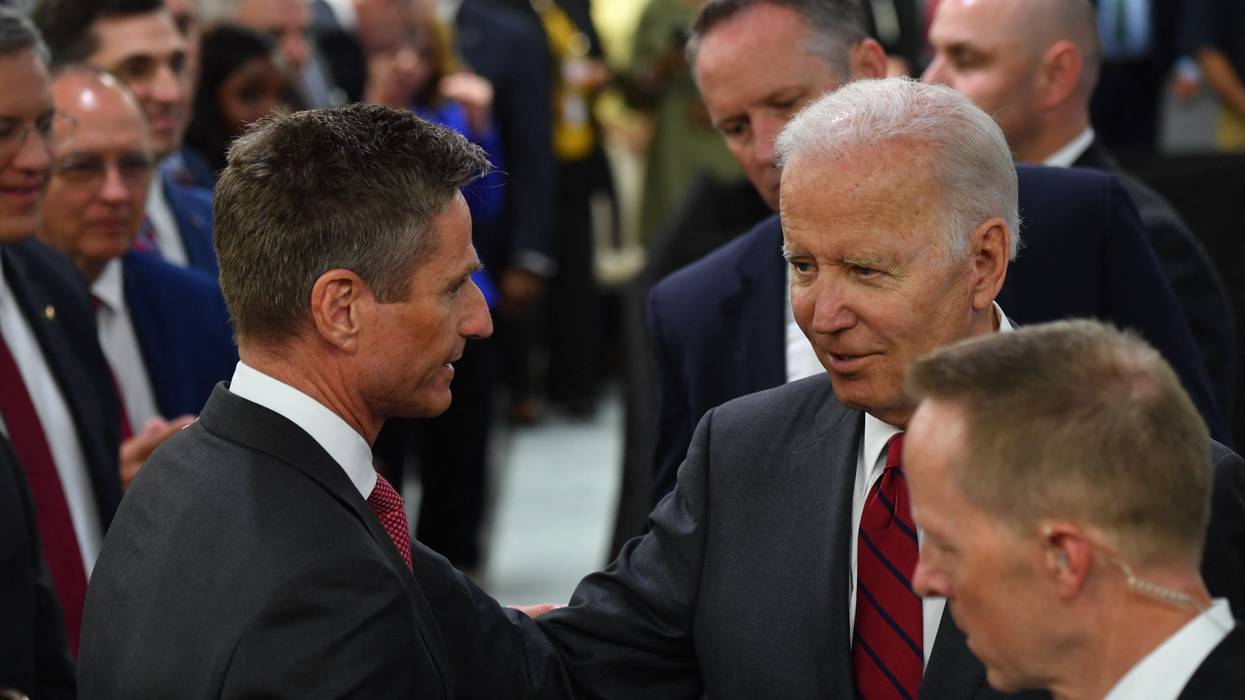
The head of the major U.S. military contractor said the Pentagon top-line in the debt ceiling deal is "as good an outcome as our industry or our company could ask for at this point."
The head of the top weapons contractor in the United States said Thursday that he's happy with the debt ceiling agreement negotiated by the congressional Republicans and the Biden White House, a deal that proposes a military budget increase while imposing two years of caps on other discretionary federal spending—impacting funding for education, housing, and more.
James Taiclet, the CEO of Lockheed Martin, said at a conference that the bill now awaiting President Joe Biden's signature is "as good an outcome as our industry or our company could ask for at this point," noting that it calls for "3% growth for two years in defense where other areas of the budget are being reduced."
"I think we're in a real strong position at this point," said Taiclet, adding that "there's sufficient funding in the president's budget."
Biden's $886 billion military spending request for fiscal year 2024—a $28 billion increase over current levels—is the topline military budget number set by the debt ceiling legislation, though war hawks in both parties are already exploring ways to dump even more money into the Pentagon's overflowing coffers.
If finalized in the appropriations process, military outlays will account for close to 56% of the U.S. federal government's total discretionary spending in fiscal year 2024, Lindsay Koshgarian of the National Priorities Project noted Thursday.
"This represents a massive shift of resources away from domestic programs and toward the military: the already-gargantuan military budget will increase by $28 billion (3.3%), while domestic spending will take a cut of $63 billion (8.2%)," Koshgarian wrote. "Cuts to many domestic programs will need to go deeper, because domestic spending includes veterans' programs, which are protected from cuts in the current deal."
"The only reason there’s a budget deal at all right now is because House Republicans threatened to tank the economy by refusing to allow the U.S. to pay its bills unless they got cuts for programs they don't like," she added. "They succeeded, and as others have shown, the people to pay the price will be the poorest and most down on their luck. Worse, the current deal could set a new precedent for more of the same: unnecessary military increases while domestic programs are slashed."
Lockheed Martin, one of the contractors that has been price-gouging the Department of Defense for years, is poised to be one of the top beneficiaries of the larger Pentagon budget—much of which will likely wind up benefiting private companies.
As Responsible Statecraft's Eli Clifton reported Thursday, Lockheed "received 73 percent of its net sales from the U.S. government in 2022 and invested $13 million in lobbying the federal government."
"Their lobbyists heavily focus their efforts on the defense budget," Clifton added, citing OpenSecrets.
William Hartung, senior research fellow at Quincy Institute for Responsible Statecraft, said Friday that the newly passed debt limit deal "unnecessarily privileges the Pentagon over other essential programs."
"There's no reason to exclude the Pentagon from the budget freeze," he added. "Congress should push the current proposed military spending total of $886 billion back to FY2023 levels in the appropriations process that will play out over the course of this year."

"President Biden and the Democratic Party should know the passage of this negotiation is the type of harmful decision that makes our generation feel disillusioned and defeated," said the Sunrise Movement's leader.
As the U.S. House of Representatives prepared to vote on President Joe Biden's debt limit deal with GOP negotiators Wednesday evening, the youth-led Sunrise Movement warned Democrats that the so-called Fiscal Responsibility Act could have a major impact on the 2024 elections.
"When we're knocking on doors and on college campuses, we constantly hear young people in our generation feel like the government doesn't work for them," said Sunrise Movement executive director Varshini Prakash in a statement. "This debt ceiling deal tells these young people that the U.S. will keep polluting our air and water by approving the Mountain Valley Pipeline, that our government will make life harder for working people, and that our system values billionaires over students."
"Democrats must stop the Mountain Valley Pipeline and achieve their climate goals if they want to energize Gen Z to get out and vote in 2024."
While the proposal would suspend the debt ceiling until 2025, in addition to greenlighting the contested gas pipeline, it would freeze nonmilitary spending, impose new work requirements for federal aid like the Supplemental Nutrition Assistance Program (SNAP), resume student loan repayments, controversially reform permitting for energy projects, and repeal some funding intended to help the Internal Revenue Service crack down on rich tax cheats.
"President Biden and the Democratic Party should know the passage of this negotiation is the type of harmful decision that makes our generation feel disillusioned and defeated about the state of our politics," Prakash warned Wednesday.
"Building new fossil fuel infrastructure right after the approval of the Willow project is politically and morally dangerous, but it's not too late to fix this," the climate activist continued, referring to ConocoPhillips' oil development in Alaska. "Democrats must stop the Mountain Valley Pipeline and achieve their climate goals if they want to energize Gen Z to get out and vote in 2024."
Last year, as Common Dreams reported at the time, young voters played a key role in preventing a "red wave" that political pollsters and pundits anticipated based on previous midterm elections, helping Democrats secure major congressional and gubernatorial victories as well as advancing a variety of progressive ballot measures.
Biden is seeking reelection next year and former President Donald Trump is leading polls for the GOP primary, followed at a distance by Florida Gov. Ron DeSantis. There will also be fierce battles for both chambers of Congress—currently, the fractured Republican Party holds a slim House majority, and Democrats control the Senate but lack enough votes to defeat filibusters.
Since Biden and House Speaker Kevin McCarthy (R-Calif.) finalized their deal over the weekend—after Republicans refused to vote on a clean debt ceiling hike, despite U.S. Treasury Secretary Janet Yellen's warnings of an economically catastrophic default by June 5—a growing number of progressive lawmakers have come out against the White House's compromise.
As Common Dreams reported earlier Wednesday, Rep. Raúl Grijalva (D-Ariz.) decried the GOP's "reckless hostage-taking" and highlighted that "House Republicans raised the debt ceiling with no preconditions three times under the Trump administration."
Other House progressives who have made their opposition to the Fiscal Responsibility Act clear include Reps. Jamaal Bowman (D-N.Y.), Cori Bush (D-Mo.), Ro Khanna (D-Calif.), Alexandria Ocasio-Cortez (D-N.Y.), and Pramila Jayapal (D-Wash.), who chairs the Congressional Progressive Caucus (CPC).
"Tonight I'll be voting NO on Republicans' hostage bill that maliciously weaponized the debt limit. I came to Congress to stand up for our NY-16 community, kids, and families, but this austerity bill will only end up hurting the people I came here to fight for," Bowman said. "This bill will make the poor poorer, hungrier, and sicker, while further enriching the rich through the prison, fossil fuel, and military-industrial complex."
After U.S. Sen. Bernie Sanders (I-Vt.) came out against the bill on Wednesday, other progressives in the upper chamber joined him—including Sen. Ed Markey (D-Mass.), who tweeted that "I will not support a deal to fast-track dirty fossil fuel projects at the expense of environmental justice. I will not give polluters a Get Out of Jail Free card. I will vote NO on the default deal."
"Republicans racked up trillions in debt under Trump and would now rather deprive struggling families of food and financial security than ask the wealthy to pay their fair share in taxes," Markey added, as Republican lawmakers plan to unveil a tax proposal that would further serve rich individuals and corporations.
Sen. Jeff Merkley (D-Ore.) also came out against the bill. Along with detailing his critiques of several provisions in a lengthy statement, he warned that "yielding to this blackmail only guarantees that Republicans will use the debt limit to hold America hostage time and time again."
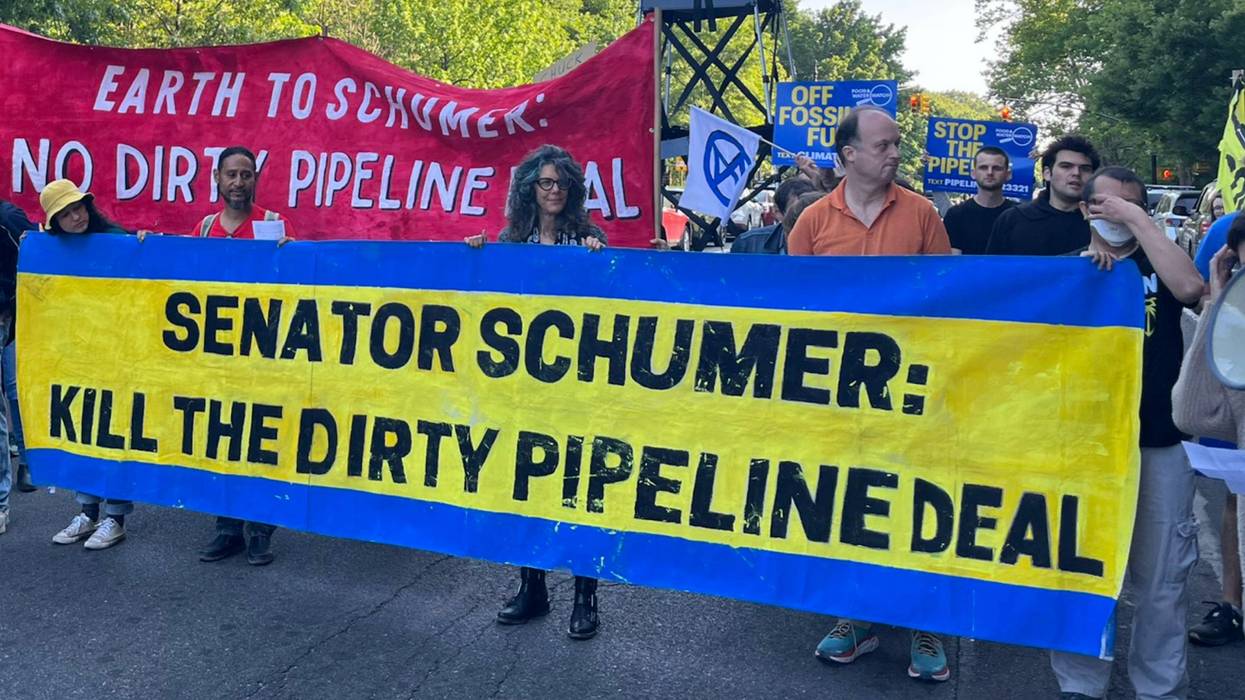
"We're taking the streets to shut it down and send the message to Sen. Schumer that he must STOP the #DirtyDeal being included in the debt ceiling bill!"
As progressives excoriated President Joe Biden's debt ceiling deal with Republican lawmakers over "polluter giveaways" including the Mountain Valley Pipeline, activists rallied outside Sen. Chuck Schumer's Brooklyn home on Tuesday evening with a message for the majority leader: "Stop the dirty pipeline deal, or we shut down your block."
The protesters—led by Climate Defiance and backed by Food & Water Watch, Climate Defenders, Climate Families NYC, New York Communities for Change (NYCC), and others—chanted messages including "Schumer, stop the dirty deal" as they marched in the Park Slope neighborhood where he lives.
"Schumer is on the cusp of making a deal with the devil, stripping down our bedrock environmental laws and review processes for the Sisyphean task of trying to appease fossil fuel oligarch [Senate Energy Committee Chair] Joe Manchin," the rally's organizers said in a statement published on Action Network. "This is not ok!"
The group Indivisible tweeted: "We're taking the streets to shut it down and send the message to Sen. Schumer that he must STOP the #DirtyDeal being included in the debt ceiling bill! It's time to stop building fossil fuel infrastructure and that means no more pipelines. Chuck, stop appeasing Manchin!"
While OpenSecrets.org lists Manchin (D-W.Va.) as the biggest congressional recipient of fossil fuel campaign donations during the 2021-22 election cycle, The New Republic reported last September that Schumer (D-N.Y.) took more donations than Manchin from NextEra Capital Holdings, one of the companies behind the $6.6 billion Mountain Valley Pipeline (MVP).
The debt ceiling bill states that "Congress hereby finds and declares that the timely completion of construction and operation of the Mountain Valley Pipeline is required in the national interest."
Manchin, whose family is heavily invested in fossil fuels, is a staunch booster of the MVP, as is the state's other U.S. senator, Republican Shelley Moore Capito. Manchin has been trying—so far without success—to gain congressional approval of the project since early last year. Last December, he tried to attach what was also being described as a "zombie deal" to the $858 billion military spending package. It was Manchin's third time floating the measure.
The organizers of Tuesday's protest called the MVP an "ecocidal project" that "would transport 2 billion cubic feet of fracked gas every single day."
"It would have the same climate impact as multiple dozens of brand-new coal plants," the groups warned. "We cannot allow Chuck Schumer to sell out our future to Joe Manchin. And we won't."
The MVP's inclusion in the bill to avoid a first-ever U.S. default does not mean the pipeline will ultimately be part of the package. On Tuesday, six House Democrats from Virginia—Don Beyer, Gerry Connolly, Jennifer McClellan, Bobby Scott, Abigail Spanberger, and Jennifer Wexton—introduced an amendment that would strip MVP approval from the legislation.

"Kevin McCarthy took the American economy, and working people's economic security, hostage," said one campaigner. "Now if he wants to get his ransom, he ought to put up the votes from his own caucus."
As the U.S. House of Representatives prepares for a debt ceiling vote as soon as Wednesday, progressives in Congress and beyond are arguing that it is the responsibility of Speaker Kevin McCarthy to deliver the GOP votes needed to pass the package he negotiated with President Joe Biden with the nation hurtling toward economic catastrophe.
The window to prevent the first-ever U.S. default is rapidly closing, with Treasury Secretary Janet Yellen warning McCarthy (R-Calif.) that absent action on the debt ceiling, the federal government will run out of money to pay its bills on June 5. The so-called Fiscal Responsibility Act announced over the weekend would suspend the country's arbitrary borrowing limit until January 2025.
However, the legislation would also cap nonmilitary spending, impose work requirements for the Supplemental Nutrition Assistance Program (SNAP) and other safety net initiatives, resume student loan payments, cut Internal Revenue Service (IRS) funding to target rich tax dodgers, roll back parts of the National Environmental Policy Act, and greenlight the "climate-killing" Mountain Valley Pipeline (MVP).
As reporters on Capitol Hill tried to track how many far-right House Republicans oppose the package—with some even suggesting it could lead to McCarthy being ousted as speaker—Working Families Party director of federal affairs Natalia Salgado released a statement Tuesday.
"The extremist Republican Party successfully took the world economy hostage to win cuts to food safety, clean air, and water, and to make it harder for our nation's most vulnerable to get by," Salgado said. "Over the weekend, President Biden agreed to pay Speaker McCarthy's ransom, albeit a much lower amount than MAGA Republicans demanded. Now, some of those MAGA Republicans are threatening to blow up the deal, and people are wondering how House progressives will vote."
"Progressives were not part of negotiating this deal, which contains measures—like spending caps and work requirements for food stamps—that progressives have always rightly opposed," she continued. "Kevin McCarthy promised the president he could deliver the votes necessary to pass his deal. If he can't, and progressives' votes are needed to avert a catastrophic default, then progressives must have the opportunity to meaningfully improve the legislation."
Mary Small, chief strategy officer at the group Indivisible, similarly took aim at McCarthy and fellow Republican lawmakers in a Tuesday statement, declaring that "progressive votes weren't courted for the current deal, and it shows."
"All Democrats have stood ready all year to avoid default without drama through a clean bill; this last-minute scramble is the Republicans' fault," Small said. "If Kevin McCarthy wants this bill to pass, it's on him to prove that he has the promised Republican votes. If progressive votes are needed to pass this bill, then progressives will be ready to quickly land legislative improvements to earn them. That's how governing works."
"Kevin McCarthy took the American economy, and working people's economic security, hostage," she stressed. "That's not a secret and it's not spin—he paraded around the Capitol relishing that he was the villain in a hostage negotiation. Now if he wants to get his ransom, he ought to put up the votes from his own caucus."
The Indivisible leader added:
We oppose budget caps for programs that support our families and communities—while shoveling more money into a bloated defense budget. We oppose so-called 'work requirements' for programs like SNAP that are nothing more than hurdles intentionally designed to strip benefits from the most vulnerable. We oppose giving special treatment to the Mountain Valley Pipeline, a fossil fuel project that has proven incapable of clearing foundational environmental tests. We oppose stripping funding from the IRS to make it easier for big corporations and the ultrawealthy to cheat on their taxes.
This is Kevin McCarthy's wish list. McCarthy and his caucus will be judged based on these priorities. This is their big power play, and they chose to wield it to try and take our economy backwards and score political points. The GOP shares a vision for a scarcity economy that pits working people against each other and asks them to continuously foot the bill for endless tax cuts for the ultrawealthy. Progressives are right to opt out of carrying water for this deal, and instead putting it at McCarthy's feet where it belongs.
Salgado noted that Democrats could have avoided the current crisis if they took action last year, when they still controlled both chambers of Congress—and the president could have pursued unilateral action rather than negotiating with GOP hostage-takers.
"This deal is not as awful as it could have been, but Republicans still accomplished their biggest goal. Again and again, we've seen extremist congressional Republicans set precedents to increase their power and leverage in future fights," she said. "The next time Republicans control just one chamber of Congress, we can be assured that they will rerun this exact same play."
By electing "the right kinds of Democrats" to Congress in 2024, "we can disarm these reckless extremists and make sure this sad day is never repeated," Salgado contended. "In the meantime, no one should expect progressives to vote for a deal they didn't negotiate, that violates a number of fundamental commitments."
Some leftist lawmakers critical of the Fiscal Responsibility Act have already unveiled amendments targeting controversial provisions—one from Virginia Democrats would strip out the MVP language, while another from Rep. Ayanna Pressley (D-Mass.) would preserve the pause on federal student loan payments.
In a call with reporters Tuesday, Congressional Progressive Caucus Chair Pramila Jayapal (D-Wash.) said CPC members' top concerns about the package are the changes to environmental reviews for energy project permits, work requirements for safety net programs, and potentially "harmful" spending caps.
Like the progressive campaigners, Jayapal pointed out that CPC members pushed for a debt limit vote during the lame-duck session and unilateral action by Biden more recently but she still ultimately put the blame for the current crisis squarely on McCarthy.
"We are in this place because of Speaker Kevin McCarthy threatening default. If not for Kevin McCarthy and the extreme MAGA Republicans threatening default, we could have had a clean debt ceiling hike—and if not for Kevin McCarthy threatening default, we would not be talking about new bureaucratic red tape on food or cash assistance," she said.
"He got us here, and it's on him to deliver the votes for the deal," Jayapal asserted, noting that the CPC has not yet taken a public position on the legislation but is in the process of formally checking in on where all caucus members stand.
The congresswoman also said the negotiation process "sets an extremely dangerous precedent—Republicans can hold the economy hostage," and concluded that "we need to get rid of the debt ceiling when we next take the majorities back."
Meanwhile, on the floor of the Senate, which is narrowly controlled by Democrats, Majority Leader Chuck Schumer (D-N.Y.) struck a different tone, saying Tuesday that "I support the bipartisan agreement that President Biden has produced with Speaker McCarthy."
"When this bill arrives in the Senate, it is my plan to bring it to the floor as quickly as possible for consideration. Senators must be prepared to act with urgency to send a final product to the president's desk before the June 5 deadline," he said. "From the start, I've said that the best way forward to avoiding default is bipartisan cooperation, and that's what this agreement represents. Again: nobody got everything they wanted, but this bill is the responsible and prudent and necessary way forward."
Groups opposed to the MVP rallied outside of Schumer's Brooklyn home Tuesday, with Indivisible tweeting that "it's time to stop building fossil fuel infrastructure and that means no more pipelines."