

SUBSCRIBE TO OUR FREE NEWSLETTER
Daily news & progressive opinion—funded by the people, not the corporations—delivered straight to your inbox.
5
#000000
#FFFFFF
To donate by check, phone, or other method, see our More Ways to Give page.
Daily news & progressive opinion—funded by the people, not the corporations—delivered straight to your inbox.
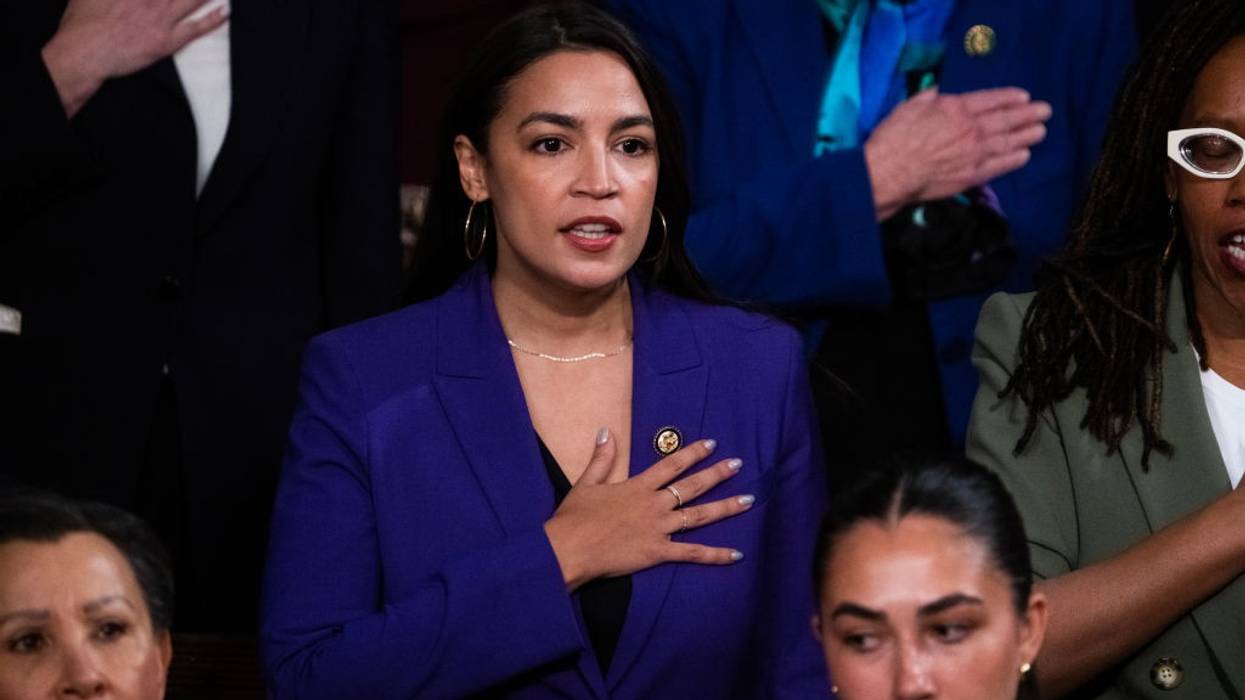
"It is important that we continue to signal to one another what we believe, because if we get quiet... then everyone around us is going to think that everyone has given up," said Rep. Alexandria Ocasio-Cortez in a recent livestream.
Rep. Alexandria Ocasio-Cortez of New York took to social media on Sunday to denounce billionaire Elon Musk, who has been tasked with leading the new administration's effort to slash federal spending and bureaucracy, and is currently working to shut down the U.S. Agency for International Development.
In response to reporting that U.S. President Donald Trump's administration placed two security chiefs at USAID on leave after their refusal to hand over classified materials to Musk's "government-inspection teams," per The Associated Press, Ocasio-Cortez on Sunday wrote: "This is a five alarm fire. The people elected Donald Trump to be president—not Elon Musk."
"Having an unelected billionaire, with his own foreign debts and motives, raiding U.S. classified information is a grave threat to national security," she continued.
Her remarks were reposted by the venture capitalist Chamath Palihapitiya, who wrote that Ocasio-Cortez is "wrong" and that the real five alarm fire will happen after Musk's team reveals government waste and fraud.
Ocasio-Cortez hit back, casting doubt on the legitimacy of Musk's efforts and writing: "This is a plutocratic coup. If you want the power, run for office and be chosen by the people." The entire exchange took place on the Musk-owned social media platform X.
Musk, a billionaire and GOP megadonor, established himself as a major power player in Trump's orbit even before Trump was inaugurated. In December, Musk sank a bipartisan spending bill, leaving Congress to scramble to come up with a new spending agreement to avert a government shutdown.
But since Trump's return to the White House, Musk's power has only grown as he's moved swiftly to exert influence over levers of power within government. In a day one executive order, Trump established his Department of Government Efficiency, or DOGE, by repurposing an existing entity, the U.S. Digital Service, an agency conceived to help improve the federal government's services through better technology and design. Now called the U.S. DOGE Service, the move "will give centibillionaire Elon Musk and his allies seemingly unprecedented insight across the government, and access to troves of federal data," according to WIRED.
Musk's influence now extends to the General Services Administration as well as the Office of Personnel Management. Representatives from DOGE were also granted access to a sensitive Treasury Department payment system that contains the personal information of every American who receives tax refunds, Medicare, Social Security, and other payments from the government.
Meanwhile, Ocasio-Cortez has been one of the most vocal members of Congress speaking out about Musk and the Trump administration's actions.
In a livestream on social media shortly after Trump's inauguration, Ocasio-Cortez implored her audience not to take the Trump administration's actions quietly.
"It is important that we continue to signal to one another what we believe, because if we get quiet... then everyone around us is going to think that everyone has given up," said the New York Democrat.
"I want you all to know that you're going to be hearing more from me," she explained. "My responsibility is in trying to explain to you all what is going on as best as I can and leaning into our ability to collectively organize."
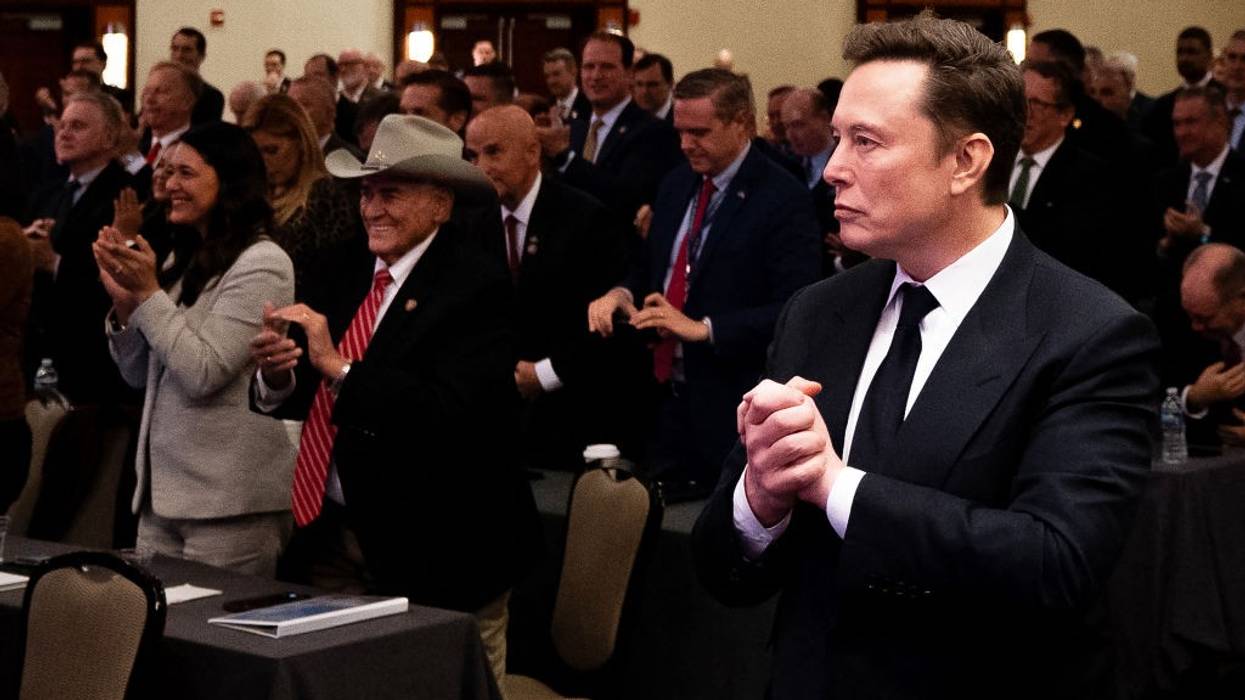
The super rich who backed the Republican president-elect must think they have us exactly where they want us. Now is the best time to turn the tables.
With Donald Trump about to re-enter the White House and his sidekicks about to assume control over Congress, America’s progressives are once again shifting — to playing defense. But the best defense, as one old football adage suggests, almost always turns out to be a good offense.
In the coming Trump redux, can we progressives take that adage to heart? Dare we go on offense and maybe even snatch a victory or two? We certainly can — if we start pushing for what the vast majority of Americans so want to see: an America where the really rich don’t run the show.
How much our richest run that show has never been more obvious. Campaign spending figures help tell that story.
Back at the beginning of our 21st century, out-of-state contributions to House and Senate races, be they from political action committees or individuals, funneled about the same amount of cash to candidates as in-state donors. These PACs and individuals faced strict limits on how much they could contribute politically. PACs, for their part, could accept no more than $5,000 from individuals each year and give no more than $5,000 directly to a candidate in each election cycle.
Enter the Super PAC. In 2010, the U.S. Supreme Court’s Citizens United decision essentially gave America’s wealthiest and the corporations they run free rein to spend as much as they want to boost the candidates they find most appealing. This green light for what became known as “Super PACs” gave America’s richest the legal capacity to cement in place a new and “improved” plutocracy.
Dare we go on offense and maybe even snatch a victory or two? We certainly can — if we start pushing for what the vast majority of Americans so want to see: an America where the really rich don’t run the show.
In the 2024 election cycle alone, former AFL-CIO political director Michael Podhorzer points out, Super PACs and related groups have spent seven times more on the candidates they support than those candidates have raised “from individuals in their own states.”
And that spending is coming overwhelmingly from the richest of America’s rich. In this year’s presidential race, according to the latest pre-election stats available, some 60 percent of all outlays on Donald Trump’s behalf were coming from the Super PAC universe, and 90 percent of that universe’s spending, Michael Podhorzer adds, was coming from the top donor 1 percent.
Just who from the ranks of our super rich are doing all this spending? We don’t exactly know for sure. Spending by outside contributors this election cycle, researchers from the campaign funding watchdog OpenSecrets reported on Election Day, hit an all-time record $4.5 billion, “with more than half of that spending coming from groups that do not fully disclose the source of their funding.”
America’s wealthiest “have always weighed in on politics,” as the business journal Forbes understatedly noted the day after Election Day, but their capacity to make a difference has significantly “ramped up.” These wealthy “can now make unlimited donations,” and those donations without limits have been making each election “more expensive than the last.”
And billionaires like things that way. Exulted crypto billionaire Tyler Winklevoss just after Trump’s triumph: “We are on the brink of a new American Renaissance.”
But billionaires today have an electoral influence that goes far beyond their hefty campaign contributions. In today’s social media environment, these rich can speak directly to potential voters. Between October 1 and Election Day, a Forbes analysis shows, America’s 200 richest billionaires posted over 2,000 comments on this year’s elections. Those comments gained over 10 billion reads.
And where did we end up, after all this billionaire spending and speaking out? We ended up with an exasperated electorate. Voter turnout in 2024, the political scientist Peter Dreier points out, ended up down more than 16 million votes, with Trump pulling over 2 million fewer ballots than in 2020 and Kamala Harris collecting over 14 million fewer than Joe Biden pocketed in 2020.
That turnout for the Democrats, Dreier argues, reflects the continuing weakness of America’s labor movement, despite the isolated labor organizing triumphs of recent years. Back in the mid-20th century, unions represented over a third of all U.S. private-sector workers. Last year, only 6 percent of private sector workers carried union cards.
If today’s union membership rate stood at a mere 20 percent of all workers, Dreier contends, “Harris would have won” because unions would have been able to reach more working people directly — including those “who might be gun owners or evangelical Christians” — “about why to vote” for pro-worker candidates.
Three generations ago, in mid-20th century America, high unionization rates kept in place World War II’s high federal tax rates on the nation’s highest incomes, rates that would run over 90 percent on top-bracket income throughout the 1950s. That twofer of a strong labor movement and high taxes on our nation’s richest would go on to nurture a political climate open to greater equality in every sphere.
Today’s richest, by contrast, pay taxes at rates that amount to a tiny fraction of what they pocket, and vast swatches of the American economy have essentially no union presence at all. Trump and his deep-pocketed pals can flourish and thrive in this environment. The task for the rest of us: to change it.
Can we win that fight? We can. Just look at the numbers.
Earlier this year, polling found that 71 percent of all likely voters — and even 53 percent of self-described Republicans — think billionaires should be paying more in taxes. Over two-thirds of the American people, Gallup reports, see themselves as union supporters. Even more Americans — 80 percent — favor higher taxes on corporations with CEOs who make over 50 times what their workers make. Top CEOs today average hundreds of times what their workers earn.
Our super rich are now celebrating what they see as a glorious future. Let’s put them on the defensive.
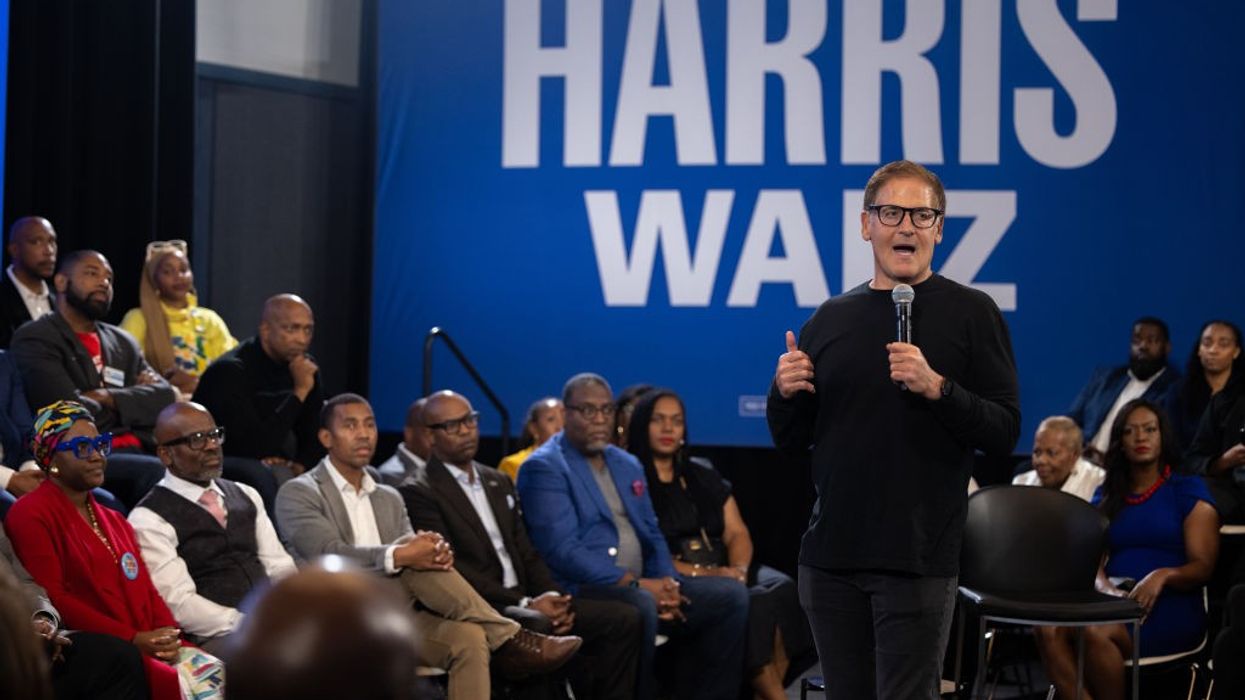
"We could see it happening in real-time, right after the convention, when the party consultants and the big donors got their hooks in," said one critic. "They'll be fine though."
While much ink has been spilled on U.S. President-elect Donald Trump's relationship with the world's richest person, tech billionaire Elon Musk, the Republican's electoral victory this week has also provoked conversations about how the very wealthy plutocrats behind Democratic Vice President Kamala Harris may have contributed to her loss.
After Trump's win, The Atlantic's Franklin Foer reached out to folks in the inner circle of President Joe Biden—who passed the torch to Harris after a disastrous debate this summer—for their postmortem. The staff writer reported Thursday that although Biden advisers "were reluctant to say anything negative about Harris as a candidate, they did level critiques of her campaign."
According to Foer:
One critique holds that Harris lost because she abandoned her most potent attack. Harris began the campaign portraying Trump as a stooge of corporate interests—and touted herself as a relentless scourge of Big Business. During the Democratic National Convention, speaker after speaker inveighed against Trump's oligarchical allegiances. Rep. Alexandria Ocasio-Cortez of New York bellowed, "We have to help her win, because we know that Donald Trump would sell this country for a dollar if it meant lining his own pockets and greasing the palms of his Wall Street friends."
While Harris was stuck defending the Biden economy, and hobbled by lingering anger over inflation, attacking Big Business allowed her to go on the offense. Then, quite suddenly, this strain of populism disappeared. One Biden aide told me that Harris steered away from such hard-edged messaging at the urging of her brother-in-law, Tony West, Uber's chief legal officer. (West did not immediately respond to a request for comment.) To win the support of CEOs, Harris jettisoned a strong argument that deflected attention from one of her weakest issues. Instead, the campaign elevated Mark Cuban as one of its chief surrogates, the very sort of rich guy she had recently attacked.
Responding on social media, Drop Site News' Ryan Grim said: "Reporters always heard that Tony West was functionally one of Kamala's most important advisers. Still galling to read this. I wonder who West even voted for."
Matt Duss, executive vice president of the Center for International Policy, declared that "we could see it happening in real-time, right after the convention, when the party consultants and the big donors got their hooks in. They'll be fine though. They're already onto their next contracts, or their next vacation home. And that should piss you off."
Progressive organizer Aaron Regunberg argued that "if we want to get out of this wilderness we need to purge every one of the Tony West crony corporatists in this party. Democrats need to be able to point to and talk about villains. Tony West is one of those villains."
Revolving Door Project founder and executive director Jeff Hauser put out a lengthy statement in response to the reporting that, as he summarized, "West convinced Vice President Harris to ratchet down her populist messaging lest it upset the Silicon Valley and Wall Street elites he was courting on her behalf."
Hauser highlighted that Foer's article also came after Cuban last month "bragged about his role in exiling a Harris surrogate" and former staffer of Sen. Elizabeth Warren (D-Mass.) "for the sin of supporting a wealth tax during a television appearance."
Harris on Tuesday "ran far stronger in the states that she saturated with television ads than the ones she did not. Those TV ads were, as Semafor's David Weigel observed, 'grinding on this economic message (anti-price gouging, Medicare covering home care, etc),'" he noted. "It's impossible to know whether the additional two points or less needed by Harris in the pivotal states would have been secured by basing her public 'earned media' and social media messaging on the same populist economic platform which informed her television ads."
"However, it is clear that the more successful paid media message was more populist and less informed by plutocrats like Cuban and West," Hauser continued. "Further, it seems exceedingly likely that downballot Democrats outside the swing states would have benefited from an ecosystem featuring the type of messaging we heard at the Democratic Convention."
"In a populist moment in which the candidates were battling for the mantle of change, the sitting vice president had to be identified as clearly against some powerful institutions," he added. "Her campaign showed early signs of an aggressive message, arguing that her record as California attorney general included taking on crooked big banks and shady student loan servicers."
"While VP Harris stuck to a comparably anti-plutocratic message in her television ads, she did not in her interviews and public appearances. This divergence appears to have been based on the advice of plutocrats," Hauser concluded. "Hopefully future candidates will learn from this, and oppose plutocrats consistently."
Appearing on CNN this week, Kate Bedingfield, Biden's former White House communications director, suggested the issue is not confined to Harris.
"I think Democrats across the board clearly have a challenge connecting with working-class voters. This is not unique to Vice President Harris' campaign," she said. "This is a demographic shift, a realignment in this country that's happened over the course of the last 10 years."
Meanwhile, Sen. Bernie Sanders (I-Vt.)—who ran for president as a Democrat in 2016 and 2020 but spent this cycle campaigning for Harris—said Wednesday that "it should come as no great surprise that a Democratic Party which has abandoned working-class people would find that the working class has abandoned them."
Sanders also asserted that "the big money interests and well-paid consultants who control" the party are unlikely to "learn any real lessons from this disastrous campaign" or "understand the pain and political alienation that tens of millions of Americans are experiencing."
Proving his point, Jaime Harrison, a former lobbyist for giant companies who now chairs the Democratic National Committee, claimed Thursday that Sanders' analysis was "straight up BS" and listed achievements of the Biden-Harris administration.
Responding to Harrison on social media, Michael Sainato, a labor reporter with The Guardian, said that "being pro-worker means being clear about who and what is anti-worker and the Democratic Party has failed miserably at that."
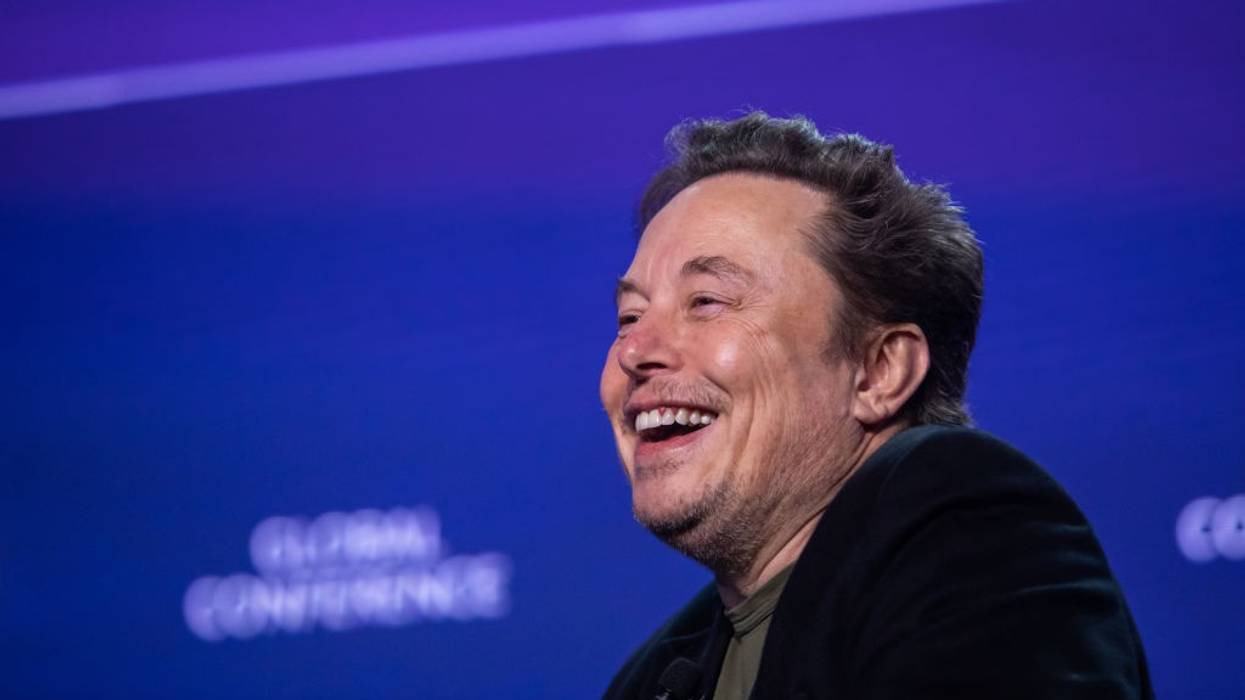
What happened to the middle class in the United States? The rich ate it.
Almost 90 percent of us think of ourselves as being “middle class,” but we’re way off. In 1970, 62 percent of Americans did qualify; but by 2021, our shrinking middle class was down to 42 percent. By 2022, the value of our minimum wage has fallen by 40 percent since the late 60s.
And our poverty rate? Today, at 12.4 percent, it’s the highest among almost all 38 OECD nations. Only the newest member, Costa Rica, suffers a higher poverty rate.
So, how did our view of ourselves become so distorted?
We were once indeed primarily middle class because we had stepped up to tackle poverty. In the late 1950s, our official poverty rate was about 22 percent, but Lyndon Johnson’s War on Poverty cut that rate in half, hitting a low of 11 percent in 1973. Then Reaganism struck, and by 1983 poverty had spread to nearly 15 percent.
And now?
While our official rate is indeed lower, it is still high and misses millions struggling to meet essential needs.
Our path to this sad outcome began in the 1980s. Reversing the War on Poverty, Reagan began dismantling welfare protections while slashing taxes on the ultrarich. Capturing the tenor of the time, in the 1987 film “Wall Street”, Gordon Gekko declared “greed is good.”
Reaganomics paved the way for today’s shocking inequality.
In 1978, the top 0.1 percent held roughly 7 percent of wealth. By 2018, this tiny group enjoyed about 18 percent. Most shocking: By 2019, America’s three richest families held more wealth than the bottom half of us.
Hardly a middle-class nation, today’s concentration of wealth ought to make a Russian oligarch blush. Out of 178 countries the CIA ranks by income inequality, the U.S. lands between Micronesia and Morocco—at 56th. No industrial democracy is near us. The closest—New Zealand—is 31 places less extreme, at 86th.
An additional injustice?
While workers’ share of national wealth has been shrinking, their productivity has soared. Between 1979 and 2017, worker productivity grew by 70 percent, while hourly compensation rose by a meager 11 percent.
And who benefited?
As earnings for the bottom 90 percent of Americans rose by just over a fifth, the wealth of the top 0.1 percent grew by 343 percent. That's 17 times more!
Thus, we shouldn’t be surprised that in 2019 the bottom half of us held only 2 percent of the nation’s wealth.
Moreover, while American workers had to take on more hours to boost their relatively stagnant earnings and as healthcare and housing costs climbed, the wealthy increased their gains and used it to further warp our nation’s democratic institutions: By funding candidates and hiring lobbyists to ensure their interests were heard at the expense of ours. From 1998 to 2023 alone, dollars spent paying Washington lobbyists grew almost three-fold, from $1.5 billion to $4.1 billion.
Thus, when our rules are set to bring the highest return to those with the most, a market economy not only selectively rewards the already wealthy; it undercuts democracy.
The pain of Reaganomics should have taught us one clear lesson. A market economy can only work for the common good within rules set democratically—free from private control—to ensure opportunity for all. The beginning of these rules would be basics such as an enforced, livable minimum wage, as well as strong and enforced anti-trust laws.
Such steps could move us toward a market serving the most basic freedom of all—the freedom to thrive.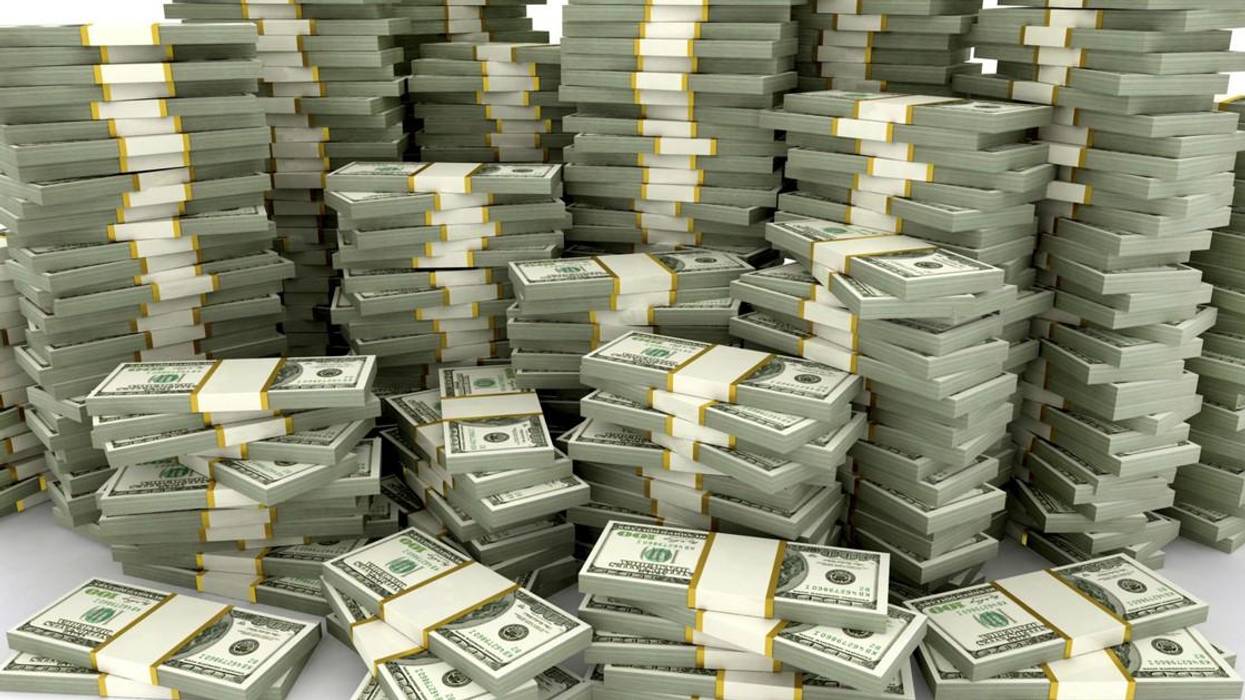
We've become accustomed, over recent decades, to see Americans front and center whenever a blockbuster new report spotlights the world's super rich.
Last month, for instance, Bloomberg reporters tracked down the world's 25 richest families. Ten of the 25 happened to come from the United States. No other nation had more than four.
Researchers from Wealth-X released new data last month as well. Their eighth annual Billionaire Census counted 3,204 personal fortunes of at least 10 digits worldwide. Leading the way: the United States of America, with 927 such fortunes, more than Germany, Russia, the UK, Hong Kong, Switzerland, India, Saudi Arabia, France, and Italy combined.
A bit earlier this year, the Swiss banking giant Credit Suisse published the 2021 edition of its annual Global Wealth Report, tallying up 215,030 adults on the international scene with fortunes worth over $50 million. Americans made up 110,850--55 percent--of that total.
This past week has seen the release of still another blockbuster look at the world's super rich. This one--now known the world over by the simple shorthand of the "Pandora Papers"--has come courtesy of the International Consortium of Investigative Journalists. The group worked with news organizations from 117 nations to analyze over 11.9 million documents leaked out of 14 offshore financial firms. What those firms all have in common: They provide confidential "administrative services" for financial pros who specialize in concealing the wealth of the world's deepest pockets.
Out of the 2.94 terabytes of Pandora Papers data have already emerged the clearest profile yet of what's become known as the global "wealth defense industry," that vast network of lawyers, accountants, and various other financial pros who devote their considerable expertise to shielding grand private fortunes from their national tax collectors--and, in many cases, police and prosecutors as well.
The Pandora Papers investigators have named names in their stunning coverage. They've exposed the tax-dodging financial machinations of individual "rich and famous" from every corner of the known Earth. But in this blockbuster report, unlike all the other major recent deep dives into worldwide grand fortune, wealthy Americans do not at all dominate. The vast majority of the super rich the Pandora Papers have uncloaked come from outside the confines of the US of A.
America's most familiar super rich simply do not appear in the Pandora Papers coverage. No sign of Jeff Bezos or Elon Musk or Bill Gates or any of the other U.S. mega billionaires who top the just-released annual Forbes 400 list of America's richest. The over 130 billionaires worldwide who do appear in the Pandora Papers treasure trove include just a few scattered fantastically rich Americans.
"Only a handful of U.S. billionaires," observe Peter Whoriskey and Agustin Armendariz in the Washington Post, "show up in the records."
How could that be--when Americans so dominate the ranks of the global super rich? Are America's super wealthiest simply behaving more nobly than their peers elsewhere and refusing to engage in shifty financial games to shield their fortunes?
Let's get real here. The relative absence of U.S. billionaires in the Pandora Papers has nothing whatsoever to do with nobility. We're talking accessibility here. The U.S. super rich have plenty of financial agents--the tax attorneys, accountants, and wealth managers, as my Institute for Policy Studies colleague Chuck Collins puts it, "paid millions to help billionaires sequester trillions"--close to home. They don't need to partake of the services provided by wealth advisory firms in places like Samoa, Cyprus, and Singapore, or any of the other 11 offshore locales from where the Pandora Papers leaked.
One other dynamic also helps explain why so few U.S. billionaires have been showing up in the Pandora Papers coverage. America's super rich, as one Pandora Papers report notes, "pay so little in taxes relative to their incomes that hiding money offshore" can turn out to be "mostly unnecessary." Our contemporary U.S. tax code essentially expects precious little from the super rich at tax time and furnishes convenient, perfectly legal workarounds to the taxes the law does stipulate.
How effective have these workarounds become? This past June, analysts at ProPublica gleaned from a massive leak of IRS data that America's 25 richest paid taxes on the $401 billion they gained from 2014 to 2018 at an incredibly tiny true tax rate of a mere 3.4 percent.
But don't take the small U.S. billionaire footprint in the Pandora Papers expose as any indication of disinterest in tax havens on the part of Americans. Quite the contrary. The Pandora Papers make dramatically clear that the United States has now become a premiere "offshore" tax haven for super rich the world over.
To be more exact: A handful of low-population U.S. states--led by South Dakota--have essentially turned themselves into pimps for global plutocrats. They've enacted a series of state laws that let financial agents set up shop within their borders and then go on to service and shield grand foreign fortunes. The "dynasty trusts" these states harbor are helping the super rich worldwide cloak their grand private fortunes in a gloriously lucrative anonymity.
The Pandora Papers abound in the stories of these global rich. A shady former vice president of the Dominican Republic, for instance, had built up a huge fortune as the president of a giant Dominican sugar company notorious for violating the human rights of its workers. In 2019, this deepest of Dominican pockets shifted a major chunk of his ill-gotten wealth into a South Dakota dynasty trust.
South Dakota, note tax analysts Bob Lord and Kalena Thomhave, now safe harbors $500 billion in trust assets, up 36 percent since 2019. In the process, charges journalist Timothy Noah, the state has become a "moral sewer."
Our U.S. contribution to the global concentration of wealth, the Pandora Papers help us understand, has become frighteningly enormous. We're not just bending over backwards these days to grow the fortunes of our home-grown super rich. We're helping grow the fortunes of the super wealthy all over the world. We're no longer just dominating the world's billionaire ranks. We're helping those ranks worldwide become ever more dominant.

In an interview with the British newspaper, The Times, in 2015, former US Defense Secretary, Donald Rumsfeld, vehemently denied that exporting democracy to Iraq was the main motive behind the US invasion of that Arab country 12 years earlier.
Rumsfeld further alleged that "the idea that we could fashion a democracy in Iraq seemed to me unrealistic." But the US' top military chief was being dishonest. Writing in Mother Jones, Miles E. Johnson responded to Rumsfeld's claim by quoting some of his previous statements where he, repeatedly, cited democracy as the main reason behind the US invasion, a war that was one of the most destructive since Vietnam.
The 'protectors of democracy' became the very men responsible for its undoing.
Certainly, it was not Rumsfeld alone who brazenly promoted the democracy pretense. Indeed, 'democracy' was the buzzword, parroted by thousands of Americans: in government, the military, mainstream media, and the numerous think-tanks that dotted the intellectual and political landscape of Washington.
One could not help but reflect on the subject when, on January 6, thousands of Americans stormed the Washington Plaza, climbing the walls of Capitol Hill and taking over the US Congress. A country that has assigned itself the role of the defender of democracy worldwide, now stands unable to defend its own democracy at home.
In the case of Iraq, as soon as US soldiers stormed into Baghdad, they hurriedly occupied all government buildings and every symbol of Iraqi sovereignty. Triumphant soldiers were filmed rampaging through the offices of former Iraqi ministers, smoking their cigars, while placing their dirty boots on top of their desks. Bizarrely, similar scenes were repeated in Washington 17 years later, this time in the offices of top US legislators, including the Speaker of the House of Representatives, Nancy Pelosi.
In Iraq, from March 2003, ministers were hunted down, as their photos and names were circulated through what the US military referred to as Iraq's 'most wanted deck of cards'. In the American scenario, US Congressmen and women were forced to cower under their desks or to run for their lives.
The violent events in Washington have been depicted by US mainstream media as if a temporary crisis, instigated by a president who refuses to concede power peacefully and democratically. The truth, however, is far more complex. There is nothing transitory about any of this and, while Donald Trump is largely to blame for the bloody events of this day, the man is a symptom of America's rooted democracy crisis, which is likely to worsen in the future.
Famed American linguist and historian, Noam Chomsky, has long argued that the US is not a democracy but a plutocracy, a country that is governed by the interests of the powerful few. He also argued that, while the US does operate based on formal democratic structures, these are largely dysfunctional. In an interview with Global Policy Journal in 2019, Chomsky further asserted that the "US Constitution was framed to thwart the democratic aspirations of most of the public."
This has been evident for many years. Long before Trump became President, the dichotomy of American democracy has expressed itself in the way that the American people interact with their supposedly democratic institutions. For example, merely 20% of US adults trust their government, according to a Pew Research Center poll published last September. This number has remained relatively unchanged under previous administrations.
With the US economy rapidly sinking due to various factors, including the government's mishandling of the COVID-19 pandemic, the people's distrust in government is now manifesting itself in new ways, including mass violence. The fact that 77% of those who voted for Trump in the November elections believe that Joe Biden's win was due to fraud, suggests that a sizable percentage of Americans have little faith in their country's democracy. The consequences of this realization will surely be dire.
The latter was merely a pretense used to provide a moral cover that would allow the US to reorder the world for the sake of expanding its market and ensuring its economic dominance.
America's constitutional crisis, which is unlikely to be resolved in the current atmosphere of polarization, is compounded by an external political crisis. Historically, the US has defined and redefined its mission in the world based on lofty spiritual, moral and political maxims, starting with 'Manifest Destiny', to fighting communism, to eventually serving as the defender of human rights and democracy around the world. The latter was merely a pretense used to provide a moral cover that would allow the US to reorder the world for the sake of expanding its market and ensuring its economic dominance.
Thomas Paine, whose influence on US ideals of liberty and democracy is arguably unmatched, warned, in 'Common Sense' in 1776, against the potential tyranny of those who "attempt to govern mankind by force and fraud, as if they were all knaves and fools."
Alas, Paine's warning went unheeded. Indeed, the democracy 'fraud' that Rumsfeld, George W. Bush, et al carried out in Iraq in 2003, was a mere repetition of numerous other fraudulent military campaigns carried out around the world. The 'protectors of democracy' became the very men responsible for its undoing.
Unquestionably, the storming of US Congress will have global repercussions, not least among them the weakening of US hegemonic and self-serving definition of what constitutes a democracy. Is it possible that the US democracy doctrine could soon cease to be relevant in the lexicon of US foreign policy conduct, one that is predicated, per Paine's logic, on "force and fraud"?
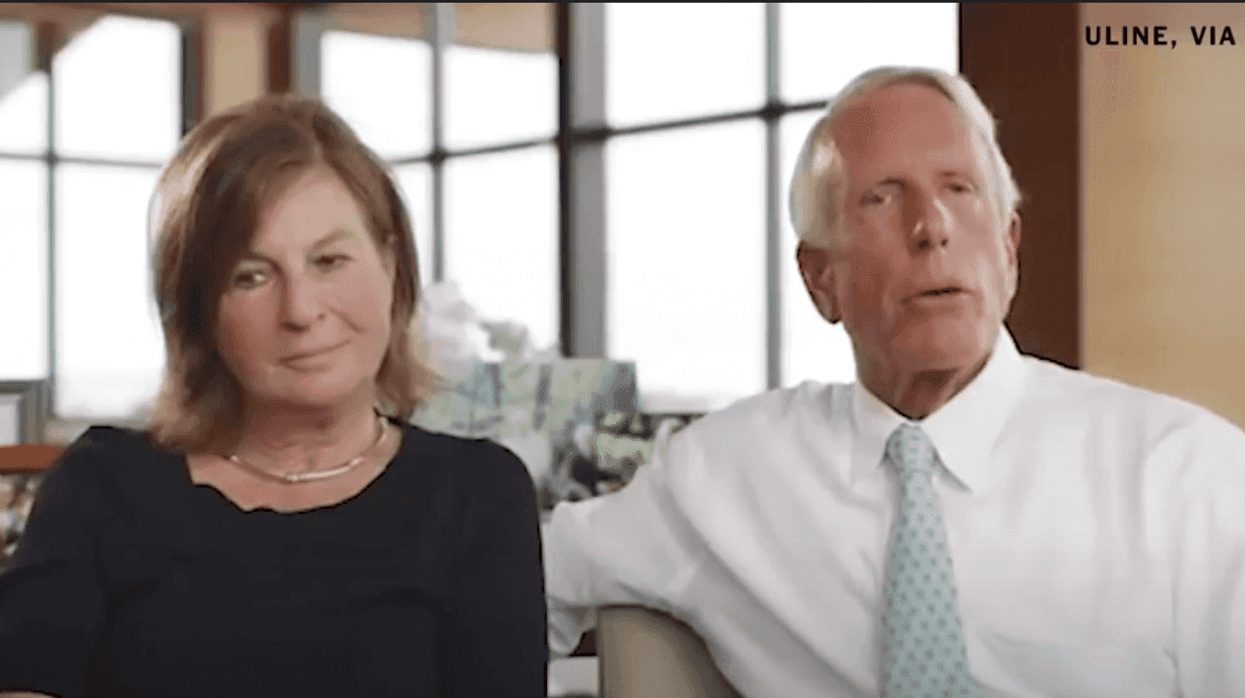
Trump megadonors Liz and Dick Uihlein, owners of Uline shipping and outspoken opponents of COVID-19 prevention measures, have tested positive for the virus after attending an election night party at the White House.
Earlier this year, Liz Uihlein called the pandemic "overhyped," lobbied legislators to overturn Wisconsin Governor Tony Evers's public health restrictions, and backed a petition to have Evers removed from office. A rare (and brief) interview with The Guardian on April 23 introduced Uihlein by stating:
"One of Donald Trump's most fervent billionaire donors is lobbying against strict stay-at-home rules in the election battleground state of Wisconsin, raising troubling new questions about how the president's rightwing financial supporters may influence the U.S. response to the pandemic."
Dick Uihlein has supported candidates who fight to preserve access to assault weapons and is a critic of LGBTQ+ rights.
A family friend accidentally linked the Uihleins to Wisconsin's reopen protests in a separate Guardian interview.
The couple were tested for the coronavirus after saying they were around others who contracted the virus, according to an email sent to employees of Uline that was obtained by Patch. The New York Times tweeted Thursday that Trump advisor Corey Lewandowski, who was also at that party, tested positive and White House chief of staff Mark Meadows, political director Brian Jack, and others in the administration also tested positive after attending the party.
Employees received an email Thursday from the Uihlein Family, owners of the $5.8 billion company and big donors to Republican causes, thanking them for their efforts and saying that the "White House called upon us twice with huge orders" this week.
The same day, a manager at one Uline call center sent a note to employees.
"If you, or family members, are under the weather with cold/allergies--or anything aside from COVID-19," it read, "please do NOT tell your peers about the symptoms & your assumptions. By doing so, you are causing unnecessary panic in the office," the Times reported.
"After these long months, I thought we'd never get it. Well, Trump got it," Uline president and CEO Liz Uihlein, seventy-five, said in the email to employees. "If we had not been around people with COVID-19, we would not have been tested. We would have been back at Uline." (No word on how employees reacted to that statement.)
The Uihleins reside in Lake Forest, Illinois, but their company has a 200-acre headquarters across the border in Pleasant Prairie, Wisconsin. According to the Patch article, "Some of Uline's roughly 7,000 employees have expressed concerns that too few office and call center employees have been permitted to work from home without a strong case for a medical condition."
The email also laid out the company's pandemic absentee policy. "Employees who test positive will be allowed to return to work ten days from the date their test was collected, if you don't have any symptoms. If you don't have any symptoms, you are expected to continue working."
The Uihlein email said the couple will return to the office on November 19.
The Center for Responsive Politics lists the Uihleins as the second largest donors to federal Republican candidates in this election cycle, following Las Vegas casino magnate Sheldon Adelson. The couple contributed nearly $66 million exclusively to Republicans.
Dubbed the "most powerful conservative couple you've never heard of" by The New York Times in 2018, they are further described in the same article:
"The Midwestern couple has joined the upper pantheon of Republican donors alongside names like Koch, Mercer, and Adelson. They have spent roughly $26 million on the current election cycle, supporting more than sixty congressional candidates, working outside the party establishment to advance a combative, hard-right conservatism, from Washington to the smallest town."
In 2018, the couple bankrolled first Kevin Nicholson in the primary, and then Leah Vukmir (after criticizing her) once she became the Republican nominee running against Wisconsin Senator Tammy Baldwin. They were also among the biggest supporters of former Govenor Scott Walker and former Lieutenant Governor Rebecca Kleefisch.
Dick Uihlein has supported candidates who fight to preserve access to assault weapons and is a critic of LGBTQ+ rights, notably supporting the former Alabama Supreme Court Chief Justice Roy Moore, who said homosexuality should be illegal and was accused of sexual assault of multiple underage girls and lost his 2017 race for U.S. Senate.
In October 2019, the Uihleins held a rally featuring Vice President Mike Pence promoting the U.S.-Mexico-Canada Agreement in one of Uline's large company warehouses in Kenosha.
Pence called the Uihleins "two incredible Americans," at that event, praising "your leadership, your vision, your character" before stating that their company's sales during the Trump Administration "are up by 44 percent, profits are up 58 percent."


Former US President Barack Obama endorsed Canadian Prime Minister Justin Trudeau's bid for re-election.
For the centrist status quo liberals, this is a moment of elation. Two tried-and-tested leaders that have respect on the international stage for being progressive heartthrobs, supporting each other against a mounting Conservative opposition. Sounds great.
Except, it isn't.
The problems with this endorsement are being seen by both the Left and the Right.
While the Right cries "electoral interference," which may be only a plausible argument, the Left has something much more deeper to worry about.
It has to worry about hypocritical leaders trying to squander whatever they can in a last ditch attempt to hold onto power. It has to worry about leaders whose inactions speak louder than their abstract rhetoric. It has to worry about the reign of neoliberalism capitalism.
It has to worry about the class unity of the 1 percent.
Barack Obama was elected in 2008 to replace George Bush after he had plunged the US into expensive foreign wars and an unprecedented economic crisis.
Obama rose through and resonated with Americans with a much more progressive message. Nobody liked wars, everyone wanted economic recovery, and everyone wished for health care reform.
Obama bombed 7 countries in the Middle-East during his tenure. He turned Libya into a slave market, effectively ended up funding Al-Qaeda affiliated rebels in Syria, and supported Saudi Arabia's genocide in Yemen.
Obama did deliver, to some degree. He did introduce Obamacare that did improve health care access for a fair amount of people. Obama did stimulate economic growth and brought the US out of the 2008 recession.
However, Obamacare was nothing but a milquetoast initiative that left millions out of coverage. While it was something better than before, there is a reason Bernie Sanders campaigned on Medicare for All because he know Obamacare was not working.
Obama's bailouts effectively concentrated more resources in the hands of the very people that caused the Financial Crisis of 2008. It gave more power to the corrupt 1 percent who had broken the laws and caused the collapse of the entire global economy.
And obviously, Obama's most blatant act of hypocrisy was the numerous foreign interventions he took part in. Obama bombed 7 countries in the Middle-East during his tenure. He turned Libya into a slave market, effectively ended up funding Al-Qaeda affiliated rebels in Syria, and supported Saudi Arabia's genocide in Yemen.
Obama was not a progressive leader.
Justin Trudeau was elected in 2015 to replace the Conservative Stephen Harper on a message much more progressive than that of the actual socialist party, the NDP.
Trudeau's calls for feminism, electoral reform, and helping the middle class earned him a majority. He managed to multiply the Liberal party's share of seats by five times.
He started his term with great enthusiasm; he maintained a diverse cabinet both in terms of sex and ethnicity; he launched plans for an ambitious carbon tax; he instituted policies that got nearly 300,000 children off of poverty; he vocally promoted strong reconciliation and consulation with the indigenous community.
He seemed like a hero.
Except of course he wasn't.
Trudeau still continues to sell armaments to Saudi Arabia which shows a stark contrast from his feministic and pro-human rights rhetoric.
Trudeau gave over CA$14 billion to large companies in corporate welfare at the expense of the taxpayer. The SNC-Lavalin scandal also shattered his reputation on ethics and feminism when he fired his female indigenous Attorney-General for trying to tell the truth.
Trudeau bought the TMX pipeline which, while being notoriously detrimental to the environment, goes through certain indigenous lands without their consent.
Trudeau gave exemptions of upto 80% to big polluters on his carbon tax, effectively placing the burden on the most economically marginalized and rural people of Canada.
Trudeau sued indigenous children when a verdict was delivered that his government would have to pay them for reconciliation.
Trudeau has not released a clear plan to budget any money for universal pharmacare, instead making vague references his in policy platform for this election.
And of course, how can one forget, the infamous blackface scandal where the world discovered Trudeau covered in black paint over his entire body, on 3 separate occasions.
Trudeau is not a progressive.
If this entire shenanigan reveals something, it is that no matter what you do and no matter what your policies are, as long as you are protecting the interest of capital, the elite has your back.
Justin Trudeau and Barack Obama represent peak neoliberalism, where in they change as little as possible in terms of social structures but allow for unfettered capitalism to continue its economic savagery.
Of course, the argument isn't as black and white as it seems, as mentioned with how Trudeau has uplifted thousands out of poverty and Obama helped millions get health care. The argument is about knowing that you can do more, saying that you can, then not doing it and using your PR team to brand you as a progressive prince.
He chose Trudeau because he would allow more opportunities for corporate welfare. He chose Trudeau because behind his socially progressive overtones, are his menacingly capitalistic undertones.
If Barack Obama truly cared about endorsing a progressive economic leader, or even a leader of colour just like him, he could have chosen Jagmeet Singh of the left-wing New Democratic Party. But he didn't.
He chose Trudeau for the specific reason that Trudeau won't tax the 1 percent, not because Trudeau was "the only realistic option" against Scheer. He chose Trudeau because he would allow more opportunities for corporate welfare. He chose Trudeau because behind his socially progressive overtones, are his menacingly capitalistic undertones.
As Jagmeet Singh's sharp attacks and courageous campaigning seeks to unseat numerous Liberal and Conservative ridings, Trudeau's attempt to gain political credibility and authoritative forgiveness from the likes of Barack Obama actually highlight the state of panic his campaign is in.
As class unity is trying to prop up the Leftist cause, the Right is trying to consolidate its own class unity.
The reigns of capital and billionaires are threatened after a very long time. And it is the right time to strike on it the Left-wing's hammer.

Donald Trump and his enablers are hoping that a strong economy will help the American people look past the damage they are doing to the country. That's why Trump is constantly crowing about job numbers and the stock market in order to paint a rosy picture of the economy.
But when you look closer, the numbers reveal a very different story about Trump's economy:
1. Wages are still stuck. The median annual earnings of full-time wage and salaried workers in 1979, in today's dollars, was $43,680. The median earnings in 2018 was $45,708. So much for the $4,000 pay raise Trump and Republicans in Congress promised when they cut taxes for the wealthy and corporations.
2. Percent of people with jobs is low. While the unemployment rate is low, employment is not nearly as good as it may look when you consider how many people have given up looking for jobs. The labor-force participation rate - the percent of working-age Americans with jobs - is the lowest it's been since the late 1970s, when wives and mothers first began streaming into paid work to prop up family incomes.
3. Many people are working part-time jobs. Nearly 4 million Americans are stuck in part-time jobs, unable to find full-time jobs. Many of these part-time gigs are either freelance or contract, offering fewer rights and benefits. In turn, this has increased economic insecurity for millions of families.
4. A growing number of college graduates are overqualified for their current jobs. One in 10 college grads are underemployed, which is much higher than 20 years ago. At the same time, the cost of college has skyrocketed, with students going deeper into debt to pay for their education: 45 million Americans now owe 1.6 trillion in student debt.
5. The cost of health care continues to increase. Since 2008, average family premiums have soared 55 percent, which is twice as fast as workers' earnings and three times as fast as inflation. Prescription drug prices also continue to rise - jumping almost 11 percent in the first half of 2019 alone.
6. Housing costs have skyrocketed. Nearly 39 million American households are now paying more than they can afford on housing. And more than one in four renters are spending over half their income on housing.
7. Americans are going deeper into debt to stay in the middle class. Consumer debt, excluding mortgages, has climbed to $4 trillion, which is the highest it's ever been, even after adjusting for inflation.
So is anyone benefiting in Trump's economy? The wealthy and corporations have never had it this good. In fact, under the Trump-Republican tax cut, 83 percent of the gains will go to the wealthiest 1 percent of Americans.
But most Americans are being left behind.
The next time Trump and his enablers boast about the economy to distract from the damage they're really doing to America, know the truth. Their failed economic agenda has made Americans poorer and less secure.