We knew some of what we’re facing was coming. Project 2025 was written by a broad coalition on the Far Right as a blueprint for the next Republican administration, as it has been since the Heritage Foundation published its first version for the incoming Reagan team. So far, according to one online tracker, of 313 discrete Project 2025 recommendations, 98 have been completed and another 66 are in progress.
But what’s happening is even more radical than what Project 2025 proposed, since what no one saw coming was Elon Musk, who has seized control of a broad range of executive agencies and their computers and payment systems. It’s a kind of techno-coup.
There are, in short, no formal institutions that consistently operate on behalf of the majority or that bind us together in common cause.
We also didn’t envision the Republican majority in Congress utterly abdicating its institutional role, or an inept Democratic Party acting mostly as if this was all business as usual. Then there’s the sheer number of elite institutions -- universities like Columbia, powerful law firms like Paul Weiss, or media organizations like ABC and CBS -- who have obeyed in advance.
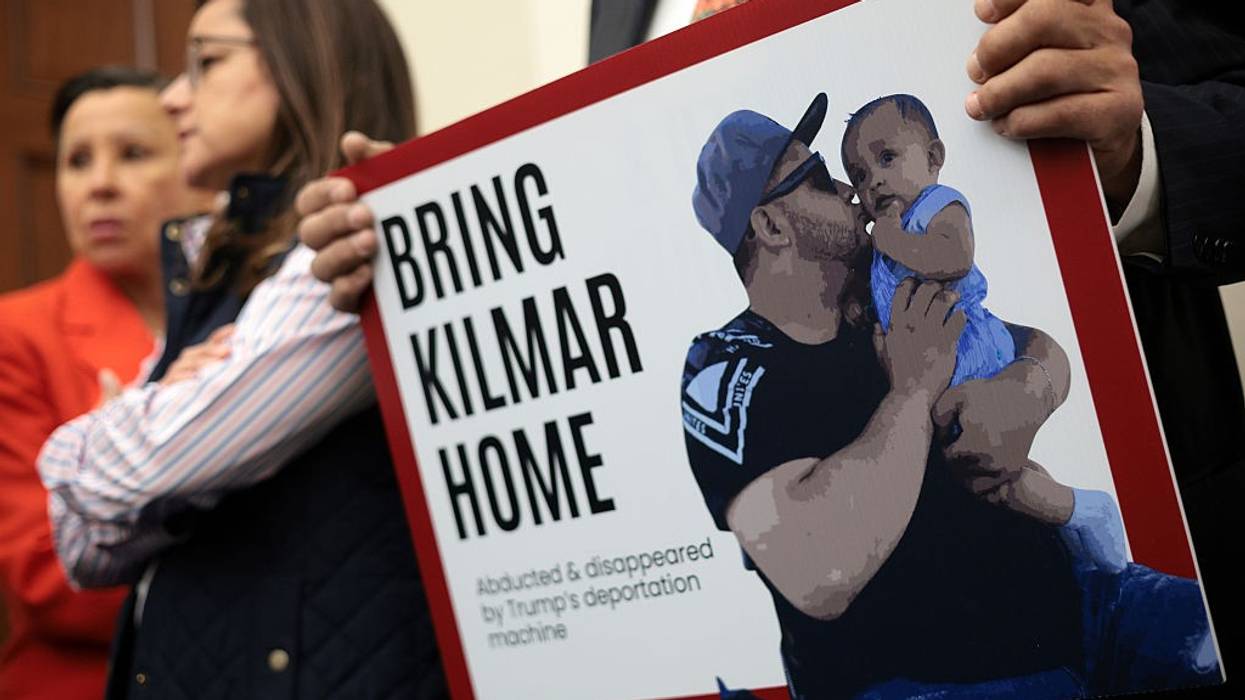
As I write, there are 250 pending court cases challenging illegitimate Executive Orders (that many are nonetheless treating as law), illegal firings, funding cuts that violate Constitutional provisions and any number of statutes, extraordinary renditions (in which even legal residents and U.S. citizens have been seized by agents of the state and held without access to courts or lawyers), along with attacks on judges, opposition leaders, media, universities, law firms, nonprofits, unions, oversight and regulatory bodies, and student activists. Our courts were not built for this, and they are, even at their best, very slow (even if they are showing a bit more spine and a bit more speed than some of us anticipated).
We can be forgiven for being just a bit unnerved by the extravagant lawlessness of the second Trump Administration, even by its own historic standards. Its actions are the hallmarks of authoritarian regimes, and we should recognize that we are now living in one, even if it’s one still struggling to get its footing.
How did we get here?
We didn't exactly inhabit a paradise before Trump came on the scene. Along many dimensions of health and well-being, for many decades now people in the U.S. have fared worse than people in other rich democracies. We have had and continue to have the highest or near highest rates of poverty, child poverty, elderly poverty, income inequality, infant mortality, maternal mortality, gun violence, incarceration, substance use disorders, and death by preventable causes, while we have among the lowest rates of life expectancy, access to health care, intergenerational mobility, and, not coincidentally, of political participation.
Why have so many in the US fared so poorly compared to their peers in other countries, and why are we enduring this “democratic backsliding”?
Consider three possible explanations: Failures of the Constitution, failures of accountability, and failures of the media.
Let’s start by focusing on some specific (and long-standing) complaints about the Constitution itself.
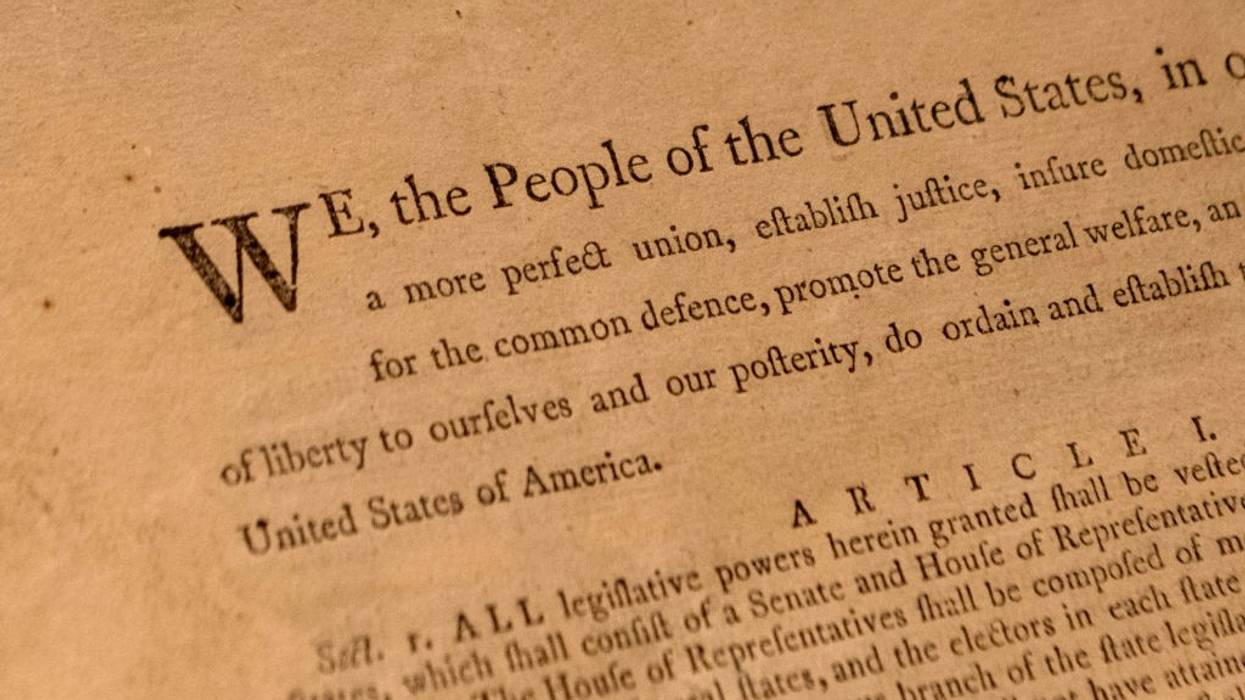
Whatever the stubborn myths around it, the U.S. Constitution has been a disaster, corrupted from the start by its acceptance (and rewarding of) an exceptionally brutal form of chattel slavery. It’s always been a system intentionally designed to frustrate the ability of even a determined majority to exert its will. You don’t have to take my word for it. Read James Madison’s Federalist #10. Consider almost any issue that leads to our poor outcomes—access to health care, gun violence, income and wealth inequality—and large majorities in the U.S. have regularly supported reforms, often radical ones, that would improve well-being. It’s not the players that are the problem, it’s the game.
The separation of powers creates obstacles to effective governance, and our system has more veto points—places to stop action from being taken -- than any other comparable nation. In periods of divided government, when one of our polarized parties does not control all three branches, legislative action is almost impossible (although we have to account for the fact that even with the House, the Senate, and the Presidency, today’s Republican party in Trump’s first 100 days passed fewer Bills than any Congress in modern history). The public is rightly exasperated by what it sees as inaction and unresponsiveness.
Federalism exacerbates this dysfunction, making it even harder to enact and implement policies and difficult for people to know who to credit or blame. That’s more grounds for dissatisfaction and cynicism.
Our Senate is famously undemocratic. Take just the fact that California, with a population of some 39.4 million, has the same representation and votes—two Senators—as the 588 thousand people of Wyoming. Or that the filibuster allows a minority to prevent the majority from acting—40 percent (representing even fewer people than that) can obstruct everything. Minorities rule, not majorities. And because of simple geography, those governing minorities are disproportionately white and rural.
The electoral college reinscribes the imbalances of the Senate onto the Presidential election process, and creates a system, unlike any other, where the person who gets the most votes doesn’t necessarily win. That, of course, is how we got Trump the first time around, with this weird system that values land over people.
We have federal courts with much too much arbitrary power, regularly working against the majority will while made unaccountable by life tenure. They have privileged business interests over the public interest, granted money the same rights as votes, and more recently tried to strip away hard-fought victories for reproductive rights and bodily autonomy, principles of one-person-one vote and racial nondiscrimination, and the ability of federal agencies to ensure our access to clean air and water, or safe food and workplaces.
As if all that isn’t bad enough, we have what is literally the hardest constitution on the planet to amend. Because of that, we’ve only been able to change it a total of 17 times since the Bill of Rights was adopted in 1791, and two of those times were the enactment and then repeal of Prohibition.
These anti-majoritarian features combine with elite lawlessness, undermining our faith that government cares about us or can function on our behalf, which helps create the space for authoritarians to emerge. This is the accountability explanation.
The first moment in the modern period that put us on this path (setting aside Gerald Ford’s ill-conceived pardon of Richard Nixon) was the 2000 presidential election, when the Supreme Court unnecessarily intervened in order to ensure that Republican George W. Bush ascended to the presidency over Democrat Al Gore—and Gore, instead of fighting, surrendered to a judicial coup.
This becomes a pattern—the ruthlessness of Republicans and the fecklessness of Democrats.
Then there’s the failure to prosecute the war criminals in the George W. Bush administration, who, aided and abetted by members of both parties and a complicit media, lied the nation into disastrous post-9/11 conflicts that killed close to one million people, and who tortured men it detained without trial in secret “black site” prisons throughout the world.
Or take the Obama administration’s unwillingness to prosecute the bankers who would have crashed the global economy in 2008 were it not for government intervention; as it was, they created the worst economic crisis since the Great Depression itself, one marked by an exceptionally slow recovery. But not content with his failure to hold accountable the institutions and individuals that were responsible, Obama rewarded them with leadership roles in his administration. That perversity helped bring about the rise of the Tea Party, upon which the MAGA movement was built.
Add in the widespread inability of almost all institutions to hold Trump himself to account for fomenting insurrection and attempting to subvert elections.
Our poorly designed system (which assumed it could prevent the formation of political parties and therefore didn't account for them in its design) is now being exploited by a revanchist Republican party demonstrating itself to have allegiance only to its members own personal ambitions and their opposition to multi-racial democracy. One way to make sense of the past 60 or so years is that after we started, however gingerly, finally affording meaningful rights to poor people, to women, to people of color, to gays and lesbians—rich, straight, white men lost their damn minds, and have been fighting to reverse those modest gains ever since.
This moment has also come to pass thanks to Fox News and its compatriots, a propaganda system that aids and abets these anti-democratic forces, along with a legacy media filled with too many people too hungry for clicks, access, and advancement and too few committed to ensuring that their work helps people make knowledgeable judgments about the political events of the day. We have underestimated the role that our fractured and polluted information environment has played in our decline into authoritarianism (and for what it’s worth, Jeanine Pirro’s appointment in May of 2025 marked the 23rd Fox News employee to join the Trump regime).
There are, in short, no formal institutions that consistently operate on behalf of the majority or that bind us together in common cause.
Thinking about this longer history helps us see that Trump is a symptom of a larger disease, rather than a cause. He’s the culmination of decades-long trends, and to assume that once he leaves the scene things will necessarily get better is to misunderstand the nature of the problem.
Thinking about this longer history helps us see that Trump is a symptom of a larger disease, rather than a cause.
There is another argument to be made for why, for most of our history, we have not functioned as a democracy, and it’s my final point about failures of accountability. Prior to the end of the Civil War, Black Americans, especially those in the South, lived under an explicitly authoritarian regime which maintained its power through violence, threats of violence, and the formal disenfranchisement of disfavored populations. With the exception of the brief period of Radical Reconstruction from 1865-1877, in which the Northern army enforced the outcome of the Civil War at the point of a gun, the United States still functioned as a brutal apartheid regime at least until the Civil Rights Act of 1964 and the Voting Rights Act of 1965. I was born in 1965. Anything we might even charitably characterize as "U.S. democracy" is only as old as I am.
Now the whole country is getting a taste of what it was like for many of our fellow Americans throughout most of our history. But here we are. Perhaps the South won the Civil War after all.
What should we build toward, and how?
In normal times, we could see what progressive policy reform might look like with items that are already on the agenda to one degree or another: Expand the Child Tax Credit; forgive certain categories of student loan debt; enact the John Lewis Voting Rights Act and the Freedom to Vote Act; join the National Electoral Vote Compact; add a Public Option to the Affordable Care Act and work toward Medicare (or Medicaid) for All; pass the Women’s Health Protection Act; fully fund and expand Social Security; raises taxes on corporations and the rich; increase the minimum wage; forbid members of Congress from trading stocks; and fund robust public and local media.
But making a list does not address the political obstacles to such policy reforms or how one might overcome them. We need a new politics if we want to have any realistic hope of making new policy.
Besides, even if we could enact laws enshrining any of these goals as policy, so what? The MAGA regime has routinely ignored existing laws and norms and has, for all intents and purposes, destroyed the previous order. There is no policy system for us to work within. So we might as well seize the opportunity and build the nation we want, not the one the Constitution bequeathed us.
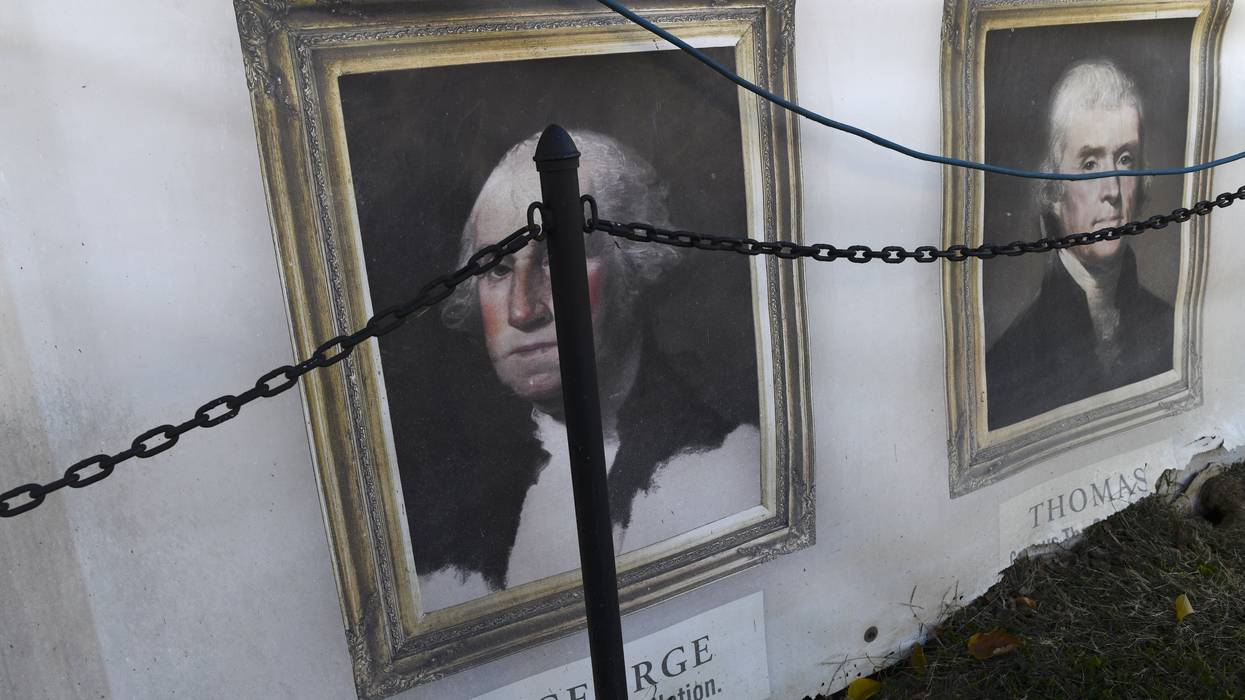
We have already established our right to do this. As Thomas Jefferson -- a slaver himself, we should note -- wrote in our first founding document:
We hold these truths to be self-evident, that all men [we would say “people” today] are created equal, that they are endowed by their Creator with certain unalienable Rights, that among these are Life, Liberty and the pursuit of Happiness. That to secure these rights, Governments are instituted among Men, deriving their just powers from the consent of the governed. That whenever any Form of Government becomes destructive of these ends, it is the Right of the People to alter or to abolish it, and to institute new Government.
If we accept that the Constitutional order has already been overthrown and that we inhabit a kind of lawless state ruled by brute power and the ghostly remnants of a withered system, and that there is a right to revolution, as Jefferson articulated it, then we can use this moment to imagine the world anew, unconstrained, if we wish, by the old rules.
We need a new politics if we want to have any realistic hope of making new policy.
There is precedent in our own history for this—the Constitution itself was created by ignoring the legal process for change set forth in its predecessor, the Articles of Confederation, because they were rightly deemed unsuitable to the needs of the new nation.
More to the point, why should we be bound by a document written 238 years ago by 55 white, propertied, disproportionately slaveholding, men (and signed by only 39 of them)? What right should those dead founders have to dictate to us how we organize power or govern ourselves? Why must we be bound by their understanding of who should have full rights, or what those rights should be?
Thomas Paine, among the more fulsomely democratic of that generation of leaders, wrote on this principle:
Every age and generation must be as free to act for itself in all cases as the age and generations which preceded it. The vanity and presumption of governing beyond the grave is the most ridiculous and insolent of all tyrannies.
We are being governed from beyond the grave.
So, what lessons have we learned that should inform the construction of a new government, one that is actually of, by, and for the people? What's our ambitious, bold, 50-year plan? What’s the progressive, democratic, humanistic version of Project 2025?
What right should those dead founders have to dictate to us how we organize power or govern ourselves? Why must we be bound by their understanding of who should have full rights, or what those rights should be?
The first step must be to drive MAGA out of politics just as Germany drove the Nazis out after World War II, just as we should have tried the Confederates for treason and driven them permanently out of politics after our Civil War. Instead, President of the Confederacy Jefferson Davis, after only two years in prison, was pardoned and later died peacefully in bed at age 81. That is: We must contemplate the destruction of the Republican Party as it is currently constituted—we need to learn from our failure to cast out the traitors after the Civil War (and our failure to hold Trump accountable for his first insurrection).
The larger project is, as I have tried to do here, to demystify and ultimately delegitimize the U.S. Constitution. An 18th century white slaver’s rulebook has, unsurprisingly, failed to serve the interests of a modern, multi-racial democracy. It’s time for it to go, and next year’s 250th anniversary of the Declaration of Independence provides an excellent opportunity to reevaluate our history given the dire present it has led us to.
As part of that effort, we should reject the notion that courts are the final arbiter of the meaning of the Constitution or of the law. A constitution is an expression of our collective will, and we too have a right to say what it means. Federal courts should have limited jurisdiction, and members should have term limits. There are lots of good proposals for reform, but it is absurd to be governed by nine unelected wizards in black robes.
An 18th century white slaver’s rulebook has, unsurprisingly, failed to serve the interests of a modern, multi-racial democracy.
As we abandon the outdated structures of the Constitution, we must end our anomalous two-party regime. In no other system would Congresswoman Alexandia Ocasio-Cortez and Senator Bernie Sanders be in the same political party as Chuck Shumer and Marie Gluesenkamp Perez. One way is to build something like a Parliamentary system, with multi-member districts and proportional representation, enabling there to be more parties for voters to choose from. Political scientist Lee Drutman has been thinking this through for years now. As part of that, we should expand the size of the House, perhaps by as much as twice or more its current size.
At the same time, abolish the Senate entirely—it’s irredeemable.
States have too much power in interpreting and implementing national legislation, and there is too much variation in your life chances or your access to, say, reproductive health care or your ability to vote, depending on nothing more than where you were born or where you happen to live. Mississippi, with a poverty rate three times that of New Hampshire, is in many respects an entirely separate country. There are surely other models for regional power sharing—Canadian Provinces? Swiss Cantons?—that would better equalize opportunity across the nation.
Short of that, if we are going to keep an upper chamber that serves as yet one more obstacle to a functioning government and retain something like states, then Washington, D.C. should have the same rights as other political entities, and all other occupied U.S. territories (Puerto Rico first among them) must have equal rights or be free from being under our colonial thumb. California is ungovernable in its current size and could be as many as three states; maybe New York City should be a state of its own; and why on earth do we need two Dakotas?
If we do adopt something like a parliamentary system, in which the majority party or majority coalition of the legislature then forms a government that administers the Executive Branch, we can abolish the electoral college and allow the party leader to become prime minister or president. No longer would divided government or vetoes be possible. That’s an obvious way to create some accountability to voters: Once elected, a party should actually be able to govern.
As with other systems, there should be a mechanism for No Confidence votes to quickly remove from power a failed or corrupt governing coalition, and we need to normalize that kind of turnover. One of the reasons that Trump retained office after two impeachment proceedings is that the threshold for conviction and removal is too high (and dependent upon that malapportioned Senate), and we have come to think of impeachment as an extraordinary, radical proposition rather than merely another routine means of addressing incompetence or malfeasance, which is how it was intended to function.
Since any new system that is genuinely democratic must be constructed from the ground up, it is useful, I think, for each of us to begin to open our imaginations to the world we want to see...
Elections should be funded with public money and equitable public media access. Perhaps we should consider mandatory voting, as in Australia, and look for new spaces for public input and involvement—democracy is a practice as much as anything, and we need to find ways to stitch together the deliberative decision-making that brings together communities in common cause and makes a habit of civic engagement. What’s the larger-scale equivalent of Vermont Town Meeting Day, for example?
We should simultaneously be dismantling our repressive systems of surveillance, policing, and prisons, including what Dorothy Roberts calls the family policing system, almost all of which have their roots in schemes to subjugate enslaved people, and replace them with local institutions that foster community and create conditions for actual safety and security. It is worth noting in this regard that the immigration abuses of the current administration would not be possible were it not for the racialized surveillance, policing, and hyper-incarceration apparatuses built over decades under Democratic and Republican administrations alike.
Finally, we might formally commit to a new Bill of Universal Human Rights: to food, housing, healthcare, education, and economic security, with a guaranteed minimum income or Universal Basic Income.
******
My list of potential reforms is meant merely to jump start our thinking and begin to move the Overton Window of acceptable discussion; I am under no delusion that such radical, revolutionary change is imminent (or that now would necessarily be a wise time to create new governing structures, given who holds power).
But since any new system that is genuinely democratic must be constructed from the ground up, it is useful, I think, for each of us to begin to open our imaginations to the world we want to see and to think about how to build the connections, the consensus, and the institutions that can help to get us there. If we acknowledge that, thanks to Trump, the old order is truly gone, then we have a tabula rasa, a clean slate. What should we inscribe upon it?
We have urgent work to do in the short term before we can get to this project of what we might think of as a Third Reconstruction, of course. But maybe, ironically enough, this perilous time is the moment to start thinking seriously about how we might make a better world.