LIVE COVERAGE

Monsters 'R Us
Most of Planet Earth now knows cruelty is the point of Trump 2. But if anyone implausibly needs more evidence, meet Rev. Edward Nalwamba, a 79-year-old, pro-democracy Ugandan priest who spent over a year in ICE detention. When he went in, he was fit; at his long-delayed release last week, fellow detainees had to carry him to a car because officials wouldn't let him take his wheelchair that far. To ICE, he charged, "You are an animal...They forget they are dealing with human beings."
In the last 18 months, the Trump regime has deported nearly a million people, and killed at least 60, including two U.S citizens in cold blood and broad daylight. The family of one, Renee Good, has filed two federal civil lawsuits over her Jan. 7 murder, alleging wrongful death, "negligent infliction of emotional distress," conspiracy to conceal evidence, and coordinated campaigns of "aggression and abduction" against ethnic communities and "intimidation and violence" against their allies. And of course it has detained, terrorized, traumatized or shattered the lives of untold thousands, the vast majority with no criminal history.
One was the good Rev. Nalwamba, who arrived in the U.S. in 2002 for a religious conference. Having publicly condemned human rights abuses by the Ugandan government, and subsequently heard from colleagues that government agents were pursuing him, he decided to stay in Colorado and apply for asylum. In 2010, after his application was denied, he began living peaceably in Lakewood under a 15-year ICE supervision order, reporting to immigration officials as required, working as a health aide for people with developmental disabilities, and serving as a pastor at nearby Resurrection Anglican Fellowship until he retired two years ago.
In September 2025 he was arrested by ICE; they charged he was under a removal order dating back to 2010, and that he'd failed to "cooperate with efforts to obtain travel documents" before a deadline, aka to help with his own deportation in a timely manner. He was taken to the GEO Group's private ICE detention facility in Aurora, where for over a year DHS repeatedly vowed to deport him and then didn't. On Oct. 20, after his lawyers filed a second habeas corpus petition, Judge Cyrus Chung ruled feds had exceeded a “presumptively reasonable” six months of holding time with "no concrete plan” to return him to Uganda, and ordered his release.
When he was detained, Nalwamba was a fit 77-year-old who regularly walked, exercised and played ping pong. Inside, his health quickly deteriorated. He caught pneumonia which persisted for weeks, lost over 30 pounds and the ability to walk, developed a stubborn cough, chest pain, scratchy throat, headache and fatigue that were never treated - and besides, "You don’t want to go to the hospital - they shackle you like a bull.” "He walked in. He can't walk now," noted Colorado Sen. John Hickenlooper. "They want the misery of one person to be known by others. It's a low-rent form of terrorism to make people so scared they'll self-deport."
Along with the barbaric cruelty, observers also blasted the "staggering hypocrisy" of a regime that simultaneously charged Biden et al "targeted" Christians yet in their voter intimidation efforts sent ICE into churches, interrogated church staff, and detained and abused a church elder. Last week, because they hadn't alienated Christians enough by picking a fight with the Pope, they also turned a supposed prayer gathering of Catholic bishops into a sleazy photo op, prompting two angry Archbishops to apologize, charge they'd been "manipulated," and clarify this was "in no way an endorsement of the president, his policies, or his party."
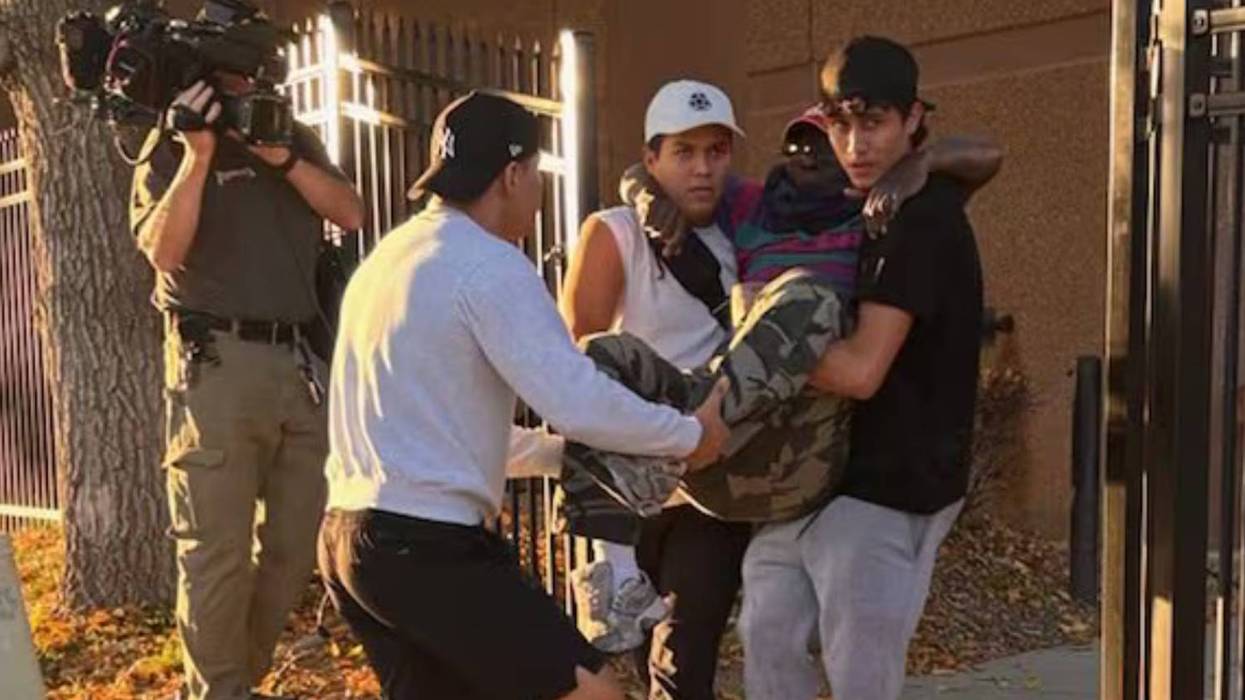
In the final, petty degradation meted out to Rev. Nalwamba, detention officials told his attorneys they would ensure his safe passage on release with a wheelchair and escort, and then reneged on it all. The wheelchair couldn't go out to the gate, they insisted, nor could vehicles approach it. Hickenlooper: "There is no excuse for this cruelty. None.” In the end - no surprise here - it was two young mensches also being released who hooked their arms together - one lawyer: "It was heartbreaking and it was infuriating" - carried the reverend to his waiting car, and went on their way: "They didn't even give me a chance to say thank you.".
After his release, a buoyant Nalwamba said he’s “in another world." He talked to his children, he's well fed, he’s staying with a family who lent him an electric scooter to get around. The next day, he visited a health clinic to get a chest X-ray, blood work, TB testing. He looks forward to physical therapy and reconnecting with his church community: "I am a happy man." Except for the monsters, still here. DHS said they were "forced" by "an activist judge" to release "an illegal alien" who "chose to overstay his welcome in violation of our nation's laws." Most vitally, "He remains in the country illegally," under a removal order, without legal status.
So much, or not yet for Obama's Michigan citing of "a decency we should expect from our public officials." Attorneys plan to reopen Nalwamba's asylum case; conditions in Uganda have seriously deteriorated with widespread crime, unrest and targeting of political opponents and a U.S. "Do not travel" advisory in effect. At the same time, says attorney Joy Athanasiou, she has never seen "this inhumanity and cruelty" over 20 years of working with detained clients. Before, there were under 1,000 habeas corpus petitions a year; now there are about 90,000, a demand "100 times greater than what we can provide.”
Nalwamba says his thoughts remain with those innocents still inside a callous, corrosive environment worse than any maximum security prison. He loves the America he has lived in for almost 26 years, he says, and has always thought African and other countries should aspire to be like the U.S. But no more, he adds, not without drastic change. Those other countries, he argues, treat their livestock better than he was treated. "It's as if they've gotten used to treating people that way, like they're taking care of goats or cows,” he said. “I have never imagined human beings treated like I saw in this place."
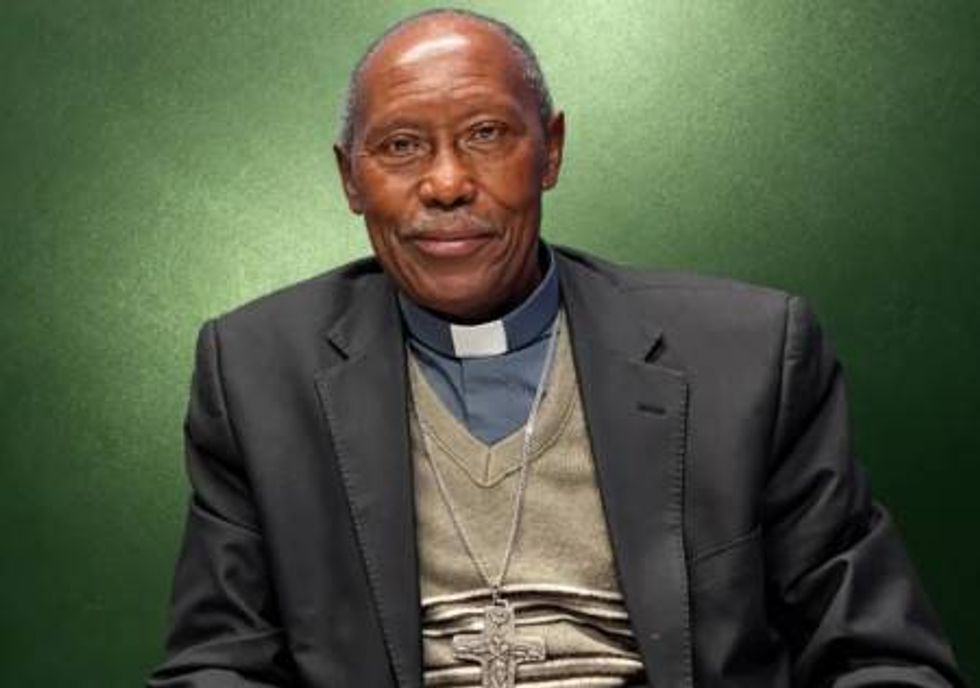 The Rev. Edward Nalwamba Photo by Resurrection Anglican Fellowship
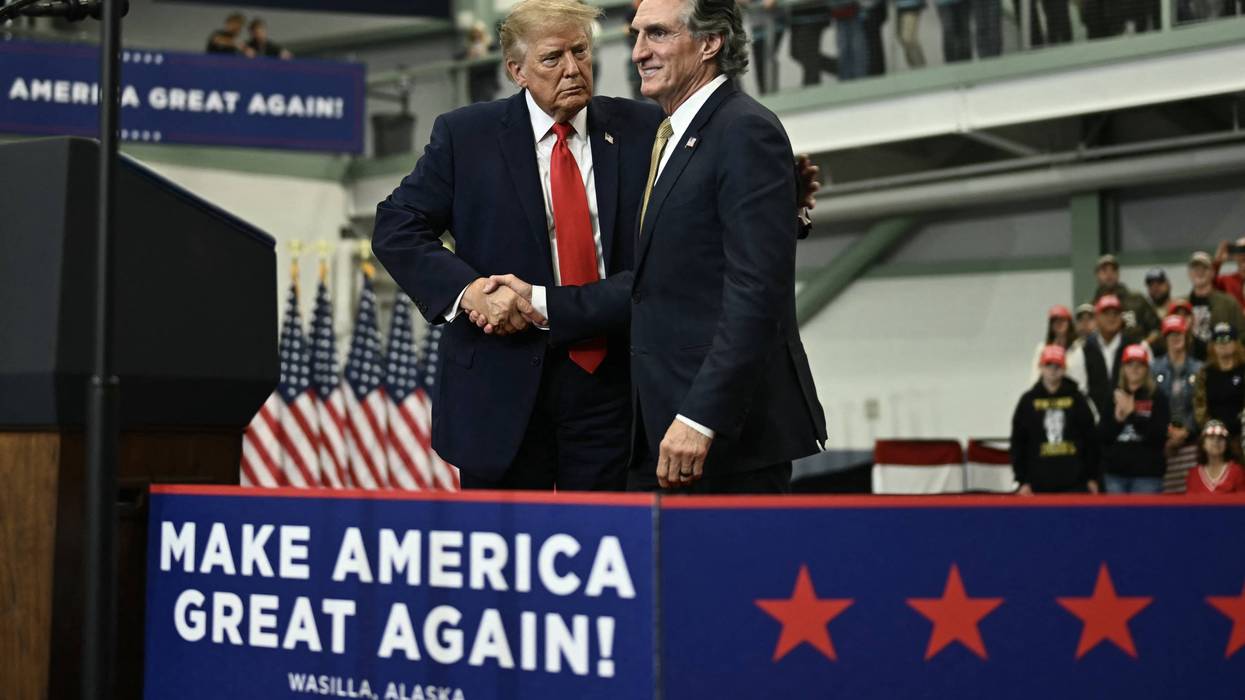

As Biodiversity Summit Begins, 'Systems That Sustain Life on Earth Are Under Threat'
Four years after world leaders agreed to the Kunming-Montreal Global Biodiversity Framework, representatives from nearly 200 nations gathered in the Armenian capital on Monday for a summit to review progress on the agreement and discuss future actions to protect nature.
In the lead-up to the 17th Conference of the Parties to the Convention on Biological Diversity (COP17) in Yerevan, the United Nations Environment Program released a "State of Biodiversity Action" report. UN Secretary-General António Guterres said that the framework "has inspired action across the globe," with nearly 90% of parties establishing national targets, but "progress is uneven, and far too slow."
The framework—sometimes called the "Paris Agreement for Nature"—features 23 targets for 2030 and four for 2050. The world isn't on track to meet any of them, including its key goal to protect 30% of all land and water by the end of this decade. Guterres noted that "even if current national commitments are met, only 26% of terrestrial and 12% of marine ecosystems would be protected" on that timeline.
The Guardian pointed out that "the last biodiversity summit, COP16 in Cali, Colombia, ended in disarray with no clear agreement on key topics after negotiations ran out of time. Another round of talks were needed in Rome to finish the meeting."
Agence France-Presse reported Monday that "only a handful of world leaders, including UN chief Antonio Guterres but mostly heads of state from nearby Central Asian nations, turned up for a high-level session on Friday ahead of the formal negotiations."
Armenian Environment Minister Hambardzum Matevosyan, who is presiding over the summit, told AFP that success "will not be measured simply by the number of participants, high-level statements, or decisions adopted," but whether nations actually take action. He added at the opening session that "over the next two weeks, our task will be to bridge the differences, build consensus, and ensure that COP17... deliver[s] results commensurate with the urgency of the challenges before us."
Those who are participating in the summit and parties to the convention face pressure from conservation leaders, including Jeffrey Parrish, the Nature Conservancy's global managing director for nature protection, who declared that "our planet is in peril. The biodiversity that sustains us is being lost faster than ever, and ecosystems that fuel our health and economies are fraying."
Parrish called on those in Yerevan to turn the review process "into an acceleration agenda" to boost progress on the 2030 goals, "transform our financial systems" to mobilize investment at the necessary scale, "integrate biodiversity into infrastructure and development decision-making," and "strengthen policy frameworks to deliver durable, area-based conservation outcomes."
Nature COP17 starts today, with governments gathering to assess progress towards restoring nature The target to protect 30% of land for nature by 2030 seems within reach, but ‘paper parks’ won’t cut it - eg just 7% of England is *properly* protected for naturewww.theguardian.com/environment/...
[image or embed]
— Guy Shrubsole (@guyshrubsole.bsky.social) October 19, 2026 at 3:34 AM
An Lambrechts, head of advocacy group Greenpeace's delegation to the summit, said in a statement that "we're halfway to 2030 and the evidence is clear: We are far off track to reach the 30×30 targets. The systems that sustain life on Earth are under threat, and decisions made at COP17 must deliver a clear course correction to protect our planet's ecosystems."
"This COP can't become a mere entry in a vast log of destruction," she argued. "Governments need to agree on concrete actions that tackle the drivers of biodiversity loss, increase finance, and redirect money flows to where they are needed. But decisions in Yerevan will only matter if governments follow through at home. They cannot continue promising to protect nature while supporting its destruction through harmful subsidies and incoherent policies. Any more delay is a threat to our survival on the planet."
Nichanan Tanthanawit, global project lead for Greenpeace's Ocean Justice Campaign, stressed that "protecting 30% of the planet by 2030 is not just a numerical target. Our ambition must be centered around justice, equity, and those who protect nature. Indigenous Peoples and local communities have cared for these lands and waters for generations, yet their knowledge, rights, and leadership are still too often overlooked."
Camila Jardim, an international political expert at Greenpeace Brazil, highlighted how biodiversity concerns connect to the fossil fuel-driven climate crisis—which world leaders have also failed to adequately address, despite scientists' warnings.
"The world is moving towards a looming 1.5ºC overshoot and the sixth mass extinction, with the human-caused climate and biodiversity crises already severely impacting people all over the world," Jardim said, referring to the Paris Agreement's temperature rise target for this century. "Those are not separate issues, but pieces of the same puzzle, and action is more urgent than ever."
"Governments can make the most impact with aligned policies to address both crises... together, with clear actions for the short, medium and long term," she continued. "This is especially critical for primary forests, which are essential for both climate stability and biodiversity protection, and the Brazil-led roadmap to halt and reverse deforestation and forest degradation by 2030 offers a real opportunity for strengthening synergies between conventions. Protection means tackling not only deforestation but also degradation, and ensuring that climate and biodiversity commitments reinforce each other rather than pull in different directions."
Europe can’t lead on nature at COP17 while cutting biodiversity cash at home
[image or embed]
— euobserver — EU news that matters (@euobserver.com) October 18, 2026 at 3:08 PM
Also attentive to the talks in Armenia on Monday, the International Union for Conservation of Nature (IUCN) released recommendations and guidance on how to incorporate ecological integrity—or "how closely an ecosystem’s species, structure, functions, and ecological processes remain within their natural range of variation"—into relevant policies and practices.
"The world has made ambitious commitments to halt and reverse biodiversity loss, but success cannot be measured by simply counting the number of conservation areas established, the species protected, or the amount of land and water conserved," said John G. Robinson, a Wildlife Conservation Society scientist who co-chairs the IUCN Task Force on Ecological Integrity.
"The real test is whether natural ecosystems—forests, grasslands, freshwater systems, and oceans—are maintaining or recovering the ecological integrity needed to sustain life," Robinson explained. "Do these places continue to support healthy wildlife populations, functioning ecosystems, and the natural processes that make life possible? By focusing on ecological integrity, we can make conservation more effective, and governments can be more accountable for results."

'Consumers Are Feeling Spooked': Trump's Failed Economic Policies Send Price of Halloween Candy Soaring
President Donald Trump's illegal war with Iran and his global tariffs have tag-teamed to jack up the price of Halloween candy, according to a report published Tuesday.
The new analysis by Groundwork Collaborative and The Century Foundation finds that the price of popular Halloween candy has increased by more than 15% during the last year, which is several times the overall rate of inflation over the same period.
The biggest jump in price came from candy maker Mondelez, whose sour gummy candy variety pack saw its price shoot up by more than 39% in the last year.
Other notable price hikes included the Hershey variety pack, which increased by nearly 20%; the Ferrero chocolate pack, which increased by 19%; the Mars chocolate variety pack, which increased by over 13%; and Tootsie seasonal lollipops, which increased by over 7%.
The report notes that Trump's illegal Iran War and his aluminum tariffs have had an impact on candy prices by driving up packaging costs for sweets.
However, the report also points the finger at the candy companies, which have continued to raise prices even after receiving a tariff exemption for cocoa and getting refunds for illegal tariffs Trump charged them last year.
"Hershey’s profit margin jumped 50% year over year, helped by pocketing a $9 million tariff refund that never made its way back to shoppers," the report notes, "while Mondelez saw a similar 30% bump in margins."
Kyle K. Moore, chief economist at The Century Foundation, said that Trump's policies had helped turn "a fun family tradition into another terrifying bill."
"With debt and high prices eating into families’ Halloween budgets," said Moore, "it's no wonder consumers are feeling spooked."
Elizabeth Pancotti, vice president of policy and advocacy at Groundwork Collaborative, pointed out that consumer sentiment recently hit record lows, as Americans are also struggling with the rising costs of gasoline and groceries.
"Trick-or-treaters will have to make due with miniature candy bars this year to accommodate Trump’s king-size price hikes," Pancotti said.
A Sunday report in The Cleveland Plain Dealer highlighted an additional reason for the high price of Halloween candy: The price of sugar, which has been affected by "poor weather and weaker production forecasts in several major sugar-producing regions."
A survey released earlier this month by Lending Tree found that Americans expect to spend significantly less on Halloween overall this year, with 23% saying they plan to buy fewer overall Halloween items compared to a year ago, while 24% said they expected to go into debt while celebrating the holiday.
Data released by the US Bureau of Labor Statistics last week showed inflation in September rising to its fastest level in six months, driven in large part by costs related to the Iran War.
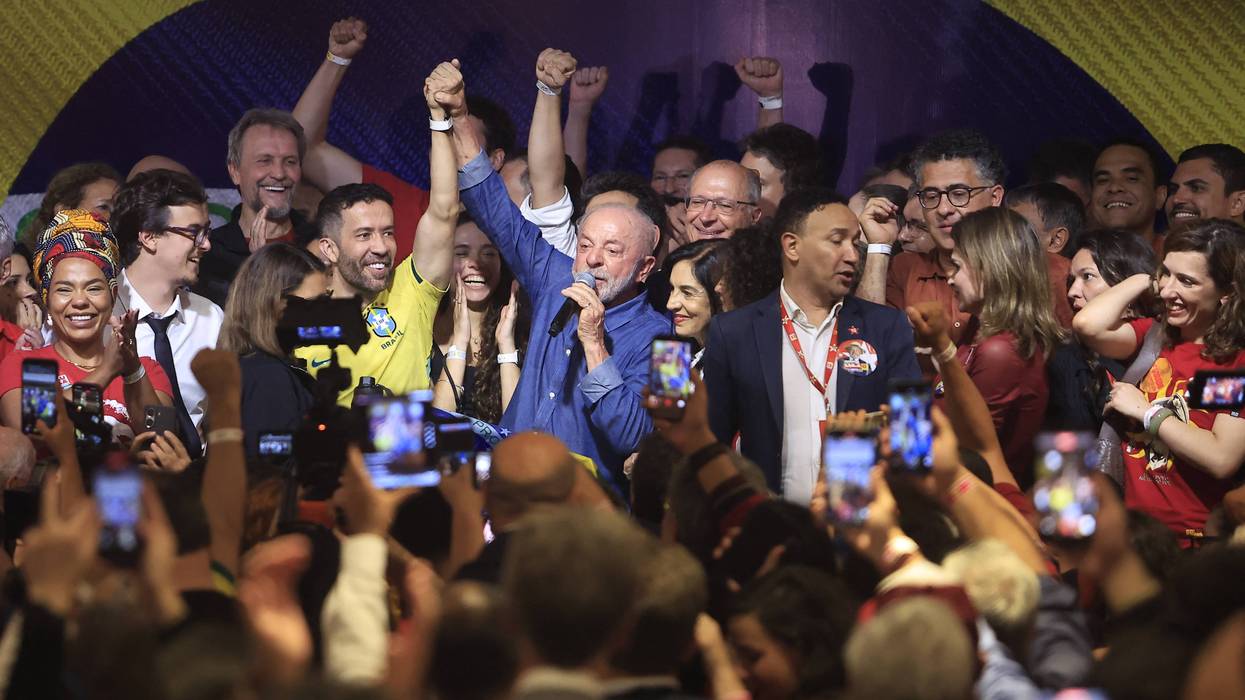
Brazil's Lula Wins 'Historic Victory' Against Right-Wing Trump Ally Flávio Bolsonaro
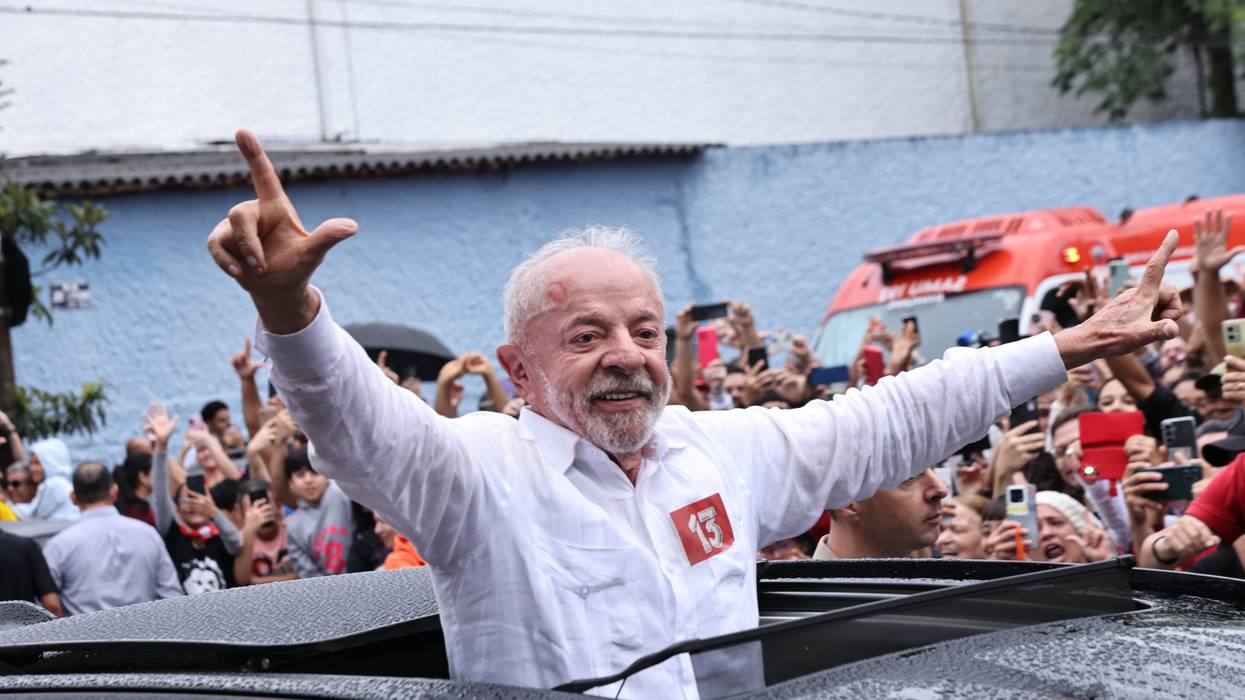
In a historic comeback, Brazilian President Luiz Inácio Lula da Silva triumphed in Sunday's run-off election over right-wing challenger Flávio Bolsonaro, the son of former Brazilian President and convicted coup-plotter Jair Bolsonaro.
Lula's victory comes despite the best efforts of US President Donald Trump and his Big Tech backers, as Trump's administration openly intervened on behalf of Bolsonaro and Meta boosted pro-Bolsonaro over pro-Lula content on its social media platforms.
"Lula won, Brazil won, democracy won, the Americas won," said Pennsylvania Democratic House nominee Chris Rabb from Lula's campaign headquarters in Sao Paulo, Brazil, after the results were announced around 9:15 pm Brasilia time. "They declared victory for Lula da Silva for his fourth term against a raging fascist, rubber-stamped for Donald Trump."
"These elections have represented a historic victory for the majority of the Brazilian people, who mobilized to defend democracy against the threat of fascism."
Rabb noted that Lula's victory marked an important turning point for the left in Latin America, as far-right parties had won every other national election in the region since the start of Trump's second term. "This is the first victory for democracy in this hemisphere since Trump took office," Rabb said.
With 99.99% of the votes counted, Lula won by 51.79% to Bolsonario's 48.21%, making him the first Brazilian candidate since the restoration of democracy in 1985 to win a second-round election after coming in second in the initial round.
“I would like to thank the Brazilian people for the generosity they have shown me for a long time,” Lula said in his victory speech in São Paulo late Sunday. “And, in this second round, I want to thank the generosity of the Brazilian youth, who took to the streets to defend democracy.”
After finishing two percentage points behind Bolsonaro in the October 4 poll, Lula re-energized his campaign by finally shortening the Brazilian workweek from six to five days, as his supporters launched demonstrations against the far-right.
"These elections have represented a historic victory for the majority of the Brazilian people, who mobilized to defend democracy against the threat of fascism," Francesca Emanuele, senior international policy associate with the Center for Economic and Policy Research (CEPR), told Common Dreams from Sao Paulo, Brazil, where she was monitoring the elections. "It was the Brazilian people themselves (students, working-class, and middle-class Brazilians) who took to the streets and mobilized tirelessly from the very first day after the first round of voting to overturn the first-round results and secure Lula’s victory."
Reginaldo Lopes, a federal deputy for Lula's Workers' Party, told The Guardian: “I feel incredible… This is Brazil telling the world that the extreme right is fascist, that the extreme right is against Black people, is against the poor, against the state, against gay people... We are going to reorganize the democratic forces [in this country.]"
Sunday's victory did not come easily, as the Lula campaign complained of bus shortages in the key cities of Salvador and Sao Paulo, requesting that the Brazilian Supreme Court extend the voting by two hours. The court granted the request, so polls closed at 7 pm Brasilia time instead of 5 pm.
"Lula’s win is the first good news for the planet in a while!"
"Lula has won despite the unfair practices his campaign has faced from Meta, interference from the Trump administration, and severe disruptions to public transportation on election day in major cities (where up to 50% of bus fleets were reportedly out of service)," Emanuele told Common Dreams. "These disruptions disproportionately affected working-class voters, who rely heavily on public transportation and have historically been a key part of Lula’s electoral base."
She continued: "Despite all these obstacles, Lula’s campaign managed to turn around a first-round result that, just a few weeks ago, had seemed extremely difficult to reverse. This is a major victory for the majority of the Brazilian people."
Several advocates and lawmakers hailed the election results as a rebuke to the far-right and the Trump administration in particular.
"During his campaign, President Lula characterized 2026’s elections as a choice between 'sovereignty or submission.' Brazil has clearly chosen sovereignty," the Democratic Socialists of America (DSA), who sent a delegation to observe both rounds of Brazil's elections, wrote in a statement.
Progressive Rep. Ro Khanna (D-Calif.) posted on social media: "People all across the world are fighting back against extremism. With Lula in Brazil, they just won. Authoritarian leaders always attack democracy because they stand no chance against the will of their people. Trump must respect the results and not undermine Brazil’s elections."
Sen. Bernie Sanders (I-Vt.) said: "Congratulations to Lula on his extraordinary reelection victory in the Brazilian presidential election. Lula has stood up for Brazilian workers & democracy—and will continue to do so in the next four years."
"Lula's hard-fought victory is an indictment on the right-wing wave sweeping through Latin America," Joseph Bouchard, a journalist and researcher who focuses on Latin America, told Common Dreams. "Except for [ Salvadorian President Nayib] Bukele, the right across the region is still incredibly unpopular, and rightly seen as corrupt, autocratic, and uncommitted to fixing systemic issues. Lula shows there is still a fight for democracy worth having, while the region is plunged into its darkest, most regressive period since the Cold War. The entire region is populated by vassal states for US interests, who have declared states of exception to curtail rights, freedoms, and basic principles of social democracy, in the name of a failed and anti-human war on drugs."
Lula's victory also has planetary consequences, as he brought deforestation in the Amazon rainforest back down to record lows after it accelerated during the tenure of Jair Bolsonaro, who attacked environmental protections and Indigenous rights.
"Lula’s win is the first good news for the planet in a while!" wrote 350.org and Third Act co-founder Bill McKibben. "I bet it shaves a tenth of a degree off how hot our Earth eventually gets, which will save millions of lives. Thank you Brazil!"
Lula still faces a fight ahead, as Bolsonaro announced it was "impossible to concede the election result" due to the extension of polling hours, even though his team had also sought an extension in parts of southeastern Brazil because of unfavorable weather.
Bouchard pointed out that "Lula will fight an uphill battle with a far-right Congress, inept Supreme Court, and constant outside pressure.."
"Trump's silence on the result is worrisome, with Flavio not conceding and demanding an annulment," he told Common Dreams. "Sadly, much of the corporate press has legitimated these claims, despite the right's concerted efforts at destroying democracy. No matter how much the authoritarians try to tip the scales, the people can still prevail, if the left is willing to fight. This might prove to be a confidence boost to the demoralized and overpowered left all over the region, and may hopefully set the region back toward progress, hard fought after decades of dictatorship and neoliberal transitions."
US-based Lula allies urged others in the US to defend Brazil's democracy from Trump administration interference and to take their own stand against the far-right in the upcoming midterm elections.
The DSA wrote:
However, the fight continues—the thin margin of this victory indicates that continued struggle and mobilization will be crucial. As global capitalism fails to solve worsening problems of its own making, the capitalists turn to right-wing authoritarianism. Brazil’s left-wing coalition will face a right-wing Congress at home, a hostile Trump administration in the US, and hostile capitalists both [at] home and abroad in the years ahead. We of the DSA stand in solidarity with our comrades in the PT [Lula's Partido dos Trabalhadores], PSOL [Brazil's left-wing Socialism and Liberty Party], and Brazilian social movements in this fight for democratic self-determination.
This solidarity means recognizing our country’s role in the threat to Brazilian democracy. These elections were marred by interference from the US, whether by Trump’s politically motivated tariffs, or by manipulation of social media by US-based tech companies like Meta. They aimed to subvert Brazil’s democracy to favor its far-right allies grouped in the "Shield of the Americas," and to get their hands on crucial natural resources, such as lithium, cobalt, and rare earth minerals as well as petroleum and iron ore, which Brazil possesses in abundance and which Lula has sworn to protect as national patrimony. The DSA categorically denounces these meddlesome, imperialist efforts. We fight for a working-class foreign policy—one which centers peace, multilateralism, and respects national self-determination, free from US interference.
Rabb concluded his message with a call to action, and a celebration: "This is a big deal for us in the United States. This shows that Trumpismo is waning, and it is our responsibility now to make sure that we kill the beast. That beast is injustice, it's oligarchy, it's neoliberalism. All of these things. Now it's our turn, folks. November 3 is right around the corner, but right now I'm going to party with these Brazilians."
Update: This piece has been updated with commentary from Joseph Bouchard.

‘This Is Assault’: Utah Woman Speaks Out After Cop Body Slammed Her at Data Center Protest
A Utah woman is speaking out after video showed a police officer slamming to the ground as she was protesting against the approval of an artificial intelligence data center.
In a Thursday interview with Fox 13 Salt Lake City, 27-year-old Aspen Azalea demanded the firing of Utah County Sheriff's Deputy Phillip Crawford after he was caught on video throwing her to the ground during a Wednesday night meeting of the Utah County Planning Commission in the city of Provo.
"Bare minimum, Phil Crawford needs to be fired, bare minimum,” Azalea said. “This is assault. He did throw me to the ground."
Video of the incident shows Crawford pulling Azalea out of her seat at the meeting and escorting her out of the main chamber. Shortly after bringing her into the lobby area, he slams her face-first onto the floor.
Utah county residents are demanding accountability after police forcibly removed a woman from a council meeting where officials unanimously approved a controversial data centre rule without public comment. The woman reportedly suffered a concussion and facial injuries. https://t.co/gq0zeLECZU
— Al Jazeera English (@AJEnglish) October 22, 2026
The Utah County Sheriff's Office claimed that Azalea kicked Crawford in the groin just before he slammed her to the ground, which Azalea denied.
“No, I never kicked him,” she told Fox 13 Salt Lake City. “I absolutely didn’t kick him."
The woman also noted that, had the deputy thrown her to the ground just a few feet further, she could have hit her head on a nearby bench.
“What really scares me about that situation is that he could have killed me because there was a bench,” she said. “If he threw me into that bench, I don't think I'd be here today."
In a separate interview published Thursday by The Salt Lake Tribune, Azalea said that she suffered a concussion, as well as bruises on her jaw, knee, and shoulder.
Azalea acknowledged to The Salt Lake Tribune that she shouted during the Wednesday meeting, as she has shouted at other meetings to protest the development of data centers.
“I have a habit of talking at data center meetings,” she told the newspaper. “But never have I been met with such excessive force.”
Azalea faces misdemeanor charges of assaulting a police officer, resisting arrest, and disrupting a meeting.
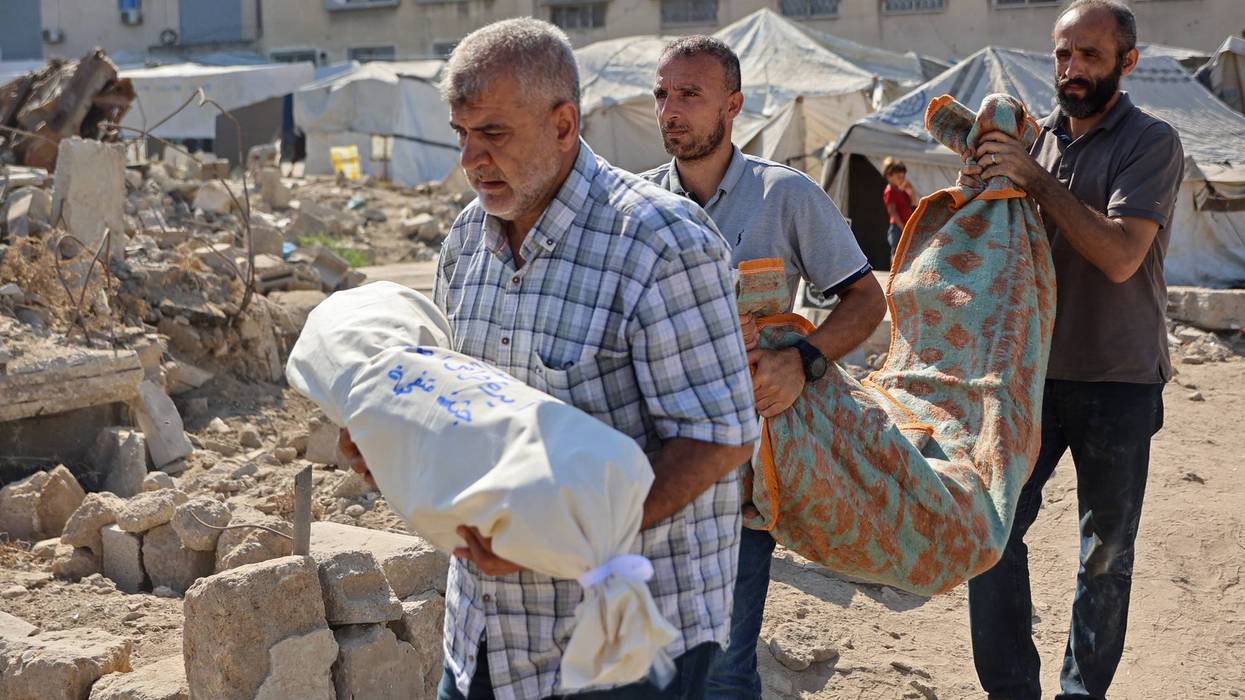
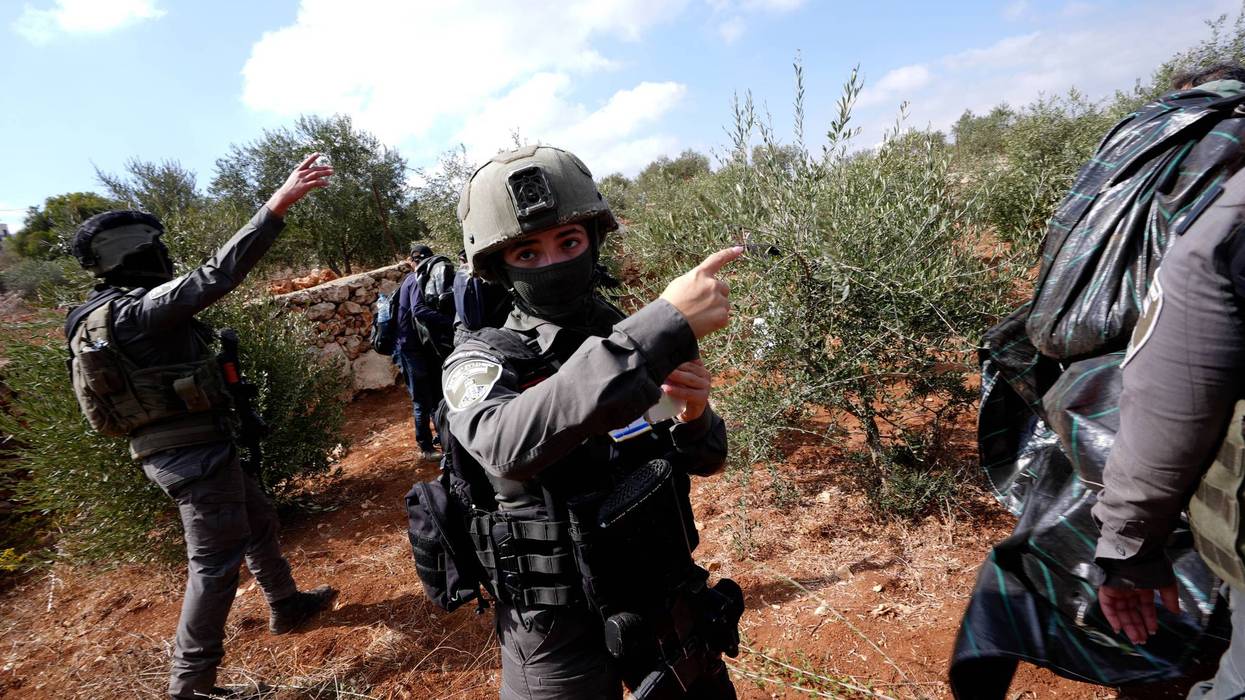
'Flat-Out Lying,' Israel Claims Palestinian Farmers, Brad Lander Entered Restricted Area Before Detention
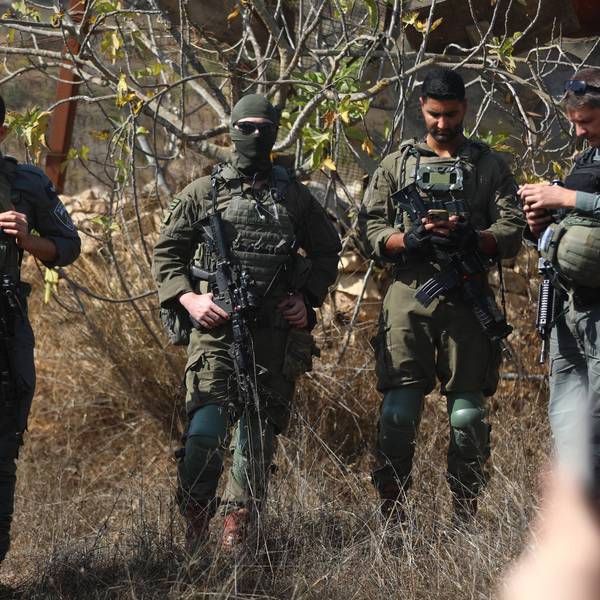
An official Israeli military map belies claims made Wednesday by Israel's government that Palestinian olive harvesters accompanied by activists and US congressional candidate Brad Lander had entered a restricted area of the illegally occupied West Bank prior to their detention earlier in the day.
Israeli occupation forces detained Lander and scores of other people—including Israeli leftists, members of Rabbis for Human Rights, and Jewish American activists—near the town of Nahalin as they accompanied Palestinians who sought to harvest the olives that provide economic and cultural sustenance to their families and communities.
Lander, the Democratic nominee for New York's 10th Congressional District, was released after roughly three hours with what he called a "warning." Many of the other detainees remained in custody, according to The Times of Israel.
The Israel Defense Forces (IDF) and Israeli Foreign Ministry initially said that harvesting in the area required prior coordination with the authorities. But a map distributed to Palestinian farmers by Israel's Civil Administration, the military's administrative arm in the occupied territory, showed that the location did not require coordination.
The discrepancy prompted questions about why the farmers and their supporters were detained at all—and condemnation of an illegal occupation and apartheid system that forces Palestinians to get permission to work their own land.
"The Israeli Foreign Ministry is lying. No coordination was required, and we were never told that it was," Lander said on X. "We were not in a restricted security area. We did not pass any checkpoints. Palestinian farmers do not—and should not—need permits to harvest their own olive fields. But they fear doing so, because the IDF doesn’t protect them from settler violence."
Responding to an Israeli Foreign Ministry social media post claiming "Brad Lander's latest stunt" was "not about harvesting olives," but rather "harvesting headlines," Palestinian human rights activist Ihab Hassan retorted, "If you stopped Israeli settler terrorists from storming Palestinian villages and communities, murdering civilians, stealing olives, setting homes on fire, and seizing land, there would be no headlines to harvest."
Hassab said in a separate post: "The Israeli Foreign Ministry is flat-out lying about Lander and the other activists entering a restricted area. The IDF’s own map shows they were not in a restricted area."
Some observers responded with mockery, like Jerusalem attorney Daniel Seidemann, who quipped that the apprehended Palestinians were guilty of "aggravated harvesting in the first degree."
New York social worker David Grossman posted a photo of an SUV belonging to World Central Kitchen that was bombed by Israeli forces in Gaza in one of multiple Israeli massacres of workers and volunteers for the food charity during the ongoing genocide.
Israeli journalist Haim Goldich acknowledged on X that "there's a chance there's a big mess here and 80 people were detained for no reason."
Wednesday's events took place against a backdrop of a particularly violent olive harvest season. The United Nations Office for the Coordination of Humanitarian Affairs (OCHA) said Monday that between September 1 and October 12, Israeli settlers carried out 199 attacks connected to the harvest, killing one Palestinian, injuring 124, and damaging more than 2,500 trees and saplings.
OCHA documented more than 2,060 settler attacks resulting in Palestinian death, injury, or property damage across the occupied West Bank since the beginning of 2026—an average of seven attacks a day.
According to OCHA, at least 1,138 Palestinians—at least 250 of them children—have been killed by Israeli soldiers and settlers in the West Bank since October 2023.
While Israeli leaders have sometimes condemned individual attacks—even while casting aspersions on victims like US photojournalist Heidi Levine—critics argue that the state's broader policies enable the violence. Settlements receive state infrastructure and protection, while Palestinians face restrictions on movement, land access, construction, and agricultural activity.
The result is a system in which Palestinians can face military detention for attempting to harvest their own trees, even as settlers attack Palestinian farmers and destroy their livelihood with impunity.
“The harvest orders tell the story of the government’s criminal policy: Settlers are illegally seizing more and more hilltops with government encouragement and support, while the military, for its part, closes off vast areas to Palestinians under the pretext of defending those illegal outposts," the Israeli group Peace Now said last week.
"This is a system of dispossession and plunder," the group continued, "and it is a disgrace to the State of Israel.”
Former Biden Official With AIPAC Ties Tapped for Trump's 'Corrupt, Anti-Palestinian' Board of Peace
"Democrats should firmly oppose it regardless of how many former AIPAC employees the Trump administration sends up to the Hill to sell it," said one policy expert of the Board of Peace.
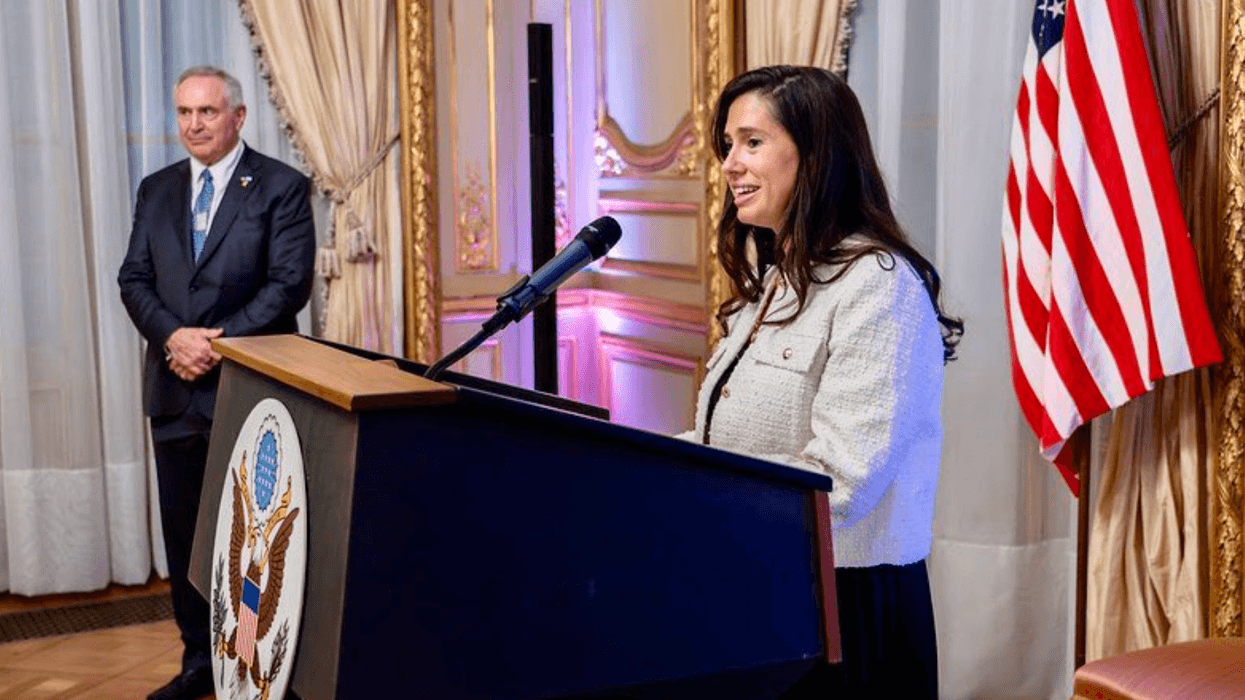
As President Donald Trump's Board of Peace, the organization that is tasked with overseeing a peace plan in Gaza, looks to boost its bipartisan appeal ahead of the midterm elections, in which Democrats could take control of one if not both chambers of Congress, the board announced Monday that it had appointed a former Biden administration official to help smooth the effort.
Shelley Greenspan, who served in the State Department and then as the White House liaison to the Jewish community for two years under President Joe Biden, was selected to lead external affairs, including outreach to members of Congress and think tanks in Washington, DC.
Greenspan has previously worked for Amazon in global innovation policy, for the Hillary Clinton presidential campaign in 2016, and as a legislative manager for the powerful pro-Israel lobbying group, the American Israel Public Affairs Committee (AIPAC).
Her appointment comes just before the US elections, but also legislative elections in Israel, which have held up the peace process as Prime Minister Benjamin Netanyahu has refused to take steps on the peace plan before the country goes to the polls Tuesday.
Recent polling has projected that a bloc of opposition parties could win more seats than Netanyahu's far-right nationalist alliance.
Greenspan has promoted Trump's 20-point peace plan as one that could bring "practical results" to Palestinians in Gaza.
In a statement to Axios on Monday, she said that in her last federal government role at the State Department, "I saw how the president's 20-Point Plan can tangibly deliver for the peoples of Gaza and Israel. I look forward to continuing that work with the Board."
But rights groups have warned the Board of Peace has failed to deliver safety to Palestinians. In May, five months after the board was established at the World Economic Forum in Davos, Switzerland—where Trump's son-in-law, Jared Kushner, presented a vision for a "new Gaza" complete with data centers and luxury high-rises—Human Rights Watch found that 865 Palestinians had been killed by Israeli forces since the October 2025 ceasefire and humanitarian aid was still "far below required levels."
The Board of Peace was given a mandate by the United Nations Security Council to oversee the reconstruction of Gaza, with Trump serving as "chairman for life." Last month, it unveiled a $2.45 billion recovery plan, including 66 projects.
But as Eric Reidy wrote at The New Humanitarian last week, the board "has put forward grand visions for redevelopment that are entirely disconnected from Gaza’s past and present as well as preliminary plans for stabilization that lack any viable path for implementation."
Meanwhile, Israel has continued to wage deadly attacks on Palestinians and daily life in the exclave has been "suspended in an intolerable state of limbo," he wrote.
"Trump’s 20-point peace plan says that Israel 'will not occupy or annex Gaza,' but it makes no mention of the West Bank," Reidy added. "The question of Palestinian self-determination is kicked indefinitely down the line to some point in the future when 'the conditions may finally be in place.' There is no mention of Palestinian rights or of justice and restitution, let alone recognition of Israeli crimes. Can there really be a path forward in Gaza that would benefit its people without addressing, or even acknowledging, the underlying causes of their suffering, namely Israel’s colonization and subjugation of Palestinians?"
Meanwhile, allegations of corruption have emerged, with Trump pledging $10 billion in taxpayer funds to the Board of Peace.
Matt Duss, executive vice president at the Center for International Policy, urged Democrats in Congress to oppose to board despite its attempt to cast itself as a bipartisan operation by appointing Greenspan.
"There's no 'fixing' the Board of Peace, and it's doing exactly what the world expects of it: serving as a Trump slush fund while validating continued Israeli control of Gaza, at the expense of Palestinian lives and rights," said Duss. "That is its purpose. No one should pretend otherwise."
Greenspan's appointment, said Akbar Shahid Ahmed of The Washington Sun, "underscores continuity in Biden-Trump policy for ongoing Palestinian suffering," and the "reluctance to pressure Israel even for stated US goals" such as an end to Israeli attacks on Gaza.
The Board of Peace, said progressive organizer Melissa Byrne, "is war and subjugation by another name."
Over a Million Seniors Sent Scrambling as Medicare Advantage Giants Slash Plans Under Trump
Medicare Advantage giants are seeking to boost their profits by cutting benefits and exiting counties across the US—despite receiving a big payment boost from the Trump administration.
Seniors across the United States are scrambling to find alternative health coverage as Humana, UnitedHealthcare, and other private insurance giants slash Medicare Advantage benefits and cancel some plans entirely—despite receiving a major payment increase from the Trump administration for the coming fiscal year.
Humana and UnitedHealthcare's plan cancellations are expected to impact more than 1 million seniors nationwide, forcing people to find new plans in the current open enrollment period that runs until December 7. Both companies have signaled that they are trying to boost their bottom lines by exiting unprofitable Medicare Advantage markets and cutting benefits such as routine dental coverage, which is not offered by traditional Medicare.
"My biggest challenge for picking a plan next year is the cost of dental plans and vision are going up," one Medicare Advantage enrollee told PBS last week.
The health policy nonprofit KFF noted in an analysis earlier this month Humana and UnitedHealthcare are withdrawing their Medicare Advantage prescription drug plans from more US counties than they are entering in 2027. UnitedHealthcare is exiting 228 counties and entering nine new ones, while Humana is leaving 62 counties and entering four new ones, KFF found.
Blue Cross Blue Shield is also eliminating some of its Medicare Advantage plans, which are funded by the federal government—at a massive cost to US taxpayers—and run by private companies. The Boston Globe reported on Monday that "about 20,000 seniors in Massachusetts will be forced to find new health insurance plans" due to the Blue Cross Blue Shield cuts.
In Minnesota, an analysis by the Star Tribune found that around two-thirds of state residents enrolled in Medicare Advantage—around 340,000 people—will have to find new coverage for the coming year due to private insurers' cuts.
"Fifteen counties are losing their remaining Medicare Advantage options next year. In 12 of those counties, though, insurers will sell a different kind of privatized Medicare coverage called a Cost plan," the Star Tribune reported last week. "Cost plans sell at typically higher monthly premiums than Medicare Advantage plans."
Nationwide, more than half of the Medicare-eligible population is enrolled in Medicare Advantage plans, which are notorious for overbilling the federal government and denying coverage for necessary care—increasingly using artificial intelligence technology.
Medicare Payment Advisory Commission estimated in a report published earlier this year that the federal government will pay roughly $76 billion more to cover seniors on Medicare Advantage plans than it would have if those same people were on traditional Medicare. Over the next decade, according to the nonpartisan Congressional Budget Office, Medicare Advantage overpayments could cost the federal government around $1 trillion.
Earlier this year, the Trump administration gave the Medicare Advantage industry a significant boost by hiking federal payments to private insurers by roughly 2.5%—a sizeable increase compared to the 0.9% raise that the administration previously floated. Reuters reported in April that the industry will also receive a "2.5% benefit from a change to risk assessment payments related to health status, for a total increase of about 5%."
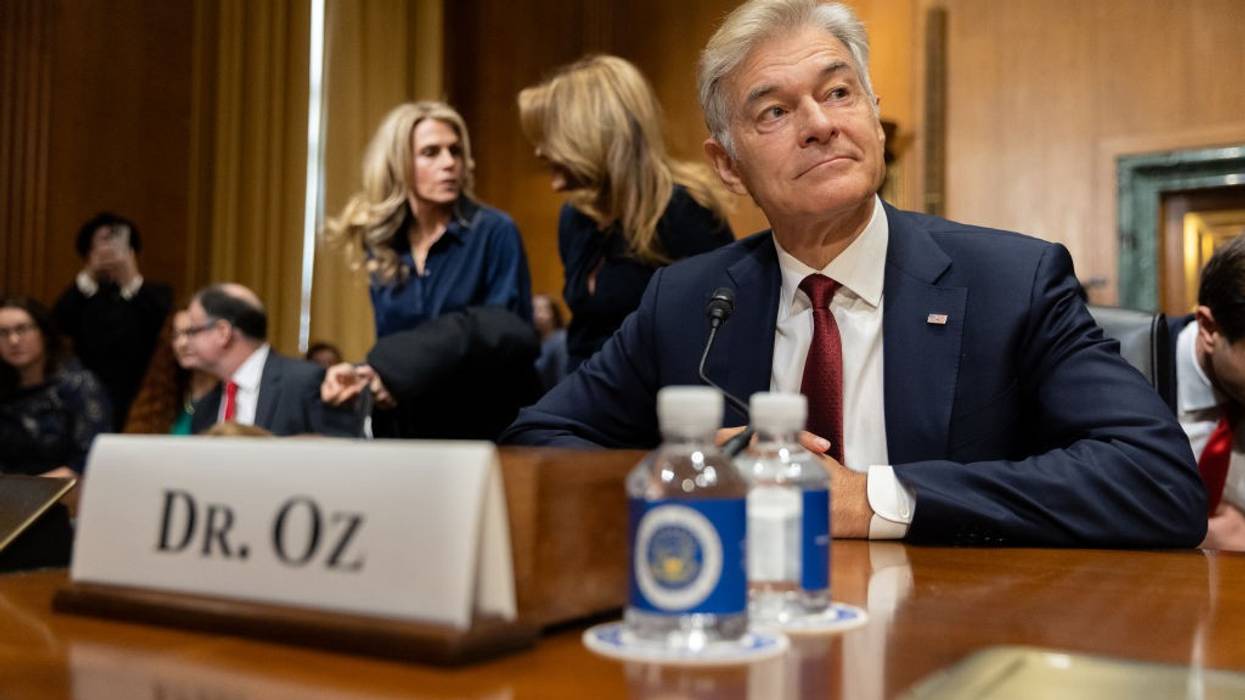
The Centers for Medicare & Medicaid Services, which announced the payment boost, is currently headed by Mehmet Oz, who once proposed a healthcare plan dubbed "Medicare Advantage for All."
The advocacy group Families USA called the 2027 payment increase for Medicare Advantage insurers "a big giveaway" that could have gone toward "bolstering benefits in Medicare for all seniors and people with disabilities."
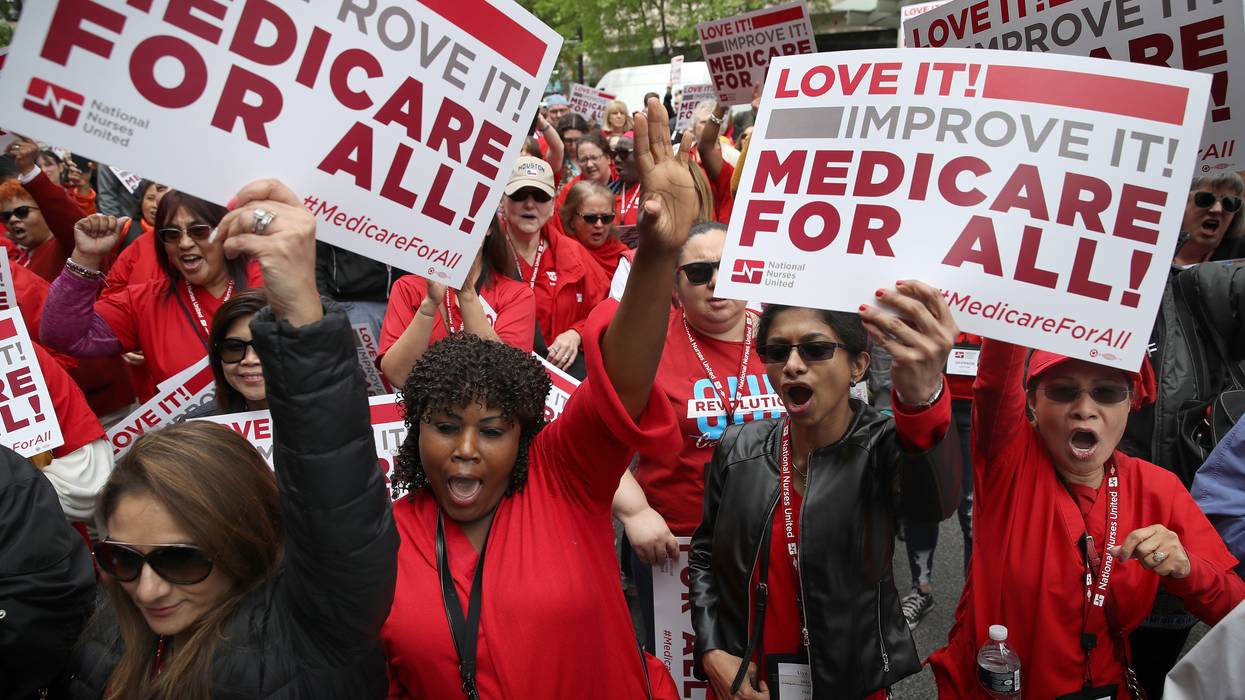
Van Hollen Says Medicare for All Is What's Needed If Democrats Take Back the Senate
“The reality is people are facing huge increases in premiums and copays… So we need a Medicare-for-All-type solution,” Van Hollen said. “This is the kind of debate we need to have.”
Another possible Democratic presidential contender says the party needs to pursue “Medicare for All” as a solution to America’s healthcare crisis should the US Senate flip blue in November.
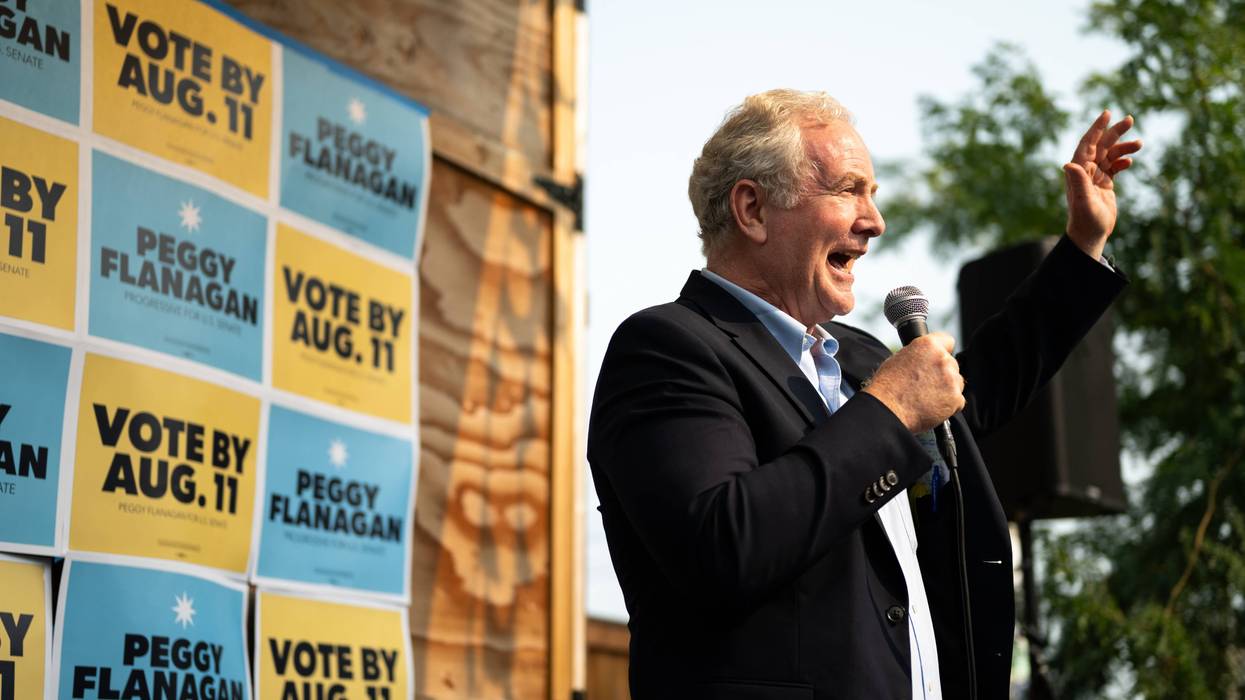
“The reality is people are facing huge increases in premiums and copays. So we need a Medicare-for-All-type solution,” Sen. Chris Van Hollen (D-Md.) said in a Monday report from Politico. “This is the kind of debate we need to have.”
Van Hollen joins a list of potential 2028 hopefuls who have endorsed the idea of a single-payer healthcare system—including Reps. Alexandria Ocasio-Cortez (D-NY) and Ro Khanna (D-Calif.), who have championed the policy for years, following the lead of Sen. Bernie Sanders (I-Vt.).
Democratic California Gov. Gavin Newsom has also declared that he believes in “universal healthcare” and “Medicare for All” but has not yet released a concrete proposal for what his version of the policy would look like.
Van Hollen, who previously backed a public health insurance option to compete with private insurance, supported Sanders' Medicare for All bill in December as premiums were set to skyrocket after Republicans allowed enhanced Affordable Care Act insurance subsidies to expire.
He declared that Congress "must stop tinkering around the edges of a broken healthcare system," pointing to the massive administrative costs and poor health outcomes under the for-profit status quo.
Medicare for All could also face a more favorable climate in the Senate than it did during the Biden presidency.
If Democrats retake the chamber this November—buoyed by promises to tackle the high costs of everything from healthcare to energy to food—Sanders is expected to once again be appointed chair of the Senate Health, Education, Labor, and Pensions (HELP) Committee.
Sanders led the committee from 2023-25, a time when Medicare for All lacked any chance of passing out of a Republican-controlled House of Representatives.
While a new Medicare for All bill would likely be routed through the Senate Finance Committee, chairing HELP would give the Vermont socialist the power to frame the debate on healthcare by holding hearings that could address problems with private insurance and launching investigations into industry practices, while making the case for a single-payer system.
In an April 2026 letter, co-signed by Sen. Ron Wyden (D-Ore.), Sanders called for a series of high-profile Senate hearings grilling insurance CEOs over rising premiums, coverage denials, executive compensation, and industry consolidation.
“The American public deserves to know why the big insurance executives... continue to get richer and richer, while over one-third of people with health insurance have been forced to skip or delay getting the care they need because of the outrageous cost,” Sanders and Wyden wrote. “It is time for our committees to hold the chief executives of the major health insurance companies accountable for their greed and to address the healthcare crisis in America."
A strong showing for Democrats in November's midterms could bring a new crop of Medicare for All supporters to Congress, such as former Detroit public health official Abdul El-Sayed and labor leader Troy Jackson, who are leading their Senate races in Michigan and Maine.
As private insurance premiums spike and millions of Americans lose coverage after the Trump administration imposed the largest federal healthcare spending cut in the nation's history, Medicare for All also has more public support than it has had in years.
A September survey by KFF found that 66% of adults said they’d favor “a national health plan in which everyone gets insurance from a single government plan.” Support came from 84% of Democrats, who’ve long backed it, as well as nearly three-quarters of independents and even just over a third of Republicans.
“If I have anything to say about it… the agenda of the Democratic Party is going to be extremely bold. It is going to take on high costs,” Sanders told Politico. “The super [political action committees] are not going to run the agenda anymore. We’re going to do what the American people want.”
Israel's Intensified Ethnic Cleansing of West Bank Spurs Calls for 'Urgent Action'
“The world cannot stand by as Israel continues its assault on Palestinians, waiting for yet more neighborhoods to be emptied and erased before intervening,” said the Israeli rights group B'Tselem.
Human rights groups on Monday implored the international community to act in the face of Israel's accelerating ethnic cleansing of West Bank Palestinians following a resistance attack that killed two Israel Defense Forces soldiers and ahead of Tuesday's Israeli elections.
Al Jazeera reported that more than 3,000 Palestinians have been forced from their homes in Hebron in the illegally occupied West Bank, a city long beset by Israeli settlement expansion and displacement. In addition to a military lockdown, Israeli occupation forces have detained scores of Palestinians since two IDF soldiers were shot dead on Friday.
Israeli Prime Minister Benjamin Netanyahu—whose far-right coalition is trying to shore up support ahead of Tuesday's elections—and other senior officials have openly indicated plans to ramp up the ethnic cleansing of the area. Israeli Defense Minister Israel Katz and Finance Minister Bezalel Smotrich have vowed to treat the West Bank like Gaza, where more than 250,000 Palestinians have been killed or wounded and around 1.9 million others have been forcibly displaced amid a "complete siege" since the Hamas-led attack of October 2023.
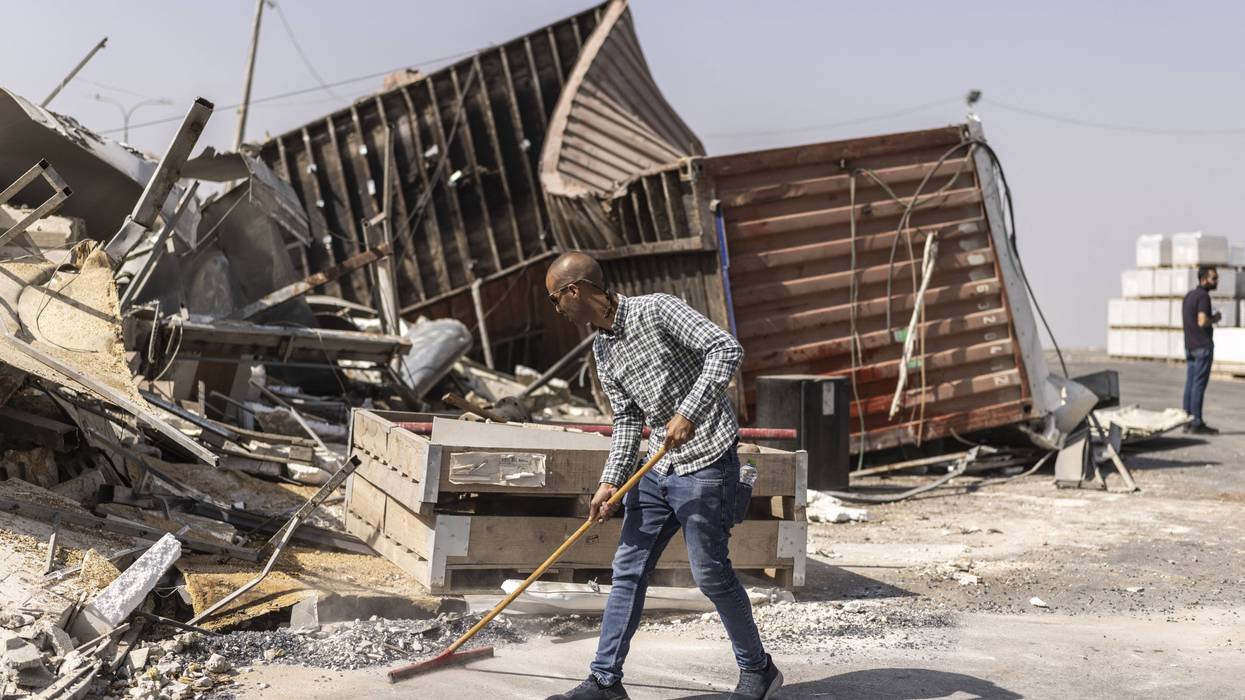
“This is not only a humanitarian crisis but a deliberate assault on the economic foundations of Palestinian life, as families lose their homes and livelihoods," Mustafa Tamaizeh, Oxfam International's West Bank response lead, said Monday. "The destruction of factories, workshops, and business premises is wiping out years of investment and hard work."
"These illegal actions amount to collective punishment and are accelerating the forced displacement of Palestinian communities across the West Bank," Tamaizeh continued. "They come during the olive harvest, one of the most important sources of income for Palestinian farming families."
“In recent days, high-ranking Israeli officials have openly acknowledged they are considering plans for the largest military operation in the West Bank since 1967, with calls for operations in the West Bank to be conducted like those in Gaza," he added. "Against this backdrop Oxfam is calling for urgent action by the international community to stop Israel’s campaign of mass forced displacement, demolitions, and state-backed settler violence, which amount to a policy of ethnic cleansing.”
The International Commission to Support Palestinian Rights (ICSPR) said Monday that it "strongly condemns the escalation of Israeli occupation crimes across the occupied Palestinian territory, including the siege, raids, home demolitions, and forced displacement of residents in Hebron and other areas of the West Bank."
"These violations coincide with raids on more than 15 towns and cities in the northern West Bank, the arrest of numerous Palestinians, escalating settler attacks, and road closures, alongside the continued mass killings and war crimes against civilians in the Gaza Strip," ICSPR continued.
"ICSPR calls on the United Nations and the states parties to the Geneva Conventions to take immediate and binding measures to halt Israeli occupation crimes and provide international protection for civilians in Gaza, the West Bank, and occupied East Jerusalem," the group added. "It calls for an end to forcible evictions, home demolitions, settler attacks, and settler terrorism."
United Nations Secretary-General António Guterres weighed in Monday, invoking the "specter of ethnic cleansing" and calling for "the realization of the legitimate rights of the Palestinian people to self-determination."
Community Peacemaker Teams (CPT), a Christian human rights group, also condemned Israel's actions, issuing a statement Monday asserting that “families should never have to live in fear of being forced out of their homes or separated from the places where they have built their lives."
CPT stressed that "every Palestinian has the right to live safely and with dignity in their own home." The group urged the international community "and diplomatic missions to act now to protect civilians in Hebron," and "people of faith and conscience to contact their elected representatives and call for action to protect Palestinian civilians."
At least one Israeli rights group also condemned the government's and IDF actions.
“The world cannot stand by," B'Tselem said, "as Israel continues its assault on Palestinians, waiting for yet more neighborhoods to be emptied and erased before intervening."
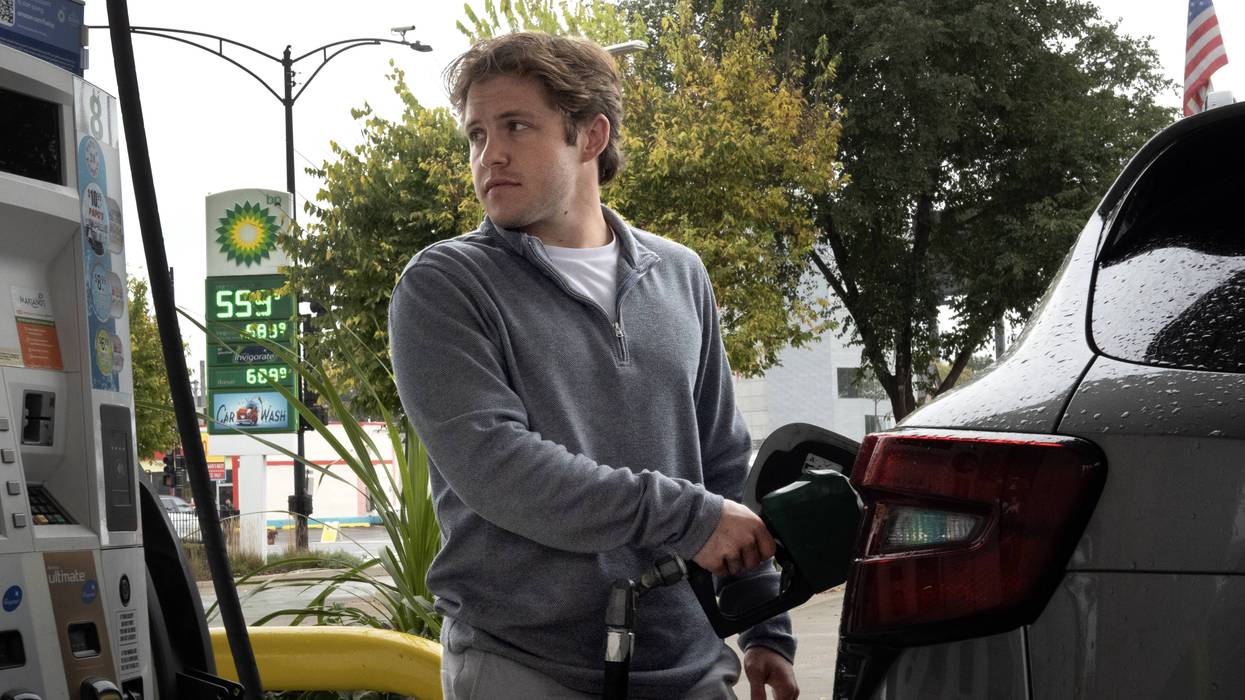
Trump Doesn't 'Give a Damn' About Iran War Price Hikes—His Oil and Gas Holdings Are Up to $81.6 Million
"Trump's Iran War has forced Americans to pay much more at the pump while Big Oil rakes in profits and the president's own stock wealth in the oil and gas industry continues to balloon."
After US President Donald Trump spent the weekend reminding midterm campaign rally attendees that he doesn't "give a damn" about soaring gasoline prices from his illegal Iran War, congressional Democrats on Monday released a report showing that his oil and gas stock holdings could now top $80 million.
During a Saturday rally in Georgia, Trump highlighted that due to his war of choice, the US fossil fuel industry is "making hundreds of billions of dollars," and predicted his comments will be turned into "fake headlines," but he added: "I don't give a damn, I'm going to say it: We're making a freaking fortune."
Just how much extra is the public paying at the pump because of the eight-month conflict? As of Monday, the national average was $4.29 a gallon for gasoline and $6.35 for diesel, according to the American Automobile Association.
An online tracker from the Costs of War Project at Brown University estimates US residents have paid at least $144.6 billion more for fuel—$79.8 billion for gasoline and $64.79 billion for diesel. That's over $609 per household, just for gasoline.
Data from the congressional Joint Economic Committee suggest the impact could be even worse. As JEC Democrats' Monday report notes, the panel found that US households "have now spent an additional $101 billion on gasoline since the start of the Iran War, or an average of $856 in gas costs per family."
A state-by-state breakdown in the report—released just days ahead of the midterm elections that will determine control of Congress for the remainder of Trump's second term—reveals that price increases for gasoline have hit some areas particularly hard. Wyoming, a Republican stronghold, has had the highest hike per household, at $1,454.
Rounding out the top 10 are Utah ($1,240), Alabama ($1,232), Montana ($1,180), Mississippi ($1,141), South Dakota ($1,122), Idaho at ($1,108), North Dakota ($1,087), New Hampshire ($1,029), and Iowa ($1,010). Trump won all of those states but New Hampshire in 2024—when he campaigned on a promise to serve the interests of the climate-wrecking fossil fuel industry if its executives dumped $1 billion into his run, while also claiming he would lower costs for working people.
Meanwhile, the report stresses, Trump's oil and gas holdings could have nearly doubled this year, growing by as much as $35.8 million, for a total of up to $81.6 million—and 94% of his 2026 industry stock purchases occurred after he went to war with Iran, which has restricted ship traffic through the Strait of Hormuz.
The document details Trump's holdings—which are reported in ranges—in Chevron, ConocoPhillips, ExxonMobil, Marathon Petroleum, Occidental Petroleum, Phillips 66, Valero Energy, and Williams Companies. It also warns that "the true value may in fact be higher given that Trump has yet to report stock transactions for September or October, and because he has a history of filing his transactions much later than the law requires."
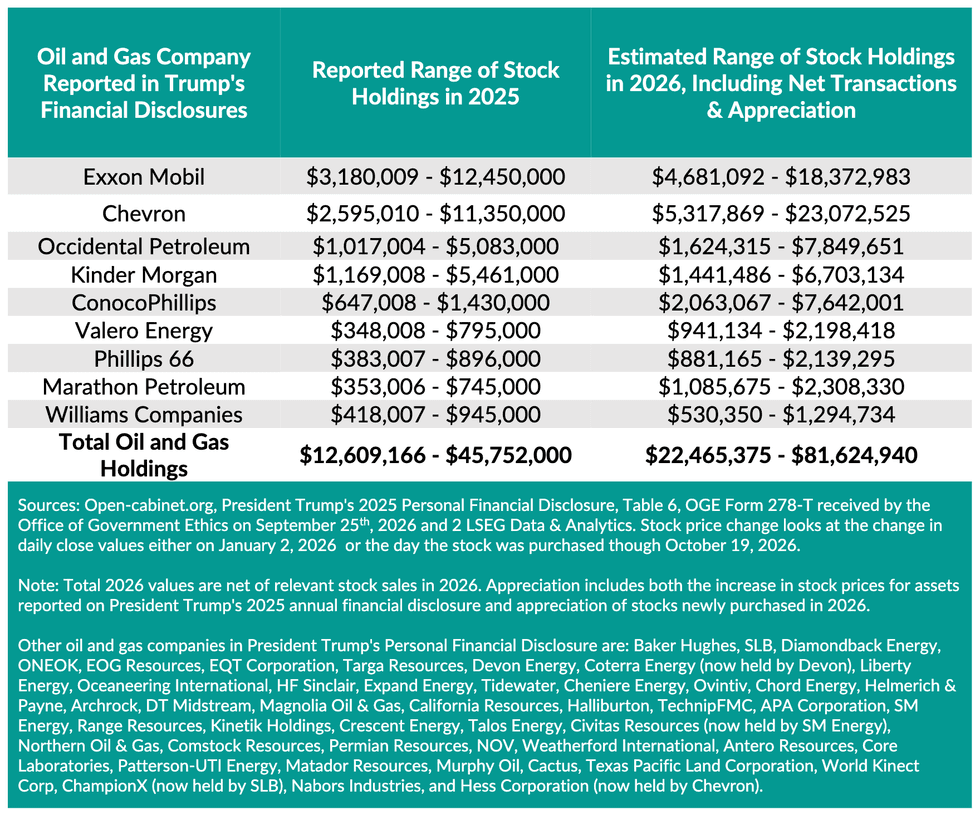 The graph published by the congressional Joint Economic Committee on October 26, 2026 shows US President Donald Trump's stock holdings in oil and gas companies.
Sen. Maggie Hassan (D-NH), the JEC's ranking member, declared that "Trump's Iran War has forced Americans to pay much more at the pump while Big Oil rakes in profits and the president's own stock wealth in the oil and gas industry continues to balloon."
Trump has faced scrutiny and criticism for cashing in on the conflict he created, which the White House has tried to dismiss by pointing out that the president's "stock and bond portfolio is independently managed by third-party financial institutions."
Such comments have not appeased critics, including Hassan, who said that "as Trump—the country's highest-ranking public employee—continues to own and trade stocks in companies that stand to benefit from his decisions, his actions raise major concerns about conflicts of interest. Unfortunately, this is nothing new from this administration and only reinforces that the president puts his own financial interests above the American people."
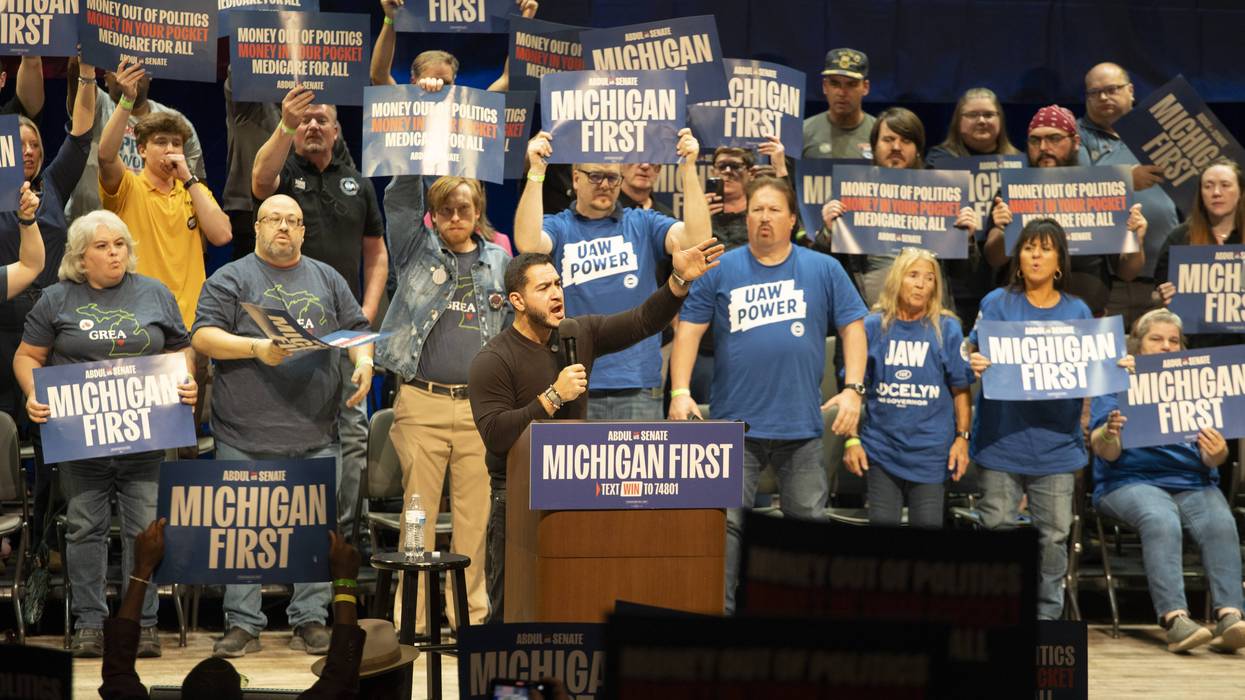
'I'll Be Senator Mohamed to You, Bro': El-Sayed Hits Back at Trump's Islamophobic Attacks
“I don’t care how he pronounces my name,” the Michigan Democrat said. “Because he can just go on and call me senator after November.”
Abdul El-Sayed, the Democratic candidate for US Senate in Michigan, remained undeterred on Sunday night after President Donald Trump and his supporters ramped up their overt attacks on his Muslim faith at a rally earlier that day.
Continuing to refer to the former public health official by his middle name “Mohamed,” Trump told a frothing crowd in Port Huron on Sunday afternoon that El-Sayed—who would be the first Muslim elected to the Senate—was a “jihadist Muslim Brotherhood member,” escalating the false attacks made by his Republican opponent, former US Rep. Mike Rogers.
"I get that the president takes personal offense to my first name," El-Sayed said at his own rally in Grand Rapids later that evening. "He doesn't mind as much when it's the Saudis who are funding his son-in-law's private equity. Doesn't seem to mind as much when it's the Qataris who are giving them a $400 million private jet. He just seems to have trouble pronouncing it when it's my name."
"I don't care how he pronounces my name. I don't even care that he remembers my whole name. Because he can just go on and call me senator after November," he continued. "I'll be Senator Mohamed to you, bro."
The continued attacks on El-Sayed’s name and Muslim faith were part of a barrage of racist and Islamophobic remarks from Trump and his allies at the rally, which several observers on social media, including the prominent left-wing streamer Hasan Piker, compared to a “Klan rally.”
Portraying El-Sayed as a terrorist, Trump said the Democrat should not be allowed to fly on airplanes and, if elected, should be required to pass through a metal detector when entering the Senate.
Contrasting El-Sayed with Rogers, whom he described as American as “apple pie,” Trump said that El-Sayed, who has frequently emphasized his commitment to religious pluralism on the campaign trail, wanted to impose Sharia on the United States.
He also directed his ire at Jewish voters who may vote for El-Sayed, a frequent critic of US support for Israel.
“Any Jewish person that supports this guy should be ashamed of themselves,” Trump said, again invoking the antisemitic trope that Jewish Americans hold dual loyalty to both the US and Israel. “I’m polling 99% in Israel, and I cannot understand how anybody who’s Jewish can even think about voting for this guy.”
Trump compared stopping El-Sayed to stopping the 9/11 hijackers. Underscoring the point, he brought out David Beamer, whose son Todd died fighting the hijackers aboard Flight 93, to deliver more blood-and-soil invective.
"Mike Rogers is an American. Abdul has a birth certificate. The birth certificate says he's a citizen of America," Beamer said. "A birth certificate doesn't make you an American."
"He has a birth certificate, but he's not an American," he said of El-Sayed, who was born and raised in Michigan. "He had the choice. He had the choice to be an American or not. He has chosen otherwise. He has blood that's red. However, he has chosen to remove any strain of the white and blue part in his blood."
"We cannot, cannot allow this man to invade and occupy our country," Beamer said.
Though Rogers has attacked El-Sayed’s religious background relentlessly in the final months of the campaign, an average of polls from FiftyPlusOne shows El-Sayed with roughly a three-point lead just over a week before Election Day.
Rogers has struggled to defend Trump’s unpopular record as El-Sayed has hammered him over inflation, corruption, and the Iran war. El-Sayed, meanwhile, has stayed focused on a three-part pitch to Michiganders: “Money out of politics, money in your pocket, Medicare for All.”
Joining El-Sayed in Grand Rapids, Sen. Bernie Sanders (I-Vt.) suggested Republicans were resorting to Islamophobia because they had nothing of substance to offer voters on the economy.
“Mr. President, instead of slandering Abdul and his family, what are you going to do about the healthcare crisis in America? What are you going to do about the housing crisis? What are you going to do about income and wealth inequality?” Sanders asked. “These guys have nothing to say about the real issues impacting working families, and all they can do is foment hatred and divisiveness.”
"The reason that in many respects this race here in Michigan is... the race that people all over the world are looking at, is whether or not the people of Michigan are going to stand up to that vile racism," Sanders continued. "And I have every confidence in the world that's exactly what you're going to do."
Republican attacks seem to have alienated some of the Arab American voters who unexpectedly broke for Trump in 2024 over the Biden administration's support for Israel's genocide in Gaza.
"The remarks are out of line and crazy," said Bishara Bahbah, a founder of Arab Americans for Trump. "I mean, no sane individual would say these things."
"They are crossing a red line. They are racist," Bahbah told The Associated Press. "The president of the United States saying that about a person because of his religion, that is just not acceptable. And people are going to remember that on November 3."
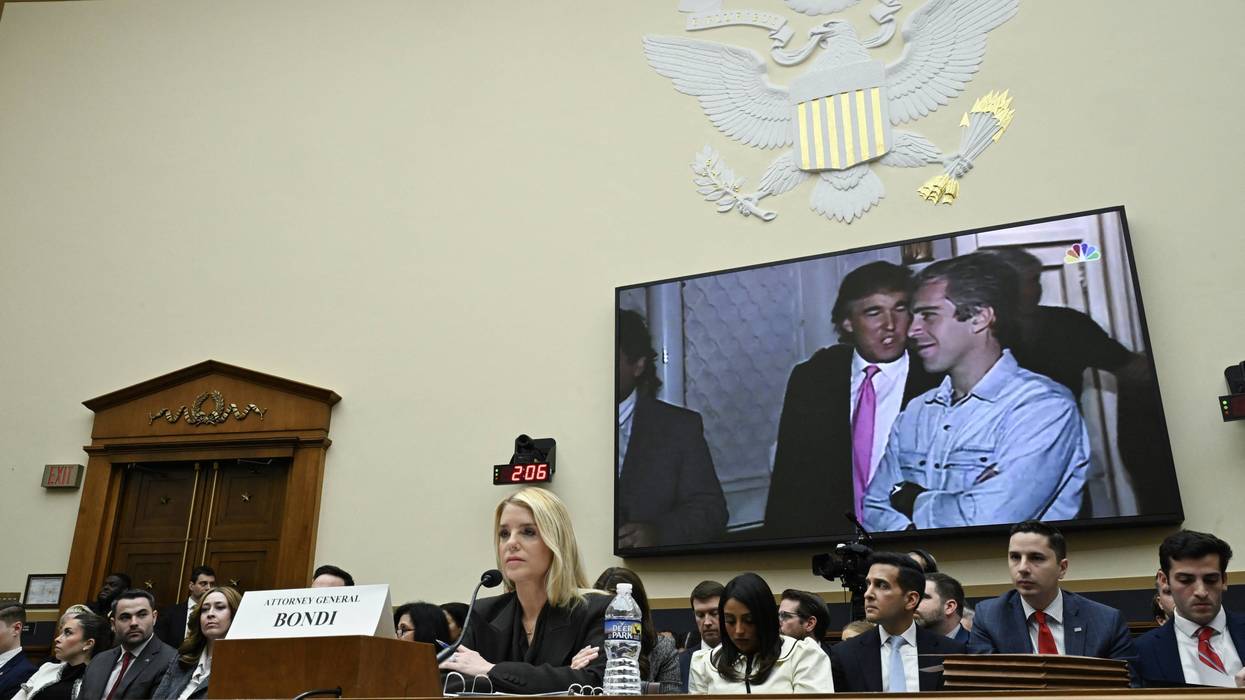
DOJ 'Appears to Be Covering Up' Trump-Epstein Connections, Dems Say in New Report
"Trump’s Justice Department has shut down investigations, deliberately withheld evidence and, through Todd Blanche, prevented Ghislaine Maxwell from discussing a survivor whose account implicated Trump."
Democrats on the House Judiciary Committee published a report Monday alleging that the US Justice Department is engaged in a "desperate" attempt to cover up President Donald Trump's connections to the late sex offender Jeffrey Epstein, citing a growing body of documentary evidence and witness testimony.
The 53-page report, released days before the midterm elections, lays out the accounts of 11 women who have connected Trump to Epstein and the latter's sex-trafficking operations. Five of those women—identified as Beatrice Keul, Stacey Williams, Jill Harth, Katie Johnson, and Jane Doe—"directly accused Trump of raping or sexually assaulting them in Epstein’s company or direct physical presence," according to the new report, which calls for a special counsel investigation into "Epstein's co-conspirators" and the alleged coverup by the DOJ, currently headed by former Trump lawyer Todd Blanche.
“Trump says he knew Jeffrey Epstein ‘just like everybody in Palm Beach knew him.’ Not exactly," said Rep. Jamie Raskin (D-Md.), the ranking member of the House Judiciary Committee. "Evidence involving 11 women tells a completely different and far more damning story about their relationship and the abuse of young women and girls that took place in their network."
"Five women have directly accused Trump of rape or sexual assault in Epstein’s company or presence; others have indicated that Epstein or Maxwell attempted to traffic them to Trump," Raskin continued. "These women have spoken to investigators and, in some cases, testified under oath, yet Trump’s Justice Department has shut down investigations, deliberately withheld evidence and, through Todd Blanche, prevented Ghislaine Maxwell from discussing a survivor whose account implicated Trump—all while insisting there is no basis upon which to investigate Epstein’s possible accomplices. Trump’s Justice Department appears to be covering up these crimes to protect the president."
The report accuses the Justice Department's leaders—including Blanche and former Attorney General Pam Bondi, who oversaw the legally mandated release of some of the Epstein files—of operating "like a private legal defense firm" for the president, who has repeatedly downplayed his past relationship with Epstein and condemned the furor over the files as a "hoax."
Among the allegations featured in Democrats' report is that Trump raped Beatrice Keul in a hotel suite during his American Dream Pageant in 1993. Keul, who was 24 at the time of the alleged assault, told committee staff that Trump promised to arrange a visa for her.
The report continues:
According to Keul, after Trump stepped away from their conversation, Epstein immediately approached her saying 'I’m Jeffrey, Don’s best friend.' Epstein then spent at least 10 minutes talking to Keul, all the time looking over and grinning at Trump, who had remained in the room and was watching their conversation from afar. Epstein also made similar promises as Trump and asked Keul to attend a party at Mar-a-Lago in the coming months...
Later that day, Donald Trump’s representative invited Keul to go upstairs at the Plaza Hotel to meet with Trump. Believing this meeting to be a lucky break for the purpose of furthering her career and education, Keul accompanied Trump’s representative upstairs. He ushered her into the suite, where upon entering, Trump reportedly grabbed Keul from behind and forcibly raped her; in the process, tearing her dress and causing bleeding and bruising on multiple parts of her body.
Two allegations detailed in the House Judiciary Committee report involve allegations that Trump sexually assaulted two 13-year-old girls.
Katie Johnson, a pseudonym, "alleged to the FBI that Trump and Epstein repeatedly raped her at Epstein’s New York residence in 1994, when she was 13," the report states. "She said the men argued over who would take her virginity. Whistleblower information obtained by the committee indicates that documents linked to a case number involving Katie Johnson have been withheld from Congress and the public."
A spokesperson for Trump's White House told MS NOW in response to the report that "none of these allegations are true" and said, falsely, that Trump "has been fully exonerated of anything related to Epstein."
Raskin said Monday that "the women who survived Epstein deserve to be heard, Congress must have the complete files required by law, and an independent special counsel must investigate Epstein’s co-conspirators and DOJ’s coverup and ensure that state and foreign prosecutors have the evidence they need to pursue justice."
In addition to the grave allegations against Trump, the report suggests Blanche potentially engaged in "witness tampering and obstruction of an official proceeding—serious felonies." The report points to a 2025 conversation between Blanche and convicted sex trafficker Ghislaine Maxwell, a longtime Epstein companion and co-conspirator.
"The whole point of the conversation was not to uncover information but to create a conspiracy of silence and strategically deter Ghislaine Maxwell from sharing information that was not public at the time regarding the relationship between Trump and Epstein," the report says.
The Democrats' report expresses doubt that the Trump administration will take the "minimal step" of appointing an independent special counsel to investigate matters related to Epstein and the president.
"Accordingly," the report concludes, "Congress must continue to use its legislative and oversight powers to pursue justice for survivors and bring an end to the Trump administration’s shameful, bureaucratic, and political cover-up."
US Urged to Recognize Lula's Win as Trump Ally Flávio Bolsonaro Demands 'Annulment'
"The Trump administration, which has close relations with the Bolsonaro family, could help defuse this threat by joining other governments in recognizing the election outcome."
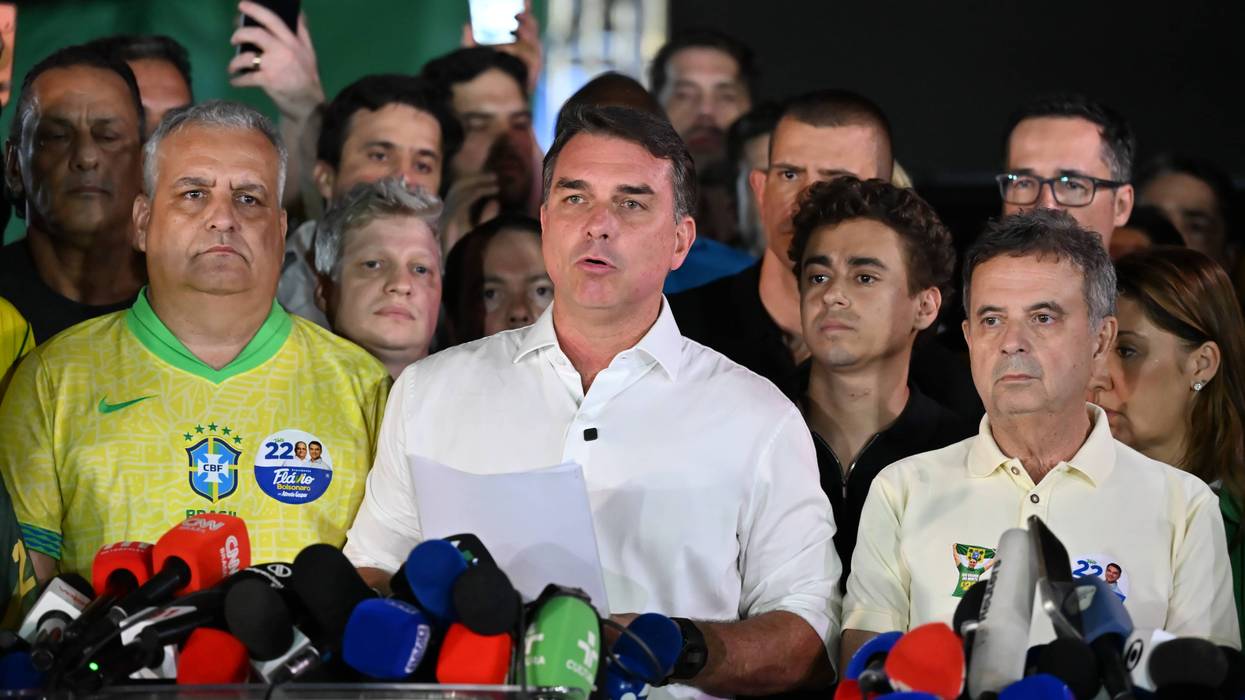
Pro-democracy campaigners urged governments around the world, including in the US, to formally recognize Brazilian President Luiz Inácio Lula da Silva victory in Sunday's runoff election as his far-right challenger, Sen. Flávio Bolsonaro, refused to accept the results, sparking fears of political violence and another coup attempt.
"It is impossible to recognize the results. I am going to request the annulment of these elections," said Bolsonaro, the son of former Brazilian President Jair Bolsonaro, who was convicted last year over a plot to violently maintain power following Lula's 2022 election win. On Sunday, the younger Bolsonaro pointed to the Brazilian Supreme Court's decision to keep polls open for two hours past the scheduled deadline as a reason to dispute the results—even though both Lula and Bolsonaro pushed for the extension, for different reasons.
Numerous world leaders, including Mexican President Claudia Sheinbaum and Canadian Prime Minister Mark Carney, congratulated Lula on his reelection win over Flávio Bolsonaro, an ally of US President Donald Trump. The US-based Center for Economic and Policy Research (CEPR), which sounded the alarm about the Trump administration's attempts to interfere in the Brazilian elections ahead of Sunday's runoff, said in a statement on Sunday that "governments—including the Trump administration—should immediately recognize the outcome, to prevent a possible coup or further violence."
"It’s likely that Flávio Bolsonaro will, like his father in late 2022, encourage his supporters to mobilize in order to try to overturn the election results, which could trigger a new wave of political violence,” said Alex Main, CEPR’s director of international policy who was in Brazil for the elections. "The Trump administration, which has close relations with the Bolsonaro family, could help defuse this threat by joining other governments in recognizing the election outcome."
Trump, who hosted Bolsonaro at the White House in May, has yet to comment on the Brazilian election results, as of this writing. US Secretary of State Marco Rubio, whose department led the effort to tilt the election in Bolsonaro's favor, has also not publicly commented on Sunday's results.
Mark Weisbrot, CEPR's co-director, called Lula's win "a victory for democracy and independence in the Americas against the massive intervention from the Trump administration in favor of the Bolsonaro team."
"This included politically driven tariffs and other efforts to influence the campaign," said Weisbrot. "Trump also tried to stop the trial of Jair Bolsonaro, who—like Trump—refused to accept his defeat in a presidential election, and was convicted of attempting a coup d’état and attempted violent abolition of the democratic rule of law."
Brazil's Lula Wins 'Historic Victory' Against Right-Wing Trump Ally Flávio Bolsonaro
"This shows that Trumpismo is waning, and it is our responsibility now to make sure that we kill the beast," Pennsylvania Democratic House nominee Chris Rabb said.
In a historic comeback, Brazilian President Luiz Inácio Lula da Silva triumphed in Sunday's run-off election over right-wing challenger Flávio Bolsonaro, the son of former Brazilian President and convicted coup-plotter Jair Bolsonaro.
Lula's victory comes despite the best efforts of US President Donald Trump and his Big Tech backers, as Trump's administration openly intervened on behalf of Bolsonaro and Meta boosted pro-Bolsonaro over pro-Lula content on its social media platforms.
"Lula won, Brazil won, democracy won, the Americas won," said Pennsylvania Democratic House nominee Chris Rabb from Lula's campaign headquarters in Sao Paulo, Brazil, after the results were announced around 9:15 pm Brasilia time. "They declared victory for Lula da Silva for his fourth term against a raging fascist, rubber-stamped for Donald Trump."
"These elections have represented a historic victory for the majority of the Brazilian people, who mobilized to defend democracy against the threat of fascism."
Rabb noted that Lula's victory marked an important turning point for the left in Latin America, as far-right parties had won every other national election in the region since the start of Trump's second term. "This is the first victory for democracy in this hemisphere since Trump took office," Rabb said.
With 99.99% of the votes counted, Lula won by 51.79% to Bolsonario's 48.21%, making him the first Brazilian candidate since the restoration of democracy in 1985 to win a second-round election after coming in second in the initial round.
“I would like to thank the Brazilian people for the generosity they have shown me for a long time,” Lula said in his victory speech in São Paulo late Sunday. “And, in this second round, I want to thank the generosity of the Brazilian youth, who took to the streets to defend democracy.”
After finishing two percentage points behind Bolsonaro in the October 4 poll, Lula re-energized his campaign by finally shortening the Brazilian workweek from six to five days, as his supporters launched demonstrations against the far-right.
"These elections have represented a historic victory for the majority of the Brazilian people, who mobilized to defend democracy against the threat of fascism," Francesca Emanuele, senior international policy associate with the Center for Economic and Policy Research (CEPR), told Common Dreams from Sao Paulo, Brazil, where she was monitoring the elections. "It was the Brazilian people themselves (students, working-class, and middle-class Brazilians) who took to the streets and mobilized tirelessly from the very first day after the first round of voting to overturn the first-round results and secure Lula’s victory."
Reginaldo Lopes, a federal deputy for Lula's Workers' Party, told The Guardian: “I feel incredible… This is Brazil telling the world that the extreme right is fascist, that the extreme right is against Black people, is against the poor, against the state, against gay people... We are going to reorganize the democratic forces [in this country.]"
Sunday's victory did not come easily, as the Lula campaign complained of bus shortages in the key cities of Salvador and Sao Paulo, requesting that the Brazilian Supreme Court extend the voting by two hours. The court granted the request, so polls closed at 7 pm Brasilia time instead of 5 pm.
"Lula’s win is the first good news for the planet in a while!"
"Lula has won despite the unfair practices his campaign has faced from Meta, interference from the Trump administration, and severe disruptions to public transportation on election day in major cities (where up to 50% of bus fleets were reportedly out of service)," Emanuele told Common Dreams. "These disruptions disproportionately affected working-class voters, who rely heavily on public transportation and have historically been a key part of Lula’s electoral base."
She continued: "Despite all these obstacles, Lula’s campaign managed to turn around a first-round result that, just a few weeks ago, had seemed extremely difficult to reverse. This is a major victory for the majority of the Brazilian people."
Several advocates and lawmakers hailed the election results as a rebuke to the far-right and the Trump administration in particular.
"During his campaign, President Lula characterized 2026’s elections as a choice between 'sovereignty or submission.' Brazil has clearly chosen sovereignty," the Democratic Socialists of America (DSA), who sent a delegation to observe both rounds of Brazil's elections, wrote in a statement.
Progressive Rep. Ro Khanna (D-Calif.) posted on social media: "People all across the world are fighting back against extremism. With Lula in Brazil, they just won. Authoritarian leaders always attack democracy because they stand no chance against the will of their people. Trump must respect the results and not undermine Brazil’s elections."
Sen. Bernie Sanders (I-Vt.) said: "Congratulations to Lula on his extraordinary reelection victory in the Brazilian presidential election. Lula has stood up for Brazilian workers & democracy—and will continue to do so in the next four years."
"Lula's hard-fought victory is an indictment on the right-wing wave sweeping through Latin America," Joseph Bouchard, a journalist and researcher who focuses on Latin America, told Common Dreams. "Except for [ Salvadorian President Nayib] Bukele, the right across the region is still incredibly unpopular, and rightly seen as corrupt, autocratic, and uncommitted to fixing systemic issues. Lula shows there is still a fight for democracy worth having, while the region is plunged into its darkest, most regressive period since the Cold War. The entire region is populated by vassal states for US interests, who have declared states of exception to curtail rights, freedoms, and basic principles of social democracy, in the name of a failed and anti-human war on drugs."
Lula's victory also has planetary consequences, as he brought deforestation in the Amazon rainforest back down to record lows after it accelerated during the tenure of Jair Bolsonaro, who attacked environmental protections and Indigenous rights.
"Lula’s win is the first good news for the planet in a while!" wrote 350.org and Third Act co-founder Bill McKibben. "I bet it shaves a tenth of a degree off how hot our Earth eventually gets, which will save millions of lives. Thank you Brazil!"
Lula still faces a fight ahead, as Bolsonaro announced it was "impossible to concede the election result" due to the extension of polling hours, even though his team had also sought an extension in parts of southeastern Brazil because of unfavorable weather.
Bouchard pointed out that "Lula will fight an uphill battle with a far-right Congress, inept Supreme Court, and constant outside pressure.."
"Trump's silence on the result is worrisome, with Flavio not conceding and demanding an annulment," he told Common Dreams. "Sadly, much of the corporate press has legitimated these claims, despite the right's concerted efforts at destroying democracy. No matter how much the authoritarians try to tip the scales, the people can still prevail, if the left is willing to fight. This might prove to be a confidence boost to the demoralized and overpowered left all over the region, and may hopefully set the region back toward progress, hard fought after decades of dictatorship and neoliberal transitions."
US-based Lula allies urged others in the US to defend Brazil's democracy from Trump administration interference and to take their own stand against the far-right in the upcoming midterm elections.
The DSA wrote:
However, the fight continues—the thin margin of this victory indicates that continued struggle and mobilization will be crucial. As global capitalism fails to solve worsening problems of its own making, the capitalists turn to right-wing authoritarianism. Brazil’s left-wing coalition will face a right-wing Congress at home, a hostile Trump administration in the US, and hostile capitalists both [at] home and abroad in the years ahead. We of the DSA stand in solidarity with our comrades in the PT [Lula's Partido dos Trabalhadores], PSOL [Brazil's left-wing Socialism and Liberty Party], and Brazilian social movements in this fight for democratic self-determination.
This solidarity means recognizing our country’s role in the threat to Brazilian democracy. These elections were marred by interference from the US, whether by Trump’s politically motivated tariffs, or by manipulation of social media by US-based tech companies like Meta. They aimed to subvert Brazil’s democracy to favor its far-right allies grouped in the "Shield of the Americas," and to get their hands on crucial natural resources, such as lithium, cobalt, and rare earth minerals as well as petroleum and iron ore, which Brazil possesses in abundance and which Lula has sworn to protect as national patrimony. The DSA categorically denounces these meddlesome, imperialist efforts. We fight for a working-class foreign policy—one which centers peace, multilateralism, and respects national self-determination, free from US interference.
Rabb concluded his message with a call to action, and a celebration: "This is a big deal for us in the United States. This shows that Trumpismo is waning, and it is our responsibility now to make sure that we kill the beast. That beast is injustice, it's oligarchy, it's neoliberalism. All of these things. Now it's our turn, folks. November 3 is right around the corner, but right now I'm going to party with these Brazilians."
Update: This piece has been updated with commentary from Joseph Bouchard.
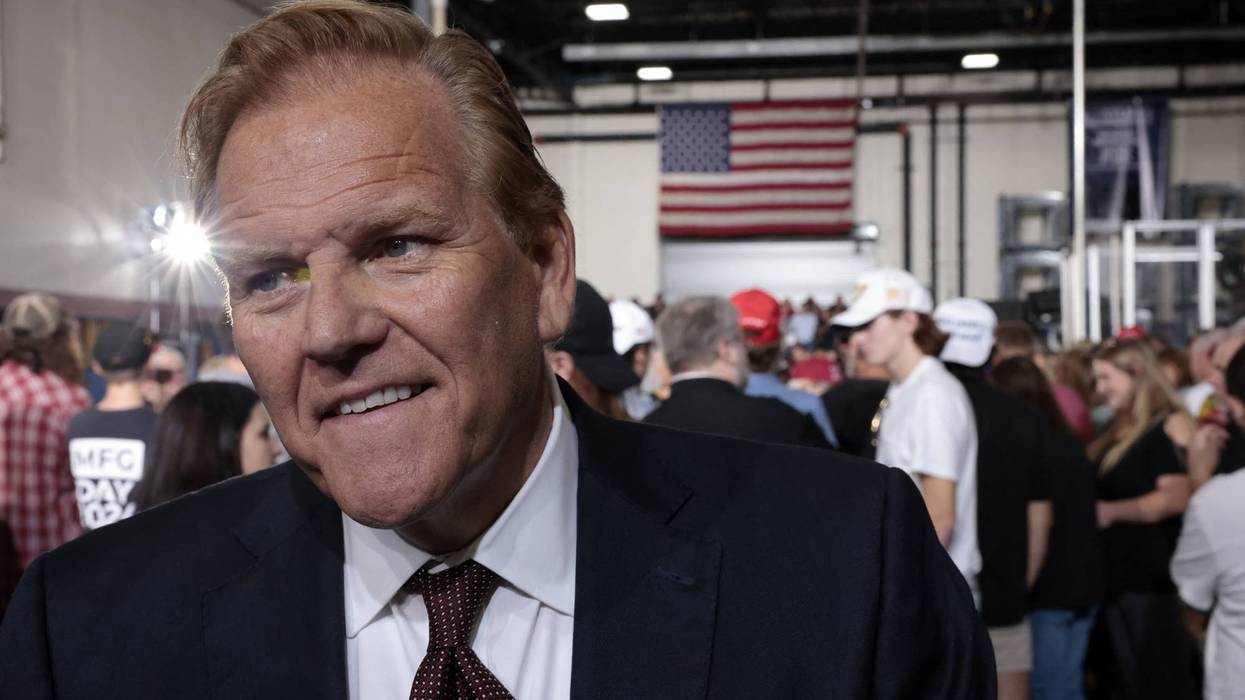
'A Vote for Rogers Is a Vote for the Trump Agenda' Says El-Sayed as Rogers Hedges in Interview
Appearing on NBC's "Meet the Press" on Sunday, Michigan Republican Senate candidate Mike Rogers twice dodged questions about his support for President Donald Trump and the MAGA movement.
In another indication that the cratering popularity of President Donald Trump and his policies is making GOP midterm candidates nervous, Michigan Republican Senate candidate Mike Rogers stammered before saying there was something wrong with his earpiece when asked if a vote for him was "a vote for the Trump agenda."
The moment came during an interview with Kristin Welker on NBC's "Meet the Press" Sunday morning.
"I'm apologizing, I'm having some difficulty in my earpiece, but, 'Is a vote for you...' I'm not sure, I'll tell you what a vote for me is, it's a great day for the state of Michigan," Rogers said.
His midterm opponent, Democratic Michigan Senate candidate Dr. Abdul El-Sayed, shot back on social media: "Lemme pick that up for him: Yes, yes it is. A vote for Rogers is a vote for the Trump agenda."
Lemme pick that up for him: Yes, yes it is. A vote for Rogers is a vote for the Trump agenda.
— Dr. Abdul El-Sayed (@AbdulElSayed) October 25, 2026
Throughout the interview, Rogers hedged on his relationship to the president and the MAGA movement that put him in power. In his extended answer to the first question, he mentioned that there were things that he disagreed with Trump on, namely some of the Canadian tariffs and the Iran War, but argued that a Republican majority was better placed to "work with" Trump on those issues rather than "just go back to poke him in the eye." He did not say why a Republican Congress had not been able to make progress on either ending the war or mitigating the tariffs to date.
However, when Welker then asked him if he would vote to repeal some of Trump's tariffs, Rogers also sidestepped the question, saying, "The best way to do this is walk in and say, 'Can we work this out?'"
Toward the end of the same interview, Rogers also would not answer directly when Welker asked, "Big picture: Do you consider yourself to be a MAGA Republican?"
Rogers responded by calling the question "a little bit disgusting" and spending the rest of the interview talking over Welker about Democrats who had told him they would not vote for his opponent El-Sayed.
Oh my goodness -- for nearly 3 minutes, Mike Rogers refuses to answer Kristen Welker's repeated questions about if he considers himself to be "a MAGA Republican" https://t.co/q4uSP5hgam
— Aaron Rupar (@atrupar) October 25, 2026
"He’s too afraid to admit he’s a MAGA Republican and he’s too afraid to admit he’s not," writer and director Andy Ostroy wrote on social media. "Mike Rogers is a weak, feckless coward who has nothing to offer Michiganders except outrageously racist lies about @AbdulElSayed, and the good people of Michigan know it. Which is why Abdul is going to win…"
Rogers' flailing came days after Trump's net approval ratings fell to a new career low of 31%, according to Reuters/Ipsos polling.
Social media account The Measured Take noted that "Mike Rogers has tied himself to Donald Trump for years. With nine days until the election and Trump’s approval rating in the low 30s, he sees the writing on the wall and is trying to distance himself."
The interview reflects a growing trend of Republican midterm candidates tepidly and belatedly criticizing some of Trump's policies, especially the war with Iran, without taking any real action to back up their words.
El-Sayed had previously slammed Rogers for reversing course on the war in late September.
“You’ve spent your entire campaign supporting the war in Iran," he said. "Liar, coward, fraud.”