SUBSCRIBE TO OUR FREE NEWSLETTER
Daily news & progressive opinion—funded by the people, not the corporations—delivered straight to your inbox.
5
#000000
#FFFFFF
To donate by check, phone, or other method, see our More Ways to Give page.
Daily news & progressive opinion—funded by the people, not the corporations—delivered straight to your inbox.
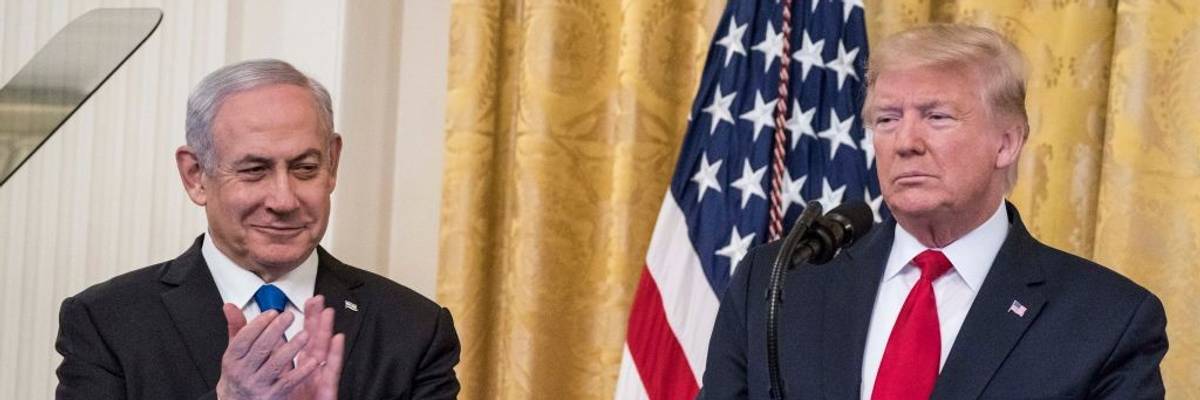
The story reported by Axios has understandably been met with considerable skepticism. Here's why.
"You’re fucking crazy. You’d be in prison if it weren’t for me. I’m saving your ass. Everybody hates you now. Everybody hates Israel because of this.”
According to Axios, this is what Donald Trump said to Israeli Prime Minister Benjamin Netanyahu in “an expletive-laden call” earlier today.
Trump also accused Netanyahu of ingratitude since Trump had helped keep Netanyahu out of jail. At the heart of the matter was Trump’s frustration with Netanyahu not caving to his demands to cease bombing Lebanon, as Israel’s aggression risked jeopardizing Trump’s diplomacy with Iran.
The story has understandably been met with considerable skepticism. After all, there is a long and well-documented pattern of American presidents privately expressing anger and frustration with Israeli prime ministers while publicly standing shoulder-to-shoulder with them and continuing to support their policies.
Take Joe Biden as an example. In late December 2023, Axios reported that Biden’s frustration with Benjamin Netanyahu had become so intense that he abruptly ended a phone call with the Israeli leader, reportedly concluding the exchange with the terse remark: “This conversation is over.” Yet in practice, Biden remained firmly aligned with Israel’s conduct of the war in Gaza.
Two months later, NBC News reported that Biden had repeatedly referred to Netanyahu as an “asshole” in private conversations with aides and donors. But even as he vented his exasperation behind closed doors, Biden continued to arm Israel lavishly and shield it from mounting diplomatic and political pressure at the United Nations. The gap between private frustration and public policy could hardly have been more striking.
According to Bob Woodward’s 2024 book War, Biden’s frustrations became intensely personal during the Rafah dispute and Biden told an associate: “That son of a bitch, Bibi Netanyahu, he’s a bad guy. He’s a bad f***ing guy.” No policy change followed.
There are plenty of other examples.
There are, however, a few important counterexamples—particularly from Trump’s second term—that suggest the Axios story is not entirely implausible. (Indeed, the report would have been far more difficult to believe had Axios claimed that Trump told Netanyahu, “Everybody loves you.”)
On June 24, 2025, after Israel and Iran had agreed to a ceasefire following their twelve-day war, Israel almost immediately violated the agreement, infuriating Trump. Before boarding Marine One on the South Lawn of the White House, Trump delivered an unusually blunt and public rebuke, declaring that Israel and Iran “don’t know what the f*** they’re doing” and adding that he was “really unhappy with Israel.”
The outburst was not merely rhetorical. Trump reportedly intervened directly with Netanyahu, after which Israel halted its planned escalation and the ceasefire held for several months. Ironically, however, Trump himself would restart the conflict in February 2026, after sustained pressure from Israel and its supporters in Washington.
Another notable episode came after Israel bombed the Qatari capital, Doha, killing a Qatari security guard and jeopardizing Qatar’s role as a key mediator in the Gaza negotiations. In an extraordinary and arguably unprecedented move, Trump arranged a phone call from the Oval Office and had Netanyahu apologize directly to the Qatari Emir.
When Netanyahu later denied that he had apologized, the White House responded by releasing a photograph from the Oval Office showing Trump holding the phone while Netanyahu appeared to be reading from a prepared script. A Qatari diplomat was also present in the room, observing the apology as it unfolded.
The only comparable example that comes to mind is from 2013, when Barack Obama pressed Netanyahu to apologize to Turkish Prime Minister Recep Tayyip Erdoğan over the Mavi Marmara flotilla raid. Even then, however, the apology took place privately. By contrast, the Qatar episode was so unusually public that the White House itself effectively documented Netanyahu’s compliance.
None of this, of course, proves that the Axios story is true, but it suggests that it may not be as implausible as some may otherwise believe. What is also plausible, however, is that Trump will once again fail to sustain the pressure and, by that, allow for Netanyahu’s potential retreat to prove temporary.
This post originally appeared at Parsi's substack page.
Dear Common Dreams reader, It’s been nearly 30 years since I co-founded Common Dreams with my late wife, Lina Newhouser. We had the radical notion that journalism should serve the public good, not corporate profits. It was clear to us from the outset what it would take to build such a project. No paid advertisements. No corporate sponsors. No millionaire publisher telling us what to think or do. Many people said we wouldn't last a year, but we proved those doubters wrong. Together with a tremendous team of journalists and dedicated staff, we built an independent media outlet free from the constraints of profits and corporate control. Our mission has always been simple: To inform. To inspire. To ignite change for the common good. Building Common Dreams was not easy. Our survival was never guaranteed. When you take on the most powerful forces—Wall Street greed, fossil fuel industry destruction, Big Tech lobbyists, and uber-rich oligarchs who have spent billions upon billions rigging the economy and democracy in their favor—the only bulwark you have is supporters who believe in your work. But here’s the urgent message from me today. It's never been this bad out there. And it's never been this hard to keep us going. At the very moment Common Dreams is most needed, the threats we face are intensifying. We need your support now more than ever. We don't accept corporate advertising and never will. We don't have a paywall because we don't think people should be blocked from critical news based on their ability to pay. Everything we do is funded by the donations of readers like you. When everyone does the little they can afford, we are strong. But if that support retreats or dries up, so do we. Will you donate now to make sure Common Dreams not only survives but thrives? —Craig Brown, Co-founder |
"You’re fucking crazy. You’d be in prison if it weren’t for me. I’m saving your ass. Everybody hates you now. Everybody hates Israel because of this.”
According to Axios, this is what Donald Trump said to Israeli Prime Minister Benjamin Netanyahu in “an expletive-laden call” earlier today.
Trump also accused Netanyahu of ingratitude since Trump had helped keep Netanyahu out of jail. At the heart of the matter was Trump’s frustration with Netanyahu not caving to his demands to cease bombing Lebanon, as Israel’s aggression risked jeopardizing Trump’s diplomacy with Iran.
The story has understandably been met with considerable skepticism. After all, there is a long and well-documented pattern of American presidents privately expressing anger and frustration with Israeli prime ministers while publicly standing shoulder-to-shoulder with them and continuing to support their policies.
Take Joe Biden as an example. In late December 2023, Axios reported that Biden’s frustration with Benjamin Netanyahu had become so intense that he abruptly ended a phone call with the Israeli leader, reportedly concluding the exchange with the terse remark: “This conversation is over.” Yet in practice, Biden remained firmly aligned with Israel’s conduct of the war in Gaza.
Two months later, NBC News reported that Biden had repeatedly referred to Netanyahu as an “asshole” in private conversations with aides and donors. But even as he vented his exasperation behind closed doors, Biden continued to arm Israel lavishly and shield it from mounting diplomatic and political pressure at the United Nations. The gap between private frustration and public policy could hardly have been more striking.
According to Bob Woodward’s 2024 book War, Biden’s frustrations became intensely personal during the Rafah dispute and Biden told an associate: “That son of a bitch, Bibi Netanyahu, he’s a bad guy. He’s a bad f***ing guy.” No policy change followed.
There are plenty of other examples.
There are, however, a few important counterexamples—particularly from Trump’s second term—that suggest the Axios story is not entirely implausible. (Indeed, the report would have been far more difficult to believe had Axios claimed that Trump told Netanyahu, “Everybody loves you.”)
On June 24, 2025, after Israel and Iran had agreed to a ceasefire following their twelve-day war, Israel almost immediately violated the agreement, infuriating Trump. Before boarding Marine One on the South Lawn of the White House, Trump delivered an unusually blunt and public rebuke, declaring that Israel and Iran “don’t know what the f*** they’re doing” and adding that he was “really unhappy with Israel.”
The outburst was not merely rhetorical. Trump reportedly intervened directly with Netanyahu, after which Israel halted its planned escalation and the ceasefire held for several months. Ironically, however, Trump himself would restart the conflict in February 2026, after sustained pressure from Israel and its supporters in Washington.
Another notable episode came after Israel bombed the Qatari capital, Doha, killing a Qatari security guard and jeopardizing Qatar’s role as a key mediator in the Gaza negotiations. In an extraordinary and arguably unprecedented move, Trump arranged a phone call from the Oval Office and had Netanyahu apologize directly to the Qatari Emir.
When Netanyahu later denied that he had apologized, the White House responded by releasing a photograph from the Oval Office showing Trump holding the phone while Netanyahu appeared to be reading from a prepared script. A Qatari diplomat was also present in the room, observing the apology as it unfolded.
The only comparable example that comes to mind is from 2013, when Barack Obama pressed Netanyahu to apologize to Turkish Prime Minister Recep Tayyip Erdoğan over the Mavi Marmara flotilla raid. Even then, however, the apology took place privately. By contrast, the Qatar episode was so unusually public that the White House itself effectively documented Netanyahu’s compliance.
None of this, of course, proves that the Axios story is true, but it suggests that it may not be as implausible as some may otherwise believe. What is also plausible, however, is that Trump will once again fail to sustain the pressure and, by that, allow for Netanyahu’s potential retreat to prove temporary.
This post originally appeared at Parsi's substack page.
"You’re fucking crazy. You’d be in prison if it weren’t for me. I’m saving your ass. Everybody hates you now. Everybody hates Israel because of this.”
According to Axios, this is what Donald Trump said to Israeli Prime Minister Benjamin Netanyahu in “an expletive-laden call” earlier today.
Trump also accused Netanyahu of ingratitude since Trump had helped keep Netanyahu out of jail. At the heart of the matter was Trump’s frustration with Netanyahu not caving to his demands to cease bombing Lebanon, as Israel’s aggression risked jeopardizing Trump’s diplomacy with Iran.
The story has understandably been met with considerable skepticism. After all, there is a long and well-documented pattern of American presidents privately expressing anger and frustration with Israeli prime ministers while publicly standing shoulder-to-shoulder with them and continuing to support their policies.
Take Joe Biden as an example. In late December 2023, Axios reported that Biden’s frustration with Benjamin Netanyahu had become so intense that he abruptly ended a phone call with the Israeli leader, reportedly concluding the exchange with the terse remark: “This conversation is over.” Yet in practice, Biden remained firmly aligned with Israel’s conduct of the war in Gaza.
Two months later, NBC News reported that Biden had repeatedly referred to Netanyahu as an “asshole” in private conversations with aides and donors. But even as he vented his exasperation behind closed doors, Biden continued to arm Israel lavishly and shield it from mounting diplomatic and political pressure at the United Nations. The gap between private frustration and public policy could hardly have been more striking.
According to Bob Woodward’s 2024 book War, Biden’s frustrations became intensely personal during the Rafah dispute and Biden told an associate: “That son of a bitch, Bibi Netanyahu, he’s a bad guy. He’s a bad f***ing guy.” No policy change followed.
There are plenty of other examples.
There are, however, a few important counterexamples—particularly from Trump’s second term—that suggest the Axios story is not entirely implausible. (Indeed, the report would have been far more difficult to believe had Axios claimed that Trump told Netanyahu, “Everybody loves you.”)
On June 24, 2025, after Israel and Iran had agreed to a ceasefire following their twelve-day war, Israel almost immediately violated the agreement, infuriating Trump. Before boarding Marine One on the South Lawn of the White House, Trump delivered an unusually blunt and public rebuke, declaring that Israel and Iran “don’t know what the f*** they’re doing” and adding that he was “really unhappy with Israel.”
The outburst was not merely rhetorical. Trump reportedly intervened directly with Netanyahu, after which Israel halted its planned escalation and the ceasefire held for several months. Ironically, however, Trump himself would restart the conflict in February 2026, after sustained pressure from Israel and its supporters in Washington.
Another notable episode came after Israel bombed the Qatari capital, Doha, killing a Qatari security guard and jeopardizing Qatar’s role as a key mediator in the Gaza negotiations. In an extraordinary and arguably unprecedented move, Trump arranged a phone call from the Oval Office and had Netanyahu apologize directly to the Qatari Emir.
When Netanyahu later denied that he had apologized, the White House responded by releasing a photograph from the Oval Office showing Trump holding the phone while Netanyahu appeared to be reading from a prepared script. A Qatari diplomat was also present in the room, observing the apology as it unfolded.
The only comparable example that comes to mind is from 2013, when Barack Obama pressed Netanyahu to apologize to Turkish Prime Minister Recep Tayyip Erdoğan over the Mavi Marmara flotilla raid. Even then, however, the apology took place privately. By contrast, the Qatar episode was so unusually public that the White House itself effectively documented Netanyahu’s compliance.
None of this, of course, proves that the Axios story is true, but it suggests that it may not be as implausible as some may otherwise believe. What is also plausible, however, is that Trump will once again fail to sustain the pressure and, by that, allow for Netanyahu’s potential retreat to prove temporary.
This post originally appeared at Parsi's substack page.