

SUBSCRIBE TO OUR FREE NEWSLETTER
Daily news & progressive opinion—funded by the people, not the corporations—delivered straight to your inbox.
5
#000000
#FFFFFF
To donate by check, phone, or other method, see our More Ways to Give page.
Daily news & progressive opinion—funded by the people, not the corporations—delivered straight to your inbox.
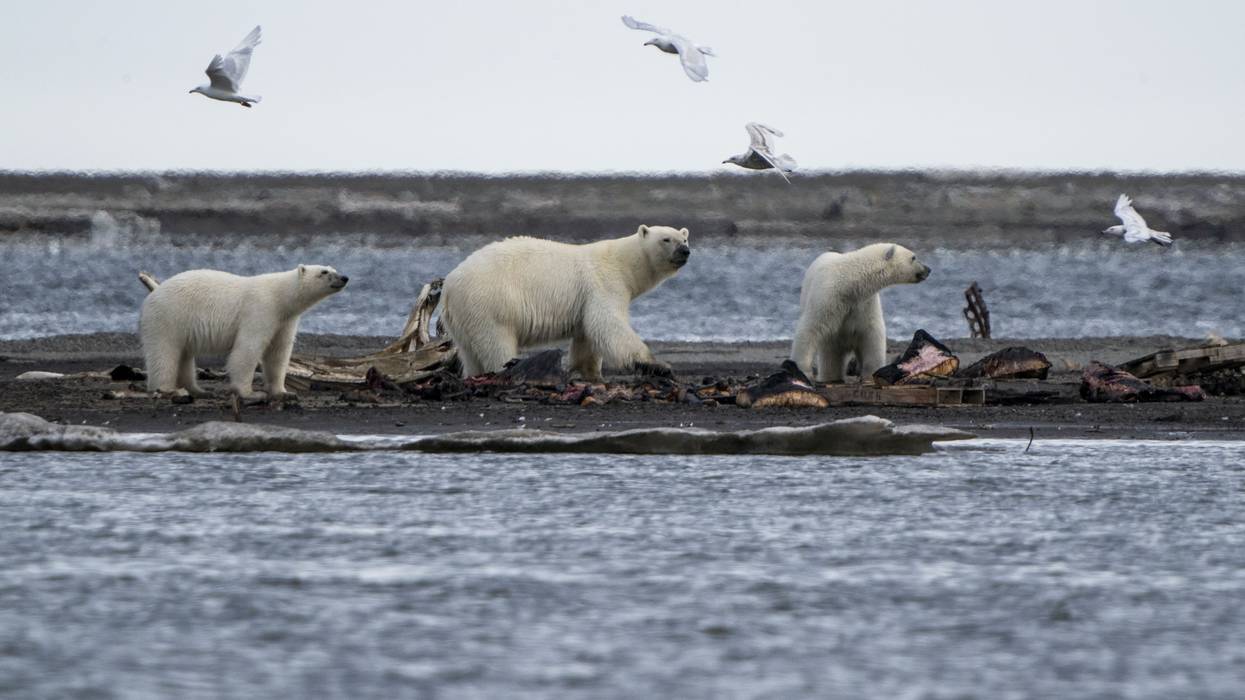
"Even though the interest in today’s sale was tepid, the new leasing still poses significant threats to habitat, iconic wildlife, and Indigenous ways of life," said Earthjustice.
In an embarrassment for President Donald Trump and his "drill, baby, drill" energy policy, Friday's third oil and gas lease sale in Alaska's Arctic National Wildlife Refuge once again drew no bids from Big Oil—but conservationists stressed that fossil fuel expansion still poses a serious threat to the pristine wilderness and its human and animal inhabitants.
The US Department of the Interior’s Bureau of Land Management (BLM) offered 60 tracts on 689,000 acres in the ANWR in northeastern Alaska's Coastal Plain for lease sales. Just two companies—the government-owned Alaska Industrial Development and Export Authority and Hex LLC, an Alaska firm—bought five leases that generated a paltry $3.7 million in total receipts.
“Yet again, no major oil and gas companies showed up to bid, because they know that drilling in the Arctic Refuge is a losing proposition,” said Kristen Moreland, executive director of the Gwich'in Steering Committee, which represents the Gwich'in Indigenous people and opposes drilling.
“We will continue to fight the Trump administration’s leasing program, and work with our friends and allies to protect this sacred and irreplaceable landscape from development of any kind," Moreland added.
The Trump administration had touted fossil fuel lease sales as a way to help pay for tax cuts in the so-called One Big Beautiful Bill Act that mostly benefited corporations and wealthy individuals. The law, which was signed last July by Trump and extends tax cuts the president enacted in 2017, is expected to result in over $5 trillion in lost revenue through 2034, according to an analysis by the Tax Foundation, the world's leading independent tax policy nonprofit.
Despite the underwhelming result, the BLM described Friday's ANWR lease sale as "successful," with agency Director Steve Pearce calling it "another important step toward restoring American Energy Dominance and responsibly developing the vast resources Congress directed us to make available in the Coastal Plain."
Friday's lease sale was the third such auction, the first of which was held in 2021 during Trump's first term and generated just 1% of the administration's projected revenue. The Biden administration—which canceled the leases issued in the 2021 sale—held another lease auction last year because Trump's 2017 tax cut law required two ANWR lease sales within seven years. The 2025 auction drew no bidders.
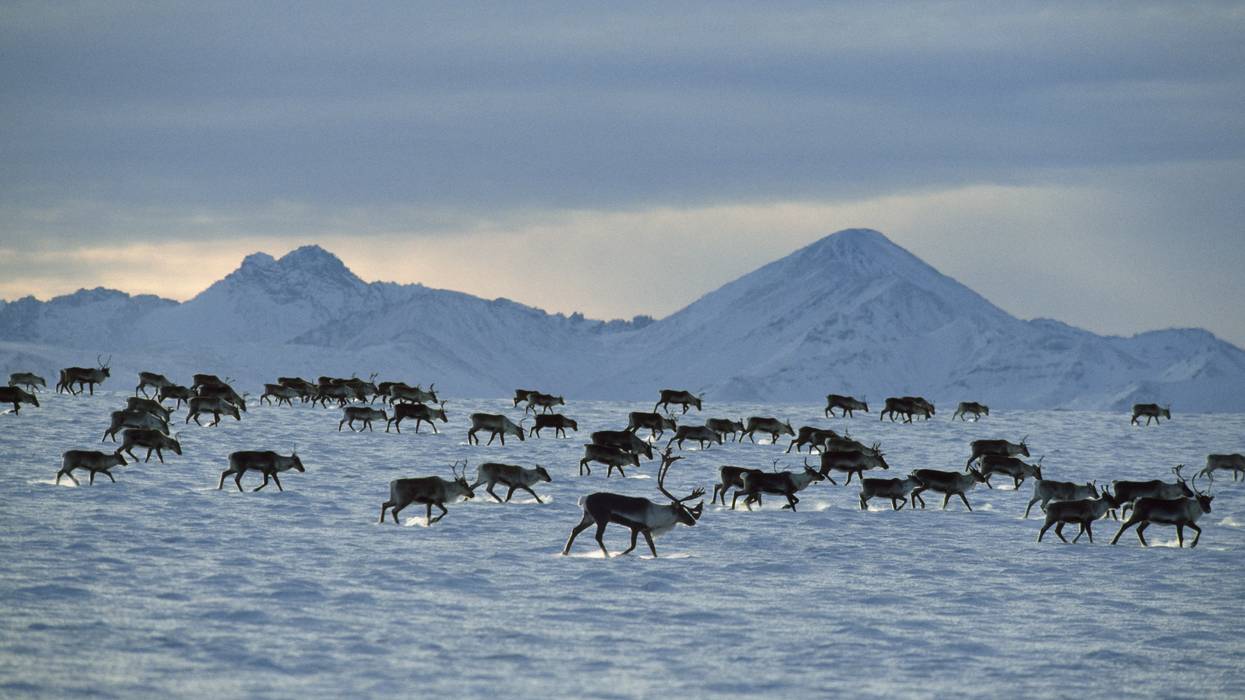
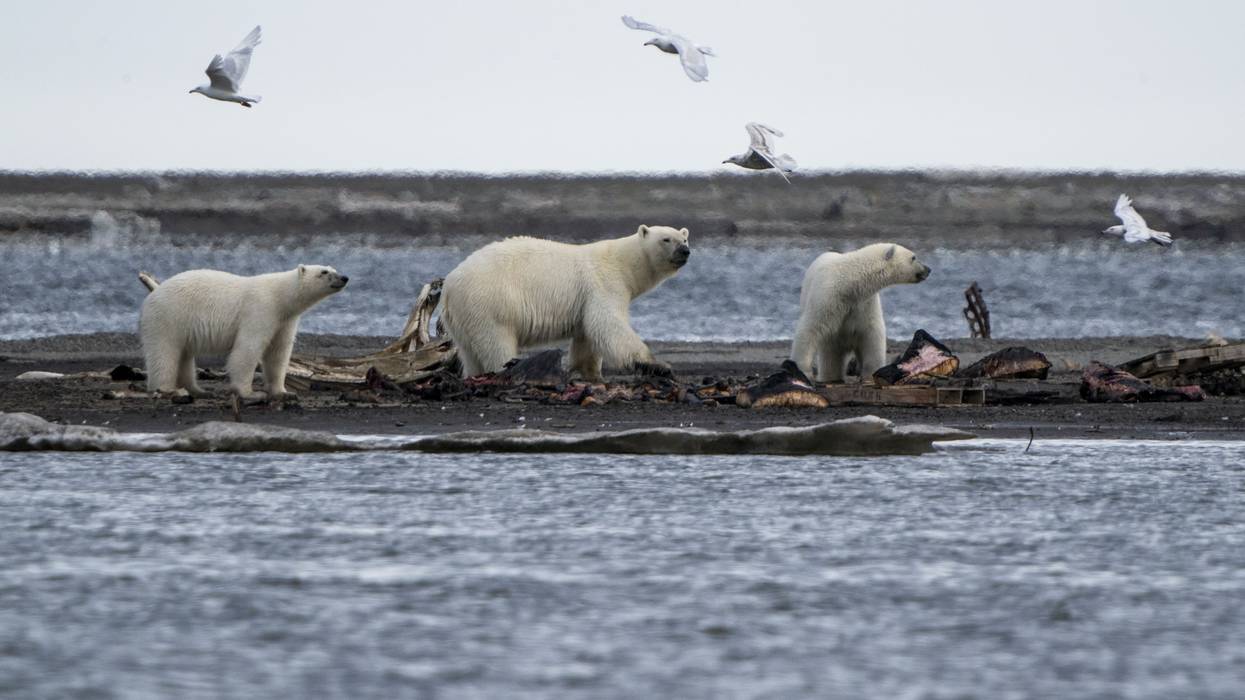
Green groups and other drilling opponents warned that Friday's flop does not diminish the threat posed by fossil fuel development in ANWR, which is home to the North Slope Iñupiat and the Gwich’in peoples and 270 animal species, including all of the world’s remaining South Beaufort Sea polar bears and the 200,000 porcupine caribou upon which the Gwich'in—who call the area the "sacred place where life begins—rely upon for their survival. The North Slope Iñupiat broadly support drilling and called Friday's lease sale "an important milestone."
"Even though the interest in today’s sale was tepid, the new leasing still poses significant threats to habitat, iconic wildlife, and Indigenous ways of life in one of the nation’s most wild and beautiful landscapes," Earthjustice—one of the groups leading a lawsuit challenging the lease sales—said in a statement. "All of today’s leases are in important polar bear habitat, for example."
Athan Manuel, the Sierra Club's director of lands protection, said that "today's lease sale was another embarrassment and broken promise. The Trump administration has pushed leasing out the Arctic Refuge as the way to finance huge tax cuts, yet today generated $3.7 million for the federal government."
“Let's call that what it is, another scam to trick Americans into giving away our precious natural world," Manuel continued. "It does nothing to change the reality that drilling in the Arctic National Wildlife Refuge remains a risky, controversial, and fundamentally flawed proposition."
"For years, the public was promised that sacrificing the refuge would generate significant economic benefits," Manuel added. "Instead, this leasing program has been plagued by uncertainty while putting one of America's most important public lands at risk."
Autumn Hanna, vice president of the advocacy group Taxpayers for Common Sense, said, "From two previous failed lease sales that delivered less than 1% of promised revenue, taxpayers already know that drilling in the Arctic Refuge is a bad deal."
"Today’s lease sale is yet another reminder that oil and gas development in the refuge is high-risk, low-reward, with zero interest from real industry players," Hanna added. "Americans will not see relief at the pump and, instead, face greater risks from the drilling in a sensitive region.”
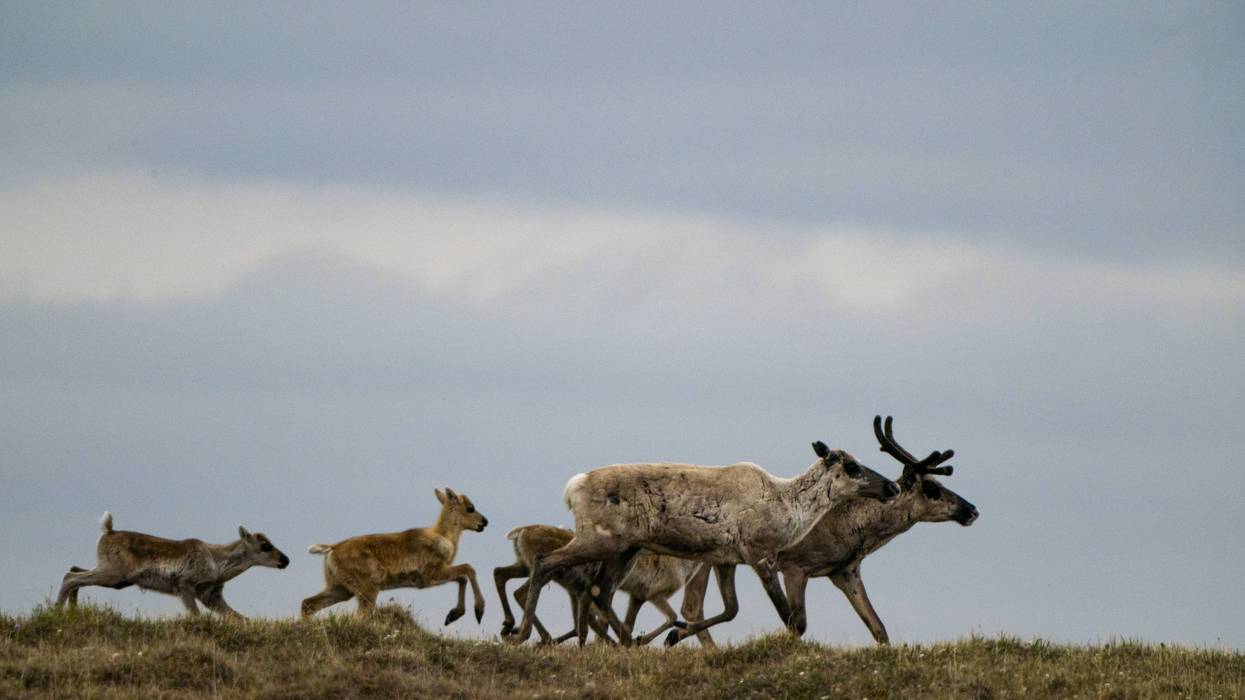
“Some places are too important to sacrifice,” said one Indigenous leader as the Trump administration invited fossil fuel companies to drill in the Arctic National Wildlife Refuge.
The Trump administration is set Friday to sell oil and gas drilling leases on 689,000 acres in the Arctic National Wildlife Refuge, a pristine and protected area in northeastern Alaska's coastal plain known for its massive biodiversity and held sacred by its Indigenous inhabitants.
The US Department of the Interior's (DOI) Bureau of Land Management (BLM) is offering 60 tracts in the ANWR to fossil fuel companies that submitted bids by Wednesday. The lease sale is the first of four in the ANWR mandated under the One Big Beautiful Bill signed by President Donald Trump last year and follows two previous sales this decade, one of which saw little interest during Trump's first term and another that generated no bids during the tenure of former President Joe Biden.
The sale is part of Trump's "drill, baby, drill" fossil fuel agenda and follows last October's reopening by the DOI of 1.56 million acres of the Coastal Plain to oil and gas leasing. The move reversed the Biden administration's 2023 cancellation of all existing oil and gas leases in the ANWR and ban on drilling across 13 million acres of the adjacent National Petroleum Reserve.
The Trump administration also recently transferred approximately 1.4 million acres of public lands along the Dalton Utility Corridor from the BLM to the state of Alaska, a move one conservationist warned "will only help corporate polluters transform Alaska into an industrial wasteland... for the sake of expanding the portfolios of mining and oil and gas companies."
The ANWR is home to Indigenous peoples, primarily the North Slope Iñupiat and the Gwich’in. The former are generally supportive of fossil fuel development, arguing that it provides jobs and revenue and boosts self-determination, while the latter broadly opposes drilling.
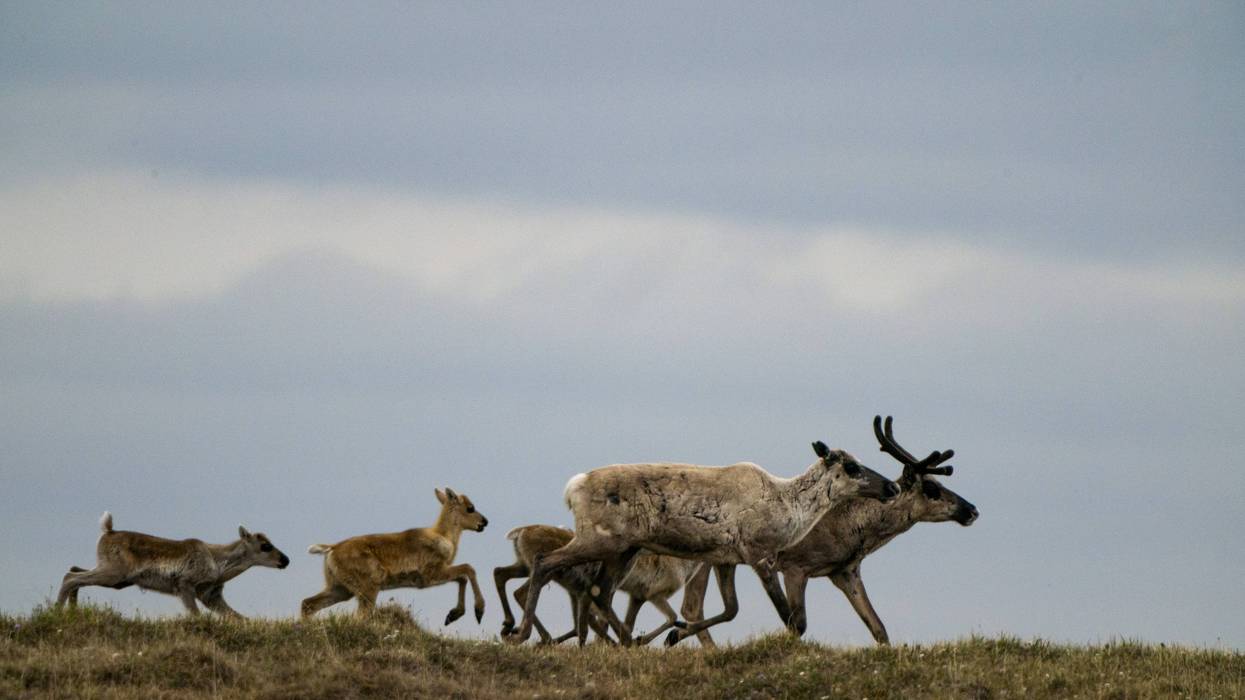
The Gwich'in call the area “the sacred place where life begins" and rely upon its rich biodiversity—especially its 200,000-strong porcupine caribou herd—for their survival. ANWR boasts some 270 animal species, including musk oxen, Arctic foxes, snow geese and other migratory birds, and all of the world’s remaining South Beaufort Sea polar bears.
While the American Petroleum Institute, the nation's leading fossil fuel lobby, welcomed Friday's lease sale, calling Alaska's oil and gas "key to America's energy security," Kristen Moreland, executive director of the Gwich'in Steering Committee, countered that "some places are too important to sacrifice."
In a Thursday call with reporters, Moreland said that "tomorrow's lease sale is about much more than economics or development. It is about whether our voices, our culture, and our way of life matters."
Conservationists also denounced the lease sale, which Earthjustice—part of a coalition challenging the DOI's policy in federal court—called "another effort to sell out our public lands to boost corporate profits, while Indigenous communities, wildlife, and future generations carry the risk."
US Sen. Tim Kaine (D-Va.) said Friday on X that "America's public lands—including the incredible Arctic National Wildlife Refuge—belong to all of us. But now the Trump-Vance administration is auctioning it off to their Big Oil cronies that already have plenty of other areas to drill."
In a video posted Thursday on social media, US Sen. Martin Heinrich (D-NM) called ANWR "the crown jewel of our American National Wildlife Refuge system."
"Tomorrow, the Trump administration is gonna try to lease the Arctic National Wildlife Refuge for oil drilling. So I've got a message for all the oil majors out there," the senator said. "I understand you have a job to do. That job never involves drilling in American national parks or national wildlife refuges. Don't bid."
Congresswoman Adelita Grijalva (D-Ariz.) also posted a video addressing the lease sale and arguing that Big Oil—part of an industry that spent nearly $450 million during the 2024 election cycle on campaign donations, lobbying, and other efforts to elect Trump and down-ballot Republicans—is "calling the shots."
The Alaska Wilderness League said on X that "no matter how the administration and oil industry spin today’s lease sale, the outcome doesn’t change: weak demand, shrinking interest, and a story that keeps collapsing under its own promises."
"The Arctic is not for sale, never has been, never will be," the group added. "Hands off the Arctic."
"The oil industry's allies in Congress are ignoring public opinion and the undeniable realities of the climate crisis by moving to drill on the sacred Coastal Plain and endanger the freedom of local communities."
Indigenous leaders joined with climate and wildlife defenders on Friday to blast President Donald Trump's administration and Republicans in Congress over the newly announced fossil fuel lease sale for the Arctic National Wildlife Refuge's Coastal Plain in Alaska.
The US Department of the Interior's Bureau of Land Management revealed Friday that it will hold the first of four legally mandated lease sales on June 5. The so-called One Big Beautiful Bill Act—which congressional Republicans passed and Trump signed last summer—requires BLM to hold the other three sales by 2035.
ANWR's Coastal Plain spans over 1.5 million acres and is known for its biodiversity. As a BLM webpage details, it is also believed to contain 4.25-11.8 billion barrels of "technically recoverable oil," according to US Geological Survey estimates.
Trump returned to the White House last year backed by Big Oil's campaign cash, and his deputy interior secretary, Kate MacGregor, said Friday that "after three acts of Congress and several successful lawsuits making it abundantly clear that oil and gas leasing in this area of Alaska is lawful, it is a great honor to once again announce another Coastal Plain lease sale."
MacGregor framed the forthcoming sale as just one piece of the administration's pro-fossil fuel agenda, adding that "President Trump has long supported Alaska's important contribution to American energy dominance, and Interior is proud to take the necessary and durable steps to unleash these important resources on behalf of the American people."
Earlier attempts to open up ANWR to drilling suggest that the sale may not draw much industry interest. Taxpayers for Common Sense pointed out Friday that two previous ones required by the Trump GOP's Tax Cut and Jobs Act "were originally estimated to bring taxpayers almost $1 billion in revenue but fell far short of this projection. The first lease sale, held in January 2021, brought in just $16.5 million. The second lease sale, held in January 2025, attracted no bidders and generated no revenue."
However, as the Anchorage Daily News reported, the plan for the next sale "comes on the heels of another recent lease sale, in the National Petroleum Reserve-Alaska to the west of the refuge, that drew heavy interest from oil companies," which "raises questions about how much bidding might occur in the refuge," particularly as Trump's war on Iran has driven up global oil prices.
Still, critics highlighted the previous ANWR sales—including the Wilderness Society's Alaska senior manager, Meda DeWitt, who said: "Once again, the oil industry's allies in Congress are ignoring public opinion and the undeniable realities of the climate crisis by moving to drill on the sacred Coastal Plain and endanger the freedom of local communities to sustain their cultures and lifestyles for generations to come."
"Two previous lease sales have already been economic failures, proving that the absurd Arctic Refuge leasing program should be eliminated and permanent protection must be provided for the calving grounds of the Porcupine Caribou herd," DeWitt argued.
The Arctic Refuge is the crown jewel of the American National Wildlife Refuge System – opening it up to drilling endangers the wildlife and the indigenous communities who have called the refuge their home for thousands of years.
— Senate Energy Dems (@energydems.senate.gov) April 17, 2026 at 1:24 PM
America Fitzpatrick of the League of Conservation Voters (LCV) similarly said that "time and again, the American people have said that they oppose drilling in the Arctic Refuge. The last lease sale in 2024 yielded no bids. Drilling here is not only bad economic—it's reckless and wildly unpopular. Instead of further handcuffing us to be more dependent on fossil fuels, the administration should focus on prioritizing cleaner, more affordable, and more reliable energy sources like clean energy."
"We simply cannot drill our way out of high energy costs," declared Fitzpatrick, the group's conservation program director. "The US is already producing more oil and gas than ever before, but when Trump forced a global energy crisis, prices skyrocketed once again. LCV stands with the Gwich'in people in their fight to ensure there is no drilling in the Arctic Refuge. Not now, not ever."
The Gwich'in, Indigenous people who live in Alaska and Canada, have long defended the refuge from fossil fuel intrusion, and are currently engaged in litigation over the Trump Interior Department's leasing program for the Coastal Plain.
"The Neets'ąįį Gwich'in have made our position clear that any development on the Coastal Plain would have irreversible, adverse effects on our people, our culture, and our way of life," Raeann Garnett, first chief of the Native Village of Venetie Tribal Government, said Friday. "This lease sale, once again, disregards our sovereignty and is a direct threat to the sacred land that sustains our people."
Karlas Norman, first chief of the Venetie Village Council, stressed that "no amount of money will make this land any less sacred to our people or any less vital to our way of life. The Trump administration's most recent actions to advance oil and gas development on the Coastal Plain does not change the fact that this land is sacred, that industry has walked away, and that the Gwich'in people will never stop fighting to protect it."
Galen Gilbert, first chief of the Arctic Village Council, charged that "the Trump administration's relentless push to auction off this sacred land despite overwhelming public opposition and industry that has already signaled they are not interested, makes clear that this administration values corporate interests over the rights and lives of Indigenous peoples."
Gilbert also vowed that "we will continue to fight with every tool available to protect the Coastal Plain for our children and all future generations."
Kristen Moreland, executive director of the Gwich'in Steering Committee, also pledged that "the Gwich’in Nation remains committed to be a voice for the caribou, and to fight oil and gas development in the Arctic Refuge."
"We condemn these efforts by the Trump administration to exploit the calving grounds of the Porcupine Caribou herd for short-term gain, and we know that the majority of Americans stand beside us in opposing development in this cherished and irreplaceable landscape," Moreland continued. "We have been raising our voices and fight[ing] for the protection of this sacred land and our way of life for decades—and we are not backing down now."
Also noting the US public's position, Andy Moderow, senior director of policy at Alaska Wilderness League, put pressure on the industry to stay away from the lease sale later this spring.
"For decades, the American people have recognized that the Arctic Refuge is not an industrial zone for oil development, and this sale simply runs counter to common sense," said Moderow. "Any oil and gas company that is even thinking about buying these leases should know that, if they do, they will be sending a clear message to the American people—that no place in Alaska is too sacred to drill in a quest for corporate profits. We urge companies to take a pass on the Arctic Refuge lease sale, and we look forward to rightfully restoring protections for this landscape in the years to come."
According to the Anchorage Daily News, "Elizabeth Manning, a spokesperson with Earthjustice, said in an email Friday that any new leases will be subject to a lawsuit brought by Natural Resources Defense Council, Center for Biological Diversity, and Friends of the Earth."
The Bureau of Land Management is seeking nominations for which parts of ANWR's Coastal Plane should be offered up to fossil fuel companies for potential drilling.
The Trump administration on Monday took the first step toward holding controversial oil and gas lease sales in the Coastal Plane of the Arctic National Wildlife Refuge.
The Bureau of Land Management announced on Monday that it was seeking nominations for which parts of ANWR's Coastal Plane should be offered up to fossil fuel companies for potential drilling, fulfilling a mandate passed by the US Senate in late 2025. However, the move goes against the wishes of Indigenous people who consider the plane sacred as well as conservationists, scientists, and many members of the American public who value US public lands for their beauty and wildlife.
“People have worked together for decades to defend the Arctic Refuge, because this unique landscape is too special to be sacrificed to the oil industry for profit," Earthjustice managing attorney Erik Grafe said in a statement. "Tripling down on oil development in the Arctic takes us in exactly the wrong direction in our existential fight to curb climate change and protect these critically important public lands."
The sales would continue US President Donald Trump's push to increase oil and gas production, including in Alaska, ramping up an agenda that has dominated both of his terms. The Senate's action in 2025 followed an October decision by the Department of the Interior (DOI) to open the Coastal Plane to drilling, overriding Biden-era protections. The DOI, led by pro-fossil fuel Doug Burgum, also reversed Biden administration protections for Alaska's Western Arctic.
"The Arctic Refuge is no place for drilling."
"The Trump administration spent 2025 waging an all-out assault on public lands in Alaska’s Arctic, while ignoring the voices of Indigenous communities that hold these lands sacred and jeopardizing the survival of Arctic wildlife," Grafe said. "We’ve already taken steps to challenge Interior’s overall leasing plan for the Arctic Refuge in court, and we’re prepared to continue the fight as this lease sale process grinds on.”
The Trump administration's plan for the Arctic faces wide opposition—public comments on nominations for portions of the Western Arctic to lease featured tens of thousands of calls for protection rather than exploitation.
However, opponents of the plan also noted it may not be as popular with the industry as Trump hopes. Lease sales in ANWR in 2021 and 2024 received little interest from oil and gas companies, with the latter not receiving a single bid.
“The Trump administration is hung up on oil and gas leasing in the Arctic Refuge because they cannot admit that the original Trump leasing plan—established following the 2017 Tax Act—was a complete and utter failure,” said Kristen Moreland, executive director of the Gwich’in Steering Committee, in a statement.
The Alaska Wilderness League appealed to the industry itself, noting that the area has some of the highest production costs on the continent while being an increasingly difficult place to work due to extreme weather and other changes caused by the climate crisis, an uncertain regulatory environment, competition from cheaper forms of renewable energy, and the fact that many Americans do not support drilling in the Arctic.
“Serious companies don’t gamble their future on the most remote, expensive, and controversial oil on Earth from one of the most unparalleled ecosystems left on this planet,” said league executive director Kristen Miller. “If companies are still looking to drill the Arctic Refuge in 2026, it’s a sign that they can’t read the writing on the wall: Smart money has already walked away.”
But whatever the decision of the oil and gas industry, Indigenous communities and their allies are determined to fight for the land that is home to polar bears, millions of birds, and the Porcupine caribou herd.
“We condemn these actions, and encourage officials in the Trump administration—and our representatives in the Alaska delegation—to acknowledge and accept what we as Gwich’in know, and what the majority of the American people agree on: The Arctic Refuge is no place for drilling," Moreland continued. "It deserves to be protected and preserved for the wildlife that depend on it, and for all our futures.”
"Once again, oil and gas development is taking precedence over science-based solutions for conserving wildlife and mitigating climate change," said one campaigner.
Climate campaigners, conservationists, and Indigenous people vowed to keep defending the Arctic National Wildlife Refuge after US Senate Republicans on Thursday sent legislation that would restart fossil fuel leasing in ANWR's Coastal Plain to President Donald Trump's desk.
All Republicans present except Sen. Susan Collins of Maine supported House Joint Resolution 131. The 49-45 vote came after three Democrats—Reps. Jim Costa (Calif.), Henry Cuellar (Texas), and Vicente Gonzalez (Texas)—joined all GOP House members but Congressman Brian Fitzpatrick (Pa.) in advancing the bill last month.
If Big Oil-backed Trump signs the joint resolution of disapproval, as expected, it will nullify the Biden administration's December 2024 efforts to protect over 1 million acres of land in Alaska from planet-wrecking oil and gas exploration.
"Simply put, the Arctic refuge is the crown jewel of the American National Wildlife Refuge System," Sen. Martin Heinrich (D-NM) said in a Wednesday floor speech against the measure, noting that the area is "home to hundreds of iconic wildlife species."
"The Arctic refuge is also deeply connected to the traditions and daily life of the people who have lived there for thousands of years," the senator continued, ripping "the Trump administration's relentless attacks on public lands."
Heinrich's speech was welcomed by groups including the Alaska Wilderness League, League of Conservation Voters, and Defenders of Wildlife, whose vice president of government relations, Robert Dewey, also blasted lawmakers' use of the Congressional Review Act (CRA) to repeal the refuge's protections.
"Once again, oil and gas development is taking precedence over science-based solutions for conserving wildlife and mitigating climate change. In these instances, the use of the CRA accomplishes nothing meaningful and instead harms iconic species such as polar bears, caribou, wolves, and migratory birds," Dewey said after the vote. "In addition to threatening wildlife, severe regulatory disruption in Alaska is the inevitable result of targeted rollbacks in one of America's most ecologically critical regions."
Andy Moderow, senior director of policy at Alaska Wilderness League, said Thursday that "while we are deeply disappointed by the final vote, we're grateful to see bipartisan support from lawmakers who stood up for the Refuge and upheld a long-standing, cross-party legacy of protecting this truly incredible place."
"America's public lands—including the iconic Arctic refuge—shouldn't be on the shortlist for a public land selloff to the oil and gas industry," Moderow continued. "We'll continue fighting the management chaos brought by today's vote in favor of actions that respect the Arctic Refuge for what it actually is: a national wildlife refuge, and not an oilfield."
Kristen Moreland, executive director of the Gwich'in Steering Committee, a group formed decades ago by Alaska Natives in response to proposed oil drilling in the Coastal Plain, also spoke out after the Senate vote.
"The Gwich'in Nation views the decision by lawmakers to leverage the Congressional Review Act to advance oil and gas development in the Arctic National Wildlife Refuge as a deliberate attempt to undercut the standards and laws that are designed to protect this sacred landscape," Moreland said.
"This action from DC ignores years of consultation and communication with our Gwich'in communities that rely on this landscape for not only our subsistence and survival, but also our culture and spiritual health and well-being," she added. "We stand united in our opposition to any oil and gas development in the Arctic refuge, and will continue to fight this effort from the Trump administration and decision-makers who ignore our voices."
Buried in Congress’ latest budget proposal is an unprecedented power grab that threatens both wild Alaska and the foundations of public oversight.
The House Natural Resources Committee majority just unveiled the worst piece of legislation for the environment in history—a bill that wouldn’t just sell off Alaska but that would threaten democracy and environmental protections across the country. The proposed “budget” reconciliation legislation is saturated with destructive provisions that would set our nation’s conservation legacy back for decades.
Don’t be distracted by the chaos. This “energy dominance” bill is not about good budgeting. It’s a clear handout to fossil fuel executives and a key part of President Donald Trump’s plan to sell off your public lands to wealthy oil, gas, and mining corporations for unchecked industrialization.
Starting with the threats to wild Alaska alone, you can find an unprecedented and sweeping giveaway of our nation’s lands and waters. Mandated industrialization, the override of environmental standards, cutting out the public—the text reads like something drafted in an oil tycoon’s boardroom.
This is not a budget. It’s a backroom deal for billionaires that steamrolls tribal rights, community voices, and our nation’s most iconic wild places.
First, the Arctic. Despite a well-documented history of failure, the bill would force the Department of the Interior to reinstate leases from a failed 2021 oil and gas lease sale in the pristine Arctic National Wildlife Refuge. That sale intended to pay for the last round of Trump billionaire tax cuts—a sale for which not one major oil company showed up to bid and less than 1% of projected revenues were collected. Taxpayers are still waiting for their money. Nevertheless, today’s bill would mandate four more lease sales in the refuge over the next decade, as well as lease sales in the Western Arctic every two years.
From there, the bill attempts to rewrite environmental law by declaring that rushed approvals are automatically in compliance with landmark statutes like the National Environmental Policy Act (NEPA), Endangered Species Act (ESA), Marine Mammal Protection Act (MMPA), and Alaska National Interest Lands Conservation Act (ANILCA).
That’s not laziness—it’s an attempted authoritarian overreach.
In practice, that could look like agencies having just 30 days to approve permits—like those deciding whether seismic blasting can legally harm or kill polar bears—with no public input and zero accountability.
Then comes the most egregious power grab: The bill attempts to strip away judicial review of government decisions in the Arctic Refuge. Only the State of Alaska or oil companies could sue. The Gwich’in people, who have stewarded this place as their cultural homeland since time immemorial? Silenced. The basic democratic rights of the American public? Quashed. The same gag order appears for the Western Arctic, attempting to halt litigation over the Willow project and prevent future legal challenges to drilling by Iocal Indigenous communities or others.
And the hits keep coming.
The bill would require another six offshore oil and gas lease sales over the next 10 years in the waters of Cook Inlet, each covering no less than a million acres. Once again: environmental review sidestepped, public legal challenges all but erased.
The bill would also amend ANILCA to mandate approval of the Ambler Road, a 211-mile industrial corridor that would cut through National Park and Bureau of Land Management lands, disrupt caribou migration, and threaten subsistence for Alaska Native communities. Just like with Arctic drilling, this provision lets corporations sue the government to fast-track approvals while denying that same legal access to impacted Indigenous communities and the public. This language should terrify anyone who cares about tribal sovereignty or public lands.
Also hidden within the bill is language that would increase national timber harvest by 25%, possibly including the old-growth forests of the Tongass National Forest in Southeast Alaska—some of the most carbon-rich and ecologically important temperate rainforests on the planet. And it would slash funding for federal land management, threatening the long-term care of public lands from Denali to the Everglades.
So, what do Americans get in return? Not much. These fossil fuel handouts won’t lower energy prices, fix the deficit, or benefit future generations. The last Arctic Refuge lease sale brought in pennies on the dollar and had no impact on gas prices or our dangerous dependence on oil. This bill won’t boost revenue; it just fast-tracks extraction while silencing oversight.
Here’s the truth: This is not a budget. It’s a backroom deal for billionaires that steamrolls tribal rights, community voices, and our nation’s most iconic wild places.
We need Congress to reject this toxic package. Because our public lands—and our democracy—aren’t up for sale.

"The sprawling proposal," warned the Sierra Club, "includes dozens of provisions that would benefit the oil and gas industry and other corporations, at the expense of American families."
Green groups on Friday decried U.S. House Republicans' proposed text for the upcoming reconciliation bill, which the Natural Resources Defense Council said "contains an unprecedented slate of direct attacks on the environment and public lands and waters."
Republicans on the House Natural Resources Committee submitted their proposed section of the massive GOP energy, tax, and national security bill, which is scheduled for a markup on Tuesday.
"The sprawling proposal, released in the dead of night, includes dozens of provisions that would benefit the oil and gas industry and other corporations, at the expense of American families," said the Sierra Club.
"The only way it could be friendlier to Big Oil CEOs would be if they wrote it themselves."
The draft's proposals include fast-tracked and expanded fossil fuel extraction on public lands, mandated oil and gas drilling leases in the Arctic National Wildlife Refuge, ending protections for Minnesota's pristine Boundary Waters watershed, reinstating canceled leases for the proposed Twin Metals mine in Minnesota, rolling back fossil fuel royalties, and more.
"This proposal is a corporate polluter's wish list," warned Athan Manuel, director of Sierra Club's Lands Protection Program. "The only way it could be friendlier to Big Oil CEOs would be if they wrote it themselves."
"Let's be clear, this proposal is a means to an end," Manuel added. "The end is tax cuts for billionaires, and the means are selling off the public lands that belong to the American people. These provisions enable drilling and mining as quickly, lucratively, and free from public scrutiny as possible, even allowing the fossil fuel industry to buy their way out of judicial oversight. It's a giveaway to industry, and Americans should not stand for it."
Defenders of Wildlife warned that "this egregious legislation would undermine critical wildlife protections and destroy or degrade large swaths of wildlife habitats through destructive mandates for increased logging and massive oil and gas lease sales on American public land, including portions of the Arctic National Wildlife Refuge."
Robert Dewey, the group's vice president of government relations, said that "this bill would be devastating for American wildlife and the habitats they depend on."
"It puts a bullseye on already imperiled polar bears, whales, and hundreds of other species that depend on the integrity of federal lands and waters for their survival," Dewey added. "Congress shouldn't be handing over these vital and cherished wildlife habitats on public lands to oil and other extractive companies for bigger profits."
"This measure would give the oil industry free rein to pillage our public lands and oceans."
Kyle Jones, NRDC's federal affairs director, also issued a dire warning:
This measure would give the oil industry free rein to pillage our public lands and oceans. Instead of helping the American people and our shared public resources, it would allow the oil, coal, and timber industries to pick and choose the areas they want to exploit. And it exposes irreplaceable Alaskan wilderness to destructive oil drilling, industrial roadways and mining.
Worst of all, it allows fossil fuel companies and other big polluters to buy their way out of meaningful review or public input into their projects. So, that would mean one set of rules for the fossil fuel and logging barons, and another for the rest of us.
"The best thing that can be said about this measure is that it may be too radical for even this Congress," Jones added. "For the good of Americans and our shared resources, it should be quickly cast aside and forgotten."
The GOP draft follows the Trump administration's publication last month of a proposal that the Center for Biological Diversity warned "would rescind nearly all habitat protections for endangered species nationwide" by changing the regulatory definition of a single word—"harm"—in the Endangered Species Act, the nation's cornerstone wildlife conservation law.
It also comes as the administration, spearheaded by the Department of Government Efficiency—which has been led by billionaire Elon Musk—eviscerates federal agencies including the Fish and Wildlife Service and National Oceanic and Atmospheric Administration.
As he did during his first term, President Donald Trump—who campaigned on a "drill, baby, drill" platform—is pursuing a massive rollback of climate and environmental regulations and has appointed Cabinet secretaries whose backgrounds and beliefs are often inimical to their agencies' purposes.

The study was published as President Donald Trump was blasted for an executive order that one critic said shows he wants to turn the Alaskan Arctic into the "the world's largest gas station."
For thousands of years, the land areas of the Arctic have served as a "carbon sink," storing potential carbon emissions in the permafrost. But according to a study published in the journal Nature Climate Change Tuesday, more than 34% of the Arctic is now a source of carbon to the atmosphere, as permafrost melts and the Arctic becomes greener.
"When emissions from fire were added, the percentage grew to 40%," according to the Woodwell Climate Research Center, which led the international team that conducted the research.
The study, which was first reported on by The Guardian, was released the day after President Donald Trump issued multiple presidential actions influencing the United States' ability to confront the climate crisis, which is primarily caused by fossil fuel emissions, including one directly impacting resource extraction in Alaska, a section of which is within the Arctic Circle.
Sue Natali, one of the researchers who worked on the study published in Nature Climate Change, told NPR in December (in reference to similar research) that the Arctic's warming "is not an issue of what party you support."
"This is something that impacts everyone," she said.
As the permafrost—ground that remains frozen for two or more years—holds less carbon, it releases CO2 into the atmosphere that could "considerably exacerbate climate change," according to the study.
"There is a load of carbon in the Arctic soils. It's close to half of the Earth's soil carbon pool. That's much more than there is in the atmosphere. There's a huge potential reservoir that should ideally stay in the ground," said Anna Virkkala, the lead author of the study, in an interview with The Guardian.
The dire warning was released on the heels of Trump's executive order titled "Unleashing the Alaska's Extraordinary Resource Potential" that calls for expedited "permitting and leasing of energy and natural resource projects in Alaska," as well as for the prioritization of "development of Alaska's liquefied natural gas (LNG) potential, including the sale and transportation of Alaskan LNG to other regions of the United States and allied nations within the Pacific region."
The order also rolls back a number of Biden-era restrictions on drilling and extraction in Alaska, which included protecting areas within the Arctic National Wildlife Refuge from oil and gas leasing.
"Alaska is warming four times faster than the rest of the planet, a trend that is wreaking havoc on communities, ecosystems, fish, wildlife, and ways of life that depend on healthy lands and waters," said Carole Holley, managing attorney for the Alaska Office of the environmental group Earthjustice, in a statement Monday.
"Earthjustice and its clients will not stand idly by while Trump once again forces a harmful industry-driven agenda on our state for political gain and the benefit of a wealthy few," she added.
Trump wants to turn the Alaskan Arctic into the "the world's largest gas station," said Athan Manuel, director of Sierra Club's Lands Protection Program, in a statement Monday. "Make no mistake, Trump's rushed and sloppy actions today are an existential threat to these lands and waters, and the communities and wildlife that depend on them."

With Trump’s return to the Oval Office, fossil fuel giants will get another chance to turn this pristine wilderness into the country’s largest gas station.
I’ve guided trips to Alaska’s North Slope and Brooks Range Mountains for 31 years, and I always start out with the same speech: “You are headed to some real wild country.” Alaska’s Arctic is home to some of our most iconic landscapes. This is probably the wildest place left in the United States and some of the most remote country in North America. What you see there—and what you won’t see–are things you’ll never forget.
I had guided rafting trips for a number of years across the western U.S., but I was unprepared for the sheer scale of this country. At all points of the compass, nothing but tundra for days and a river filled with exotically beautiful aufeis–layer upon frozen layer of ice. I’ve seen caribou, wolves, bears–a muskox nearly trampled my tent. I’ve had the good fortune to return to this landscape every year and it still is as wild and free from development as ever–for now. But with the return of Donald Trump to the White House, that could soon change.
To stem the tide of species loss and to give our environment a fighting chance, we need to protect more lands and waters by the end of the decade than we did in the last century.
The Arctic as we currently know it is thanks to Jimmy Carter, who passed away last week at the age of 100. Carter signed the Alaska National Interest Lands Conservation Act created 16 wildlife refuges, 13 national parks, two national monuments, two national forests, two conservation areas, and 26 wild and scenic rivers, and designated 57 million acres of wilderness. Ironically, Carter’s funeral will happen the same day the Biden administration holds its final lease sale in the Arctic Refuge—the smallest version they could legally offer. It’s a fitting move from an administration that, unlike Carter, had a complicated approach to the Arctic.
The Western Arctic was the setting for one of President Biden’s worst climate decisions—the March 2023 approval of the Willow project. Instead of preserving these landscapes from extraction, the president seemed to extend a new and dark era for the Arctic that began with Trump’s approval of oil drilling in the Arctic Refuge in 2017.
But a lot can change in a few months, and the Biden administration seemingly shifted strategies in the Western Arctic from extraction to preservation. Beginning last summer, the White House advanced a slate of new protections to safeguard millions of acres of public lands from oil and gas drilling. This summer was my 31st leading people into the Brooks Range mountains and the tundra beyond to the north in those little planes, and as we flew over wild Alaskan landscapes, we saw no signs of human development—in part due to Biden’s actions. But oil and gas companies will soon have a new ally to turn to.
With Trump’s return to the Oval Office, those same companies will get another chance to turn this pristine wilderness into the country’s largest gas station. On the campaign trail, Trump made it clear he would “drill, baby, drill” and give those Big Oil CEOs free rein to drill wherever and whenever they could. Opening up the Arctic Refuge to drilling was one of the first actions the Republican trifecta took in 2017, and extending that law is one of their top priorities this time around. For Arctic communities, wildlife, and ecosystems, it’s the biggest threat in a generation.
We’re currently witnessing an extinction crisis driven by habitat destruction, and the key driver of habitat destruction is development. At the same time, the effects of the climate crisis are being exacerbated by development that destabilizes ecosystems and natural carbon absorption. To stem the tide of species loss and to give our environment a fighting chance, we need to protect more lands and waters by the end of the decade than we did in the last century. The Arctic survived four years of Trump, but it’s up to us to ensure it survives another four.

"Drilling for oil in the Arctic National Wildlife Refuge is all risk with no reward," said one advocate.
Wildlife protection groups and Indigenous leaders in Alaska said Monday that they would push to discourage bidding in an oil and gas lease sale just announced by the U.S. Interior Department for part of the Arctic National Wildlife Refuge.
Under the 2017 Tax Cuts and Jobs Act, which opened the refuge for oil and gas drilling, the Biden administration announced the second of two lease sales, set to be held on January 9, 2025.
The first Trump administration held the initial lease sale in 2021, but with banks and insurance companies increasingly reticent to back drilling projects in the area, it generated little interest and led to less than 1% of the projected sale revenue.
Releasing its final record of decision, the Interior Department said Monday that 400,000 acres of wilderness in the refuge's 1.6-million-acre northwest Coastal Plain would be put up for bidding at a minimum price of $30 per acre—despite vocal opposition from the Gwich'in Nation and the Iñupiat Alaska Natives.
The land supports local communities as well as porcupine caribou herds and polar bears.
"Our way of life, our food security, and our spiritual well-being is directly tied to the health of the caribou and the health of this irreplaceable landscape," Kristen Moreland, executive director of Gwich'in Steering Committee, told Bloomberg News. "Every oil company stayed away from the first lease sale, and we expect them to do the same during the second."
The record of decision concludes the Bureau of Land Management's process for developing a supplemental environmental impact statement, which was required after President-elect Donald Trump's first administration completed an analysis with "fundamental flaws and legal errors," as the Sierra Club said Monday.
Selling the drilling rights just before Trump takes office could complicate the GOP's plans to hold a more expansive sale later on, but Dan Ritzman, director of Sierra Club's Conservation Campaign, emphasized that regardless of who is in office when the sale takes place, "oil and gas development in the Arctic Refuge is a direct threat to some of the last untouched landscapes on Alaska's North Slope and to the caribou herds that the Gwich'in people rely on."
"The 2017 tax act, forced through Congress by Donald Trump and his Big Oil CEO allies, opened up the Coastal Plain to oil and gas leasing," said Ritzman. "Letting him oversee a lease sale over these pristine lands would be beyond irresponsible. In the meantime, President [Joe] Biden should listen to the Gwich'in and do all that he can to preserve these lands and waters. His legacy is on the line."
Erik Grafe, an attorney at environmental law firm Earthjustice, said the group is "committed to going to court as often as necessary to defend the Arctic Refuge from oil drilling and will work toward a more sustainable future that does not depend on ever-expanding oil extraction."
"Drilling for oil in the Arctic National Wildlife Refuge is all risk with no reward," said Grafe. "Oil drilling would destroy this beautiful land, held sacred by Gwich'in people, and would further destabilize the global climate, but it offers zero benefit to taxpayers or consumers."
Defenders of Wildlife called on Congress to repeal the 2017 tax law's mandate for leasing sales in the "iconic American landscape" of the Arctic Refuge.
"Turning the coastal plain into an oilfield will obliterate the pristine wilderness of the Arctic Refuge," said Nicole Whittington-Evans, Alaska senior program director for the group, "directly threatening the future of the Porcupine caribou herd and the physical, cultural, and spiritual existence of the Gwich'in people who depend on them."