


SUBSCRIBE TO OUR FREE NEWSLETTER
Daily news & progressive opinion—funded by the people, not the corporations—delivered straight to your inbox.
5
#000000
#FFFFFF
To donate by check, phone, or other method, see our More Ways to Give page.
Daily news & progressive opinion—funded by the people, not the corporations—delivered straight to your inbox.
Exciting news, patriots! After cancelling his OG concert, Dear Leader will now celebrate our 250th birthday with "the Greatest Rally, EVER!" featuring the "fabulous" 83-year-old Lee Greenwood and “a fine and highly dignified gentleman," himself. Also, for some reason, "prune-face" Bruce Springsteen and a gazillion A-list performers are holding two concerts to honor America's "songs that shaped us." Reviews call it "a rare gift" in music history, but they're all losers and lunatics.
Taking time off from nodding off (again) in a meeting, Trump as predicted has finally cancelled his much-hyped “Freedom 250 concert of has-beens and never-weres after almost all nine acts bailed; poor Vanilla Ice, reportedly the only, desperate act still ready to go on. The concerts were set to kick off his equally-fab-sounding Great American State Fair, a "once in a generation...State Fair like no other" - "Dive into the fun and feel the energy" - hosting carnival rides, "hands-on partner activations" from each state, and daily workshops with titles like Land & Prosperity, Family Life and Community Support, Everyday Health and Well Being with MAHA Monday, and Faith, Values, and Inspiration.
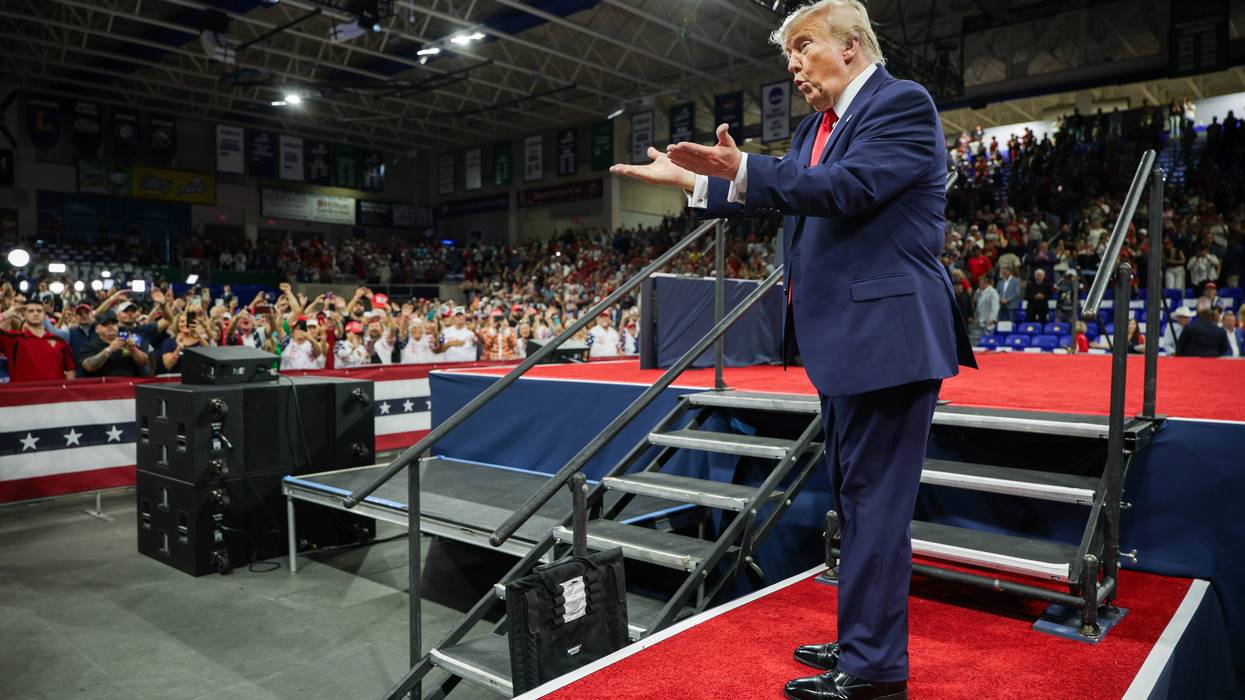
Trump was his usual chivalrous self in defeat after the concert went down in tacky flames. "We don't want singers with no talent, but big fees to put you to sleep," he wrote. "We’ve told them all to stay home." Instead, he giddily announced “a Rally to end all Rallies!" in "magnificent Washington D.C, now totally beautified." Because, "All we want is you, me, a few speakers, and the Greatest Music ever played, the same Music you have listened to for years!" it will feature die-hard Lee Greenwood (again), with "one of the Greatest Hits of All Time," his 1984 God Bless the U.S.A, after which he will introduce "a fine and highly dignified gentleman known as President DONALD J. TRUMP!”
There's more: The "amazing" opera singer Christopher Macchio, who has just 571 listeners on Spotify, will join in. "Not since the legendary Luciano Pavarotti has there been such a voice!” bragged Trump, though Pavarotti’s family has protested his use of the opera great's songs by arguing, "The values of brotherhood and solidarity which Luciano Pavarotti expressed throughout (his) artistic career are entirely incompatible with the worldview offered by Trump.” Also, the U.S. Army Band, Armed Forces Choir and "The President’s Own United States Marine Band" will perform “all your favorite Hits." Observers say the gig "sounds lame as fuck," but MAGA fans who go to every rally "like Deadheads with less weed and more racism" will probs love it.
Amidst other glad fails - even UFC fighters have trashed him with Star Wars rants of "Darth Vader gonna get took (sic) down" - many deem a more apt celebration of America's birthday the June 4 and 5 concerts in New Jersey by Springsteen and many fellow musicians. The guest list is so vast and illustrious - among them, Bon Jovi, Jackson Browne, Rosanne Cash, Kenny Chesney, Tom Morello, Gary Clark Jr., Dion, Dropkick Murphys, Shemekia Copeland, Keb’ Mo’, Nils Lofgren, Valerie June, Darlene Love, Public Enemy, David Sancious, Tony Trischka, Sister Sadie, Mavis Staples, Trombone Shorty, Steve Van Zandt, Jimmie Vaughan, the New Breed Brass Band - it's assumed Bruce called in favors: "They were beckoned, and graciously agreed."
Springsteen and the E Street Band just wrapped their Land of Hope and Dreams Tour - "No Kings" plastered below - in Philadelphia. Celebrating "hope over fear," it featured his most fiery political songs: Born in the USA, Death To My Hometown, No Surrender, Darkness On the Edge of Town, Streets of Minneapolis, Dylan's Chimes of Freedom. The two new concerts, titled Music America: The Songs that Shaped Us, are likewise unabashedly rabble-rousing. Held in Springsteen's Jersey backyard at Monmouth University, they will also launch the new Bruce Springsteen Center for American Music, which aims to preserve the Boss' legacy and offer "a journey through American music history" with ongoing exhibitions, archives and workshops.
This week's concerts, says Robert Santelli, "reflect everything the Center stands for" - the power of "a rich and diverse treasury of American music (to) bring people together (and) the inspiration to think about our shared history in divisive times." Casting a wide and joyful net, artists perform landmark songs from American music - blues, bluegrass, Native, rock, hip-hop, folk, jazz, country, gospel. Tickets are reasonably priced for an intimate venue, and brief narration before each performance offers context to the artist, song, and genre. Thursday night reviews praised "a magical, once-in-a-lifetime moment in music history" and a nod to "how powerful music is in telling our nation’s story." Both concerts sold out.
Bruce and the Dropkick Murphys' rousing rendition of American Land, based on a 19th-century poem by an immigrant steelworker, which asks and celebrates those "who will make his home in the American Land." In brief, all of us.
The McNicholases, the Posalskis, the Smiths, Zerillis, too
The Blacks, the Irish, Italians, the Germans and the Jews
They come across the water a thousand miles from home
With nothing in their bellies but the fire down below.
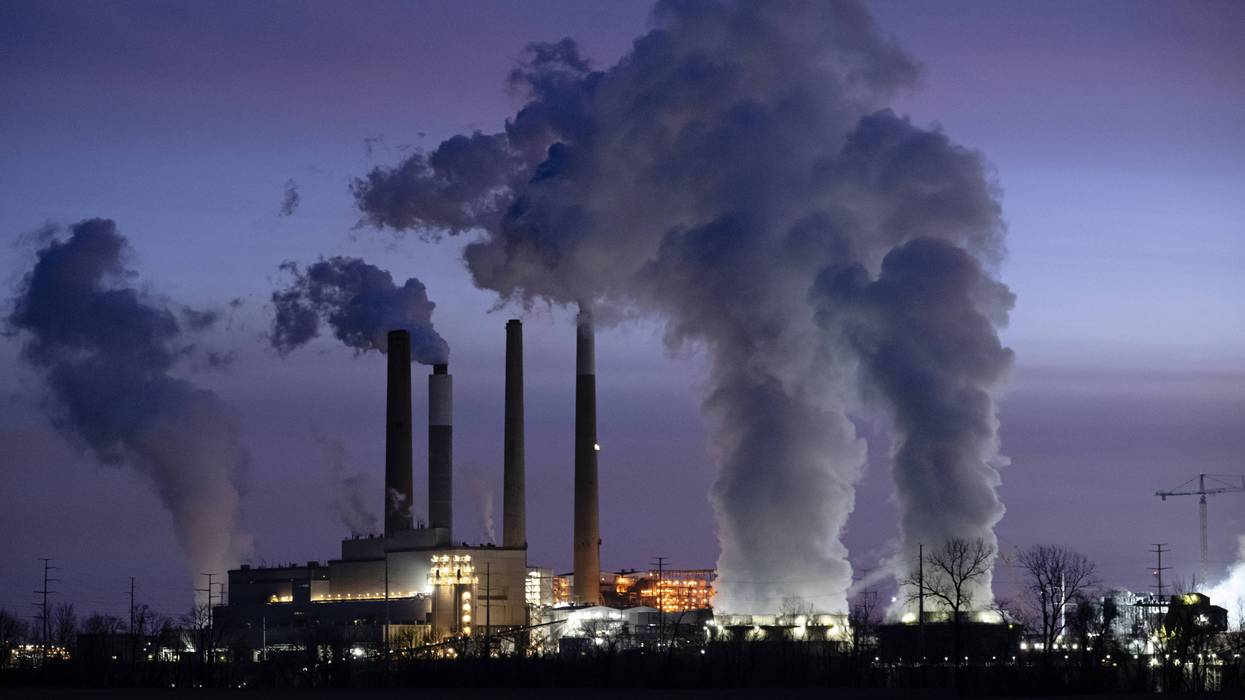
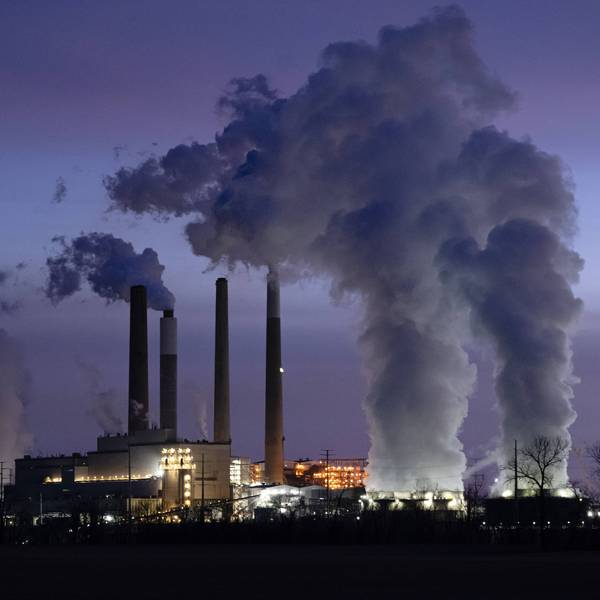
Two recent high-profile chemical plant disasters are putting a spotlight on the Trump administration's aggressive deregulation of the industry, with even more cuts to chemical safety regulations expected in the coming months.
The disasters—one at a paper mill in Washington state that killed 11 people and the other in an aerospace plastics facility in California that forced tens of thousands of people to evacuate their homes—came after months of warnings from experts and labor unions about the impact of the administration's deregulatory agenda.
In late March, for instance, members of United Steelworkers (USW) rallied in Washington, DC to protest against a US Environmental Protection Agency plan to scrap regulations enacted under former President Joe Biden, which included "new safeguards such as identifying safer technologies and chemical alternatives, requiring implementation of safeguard measures in certain cases, more thorough incident investigations, and third-party auditing."
USW Local 13-228 process safety specialist Phil Stagg at the time warned that scrapping the rule would put "profits over safety" by prioritizing cost cutting over worker safety.
Following last week's twin disasters, the Coalition to Prevent Chemical Disasters also pointed to plans to weaken Biden-era safety regulations as a grave mistake that will put American workers at greater risk.
"The fatal and shocking incidents communities have faced in recent days demonstrate the urgent need to implement and build on existing regulatory safeguards so communities near chemical facilities are protected from chemical disasters," the group said. "But, instead of protecting workers and families from death, injury, and illness, Trump’s EPA is putting communities at greater risk of harm by weakening the nation’s primary defense against chemical facility incidents."
The administration has also been targeting the Chemical Safety Board (CSB), an independent federal watchdog charged with investigating the root causes of industrial chemical accidents.
As The New York Times reported last month, Trump's proposed budget all but eliminates the CSB by cutting its funding down to $0 while arguing that the watchdog merely duplicates work already done by the EPA.
Rep. Marie Glusenkamp Perez (D-Wash.) said in a Sunday social media post that the CSB did essential work in preventing future accidents, and she vowed to fight the administration's plans to zero out its budget.
"I’ll be making it my priority ensuring [CSB] has the resources they need for a through, unbiased investigation," Perez said. "They also have three vacancies currently on that board of directors, and my hope is that we're able to work with the administration to ensure that people with real trades experience are appointed to that board."
The horrifying loss of life in Longview last week demands a thorough impartial investigation conducted by the independent watchdog Chemical Safety Board.
Unfortunately the presidents proposed budget has zeroed out the CSB budget.
Next week, I’ll be making it my priority to… pic.twitter.com/3SqbDSASWJ
— Rep. Marie Gluesenkamp Perez (@RepMGP) May 31, 2026
Jordan Barab, a former deputy assistant secretary at the Occupational Safety and Health Administration (OSHA), explained in an interview published by Mountain State Spotlight last week that CSB produces invaluable work about chemical disasters' root causes, whereas the EPA's work focuses on whether disasters were caused by violating federal regulations.
In particular, Barab noted that CSB can "look at other problems, other causes that aren’t necessarily covered by regulations or standards," and added that "a lot of the ways the industry has modernized to improve safety are based on recommendations that came out of the CSB."
US shoppers have been struggling with the price of groceries for years now, and prices are only set to climb higher in the coming months.
As reported by Bloomberg on Wednesday, a combination of President Donald Trump's tariffs, his illegal war with Iran, and a potential "super El Niño" weather pattern is projected to lower food supply while increasing food production costs, all of which will mean higher prices at US grocery stores.
According to Bloomberg, weather forecasters are now projecting that an unusually strong El Niño will form in August "that will persist into 2027 and push global average temperatures higher," potentially causing droughts in nations that grow staple crops such as rice, coffee, and cocoa.
And even without an El Niño, noted Bloomberg, farmers in the US have already endured the warmest-ever start to a planting season, which "prompted some domestic crops to begin blossoming weeks ahead of schedule instead of remaining dormant throughout the winter, leaving them exposed to subsequent frosts."
Ricky Volpe, agribusiness professor at California Polytechnic State University, told Bloomberg that 2026 would be a "challenging year" for agriculture, warning that "food is going to become less affordable, and consumers should be prepared for it."
Unusually warm weather isn't the only factor pushing up food prices. In a report published earlier this month, The New York Times found that Trump's tariffs on foreign steel have been pushing up prices of canned foods.
According to data from the US Bureau of Labor Statistics (BLS), the price of canned fruit and vegetables in March posted 5.7% increase from the year before, driven in large part by a tariff-induced rise in tin plate prices.
"Over 80% of the tin plate used in the United States last year was imported, according to Harbor Intelligence, a metals markets analysis firm," noted the Times. "Tin plate is produced in much lower volumes than the steel used to make cars and buildings, making it a less attractive business for large steel companies."
While Trump has tried to brush off the rise in grocery and fuel prices in recent weeks—going so far as to say "I don’t think about Americans’ financial situation"—his Republican Party is bracing for potential political consequences.
CNBC reported on Wednesday that the GOP is staring down an inflation "abyss" and fears that Democrats are well poised to at least retake the US House of Representatives.
Rep. Don Bacon (R-Neb.), who is retiring at the end of this term, told CNBC that his fellow Republicans have been unwilling to serve as a check on what he described as Trump's self-destructive tariffs that had hit Americans' pocketbooks.
"I think tariffs are bad policy," said Bacon. "Milton Friedman, Adam Smith, they’re the bibles of conservatism, and we have violated those... We should not have rolled over on that here in Congress."
House Republicans, with the help of four Democrats, voted Thursday to approve legislation that would slash nutrition assistance for millions of young children and pregnant and postpartum women, even as food prices continue to rise nationwide and earlier GOP cuts to federal aid take hold.
In a 213-210 vote, largely along party lines, House lawmakers passed an appropriations bill that would fund the US Department of Agriculture (USDA) and other agencies for the coming fiscal year. The four Democrats who voted with most Republicans to approve the measure were Reps. Vicente Gonzalez (Texas), Adam Gray (Calif.), Marie Gluesenkamp Perez (Wash.), and Don Davis (NC).
The bill, if also passed by the Senate and signed by President Donald Trump, would cut fruit and vegetable benefits that young kids and pregnant and postpartum women receive under the Special Supplemental Nutrition Program for Women, Infants, and Children (WIC).
The Center on Budget and Policy Priorities (CBPP) has estimated that the cut would strip modest fruit and vegetable benefits from "nearly 5.4 million toddlers, preschoolers, and pregnant and postpartum WIC participants." Under current law, CBPP observed, "children receive $26 monthly for fruits and vegetables, pregnant and postpartum participants receive $48, and breastfeeding participants receive $52."
Rep. Rosa DeLauro (D-Conn.), the top Democrat on the House Appropriations Committee, said following Thursday's vote that "while working families struggle to feed their families, Republicans are cutting funding for fruit and vegetable vouchers for women, infants, and children."
"Working moms are already stretched thin, and Republicans are making it even harder to put dinner on the table," said DeLauro. "The president’s tariffs have hurt American farmers, and now the Republican plan is to cut off crucial assistance that they have come to rely on even more."
The House-passed appropriations bill would cut WIC by a total of $200 million compared to current levels, slashing $141 million in funding for fruit and vegetable benefits. The USDA's website says that WIC "saves lives and improves the health of nutritionally at-risk women, infants, and children," describing the program as "one of the most successful federally funded nutrition programs in the United States."

Trump's USDA chief, Brooke Rollins, has openly celebrated the large-scale loss of federal nutrition aid stemming from the Republican budget package that Trump signed into law last summer. That legislation included unprecedented cuts to the Supplemental Nutrition Assistance Program (SNAP), another highly effective food aid program.
The House vote to cut WIC broadly aligns with the Trump White House's proposed budget for Fiscal Year 2027—but doesn't go as far as the president envisioned. The National WIC Association noted that the House bill "cuts WIC’s fruit and vegetable benefits by about 10%, a first step toward an up to 75% cut sought by the White House."
“The House proposal fails WIC families when they need help most," said Georgia Machell, president and CEO of the National WIC Association. "It would force WIC to turn away eligible families for the first time in 30 years, breaking Congress’ 30-year bipartisan commitment to full WIC funding. For the families who receive WIC, it chips away at their ability to buy the very fruits and vegetables that federal dietary guidelines say all Americans should eat more of."
The watchdog group Demand Progress on Thursday warned that the Senate Intelligence Committee's top Democrat is attacking civil liberties by collaborating with Republicans and the Trump administration to renew warrantless spying powers—even as he sounds the alarm over President Donald Trump's appointment of unqualified loyalist Bill Pulte as acting director of national intelligence.
Sen. Mark Warner (D-Va.) is pressing Senate Majority Leader John Thune (R-SD) to use his influence to persuade Trump to reconsider appointing Pulte—a private equity firm founder and homebuilder who is currently director of the Federal Housing Finance Agency (FHFA) and chairman of Fannie Mae and Freddie Mac—to the top intel post, which current Director of National Intelligence (DNI) Tulsi Gabbard will officially vacate on June 30.
Warner this week called out Pulte's lack of relevant experience, as well as his "eagerness to use the authorities of government to pursue political retribution" against a number of Trump’s political foes for politically motivated mortgage fraud investigations.
However, critics including Demand Progress have pointed out Warner's critical role in whipping Democratic support for renewing Section 702 of the Foreign Intelligence Surveillance Act (FISA), which allows the US government to collect electronic communications of noncitizens located outside the United States without a warrant. Experts note that Americans’ data is also swept up during such surveillance, and civil society groups and some lawmakers from both parties have demanded reforms to prevent further abuse by federal agencies.
Section 702, which was reauthorized for two years in 2024, is set to expire next week. There is a legislative battle between lawmakers and intelligence officials who want to extend Section 702 largely intact—the so-called "clean" reauthorization backed by Trump and his allies—and privacy-focused legislators from both parties who want reforms, especially a requirement for warrants before searching Americans' communications.
A three-year proposal passed by House lawmakers in April did not include a warrantless requirement.
“Sen. Warner’s opposition to Bill Pulte masks the fact that he is still the Democrats’ chief advocate for handing over unchecked spying powers to the Trump administration," Demand Progress executive director Sean Vitka said Thursday. "Pulte obviously must go, but he’s also proof that this administration is eager and willing to use the Office of the Director of National Intelligence as a weapon."
"If Trump pulls Pulte, he can easily appoint another eager goon to fill the slot," Vitkaco stressed. "By focusing on Pulte and not broader reforms, Sen. Warner is not standing up for Americans or the Constitution, he is disguising his work to engineer warrantless mass surveillance against us."
"We know this because he’s been doing it publicly for months," he added. "An unprecedented, bipartisan movement is demanding privacy reforms, but Sen. Warner’s machinations threaten to derail this progress and hand Trump the surveillance powers he needs to threaten Americans and democracy itself for the rest of his administration.”
Demand Progress said that Warner "has conspicuously failed to join the chorus of Democrats and Republicans calling for reforms to FISA that would protect privacy and democracy itself."
"Warner, who is negotiating with Republicans and the Trump administration to renew FISA, has only commented on how bad Pulte is and notably stopped short of saying anything about FISA reform," the group continued. "This is particularly telling considering Warner’s history of promising future reforms to get FISA renewed and failing to deliver."
Demand Progress contrasted Warner's actions with those of his fellow Democrats, including Catherine Cortez Masto of Nevada, who explicitly called for “reforms to ensure Americans’ privacy and rights are protected.”
Senate lawmakers could hold an initial procedural vote on extending Section 702 as soon as Thursday, with just a simple majority needed for the measure to advance. Future votes would require the support of 60 senators in order to avoid a Republican filibuster.
Elizabeth Goitein, co-director of the Liberty and National Security Program at the Brennan Center for Justice, warned Wednesday in a social media thread that the Section 702 extension supported by Trump, his Republican allies in Congress, and Warner "doesn’t just fail to curb warrantless domestic spying, it actually expands the government's ability to use 702 against Americans."
"Trump’s allies and Warner have produced a bill that purports to include reforms, but that makes no change whatsoever to existing standards and procedures for conducting backdoor searches, let alone a warrant requirement," she continued.
A "backdoor search" occurs when the government collects information about a US citizen when the surveillance was originally authorized for foreign targets and the government did not obtain a warrant before collecting the communications.
"These 'backdoor searches' are an affront to the Fourth Amendment," Goitein asserted. "They have led to widespread abuses, including FBI searches for the communications of members of Congress, campaign donors, journalists, and protesters across the political spectrum."
"There is broad bipartisan support in Congress for requiring the government to get a warrant before accessing Americans’ communications obtained under Section 702," she continued. "This reform has twice passed the House, and 76% of Americans support it."
"Unsurprisingly, Trump and his allies in Congress oppose this reform," Goitein wrote. "What’s more surprising is that key Democratic surveillance hawks, including Mark Warner and [Rep.] Jim Himes [D-Conn.], have teamed up with the Trump camp to ensure that his administration has continued warrantless access."
"Even more disturbing is the provision titled 'Restriction on Use of United States Person Information Acquired Under Section 702 in Criminal Prosecutions,'" she said. "Notwithstanding the Orwellian title, this provision actually *removes* existing restrictions on such use.
"Any member who is concerned with Pulte’s appointment should be aghast at the prospect of handing this administration warrantless access to Americans’ private communications and expanding its power to use those communications against Americans in court," Goitein added. "There is only one way senators can force leadership to permit amendment votes or otherwise negotiate: vote NO on the procedural motion that will take place in the coming days. Senators who support reform are the majority; they have real leverage. They must use it."
The Brennan Center for Justice and Demand Progress were among dozens of civil society groups that on Monday sent a letter to congressional leaders urging them to "not abandon Americans' constitutional rights" and "reject any extension that does not include key bipartisan reforms that would protect Americans' privacy and civil rights and liberties."
A trio of United Nations rights experts on Tuesday demanded that the US government "cease all threats" against Cuba and accused President Donald Trump of furthering a "disturbing trend of lawlessness" with preparations to attack the island nation; a indictment of its former president; and a protracted oil blockade that has left Cubans facing blackouts and a breakdown of their lauded healthcare system.
“Efforts to change the constitutional order of a sovereign state through threats and coercion echo colonial-era practices,” said George Katrougalos, independent expert on the promotion of a democratic international order; Zaina Jallad, special rapporteur on unilateral coercive measures; and Ben Saul, special rapporteur on counterterrorism and human rights.
The experts pointed to Trump's declaration of what's become known as the Donroe Doctrine, "asserting US predominance over the Western Hemisphere" through military might, and his repeated comments regarding the possibility of taking over Cuba, whose communist government, Trump has said, has turned the country into a "failing nation."
“Statements by the US president regarding the 'honor of taking Cuba' reflect a deeply concerning strategy of coercion against a sovereign state," said the experts. "This assertion is not mere rhetoric, but part of a broader strategy involving the long-standing embargo on Cuba, its listing as a state-sponsor of terrorism, the recent fuel blockade, and the imposition of coercive measures on third parties."
In January, Trump issued an executive order centered around the assertion—a laughable one, according to Cuban and international officials—that the country poses an "extraordinary threat" to the US, and warned other countries to stop providing oil to the island. The Trump administration had already cut off Cuba's main energy source earlier that month when it abducted Venezuelan President Nicolás Maduro and took control of the country's oil reserves.
The oil blockade—which Secretary of State Marco Rubio has recently denied the existence of—has left hospitals facing shortages of supplies and medicines, forced schools to cut hours, caused trash to pile up in streets as sanitation operations have struggled to continue, and left cities and towns across the country with just a few hours of electricity per day.
Rubio, the son of Cuban immigrants who left the country for the US years before Fidel Castro took power following the 1959 revolution, has long called for regime change in Cuba and has resisted efforts to normalize US-Cuban relations.
The UN experts said the blocking of oil imports to Cuba is "part of a disturbing trend of lawlessness and contempt of multilateralism and the UN Charter. The normalization of coercion and threats of regime change undermines the integrity of the entire international legal order."
The experts also condemned the US indictment last month of former Cuban President Raúl Castro, which they said appeared connected to the administration's "efforts to undermine Cuba's sovereignty" and characterized as a "misuse of domestic judicial proceedings."
The also said that the indictment—"an instrument of coercive foreign policy"—represents "an abuse of process that violates the principles of sovereign equality and self-determination under the UN Charter."
Additionally, the deployment of the USS Nimitz to the southern Caribbean, they said, contravenes articles 2(4) and 2(7) of the UN Charter, which, respectively, prohibit the threat or use of force and demand non-intervention in domestic affairs by the UN.
The experts called on UN member states to "refrain from recognizing or implementing measures that violate the principles of sovereign equality and non-intervention" and urged the UN Security Council and General Assembly to "urgently address the threats against Cuba as a matter affecting international peace and security."
“A democratic and equitable international order," they said, "requires that all states, regardless of size or power, participate on equal footing, free from undue pressure."
Middle-income households were "squeezing more life out of every dollar before deciding to spend it" last month, while low-income families and individuals "showed greater financial strain."
The Beige Book, a monthly report on consumer spending, labor markets, and inflation from the Federal Reserve's 12 districts across the country, offers an up-to-date look on how the US economy is impacting households across the US—and this week, the report for May showed a continuation of the trend that accelerated after President Donald Trump joined Israel in attacking Iran more than three months ago.
"This month’s report, the third since the escalation of the conflict in the Middle East, reveals that soaring input costs are triggering price hikes for consumers," said the progressive think tank Groundwork Collaborative.
The report notes that regional contacts at the Federal Reserve's districts described middle-income households as "squeezing more life out of every dollar before deciding to spend it,” while low-income families and individuals "showed greater financial strain."
"Overall, there were reports of increased credit card usage, fewer retail visits, and stronger demand for necessities," reads the Beige Book.
"Higher-income households remained resilient and less sensitive to price increase," the Federal Reserve reported, indicating a "K-shaped economy"—in which wealthy Americans are represented by the top angled line and middle- and lower-income households are represented by the line angled toward the lower right.
The report comes as peace talks with Iran are stalled and the Strait of Hormuz—a key waterway for trade, particularly for the world's oil supply, remains effectively closed following the US-Israeli invasion. Iran's retaliatory move has sent global oil prices soaring, with gas now costing $4.22 per gallon on average.
"High prices for essentials like groceries and a tank of gas are busting household budgets and eliminating breathing room for middle- and low-income families."
"Numerous contacts mentioned the conflict in the Middle East as a source of cost pressures and heightened business uncertainty," reads the Beige Book. "Higher energy and fertilizer prices contributed to a moderate increase in food prices, especially for fresh produce."
Manufacturers and retailers are also facing increased shipping costs, while auto repair rates and used-car financing rates "remained very high" in parts of the country.
The report was released days after the administration launched new strikes against Iran last weekend, and as Iran announced it was suspending peace talks with the US over Israel's continued targeting of Lebanon.
Alex Jacquez, Groundwork's chief of policy and advocacy, said that "Trump is choosing to keep prices high for working families."
"High prices for essentials like groceries and a tank of gas are busting household budgets and eliminating breathing room for middle- and low-income families," said Jacquez. "Despite his own party’s opposition, the president is forging ahead with his reckless, costly war—and leaving working Americans in the dust.”
The Beige Book also describes a "low-hire, low-fire" job market, "with workers increasingly reluctant to change jobs because of economic uncertainty."
"Widespread economic uncertainty from continued tariffs and persistent inflation means businesses are delaying expansion, leading cautious employees to remain in their current roles—even if it means staying in worse-paying jobs," said Groundwork.
The Federal Reserve pointed to a contact in the construction industry in Cleveland, Ohio who said employees are "nervous and stressed, as well as a human resources firm in Richmond, Virginia that reported "that clients have explicitly slowed hiring for new roles due to uncertainty, while their existing employees seemed reluctant to leave 'something stable' for new opportunities."
Jacquez said that based on the report, "Americans lucky enough to be employed full-time are losing faith in their ability to keep up with inflation as paychecks lag and the labor market stalls out."
“The international community cannot remain silent while a respected physician is reportedly subjected to harsh conditions, denied adequate medical care, and isolated from the outside world."
A prominent human rights group on Friday sounded alarms upon learning that Dr. Hussam Abu Safiya, director of the Kamal Adwan Hospital in Gaza, has been sent to solitary confinement.
As reported by Haaretz, Physicians for Human Rights Israel (PHRI) said it learned on Thursday that Abu Safiya was moved to solitary confinement this week without any explanation.
According to a report from The Palestine Chronicle, an attorney representing Abu Safiya claimed that his client was placed into solitary confinement in retaliation for appealing his continued detention.
Abu Safiya was first taken into custody by Israeli forces in December 2024 and has been held since then without being charged with any criminal offenses.
In a Friday statement, the Council of American-Islamic Relations said news of Abu Safiya's solitary confinement was "deeply disturbing" and raised "even more urgent concerns about his welfare and basic human rights."
"Congress must demand his immediate release and insist that Israel end the arbitrary detention, abuse, and mistreatment of Palestinian medical professionals and civilians," CAIR added. “The international community cannot remain silent while a respected physician is reportedly subjected to harsh conditions, denied adequate medical care, and isolated from the outside world without any legal justification. Dr. Abu Safiya must be released immediately."
PHRI has for months been raising concerns about Abu Safiya's detention, long before he was transferred to solitary confinement.
While demanding the physician's release in April, for instance, PHRI said Abu Safiya was being held "in harsh conditions, without access to medication or medical care, as his health continues to deteriorate."
A 2025 report from Amnesty International, which has also called for Abu Safiya’s release, said that the Gaza-based physician “was detained in the course of caring for his patients and carrying out his medical duties.”
Amnesty also noted that, prior to his detention, Abu Safiya and other colleagues at the Kamal Adwan Hospital had “provided human rights and humanitarian organizations with reliable information about the health situation” in Gaza, which has been left devastated by years of Israeli attacks that have killed at least 72,000 Palestinians.
"Corporations wrote big checks to build Trump’s golden ballroom," said Rep. Jason Crow. "Now they’re receiving billions of dollars in kickbacks—paid for by your tax dollars."
Sen. Elizabeth Warren suggested President Donald Trump is running a "pay-to-play loyalty program for wealthy donors" after a report on Thursday revealed that more than half the companies that contributed to his White House ballroom project have been awarded government contracts over the last six months, totaling over $50 billion.
Examining the 27 publicly known corporate donors to the president’s $400 million gold-plated vanity project, the watchdog group Public Citizen found that 14 of them—more than half—had received either new or expanded contracts over the past six months after donating millions to the ballroom and appearing at a lavish White House banquet in October as Trump prepared to demolish the building's East Wing.
Over two-thirds, 19 of the 27 companies, received government contracts since fiscal year 2021, totaling over $338 billion. At least 16 out of 27 are also either facing federal enforcement actions and/or have had them suspended by the Trump administration.
“These giant corporations aren’t funding the Trump ballroom fiasco out of the goodness of their hearts. They have massive interests before the federal government, and they hope to curry favor with, and receive favorable treatment from, the Trump administration,” said Public Citizen democracy advocate Jon Golinger, an author of the report.
By far the biggest monetary beneficiary has been the military contractor Lockheed Martin, which received a $43.8 billion in new or expanded contract funding over the past six months after it pledged $10 million to fund the dance hall last fall.
Booz Allen Hamilton, a consulting company that serves military and intelligence agencies and pledged at least $5 million to the project, received $4 billion in contracts over the same period.
Meanwhile, Palantir—the data-mining surveillance giant with deep ties to the Trump administration—reaped over $1 billion in contracts after giving its own $5 million donation.
"Millions to fund Trump’s bizarre fever dreams are nothing compared to the billions they’re getting back in contracts and favorable government enforcement decisions," Golinger said. "The American people are paying the price.”
Other ballroom benefactors that have brought in more than $100 million worth of contracts over the past six months include Microsoft, Amazon, HP, and Caterpillar, while T-Mobile, Google, NextEra Energy, and Comcast have all brought in more than $10 million.
Public Citizen noted that while the White House has publicized some of the ballroom donors and others have been revealed by news organizations, not all of the companies that have contributed to the project are publicly known, since the secret funding agreement obtained by the group through a Freedom of Information Act request allows their identities to remain private.
In a statement to The Washington Post, White House spokesperson Davis Ingle suggested that critics should be grateful that Trump was soliciting donations from the wealthy for this very important undertaking.
“The same critics who are alleging fake conflicts of interest would also complain if American taxpayers were footing the bill for these long-overdue renovations,” he said, ignoring the fact that Trump has previously pressured Republicans in Congress to appropriate hundreds of millions in taxpayer funding to secure the ballroom.
Ingle added that “the donors for the White House ballroom project represent a wide array of great American companies and generous individuals, all of whom are contributing to make the People’s House better for generations to come.”
But several Democratic members of Congress have pointed to it as evidence of Trump selling out the government "to the highest bidder."
“Corporations wrote big checks to build Trump’s golden ballroom,” said Rep. Jason Crow (D-Col.). “Now they’re receiving billions of dollars in kickbacks—paid for by your tax dollars.”
“Wild coincidence or taxpayer-funded corruption?” said Sen. Chris Van Hollen (D-Md.). “You be the judge.”
Rep. Mike Levin (D-Calif.) said that “the part that should make your blood boil” is the fact that many of the companies identified in the report “were facing federal enforcement actions, antitrust reviews, labor cases, [or] securities charges.”
"Many of those cases have been quietly dropped or scaled back since Trump took office. You write a check, your legal problems disappear," Levin said. "That’s not a coincidence."
“You cannot afford to donate to Trump’s ballroom, so he does nothing to improve the quality of your life,” said Sen. Adam Schiff (D-Calif.). “But for those who can, there are billions in government contracts.”