

SUBSCRIBE TO OUR FREE NEWSLETTER
Daily news & progressive opinion—funded by the people, not the corporations—delivered straight to your inbox.
5
#000000
#FFFFFF
To donate by check, phone, or other method, see our More Ways to Give page.
Daily news & progressive opinion—funded by the people, not the corporations—delivered straight to your inbox.

“Putting armed officers in polling places is a tactic used by dictators, but we won’t be scared out of exercising our rights."
Noncitizens are barred from voting in federal elections, and a coalition of rights groups suggested Thursday that President Donald Trump's plan to have armed immigration agents enter polling places isn't aimed at cracking down on unlawful immigrants at all.
"Sending armed ICE officers to polling places is not immigration enforcement—it is voter suppression, plain and simple,” said Janet Murguía, president and CEO of UnidosUS, referring to US Immigration and Customs Enforcement.
UnidosUS joined Common Cause, the League of United Latin American Citizens (LULAC), and the city and county of Denver, Colorado in filing a lawsuit to stop the administration from authorizing ICE deployments in polling places during the 2026 elections, in which early voting will soon be underway in a number of states.
The groups filed the legal challenge in the US District Court for the District of Columbia several days after Homeland Security Secretary Markwayne Mullin said ICE could be sent to polling sites to address "specific threats."
Earlier this year, the Department of Justice ended long-standing guidance on why federal law enforcement activity is restricted at polling places, and ICE agents conducted enforcement actions at voting sites in Texas and New York.
clMullin said in July that states could be denied federal aid if they refuse to comply with election directives from the Department of Homeland Security related to the administration's baseless claims that undocumented immigrants engage in widespread "voter fraud."
A Reuters analysis this year found that only 73 people in the last three decades have ever been convicted of illegally voting as noncitizens. The right-wing Heritage Foundation has proidentified about 100 cases of proven noncitizen voting dating back to 2000—representing around 0.0001% of total votes cast over that time.
In their lawsuit, the groups argued that Mullin's plan to deploy ICE agents to voting sites violates the nationwide prohibition against armed federal agents in polling places, which was first enacted during the Civil War out of concerns "about executive overreach, and the risk that the federal executive would use armed force to interfere in state and federal elections."
The policy also violates "the federal prohibition on arbitrary and capricious government action," said the groups.
The administration is pushing to deploy ICE to polling places as voters express widespread disapproval of numerous Republican policies, including ICE's violent crackdown in cities such as Minneapolis and Chicago, Trump's war on Iran, and tariffs that have worsened the cost-of-living crisis the president pledged to solve.
Virginia Kase Solomón, president and CEO of Common Cause, said that Americans will not be "silenced by the administration’s continuous efforts to meddle with our elections."
“Putting armed officers in polling places is a tactic used by dictators, but we won’t be scared out of exercising our rights,” said Kase Solomón. “No American should ever have to walk past armed federal law enforcement just to cast a ballot, yet this administration has adopted a policy that allows exactly that."
The lawsuit emphasizes that with ICE having unlawfully detained more than 170 US citizens and killed at least three citizens since Trump took office, Americans "may reasonably fear interactions with ICE."
“All Americans—including Latino voters—have a constitutional right to cast their ballot without fear of interrogation, detention, or family separation," said Murguía. "This case is about protecting voters, preserving confidence in our elections, and ensuring that every eligible voter can participate free from intimidation.”
At the Democracy Project at New York University School of Law, poSoephen Richer and Gina Goldenberg cautioned that the threat of ICE agents potentially being at the polls could serve as a voter suppression tactic and "real voting deterrent" in itself.
"ICE-at-the-polls is something that American elections are well-equipped to handle," they wrote. "The highly decentralized nature of our elections, plus the massive growth of early voting, combined with a strong legal framework, would make widespread ICE interference a heavy lift for the federal government. Ironically, the real threat of ICE-at-the-polls could be in its potential voter-deterrent effect.
"It’s not too far-fetched to imagine a newly naturalized, brown-skinned American in Michigan who only casually follows political news, but hears that ICE might be at the polls," they added. "This person knows he’s in a higher-risk category for being mistakenly apprehended by ICE, and he wonders, 'Why risk it?'"
All voters, said Juan Proaño, CEO of LULAC, "should be able to cast their ballots without fear of intimidation by armed ICE officers at polling places."
“The right to vote is foundational to our democracy," he added, "and yet this administration continues in its endless attempts to weaken the very institutions it is entrusted to protect."
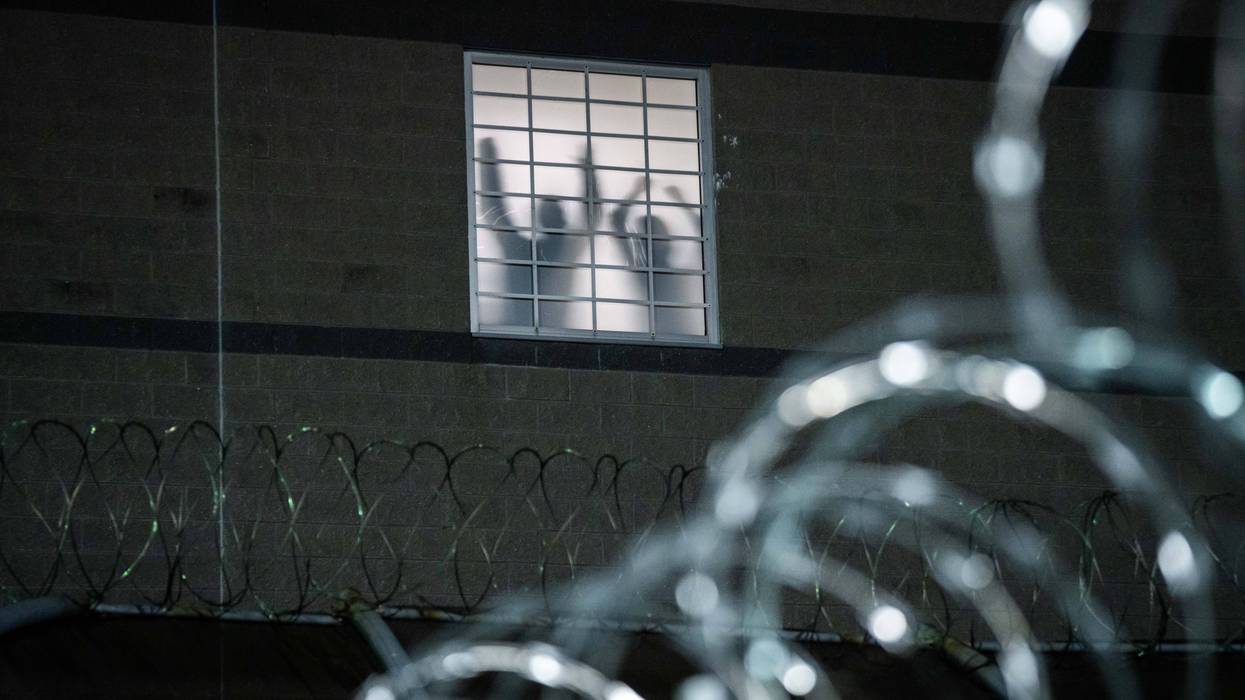
"If they admit openly that there are hunger strikes, they admit that the conditions in detention are so bad that people are willing to forgo food in order to raise awareness," one lawyer said of the administration.
The Trump administration subjected hunger-striking immigrants held in US Immigration and Customs Enforcement detention centers to involuntary medical procedures, including forced feeding, a blatant and painful violation of medical ethics widely considered to be torture.
In the second article of a two-piece series, The Guardian revealed on Monday that court records showed ICE personnel attempted to subject at least 10 hunger-striking detainees to the procedures. At least three, and possibly five, detainees were force-fed, while five others ended their hunger strikes at the last minute rather than undergo the invasive, non-consensual insertion of a plastic tube through the nose, down the throat and esophagus, and into the stomach to deliver liquid nutrition against their will.
Hundreds of people have gone on hunger strike at ICE detention centers across the country to protest overcrowded and unsanitary conditions, spoiled and worm-infested food and water, inadequate medical care, delays in immigration procedures, alleged physical and psychological torture, and other mistreatment.
The Guardian's investigation found that one Kurdish asylum seeker detained at ICE's Port Isabel Service Processing Center in Los Fresnos, Texas was subjected to force-feeding for eight months, while another hunger-striker at the same facility endured six months of the painful procedure. In six cases reviewed by The Guardian, immigrants who were force-fed had no legal representation.
The Department of Homeland Security maintains that detainees receive adequate meals and care and disputes reports of abuse.
In May, Homeland Security Secretary Markwayne Mullin dismissed the hunger strikers as a "handful" of detainees and falsely claimed they were striking because they "want their ethnic right food."
"Well, they can go back to their country and get whatever food they want... This isn't Holiday Inn," he added while Commerce Secretary Howard Lutnick looked on and smiled approvingly.
DHS Secretary Mullin dismisses the detainee hunger strike in an ICE facility:
They're refusing to eat because they want their ethnic food. Well, they can go back to their country and get whatever food they want. This isn't Holiday Inn. pic.twitter.com/tdUYMkUy1K
— FactPost (@factpostnews) May 27, 2026
A judge must authorize the forced feeding of ICE detainees. According to The Guardian, judges often quickly issue the requested emergency orders before immigrants can legally object.
“There’s very little due process in these proceedings,” immigrant rights attorney Eunice Cho told the newspaper, comparing the judges' orders to a "rubber stamp."
Global medical authorities, United Nations bodies, human rights defenders, and others—including people subjected to it—call forced feeding a form of torture.
"The tube went inside a little bit and then got stuck," Ajay Kumar, a former ICE detainee force-fed during Trump's first term in 2019, told The Intercept, which in 2022 obtained video of the Indian asylum seeker being strapped and pinned down by five guards in riot gear before having the nasogastric tube forced into him.
"I felt as if [the tube] was going down my throat, tearing up the insides, and blood started coming from my mouth and nose," he said. "It was very hard."
"After that they took me for an X-ray. After doing the X-ray, they informed me that the tube has not been inserted properly, so we will have to insert it again," Kumar recalled. He was asked if he wanted to end his hunger strike and, when he said no, the second insertion began. "It was more painful. These people are torturing me. The one ICE officer, I never forget him. He's smiling."
Kumar was taken for a second X-ray and was again informed that the tube was incorrectly inserted. He was again asked if he would continue his strike.
"You can torment me as much as you want, you won't be able to break my spirits," he told them. The tube was correctly inserted the third time and Kumar was pumped full of a nutritional shake. He said he could not breathe, sleep, or speak properly for weeks after.
Kumar said he was force-fed in front of three other detainees "so that they would all start eating after seeing what's happening to me."
"Whenever the doctors said, 'Yes, we are helping you, we cannot let you die like this,' I used to tell them, you are treating me worse than dying," he added.
Under the World Medical Association’s Declaration of Malta, doctors are advised to not force-feed prisoners who choose to hunger strike and understand the consequences of their actions.
“Forcible feeding is never ethically acceptable,” the declaration states.
In 1981, UK authorities allowed 10 imprisoned Irish Republican Army members, including former Member of Parliament Bobby Sands, to starve themselves to death in Northern Ireland. Their deaths occurred after between 46 and 73 days of refusing food.
In contrast, force-feeding is institutional policy in US prisons, including the Guantánamo Bay concentration camp in Cuba, where detainees—most of whom were charged with no crime—were force-fed during the George W. Bush and Barack Obama administrations.
Immigrants detained by the US have been force-fed since at least the Obama administration.
Sarah Houston, a managing attorney at ImmDef, told The Guardian that an ICE Health Service Corps document acknowledging the force-feeding of detainees and viewed by the newspaper is a "blatant admission" that the practice is being used by the Trump administration.
“But if they admit openly that there are hunger strikes, they admit that the conditions in detention are so bad that people are willing to forgo food in order to raise awareness about the situation,” Houston said. “Because no one goes on hunger strike unless they are really desperate.”
Matthew Wynia, a medical ethicist and director of the Center for Bioethics and Humanities at the University of Colorado, said that “it is unethical to force treatment on someone who is saying, 'Don’t do this to me.'"
“People who are on hunger strike do not want to die, they are not suicidal," he continued. "They are using the only tool available to them to protest the circumstances of their confinement.”
“The idea of health professionals serving as agents of the state, rather than protectors of our patients, has a notorious history," Wynia added. "And for the medical profession, we really don’t want to go down that path again."
The Guardian series comes amid a broader pattern of abuse and neglect, sometimes deadly, of ICE detainees, many of whom are locked up in facilities run by private prison profiteers.
According to ICE’s public database, more than 50 people have died while detained by the Department of Homeland Security (DHS) agency during President Donald Trump’s second term, including two people who were killed in a sniper attack on an ICE administrative and processing center in Dallas. At least 10 of the deaths were men who killed themselves, according to an Associated Press investigation published late last month.
Many of the deaths were preventable, say experts who point to systemic understaffing and DHS policy choices that weaken detainee care and employee oversight.
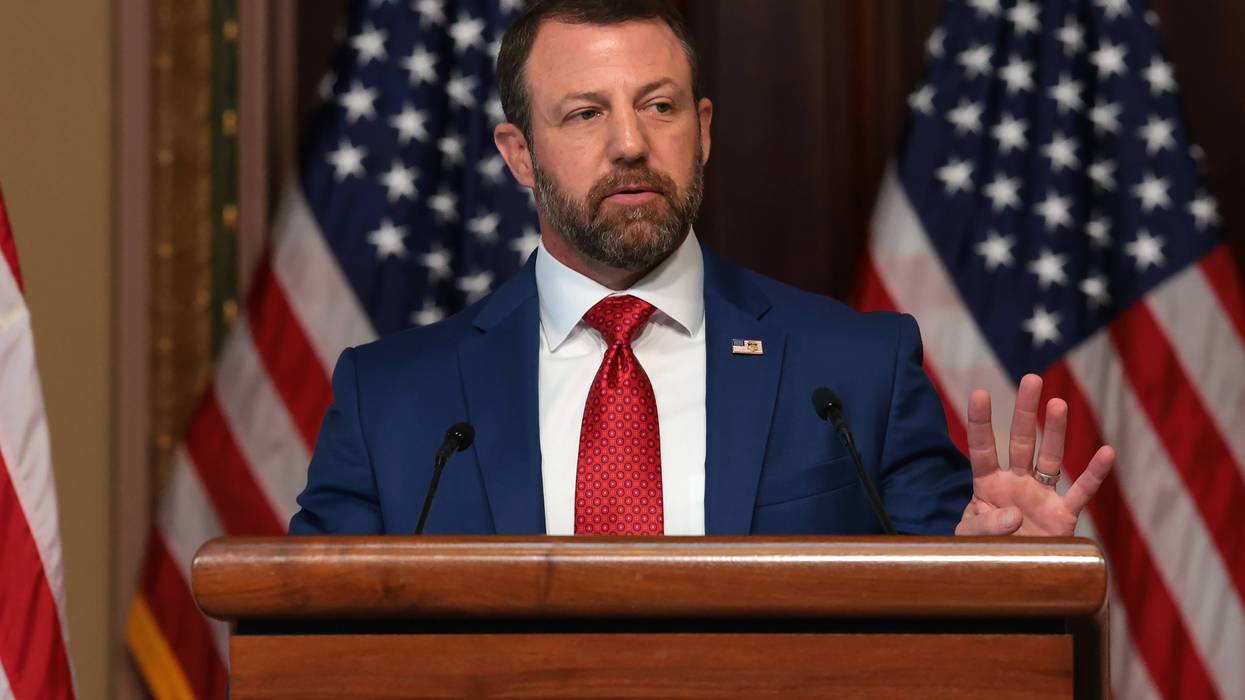
"They are losing, and they know it. Election officials will not be intimidated," said Senate Minority Leader Chuck Schumer.
US Homeland Security Secretary Markwayne Mullin on Friday threatened state election officials with prison time if they do not comply with the Trump administration's "mandatory" changes to how they run their elections.
During a press conference, Mullin said that the Trump administration was making so-called "security enhancements" to US elections "mandatory," adding that any uncooperative states will be penalized.
"If these states want a grant and they want to be reimbursed to run federal elections, they're going to have to implement security issues," Mullin said. "We're saying that your [voting] machines have to be secured and that your voter registration list needs to be scrubbed."
Later in the press conference, Mullin elaborated further on penalties states could face if they didn't "scrub" their voter rolls to the administration's specifications.
"The states that choose... not to participate in securing the elections, we will make sure we make those states a priority to look into who voted in their states, and hold then the election officials accountable," he said. "If the election officials, once we gave them the information they need to secure their elections, and they chose not to, then those individuals can also be held accountable."
Mullin added that this accountability can come "by fines, by penalties, and even, depending on how far it goes, prison time."
Mullin says that election officials in states that don’t cooperate with the Trump administration may face jail time pic.twitter.com/FvIaKmTEdc
— Aaron Rupar (@atrupar) July 17, 2026
Article 1, Section 4 of the United States Constitution explicitly gives states the power to run their own elections, while granting the US Congress the authority to implement federal regulations if needed.
The executive branch of the federal government is given no role in the administration and regulation of elections.
Democratic California Gov. Gavin Newsom reacted to Mullin's threats of jail time for election officials with defiance.
"California has free, fair, and secure elections and we will fight for them," Newsom wrote in a social media post. "Try us."
Senate Minority Leader Chuck Schumer (D-NY) similarly vowed to fight the administration's efforts to meddle in the elections.
"They are losing, and they know it," Schumer wrote. "Election officials will not be intimidated. Senate Democrats will make sure resources are in place to fight back against any illegal activity by the Trump administration."
Sen. Raphael Warnock (D-Ga.) warned that Mullin's Friday statements appear to be an escalation in the administration's tactics.
"First, they sent the FBI to seize ballots in Georgia," he wrote. "Then, they tried to get data on election workers in Fulton County. Now, they’re threatening to imprison election officials. This is escalating quickly. Every single American should be alarmed."
Government watchdog Citizens for Responsibility and Ethics in Washington also indicated it would file legal challenges to the administration's efforts to take over the elections process.
"The Constitution gives states, not the federal government, the power to administer elections," the group wrote. "That's for a good reason, but the Trump admin keeps trying and failing to grab power anyway. We're fighting back in court."
Aaron Reichlin-Melnick, senior fellow at the American Immigration Council, expressed skepticism that the Trump White House's election meddling would be successful.
The Department of Homeland Security "has literally zero power to do this," Reichlin-Melnick wrote. "The Trump admin has lost every single lawsuit on their efforts to get state voter data or change voter requirements. The power to administer elections is given to the states."
Historian Patrick Wyman similarly predicted the administration's efforts would end in failure.
"They’re going to threaten this stuff, they’ll ham-fistedly screw up the implementation, commit seven atrocities, and still lose every election that matters in November," Wyman wrote. "We’re now nearing the 'fuck you, do it, see what happens' stage of this confrontation."

ICE is already on track to arrest more people this month than any other month during the second Trump administration.
As scrutiny builds over two fatal shootings by Immigration and Customs Enforcement in less than a week, US Homeland Security Secretary Markwayne Mullin said the Trump administration was only going to keep ramping up its aggressive mass deportation push. Arrests have already reached a record high this month.
Mullin brushed off questions from reporters on Friday about the shootings of Lorenzo Salgado Araujo in Texas and Johan Sebastián Durán Guerrero in Maine—neither of whom was the target of ICE's operations—which have generated calls for investigations and reforms to ICE's tactics, including the traffic stops that led to the fatal shootings.
Earlier this week, acting assistant secretary Lauren Bis called on critical politicians and media outlets to "turn down the temperature" of their rhetoric towards ICE, which she claimed is “fueling vehicle attacks" against agents. The administration has claimed that both men attempted to "weaponize" their vehicles, but video and eyewitness accounts have not backed this up.
In light of the agency's calls to "turn down the temperature," a reporter asked Mullin whether he could assure Americans that ICE officers who violate the agency's use-of-force policy would face consequences and whether he'd commit to making that determination publicly.
"Let me clarify. When I say 'turn down the temperature,' I mean turn down the temperature with you guys," Mullin said, pointing at members of the media. "We're turning up the heat on the streets."
"We're out there working harder than we ever have because we've empowered law enforcement to do their jobs," he said. "What I'm trying to do is remove us from the headlines every single day."
Mullin added that "everybody will be held accountable," and that he would enforce the law "with our own agency" and "with the criminals on the streets."
Facing pressure from senior White House adviser Stephen Miller to reach a quota of 3,000 arrests per day, ICE has overwhelmingly prioritized going after individuals without criminal convictions during President Donald Trump's second term, despite the administration's claims that it's targeting "the worst of the worst."
A leaked Department of Homeland Security report published in February showed that just 14% of the nearly 400,000 people taken into custody by ICE in 2025 had been charged with or convicted of violent criminal offenses, while 40% have never been charged with any crime.
The Washington Post reported on Friday that ICE is on track to arrest more people in July than any previous month of the second Trump administration. Arrests dropped for a short time in February after immigration agents shot two US citizens—Renee Good and Alex Pretti—in Minneapolis, but spiked to a new high of over 39,500 in June.
None of the agents involved in January's pair of fatal shootings have faced federal charges, and the Trump administration has actively sought to obstruct state-level investigations into the shootings by withholding evidence, some of which was finally turned over on Monday.
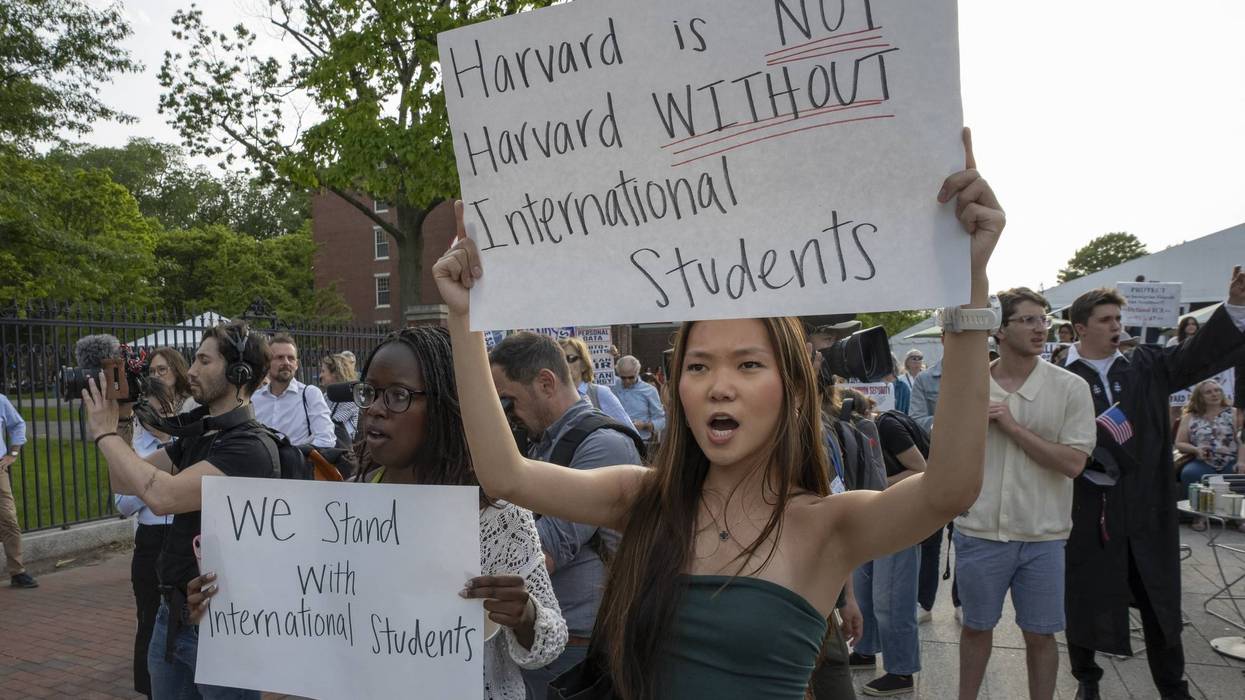
One legal advocacy group said the rule change "will be costly, cause chaos, and cut legal immigration."
The Trump administration on Thursday finalized sweeping new visa restrictions that immigration advocates and higher education professionals say will make it significantly more difficult for international students and journalists to study and work in the United States.
The Department of Homeland Security (DHS) said it is replacing the long-standing "duration of status" system—which allowed students to remain in the country as long as they complied with the terms of their visas—with fixed admission periods that generally cap student and exchange visitor stays at four years.
Foreign journalists, meanwhile, will see their visas limited to 240 days, while Chinese journalists will face an even shorter 90-day limit. Visa holders will have to apply for extensions if they need more time.
NEW: The Trump admin finalized a regulation which makes the largest changes to the student visa process in 50 years, along with changes to rules for exchange visitors and international journalists. 🧵on some of the most consequential changes set to go into effect in September.
[image or embed]
— Aaron Reichlin-Melnick (@reichlinmelnick.bsky.social) July 16, 2026 at 12:09 PM
Homeland Security Secretary Markwayne Mullin claimed that “for nearly half a century, the outdated 'duration of status' system has compromised national security and created an environment ripe for immigration fraud."
"For decades, foreign students have been admitted into the US indefinitely, allowing thousands to abuse our immigration system by perpetually enrolling in courses to avoid having to leave the US," Mullin added. "By implementing clear, finite limits on these visas, the United States is reclaiming its ability to properly screen, vet, and monitor individuals within our borders."
However, Todd Schulte, president of the bipartisan political advocacy and lobbying group Fwd.US, warned that “these new restrictions will only make it harder for international students and researchers to complete their studies in the US and contribute their education to the US workforce after graduating."
"These changes will hurt America’s global competitiveness, hinder businesses’ ability to hire US-educated talent, impose significant and unnecessary costs on universities and students, and increase the workload for federal agencies already struggling with backlogs and delays," Schulte added. "This rule will create more bureaucratic backlogs and delays and help grind the legal immigration system to a halt.”
"Have these people no understanding of how life works?"
The American Immigration Lawyers Association said the rule change "will be costly, cause chaos, and cut legal immigration."
David Bier, the immigration studies director at the libertarian Cato Institute, told Reuters that "international students, many of whom will have spent years in the USA, will now have just 30 days to find an employer to sponsor them or immediately be turned into illegal immigrants. Have these people no understanding of how life works?"
Fanta Aw, executive director of NAFSA: Association of International Educators, said in an interview with The Washington Post that “DHS’ decision to end duration of status is a misguided and unnecessary policy shift that injects uncertainty, bureaucracy, and fear into a system that has long worked effectively."
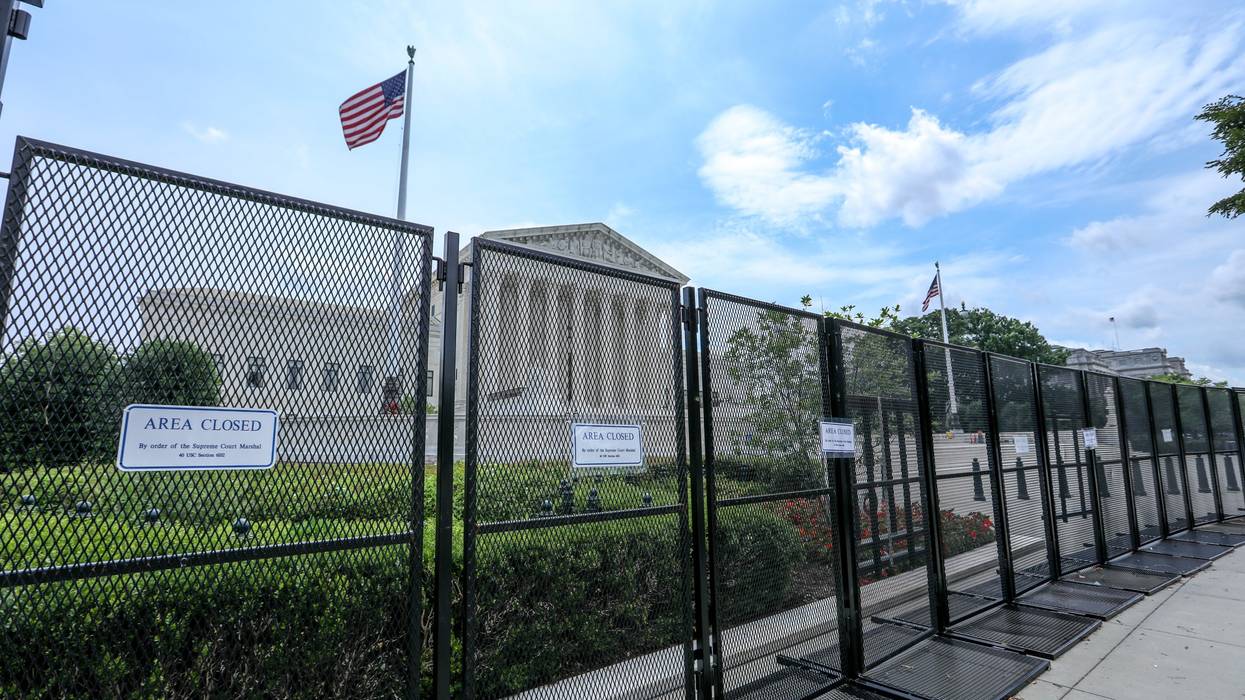
Even in the face of two laws in which Congress instructed the executive branch to do certain things, a majority of the current Supreme Court—the abominable Roberts Court—has bent over backwards to ignore those laws.
The real way to read the immigration decisions the Supreme Court issued on Thursday is not to see them solely as losses for immigrants to the United States or the rights of immigrants. They are much larger losses. They are losses for the authority of Congress to have its laws fully executed by a president who doesn’t agree with them.
Markwayne Mullin vs. Al Otro Lado concerns a 1917 law that requires immigration officers to inspect noncitizens who arrive at ports of entry to determine whether they may enter the United States. Congress amended the law in the Refugee Act of 1980 to allow noncitizens fleeing persecution in their home country to apply for asylum as part of this inspection process.
The act lays out a required set of procedures to guide this process. It says that a noncitizen who seeks admission to the United States “may apply for asylum.” If the noncitizen lacks valid travel documents, the officer “shall order [her] removed” unless she conveys an intention to apply for asylum or a fear of persecution, which in turn requires the officer to “refer” her for further processing of her asylum application.
This system is designed to ensure that the US government considers the application of each person seeking to come into the United States to determine who should be let in, who should be turned away, and who should be allowed to apply for asylum.
This must be seen for what it really is—a systemic effort by the six Republican appointees on the court to shrink congressional authority and enlarge the authority of the executive branch.
But on Thursday, the Supreme Court’s majority held that a president may circumvent these requirements simply by having US immigration officers stand at the border and physically block noncitizens from setting foot on US soil—even if the asylum-seeker is certain to be persecuted, or killed, if she is turned away.
What happened to the Refugee Act of 1980 and the specific procedures outlined in it? The Supreme Court ignored it.
The other decision released today, Markwayne Mullin vs. Dahlia Doe, concerns another law, part of the Immigration Act of 1990 called Temporary Protected Status. For over a decade administrations have provided humanitarian Temporary Protected Status relief to Haitian and Syrian nationals coming to the United States.
Today, the Supreme Court’s majority held that federal courts may not review the Secretary of Homeland Security’s compliance with that law. But in fact the Immigration Act of 1990 specifically allows judicial review of whether the secretary adhered to the procedures the law requires—exactly what the plaintiffs disputed.
It would be easy to see these two cases solely through the lens of immigration—and conclude that the Supreme Court’s decisions Thursday simply backed President Donald Trump and his fanatical underling Stephen Miller’s commitment to block noncitizens from the United States or to force them out. And surely these are the consequences of both of the rulings.
But the decisions are even darker and more dangerous than this. Even in the face of two laws in which Congress instructed the executive branch to do certain things, a majority of the current Supreme Court—the abominable Roberts Court—has bent over backwards to ignore those laws.
This must be seen for what it really is—a systemic effort by the six Republican appointees on the court to shrink congressional authority and enlarge the authority of the executive branch.
If there was any doubt before, there should be none now: The Supreme Court is part of the anti-democracy movement led by Trump and the billionaires behind him.
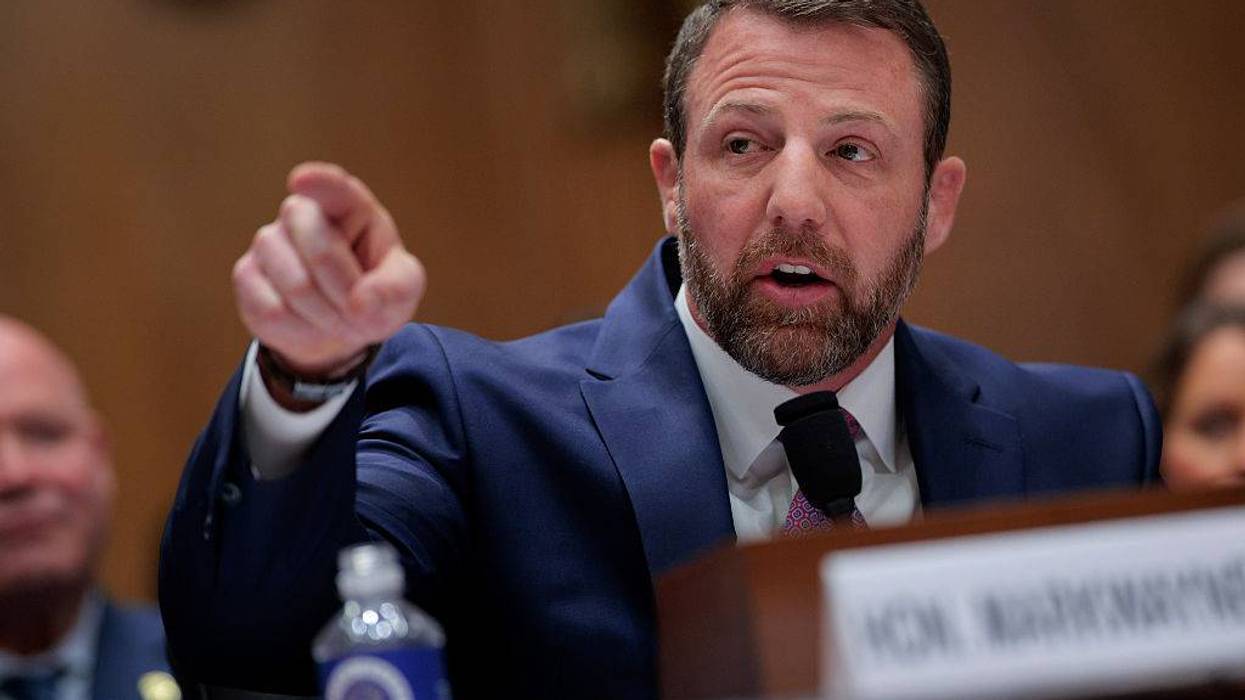
"Do any of these people have a working brain or understand how life works in the real world?" asked a retired air traffic controller.
US Homeland Security Secretary Markwayne Mullin on Thursday reiterated his threat to remove Customs and Border Protection agents from airports at so-called "sanctuary cities" that bar local police from cooperating with federal immigration enforcement operations.
During a Fox News interview, co-host Brian Kilmeade asked Mullin whether this plan would essentially halt all international flights to major US airports in travel hubs such as Chicago, Los Angeles, and New York.
Mullin responded by saying DHS wasn't "going to halt the flights," but rather "won't be able to process them because we won't have officers there."
The DHS secretary said that the CBP officers needed to be sent to protect DHS employees at the Delaney Hall migrant detention center in Newark, New Jersey, which has been targeted in recent days by protesters demanding humane treatment of immigrants.
"If things don't change, we're going to have to make this step pretty quick," Mullin emphasized. "I'm not going to put my employees and my [US Immigration and Customs Enforcement] agents at risk going to and from this [facility]."
Markwayne Mullin: "If CBP isn't there processing international flights, then those individuals when the airlines land won't be permitted into the United States. If things don't change, we're gonna have to make this step pretty quick." pic.twitter.com/flcAGL2TVG
— Aaron Rupar (@atrupar) May 28, 2026
Critics were quick to point out that Mullin's plan would lead to massive chaos at major international airports and would be a significant economic disruption at a time when Americans are already under financial pressure from the rising price of food and energy.
"This would be deliberately stabbing the US economy in the back," argued Aaron Reichlin-Melnick, senior fellow at the American Immigration Council. "It would cause enormous economic damage and disrupt air travel nationwide, as airlines would be forced to cancel flights en masse. That he’s even contemplating this publicly is a sign of madness."
Minneapolis-based attorney Will Stancil questioned whether Mullin had fully gamed out how his plan would play out politically for his boss, President Donald Trump, whom polls show is historically unpopular.
"If I’m sitting at 35% approval," Stancil mused, "the thing I definitely want to do is to cause apocalyptic levels of chaos at all of America’s largest airports."
Retired air traffic controller Vivian Lumbard similarly marveled at the self-destructive consequences that would come from enacting Mullin's plan.
"If customs isn't there processing international flights, US citizens won't be permitted to re-enter the United States either," she wrote. "Do any of these people have a working brain or understand how life works in the real world?"
Mullin's threats appear to be more than bluster, however. The Atlantic reported last week that the DHS chief recently "convened a small group of airline and travel-industry executives at DHS headquarters in Washington and told them he may reduce [CBP] staffing at major airports that serve sanctuary jurisdictions," including airports in New York, Washington, DC, and Portland, Oregon.
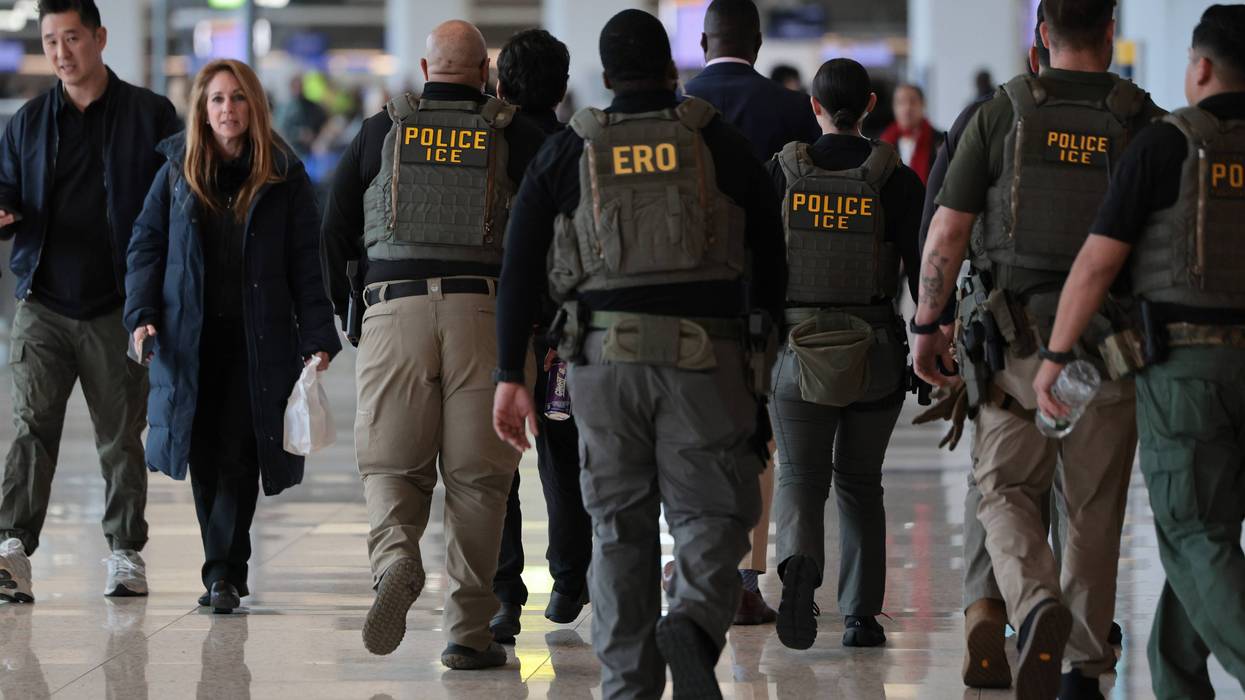
"Violent crime has been dropping nationwide for three years. Now Trump comes in and claims that magically that's all his doing."
The US Department of Homeland Security is trying to give President Donald Trump's "mass deportation" crusade credit for a decline in violent crime, even though the trend began well before he took office.
Linking to a report from Axios detailing the decline in violent crime across US cities over the past year, the department’s account on X wrote that "under the leadership" of Trump and Secretary of Homeland Security Markwayne Mullin, "violent crime is PLUNGING in cities across the country.”
"By removing criminal illegal aliens from our nation, we’re making our communities SAFE again," it continued.
The report draws on quarterly data from 67 major US law enforcement agencies, collected by the Major Cities Chiefs Association, which is often cited as a source for previewing crime trends before the annual FBI reports are released in the fall.
The first-quarter data show significant declines in crime rates from the first quarter in March 2025 that "show up across every major region, suggesting a systemic, nationwide trend," according to Axios.
However, as the report acknowledges, this drop in crime is not a new phenomenon, but the continuation of "a nationwide decline that began after the pandemic-era crime spike... with drops beginning in the second half of the [Joe] Biden presidency and continuing under Trump."
According to FBI data, homicides fell by 22.7% from January-June 2023 to January-June 2024, while robbery decreased 13.6%, rape decreased 17.7%, and aggravated assault decreased 8.1%.
Aaron Reichlin-Melnick, a senior fellow at the American Immigration Council, called it "total BS" for DHS to give Trump credit for this past year's drops.
"Violent crime has been dropping nationwide for three years," he said. "Now Trump comes in and claims that magically that's all his doing."
Crediting Mullin in particular is especially odd, considering that he had held the role of secretary of homeland security for just over a week when the yearlong data collection period ended on March 31.
But at any rate, there's little reason to believe that immigration enforcement bears much responsibility for the continued crime decline.
A study of incarceration data by the libertarian Cato Institute published in March found that between 2010 and 2024, the incarceration rate for undocumented immigrants was 44% lower than that of native-born US citizens, while that for legal immigrants was 75% lower.
Notably, the data includes undocumented people detained by Immigration and Customs Enforcement (ICE) for immigration-related offenses, meaning that the rate of violent crimes committed by undocumented immigrants is likely even lower relative to citizens.
And while the Trump administration has claimed to target "the worst of the worst" immigrants for deportation by ICE, The Guardian found that 77% of those who entered deportation proceedings for the first time in 2025 had no criminal convictions.
Nearly half of those who did had only been convicted of traffic or immigration-related offenses. Just 9% had been convicted of assault, while only 1% were for sexual assault, and just 0.5% were for homicide.
Reichlin-Melnick said: "There is no evidence at all that deportations have reduced crime rates. None. Zero."
In fact, it's possible that the Trump administration's aggressive ramp-up of deportations has made it harder to fight violent crime.
In September, amid Trump's military occupations and surges of immigration agents into cities like Chicago, Cato received records showing that more than 25,000 federal officers—including more than 2,800 with the FBI, 2,100 with the Drug Enforcement Agency (DEA), and 1,700 with the Bureau of Alcohol, Tobacco, and Firearms (ATF) had been diverted to assist with immigration enforcement. This amounts to more than 1 in 5 FBI agents, nearly half of DEA agents, and over two-thirds of ATF agents.
The Marshall Project wrote about how this shift in priorities was taking shape:
In May, the FBI ordered its agents to scale back investigations of white-collar crime and focus on immigration instead. In Baltimore, FBI agents on the city’s domestic terrorism squad were investigating online child predators when they were ordered to work full-time on immigration enforcement, MSNBC reported. About 10 agents were reportedly reassigned from building cases against what the FBI described as a “nihilistic violent extremist” group in order to help the Department of Homeland Security arrest immigrants.
“It’s a good time to be an American-born criminal,” Jason Houser, formerly ICE’s chief of staff under Biden, told The Marshall Project at the time. “When the FBI, DEA, ATF are all doing checkpoints in [Chicago’s] Little Italy tomorrow, the human trafficking, the sex trafficking, the Jeffrey Epsteins, the fentanyl traffickers—they don’t quit.”

"Mullin refused to rule out sending armed, masked agents to polling places this November," noted one advocacy group.
The US Senate voted mostly along party lines on Monday to confirm former Republican Sen. Markwayne Mullin to lead the Department of Homeland Security amid a partial shutdown at the agency that led President Donald Trump to deploy immigration enforcement agents to chaos-ridden airports.
Two Democrats, Sens. John Fetterman of Pennsylvania and Martin Heinrich of New Mexico, joined every Republican except for Sen. Rand Paul of Kentucky in voting to confirm Mullin, who will succeed scandal-plagued Kristi Noem at DHS—a sprawling agency that oversees Immigration and Customs Enforcement (ICE) and the Transportation Security Administration (TSA).
Christina Harvey, executive director of the advocacy group Stand Up America, said in response to the vote that "Mullin’s confirmation hearings made clear he lacks the character and qualifications to serve as DHS secretary."
"He’s Kristi Noem 2.0: an election denier with unwavering loyalty to Donald Trump and a penchant for profiting off public office," said Harvey. "Mullin signaled he’ll continue the administration’s pattern of shielding federal agents from accountability while blocking crucial reforms. Even more alarming, Mullin refused to rule out sending armed, masked agents to polling places this November."
"Senate Republicans put Mullin in power," Harvey added, "and they’ll be responsible for what comes next.”
The confirmation vote came amid reports that senators are on the verge of a deal to end the month-long shutdown at DHS, which has left TSA workers unpaid. In the wake of ICE agents' deadly shootings of Renee Good and Alex Pretti in Minnesota, Democratic lawmakers have demanded reforms to the immigration enforcement body as part of any DHS funding deal.
Roll Call reported late Monday that the "tentative arrangement" senators are considering "would split off a large chunk of regular fiscal 2026 funding for Immigration and Customs Enforcement from the earlier full-year funding bill for DHS that stalled in the Senate."
"Democrats wouldn’t get everything they want in the tentative pact; Customs and Border Protection would be funded, for instance," the outlet noted. "And there were discussions about keeping other parts of ICE funded, including the Homeland Security Investigations division that works on anti-terror efforts, transnational crime, child exploitation, and human trafficking."
News of potential progress toward an agreement came after Trump nearly torpedoed negotiations by demanding that Republicans attach a massive voter suppression bill known as the SAVE America Act to any DHS funding deal.
“Don’t make any deal on anything unless you include voter ID,” Trump said during an event in Tennessee earlier Monday.
Politico reported late Monday that Senate Republicans are "looking at using reconciliation"—a filibuster-proof budget process—to "pass more ICE funding as well as parts of their partisan GOP elections bill, the SAVE America Act."
The legislation is part of what experts and democracy advocates have characterized as a sweeping Trump administration effort to sabotage the 2026 midterm elections. As part of that effort, the Trump administration has reportedly weighed the possibility of sending ICE agents to polling sites—something that Mullin declined to rule out during his confirmation hearing.
Sen. Ed Markey (D-Mass.) said in his statement opposing Mullin's confirmation that "with Trump unleashing ICE agents at our airports, we cannot risk another leader at DHS who will simply rubberstamp the illegal, brutal Trump agenda."
"Mullin refused to retract earlier comments he made justifying Renee Good’s murder at the hands of ICE officers. He refused to say that Joe Biden won the 2020 election. He deflected when asked if he would send ICE officers to the polls during the midterm elections," said Markey. "I voted against Senator Mullin’s nomination because he has not shown that he will lead DHS with independence, put an end to ICE’s lawlessness, or seek real accountability at the department and its agencies."
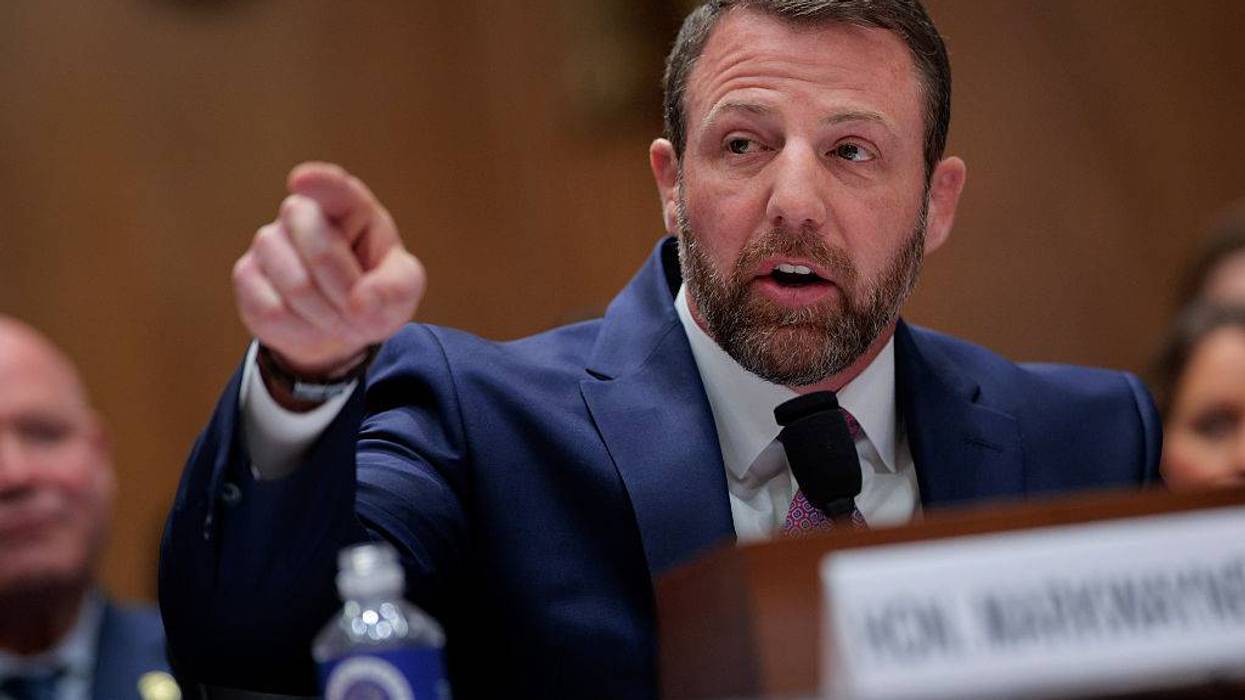
"Mullin’s long list of conflicts of interest even as he seeks this next level of public office is reprehensible."
Government watchdog Public Citizen on Thursday slammed the Senate Homeland Security and Governmental Affairs Committee for voting to advance the nomination of Republican Sen. Markwayne Mullin to be the next US homeland security secretary.
Shortly after the committee delivered an 8-to-7 vote to advance Mullin's (R-Okla.) nomination out of committee, Public Citizen co-president Lisa Gilbert described the move as "simply inappropriate."
"It is inappropriate because of his self-enrichment," Gilbert said. "Mullin’s long list of conflicts of interest even as he seeks this next level of public office is reprehensible."
The New York Times reported on Sunday that Mullin has grown significantly wealthier throughout his tenure first as a US congressman then as a US senator, in part because he is "one of the most prolific stock buyers in Congress."
According to financial disclosure forms cited by the Times, Mullin's net worth in 2024 was between $29 million and $97 million, a massive jump from the estimated net worth of $2.8 million to $9 million he reported in 2012.
In addition to citing Mullin's self-enrichment during his political career, Gilbert decried the senator's past statements defending actions taken by federal immigration enforcement officials, including the fatal shootings of Minneapolis residents Renee Good and Alex Pretti.
"It is inappropriate because Mullin has consistently defended ICE agents involved in fatal shootings," said Gilbert, "and justified the use of lethal force in enforcement operations, rather than calling for accountability or reform of use-of-force policies. It is inappropriate because he treats protest against ICE operations as a prosecutable offense rather than a legitimate exercise of First Amendment rights and an expression of community concern."
While Mullin on Wednesday walked back his past attack on Pretty as "deranged," he stood by his claim that the shooting of Good was entirely justified.
Mullin's nomination advanced to the Senate floor after Sen. John Fetterman (D-Pa.) broke with his party, canceling out the "no" vote on the committee delivered by Sen. Rand Paul (R-Ky.), who got into an angry spat with Mullin on Wednesday over past comments the Oklahoma Republican made justifying a 2017 assault on his colleague from Kentucky.
In a social media post defending his vote to advance Mullin, Fetterman argued that "we need a leader" at the US Department of Homeland Security and said his vote in favor of the nomination was "rooted in a strong committed, constructive working relationship with Senator Mullin for our nation’s security."