Brazil's Lula Wins 'Historic Victory' Against Right-Wing Trump Ally Flávio Bolsonaro
"This shows that Trumpismo is waning, and it is our responsibility now to make sure that we kill the beast," Pennsylvania Democratic House nominee Chris Rabb said.
In a historic comeback, Brazilian President Luiz Inácio Lula da Silva triumphed in Sunday's run-off election over right-wing challenger Flávio Bolsonaro, the son of former Brazilian President and convicted coup-plotter Jair Bolsonaro.
Lula's victory comes despite the best efforts of US President Donald Trump and his Big Tech backers, as Trump's administration openly intervened on behalf of Bolsonaro and Meta boosted pro-Bolsonaro over pro-Lula content on its social media platforms.
"Lula won, Brazil won, democracy won, the Americas won," said Pennsylvania Democratic House nominee Chris Rabb from Lula's campaign headquarters in Sao Paulo, Brazil, after the results were announced around 9:15 pm Brasilia time. "They declared victory for Lula da Silva for his fourth term against a raging fascist, rubber-stamped for Donald Trump."
"These elections have represented a historic victory for the majority of the Brazilian people, who mobilized to defend democracy against the threat of fascism."
Rabb noted that Lula's victory marked an important turning point for the left in Latin America, as far-right parties had won every other national election in the region since the start of Trump's second term. "This is the first victory for democracy in this hemisphere since Trump took office," Rabb said.
With 99.99% of the votes counted, Lula won by 51.79% to Bolsonario's 48.21%, making him the first Brazilian candidate since the restoration of democracy in 1985 to win a second-round election after coming in second in the initial round.
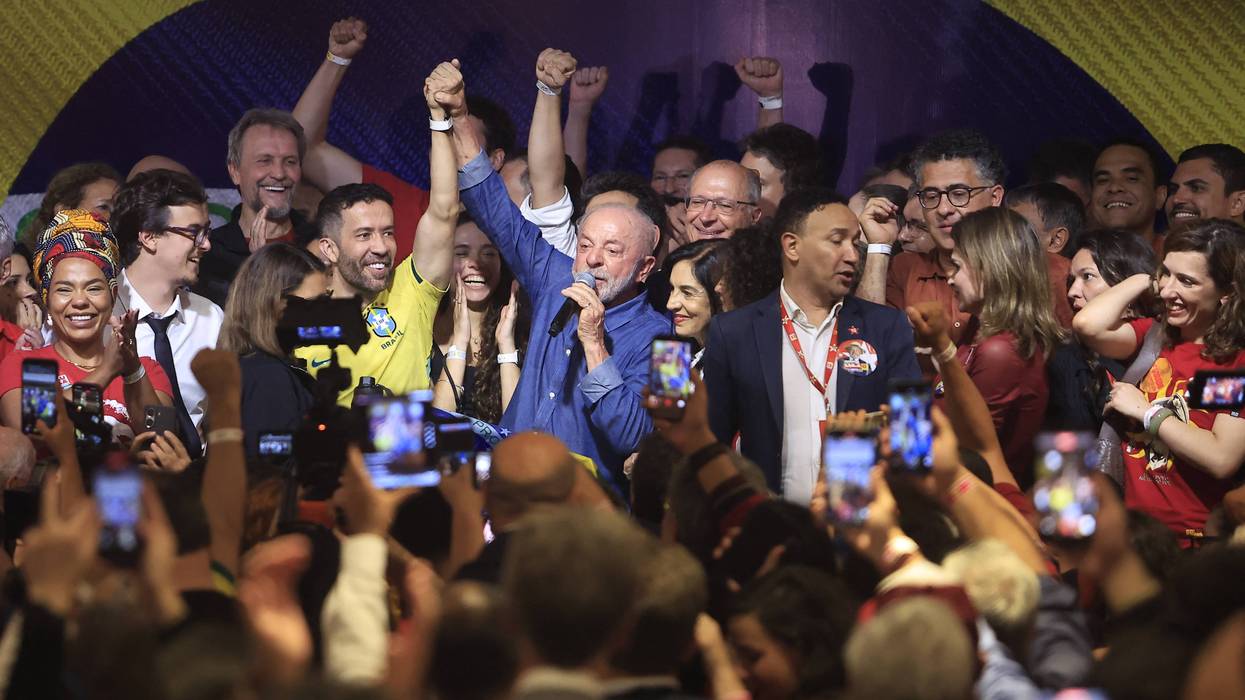
“I would like to thank the Brazilian people for the generosity they have shown me for a long time,” Lula said in his victory speech in São Paulo late Sunday. “And, in this second round, I want to thank the generosity of the Brazilian youth, who took to the streets to defend democracy.”
After finishing two percentage points behind Bolsonaro in the October 4 poll, Lula re-energized his campaign by finally shortening the Brazilian workweek from six to five days, as his supporters launched demonstrations against the far-right.
"These elections have represented a historic victory for the majority of the Brazilian people, who mobilized to defend democracy against the threat of fascism," Francesca Emanuele, senior international policy associate with the Center for Economic and Policy Research (CEPR), told Common Dreams from Sao Paulo, Brazil, where she was monitoring the elections. "It was the Brazilian people themselves (students, working-class, and middle-class Brazilians) who took to the streets and mobilized tirelessly from the very first day after the first round of voting to overturn the first-round results and secure Lula’s victory."
Reginaldo Lopes, a federal deputy for Lula's Workers' Party, told The Guardian: “I feel incredible… This is Brazil telling the world that the extreme right is fascist, that the extreme right is against Black people, is against the poor, against the state, against gay people... We are going to reorganize the democratic forces [in this country.]"
Sunday's victory did not come easily, as the Lula campaign complained of bus shortages in the key cities of Salvador and Sao Paulo, requesting that the Brazilian Supreme Court extend the voting by two hours. The court granted the request, so polls closed at 7 pm Brasilia time instead of 5 pm.
"Lula’s win is the first good news for the planet in a while!"
"Lula has won despite the unfair practices his campaign has faced from Meta, interference from the Trump administration, and severe disruptions to public transportation on election day in major cities (where up to 50% of bus fleets were reportedly out of service)," Emanuele told Common Dreams. "These disruptions disproportionately affected working-class voters, who rely heavily on public transportation and have historically been a key part of Lula’s electoral base."
She continued: "Despite all these obstacles, Lula’s campaign managed to turn around a first-round result that, just a few weeks ago, had seemed extremely difficult to reverse. This is a major victory for the majority of the Brazilian people."
Several advocates and lawmakers hailed the election results as a rebuke to the far-right and the Trump administration in particular.
"During his campaign, President Lula characterized 2026’s elections as a choice between 'sovereignty or submission.' Brazil has clearly chosen sovereignty," the Democratic Socialists of America (DSA), who sent a delegation to observe both rounds of Brazil's elections, wrote in a statement.
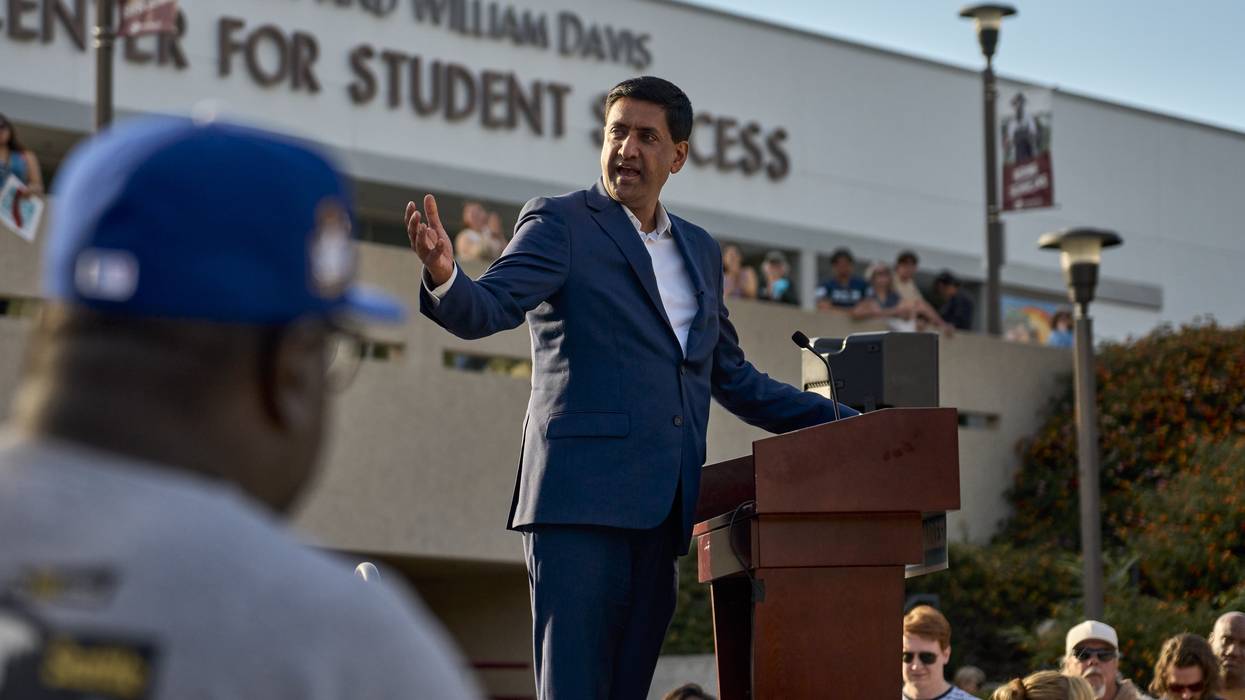
Progressive Rep. Ro Khanna (D-Calif.) posted on social media: "People all across the world are fighting back against extremism. With Lula in Brazil, they just won. Authoritarian leaders always attack democracy because they stand no chance against the will of their people. Trump must respect the results and not undermine Brazil’s elections."
Sen. Bernie Sanders (I-Vt.) said: "Congratulations to Lula on his extraordinary reelection victory in the Brazilian presidential election. Lula has stood up for Brazilian workers & democracy—and will continue to do so in the next four years."
Lula's victory also has planetary consequences, as he brought deforestation in the Amazon rainforest back down to record lows after it accelerated during the tenure of Jair Bolsonaro, who attacked environmental protections and Indigenous rights.
"Lula’s win is the first good news for the planet in a while!" wrote 350.org and Third Act co-founder Bill McKibben. "I bet it shaves a tenth of a degree off how hot our Earth eventually gets, which will save millions of lives. Thank you Brazil!"
Lula still faces a fight ahead, as Bolsonaro announced it was "impossible to concede the election result" due to the extension of polling hours, even though his team had also sought an extension in parts of southeastern Brazil because of unfavorable weather.
US-based Lula allies urged others in the US to defend Brazil's democracy from Trump administration interference and to take their own stand against the far-right in the upcoming midterm elections.
The DSA wrote:
However, the fight continues—the thin margin of this victory indicates that continued struggle and mobilization will be crucial. As global capitalism fails to solve worsening problems of its own making, the capitalists turn to right-wing authoritarianism. Brazil’s left-wing coalition will face a right-wing Congress at home, a hostile Trump administration in the US, and hostile capitalists both [at] home and abroad in the years ahead. We of the DSA stand in solidarity with our comrades in the PT [Lula's Partido dos Trabalhadores], PSOL [Brazil's left-wing Socialism and Liberty Party], and Brazilian social movements in this fight for democratic self-determination.
This solidarity means recognizing our country’s role in the threat to Brazilian democracy. These elections were marred by interference from the US, whether by Trump’s politically motivated tariffs, or by manipulation of social media by US-based tech companies like Meta. They aimed to subvert Brazil’s democracy to favor its far-right allies grouped in the "Shield of the Americas," and to get their hands on crucial natural resources, such as lithium, cobalt, and rare earth minerals as well as petroleum and iron ore, which Brazil possesses in abundance and which Lula has sworn to protect as national patrimony. The DSA categorically denounces these meddlesome, imperialist efforts. We fight for a working-class foreign policy—one which centers peace, multilateralism, and respects national self-determination, free from US interference.
Rabb concluded his message with a call to action, and a celebration: "This is a big deal for us in the United States. This shows that Trumpismo is waning, and it is our responsibility now to make sure that we kill the beast. That beast is injustice, it's oligarchy, it's neoliberalism. All of these things. Now it's our turn, folks. November 3 is right around the corner, but right now I'm going to party with these Brazilians."
 US President Donald Trump arrives for a campaign rally at the Menard Memorial Sports Center on October 13, 2026, in Wasilla, Alaska. (Photo by Alex Wong/Getty Images)