SUBSCRIBE TO OUR FREE NEWSLETTER
Daily news & progressive opinion—funded by the people, not the corporations—delivered straight to your inbox.
5
#000000
#FFFFFF
To donate by check, phone, or other method, see our More Ways to Give page.


Daily news & progressive opinion—funded by the people, not the corporations—delivered straight to your inbox.
"We saw evidence of food and medical aid denied entry, and heard witness accounts of the killing of Palestinian civilians, including children," said former Irish Prime Minister Mary Robinson and former New Zealand Prime Minister Helen Clark.
The group of global leaders known as The Elders on Tuesday demanded "decisive measures" to end the famine and "unfolding genocide" in Gaza that has led to international outcry month after month with no end in sight.
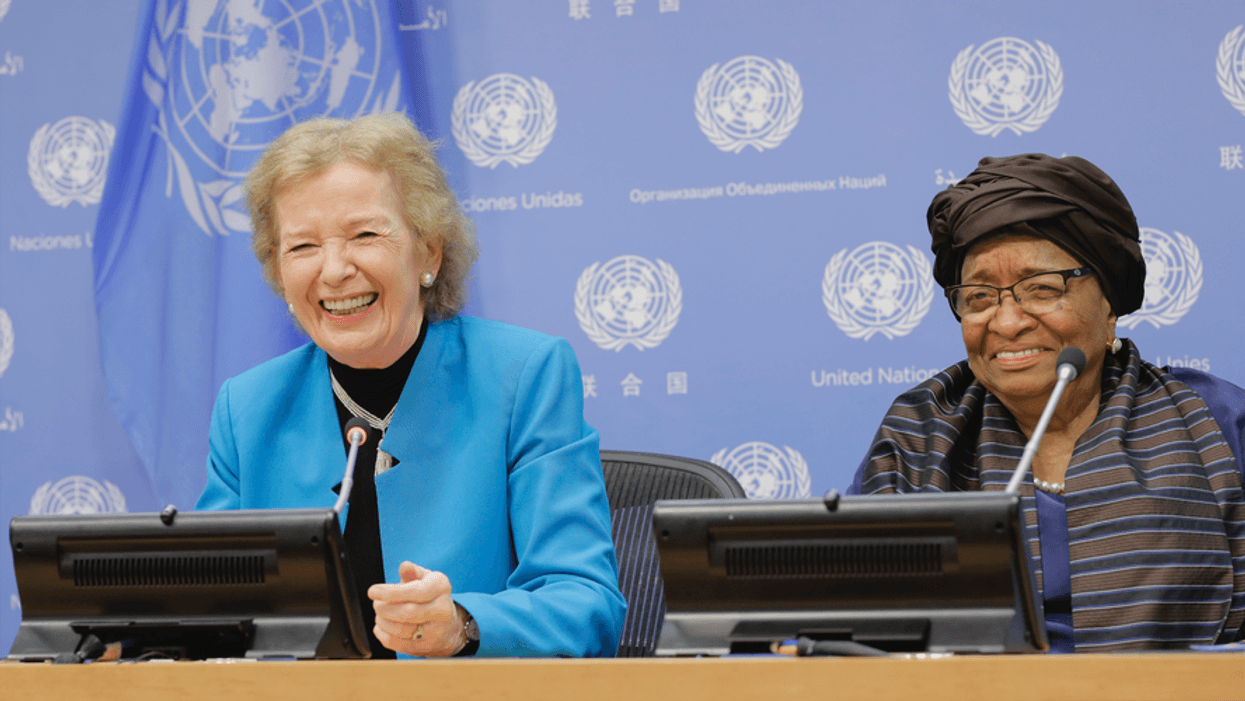
In a statement, the organization founded by the late South African President Nelson Mandela revealed that two of its members, former Irish Prime Minister Mary Robinson and former New Zealand Prime Minister Helen Clark, recently visited the Rafah border crossing in Egypt that is formerly a key entry point for humanitarian aid to be delivered into Gaza that has now become only a trickle.
Robinson and Clark said that the situation in Gaza was dire and they accused the Israeli government of overseeing "human-caused famine in Gaza" as well as "an unfolding genocide." They then outlined evidence that Israel was responsible for the catastrophe going on inside the territory.
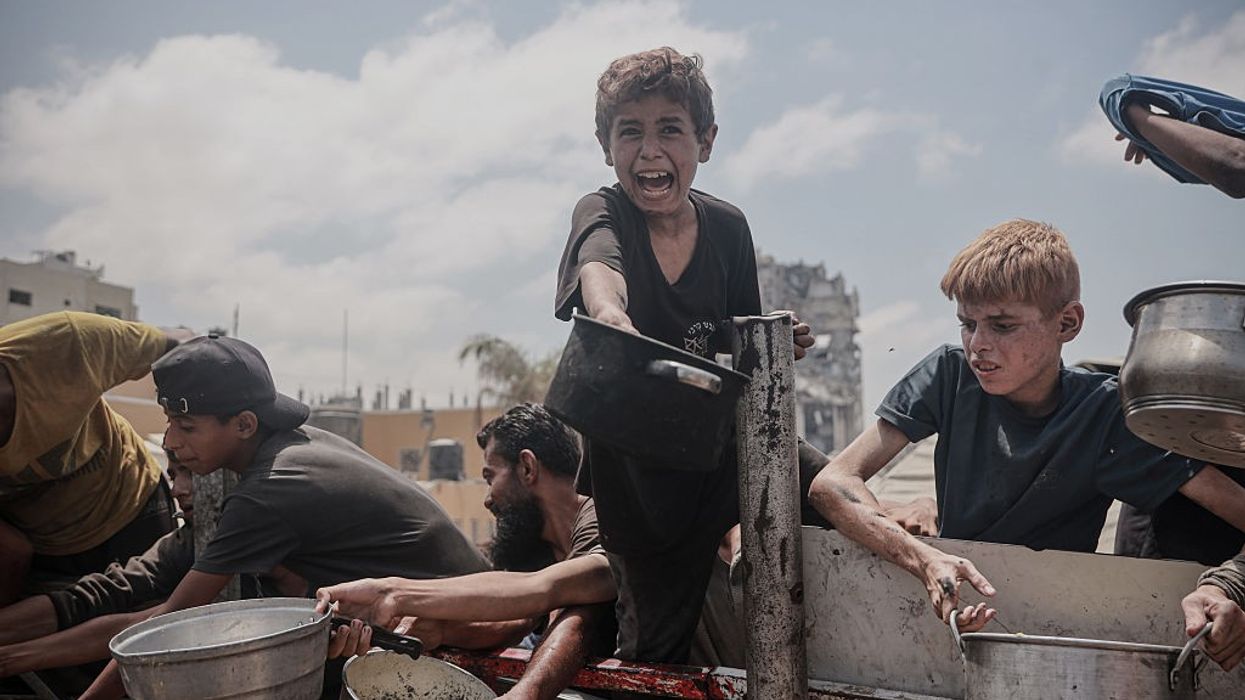
"We saw evidence of food and medical aid denied entry, and heard witness accounts of the killing of Palestinian civilians, including children, while trying to access aid inside Gaza," they said. "The deliberate destruction of health facilities in Gaza means children facing acute malnutrition cannot be treated effectively. At least 36 children starved to death just in the month of July."
Robinson and Clark also noted that no shelter materials have been allowed into Gaza since this past March, and they added that "we saw huge numbers of tents ready for delivery but blocked by the Israeli authorities."
The two leaders called for cease-fire talks to begin immediately between Israel and Hamas, while also specifically calling for Hamas to release any remaining hostages it kidnapped during its October 7, 2023 attack on Israel. They also recommended that arms sales to Israel be "suspended immediately" and that "targeted sanctions should be imposed on Prime Minister Netanyahu and all members of his security cabinet."
They also chided other nations for maintaining economic relations with Israel even as starvation unfolds in Gaza.
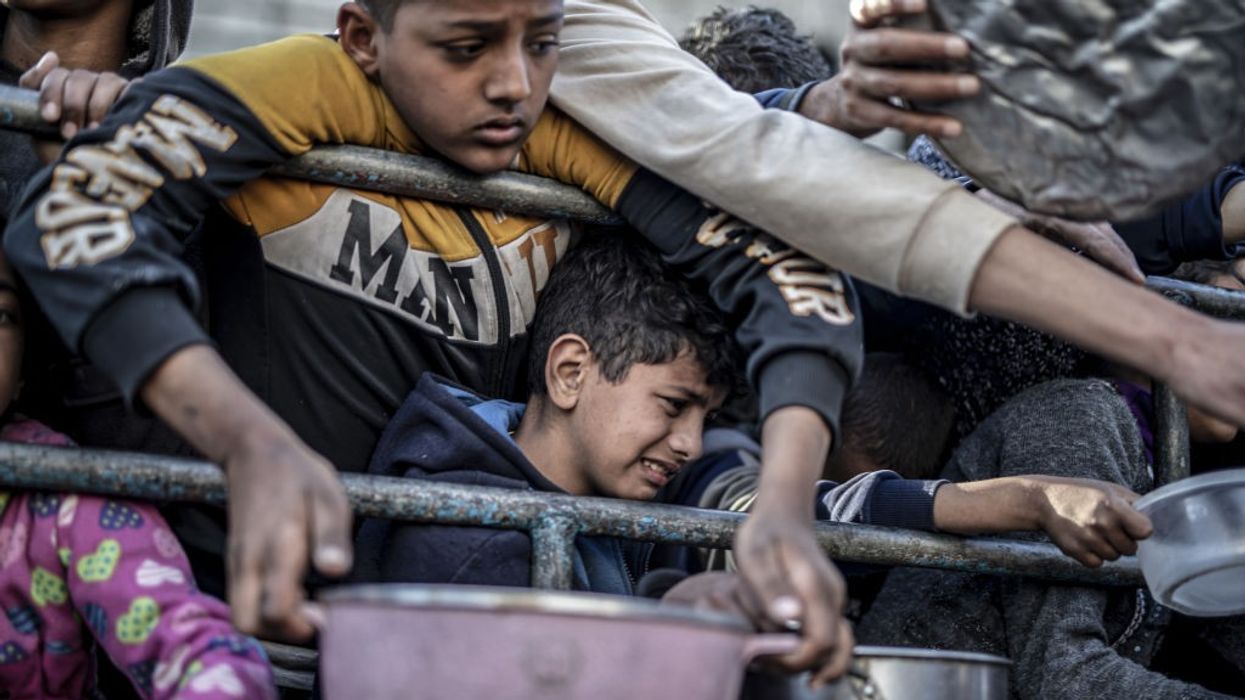
"The uncomfortable truth is that many states are prioritizing their own economic and security interests, even as the world is reeling from the images of Gazan children starving to death," they said.
The Elders' call for action comes on the same week that the Gaza Health Ministry announced that the number of children in Gaza who have died from severe hunger has passed 100, with the vast majority of such deaths occurring over the last three weeks.
Additionally, international charity Save the Children last week said that 43% of pregnant and breastfeeding women who showed up to its clinics in Gaza last month were malnourished, which represented a threefold increase since March, when the Israeli military imposed a total siege on the area.
To step back from the precipice we are at, those in positions of power must show long-view leadership to build a better world for current and future generations. But time is running out.
Note: At the conclusion of their board meeting in São Paulo, The Elders this week called on world leaders to uphold international law and prioritize multilateral cooperation to build a better world for current and future generations. The following was their message to those leaders and the world at large.
The world stands on the edge of a precipice. The foundations of international law and multilateral cooperation are at serious risk of collapse due to cumulative failures of political leadership. We face the most perilous moment since the Second World War.
The United Nations and other institutions created to promote the stability and accountability that come through the rule of law are under attack. The growing climate of impunity for states and leaders, who show no respect for the principles on which they were founded, may take us to a point of no return.
The principles of the UN Charter risk being subsumed by aggressive nationalism and great power rivalry. This is not in any state’s long-term interest, given the existential threats to humanity that can only be tackled by global cooperation within a framework of agreed rules.
The rule of law must be applied consistently. Double standards allow autocrats to frame the universal values of human rights and international law enshrined in the UN Charter as Western constructs. They are not. They serve the interests of every country.
International law must be applied universally. No country is above the law. But the double standards being displayed by some states, particularly the most powerful, weaken the credibility of global institutions charged with upholding the rule of law.
Russia’s war on Ukraine remains an act of aggression against a sovereign state and a fundamental attack on the UN Charter with global ramifications. Russian leaders must be held accountable. We support the International Criminal Court’s (ICC) efforts to bring them to justice.
The ICC and the International Court of Justice are both fulfilling their mandates to hold parties in the Israel-Hamas conflict to account under international law.
We oppose any attempts to de-legitimize this work, and threats of punitive measures and sanctions against the ICC Prosecutor or other officials.
The rule of law must be applied consistently. Double standards allow autocrats to frame the universal values of human rights and international law enshrined in the UN Charter as Western constructs. They are not. They serve the interests of every country.
The crumbling of the international order can be seen in the proliferation of conflicts, neglected by the world’s leaders and media, affecting 2 billion people in countries including Myanmar, Sudan, the Democratic Republic of Congo and Haiti.
The failure last week to agree a new pandemics treaty for approval by the World Health Assembly is another example of weak leadership. Scientists are clear that we risk another lethal pandemic. The world has not learned the lessons from COVID-19. We urgently need leaders to engage directly to secure a global agreement to prepare for, prevent and respond to such pandemics, so the world can cope better next time.
With vital negotiations approaching on the future of the world’s climate and biodiversity, countries must have confidence that when they make agreements with each other, those commitments will be implemented.
Now is the time for leaders to be honest with their people. The unpredictability and instability that comes when the rule of law is not guaranteed threatens the security of all countries. In a year of multiple elections, citizens also have a responsibility to cast their vote wisely, choosing leaders who take a longer view of protecting their interests, and rejecting populists who exploit fears and foster division for short-term gain.
As we conclude our board meeting in Brazil, we look to the country’s leadership to seize the opportunities presented by November’s G20 Summit and the major climate conference (COP30) in 2025, to work with other countries on restoring the credibility of the multilateral system and the trust which underpins it.
To step back from the precipice we are at, those in positions of power must show long-view leadership to build a better world for current and future generations. But time is running out to strengthen the institutions that make possible the collaboration needed to do so.
The Elders are:
Mary Robinson, former President of Ireland and Chair of The Elders
Ban Ki-moon, former UN Secretary-General and Deputy Chair of The Elders
Graça Machel, Founder of the Graça Machel Trust, Co-founder and Deputy Chair of The Elders
Gro Harlem Brundtland, former Prime Minister of Norway and former Director-General of the WHO
Helen Clark, former Prime Minister of New Zealand and former head of the UN Development Programme
Elbegdorj Tsakhia, former President and Prime Minister of Mongolia
Zeid Ra'ad Al Hussein, former UN High Commissioner for Human Rights
Hina Jilani, Advocate of the Supreme Court of Pakistan and co-chair of the Taskforce on Justice
Denis Mukwege, physician and human rights advocate, Nobel Peace Laureate
Ellen Johnson Sirleaf, former President of Liberia and Nobel Peace Laureate
Juan Manuel Santos, former President of Colombia and Nobel Peace Laureate
Ernesto Zedillo, former President of Mexico
In his meetings with the U.S. leader, Ireland's prime minister must "make it clear that Israel depends on the United States for military aid and for money," said Robinson, a former Irish president.
The Elders chair Mary Robinson on Friday highlighted the unique leverage that the United States has with Israel and suggested that the Biden administration should stop giving the Middle Eastern nation military assistance for its assault on the Gaza Strip.
Robinson, the former president of Ireland, conducted an on-camera interview with Irish public broadcaster Raidió Teilifís Éireann just before her country's prime minister, Taoiseach Leo Varadkar, met with U.S. President Joe Biden at the White House.
"Yes the humanitarian situation is utterly catastrophic and dire, reducing a people to famine, undermining all our values, but the message I want to deliver on behalf of the Elders is a direct message to our Taoiseach Leo Varadkar," Robinson said.
"We need a cease-fire and we need the opening up of Gaza with every avenue... for aid to get in."
In his meeting with Biden, Varadkar "should not spend too much time on the dire humanitarian situation, and the ships, and the rest of it," she asserted. "He has the opportunity to deliver a political message in a very direct way. The United States can influence Israel by not continuing to provide arms. It has provided a lot of the arms... that have been used on the Palestinian people."
Since Israel declared war in response to the Hamas-led attack on October 7, Israeli forces have killed at least 31,490 people in Gaza—including people seeking food aid—and injured another 73,439. The assault has also devastated civilian infrastructure, including homes, hospitals, schools, and mosques, and displaced the vast majority of the enclave's 2.3 million residents.
Israel is also restricting desperately needed humanitarian aid into the Hamas-governed territory, and Palestinians have begun starving to death—which people around the world point to as further proof that the Israeli government is defying an International Court of Justice (ICJ) order to prevent genocidal acts as the South Africa-led case moves forward at The Hague.
The United States gives Israel $3.8 billion in annual military aid, and since October 7, Biden—who faces a genocide complicity case in federal court—has fought for another $14.3 billion while his administration has repeatedly bypassed Congress to arm Israeli forces. Critics, including some lawmakers, argue that continuing to send weapons to Israel violates U.S. law.
The far-right government of Israeli Prime Minister Benjamin Netanyahu "is on the wrong side of history, completely—is making the United States complicit in reducing a people to famine, making the world complicit," Robinson told RTÉ. "We're all watching. It is absolutely horrific what is happening."
Elders’ Chair Mary Robinson says President Biden should not continue to provide arms to Israel.
“The United States can influence Israel by not continuing to provide arms… The Government of Prime Minister Netanyahu is on the wrong side of history, completely. It’s making the… pic.twitter.com/fN3ptMjktz
— The Elders (@TheElders) March 15, 2024
"So Leo Varadkar has access today to President Biden," she said. "He must use this completely politically at all levels with the speaker of the House, with everyone, to make it clear that Israel depends on the United States for military aid and for money. That's what will change everything."
"We need a cease-fire and we need the opening up of Gaza with every avenue... for aid to get in, because the situation's so bad, and we need the political way forward, which is the two-state solution," she added. "So we need an Israeli government agreeing to that, and only the United States can put the pressure [on Israel]."
Robinson, who spent five years as the United Nations high commissioner for human rights after her presidency ended in 1997, has been part of the Elders since Nelson Mandela, the late anti-apartheid South African president, announced the group in 2007.
She has made multiple statements during the five-month Israeli assault on Gaza, including calling on Israel to comply with the ICJ's January ruling and warning Biden the previous month that his "support for Israel's indiscriminate bombing of Gaza is losing him respect all over the world."
"The U.S. is increasingly isolated, with allies like Australia, Canada, India, Japan, and Poland switching their votes in the U.N. General Assembly to support an immediate humanitarian cease-fire," she said in December. "The destruction of Gaza is making Israel less safe. President Biden's continuing support for Israel's actions is also making the world less safe, the Security Council less effective, and U.S. leadership less respected. It is time to stop the killing."
US President Joe Biden and Irish Prime Minister Leo Varadkar pledged to work to secure a ceasefire in the Israel-Hamas conflict as the humanitarian crisis in Gaza cast a shadow on the annual St. Patrick's Day reception at the White House https://t.co/gQBGDZZ4Ud pic.twitter.com/QGEPSzOk2G
— Reuters (@Reuters) March 15, 2024
Speaking to press at the Oval Office alongside Biden on Friday, Varadkar
said that he was "keen to talk about the situation in Gaza," and noted his view "that we need to have a cease-fire as soon as possible to get food and medicine in" to the besieged territory.
"On Sunday, the taoiseach will also gift Mr. Biden a bowl of shamrock as part of an annual tradition to mark St Patrick's Day," RTÉ reported Friday. "Mr. Varadkar started the trip on Monday, and since then has spoken several times... about how he will use the special platform of the St Patrick's Day visit to press Mr. Biden to back a cease-fire in the Gaza, while also thanking the U.S. for leadership in support for Ukraine."
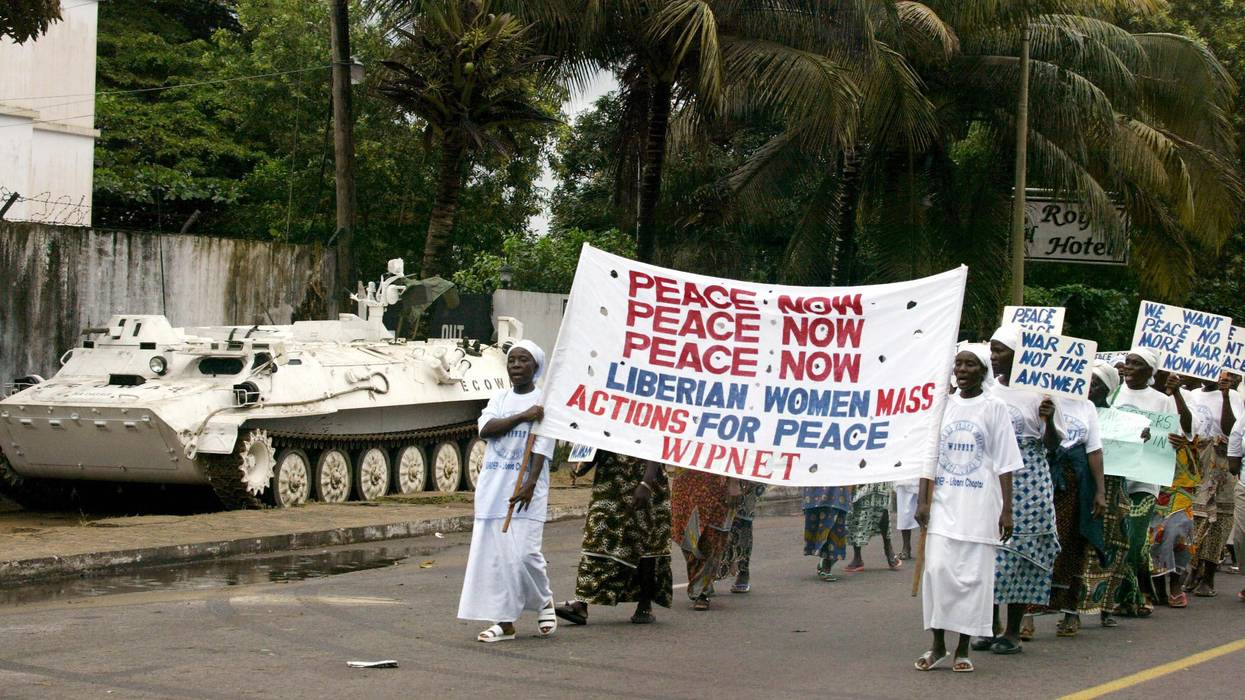
"Women and girls are often the first responders to the world's crises," said one women's rights leader. "Their voice matters in peace-building."
As communities and governments around the world marked International Women's Day on Wednesday, the need to include women in peace negotiations and place the needs of women and girls at the center of peace-building was a key theme of discussions at the United Nations Security Council.
The council met Tuesday to address the status of a resolution adopted nearly 23 years ago in October 2000, when international policymakers agreed on "the important role of women in the prevention and resolution of conflicts, peace negotiations, peace-building, peacekeeping, humanitarian response, and in post-conflict reconstruction."
The current state of Resolution 1325, said Sima Bahous, executive director of U.N. Women, shows that the world is in need of "a radical change of direction" regarding gender equality.
Bahous noted that days after the security council met in 2020 to mark the 20th anniversary of the resolution, a conflict broke out in the Tigray region of Ethiopia. During two years of fighting, sexual violence was "committed at a staggering scale," and child marriage increased by 51%.
"Since the 20th anniversary," Bahous said, "there have been several military coups in conflict-affected countries, from the Sahel and Sudan to Myanmar, dramatically shrinking the civic space for women's organizations and activists, if not altogether closing it."
"Women's participation increases the probability of a peace agreement lasting at least two years by 20%, and by 35% the probability of a peace agreement lasting 15 years."
Women and girls also make up 90% of the nearly eight million Ukrainians who have been forced to flee to other countries since Russia invaded Ukraine in February 2022, and 68% of those who are internally displaced.
While the suffering of women and girls has been central to these conflicts, women were "excluded from 80% of peace negotiations from 2005 to 2020," Bahous said, adding, "We have neither significantly changed the composition of peace tables, nor the impunity enjoyed by those who commit atrocities against women and girls."
In a 2015 report on implementation of Resolution 1325, U.N. Women showed that the agreement led to "a substantial increase in the frequency of gender-responsive language in peace agreements and the number of women, women's groups, and gender experts who serve as official negotiators, mediators, or signatories."
Women's inclusion is frequently temporary and "more symbolic than substantive," according to the report, failing to lead to "a shift in dynamics, a broadening of the issues discussed."
An analysis of 40 worldwide peace agreements since the end of the Cold War showed that negotiators had a much higher chance of reaching a deal "in cases where women were able to exercise a strong influence on the negotiation process."
"Women's participation increases the probability of a peace agreement lasting at least two years by 20%, and by 35% the probability of a peace agreement lasting 15 years," the U.N. Women report reads.
Evidence of the importance of women's involvement in peace processes "is there staring us in the face," said Lord Tariq Ahmad of Wimbledon, the United Kingdom's minister of state for the Middle East, North Africa, South Asia, and the United Nations.
"This council, this security council, knows that mediation, conflict prevention, and resolution have proven more successful time and time again when they are inclusive," said Ahmad. "They work better. They last longer when women are central to peace and building progressive societies... Yet it is an undeniable fact. Here we sit in 2023 and we are seeing tragically, a stagnation of the women, peace, and security agenda and a regression in women's rights around the world."
Former Colombia President Juan Manuel Santos has spoken frequently about the inclusion of women in peace talks in his country following decades of civil war, leading to a section of the peace accords that ensures women will receive specific benefits post-conflict in recognition of the disproportionate effects war has on women and girls.
"The participation of women at the formal negotiating table and within the wider peace process has been a crucial aspect of the journey towards peace in Colombia," said Santos on Monday, in a statement he made as a member of The Elders, a group of global leaders working for peace.
"But the task of women peace-builders is not an easy one," Santos added. "All too often, they face threats and denigration from within their own communities. It is incumbent on political leaders, governments and international organizations to recognize and defend their role, and put the necessary measures in place to ensure their safety and security."
Former Liberian President Ellen Johnson Sirleaf, another Elder, said that "women and girls are often the first responders to the world's crises, working across the dividing lines of conflict."
While Colombia's peace negotiations centered women, Bineta Diop, the African Union Commission's special envoy on women, peace, and security, reported that many women in African countries experiencing conflict "are engaged in the community and peace-building initiatives," but "their voice is yet to be heard in peace negotiations and mediation where roadmaps to return to peace are drawn."
Bahous suggested the security council change direction with "mandates, conditions, quotas, funding earmarks, incentives, and consequences for non-compliance."
"We cannot expect 2025 to be any different," she said, "if the bulk of our interventions continue to be trainings, sensitization, guidance, capacity building, setting up networks, and holding one event after another to talk about women's participation, rather than mandating it in every meeting and decision-making process in which we have authority."
As the climate movement vowed Monday to "rise up" after a new United Nations report signaled a "code red for humanity," activists and experts highlighted the specific policies and actions that decision-makers must now take to prevent the most catastrophic impacts of "unprecedented" global heating--particularly a prompt end to fossil fuels.
"The exigency of this situation must not lead us to despair, rather it should propel us into action."
--Mary Robinson, The Elders
The Intergovernmental Panel on Climate Change (IPCC) report on the the physical science of the human-caused climate emergency--which comes during a summer of devastating drought, fires, floods, and heatwaves--shows the world is rapidly running out of time to take the steps necessary limit global temperature rise this century to the Paris agreement's goal of 1.5degC.
"The latest IPCC report confirms what we already know: It is time to act on climate," declared Matt Casale, environment campaigns director at U.S. PIRG. "We're already seeing the impacts of global warming, and they're already taking a human toll."
Noting the deadly heat that struck the Pacific Northwest earlier this year and mounting fears about the destruction this Atlantic hurricane season could bring, Casale said that "as the new IPCC report makes clear, these events will only get worse if we fail to act."
"But as bad as it might sound, this is not a report to despair over. Because while the consequences of inaction would be catastrophic, there is no reason we still can't avoid the worst of it," he added. "The solutions are at our fingertips."
Morgan Folger, Environment America's Destination: Zero Carbon campaign director, echoed Casale's call for focusing on known solutions.
"There is no single act that will save the world from climate change, but working together we can spark shifts across our society that will reduce harmful planet-warming pollution and help us lead healthier lives," she said. "Rather than despairing over what we could lose, let's focus on what we stand to gain by getting to work for a better future."
Though there isn't a quick fix for driving down greenhouse gas (GHG) emissions to the degree that scientists say is necessary, there is widespread agreement that a rapid shift away from fossil fuels is the most significant step the world can take to save lives and ensure a habitable planet.
As the advocacy group 350.org put it in a tweet about the IPCC's latest findings: "We have the solutions to prevent further harm to people and the planet--it's time to implement them. We must start by putting an immediate end to fossil fuels."
Ending the extraction and use of fossil fuels means transitioning more than just global power systems. Casale explained that "we have to end our reliance on fossil fuels and transition to clean renewable energy, electrified transportation systems, and carbon-free buildings."
That kind of transformation requires ambitious, coordinated global action.
The IPCC report is the first of a three-part assessment, and the only piece that will be finalized before parties to the Paris agreement come together in Glasgow, Scotland beginning October 31 for the two-week U.N. climate summit known as COP 26.
"This is a rallying cry," Mim Black from the civil society COP 26 Coalition said of the report. "This November, the people will be out in force. We will challenge governments' and corporations' green rhetoric, empty promises, and downright hypocrisy. Thousands will take to the streets in Glasgow and across the world to demand urgent and meaningful action is finally taken, which holds big polluters to account while looking after those least responsible for this crisis."
350 Africa, in a statement, addressed the latest inadequate emissions reduction plans that governments have unveiled ahead of the summit:
The IPCC are showing us that the midcentury net-zero pledges being loudly celebrated by governments, businesses, and oil companies are not going to be enough to change this trajectory. We need decisive action within this decade, if we want to have a chance to keep the planet from warming above 1.5degC. Today's report shows that we must urgently phase out fossil fuels, provide workers with green and sustainable jobs, and deliver financial support for impacted communities as a top priority.
As governments prepare to meet in Glasgow for the COP 26 climate talks, they need to recognize that no climate plan that does not include phasing out fossil fuels is a real climate plan.
Inger Andersen, executive director of the U.N. Environment Program, pointed out that just 110 of 191 parties to Paris have submitted new or updated pledges, officially nationally determined contributions (NDCs). She also emphasized the need to go beyond ending fossil fuels.
"Governments need to make their net-zero plans an integral part of their Paris commitments," Andersen said. "They must finance and support developing countries to adapt to climate change, as promised in the Paris agreement. They must decarbonize faster. Restore natural systems that draw down carbon. Cut out methane and other greenhouse gases faster. Get behind the Kigali Amendment to the Montreal Protocol to cut the climate impact of the cooling industry. And every business, every investor, every citizen needs to play their part."
"Leaders must show they understand the seriousness of the science and turn in stronger national commitments ahead of the COP 26 climate talks this November," said Mary Robinson, chair of the Elders and former Irish president. "The big question leaders must reckon with in Glasgow is whether these plans add up to what is needed--and if not, how they will close the remaining gap."
"The exigency of this situation must not lead us to despair, rather it should propel us into action," she added. "To those who seek to argue that it's too hard, or too late, and so not worth trying--the report is a reminder that every fraction of a degree of warming really does matter."
While expressing hope that "COP 26 delivers the necessary commitments to protect our rights and our planet from climate catastrophe," EarthRights International executive director Ka Hsaw Wa highlighted that the report was released on International Day of the World's Indigenous Peoples and confirms "what Indigenous and frontline communities experiencing the worst effects of the climate crisis have been telling the world for years."
"From land grabs in Latin America and Southeast Asia to the Line 3 pipeline in Minnesota," he also said, "we see fossil fuel projects continuing to undermine human rights worldwide, particularly those of Indigenous and ethnic minority communities."
Ka Hsaw Wa implored U.S. President Joe Biden "to take this moment to realize the United States' significant contributions to the climate crisis and reassess our addiction to fossil fuels and unnecessary fossil fuel infrastructure projects." He further called on the president "to reject Line 3 and any provisions in the new infrastructure bill that would allow fossil fuel corporations to access millions of dollars in subsidies."
"The latest IPCC report confirms what communities on the frontlines of fighting big polluters already know," said Miya Yoshitani, executive director of Asian Pacific Environmental Network.
Yoshitani, who also serves on the Climate Justice Alliance board and White House Environmental Justice Advisory Committee, explained that "we need bold, community-led solutions that meet the scale of the climate crisis, not failed market-based schemes that allow big polluters to pump more poison into our communities and further destabilize our climate."
Implementing such solutions--as Jill Tauber, Earthjustice's vice president of litigation for climate and energy, noted Monday--requires legislative action.
"President Biden, Congress, and leaders at every level must take bold action now to move towards a zero-emissions and 100% clean energy economy that works for everyone," Tauber said. "That means passing legislation that centers environmental justice, cleans up pollution, and invests in climate solutions. We must put an end to dangerous fossil fuel projects that threaten communities and lock us into decades of more greenhouse gas emissions."
The report comes as the White House and Congress are working on both a bipartisan infrastructure bill and a broader $3.5 trillion budget reconciliation package that Democrats plan to send to Biden's desk without any Republican support.
"This latest IPCC report must be a wake-up call for Biden and Congress that the half measures they've proposed are not nearly enough to end the climate crisis," Varshini Prakash, executive director of the youth-led Sunrise Movement, said in a statement.
"In the coming months, Biden and Congress have the chance to pass historic legislation that could begin the decade of the Green New Deal. If Biden really wants to be a world leader on climate, he'll heed this call and pass the boldest reconciliation bill possible," she added. "Anything less than delivering the full scope of climate action in reconciliation is ignoring science, ignoring the IPCC report, and failing our generation."
The movement calls for a reconciliation package that includes a fully funded Civilian Climate Corps (CCC); significant spending on public housing, schools, transit, and renewable energy; worker protections from the PRO Act; major investments in frontline communities; and an end to fossil fuel subsidies.
As Extinction Rebellion highlighted Monday, the U.S. government isn't alone in needing to cut off subsidies to the world's polluters.
"This report tells us, in dramatic fashion, what we already know: Governments have failed thus far to do much of anything to address climate change," asserted Food & Water Watch policy director Mitch Jones, who specifically took aim at the Biden administration and Congress.
"Our political leaders must immediately demonstrate that they are serious by working to enact policies that stop all forms of fossil fuel extraction while making massive, necessary investments in clean, renewable energy," he said. "Inadequate technologies like carbon capture and net-zero accounting gimmicks are not going to cut it."
Pointing out that the report flags "the immense damage currently being done to our climate by methane emissions, most notably from oil and gas fracking," Jones added that the current U.S. administration "could immediately show its commitment to taking this crisis seriously by halting approval for any new fracking on federal lands--a pledge made during the campaign that Biden has yet to make good on."
Some politicians also responded to the IPCC report by calling out the U.S. government for inadequate action on the climate emergency.
Sen. Ed Markey (D-Mass.)--a leader on key progressive climate legislation including the Green New Deal Resolution, a CCC bill, and the THRIVE Act--declared that "if senators truly followed the science in this report, we'd have 100 votes for climate action to match the 100% certainty that human-caused climate change is destroying our planet."
"This IPCC report reaffirms what we are seeing and suffering right now across our country," he said. "Previous IPCC reports should have been roadmaps for action... This report must be the final warning to the world that time has run out to save the planet from dangerous and irreversible climate change."
"With that said, we can't agonize--we must organize, just like the young people across the country and world who are demanding action from their leaders," Markey added. "With policies to drive deep cuts in emissions, protect communities from climate impacts, and provide equity and justice to overburdened communities, we can respond to overwhelming evidence and take the necessary action to save our people and our planet."
This post has been updated with the IPCC's proper name.
A group of prominent former world leaders on Thursday expressed "deep concern" over President Donald Trump's refusal to concede defeat to President-elect Joe Biden in the U.S. presidential election, warning that his failure to do so is "putting at risk the functioning of American democracy."
The Elders--a group that includes numerous former heads of state and government, as well as cabinet ministers, diplomats, activists, two former United Nations secretaries-general, and seven Nobel Peace Prize recipients--issued a statement decrying the "continued assertions of electoral fraud" by Trump, leading members of his administration, and the Republican Party.
"Continued baseless accusations of subversion risk further deepening the instability and polarization in American society, and eroding public faith in institutions that is the bedrock of democratic life."
--The Elders
Such allegations lack "any compelling evidence" and "convey a lack of respect for the integrity and independence of the democratic and legal institutions of the United States," the group said.
Warning of "far-reaching consequences beyond the United States' borders," The Elders said "those who stand to benefit from the current impasse are autocratic rulers and malign actors who wish to undermine democracy and the rule of law across the world."
"Notwithstanding any continuing legal challenges, President Trump should follow the example set by his predecessors and declare himself willing to accept the verdict cast by the American people at the ballot box," the group added. "The executive powers available to the president until his successor assumes office... should be used judiciously in the interests of the whole United States, rather than for partisan gain."
"Continued baseless accusations of subversion risk further deepening the instability and polarization in American society, and eroding public faith in institutions that is the bedrock of democratic life," it warned.
Mary Robinson, chair of The Elders and a former Irish president, added: "It is shocking to have to raise concerns about U.S. democratic processes as The Elders have previously commented on volatile and undemocratic situations in states such as Kenya, Sri Lanka, and Zimbabwe."
"President Trump's refusal thus far to facilitate a smooth transition weakens democratic values," stressed Robinson. "His fellow Republicans must now affirm their faith in the U.S. Constitution, democratic institutions, and the rule of law, so the country can begin a process of reconciliation."
This is the second time The Elders have weighed in on the U.S. presidential election this week. On Monday, the group released a statement congratulating Biden and Vice President-elect Kamala Harris on their victory and expressing hope that "the incoming administration, as well as seeking to unite a divided country, will seize the opportunity to renew America's commitment to the multilateral system at a time when U.S. leadership is urgently needed."
"This includes taking a leading role in efforts to keep global temperature rises to 1.5 degrees Celsius by recommitting the U.S. to the Paris climate agreement, supporting global collaboration on tackling Covid-19 by reversing plans to withdraw funding for the World Health Organization, and prioritizing the strengthening of nuclear arms controls," the statement said.
Created in 2007 by anti-apartheid activist, Nobel Peace Laureate and former South African President Nelson Mandela, The Elders works to promote "a world where people live in peace, conscious of their common humanity and their shared responsibilities for each other, for the planet, and for future generations."
Current members include former U.N. Secretary General Ban Ki-moon, former Mexican President Ernesto Zedillo, and former Liberian President and Nobel Peace Laureate Ellen Johnson Sirleaf. Among the group's former members are four Nobel Peace Prize recipients: former U.S. President Jimmy Carter, South African archbishop and anti-apartheid activist Desmond Tutu, former U.N. Secretary-General Kofi Annan, and former Finnish President Martti Ahtisaari.