
SUBSCRIBE TO OUR FREE NEWSLETTER
Daily news & progressive opinion—funded by the people, not the corporations—delivered straight to your inbox.
5
#000000
#FFFFFF
To donate by check, phone, or other method, see our More Ways to Give page.


Daily news & progressive opinion—funded by the people, not the corporations—delivered straight to your inbox.
Climate scientist Daniel Swain called it "a deliberate effort to misinform."
The Trump administration has removed all references to human-caused climate change from Environmental Protection Agency webpages, as well as large amounts of data showing the dramatic warming of the climate over recent decades and the resulting risks.
According to a Tuesday report from the Washington Post, one page on the "Causes of Climate Change" stated as recently as October that "it is unequivocal that human influence has warmed the atmosphere, ocean, and land," a statement that reflects the overwhelming consensus in peer-reviewed literature on climate.
That statement is now nowhere to be found, with those that remain only mentioning "natural" causes of planetary warming like volcanic activity and variations in solar activity.
"The new, near-exclusive emphasis on natural causes of climate change on the EPA's website is now completely out of sync with all available evidence demonstrating overwhelming human influence on contemporary warming trends," explained Daniel Swain, a climate scientist at the University of California Agriculture and Natural Resources, who posted about the changes on social media.
The Intergovernmental Panel on Climate Change (IPCC), which examines tens of thousands of studies from around the globe, found that virtually all warming since the dawn of the industrial era can be attributed to human carbon emissions.
This can be confirmed using the Wayback Machine's last snapshot (from Oct 8, 2025). At some point between Oct 8 & Dec 8, major changes were made to this and other EPA climate change content. Information has either been removed completely or "adjusted" to emphasize natural causes.
[image or embed]
— Daniel Swain (@weatherwest.bsky.social) December 8, 2025 at 12:50 PM
Pages about the catastrophic results of climate change have also been scrubbed: One of them allowed users to view several climate change indicators, like the historic decline of Arctic sea ice and glaciers and the increased rates of coastal flooding due to rising sea levels. That page has been deleted entirely.
Another page, which answered frequently asked questions about climate change, now no longer includes questions like, "Is there scientific consensus that human activities are causing today’s climate change?” "How can people reduce the risks of climate change?" and "Who is most at risk from the impacts of climate change?" The page provides no indication that climate change is a human-caused phenomenon, instead only discussing natural factors.
That page links to another that has since been deleted. It once provided extensive information about the risks climate change poses to human health, "from increasing the risk of extreme heat events and heavy storms to increasing the risk of asthma attacks and changing the spread of certain diseases carried by ticks and mosquitoes." Another deleted page discussed the impacts of climate change on children's health and low-income populations.
“This is, I think, one of the more dramatic scrubbings we’ve seen so far in the climate space,” said Swain. "This website is now completely incorrect regarding the changes in climate that we’re seeing today and their causes... It’s clearly a deliberate effort to misinform.”
During his 2024 campaign for reelection, President Donald Trump and his affiliated super political action committees received more than $96 million in direct contributions from oil and gas industry donors, according to a January report from Climate Power. Since retaking office, he has moved to dramatically expand the extraction and use of planet-heating fossil fuels while eliminating investment in clean energy and electric vehicles.
Rachel Cleetus, senior policy director for the Climate and Energy Program at the Union of Concerned Scientists, said, "Deleting and distorting this scientific information only serves to give a free pass to fossil fuel polluters who are raking in profits even as communities reel from extreme heatwaves, record-breaking floods, intensified storms, and catastrophic wildfires."
Cleetus said that the purging of climate information from EPA sites was a prelude to "the likely overturning of the endangerment finding, a legal and scientific foundation for standards to limit the heat-trapping emissions driving climate change and threatening human health."
In July, EPA Administrator Lee Zeldin unveiled a proposal to rescind the 2009 finding, which determined that climate change endangers human life and serves as the legal basis for greenhouse gas regulations under the Clean Air Act.
Undermining climate science is core to that effort, which Andrew Dessler, a climate scientist at Texas A&M, said at the time, "could unravel virtually every US climate regulation on the books, from car emissions standards to power plant rules.”
Shortly after Zeldin announced the rule change, the Department of Energy cobbled together a “Climate Working Group” comprising five authors handpicked by Secretary Chris Wright to produce a climate report that disputes the IPCC's findings and the scientific consensus on climate change.
The report did not undergo peer review and omitted around 99% of the scientific literature the IPCC relied on for its comprehensive findings. A group of climate scientists that independently reviewed the paper found that it “exhibits pervasive problems with misrepresentation and selective citation of the scientific literature, cherry-picking of data, and faulty or absent statistics.”
Cleetus said Tuesday that “EPA is trying to bury the evidence on human-caused climate change, but it cannot change the reality of climate science or the harsh toll climate impacts are taking on people’s lives... This isn’t just about data on a website; it’s an attack on independent science and scientific integrity.”
One researcher said the findings support calls "for urgent and concrete actions to reduce greenhouse gas emissions and associated warming."
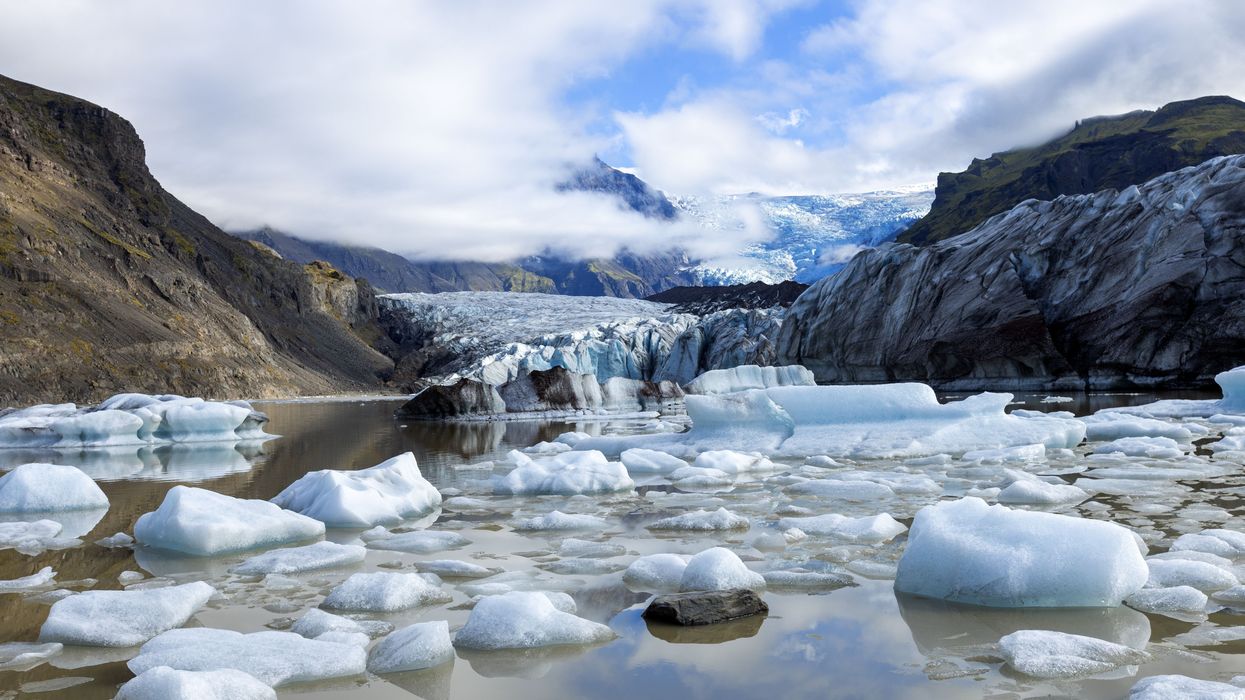
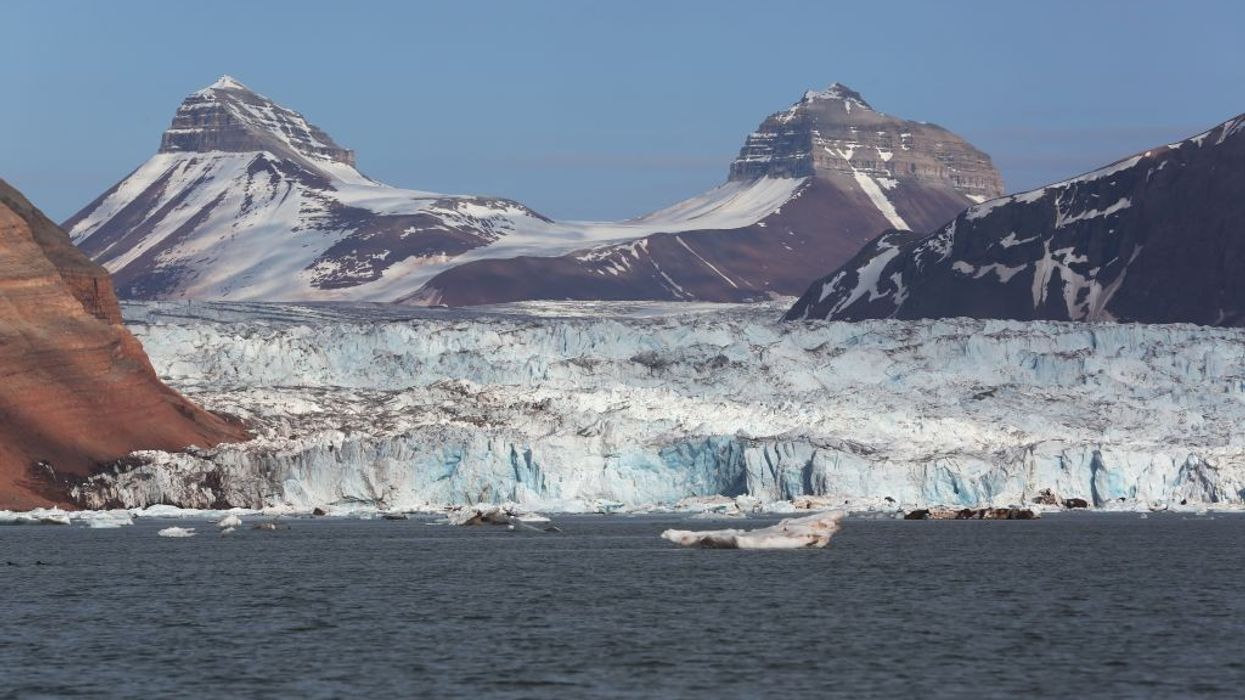
An international science project on Wednesday published a study in the journal Nature showing that glaciers have lost an average of 273 billion metric tons of ice annually since 2000—depleting freshwater resources, driving sea-level rise, and underscoring the need for sweeping global action to significantly reduce planet-heating pollution.
The Glacier Mass Balance Intercomparison Exercise (GlaMBIE) team compiled major studies to estimate global mass change from 2000, when glaciers—excluding Antarctica and Greenland's ice sheets—held about 121,728 billion metric tons of ice, to 2023.
The researchers found that during that period, the world lost 5% of all glacier ice, with regional losses for the full two decades ranging from 2% on the Antarctic and Subantarctic islands, to 39% in Central Europe.
That's a loss of 6,542 billion metric tons total or 273 billion metric tons per year, "the equivalent of three Olympic swimming pools per second," noted France's National Center for Scientific Research (CNRS).
Glaciologist Michael Zemp, who co-led the study, said in a statement that the annual figure "amounts to what the entire global population consumes in 30 years, assuming three liters per person and day."
"Every tenth of a degree warming that we avoid saves us money, saves us lives, saves us problems."
Although the researchers highlighted the annual average, they also emphasized that the rate of glacier ice loss "increased significantly" from 231 billion metric tons annually during the first half of the study period to 314 billion metric tons per year in the second half. In other words, the amount of ice being lost surged by 36% between the two ranges.
Zemp, a professor at Switzerland's University of Zurich and director of the World Glacier Monitoring Service, told Agence France-Presse that the findings are "shocking" and warned that many smaller glaciers "will not survive the present century."
Stephen Plummer, an Earth observation applications scientist at the European Space Agency, said that "these findings are not only crucial for advancing our scientific understanding of global glacier changes, but also provide a valuable baseline to help regions address the challenges of managing scarce freshwater resources and contribute to developing effective mitigation strategies to combat rising sea level."
The ice loss over the GlaMBIE study's full timeline led to about 18 mm or 0.7 inches of sea-level rise. The researchers projected future losses that lead to 32-67 mm, or 1.26-2.6 inches, of sea-level rise by 2040.
"We are facing higher sea-level rise until the end of this century than expected before," Zemp told AFP, referring to the latest projection from the United Nations Intergovernmental Panel on Climate Change (IPCC).
"You have to reduce the greenhouse gas emissions, it is as simple and as complicated as that," Zemp said. "Every tenth of a degree warming that we avoid saves us money, saves us lives, saves us problems."
The GlaMBIE project manager, Samuel Nussbaumer, similarly told Oceanographic that "our observations and recent modeling studies indicate that glacier mass loss will continue and possibly accelerate until the end of this century," which underpins the IPCC's "call for urgent and concrete actions to reduce greenhouse gas emissions and associated warming to limit the impact of glacier wastage on local geohazards, regional freshwater availability, and global sea-level rise."
The team's findings were released during the U.N.'s International Year of Glaciers' Preservation and the Decade of Action for Cryospheric Sciences—and they "will feed into the next IPCC report, due in 2029," according to CNRS.
Scientists from around the world who were not involved with the study were alarmed by its revelations—which come after the hottest year in human history and amid humanity's failure to curb planet-heating emissions, largely from fossil fuels.
Martin Siegert, a professor at the United Kingdom's University of Exeter, said in a statement that "this research is concerning to us, because it predicts further glacier loss, which can be considered like a 'canary in the coal mine' for ice sheet reaction to global warming and far more sea-level rise this century and beyond. The IPCC indicates 0.5-1 meters this century—but that is with a 66% certainty—hence 1/3 chance it could be higher under 'strong' warming, which unfortunately is the pathway we are on presently."
Andrew Shepherd, a professor at Northumbria University, another U.K. institution, explained that "glacier melting has two main impacts; it causes sea-level rise and it disrupts the water supply in rivers that are fed by meltwater."
"Around 2 billion people depend on meltwater from glaciers and so their retreat is a big problem for society—it's not just that we are losing them from our landscape, they are an important part of our daily lives," he said. "Even small amounts of sea-level rise matter because it leads to more frequent coastal flooding. Every centimeter of sea-level rise exposes another 2 million people to annual flooding somewhere on our planet."
"Urgent action is needed now more than ever to prevent a catastrophic ecological collapse," said one campaigner in response to the new research.
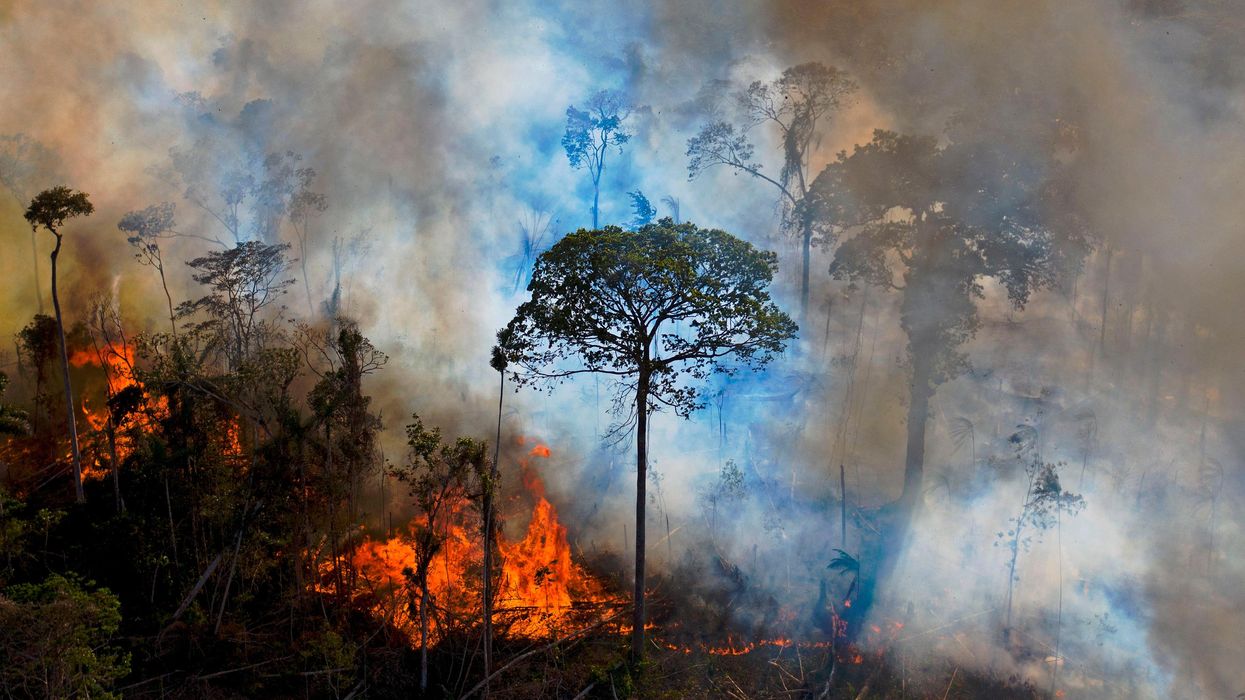
A new study released Thursday warns that international experts may have been overly cautious in their warnings about widespread ecological collapse such as a catastrophic breakdown in the Amazon rainforest, which the Intergovernmental Panel on Climate Change said last year could come by the year 2100.
Scientists at Rothamsted Research and Southampton, Sheffield, and Bangor Universities in the United Kingdom found that as numerous factors such as water stress and pollution from mining compound the degradation of ecosystems in forests and bodies of water, the environments can be pushed toward tipping points more quickly.
The IPCC, suggests the study, which was published in Nature Sustainability, has been issuing its warnings about a tipping point in the Amazon while focusing on just a single factor, such as deforestation or planetary heating. Both of those drivers could interact with other environmental changes and accelerate tipping points such as dieback—in which the rainforest ecosystem would be replaced by one resembling a dry savanna.
"It is not clear whether the IPCC estimate for a tipping point in the Amazon forest before 2100 includes the possibility for interacting drivers and/or noise; if not, our findings suggest that a breakdown may occur several decades earlier," reads the report. "This would occur where local-scale failures in elements (such as species populations, fish stocks, crop yields, and water resources) combine with more extreme events (such as wildfires and droughts) to precondition the large-scale system, already vulnerable to the influence of other large-scale tipping elements, to collapse earlier—a meeting of top-down and bottom-up forces."
The researchers used computer models to assess the potential fates of two lake ecosystems and two forests, allowing for 70,000 adjustments of variables.
In the study, up to 15% of ecological collapses occurred as the result of new events or environmental stressors, even in cases where the primary stress affecting the ecosystem remained at the same level.
At Lake Erhai in southern China, for example, "abrupt lake eutrophication [the presence of excessive nutrients or minerals] was initially perceived to have been driven by transgression of a threshold in nutrient enrichment driven by agricultural runoff but historical analysis has shown that the shift was also affected by lake water-level management, seasonal climate, and fish farming," reads the study.
Because international experts may not have been considering variables such as water resources when they warned that the Amazon is headed for a climate tipping point by the turn of the next century, study co-author Professor Simon Willcock of Rothamsted Research told The Guardian, "We could realistically be the last generation to see the Amazon."
"It could happen very soon," he added.
The scientists said their research shows that even if some aspects of an ecosystem are managed sustainably, preventing stresses including planetary heating and extreme weather events—both being driven by the continued extraction of fossil fuels—is crucial for avoiding tipping points.
"Urgent action is needed now more than ever to prevent a catastrophic ecological collapse," said Tanya Steele, CEO of the World Wildlife Fund in the U.K., in response to the research.
Willcock noted that the study's findings suggest that an accelerated recovery of ecosystems is possible with a multi-pronged approach that would address deforestation, planetary heating, and other stresses.
"Potentially if you apply positive pressure," Willcock told The Guardian, "you can see rapid recovery,"
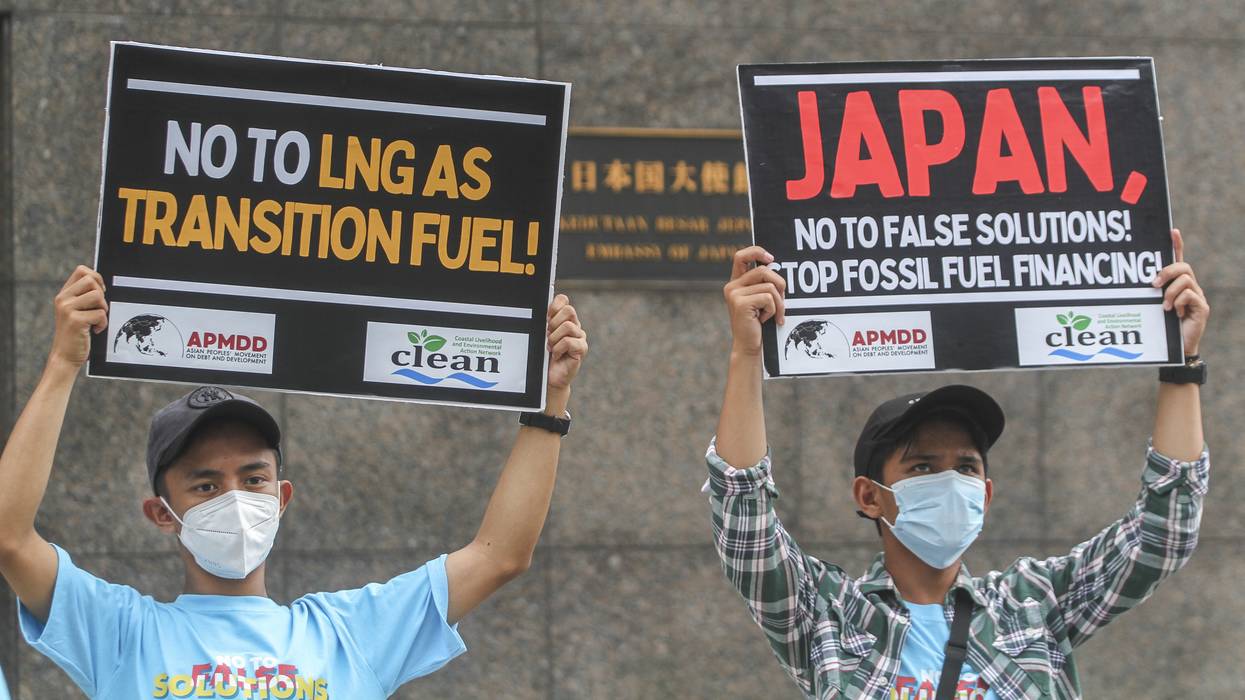
"The stunning amount of new LNG export deals being approved underscores the climate hypocrisy of the Biden administration."
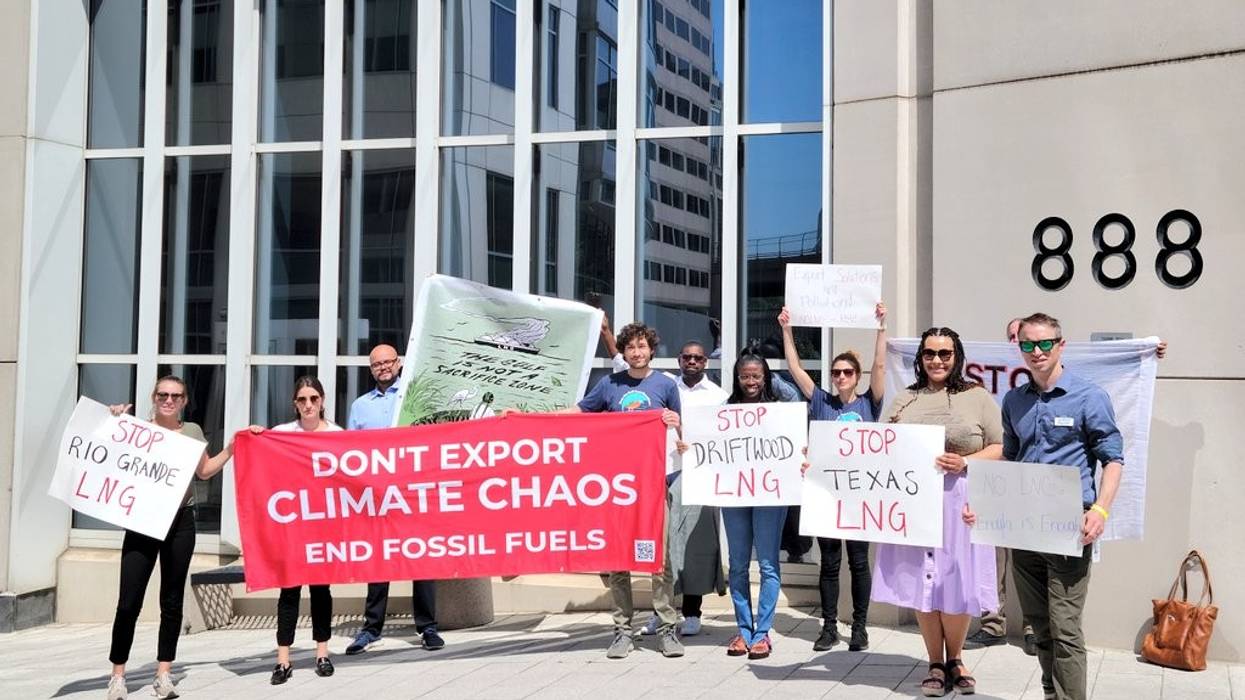
Climate groups called out U.S. President Joe Biden's administration on Thursday after a federal agency gave a green light to three liquefied natural gas projects in Texas despite local opposition and scientists' calls to swiftly transition away from fossil fuels.
The Federal Energy Regulatory Commission (FERC)—which has two Democrats, two Republicans, and one vacancy—issued orders on Glenfarne's Texas LNG project, NextDecade's Rio Grande LNG export terminal, and Enbridge's related Rio Bravo Pipeline.
"This president has the gall to say he cares about environmental justice and the climate emergency."
In response to the moves, Greenpeace USA campaigner Destiny Watford pointed to the Intergovernmental Panel on Climate Change (IPCC) report released last month as well as projections from the International Energy Agency (IEA).
"Someone needs to show President Biden the latest IPCC report, where it clearly says that we need to move away from dirty energy sources like LNG if we want to keep our planet livable," Watford declared. "U.S. LNG export capacity is on track to exceed the IEA's net-zero emissions estimate for global LNG trade by 2030."
"This is a level that we cannot overstep if we want to avoid the worst impacts of climate change—and the U.S. could pass that mark by itself," she stressed. "The stunning amount of new LNG export deals being approved underscores the climate hypocrisy of the Biden administration. This president has the gall to say he cares about environmental justice and the climate emergency while continuing to sanction limitless production and export of oil and gas."
FERC's moves follow the Biden administration's recent approval of an LNG project in Alaska, which came on the heels of allowing ConocoPhillips' controversial Willow oil project in the state. The president is also under fire for last weekend's Group of Seven statement that leaves the door open to future gas investments.
Oil Change International U.S. program co-manager Allie Rosenbluth argued Thursday that "the approval of any new fossil fuel project is a failure of the Biden administration's stated commitment to take action on both climate change and environmental justice."
"It's bad for the communities in Brownsville and the Rio Grande Valley who will suffer the worst consequences of this massive industrial plant on their health and well-being, it's bad for our country as laggards to climate commitments, and it's bad for our planet, as the clock is ticking to stave off the worst climate disasters," she said of FERC's new orders.
"Industry false solutions, such as carbon capture and certified gas, are making these projects even more dangerous," Rosenbluth continued, highlighting that "the company behind Rio Grande LNG claims it will 'certify' the greenhouse gas intensity of LNG to be sold from the proposed export terminal."
Citing a new report from Oil Change International and Earthworks on gas certifiers, the campaigner explained:
The investigation uncovered failures with monitoring technology, documented the concerns of methane emissions experts, revealed an absence of data transparency, and exposed conflicts of interest. Furthermore, the report detailed how the gas and LNG industry cannot rely on simply cleaning up to align with climate goals. They must also plan for a phaseout [of] gas production. This evidence calls into question the degree to which the gas certification process is misleading gas markets, giving consumers and investors a false sense of security about the environmental impacts of methane gas.
In Texas, "the fight is far from over," Rosenbluth said. "This March, after years of trans-Atlantic organizing, French bank Société Générale withdrew from Rio Grande LNG and no final investment decision on the LNG terminal has been made. People around the world will continue to fight these projects and demand a just transition to renewable energy."
The Houston Chronicle reported Thursday that Glenfarne's LNG project "has less financial traction" than NextDecade's terminal.
The newspaper also flagged a disagreement between FERC's two Democratic commissioners:
In August, the D.C. Circuit Court of Appeals ruled FERC needed to more closely examine Rio Grande LNG's impact on climate change and local communities. Commissioner Allison Clements said the commission had failed to do what was requested of it and that moving forward without doing so creates "a lose-lose situation" that would invite more legal challenges and deprive potentially impacted communities of the chance to comment on the developments.
"This procedural corner-cutting represents a gobsmacking departure, frankly, from the lessons I took away from the environmental justice roundtable we held just a month ago," Clements said.
FERC Chairman Willie Phillips, viewed as more moderate on climate issues than his predecessor Richard Glick, said he thought the commission had reached "an appropriate middle ground."
"Importantly, today's order takes an unprecedented and bipartisan step to protect environmental justice communities from potential concerns about the project's effect on air quality," Phillips said. "The commission is for the first time on its own accord, requiring that the project sponsors ensure that the overlapping construction and operation of a project do not cause any significant air quality impacts on environmental justice communities."
Phillips is notably a Biden appointee. When the president selected him in September 2021, green groups sounded the alarm, given his record in government and as a private attorney, and branded the candidate as "a crony of the fossil fuel industry."
Carrizo Comecrudo Tribal Chairman Juan Mancias said Thursday that "the court sent Rio Grande LNG and Texas LNG back to FERC for a review because these gas projects are cutting corners to try and build on our sacred lands. FERC did a piss-poor job, once again, of reviewing the dangers that LNG will bring to our people: pollution, risks of explosions, and destruction of our sacred sites."
"Neither FERC nor the LNG companies have ever consulted with the Carrizo Comecrudo Tribe of Texas," Mancias added. "FERC is promoting and perpetuating the sacrifice zones that come with short-sighted colonialism."
"We are disappointed, but unfortunately not surprised, that FERC has failed us again."
The tribe is far from alone in opposing the projects. Sierra Club Gulf Coast campaign representative Rebekah Hinojosa said that "for nearly a decade, our community has made it clear to FERC that we oppose Rio Grande LNG, Rio Bravo Pipeline, and Texas LNG because this is environmental racism," but the agency and industry "are forcing dangerous gas plants on the Rio Grande Valley that do nothing to help our community so fossil fuel corporations can profit."
"We are disappointed, but unfortunately not surprised, that FERC has failed us again by conducting a haphazard review of Texas LNG and Rio Grande LNG and by deciding to move forward with these destructive gas projects that will destroy some of our remaining wildlife habitat, be the biggest polluters in our poor community, and raise energy prices for families across the country," she said.
"We're not backing down," Hinojosa vowed. "FERC will hear our outrage."
"The transition away from existing and new coal isn't happening fast enough," said one expert. "The more new coal projects come online, the steeper the cuts and commitments need to be in the future."
To avert the worst consequences of the climate crisis, the world must stop building new coal plants and shut down existing ones at nearly five times the current rate.
That's according to an analysis published Wednesday by Global Energy Monitor (GEM) and nearly a dozen other groups, including Reclaim Finance, the Sierra Club, and the Alliance for Climate Justice and Clean Energy.
GEM's ninth annual survey of the world's existing and proposed supply of coal-fired power—the largest single source of energy-related CO2 emissions—found that "outside China, the global coal pipeline is drying up," albeit not at a quick enough pace.
"Urgent action is necessary to ensure an end to coal and a fighting chance at a livable climate."
Seventeen countries retired a combined 26 GW of operating coal capacity in 2022. Meanwhile, 25 GW of operating coal capacity received an announced close-by date of 2030.
However, to meet the Paris agreement's goal of limiting global warming to 1.5°C above preindustrial levels—beyond which the climate emergency's impacts will grow even deadlier, especially for humanity's poorest members who bear the least responsibility for the crisis—coal power must be phased out completely by 2040. To stay on track while giving developing countries extra time to switch to renewables, high-income countries in the Organization for Economic Cooperation and Development (OECD) must shutter their coal plants by 2030.
This "would require an average of 117 GW of retirements per year, or four-and-a-half times the capacity retired in 2022," according to the report. "An average of 60 GW must come offline in OECD countries each year to meet their 2030 coal phaseout deadline, and for non-OECD countries, 91 GW each year for their 2040 deadline. Accounting for coal plants under construction and in consideration (537.1 GW) would require even steeper cuts."
Lead author Flora Champenois, the project manager for GEM's Global Coal Plant Tracker, said in a statement that "the transition away from existing and new coal isn't happening fast enough to avoid climate chaos."
"The more new projects come online, the steeper the cuts and commitments need to be in the future," she noted.
Last year, the world added 45.5 GW of new coal capacity, meaning that the operating coal fleet grew by 19.5 GW overall.
"Fourteen countries commissioned new coal power in 2022," the report notes. "More than half (59%) of the newly commissioned capacity was in China (25.2 GW), with a remaining 16% in South Asia (India, Pakistan, and Bangladesh), 11% in Southeast Asia (Vietnam, Philippines, Indonesia, and Cambodia), 9% in East Asia (Japan and South Korea), and 5% in other regions."
Outside China, the global coal fleet continued to shrink in 2022 as planned projects were canceled and old plants closed. But coal retirements slowed down compared with previous years due in large part to Russia's invasion of Ukraine, which sent gas prices soaring.
"While coal under development—or coal in pre-construction and construction—has collapsed by two-thirds since the Paris agreement, nearly 350 GW of new capacity is still proposed across 33 countries, and an additional 192 GW of capacity is under construction," the report notes. "China's pre-construction and construction capacity surpassed the rest of the world's in 2021, and the gap widened in 2022. New coal capacity under development in China increased by 38% (266 GW to 366 GW), while the capacity in the rest of the world decreased by 20% (214 GW to 172 GW). China now accounts for two-thirds (68%) of global capacity under development, up from 55% a year ago."
Wednesday's analysis follows the Intergovernmental Panel on Climate Change's (IPCC) latest warning that burning existing fossil fuels will consume the world's remaining "carbon budget," or the maximum amount of planet-heating pollution compatible with preventing temperature rise from exceeding 1.5°C. The IPCC has made clear the need for "rapid and deep, and in most cases immediate greenhouse gas emission reductions."
Upon the publication of the IPCC's assessment two weeks ago, United Nations Secretary-General António Guterres outlined "an 'Accelerated Agenda' renewing calls for an immediate end to new coal, and for a phaseout of existing coal by 2030 in developed countries and 2040 in the rest of the world," GEM's new report points out. "Under such a scenario, only 70% of OECD operating coal capacity is currently on pace (330 GW), and outside the OECD, only 6% of coal capacity has a known closure date before 2040 (93 GW)."
"Urgent action is necessary to ensure an end to coal and a fighting chance at a livable climate," the report adds. "To accomplish this, countries need to translate announcements into plant-by-plant retirement plans as well as ramp up phaseout commitments. Details on how current and future policies and funds will be implemented to impact coal retirement dates and ensure a swift and equitable end to new coal will be essential."
"As we seek solutions to mitigate climate change, we must prioritize investments that truly prioritize sustainability and justice for all, and put energy democracy at the center of the transition," said one campaigner.
The Organization for Economic Cooperation and Development has agreed in principle on a new list of purportedly "green or climate-friendly" projects that are set to benefit from more favorable financial terms for export support after years of closed-door negotiations.
But climate justice advocates on Tuesday denounced the club of high-income countries for including on the list several "fossil-based technologies" that generate planet-heating emissions and other "poorly defined" projects that could incentivize investments in fracked gas.
At issue is the OECD Arrangement on Officially Supported Export Credits, which governs the body's Export Credit Agencies (ECAs). Participants in the arrangement—Australia, Canada, the European Union, Japan, Korea, New Zealand, Norway, Switzerland, Türkiye, the United Kingdom, and the United States—have long debated revising the OECD's so-called Climate Change Sector Understanding, which was adopted in 2014 and determines eligibility for preferential financing.
"The OECD Export Credit Group should not be a piggy bank for the fossil fuel industry."
Under the new agreement, projects related to (1) environmentally sustainable energy production; (2) CO2 capture, storage, and transportation; (3) transmission, distribution, and storage of energy; (4) clean hydrogen and ammonia; (5) low-emissions manufacturing; (6) zero- and low-emissions transport; and (7) clean energy minerals and ores will qualify for longer repayment terms and other flexibilities.
In response, Nina Pušić of Oil Change International (OCI) said in a statement that "the new scope of 'green' incentives under the OECD Arrangement is completely contradictory to what we know is needed to keep 1.5°C within reach."
The Intergovernmental Panel on Climate Change and the International Energy Agency have stated unequivocally that expanding fossil fuel supply is incompatible with limiting global warming to 1.5°C above preindustrial levels, beyond which the planetary emergency's consequences will grow even deadlier, especially for people living in low-income nations who have contributed the least to the crisis.
"Labeling problematic technologies that extend the lifetime of fossil fuel projects, such as carbon capture and storage, ammonia, and hydrogen, as 'climate-friendly' detracts from the critical work needed to reach 100% renewable energy-based systems," said Pušić.
"Fossil-based technologies that are unproven at scale," including carbon capture and storage as well as ammonia, exacerbate greenhouse gas pollution, OCI noted. Moreover, the OECD's use of "vague, undefined terminology" such as "environmentally sustainable energy production" and "clean hydrogen" could open the door to bolstering ECA support for fracked gas, which has boomed since Russia invaded Ukraine last February.
Not only does the OECD's definition of what counts as "climate-friendly" run counter to peer-reviewed research showing the need to prohibit new fossil fuel projects and wind down existing ones, it also flies in the face of a recent joint position launched by more than 175 civil society organizations from around the world. That document outlines how the OECD Arrangement "can align with the Paris agreement warming target of 1.5°C by placing restrictions on export support for oil and gas projects and associated infrastructure."
OECD ECAs "provide more public finance to fossil fuel projects than any other type of public finance institution, including the Multilateral Development Banks (MDBs)," OCI pointed out Tuesday. "From 2019-2021, G20 ECAs provided seven times as much export finance to fossil fuel projects ($33.5 billion USD) than for renewable energy ($4.7 billion USD)."
In the words of Kate DeAngelis from Friends of the Earth, "The OECD Export Credit Group should not be a piggy bank for the fossil fuel industry."
"We reject the pretense that technologies like carbon capture and storage are 'climate-friendly,' which Export Credit Agencies would have us believe," said DeAngelis. "Exporting credit agencies supporting these technologies extends a lifeline to the fossil fuel industry rather than encouraging the necessary shift toward a just energy transition."
"The willingness of governments to extend favorable public financing terms to technologies that prolong reliance on fossil fuels... undermines climate action rather than advancing it."
Steven Feit, senior attorney at the Center for International Environmental Law, said that the update to the OECD Arrangement, which is expected to take effect later this year, "fails to reflect the urgent need to end fossil finance and transition away from fossil fuels."
"The willingness of governments to extend favorable public financing terms to technologies that prolong reliance on fossil fuels, such as carbon capture, or launder fossil gas into the economy, as do most hydrogen and ammonia projects, undermines climate action rather than advancing it," said Feit. "Carbon capture, hydrogen, and ammonia are the primary avenues through which the industry seeks to legitimize itself in the wake of escalating climate catastrophe and climate action. Labeling these projects as 'green or climate friendly' perpetuates a false narrative and brings us further away from the urgent action needed today to phase out fossil fuels."
Davide Maneschi, climate justice program officer for Swedwatch, said that "it is concerning to see the inclusion of technologies such as CO2 capture and storage, hydrogen and ammonia, and energy minerals and ores as climate-friendly investments by the OECD without fully considering their implications on the environment and human rights."
"While these technologies may have the potential to reduce emissions, we cannot ignore the fact that criteria for what is considered 'clean' or 'green' are repeatedly stretched beyond any reasonable limit, and can come to be loopholes exploited to maintain the status quo," said Maneschi. "When employed wrongly, these technologies have the potential to exacerbate climate change and further perpetuate inequalities in our society."
"As we seek solutions to mitigate climate change," he added, "we must prioritize investments that truly prioritize sustainability and justice for all, and put energy democracy at the center of the transition."
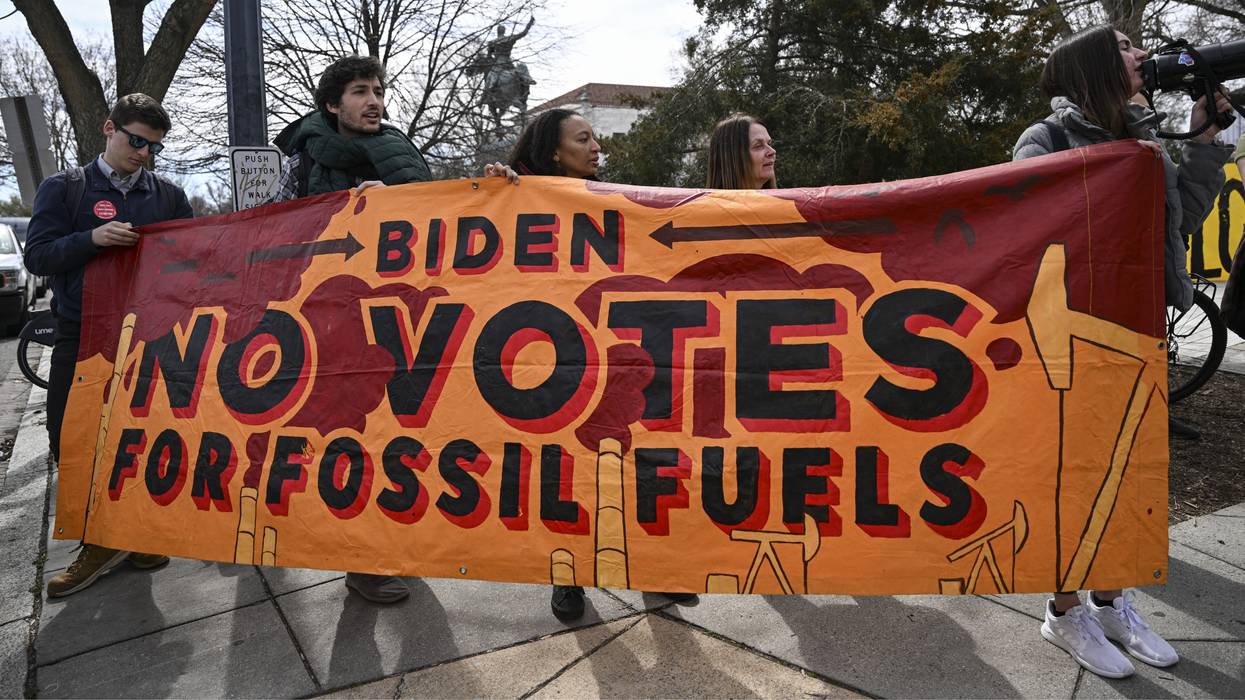
The administration's approval of the Willow oil project in Alaska communicates a disconnect from reality and a disregard for the people who elected him.
The sun was beating down and my ears were ringing. My hands gripped the megaphone as we chanted, "No more drilling, no more drilling, no more drilling on federal lands!" The words we chanted were President Joe Biden's verbatim, a broken promise made on the campaign trail in 2020. Just over a week after approving a massive oil drilling plan in the Arctic called the Willow project, President Biden hosted a conservation summit at the Department of the Interior. Youth climate justice organizers from Zero Hour protested alongside allied organizations outside the summit for hours, determined not to let Biden forget his broken promise. Administration officials and the president himself entered and left the building, pretending to ignore us and our demands, but we didn't quiet down. We don't plan to stop protesting the outrageous decision any time soon.
The conservation summit also came a day after the latest Intergovernmental Panel on Climate Change (IPCC) report was released, warning that this is our last chance for governments to stop fossil fuels to meet key planetary warming thresholds. The audacity of the Biden administration to host an environmental summit just after taking action that locks us into further dependence on fossil fuels is a striking example of just how out-of-touch the administration is. The week before the Willow project was approved, #StopWillow went viral online and a Change.org petition against the project gathered nearly 2.5 million signatures. In-person protests erupted in places from the White House to the Stephen Colbert show where Vice President Kamala Harris was a guest. And yet, the administration has continued to stand by its unconscionable decision.
I have been organizing and advocating for climate action since I was 15 years old, and politicians being deaf to public demands is nothing new to me. But as I stood outside the president's summit that day, it felt like a slap in the face.
I refuse to fall victim to climate doom, because the truth is we can still save our planet as we know it.
President Biden will never know what it's like to be a young person growing up in the middle of the climate crisis. Seeing news like the IPCC report back to back with government-sanctioned fossil fuel approval, it's no wonder many young people like me are disillusioned and riddled with climate anxiety and despair. Every day we are careening towards a dark and uncertain future, as we watch the waters rise around us and deadly disasters become regular occurrences. Words cannot describe how demoralizing it is to see our representatives side with fossil fuels again and again, stubbornly chaining us to a corrupt and antiquated industry that has no concern for the future of humanity.
I refuse to fall victim to climate doom, because the truth is we can still save our planet as we know it. The IPCC was clear about that too: If greenhouse gas emissions peak now, we have a chance to keep the planet under 1.5°C of warming. Scientists warn that at 1.5°C, we will see the most catastrophic effects of climate change. From coastal cities going underwater to widespread food scarcity from crop failures, humanity will face challenges we can't even fathom. I became a climate justice organizer because I was determined not to let our planet and futures be stolen from us by the fossil fuel industry. The only way we'll achieve a livable future is if our president carries that philosophy as well.
President Biden needs youth and climate justice organizers on his side too. I worked hard organizing youth to vote for Biden in 2020 even though I myself was too young to vote. I remember the relief and hope I felt when he won, promising to cut emissions by 50% by 2030. But Biden has not been the climate president he claims to be, and has taken actions that undermine his emission reduction goals. On top of the Willow project, the Biden administration approved 6,430 permits to drill for oil and gas on public lands in its first two years, a higher rate than the Trump administration.
There is no middle ground when it comes to fighting the climate crisis anymore: We either stop all new fossil fuels or we don't. Approving new fossil fuel projects at this point is absurd: We need to be actively shutting down current projects. President Biden's decision on the Willow project is the opposite of what conventional science dictates. It communicates a disconnect from reality and a disregard for the people who elected him. Time has run out for a both-sides approach: President Biden must choose one or the other, fossil fuels or our future. By approving the Willow project, it is clear which side he is on.
"Time and time again the people have risen up against the backroom deals and slimy maneuverings at the federal level to push MVP through, and we will keep standing up," vowed one organizer.
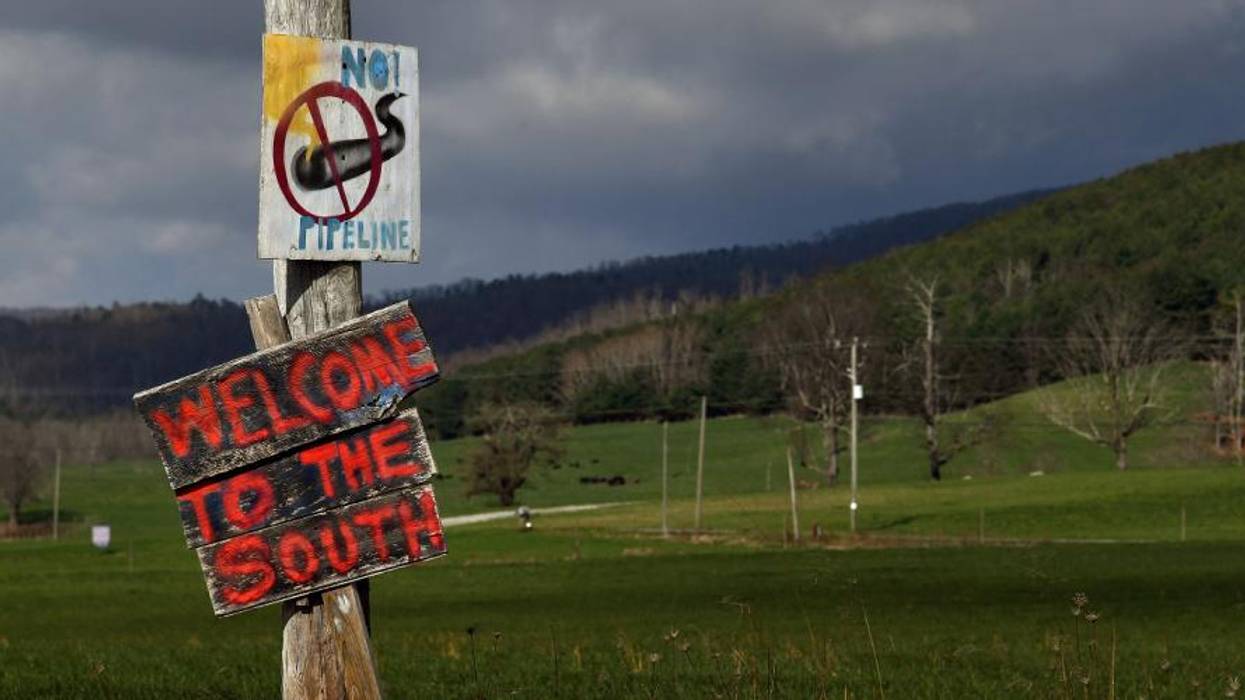
As congressional Democrats launch new clean energy and environmental justice efforts, House Republicans outraged climate campaigners and frontline communities on Thursday with a move to fast-track a long-delayed fracked gas pipeline.
Congresswoman Carol Miller (R-W.Va.), backed by 10 other Republicans, introduced an amendment to the GOP-led Lower Energy Costs Act (H.R. 1) to ensure that the controversial Mountain Valley Pipeline (MVP) is "constructed expeditiously."
Russell Chisholm, managing director of the Protect Our Water, Heritage, Rights (POWHR) Coalition, highlighted that Miller's fresh push for the MVP came just a day after Democrats introduced the A. Donald McEachin Environmental Justice for All Act.
"As they watch the demise of the fossil fuel industry that lines their pockets, they are desperate to fast-track this unnecessary and disastrous pipeline."
"Hours after our environmental justice movement released a positive vision for a livable future, the Environmental Justice for All Act, these Republicans are throwing a tantrum," Chisholm said in a statement Thursday. "As they watch the demise of the fossil fuel industry that lines their pockets, they are desperate to fast-track this unnecessary and disastrous pipeline—to the point that they want to strip away judicial review and nullify bedrock environmental law."
The Intergovernmental Panel on Climate Change (IPCC) report released Monday "makes clear that we must stop all new fossil fuel expansion immediately," he continued. "We demand our representatives to silence this ridiculous whining while our regulatory agencies and courts assess the science and evidence that mandates the MVP be stopped."
Jason Crazy Bear Keck, co-founder of 7 Directions of Service, said, "The fact that some of our elected representatives have been bending over backwards to fast track the MVP, a poster child pipeline for corruption and environmental injustices, is appalling to us as impacted community members, water protectors, and land defenders."
"Only a short-sighted, greed-driven person who stands to profit would go to such great lengths to attempt to revive a failing zombie project like the MVP," he asserted. "Time and time again the people have risen up against the backroom deals and slimy maneuverings at the federal level to push MVP through, and we will keep standing up until our basic rights and protections, like those granted by the EJ for All Act, are secured and upheld."
While residents living along the over 300 miles of pipeline route through Virginia and West Virginia have long fought against MVP, the project got national attention last year as Sen. Joe Manchin (D-W.Va.)
tried to force a "dirty deal" on permit reforms.
Though Manchin's proposals were thrice defeated, the right-wing Democrat and MVP supporter signaled in February that he would continue to work with the new House GOP majority to try to advance a fossil fuel-friendly measure.
E&E News reported Wednesday that "other politicians hailing from the mid-Atlantic are eager to see the pipeline operate. But Republicans have previously opposed the idea of singling out one project for special congressional treatment. And they might not want to hand Manchin a win at a time when the moderate Democrat mulls running for reelection."
House Majority Leader Steve Scalise (R-La.) last week introduced the Lower Energy Costs Act—which, while unlikely to make it through the divided Senate and reach President Joe Biden's desk, is intended to wipe out the administration's climate agenda.
As E&E detailed:
Republicans say the proposal, which will be debated and voted on next week, would allow the United States to produce more oil, gas, solar, and wind in a manner that is more environmentally sound than anywhere else on the planet.
The bill, the work of three committees, would require the federal government to hold quarterly oil lease sales in Western states. It would speed up environmental permitting that GOP lawmakers complain drags on years longer than it should. The package would also allow for more hardrock mining in mineral-rich states like Minnesota and Idaho.
Meanwhile, Senate Majority Leader Chuck Schumer (D-N.Y.) on Tuesday sent supporters of the GOP bill a clear message from the floor of the upper chamber: "You can do all the hoopla you want in the House, it ain't passing."
The IPCC this week put out "their most dire warnings to date: Unless the world swiftly transitions to clean energy and curbs emissions, our planet risks crossing a point of no return sometime in the next decade," Schumer said. "What awaits us on the other side could be severe and irreversible: droughts, storms, crop failures at a level we can scarcely imagine today."
"House Republicans seem to think the best solution for our energy needs is not to help America transition to clean energy... Unfortunately, they think doubling down on more giveaways to Big Oil is the way to go," he added. "Democrats want to see a bipartisan, commonsense energy proposal come together in Congress, but Republicans' H.R. 1 proposal is dead on arrival in the Senate."
The country's climate action "constitutes a violation of human rights," argues one Swedish group.
A Swedish court on Tuesday ruled that hundreds of youth climate activists including Greta Thunberg can collectively sue Sweden for the government's "insufficient climate policy."
More than 600 people under age 26, including 20-year-old Thunberg, signed the 87-page document that is the basis for the lawsuit, which was filed in Stockholm in November and coincided with a march through the city.
"Sweden has never treated the climate crisis like a crisis," Anton Foley of the youth-led group Aurora, which prepared and filed the class-action suit, said at the time. "Sweden is failing in its responsibility and breaking the law."
The Nacka District Court determined Tuesday that the case can proceed and gave the Swedish government three months to respond.
"The district court has today issued a summons in a high-profile class-action lawsuit," the court said. "In the case, demands have been made for the district court to determine that the state has an obligation to take certain specified measures to limit climate change."
"Limiting global warming to 1.5°C requires drastic emission reductions starting now."
"At present, the district court cannot give a forecast as to when the case may be finalized or when it may be necessary to hold hearings in the case," the court continued, adding that the case could go to trial or be settled in writing.
As Aurora's webpage for the case explains, the young activists believe the climate emergency "is a problem we all have to solve together, but the responsibility is not evenly distributed between the countries of the world" and "Sweden, as a rich country with historically high emissions, has a particularly big responsibility to take the lead."
Referencing the 2015 Paris agreement's more ambitious goal for global heating by the end of this century, the activists argue that their country's climate action "is insufficient to be in line with Sweden's fair share of limiting global warming to 1.5 °C" and therefore "constitutes a violation of human rights."
"Limiting global warming to 1.5°C requires drastic emission reductions starting now," the youth warn, noting calculations that suggest Sweden doing its fair share would involve moves to cut emissions by 6.5-9.4 million tons annually from 2019-30.
The climate crisis also negatively impacts mental health, "partly as a consequence of the extreme weather and environmental changes that are happening and will happen, but also due to anxiety and stress during youth," the site stresses. "Everyone who is involved in the class action is young and therefore runs a high risk of suffering these consequences during their lifetime."
The Swedish court's decision came a day after the release of a highly anticipated Intergovernmental Panel on Climate Change (IPCC) report that United Nations Secretary-General António Guterres called "a survival guide for humanity" which shows the 1.5°C goal for this century is still achievable but requires "a quantum leap in climate action."
Thunberg, founder of the global Fridays for Future movement, tweeted Monday in response to the report, "The fact that people in power still somehow live in denial, and actively move in the wrong direction, will eventually be seen for and understood as the unprecedented betrayal it is."
"Today, after yesterday's IPCC report, everything is back to normal—as always," Thunberg added Tuesday. "We continue to ignore the climate crisis as if nothing happened. Our societies are still in denial, and those in power go on with their never ending quests to maximize profits. We cannot afford this."
"Solving the climate crisis is not about what works on paper but what delivers in practice. There is no time to waste with false solutions."
Longtime critics of "false solutions" to the fossil fuel-driven climate emergency responded to a United Nations report released Monday by reiterating their warnings about relying on underdeveloped and untested technologies that could enable major polluters to continue producing massive amounts of planet-heating emissions.
Noting the 2015 Paris agreement's two primary temperature targets for this century, the new Intergovernmental Panel on Climate Change (IPCC) report states that "all global modeled pathways that limit warming to 1.5°C with no or limited overshoot, and those that limit warming to 2°C, involve rapid and deep and, in most cases, immediate" greenhouse gas (GHG) emissions reductions in all sectors this decade.
"We must heed the IPCC's urgent messages, without falling into the trap of assuming that carbon dioxide removal will save the day."
Modeled mitigation pathways, the report continues, "include transitioning from fossil fuels without carbon capture and storage (CCS) to very low- or zero-carbon energy sources, such as renewables or fossil fuels with CCS, demand-side measures and improving efficiency, reducing non-CO2 GHG emissions," and carbon dioxide removal (CDR).
As the document details:
CCS is an option to reduce emissions from large-scale fossil-based energy and industry sources provided geological storage is available. When CO2 is captured directly from the atmosphere (DACCS), or from biomass (BECCS), CCS provides the storage component of these CDR methods. CO2 capture and subsurface injection is a mature technology for gas processing and enhanced oil recovery. In contrast to the oil and gas sector, CCS is less mature in the power sector, as well as in cement and chemicals production, where it is a critical mitigation option. The technical geological storage capacity is estimated to be on the order of 1000 GtCO2, is more than the CO2 storage requirements through 2100 to limit global warming to 1.5°C, although the regional availability of geological storage could be a limiting factor. If the geological storage site is appropriately selected and managed, it is estimated that the CO2 can be permanently isolated from the atmosphere.
"Implementation of CCS currently faces technological, economic, institutional, ecological environmental and socio-cultural barriers," the report notes. "Currently, global rates of CCS deployment are far below those in modeled pathways limiting global warming to 1.5°C to 2°C. Enabling conditions such as policy instruments, greater public support, and technological innovation could reduce these barriers."
The report further says that "biological CDR methods like reforestation, improved forest management, soil carbon sequestration, peatland restoration, and coastal blue carbon management can enhance biodiversity and ecosystem functions, employment and local livelihoods. However, afforestation or production of biomass crops can have adverse socioeconomic and environmental impacts, including on biodiversity, food and water security, local livelihoods, and the rights of Indigenous peoples, especially if implemented at large scales and where land tenure is insecure."
While the world's top scientists—and the governments that signed off on the report—recognized issues with CCS and CDR, climate campaigners expressed frustration that such technologies were featured as partial solutions.
"It's very alarming to see carbon dioxide removal featuring so centrally in the IPCC report," declared Sara Shaw at Friends of the Earth International (FOEI). "We can't rely on risky, untested, and downright dangerous removals technologies just because big polluters want us to stick to the status quo."
"A fair and fast phaseout of oil, gas, and coal needs to happen in this decade, and it can, with the right political will," she stressed. "We must heed the IPCC's urgent messages, without falling into the trap of assuming that carbon dioxide removal will save the day."
Fellow FOIE leader Hemantha Withanage explained that "in my country, Sri Lanka, the impacts of climate change are being felt now. We have no time to chase fairy tales like carbon removal technologies to suck carbon out of the air."
"The IPCC evidence is clear: Climate change is killing people, nature, and planet," he said. "The answers are obvious: a fair and fast phaseout of fossil fuels, and finance for a just transition. The fantasy of overshooting safe limits and betting on risky technofixes is certainly not a cure for the problem."
Lili Fuhr at the Center for International Environmental Law agreed that "the takeaway of the IPCC synthesis is irrefutable: An immediate, rapid, and equitable fossil fuel phaseout is the cornerstone of any strategy to avoid catastrophic levels of global warming."
"Building our mitigation strategies on models that instead lock in inequitable growth and conveniently assume away the risks of technofixes like carbon capture and storage and carbon dioxide removal ignores that clarion message and increases the likelihood of overshoot," Fuhr warned. "The most ambitious mitigation pathways put out by the IPCC set the floor, not the ceiling, for necessary climate action.
Research shows that overshooting Paris temperature targets, even temporarily, could dramatically raise the risk of the world experiencing dangerous "tipping points," as Common Dreams reported in December. The IPCC report notes that "the higher the magnitude and the longer the duration of overshoot, the more ecosystems and societies are exposed to greater and more widespread changes in climatic impact-drivers, increasing risks for many natural and human systems."
As Corporate Accountability director of climate research and policy Rachel Rose Jackon put it Monday: "Breaching 1.5°C is not an option. Governments will be effectively signing millions of avoidable death warrants for those who contributed least to the crisis."
While arguing that the IPCC document "demands a last and final reckoning" that leads to Global North governments "doing their fair share," the campaigner also emphasized that "the report should have actually named the solutions that will keep us below 1.5°C instead of leaving the door open for an inadequate suite of industry-backed removals and dangerous distractions."
Food & Water Watch executive director Wenonah Hauter targeted U.S. lawmakers and President Joe Biden in a statement Monday.
"The IPCC is sending one key message above all else: We must stop burning fossil fuels, drilling for fossil fuels, and building new infrastructure to deliver fossil fuels," Hauter said. "Unfortunately, policymakers continue to lock in new dirty energy schemes—most notably the Biden administration's approval of a massive new oil drilling project in Alaska."
"Tragically, Congress and the White House continue to waste money on carbon removal technologies that have been a failure. Relying on these scams instead of taking actions to stop fossil fuel expansion will only lead to further climate catastrophe," she added. "President Biden's actions to expand oil and gas drilling and ramp up fossil fuel exports undermine his professed climate goals and invite further catastrophe. The IPCC's message is clear, and political leaders must answer the call with actions to match the moment."