SUBSCRIBE TO OUR FREE NEWSLETTER
Daily news & progressive opinion—funded by the people, not the corporations—delivered straight to your inbox.
5
#000000
#FFFFFF
To donate by check, phone, or other method, see our More Ways to Give page.


Daily news & progressive opinion—funded by the people, not the corporations—delivered straight to your inbox.
A group of Democratic senators warned the company's CEO, Mark Zuckerberg, that the tax maneuver violates "the spirit and, potentially, the letter" of federal law.
A group of Democratic senators wrote Tuesday that Meta is violating "the spirit and, potentially, the letter" of federal tax law by using a research and development tax credit to save billions of dollars on its massive data center buildout.
In a letter to Meta CEO Mark Zuckerberg, the Senate Democrats noted that the $1.9 trillion company has "indicated on federal regulatory filings that it has used the federal research credit to reduce its federal income tax liability by $6.6 billion between 2023-2025." By one measure, the senators noted, Meta alone could be responsible for "more than 10% of all research credits claimed in the US."
"While it remains unclear exactly how Meta was able to reduce its federal tax liability by over $6.6 billion in the last three years using federal research credits, it appears from published reports that a substantial share is by claiming the research credit related to its massive AI data center build out," wrote the group of lawmakers led by Sen. Ron Wyden (D-Ore.), the ranking member of the Senate Finance Committee.
Last month, The New York Times reported that Meta claims in its federal tax filings that the company's AI data centers are "a giant experiment that could fail," allowing it to "tap into a tax credit intended for research and experimentation." Meta specifically characterizes its expensive, resource-devouring data centers as "pilot models."
"Meta’s own accountants recognize that the strategy is on shaky legal ground," the Times reported. "In disclosures buried in securities filings, the tech giant warns that billions in tax savings are vulnerable to being overturned by the IRS, in large part because of 'uncertainties with our research tax credits.'"
In their letter to Zuckerberg, the Democratic senators wrote that the research tax credit "can be a useful and necessary tool to support our nation’s innovation economy and cutting-edge research."
"Subsidizing your AI data center build is not close to meeting this standard," the lawmakers added, demanding that the company provide specific information on its use of the federal research tax credit and its legal justification for the maneuver.
The senators sent their letter to Zuckerberg about a week after more than two dozen House Democrats demanded that the Trump administration prevent Meta and other tech giants from exploiting an "overly expansive interpretation of qualifying expenditures" to reap billions in taxpayer subsidies to fund data centers that a majority of Americans oppose.
"Allowing ordinary data center construction and deployment costs to qualify would significantly expand the research credit beyond its intended purpose and risk converting an incentive for technological experimentation into a subsidy for capital expenditures that companies would undertake in the ordinary course of business," the House Democrats wrote in an October 7 letter to Treasury Secretary Scott Bessent.
One advocate suggested the administration is suppressing the data because it "doesn't line up" with Trump officials' narrative about the Republican budget law.
With the midterm elections less than three weeks away, US President Donald Trump's administration has delayed the release of Internal Revenue Service data showing how the Republican budget legislation that he signed into law last year has impacted families up and down the income distribution.
Politico reported Wednesday that the IRS "typically releases the data in the wake of each filing season, but this year's rollout is more anticipated because it's expected to provide the first detailed look at how taxpayers are taking advantage of the One Big Beautiful Bill Act, including its new deductions for overtime wages and tipped income." The outlet added that the IRS, whose workforce has been gutted by the Trump administration, is "awaiting approval from the Treasury Department to publish the figures," which were scheduled to be released in July.
The New York Times reported last month that the Trump administration is also withholding IRS estimates of unpaid taxes.
Nina Olson, executive director of the Center for Taxpayer Rights and the former US taxpayer advocate, told Politico that she believes the administration is suppressing information that runs counter to its narrative about the One Big Beautiful Bill Act (OBBBA), which extended provisions of the 2017 Trump-GOP tax cuts that disproportionately benefited the richest Americans and large corporations.
"I think they are hiding stuff that doesn't line up with all the crowing the CEO has been doing," Olson said, referring to IRS chief executive Frank Bisignano, who has celebrated the OBBBA as "historic tax relief for working families."
But an analysis released last week by the Institute on Taxation and Economic Policy showed that the OBBBA "overwhelmingly benefits the rich and corporations."
"While proponents of OBBBA often describe certain portions of the law that they argue benefit the middle class (such as tax breaks for tips and overtime) these provisions are a very small portion of the overall legislation which overwhelmingly benefits high-income people and corporations," the group observed. "Since the 2025 law was enacted, enormous profitable corporations like Meta, Amazon, Google, Tesla, and many others have paid extremely low effective tax rates (from 0 percent to 8 percent) in large part due to OBBBA."
The analysis found that, overall, Trump's major economic policies have hiked taxes and consumer costs for low- and middle-income families while cutting them for the top 1%.
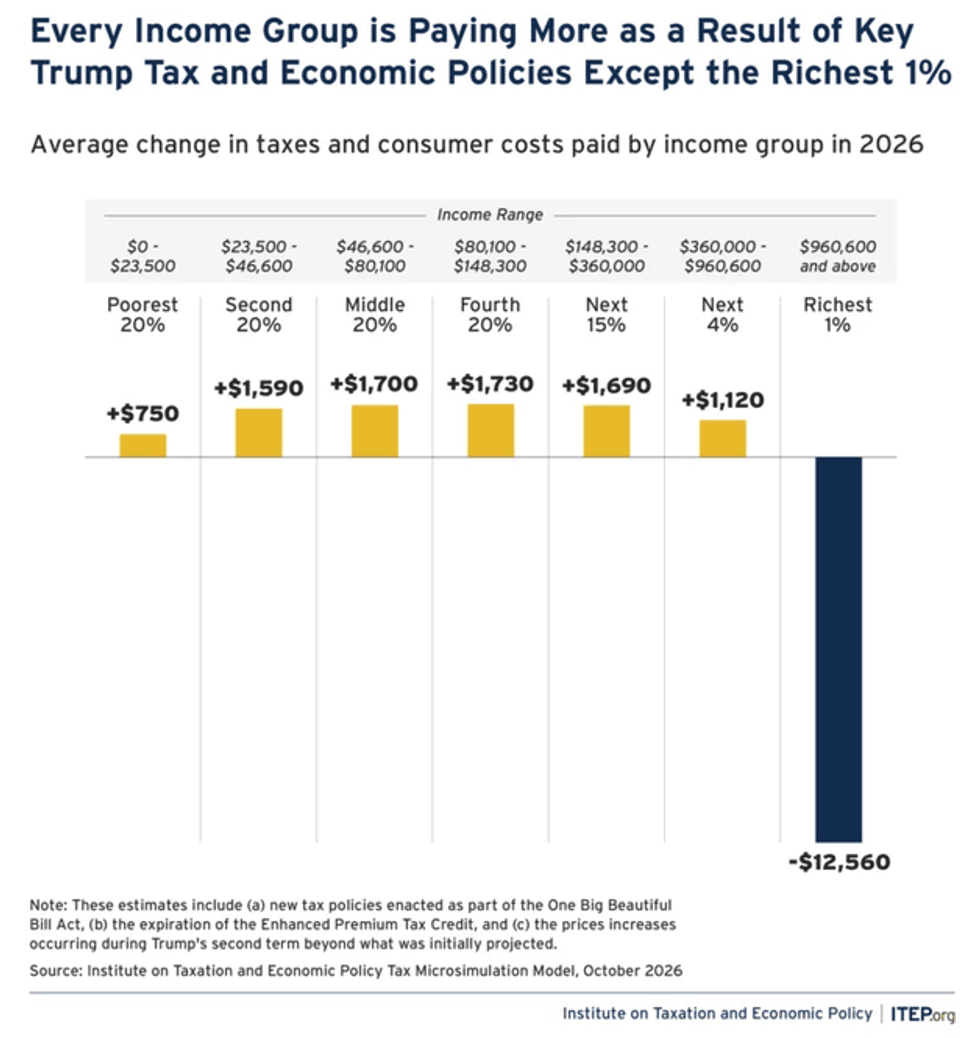
“The tax cuts Americans were promised—which were tilted heavily to the top to start—are being overwhelmed by higher prices and higher healthcare costs for most families,” said Steve Wamhoff, ITEP's federal policy director. “When you look at the full picture rather than tax cuts in isolation, the result is striking: The typical American in every income group is paying more, except that the richest 1% is the one group that comes out ahead.”

Rogers' Democratic opponent for US Senate, Abdul El-Sayed, has accused the former House intel chair of trying to “monetize his time in public office.”
Former US Rep. Mike Rogers, the Republican Senate candidate in Michigan, saw his personal wealth soar after he was named chair of the House Intelligence Committee in 2011, thanks in large part to his marriage to the CEO of a powerful military contracting firm.
Financial disclosures reviewed by Drop Site News as part of an investigation published Tuesday show that Rogers had just $4,000-$60,000 worth of investment holdings in fiscal year 2008 after he divorced his first wife of 17 years.
But that all began to change in 2010, when he married Kristi Clemens, a senior executive for the British-founded private security contractor Aegis, which has a major US subsidiary that she helped to establish.
During the 2000s, the company won multiple Pentagon contracts worth hundreds of millions of dollars to support US military operations in Iraq, where it was put in charge of coordinating other private contractors.
Less than a year after his marriage, Rogers was named chair of the House Intelligence Committee—one of the nation's most powerful oversight posts, which gave him access to highly classified intelligence.
Within seven months—despite concerns about conflicts of interest—Aegis was awarded a contract worth more than $1 billion to protect the US embassy in Kabul, Afghanistan. In a since-deleted online biography for a law firm she joined after leaving Aegis, Kristi took credit for leading a "two-year pursuit and capture strategy" to secure the contract.
In the meantime, Rogers' financial assets—now merged with Kristi's—grew substantially. Up from between $136,000 and $391,000 during the first year of their marriage, the pair now held anywhere from $230,000 to $925,000 three years later.
Rogers' potential conflicts of interest became a subject of scrutiny even among fellow Republicans, who accused him of slow-walking an investigation into the killing of four Americans at a US compound in Benghazi, Libya.
Aegis had been heavily active in Libya since 2011, when NATO launched its operation to overthrow President Muammar Gaddafi, which plunged the country into civil war in the following years.
Rogers' handling of the Benghazi investigation would later draw a scathing rebuke from longtime right-wing operative Dick Morris, who accused him of "obstructing and delaying the Benghazi investigation in order to shield his wife, Kristi, from scrutiny.”
Amid this controversy, Rogers announced that he would not run for reelection. In 2015, after serving 14 years in Congress, he returned to the private sector.
Rogers went on to profit from the national security and surveillance industries he'd helped to oversee—taking board positions with military contractors and cybersecurity firms.
According to Business Insider, financial disclosures showed he received nearly $2 million in payments from technology and cybersecurity companies between January 2022 and late 2023.
When he left Congress in 2015, Mike and Kristi Rogers' combined net worth was about $1.7 million. As of 2026, it is estimated to have climbed to between $7 million and $14 million.
Rogers is currently in the midst of a battle to reenter Congress as Michigan's US senator, in a close race that could decide whether Democrats retake the chamber next month.
His Democratic opponent, Abdul El-Sayed—a former Detroit public health official—has run as a staunch opponent of President Donald Trump's aggressive wars abroad, including in Iran, and his support for Israel's assaults on Gaza and Lebanon, which Rogers has backed.
With less than a month before polls close on November 3, El-Sayed has hammered on Rogers' support for legislation that expanded government spying powers in the wake of the 9/11 attacks. He's also zeroed in on the Republican's lucrative personal ties to the military-industrial complex.
"[Rogers] hasn't been serious about providing healthcare his entire career," El-Sayed said during last week's contentious Senate debate. “What he has been serious about is making sure that he can monetize his time in public office—$14 million, two yachts, a McMansion in Florida."
El-Sayed highlighted Drop Site's findings in a social media post Tuesday: "STUNNING, [Mike Rogers'] deep state grift includes massive contracts for his wife’s firm," he said.
A spokesperson for Rogers said on Wednesday that "the accusation that Mike used his position in Congress to protect his family in any way, shape, or form is patently false."
"He’s so completely full of shit, and voters across the country know it," said one patient advocate.
US President Donald Trump, who signed into law the largest Medicaid cuts in history last year and allowed private insurance premiums to skyrocket, assured supporters gathered at a rally in Wasilla, Alaska on Tuesday that he intends to enact "a truly great healthcare plan" if Republicans retain control of Congress in next month's midterm elections.
As with his earlier empty promises of a forthcoming overhaul of the US healthcare system, Trump offered virtually no detail on what his proposal would entail, saying vaguely that he wants to "stop all payments to big insurance companies" and "give the money directly to you, the people," to "go out and buy better healthcare."
While Trump's supporters in Wasilla applauded his promise—"clapping like seals," as one critic put it—patient advocates noted that Republicans have done nothing but make the country's healthcare system even more brutal and expensive over the past two years.
"All they did was cut Medicaid by $1 trillion to give tax cuts to billionaires and kick 3 million off of [Affordable Care Act] insurance," Dr. Rob Davidson, executive director of the Committee to Protect Healthcare, wrote in a social media post late Tuesday.
"He’s so completely full of shit," said Davidson, "and voters across the country know it."
Watch Trump's comments:
The advocacy group Protect Our Care noted ahead of Tuesday's rally that more than 34,000 Alaskans have health insurance coverage during Trump's second White House term. Brad Woodhouse, the group's president, said in a statement that “Trump has miserably failed Alaskans on healthcare, and now, with Election Day closing in, he has the audacity to waltz back into the state and act like none of it ever happened?"
"Make no mistake, this is a healthcare election, and Republicans have a whole lot to answer for," said Woodhouse. "With just weeks left until voters head to the polls, Trump is pulling out all the stops, from flashy rallies to desperate bribes. But the fallout from his healthcare cuts isn’t going anywhere. Families across Alaska are stretching their medications, skipping checkups, and crossing their fingers that nobody in the family gets sick enough to send them spiraling into debt."
"So Trump can put on his little show all he wants," Woodhouse added, "but eventually the stage lights will go out, the cameras will leave, and Alaskans will still be stuck paying the price."
Trump's rally came a week after the health policy organization KFF released a survey showing that 66% of Americans strongly or somewhat favor Medicare for All—the highest rate of approval since the group began asking about Medicare for All in 2017.
Separate Axios polling published Tuesday showed that a plurality of Americans support Medicare for All—and that Medicare for All's supporters outnumber its opponents nearly two to one.
Despite widespread and growing support for the proposal—which would guarantee comprehensive health coverage to everyone in the US at a lower overall cost than the status quo—Trump has openly attacked Medicare for All, falsely claiming it would cost "the entire budget of the whole country."
A federal court in California on Tuesday order the US Department of Agriculture to halt any further enactment of a plan by President Donald Trump to dramatically restructure the agency, which public workers unions and pro-democracy advocates argued in court was unlawful.
The order from the US District Court of the Northern District of California came in response to a lawsuit brought by four unions representing various USDA workers within the agency as well as a broader group of advocacy organizations and conservationists who warned the reorganization would hurt not only USDA workers but farmers, consumers, and the nation's agricultural system as a whole.
The temporary injunction issued by the court forbids agency officials from using congressionally appropriated money to fund the restructuring plan, stating that “on the facts of this case, the most appropriate remedy is indeed to stay USDA’s reorganization expenditures, full stop.”
In a statement, the coalition behind the lawsuit, called the ruling “a welcome reprieve to the Trump-Vance administration’s reckless, unlawful, and disruptive reorganization of USDA."
The agency, the statement continues, "provides vital services across America, supporting rural communities, protecting our food supply, feeding families, advancing agricultural research, guarding our forests and public lands, and so much more. We look forward to achieving more permanent relief and continuing to fight for American families, farmers, and workers.”
The plaintiffs explained that the worker relocations and shuttering of key facilities at the USDA would have "made the food on American tables less safe, wildfires harder to fight, and rural communities wait longer for help, all while leaving farmers with less support." The coalition alleges that Trump's USDA leadership "knew forced relocation would drive out its experienced people and never once studied what losing that expertise would do to the department’s ability" to fulfill its duties mandated by federal law.
“Congress told USDA in plain language that it could not close offices and uproot its workforce without permission. USDA did it anyway, so AFGE and our partners took them to court. These forced moves were never about efficiency. They were about pushing experienced people out the door.” said Everett Kelley, president of the American Federation of Government Employees (AFGE), one of the four unions behind the suit. “Today’s ruling keeps those workers on the job serving the American people, and AFGE and our allies will keep fighting for as long as it takes to make sure this administration follows the law.”
AFSCME President Patrick Moran said the Trump administration's effort "to gut this essential agency is blatantly illegal, and we’re thankful the court has stopped it, for now, from proceeding with a reckless plan that would threaten public benefits like SNAP, endanger public safety by hindering wildfire response, and hurt American farmers at a time working families can least afford it."
As Politico notes, the order could be "short-lived," due to possible appeal and the fact that the current appropriations cycle for the USDA funds in question runs out in approximately two months. After that, if Congress approves money for future restructuring, the Trump administration could ultimately gets its way, though the opposition coalition has vowed to continue their resistance.
“Congress, not the President, still determines the mission and functions of federal agencies created by statute, and Congress has drawn the line to say no to this reorganization," said Corinne Johnson, a partner with Altshuler Berzon, the lead legal counsel for the coalition. "On behalf of our clients, we will continue to ask the courts to hold that line.”
"I'm not going to stand up for ICE, and I don't think Senator Collins should either," said Democratic US Senate candidate Troy Jackson.
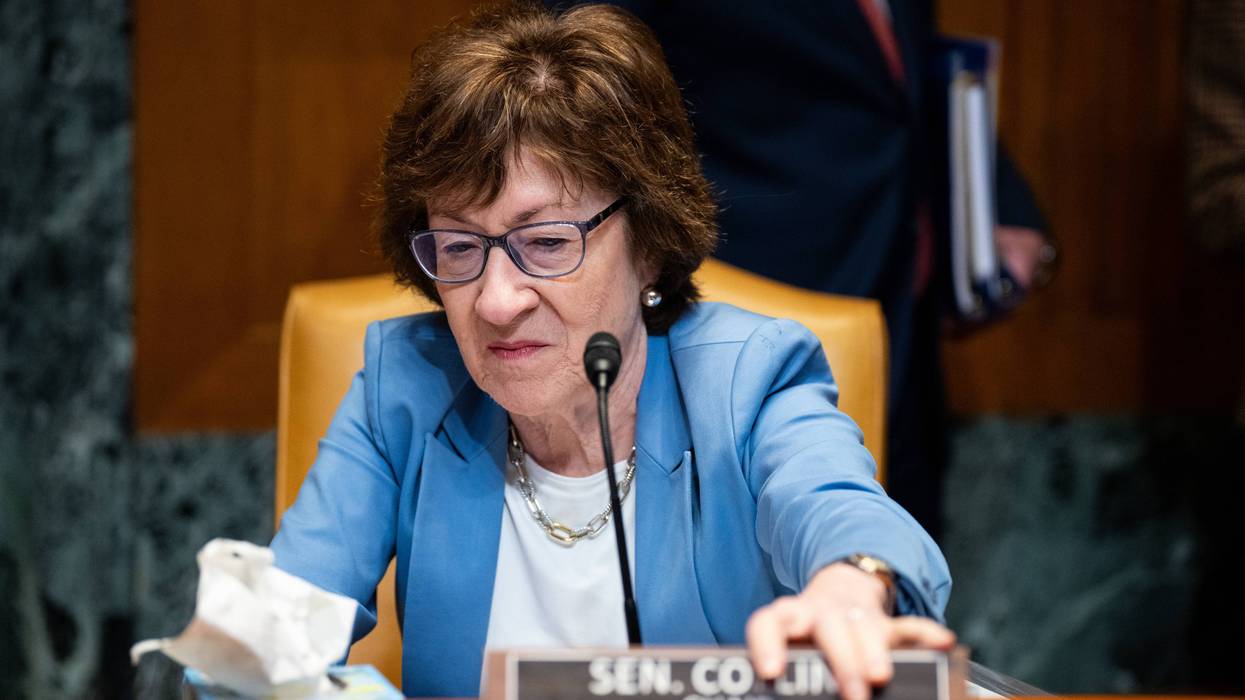
Democratic US Senate candidate Troy Jackson on Tuesday castigated his Republican opponent, incumbent Sen. Susan Collins, for voting to funnel tens of millions of dollars to Immigration and Customs Enforcement just over a month before one of the agency's officers killed 25-year-old Johan Sebastián Durán Guerrero in Biddeford, Maine.
"Senator Collins paid for the bullets at [President] Donald Trump's command. Now she wants credit for not pulling the trigger," Jackson said in his closing remarks at the third debate of the critical US Senate contest. The debate was held three months to the day after ICE agent David Brouillette shot and killed Durán Guerrero—a father and Colombian national who had been authorized to work in the US—during a traffic stop.
Jackson pointed to Collins' June vote in favor of a $70 billion funding package that included nearly $40 billion for ICE, whose agents Trump has unleashed on American cities with deadly consequences. According to a CBS News review, federal immigration agents have killed at least nine people and injured over a dozen more in roughly 30 shootings so far during Trump's second White House term.
Days after the shooting in Biddeford, Collins—who chairs the powerful Senate Appropriations Committee—declined to say she regretted supporting the additional ICE funding, which had few meaningful guardrails.
During Tuesday's debate, Collins admitted that "far too many ICE officers were hired and deployed without adequate vetting and training" and touted funding she secured for body cameras and "deescalation training" for immigration agents. (Collins voted against a Democratic amendment to the $70 billion funding package that would have required federal immigration agents to wear body cameras and make footage "accessible to Congress.")
Jackson said marginal reforms aren't enough to rein in "a rogue agency that's doing Trump's bidding."
"I do believe it's important to get rid of it and take that money and prioritize it into existing law enforcement," said Jackson. "So, no, I'm not going to stand up for ICE, and I don't think Senator Collins should either."
"For 23 years, since its inception, DHS has been utilized by the government to target and persecute those they consider the public enemy," Ramirez said.
In response to the agency's rampant abuses during President Donald Trump's second term, many elected Democrats have warmed to the idea of abolishing US Immigration and Customs Enforcement. But one progressive lawmaker is pushing to go a step further: abolishing the entire Department of Homeland Security.
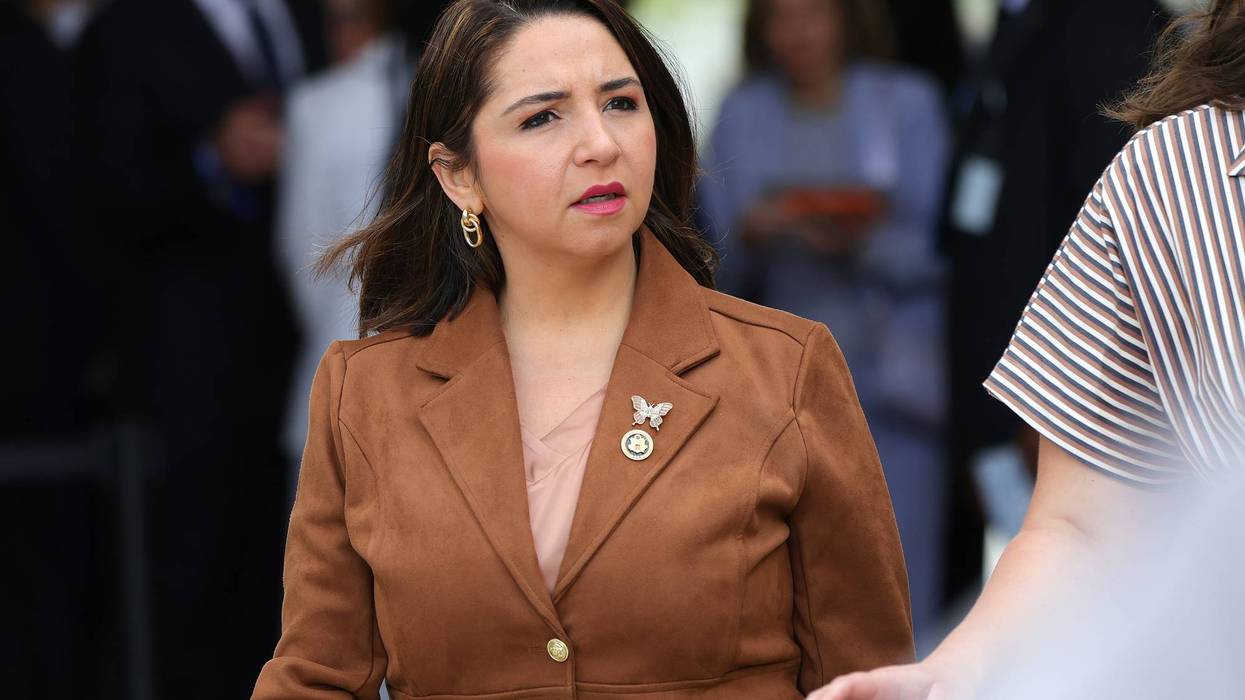
Rep. Delia Ramirez (D-Ill.) introduced legislation on Tuesday that would repeal all “duplicative and overreaching terrorism laws,” including getting rid of DHS, which was created in 2003 following the September 11 terrorist attacks.
The bill, titled the Reimagining Safety Act, would not only eliminate ICE and Customs and Border Protection (CBP). It seeks to eliminate immigration detention altogether and begin the process of replacing it with a civil court-based immigration system run through the US Department of Justice (DOJ).
In a dramatic departure from current immigration procedures, all deportations would need to be approved by Congress before they could proceed.
The bill comes just one day after agents with the DHS Investigations unit raided the home of Ramirez's colleague, Rep. Ilhan Omar (D-Minn.), as part of a federal criminal investigation related to her citizenship documents.
The investigation---which follows years of attacks by President Donald Trump and other Republicans against Omar's Somali background and Muslim faith, and comes just weeks before an election---has been described by critics as intimidation against a political opponent.
"For almost a decade, Trump and Republicans have lied about Congresswoman Omar to silence her dissent," Ramirez said on Monday. "My sister [Ilhan] has not backed down, so now they are using DHS and the federal government to target and persecute her."
"We must strip them of their weapons," she said. "We must dismantle DHS."
Under Ramirez's legislation, a new agency called the Department of Community Safety would assume DHS's duties. This would include running the Federal Emergency Management Agency (FEMA), which handles the federal response to natural disasters and other emergencies.
The new agency would use DHS's massive pot of federal funding for programs that aim to stop gun violence and other crime; provide support to asylum seekers at the border; redirect federal resources toward community needs like healthcare, housing, education, and emergency preparedness; and support community-based safety programs that do not adopt the militarized law enforcement of DHS.
Other functions of DHS would be scattered across different agencies: Immigration enforcement would belong to the DOJ, the Department of Transportation would take over the Transportation Security Administration and Coast Guard, and the Treasury Department would conduct customs enforcement.
Some of the expansive powers introduced during the War on Terror would also be rolled back: Those without criminal convictions or warrants would no longer be able to be put on "no-fly" lists, which civil liberties advocates have long criticized for stripping people of their right to travel on arbitrary, often racist, grounds.
The legislation would also eliminate the authority of the secretary of state to declare "foreign terrorist" organizations, a power that has been wielded to criminalize protest.
Ramirez told The Intercept that the need to abolish the agency was also underscored by an ICE agent's shooting of 28-year-old Oscar Belgal in the neck last week in New York. Belgal was shot through the window of his car while his 5-year-old child was in the back seat. In the past year, ICE agents have shot at least 25 people, and six of those shootings have been fatal.
Since Trump's return to office in January 2025, at least 58 people have died in immigration custody, according to the ACLU—a dramatic spike from previous administrations.

The rising death toll comes as the Trump administration and Republican Congress have dramatically expanded DHS and its budget to create a massive network of new detention camps, where immigrants (and some US citizens)—most of whom have not been convicted of crimes—have been disappeared, often arbitrarily, denied access to legal representation, and subjected to severe physical mistreatment.
Some noncitizens have been targeted explicitly over their political speech, including the hundreds of students who suddenly found their legal status stripped over their participation in pro-Palestine protests, many of whom were summarily arrested and faced with the threat of deportation.
Ramirez told The Intercept all of these were examples of how DHS is "not rogue," but working as designed.
"For 23 years, since its inception, DHS has been utilized by the government to target and persecute those they consider the public enemy," she said, "whether it is Muslim Americans, Haitians escaping violence, Latinos yearning for a better life, or dissenting voices demanding an end to the genocide in Palestine and the kidnapping of our neighbors.”

During the second Trump administration, public opinion has dramatically shifted against ICE, to the point where a plurality of voters, 48%, said they wanted the agency abolished in a July YouGov poll. In a February poll by the Public Religion Institute, 60% said they opposed increasing ICE's budget, compared with just 36% who favored it.
“In the past, the type of policy we are fighting for would have been written off as outlandish, too ‘extreme,’ or simply put, impossible," said Viviana Baraja, a Chicago-based immigrants' rights advocate who has helped to launch Ramirez's proposal.
"I have seen this administration make the most impossible nightmares possible," Baraja said. "And in the most distorted way, it has strengthened my resolve that if the worst can be possible, we can also dare to dream and to believe that the best can be possible too."
"We need Medicare for All," one critic said. "No private insurance necessary."
Corporate-backed Democrats evidently see the writing on the wall.
The latest polling from Axios-Ipsos American Health Index, released Wednesday, found that a purality of Americans support replacing the for-profit health insurance industry with a government-run Medicare for All plan, and that 62% of Democrats back the idea. Supporters of a single-payer healthcare program like those that have long existed in the United States' peer countries swept primary races across the US this year. And one of the top potential 2028 Democratic presidential candidates, Rep. Alexandria Ocasio-Cortez (D-NY), is a vehement supporter of the idea.
But instead of simply joining efforts to extend the popular Medicare program to everyone in the US, Majority Democrats—a group of Democratic lawmakers aimed at "reshaping and growing" the party, with billionaire hedge fund manager Stephen Mandel as its top funder—is intent on recycling an old proposal, with a new name.
The group introduced "Medicare for Americans" in a six-minute video posted on social media Tuesday—one that essentially described a "public option"—or a government-run healthcare program that would "compete" with health insurers instead of dismantling the $5.3 trillion-per-year for-profit system.
The video describes a plan similar to one unveiled in 2020 by former Transportation Secretary Pete Buttigieg, then a presidential candidate, who called his proposal "Medicare for All Who Want It."
"If we want to earn voters' trust back," says the narration, "we need a real solution... A revolutionary plan that will make a real difference in how we handle healthcare in this country."
The plan would "offer every American who is sick and tired of private insurance a plan through Medicare," the narrator continues. "People who want to keep the private insurance they have should be able to."
Sick of our broken healthcare system?Medicare is one of the most popular programs in American history. Why not give people the choice to enroll—and force insurance companies to compete?That’s Medicare for Americans. https://t.co/HQ8aIPPBRy
— Majority Democrats (@MajorityDems) October 11, 2026
The video goes on to say that proponents of Medicare for All, like Sen. Bernie Sanders (I-Vt.) and Ocasio-Cortez, want to "blow up the whole system and tax the hell out of everyday Americans," while Republicans want to keep a "dysfunctional status quo."
It warns that Medicare for All "comes with a $40 trillion price tag," naming the estimated cost over a decade. But it neglects to mention that the annual cost of the current healthcare system—$5.3 trillion in 2024—is about $1 trillion higher than the annual cost of Medicare for All that was projected by researchers at Yale School of Public Health in an August study. Americans are also spending more on healthcare following the Republican Party's Medicaid cuts and refusal to extend subsidies under the Affordable Care Act.
"In one Axios-Ipsos survey, two-thirds of Americans, including half of Republicans, believe the federal government should be willing to increase public healthcare spending to lower consumer costs. But it’s misleading to suggest Medicare for All would cost more than our current system," noted The Lever, calling Medicare for Americans "the billionaire option."
Lis Smith, a Democratic political operative who has worked for Buttigieg and disgraced former New York Gov. Andrew Cuomo, praised the proposal as a "transformative, once-in-a-generation healthcare reform" that is "within reach... if Democrats are smart."
But one progressive streamer wrote that Majority Democrats "want to pretend like they support progressive healthcare policy but are just protecting private insurance."
"We need Medicare for All," she said. "No private insurance necessary."
"She needs to get much better, fast, otherwise she'll break Scaramucci's record," said one unnamed White House official.
New White House Press Secretary Katie Zacharia gave her debut press conference on Tuesday and was quickly panned by critics, including some anonymous Trump administration officials.
Zacharia's first briefing, which lasted less than 15 minutes, was marked by halting speech and apparent difficulty in reading her prepared remarks.
The Trump press secretary took just three questions from right-wing outlets—Fox News, The Daily Mail, and Breitbart—before abruptly ending the briefing.
😬 Katie Zacharia's first press briefing was brutally bad 😬Trump managed to find a press secretary who can barely read, but she does have the number one qualification -- looking like IvankaHere's a supercut from Zacharia's first briefing, which made Karoline Leavitt seem like Ronald Reagan
— Aaron Rupar (@atrupar) October 13, 2026
An anonymous Trump administration official told MS NOW White House correspondent Jake Traylor that Zacharia might already be on thin ice after such a poor first performance.
The official compared her to former White House Press Secretary Anthony Scaramucci, who was infamously fired from his job after only 11 days.
"Getting behind the podium is tough, but she got off on the wrong foot," the official said. "She needs to get much better, fast, otherwise she'll break Scaramucci's record."
Scaramucci himself predicted that Trump wouldn't long tolerate Zacharia's bumbling performance, writing in Tuesday social media post that "the clock is running" on her tenure.
Other White House officials told CNN's Kaitlan Collins that they were similarly unsure how long Zacharia would last on the job, with one official describing her performance as "unusual" and another calling it "brutal."
MS NOW's Pete Alexander said he spoke with "a former high-level Trump aide" who said of Zacharia, "I think she is going to be a train wreck."
Journalist Aaron Rupar described Zacharia's debut as "an SNL cold open come to life," adding that "she can barely read."
Mother Jones' Inae Oh observed that Zacharia "appeared physically strained as she struggled to deliver prepared remarks" during her first day on the job, "as if the task of reading was too much to endure."
"By turns halting and anxious," Oh wrote, "it made [former White House Press Secretary] Karoline Leavitt, who resigned in September, seem like a rhetorical genius."
Democratic political strategist Adam Parkhomenko sarcastically praised Zacharia as doing "a great job for someone who was clearly pissing herself."
New Yorker theater critic Emily Nussbaum described Zacharia as "a shining role model for women crippled by imposter syndrome."
"Although the likelihood of both dangers remains low, the scale of harm, should they be realized, would inflict an apocalypse on humanity."
A comprehensive new assessment of worldwide health threats published in The Lancet concludes that nuclear war and "malicious use" of artificial intelligence pose existential risks to humanity over the remainder of the 21st century, a finding that comes amid mounting global concern about the implications of rapid AI advancements.
The Lancet Commission on 21st Century Global Threats to Health, comprised of dozens of experts across a range of fields, identifies 17 leading threats to human health and society, from the fossil fuel-driven climate emergency and pandemics to childhood malnutrition, income inequality, conventional war, and air pollution. Two of the threats carry "extinction potential" this century, according to the commission: nuclear conflict and misuse of AI.
"Although the likelihood of both dangers remains low, the scale of harm, should they be realized, would inflict an apocalypse on humanity," The Lancet warned in an editorial accompanying the new analysis, which was presented Sunday at the World Health Summit in Berlin, Germany.
The commission notes that AI's "potential to advance health and wellbeing is enormous," but "the risk of catastrophic harm is equally profound." The authors of the analysis point to several ways in which AI could be "used maliciously," including the design of bioweapons, autonomous nukes, and invasive ransomware targeting global healthcare and financial institutions.
"The final pathway is loss of control through the emergence of agentic, unaligned artificial general intelligence," the analysis states. "This loss of control includes AI systems creating subgoals that lead to the seeking of human disempowerment or elimination, particularly if such agents autonomously gain access to financial networks, key infrastructure, or physical tools in the real world."
Regarding the existential threat of nuclear conflict, the study authors note that a famine stemming from atomic warfare "would affect all regions of the world, including those far from the conflict itself, through reduced caloric availability and cascading food-system failures."
"The devastation that could result from nuclear war cannot be overstated," the analysis argues. "The risk is not hypothetical: We found that between 1948 and 2010, 22 nuclear weapon accidents and 21 close calls were recorded. Future nuclear conflicts could occur due to multiple distinct mechanisms, including nuclear exchange arising from international crises between nuclear powers, accidental detonation of nuclear warheads, terrorist use of nuclear devices, and AI deployment of nuclear weapons."
To avert the most catastrophic possible outcomes and mitigate other threats, the commission calls for "collective action between nations and within nations," emphasizing that risks posed by AI, nuclear war, the climate crisis, and future pandemics "cannot be solved by governments or other actors acting for their own national populations alone."
Christopher Murray, director of the University of Washington's Institute for Health Metrics and Evaluation and co-chair of the new commission, said in a statement that "the striking finding is not only the scale of these threats, but that humanity still has the agency to act."
"Across all 17 catastrophic threats, the decisions made by leaders today will shape the health and wellbeing of the next generation," said Murray. "But delaying action will only serve to shift and increase the costs into the future."
“I’m sure the oil and asbestos companies would have liked to [regulate themselves] as well,” said computer scientist Geoffrey Hinton in reference to President Donald Trump's approach to overseeing the AI industry.
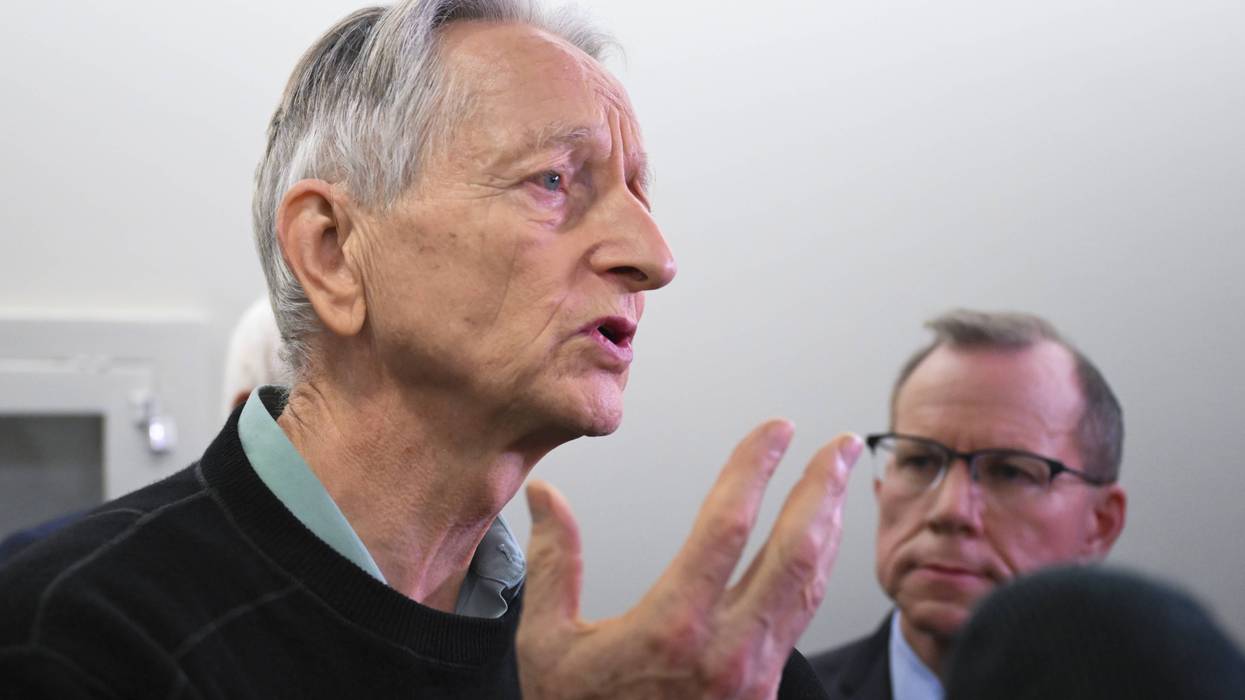
Computer scientist Geoffrey Hinton, dubbed the "godfather" of artificial intelligence, delivered a withering assessment of President Donald Trump's understanding of the technology in an interview published by The Guardian on Tuesday.
The 78-year-old Hinton, a professor emeritus at the University of Toronto, told The Guardian that he was particularly unimpressed with the president's insistence that AI be rebranded as "superintelligence," which is a concept that he noted has long been clearly defined by computer scientists.
"Superintelligence means smarter than people, and has been around for at least 20 years," Hinton explained. "It’s got a very clear meaning. And now he says we’re going to call AI ‘superintelligence’. You can’t make it smarter than people just by calling it smarter than people."
Hinton also denounced Trump as a "corrupt, senile felon," and ridiculed the president's declaration that the AI industry is fully capable of policing itself without government intervention.
“I’m sure the oil and asbestos companies would have liked to [regulate themselves] as well,” he said. “Do we think tobacco companies should have been allowed to design the warnings on the packets? So that they could print them in a six-point font, in dark grey on black?”
In a Truth Social post last month, Trump suggested that his own intellect was singlehandedly capable of regulating AI, a technology so complicated that even its own creators have acknowledged difficulties in understanding it.
“The only control or ‘guardrails’ that AI needs is a STRONG AND SMART (High IQ!) PRESIDENT,” Trump wrote, “and the USA has that, in spades!”
Elsewhere in the interview, Hinton pushed back on critics who accused him of predicting that AI will wipe out human life. Rather, Hinton said he is only arguing there is an uncomfortably high probability that the technology could pose an extinction risk.
"I'm trying to convey that there is a really serious possibility of something happening," Hinton said. "If, for example, you're told there was a 10% possibility of a bus crashing, you wouldn’t get on the bus. The point of giving numbers is to say this is a serious risk."
The computer scientist pointed to the recent incident where hundreds of agents in OpenAI's cybersecurity test environment escaped confinement and hacked into machine learning company Hugging Face as something that "used to be the domain of science fiction."
Hinton said the stakes were particularly grave given AI's potential destructive power.
"The unique problem with AI is that if it goes wrong, if it takes over, you don’t get a second chance," he warned. "We can’t say, ‘Well, we lost that time. Let’s rerun the game.’ It’s not like that."