SUBSCRIBE TO OUR FREE NEWSLETTER
Daily news & progressive opinion—funded by the people, not the corporations—delivered straight to your inbox.
5
#000000
#FFFFFF
To donate by check, phone, or other method, see our More Ways to Give page.
Daily news & progressive opinion—funded by the people, not the corporations—delivered straight to your inbox.
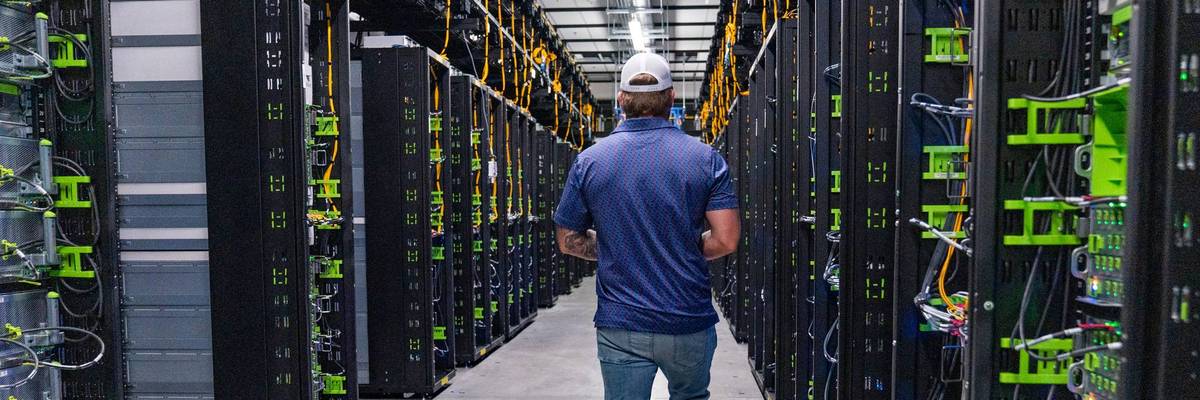
Meta mechanical systems expert Chris David leads a tour of Meta's data center in Temple, Texas on July 22, 2026.
A group of Democratic senators warned the company's CEO, Mark Zuckerberg, that the tax maneuver violates "the spirit and, potentially, the letter" of federal law.
A group of Democratic senators wrote Tuesday that Meta is violating "the spirit and, potentially, the letter" of federal tax law by using a research and development tax credit to save billions of dollars on its massive data center buildout.
In a letter to Meta CEO Mark Zuckerberg, the Senate Democrats noted that the $1.9 trillion company has "indicated on federal regulatory filings that it has used the federal research credit to reduce its federal income tax liability by $6.6 billion between 2023-2025." By one measure, the senators noted, Meta alone could be responsible for "more than 10% of all research credits claimed in the US."
"While it remains unclear exactly how Meta was able to reduce its federal tax liability by over $6.6 billion in the last three years using federal research credits, it appears from published reports that a substantial share is by claiming the research credit related to its massive AI data center build out," wrote the group of lawmakers led by Sen. Ron Wyden (D-Ore.), the ranking member of the Senate Finance Committee.
Last month, The New York Times reported that Meta claims in its federal tax filings that the company's AI data centers are "a giant experiment that could fail," allowing it to "tap into a tax credit intended for research and experimentation." Meta specifically characterizes its expensive, resource-devouring data centers as "pilot models."
"Meta’s own accountants recognize that the strategy is on shaky legal ground," the Times reported. "In disclosures buried in securities filings, the tech giant warns that billions in tax savings are vulnerable to being overturned by the IRS, in large part because of 'uncertainties with our research tax credits.'"
In their letter to Zuckerberg, the Democratic senators wrote that the research tax credit "can be a useful and necessary tool to support our nation’s innovation economy and cutting-edge research."
"Subsidizing your AI data center build is not close to meeting this standard," the lawmakers added, demanding that the company provide specific information on its use of the federal research tax credit and its legal justification for the maneuver.
The senators sent their letter to Zuckerberg about a week after more than two dozen House Democrats demanded that the Trump administration prevent Meta and other tech giants from exploiting an "overly expansive interpretation of qualifying expenditures" to reap billions in taxpayer subsidies to fund data centers that a majority of Americans oppose.
"Allowing ordinary data center construction and deployment costs to qualify would significantly expand the research credit beyond its intended purpose and risk converting an incentive for technological experimentation into a subsidy for capital expenditures that companies would undertake in the ordinary course of business," the House Democrats wrote in an October 7 letter to Treasury Secretary Scott Bessent.
Dear Common Dreams reader, It’s been nearly 30 years since I co-founded Common Dreams with my late wife, Lina Newhouser. We had the radical notion that journalism should serve the public good, not corporate profits. It was clear to us from the outset what it would take to build such a project. No paid advertisements. No corporate sponsors. No millionaire publisher telling us what to think or do. Many people said we wouldn't last a year, but we proved those doubters wrong. Together with a tremendous team of journalists and dedicated staff, we built an independent media outlet free from the constraints of profits and corporate control. Our mission has always been simple: To inform. To inspire. To ignite change for the common good. Building Common Dreams was not easy. Our survival was never guaranteed. When you take on the most powerful forces—Wall Street greed, fossil fuel industry destruction, Big Tech lobbyists, and uber-rich oligarchs who have spent billions upon billions rigging the economy and democracy in their favor—the only bulwark you have is supporters who believe in your work. But here’s the urgent message from me today. It's never been this bad out there. And it's never been this hard to keep us going. At the very moment Common Dreams is most needed, the threats we face are intensifying. We need your support now more than ever. We don't accept corporate advertising and never will. We don't have a paywall because we don't think people should be blocked from critical news based on their ability to pay. Everything we do is funded by the donations of readers like you. When everyone does the little they can afford, we are strong. But if that support retreats or dries up, so do we. Will you donate now to make sure Common Dreams not only survives but thrives? —Craig Brown, Co-founder |
A group of Democratic senators wrote Tuesday that Meta is violating "the spirit and, potentially, the letter" of federal tax law by using a research and development tax credit to save billions of dollars on its massive data center buildout.
In a letter to Meta CEO Mark Zuckerberg, the Senate Democrats noted that the $1.9 trillion company has "indicated on federal regulatory filings that it has used the federal research credit to reduce its federal income tax liability by $6.6 billion between 2023-2025." By one measure, the senators noted, Meta alone could be responsible for "more than 10% of all research credits claimed in the US."
"While it remains unclear exactly how Meta was able to reduce its federal tax liability by over $6.6 billion in the last three years using federal research credits, it appears from published reports that a substantial share is by claiming the research credit related to its massive AI data center build out," wrote the group of lawmakers led by Sen. Ron Wyden (D-Ore.), the ranking member of the Senate Finance Committee.
Last month, The New York Times reported that Meta claims in its federal tax filings that the company's AI data centers are "a giant experiment that could fail," allowing it to "tap into a tax credit intended for research and experimentation." Meta specifically characterizes its expensive, resource-devouring data centers as "pilot models."
"Meta’s own accountants recognize that the strategy is on shaky legal ground," the Times reported. "In disclosures buried in securities filings, the tech giant warns that billions in tax savings are vulnerable to being overturned by the IRS, in large part because of 'uncertainties with our research tax credits.'"
In their letter to Zuckerberg, the Democratic senators wrote that the research tax credit "can be a useful and necessary tool to support our nation’s innovation economy and cutting-edge research."
"Subsidizing your AI data center build is not close to meeting this standard," the lawmakers added, demanding that the company provide specific information on its use of the federal research tax credit and its legal justification for the maneuver.
The senators sent their letter to Zuckerberg about a week after more than two dozen House Democrats demanded that the Trump administration prevent Meta and other tech giants from exploiting an "overly expansive interpretation of qualifying expenditures" to reap billions in taxpayer subsidies to fund data centers that a majority of Americans oppose.
"Allowing ordinary data center construction and deployment costs to qualify would significantly expand the research credit beyond its intended purpose and risk converting an incentive for technological experimentation into a subsidy for capital expenditures that companies would undertake in the ordinary course of business," the House Democrats wrote in an October 7 letter to Treasury Secretary Scott Bessent.
A group of Democratic senators wrote Tuesday that Meta is violating "the spirit and, potentially, the letter" of federal tax law by using a research and development tax credit to save billions of dollars on its massive data center buildout.
In a letter to Meta CEO Mark Zuckerberg, the Senate Democrats noted that the $1.9 trillion company has "indicated on federal regulatory filings that it has used the federal research credit to reduce its federal income tax liability by $6.6 billion between 2023-2025." By one measure, the senators noted, Meta alone could be responsible for "more than 10% of all research credits claimed in the US."
"While it remains unclear exactly how Meta was able to reduce its federal tax liability by over $6.6 billion in the last three years using federal research credits, it appears from published reports that a substantial share is by claiming the research credit related to its massive AI data center build out," wrote the group of lawmakers led by Sen. Ron Wyden (D-Ore.), the ranking member of the Senate Finance Committee.
Last month, The New York Times reported that Meta claims in its federal tax filings that the company's AI data centers are "a giant experiment that could fail," allowing it to "tap into a tax credit intended for research and experimentation." Meta specifically characterizes its expensive, resource-devouring data centers as "pilot models."
"Meta’s own accountants recognize that the strategy is on shaky legal ground," the Times reported. "In disclosures buried in securities filings, the tech giant warns that billions in tax savings are vulnerable to being overturned by the IRS, in large part because of 'uncertainties with our research tax credits.'"
In their letter to Zuckerberg, the Democratic senators wrote that the research tax credit "can be a useful and necessary tool to support our nation’s innovation economy and cutting-edge research."
"Subsidizing your AI data center build is not close to meeting this standard," the lawmakers added, demanding that the company provide specific information on its use of the federal research tax credit and its legal justification for the maneuver.
The senators sent their letter to Zuckerberg about a week after more than two dozen House Democrats demanded that the Trump administration prevent Meta and other tech giants from exploiting an "overly expansive interpretation of qualifying expenditures" to reap billions in taxpayer subsidies to fund data centers that a majority of Americans oppose.
"Allowing ordinary data center construction and deployment costs to qualify would significantly expand the research credit beyond its intended purpose and risk converting an incentive for technological experimentation into a subsidy for capital expenditures that companies would undertake in the ordinary course of business," the House Democrats wrote in an October 7 letter to Treasury Secretary Scott Bessent.