SUBSCRIBE TO OUR FREE NEWSLETTER
Daily news & progressive opinion—funded by the people, not the corporations—delivered straight to your inbox.
5
#000000
#FFFFFF
To donate by check, phone, or other method, see our More Ways to Give page.
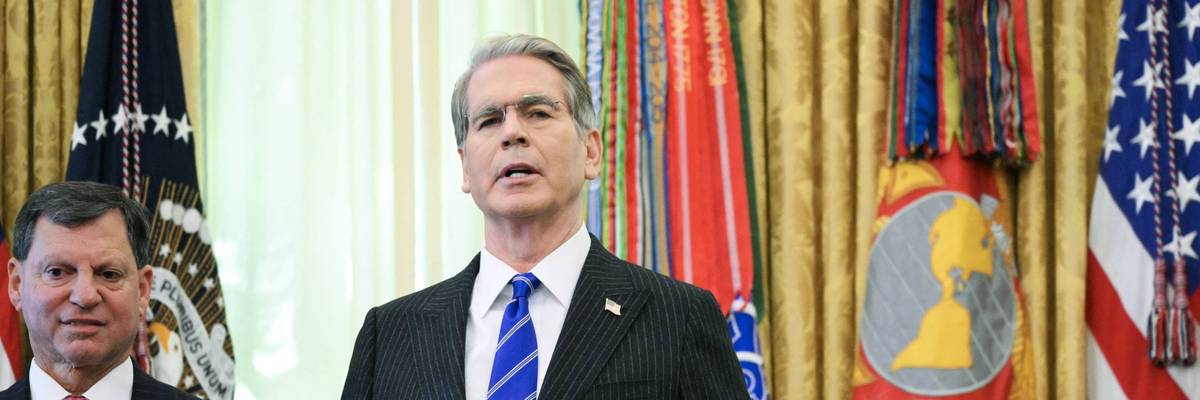
With the midterm elections less than three weeks away, US President Donald Trump's administration has delayed the release of Internal Revenue Service data showing how the Republican budget legislation that he signed into law last year has impacted families up and down the income distribution.
Politico reported Wednesday that the IRS "typically releases the data in the wake of each filing season, but this year's rollout is more anticipated because it's expected to provide the first detailed look at how taxpayers are taking advantage of the One Big Beautiful Bill Act, including its new deductions for overtime wages and tipped income." The outlet added that the IRS, whose workforce has been gutted by the Trump administration, is "awaiting approval from the Treasury Department to publish the figures," which were scheduled to be released in July.
The New York Times reported last month that the Trump administration is also withholding IRS estimates of unpaid taxes.
Nina Olson, executive director of the Center for Taxpayer Rights and the former US taxpayer advocate, told Politico that she believes the administration is suppressing information that runs counter to its narrative about the One Big Beautiful Bill Act (OBBBA), which extended provisions of the 2017 Trump-GOP tax cuts that disproportionately benefited the richest Americans and large corporations.
"I think they are hiding stuff that doesn't line up with all the crowing the CEO has been doing," Olson said, referring to IRS chief executive Frank Bisignano, who has celebrated the OBBBA as "historic tax relief for working families."
But an analysis released last week by the Institute on Taxation and Economic Policy showed that the OBBBA "overwhelmingly benefits the rich and corporations."
"While proponents of OBBBA often describe certain portions of the law that they argue benefit the middle class (such as tax breaks for tips and overtime) these provisions are a very small portion of the overall legislation which overwhelmingly benefits high-income people and corporations," the group observed. "Since the 2025 law was enacted, enormous profitable corporations like Meta, Amazon, Google, Tesla, and many others have paid extremely low effective tax rates (from 0 percent to 8 percent) in large part due to OBBBA."
The analysis found that, overall, Trump's major economic policies have hiked taxes and consumer costs for low- and middle-income families while cutting them for the top 1%.
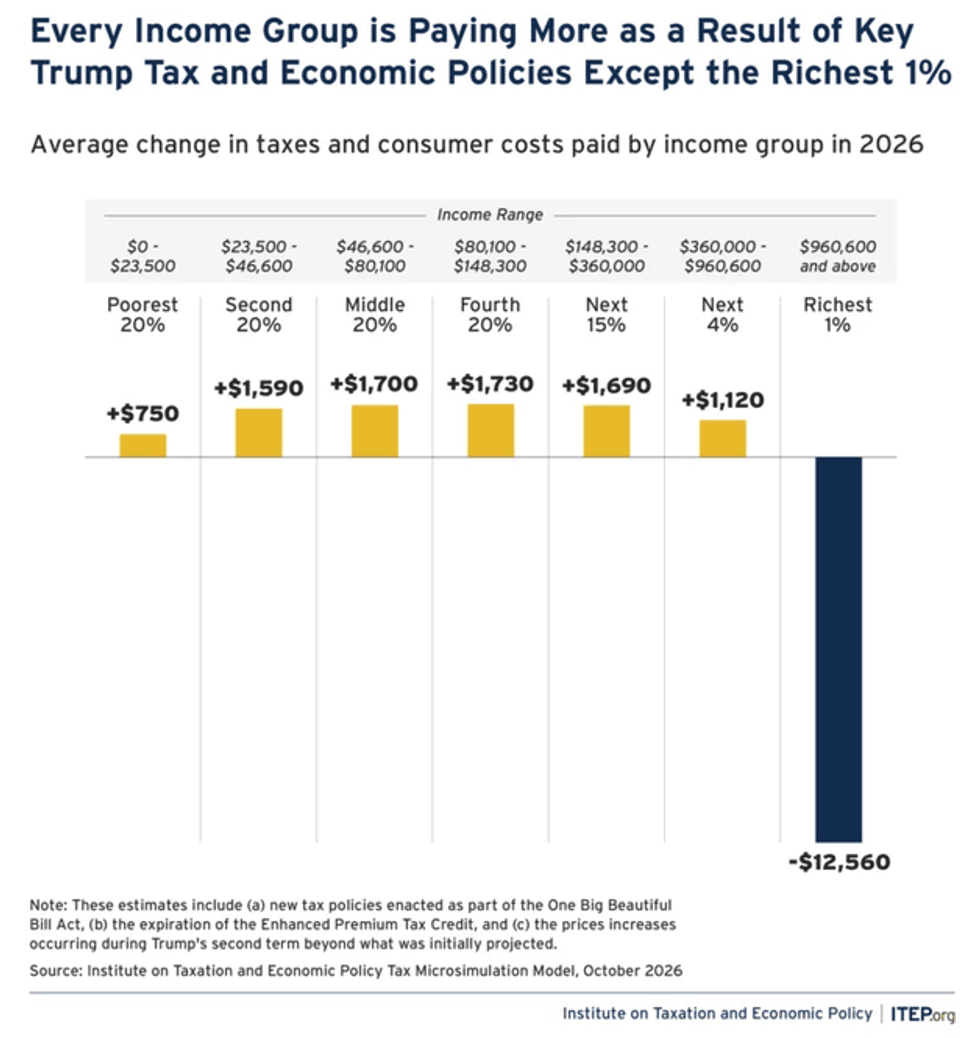
“The tax cuts Americans were promised—which were tilted heavily to the top to start—are being overwhelmed by higher prices and higher healthcare costs for most families,” said Steve Wamhoff, ITEP's federal policy director. “When you look at the full picture rather than tax cuts in isolation, the result is striking: The typical American in every income group is paying more, except that the richest 1% is the one group that comes out ahead.”
With the midterm elections less than three weeks away, US President Donald Trump's administration has delayed the release of Internal Revenue Service data showing how the Republican budget legislation that he signed into law last year has impacted families up and down the income distribution.
Politico reported Wednesday that the IRS "typically releases the data in the wake of each filing season, but this year's rollout is more anticipated because it's expected to provide the first detailed look at how taxpayers are taking advantage of the One Big Beautiful Bill Act, including its new deductions for overtime wages and tipped income." The outlet added that the IRS, whose workforce has been gutted by the Trump administration, is "awaiting approval from the Treasury Department to publish the figures," which were scheduled to be released in July.
The New York Times reported last month that the Trump administration is also withholding IRS estimates of unpaid taxes.
Nina Olson, executive director of the Center for Taxpayer Rights and the former US taxpayer advocate, told Politico that she believes the administration is suppressing information that runs counter to its narrative about the One Big Beautiful Bill Act (OBBBA), which extended provisions of the 2017 Trump-GOP tax cuts that disproportionately benefited the richest Americans and large corporations.
"I think they are hiding stuff that doesn't line up with all the crowing the CEO has been doing," Olson said, referring to IRS chief executive Frank Bisignano, who has celebrated the OBBBA as "historic tax relief for working families."
But an analysis released last week by the Institute on Taxation and Economic Policy showed that the OBBBA "overwhelmingly benefits the rich and corporations."
"While proponents of OBBBA often describe certain portions of the law that they argue benefit the middle class (such as tax breaks for tips and overtime) these provisions are a very small portion of the overall legislation which overwhelmingly benefits high-income people and corporations," the group observed. "Since the 2025 law was enacted, enormous profitable corporations like Meta, Amazon, Google, Tesla, and many others have paid extremely low effective tax rates (from 0 percent to 8 percent) in large part due to OBBBA."
The analysis found that, overall, Trump's major economic policies have hiked taxes and consumer costs for low- and middle-income families while cutting them for the top 1%.
“The tax cuts Americans were promised—which were tilted heavily to the top to start—are being overwhelmed by higher prices and higher healthcare costs for most families,” said Steve Wamhoff, ITEP's federal policy director. “When you look at the full picture rather than tax cuts in isolation, the result is striking: The typical American in every income group is paying more, except that the richest 1% is the one group that comes out ahead.”
With the midterm elections less than three weeks away, US President Donald Trump's administration has delayed the release of Internal Revenue Service data showing how the Republican budget legislation that he signed into law last year has impacted families up and down the income distribution.
Politico reported Wednesday that the IRS "typically releases the data in the wake of each filing season, but this year's rollout is more anticipated because it's expected to provide the first detailed look at how taxpayers are taking advantage of the One Big Beautiful Bill Act, including its new deductions for overtime wages and tipped income." The outlet added that the IRS, whose workforce has been gutted by the Trump administration, is "awaiting approval from the Treasury Department to publish the figures," which were scheduled to be released in July.
The New York Times reported last month that the Trump administration is also withholding IRS estimates of unpaid taxes.
Nina Olson, executive director of the Center for Taxpayer Rights and the former US taxpayer advocate, told Politico that she believes the administration is suppressing information that runs counter to its narrative about the One Big Beautiful Bill Act (OBBBA), which extended provisions of the 2017 Trump-GOP tax cuts that disproportionately benefited the richest Americans and large corporations.
"I think they are hiding stuff that doesn't line up with all the crowing the CEO has been doing," Olson said, referring to IRS chief executive Frank Bisignano, who has celebrated the OBBBA as "historic tax relief for working families."
But an analysis released last week by the Institute on Taxation and Economic Policy showed that the OBBBA "overwhelmingly benefits the rich and corporations."
"While proponents of OBBBA often describe certain portions of the law that they argue benefit the middle class (such as tax breaks for tips and overtime) these provisions are a very small portion of the overall legislation which overwhelmingly benefits high-income people and corporations," the group observed. "Since the 2025 law was enacted, enormous profitable corporations like Meta, Amazon, Google, Tesla, and many others have paid extremely low effective tax rates (from 0 percent to 8 percent) in large part due to OBBBA."
The analysis found that, overall, Trump's major economic policies have hiked taxes and consumer costs for low- and middle-income families while cutting them for the top 1%.
“The tax cuts Americans were promised—which were tilted heavily to the top to start—are being overwhelmed by higher prices and higher healthcare costs for most families,” said Steve Wamhoff, ITEP's federal policy director. “When you look at the full picture rather than tax cuts in isolation, the result is striking: The typical American in every income group is paying more, except that the richest 1% is the one group that comes out ahead.”