

SUBSCRIBE TO OUR FREE NEWSLETTER
Daily news & progressive opinion—funded by the people, not the corporations—delivered straight to your inbox.
5
#000000
#FFFFFF
To donate by check, phone, or other method, see our More Ways to Give page.
Daily news & progressive opinion—funded by the people, not the corporations—delivered straight to your inbox.

"For too long, AIPAC and its Republican megadonors have demanded our elected leaders unconditionally support the Israeli military and government—or else," said coalition member Jewish Voice for Peace Action. "Enough."
U.S. progressive groups "working together to take on the American Israel Public Affairs Committee and its affiliated dark money super PACs" on Monday announced the launch of the Reject AIPAC coalition, which is urging candidates for federal office to not accept endorsements or contributions from the nation's most prominent Zionist lobby.
Reject AIPAC says it "will organize Democratic voters and elected officials to reject the destructive influence of the Republican megadonor-backed AIPAC on the Democratic primary process and our government's policy towards Palestine and Israel."
"We have watched as AIPAC has done everything it can to silence growing dissent in Congress against [Israeli Prime Minister Benjamin] Netanyahu's assault on Gaza—which has killed over 31,000 Palestinians—even as Democratic voters overwhelmingly support a cease-fire and oppose sending more blank checks to the Israeli military," the coalition said in a statement.
"Now, AIPAC's Republican donor-funded super PAC is threatening to spend $100 million targeting the handful of Black and brown members of Congress who have led the calls for a cease-fire and the equal protection of Palestinian and Israeli lives," the groups continued.
Reject AIPAC members include Justice Democrats, Jewish Voice for Peace Action, IfNotNow, Working Families Party, Sunrise Movement, MPower Change Action Fund, Democratic Socialists of America, Our Revolution, Peace Action, National Iranian American Council, and Gen-Z for Change.
"For too long, AIPAC and its Republican megadonors have demanded our elected leaders unconditionally support the Israeli military and government—or else," Jewish Voice for Peace said on social media, adding, "Enough."
The coalition's launch comes as AIPAC taps a $100 million war chest from its United Democracy Project super PAC in a bid to defeat not only pro-Palestine congressional candidates but also anyone deemed insufficiently supportive of Israel as it wages a genocidal war on Gaza while perpetrating apartheid, occupation, settler colonization, and ethnic cleansing across the Palestinian territories.
"Already in this election year, pro-Israel candidates have been immensely successful in primaries, and we were proud to help elect Democrats and Republicans who stand with the Jewish state," AIPAC spokesperson Marshall Wittmann told The 19th on Monday.
"On Super Tuesday alone, 79 candidates endorsed by AIPAC won their primaries," he added. "We are continuing to evaluate races that involve detractors of the U.S.-Israel relationship."
Progressive lawmakers including Reps. Cori Bush (D-Mo.), who authored a cease-fire resolution co-sponsored by 18 House Democrats, and Rashida Tlaib (D-Mich.)—the only Palestinian American member of Congress—have found themselves in AIPAC's crosshairs. So have more moderate Democrats who AIPAC believes don't show enough support for Israel. In 2022 the group spent $4 million toward a successful effort to unseat two-term Michigan Congressman Andy Levin, a self-described Zionist and former president of his synagogue.
Reject AIPAC is emphasizing the lobby's right-wing backers, asserting that "we cannot let a dark money super PAC, especially one that has endorsed 109 insurrectionist election deniers, 200+ anti-abortion extremists, and is funded by [former President] Donald Trump and Nikki Haley's megadonors, undermine our democracy."
"Now is the time for the whole of the Democratic Party to Reject AIPAC once and for all," the group added. "The overwhelming influence of corporate super PACs on our democracy and elections has expanded the gap between voters and their elected leaders into a canyon that has been exploited by every special interest and corporate lobby. Rejecting AIPAC is a crucial step in putting voters back at the center of our democracy."
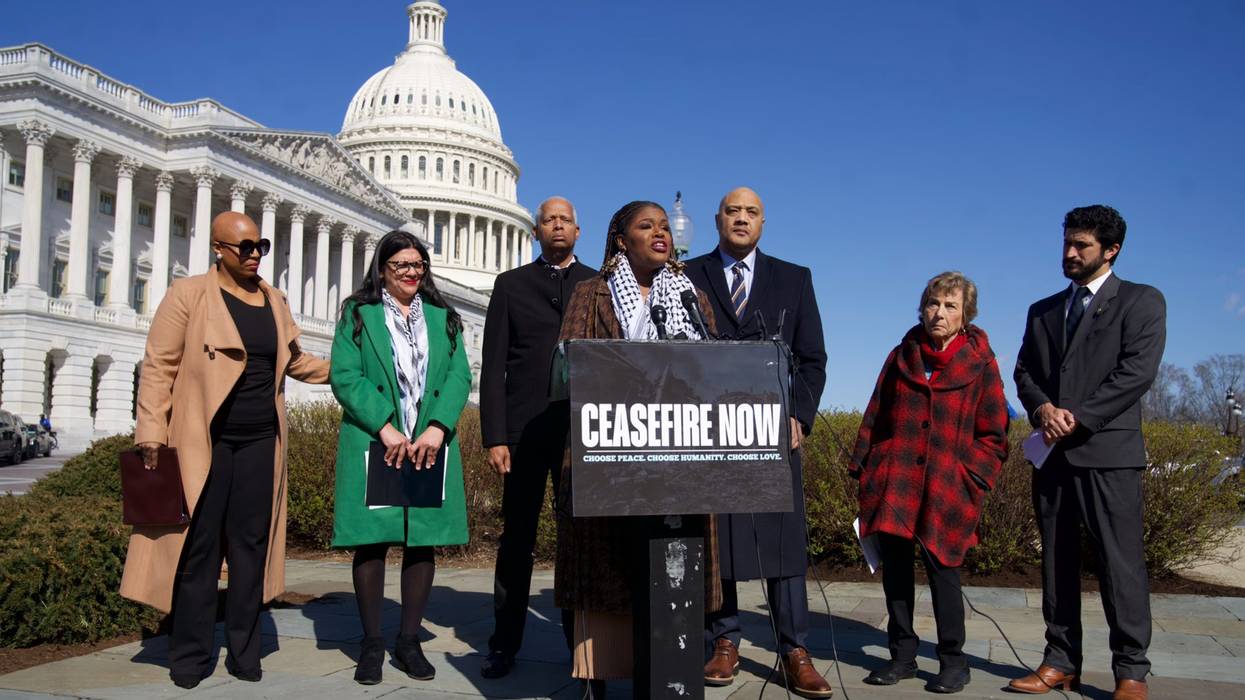
"AIPAC and their Republican mega-donors are targeting Black and brown Democratic incumbents with the same right-wing playbook across the country," warned Rep. Cori Bush.
Amidst global outcry over the ongoing assault on Gaza and the related humanitarian crisis it has wrought, the American Israel Public Affairs Committee's super PAC is set to spend a staggering $100 million against both pro-Palestine congressional progressives and more moderate Democratic candidates who the powerful lobby group believes don't sufficiently support Israel.
With increasing numbers of Democrats speaking out against the far-right government of Israeli Prime Minister Benjamin Netanyahu over its genocide in Gaza and violent repression in the occupied West Bank and East Jerusalem, AIPAC has shown zero tolerance for even the mildest criticism of Israeli government policies and practices.
Dave Min, a Democratic California state senator running for Rep. Katie Porter's (D-Calif.) House seat, has said very little publicly about Israel since the October 7 attacks, which he strongly condemned. He does not support a Gaza cease-fire. Min did, however, make the mistake of criticizing Netanyahu's leadership and Israeli settlement expansion during private talks with AIPAC leaders and members.
United Democracy Project, AIPAC's dark money group, retaliated by firing a broadside of television and mail ads hammering Min over his May 2023 drunk driving arrest as part of a $4.5 million blitz against him. Feeling the heat, Min turned to someone painfully familiar with AIPAC's wrath—former Michigan Congressman Andy Levin, a two-term Democratic incumbent, former synagogue president, and self-described Zionist who lost his seat following a $4 million AIPAC barrage during the 2022 Democratic primaries. The group targeted Levin over his opposition to Israel's occupation.
The former congressman told Politico this week that "most" candidates can't survive AIPAC's deep-pocketed attacks: "I'm afraid that they can be quite successful in wiping them out."
Progressives have hit back by spotlighting AIPAC's Republican benefactors, and the group's endorsement of over 100 GOP lawmakers who voted to subvert the 2020 presidential election in service of former President Donald Trump's "Big Lie" that Democrats rigged the contest.
"AIPAC and their Republican mega-donors are targeting Black and brown Democratic incumbents with the same right-wing playbook across the country," said Rep. Cori Bush (D-Mo.), an outspoken critic of Israel's war on Gaza and the author of an October cease-fire resolution subsequently co-sponsored by 18 House Democrats.
Rep. Mark Pocan (D-Wis.) recently called AIPAC "basically a wholly owned subsidiary of the GOP" and a "front group for conservative policy."
Referring to the National Rifle Association, the right-wing lobby group that fronts for the U.S. gun industry, Rep. Alexandria Ocasio-Cortez (D-N.Y.) last month slammed AIPAC as "the NRA of foreign policy."
Usamah Andrabi, communications director for Justice Democrats, told Politico that "a handful of Republican billionaire mega-donors are using AIPAC to spend in Democratic primaries against Black and brown progressives, funding primary campaigns against the most popular and progressive members, so this should be a scandal."
"The whole of the Democratic Party should be united in opposition to this," he added.
But it isn't, and part of the reason why is that many Democrats are beneficiaries of AIPAC's largesse. It wasn't a Republican who unseated Levin, but rather Democratic Rep. Haley Stevens—who has been staunchly supportive of Israel even as its military forces have killed and maimed more than 100,000 Palestinians, forcibly displaced around 90% of Gaza's 2.3 million people, and fueled growing famine by tightening an already crippling economic stranglehold on the besieged enclave.
House Minority Leader Hakeem Jeffries (D-N.Y.), another strong pro-Israel voice, counted AIPAC as his top donor during the last election cycle. AIPAC has also been a leading contributor to lawmakers including Reps. Ritchie Torres (D-N.Y.) and Josh Gottheimer (D-N.J.), who not only vocally support Israel, but also attack colleagues like Bush, Rep. Ilhan Omar (D-Minn.), and Rep. Rashida Tlaib (D-Mich.)—the only Palestinian American in Congress—for their pro-Palestinian views.
Democratic Majority for Israel, an AIPAC-connected group, is attacking progressives while backing nine House Democratic candidates, including Joana Weiss, who is running a nasty campaign against Min in California. But DMFI's support pales in comparison to the $4.5 million that AIPAC's United Democracy Project has spent in a bid to defeat Min.
"Despite state Sen. Min's support of Israel, and a broad coalition of endorsements from the Jewish community, a number of Republican donors at AIPAC are upset that he has called for Bibi Netanyahu to be held accountable for the security failures on October 7 and Netanyahu's failure of leadership during this crisis," Min campaign manager Dan Driscoll said in a statement. "Sen. Min does not believe in the annexation of West Bank settlements, he had hoped that a constructive dialogue could be had. It appears they disagreed."
Maurice Mitchell, political director for the Working Families Party, acknowledged to Politico that progressives are hard-pressed to match AIPAC's financial firepower.
"We can never go dollar for dollar, but our goal is to be competitive and we're going to do that," he said.
Progressives point to Democratic Pennsylvania Congresswoman Summer Lee—who in 2022 defeated AIPAC-backed Democrat Steve Irwin—as a sign of hope.
"A Republican-funded Super PAC threatened to spend $100 million against us—and our grassroots people-powered movement has responded loud and clear," Lee said earlier this year.
"I am so proud of the multigenerational, multiracial movement we have built in Western Pennsylvania to protect and expand our democracy—it is our greatest defense against the dark money super PACs and corporate lobbies who seek to undermine it," she added. "They have Donald Trump and Nikki Haley's donors, we have the overwhelming power of the people."

"Frankly, I don't care what a bunch of talking-headed pundits say" about the push for Michigan Democrats to vote "uncommitted" in the primary. "We're here on the ground in Michigan and they are dead wrong."
Labor organizer and former congressman Andy Levin on Sunday became the latest progressive to lay out the facts on the ground in the key swing state of Michigan for U.S. President Joe Biden and issue a stark warning: If he doesn't end the government's support for Israel's bombardment of Gaza and demand a permanent cease-fire, he runs a serious risk of losing the presidency on November 5.
While Democratic pundits have complained in recent days that Rep. Rashida Tlaib (D-Mich.) and other Michigan leaders are doing a disservice to the party by pushing voters to vote "uncommitted" in the state presidential primary on February 27, Levin made clear in an MSNBC interview that his support for the effort is the best way he can help Biden position himself for a victory in November.
While the progressive group Our Revolution and a coalition of Michigan leaders called Listen to Michigan are organizing the push for voters to vote "uncommitted," the groups are not "whipping this up," Levin told anchor Ayman Mohyeldin.
"People are not going to vote for Joe Biden on February 27 because they are really mad at him," said Levin. "Their cousins are dying. Their friends are dying."
With 200,000 Muslim voters and 300,000 people with Middle Eastern and North African ancestry in Michigan, which Biden won just only 154,000 votes in 2020, Levin is among those who say that in addition to the moral case for ending U.S. support for Israel, the Biden campaign must pay close attention to the political case as well.
"We have 1.4 million African Americans" in the state, Levin said, noting that the African Methodist Episcopal Church Bishops Council last week demanded Biden suspend military aid for what it called Israel's "mass genocide" of Palestinians.
"And then you've got 370-some thousand 18-to-24-year-old voters, all of whom are very upset," said Levin. "Now these are somewhat overlapping groups. But Ayman, Joe Biden won Michigan by 150,000 votes in 2020. We need these people to vote for Joe Biden on November 5th."
Levin was undeterred as Mohyeldin pointed out that political strategists and commentators have claimed the push for Michiganders to vote "uncommitted" in the primary will backfire and help former President Donald Trump, the presumptive Republican candidate.
To the contrary, Levin told The New York Times last week, warning the president about the stakes in Michigan is "the best way I can help Joe Biden."
"Frankly, I don't care what a bunch of talking-headed pundits say on MSNBC," Levin told Mohyeldin on Sunday. "We're here on the ground in Michigan and they are dead wrong."
With two-thirds of Americans supporting a cease-fire, including three-quarters of Democrats, Michigan voters are among those who are angry over Israel's U.S.-backed killing of nearly 30,000 Palestinians since October, as both Israeli and American officials have repeatedly claimed the Israel Defense Forces (IDF) are targeting Hamas and not civilians.
"We can't stand on 28,000 people being killed," said Levin. "Women and children being killed at the fastest rate of any conflict since World War II. The most journalists being killed of any conflict on record... Two thousand-pound bombs, provided by the U.S., being dropped on places, according to The New York Times, where the IDF told civilians to run to, and then our military officials say we wouldn't use those bombs at all on such a dense population... I mean, people are super upset about this."
Blaming voters for not supporting Biden in the primary is "totally useless," added the former congressman. "What we're all saying is, 'This is a catastrophe in Gaza. We have to change course. Let's do it now and then November will take care of itself.'"
"I'm afraid if we don't change course then we can't win on November 5 and that's why I'm pouring my energy into this, because we cannot allow Donald Trump to be anywhere near the White House again."
Historian Barbara Ransby on Monday applauded Levin and Tlaib for their vehement support of the Listen to Michigan movement.
Richard Yeselson of Dissent magazine also applauded Levin's explanation of the movement in Michigan.
"This is the leverage—if you want Biden to win, you should not be prematurely pissed off about this!" said Yeselson. "Pressure Biden to do what is right, then vote."

"We're on a mission to send Biden a message on Gaza in Michigan. Pledge your support for Vote Uncommitted," the group said.
Our Revolution is backing the movement urging voters to select "uncommitted" on the Michigan Democratic primary ballot in an effort to persuade President Joe Biden to stop enabling Israel's war on Gaza.
The group, which grew out of the effort to elect Sen. Bernie Sanders (I-Vt.) in 2016, is planning to send an email on Wednesday to its 87,000 members in Michigan and around 225,000 national members asking them to vote "uncommitted" on February 27, The New York Times reported. Their efforts will join those of grassroots initiative Listen to Michigan, which launched the uncommitted campaign on February 6 and plans to contact 80% of 128,000 voters in its database. The aim is to send a message to Biden that voters "strongly reject" his "funding war and genocide in Gaza."
"We're on a mission to send Biden a message on Gaza in Michigan," Our Revolution posted on social media Wednesday. "Pledge your support for Vote Uncommitted."
Former Michigan Democratic Rep. Andy Levin, who has endorsed the call, told The New York Times that he thought the effort could be a necessary corrective for the Biden campaign.
"I am working with some people who feel like they will never vote for Joe Biden, but there are many, many, many I feel will vote for Joe Biden on November 5 if he changes course," Levin said. "This is the best way I can help Joe Biden."
While Biden defeated former President Donald Trump in Michigan by around 150,000 votes, Trump only defeated Clinton by around 10,000. The key swing state has a sizable Arab-American population, at more than 211,000 people, and the community is feeling increasingly alienated and disillusioned by Biden's refusal to call for a permanent cease-fire and to stop sending money and weapons to Israel for an assault that has killed at least 28,576 people, including more than 12,300 children, in less than five months.
"Go to the ballot box and send Joe Biden a message."
"Uncommitted Michigan Democrats opposed to Biden's policy in Gaza can demonstrate that we hold his margin of victory for reelection," Listen to Michigan wrote on its website. "Biden must earn our vote through a dramatic change in policy."
Our Revolution chairman Larry Cohen told The New York Times that his goal was to persuade 10% of Michigan primary voters, or around 20,000 people, to vote "uncommitted." The group will spread its message by phone banking, text banking, and holding events on college campuses.
Before Our Revolution's support, the Listen to Michigan effort had already won the endorsement of more than 30 Michigan elected officials, including state representatives, city council members, and mayors like Dearborn's Abdullah Hammoud. Levin added his voice to the cause on February 9.
Speaking in Ferndale, Michigan, Levin urged voters to select "uncommitted" rather than staying home or voting for Marianne Williamson, who has suspended her campaign, or Rep. Dean Phillips (D-Minn.).
"Go to the ballot box and send Joe Biden a message," Levin said.
Levin added that Biden's Gaza policy was not something that could be fixed by better messaging or political advertising, or by sending representatives to speak with impacted communities.
"The carnage needs to end," Levin said, addressing Biden. "You need to change course and be a peacemaker."

On every other issue, it is conventional wisdom that campaign contributions influence politicians. It is risible to pretend that only when it comes to Israel is that never the case.
Earlier this spring, the Biden Administration withdrew its nomination of James Cavallaro—a Yale law instructor—to the Inter-American Commission on Human Rights after a tweet emerged in which Cavallaro accused the hawkishly pro-Israel U.S. House Minority Leader Hakeem Jeffries, a New York Democrat, of being “Bought. Purchased. Controlled” by the American Israel Public Affairs Committee, or AIPAC.
According to watchdog group OpenSecrets, Rep. Jeffries’ single largest donor in the last election was Pro-Israel America ($213,450). Three of his top five contributors were pro-Israel groups, the others being NorPAC ($99,150), and AIPAC ($66,990). In aggregate, pro-Israel donations trailed only Wall Street contributions. On every other issue, it is conventional wisdom that campaign contributions influence politicians. It is risible to pretend that only when it comes to Israel is that never the case. Cavallaro was partaking in mundane political barbs when he mocked Jeffries for being a tool of an influential lobby.
To draw a connection between pro-Israel donations and the often slavish support for Israel exhibited by many American politicians is simply recognizing the obvious. AIPAC and the newly formed Democratic Majority for Israel (DMFI) know that money buys clout in politics. That’s why DMFI and the AIPAC-backed United Democracy Project super PAC were launched to arrest growing support for Palestinian human rights among liberal Democrats. Simply put, would donors part with millions of dollars if congressional policies on Israel were not subject to political pressure?
The fact that AIPAC’s PAC and the DMFI were launched to arrest growing support for Palestinian human rights underscores the importance both assign to pro-Israel campaign contributions.
Alas, nothing is ever so straightforward in American discussions on Israel. When Rep. Ilhan Omar (D-Minn.) stated that U.S. congressional support for Israel was due to AIPAC’s “Benjamins,” she was roundly accused of antisemitism as if AIPAC’s lobbying clout did not influence Capitol Hill.
And that is where former pro-Palestinian congressional candidate Nina Turner found herself after DMFI spent just under $2 million to defeat Turner and help elect her pro-Israel opponent. (Much of DMFI’s money comes from Republican donors.) In her concession speech, Turner lambasted outside money (i.e. super PACs) as “evil money,” which in turn led the misnamed Anti-Defamation League to accuse Turner of “echo[ing] long-standing antisemitic tropes.” It is standard practice for pro-Israel lobbies to flex their influence but, at the same time, attempt to shield themselves from scrutiny by falsely accusing their detractors of playing on antisemitic tropes about Jews and power.
Political support for Israel is not solely about campaign contributions, as Zionist sentiments are genuinely held, especially among Evangelical Christians who form the backbone of the Republican Party. However, criticism of Israel in Congress declined in the 1980s as groups like AIPAC grew influential. Moreover, the fact that AIPAC’s PAC and the DMFI were launched to arrest growing support for Palestinian human rights underscores the importance both assign to pro-Israel campaign contributions.
And those contributions are significant. In the last midterm election, right-wing pro-Israel donors and super PACs spent tens of millions in campaign contributions to defeat candidates and politicians critical of Israel and prop up those in sync with their views. (Left-wing pro-Israel groups, such as J Street or Americans for Peace Now, make contributions but trail behind their right-wing counterparts.)
Rep. Ritchie Torres (D-N.Y.) has made a name for himself as a vociferous “progressive” champion of Israel. OpenSecrets reports Torres’s biggest donor as AIPAC ($131,008). Torres and Jeffries are hardly unique in building campaign war chests with pro-Israel donations.
Contributions to candidates are only part of the story. Super PACs run their own TV and mailer campaigns. In the last election, United Democracy Project spent nearly $33 million.
Not surprisingly, AIPAC scored notable victories in the midterms, as reported by Open Secrets. United Democracy Project spent $4 million in opposition to five-time incumbent Rep. Donna Edwards (D-Md.). Edwards lost her primary to challenger Glenn Ivey, who received $1.7 million in support from the super PAC. In a post-election press release, AIPAC called Edwards a “detractor of the U.S.-Israel relationship who was heavily backed by some of the most vocal and persistent critics of the Jewish state.”
The super PAC also spent $4.2 million to help defeat Rep. Andy Levin (D-Mich.), a Jewish-American champion for Palestinian human rights. The United Democracy Project deployed more money in the primary than the combined campaign budgets of the former congressman and his opponent. The super PAC poured $2.4 million into North Carolina’s 4th Congressional District to successfully support Valerie Foushee against pro-Palestinian American Muslim Nida Allam. DMFI spent $6,240,441 in the last election targeting pro-Palestinian Democrats running for office or reelection. And NorPAC spent $1,916,071.
Witnessing an avalanche of pro-Israel money help sink a campaign, including those of incumbents, probably makes many aspiring and serving public officials think twice before criticizing Israel. It is not antisemitic to say so.
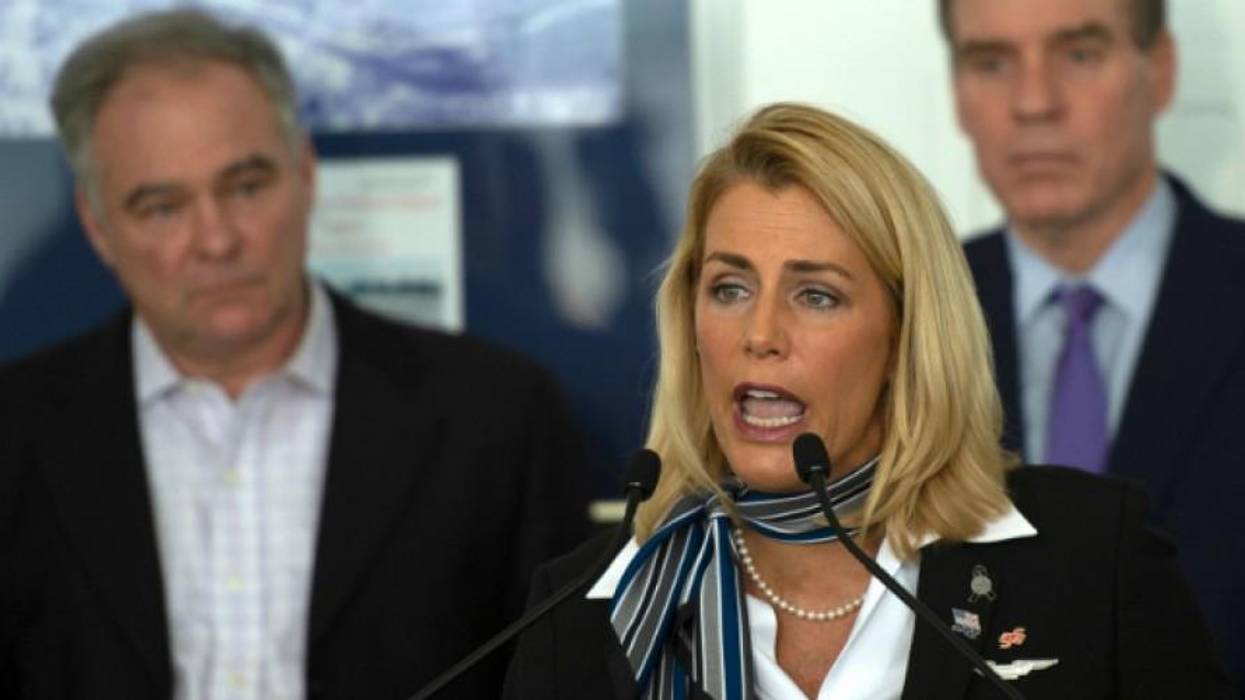
"U.S. workers deserve a labor secretary that is unapologetically pro-worker," said one advocate.
Progressives are looking at U.S. Labor Secretary Marty Walsh's expected departure as an opportunity for President Joe Biden to demonstrate his professed commitment to workers' rights by placing at the helm of the Labor Department a leader who will unabashedly call out the corporate greed that has left millions of Americans struggling to make ends meet in the face of historic inequality.
After hockey news outlet The Daily Faceoff first reported earlier this month that Walsh is planning to step down from the Labor Department to lead the National Hockey League's Players' Association, Sen Bernie Sanders (I-Vt.) wrote to Biden to put forward two potential nominees, urging him to select someone who is "a champion of workers."
In a letter dated February 10, Sanders recommended former Labor Secretary Robert Reich, who served for four years under former President Bill Clinton and has since written and spoken out extensively about income inequality, or Association of Flight Attendants-CWA International President Sara Nelson, one of the best-known labor leaders in the United States today.
"There are a wealth of potential avenues an ambitious, fearless, hard-nosed labor secretary may take to actually make a real material impact on the survival of the American labor movement."
"Reich," said Sanders, "would hit the ground running. He has been instrumental in advancing workplace protections, workforce development, and worker power for decades."
Nelson "has been a union member for nearly 30 years, has been a leading voice for worker rights and is a very strong communicator of progressive values," wrote the senator, who chairs the Senate committee that would hold confirmation hearings on a nominee.
"She has a thorough understanding of federal labor laws and how these laws apply to workers, and her experience sets her up for success in this job," he added.
Sanders' recommendation of Nelson was bolstered on Thursday by an opinion piece written by Fast Company editor Morgan Clendaniel, who said Walsh's imminent departure leaves Biden with "a renewed chance to fulfill his stated desire to be considered "the most pro-union president you've ever seen," as Biden promised he would be.
Nelson has spoken out against corporate greed, saying the labor movement is "the only check" against an economic system in which CEO compensation surged nearly 1,000% between 1978 and 2018, while workers were paid just 12% more on average.
A deep understanding and engagement with the realities of soaring income inequality could help ensure the Labor Department is helmed by a leader who is on the side of labor, wrote Clendaniel.
"The president talks a good game for workers, and you can see the visceral thrill it gives him in speeches when he calls for the passage of the labor-friendly PRO Act or when he met with [Amazon Labor Union leader Christian] Smalls and supported his efforts, saying, 'Amazon, here we come,'" he wrote. "But what better way for President Biden to show that he actually has labor's back than elevating Nelson?"
As a union leader, Nelson played a key role in negotiating provisions in the pandemic-era CARES Act that temporarily banned airline stock buybacks, capped executive pay, and tied rules that centered workers' rights to funding for the airline industry.
"U.S. workers deserve a labor secretary that is unapologetically pro-worker," former Ohio state Sen. Nina Turner, an ally of Sanders, said last week.
Former U.S. Rep. Andy Levin (D-Mich.), has also been suggested by former labor reporter Steven Greenhouse as a possible contender who could draw from his experience as a trade union organizer and leading his state's Labor Department, while Deputy Secretary Julie Su has been named as a likely interim secretary and a potential nominee for the permanent role.
The National Immigration Law Center, National Education Association president Becky Pringle, and Sen. Elizabeth Warren (D-Mass.) have expressed support for Su, who previously served as California's labor commissioner and launched a statewide "Wage Theft Is a Crime" campaign.
Silicon Valley companies Uber and Lyft, which have aggressively campaigned against workers' rights legislation, are reportedly lobbying against Su's potential nomination.
Meanwhile, former House Speaker Nancy Pelosi (D-Calif.) is reportedly pushing the White House to nominate former Rep. Sean Patrick Maloney (D-N.Y.), a corporate Democrat who progressives have blamed for the party's failure to maintain control of the House after the midterms in November, as he chaired the Democratic Congressional Campaign Committee at the time.
"Progressives really don't want Maloney, but neither really does anyone else except Pelosi," a veteran Democratic strategist told The Hill Thursday. "He has literally absolutely no qualifications for this job and it's so random."
While Walsh was "incredibly" the first labor secretary to stand on a picket line alongside workers without also meeting with anti-union management, wrote independent reporter Kim Kelly at Fast Company on Tuesday, the former Boston mayor's position at the Labor Department amounted to a missed opportunity, according to critics.
Walsh sided with railroad companies over workers during negotiations regarding a contract that employees were ultimately forced to accept, even though it included no paid sick leave, and he has not addressed the Warrior Met Coal strike in Alabama, which has now been going on for nearly two years as workers demand fair pay, benefits, and working conditions.
The outgoing labor secretary "rose to power during a time when the institutions of organized labor grew sclerotic, and privately accepted their own inability to create fundamental change," wrote Hamilton Nolan at MSNBC last week. "In 2022, the percentage of workers who are union members in America declined once again."
Walsh has left the next labor secretary with "a lot of catching up to do," wrote Kelly at Fast Company. "During a moment of historically high public approval for unions and historically low union membership, there are a wealth of potential avenues an ambitious, fearless, hard-nosed labor secretary may take to actually make a real material impact on the survival of the American labor movement."
"Here's hoping we get one of those next time," she added.

"We're going not to stop in the 118th Congress," said the Congressional Workers Union. "When we fight, we win, and we're ready to take on any anti-worker battles that may come our way."
Labor organizers on Capitol Hill were undeterred Monday despite U.S. House Republicans' plans to try to undo progress made last year after Democrats passed a resolution enabling congressional staffers to form unions.
In preparation for taking narrow control of the lower chamber on Tuesday, the GOP on Sunday unveiled its rules package, which states the party's intention to "eliminate Democrats' creation of House staff labor unions so that congressional staff are accountable to the elected officials they serve."
The Congressional Workers Union (CWU) fired back Monday, tweeting: "We organized and unionized offices in the 117th Congress, and we're going not to stop in the 118th Congress. When we fight, we win, and we’re ready to take on any anti-worker battles that may come our way."
The office of Rep. Andy Levin (D-Mich.) ratified the first-ever contract negotiated by congressional staff just last month. However, Levin—who introduced the resolution enabling his and other staffers to organize, which passed the House in a May 2022 party-line vote—will not return for the 118th Congress after losing a Democratic primary to Rep. Haley Stevens.
Democrats, labor leaders, and other critics across the country called the GOP's plans "shameful" as well as "sad, disgusting, and predictable."
Democratic Congressmen-elect Chris Deluzio (Pa.) and Maxwell Alejandro Frost (Fla.) both expressed solidarity with the CWU.
"Any attempt to deny workers' rights to organize—perhaps especially on Capitol Hill—is anti-democratic," said Sara Nelson, international president of the Association of Flight Attendants-CWA, AFL-CIO. "We will fight it and stand with the [CWU] all the way."
Courtney Rose Laudick, the CWU's vice president of organizing, asserted that "ALL workers deserve a union. That's not up for debate."
Both Laudick and David Dayen, The American Prospect's executive editor, highlighted on Twitter that it's not clear the House GOP will even be able to put its plan into action.
There is "some question as to whether the House GOP can even do this," given that "last year's House resolution on staff unions just implemented a provision of the Congressional Accountability Act of 1995," Dayen explained, so it is "not certain a rules package can take that away."
Levin similarly tweeted Monday that the "GOP may be so reflexively anti-union that they want to strip their employees of the chance to form one—but it's not that easy. Under the Congressional Accountability Act, rights that have been implemented can't simply be taken away absent new legislation to change the act itself."
Demand Progress policy director Dan Schuman pointed out that the 1995 law was passed under Republican House Speaker Newt Gingrich (Ga.).
CNN reported Monday that House Minority Leader Kevin McCarty (R-Calif.) "outlined some of the concessions that he has agreed to in his campaign for speaker on a Sunday evening conference call—including making it easier to topple the speaker, according to multiple GOP sources on the call."
Noting that the rules package was released after the call and "formalizes some of the concessions that McCarthy has agreed to," the outlet added that "the House adopts its rules package only after it selects a speaker, which McCarthy has not locked down, so there could be additional compromises made in the coming days."
This post has been updated with comment from Democratic Congressmen-elect Chris Deluzio (Pa.) and Maxwell Alejandro Frost (Fla.).

A half-dozen progressive lawmakers joined multiple union representatives at a Tuesday afternoon press conference outside the U.S. Capitol to urge Democratic leaders to include ample funding for the cash-starved National Labor Relations Board in the final appropriations bill of the lame-duck session--before Republicans take control of the House.
International Union of Painters and Allied Trades (IUPAT) president Jimmy Williams and Communications Workers of America (CWA) secretary-treasurer Sara Steffens--co-chairs of the Worker Power Coalition, a nationwide alliance of labor and environmental advocacy groups representing 24 million workers--were accompanied by Democratic Reps. Jamaal Bowman (N.Y.), Ro Khanna (Calif.), Andy Levin (Mich.), Donald Norcross (N.J.), Alexandria Ocasio-Cortez (N.Y.), and Ilhan Omar (Minn.).
"If we can invest almost a trillion dollars in our military, we can take care of our workers."
"Our country is experiencing a moment of mass worker organizing--71% of Americans approve of unions and tens of millions of Americans would join a union right now if they could without retaliation or harassment," said Williams. "But the drastic underfunding of the NLRB means that many of these workers will face delays in getting a union vote or receiving justice for illegal retaliation or termination from their employers, which is why Congress must respond to this crisis to stand with workers and fully fund the NLRB with this urgent budget bill."
Due to GOP opposition, the federal agency tasked with enforcing U.S. labor law hasn't received a funding increase in nearly a decade. The NLRB's annual budget has been frozen at $274.2 million since fiscal year 2014, which amounts to a 25% cut when inflation is taken into account.
While the NLRB's budget has effectively shrunk, its workload has soared. The agency recently reported that from FY2021 to FY2022, the number of union representation petitions and unfair labor practice (ULP) charges filed grew by 53% and 19%, respectively. Meanwhile, the number of NLRB officials who oversee union elections and investigate employer abuses has been slashed by 50% since FY2002.
Last month, NLRB Chair Lauren McFerran and General Counsel Jennifer Abruzzo warned members of Congress that the agency "has exhausted its ability to absorb cost increases through staff attrition and operational efficiencies." They added that it "has already implemented a hiring freeze and, without additional funding, will likely be forced to pursue furloughs." The NLRB Union was more blunt, characterizing the situation as "budgetary Armageddon."
In a statement released Wednesday, as federal lawmakers rush to finalize a year-end omnibus spending package, the Economic Policy Institute (EPI) warned that "the consequences of a funding shortfall could be disastrous for workers who rely on the NLRB to fairly oversee their efforts to unionize and to hold employers accountable for violating their rights, including Amazon and Starbucks workers."
EPI urged Congress to "move beyond a short-term continuing resolution that would keep the agency's inadequate funding flat, and to reach an agreement that increases non-defense spending enough to give the NLRB the resources it desperately needs to fulfill the agency's basic mandate."
In remarks prepared for Tuesday's press conference, Steffens said: "As someone who was fired for union organizing, I know firsthand how dangerous it is to leave union-busting CEOs unchecked. Whether it's Starbucks workers in Memphis, an Amazon warehouse worker in New York, or a Verizon retail worker in Seattle, the fact is that far too many workers are being fired for exercising their right to form a union."
"The NLRB must receive the full funding it needs to hold these billionaire CEOs accountable," she continued. "Every Democrat who made campaign promises to stand with workers needs to put action behind their words by ending the funding freeze and giving the NLRB the resources it needs to level the playing field for workers. The Worker Power Coalition and the 24 million workers we represent are watching, and if Democrats fail to stand with workers now, we will remember when we go to the ballot box in 2024."
Steffens' message was echoed by Omar.
"Big corporations and their CEOs routinely violate the law to bust unions and cling to their profits," said the Minnesota Democrat. "It is the NLRB that holds these billionaire CEOs accountable when they try to stand in the way of worker power."
However, the enforcers of labor law "are under threat from Republicans who want to weaken them and undermine their work," Omar continued. "We will not stop fighting to ensure that they have the resources they need to hold these union-busters accountable and make sure everyone's basic rights to organize and collectively bargain are protected."
Levin, meanwhile, asked, "What better Christmas present could the worst actors ask for than an understaffed NLRB that simply doesn't have the people power to oversee prompt elections or investigate firings and other forms of intimidation and unfair dealings?"
He urged his colleagues to approve "full funding for the NLRB--now!"
Time is of the essence, given that a funding increase is far less likely once GOP lawmakers--who have made clear their opposition to boosting the NLRB's budget--take the reins of the House in January.
"We need to get this done this Congress, between now and December 31st," Ocasio-Cortez said at Tuesday's news conference. "I'm not going to sit here and pretend that a Republican-controlled Congress is going to put this at the top of the docket."
As TIME reported Tuesday:
The effort to secure a relatively modest budget increase for the National Labor Relations Board (NLRB) comes at a fraught moment for the labor movement. Earlier this month, President [Joe] Biden, who promised to be the most pro-union president in American history, signed a bill blocking a strike of rail workers who were threatening to walk off the job over having no paid sick leave. For some labor leaders, boosting the agency's funding would be a sign Democrats aren't taking the movement's support for granted.
"The fact that we have to have a press conference and draw attention to this issue shows what's fundamentally wrong," says Joseph Geevarghese, the executive director of Our Revolution, whose members held pro-union signs as lawmakers spoke outside the Capitol. "The Democratic Party is not in touch with its roots."
Progressive warnings about the dire consequences of failing to shore up the NLRB have grown louder as the Democratic Party's unilateral control of the federal government draws to a close. Last week, the NLRB Union organized a rally, which came after the president of the NLRB Professional Association--a separate union representing 122 staff attorneys and Freedom of Information Act specialists at the agency--sent a letter to congressional appropriators.
On Monday, AFL-CIO president Liz Shuler and the presidents of more than 40 unions called on Congress to "fund the NLRB so the agency can hire staff and procure the necessary resources to conduct hearings and elections, investigate ULP charges, and obtain full and prompt remedies for workers whose rights are violated."
"We are not upholding the ideals of our Constitution if we do not take care of our workers."
"The lack of NLRB staff and delays in processing contribute to a hostile environment for organizing unions and filing ULPs," the labor leaders noted. "Workers are far more hesitant to engage with the agency to enforce their rights or form a union when they think their case may take a year or two to be resolved."
This appears to be precisely the type of anti-worker environment that the GOP is eager to cultivate. Earlier this year, Rep. Virginia Foxx (R-N.C.), the top Republican on the House Committee on Education and Labor, derided the Biden administration's request for a $319 million NLRB budget for FY2023 as a "stupid idea."
Norcross, by contrast, said Tuesday that continuing to shortchange the NLRB does "a disservice to the hardworking women and men who keep our nation running at every level and every sector of our economy."
Last month, the New Jersey Democrat and member of the International Brotherhood of Electrical Workers, joined the five other co-chairs of the Congressional Labor Caucus (CLC), including IUPAT member Rep. Mark Pocan (D-Wis.), in imploring House Speaker Nancy Pelosi (D-Calif.) and Senate Majority Leader Chuck Schumer (D-N.Y.) to prioritize funding the NLRB before Republicans take control of the House.
The CLC leaders' recent effort was a follow-up to an April letter in which 149 House Democrats, led by Norcross, asked House Appropriations Committee leaders to approve a $368 million NLRB budget for FY2023.
That is a drop in the bucket compared with the $858 billion military budget passed last week in the House with bipartisan support, a point made Tuesday by Bowman.
"If we can invest almost a trillion dollars in our military, we can take care of our workers," said the New York Democrat. "We are not upholding the ideals of our Constitution if we do not take care of our workers. We're faking the funk, we are frauds."
"What the hell are we doing here if we are not taking care of working-class people?" he asked.
"This is a critical moment for Democrats to live up to our values and stand in solidarity with workers across the country," said Bowman. "The NLRB is vital to protecting workers from unlawful and inhumane unfair labor practices by big corporations who care more about padding their billions in profits than about protecting basic human rights and treating their workers with dignity."
"At a time when we are seeing a historic surge both in organizing and in despicable union-busting activities," the lawmaker added, "we cannot allow full funding for the NLRB to be deprioritized."

Citing the high prevalence of toxic contaminants in U.S. schools--especially in low-income districts--a trio of congressional Democrats on Thursday introduced a bill that would authorize over $52 billion in funding over the next decade to remove dangerous substances from education buildings nationwide.
"We need a revolution in how we invest in and prioritize our school infrastructure, and that starts with getting toxins out of schools."
--Rep. Jamaal Bowman
The Get Toxic Substances Out of Schools Act of 2021 (pdf)--introduced by Sen. Ed Markey (D-Mass.) and Rep. Andy Levin (D-Mich.) and Rep. Jamaal Bowman (D-N.Y.)--would amend the Toxic Substances Control Act (TSCA) to authorize grants for the remediation of contaminants in schools, where approximately 53 millionchildren and six million adults spend a significant portion of their days, according to (pdf) the U.S.Environmental Protection Agency (EPA).
The agency says approximately half of these students and staff "may be exposed to polluted indoor air, lead, asbestos, chemical fumes, pesticides, molds, and other toxins" in more than 120,000 public and private school buildings. Other contaminants mentioned in the new bill include ' forever chemicals': polychlorinated biphenyls (PCBs) and per- and polyfluoroalkyl substances (PFAS).
"Many of these buildings are old, in poor condition, and may contain environmental conditions that pose increased risks to the health of children and staff," the EPA notes. "Reducing exposures to environmental hazards in schools can help children's health. Healthier school environments enable children to learn and produce more in the classroom which can improve their performance and achievements later in life."
In a statement, Markey--who is chair of the Senate Subcommittee on Clean Air, Climate, and Nuclear Safety--said that "there is no excuse for the presence of toxic substances at schools, and it is long past time we provided the resources to clean them up. Children need clean air to breathe, safe water to drink, and a healthy environment to learn. They need schools free of environmental hazards, and a real chance to thrive."
"By taking action and investing in clean schools, we can create jobs and healthier communities all at the same time," he added.
"Toxic chemicals like PFAS have no place in our schools, yet in Michigan and around the country students are being exposed to toxic substances every day."
--Rep. Andy Levin
Levin said that "every child in this country deserves to attend a school where they can learn and grow in a healthy, safe environment. Toxic chemicals like PFAS have no place in our schools, yet in Michigan and around the country students are being exposed to toxic substances every day."
"The Get Toxic Substances Out of Schools Act is the long-overdue solution to this problem," Levin asserted. "It provides the funding states need to clean up our schools and instructs the EPA to work closely with states to ensure they have access to the latest data and research on the toxins that are harming our children."
Bowman--a former public middle school teacher and principal, and lead sponsor of the Green New Deal for Public Schools Act--said that "we live in the richest country in the world. Every single kid should have a safe and healthy learning environment that facilitates their growth and unlocks their brilliance."
"It makes absolutely no sense that kids today are expected to try to learn in schools that still contain a number of toxic substances, where just drinking from a water fountain in the hall could make them sick," Bowman added. "We need a revolution in how we invest in and prioritize our school infrastructure, and that starts with getting toxins out of schools."
The new bill is endorsed by organizations including the American Federation of Teachers (AFT), BlueGreen Alliance, Environmental Working Group, Healthy Schools Network, International Union of Painters and Allied Trades, and UndauntedK12.
"Every public school building in American should be a safe and welcoming space. But even before the added threat of Covid-19, far too many students, educators, and school staff were in buildings with poor ventilation, mold, and contaminants like lead and asbestos--especially in high-poverty neighborhoods," said AFT president Randi Weingarten.
"Kids can't learn in that environment, and teachers can't teach," Weingarten continued. "But the Get Toxic Substances Out of Schools Act would create dedicated federal resources to help make every public school a place where parents feel confident in their children's well-being, educators, and support staff feel safe enough to do their jobs, and students can focus on learning and growth."