

SUBSCRIBE TO OUR FREE NEWSLETTER
Daily news & progressive opinion—funded by the people, not the corporations—delivered straight to your inbox.
5
#000000
#FFFFFF
To donate by check, phone, or other method, see our More Ways to Give page.
Daily news & progressive opinion—funded by the people, not the corporations—delivered straight to your inbox.
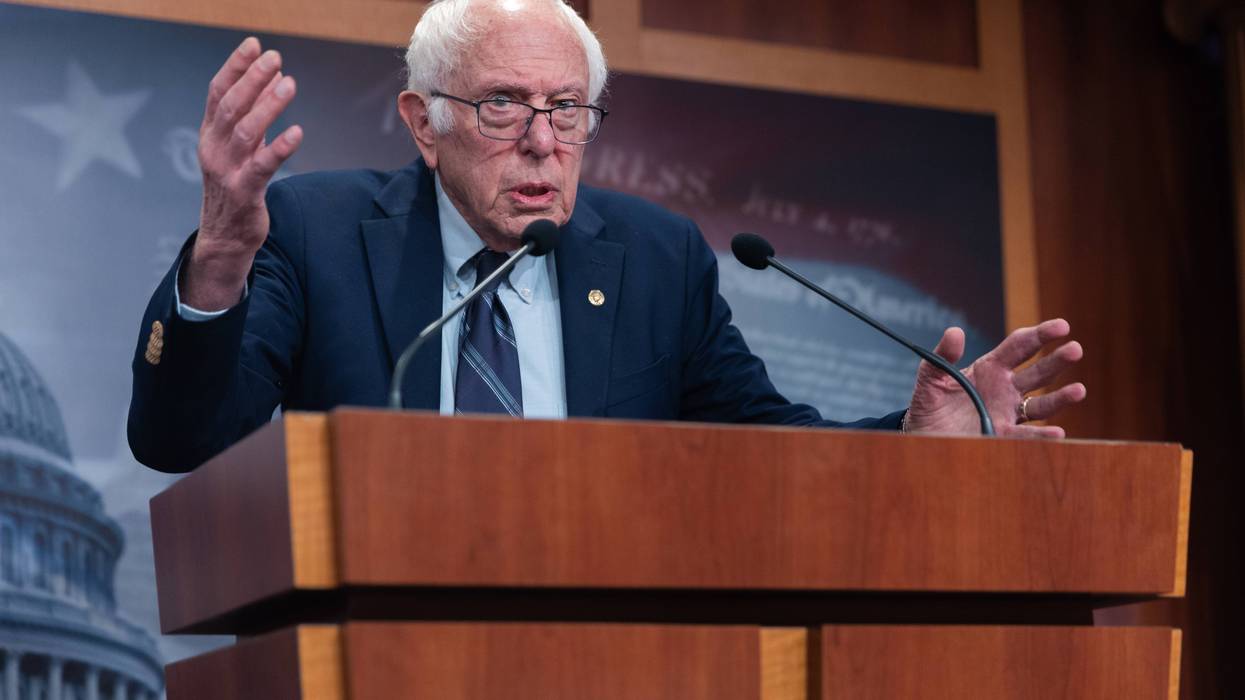
“This would strip long-held investor protections from retirement savers and encourage the use of more risky, complex, and expensive investments."
Two progressive US senators are leading the charge against a new Trump administration scheme that would allow Americans' retirement funds to invest in cryptocurrencies.
As reported by The Guardian on Tuesday, Sens. Bernie Sanders (I-Vt.) and Elizabeth Warren (D-Mass.), along with Rep. Bobby Scott (D-Va.), sent a letter to the US Department of Labor (DOL) warning against enacting a proposed rule change that would allow 401(k) investments to include crypto.
Cryptocurrencies have long proven to be volatile assets that have been involved in multiple fraud schemes, which the FBI estimates cost Americans more than $20 billion in 2025 alone.
“This would strip long-held investor protections from retirement savers and encourage the use of more risky, complex, and expensive investments,” states the letter. “The proposed rule is harmful to American workers.”
Offering an example of the dangers of investing in crypto, the letter cites President Donald Trump's personal meme coin, whose value has cratered since its peak in January 2025.
The push to let 401(k)s invest in crypto has also drawn criticism from Americans for Financial Reform (AFR), which on Monday released a white paper outlining how the plan would put Americans' retirement savings at risk while also serving as a boon to the private equity industry.
Oscar Valdés Viera, senior policy analyst for private equity and capital markets at AFR, accused the DOL of handing over US retirement savings to "the worst Wall Street predators and crypto scammers."
"This proposal would use 401(k)s to bail out a struggling industry and advance the administration’s push to embed crypto deeper into the financial system," Valdés Viera explained. "Driving workers into the arms of private equity firms and crypto insiders would let the president’s Wall Street and crypto cronies pocket billions at the expense of families’ retirement security."
Democracy Defenders Fund (DDF) last week noted that Trump and his family, who have major ties to the cryptocurrency industry, would stand to personally profit from the DOL's proposed rule change.
"President Trump stands to benefit if ordinary people can use their employer-sponsored retirement plans to invest in crypto," said Virginia Canter, chief counsel and director of ethics and anti-corruption at DDF. "The administration claims the proposed rule would 'relieve regulatory burdens,' but it looks more like self-dealing."
In addition to allowing 401(k)s to invest in cryptocurrencies, the proposed DOL rule change would also allow them to invest in private credit assets, which are typically loans negotiated with non-bank lenders.
Benjamin Schiffrin, director of securities policy for Better Markets, said on Tuesday that letting 401(k)s invest in these assets would be a similarly risky bet to letting them invest in crypto.
"This is exactly the wrong approach at the wrong time," said Schiffrin. "There could hardly be a proposal more dangerous to Americans’ retirement security. Investors already in private credit are currently running for the exits. DOL’s proposal means that one day millions of Americans with 401(k)s may have to do the same."
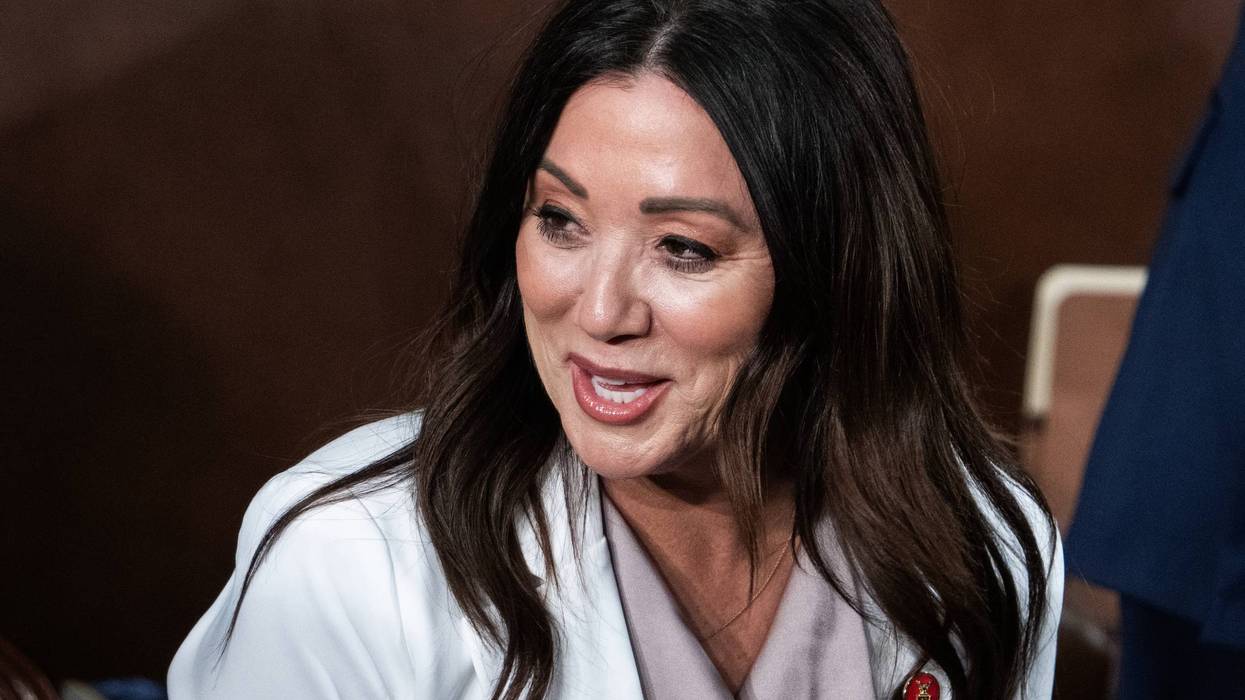
"Chavez-DeRemer failed to protect workers, jeopardized the Department of Labor's work to support the economy, drove down morale among agency staff, and abused federal government resources to serve her own whims."
President Donald Trump's "scandal-ridden" Department of Labor leader, Lori Chavez-DeRemer, resigned from her post on Monday, making her the third member of his Cabinet to leave since the beginning of the year, following the firings of former US Attorney General Pam Bondi and Homeland Security Secretary Kristi Noem.
Confirming reports of the latest departure, White House spokesperson Steven Cheung said that "Chavez-DeRemer will be leaving the administration to take a position in the private sector. She has done a phenomenal job in her role by protecting American workers, enacting fair labor practices, and helping Americans gain additional skills to improve their lives."
Her deputy, Keith Sonderling, "will take on the role of acting secretary of labor," Cheung added.
As Politico noted Monday, "Chavez-DeRemer has been under scrutiny since January, when DOL Inspector General Anthony D'Esposito opened an investigation into allegations that she was involved in an extramarital affair with a member of her security detail, that she drank on the job, and that top aides concocted official events to facilitate her personal travel plans."
That probe led to allegations—initially reported by The New York Times in February—that the secretary's husband, Shawn DeRemer, "has been barred from the department's headquarters after at least two female staff members told officials that he had sexually assaulted them." DeRemer denied the claims, and police have reportedly closed a related investigation.
As NOTUS reported Monday:
A source close to the president told NOTUS last week that the White House viewed Chavez-DeRemer as an effective spokesperson for the president's economic message and implementer of workforce policy. But the tales of the labor secretary's alleged scandals had become palace intrigue among people close to and inside of the White House.
Two Republicans who speak with President Donald Trump told NOTUS they expected him to pull the trigger on removing Chavez-DeRemer on Wednesday, when she was due for what was expected to be a bruising hearing in Congress. Some inside the White House anticipated Democrats at the hearing would focus on Chavez-DeRemer's alleged transgressions.
Responding to the resignation on social media, the Democratic Party highlighted Bondi and Noem's ousters, and declared, "This administration is imploding."
Before joining Trump's Cabinet, the outgoing secretary represented Oregon's 5th Congressional District in the US House of Representatives. Rep. Suzanne Bonamici, a Democrat who serves the state's 1st District, said that "Chavez-DeRemer failed to protect workers, jeopardized the Department of Labor's work to support the economy, drove down morale among agency staff, and abused federal government resources to serve her own whims. She should be held accountable for the damage that occurred on her watch."
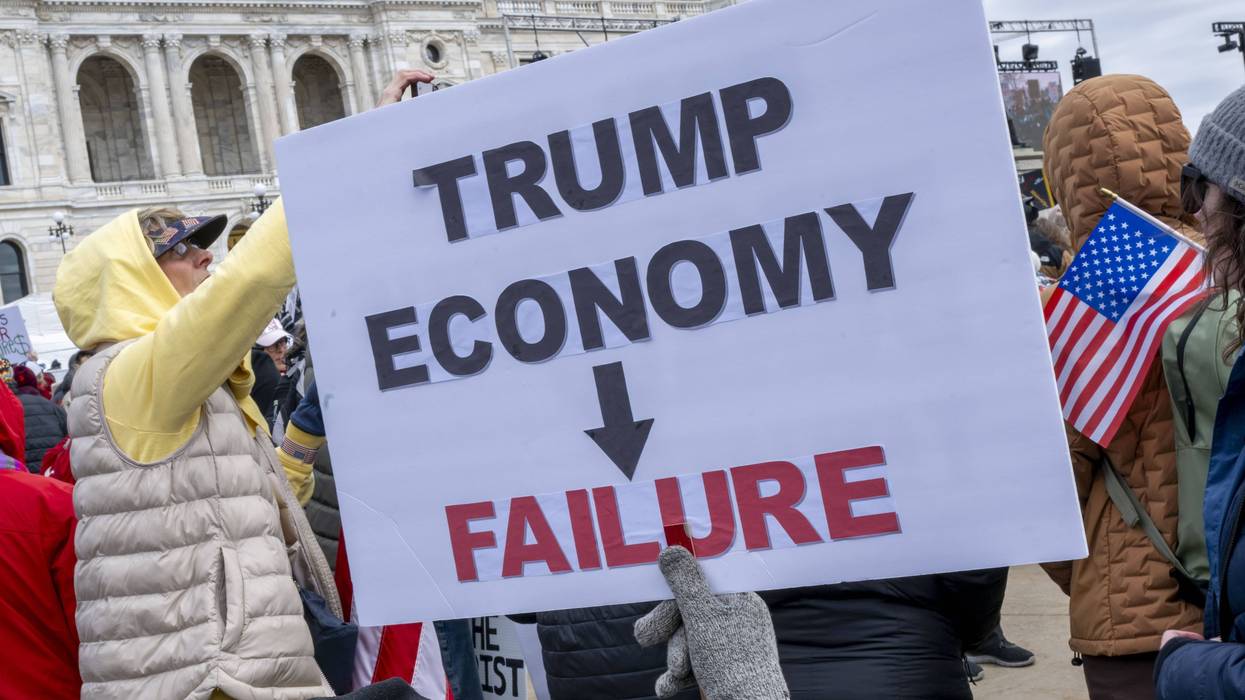
"The latest jobs data show how President Trump's mismanagement of the economy—both domestically and internationally—is harming workers at home," said another expert.
As US Labor Secretary Lori Chavez-DeRemer on Friday declared that "America's economic comeback is on full display" and the country's "workers are winning again" due to what the business press and top newspapers called a "strong" March jobs report, some economists stressed the importance of looking beyond the topline figure and one month of data.
The US Bureau of Labor Statistics announced that employers added 178,000 jobs last month, with gains in construction, healthcare, and transportation and warehousing, and declines in the federal government. The unemployment rate fell slightly to 4.3%, with 7.2 million people officially jobless.
"Folks, today's jobs report is not good," declared Heidi Shierholz, president of the think tank Economic Policy Institute (EPI). She pointed to average job growth over the past two months, the reason for the drop in unemployment ("people leaving the labor force"), slowing wage growth, and the fact that "the effects of our war in Iran aren't even in these numbers yet."
EPI senior economist Elise Gould further explained those points on social media. Although the report "came in stronger than expected... much of the gain was a bounce back to February declines (now a loss of 133,000 jobs)," she said. "As a result, average monthly growth the last two months was only 22,500 jobs."
As far as the unemployment rate ticking down, "it's important to note that this happened for the 'wrong' reasons as both the labor force participation and the share of the population with a job also ticked down," Gould continued. "Job gains were strongest in healthcare as striking workers returned to work."
"Attacks on the federal workforce continue," she highlighted, with the sector down 18,000 jobs in March and 352,000 positions since January 2025, when President Donald returned to power. "The vital services federal employees provide cannot be done without these essential workers. The cost of these losses are only just beginning."
"Manufacturing rose 15,000 jobs in March, but still has a huge deficit since Trump took office. Since January 2025, the manufacturing sector has lost 82,000 jobs," the economist noted. "Wage growth has been slowing for the last few months, particularly driven by slower growth for production and nonsupervisory workers, roughly the lower 82% of the workforce."
Gould added that "we don't have the inflation data yet to show real wage changes in March, but slowing nominal wage growth coupled with rising prices from the Iran war almost surely means real wages will suffer, contributing to worsening affordability."
Trump and Israel launched their war on Iran at the end of February, and the new data is from the middle of March, so "the impact of the war and higher fuel prices will be limited" in this report, as Center for Economic and Policy Research co-founder Dean Baker acknowledged. "April could look considerably worse."
Breyon Williams, chief economist at another think tank, Groundwork Collaborative, said that "beyond today's headline bounce, the labor market continues to deteriorate under Trump's economic mismanagement: Hiring has ground to a halt, paychecks are shrinking, and workers are giving up on finding a job altogether. A single month of modest gains can't reverse the damage that the president has inflicted on working families."
A former senior Labor Department official who's now chief of policy programs at The Century Foundation, Angela Hanks, similarly asserted that "the latest jobs data show how President Trump's mismanagement of the economy—both domestically and internationally—is harming workers at home."
"While the topline rate does not yet reflect the war's impact on the job market, wage growth has stalled, and oil prices are skyrocketing, resulting in higher prices for consumers and threatening to weaken the job market," she noted. Specifically, according to a Thursday report from Democratic members of the congressional Joint Economic Committee, Americans spent an extra $8.4 billion at the gas pump in the first month of Trump's war.
"Families are already under tremendous pressure from rising prices, slowing job growth, and mounting debt as they struggle to make ends meet, and not seeing help on the way," said Hanks. "Families and workers across the country deserve leadership that puts them first and works to make living a fulfilling life affordable for everyone. Instead, they're stuck with leaders in Washington more focused on needless and damaging wars and slashing the safety net to pay for them."
After passing a 2025 budget package that gave the rich more tax breaks by slashing over $1 trillion from the safety net, including food assistance and Medicaid—which is expected to leave millions of Americans without health insurance—congressional Republicans are considering more healthcare cuts to fund Trump's war. The Pentagon has asked for at least $200 billion for Iran, and more broadly, the president wants an unprecedented $1.5 trillion in military spending for the next fiscal year.
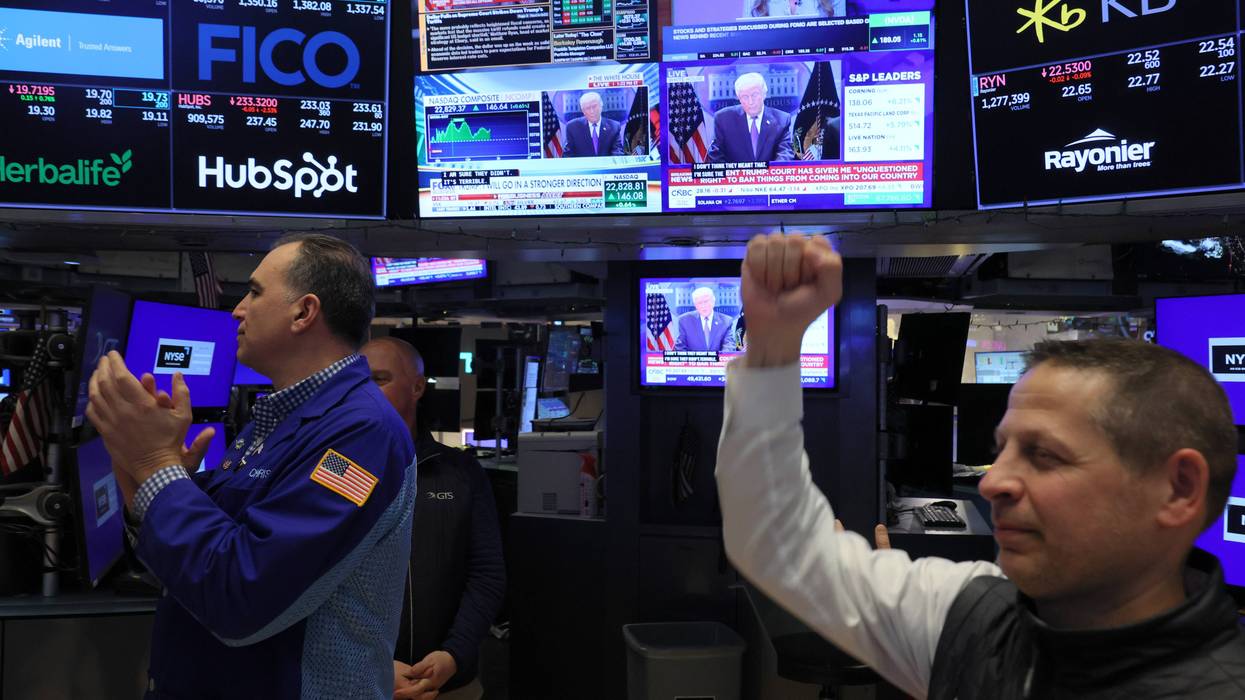
“This isn’t about advancing the interests of retirement savers, it is about opening a new profit center for crypto and Wall Street," said one critic.
US President Donald Trump's Labor Department on Monday unveiled a proposal that would welcome private equity and cryptocurrency investments into Americans' 401(k) plans, the culmination of an aggressive Wall Street lobbying push that could leave the retirement savings of millions vulnerable to the wild swings of so-called "alternative assets."
The proposed rule, now subject to a public comment period, was issued at the direction of a Trump executive order from last year that was characterized at the time as "the holy grail for private equity."
In addition to giving employers a green light to include private equity and crypto investments in 401(k) plans offered to workers, the new rule would establish a "safe harbor" allowing retirement account administrators to avoid legal action from employees who believe their funds were steered into excessively risky products.
"The legal immunity created by this safe harbor will incentivize financial advisers to pitch these toxic products, which will become ticking time bombs in tens of millions of retirement accounts, which will no doubt result in significant losses," warned Benjamin Schiffrin, director of securities policy at the advocacy group Better Markets. "There are good reasons why 401(k) plans have been considered closed to private markets and cryptocurrencies, and those reasons have not changed. The only thing that has changed is the administration’s support for these industries and regulators’ willingness to do their bidding."
"This is no reason to endanger the retirement savings of millions of Americans," Schiffrin added.
Oscar Valdés Viera, senior policy analyst at Americans for Financial Reform, similarly warned that "opening 401(k)s to these products risks turning workers’ retirement savings into a Ponzi-like scheme that throws a lifeline to an industry scrambling for fresh cash."
"This isn’t about advancing the interests of retirement savers, it is about opening a new profit center for crypto and Wall Street," said Viera. "Retirement savers should not be bailing out these high-risk industries and subsidizing the Wall Street and crypto billionaire class."
"Private equity firms should not get a free pass to loot workers’ 401(k) retirement savings."
Americans currently hold over $10 trillion combined in 401(k) plans, a huge trove of wealth that the private equity industry has been working for years to access. The Labor Department indicated that its proposed rule would apply to over 720,000 retirement plans covering roughly 118 million workers.
The American Prospect reported Tuesday that the managers of private equity firms are "already pressuring companies, third-party administrators, and the consultants who advise them to list their offerings" among workers' retirement plan options.
"One staffer at an institutional investor who is not authorized to speak to the media told the Prospect about their primary worry: that private equity will stick their most overvalued companies into continuation funds exclusively for 401(k) plan holders, or 'retail investors,' as they are known," the outlet continued. "Private credit firms are retailoring their funds for 401(k) plans as well, and some of the biggest have already struck deals with asset managers like Voya and Vanguard. 'I’d be shocked if the industry doesn’t attempt to dump their garbage onto retail,' the staffer said."
One recent analysis by the Private Equity Stakeholder Project (PESP) found that private equity funds for retail investors "dramatically underperformed publicly listed stock indexes" in 2025 while charging much higher fees.
Jim Baker, PESP's executive director, said Monday that "private equity firms should not get a free pass to loot workers’ 401(k) retirement savings."
“The bar for including private equity in 401(k)s should be extremely high,” said Baker. “Private equity funds have lagged public markets while charging much higher fees, and public pension funds are pulling back from the asset class. Instead, this rule risks shifting more financial risk onto workers who rely on their retirement savings for long-term security.”
Sen. Elizabeth Warren (D-Mass.) also ripped the Labor Department rule, saying in a statement that "Americans facing an uncertain future in Trump’s economy will now have more reasons to question the security of their retirement savings—all so that Trump’s Wall Street buddies have another pile of cash to play with."
"Anyone who cares about the financial security of working people," said Warren, "should oppose this proposed rule."
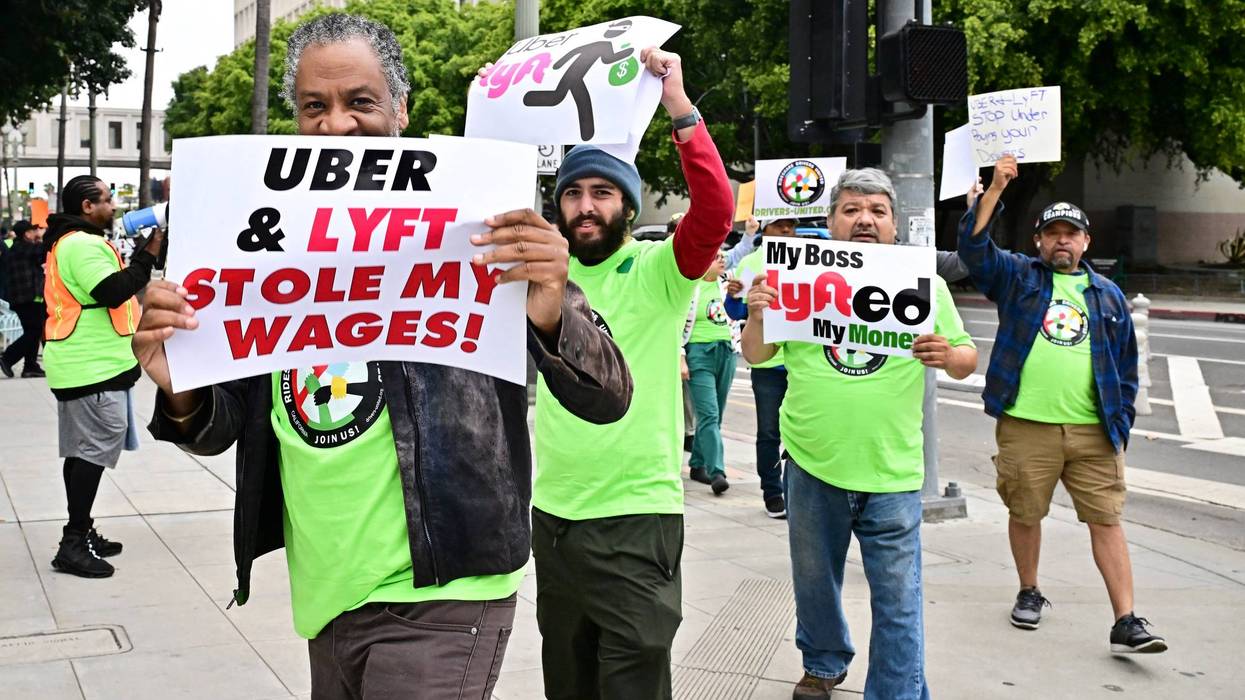
President Donald Trump's "barrage of attacks on workers" continued on Thursday with announcements about two key labor rules.
The US Department of Labor (DOL) proposed an independent contractor rule that the National Employment Law Project (NELP) called "yet another example of the administration siding with major corporations and stacking the deck against working people" by "effectively allowing employers to strip workers of federal minimum wage and overtime protections."
The DOL's Wage and Hour Division proposal would replace the Biden administration's widely celebrated 2024 policy for when employers can treat workers as independent contractors under the Fair Labor Standards Act with business-friendly guidance that resembles a rule adopted just before the end of Trump's first term.
"This rule will have profound real-world consequences for working people," warned NELP. "Misclassification is common in many labor-intensive, poorly paid jobs—jobs like home healthcare, janitorial work, landscaping, personal services, and increasingly, app-dispatched ride-hail and delivery—where people of color and immigrants are overrepresented, and workers lack the bargaining power to negotiate higher wages and better working conditions."
NELP pointed to research showing that low-paid independent contractors "lag behind their employee counterparts," and some "do not even earn the federal minimum wage." The organization stressed that "this rule threatens to enshrine a two-tiered labor system where similarly situated workers receive vastly different rights and protections based on the classification chosen by the business employing them."
The new rule—which now faces a 60-day public comment period—focuses on two "core factors" to determine an employee's classification: the nature and degree of control over the work, and the worker's opportunity for profit or loss based on initiative or investment.
NELP argued that "by elevating two factors above other equally important factors, the Trump administration's test fails to account for the economic realities of many working relationships. Many workers labeled as independent contractors are not really in business for themselves because they are integrated into the operations of a larger business structure that sets most of the terms of the work."
"In app-dispatched ride-hail and delivery jobs, for example, corporations like Uber, Lyft, DoorDash, and Amazon use apps and algorithms to offer shifts or assignments to so-called independent contractors doing the core work of the business, set the wages these workers receive, surveil and assess their performance, and determine if they are offered future assignments or get 'deactivated,'" the group noted. "App-based ride-hail and delivery workers perform difficult and dangerous work without basic employment protections like the right to minimum wage and overtime, workers' compensation, and unemployment insurance."
As NELP and other critics sounded the alarm over the DOL proposal on Thursday, the National Labor Relations Board (NLRB) also revived an effort from Trump's first term, reinstating that administration's 2020 rule on joint employers.
During Trump's initial administration, the NLRB required joint employers to "possess and exercise substantial direct and immediate control" over at least one aspect of the workers' employment. In 2023, under former President Joe Biden, the board decided that two or more entities could be considered joint employers if they had an employment relationship with the workers and helped to determine their terms and conditions of employment. However, the latter was blocked by a Trump-appointed judge the next year.
Unlike the DOL proposal, the board's rule is final. The NLRB—which has two Trump appointees, one Biden appointee, and two vacancies—said in the Federal Register that "the 2023 rule was vacated by the district court, and the action the board takes today merely implements the court's decision. Our action is ministerial and therefore will have no separate economic effect."
US Sen. Patty Murray (D-Wash.), a senior member and former chair of the Senate Health, Education, Labor, and Pensions Committee, declared in a Thursday statement that "every day, little by little, the Trump administration is rigging the system to benefit giant corporations and shortchange workers—it's an outright grift and working people should be furious."
"The joint employer rule is nothing more than a return to Trump's anti-worker policies that let giant corporations skirt their basic obligations to employees—Trump is giving the biggest corporations cover to deny workers their ability to band together for better wages and working conditions and leaving millions of workers in the lurch, vulnerable to egregious violations of their rights," she said.
"At the same time, today, the Trump administration announced they're working to rescind the independent contractor rule," Murray continued. "Trump wants to let giant corporations classify workers as contractors so that they don't have to pay them minimum wage and overtime—these workers deserve fair pay."
The senator then took aim at the so-called One Big Beautiful Bill Act that congressional Republicans passed and the president signed last summer, saying that "under the Trump administration, giant corporations get giant tax breaks paid for by cutting Medicaid—the healthcare that the poorest workers are forced to rely on."
"Now, Trump wants those same corporations off the hook for every benefit, protection, and dollar they'd otherwise owe to millions of workers—it's a shakedown," she asserted. "Republicans are proving time and again, they don't care about workers—they don't want to even let workers have crumbs, but billionaires can get trillions in tax breaks that will blow up our national debt."
Murray isn't up for reelection in November's closely watched midterms, but could lead the Senate Appropriations Committee if Democrats reclaim the chamber. On Thursday, she vowed that "I am going to keep fighting for laws on the books that protect workers and build an economy that grows the middle-class, not just profit margins for the largest corporations on Earth."
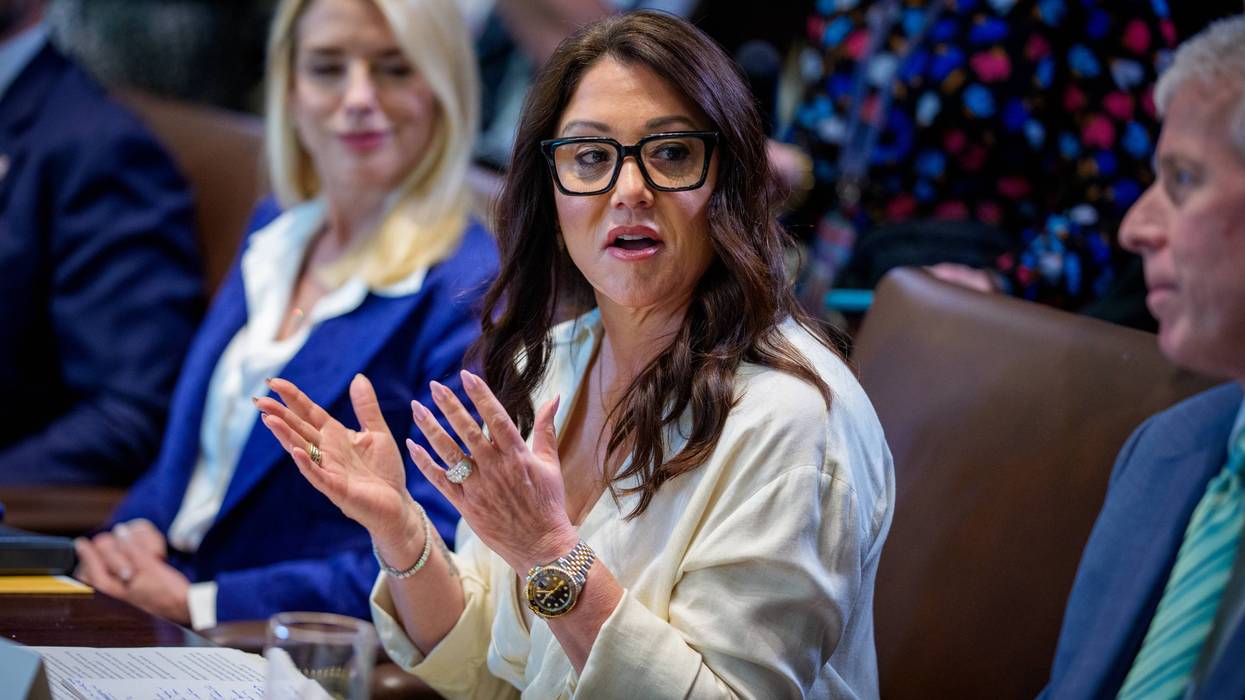
A group of Democratic senators accused Lori Chavez-DeRemer's Labor Department of showing "disregard for workers’ lives."
Lori Chavez-DeRemer's tenure as head of the US Department of Labor was further embroiled in scandal on Thursday after bombshell New York Times reporting revealed that her husband has been banned from the agency's headquarters over sexual assault allegations leveled by at least two staffers.
The reporting landed on the same day that a group of Senate Democrats launched an investigation into Chavez-DeRemer's policy moves at the Labor Department, accusing her agency of showing "disregard for workers’ lives" by "rolling back protections that keep workers safe and hobbling the agency that is tasked with overseeing worker safety."
The sexual assault allegations against the labor secretary's husband, Shawn DeRemer, were made by two women "as part of an internal investigation by the department’s inspector general into alleged misconduct by Ms. Chavez-DeRemer and her senior staff," the Times reported Thursday, citing unnamed sources familiar with the matter and a police report.
"The widening misconduct scandal at the Labor Department has forced several aides and members of the security staff in Ms. Chavez-DeRemer’s inner circle onto administrative and investigative leave," the newspaper continued. "The inspector general’s office is investigating a formal complaint that Ms. Chavez-DeRemer was having an inappropriate sexual relationship with a subordinate—a member of her security detail—and abusing her office by taking staff to strip clubs, drinking alcohol on the job, and taking personal trips at taxpayer expense. Her lawyer has denied the allegations."
"This is Trump's America," retired US diplomat Ken Fairfax wrote in response to the reporting.
Meanwhile, Chavez-DeRemer has been playing a central role in what six Senate Democrats characterized as the Trump administration's "attack on workers from all sides."
In a Thursday letter to Chavez-DeRemer and David Keeling, the assistant secretary of labor for Occupational Safety and Health, Sen. Elizabeth Warren (D-Mass.) and other Democrats expressed alarm over the Labor Department's "ambitious deregulatory agenda that includes many of the regulations that OSHA has promulgated to keep American workers safe."
The lawmakers pointed specifically to Labor Department efforts to eliminate more than a third of the Mine Safety and Health Administration's offices, roll back "a requirement for employers to provide adequate lighting at construction sites," and loosen "respirator requirements for workers exposed to dangerous materials like lead, asbestos, and formaldehyde, as well as chemicals known to be carcinogens."
"But you are not only rolling back rules that protect workers—OSHA also appears to be taking a lighter hand in enforcing even the rules that still exist," the senators wrote. "According to OSHA statistics comparing the months of April through September 2025 with the same period in 2024, the agency reduced workplace inspections by 20%. Those statistics also show a 42% decrease in the number of 'willful violations' found during inspections by OSHA during the months of April-September of 2025 as compared to the same period in 2024."
Chavez-DeRemer was confirmed as labor secretary last year with bipartisan support and a boost from the Teamsters union given some of her past pro-worker stances, such as support for the PRO Act—which she quickly distanced herself from during the confirmation process.
"Chavez-DeRemer refused to commit to supporting a minimum-wage increase, or paid leave for workers," The Nation's John Nichols wrote following her confirmation hearing last February. "And, of course, she unapologetically declared, 'The right to work is a fundamental tenet of labor laws, where states have a right to choose if they want to be a right-to-work state, and that should be protected.'"
"She has made it abundantly clear that she is not interested in serving as an ally of America’s workers or the unions that represent them," Nichols added. "In the great struggle between the working class and the billionaire class, Chavez-DeRemer has chosen to side with Donald Trump, Elon Musk, and the oligarchs."
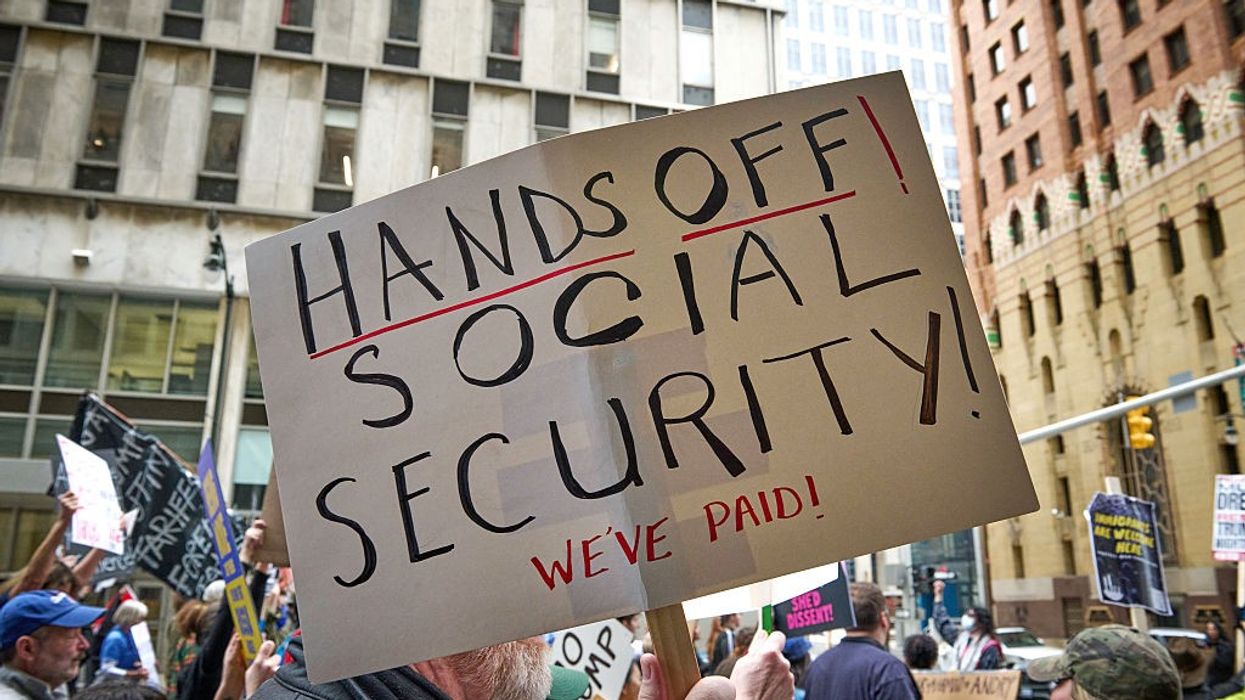
"Bureau of Labor Statistics data is what determines the annual cost-of-living adjustment for Social Security benefits," said Rep. John Larson. "It should alarm everyone when a yes-man determined to end Social Security is installed in this position."
U.S. President Donald Trump's pick to replace the top labor statistics official he fired earlier this month has called Social Security a "Ponzi scheme" that needs to be "sunset," comments that critics said further disqualify the nominee for the key government role.
During a December 2024 radio interview, Heritage Foundation economist E.J. Antoni said it is a "mathematical fiction" that Social Security "can go on forever" and called for "some kind of transition program where unfortunately you'll need a generation of people who pay Social Security taxes, but never actually receive any of those benefits."
"That's the price to pay for unwinding a Ponzi scheme that was foisted on the American people by the Democrats in the 1930s," Antoni continued. "You're not going to be able to sustain a Ponzi scheme like Social Security. Eventually, you need to sunset the program."
Trump's choice for the Commissioner of the Bureau Labor Statistics called Social Security a "Ponzi scheme" in an interview:
" What you need to do is have some kind of transition program where unfortunately you'll need a generation of people who pay Social Security taxes, but… pic.twitter.com/MXL7k1C644
— More Perfect Union (@MorePerfectUS) August 12, 2025
Rep. John Larson (D-Conn.), one of Social Security's most vocal defenders in Congress, said Antoni's position on the program matters because "Bureau of Labor Statistics data is what determines the annual cost-of-living adjustment for Social Security benefits."
"It should alarm everyone when a yes-man determined to end Social Security is installed in this position," Larson said in a statement. "I call on every Senate Republican to stand with Democrats and reject this extreme nominee—before our seniors are denied the benefits they earned through a lifetime of hard work."
Trump announced Antoni's nomination to serve as the next commissioner of the Bureau of Labor Statistics (BLS) less than two weeks after the president fired the agency's former head, Erika McEntarfer, following the release of abysmal jobs figures. The firing sparked concerns that future BLS data will be manipulated to suit Trump's political interests.
Antoni was a contributor to the far-right Project 2025 agenda that the Trump administration appears to have drawn from repeatedly this year, and his position on Social Security echoes that of far-right billionaire Elon Musk, who has also falsely characterized the program as a Ponzi scheme.
During his time in the Trump administration, Musk spearheaded an assault on the Social Security Administration that continues in the present, causing widespread chaos at the agency and increasing wait times for beneficiaries.
"President Trump fired the commissioner of Labor Statistics to cover up a weak jobs report—and now he is replacing her with a Project 2025 lackey who wants to shut down Social Security," said Larson. "E.J. Antoni agrees with Elon Musk that Social Security is a Ponzi scheme and said that middle-class seniors would be better off if it was eliminated."
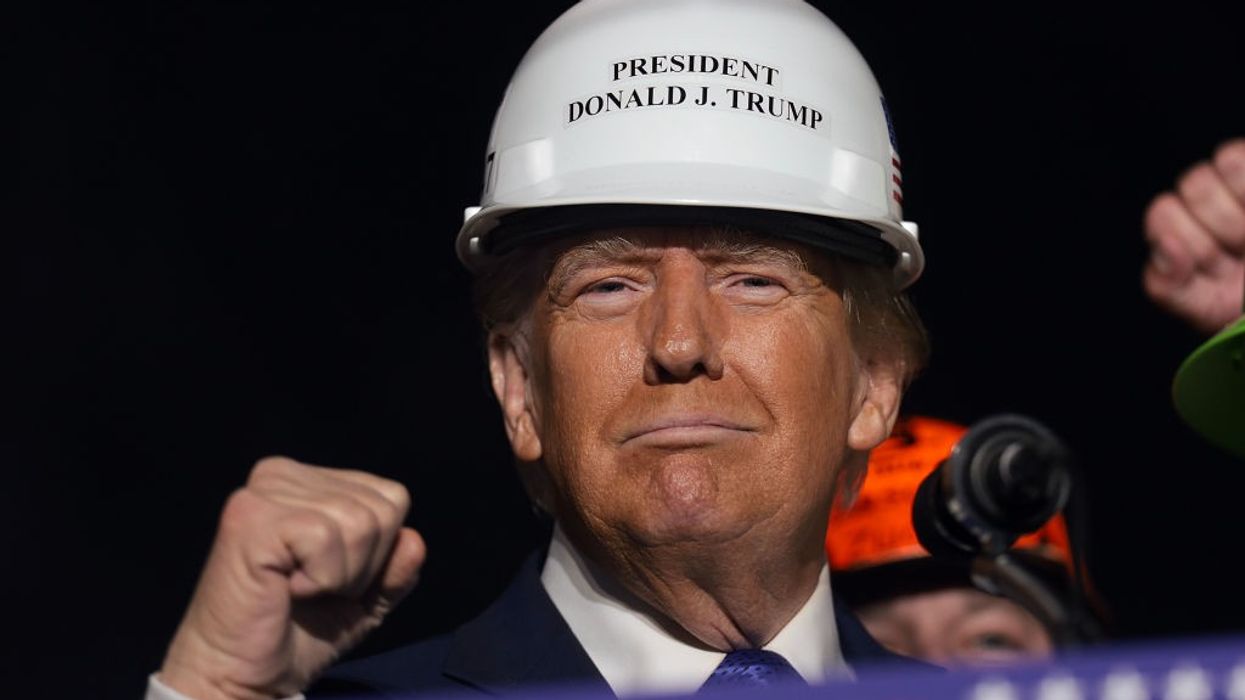
"They're showing their true colors as an anti-worker administration," Andrew Stettner of the Century Foundation told Common Dreams.
In what has been described as a "barrage of attacks on workers," the U.S. Department of Labor under President Donald Trump is planning to overhaul dozens of rules that protect workers from exploitation and wage theft.
The administration announced this month that it planned to change over 60 regulations it deems "unnecessary" burdens to businesses and economic growth.
According to an analysis released Tuesday by labor policy experts at the Century Foundation—senior fellows Julie Su and Rachel West and director of economy and jobs Andrew Stettner—most of the changes "reverse critical standards that ensure workers get a just day's pay and come home healthy and safe."
In one of the most sweeping changes, the department plans to reverse a 2013 rule that extended minimum wage and overtime protections to home healthcare workers.
These workers, who care for elderly and other medically frail individuals, already make less than $17 an hour on average.
Stettner told Common Dreams that the changes will "suppress wages" and allow agencies to "put the screws on workers to work 50- or 60-hour weeks."
The Trump administration is also rolling back a Biden-era rule that banned bosses from paying subminimum wages to disabled employees.
This discriminatory practice has been on the wane due to state-level bans in 15 states. But in the absence of a federal ban, nearly 40,000 employees—most of whom have intellectual disabilities—still received less than the federal minimum wage as of 2024.
The Century Foundation report says that by ending the rule, the Trump administration would be once again "relegating workers with disabilities to jobs that pay as little as pennies per hour."
The department is also taking a hatchet to workers' rights and safety. Another major change it proposed would do away with protections for seasonal migrant farmworkers under the H-2A visa program who raise complaints about wage and hour violations.
It was commonplace for farm owners to take advantage of these seasonal employees, whose legal status was tied to their work, and who therefore risked deportation if they lost their jobs.
Cases of exploitation, however, declined to an all-time low after the Biden administration introduced the rule, which banned employers from firing, disciplining, or otherwise retaliating against workers who attempted to participate in collective bargaining.
"These reforms protected the rights of farmworkers in the H-2A program to speak out individually and collectively against mistreatment and prevented employers from arbitrarily firing them from their jobs," the report says.
The department also proposed weakening the Occupational Safety and Health Administration's (OSHA) general duty clause, which allows businesses to be punished for putting their employees in dangerous situations. The proposed change would exempt many jobs that are deemed "inherently risky" from protection.
The administration described it as a way to prevent OSHA from cracking down on workplace injuries among athletes and stuntmen.
However, Stettner suggested that the broad language could allow the administration to go much further in defining what is considered "inherently risky." The report notes that the administration is "crowdsourcing" suggestions from employers about what other occupations to exempt.
"The employer community, they're jumping onto this," Stettner said. "They're telling their members to write in to the Department of Labor about other inherently dangerous occupations they should except from the general duty clause."
The authors pointed out that the administration has previously rolled back restrictions meant to protect workers from heat-related stress on the job, which results in more than 600 deaths and over 25,000 injuries each year.
As the administration pushes to expand coal mining, it is also weakening protections for the miners themselves. After laying off most of the employees at OSHA's research arm—which monitors cases of black lung disease—earlier this year, it is now weakening safety requirements to prevent roof falls, mine explosions, and exposure to toxic silica.
"The DOL's role should be to protect the most vulnerable workers: farmworkers, people with disabilities, people that have suffered discrimination," Stettner said. "They're showing their true colors as an anti-worker administration."
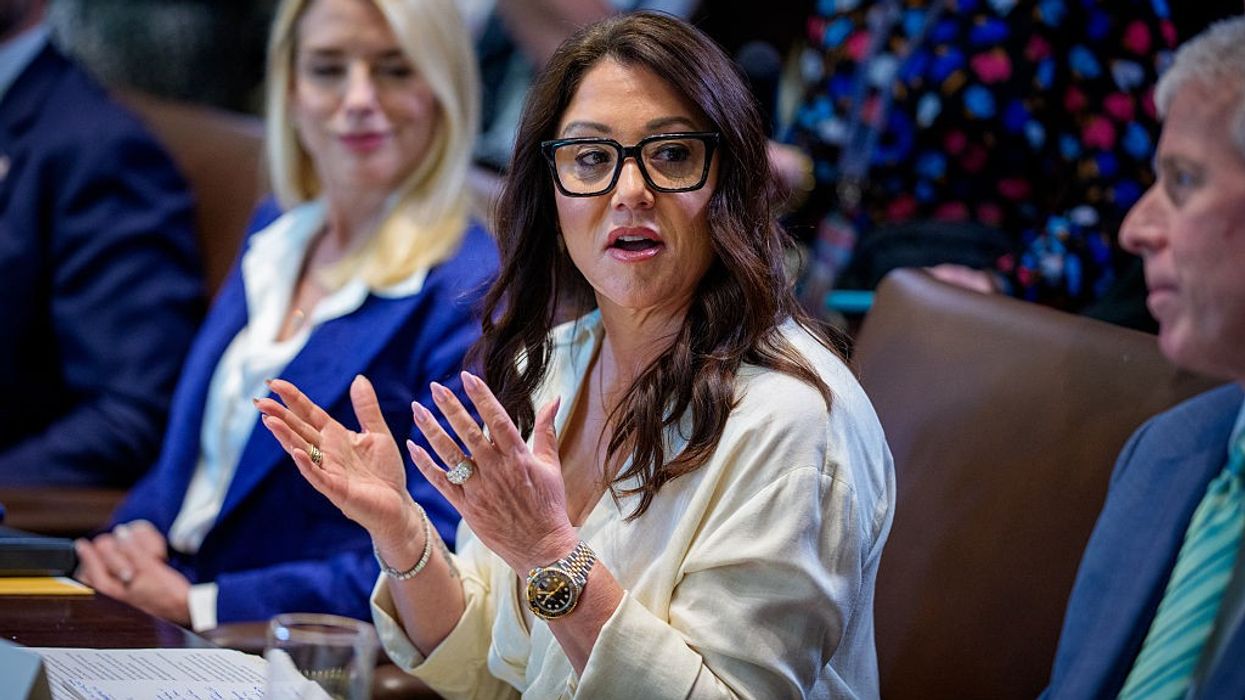
"Many of our participants are living on the edge of poverty," said the head of one organization impacted by the termination of the Senior Community Service Employment Program.
The Trump administration has reportedly terminated the Department of Labor's only job training program for low-income seniors, a decision that came as older Americans braced for new work reporting requirements under the Republican budget law enacted earlier this month.
Bloomberg Law reported Friday that the Labor Department "quietly ended" its Senior Community Service Employment Program (SCSEP), which helped low-income Americans aged 55 or older find part-time employment or job training at nonprofits and government agencies. The program, described as a bridge to full-time employment, served tens of thousands of people across the country.
Groups that received funding under SCSEP, such as the National Council on Aging and Goodwill Industries, "say the program stopped giving them money after June 30," according to Bloomberg Law, which reported that the Labor Department "hasn't made available the roughly $300 million set aside for national grant recipients."
The Trump White House has proposed zeroing out funding for SCSEP in its budget request for fiscal year 2026, smearing the program as an "earmark to leftist, DEI-promoting entities."
In a July 17 letter to Labor Secretary Lori Chavez-DeRemer and Office of Management and Budget Director Russell Vought, a group of Democratic lawmakers led by Rep. Judy Chu (D-Calif.) warned that the withholding of SCSEP funds has already had "devastating impacts," pointing to program grantees in several states that have been forced to furlough thousands of low-income seniors.
Clayton Fong, president and CEO of the National Asian Pacific Center on Aging, said earlier this month that the funding delay "is not just a bureaucratic issue—it's a crisis for tens of thousands of older adults who depend on SCSEP to survive."
"Many of our participants are living on the edge of poverty," said Fong. "SCSEP gives them purpose, dignity, and the ability to put food on the table. The longer this delay continues, the deeper the harm is."
Bloomberg Law noted that the impact of the ending of SCSEP "could be particularly dire for the thousands of participants who will have to find work or volunteer hours to keep their public health insurance coverage."
"The cruelty is the point," former U.S. Labor Secretary Robert Reich wrote on social media in response to Bloomberg Law's reporting.
Just piling up the bad news today...Our nationwide job training program for low-income seniors has had bipartisan support for decades.It's extra cruel to end it right on the heels of new work requirements to access Medicaid and food assistance.
[image or embed]
— Alt U.S. Department of Labor (@alt-dol.altgov.info) Jul 18, 2025 at 10:15 AM
Millions of older Americans receive health coverage through Medicaid. The AARP Public Policy Institute has estimated that 9 million Medicaid recipients between the ages of 50 and 64 will be subject to the Trump-GOP budget law's work requirements, which mandate that certain enrollees engage in work, job training, or other qualifying activities for at least 80 hours per month—or lose coverage.
The mandates are set to take effect late next year, after the 2026 midterm elections.
The Republican law also expands work requirements for recipients of federal nutrition assistance, raising the age limit for the mandates from 55 to 64. Millions of older adults are enrolled in the Supplemental Nutrition Assistance Program nationwide.
"We believe every American deserves to age with dignity—and that requires affordable access to the basics of life such as food and healthcare," Ramsey Alwin, president and CEO of the National Council on Aging, said earlier this month after Republicans pushed the budget measure through Congress. "This act would put that further out of reach for millions of older Americans in need."
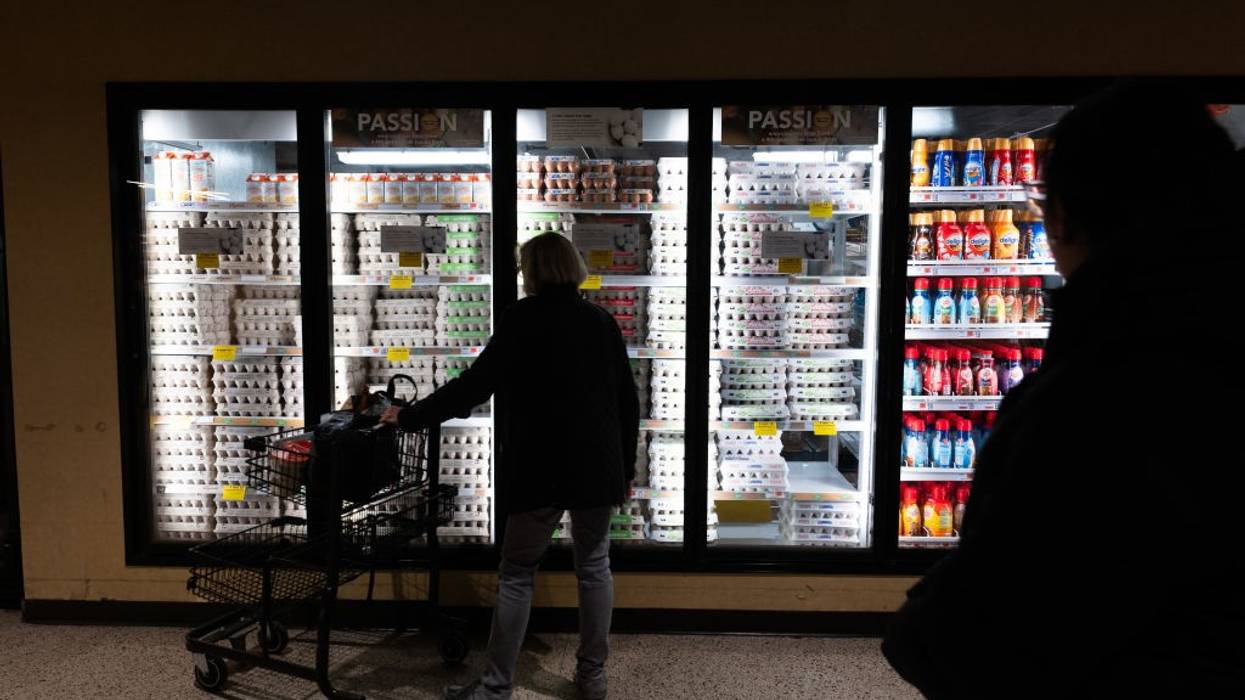
"Instead of trying to lower the cost of living, he's doubling down on his plans to give massive tax breaks to billionaires and giant corporations," said one Trump critic.
As the U.S. Department of Labor released its monthly consumer price index report on Wednesday, President Donald Trump's new tariffs for steel and aluminum imports took effect, highlighting his threat to the economy and working-class Americans.
The CPI, "a key gauge of inflation, showed that prices rose by 2.8% in February from a year earlier, driven by price relief from airfares and gas," The Washington Post reported. "That was cooler than the 3% annual gain reported for January and an unexpected signal of progress in combating high inflation."
While gasoline prices fell 1.0% and airline fares dropped 4%, the cost of food and shelter rose 0.2% and 0.3% respectively. The bird flu continued to drive up egg prices, which jumped 10.4%. The report adds, "Indexes that increased over the month include medical care, used cars and trucks, household furnishings and operations, recreation, apparel, and personal care."
The White House celebrated the inflation data, but economists were quick to point out that the numbers don't account for the latest developments in Trump's trade war: the new tariffs taking effect on Wednesday—after chaos-causing mixed messages from the president on Tuesday—and Canada and Europe's swift retaliatory measures.
"It's a classic head fake," Joe Brusuelas, chief economist at RSM, told the Post. "Going forward, tariffs are going to increase the costs of manufacturing in general and autos in particular."
Chris Low, chief economist at FHN Financial, similarly told Reuters that "trade wars are expected to raise prices in future inflation reports," though he also said the odds that the Federal Reserve can cut interest rates "again this year once the smoke from the tariff back-and-forth clears increased today nonetheless."
Trump's trade policies and other recent decisions, including letting billionaire Elon Musk gut the federal government, have elevated fears of a recession—which one economist suggested naming after the president—and even sparked speculation that he is tanking the economy on purpose.
In a Wednesday statement about the CPI report, Groundwork Collaborative chief of policy and advocacy Alex Jacquez said that "while families are still struggling to put food on the table and a roof over their head, the administration's response is that they should raise their own chickens in their backyards."
"Every economic indicator suggests that President Trump has us barreling toward a recession and stagflation. But instead of trying to lower the cost of living, he's doubling down on his plans to give massive tax breaks to billionaires and giant corporations," Jacquez added, referring to congressional Republicans' efforts to send Trump legislation that would fund tax giveaways by slashing Medicaid and the Supplemental Nutrition Assistance Program (SNAP).
In addition to Jacquez's comments, Groundwork and Data for Progress also released a poll showing that over a fifth of U.S. voters across the political spectrum are most frustrated with rising grocery costs. Another 10% are most frustrated with high bills for utilities like electricity, gas, and water. They were followed by around voters frustrated with out-of-pocket healthcare costs, rent or mortgage, or health insurance premiums.
Groundwork Collaborative warned that "Trump's threat of new tariffs risks making the housing crisis worse. By driving up the cost of construction materials, his trade war with Canada could shrink the supply of new housing, keeping overall prices high. That, in turn, forces the Federal Reserve to keep interest rates elevated, making mortgages more expensive."
The think tank also stressed that the Trump administration is "destroying affordable healthcare" by fighting to cut Medicaid and Medicare, reinstate work requirements, and limit Affordable Care Act enrollment; "raising energy bills" by freezing funds for clean energy projects while advocating for planet-wrecking fossil fuels; and "making groceries more unaffordable" by pushing SNAP cuts "instead of tackling corporate price gouging and market consolidation in the food industry."
Food & Water Watch similarly responded to the new CPI data by calling out failures to crack down on corporate price gouging—as detailed in the group's report from last week titled, The Rotten Egg Oligarchy.
"Record-high egg prices have everything to do with corporate greed," Food & Water Watch research director Amanda Starbuck said Wednesday. "While skyrocketing prices transform eggs into a luxury item, the food monopolies are seeing green. President Trump needs to get serious about lowering American food prices—starting with cracking down on the food monopolies exploiting the worsening bird flu crisis for profit."