

SUBSCRIBE TO OUR FREE NEWSLETTER
Daily news & progressive opinion—funded by the people, not the corporations—delivered straight to your inbox.
5
#000000
#FFFFFF
To donate by check, phone, or other method, see our More Ways to Give page.
Daily news & progressive opinion—funded by the people, not the corporations—delivered straight to your inbox.
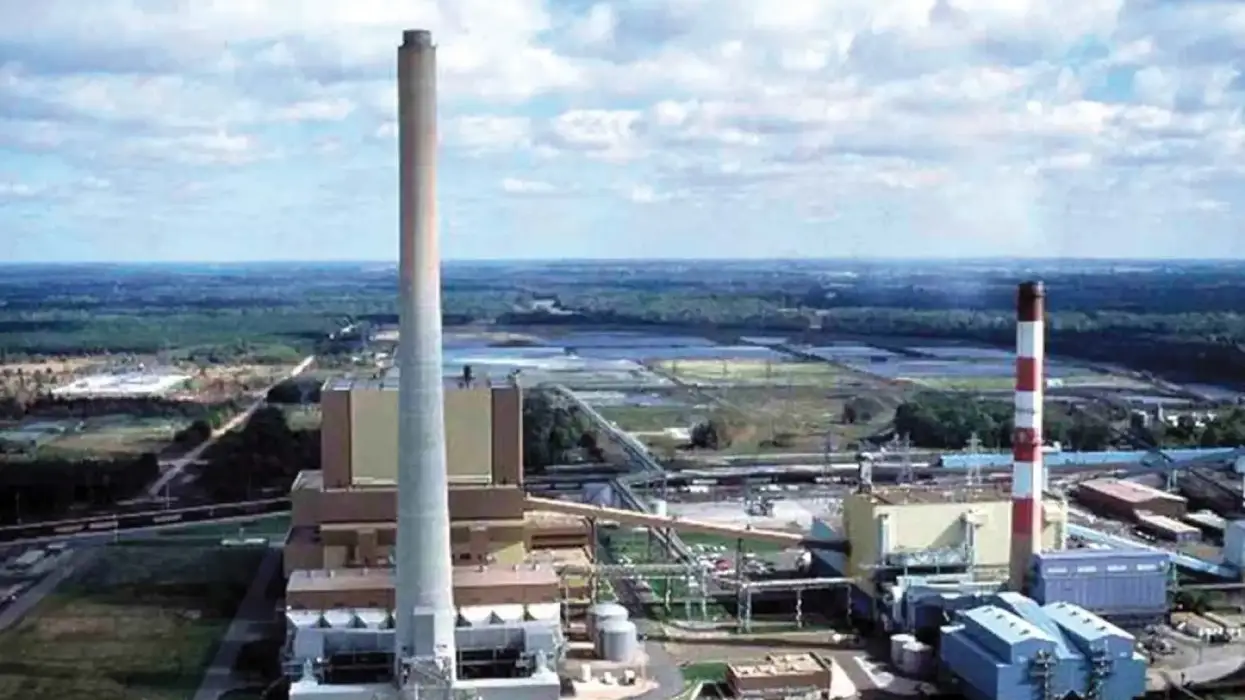
"Preventing the market-driven retirements of coal plants to advance a coal-friendly agenda is not a proper use of emergency powers," said one lawyer.
Climate defenders celebrated on Friday after a federal appellate court rejected the US Department of Energy's abuse of emergency powers to keep a Michigan coal plant open, part of President Donald Trump's broader push to boost the climate-wrecking industry.
"The court rejected the Trump administration's nationwide push forcing unreliable, aging coal plants that are bleeding money and polluting communities to stay online," said Ted Kelly, director and lead counsel for US clean energy at the Environmental Defense Fund—which was among the advocacy groups that joined Michigan, Minnesota, and Illinois in challenging the DOE's abuse of Section 202(c) of the Federal Power Act to keep the JH Campbell Generating Plant running.
"The Department of Energy's unlawful actions attempted to make families and businesses in the Midwest wastefully pay hundreds of millions of dollars for a coal plant that should have been shut down over a year ago," said Kelly. "That's why these aging coal plants are scheduled to retire in the first place—they are incredibly expensive, dangerous to our health, and break down frequently."
The Campbell plant was scheduled to retire on May 31, 2025, after over six decades of operation. As the opinion from the US Court of Appeals for the District of Columbia notes, Consumers Energy "worked for several years to develop plans and secure regulatory approval to retire the old Campbell plant and replace it with a mix of expanded and new electricity-generation sources."
While Michigan officials approved the company's retirement plan for the facility, Trump's DOE intervened, forcing not only that plant but six others across the country to remain open—collectively costing Americans over $547 million, according to a live tracker from the Sierra Club, which has challenged all of the department's coal plant orders.
The three-judge appellate panel unanimously vacated the department's order on Friday, writing that "our reading of the text, structure, and history leaves us unpersuaded by DOE's sweeping conception of its 'emergency' authority under Section 202(c)."
The Associated Press reported that while the DOE didn't respond to a request for comment, Consumers Energy spokesperson Brian Wheeler said the plant operator was reviewing the court ruling and, in the meantime, will keep the facility operating through mid-November.
In a statement to Bridge Michigan, DOE spokesperson Emily Mathews claimed the emergency orders prevented blackouts and "likely saved hundreds of lives," without offering evidence. She did not confirm plans for an appeal but did say that the department "will continue to protect and defend energy security for all Americans."
Consumers Energy spokesperson Katie Carey told the outlet that the company "is reviewing today's court ruling," and "while that happens, we are continuing to comply with the current 90-day Department of Energy order." Still, those who fought against the administration's policy welcomed their legal victory.
"By forcing its continued operation, DOE tried a never-before-used tactic to illegally prop up the aging JH Campbell coal plant that nobody asked to keep, sticking ratepayers with a bill for a facility that should have been retired more than a year ago," said Democratic Michigan Attorney General Dana Nessel in a statement.
"I am relieved that the court saw through this facade and threw out DOE's order that had zero basis in reality," she continued. "My office has been fighting this unlawful political stunt at every turn, and this ruling proves what we have been saying all along: This administration does not get to invent fake emergencies to bypass the rule of law against the best interests of Michigan residents. We remain committed to fighting these nonsensical orders and protecting our ratepayers."
Derrell Slaughter, the Natural Resources Defense Council's Michigan policy director for climate and energy, declared that "Michiganders shouldn't have been saddled with artificially high energy bills or forced to deal with toxic air pollution over a fabricated 'emergency.' The Campbell coal plant is out of date, costs more to operate than other electricity generation options, and is one of the worst polluters in the state."
While applauding the decision as "a victory for families across the Midwest who are tired of paying to keep this old, expensive, and dirty power plant online," Sierra Club chief appellate counsel Sanjay Narayan stressed that "instead of working to lower costs and clean up our air and water, the Trump administration has been pulling out all the stops to try to bolster dirty and expensive fossil fuels—at public expense."
"This reckless agenda will not succeed," the attorney pledged. "We will continue to hold the Department of Energy accountable to the law, and ensure that the JH Campbell plant finally retires as it was scheduled to, and we will continue to fight back against the other illegal extensions across the country."
Earthjustice attorney Michael Lenoff also cheered the court's rebuke of the "Trump administration's abuse of emergency powers" and vowed to "continue to challenge unlawful orders if DOE persists in issuing them."
"The DOE needs to stay in its lane and use its emergency powers only in actual emergencies," he said. "Preventing the market-driven retirements of coal plants to advance a coal-friendly agenda is not a proper use of emergency powers."
Tyson Slocum, director of Public Citizen's Energy Program, noted that two years ago, his consumer advocacy organization "predicted Trump would try to force household consumers to pay higher utility bills to prop up uneconomic coal power plants, and we proudly joined with other public interest groups in June 2025 to challenge his bogus emergency declaration for the Campbell coal power plant."
"But Americans have already been forced to shell out half a billion dollars for Trump's obscene coal bailout vanity project," he emphasized, pledging to "explore all options to force" the Federal Energy Regulatory Commission "to refund consumers for this Trump boondoggle."
The appellate court's ruling came on the heels of data released this week showing that 2026 had the warmest August and meteorological summer on record in the contiguous United States, and globally, last month was the hottest ever recorded, tied with July 2023.
Despite such records, and scientists' persistent warnings, Trump has repeatedly delivered on his campaign promises to serve the fossil fuel industry, from declaring a national energy emergency and waging a war on renewable power projects to ditching the Paris Agreement, again, and signing executive orders on coal denounced as "reckless" and "breathlessly stupid."
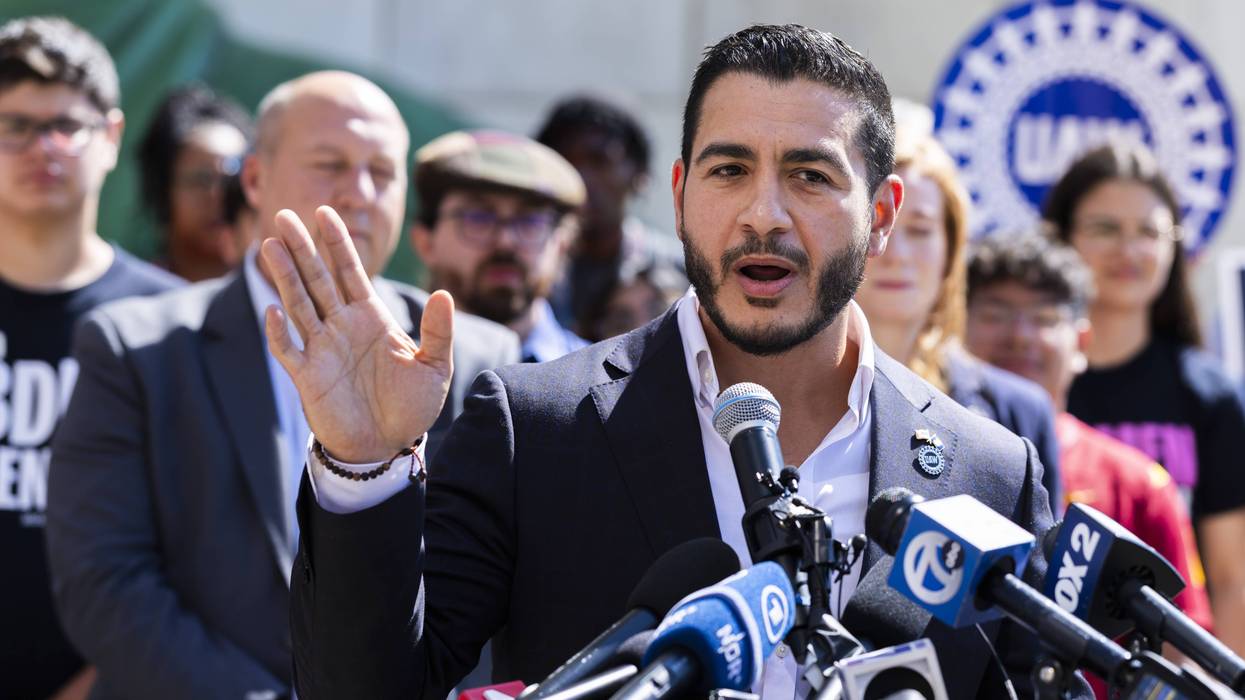
And why Mike Rogers would be a disaster for the country.
The Democratic establishment, along with AIPAC, the American Israel Public Affairs Committee, spent between $60 million and $70 million trying to prevent Dr. Abdul El-Sayed from winning Michigan’s Democratic primary—roughly 11 times the money backing El-Sayed.
He won nonetheless and now faces the Republican nominee, Mike Rogers, in a race that will help determine control of the Senate after the midterms in November.
I hope Michiganders elect El-Sayed, who will be a great US senator.
After receiving an advanced degree in public health, El-Sayed worked as an epidemiologist. Informed by this experience and expertise, he advocates access to healthcare as a right and not a privilege.
He also advocates economic security for all, financed by a tax system that asks more from the wealthy. He’s a champion of civil rights. He’s a fighter for affordability against predatory landlords, monopolistic corporations, and billionaires who turn their wealth into political power.
Most Jewish Americans have values that align with Dr. El-Sayed’s. He believes in social justice—that government can be a force for good as it helps expand opportunities, protect rights, and advance the common good.
Yet AIPAC is continuing its battle against El-Sayed. It is expected to put tens of millions of dollars behind Rogers, some of it disguised behind other PACs. “Our members remain determined to ensure that voters reject Dr. El-Sayed and his radical anti-Israel agenda in November,” said Deryn Sousa, a spokeswoman for AIPAC.
El-Sayed is no more anti-Israel than I am.
Being opposed to Benjamin Netanyahu’s extreme right-wing Israeli government is not the same as being anti-Israel. Nor should it be equated with being antisemitic. Nor, for that matter, should opposition to Netanyahu and his government be seen as condoning the brutal Hamas attack on Israel on October 7, 2023, in which 1,200 were murdered and 251 taken hostage. It was an atrocity and a crime against humanity.
I believe Netanyahu is a war criminal and that his government has committed genocide in Gaza. I’m appalled that he and it continue to allow and excuse horrific violence on the West Bank against Palestinians. For this reason, I don’t believe the United States should arm Netanyahu’s government with destructive military equipment.
This doesn’t make me anti-Israel. For decades I’ve advocated a two-state solution for Israel and Palestine, and I continue to believe it’s the only sane and reasonable way for these two peoples to peacefully coexist.
This certainly doesn’t make me antisemitic, either. I’m Jewish. Some of my relatives died in Hitler’s gas chambers. My mother and father were told they were unwelcome in the small town they moved to when I was a toddler because, according to the group of old men who met them at the doorstep of our new home, it was a “Christian community.”
Like me, Dr. El-Sayed opposes what the government of Netanyahu has done and continues to do. El-Sayed has affirmed that “Jewish Israelis and Palestinians alike have the right to peace, dignity, and self-determination.” He has acknowledged the horror of October 7, condemned all forms of antisemitism, and been highly critical of Israel’s war in Gaza and abuses in the West Bank.
Ten days ago El-Sayed publicly apologized for any misinterpretation people might have placed on remarks he made after a man attacked a synagogue in a Detroit suburb in March. The man, Ayman Mohammad Ghazali, had lost four relatives in an Israeli airstrike on Lebanon the week before.
In a video response at the time, El-Sayed condemned the attack. He added that “hurt people hurt people,” a reference to what happened to Ghazali’s family. Critics accused El-Sayed of justifying Ghazali’s actions.
If you read the transcript of what El-Sayed actually said, it’s clear he was merely trying to explain and give context for the violence. “What I was trying to do was offer context for why it happened, but it wasn’t the time for context,” El-Sayed said in apology. “And you don’t ever want to trample somebody’s pain.”
There is enough pain on all sides—pain for Israelis and Palestinians, for Muslims and Jews. Which is why it’s so important that all of us think clearly and carefully. Being anti-Netanyahu isn’t being anti-Israel, nor is it being antisemitic.
It’s also critically important that the good people of Michigan oppose Mike Rogers, who endorsed and voted for legislation last year that cut Affordable Care Act insurance for millions of Americans, weakened Medicaid and food assistance to less affluent citizens, and provided tax breaks to the very rich.
Rogers has warmly and enthusiastically praised Trump. He’s failed to publicly condemn or even criticize Trump’s bigoted statements about ethnic communities in the United States. He hasn’t said a word against Trump’s unconscionable pardon of the more than 1000 insurrectionists who rioted at the Capitol on January 6, 2021. This includes those found guilty of the most heinous acts, causing grievous bodily harm to law enforcement officers.
My view is we need smart, committed progressives such as Abdul El-Sayed in the Senate. And we need right-wing Trump suckups such as Mike Rogers out of the Senate.

"Come on down! All this could be yours... except the price is WRONG because of Trump's tariffs."
Modeled on the familiar logo of a long-running daytime game show, US Senate candidate Abdul El-Sayed displayed a hand-drawn picture of a dollar sign along with the words "The Price Is Wrong" in a video posted to his official social media accounts Tuesday—and offered Michigan voters the chance to play his version of the game, inspired by President Donald Trump's policies.
"This is probably true of everything you're buying right now," said El-Sayed, who is running against former Republican Rep. Mike Rogers after winning the Democratic primary election last month, as he pointed to the handmade sign. "We're going to ask Michiganders about just how much everything has gotten more expensive over the last year because of Trump's tariffs and his war in Iran."
First up, a voter learned that a container of 100 Tide detergent pods, which now costs nearly $30, cost just under $22 a year ago at this time—before Trump joined Israel in attacking Iran, leading to the retaliatory measure of Iran's closure of the Strait of Hormuz and the resulting spike in oil and gas prices.
"That's almost a 30% increase in price for the same Tide pods," said El-Sayed.
A package of Target brand toilet paper cost $6 last year, and another voter guessed it's currently marked at $8.50—off by 50 cents, said El-Sayed, who revealed the package would now cost $9 at a Target store in Michigan.
Target-branded protein powder cost $40 last year, and Trump's policies have raised the price to $54 this year, said El-Sayed, while a one-pound bag of coffee beans from Tim Hortons is nearly a dollar more than it was last year, priced now at $9.32.
El-Sayed released the video as Canada imposed its new retaliatory tariffs targeting about $20 billion in US imports, in response to the 50% tariffs Trump announced late last month on a range of Canadian goods including dairy products, paper, and cement.
According to a June poll by Epic-MRA, 63% of Michiganders—including 35% of Republicans—opposed Trump's tariffs on Canadian goods, which he first announced last year along with levies on numerous other countries that he said had treated the US unfairly in trade.
About three-quarters of voters in that poll said they thought Trump's tariff policy was fueling higher prices for everyday goods.
The Midwest Economic Policy Institute found in July that due to Michigan's shared border with Canada and the close ties shared between the auto industries in Michigan and Ontario, Michigan households were paying as much as $3,200 in extra costs due to Trump's tariffs—about 142% more than the rest of the US.
“Donald Trump is launching this trade war for his own vanity, and he’s asking Michigan families to pay the price,” El-Sayed said in a statement last month. “Trump has been failing Michigan through these chaotic tariffs and bad trade deals for far too long, and Mike Rogers won’t do anything but rubber-stamp them.”
At Michigan Advance, columnist Rick Haglund warned last month that Michigan would likely "pay a steep price for Trump’s reckless actions."
"Canada is Michigan’s largest trading partner with about $70 billion in goods flowing across their borders in 2024, the latest available data," said Haglund. "Thousands of jobs are connected to Michigan auto parts manufacturers, farmers, and others who export goods to Canada."
Trump's unprovoked war on Iran has also been linked to spiking diesel prices, which is driving up transportation costs—and as a result, consumer prices—for many everyday goods like those featured in El-Sayed's mock game show.
"Americans are paying way more for everyday goods they have to buy at the grocery store, all because of this insane war that is spiking the price of gas, spiking the price of diesel, spiking the price of your everyday goods," said El-Sayed. "And now, a trade war that's expanded with Canada."
"Americans are sick and tired of playing 'The Price Is Wrong,'" he added. "I think it's time for us to play 'The Price Is Right.'"
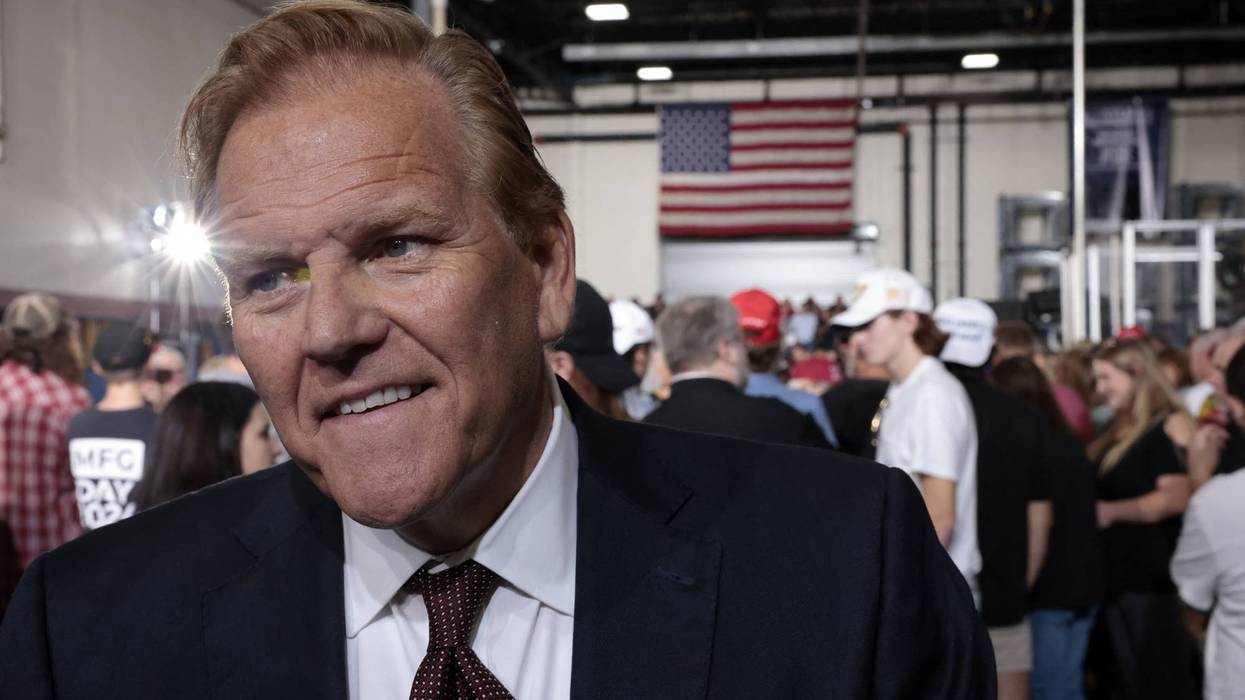
Dennis Kucinich could tell voters from experience that if Michiganders elect Mike Rogers, he will remain silent as our soldiers die, as family finances deteriorate, and as we become more hated around the world.
Which is the "All War, All the Time" party that impoverishes your family and makes us less safe? Which party lies to get us into wars, lies after they get caught, and then just issues additional lies as they are now doing in Iran and as they once did in Iraq?
This question is now playing out in Michigan in the Senate race. However, there is an out-of-state person who could definitively answer that question.
While the epic battle between Dr. Abdul El-Sayed and Mike Rogers wages in Michigan, the most dangerous man to one of the candidates resides in Cleveland, Ohio. His name is Dennis Kucinich. He was a 16-year member of the House of Representatives overlapping with Mike Rogers for a number of those years, especially when the Authorization for Military Force in the Iraq War was being debated in late 2002.
Kucinich is dangerous because no one interested in the welfare of American families, its soldiers, our national security, and personal liberties could vote for Rogers if they knew the evidence Kucinich produced before the War.
Did Mike Rogers call out: Let’s stop and more carefully look at the shaky and inconclusive evidence before we send our kids off to die and to kill hundreds of thousands?
Evidence that Mike Rogers and 214 other Republicans ignored. In fact, the All War, All the Time party only had six GOP members vote against the war. Unfortunately, Democrats have an All War, All the Time faction as well. These AIPAC-bred and -fed types are now mumbling how they can’t in good conscience support El-Sayed.
The Greedy Oil Party {GOP), of course, continues to vote the same war-mongering way as shown with their support of the Gaza genocide and the Israel-First War on Iran.
In 2002 Kucinich masterfully destroyed the Bush-Cheney web of lies justifying the illegal and immoral war. His evidence-packed memo pointed out that we were going to war against a country that did not attack us, had no means to do so, and had never expressed a desire to do so.
The fact that Iraq was not an imminent threat is not just my jaundiced opinion as a 40-year adviser to Dennis. Six artificial intelligence (AI) platforms—ChatGPT. Claude, Saner, Gemini, Deep Seek and Grok—were presented with a simple question:
Do you agree or disagree with the following conclusion: On Oct. 2, 2002 when Dennis Kucinich presented his eight-page memo against the Authorization for Use of Military Force there was already enough contradictory and qualifying intelligence available to Congress that the Bush administration's presentation of Iraq as an established, urgent WMD threat was not justified by the underlying evidence?
They all agreed that Dennis and other sources had already raised enough questions to halt the rush to folly. Certainly, no prudent, patriotic official would send 4,418 of our brave men and women to die violently in a foreign land.
But Mike Rogers did.
Over a million Iraqis likely died as a result. We wasted trillions of precious dollars as the Greed Only Party filled the pockets of the Military-Industrial Complex and their donor-owners.
But Mike Rogers’ culpability gets worse. When Hussein Kamel—Saddam’s son-in-law in charge of WMD concealment—was interviewed by the CIA and other intelligence agencies in 1995 after defecting, he disclosed that all the WMDs had been destroyed.
This devastating disclosure came out in late February 2003. The Newsweek article continued the shredding of the Greedy Oil Party web of lies which forced the Bush-Cheney administration to accelerate their war plans. While they had stenographers at The New York Times and other major media, Americans were getting queasy.
But the mainstream corporate media continued the pro-war propaganda. In one two-week period the media accuracy group FAIR noted that of 393 guests discussing the war, only 1 was from an anti-war group. A stunning 75% were current or former government or military officials.
Meanwhile Kucinich was making hundreds of speeches on the House floor and giving as many media interviews as possible in an effort to stop the war.
Did Mike Rogers call out: Let’s stop and more carefully look at the shaky and inconclusive evidence before we send our kids off to die and to kill hundreds of thousands? He didn’t speak out then, and he hasn’t spoken out now about the Gaza genocide or the wild WMD lies being used again by the All War, All the Time party.
Kucinich could clarify that Michiganders can elect Mike Rogers who will remain silent as our soldiers die, as family finances deteriorate, and we become more hated around the world. You can’t kill all the girls and teachers in a school and expect the world to like or respect us. In one recent United Nations General Assembly only 1% of the rest of the world’s population outside the Unites States and Israel voted with us.
Or they can elect Dr. Sayed who recognizes that the proposed 2027 National Defense Authorization Act budget for the war and surveillance is bloated with waste, fraud, and abuse. The average family of four in our society will see over $30,000 expended annually in our national budget going forward. This figure comes from the Chalmers Johnson logic that the official Pentagon budget of $1.5 trillion may be as much as double that figure.
If one conservatively uses $2.5 trillion as the accurate budget, one arrives at the $30,000 yearly figure for American families of four. Most Americans don’t know, for example, that the $488.2 billion for the Department of Veterans Affairs is not included nor the hundreds of billions we will spend to pay the interest on previous war borrowings.
My modest proposal is for Mike Rogers to send Dennis and Elizabeth Kucinich halfway around the world on a two-month all-expenses paid vacation to the Maldives. Considering the damage Dennis could do to his campaign, it would be money well spent.
Dollar for dollar it would be far more effective than the Islamophobia and fear-of-immigrants ads that the GOP is currently peddling across the country.

"You can't have your privacy violated if you don't know your privacy is violated," Rogers said in an infamous clip from 2013 as he defended the NSA's mass spying programs.
Amid an expanding assault on privacy by the federal government, Democratic nominee Dr. Abdul El-Sayed has brought the issue of mass surveillance to the forefront of Michigan's Senate race, attacking his Republican opponent, former Rep. Mike Rogers, for his longtime defense of the PATRIOT Act.
"Mike Rogers out here fighting for the Peeping Tom vote," wrote El-Sayed, a former public health official, in a social media post on Monday. "Creepy stuff, Mike."
El-Sayed was responding to an unearthed comment from Rogers, then the chair of the House Intelligence Committee, made during a 2013 committee hearing in Congress just months after whistleblower Edward Snowden's explosive revelations about the extent of the National Security Agency's (NSA) warrantless surveillance of Americans.
At the time, Congress was debating whether to enact legislation reining in a provision in the PATRIOT Act, Section 215, which the government had used to secretly collect phone records and other information in bulk from Americans not accused of wrongdoing.
Rogers was pushing American University law professor Stephen Vladeck to agree that the government should be allowed to examine Americans' business records to determine if they were connected to a foreign terrorist organization. Vladeck said he believed it should, but that protecting Americans' privacy needed to be taken into account. "The way we do it matters," he said.
The chair responded that in the decade since the policy had been enacted, nobody had ever complained about it. Vladeck, noting that the program was a secret, responded: "But who would be complaining?”
"Somebody whose privacy was violated," Rogers retorted. "You can't have your privacy violated if you don't know your privacy is violated."
The quote is highly representative of Rogers' record of support for extensive government surveillance over his decade-and-a-half in Congress. He was one of the PATRIOT Act's leading champions since its introduction in 2001 and led the charge to stop mass collection powers from being curtailed after the Snowden revelations.
“The charge that the program tramples on the privacy of citizens is simply wrong,” he said in a statement with Rep. Dutch Ruppersberger (D-Md.), then the ranking member of the Intelligence Committee.
Rogers and Ruppersberger also coauthored the Cyber Intelligence Sharing and Protection Act (CISPA) in 2012, which would have allowed companies to share cybersecurity-related information with the government, including the NSA, with protections from existing privacy restrictions. The American Civil Liberties Union argued that the bill, which failed in the Senate, would have allowed the government to obtain large amounts of sensitive personal data with few restrictions.
"You can't have your privacy violated if you don't know your privacy is violated."
In 2026, as artificial intelligence becomes a new tool for even more powerful and pervasive spying, El-Sayed has said the government must be banned from using it to "conduct warrantless surveillance."
As part of an AI policy platform rolled out in June, he said rules should be put in place to prevent its use for "domestic authoritarianism," including "mass political surveillance, protected-characteristic predictive policing, or AI targeting of dissent."
During President Donald Trump's second term, as he's used anti-"terrorism" rhetoric to justify a legal crackdown on domestic opposition, the government's expanding spy powers have become an increasing concern.
With the aid of private surveillance companies like Palantir, the administration has created an unprecedented surveillance dragnet that connects AI-powered facial recognition technology, license plate readers, and phone location tools to piles of data on Americans that have been used to supercharge its mass deportation campaign and aggressively monitor protesters and dissenters.
It has been met with some pushback in the Senate, where Republicans earlier this year narrowly failed to extend Trump's powers to surveil noncitizens under Section 702 of the Foreign Intelligence Surveillance Act (FISA) without warrants. Though US citizens are not supposed to be targeted, civil liberties advocates argue that their information is often collected easily and the government has used it to prosecute them.
Rogers has attempted to back off some of his earlier defense of mass surveillance, though he has not meaningfully pushed to reduce the government's spying powers. During a losing Senate bid against Sen. Elissa Slotkin (D-Mich.) in 2024, he said that it's "wrong" for the FBI to conduct warrantless searches against US citizens, but did not call for actually repealing or blocking Section 702.
Since serving in Congress, Rogers parlayed his time overseeing the intelligence community into a lucrative career advising and governing cybersecurity, intelligence, and government-contracting firms.
He served as a senior security adviser to AT&T while the company operated a little-known program that gave law enforcement access to searches of trillions of domestic phone records, though there is no record that he personally worked on the program.
Michigan Advance reported earlier this year that he also made almost $100,000 advising a company that helped the government of former Venezuelan President Nicolás Maduro spy on dissidents.
Noting the Republican nominee's recent pivot to Trumpian election denialism, journalist Spencer Ackerman—who has extensively covered the expansion of government surveillance during the War on Terror—suggested in a post on social media that there is little reason to believe Rogers has changed much after over a decade out of Congress.
"I saw up close his efforts, post-Snowden, to protect the NSA and ensure it continues to nullify your constitutionally-protected privacy," Ackerman said. "He was for impunity then and wants the same thing for himself."
His win proved that a pro-Palestinian progressive could triumph over AIPAC, dark money, and the Democratic establishment.
In what, I believe, will be seen as this year’s most significant election; Dr Abdul El-Sayed won a victory in Michigan’s Democratic Senate primary. It was a close contest—a nail-biter, as we say—but it was an important win that marks a watershed moment in US politics.
It was the first time that Israel’s genocidal war in Gaza and massive US military support to Israel became central themes that were actively debated across the state. This issue has come up in a few other races. But this Senate race was different. There were daily discussions about the fact that the US has been subsidizing Israeli policies that have taken such a huge toll on Palestinians and Lebanese. From the results it is clear: Israel and the candidate that supported Israel, four term congresswoman, Rep. Haley Stevens, both lost.
Another major issue actively debated in this contest was the role of “dark money” and other independent expenditures. We’ve seen dark money dominate campaigns in the past. But never at this level. At last count, Stevens had received upwards of $70 million, with the bulk of these funds coming directly from pro-Israel groups, led by the Israel lobby, American Israel Public Affairs Committee (AIPAC). In contrast, El-Sayed’s campaign was fueled largely by small donors. Overall, Stevens and AIPAC outspent El-Sayed by a margin of over 11 to one! In the end, dark money and AIPAC were resoundingly defeated, proving that money can prop up a candidate but can’t automatically win an election.
The El-Sayed-Stevens contest also became a national face-off between the progressive wing of the Democratic Party and the party’s establishment, with leading Democrats from both wings endorsing and campaigning in the state. El-Sayed’s win in this bellwether Midwestern battleground state represents a major win for progressives. It demonstrated that the “establishment” itself has become toxic to many Democratic voters.
I am hard pressed to find an election that was more consequential and broke ground in more areas than this Michigan primary contest.
This election also marks a huge victory for Michigan’s Arab Americans. Four decades ago, the leading candidate for mayor of Dearborn made “What to do about the Arab problem?” a central issue in his campaign. Since then, that community has continued to organize, register voters, and win elections. Much maligned after registering their discontent with the Biden administration’s support for Israel, they came roaring back by helping to elect an Arab American as the Democratic Senate nominee. Not only that, but in the contest in the Dearborn area for the nomination to represent Democrats in the November election for Michigan State Senate, Abbas Alawieh won a decisive victory. Abbas was the leader of the 2024 “Uncommitted” movement.
I am hard pressed to find an election that was more consequential and broke ground in more areas than this Michigan primary contest. Now it’s on to November.
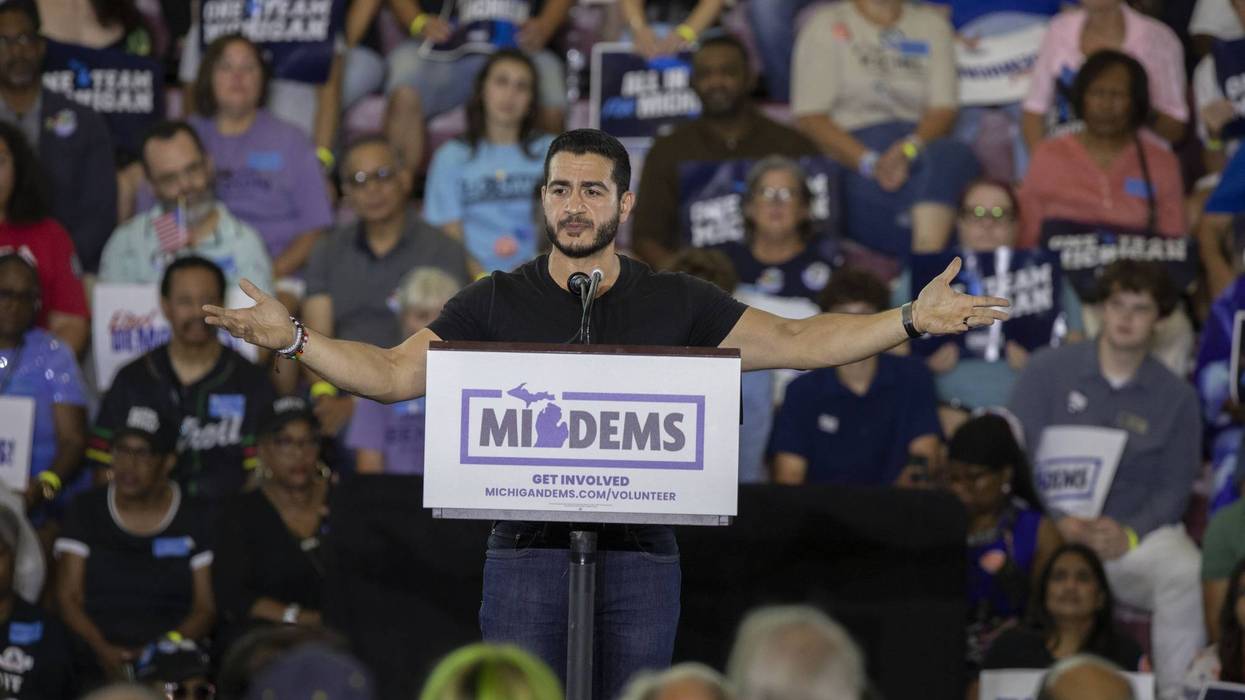
"Donald Trump's vision is the one you're living in right now," said the Democratic US Senate nominee. "Can you afford your gas? Can you afford your groceries?"
Fresh off his victory in the Democratic primary race for US Senate in Michigan, progressive epidemiologist Abdul El-Sayed used television appearances on Sunday to respond to increasingly hysterical attacks by Republicans and President Donald Trump while offering a positive vision for the future, underscoring his support for Medicare for All and a humane foreign policy that doesn't fund genocide.
"It’s not radical to believe that people should be able to afford their groceries," El-Sayed, who is set to face Republican Mike Rogers in November, told NBC's Kristen Welker in response to the Senate GOP's first attack ad of the general election. "It’s not radical to believe that you should have healthcare in this country. It’s not radical to believe that you don’t think the president should be able to deny elections or make $2.2 billion off of his role in office. It’s not radical to believe that all of us should be able to breathe clean air and drink clean water. Those are the things that I’ve been fighting for."
Trump and congressional Republicans wasted no time launching unhinged and bigoted attacks on El-Sayed following his primary victory last week. In a Truth Social post on Saturday, Trump posted an image showing a photo of himself and First Lady Melania Trump alongside a photo of El-Sayed and his wife, psychiatrist Sarah Jukaku. The caption of the photo blared, "Two VERY DIFFERENT America's [sic]."
Asked by CNN's Jake Tapper to respond to the post, El-Sayed said Sunday that the caption is "right."
"One [America] in which your overlords are two people who don't like each other, but joint in the interest of making billions of dollars off of you, or two people who genuinely love each other, enjoyed some pancakes together, want to come together to build the kind of America where they can raise a family and know that that family is going to have the good things," said the Michigan Democrat.
"So, yes, you got two different visions of America. Donald Trump's vision is the one you're living in right now," he continued. "Can you afford your gas? Can you afford your groceries? Do you believe, when you look your kids in the eye, that they're going to have a better future than you did?"
Democratic Michigan Senate nominee Abdul El-Sayed responds to President Trump posting a picture of his wife. pic.twitter.com/j8lGGwPET8
— State of the Union (@CNNSOTU) August 9, 2026
El-Sayed overcame more than $30 million in spending by the American Israel Public Affairs Committee (AIPAC)—and over $60 million in total outside spending—to defeat Rep. Haley Stevens (D-Mich.) in last week's primary contest. Throughout his primary campaign, El-Sayed criticized AIPAC as a destructive force in US politics and spoke out in support of ending American military aid to Israel—a stance that Trump and Republicans have sought to equate to antisemitism.
"He doesn’t love Israel. He doesn’t love Jewish people," Trump said of El-Sayed last week. "He hates them. He hates them with a passion that burns in his heart."
During his CNN appearance on Sunday, El-Sayed hit back at the president's smear, saying, "I love and revere Judaism and the Jewish people."
"They are not the same as AIPAC in Israel," he said. "I want our tax dollars spent to provide good schools, to pay for healthcare, to rebuild our roads here in Michigan, rather than it being sent abroad to subsidize foreign militaries. That’s not just Israel, by the way. That is also Egypt and Saudi Arabia and Jordan and Pakistan."
"So I believe in international law," El-Sayed continued. "I believe in equal rights to peace, dignity, and self-determination for all people. I believe in a process that allows a free Palestinian people and free Jewish Israeli people to come together around what they believe the ultimate peace should look like."
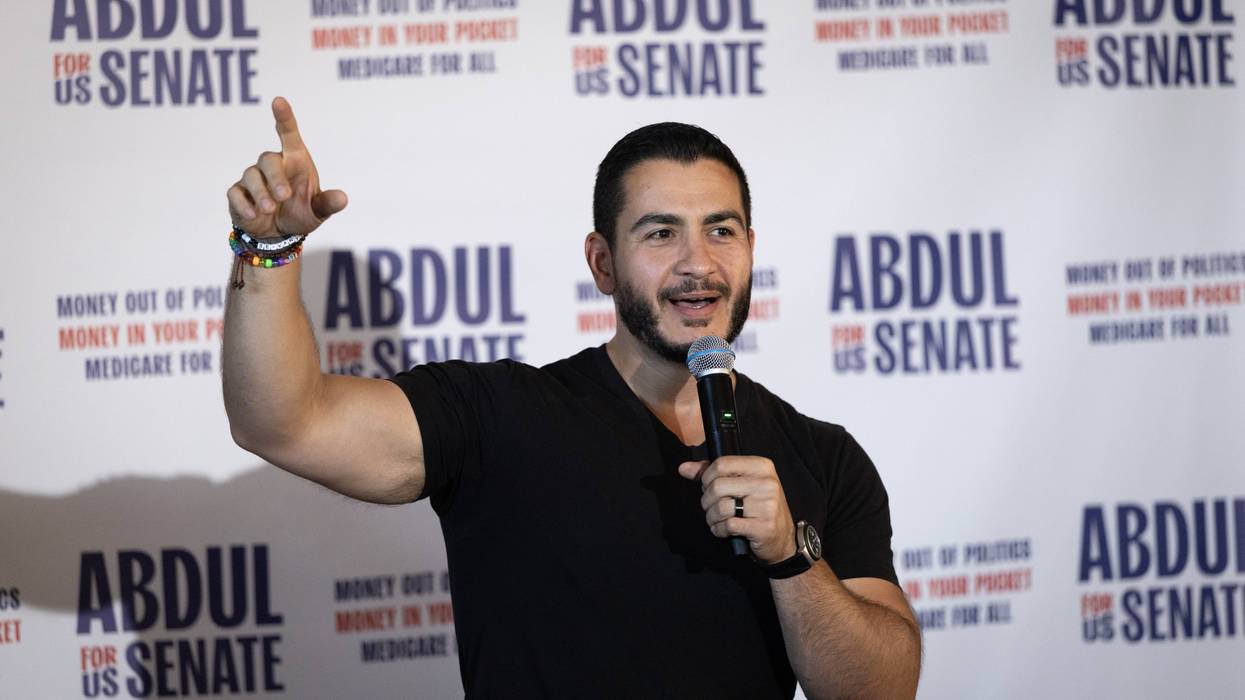
In the Michigan Democratic Senate primary, Abdul El-Sayed put guaranteed healthcare at the center of a statewide campaign and let voters decide. They decided.
You won’t find “Medicare for All” printed on any Michigan ballot from Tuesday’s primary. What you’ll find is a name: Abdul El-Sayed, the Ann Arbor physician who literally wrote the book on single-payer healthcare and then built his Senate campaign around it.
El-Sayed co-authored Medicare for All: A Citizen’s Guide, with a foreword from Sen. Bernie Sanders (I-Vt.), laying out how the country could guarantee healthcare as a right instead of rationing it by income. He wasn’t a candidate who discovered Medicare for All in a focus group. He ran because of it, and Tuesday night he routed the Democratic establishment’s chosen candidate, Haley Stevens. That’s as close to a referendum on single-payer healthcare as American politics gets, and voters delivered a verdict.
El-Sayed didn’t soften his message for the donor class. He paired “Medicare for All” with a blunt indictment of a country rich enough to end medical bankruptcy but too captured by insurance money to bother. Voters in Washtenaw and Kent counties answered.
What makes this remarkable is who El-Sayed beat and how. Stevens had every advantage institutional Democratic politics can hand a candidate: Sen. Chuck Schumer’s (D-NY) early backing, a late endorsement from Michigan Gov. Gretchen Whitmer, and roughly $30 million from the American Israel Public Affairs Committee (AIPAC) and its affiliates, the largest single-race investment in that organization’s history. This was one of the most expensive Democratic primaries ever run, a fire hose of establishment cash aimed at burying a single-payer candidate. It wasn’t enough. Voters weren’t buying what millions in outside spending were selling.
As a practicing physician assistant who has spent years advocating for Medicare for All and working in electoral politics, I've heard the same warning over and over: Don't run on single-payer. Michigan suggests that conventional wisdom deserves another look.
That should terrify the consultant class that has spent a decade telling Democrats Medicare for All is political poison in a state like Michigan, that it scares away suburban moderates. El-Sayed’s night says otherwise: an unapologetic healthcare message is exactly what turns out voters a low-turnout August primary usually leaves behind. Reporting pointed to a young, energized base and a ground game that outperformed expectations where turnout can’t be bought with television ads.
The country is catching up to what El-Sayed put in writing years ago. Over 85 million working-age Americans are uninsured or underinsured, per Commonwealth Fund research, shut out of the system or paying premiums that still leave them exposed the moment they get sick. Millions are one diagnosis away from medical debt they’ll spend a decade paying off. Public patience with an industry that profits by denying claims has curdled into open contempt, visible in viral outrage over coverage denials and a for-profit sector that ranks among the least trusted in America. Strip away the euphemisms, and the arithmetic is obscene. Insurers post billions in profit by finding reasons to say no to sick people, skimming a cut off human suffering as a business model. The United States is the only wealthy industrialized democracy that treats healthcare as a product to be underwritten, means tested, and denied rather than a right owed to its citizens. El-Sayed didn’t invent that anger, and he didn’t just write a book about it. He built a winning campaign on the promise that Democrats don’t have to keep managing that anger on behalf of the industry that causes it.
There’s symbolic weight here too. El-Sayed lost a bruising primary for governor in 2018, written off as unelectable in a state supposedly too uneasy about a candidate named Abdul. Eight years later, running on the same conviction that no one should go bankrupt getting cancer treatment, he built a coalition big enough to beat back one of the most heavily financed efforts to defeat a progressive candidate in recent Democratic primary history. That’s proof of where the Democratic base stands on healthcare, no matter what the party’s risk-averse, industry-funded strategists have told candidates for two decades.
As a practicing physician assistant who has spent years advocating for Medicare for All and working in electoral politics, I've heard the same warning over and over: Don't run on single-payer. Michigan suggests that conventional wisdom deserves another look.
Michigan shows the old fear, that Medicare for All is too risky to run on out loud, was always a story told by people who never tried telling voters the truth about their premiums. Michigan is a battleground state, not a safely progressive one, and El-Sayed won by refusing to hide the ball. He put guaranteed healthcare at the center of a statewide campaign and let voters decide. They decided. That’s not a fluke. It’s a preview of what happens when a candidate treats single-payer healthcare like the popular, morally obvious policy it has always been. AIPAC and the insurance lobby’s allies spent a fortune trying to prove otherwise and lost.
Party insiders will insist this was about mechanics, not Medicare for All. They said the same after every progressive upset this cycle, right up until they had to explain the next one. For one night, the closest thing Michigan had to a ballot question on national healthcare got its answer, and it wasn’t close.
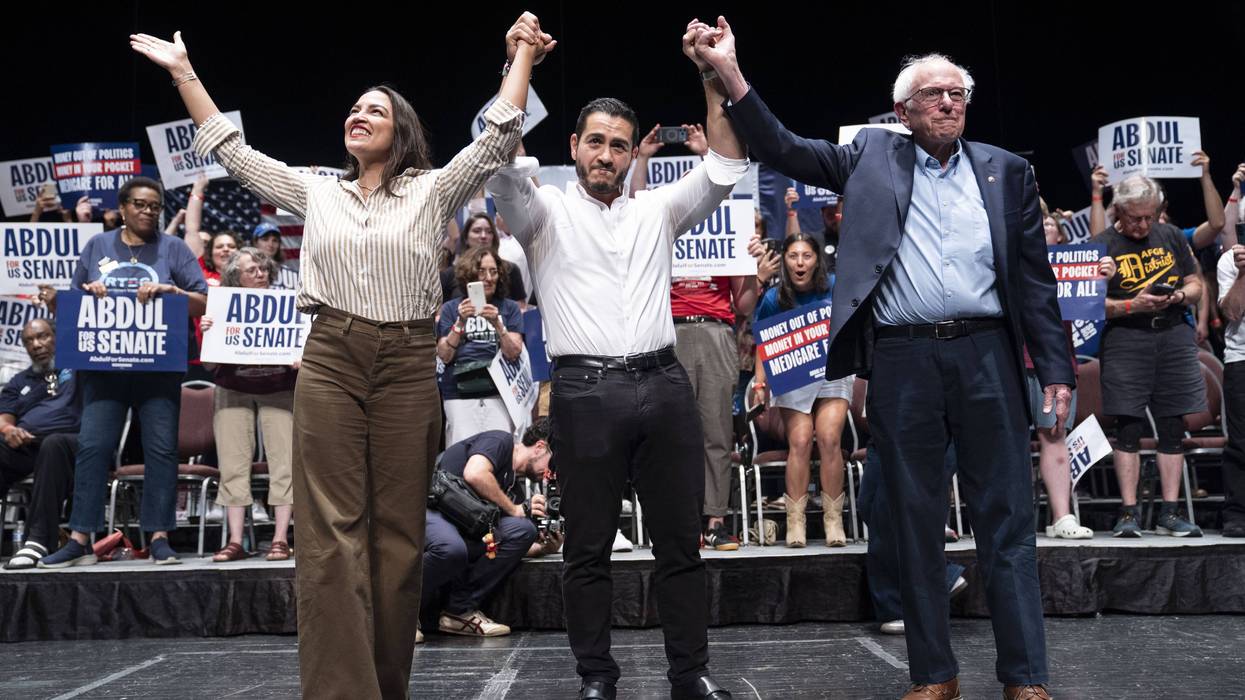
"I’m happy to burn your money for you, and then we can get on to the business of governing," Abdul El-Sayed said in a message to the American Israel Public Affairs Committee.
After setting over $30 million on fire in Michigan's Democratic US Senate primary, the American Israel Public Affairs Committee is reportedly plotting round two against progressive epidemiologist Abdul El-Sayed—this time seeking to boost his Republican general election opponent, Mike Rogers.
The New York Times reported Wednesday that the pro-Israel lobbying organization, known as AIPAC, "has told allies that it is considering a major financial campaign to support the Republican Senate nominee in the Michigan general election this fall." AIPAC said publicly following El-Sayed's victory over Rep. Haley Stevens (D-Mich.) in Tuesday's primary that "our members remain determined to ensure that voters reject Dr. El-Sayed and his radical anti-Israel agenda in November."
Rep. Alexandria Ocasio-Cortez (D-NY), who endorsed and campaigned for El-Sayed, wrote in response to AIPAC's post-election statement that she appreciates the group "proving it doesn't belong in the Dem Party and especially in our primaries."
"From endorsing Jan. 6th members to ensuring Congress remains in the hands of a 34-count felon, AIPAC is an org committed to undermining democracy at home and abroad," Ocasio-Cortez wrote on social media. "See you in November."
Rep. Chris Deluzio (D-Pa.) noted that "a big majority of Americans want the US government to stop sending American dollars to Israel's reckless regime and to end the war in Iran."
"Yet AIPAC is threatening to spend to deliver the Republicans a critical Senate seat in Michigan, helping a Trump stooge like Mike Rogers who will keep funding Netanyahu's wars and do nothing to stop Trump's Iran war," said Deluzio. "This is exactly why so many Democrats like me have rejected AIPAC."
AIPAC cash accounted for around half of all outside spending in the contest between El-Sayed and Stevens—the most expensive Democratic primary in American history.
But the organization and its affiliated groups appear to have plenty more resources to devote to the general election, the results of which could decide control of the US Senate next year.
The United Democracy Project (UDP), AIPAC's super PAC, had over $80 million in cash in hand at the end of June, according to federal filings.
AIPAC is UDP's primary funder, but the group has also received cash from right-wing billionaires such as hedge fund manager Paul Singer and businessman Haim Saban.
During a virtual town hall days before Tuesday's election, El-Sayed—a vocal opponent of US support for Israel's genocidal assault on Gaza—dared AIPAC to keep pouring its financial resources into Michigan's Senate race.
“AIPAC, if you’re listening, burn your money. Come back and burn it again in the general,” said El-Sayed. “I’m happy to burn your money for you, and then we can get on to the business of governing and asking whether or not our foreign policy ought to be dictated to us by the interests of a foreign government.”
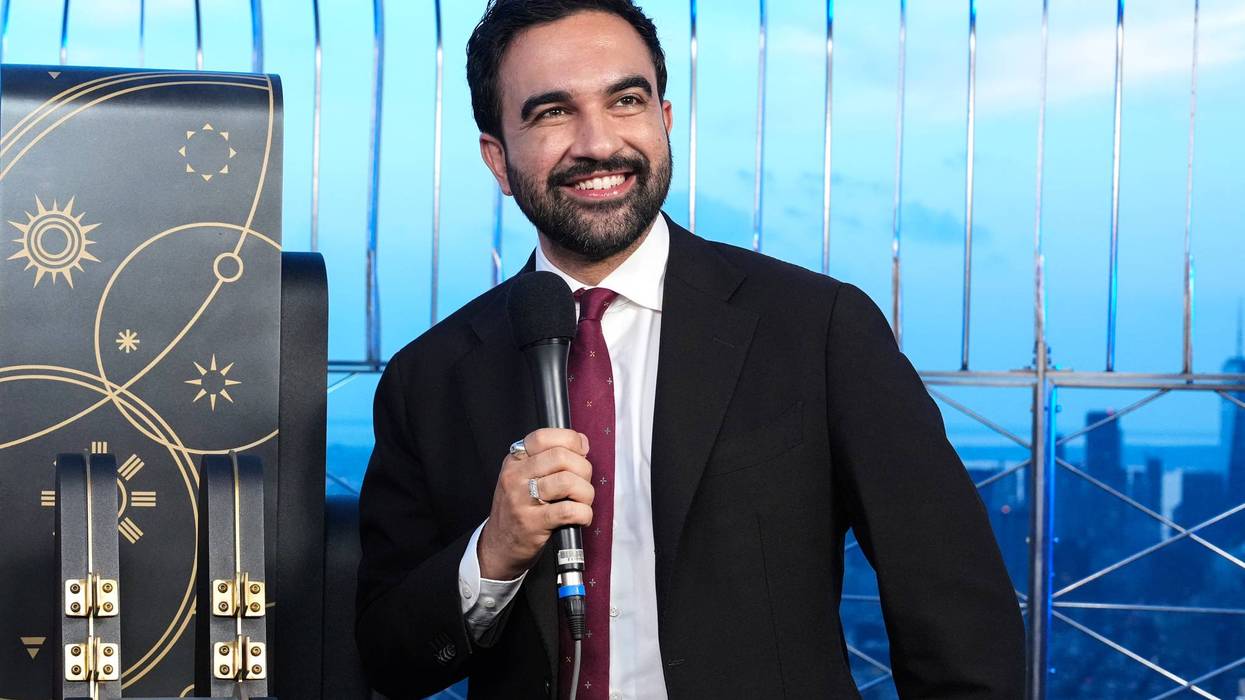
"I think it shows you how deeply out of touch the Republican Party is with the concerns of working-class Americans."
New York City Mayor Zohran Mamdani on Wednesday hit back at House Speaker Mike Johnson (R-La.) over a fearmongering social media post in which the Republican warned of "radical Marxist Democrats" determined "to destroy the very foundations that make us the envy of the entire world."
During a press conference, the democratic socialist mayor was asked to comment on the post, in which Johnson said the US was in danger of "being overrun by mini-Mamdanis" if Republicans lost control of Congress this fall.
Mamdani responded by speculating that Johnson's post was in reaction to the victory of Abdul El-Sayed in the Democratic US Senate primary in Michigan on Tuesday.
Noting that El-Sayed campaigned on a slogan of, "Money out of politics, money in your pocket, Medicare for All," the mayor questioned why Johnson found such promises so threatening.
Reporter: Mike Johnson said in an X post: “There is an urgent question facing America. Are we going to maintain our status as the world’s greatest superpower and beacon of liberty, opportunity, and security, or allow radical Marxist Democrats to destroy the very foundations that… pic.twitter.com/EuZVUtTJP6
— Acyn (@Acyn) August 5, 2026
"If those simple commitments and beliefs are what drive Rep. Johnson to these kinds of conclusions," Mamdani said, "I think it shows you how deeply out of touch the Republican Party is with the concerns of working-class Americans."
The mayor then alluded to the hurdles that El-Sayed had to overcome to win the election, including organizations such as the American Israel Public Affairs Committee (AIPAC), which alone spent $30 million to defeat him.
"Despite him facing more than $60 million in outside spending," Mamdani said, "he was able to prevail with a focus on the cost-of-living crisis, and the way in which healthcare is exceedingly out of reach for those who have helped make this country what it is."
The Associated Press declared El-Sayed the winner of the often contentious primary on Wednesday morning, and many establishment Democrats—including his top rival, Rep. Haley Stevens (D-Mich.)—rallied behind him as the party's nominee.